1. Search Result
Search Result
Isoforms Recommended: Leishmania
Results for "

leishmania

" in MedChemExpress (MCE) Product Catalog:

165

Inhibitors & Agonists

1

Screening Libraries

1

Fluorescent Dyes

6

Peptides

1

Inhibitory Antibodies

42

Natural
Products

4

Isotope-Labeled Compounds

2

Oligonucleotides

Cat. No. Product Name Target Research Areas Chemical Structure
  • HY-19567
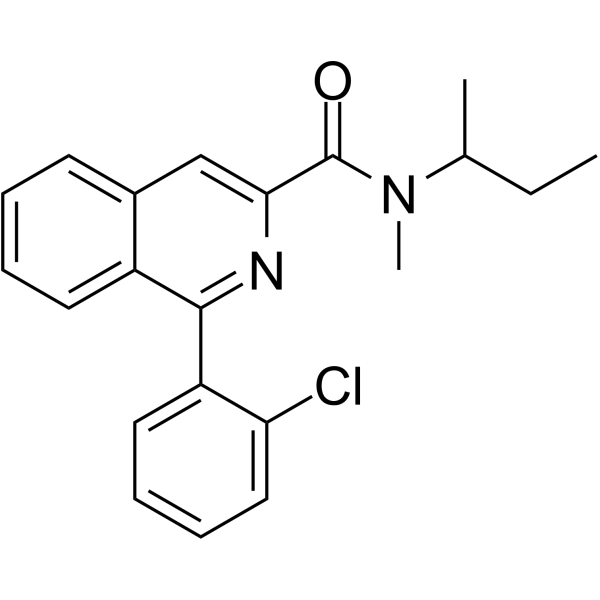
    PK 11195
    5+ Cited Publications

    RP 52028

    Parasite Infection
    PK 11195 (RP 52028) is a ligand of translocator protein (TSPO), which targets Leishmania chemotherapy, with IC50s of 14.2 μM, 8.2 μM, 3.5 μM for L. amazonensis, L. major and L. braziliensis, respectively.
    PK 11195
  • HY-16565

    Biochemical Assay Reagents Drug Intermediate Parasite Infection
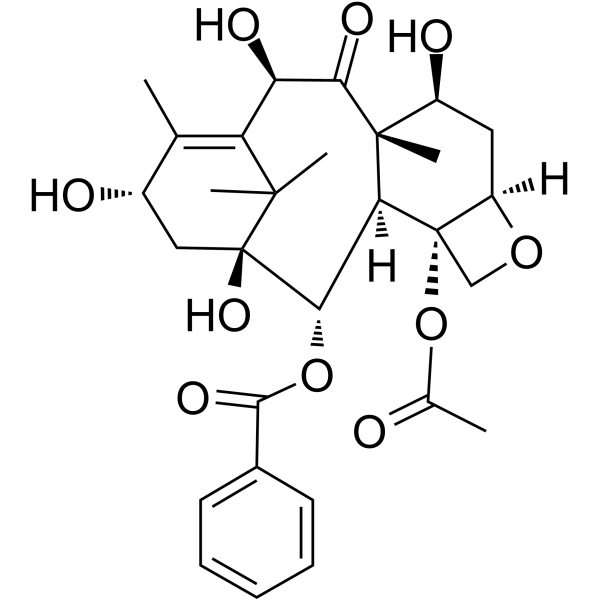
    10-Deacetylbaccatin-III is an intermediate in the preparation process of paclitaxel. 10-Deacetylbaccatin III can be isolated from the dried needles and small branches of the European yew tree (Taxus baccata). 10-Deacetylbaccatin III exhibits antileishmanial activity .
    10-Deacetylbaccatin III
  • HY-108610A
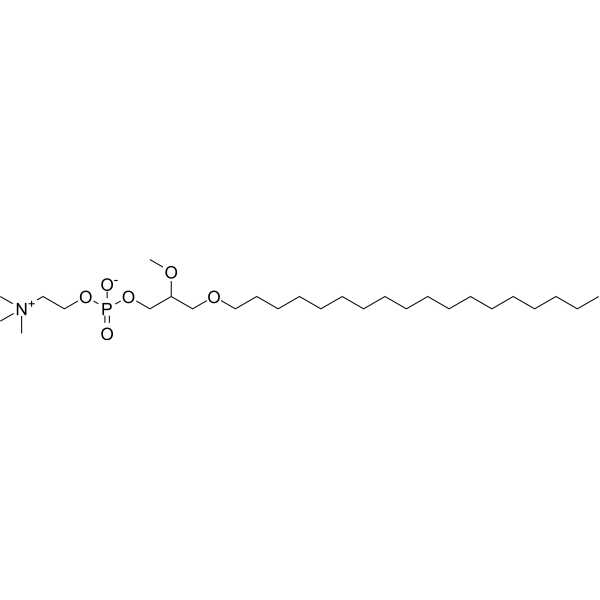
    Edelfosine
    1 Publications Verification

    ET-18-OCH3

    Apoptosis Parasite Bcl-2 Family Cytochrome P450 Infection Inflammation/Immunology Cancer
    Edelfosine (ET-18-OCH3) is an orally active lipid raft modulator and apoptosis inducer that alters membrane fluidity and preferentially inserts into tumor cell membranes. Edelfosine recruits death receptor ligands (FasL/CD95L, TRAIL) and Bid to lipid rafts to form death-inducing signaling complexes, thereby initiating mitochondria-dependent apoptosis and inducing cytochrome c release. Edelfosine also exerts anti-inflammatory effects, promotes L-Selectin shedding, and causes no gastrointestinal or organ toxicity. In addition, Edelfosine inhibits nucleic acid and protein synthesis in Leishmania donovani and exhibits antiproliferative activity. Edelfosine can be used in research on multiple myeloma, inflammatory bowel diseases (such as ulcerative colitis and Crohn's disease), and visceral leishmaniasis .
    Edelfosine
  • HY-B0621
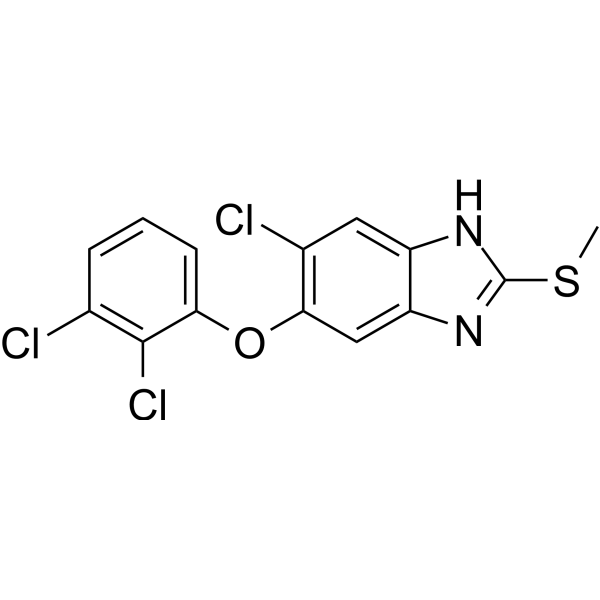
    Triclabendazole
    5+ Cited Publications

    CGA89317

    Parasite Caspase Bcl-2 Family PARP Pyroptosis Infection
    Triclabendazole is an orally active parasite inhibitor. Triclabendazole has anti-Leishmania activity and induces gasdermin E (GSDME)-dependent pyroptosis by caspase-3 activation. Triclabendazole can be used for the research of fasciola hepatica .
    Triclabendazole
  • HY-125371
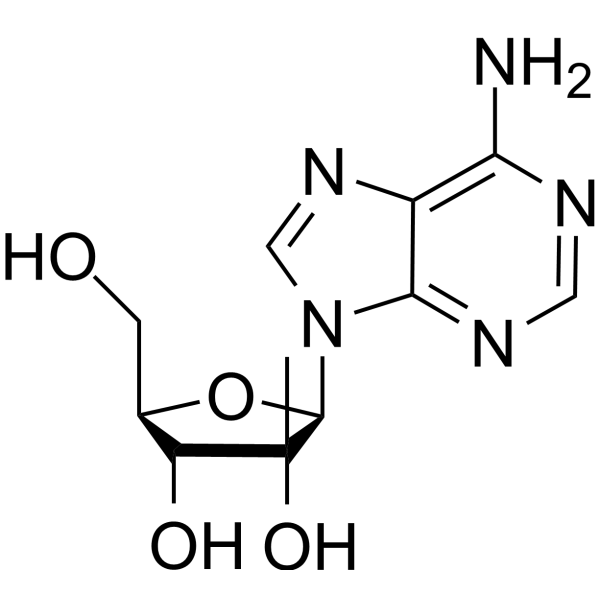
    2'-C-Methyladenosine
    2 Publications Verification

    HCV Infection Inflammation/Immunology
    2'-C-Methyladenosine is an inhibitor of hepatitis C virus (HCV) replication. 2'-C-Methyladenosine inhibits HCV replicon and NS5B-catalyzed RNA synthesis with IC50 values of 0.3μM and 1.9 μM, respectively. 2'-C-Methyladenosine also potently inhibits LRV1 in Leishmania guyanensis (Lgy) and Leishmania braziliensis .
    2'-C-Methyladenosine
  • HY-103353
    SID 26681509
    5 Publications Verification

    Cathepsin Parasite Infection Cancer
    SID 26681509 is a potent, reversible, competitive, and selective inhibitor of human cathepsin L with an IC50 of 56 nM. SID 26681509 inhibits in vitro propagation of malaria parasite Plasmodium falciparum and inhibits Leishmania major with IC50s of 15.4 μM and 12.5 μM, respectively. SID 26681509 shows no inhibitory activity against cathepsin G .
    SID 26681509
  • HY-76228

    Pyrazole

    Parasite iGluR Infection
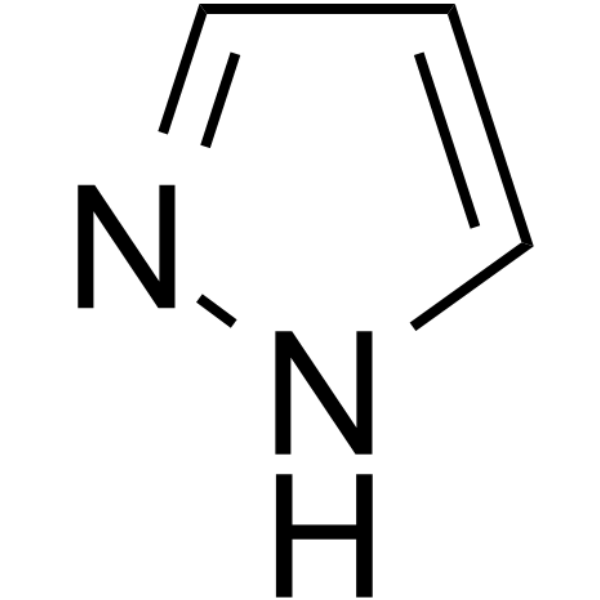
    1H-pyrazole (Pyrazole) is a five-membered heterocyclic compound, and its derivatives are orally effective antimalarial and antileishmanial agents with the potential to modulate targets such as alcohol dehydrogenase and NMDA receptors. 1H-pyrazole derivatives exhibit inhibitory effects on Plasmodium berghei in infected mice and on promastigotes of Leishmania aethiopica, respectively. 1H-pyrazole can be used in research related to malaria and leishmaniasis .
    1H-pyrazole
  • HY-W016813

    Parasite Infection
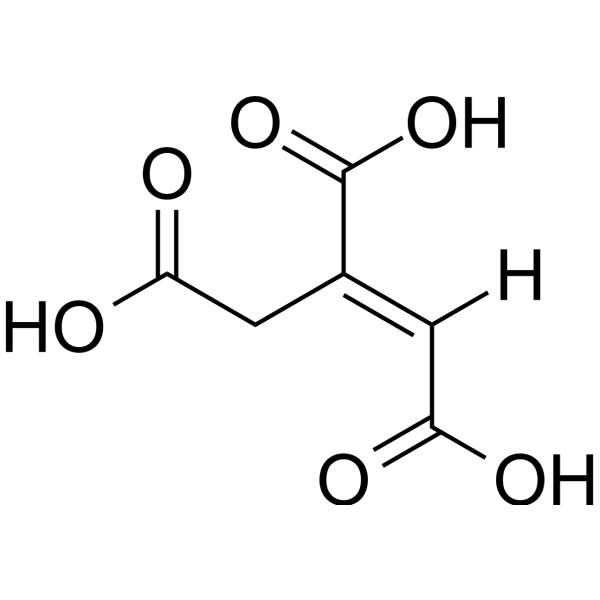
    trans-Aconitic acid is an orally active aconitase inhibitor that non-competitively inhibits the conversion of citric acid to cis-aconitic acid and competitively inhibits the conversion of cis-aconitic acid to isocitric acid. trans-Aconitic acid inhibits the growth of Leishmania donovani promastigotes, the transformation of Leishmania donovani amastigotes to promastigotes, and the in vitro proliferation of Leishmania donovani amastigotes within macrophages in vitro. trans-Aconitic acid can be used in research related to visceral leishmaniasis (kala-azar) .
    trans-Aconitic acid
  • HY-N0769
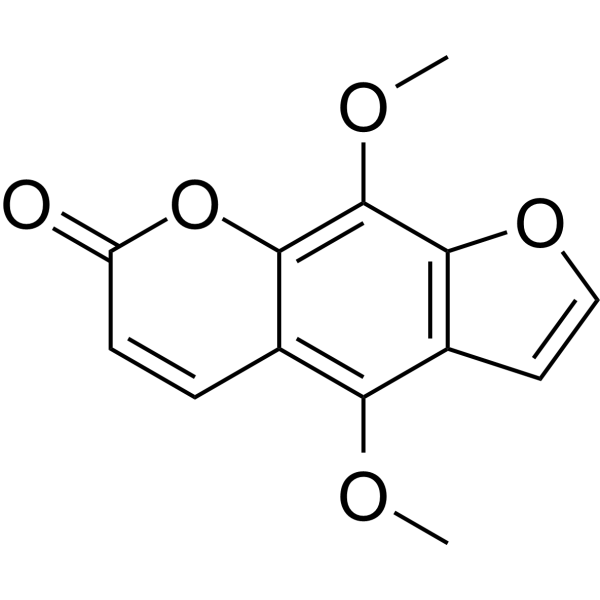
    Isopimpinellin
    1 Publications Verification

    DNA/RNA Synthesis Parasite Infection Inflammation/Immunology Cancer
    Isopimpinellin, an orally active compound isolated from Glomerella cingulata. Isopimpinellin blocks DNA adduct formation and skin tumor initiation by 7,12-dimethylbenz[a]anthracene. Isopimpinellin possesses anti-leishmania effect .
    Isopimpinellin
  • HY-N7926

    Environmental Pollutants Apoptosis Parasite TNF Receptor Interleukin Related Infection Inflammation/Immunology
    Pentadecane is an orally active natural plant volatile alkane with anti-inflammatory, analgesic, antipyretic and anti-leishmanial activities. Pentadecane presents IC50 values of 65.3 μM, 60.5 μM and 194.8 μM against Leishmania infantum promastigotes, amastigotes and intracellular amastigotes, respectively. Pentadecane downregulates the mRNA expression of TNF-α and IL-12 and inhibits the release of inflammatory mediators. Pentadecane arrests the cell cycle of Leishmania infantum and induces apoptosis. Pentadecane can be applied to the research of inflammation and leishmaniasis .
    Pentadecane
  • HY-121368

    Parasite Infection Inflammation/Immunology Cancer
    Mahanine is a carbazole alkaloid with various biological properties. Mahanine is a potent anticancer agent against different types of cancer cells. Mahanine exhibits antileishmanial activity and can be used for Leishmania infection research research.
    Mahanine
  • HY-101011

    Opioid Receptor Infection Neurological Disease
    Naloxonazine dihydrochloride is a specific μ-opioid receptor antagonist with an IC50 of 5.4 nM. Naloxonazine dihydrochloride also shows anti-leishmanial activity .
    Naloxonazine dihydrochloride
  • HY-21496

    4-Carboxybenzyl bromide

    Parasite Infection
    4-(Bromomethyl)benzoic acid (4-Carboxybenzyl bromide) is an antiparasitic agent with low activity against Leishmania amazonensis and Trypanosoma cruzi. 4-(Bromomethyl)benzoic acid has certain cytotoxicity to PBMCs, with an IC50 of 88.8 μM .
    4-(Bromomethyl)benzoic acid
  • HY-162066

    Parasite Infection
    DNDI-6174 is an orally active Leishmania cytochrome b (Qi site of cytochrome bc1 complex/complex III) inhibitor. DNDI-6174 binds to the Qi site of Leishmania cytochrome b, inhibits cytochrome bc1 complex activity in the parasite's electron transport chain across promastigote and axenic amastigote stages. DNDI-6174 reduces parasite burden in rodent models, inhibits growth of various Leishmania species, drug-resistant clinical isolates, and Trypanosoma cruzi, with marginal activity against Trypanosoma brucei. DNDI-6174 can be used for the research of visceral leishmaniasis, cutaneous leishmaniasis .
    DNDI-6174
  • HY-134467

    Parasite NO Synthase Infection
    Phylloflavan is an antileishmanial (Antileishmanial) agent with an EC50 of 3.2 nM against intracellular amastigotes of Leishmania donovani. Phylloflavan is isolated from Phyllocldus plants. Phylloflavan induces moderate levels of NO release. Phylloflavan also inhibits the cytopathic effect of encephalomyocarditis virus on L929 fibroblasts (38 U/mL) .
    Phylloflavan
  • HY-155520

    Parasite Infection
    Antileishmanial agent-19 (Compound F27) is an antileishmanial agent, with a IC50 of 3.39 μM for L. donovani promastigotes. Antileishmanial agent-19 inhibits Leishmania prolyl-tRNA synthetase. Antileishmanial agent-19 inhibits host PI3K/Akt/CREB axis-mediated IL-10 secretion. Antileishmanial agent-19 induces autophagy-mediated apoptosis in L. donovani promastigotes. Antileishmanial agent-19 reduces parasite burden in L.d-infected animals .
    Antileishmanial agent-19
  • HY-P990227

    Interleukin Related Bacterial Infection Inflammation/Immunology
    Anti-Mouse IL-12 Antibody (R1-5D9) is a rat-derived IgG2a type antibody inhibitor, targeting to mouse IL-12. Anti-Mouse IL-12 Antibody (R1-5D9) can neutralize IL-12. Anti-Mouse IL-12 Antibody (R1-5D9) can be used for the researches of infection, inflammation and immunology, such as Leishmania infection and skin inflammation .
    Anti-Mouse IL-12 Antibody (R1-5D9)
  • HY-W014120

    Biochemical Assay Reagents Parasite Infection
    Thianthrene is a potent and orally active inhibitor of Leishmania donovani pteridine reductase 1 (PTR1). Thianthrene is a sulfur-containing tricyclic molecule distributed widely within the macro-structure of hydrocarbon fossil fuels. Thianthrene inhibits the intracellular amastigotes of Leishmania donovani (IC50 = 23 μM). Thianthrene has a moderate anthelmintic activity. Thianthrene appears to inhibit RNA function and subsequent protein production. Thianthrene can stimulate liver regeneration in vivo .
    Thianthrene
  • HY-169728

    Hexokinase Parasite Infection
    SID 24785302 is a hexokinase inhibitor with antiparasitic activity. SID 24785302 exhibits activity against T. brucei and Leishmania. SID 24785302 can be used for the research of mitochondrial DNA disorders and parasitic infection .
    SID 24785302
  • HY-123601

    Parasite Infection
    DHQZ 36 is a potent inhibitor of retrograde trafficking. DHQZ 36 inhibits Leishmania amazonensis infection in macrophages with an EC50 of 13.63 μM. DHQZ 36 has potent anti-parasite activity .
    DHQZ 36
  • HY-W973644

    Mitochondrial Metabolism Parasite Infection
    LY-266500 is a succinyl CoA synthetase (SCS) specific inhibitor. LY-266500 has inhibitory effects on various parasites, such as Trypanosoma brucei brucei (IC50 =0.6 μM) and Leishmania donovani (IC50 =2.86 μM). LY-266500 can be used for research on parasitic infections .
    LY-266500
  • HY-151935

    Parasite Infection
    Antileishmanial agent-13 is a quinoline-isatin hybrid, acts as an antileishmanial agent against L. Major Leishmania strain. Antileishmanial agent-13 acquires the antileishmanial activity via the anti-folate mechanism. Antileishmanial agent-13 has potent inhibition against both promastigote and amastigote forms with IC50s of 0.604 μM and 0.508 μM, respectively .
    Antileishmanial agent-13
  • HY-146045

    Parasite Infection
    Antiparasitic agent-7 (compound 5d) has selectively antiparasitic activity against Leishmania infantum (L. infantum) with an IC50 value of 2.85 μM. Antiparasitic agent-7 also has certain cytotoxicity against HepG2 (CC50 = 10.61 μM) .
    Antiparasitic agent-7
  • HY-W016621

    Parasite Drug Isomer Infection
    3,4-Methylenedioxypropiophenone (Compound 4) is an isomer of 3,4-methylenedioxyphenyl-2-propanone. 3,4-Methylenedioxypropiophenone has potent activity against leishmania .
    3,4-Methylenedioxypropiophenone
  • HY-178784

    Parasite Infection
    Antileishmanial agent-37 (Compound 1b) is an antileishmanial agent, TbPTR1 (an IC50 value of 17.1 μM) and LmPTR1 inhibitor. Anti-leishmaniasis agent-37 has a moderate effect against Leishmania infantum .
    Antileishmanial agent-37
  • HY-N3702

    Syk Infection Inflammation/Immunology
    Dehydroabietinol is a SYK inhibitor with an IC50 of 46.4 μM. Dehydroabietinol inhibits the growth of Trypanosoma cruzi epimastigotes, Leishmania braziliensis promastigotes and Leishmania infantum promastigotes. Dehydroabietinol indirectly inhibits the growth of Plasmodium falciparum, alters the erythrocyte membrane, and induces spherostomatocyte transformation and endovesicle formation. Dehydroabietinol can be used in studies related to immune-mediated diseases, Chagas disease, leishmaniasis and malaria .
    Dehydroabietinol
  • HY-W663230

    Parasite Infection
    Eugenitin is a polyketide isolated from the fungus Mycoleptodiscus indicus that is related to the South American medicinal plant. Eugenitin inhibits Leishmania major with LD50=39.9 μM. Eugenitin has low cytotoxicity (IC50 >131 μM) against several human cancer cell lines .
    Eugenitin
  • HY-156132

    Parasite Infection
    DNDI-0690 is a potent orally active analogue of DNDI-VL-2098, exhibiting potent activity against cutaneous leishmaniasis (CL). DNDI-0690 shows potent in vitro activity against CL-causing Leishmania species (EC50 = 0.17 μM against visceral leishmaniasis (VL), and < 5 μM against CL-causing species). DNDI-0690 exerts effects in a mouse model of L. major CL. DNDI-0690 can be used for CL research .
    DNDI-0690
  • HY-N15413

    Parasite Infection
    Thalidasine (compound 3) is a bisbenzyltetrahydroisoquinoline alkaloid. Thalidasine is a anticancer agent against human colon adenocarcinoma cells. Thalidasine exhibits antileishmanial activity and can be used for Leishmania infection research research .
    Thalidasine
  • HY-130993

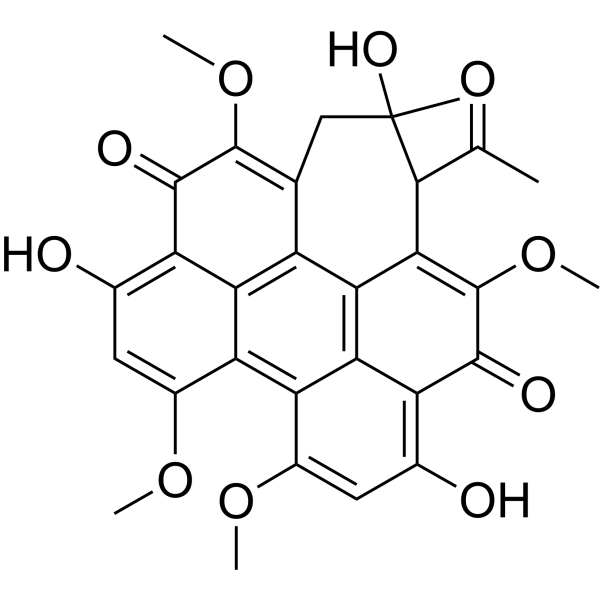
    Parasite Infection
    Isatropolone A, a natural product containing a 1,5-diketone moiety, is reisolated from Streptomyces Gö66. Isatropolone A shows potent activity against Leishmania donovani with an IC50 of 0.5 μM .
    Isatropolone A
  • HY-19688B

    WR 6026 tosylate

    Parasite Mitochondrial Metabolism Infection
    Sitamaquine (WR6026) tosylate, an orally active 8-aminoquinoline analog, is an antileishmanial agent. Sitamaquine tosylate inhibits mitochondrial complex II (succinate dehydrogenase). Sitamaquine tosylate is a lipophilic weak base that rapidly accumulates in acidic compartments of Leishmania spp., mainly in acidocalcisomes .
    Sitamaquine tosylate
  • HY-162134

    Parasite Infection
    Trypanothione synthetase-IN-5 (compound 9) is a trypanothione reductase (TR) inhibitor, with an IC50 of 20.5 μM for Leishmania infantum TR. Trypanothione synthetase-IN-5 also has inhibitory activity for human glutathione reductase (hGR), with an IC50 of 62.4 μM .
    Trypanothione synthetase-IN-5
  • HY-175345

    Parasite Infection
    CYP3A4-IN-5 (Compound 5p) is a potent Leishmania major pteridine reductase 1 (Lm PTR1) inhibitor (IC50=12.77 µM). CYP3A4-IN-5 is promising for research of parasite infection .
    CYP3A4-IN-5
  • HY-125698

    Parasite Infection
    3-Deoxyaphidicolin exhibits phytotoxic efficacy, that inhibits root growth of lettuce seedlings. 3-Deoxyaphidicolin also exhibits leishmanicidal activity against Leishmania major and Leishmania braziliensis .
    3-Deoxyaphidicolin
  • HY-120154

    (±)-Palitantin

    Parasite Endogenous Metabolite Infection
    Palitantin ((±)-Palitantin), a metabolite of Penicillium frequentans on Leishmania brasiliensis, has antiprotozoal effect against Leishmania brasiliensis .
    Palitantin
  • HY-159097

    Parasite Infection
    T.cruzi-IN-4 (Compound 21) is an anti-parasitic agent. T.cruzi-IN-4 inhibits the trypomastigote and amastigote form of Trypanosoma cruzi with IC50 of 0.033 μM (120 h), T.cruzi-IN-4 inhibits the promastigote and amastigote form of Leishmania infantum with IC50 of 28.74 and 61.82 μM. T.cruzi-IN-4 inhibits Leishmania amazonensis promastigote form with IC50 of 18.38 μM .
    T.cruzi-IN-4
  • HY-137180

    Opioid Receptor Parasite Infection Neurological Disease
    Naloxonazine is a potent and selective opiate mu-1 antagonist that can also affect leishmania by regulating host coding function .
    Naloxonazine
  • HY-144700

    Parasite Infection
    Antileishmanial agent-3 (Compound 13) is a promising growth inhibitor of Leishmania major .
    Antileishmanial agent-3
  • HY-149980

    Parasite Infection
    DCN-83, an anti-leishmania agent, is most potent against the amastigote form with an IC50 of 0.71 μM. DCN-83 has the potential to cross the blood-brain barrier and central nervous system .
    DCN-83
  • HY-147857

    Parasite Infection
    Antileishmanial agent-12 (compound 5a) is a potent anti-leishmanial agent. Antileishmanial agent-12 shows antiprotozoal activity against Leishmania brazilensis, Leishmania infantum, and T. cruzi, with IC50 values of 14.9, 21.3 and 9.3 μM, respectively .
    Antileishmanial agent-12
  • HY-147856

    Parasite Infection
    Antileishmanial agent-11 (compound 4d) is a potent anti-leishmanial agent. Antileishmanial agent-11 shows antiprotozoal activity against Leishmania brazilensis, Leishmania infantum, and T. cruzi, with IC50 values of 28.3, 24.8 and 13.0 μM, respectively .
    Antileishmanial agent-11
  • HY-162155

    Parasite Infection
    Diarctigenin is a selective Leishmania major dihydrofolate reductase-thymidylate synthase (LmDHFR-TS) inhibitor. Diarctigenin can be used for the research of tropical disease .
    Diarctigenin
  • HY-151148

    Parasite Infection
    Trypanothione synthetase-IN-1 (Compound 1) is a competitive Leishmania infantum trypanothione synthetase (TryS) inhibitor with an IC50 of 14.8 μM when triamine spermidine is as polyamine S .
    Trypanothione synthetase-IN-1
  • HY-151150

    Parasite Infection
    Trypanothione synthetase-IN-2 (Compound 3) is a competitive Leishmania infantum trypanothione synthetase (TryS) inhibitor with an IC50 of 5.4 μM when triamine spermidine is as polyamine S .
    Trypanothione synthetase-IN-2
  • HY-N9194

    Parasite Infection
    5-Methoxycanthin-6-one is an orally active inhibitor of Leishmania strains. 5-Methoxycanthin-6-one shows cytotoxicity with an IC50 of 5.44 μg/mL against Ailanthus altissima cells .
    5-Methoxycanthin-6-one
  • HY-147535

    Parasite Infection
    Antileishmanial agent-7 (compound 23) is a potent antileishmanial agent. Antileishmanial agent-7 shows antileishmanial activity against Leishmania donovani and L-6, with IC50 values of 6.89 and 259 μM, respectively .
    Antileishmanial agent-7
  • HY-163457

    Aminoacyl-tRNA Synthetase Parasite Infection
    Antileishmanial agent-27 (compound 7j) is a benzothiazolo-coumarin derivative. Antileishmanial agent-27 is a competitive inhibitor of arginyl-tRNA synthetases (ArgRSs). Antileishmanial agent-27 shows selectivity toward ArgRS of Leishmania donovani (LdArgRS) than its human counterpart (HsArgRS), with IC50 values of 1.2 and 19 μM, respectively. Antileishmanial agent-27 possesses high pharmacokinetic properties .
    Antileishmanial agent-27
  • HY-N10441

    Parasite Infection
    3β-Hydroxy-hop-22(29)-ene (compound 3) is a potent antiparasitic agent. 3β-Hydroxy-hop-22(29)-ene shows moderate activity against Trypanosoma cruzi and Leishmania mexicana .
    3β-Hydroxy-hop-22(29)-ene
  • HY-124210

    Antibiotic Parasite Infection Cancer
    Formycin B is an antibiotic, which exhibits antiparasitic activity against Leishmania. Formycin B exhibits toxicity to leukocytes, reversibly decreases neutrophils. Formycin B can be used in research about myeloid leukemia .
    Formycin B
  • HY-149093

    Parasite Infection
    Antileishmanial agent-14 is a sulfuretin analog with potential activity against the parasite Leishmania donovani promastigotes (IC50=4.1 μM). Antileishmanial agent-14 also inhibits infection by L. donovani amastigotes (IC50=11.1 μM) .
    Antileishmanial agent-14

Inquiry Online

Your information is safe with us. * Required Fields.

Salutation


Country or Region *

Applicant Name *


Organization Name *

Department *


Email Address *


Product Name *

Cat. No.


Requested quantity *

Phone Number *


Remarks

Inquiry Online

Inquiry Information

Product Name:
Cat. No.:
Quantity:
MCE Japan Authorized Agent:

