



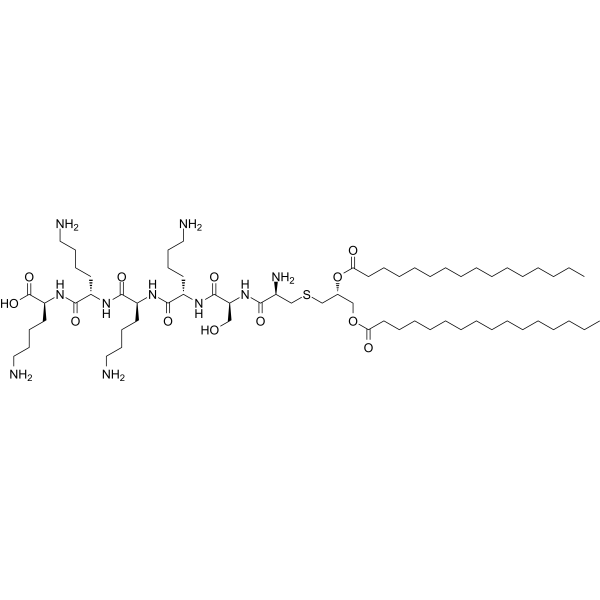
Pam2CSK4
Based on 1 publication(s) in Google Scholar
Pam2CSK4 is a TLR2 agonist. Pam2CSK4 induces the expression of iNOS and NO in macrophage cell lines via TBK1 and MyD88 molecules. Pam2CSK4 activates the NF-κB and Bruton's tyrosine kinase signaling pathways in platelets, and promotes platelet-endothelial cell interactions. TLR2 activation triggered by Pam2CSK4 expands myeloid-derived suppressor cells (MDSCs) and suppresses anti-tumor immune responses in the tumor microenvironment. Pam2CSK4 acts as a Th2-polarizing adjuvant in mouse vaccine models against Leishmania major and Brugia malayi. Pam2CSK4 can be used in the research of various diseases, including thromboinflammatory diseases, sepsis, atherosclerosis, heart failure, influenza, lymphoma, melanoma, cutaneous leishmaniasis and lymphatic filariasis.
For research use only. We do not sell to patients.
- CAS No.: 868247-72-7
- Formula: C65H126N10O12S
- Molecular Weight:1271.82
-
Storage:
Please store the product under the recommended conditions in the Certificate of Analysis.

To place orders, for customer services and technical support, please contact: MedChemExpress USA
Tel: 609-228-6898 E-mail: [email protected] [email protected]


-
 Biological Activity
-
Chemical Information
- Protocols
- Purity & Documentation
- References
-
 Help & FAQs


-
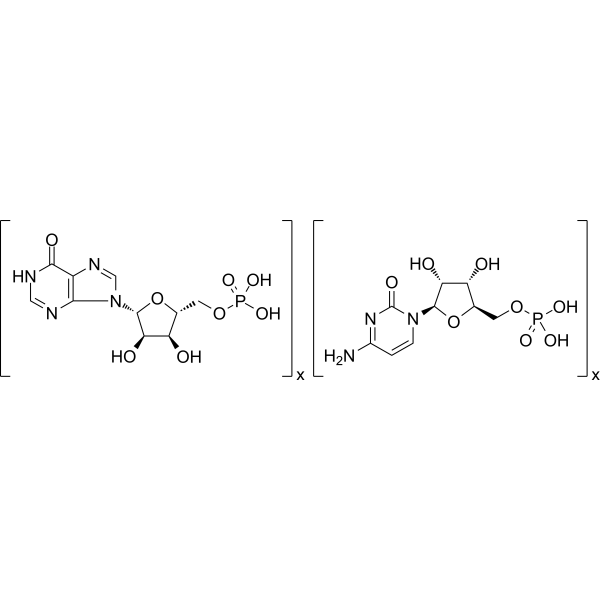
HY-107202
Polyinosinic-polycytidylic acidTLR-3 Agonist -

HY-107202GL
Polyinosinic-polycytidylic acid (GMP Like)TLR-3 Agonist -
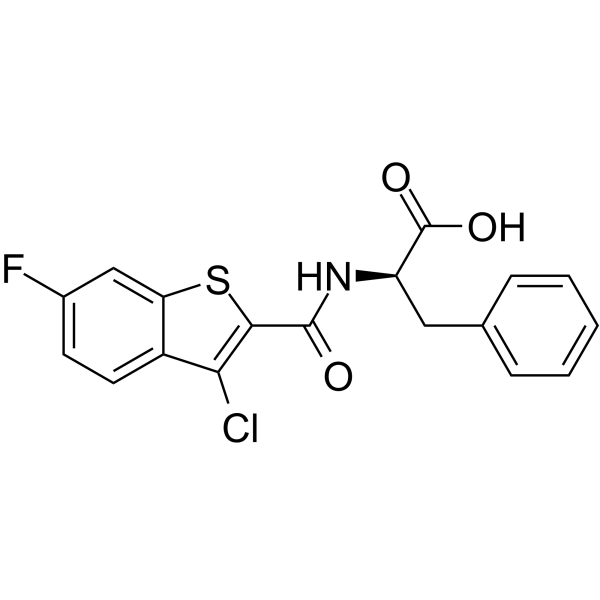
HY-108473
CU-CPT 4aTLR3 Inhibitor -
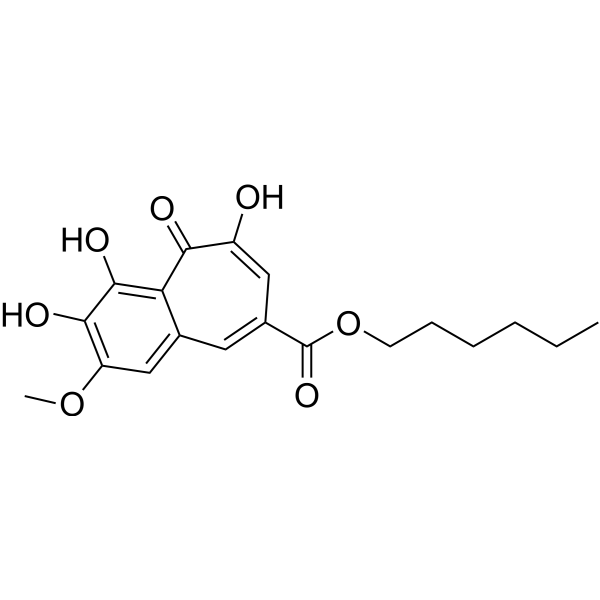
HY-108471
CU-CPT22TLR1/TLR2 Antagonist -
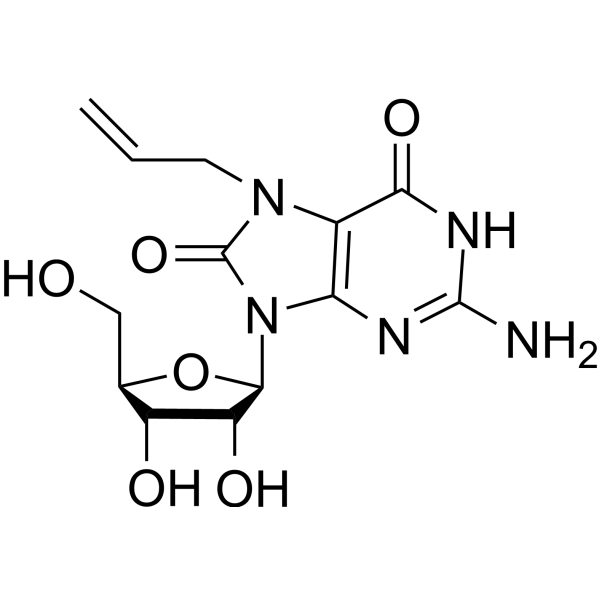
HY-108472
LoxoribineTLR 7 Agonist -
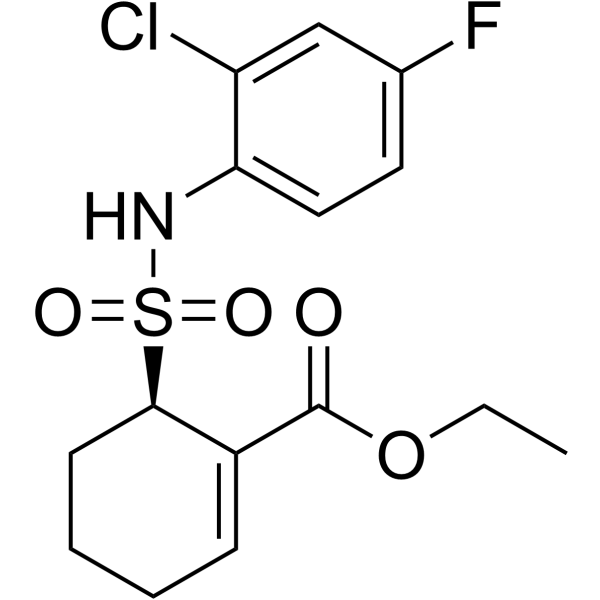
HY-11109
ResatorvidTLR4 Inhibitor -
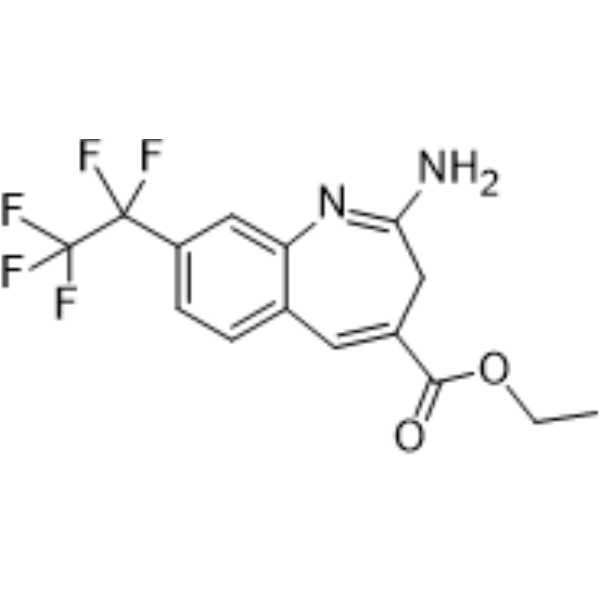
HY-10018
Toll-like receptor modulatorTLR7/8 Modulator -
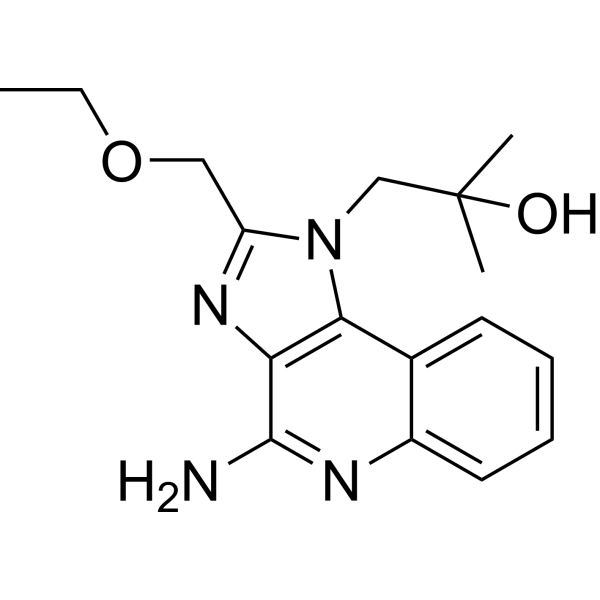
HY-13740
ResiquimodTLR7/8 Agonist -
HY-P1180A
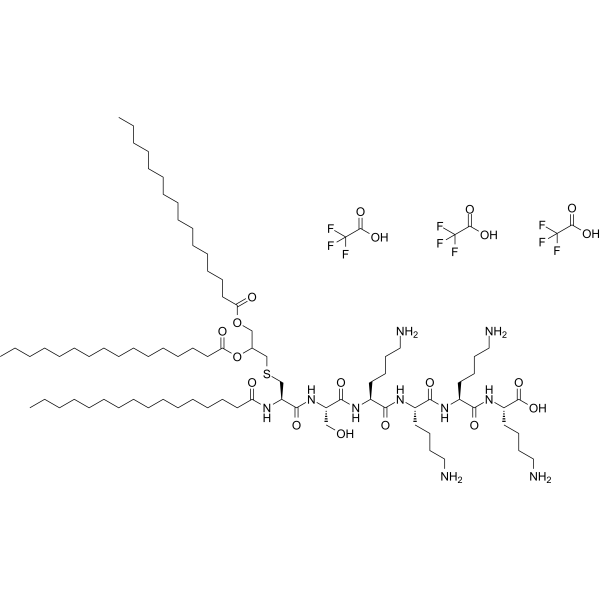
Pam3CSK4 TFATLR1/2 Agonist -

HY-108472R
Loxoribine (Standard)TLR 7 Agonist -
HY-13740G
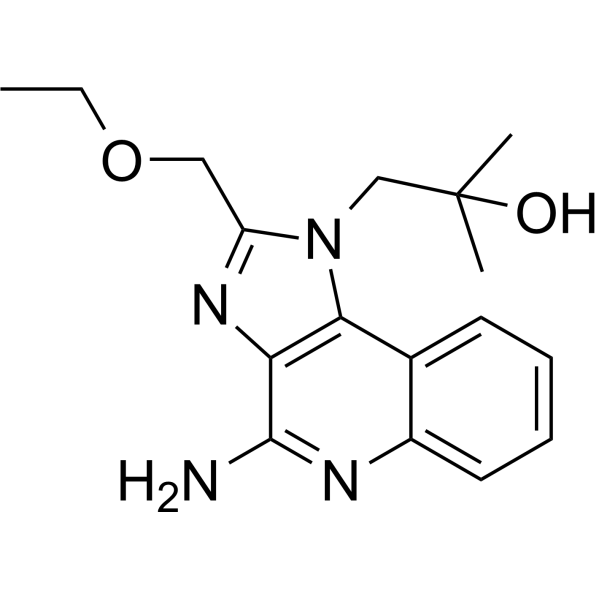
Resiquimod (GMP)TLR7/TLR8 Agonist (GMP) -
HY-B0270
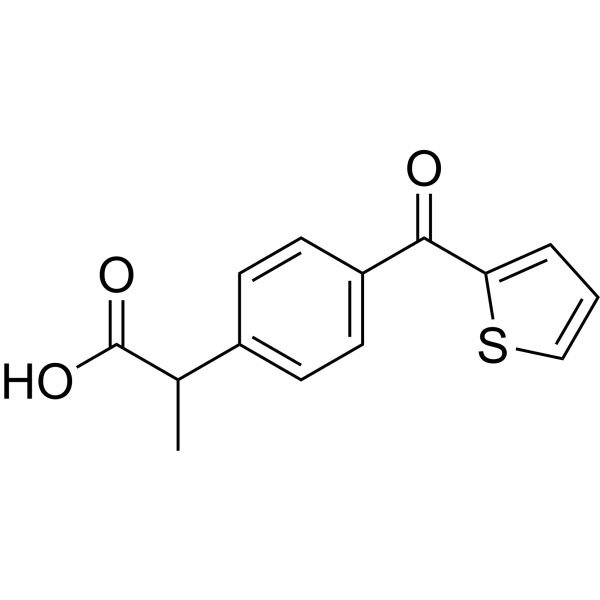
SuprofenPGE synthase Inhibitor
Publications Citing Use of MedChemExpress (MCE) Pam2CSK4
More

Biological Activity
Description
IC50 & Target
[1]|
TLR2 |
TBK1 |
Cellular Effect
|
Cell Line

|
Type | Value | Description | References |
|---|---|---|---|---|
| HEK293 | EC50 |
3.7 nM
Compound: Pam2CSK4
|
Agonist activity at human TLR2 expressed in HEK293 cells assessed as induction of NF-kappaB signaling after 24 hrs by luminescence based luciferase reporter gene assay
Agonist activity at human TLR2 expressed in HEK293 cells assessed as induction of NF-kappaB signaling after 24 hrs by luminescence based luciferase reporter gene assay
|
[PMID: 23098072] |
In Vitro
Pam2CSK4 (100 ng/mL; 6-24 h) induces TLR2-mediated iNOS expression in RAW264.7 mouse macrophages, and this production depends on TBK1 and MyD88[1].
Pam2CSK4 (100 ng/mL; 6-24 h) induces significant TLR2-mediated NO production in RAW264.7 murine macrophages, and this production is dependent on TBK1 and MyD88[1].
Pam2CSK4 (1-10 μg/mL; 25 min at 37°C) induces concentration-dependent α-granule secretion and integrin αIIbβ3 activation in washed human platelets and platelets in citrated human whole blood[2].
Pam2CSK4 (10 μg/mL; 6-45 min at 37°C) induces donor-dependent aggregation of washed human platelets under stirring conditions and enhances the adhesion of washed human platelets to collagen-coated surfaces[2].
Pam2CSK4 (10 μg/mL; 2-10 min at 37°C) activates multiple signaling pathways in washed human platelets, including the Akt, PKC, NF-κB and MAPK (p38) pathways[2].
Pam2CSK4 (10 μg/mL) induces dense granule secretion (ATP release) in washed human platelets, and this response depends on the TLR2, NF-κB and BTK signaling pathways[2].
Pam2CSK4 (10 μg/mL; 4 h at 37°C) enhances the inflammatory response of HUVECs (characterized by upregulated ICAM-1 expression, increased IL-6 secretion and increased IL-8 secretion)[2] only when co-cultured with washed human platelets.
Pam2CSK4 (10 μg/mL; 10 min at 37°C platelet pre-incubation, 10 min co-culture) enhances the adhesion of washed human platelets to untreated and TNF-α-stimulated HUVEC monolayers under static and physiologically relevant flow conditions[2].
Pam2CSK4 is a potent dual TLR2 agonist for both human and murine sources. It induces NF-κB activity with an EC50 of 67 pM, and can stimulate the production of various cytokines and chemokines[3].
Pam2CSK4 (100 nM; 3 days) treatment of CD11b+Gr1+ myeloid-derived suppressor cells (MDSCs) from EG7 tumor-bearing mice dose-dependently inhibited antigen-induced OT-IT cell proliferation[4].
MedChemExpress (MCE) has not independently confirmed the accuracy of these methods. They are for reference only.
-
Cell Line:RAW264.7
-
Concentration:100 ng/mL
-
Incubation Time:6 h
-
Result:Induced detectable inos gene expression.
Induced inos gene expression that was suppressed by pretreatment with TLR2 neutralizing monoclonal antibody.
-
Cell Line:RAW264.7
-
Concentration:100 ng/mL
-
Incubation Time:10 h
-
Result:Induced detectable iNOS protein expression.
Induced iNOS protein expression that was suppressed by pretreatment with TLR2 neutralizing monoclonal antibody.
-
Cell Line:Washed platelets
-
Concentration:10 μg/mL
-
Incubation Time:2, 5, 10 min
-
Result:Significantly increased tyrosine phosphorylation, increased 4G10 antibody expression.
Increased phosphorylation levels at Akt S473 and downstream substrates.
Increased phosphorylation levels of MAPK substrates and p38 T180Y182.
In Vivo
Pam2CSK4 (50 nmol; i.v.; single dose) induces accumulation of CD11b+Gr1+ MDSCs in spleens of B16D8 melanoma-bearing mice[4].
Pam2CSK4 (10 μg; s.c.; two doses, 2 weeks apart) as an adjuvant with ALM exacerbates cutaneous leishmaniasis disease severity in female C57BL/6 mice and drives a predominantly Th2-type immune response characterized by elevated antigen-specific IgG1 levels[6].
Pam2CSK4 (10 μg; s.c.; single dose) as an adjuvant with BmMfE induces significant protective immunity against B. malayi L3 challenge in male BALB/c mice, reducing parasite burden by 41% and driving robust Th2 cytokine production and antigen-specific antibody responses[6].
MedChemExpress (MCE) has not independently confirmed the accuracy of these methods. They are for reference only.
-
Animal Model:C57BL/6J (B6 WT) female mice (8-12 weeks old); TLR2 knockout (TLR2KO) female mice (8-12 weeks old); C57BL6-Tg (CAG-EGFP) female mice (8-12 weeks old) EG7 cells (1x10⁶)[4]
-
Dosage:50 nM
-
Administration:i.v.; single dose
-
Result:Increased the proportion of CD11b+Gr1+ myeloid-derived suppressor cells (MDSCs) in CD45+ splenocytes to 12.9%.
Increased the proportion of CD11b+Gr1+ MDSCs in peripheral blood CD45+ cells to approximately 50%.
Increased the proportion of CD11b+Gr1+ MDSCs in tumor-bearing GFP+CD45+ host cells to approximately 27%.
Eliminated the increased proportion of CD11b+Gr1+ MDSCs in TLR2KO EG7 tumor-bearing mice.
Induced dose-dependent inhibition of OT-I splenocyte proliferation by CD11b+Gr1+ cells in tumor-bearing mice.
-
Animal Model:C57BL/6J (B6 WT) female mice (8-12 weeks old) ( B16D8 (6x10⁵)[4]
-
Dosage:50 nM
-
Administration:i.v.; single dose
-
Result:Increased the percentage of CD11b+Gr1+ MDSCs in CD45+ spleen cells to 21.1%.
-
Animal Model:C57BL/6 (female, 8-10 weeks old; vaccinated with autoclaved Leishmania major then challenged with L. major metacyclic promastigotes)[6]
-
Dosage:10 μg
-
Administration:s.c.; two doses, 2 weeks apart
-
Result:Increased lesion sizes significantly compared to PBS-vaccinated control mice from 4 weeks post-infection, with significantly increased area under the curve (AUC) values for lesion progression.
Elevated antigen-specific IgG1 responses significantly compared to PBS-vaccinated controls, and skewed the IgG1:IgG2c ratio toward a Th2 phenotype.
-
Animal Model:BALB/c (male, 8-10 weeks old; vaccinated with Brugia malayi microfilariae extract then challenged with B. malayi L3 larvae)[6]
-
Dosage:10 μg
-
Administration:s.c.; single dose
-
Result:Reduced parasite recovery by a significant mean 41%, equivalent to the protection induced by BmMfE + Alum.
Elevated antigen-specific IgG1 and IgG2a levels significantly , with IgG1 levels higher than those induced by BmMfE + Alum.
Induced significantly elevated production of antigen-specific IL-4, IL-5, and IL-13 (Th2 cytokines) in splenocytes upon re-stimulation with B.
malayi L3 extract, with no significant elevation of the Th1 cytokine IFNγ.
- Phagocytosis Functional Assay
- RNA extraction experimental
- Multiplex immunofluorescence IHC
- LPS-Induced Endotoxemia/Systemic Inflammation
- Naïve CD4+ T-cell subset differentiation/polarization
- Multiplex immunohistochemistry
- Research Protocol for Cardiovascular Diseases
- Research Protocol for Inflammation-related Diseases
- Research Protocol for Cancer Immunology


Chemical Information
-
CAS No. 868247-72-7
-
Molecular Weight 1271.82
-
Formula C65H126N10O12S
-
Sequence
{(2R)-2,3-Bis(1-oxohexadecyl)oxy]propyl}-Cys-Ser-Lys-Lys-Lys-Lys
-
Sequence Shortening
{(2R)-2,3-Bis(1-oxohexadecyl)oxy]propyl}-CSKKKK
-
Shipping
Room temperature in continental US; may vary elsewhere.
-
Storage
Please store the product under the recommended conditions in the Certificate of Analysis.


Publications (1)
-
Journal Impact Factor
-
Most Recent
-
PLoS Pathog
The UBC/SIRT5/DRP1 axis regulates mitochondrial dynamics to alleviate Staphylococcus aureus-induced oxidative stress and senescence in bovine mammary epithelial cells. [Abstract]2026 Feb 12;22(2):e1013975. PMID: 41678546


Purity & Documentation
References
[1]. Kulsantiwong P, et al. Pam2CSK4 and Pam3CSK4 induce iNOS expression via TBK1 and MyD88 molecules in mouse macrophage cell line RAW264.7. Inflamm Res. 2017;66(10):843-853. [Content Brief]
[4]. Maruyama A, et al. Pam2 lipopeptides systemically increase myeloid-derived suppressor cells through TLR2 signaling. Biochem Biophys Res Commun. 2015;457(3):445-450. [Content Brief]
[5]. Shukla NM, et al. Recent Advances and Perspectives in Small-molecule TLR Ligands and Their Modulators. ACS Med Chem Lett. 2018;9(12):1156-1159. Published 2018 Dec 3. [Content Brief]
[6]. Halliday A, et al. The TLR2/6 ligand PAM2CSK4 is a Th2 polarizing adjuvant in Leishmania major and Brugia malayi murine vaccine models. Parasit Vectors. 2016 Feb 20;9:96. [Content Brief]

Calculators
Concentration (start) × Volume (start) = Concentration (final) × Volume (final)


Pam2CSK4 Related Classifications
HY-P1181 Related Classifications
 Powered by Bioz