



Triclabendazole (Standard)

Based on 1 Customer Validation
Triclabendazole (Standard) is the analytical standard of Triclabendazole. This product is intended for research and analytical applications. Triclabendazole is an orally active parasite inhibitor. Triclabendazole has anti-Leishmania activity and induces gasdermin E (GSDME)-dependent pyroptosis by caspase-3 activation. Triclabendazole can be used for the research of fasciola hepatica.
For research use only. We do not sell to patients.
- Purity : 99.32%
- CAS No.: 68786-66-3
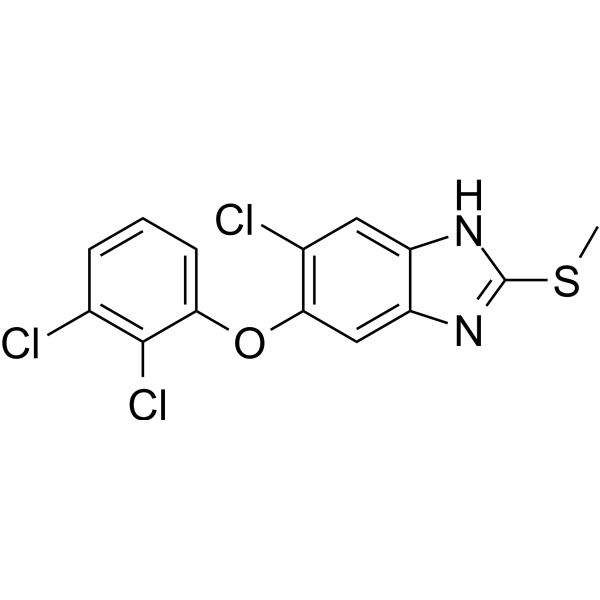
- Formula: C14H9Cl3N2OS
- Molecular Weight:359.66
-
Storage:
Please store the product under the recommended conditions in the Certificate of Analysis.


To place orders, for customer services and technical support, please contact: MedChemExpress USA
Tel: 609-228-6898 E-mail: [email protected] [email protected]


-
 Product Information
-
Chemical Information
- Purity & Documentation
-
 Help & FAQs


-
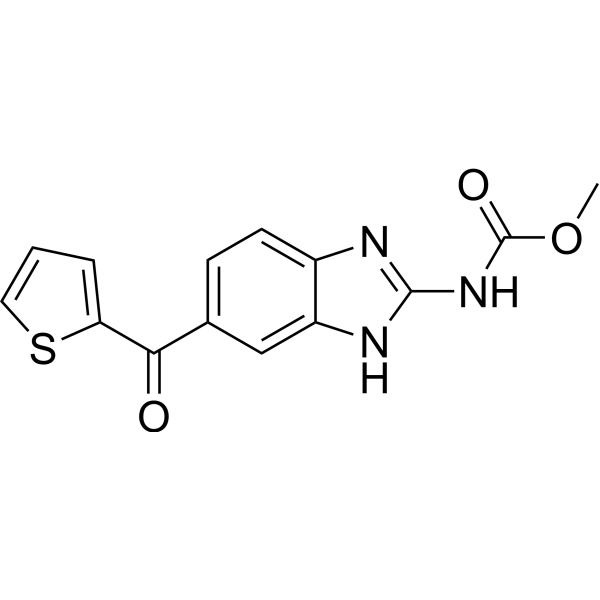
HY-13520
NocodazoleMicrotubule Inhibitor -
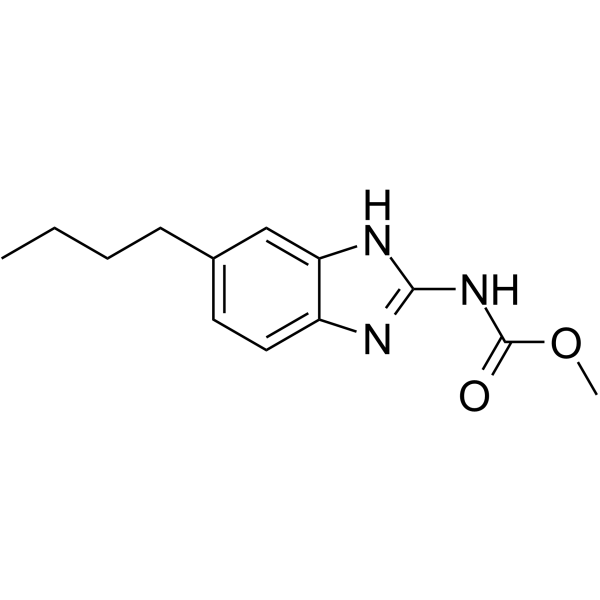
HY-115364
ParbendazoleMicrotubule Polymerization Inhibitor -

HY-B0294R
Flubendazole (Standard)Tubulin Polymerization Inhibitor -
HY-B0621
TriclabendazoleParasite Inhibitor -

HY-17595R
Mebendazole (Standard)Apoptosis Inducer -
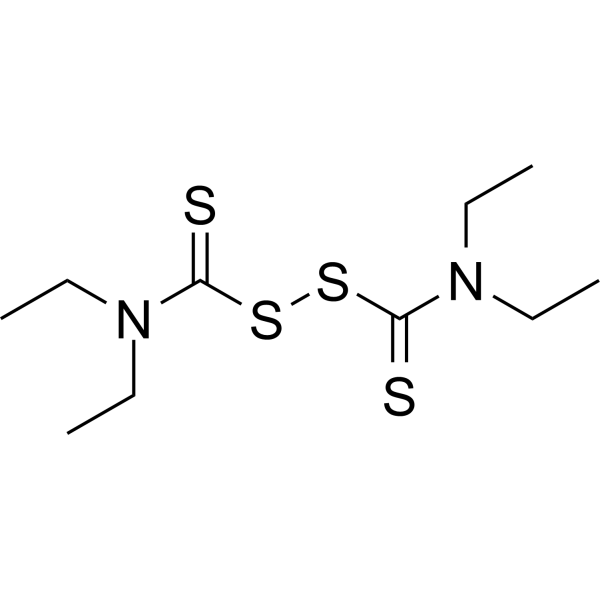
HY-B0240
DisulfiramALDH1 Inhibitor -
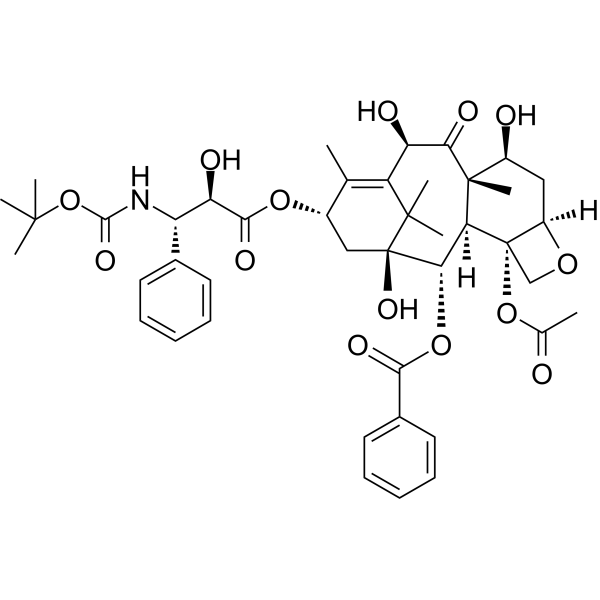
HY-B0011
DocetaxelMicrotubule Depolymerization Inhibitor -
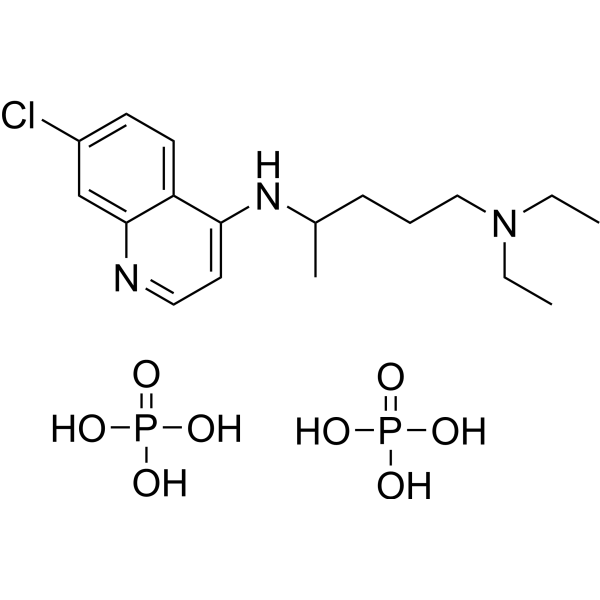
HY-17589
Chloroquine phosphateAntimalarial Agent -
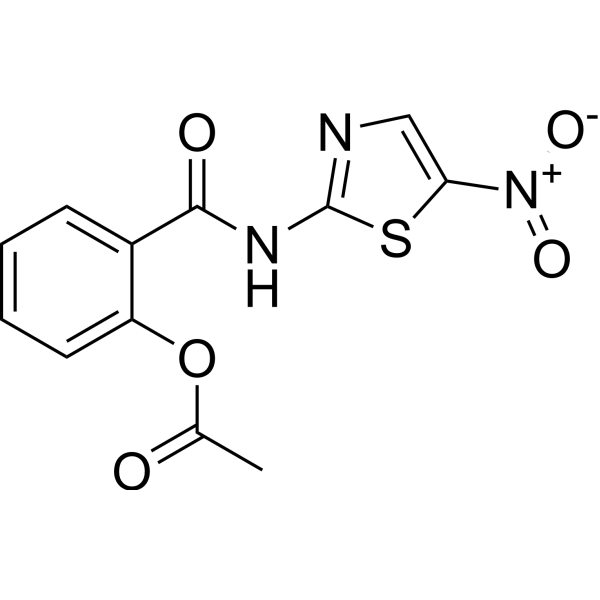
HY-B0217
NitazoxanideAnthelmintic Agent -
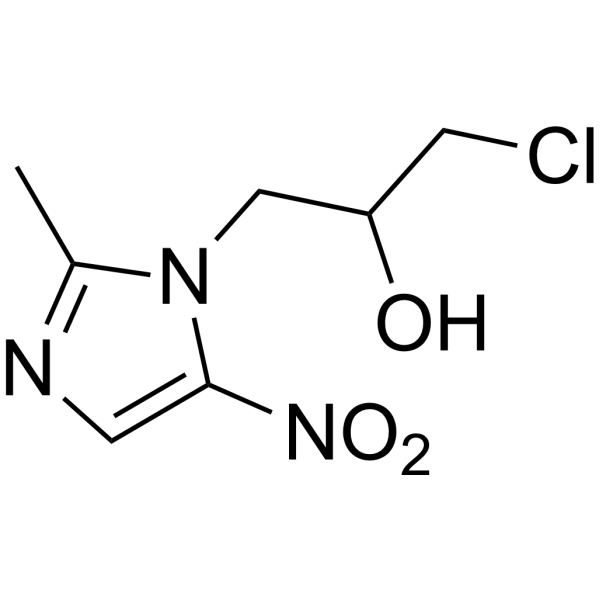
HY-B0508
OrnidazoleAntibacterial Agent -
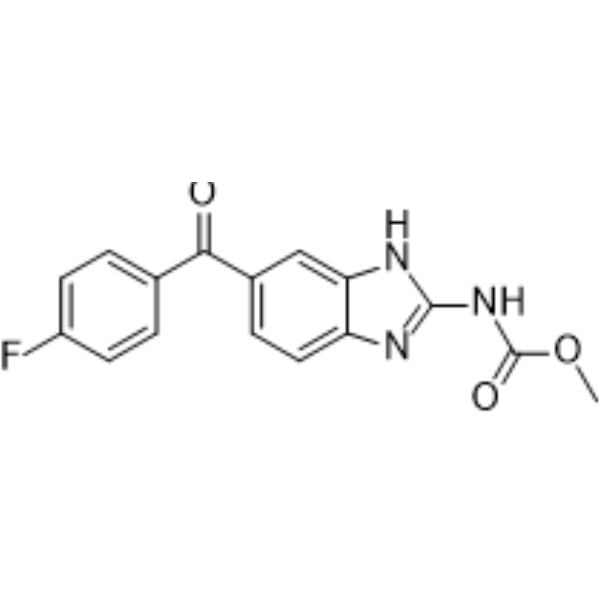
HY-B0294
FlubendazoleTubulin Polymerization Inhibitor -

HY-B0240R
Disulfiram (Standard)ALDH1 Inhibitor


Product Information
Information
Application
The compound is the grade of analytical standard, which is the reference standard supplied assay. It is commonly used in qualitative, quantitative and methodological research experiments in HPLC, GC and MS.


Chemical Information
-
CAS No. 68786-66-3
-
Appearance Solid
-
Molecular Weight 359.66
-
Formula C14H9Cl3N2OS
-
Color White to off-white
-
SMILES
CSC1=NC2=CC(OC3=CC=CC(Cl)=C3Cl)=C(Cl)C=C2N1
-
Synonyms
CGA89317 (Standard)
-
Shipping
Room temperature in continental US; may vary elsewhere.
-
Storage
Please store the product under the recommended conditions in the Certificate of Analysis.


Purity & Documentation
References
[1]. Yan L, et al. Triclabendazole induces pyroptosis by activating caspase-3 to cleave GSDME in breast cancer cells [J]. Frontiers in Pharmacology, 2021, 12: 670081. [Content Brief]
[2]. Devine C, et al. Potentiation of triclabendazole action in vivo against a triclabendazole-resistant isolate of Fasciola hepatica following its co-administration with the metabolic inhibitor, ketoconazole [J]. Veterinary parasitology, 2012, 184(1): 37-47. [Content Brief]
[3]. Borges B S, et al. In vitro anti-Leishmania activity of triclabendazole and its synergic effect with amphotericin B [J]. Frontiers in Cellular and Infection Microbiology, 2023, 12: 1044665. [Content Brief]

Calculators
Concentration (start) × Volume (start) = Concentration (final) × Volume (final)


Triclabendazole (Standard) Related Classifications
HY-B0621R Related Classifications
 Powered by Bioz