



Miransertib hydrochloride
Based on 21 publication(s) in Google Scholar
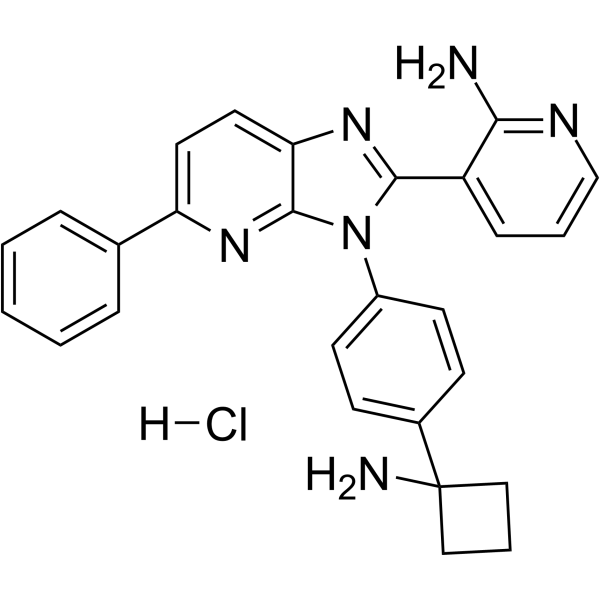
Miransertib hydrochloride (ARQ-092 hydrochloride) is a potent, orally active, selective and allosteric Akt inhibitor with IC50s of 2.7 nM, 14 nM and 8.1 nM for Akt1, Akt2, Akt3, respectively. Miransertib hydrochloride is also a potent the AKT1-E17K mutant protein inhibitor and has the potential for PI3K/AKT-driven tumors and Proteus syndrome research. Miransertib hydrochloride is effective against Leishmania.
Nur für Forschungszwecke. Wir verkaufen nicht an Patienten.
- Reinheit : 99.74%
- CAS. Nr.: 1313883-00-9
- Formel: C27H25ClN6
- Molecular Weight:468.98
-
Speicherung:
4°C, sealed storage, away from moisture
* In solvent : -80°C, 6 months; -20°C, 1 month (sealed storage, away from moisture)

To place orders, for customer services and technical support, please contact: MedChemExpress USA
Tel: 609-228-6898 E-mail: [email protected] [email protected]


-
 Biologische Aktivität
-
Chemical Information
-
Lösungsmittel & Löslichkeit
- Reinheit & Dokumentation
- Verweise
-
 Help & FAQs


-
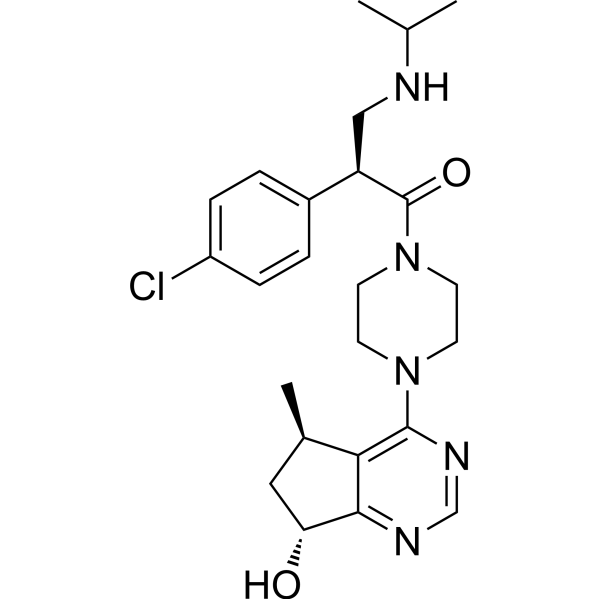
HY-15186
IpatasertibPan-Akt Inhibitor -
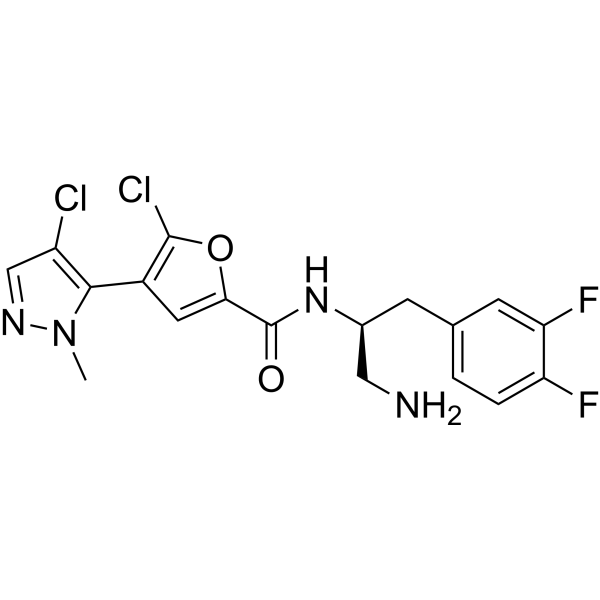
HY-15965
UprosertibAkt Inhibitor -
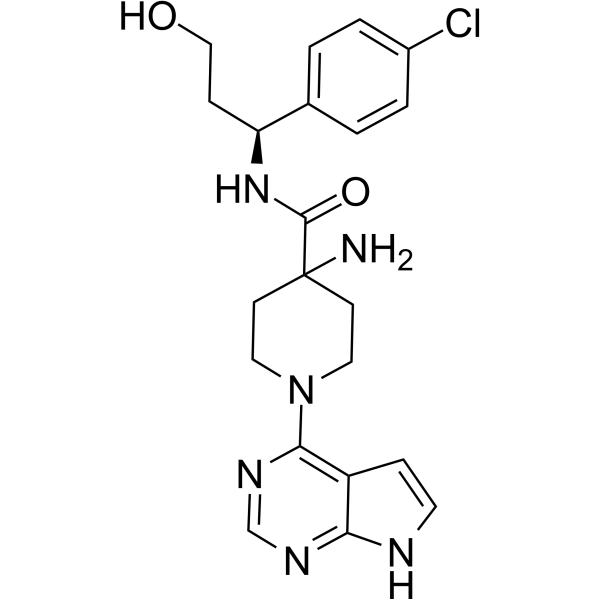
HY-15431
CapivasertibAkt Inhibitor -
HY-10358
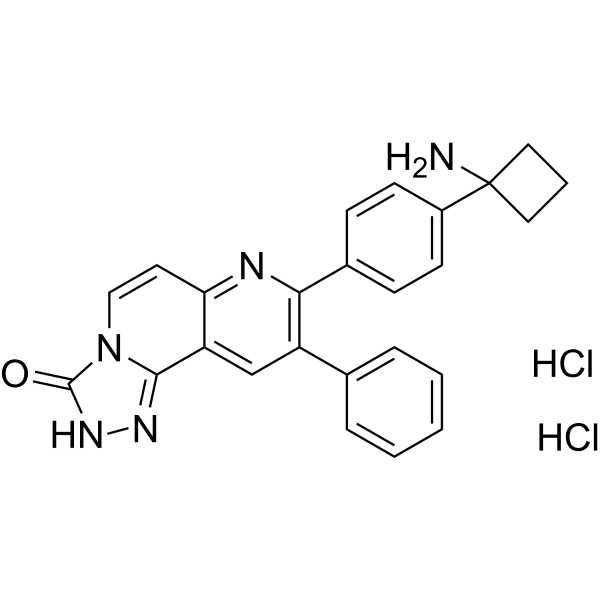
MK-2206 dihydrochlorideAllosteric Akt Inhibitor -
HY-137458A
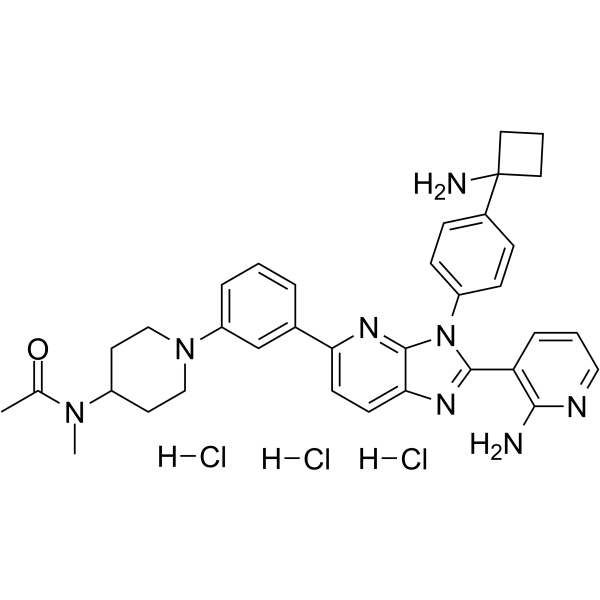
Vevorisertib trihydrochlorideAKT Inhibitor -
HY-15615A
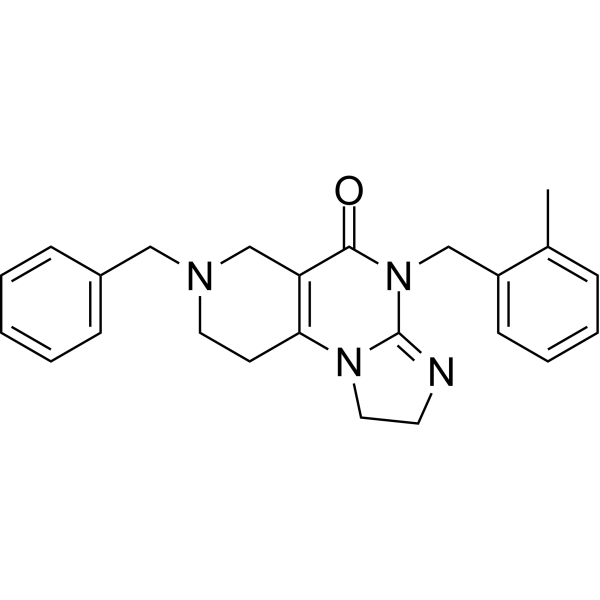
DordaviproneTRAIL Inducer -
HY-10181
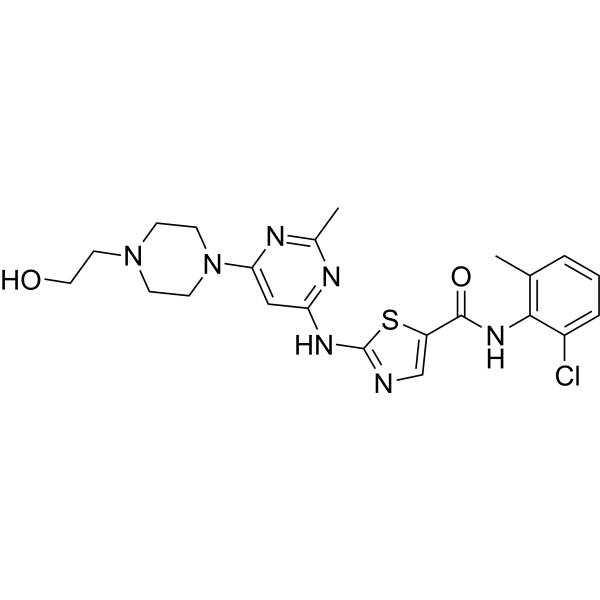
DasatinibSrc/Bcr-Abl Inhibitor -
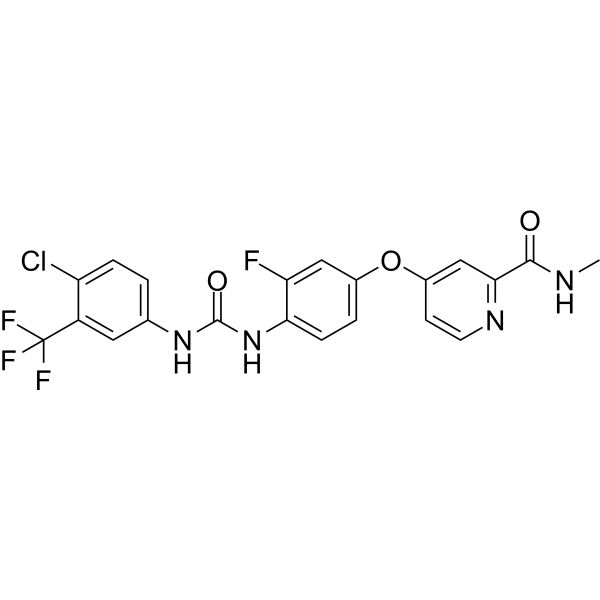
HY-10331
RegorafenibMulti-kinase Inhibitor -
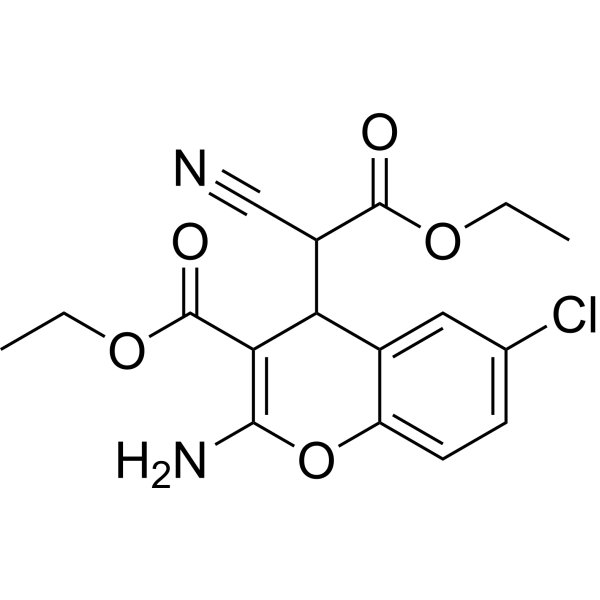
HY-18749
SC79Akt Activator -
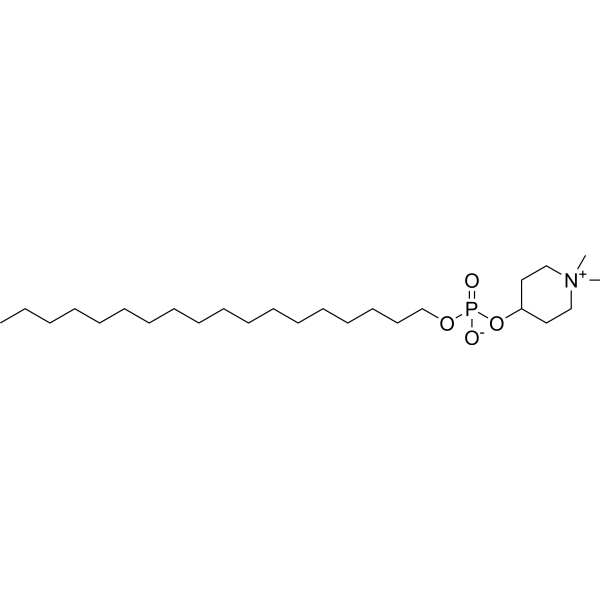
HY-50909
PerifosineAkt Inhibitor
Publications Citing Use of MedChemExpress (MCE) Miransertib hydrochloride
More- Signal Transduct Target Ther. 2024 Jun 17;9(1):146. [Abstract]
- J Extracell Vesicles. 2026 Jun;15(6):e70328. [Abstract]
- Nat Commun. 2023 Sep 30;14(1):6117. [Abstract]
- Phytomedicine. 2026 Jun:155:158111. [Abstract]
- Cell Prolif. 2025 Aug 1:e70093. [Abstract]
- Ecotoxicol Environ Saf. 2024 Oct 1:284:116854. [Abstract]
- Drug Des Devel Ther. 2024 May 6:18:1515-1528. [Abstract]
- Invest Ophthalmol Vis Sci. 2025 Aug 1;66(11):61. [Abstract]
- Mol Pharm. 2025 Sep 1;22(9):5523-5532. [Abstract]
- Clin Pharmacol Ther. 2023 Sep;114(3):673-685. [Abstract]
- Biomedicines. 2022 Jun 22;10(7):1476. [Abstract]
- FASEB J. 2022 Aug;36(8):e22423. [Abstract]
- Virus Res. 2024 Oct:348:199447. [Abstract]
- Hum Mol Genet. 2023 Jan 6;32(2):333-350. [Abstract]
- Medicina (Kaunas). 2023 Aug 3;59(8):1414. [Abstract]
- J Chromatogr B Analyt Technol Biomed Life Sci. 2026 May 29:1281:125161. [Abstract]
- Biomed Pharmacother. 2026 Sep:202:119803.
- chemRxiv. 2026 Jun 22.
- bioRxiv. 2025 May 06.
- bioRxiv. 2025 March 20.
- University of North Carolina. 2021.
 Customer Validation & Images

-
In Vivo Imaging
-
In Vivo Imaging
-
WB
-
WB
-
WB
Alle Parasite Isoform-spezifische Produkte anzeigen
More

Biologische Aktivität
Beschreibung
|
Akt1 2.7 nM (IC50) |
Leishmania |
Akt3 8.1 nM (IC50) |
Akt2 174 nM (IC50) |
Akt1 E17K mutant |
Cellular Effect
|
Cell Line

|
Type | Value | Description | References |
|---|---|---|---|---|
| A2780 | IC50 |
0.73 μM
Compound: 21a
|
Antiproliferative activity against human A2780 cells after 72 hrs by MTS/PMS assay
Antiproliferative activity against human A2780 cells after 72 hrs by MTS/PMS assay
|
[PMID: 27305487] |
| AN3-CA | IC50 |
0.71 μM
Compound: 21a
|
Antiproliferative activity against human AN3CA cells after 72 hrs by MTS/PMS assay
Antiproliferative activity against human AN3CA cells after 72 hrs by MTS/PMS assay
|
[PMID: 27305487] |
| IGROV-1 | IC50 |
0.21 μM
Compound: 21a
|
Antiproliferative activity against human IGROV1 cells after 72 hrs by MTS/PMS assay
Antiproliferative activity against human IGROV1 cells after 72 hrs by MTS/PMS assay
|
[PMID: 27305487] |
| LNCaP | IC50 |
0.9 μM
Compound: 21a
|
Antiproliferative activity against human LNCAP cells after 72 hrs by MTS/PMS assay
Antiproliferative activity against human LNCAP cells after 72 hrs by MTS/PMS assay
|
[PMID: 27305487] |
| Sf9 | IC50 |
0.0027 μM
Compound: 21a
|
Inhibition of full length unphosphorylated AKT1 (1 to 480 residues) (unknown origin) expressed in baculovirus infected Sf9 insect cells using biotin-GRPRTSSFAEG as substrate preincubated for 20 mins followed by substrate addition measured after 30 mins by
Inhibition of full length unphosphorylated AKT1 (1 to 480 residues) (unknown origin) expressed in baculovirus infected Sf9 insect cells using biotin-GRPRTSSFAEG as substrate preincubated for 20 mins followed by substrate addition measured after 30 mins by
|
[PMID: 27305487] |
| Sf9 | IC50 |
0.0045 μM
Compound: 21a
|
Inhibition of full length active AKT2 (1 to 481 residues) (unknown origin) expressed in baculovirus infected Sf9 insect cells using biotin-GRPRTSSFAEG as substrate preincubated for 20 mins followed by substrate/PDK1/MAPKAPK2/DOPS/DOPC/PtdIns(3,4,5)P3 addi
Inhibition of full length active AKT2 (1 to 481 residues) (unknown origin) expressed in baculovirus infected Sf9 insect cells using biotin-GRPRTSSFAEG as substrate preincubated for 20 mins followed by substrate/PDK1/MAPKAPK2/DOPS/DOPC/PtdIns(3,4,5)P3 addi
|
[PMID: 27305487] |
| Sf9 | IC50 |
0.005 μM
Compound: 21a
|
Inhibition of full length active AKT1 (1 to 480 residues) (unknown origin) expressed in baculovirus infected Sf9 insect cells using biotin-GRPRTSSFAEG as substrate preincubated for 20 mins followed by substrate/PDK1/MAPKAPK2/DOPS/DOPC/PtdIns(3,4,5)P3 addi
Inhibition of full length active AKT1 (1 to 480 residues) (unknown origin) expressed in baculovirus infected Sf9 insect cells using biotin-GRPRTSSFAEG as substrate preincubated for 20 mins followed by substrate/PDK1/MAPKAPK2/DOPS/DOPC/PtdIns(3,4,5)P3 addi
|
[PMID: 27305487] |
| Sf9 | IC50 |
0.0081 μM
Compound: 21a
|
Inhibition of full length unphosphorylated AKT3 (1 to 479 residues) (unknown origin) expressed in baculovirus infected Sf9 insect cells using biotin-GRPRTSSFAEG as substrate preincubated for 20 mins followed by substrate addition measured after 30 mins by
Inhibition of full length unphosphorylated AKT3 (1 to 479 residues) (unknown origin) expressed in baculovirus infected Sf9 insect cells using biotin-GRPRTSSFAEG as substrate preincubated for 20 mins followed by substrate addition measured after 30 mins by
|
[PMID: 27305487] |
| Sf9 | IC50 |
0.014 μM
Compound: 21a
|
Inhibition of full length unphosphorylated AKT2 (1 to 481 residues) (unknown origin) expressed in baculovirus infected Sf9 insect cells using biotin-GRPRTSSFAEG as substrate preincubated for 20 mins followed by substrate addition measured after 30 mins by
Inhibition of full length unphosphorylated AKT2 (1 to 481 residues) (unknown origin) expressed in baculovirus infected Sf9 insect cells using biotin-GRPRTSSFAEG as substrate preincubated for 20 mins followed by substrate addition measured after 30 mins by
|
[PMID: 27305487] |
| Sf9 | IC50 |
0.016 μM
Compound: 21a
|
Inhibition of full length active AKT3 (1 to 479 residues) (unknown origin) expressed in baculovirus infected Sf9 insect cells using biotin-GRPRTSSFAEG as substrate preincubated for 20 mins followed by substrate/PDK1/MAPKAPK2/DOPS/DOPC/PtdIns(3,4,5)P3 addi
Inhibition of full length active AKT3 (1 to 479 residues) (unknown origin) expressed in baculovirus infected Sf9 insect cells using biotin-GRPRTSSFAEG as substrate preincubated for 20 mins followed by substrate/PDK1/MAPKAPK2/DOPS/DOPC/PtdIns(3,4,5)P3 addi
|
[PMID: 27305487] |
In Vitro
In a large panel of cell lines derived from various tumor types, Miransertib (ARQ-092; Compound 21a) shows potent anti-proliferative activity in cell lines containing PIK3CA/PIK3R1 mutations compared to those with wild-type (wt) PIK3CA/PIK3R1 or PTEN loss. Miransertib shows excellent inhibition of p-Akt (S473) and p-Akt (T308) in both AN3CA and A2780 cells. The inhibition of the downstream protein p-PRAS40 (T246) is observed with Miransertib (IC50=0.31 μM)[1]. MedChemExpress (MCE) has not independently confirmed the accuracy of these methods. They are for reference only.
Miransertib is markedly effective against intracellular amastigotes of L. donovani or L. amazonensis-infected macrophages. Miransertib also enhances mTOR dependent autophagy in Leishmania-infected macrophages[2]
In Vivo
Miransertib (ARQ-092; Compound 21a) inhibits tumor growth in a human xenograft mouse model of endometrial adenocarcinoma[1].
MedChemExpress (MCE) has not independently confirmed the accuracy of these methods. They are for reference only.


Chemical Information
-
CAS. Nr. 1313883-00-9
-
Appearance Solid
-
Molecular Weight 468.98
-
Formel C27H25ClN6
-
Color Light yellow to brown
-
SMILES
NC1=NC=CC=C1C2=NC3=CC=C(C4=CC=CC=C4)N=C3N2C5=CC=C(C6(N)CCC6)C=C5.[H]Cl
-
Synonyms
ARQ-092 hydrochloride
-
Versand
Room temperature in continental US; may vary elsewhere.
-
Speicherung
4°C, sealed storage, away from moisture
* In solvent : -80°C, 6 months; -20°C, 1 month (sealed storage, away from moisture)


Publications (21)
-
Journal Impact Factor
-
Most Recent
-
Signal Transduct Target Ther
2024 Jun 17;9(1):146. PMID: 38880808 -
J Extracell Vesicles
Exosomal Oleic Acid Promotes Lymphangiogenesis and Nodal Metastasis in Cervical Cancer via the AKT/mTOR Pathway. [Abstract]2026 Jun;15(6):e70328. PMID: 42338019 -
Nat Commun
IGF1R-phosphorylated PYCR1 facilitates ELK4 transcriptional activity and sustains tumor growth under hypoxia. [Abstract]2023 Sep 30;14(1):6117. PMID: 37777542 -
Phytomedicine
Paeoniflorin alleviates anxiety-like behaviors in sleep-deprived male mice by suppressing inflammation of the paraventricular nucleus of the hypothalamus. [Abstract]2026 Jun:155:158111. PMID: 41931995 -
Cell Prolif
Dysregulation of Rho-Associated Coiled-Coil Protein Kinase1 Depletes Neural Stem Cell Pool and Impairs Hippocampal Neurogenesis After Traumatic Brain Injury. [Abstract]2025 Aug 1:e70093. PMID: 40749978 -
Ecotoxicol Environ Saf
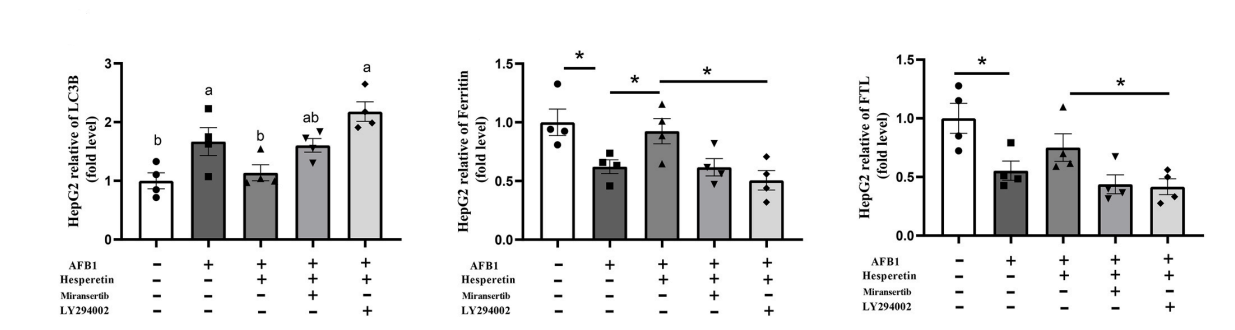
Hesperetin alleviates aflatoxin B1 induced liver toxicity in mice: Modulating lipid peroxidation and ferritin autophagy. [Abstract]2024 Oct 1:284:116854. PMID: 39142113
Miransertib hydrochloride purchased from MedChemExpress. Usage Cited in: Ecotoxicol Environ Saf. 2024 Oct 1:284:116854. [Abstract]
Miransertib (1 µM) significantly blocked hesperetin’s ability to alleviate ferritin autophagy induced by AFB1. The decreased expression of FTL and ferritin, along with elevated levels of LC3B, provided evidence for this hypothesis.
-
Drug Des Devel Ther
ED-71 Improves Bone Mass in Ovariectomized Rats by Inhibiting Osteoclastogenesis Through EphrinB2-EphB4-RANKL/OPG Axis. [Abstract]2024 May 6:18:1515-1528. PMID: 38716369 -
Invest Ophthalmol Vis Sci
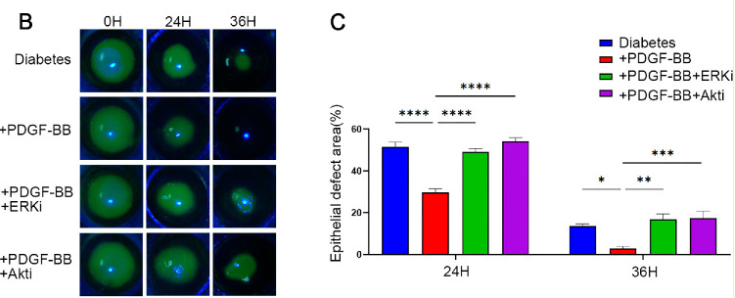
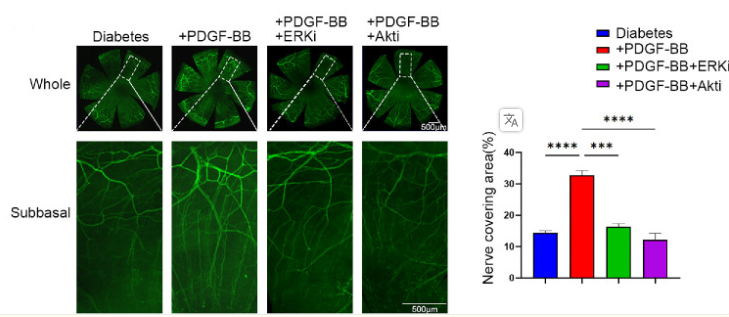
Hyperglycemia-Reduced Platelet-Derived Growth Factor-BB Expression Impairs Corneal Wound Healing in Diabetic Mice. [Abstract]2025 Aug 1;66(11):61. PMID: 40856651
Miransertib hydrochloride purchased from MedChemExpress. Usage Cited in: Invest Ophthalmol Vis Sci. 2025 Aug 1;66(11):61. [Abstract]
Inhibition of ERK1/2 and Akt pathways by subconjunctival injection of the ERK1/2 inhibitor ravoxertinib hydrochloride and the Akt inhibitor Miransertib (270 µM, 5 µL/eye) reversed the role of PDGF-BB in promoting diabetic epithelial wound healing.
Miransertib hydrochloride purchased from MedChemExpress. Usage Cited in: Invest Ophthalmol Vis Sci. 2025 Aug 1;66(11):61. [Abstract]
Inhibition of ERK1/2 and Akt pathways by subconjunctival injection of the ERK1/2 inhibitor ravoxertinib hydrochloride and the Akt inhibitor Miransertib (270 µM, 5 µL/eye) reversed the role of PDGF-BB in promoting diabetic epithelial nerve regeneration.
-
Mol Pharm
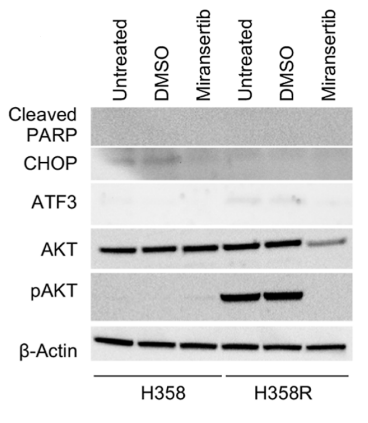
Lipid Nanoparticle Delivery of iMDK Induces ATF3-Mediated Apoptosis in Sotorasib-Resistant KRAS Mutant Lung Cancer. [Abstract]2025 Sep 1;22(9):5523-5532. PMID: 40758603
Miransertib hydrochloride purchased from MedChemExpress. Usage Cited in: Mol Pharm. 2025 Sep 1;22(9):5523-5532. [Abstract]
Immunoblots indicated the expression of proteins from cell extracts of H358 and H358R cells that were treated with DMSO or Miransertib (10 μM) for 48 h.
-
Clin Pharmacol Ther
Mechanistic, functional and clinical aspects of pro-inflammatory cytokine mediated regulation of ADME gene expression in 3D human liver spheroids. [Abstract]2023 Sep;114(3):673-685. PMID: 37307233 -
Biomedicines
2022 Jun 22;10(7):1476. PMID: 35884781 -
FASEB J
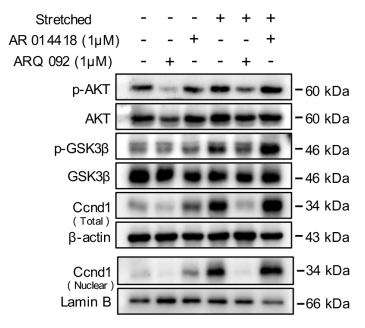
2022 Aug;36(8):e22423. PMID: 35775626
Miransertib hydrochloride purchased from MedChemExpress. Usage Cited in: FASEB J. 2022 Aug;36(8):e22423. [Abstract]
AKT and GSK3β signaling was suppressed by ARQ 092 (1 μM), and phosphorylated GSK3β was activated by AR 014418 in BMDMs afterforce application.
-
Virus Res
A conserved role for AKT in the replication of emerging flaviviruses in vertebrates and vectors. [Abstract]2024 Oct:348:199447. PMID: 39117146 -
Hum Mol Genet
2023 Jan 6;32(2):333-350. PMID: 35994048 -
Medicina (Kaunas)
The Synergistic Effect of Zuogui Pill and Eldecalcitol on Improving Bone Mass and Osteogenesis in Type 2 Diabetic Osteoporosis. [Abstract]2023 Aug 3;59(8):1414. PMID: 37629706 -
J Chromatogr B Analyt Technol Biomed Life Sci
Development and validation of an LC-MS/MS assay for the quantification of Miransertib in human plasma and clinical application. [Abstract]2026 May 29:1281:125161. PMID: 42224880 -
-
-
-
-


Lösungsmittel & Löslichkeit
In Vitro:
DMSO : 50 mg/mL (106.61 mM; Need ultrasonic; Hygroscopic DMSO has a significant impact on the solubility of product, please use newly opened DMSO)
Please refer to the solubility information to select the appropriate solvent. Once prepared, please aliquot and store the solution to prevent product inactivation from repeated freeze-thaw cycles.
Storage method and period of stock solution: -80°C, 6 months; -20°C, 1 month (sealed storage, away from moisture). When stored at -80°C, please use it within 6 months. When stored at -20°C, please use it within 1 month.
Please refer to the solubility information to select the appropriate solvent. Once prepared, please aliquot and store the solution to prevent product inactivation from repeated freeze-thaw cycles.
Storage method and period of stock solution: -80°C, 6 months; -20°C, 1 month (sealed storage, away from moisture). When stored at -80°C, please use it within 6 months. When stored at -20°C, please use it within 1 month.
Konzentration (Stammlösung) × Volumen (Stammlösung) = Konzentration (Ziellösung) × Volumen (Ziellösung)
In Vivo:
Select the appropriate dissolution method based on your experimental animal and administration route.
- For the following dissolution methods, please ensure to first prepare a clear stock solution using an In Vitro approach and then sequentially add co-solvents:
- To ensure reliable experimental results, the clarified stock solution can be appropriately stored based on storage conditions. As for the working solution for In Vivo experiments, it is recommended to prepare freshly and use it on the same day.
- The percentages shown for the solvents indicate their volumetric ratio in the final prepared solution. If precipitation or phase separation occurs during preparation, heat and/or sonication can be used to aid dissolution.
Add each solvent one by one: 10% DMSO 90% (20% SBE-β-CD in Saline)
Solubility: ≥ 2.5 mg/mL (5.33 mM); Clear solution
This protocol yields a clear solution of ≥ 2.5 mg/mL (saturation unknown).
Taking 1 mL working solution as an example, add 100 μL DMSO stock solution (25.0 mg/mL) to 900 μL 20% SBE-β-CD in Saline, and mix evenly.
Preparation of 20% SBE-β-CD in Saline (4°C, storage for one week): 2 g SBE-β-CD powder is dissolved in 10 mL Saline, completely dissolve until clear.
In Vivo Dissolution Calculator
Please enter the basic information of animal experiments:
-
-
-
-
Recommended: Prepare an additional quantity of animals to account for potential losses during experiments.
Please enter your animal formula composition:
-
%DMSO +
Recommended: Keep the proportion of DMSO in working solution below 2% if your animal is weak.
-
%+
-
+%Tween-80 + +
-
%Saline +
The co-solvents required include: DMSO, . All of co-solvents are available by MedChemExpress (MCE). , Tween 80. All of co-solvents are available by MedChemExpress (MCE).
Working solution concentration: 0.22 mg/mL
Method for preparing stock solution: mg drug dissolved in μL DMSO. Stock solution concentration: mg/mL. * In solvent : -80°C, 6 months; -20°C, 1 month (sealed storage, away from moisture)
1. Take μL DMSO stock solution;
2. Add μL .
μL , mix evenly;
3. Then add μL Tween 80, mix evenly;
4. Then add μL
Please ensure that the stock solution in the first step is dissolved to a clear state, and add co-solvents in sequence. You can use ultrasonic heating (ultrasonic cleaner, recommended frequency 20-40 kHz), vortexing, etc. to assist dissolution.


Reinheit & Dokumentation
-
Data Sheet (294 KB)
-
SDS (393 KB)
- English - EN (393 KB)
- Français - FR (393 KB)
- Deutsch - DE (393 KB)
- Norwegian - NO (393 KB)
- Español - ES (393 KB)
- Swedish - SV (393 KB)
- Italian - IT (393 KB)
- Korean - KR (393 KB)
- Portuguese - PT (393 KB)
-
Handling Instructions (2659 KB)
Verweise
[1]. Lapierre JM, et al. Discovery of 3-(3-(4-(1-Aminocyclobutyl)phenyl)-5-phenyl-3H-imidazo[4,5-b]pyridin-2-yl)pyridin-2-amine (ARQ 092): An Orally Bioavailable, Selective, and Potent Allosteric AKT Inhibitor. J Med Chem. 2016 Jul 14;59(13):6455-69. [Content Brief]
[2]. Devki Nandan, et al. Miransertib (ARQ 092), an orally-available, selective Akt inhibitor is effective against Leishmania. PLoS One. 2018 Nov 6;13(11):e0206920. [Content Brief]


Complete Stock Solution Preparation Table
Please refer to the solubility information to select the appropriate solvent. Once prepared, please aliquot and store the solution to prevent product inactivation from repeated freeze-thaw cycles.
Storage method and period of stock solution: -80°C, 6 months; -20°C, 1 month (sealed storage, away from moisture). When stored at -80°C, please use it within 6 months. When stored at -20°C, please use it within 1 month.
| Optional Solvent | Concentration Solvent Mass | 1 mg | 5 mg | 10 mg | 25 mg |
|---|---|---|---|---|---|
| DMSO | 1 mM | 2.1323 mL | 10.6614 mL | 21.3229 mL | 53.3072 mL |
| 5 mM | 0.4265 mL | 2.1323 mL | 4.2646 mL | 10.6614 mL | |
| 10 mM | 0.2132 mL | 1.0661 mL | 2.1323 mL | 5.3307 mL | |
| 15 mM | 0.1422 mL | 0.7108 mL | 1.4215 mL | 3.5538 mL | |
| 20 mM | 0.1066 mL | 0.5331 mL | 1.0661 mL | 2.6654 mL | |
| 25 mM | 0.0853 mL | 0.4265 mL | 0.8529 mL | 2.1323 mL | |
| 30 mM | 0.0711 mL | 0.3554 mL | 0.7108 mL | 1.7769 mL | |
| 40 mM | 0.0533 mL | 0.2665 mL | 0.5331 mL | 1.3327 mL | |
| 50 mM | 0.0426 mL | 0.2132 mL | 0.4265 mL | 1.0661 mL | |
| 60 mM | 0.0355 mL | 0.1777 mL | 0.3554 mL | 0.8885 mL | |
| 80 mM | 0.0267 mL | 0.1333 mL | 0.2665 mL | 0.6663 mL | |
| 100 mM | 0.0213 mL | 0.1066 mL | 0.2132 mL | 0.5331 mL |


Miransertib hydrochloride Related Classifications
HY-19719A Related Classifications
 Powered by Bioz