



Dordaviprone
Based on 10 publication(s) in Google Scholar
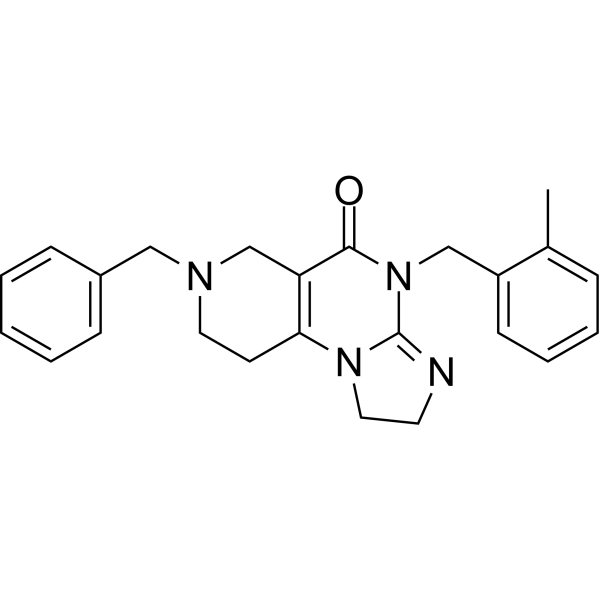
Dordaviprone (TIC10) is a potent, orally active, and stable tumor necrosis factor-related apoptosis-inducing ligand (TRAIL) inducer which acts by inhibiting Akt and ERK, consequently activating Foxo3a and significantly inducing cell surface TRAIL. Dordaviprone can cross the blood-brain barrier.
연구목적의 판매만을 진행합니다. 환자를 대상으로 한 판매는 하지 않습니다.
- Purity : 99.90%
- CAS No.: 1616632-77-9
- 화학식: C24H26N4O
- 분자량:386.49
-
보관:Powder -20°C, 3 years , 4°C, 2 years ; In solvent -80°C, 2 years , -20°C, 1 year

To place orders, for customer services and technical support, please contact: MedChemExpress USA
Tel: 609-228-6898 E-mail: [email protected] [email protected]


-
 Biological Activity
-
Chemical Information
-
용액&용해도
- Protocol
- 순도&문서
- References
-
 Help & FAQs


-
HY-13803
TazemetostatEZH2 Inhibitor -
HY-19719A
Miransertib hydrochlorideAkt Inhibitor -
HY-10331
RegorafenibMulti-kinase Inhibitor -
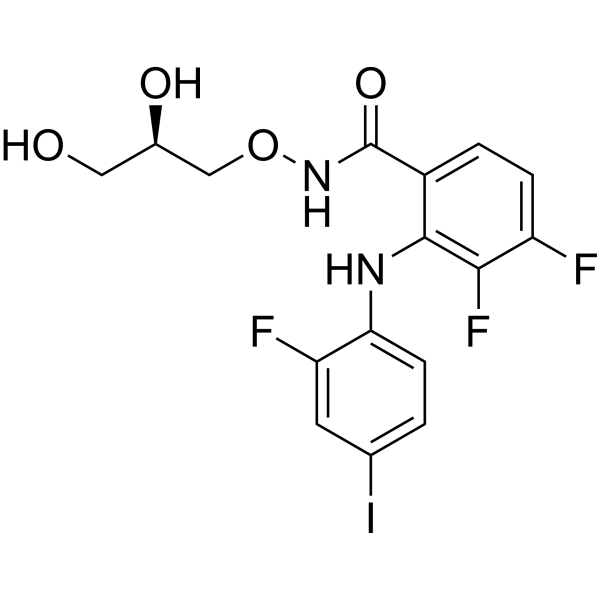
HY-10254
MirdametinibMEK Inhibitor -
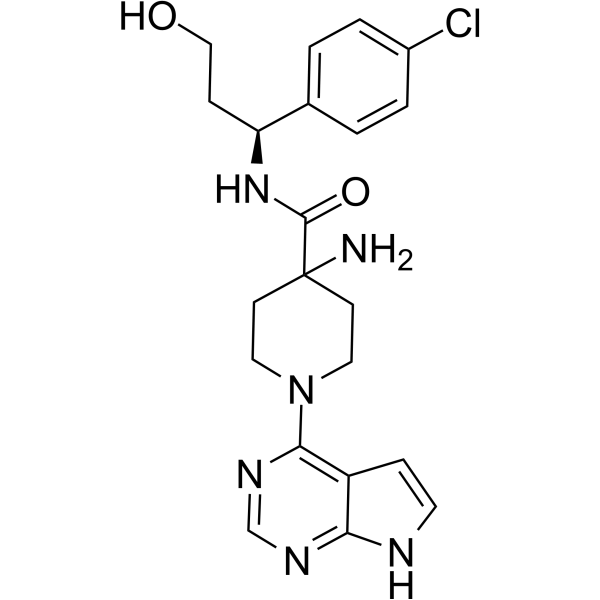
HY-15431
CapivasertibAkt Inhibitor -
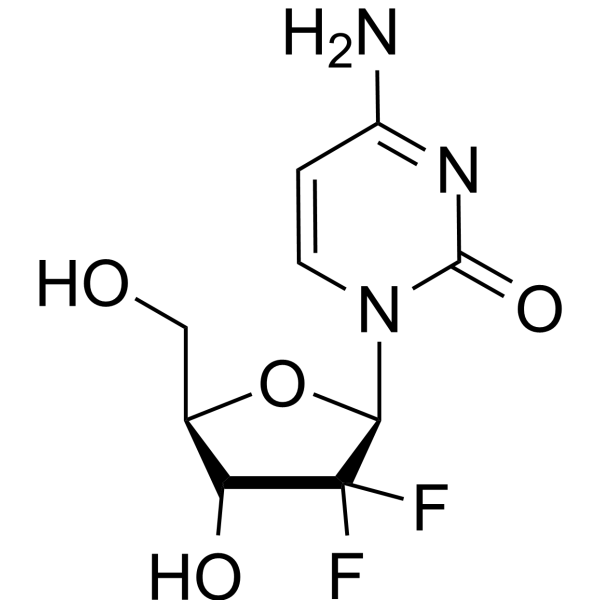
HY-17026
GemcitabineDNA Synthesis Inhibitor -
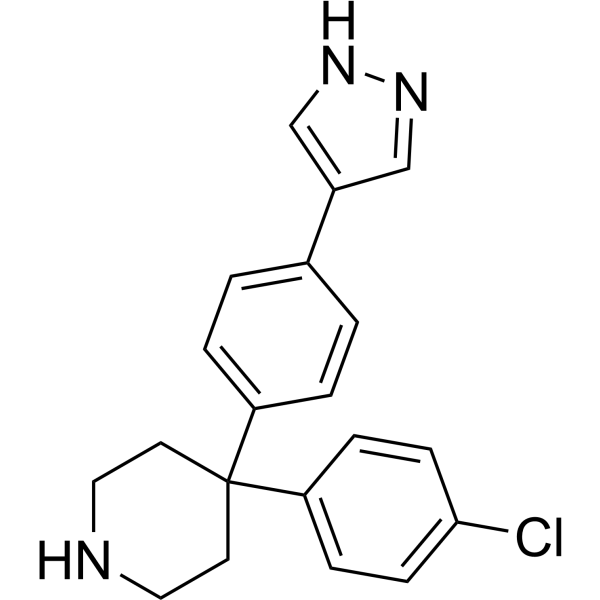
HY-12059
AT7867 -
HY-16297A
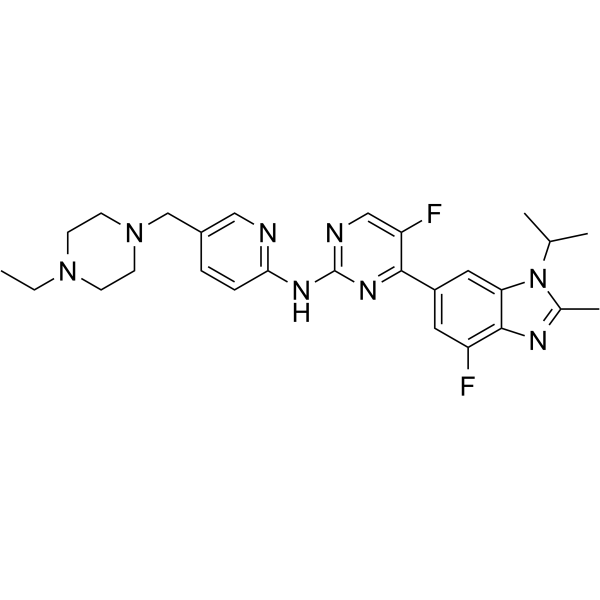
AbemaciclibCDK4/6 Inhibitor -
HY-10358
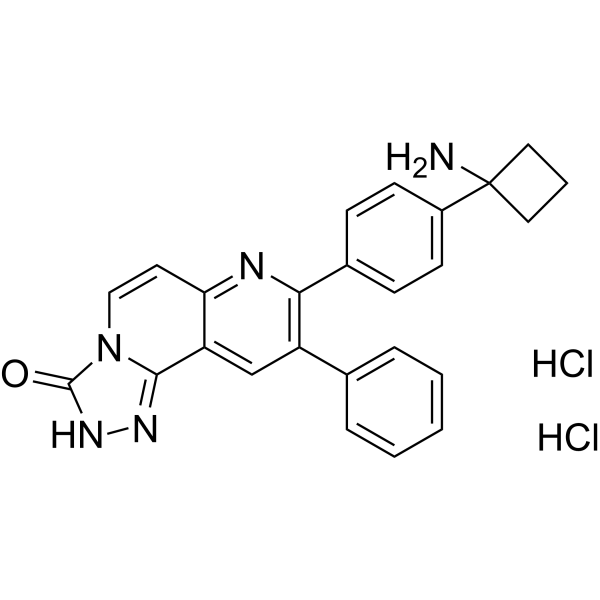
MK-2206 dihydrochlorideAllosteric Akt Inhibitor -
HY-148439
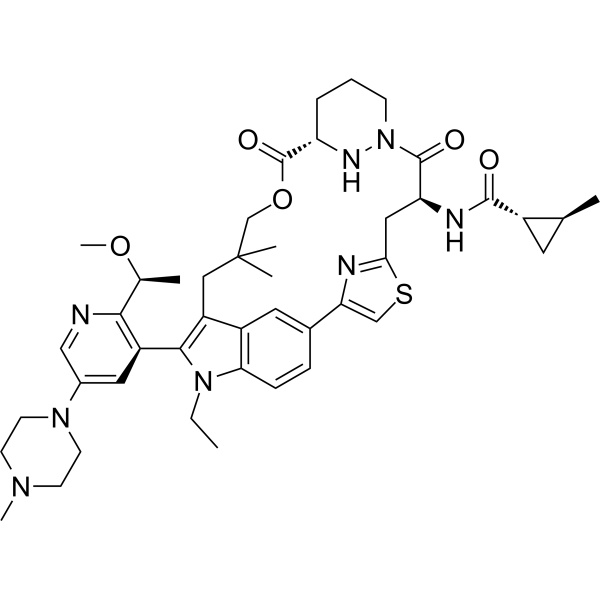
DaraxonrasibRAS(ON) Inhibitor -
HY-10219
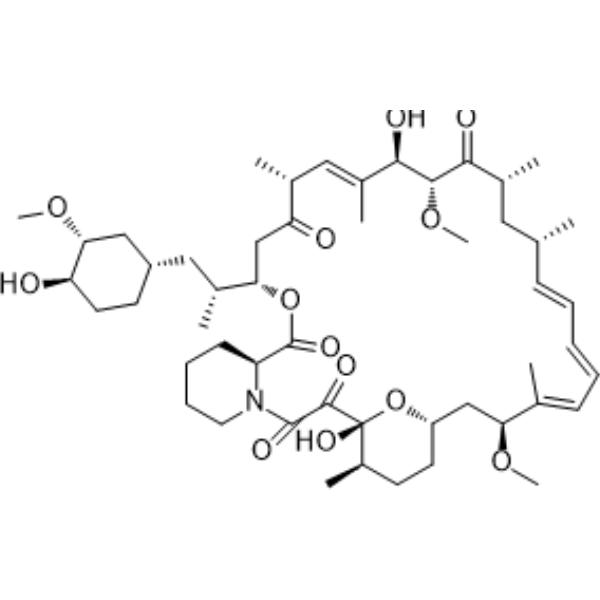
RapamycinmTOR Inhibitor -
HY-15186
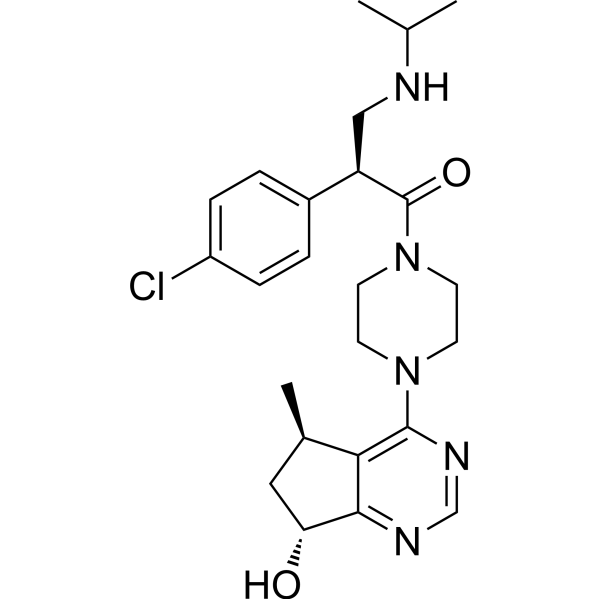
IpatasertibPan-Akt Inhibitor
Publications Citing Use of MedChemExpress (MCE) Dordaviprone
More- Cancer Cell. 2019 May 13;35(5):721-737.e9. [Abstract]
- Phytomedicine. 2024 Jan:122:155163. [Abstract]
- NPJ Precis Oncol. 2025 Nov 21;9(1):373. [Abstract]
- Cell Chem Biol. 2022 Sep 15;29(9):1396-1408.e8. [Abstract]
- Br J Cancer. 2023 Mar;128(7):1344-1359. [Abstract]
- Bioengineering (Basel). 2025 Oct 19;12(10):1121. [Abstract]
- Biochem Biophys Res Commun. 2024 May 14:708:149802. [Abstract]
- University of Rijeka. 2023.
- Johannes Gutenberg University Mainz. 2021 Dec 17.
- Oncotarget. 2018 Jan 10;9(15):12020-12034. [Abstract]
 Customer Validation & Images

-
WB


Biological Activity
제품 설명
IC50 & Target
[1]|
TRAIL |
Cellular Effect
|
Cell Line

|
Type | Value | Description | References |
|---|---|---|---|---|
| A-375 | IC50 |
3.24 μM
Compound: ONC201
|
Anticancer activity against human A-375 cells assessed as cell viability measured after 72 hrs by CCK-8 assay
Anticancer activity against human A-375 cells assessed as cell viability measured after 72 hrs by CCK-8 assay
|
[PMID: 40317731] |
| A549 | IC50 |
10.07 μM
Compound: ONC201
|
Antiproliferative activity against human A549 cells incubated for 48 hrs by CCK-8 assay
Antiproliferative activity against human A549 cells incubated for 48 hrs by CCK-8 assay
|
[PMID: 35609303] |
| COLO 205 | IC50 |
15.1 μM
Compound: ONC201
|
Growth inhibition of human COLO205 cells after 3 days by WST8 assay
Growth inhibition of human COLO205 cells after 3 days by WST8 assay
|
[PMID: 30783502] |
| DLD-1 | IC50 |
5.46 μM
Compound: ONC201
|
Antiproliferative activity against human DLD-1 cells incubated for 48 hrs by CCK-8 assay
Antiproliferative activity against human DLD-1 cells incubated for 48 hrs by CCK-8 assay
|
[PMID: 35609303] |
| H9c2 | IC50 |
>50 μM
Compound: ONC201
|
Antiproliferative activity against rat H9c2 cells incubated for 48 hrs by CCK-8 assay
Antiproliferative activity against rat H9c2 cells incubated for 48 hrs by CCK-8 assay
|
[PMID: 35609303] |
| HCT-116 | IC50 |
1.22 μM
Compound: ONC201
|
Antiproliferative activity against human HCT-116 cells assessed as inhibition of cell growth incubated for 72 hrs by luminescence based analysis
Antiproliferative activity against human HCT-116 cells assessed as inhibition of cell growth incubated for 72 hrs by luminescence based analysis
|
[PMID: 35649291] |
| HCT-116 | IC50 |
4.06 μM
Compound: ONC201
|
Antiproliferative activity against human HCT-116 cells incubated for 48 hrs by CCK-8 assay
Antiproliferative activity against human HCT-116 cells incubated for 48 hrs by CCK-8 assay
|
[PMID: 35609303] |
| HCT-15 | IC50 |
10.1 μM
Compound: ONC201
|
Antiproliferative activity against human HCT-15 cells incubated for 48 hrs by CCK-8 assay
Antiproliferative activity against human HCT-15 cells incubated for 48 hrs by CCK-8 assay
|
[PMID: 35609303] |
| HEK293 | IC50 |
>50 μM
Compound: ONC201
|
Antiproliferative activity against human HEK293 cells incubated for 48 hrs by CCK-8 assay
Antiproliferative activity against human HEK293 cells incubated for 48 hrs by CCK-8 assay
|
[PMID: 35609303] |
| HEK-293T | IC50 |
1 μM
Compound: 8; ONC201
|
Cytotoxicity against HEK293-T-REx cells
Cytotoxicity against HEK293-T-REx cells
|
[PMID: 37974956] |
| HepG2 | IC50 |
9.8 μM
Compound: ONC201
|
Antiproliferative activity against human HepG2 cells assessed as inhibition of cell growth incubated for 72 hrs by luminescence based analysis
Antiproliferative activity against human HepG2 cells assessed as inhibition of cell growth incubated for 72 hrs by luminescence based analysis
|
[PMID: 35649291] |
| HT-29 | IC50 |
35 μM
Compound: ONC201
|
Antiproliferative activity against human HT-29 cells incubated for 48 hrs by CCK-8 assay
Antiproliferative activity against human HT-29 cells incubated for 48 hrs by CCK-8 assay
|
[PMID: 35609303] |
| KYSE-140 | IC50 |
58.1 μM
Compound: ONC201
|
Growth inhibition of human KYSE-140 cells after 3 days by WST8 assay
Growth inhibition of human KYSE-140 cells after 3 days by WST8 assay
|
[PMID: 30783502] |
| MDA-MB-231 | IC50 |
>20 μM
Compound: ONC201
|
Antiproliferative activity against human MDA-MB-231 cells incubated for 48 hrs by CCK-8 assay
Antiproliferative activity against human MDA-MB-231 cells incubated for 48 hrs by CCK-8 assay
|
[PMID: 35609303] |
| MDA-MB-231 | IC50 |
10 μM
Compound: 70; ONC201, TIC10
|
Anticancer activity against human MDA-MB-231 cells assessed as cell growth inhibition incubated for 24 hrs by CellTiter-Glo luminescent assay
Anticancer activity against human MDA-MB-231 cells assessed as cell growth inhibition incubated for 24 hrs by CellTiter-Glo luminescent assay
|
[PMID: 33650861] |
| MDA-MB-231 | IC50 |
14.6 μM
Compound: ONC201
|
Growth inhibition of human MDA-MB-231 cells after 3 days by WST8 assay
Growth inhibition of human MDA-MB-231 cells after 3 days by WST8 assay
|
[PMID: 30783502] |
| MDA-MB-468 | IC50 |
8.9 μM
Compound: ONC201
|
Growth inhibition of human MDA-MB-468 cells after 3 days by WST8 assay
Growth inhibition of human MDA-MB-468 cells after 3 days by WST8 assay
|
[PMID: 30783502] |
| MOLM-13 | IC50 |
7.5 μM
Compound: ONC201
|
Growth inhibition of human MOLM13 cells after 3 days by WST8 assay
Growth inhibition of human MOLM13 cells after 3 days by WST8 assay
|
[PMID: 30783502] |
| MOLM-14 | IC50 |
6.3 μM
Compound: ONC201
|
Growth inhibition of human MOLM14 cells after 3 days by WST8 assay
Growth inhibition of human MOLM14 cells after 3 days by WST8 assay
|
[PMID: 30783502] |
| MV4-11 | IC50 |
3 μM
Compound: ONC201
|
Growth inhibition of human MV4-11 cells after 3 days by WST8 assay
Growth inhibition of human MV4-11 cells after 3 days by WST8 assay
|
[PMID: 30783502] |
| MV4-11 | IC50 |
3.25 μM
Compound: ONC201
|
Antiproliferative activity against human MV4-11 cells assessed as inhibition of cell growth incubated for 72 hrs by luminescence based analysis
Antiproliferative activity against human MV4-11 cells assessed as inhibition of cell growth incubated for 72 hrs by luminescence based analysis
|
[PMID: 35649291] |
| NCI-H3122 | IC50 |
8.7 μM
Compound: ONC201
|
Growth inhibition of human NCI-H3122 cells after 3 days by WST8 assay
Growth inhibition of human NCI-H3122 cells after 3 days by WST8 assay
|
[PMID: 30783502] |
| OCI-AML2 | IC50 |
2400 nM
Compound: 34; ONC201
|
Cytotoxicity against human OCI-AML2 cells assessed as cell growth inhibition measured after 72 hrs by spectrophotometry
Cytotoxicity against human OCI-AML2 cells assessed as cell growth inhibition measured after 72 hrs by spectrophotometry
|
[PMID: 33656892] |
| OCI-AML-3 | IC50 |
1.2 μM
Compound: 8; ONC201
|
Cytotoxicity against human OCI-AML-3 cells
Cytotoxicity against human OCI-AML-3 cells
|
[PMID: 37974956] |
| OCI-AML-3 | IC50 |
1200 nM
Compound: 34; ONC201
|
Cytotoxicity against human OCI-AML-3 cells assessed as cell growth inhibition measured after 72 hrs by spectrophotometry
Cytotoxicity against human OCI-AML-3 cells assessed as cell growth inhibition measured after 72 hrs by spectrophotometry
|
[PMID: 33656892] |
| PC-3 | IC50 |
8.9 μM
Compound: ONC201
|
Growth inhibition of human PC3 cells after 3 days by WST8 assay
Growth inhibition of human PC3 cells after 3 days by WST8 assay
|
[PMID: 30783502] |
| Raji | IC50 |
2.48 μM
Compound: ONC201
|
Antiproliferative activity against human Raji cells incubated for 48 hrs by CCK-8 assay
Antiproliferative activity against human Raji cells incubated for 48 hrs by CCK-8 assay
|
[PMID: 35609303] |
| RS4-11 | IC50 |
31.4 μM
Compound: ONC201
|
Growth inhibition of human RS4:11 cells after 3 days by WST8 assay
Growth inhibition of human RS4:11 cells after 3 days by WST8 assay
|
[PMID: 30783502] |
| SUM-159-PT | IC50 |
0.3 μM
Compound: 8; ONC201
|
Cytotoxicity against human SUM159 cells
Cytotoxicity against human SUM159 cells
|
[PMID: 37974956] |
| SUM-159-PT | IC50 |
1700 nM
Compound: 34; ONC201
|
Cytotoxicity against human SUM159PT cells assessed as cell growth inhibition measured after 72 hrs by MTS assay
Cytotoxicity against human SUM159PT cells assessed as cell growth inhibition measured after 72 hrs by MTS assay
|
[PMID: 33656892] |
| SW480 | IC50 |
10.55 μM
Compound: ONC201
|
Antiproliferative activity against human SW480 cells incubated for 48 hrs by CCK-8 assay
Antiproliferative activity against human SW480 cells incubated for 48 hrs by CCK-8 assay
|
[PMID: 35609303] |
| SW-620 | IC50 |
9.17 μM
Compound: ONC201
|
Antiproliferative activity against human SW-620 cells incubated for 48 hrs by CCK-8 assay
Antiproliferative activity against human SW-620 cells incubated for 48 hrs by CCK-8 assay
|
[PMID: 35609303] |
| THP-1 | IC50 |
14.4 μM
Compound: ONC201
|
Growth inhibition of human THP1 cells after 3 days by WST8 assay
Growth inhibition of human THP1 cells after 3 days by WST8 assay
|
[PMID: 30783502] |
| U-251 | IC50 |
>20 μM
Compound: ONC201
|
Antiproliferative activity against human U-251 cells incubated for 48 hrs by CCK-8 assay
Antiproliferative activity against human U-251 cells incubated for 48 hrs by CCK-8 assay
|
[PMID: 35609303] |
| Z-138 | IC50 |
1 μM
Compound: 34; ONC201
|
Cytotoxicity against human Z138 cells assessed as cell growth inhibition at 5 uM measured after 72 hrs by spectrophotometry
Cytotoxicity against human Z138 cells assessed as cell growth inhibition at 5 uM measured after 72 hrs by spectrophotometry
|
[PMID: 33656892] |
| Z-138 | IC50 |
1 μM
Compound: 8; ONC201
|
Cytotoxicity against human Z138 cells
Cytotoxicity against human Z138 cells
|
[PMID: 37974956] |
In Vitro
Dordaviprone transcriptionally induces TRAIL in a p53-independent manner and crosses the blood-brain barrier[1].
Dordaviprone induces a sustained up-regulation of TRAIL in tumors and normal cells that may contribute to the demonstrable antitumor activity of Dordaviprone[1].
Dordaviprone inactivates kinases Akt and extracellular signal-regulated kinase (ERK), leading to the translocation of Foxo3a into the nucleus, where it binds to the TRAIL promoter to up-regulate gene transcription[1].
Dordaviprone is an efficacious antitumor therapeutic agent that acts on tumor cells and their micro-environment to enhance the concentrations of the endogenous tumor suppressor TRAIL[1].
Dordaviprone also causes a down-regulation of the total expression of ERK[1].
MedChemExpress (MCE) has not independently confirmed the accuracy of these methods. They are for reference only.
In Vivo
MedChemExpress (MCE) has not independently confirmed the accuracy of these methods. They are for reference only.
Clinical Trial
| NCT Number | Sponsor | Condition | Start Date |
Phase
|
|---|---|---|---|---|
| NCT01329991 | 2011-05 | PHASE1 |


Chemical Information
-
CAS No. 1616632-77-9
-
Appearance Solid
-
분자량 386.49
-
화학식 C24H26N4O
-
Color White to yellow
-
SMILES
O=C1N(CC2=CC=CC=C2C)C3=NCCN3C4=C1CN(CC5=CC=CC=C5)CC4
-
Synonyms
TIC10; ONC-201
-
선적
Room temperature in continental US; may vary elsewhere.
-
보관
Powder -20°C 3 years 4°C 2 years In solvent -80°C 2 years -20°C 1 year


Publications (10)
-
Journal Impact Factor
-
Most Recent
-
Cancer Cell
2019 May 13;35(5):721-737.e9. PMID: 31056398 -
Phytomedicine
Baizhu shaoyao decoction restores the intestinal barrier and brain-gut axis balance to alleviate diarrhea-predominant irritable bowel syndrome via FoxO1/FoxO3a. [Abstract]2024 Jan:122:155163. PMID: 37924689 -
NPJ Precis Oncol
Integrative profiling strategies to guide personalized therapy in mantle cell lymphoma: a pilot study. [Abstract]2025 Nov 21;9(1):373. PMID: 41272086 -
Cell Chem Biol
Aberrant human ClpP activation disturbs mitochondrial proteome homeostasis to suppress pancreatic ductal adenocarcinoma. [Abstract]2022 Sep 15;29(9):1396-1408.e8. PMID: 35905743 -
Br J Cancer
Transcriptome analysis of newly established carboplatin-resistant ovarian cancer cell model reveals genes shared by drug resistance and drug-induced EMT. [Abstract]2023 Mar;128(7):1344-1359. PMID: 36717670 -
Bioengineering (Basel)
Precision Oncology for High-Grade Gliomas: A Tumor Organoid Model for Adjuvant Treatment Selection. [Abstract]2025 Oct 19;12(10):1121. PMID: 41155119 -
Biochem Biophys Res Commun
METTL16 deficiency attenuates apoptosis through translational control of extrinsic death receptor during nutrient deprivation. [Abstract]2024 May 14:708:149802. PMID: 38520913 -
-
-
Oncotarget
2018 Jan 10;9(15):12020-12034. PMID: 29552290
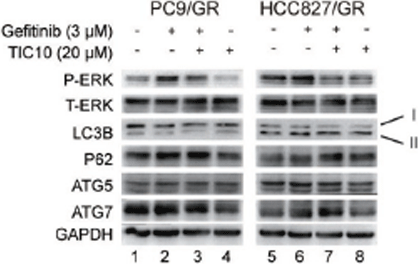
Dordaviprone purchased from MedChemExpress. Usage Cited in: Oncotarget. 2018 Jan 10;9(15):12020-12034. [Abstract]
WB detection of the total and phosphorylated ERK1/2, LC3B, p62, ATG5, ATG7 levels in the PC9/GR and HCC827/GR cells cultured in the four treatment conditions. 20 μM TIC10 treatment decreases the expression of LC3B-II, but increases the expression of p62 in both cells.


용액&용해도
In Vitro:
DMSO : 9.38 mg/mL (24.27 mM; ultrasonic and warming and heat to 60°C; Hygroscopic DMSO has a significant impact on the solubility of product, please use newly opened DMSO)
Please refer to the solubility information to select the appropriate solvent. Once prepared, please aliquot and store the solution to prevent product inactivation from repeated freeze-thaw cycles.
Storage method and period of stock solution: -80°C, 2 years; -20°C, 1 year. When stored at -80°C, please use it within 2 years. When stored at -20°C, please use it within 1 year.
Please refer to the solubility information to select the appropriate solvent. Once prepared, please aliquot and store the solution to prevent product inactivation from repeated freeze-thaw cycles.
Storage method and period of stock solution: -80°C, 2 years; -20°C, 1 year. When stored at -80°C, please use it within 2 years. When stored at -20°C, please use it within 1 year.
Concentration (start) × Volume (start) = Concentration (final) × Volume (final)


순도&문서
-
Data Sheet (279 KB)
-
SDS (396 KB)
- English - EN (396 KB)
- Français - FR (396 KB)
- Deutsch - DE (396 KB)
- Norwegian - NO (396 KB)
- Español - ES (396 KB)
- Swedish - SV (396 KB)
- Italian - IT (396 KB)
- Korean - KR (396 KB)
- Portuguese - PT (396 KB)
-
Handling Instructions (2659 KB)
References


Complete Stock Solution Preparation Table
Please refer to the solubility information to select the appropriate solvent. Once prepared, please aliquot and store the solution to prevent product inactivation from repeated freeze-thaw cycles.
Storage method and period of stock solution: -80°C, 2 years; -20°C, 1 year. When stored at -80°C, please use it within 2 years. When stored at -20°C, please use it within 1 year.
| Optional Solvent | Concentration Solvent Mass | 1 mg | 5 mg | 10 mg | 25 mg |
|---|---|---|---|---|---|
| DMSO | 1 mM | 2.5874 mL | 12.9369 mL | 25.8739 mL | 64.6847 mL |
| 5 mM | 0.5175 mL | 2.5874 mL | 5.1748 mL | 12.9369 mL | |
| 10 mM | 0.2587 mL | 1.2937 mL | 2.5874 mL | 6.4685 mL | |
| 15 mM | 0.1725 mL | 0.8625 mL | 1.7249 mL | 4.3123 mL | |
| 20 mM | 0.1294 mL | 0.6468 mL | 1.2937 mL | 3.2342 mL |


Dordaviprone Related Classifications
HY-15615A Related Classifications
 Powered by Bioz