



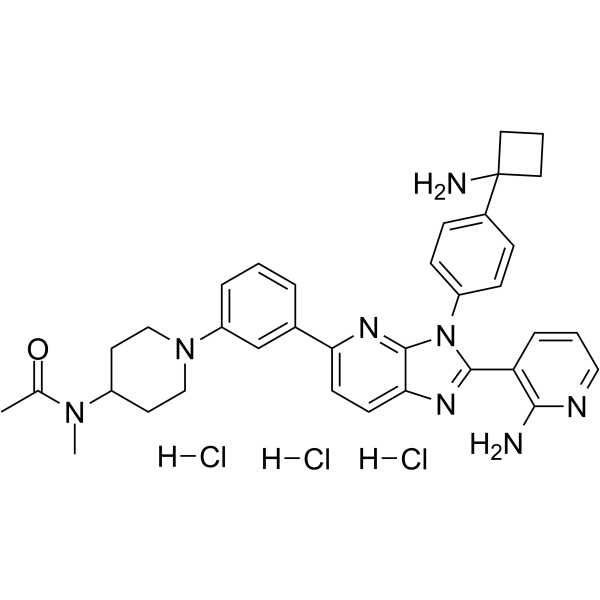
Vevorisertib trihydrochloride
Based on 2 publication(s) in Google Scholar
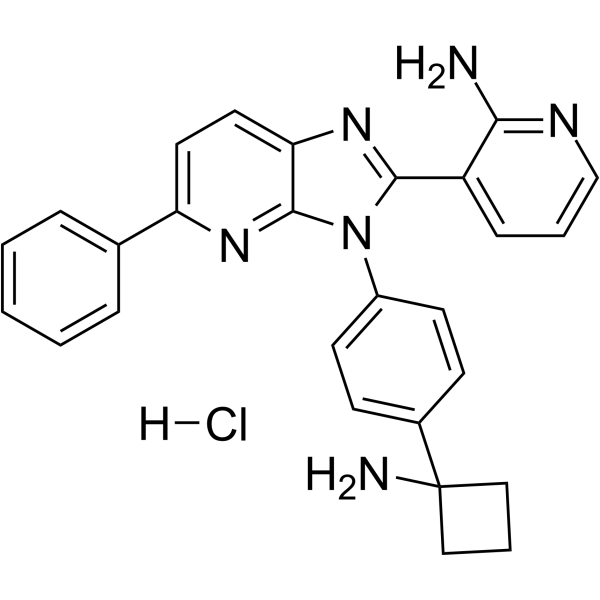
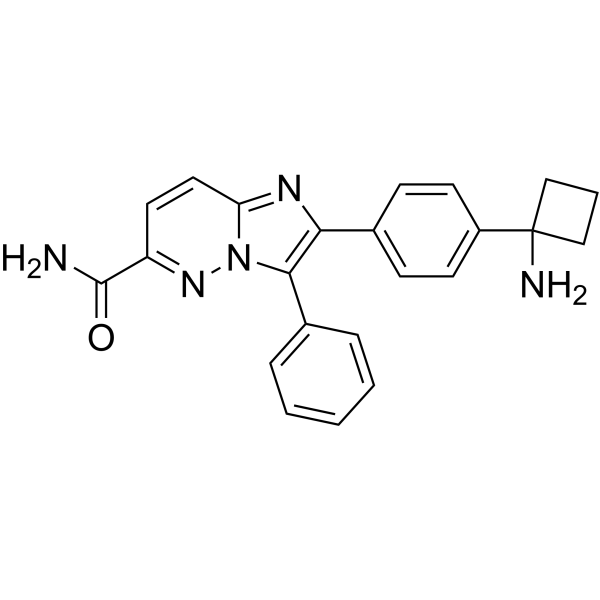
Vevorisertib (ARQ 751) trihydrochloride is a selective, allosteric, pan-AKT and AKT1-E17K mutant inhibitors. Vevorisertib trihydrochloride potently inhibit phosphorylation of AKT. Vevorisertib trihydrochloride has Kd values of 1.2 nM and 8.6 nM for AKT1 and AKT1-E17K, respectively. Vevorisertib trihydrochloride has IC50 values of 0.55, 0.81, and 1.3 nM for AKT1, AKT2, and AKT3, respectively. Vevorisertib trihydrochloride can be used for the research of cancer.
For research use only. We do not sell to patients.
- Purity : 98.05%
- CAS No.: 1416775-08-0
- Formula: C35H41Cl3N8O
- Molecular Weight:696.11
-
Storage:
4°C, sealed storage, away from moisture
* In solvent : -80°C, 6 months; -20°C, 1 month (sealed storage, away from moisture)

To place orders, for customer services and technical support, please contact: MedChemExpress USA
Tel: 609-228-6898 E-mail: [email protected] [email protected]


-
 Biological Activity
-
Chemical Information
-
Solvent & Solubility
- Purity & Documentation
- References
-
 Help & FAQs


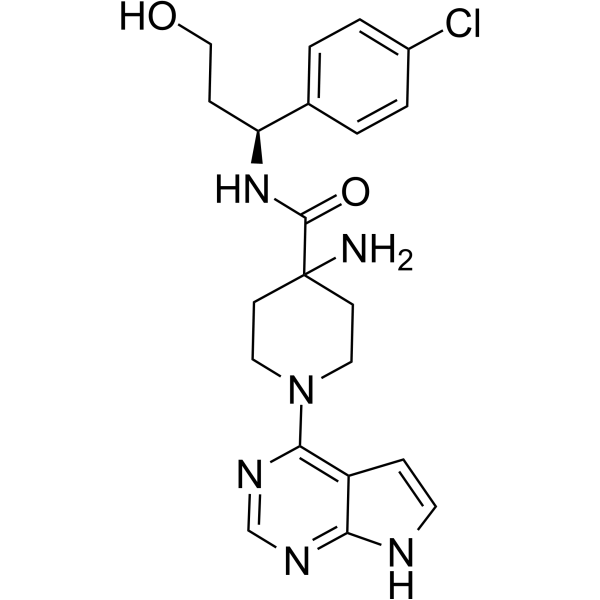
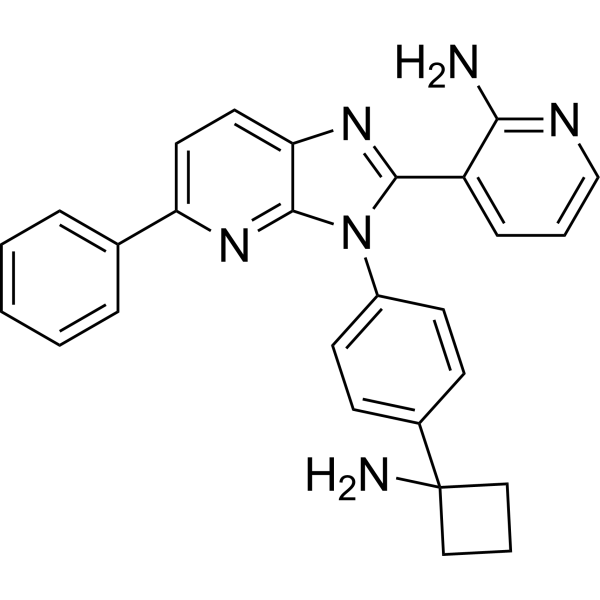
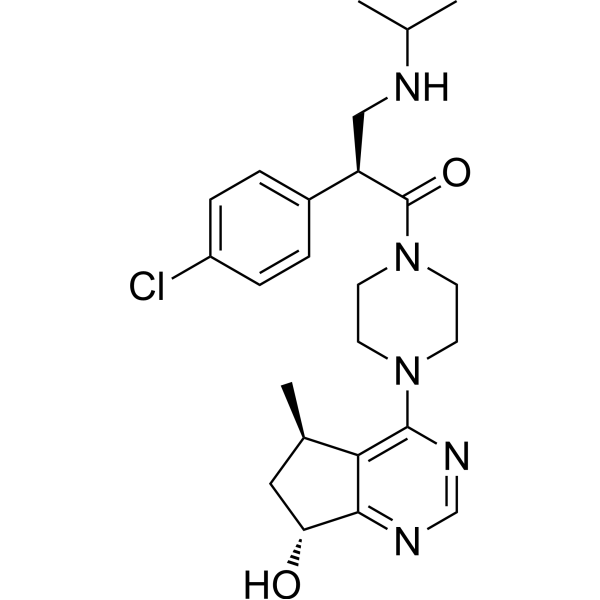
Publications Citing Use of MedChemExpress (MCE) Vevorisertib trihydrochloride
More

Biological Activity
Description
IC50 & Target
[1]|
Akt1 0.55 nM (IC50) |
Akt2 0.81 nM (IC50) |
Akt3 1.31 nM (IC50) |
Akt1 1.2 nM (Kd) |
Akt1E17K 8.6 nM (Kd) |
In Vitro
Vevorisertib trihydrochloride (0, 12, 33, 111, 333, 1000 nM, 2 hours) inhibits phosphorylation of AKT1-E17K[1].
Vevorisertib trihydrochloride (1 μM for 2 hours; NIH 3T3 cells are transfected with either pcDNAAKT-WT-GFP or pcDNA-E17K-GFP) inhibits plasma membrane translocation of AKT-WT and AKT1-E17K irrespective of the presence of growth factors[1].
Vevorisertib trihydrochloride (5 μM) exhibites 57% inhibition of full-length AKT1[1].
Vevorisertib trihydrochloride (0, 0.012, 0.037, 0.11, 0.33, 1 μM; 2 hours) shows a dose-dependent effect on mTORC1 and AKT direct substrates including PRAS40, GSK3β, FOXO, BAD, and AS160 in cancer cell lines[1].
Vevorisertib trihydrochloride has anti-proliferative effect on esophageal, breast, and head and neck cancer cells (GI50 < 1 μM)[1].
Vevorisertib trihydrochloride exhibits strong anti-proliferative activity in PIK3CA mutant cell lines[1].
Vevorisertib trihydrochloride (MK-4440)/imatinib mesylate (IM) combination shows cell cycle arrest, and increases cell death of gastrointestinal stromal tumor (GIST) cells[2].
Vevorisertib trihydrochloride exhibits strong anti-proliferative activity in PIK3CA mutant cell lines[1]:
| Breast Cancer Cell Lines | GI50 (nM) | PIK3CA | ER | PR | HER2 |
| T47D | 1.05 | H1047R | + | + | - |
| EFM-19 | 1.54 | H1047R | + | + | - |
| MCF-7 | 2.20 | E545K | + | + | - |
| BT474 | 3.25 | K111N | + | + | + |
| MDA-MB-453 | 6.05 | H1047R | - | - | + |
MedChemExpress (MCE) has not independently confirmed the accuracy of these methods. They are for reference only.
-
Cell Line:293T cells (transiently transfected with pcDNA-E17K-GFP)
-
Concentration:0, 12, 33, 111, 333, 1000 nM
-
Incubation Time:2 hours
-
Result:Inhibited phosphorylation of AKT1-E17K.
-
Cell Line:Cancer cell lines: MDA-MB 453 (PIK3CAH1047R; Her2 amp), NCI-H1650 (PTEN null), KU-19-19 (AKT1-E17K&E49K; NRas Q61R)
-
Concentration:0, 0.012, 0.037, 0.11, 0.33, 1 μM
-
Incubation Time:2 hours
-
Result:Showed a dose-dependent effect on mTORC1 and AKT direct substrates including PRAS40, GSK3β, FOXO, BAD, and AS160.
In Vivo
Vevorisertib trihydrochloride (5, 10, 20, 40, 80, and 120 mg/kg; p.o. daily for ten days) shows tumor growth inhibition of 29, 33, 50, 73, 83, and 92%, respectively[1].
Vevorisertib trihydrochloride reachs Cmax plasma concentrations of ≥2 μM[1].
Vevorisertib trihydrochloride is generally well-tolerated at dose levels up to 120 mg/kg[1].
Vevorisertib trihydrochloride (MK-4440)/IM combination shows superior efficacy in an IM-sensitive preclinical model of GIST compared with either single agent[2].
MedChemExpress (MCE) has not independently confirmed the accuracy of these methods. They are for reference only.
-
Animal Model:Endometrial PDX mouse xenograft models (AKT1-E17K mutation tumor fragments subcutaneously implanted in athymic nude mice; tumor volume of approximately 200 mm3)[1]
-
Dosage:25, 50 and 75 mg/kg
-
Administration:p.o.; 5 days dosing followed by a 4 day dosing holiday for 20 days
-
Result:Showed potent tumor growth inhibition of 68, 78 and 98%, respectively.
-
Animal Model:AN3CA mouse xenograft models (female NCr nu/nu mice with 250 mm3 tumors size)[1]
-
Dosage:5, 10, 20, 40, 80, and 120 mg/kg
-
Administration:p.o.; daily for ten days
-
Result:Showed tumor growth inhibition of 29, 33, 50, 73, 83, and 92%, respectively.
Clinical Trial
| NCT Number | Sponsor | Condition | Start Date |
Phase

|
|---|---|---|---|---|
| NCT01329991 | Plexxikon| | 2011-05 | PHASE1 |


Chemical Information
-
CAS No. 1416775-08-0
-
Appearance Solid
-
Molecular Weight 696.11
-
Formula C35H41Cl3N8O
-
Color White to yellow
-
SMILES
NC1=C(C=CC=N1)C2=NC3=CC=C(C4=CC(N(CC5)CCC5N(C)C(C)=O)=CC=C4)N=C3N2C6=CC=C(C7(CCC7)N)C=C6.[H]Cl.[H]Cl.[H]Cl
-
Synonyms
ARQ 751 trihydrochloride
-
Shipping
Room temperature in continental US; may vary elsewhere.
-
Storage
4°C, sealed storage, away from moisture
* In solvent : -80°C, 6 months; -20°C, 1 month (sealed storage, away from moisture)


Publications (2)
-
Journal Impact Factor
-
Most Recent
-
Cell Death Discov
NRG1/PDGFC loop between fibroblasts and cancer cells drives paclitaxel resistance via ferroptosis suppression in breast cancer. [Abstract]2025 Nov 10;11(1):520. PMID: 41213930 -


Solvent & Solubility
In Vitro:
DMSO : 100 mg/mL (143.66 mM; Need ultrasonic; Hygroscopic DMSO has a significant impact on the solubility of product, please use newly opened DMSO)
H2O : 25 mg/mL (35.91 mM; ultrasonic and warming and heat to 60°C)
Please refer to the solubility information to select the appropriate solvent. Once prepared, please aliquot and store the solution to prevent product inactivation from repeated freeze-thaw cycles.
Storage method and period of stock solution: -80°C, 6 months; -20°C, 1 month (sealed storage, away from moisture). When stored at -80°C, please use it within 6 months. When stored at -20°C, please use it within 1 month.
* Note: If you choose water as the stock solution, please dilute it to the working solution, then filter and sterilize it with a 0.22 μm filter before use.
Please refer to the solubility information to select the appropriate solvent. Once prepared, please aliquot and store the solution to prevent product inactivation from repeated freeze-thaw cycles.
Storage method and period of stock solution: -80°C, 6 months; -20°C, 1 month (sealed storage, away from moisture). When stored at -80°C, please use it within 6 months. When stored at -20°C, please use it within 1 month.
* Note: If you choose water as the stock solution, please dilute it to the working solution, then filter and sterilize it with a 0.22 μm filter before use.
Concentration (start) × Volume (start) = Concentration (final) × Volume (final)
In Vivo:
Select the appropriate dissolution method based on your experimental animal and administration route.
- For the following dissolution methods, please ensure to first prepare a clear stock solution using an In Vitro approach and then sequentially add co-solvents:
- To ensure reliable experimental results, the clarified stock solution can be appropriately stored based on storage conditions. As for the working solution for In Vivo experiments, it is recommended to prepare freshly and use it on the same day.
- The percentages shown for the solvents indicate their volumetric ratio in the final prepared solution. If precipitation or phase separation occurs during preparation, heat and/or sonication can be used to aid dissolution.
Add each solvent one by one: 10% DMSO 40% PEG300 5% Tween-80 45% Saline
Solubility: ≥ 5.25 mg/mL (7.54 mM); Clear solution
This protocol yields a clear solution of ≥ 5.25 mg/mL (saturation unknown).
Taking 1 mL working solution as an example, add 100 μL DMSO stock solution (52.5 mg/mL) to 400 μL PEG300, and mix evenly; then add 50 μL Tween-80 and mix evenly; then add 450 μL Saline to adjust the volume to 1 mL.
Preparation of Saline: Dissolve 0.9 g sodium chloride in ddH₂O and dilute to 100 mL to obtain a clear Saline solution.
Add each solvent one by one: 10% DMSO 90% (20% SBE-β-CD in Saline)
Solubility: ≥ 5.25 mg/mL (7.54 mM); Clear solution
This protocol yields a clear solution of ≥ 5.25 mg/mL (saturation unknown).
Taking 1 mL working solution as an example, add 100 μL DMSO stock solution (52.5 mg/mL) to 900 μL 20% SBE-β-CD in Saline, and mix evenly.
Preparation of 20% SBE-β-CD in Saline (4°C, storage for one week): 2 g SBE-β-CD powder is dissolved in 10 mL Saline, completely dissolve until clear.
In Vivo Dissolution Calculator
Please enter the basic information of animal experiments:
-
-
-
-
Recommended: Prepare an additional quantity of animals to account for potential losses during experiments.
Working solution concentration: 0.22 mg/mL
This product has good water solubility, please refer to the measured solubility data in water/PBS/Saline for details.


Purity & Documentation
-
Data Sheet (294 KB)
-
SDS (252 KB)
- English - EN (252 KB)
- Français - FR (252 KB)
- Deutsch - DE (252 KB)
- Norwegian - NO (252 KB)
- Español - ES (252 KB)
- Swedish - SV (252 KB)
- Italian - IT (252 KB)
- Korean - KR (252 KB)
- Portuguese - PT (252 KB)
-
Handling Instructions (2659 KB)
References
[1]. Yu Y, et al. Targeting AKT1-E17K and the PI3K/AKT Pathway with an Allosteric AKT Inhibitor, ARQ 092. PLoS One. 2015 Oct 15;10(10):e0140479. [Content Brief]
[2]. Kozinova M, et al. Combined Inhibition of AKT and KIT Restores Expression of Programmed Cell Death 4 (PDCD4) in Gastrointestinal Stromal Tumor. Cancers (Basel). 2021 Jul 23;13(15):3699. [Content Brief]


Complete Stock Solution Preparation Table
Please refer to the solubility information to select the appropriate solvent. Once prepared, please aliquot and store the solution to prevent product inactivation from repeated freeze-thaw cycles.
Storage method and period of stock solution: -80°C, 6 months; -20°C, 1 month (sealed storage, away from moisture). When stored at -80°C, please use it within 6 months. When stored at -20°C, please use it within 1 month.
| Optional Solvent | Concentration Solvent Mass | 1 mg | 5 mg | 10 mg | 25 mg |
|---|---|---|---|---|---|
| H2O / DMSO | 1 mM | 1.4366 mL | 7.1828 mL | 14.3655 mL | 35.9139 mL |
| 5 mM | 0.2873 mL | 1.4366 mL | 2.8731 mL | 7.1828 mL | |
| 10 mM | 0.1437 mL | 0.7183 mL | 1.4366 mL | 3.5914 mL | |
| 15 mM | 0.0958 mL | 0.4789 mL | 0.9577 mL | 2.3943 mL | |
| 20 mM | 0.0718 mL | 0.3591 mL | 0.7183 mL | 1.7957 mL | |
| 25 mM | 0.0575 mL | 0.2873 mL | 0.5746 mL | 1.4366 mL | |
| 30 mM | 0.0479 mL | 0.2394 mL | 0.4789 mL | 1.1971 mL | |
| DMSO | 40 mM | 0.0359 mL | 0.1796 mL | 0.3591 mL | 0.8978 mL |
| 50 mM | 0.0287 mL | 0.1437 mL | 0.2873 mL | 0.7183 mL | |
| 60 mM | 0.0239 mL | 0.1197 mL | 0.2394 mL | 0.5986 mL | |
| 80 mM | 0.0180 mL | 0.0898 mL | 0.1796 mL | 0.4489 mL | |
| 100 mM | 0.0144 mL | 0.0718 mL | 0.1437 mL | 0.3591 mL |
* Note: If you choose water as the stock solution, please dilute it to the working solution, then filter and sterilize it with a 0.22 μm filter before use.


Vevorisertib trihydrochloride Related Classifications
HY-137458A Related Classifications
 Powered by Bioz