

Search Result
Results for "
Erythrocytes
" in MedChemExpress (MCE) Product Catalog:
10
Biochemical Assay Reagents
9
Isotope-Labeled Compounds
| Cat. No. |
Product Name |
Target |
Research Areas |
Chemical Structure |
-
- HY-D0844
-
|
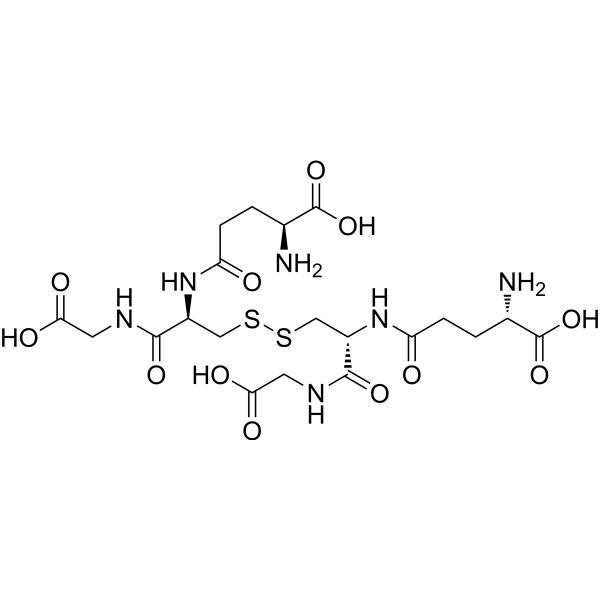
L-Glutathione oxidized; GSSG; Oxiglutatione
|
Endogenous Metabolite
Reactive Oxygen Species (ROS)
|
Metabolic Disease
|
|
Glutathione oxidized (L-Glutathione oxidized) is produced by the oxidation of glutathione. Detoxification of reactive oxygen species is accompanied by production of glutathione oxidized. Glutathione oxidized can be used for the research of sickle cells and erythrocytes .
|
-
-
- HY-P1902
-
|
|
Apoptosis
|
Cardiovascular Disease
|
|
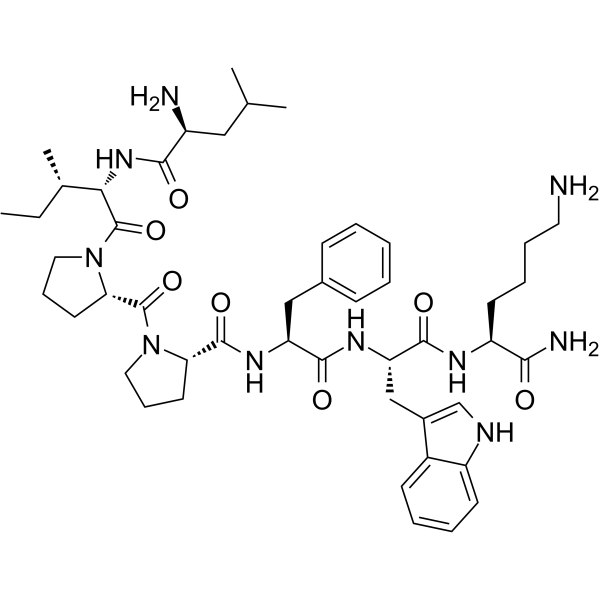
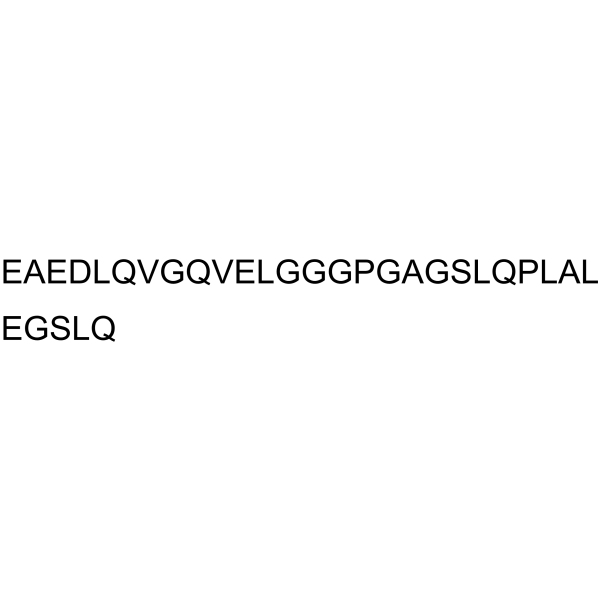
Cardiotoxin Analog (CTX) IV (6-12) is a membrane active peptide that specifically targets negatively charged phospholipid membranes (such as phosphatidylserine and phosphatidylinositol). Cardiotoxin Analog (CTX) IV (6-12) was discovered in the venom of the Taiwan cobra. Cardiotoxin Analog (CTX) IV (6-12) is a chemically synthesized snake venom cardiotoxin that binds to cell membranes and embeds into lipid bilayers through hydrophobic interactions and electrostatic attraction, thereby destroying the stability of membrane structure. Cardiotoxin Analog (CTX) IV (6-12) can induce membrane lipid disorder and cell lysis, exhibiting hemolysis and cytotoxicity .
|
-
-
- HY-Y0525
-
AAPH
2 Publications Verification
2,2'-Azodiisobutyramidine dihydrochloride
|
Reactive Oxygen Species (ROS)
|
Inflammation/Immunology
|
|
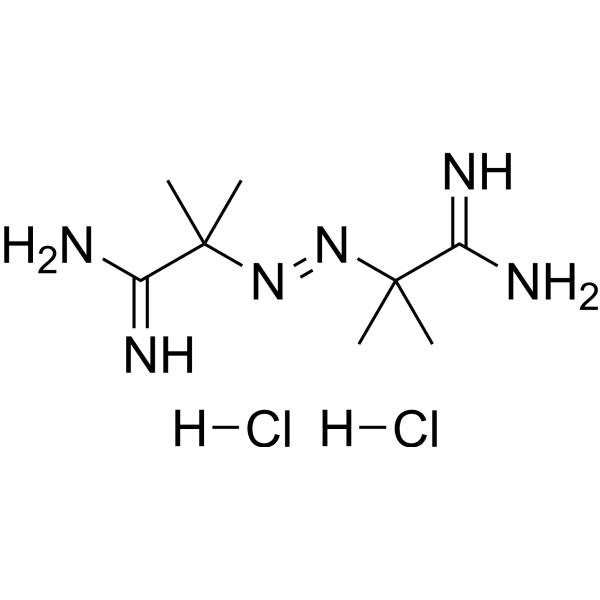
AAPH (2,2'-Azodiisobutyramidine dihydrochloride) has an effect of radical generation. AAPH induces oxidative stress and erythrocyte hemolysis . AAPH decomposes at 37°C to generate an alkyl radical, is used as an initiator. In the presence of oxygen, these alkyl radicals will be converted to peroxyl radicals that can cause lipid peroxidation and loss of erythrocyte membrane integrity, which could ultimately lead to hemolysis .
|
-
-
- HY-111355B
-
|
|
Sirtuin
Endogenous Metabolite
PKC
AMPK
DOCK
|
Metabolic Disease
Inflammation/Immunology
Cancer
|
|
Cholesterol sulfate sodium is a naturally occurring, orally active cholesterol derivative that is widely distributed in various tissues and body fluids. Cholesterol sulfate sodium acts as a DOCK2 inhibitor, with IC50 values of 2 μM and 2.9 μM against mouse and human targets, respectively. Cholesterol sulfate sodium restricts excessive neutrophil infiltration and alleviates intestinal inflammation and damage. Cholesterol sulfate sodium serves as an activator of protein kinase C (PKC), which promotes squamous cell differentiation and inhibits skin carcinogenesis. Cholesterol sulfate sodium regulates cholesterol homeostasis and cellular metabolism by activating the AMPK-Sirt1 pathway. Cholesterol sulfate sodium can be used in research related to actinic keratitis, ulcerative colitis, skin cancer, and other conditions .
|
-
-
- HY-129064
-
|
SOD
|
SOD
|
Inflammation/Immunology
Cancer
|
|
Superoxide dismutase, Porcine erythrocytes (SOD) is the only antioxidant enzyme that scavenges the superoxide anion by converting this free radical to oxygen and hydrogen peroxide, thus preventing peroxynitrite production and further damage. Superoxide dismutase, Porcine erythrocytes is extensively researched and used in anti-inflammatory, antitumor, radiation protection, and antisenility applications .
|
-
-
- HY-P99720
-
|
ACE-536; luspatercept–aamt
|
TGF-beta/Smad
|
Metabolic Disease
Cancer
|
|
Luspatercept (ACE-536) is a recombinant modified ActRIIB fusion protein that binds with transforming growth factor β superfamily ligands. Luspatercept increases the erythrocyte numbers and promotes maturation of erythroid precursors. Luspatercept binds with GDF11 and inhibits Smad2/3 signaling. Luspatercept can be used for the research of anemia .
|
-
-
- HY-103319
-
|
R 24571
|
Autophagy
Calmodulin
|
Neurological Disease
Cancer
|
|
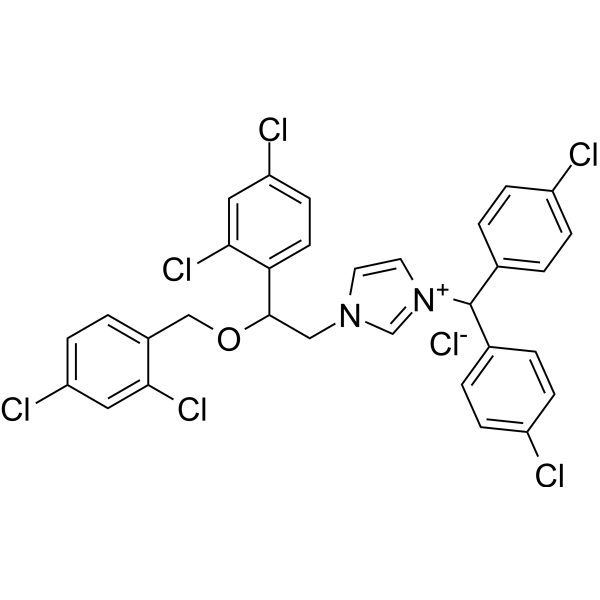
Calmidazolium chloride (R 24571) is a calmodulin antagonist, antagonizing CaM-dependent phosphodiesterase and calmodulin-induced activation of erythrocyte Ca2+-transporting ATPase with IC50s of 0.15 and 0.35 μM, respectively . Also in anti-cancer research . Calmidazolium binds to calmodulin with a Kd of 3 nM.
|
-
-
- HY-123962
-
|
|
NADPH Oxidase
|
Metabolic Disease
|
|
G6PD activator AG1 is a potent and selective glucose-6-phosphate dehydrogenase (G6PD) agonist with an EC50 of 3 μM. G6PD is an oxidoreductase that catalyzes the oxidation of glucose-6-phosphate to 6-phosphogluconolactone and the simultaneous reduction of NAD phosphate (NADP) to reduced NADP (NADPH). G6PD activator AG1 can reduce hemolysis of human erythrocytes .
|
-
-
- HY-P1775
-
|
EC 4.2.1.1
|
Carbonic Anhydrase
|
Neurological Disease
Metabolic Disease
Cancer
|
Carbonic anhydrase, Bovine erythrocytes (EC 4.2.1.1) is ubiquitous zinc-containing metalloenzyme present in prokaryotes and eukaryotes. Carbonic anhydrase can catalyze reversible conversion of carbon dioxide to bicarbonate and protons. Carbonic anhydrase can be used for the research of cancer, glaucoma, obesity and epilepsy .
|
-
-
- HY-P1902A
-
|
|
Apoptosis
|
Cardiovascular Disease
|
|
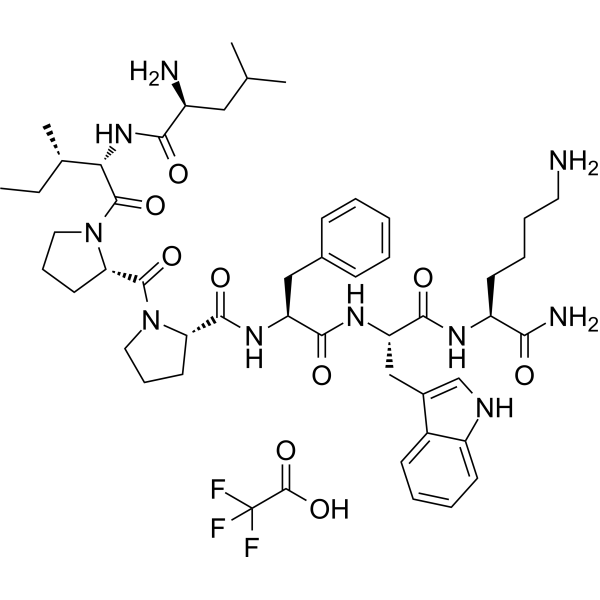
Cardiotoxin Analog (CTX) IV (6-12) TFA is a membrane active peptide that specifically targets negatively charged phospholipid membranes (such as phosphatidylserine and phosphatidylinositol). Cardiotoxin Analog (CTX) IV (6-12) TFA was discovered in the venom of the Taiwan cobra. Cardiotoxin Analog (CTX) IV (6-12) TFA is a chemically synthesized snake venom cardiotoxin that binds to cell membranes and embeds into lipid bilayers through hydrophobic interactions and electrostatic attraction, thereby destroying the stability of membrane structure. Cardiotoxin Analog (CTX) IV (6-12) TFA can induce membrane lipid disorder and cell lysis, exhibiting hemolysis and cytotoxicity .
|
-
-
- HY-P1856
-
|
|
Insulin Receptor
PDGFR
MAPKAPK2 (MK2)
|
Cardiovascular Disease
Metabolic Disease
Inflammation/Immunology
|
|
Proinsulin C-peptide (human) is a peptide consisting of 31 amino acids that links the A and B chains of proinsulin to ensure its correct folding. Proinsulin C-peptide (human) inhibits the high glucose-induced increase in PDGF-β receptor protein expression and the phosphorylation of p42/p44 MAP kinase. Proinsulin C-peptide (human) increases the deformability of erythrocytes derived from type 1 diabetes, inhibits insulin-induced neointimal thickening, and suppresses the proliferation of rat aortic smooth muscle cells cultured under high-glucose conditions .
|
-
-
- HY-W020014
-
|
|
Biochemical Assay Reagents
Drug Intermediate
|
Cardiovascular Disease
|
|
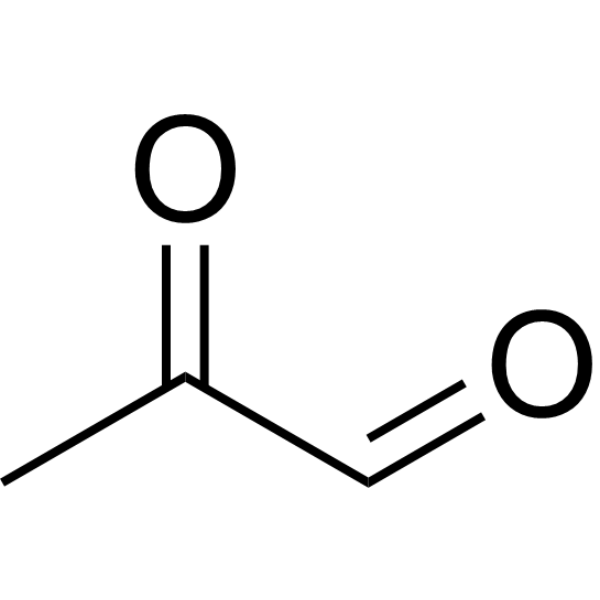
Pyruvic aldehyde (40%w/w in water) is a cell stabilizer. Pyruvic aldehyde (40%w/w in water) can be used for stabilization of cells, such as erythrocytes. Pyruvic aldehyde (40%w/w in water) can be efficiently catalyzed to Lactic acid (HY-B2227) by a Lewis acid catalyst .
|
-
-
- HY-B0882
-
|
|
Cholinesterase (ChE)
|
Neurological Disease
Inflammation/Immunology
|
|
Edrophonium chloride is a short-acting acetylcholinesterase (AChE) inhibitor. Edrophonium chloride has Ki values of 0.2, 0.2, and 0.4 μM and IC50 values of 0.2, 0.05, and 0.5 μM for AChE in human erythrocytes, purified calf forebrain, and purified octopus brain, respectively. Edrophonium chloride can be used to detect early digitalis toxicity and in the study of myasthenia gravis .
|
-
-
- HY-150350
-
|
|
Biochemical Assay Reagents
|
Others
|
|
The 20 mM HEPES, 150 mM NaCl, 240 mM Sucrose, pH 7.2 buffer is a physiological buffer composed of 20 mM HEPES, 150 mM NaCl and 240 mM Sucrose, adjusted to pH 7.2, which is used to resuspend human erythrocyte ghost preparations .
|
-
-
- HY-Y1010
-
|
Glycidol
|
Drug Isomer
|
Cancer
|
|
Oxiran-2-ylmethanol (Glycidol) is an ester product. Oxiran-2-ylmethanol induces base pair point mutations in bacterial strains and structural chromosome aberrations in cultured cells. Oxiran-2-ylmethanol forms N-(2,3-dihydroxypropyl)valine hemoglobin adducts. Oxiran-2-ylmethanol acts as an animal carcinogen but does not significantly induce micronucleated immature erythrocytes in animal bone marrow. Oxiran-2-ylmethanol enables anionic polymerization to produce linear poly(glycidol). Oxiran-2-ylmethanol can be used for cancer-related research .
|
-
-
- HY-148788
-
|
GBT-601; GBT-021601
|
Hemoglobin
|
Others
|
|
Osivelotor is an orally effective small molecule. Osivelotor is an allosteric regulator of deoxyhemoglobin S (HbS). Osivelotor increases the affinity of HbS to oxygen, inhibits HbS polymerization, and thus prevents erythrocyte sickling in the blood. Osivelotor can be used for research of sickle cell disease (SCD) .
|
-
-
- HY-P99232
-
|
5F9 Monoclonal antibody; TAK-164 Antibody
|
Guanylate Cyclase
ADC Antibody
|
Cardiovascular Disease
Cancer
|
|
Indusatumab (5F9 Monoclonal antibody) is a monoclonal antibody against human GUCY2C (Guanylate cyclase 2C). Indusatumab fails to bind to granulocytes or erythrocytes. Indusatumab can be used to synthesize ADCs, such as Indusatumab vedotin (HY-P99662). Indusatumab can be used in cancer research .
|
-
-
- HY-135072
-
|
|
Bacterial
Liposome
|
Cardiovascular Disease
Infection
|
|
N,N',N''-Triacetylchitotriose is a competitive Lysozyme inhibitor. N,N',N''-Triacetylchitotriose inhibits the activity of lysozyme. N,N',N''-Triacetylchitotriose reduces the fusion rate between lysozyme-conjugated liposomes and erythrocyte ghosts, and decreases the equilibrium fusion rate .
|
-
-
- HY-W016188
-
|
|
Cholinesterase (ChE)
|
Others
|
|
1-Naphthyl acetate is an attractive chromogenic substrate for the detection of erythrocyte acetylcholinesterase (AChE) activity. 1-Naphthyl acetate has the potential to detect organophosphorus pesticide (OP) poisoning .
|
-
-
- HY-N7526
-
|
DHNQ; 5,8-Dihydroxy-1,4-naphthoquinone
|
Apoptosis
Autophagy
PI3K
Akt
|
Neurological Disease
Inflammation/Immunology
Cancer
|
|
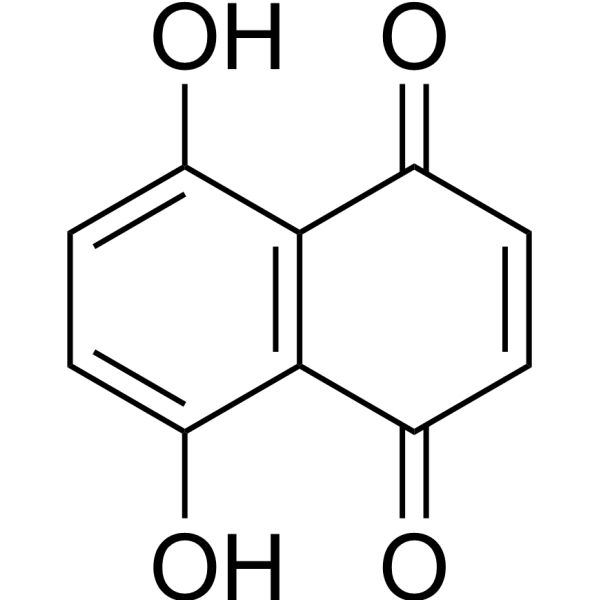
Naphthazarin (DHNQ) is a microtubule depolymerizing agent. Naphthazarin can improve motor function and reduce neuroinflammation in mouse models of Parkinson's disease. Naphthazarin can induce tumor cell apoptosis, autophagy, and cell cycle arrest. Naphthazarin can also induce erythrocyte apoptosis. Naphthazarin can be used in the research of tumors and neurodegenerative diseases .
|
-
-
- HY-B0940
-
-
-
- HY-139573
-
|
FT-4202
|
Pyruvate Kinase
|
Cardiovascular Disease
|
|
Etavopivat is a potent, selective, and orally active erythrocyte pyruvate kinase (PKR) activator. Etavopivat has potent antisickling effects that can be used in studies of sickle cell disease and other haemoglobinopathies .
|
-
-
- HY-D0844S
-
|
L-Glutathione oxidized-13C4,15N2; GSSG-13C4,15N2; Oxiglutatione-13C4,15N2
|
Isotope-Labeled Compounds
Reactive Oxygen Species (ROS)
Endogenous Metabolite
|
Metabolic Disease
|
|
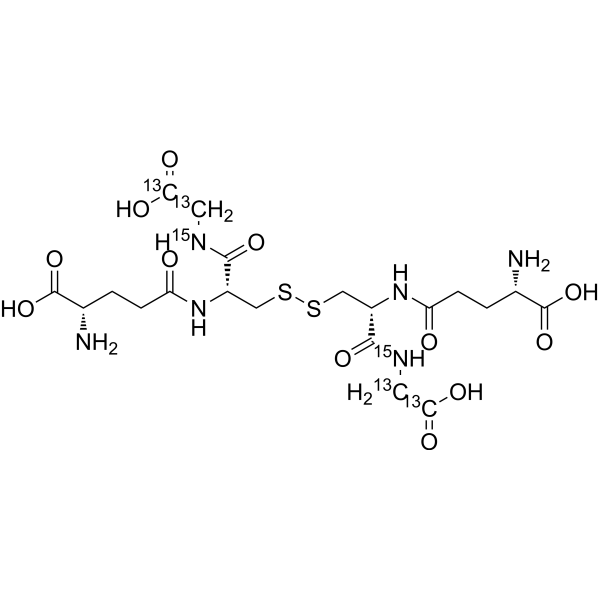
Glutathione oxidized- 13C4, 15N2 is the 13C and 15N labeled Glutathione oxidized (HY-D0844). Glutathione oxidized is produced by the oxidation of glutathione. Detoxification of reactive oxygen species is accompanied by production of glutathione oxidized. Glutathione oxidized can be used for the research of sickle cells and erythrocytes .
|
-
-
- HY-P1629
-
|
|
Bacterial
Fungal
Antibiotic
|
Infection
|
|
Temporin A is a short alpha-helical antimicrobial peptide isolated from the skin of the frog Rana temporaria. Temporin A is effective against a broad spectrum of Gram-positive bacteria. Temporin A interacts directly with the cell membrane of the microorganism and it is non-toxic to erythrocytes at concentrations that are antimicrobial. Temporin A also has antifungal activities (against yeast-like Candida albicans) .
|
-
-
- HY-113854
-
AZD2906
1 Publications Verification
|
Glucocorticoid Receptor
|
Cardiovascular Disease
Endocrinology
|
|
AZD2906 is a selective glucocorticoid receptor (GR) agonist, increases micronucleated immature erythrocytes in the bone marrow of rats. AZD2906 shows IC50s of 2.2, 0.3, 41.6 and 7.5 nM at GR in human, rat PBMC and human, rat whole blood, respectively .
|
-
-
- HY-P2936
-
|
|
Phospholipase
|
Cardiovascular Disease
Infection
|
|
Sphingomyelin phosphodiesterase, Streptomyces sp. is a sphingomyelin phosphodiesterase derived from the genus Streptomyces, which cleaves the phosphodiester bond of sphingomyelin. Sphingomyelin phosphodiesterase, Streptomyces sp. catalyzes the hydrolysis of sphingomyelin in micelles, synthetic substrates, erythrocyte ghost membranes and liposomes, as well as the hydrolysis of the substrate HNP. In the presence of Mg 2+ or Mn 2+ , Sphingomyelin phosphodiesterase, Streptomyces sp. induces hemolysis of bovine erythrocytes through the hydrolysis of membrane sphingomyelin .
|
-
-
- HY-139899
-
|
|
Taste Receptor
|
Others
|
|
S6821 is a TAS2R8 antagonist with IC50 value of 0.035 μM. S6821 is not found to be mutagenic or disruptive in vitro, nor is it found to induce micronucleus in bone marrow polychromatic erythrocytes in vivo .
|
-
-
- HY-D0844R
-
|
L-Glutathione oxidized (Standard); GSSG (Standard); Oxiglutatione (Standard)
|
Reference Standards
Endogenous Metabolite
Reactive Oxygen Species (ROS)
|
Metabolic Disease
|
|
Glutathione oxidized (Standard) is the analytical standard of Glutathione oxidized. This product is intended for research and analytical applications. Glutathione oxidized (L-Glutathione oxidized) is produced by the oxidation of glutathione. Detoxification of reactive oxygen species is accompanied by production of glutathione oxidized. Glutathione oxidized can be used for the research of sickle cells and erythrocytes .
|
-
-
- HY-110389
-
|
|
Cholinesterase (ChE)
|
Neurological Disease
|
|
Pitofenone hydrochloride, a spasmolytic compound, inhibits the acetylcholinesterase (AChE) activity from bovine erythrocytes and from electric eel with Kis of 36 and 45 μM, respectively .
|
-
-
- HY-B1726
-
|
Holocaine
|
Phosphodiesterase (PDE)
|
Metabolic Disease
|
|
Phenacaine (Holocaine) is a local agent that can suppress or relieve pain. Phenacaine inhibits the specific calmodulin-dependent stimulation of erythrocyte Ca 2+-ATPase and cyclic nucleotide phosphodiesterases from brain and heart .
|
-
-
- HY-160610A
-
|
|
Drug Derivative
|
Others
|
|
Carbamoyl phosphate dilithium salt is an antisickling agent and plays a significant role in the urea cycle. Carbamoyl phosphate dilithium salt carbamylates the amino-terminal valine residues of hemoglobin S in erythrocytes, which interferes with the sickling phenomenon. Carbamoyl phosphate dilithium salt exhibits toxicity due to the lithium cation .
|
-
-
- HY-117897
-
CK-2-68
1 Publications Verification
|
Parasite
|
Infection
|
|
CK-2-68 is an inhibitor for complex III in protozoan mitochondrial respiratory chain, by targeting the alternative NADH dehydrogenase (NDH2) of the malarial parasite Plasmodium. CK-2-68 exhibits antimalaria efficacy, that inhibits Plasmodium falciparum infected erythrocytes with an IC50 of 40 nM .
|
-
-
- HY-P10281
-
|
|
Bacterial
|
Infection
Cardiovascular Disease
|
|
RW3 (MP196) is a small cationic antimicrobial hexapeptide. RW3 targets the bacterial cytoplasmic membrane and inhibits cellular respiration and cell wall synthesis. RW3 exhibits high bioactivity against Gram-positive bacteria such as Bacillus subtilis 168 (MIC of 2 µg/mL). RW3 causes shrinking of murine erythrocytes. RW3 can be used in antimicrobial and antifungal research .
|
-
-
- HY-145996
-
|
|
Biochemical Assay Reagents
|
Cardiovascular Disease
Infection
|
|
STC314 is a histone-neutralizing agent. STC314 inhibits histone-mediated cytotoxicity, blocks histone-induced erythrocyte aggregation, reduces fragility, restores deformability and inhibits histone-induced aggregation and degranulation in human erythrocytes. STC314 reduces histone-mediated tissue damage, thrombocytopenia, anemia, and cell death, and improves survival in preclinical models. STC314 can be used for the research of sepsis, ischemia-reperfusion injury, and deep-vein thrombosis .
|
-
-
- HY-129560
-
-
-
- HY-P4559
-
-
-
- HY-106395
-
|
SC-52151
|
HIV Protease
HIV
|
Infection
|
|
Telinavir (SC-52151) is a potent and selective HIV protease inhibitor. Telinavir inhibits lymphotropic, monocytotropic strains and field isolates of HIV type 1 (HIV-1), HIV-2, and simian immunodeficiency virus with EC50s of 26 ng/mL (43 nM). Telinavir is highly protein bound in human plasma and exhibits low partitioning into erythrocytes .
|
-
-
- HY-P4836A
-
|
|
Parasite
|
Infection
|
|
LL-37 FK-13 TFA is the TFA salt form of LL-37 FK-13 (HY-P4836). LL-37 FK-13 TFA is an antimicrobial agent, that inhibits Trichomonas vaginalis. LL-37 FK-13 TFA exhibits minimal hemolytic effects on human erythrocytes and low cytotoxicity to human fibroblasts .
|
-
-
- HY-131993
-
|
RvE4
|
Endogenous Metabolite
|
Inflammation/Immunology
|
|
Resolvin E4 (RvE4) is an endogenous metabolite that stimulates efferocytosis of apoptotic neutrophils and senescent erythrocytes. Resolvin E4 enhances resolution of hemorrhagic exudates and inflammation in vivo .
|
-
-
- HY-N3087
-
|
|
Others
|
Others
|
|
Phaseollin is an isoflavonoid phytoalexin that can be isolated from Phaseolus vulgaris . Phaseollin is toxic to bean hypocotyl and endocarp cells, and causes a complete lysis of sheep erythrocytes .
|
-
-
- HY-N16375
-
|
|
Drug Metabolite
Fungal
ATP Synthase
|
Infection
|
|
(3R,6S)-Bassiatin (Compound 5) is an enantiomer of the fungal metabolite Bassiatin (HY-165143). Bassianin is a compound isolated from fungi that has the activity of inhibiting erythrocyte membrane ATPase and causing cell lysis. Its inhibitory effect on ATPase may be due to membrane disruption .
|
-
-
- HY-14830
-
|
Albitiazolium bromide
|
Parasite
|
Infection
|
|
SAR 97276 (Albitiazolium bromide) is an antimalarial agent. SAR 97276 interfers with the phospholipid metabolism of malarial parasites, especially the biosynthesis of phosphatidylcholine (PC). SAR 97276 enters erythrocytes through the new permeability pathways (NPP) of infected erythrocytes, and is transported into the malarial parasite by a poly-specific cation carrier .
|
-
-
- HY-134137
-
-
-
- HY-P5652
-
|
|
Bacterial
|
Infection
|
|
Bombolitin II is an antimicrobial peptide derived from bumblebee venom. Bombolitin II can lysate erythrocyte and liposome .
|
-
-
- HY-B0312S
-
|
|
Phosphodiesterase (PDE)
|
Cardiovascular Disease
|
|
Dipyridamole-d20 is the deuterium labeled Dipyridamole. Dipyridamole is a phosphodiesterase inhibitor that blocks uptake and metabolism of adenosine by erythrocytes and vascular endothelial cells .
|
-
-
- HY-W016188R
-
|
|
Reference Standards
Cholinesterase (ChE)
|
Others
|
|
1-Naphthyl acetate is an attractive chromogenic substrate for the detection of erythrocyte acetylcholinesterase (AChE) activity. 1-Naphthyl acetate has the potential to detect organophosphorus pesticide (OP) poisoning .
|
-
-
- HY-139573A
-
|
(Rac)-FT-4202
|
Pyruvate Kinase
|
Cardiovascular Disease
|
|
(Rac)-Etavopivat ((Rac)-FT-4202) is an isomer of Etavopivat (HY-139573). Etavopivat is an orally active erythrocyte pyruvate kinase-R (PKR) activator that can be used in studies of sickle cell disease and other haemoglobinopathies .
|
-
-
- HY-W016433
-
|
|
DNA/RNA Synthesis
|
Others
|
|
2-Aminofluorene is a synthetic chemical insecticide. 2-Aminofluorene is a genotoxin. 2-Aminofluorene can be used in the research of DNA adduct structure, DNA repair, carcinogenesis, and mutagenesis .
|
-
-
- HY-B0204B
-
|
(-)-UD-CG115
|
Phosphodiesterase (PDE)
|
Cardiovascular Disease
|
|
(-)-Pimobedan is an isomer of pimobedan. It has the property of stereoselective partitioning or distribution into erythrocytes. The clearance of (-)-pimobedan from erythrocytes is significantly lower than that of (+)-pimobedan, which is entirely due to its stereoselective distribution into erythrocytes. This stereoselective property of (-)-pimobedan may explain the phenomenon previously reported that it produces a 1.5-fold greater contractile force than the (+)-isomer in detergent-treated myocardial specimens of guinea pigs and dogs. These properties suggest that (-)-pimobedan may have unique advantages in terms of in vivo distribution and pharmacological action, which may have important implications for its clinical use.
|
-
-
- HY-W011293
-
|
2,4-Disulfamyl-5-trifluoromethylaniline
|
Phosphodiesterase (PDE)
|
Others
|
|
DTA (2,4-Disulfamyl-5-trifluoromethylaniline) is a cyclic AMP phosphodiesterase inhibitor that binds to erythrocyte carbonic anhydrase .
|
-
- HY-177123
-
|
|
Complement System
|
Inflammation/Immunology
|
|
Refinicopan is a complement factor D inhibitor with an IC50 of 10 nM. Refinicopan inhibits rabbit erythrocyte hemolysis with an IC50 of 41 nM. Refinicopan exhibits excellent pharmacokinetic and pharmacodynamic activity .
|
-
- HY-P5727
-
|
|
Bacterial
|
Infection
|
|
HR1 is a mastoid protease. HR1 can increase the permeability of human erythrocyte membrane. HR1 can induce cytoplasmic membrane permeation in bacteria and mast cells .
|
-
- HY-P4836
-
|
|
Parasite
|
Infection
|
|
LL-37 FK-13 is an antimicrobial agent, that inhibits Trichomonas vaginalis. LL-37 FK-13 exhibits slight hemolytic effects on human erythrocytes and low cytotoxicity to human fibroblasts .
|
-
- HY-121556
-
|
|
Reactive Oxygen Species (ROS)
Parasite
|
Infection
|
|
Rufigallol is one of the earliest systems reported to form columnar mesophases. Rufigallol is also an oxidant agent. Rufigallol acts in a pro-oxidant fashion to produce oxygen radicals inside parasitized erythrocytes. Rufigallol has vitamin K activity and antimalarial activity .
|
-
- HY-149125
-
|
Ceramide trihexosides (porcine)
|
HIV
|
Infection
|
|
Globotriaosylceramide porcine RBC is a trihexosylceramide (Gb3) in porcine erythrocytes. Globotriaosylceramide porcine RBC is a natural resistance factor against HIV-1 infection. The synthetase α-galactosyltransferase (A4GALT) of Globotriaosylceramide porcine RBC is associated with HIV-1 resistance.
|
-
- HY-P991792
-
|
|
Phosphatase
|
Cancer
|
|
Anti-Rat pan-CD45 Antibody (OX1) reacts with a common epitope present on all isotypes of rat CD45. CD45 is largely expressed in the lymphoid system, but it is also found in all hematopoietic cells except erythrocytes and platelets. Recommend Isotype Controls: Mouse IgG1 kappa, Isotype Control (HY-P99977) .
|
-
- HY-N3702
-
|
|
Syk
|
Infection
Inflammation/Immunology
|
|
Dehydroabietinol is a SYK inhibitor with an IC50 of 46.4 μM. Dehydroabietinol inhibits the growth of Trypanosoma cruzi epimastigotes, Leishmania braziliensis promastigotes and Leishmania infantum promastigotes. Dehydroabietinol indirectly inhibits the growth of Plasmodium falciparum, alters the erythrocyte membrane, and induces spherostomatocyte transformation and endovesicle formation. Dehydroabietinol can be used in studies related to immune-mediated diseases, Chagas disease, leishmaniasis and malaria .
|
-
- HY-P10508
-
|
|
Bacterial
Apoptosis
|
Infection
Cancer
|
|
Pantinin-1 is an antimicrobial peptide found in the venom of the Pandinus imperator scorpion. Pantinin-1 has potent antimicrobial activity against Gram-positive bacteria and fungi, weak antimicrobial activity against Gram-negative bacteria, and very low hemolytic activity against human erythrocytes. Pantinin-1 also has anticancer activity and can induce apoptosis in tumor cells .
|
-
- HY-W016433R
-
|
|
Reference Standards
DNA/RNA Synthesis
|
Others
|
|
2-Aminofluorene is a synthetic chemical insecticide. 2-Aminofluorene is a genotoxin. 2-Aminofluorene can be used in the research of DNA adduct structure, DNA repair, carcinogenesis, and mutagenesis .
|
-
- HY-P990846
-
|
|
Transmembrane Glycoprotein
|
Metabolic Disease
|
|
Anti-Fy3 Antibody (MIMA-29) is a kind of mouse IgG2a κ chimeric antibody inhibitor, targeting to human Fy3. Anti-Fy3 Antibody (MIMA-29) binds to erythrocytes and induces RBC (red blood cells) clearance. Anti-Fy3 Antibody (MIMA-29) can be used for the research of metabolic disease .
|
-
- HY-116258
-
|
|
Liposome
|
Others
|
|
C16 Ceramide (d16:1,C16:0) is a bioactive sphingolipid that induces ordered- and gel-phase formation and thermal stabilization of palmitoylsphingomyelin-rich domains in palmitoylphosphocholine (POPC) bilayers. C16 Ceramide (d16:1,C16:0) is found in sphingomyelins in human erythrocytes .
|
-
- HY-147327
-
|
|
Drug Metabolite
|
Cancer
|
|
N-Formylsarcolysine has antitumor activity, and inhibits leukemia by increasing the Hb and erythrocyte levels and decreasing the number of leukocytes. N-Formylsarcolysine also involves in glioblastoma and other diseases research .
|
-
- HY-117569
-
|
|
TNF Receptor
|
Inflammation/Immunology
|
|
KF24345 free base is an orally active adenosine uptake inhibitor. KF24345 free base inhibits adenosine uptake by human, mouse, rabbit and hamster erythrocytes with IC50 values of 59.5, 130.1, 104.2 and 30.9 nM, respectively. KF24345 free base has anti-inflammatory activity and can inhibit LPS-induced TNF-α production and leukopenia in mice .
|
-
- HY-170650
-
|
|
Phospholipase
Cholinesterase (ChE)
Bacterial
|
Infection
Inflammation/Immunology
|
|
SMase-IN-1 (Compound 4) is a bacterial sphingomyelinase enzyme (SMase) inhibitor (IC50 value for B. cereus SMase is 6.43 µM). SMase-IN-1 also inhibits eqBuChE (59.50% inhibition rate at 50 µM concentration). SMase-IN-1 forms a complex with Cu 2+ in biometal interactions. SMase-IN-1 reduces B. cereus-induced hemolysis on sheep erythrocytes .
|
-
- HY-123294R
-
|
YRC 2388 (Standard); BAY-YRC 2388 (Standard); NBA 061 (Standard)
|
Herbicide
Reference Standards
|
Neurological Disease
Metabolic Disease
|
|
Fentrazamide (Standard) is the analytical standard of Fentrazamide. This product is intended for research and analytical applications. Fentrazamide (YRC 2388) is a herbicide. Fentrazamide has specific toxic effects on the nervous system and erythrocytes in rats, affecting the energy supply of cells mainly by interfering with the glycolysis process. Fentrazamide can be used as a useful tool to study the mechanisms of neurodegenerative diseases and erythrocyte dysfunction .
|
-
- HY-P5653
-
|
|
Bacterial
|
Infection
|
|
Bombolitin III is an antimicrobial peptide derived from bumblebee venom. Bombolitin III can lysate erythrocyte and liposome .
|
-
- HY-P5654
-
|
|
Bacterial
|
Infection
|
|
Bombolitin IV is an antimicrobial peptide derived from bumblebee venom. Bombolitin IV can lysate erythrocyte and liposome .
|
-
- HY-B0312S1
-
|
|
Phosphodiesterase (PDE)
|
Cardiovascular Disease
|
|
Dipyridamole-d16 is the deuterium labeled Dipyridamole. Dipyridamole (Persantine) is a phosphodiesterase inhibitor that blocks uptake and metabolism of adenosine by erythrocytes and vascular endothelial cells.
|
-
- HY-105853
-
|
|
Cholinesterase (ChE)
|
Neurological Disease
|
|
Pitofenone, a spasmolytic compound, inhibits the acetylcholinesterase (AChE) activity from bovine erythrocytes and from electric eel with Kis of 36 and 45 μM, respectively .
|
-
- HY-126021
-
|
|
Cholinesterase (ChE)
|
Neurological Disease
|
|
Mobam is a insecticide against Anoplura Pediculidae. Mobam inhibits cholinesterase (ChE) levels in rats plasma, erythrocytes, and brain, suppresses the avoidance behavior in rats .
|
-
- HY-165143
-
|
|
Fungal
|
Others
|
|
Bassianin is a compound isolated from fungi that has the activity of inhibiting erythrocyte membrane ATPase and causing cell lysis. Its inhibitory effect on ATPase may be due to membrane disruption.
|
-
- HY-100322
-
|
|
Chloride Channel
|
Cardiovascular Disease
|
|
H100 is a Cl - transport inhibitor, with partial effects against both the NaK2Cl cotransporter and the Band 3 anion exchanger, but no effect against KCl cotransporter, in human erythrocytes.
|
-
- HY-115731
-
|
Desmethyltocopherol; DL-Tocol; rac-Tocol
|
Endogenous Metabolite
|
Metabolic Disease
|
|
(±)-Tocol is a synthetic vitamin E derivative.nlike (±)-α-tocopherol, (±)-tocol does not suppress retinol-induced erythrocyte hemolysis or increase microviscosity of rat liver phosphatidylcholine (PC) liposomes.
|
-
- HY-120690
-
|
|
Influenza Virus
|
Infection
|
|
RO5464466 is an hemagglutinin (HA) inhibitor of influenza H1N1 viruses. RO5464466 inhibits HA-mediated hemolysis of chicken erythrocytes with the IC50 of 0.29 μM .
|
-
- HY-106745
-
|
Ro 22-4839
|
Calmodulin
|
Cardiovascular Disease
|
|
Elziverine (Ro 22-4839) is a brain circulation improvement agent with vasospasm antispasmodic effects. Elziverine is a calmodulin antagonist. Elziverine inhibits erythrocyte cell membrane rupture, platelet aggregation and lipid peroxidation .
|
-
- HY-W011293R
-
|
2,4-Disulfamyl-5-trifluoromethylaniline (Standard)
|
Reference Standards
Phosphodiesterase (PDE)
|
Others
|
|
DTA (Standard) is the analytical standard of DTA. This product is intended for research and analytical applications. DTA (2,4-Disulfamyl-5-trifluoromethylaniline) is a cyclic AMP phosphodiesterase inhibitor that binds to erythrocyte carbonic anhydrase .
|
-
- HY-B1056R
-
|
Propazol (Standard); 2-Benzimidazolepropionic acid (Standard)
|
Reference Standards
Bacterial
Parasite
Antibiotic
Carbonic Anhydrase
|
Infection
Cancer
|
|
DTA (Standard) is the analytical standard of DTA. This product is intended for research and analytical applications. DTA (2,4-Disulfamyl-5-trifluoromethylaniline) is a cyclic AMP phosphodiesterase inhibitor that binds to erythrocyte carbonic anhydrase .
|
-
- HY-105853S
-
|
|
Isotope-Labeled Compounds
|
Neurological Disease
|
|
Pitofenone-d4 is deuterium labeled Pitofenone (HY-105853). Pitofenone, a spasmolytic compound, inhibits the acetylcholinesterase (AChE) activity from bovine erythrocytes and from electric eel with Kis of 36 and 45 μM, respectively .
|
-
- HY-W371164
-
-
- HY-119491
-
|
|
Biochemical Assay Reagents
|
Others
|
|
Ethyl Tricosanoate is a long-chain saturated fatty acid ethyl ester, which exists in small amounts in C. conicum and C. conicum. Free acid reduces the hemolytic activity of Staphylococcus aureus delta toxin on human erythrocytes. Both ethyl ester and free acid can be used as standards for the analysis of lipid mixtures.
|
-
- HY-151575
-
|
|
GSK-3
|
Infection
|
|
PfGSK3/PfPK6-IN-2 is a potent dual PfGSK3/PfPK6 (Plasmodium falciparum GSK3/PK6) inhibitor (IC50: 172 nM and 11 nM respectively). PfGSK3/PfPK6-IN-2 can be used in the research of Malaria .
|
-
- HY-172602
-
|
|
Antibiotic
Bacterial
Reactive Oxygen Species (ROS)
|
Infection
|
|
ROS inducer 9 (compound 4e) is an antibacterial agent with a MIC value of 0.25 μg/mL against E. coli. ROS inducer 9 kills bacteria by inhibiting GSH activity and increasing ROS levels. ROS inducer 9 shows low toxicity to erythrocytes and RAW 264.7 cells .
|
-
- HY-118050
-
|
L-420
|
Sodium Channel
Endogenous Metabolite
|
Cardiovascular Disease
|
|
L589420-0-2 (L-420) is a sodium pump inhibitor with inhibitory activity in human erythrocytes. L589420-0-2 can regulate the concentration of intracellular sodium ions, thereby affecting the electrophysiological properties of cells. L589420-0-2 may also play an important role in the inhibition of cardiovascular diseases .
|
-
- HY-170396
-
|
|
BCRP
|
Inflammation/Immunology
|
|
ABCG2-IN-4 (Compound K31) is an orally active inhibitor for ABCG2, which reduces the release of Protoporphyrin IX (PPIX) (HY-B1247) from erythrocytes into plasma, and prevents the reduces phototoxicity. ABCG2-IN-4 exhibits anti-inflammatory and antioxidant activity in mouse models .
|
-
- HY-151442
-
|
|
Fungal
|
Infection
|
|
Antifungal agent 43 (compound B05) is an antifungal agent. Antifungal agents 43 has antifungal activity by inhibiting biofilm formation. Antifungal agent 43 has low toxicity in human cancer cell lines .
|
-
- HY-151440
-
|
|
Fungal
|
Infection
|
|
Antifungal agent 42 is an antifungal agent. Antifungal agent 42 has an inhibitory effect on lanosterol 14α-demethylase (CYP51) of C.alb.. Antifungal agent 42 inhibits biofilm formation .
|
-
- HY-151437
-
|
|
Fungal
|
Infection
|
|
Antifungal agent 40 is an antifungal agent which extends into the narrow hydrophobic pocket II of C.alb. CYP51. Antifungal agent 40 has an inhibitory effect on lanosterol 14α-demethylase (CYP51). Antifungal agent 40 inhibits biofilm formation .
|
-
- HY-P10547
-
|
MAC-1 peptide
|
Bacterial
|
Infection
|
|
Macropin (MAC-1 peptide) is an antimicrobial peptide found in the venom of the solitary bee Macropis fulvipes. Macropin has antibacterial activity against both Gram-positive and Gram-negative bacteria, and also exhibits inhibitory activity against fungi and moderate hemolytic activity against human erythrocytes. Macropin can be used in research on anti-infective therapy .
|
-
- HY-138035
-
|
|
Fungal
|
Infection
|
|
Tenellin is a fungal metabolite that has been found in Beauveria. It inhibits Mg2+-, Ca2+-, and Na+/K+-ATPase activities in equine erythrocytes by 51, 57, and 74%, respectively, when used at a concentration of 200 μg/mL.1 Tenellin is cytotoxic to Sf9 and Sf21 insect cells with 50% cytotoxic concentration (CC50) values of- 4.84 and 11.95 μM, respectively.
|
-
- HY-B1829R
-
|
Dexamethasone 21-phosphate (Standard)
|
Glucocorticoid Receptor
Reference Standards
TGF-β Receptor
Interleukin Related
|
Neurological Disease
Inflammation/Immunology
|
|
Dexamethasone phosphate (Standard) (Dexamethasone 21-phosphate (Standard)) is the analytical standard of Dexamethasone phosphate (HY-B1829). This product is intended for research and analytical applications. Dexamethasone phosphate (Dexamethasone 21-phosphate) is a prodrug form of the glucocorticoid Dexamethasone (HY-14648). Dexamethasone phosphate is prepared by introducing a phosphate ester group to the hydroxyl group at position 21 of the Dexamethasone molecule. Dexamethasone phosphate inhibits LPS (HY-D1056)-induced degradation of IRAK-1 and IRAK-4, and blocks LPS-induced activation of TRAF6, p-TAK1 and p-JNK. Dexamethasone phosphate inhibits the secretion of RANTES, TGF-β1 and NO, promotes the production of MIP-1α and IL-10, and blocks microglial migration. Dexamethasone phosphate is almost completely converted to Dexamethasone in rat blood, and supports transdermal delivery via iontophoresis. Dexamethasone phosphate can be used in research related to steroid-dependent ulcerative colitis, chemotherapy-induced vomiting, allergic asthma and acute colitis (inflammatory bowel disease).
|
-
- HY-E70993
-
-
- HY-N12630
-
|
Mycosporine-Gly
|
Mitochondrial Metabolism
Bacterial
|
Others
|
|
Mycosporine glycine (Mycosporine-Gly) is a potent singlet oxygen quencher. Mycosporine glycine can effectively suppress various detrimental effects of the Type-II photosensitization in biological systems, such as inactivation of mitochondrial electron transport, lipid peroxidation of microsomes, hemolysis of erythrocytes and growth inhibition of E.coli. Mycosporine glycine can be used for protecting marine organisms against sunlight damage .
|
-
- HY-123294
-
|
YRC 2388; BAY-YRC 2388; NBA 061
|
Herbicide
|
Neurological Disease
Metabolic Disease
|
|
Fentrazamide (YRC 2388) is a herbicide. Fentrazamide has specific toxic effects on the nervous system and erythrocytes in rats, affecting the energy supply of cells mainly by interfering with the glycolysis process. Fentrazamide can be used as a useful tool to study the mechanisms of neurodegenerative diseases and erythrocyte dysfunction .
|
-
- HY-163753
-
|
|
Carbonic Anhydrase
|
Others
|
|
Carbonic anhydrase inhibitor 25 (compound 6a) is a potent carbonic anhydrase inhibitor. Carbonic anhydrase inhibitor 25 shows inhibition for hCA I and hCA II receptor .
|
-
- HY-NP0221
-
|
|
Transferrin Receptor
|
Inflammation/Immunology
|
|
Rabbit Transferrin is the major iron-containing protein in plasma, responsible for transporting iron absorbed from the digestive tract and iron released by erythrocyte degradation .
|
-
- HY-183764
-
|
|
COX
Lipoxygenase
TNF Receptor
Interleukin Related
MMP
|
Inflammation/Immunology
|
|
COX-2/5-LOX-IN-8 is an orally active dual COX-2/5-LOX inhibitor, with an IC50 of 6.30 μM against sheep-derived COX-2 and an IC50 of 8.09 μM against 5-LOX. COX-2/5-LOX-IN-8 acts as a membrane stabilizer that stabilizes erythrocyte membranes against hypotonicity-induced hemolysis. COX-2/5-LOX-IN-8 functions as a protein stabilizer that inhibits heat-induced denaturation of bovine serum albumin. COX-2/5-LOX-IN-8 reduces paw swelling, improves hind limb weight-bearing function, decreases serum levels of pro-inflammatory cytokines (TNF-α, IL-1β, IL-6, CRP), and lowers serum levels of cartilage degradation biomarkers (COMP, MMP-3, CTX-II). COX-2/5-LOX-IN-8 can be used in the research of osteoarthritis .
|
-
- HY-182665
-
|
|
Biochemical Assay Reagents
|
Others
|
|
Sterile Sodium Citrate Anticoagulant (4%) is a ready-to-use solution that prevents blood clotting by chelating with calcium ions. It is mainly used in experiments such as coagulation tests and erythrocyte sedimentation rate (ESR) measurements.
|
-
- HY-125863D
-
|
|
Endogenous Metabolite
|
Metabolic Disease
|
|
Glucose-6-phosphate dehydrogenase, Torula yeast (EC 1.1.1.49), is a cytoplasmic enzyme located in the pentose phosphate pathway, a metabolic pathway that provides reducing energy to cells (e.g., erythrocytes) by maintaining the level of the coenzyme nicotinamide adenine dinucleotide phosphate (NADPH).
|
-
- HY-E71039
-
|
|
Biochemical Assay Reagents
|
Others
|
|
Chemically modified Glucose-6-phosphate Dehydrogenase, Leuconostoc mesenteroides is a cytosolic enzyme. Chemically modified Glucose-6-phosphate Dehydrogenase, Leuconostoc mesenteroides is in the pentose phosphate pathway, a metabolic pathway that supplies reducing energy to cells (such as erythrocytes) by maintaining the level of the co-enzyme nicotinamide adenine dinucleotide phosphate (NADPH) .
|
-
- HY-N18114
-
|
|
Calcium Channel
|
Metabolic Disease
|
|
rel-(E)-6,7-Transdihydroxyligustilide is a compound found in the dried tuberous roots of Polygonum multiflorum. rel-(E)-6,7-Transdihydroxyligustilide inhibits Ca 2+‑ATPase in calmodulin-deficient human erythrocyte membranes. rel-(E)-6,7-Transdihydroxyligustilide is used for the research of hyperlipidemia .
|
-
- HY-P990268
-
|
|
Phosphatase
|
Inflammation/Immunology
|
|
Anti-Mouse CD45.2 Antibody (104.2) is a mouse-derived IgG2a κ type antibody inhibitor, targeting to mouse CD45.2. Anti-Mouse CD45.2 Antibody (104.2) can inhibit B Cell differentiation. Anti-Mouse CD45.2 Antibody (104.2) can be used for the researches of inflammation and immunology, such as LPS (HY-D1056)-induced inflammation and autoimmunity .
|
-
- HY-W035091
-
|
|
Biochemical Assay Reagents
|
Cardiovascular Disease
Neurological Disease
|
|
Tetrachloroauric acid is an Au (III) compound and bilayer disruptor that can be used to damage red blood cells. Tetrachloroauric acid specifically disrupts the bilayer structure of representative phospholipids (dimyristoylphosphatidylcholine and dimyristoylphosphatidylethanolamine) in human red blood cell membranes, and induces morphological changes in intact human red blood cells. Tetrachloroauric acid causes downregulation of MT I-II and GFAP expression in the mouse brain following chronic treatment. Tetrachloroauric acid is being used in studies related to neurotoxicity and hematotoxicity, including analyses of human red blood cells and molecular models of red blood cell membranes, as well as immunohistochemical evaluation of the mouse brain .
|
-
- HY-176747
-
|
DMPPD
|
Reactive Oxygen Species (ROS)
|
Others
|
|
7-PPD (DMPPD) is a rubber antioxidant that scavenges free radicals and inhibits the oxidative degradation of rubber chains. 7-PPD shows promise for research in tire manufacturing and rubber product processing .
|
-
- HY-12542S
-
|
F 368-13C3
|
Isotope-Labeled Compounds
Glutathione Reductase (GR)
|
Neurological Disease
Inflammation/Immunology
|
|
Dantrolene- 13C3 is the 13C3 labeled Dantrolene. Dantrolene (F368), a muscle relaxant, non-competitively inhibits human erythrocyte glutathione reductase. Ki and IC50 values are 111.6 μM and 52.3 μM, respectively. Dantrolene is a ryanodine receptor antagonist and Ca2+ signaling stabilizer. Dantrolene can be used for the research of muscle spasticity, malignant hyperthermia, Huntington's disease and other neuroleptic malignant syndrome.
|
-
- HY-P5344
-
|
Fluorigenic PEXEL peptide
|
Parasite
|
Others
|
|
Dabcyl-LNKRLLHETQ-Edans (Fluorigenic PEXEL peptide) is a biological active peptide. (This FRET substrate peptide for Plasmepsin V (PMV) is derived from the conserved Plasmodium Export Element (PEXEL) motif of Histidine-Rich Protein II (HRPII). PMV is an ER aspartic protease that recognizes and cleaves the RXL sequence within the PEXEL motif of proteins exported by human malaria parasite Plasmodium falciparum, allowing them to translocate into host erythrocytes.)
|
-
- HY-103319R
-
|
R 24571 (Standard)
|
Reference Standards
Autophagy
Calmodulin
|
Neurological Disease
Cancer
|
|
Calmidazolium chloride (Standard) is the analytical standard of Calmidazolium chloride (HY-103319). This product is intended for research and analytical applications. Calmidazolium chloride (R 24571) is a calmodulin antagonist, antagonizing CaM-dependent phosphodiesterase and calmodulin-induced activation of erythrocyte Ca2+-transporting ATPase with IC50s of 0.15 and 0.35 μM, respectively . Also in anti-cancer research . Calmidazolium binds to calmodulin with a Kd of 3 nM.
|
-
- HY-168960
-
|
|
Reactive Oxygen Species (ROS)
Bacterial
|
Infection
|
|
ROS inducer 8 (Compound 11g) is the inhibitor for glutathione (GSH), that induces the ROS accumulation in Enterococcus faecalis, thereby exhibiting antibacterial activity. ROS inducer 8 disrupts the biofilm, inhibits S. aureus and E. faecalis with MIC of 8 μg/mL and 2 μg/mL, exhibits post-antibiotic effect. ROS inducer 8 exhibits low hemolytic toxicity to sheep erythrocytes (HC50 > 1280 μg/mL) .
|
-
- HY-106395A
-
|
(Rac)-SC-52151
|
HIV Protease
HIV
|
Infection
|
|
(Rac)-Telinavir ((Rac)-SC-52151) is a racemate of Telinavir (HY-106395A). Telinavir (SC-52151) is a potent and selective HIV protease inhibitor. Telinavir inhibits lymphotropic, monocytotropic strains and field isolates of HIV type 1 (HIV-1), HIV-2, and simian immunodeficiency virus with EC50s of 26 ng/mL (43 nM). Telinavir is highly protein bound in human plasma and exhibits low partitioning into erythrocytes .
|
-
- HY-113449
-
-
- HY-126073
-
|
|
Aquaporin
|
Inflammation/Immunology
Cancer
|
|
DFP00173 is a potent and selective aquaporin-3 (AQP3) inhibitor. DFP00173 inhibits mouse and human AQP3 with an IC50 of ~0.1-0.4 μM. DFP00173 is selective for AQP3 over the homologous AQP isoforms AQP7 and AQP9 .
|
-
- HY-B0882S
-
|
|
Isotope-Labeled Compounds
Cholinesterase (ChE)
|
Neurological Disease
Inflammation/Immunology
|
|
Edrophonium-d5 chloride is the deuterium labeled Edrophonium chloride (HY-B0882). Edrophonium chloride is a short-acting acetylcholinesterase (AChE) inhibitor. Edrophonium chloride has Ki values of 0.2, 0.2, and 0.4 μM and IC50 values of 0.2, 0.05, and 0.5 μM for AChE in human erythrocytes, purified calf forebrain, and purified octopus brain, respectively. Edrophonium chloride can be used to detect early digitalis toxicity and in the study of myasthenia gravis .
|
-
- HY-B0882R
-
|
|
Reference Standards
Cholinesterase (ChE)
|
Neurological Disease
Inflammation/Immunology
|
|
Edrophonium chloride (Standard) is the analytical standard of Edrophonium chloride (HY-B0882). This product is intended for research and analytical applications. Edrophonium chloride is a short-acting acetylcholinesterase (AChE) inhibitor. Edrophonium chloride has Ki values of 0.2, 0.2, and 0.4 μM and IC50 values of 0.2, 0.05, and 0.5 μM for AChE in human erythrocytes, purified calf forebrain, and purified octopus brain, respectively. Edrophonium chloride can be used to detect early digitalis toxicity and in the study of myasthenia gravis.
|
-
- HY-P10540
-
|
|
Bacterial
|
Infection
|
|
Pantinin-2 is a cysteine-free toxic peptide found in the emperor scorpion (paninus imperator). Pantinin-2 has high activity against Gram-positive bacteria but weak activity against Gram-negative bacteria. Pantinin-2 also exhibits activity against Candida tropicalis and has relatively mild hemolytic activity against human erythrocytes. Pantinin-2 can be used in the development of antimicrobial drugs for drug-resistant pathogens .
|
-
- HY-W127408
-
|
|
Biochemical Assay Reagents
Endogenous Metabolite
|
Others
|
|
1,2,3-Tripalmitoleoyl-rac-glycerol is a triacylglycerol containing palmitoleic acid at the sn-1, sn-2 and sn-3 positions. It reduces erythrocyte deformability in a concentration-dependent manner in the Reid filtration assay. Hepatic levels of 1,2,3-tripalmitoleoyl-rac-glycerol are increased in a JAK2L mouse model of hepatic steatosis. 1,2,3-Tripalmitoleoyl-rac-glycerol plasma levels are reduced in patients with predialysis renal disease.
|
-
- HY-P11292
-
|
|
Calcium Channel
|
Cardiovascular Disease
|
|
Caloxin 1b3, a peptide, is a selective plasma membrane Ca 2+ pump 1 (PMCA1) inhibitor. Caloxin 1b3 significantly inhibits PMCA1 Ca 2+–Mg 2+-ATPase in the rabbit duodenal mucosa than the PMCA4 in the human erythrocyte ghosts. Caloxin 1b3 also increases cytosolic Ca 2+ concentration in endothelial cells. Caloxin 1b3 can be used for cardiovascular disorders research .
|
-
- HY-W130236
-
|
|
Cholinesterase (ChE)
|
Cancer
|
|
Methylene Violet 3RAX is a phenazine dye to stain the mitochondria of cells. Methylene Violet 3RAX can change the molecular structure of DNA, undermine the module of DNA, and induce the generation of the reactive singlet oxygen. Methylene Violet 3RAX shows inhibition for human erythrocyte AChE and human plasma BChE with an Kis of 1.58, 0.51 μM, respectively. Methylene Violet 3RAX has the potential for the research of potential photosensitizers for mitochondrial targeting action in PDT (photodynamic therapy) .
|
-
- HY-B1005
-
|
8-Quinolinol
|
Environmental Pollutants
Antibiotic
Bacterial
|
Cancer
|
|
8-Hydroxyquinoline (8-Quinolinol) is a lipophilic metal chelator that can be used as a fungicide .8-Hydroxyquinoline shows the MIC range of 27.56-55.11 μM (4-8 μg/mL) against the clinical isolates of Neisseria gonorrhoeae. 8-Hydroxyquinoline can bind to copper form complexes and transport copper into cells. 8-Hydroxyquinoline increases in the number of micronucleated polychromatic erythrocytes and can also make hair depigmented in mice .
|
-
- HY-N0142
-
Phloretin
Maximum Cited Publications
24 Publications Verification
NSC 407292; RJC 02792
|
SGLT
Endogenous Metabolite
GLUT
|
Metabolic Disease
Cancer
|
|
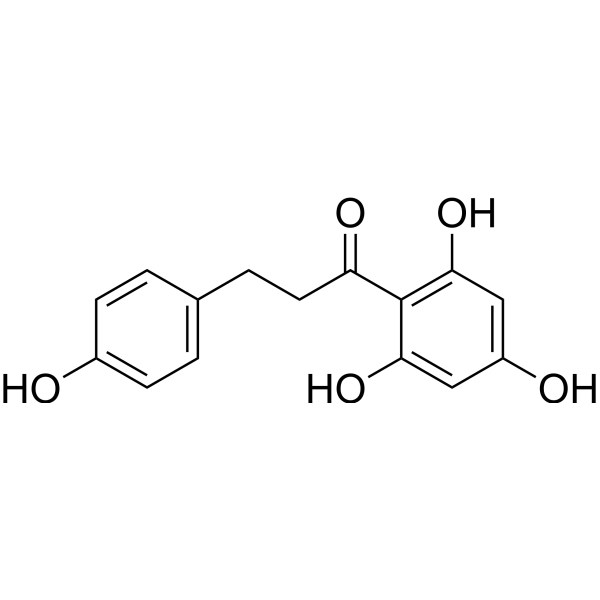
Phloretin (NSC 407292; RJC 02792) is a flavonoid extracted from Malus pumila Mill.,has anti-inflammatory activities. Phloridzin is a specific,competitive and orally active inhibitor of sodium/glucose cotransporters in the intestine (SGLT1) and kidney (SGLT2). Phloretin inhibits Yeast-made GLUT1 as well as Human erythrocyte GLUT1 with IC50values of 49 μM and 61 μM,respectively .Phloretin has the potential for the treatment of rheumatoid arthritis (RA) and allergic airway inflammation .
|
-
- HY-128129
-
|
|
Urea Transporter
|
Metabolic Disease
|
|
UT-B-IN-1 (UTBINH-14) is a reversible, competitive and selective urea transporter-B (UT-B) inhibitor with IC50 values of 10 and 25 nM for human and mouse UT-B, respectively. UT-B-IN-1 shows low toxicity and high selectivity for UT-B over UT-A isoforms. UT-B-IN-1 increases urine output and reduces urine osmolality of mice. UT-B-IN-1 can be used for diuretic mechanism research .
|
-
- HY-W039898
-
-
- HY-148034
-
|
|
Parasite
|
Infection
|
|
Plm IV inhibitor-1 (compound 6) is a potent plasmepsin IV (Plm IV) inhibitor with IC50s of 4.1, 0.80, 0.25, 0.35 µM for Plm I, Plm II, Plm IV, Cat D, respectively .
|
-
- HY-P992456
-
|
|
Complement System
|
Cardiovascular Disease
Endocrinology
|
|
SAR-443809 is a selective alternative complement system inhibitor and monoclonal antibody targeting complement factor Bb. SAR-443809 blocks the cleavage of C3 and factor B by selectively binding to the activated form of factor Bb, with a KD of 7.3 nM for human factor Bb. SAR-443809 inhibits the amplification loop of the alternative complement pathway and C3 activation, reduces C3b deposition, and blocks the activation of pathways associated with intravascular and extravascular hemolysis. SAR-443809 can be used for the research of hematological and renal disorders mediated by abnormal alternative complement pathway .
|
-
- HY-B0881
-
|
|
Potassium Channel
|
Metabolic Disease
Cancer
|
|
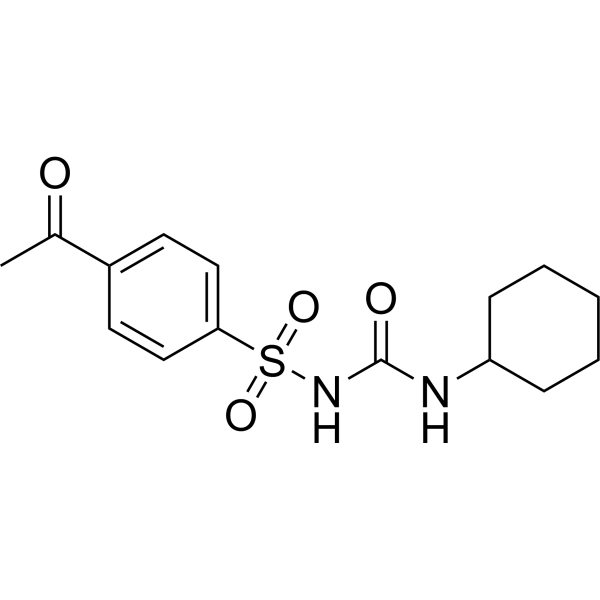
Acetohexamide is an orally active first-generation sulfonylurea agent used in research related to type 2 diabetes and cancer. Acetohexamide exerts reductase activity in human erythrocytes. Acetohexamide stimulates the pancreas to secrete insulin. Acetohexamide inhibits ATP-sensitive potassium channels in the β cells of the pancreas. Acetohexamide can inhibit the formation of circular chemorepellent induced defects (CCIDs) in lymphendothelial cell (LEC) monolayers. Acetohexamide inhibits markers of epithelial-to-mesenchymal-transition and migration. Acetohexamide suppresses the synthesis of 12(S)-HETE. Acetohexamide can potentiate hypoglycaemic action .
|
-
- HY-P2460
-
|
|
Bacterial
Fungal
Interleukin Related
TNF Receptor
|
Infection
Inflammation/Immunology
|
|
SMAP‑29 is a cathelicidin antimicrobial peptide with LPS‑binding and anti‑inflammatory properties. SMAP‑29 exerts broad‑spectrum antimicrobial activity against bacteria, fungi and multidrug‑resistant isolates. SMAP‑29 kills pathogens by permeabilizing bacterial membranes, inducing depolarization and cell lysis, and also inhibits inflammatory cytokines while reducing lethality in septic shock and pneumonia models. SMAP-29 can be used for research on bacterial infections, drug-resistant infections, septic shock .
|
-
- HY-W653841
-
|
|
Endogenous Metabolite
Parasite
|
Infection
Inflammation/Immunology
Cancer
|
|
Chondroitin sulfate A disodium is a mucopolysaccharide extracted from animal cartilages such as porcine nasal cartilage, and serves as a major structural component of cartilage. Chondroitin sulfate A disodium is one of the specific receptors for the adhesion of Plasmodium falciparum-infected red blood cells in the microcirculation. Chondroitin sulfate A disodium can be used together with selenium to prepare nanoparticles for protecting cartilage against T‑2 toxin-induced damage. Chondroitin sulfate A disodium is abnormally highly expressed in ameloblastoma, and is particularly enriched in stellate reticulum-like tumor cells. Chondroitin sulfate A disodium can be applied to studies on Plasmodium infection mechanisms, cartilage protection and oral tumors .
|
-
- HY-N0142R
-
|
NSC 407292 (Standard); RJC 02792 (Standard)
|
Reference Standards
SGLT
Endogenous Metabolite
GLUT
|
Metabolic Disease
Cancer
|
|
Phloretin (Standard) is the analytical standard of Phloretin. This product is intended for research and analytical applications. Phloretin (NSC 407292; RJC 02792) is a flavonoid extracted from Malus pumila Mill., has anti-inflammatory activities. Phloridzin is a specific, competitive and orally active inhibitor of sodium/glucose cotransporters in the intestine (SGLT1) and kidney (SGLT2). Phloretin inhibits Yeast-made GLUT1 as well as Human erythrocyte GLUT1 with IC50values of 49 μM and 61 μM, respectively .Phloretin has the potential for the treatment of rheumatoid arthritis (RA) and allergic airway inflammation .
|
-
- HY-B1005R
-
|
8-Quinolinol (Standard)
|
Reference Standards
Bacterial
Antibiotic
|
Cancer
|
|
8-Hydroxyquinoline (Standard) is the analytical standard of 8-Hydroxyquinoline. This product is intended for research and analytical applications. 8-Hydroxyquinoline (8-Quinolinol) is a lipophilic metal chelator that can be used as a fungicide .8-Hydroxyquinoline shows the MIC range of 27.56-55.11 μM (4-8 μg/mL) against the clinical isolates of Neisseria gonorrhoeae. 8-Hydroxyquinoline can bind to copper form complexes and transport copper into cells. 8-Hydroxyquinoline increases in the number of micronucleated polychromatic erythrocytes and can also make hair depigmented in mice .
|
-
- HY-14280A
-
|
|
COMT
|
Neurological Disease
Cancer
|
|
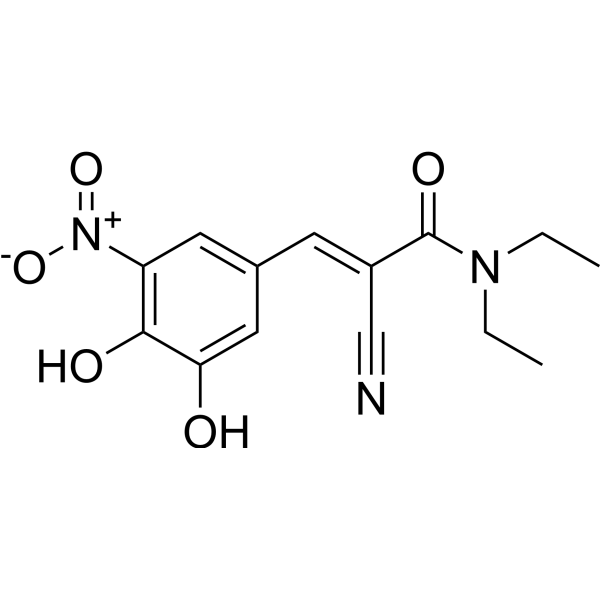
Entacapone sodium salt is a potent, reversible, peripherally acting and orally active catechol-O-methyltransferase (COMT) inhibitor. Entacapone sodium salt inhibits COMT from rat brain, erythrocytes and liver with IC50 values of 10 nM, 20 nM, and 160 nM, respectively. Entacapone sodium salt is selective for COMT over other catecholamine metabolizing enzymes, including MAO-A, MAO-B, phenolsulphotransferase M (PST-M) and PST-P (IC50s>50 µM). Entacapone sodium salt can be used for the research of Parkinson's disease . Entacapone sodium salt serves as as a inhibit of FTO demethylation with an IC50 of 3.5 μM, can be used for the research of metabolic disorders .
|
-
- HY-N16715
-
|
|
Cholinesterase (ChE)
|
Neurological Disease
|
|
Monardic acid A is a selective inhibitor of AChE, with an IC50 of 53.1 μM against AChE from electric eel. Monardic acid A shows weak inhibitory activity against human erythrocyte AChE (IC50 >100 μM) and has no significant inhibitory effect on BChE. Monardic acid A reduces acetylcholine breakdown by inhibiting AChE activity, and also exhibits inhibitory activity against histamine release and hyaluronidase, thus exerting anti-inflammatory and neurotransmitter regulatory effects. Monardic acid A can be isolated from lungwort (Pulmonaria officinalis) and thyme (Thymus gobicus), and is mainly used in the development of anti-inflammatory drugs and drugs related to neurodegenerative diseases .
|
-
- HY-P5446
-
|
|
Bacterial
|
Others
|
|
BMAP-18 is a biological active peptide. (BMAP-18 is a truncated form of the antimicrobial peptide BMAP-27. Bovine myeloid antimicrobial peptide-27 (BMAP-27) belongs to the Cathelicidin family of peptides which displays rapid bactericidal activity against Staphylococcus aureus, Streptococcus uberis, and Escherichia coli. BMAP-27 is cytotoxic to human erythrocytes and neutrophils, although at higher than microbicidal concentrations. BMAP-18 displays much higher cell selectivity as compared to parental BMAP-27 because of its decreased hemolytic activity and retained antimicrobial activity.)
|
-
- HY-14280
-
|
|
COMT
|
Neurological Disease
Cancer
|
|
Entacapone is a potent, reversible, peripherally acting and orally active catechol-O-methyltransferase (COMT) inhibitor. Entacapone inhibits COMT from rat brain, erythrocytes and liver with IC50 values of 10 nM, 20 nM, and 160 nM, respectively. Entacapone is selective for COMT over other catecholamine metabolizing enzymes, including MAO-A, MAO-B, phenolsulphotransferase M (PST-M) and PST-P (IC50s>50 μM). Entacapone can be used for the research of Parkinson's disease . Entacapone serves as a inhibitor of FTO demethylation with an IC50 of 3.5 μM, can be used for the research of metabolic disorders .
|
-
- HY-W008344
-
|
|
Nucleoside Antimetabolite/Analog
Apoptosis
|
Infection
Cardiovascular Disease
Neurological Disease
Inflammation/Immunology
Cancer
|
|
2-Chloroadenosine is an adenosine analog, a transporter permeabilizer of nucleoside transporters, and a competitive uridine influx inhibitor (apparent Ki=33 μM). 2-Chloroadenosine binds to nitrobenzylthioinosine with high affinity (apparent Ki=0.18 mM). 2-Chloroadenosine promotes Apoptosis and increases cerebral blood flow. 2-Chloroadenosine has anticonvulsant properties. 2-Chloroadenosine is used to study infection, inflammatory diseases, cancer, blood-related diseases, lung injury, epilepsy, and kidney disease .
|
-
- HY-Y0850
-
-
- HY-Y0504
-
-
- HY-B0881R
-
|
|
Reference Standards
Potassium Channel
|
Metabolic Disease
Cancer
|
|
Acetohexamide (Standard) is the analytical standard of Acetohexamide. This product is intended for research and analytical applications. Acetohexamide is an orally active first-generation sulfonylurea agent used in research related to type 2 diabetes and cancer. Acetohexamide exerts reductase activity in human erythrocytes. Acetohexamide stimulates the pancreas to secrete insulin. Acetohexamide inhibits ATP-sensitive potassium channels in the β cells of the pancreas. Acetohexamide can inhibit the formation of circular chemorepellent induced defects (CCIDs) in lymphendothelial cell (LEC) monolayers. Acetohexamide inhibits markers of epithelial-to-mesenchymal-transition and migration. Acetohexamide suppresses the synthesis of 12(S)-HETE. Acetohexamide can potentiate hypoglycaemic action .
|
-
- HY-112621
-
|
LTA4 methyl ester
|
Biochemical Assay Reagents
|
Inflammation/Immunology
|
|
Leukotriene A4 methyl ester (LTA4 methyl ester) is synthesized in mast cells, eosinophils, and neutrophils from arachidonic acid by 5-lipoxygenase (5-LO), which exhibits both lipoxygenase and LTA4 synthase activities. LTA4 is rapidly metabolized by LTA4 hydrolase or LTC4 synthase to LTB4 or LTC4, respectively. LTA4, from leukocytes, is known to undergo transcellular metabolism in platelets, erythrocytes, and endothelial cells. Further metabolism of LTA4 by 15-LO leads to lipoxin biosynthesis. LTA4 as a free acid is highly unstable. The methyl ester is stable and can be readily hydrolyzed to the free acid as needed.
|
-
- HY-182319
-
|
|
Parasite
|
Infection
|
|
Dehatrine is a dibenzylisoquinoline alkaloid with antiplasmodial activity. Dehatrine can be found in the Indonesian medicinal plant Beilschmiedia madang. Dehatrine is applicable to malaria-related research .
|
-
- HY-13568
-
|
LRCL 3794
|
Cytochrome P450
COX
Lipoxygenase
PGE synthase
|
Inflammation/Immunology
|
Benoxaprofen (LRCL 3794) is a nonsteroidal anti-inflammatory agent that blocks the biosynthesis of inflammatory mediators such as leukotrienes and prostaglandins by inhibiting 5-LOX, PGH2 synthase and cytochrome P-450. Benoxaprofen exhibits significant toxicity: it not only alters cellular redox status, uncouples oxidative phosphorylation and disrupts calcium ion homeostasis, but also causes liver injury through the formation of covalent adducts between its active metabolites and hepatic proteins. Benoxaprofen shows strong phototoxicity under ultraviolet irradiation, and induces erythrocyte lysis, mast cell degranulation and histamine release. Benoxaprofen is widely used in studies of urticaria and related phototoxic mechanisms .
|
-
- HY-14280S
-
|
|
COMT
|
Neurological Disease
|
|
Entacapone-d10 is the deuterium labeled Entacapone. Entacapone is a potent, reversible, peripherally acting and orally active catechol-O-methyltransferase (COMT) inhibitor. Entacapone inhibits COMT from rat brain, erythrocytes and liver with IC50 values of 10 nM, 20 nM, and 160 nM, respectively. Entacapone is selective for COMT over other catecholamine metabolizing enzymes, including MAO-A, MAO-B, phenolsulphotransferase M (PST-M) and PST-P (IC50s>50 μM). Entacapone can be used for the research of Parkinson's disease . Entacapone serves as a inhibitor of FTO demethylation with an IC50 of 3.5 μM, can be used for the research of metabolic disorders .
|
-
- HY-69085
-
|
|
Carbonic Anhydrase
|
Others
|
|
4-Bromo-1H-indazole is a carbonic anhydrase inhibitor, with an IC50 of 0.403 mM and a Ki of 0.383 mM against hCA-I, as well as an IC50 of 0.700 mM and a Ki of 0.935 mM against hCA-II. 4-Bromo-1H-indazole reduces the catalytic activity of human I and II isoforms of carbonic anhydrase .
|
-
- HY-14280R
-
|
|
Reference Standards
COMT
|
Neurological Disease
Cancer
|
|
Entacapone (Standard) is the analytical standard of Entacapone. This product is intended for research and analytical applications. Entacapone is a potent, reversible, peripherally acting and orally active catechol-O-methyltransferase (COMT) inhibitor. Entacapone inhibits COMT from rat brain, erythrocytes and liver with IC50 values of 10 nM, 20 nM, and 160 nM, respectively. Entacapone is selective for COMT over other catecholamine metabolizing enzymes, including MAO-A, MAO-B, phenolsulphotransferase M (PST-M) and PST-P (IC50s>50 µM). Entacapone can be used for the research of Parkinson's disease . Entacapone serves as a inhibitor of FTO demethylation with an IC50 of 3.5 μM, can be used for the research of metabolic disorders .
|
-
- HY-W778179
-
|
LRCL 3794-13C,d3
|
Isotope-Labeled Compounds
COX
Cytochrome P450
Lipoxygenase
PGE synthase
|
Inflammation/Immunology
|
|
Benoxaprofen- 13C, d3 is the 13C-labeled Benoxaprofen (HY-13568). Benoxaprofen (LRCL 3794) is a nonsteroidal anti-inflammatory agent that blocks the biosynthesis of inflammatory mediators such as leukotrienes and prostaglandins by inhibiting 5-LOX, PGH2 synthase and cytochrome P-450. Benoxaprofen exhibits significant toxicity: it not only alters cellular redox status, uncouples oxidative phosphorylation and disrupts calcium ion homeostasis, but also causes liver injury through the formation of covalent adducts between its active metabolites and hepatic proteins. Benoxaprofen shows strong phototoxicity under ultraviolet irradiation, and induces erythrocyte lysis, mast cell degranulation and histamine release. Benoxaprofen is widely used in studies of urticaria and related phototoxic mechanisms .
|
-
- HY-13568R
-
|
LRCL 3794 (Standard)
|
Reference Standards
COX
Cytochrome P450
Lipoxygenase
PGE synthase
|
Inflammation/Immunology
|
|
Benoxaprofen (Standard) is the analytical standard of Benoxaprofen. This product is intended for research and analytical applications. Benoxaprofen (LRCL 3794) is a nonsteroidal anti-inflammatory agent that blocks the biosynthesis of inflammatory mediators such as leukotrienes and prostaglandins by inhibiting 5-LOX, PGH2 synthase and cytochrome P-450. Benoxaprofen exhibits significant toxicity: it not only alters cellular redox status, uncouples oxidative phosphorylation and disrupts calcium ion homeostasis, but also causes liver injury through the formation of covalent adducts between its active metabolites and hepatic proteins. Benoxaprofen shows strong phototoxicity under ultraviolet irradiation, and induces erythrocyte lysis, mast cell degranulation and histamine release. Benoxaprofen is widely used in studies of urticaria and related phototoxic mechanisms .
|
-
- HY-179502
-
|
|
NF-κB
Glutathione Peroxidase
TNF Receptor
Interleukin Related
mTOR
SOD
|
Inflammation/Immunology
|
|
Anti-inflammatory agent 107 is an orally active anti-inflammatory agent. Anti-inflammatory agent 107 inhibits and NF-κB with a superior binding affinity of -9.4578 kcal/mol. Anti-inflammatory agent 107 reduces levels of inflammatory biomarkers (TNF-α, IL-6, INF-γ, NF-κβ, C-reactive protein and Erythrocyte Sedimentation Rate) and enhances the endogenous antioxidant defense system by elevating SOD (Superoxide Dismutase), CAT (Catalase) and GSH (Glutathione) activities. Anti-inflammatory agent 107 not induces liver toxicity and demonstrates hepatoprotective effects. Anti-inflammatory agent 107 dose-dependently ameliorates leukocyte infiltration and tissue edema. Anti-inflammatory agent 107 can be used for anti-inflammatory research .
|
-
- HY-P2936A
-
|
|
Insecticide
Phosphodiesterase (PDE)
|
Infection
Neurological Disease
Inflammation/Immunology
|
|
Sphingomyelin phosphodiesterase, Bacillus cereus is a sphingomyelin hydrolase and Insecticide. Sphingomyelin phosphodiesterase, Bacillus cereus catalyzes the decomposition of sphingomyelin into ceramide and phosphorylcholine. Sphingomyelin phosphodiesterase, Bacillus cereus causes rapid paralysis and death in injected insects, including German cockroaches and black cutworms. Sphingomyelin phosphodiesterase, Bacillus cereus reduces H2O2 production. Sphingomyelin phosphodiesterase, Bacillus cereus can be used in studies related to sepsis and endophthalmitis .
|
-
- HY-181123
-
|
|
COX
|
Neurological Disease
Inflammation/Immunology
|
|
AS1-6 is a selective COX-2 inhibitor with an IC50 of 2.7 μM. AS1-6 has an IC50 of 12.6 μM for COX-1. AS1-6 exerts significant anti-inflammatory and analgesic activities. AS1-6 can be used in research on non-steroidal anti-inflammatory agents .
|
-
- HY-137566
-
|
|
Mitochondrial Metabolism
|
Cancer
|
|
Cucumarioside H is a novel triterpene glycoside isolated from the Far Eastern sea cucumber Eupentacta fraudatrix, including H2, H3 and H4. These glycosides have a branched pentasyl structure with a rare 3-O-methyl-D-xylose as the terminal monosaccharide. H2 contains 23,24,25,26,27-pentanolone sterols and has an 18(16)-lactone, which is not common in sea cucumbers. The glycoside portion of H3 contains an extremely rare ethoxyl radical at the 25 position, which may be an artifact formed during the long ethanol extraction process. Studies have shown that H1-3 are cytotoxic to mouse spleen lymphocytes, hemolytic to mouse erythrocytes, and cytotoxic to Ehrlich carcinoma cells. The presence of a 25-hydroxyl group in the glycoside portion significantly reduces these activities.
|
-
- HY-Y1010R
-
|
Glycidol (Standard)
|
Reference Standards
Drug Isomer
|
Cancer
|
|
Oxiran-2-ylmethanol (Standard) is the analytical standard of Oxiran-2-ylmethanol (Glycidol) (HY-Y1010). This product is intended for research and analytical applications. Oxiran-2-ylmethanol is an ester product. Oxiran-2-ylmethanol induces base pair point mutations in bacterial strains and structural chromosome aberrations in cultured cells. Oxiran-2-ylmethanol forms N-(2,3-dihydroxypropyl)valine hemoglobin adducts. Oxiran-2-ylmethanol acts as an animal carcinogen but does not significantly induce micronucleated immature erythrocytes in animal bone marrow. Oxiran-2-ylmethanol enables anionic polymerization to produce linear poly(glycidol). Oxiran-2-ylmethanol can be used for cancer-related research .
|
-
- HY-178949
-
|
|
Antibiotic
Bacterial
DNA/RNA Synthesis
|
Infection
|
|
MRSA antibiotic 3 (Compound C8) is a small-molecule antibiotic active against Methicillin (HY-121544)-resistant Staphylococcus aureus (MRSA), showing a MIC of 0.5 μg/mL against the standard S. aureus strain (ATCC 29213). MRSA antibiotic 3 potently inhibits the ATPase activity of S. aureus DNA gyrase with an IC50 of 0.32 μM. MRSA antibiotic 3 exhibits strong inhibitory activity against five clinical MRSA isolates, with MIC values ranging from 0.5 to 1 μg/mL. MRSA antibiotic 3 demonstrates negligible cytotoxicity at effective antibacterial concentrations and causes no hemolysis in erythrocytes even at extremely high concentrations. MRSA antibiotic 3 shows significant protective effects in both Galleria mellonella infection and murine sepsis models .
|
-
- HY-Y1010S
-
|
Glycidol-d5
|
Isotope-Labeled Compounds
Drug Isomer
|
Others
|
|
Oxiran-2-ylmethanol-d5 is the deuterium labeled Oxiran-2-ylmethanol (Glycidol) (HY-Y1010). Oxiran-2-ylmethanol is an ester product. Oxiran-2-ylmethanol induces base pair point mutations in bacterial strains and structural chromosome aberrations in cultured cells. Oxiran-2-ylmethanol forms N-(2,3-dihydroxypropyl)valine hemoglobin adducts. Oxiran-2-ylmethanol acts as an animal carcinogen but does not significantly induce micronucleated immature erythrocytes in animal bone marrow. Oxiran-2-ylmethanol enables anionic polymerization to produce linear poly(glycidol). Oxiran-2-ylmethanol can be used for cancer-related research .
|
-
- HY-120042
-
|
|
Carboxylesterase (CES)
Cholinesterase (ChE)
|
Others
|
|
Heptenophos is an inhibitor of AChE and plasma carboxylesterase (CES). By inhibiting AChE activity, Heptenophos causes the accumulation of acetylcholine at cholinergic synapses, thereby triggering typical symptoms of organophosphate poisoning. Heptenophos exhibits rapid lethal toxicity in male albino mice, but its toxic effects are effectively antagonized by obidoxime, and Memantine (HY-B0591) further enhances the detoxification efficacy of obidoxime. Therefore, Heptenophos is commonly used in studies related to the mechanism of organophosphate poisoning and detoxification strategies .
|
-
- HY-12784
-
|
Chlorguanide triazine
|
Antifolate
DNA/RNA Synthesis
STAT
Parasite
|
Infection
Cancer
|
|
Cycloguanil (Chlorguanide triazine) is a dihydrofolate reductase (DHFR) inhibitor with an IC50 of 10.8 μM against human DHFR. Cycloguanil blocks the folate metabolic pathway, thereby affecting nucleotide synthesis and interfering with DNA replication. Cycloguanil inhibits DHFR in Plasmodium and is thus used in malaria research. Cycloguanil also potently inhibits DHFR in human cancer cells and blocks the transcriptional activity of STAT3, thereby exhibiting anticancer activity .
|
-
- HY-12784A
-
|
Chlorguanide triazine hydrochloride
|
Antifolate
Parasite
DNA/RNA Synthesis
STAT
|
Infection
Cancer
|
|
Cycloguanil (Chlorguanide triazine) hydrochloride is a dihydrofolate reductase (DHFR) inhibitor with an IC50 of 10.8 μM against human DHFR. Cycloguanil hydrochloride blocks the folate metabolic pathway, thereby affecting nucleotide synthesis and interfering with DNA replication. Cycloguanil inhibits DHFR in Plasmodium and is thus used in malaria research. Cycloguanil hydrochloride also potently inhibits DHFR in human cancer cells and blocks the transcriptional activity of STAT3, thereby exhibiting anticancer activity .
|
-
- HY-N19777
-
|
|
Fungal
|
Infection
|
|
Glochidioboside, a neolignan glucoside found in Sambucus williamsii, is an antifungal agent. Glochidioboside induces membrane depolarization, membrane permeabilization, and pore formation on fungal membranes. Glochidioboside exerts an antifungal activity through a membrane-disruptive mechanism .
|
-
- HY-N10625A
-
|
5α-Cyprinol
|
Phosphatase
|
Metabolic Disease
|
|
Cyprinol (5α-Cyprinol) is an orally active bile salt and xenochemical pheromone . Cyprinol impairs renal function and increases plasma ALP activity in rats, induces diel vertical migration in Daphnia spp., enhances the permeability of the rectal mucosa to water-soluble compounds, and aids lipid digestion in fish. Cyprinol can be used in studies of fish toxicity and acute renal failure .
|
-
- HY-P5557
-
|
|
Bacterial
Necroptosis
|
Infection
Inflammation/Immunology
|
|
TP4 (Nile tilapia piscidin) is an orally active amphipathic α-helical cationic antimicrobial peptide. TP4 (Nile tilapia piscidin) exerts broad-spectrum bactericidal activity against Gram-positive and Gram-negative bacteria by disrupting cell membrane structures, and also exhibits certain hemolytic activity. TP4 (Nile tilapia piscidin) regulates the innate immune system and enhances the expression of lysozymes, cytokines and antioxidant enzymes to resist bacterial infection. TP4 (Nile tilapia piscidin) also stimulates the proliferation of keratinocytes and fibroblasts, and significantly promotes the healing of wounds infected with MRSA. TP4 (Nile tilapia piscidin) can be used in research related to bacterial infection, peritonitis, wound healing and other fields .
|
-
- HY-NP188
-
|
LEL (FITC)
|
Fluorescent Dye
Biochemical Assay Reagents
|
Others
|
|
Lycopersicon esculentum (Tomato) Lectin (FITC) is Lycopersicon esculentum (Tomato) Lectin (HY-NP071) labeled with FITC (HY-66019). Lycopersicon esculentum (Tomato) Lectin (FITC) binds to poly-N-acetyllactosamine oligosaccharides. Lycopersicon esculentum (Tomato) Lectin (FITC) is a major component of carbohydrates on the surface of endothelial and epithelial cells .
|
-
- HY-138354
-
|
|
Drug Intermediate
|
Infection
|
|
Pyrroline-5-carboxylate is a key intermediate in proline anabolism and catabolism. Pyrroline-5-carboxylate plays important roles in plant defense against pathogen invasion, as well as in redox regulation, nucleotide synthesis and other processes in animal cells .
|
-
- HY-B1470
-
|
R-1929
|
Dopamine Receptor
Adrenergic Receptor
|
Neurological Disease
|
|
Azaperone is an antagonist of dopamine D2 receptor (Dopamine D2 Receptor) and α-adrenergic receptor (AR). Azaperone reduces vasomotor tone, mean arterial pressure, hematocrit, hemoglobin concentration, and etorphine-induced duration; induces transient tachycardia followed by bradycardia, splenic uptake of red blood cells, and sedation; alters animal behaviors; and produces sedation with distinct onset and duration in foals. Azaperone is used for sedation and tranquilization in various animals to reduce stress and aggressive behaviors, and serves as a preanesthetic agent .
|
-
- HY-W237019
-
|
|
Bacterial
|
Infection
|
|
3-Ethoxybenzamide is an alkoxybenzamide compound with antibacterial activity and a FtsZ inhibitor that can cross the blood-brain barrier. 3-Ethoxybenzamide distributes widely and rapidly in vivo, rapidly reaches equilibrium between various tissues and blood, and is linearly taken up by hepatocytes. 3-Ethoxybenzamide is completely dependent on hepatic microsomal oxidation for clearance, with salicylamide as its major metabolite. 3-Ethoxybenzamide can be used for the study of bacterial infections .
|
-
- HY-138354A
-
|
|
Drug Intermediate
|
Infection
|
|
Pyrroline-5-carboxylate sodium is a key intermediate in proline anabolism and catabolism. Pyrroline-5-carboxylate sodium plays important roles in plant defense against pathogen invasion, as well as in redox regulation, nucleotide synthesis and other processes in animal cells .
|
-
- HY-182477
-
|
|
Antibiotic
Bacterial
Fungal
|
Infection
|
|
Siccayne, found in the marine basidiomycete Halocyphina villosa and deuteromycete Helminthosporium siccans, is an antibiotic. Siccayne interferes with nucleotide incorporation into DNA and RNA, precursor transport enzymatic reactions, and essential macromolecule synthesis. Siccayne inhibits Gram-positive bacteria and some fungi. Siccayne can be used for research on infections caused by bacteria and fungi .
|
-
- HY-66012A
-
|
Proxymetacaine
|
Sodium Channel
|
Neurological Disease
|
|
Proparacaine (Proxymetacaine) is a local anesthetic. Proparacaine blocks voltage-gated sodium channels on neuronal cell membranes, thereby inhibiting signal conduction and nociceptive signal transmission. Proparacaine blocks nociceptive signals in the eye and induces ocular muscle relaxation to reduce eye movement during surgery. Proparacaine is used in research related to cataracts .
|
-
- HY-147168
-
|
|
Biochemical Assay Reagents
|
Others
|
|
Biocytin hydrazide is a long-chain biotin-containing hydrazide, serving as a biotin-derived active coupling reagent, selective labeling agent and biotinylating reagent. Biocytin hydrazide targets aldehyde, carboxyl, amino and guanidino groups to biotinylate glycoconjugates, K99 lectin, peptides and proteins through its hydrazide moiety, and achieves nonradioactive detection of sialic acid- and galactose-containing glycoconjugates via the avidin–biotin system .
|
-
- HY-136933
-
|
|
Na+/K+ ATPase
|
Cardiovascular Disease
|
|
Gitoxin is a degradation metabolite of Digitoxin (HY-B1357) and a non-competitive Na +/K +-ATPase inhibitor, with an IC50 of 1.18e-6 M against the porcine high-affinity subtype and an IC50 of 2.85e-5 M against the porcine low-affinity subtype. Gitoxin regulates atrial contractility and rhythmicity. Gitoxin is applicable to research related to congestive heart failure .
|
-
- HY-N16471A
-
|
|
Cytochrome P450
5-HT Receptor
|
Neurological Disease
|
|
Escholtzine perchlorate is an Alkaloid. Escholtzine perchlorate can be isolated from Eschscholzia californica. Escholtzine perchlorate is a CYP3A4 inhibitor, 5-HT1A receptor inhibitor with a CYP3A4 IC50 of 13.4 μM, 5-HT1A EC50 of 11 μM. Escholtzine perchlorate can be used for the research of anxiety, depression .
|
-
- HY-N7576
-
|
|
Others
|
Cardiovascular Disease
|
|
Anemarrhenasaponin Ia is a steroidal saponin that can be isolated from the rhizomes of Anemarrhena asphodeloides Bunge. Anemarrhenasaponin Ia inhibits platelet aggregation. Anemarrhenasaponin Ia induces mild concentration-dependent hemolysis. Anemarrhenasaponin Ia inhibits fMLP- and AA-induced superoxide anion production, while enhancing PMA-induced superoxide anion production. Anemarrhenasaponin Ia can be used in studies related to thrombosis .
|
-
- HY-N17326
-
|
|
Acyltransferase
Phosphatase
Interleukin Related
|
Metabolic Disease
Inflammation/Immunology
|
|
Ilekudinol B is an inhibitor of ACAT and PTP1B, with an IC50 of 5.3 μM and a Ki of 11.6 μM against human PTP1B. Ilekudinol B inhibits the classical pathway of the complement system, with an IC50 of 51 μM. Ilekudinol B inhibits TNF-α-induced cellular IL-8 secretion, promotes glucose uptake in skeletal muscle myotubes, and acts as an insulin mimetic and insulin sensitizer. Ilekudinol B can be used in research related to type 2 diabetes, obesity, and inflammatory diseases .
|
-
- HY-N3266
-
|
|
Tyrosinase
Phosphatase
Cholinesterase (ChE)
SARS-CoV
PERK
JNK
p38 MAPK
TGF-beta/Smad
Apoptosis
Reactive Oxygen Species (ROS)
AMPK
MMP
|
Cardiovascular Disease
Infection
Neurological Disease
Inflammation/Immunology
Cancer
|
|
Methyl rosmarinate is an orally active hydroxycinnamic acid. Methyl rosmarinate exhibits an IC50 of 24.70 μM and a Ki of 15.29 μM against PTP1B, an IC50 of 41.46 μg/mL against BChE, a Ki of 0.61 mM against mushroom tyrosinase, and an IC50 of 2.50 μM against SARS-CoV-2 3CLpro. Methyl rosmarinate downregulates the phosphorylation levels of ERK, JNK, p38, Smad2 and Smad3. Methyl rosmarinate activates erythrocyte BPGM and promotes the production of 2,3-BPG. Methyl rosmarinate induces apoptosis of fibroblasts. Methyl rosmarinate prolongs the survival time of hypoxic mice. Methyl rosmarinate improves insulin sensitivity. Methyl rosmarinate binds to SARS-CoV-2 3CLpro and inhibits viral replication. Methyl rosmarinate induces glioblastoma cell death. Methyl rosmarinate activates the TGR5/AMPK axis and reduces the levels of ROS and MDA. Methyl rosmarinate shows inhibitory activity against MMP-1. Methyl rosmarinate can be used in research related to pulmonary fibrosis, hypoxia-induced injury, type 2 diabetes, Alzheimer's disease, hyperpigmentation disorders, COVID-19, glioblastoma and myocardial ischemia-reperfusion injury .
|
-
- HY-169784
-
|
|
Drug Derivative
|
Metabolic Disease
|
|
PPI-1040 is an orally bioavailable vinyl ether synthetic plasmalogen. PPI-1040 acts as a precursor of plasmalogen. PPI-1040 increases plasmalogen levels in plasmalogen-deficient mice and normalizes hyperactive behaviors in these mice. In wild-type mice, PPI-1040 retains the sn-1 vinyl ether group and sn-3 phosphoethanolamine group, and is converted into endogenous ethanolamine plasmalogen. PPI-1040 can be used in studies related to rhizomelic chondrodysplasia punctata .
|
-
- HY-P99529
-
|
BAX1810; TAK-752; SM101
|
Fc Receptor (FcR)
|
Inflammation/Immunology
|
|
Valziflocept (BAX1810; TAK-752) is a recombinant soluble human FcγRIIb receptor that targets Fc and FcγR. FcγRs bind to and neutralize pathogenic IgG, thereby acting as a "decoy" or "scavenger" receptor that reduces the severity of autoimmune diseases. Valziflocept is used in research on autoimmune diseases such as systemic lupus erythematosus (SLE) .
|
-
- HY-182413
-
|
|
Phospholipase
|
Infection
|
|
SMases D-IN-1 is an inhibitor of SMase D (sphingomyelinase D) from Loxosceles (brown recluse spider), with a Ki value of 0.54 μM. SMases D-IN-1 inhibits the hydrolysis of sphingomyelin substrates by recombinant and native SMases D, reduces the binding ability of SMases D to human red blood cells, and prevents the shedding of glycophorin C from the surface of human red blood cells. SMases D-IN-1 partially inhibits Loxosceles venom-induced death of human keratinocytes and also suppresses systemic reactions triggered by Loxosceles venom. SMases D-IN-1 can be used in studies related to recluse spider envenomation .
|
-
- HY-183283
-
-
- HY-183327
-
|
|
PI3K
mTOR
Akt
Apoptosis
Reactive Oxygen Species (ROS)
Mitochondrial Metabolism
Bcl-2 Family
Caspase
|
Cancer
|
|
PI3K/mTOR-IN-22 is an orally active PI3K/mTOR kinase dual inhibitor with IC50 values of 400.5 nM and 8.2 nM. PI3K/mTOR-IN-22 downregulates phosphorylation of the AKT and mTOR, upregulates pro-apoptotic proteins Bax and caspase-3 and downregulates anti-apoptotic protein Bcl-2. PI3K/mTOR-IN-22 exhibits antiproliferative activity against cancer cells, induces apoptosis and ROS production, and reduces mitochondrial membrane potential. PI3K/mTOR-IN-22 exhibits antitumor activity in breast cancer mice models .
|
-
- HY-116392B
-
|
|
Glucosylceramide Synthase (GCS)
Parasite
|
Infection
Endocrinology
Cancer
|
|
DL-threo-PDMP hydrochloride is a competitive glucosylceramide synthase (GCS) inhibitor and antimalarial agent. DL-threo-PDMP hydrochloride competitively inhibits the activity of GCS. DL-threo-PDMP hydrochloride restores cisplatin sensitivity in cisplatin-resistant testicular germ cell tumor cells. DL-threo-PDMP hydrochloride blocks the growth of ring-stage Plasmodium falciparum parasites .
|
-
- HY-45509
-
|
RAD150
|
Androgen Receptor
|
Neurological Disease
|
|
TLB 150 Benzoate (RAD150) is a nonsteroidal androgen receptor modulator with an IC50 value of 0.13 μM. TLB 150 Benzoate spontaneously cyclizes under physiological conditions to form RAD 179, resulting in a persistent, reversible, and slow neuronal conduction blockade. TLB 150 Benzoate can be used for research on neurological diseases .
|
-
- HY-183929
-
|
|
Influenza Virus
|
Infection
|
|
Antiviral agent 87 is a potent antiviral agent with low cytotoxicity in host cells. Antiviral agent 87 stabilizes prefusion HA conformation, blocks viral membrane fusion and host cell entry, and inhibits entry and replication of diverse influenza A virus subtypes. Antiviral agent 87 can be used for the research of influenza A virus infection .
|
-
- HY-203233
-
|
|
Fluorescent Dye
|
Others
|
|
Rhodamine-DHPE is a fluorescently labeled phosphatidylethanolamine lipid that labels phospholipid bilayers. Rhodamine-DHPE serves as a fluorescence quenching substrate and membrane stain. The fluorescence lifetime of Rhodamine-DHPE decreases significantly in the presence of Cu 2+-PS complexes. Rhodamine-DHPE effectively stains the membranes of human red blood cells and mouse fibroblasts, and supports lifetime-resolved imaging via pump-probe fluorescence microscopy .
|
-
- HY-N18431
-
|
ST-A TFA
|
Fungal
|
Infection
|
|
Stellettamide A TFA is a marine toxin found in a marine sponge. Stellettamide A TFA is a calmodulin inhibitor. Stellettamide A TFA can inhibit Ca 2+/Mg 2+ ATPase, phosphodiesterase, myosin light chain , and Mg 2+-ATPase. Stellettamide A TFA inhibits high K +- and Ca 2+-induced contraction in permeabilized smooth muscle. Stellettamide A TFA exhibits antifungal activity against Mortierella remannianus. Stellettamide A TFA can be used for the research of fungal infection .
|
-
- HY-NP070
-
|
LTL
|
|
Inflammation/Immunology
|
|
Lotus tetragonolobus lectin (LTL) is a plant lectin that specifically recognizes and binds to α-L-fucopyranosyl residues, a sugar structure serving as the key terminal glycosyl group of human blood type O antigen (H antigen). Lotus tetragonolobus lectin exerts macrophage migration inhibitory activity in monomeric form. Lotus tetragonolobus lectin labels and identifies renal proximal tubular epithelial cells to evaluate histopathological changes of sepsis-induced acute kidney injury. Lotus tetragonolobus lectin is applicable to studies in glycobiology, immunology and renal pathology .
|
-
- HY-183305
-
|
|
Bacterial
|
Infection
|
|
Antibiofilm-IN-1 (Compound 10) is a biofilm inhibitor and Antibacterial agent. Antibiofilm-IN-1 potently inhibits biofilm formation by Staphylococcus aureus, Bacillus subtilis, Escherichia coli and Pseudomonas aeruginosa .
|
-
- HY-181010
-
|
|
HDAC
Parasite
|
Infection
|
|
HDAC1-IN-12 is a Plasmodium falciparum HDAC1 (PfHDAC1) inhibitor with an IC50 of 4.1 nM against Pf3D7. HDAC1-IN-12 inhibits PfHDAC1, upregulates histone H3 acetylation in P. falciparum parasites, downregulates malaria invasion-related gene expression, and exhibits favorable safety profiles, improved physicochemical properties, and potent in vivo antimalarial activity. HDAC1-IN-12 can be used for the research of malaria .
|
-
| Cat. No. |
Product Name |
Type |
-
- HY-203233
-
|
|
Fluorescent Dyes
|
|
Rhodamine-DHPE is a fluorescently labeled phosphatidylethanolamine lipid that labels phospholipid bilayers. Rhodamine-DHPE serves as a fluorescence quenching substrate and membrane stain. The fluorescence lifetime of Rhodamine-DHPE decreases significantly in the presence of Cu 2+-PS complexes. Rhodamine-DHPE effectively stains the membranes of human red blood cells and mouse fibroblasts, and supports lifetime-resolved imaging via pump-probe fluorescence microscopy .
|
| Cat. No. |
Product Name |
Type |
-
- HY-Y0850
-
|
|
Biochemical Assay Reagents
|
|
Polyvinyl alcohol (Mw 146000-186000, 99+% hydrolyzed) is a non-biodegradable, hydrophilic, odorless biomedical polymer with cell adhesion/proliferation inhibition, peripheral nerve regeneration induction, dissolution enhancement, and non-toxic, biocompatible properties .
|
-
- HY-150350
-
|
|
Biochemical Assay Reagents
|
|
The 20 mM HEPES, 150 mM NaCl, 240 mM Sucrose, pH 7.2 buffer is a physiological buffer composed of 20 mM HEPES, 150 mM NaCl and 240 mM Sucrose, adjusted to pH 7.2, which is used to resuspend human erythrocyte ghost preparations .
|
-
- HY-NP070
-
|
LTL
|
Biochemical Assay Reagents
|
|
Lotus tetragonolobus lectin (LTL) is a plant lectin that specifically recognizes and binds to α-L-fucopyranosyl residues, a sugar structure serving as the key terminal glycosyl group of human blood type O antigen (H antigen). Lotus tetragonolobus lectin exerts macrophage migration inhibitory activity in monomeric form. Lotus tetragonolobus lectin labels and identifies renal proximal tubular epithelial cells to evaluate histopathological changes of sepsis-induced acute kidney injury. Lotus tetragonolobus lectin is applicable to studies in glycobiology, immunology and renal pathology .
|
-
- HY-W039898
-
|
1,2,3,4,6-Penta-O-acetyl-α-D-mannopyranose
|
Biochemical Assay Reagents
|
|
α-D-Mannose pentaacetate (1,2,3,4,6-Penta-O-acetyl-α-D-mannopyranose) acts as a lactate promoter. It increases lactate production in rat red blood cells .
|
-
- HY-69085
-
|
|
Biochemical Assay Reagents
|
|
4-Bromo-1H-indazole is a carbonic anhydrase inhibitor, with an IC50 of 0.403 mM and a Ki of 0.383 mM against hCA-I, as well as an IC50 of 0.700 mM and a Ki of 0.935 mM against hCA-II. 4-Bromo-1H-indazole reduces the catalytic activity of human I and II isoforms of carbonic anhydrase .
|
-
- HY-NP188
-
|
LEL (FITC)
|
Biochemical Assay Reagents
|
|
Lycopersicon esculentum (Tomato) Lectin (FITC) is Lycopersicon esculentum (Tomato) Lectin (HY-NP071) labeled with FITC (HY-66019). Lycopersicon esculentum (Tomato) Lectin (FITC) binds to poly-N-acetyllactosamine oligosaccharides. Lycopersicon esculentum (Tomato) Lectin (FITC) is a major component of carbohydrates on the surface of endothelial and epithelial cells .
|
-
- HY-W127408
-
|
|
Biochemical Assay Reagents
|
|
1,2,3-Tripalmitoleoyl-rac-glycerol is a triacylglycerol containing palmitoleic acid at the sn-1, sn-2 and sn-3 positions. It reduces erythrocyte deformability in a concentration-dependent manner in the Reid filtration assay. Hepatic levels of 1,2,3-tripalmitoleoyl-rac-glycerol are increased in a JAK2L mouse model of hepatic steatosis. 1,2,3-Tripalmitoleoyl-rac-glycerol plasma levels are reduced in patients with predialysis renal disease.
|
-
- HY-119491
-
|
|
Biochemical Assay Reagents
|
|
Ethyl Tricosanoate is a long-chain saturated fatty acid ethyl ester, which exists in small amounts in C. conicum and C. conicum. Free acid reduces the hemolytic activity of Staphylococcus aureus delta toxin on human erythrocytes. Both ethyl ester and free acid can be used as standards for the analysis of lipid mixtures.
|
-
- HY-NP0221
-
|
|
Biochemical Assay Reagents
|
|
Rabbit Transferrin is the major iron-containing protein in plasma, responsible for transporting iron absorbed from the digestive tract and iron released by erythrocyte degradation .
|
-
- HY-182665
-
|
|
Biochemical Assay Reagents
|
|
Sterile Sodium Citrate Anticoagulant (4%) is a ready-to-use solution that prevents blood clotting by chelating with calcium ions. It is mainly used in experiments such as coagulation tests and erythrocyte sedimentation rate (ESR) measurements.
|
| Cat. No. |
Product Name |
Target |
Research Area |
-
- HY-D0844
-
|
L-Glutathione oxidized; GSSG; Oxiglutatione
|
Endogenous Metabolite
Reactive Oxygen Species (ROS)
|
Metabolic Disease
|
|
Glutathione oxidized (L-Glutathione oxidized) is produced by the oxidation of glutathione. Detoxification of reactive oxygen species is accompanied by production of glutathione oxidized. Glutathione oxidized can be used for the research of sickle cells and erythrocytes .
|
-
- HY-P1902
-
|
|
Apoptosis
|
Cardiovascular Disease
|
|
Cardiotoxin Analog (CTX) IV (6-12) is a membrane active peptide that specifically targets negatively charged phospholipid membranes (such as phosphatidylserine and phosphatidylinositol). Cardiotoxin Analog (CTX) IV (6-12) was discovered in the venom of the Taiwan cobra. Cardiotoxin Analog (CTX) IV (6-12) is a chemically synthesized snake venom cardiotoxin that binds to cell membranes and embeds into lipid bilayers through hydrophobic interactions and electrostatic attraction, thereby destroying the stability of membrane structure. Cardiotoxin Analog (CTX) IV (6-12) can induce membrane lipid disorder and cell lysis, exhibiting hemolysis and cytotoxicity .
|
-
- HY-P1902A
-
|
|
Apoptosis
|
Cardiovascular Disease
|
|
Cardiotoxin Analog (CTX) IV (6-12) TFA is a membrane active peptide that specifically targets negatively charged phospholipid membranes (such as phosphatidylserine and phosphatidylinositol). Cardiotoxin Analog (CTX) IV (6-12) TFA was discovered in the venom of the Taiwan cobra. Cardiotoxin Analog (CTX) IV (6-12) TFA is a chemically synthesized snake venom cardiotoxin that binds to cell membranes and embeds into lipid bilayers through hydrophobic interactions and electrostatic attraction, thereby destroying the stability of membrane structure. Cardiotoxin Analog (CTX) IV (6-12) TFA can induce membrane lipid disorder and cell lysis, exhibiting hemolysis and cytotoxicity .
|
-
- HY-P1856
-
|
|
Insulin Receptor
PDGFR
MAPKAPK2 (MK2)
|
Cardiovascular Disease
Metabolic Disease
Inflammation/Immunology
|
|
Proinsulin C-peptide (human) is a peptide consisting of 31 amino acids that links the A and B chains of proinsulin to ensure its correct folding. Proinsulin C-peptide (human) inhibits the high glucose-induced increase in PDGF-β receptor protein expression and the phosphorylation of p42/p44 MAP kinase. Proinsulin C-peptide (human) increases the deformability of erythrocytes derived from type 1 diabetes, inhibits insulin-induced neointimal thickening, and suppresses the proliferation of rat aortic smooth muscle cells cultured under high-glucose conditions .
|
-
- HY-P2460
-
|
|
Bacterial
Fungal
Interleukin Related
TNF Receptor
|
Infection
Inflammation/Immunology
|
|
SMAP‑29 is a cathelicidin antimicrobial peptide with LPS‑binding and anti‑inflammatory properties. SMAP‑29 exerts broad‑spectrum antimicrobial activity against bacteria, fungi and multidrug‑resistant isolates. SMAP‑29 kills pathogens by permeabilizing bacterial membranes, inducing depolarization and cell lysis, and also inhibits inflammatory cytokines while reducing lethality in septic shock and pneumonia models. SMAP-29 can be used for research on bacterial infections, drug-resistant infections, septic shock .
|
-
- HY-P1629
-
|
|
Bacterial
Fungal
Antibiotic
|
Infection
|
|
Temporin A is a short alpha-helical antimicrobial peptide isolated from the skin of the frog Rana temporaria. Temporin A is effective against a broad spectrum of Gram-positive bacteria. Temporin A interacts directly with the cell membrane of the microorganism and it is non-toxic to erythrocytes at concentrations that are antimicrobial. Temporin A also has antifungal activities (against yeast-like Candida albicans) .
|
-
- HY-P11292
-
|
|
Calcium Channel
|
Cardiovascular Disease
|
|
Caloxin 1b3, a peptide, is a selective plasma membrane Ca 2+ pump 1 (PMCA1) inhibitor. Caloxin 1b3 significantly inhibits PMCA1 Ca 2+–Mg 2+-ATPase in the rabbit duodenal mucosa than the PMCA4 in the human erythrocyte ghosts. Caloxin 1b3 also increases cytosolic Ca 2+ concentration in endothelial cells. Caloxin 1b3 can be used for cardiovascular disorders research .
|
-
- HY-P5557
-
|
|
Bacterial
Necroptosis
|
Infection
Inflammation/Immunology
|
|
TP4 (Nile tilapia piscidin) is an orally active amphipathic α-helical cationic antimicrobial peptide. TP4 (Nile tilapia piscidin) exerts broad-spectrum bactericidal activity against Gram-positive and Gram-negative bacteria by disrupting cell membrane structures, and also exhibits certain hemolytic activity. TP4 (Nile tilapia piscidin) regulates the innate immune system and enhances the expression of lysozymes, cytokines and antioxidant enzymes to resist bacterial infection. TP4 (Nile tilapia piscidin) also stimulates the proliferation of keratinocytes and fibroblasts, and significantly promotes the healing of wounds infected with MRSA. TP4 (Nile tilapia piscidin) can be used in research related to bacterial infection, peritonitis, wound healing and other fields .
|
-
- HY-D0844R
-
|
L-Glutathione oxidized (Standard); GSSG (Standard); Oxiglutatione (Standard)
|
Reference Standards
Endogenous Metabolite
Reactive Oxygen Species (ROS)
|
Metabolic Disease
|
|
Glutathione oxidized (Standard) is the analytical standard of Glutathione oxidized. This product is intended for research and analytical applications. Glutathione oxidized (L-Glutathione oxidized) is produced by the oxidation of glutathione. Detoxification of reactive oxygen species is accompanied by production of glutathione oxidized. Glutathione oxidized can be used for the research of sickle cells and erythrocytes .
|
-
- HY-P10281
-
|
|
Bacterial
|
Infection
Cardiovascular Disease
|
|
RW3 (MP196) is a small cationic antimicrobial hexapeptide. RW3 targets the bacterial cytoplasmic membrane and inhibits cellular respiration and cell wall synthesis. RW3 exhibits high bioactivity against Gram-positive bacteria such as Bacillus subtilis 168 (MIC of 2 µg/mL). RW3 causes shrinking of murine erythrocytes. RW3 can be used in antimicrobial and antifungal research .
|
-
- HY-P4663
-
|
NSC 350591
|
Peptides
|
Cancer
|
|
Val-Gly-Ser-Glu (NSC 350591) is an ECF-A tetrapeptide. Val-Gly-Ser-Glu dose-dependently increases the number of human eosinophils, but not neutrophils, rosetting with complement-coated sheep erythrocytes (EAC3b) .
|
-
- HY-P4559
-
-
- HY-P4836A
-
|
|
Parasite
|
Infection
|
|
LL-37 FK-13 TFA is the TFA salt form of LL-37 FK-13 (HY-P4836). LL-37 FK-13 TFA is an antimicrobial agent, that inhibits Trichomonas vaginalis. LL-37 FK-13 TFA exhibits minimal hemolytic effects on human erythrocytes and low cytotoxicity to human fibroblasts .
|
-
- HY-P5652
-
|
|
Bacterial
|
Infection
|
|
Bombolitin II is an antimicrobial peptide derived from bumblebee venom. Bombolitin II can lysate erythrocyte and liposome .
|
-
- HY-P5727
-
|
|
Bacterial
|
Infection
|
|
HR1 is a mastoid protease. HR1 can increase the permeability of human erythrocyte membrane. HR1 can induce cytoplasmic membrane permeation in bacteria and mast cells .
|
-
- HY-P4836
-
|
|
Parasite
|
Infection
|
|
LL-37 FK-13 is an antimicrobial agent, that inhibits Trichomonas vaginalis. LL-37 FK-13 exhibits slight hemolytic effects on human erythrocytes and low cytotoxicity to human fibroblasts .
|
-
- HY-P10508
-
|
|
Bacterial
Apoptosis
|
Infection
Cancer
|
|
Pantinin-1 is an antimicrobial peptide found in the venom of the Pandinus imperator scorpion. Pantinin-1 has potent antimicrobial activity against Gram-positive bacteria and fungi, weak antimicrobial activity against Gram-negative bacteria, and very low hemolytic activity against human erythrocytes. Pantinin-1 also has anticancer activity and can induce apoptosis in tumor cells .
|
-
- HY-P5446
-
|
|
Bacterial
|
Others
|
|
BMAP-18 is a biological active peptide. (BMAP-18 is a truncated form of the antimicrobial peptide BMAP-27. Bovine myeloid antimicrobial peptide-27 (BMAP-27) belongs to the Cathelicidin family of peptides which displays rapid bactericidal activity against Staphylococcus aureus, Streptococcus uberis, and Escherichia coli. BMAP-27 is cytotoxic to human erythrocytes and neutrophils, although at higher than microbicidal concentrations. BMAP-18 displays much higher cell selectivity as compared to parental BMAP-27 because of its decreased hemolytic activity and retained antimicrobial activity.)
|
-
- HY-P5650
-
|
|
Peptides
|
Infection
|
|
Bombolitin I is an antimicrobial peptide derived from bumblebee venom. Bombolitin I can lysate erythrocyte and liposome .
|
-
- HY-P5653
-
|
|
Bacterial
|
Infection
|
|
Bombolitin III is an antimicrobial peptide derived from bumblebee venom. Bombolitin III can lysate erythrocyte and liposome .
|
-
- HY-P5654
-
|
|
Bacterial
|
Infection
|
|
Bombolitin IV is an antimicrobial peptide derived from bumblebee venom. Bombolitin IV can lysate erythrocyte and liposome .
|
-
- HY-P10547
-
|
MAC-1 peptide
|
Bacterial
|
Infection
|
|
Macropin (MAC-1 peptide) is an antimicrobial peptide found in the venom of the solitary bee Macropis fulvipes. Macropin has antibacterial activity against both Gram-positive and Gram-negative bacteria, and also exhibits inhibitory activity against fungi and moderate hemolytic activity against human erythrocytes. Macropin can be used in research on anti-infective therapy .
|
-
- HY-P5344
-
|
Fluorigenic PEXEL peptide
|
Parasite
|
Others
|
|
Dabcyl-LNKRLLHETQ-Edans (Fluorigenic PEXEL peptide) is a biological active peptide. (This FRET substrate peptide for Plasmepsin V (PMV) is derived from the conserved Plasmodium Export Element (PEXEL) motif of Histidine-Rich Protein II (HRPII). PMV is an ER aspartic protease that recognizes and cleaves the RXL sequence within the PEXEL motif of proteins exported by human malaria parasite Plasmodium falciparum, allowing them to translocate into host erythrocytes.)
|
-
- HY-P10540
-
|
|
Bacterial
|
Infection
|
|
Pantinin-2 is a cysteine-free toxic peptide found in the emperor scorpion (paninus imperator). Pantinin-2 has high activity against Gram-positive bacteria but weak activity against Gram-negative bacteria. Pantinin-2 also exhibits activity against Candida tropicalis and has relatively mild hemolytic activity against human erythrocytes. Pantinin-2 can be used in the development of antimicrobial drugs for drug-resistant pathogens .
|
-
- HY-K0324
-
|
|
|
MCE MCE Total Superoxide Dismutase (SOD) Activity Colorimetric Assay Kit (Xanthine Oxidase-NBT Method) is based on the xanthine oxidase–NBT chromogenic system and quantitatively determines total SOD activity in various biological samples by measuring the inhibition of NBT reduction to formazan in the xanthine/xanthine oxidase–generated superoxide system at 560 nm. It is suitable for the determination of SOD activity in cell or tissue homogenate supernatants, whole blood, erythrocyte extracts, serum, and other biological samples.
|
| Cat. No. |
Product Name |
Target |
Research Area |
Image |
-
- HY-P99720
-
|
ACE-536; luspatercept–aamt
|
TGF-beta/Smad
|
Metabolic Disease
Cancer
|
|
Luspatercept (ACE-536) is a recombinant modified ActRIIB fusion protein that binds with transforming growth factor β superfamily ligands. Luspatercept increases the erythrocyte numbers and promotes maturation of erythroid precursors. Luspatercept binds with GDF11 and inhibits Smad2/3 signaling. Luspatercept can be used for the research of anemia .
|
-
(5)
-
- HY-P99232
-
|
5F9 Monoclonal antibody; TAK-164 Antibody
|
Guanylate Cyclase
ADC Antibody
|
Cardiovascular Disease
Cancer
|
|
Indusatumab (5F9 Monoclonal antibody) is a monoclonal antibody against human GUCY2C (Guanylate cyclase 2C). Indusatumab fails to bind to granulocytes or erythrocytes. Indusatumab can be used to synthesize ADCs, such as Indusatumab vedotin (HY-P99662). Indusatumab can be used in cancer research .
|
-
(5)
-
- HY-P99529
-
|
BAX1810; TAK-752; SM101
|
Fc Receptor (FcR)
|
Inflammation/Immunology
|
|
Valziflocept (BAX1810; TAK-752) is a recombinant soluble human FcγRIIb receptor that targets Fc and FcγR. FcγRs bind to and neutralize pathogenic IgG, thereby acting as a "decoy" or "scavenger" receptor that reduces the severity of autoimmune diseases. Valziflocept is used in research on autoimmune diseases such as systemic lupus erythematosus (SLE) .
|
-
(5)
-
- HY-P991792
-
|
|
Phosphatase
|
Cancer
|
|
Anti-Rat pan-CD45 Antibody (OX1) reacts with a common epitope present on all isotypes of rat CD45. CD45 is largely expressed in the lymphoid system, but it is also found in all hematopoietic cells except erythrocytes and platelets. Recommend Isotype Controls: Mouse IgG1 kappa, Isotype Control (HY-P99977) .
|
-
(5)
-
- HY-P990268
-
|
|
Phosphatase
|
Inflammation/Immunology
|
|
Anti-Mouse CD45.2 Antibody (104.2) is a mouse-derived IgG2a κ type antibody inhibitor, targeting to mouse CD45.2. Anti-Mouse CD45.2 Antibody (104.2) can inhibit B Cell differentiation. Anti-Mouse CD45.2 Antibody (104.2) can be used for the researches of inflammation and immunology, such as LPS (HY-D1056)-induced inflammation and autoimmunity .
|
-
(5)
-
- HY-P990846
-
|
|
Transmembrane Glycoprotein
|
Metabolic Disease
|
|
Anti-Fy3 Antibody (MIMA-29) is a kind of mouse IgG2a κ chimeric antibody inhibitor, targeting to human Fy3. Anti-Fy3 Antibody (MIMA-29) binds to erythrocytes and induces RBC (red blood cells) clearance. Anti-Fy3 Antibody (MIMA-29) can be used for the research of metabolic disease .
|
-
(5)
-
- HY-P992456
-
|
|
Complement System
|
Cardiovascular Disease
Endocrinology
|
|
SAR-443809 is a selective alternative complement system inhibitor and monoclonal antibody targeting complement factor Bb. SAR-443809 blocks the cleavage of C3 and factor B by selectively binding to the activated form of factor Bb, with a KD of 7.3 nM for human factor Bb. SAR-443809 inhibits the amplification loop of the alternative complement pathway and C3 activation, reduces C3b deposition, and blocks the activation of pathways associated with intravascular and extravascular hemolysis. SAR-443809 can be used for the research of hematological and renal disorders mediated by abnormal alternative complement pathway .
|
-
(5)
| Cat. No. |
Product Name |
Category |
Target |
Chemical Structure |
-
- HY-D0844
-
-
-
- HY-N0142
-
-
-
- HY-P1902
-
|
|
Cardiovascular Disease
Natural Products
Animals
Disease Research Fields
Source Classification
|
Apoptosis
|
|
Cardiotoxin Analog (CTX) IV (6-12) is a membrane active peptide that specifically targets negatively charged phospholipid membranes (such as phosphatidylserine and phosphatidylinositol). Cardiotoxin Analog (CTX) IV (6-12) was discovered in the venom of the Taiwan cobra. Cardiotoxin Analog (CTX) IV (6-12) is a chemically synthesized snake venom cardiotoxin that binds to cell membranes and embeds into lipid bilayers through hydrophobic interactions and electrostatic attraction, thereby destroying the stability of membrane structure. Cardiotoxin Analog (CTX) IV (6-12) can induce membrane lipid disorder and cell lysis, exhibiting hemolysis and cytotoxicity .
|
-
-
- HY-111355B
-
|
|
Structural Classification
Classification of Application Fields
Metabolic Disease
Endogenous metabolite
Disease Research Fields
Steroids
Source Classification
|
Sirtuin
Endogenous Metabolite
PKC
AMPK
DOCK
|
|
Cholesterol sulfate sodium is a naturally occurring, orally active cholesterol derivative that is widely distributed in various tissues and body fluids. Cholesterol sulfate sodium acts as a DOCK2 inhibitor, with IC50 values of 2 μM and 2.9 μM against mouse and human targets, respectively. Cholesterol sulfate sodium restricts excessive neutrophil infiltration and alleviates intestinal inflammation and damage. Cholesterol sulfate sodium serves as an activator of protein kinase C (PKC), which promotes squamous cell differentiation and inhibits skin carcinogenesis. Cholesterol sulfate sodium regulates cholesterol homeostasis and cellular metabolism by activating the AMPK-Sirt1 pathway. Cholesterol sulfate sodium can be used in research related to actinic keratitis, ulcerative colitis, skin cancer, and other conditions .
|
-
-
- HY-113449
-
-
-
- HY-P1902A
-
|
|
Structural Classification
Pyrrole Alkaloids
Animals
Other Diseases
Disease Research Fields
Source Classification
|
Apoptosis
|
|
Cardiotoxin Analog (CTX) IV (6-12) TFA is a membrane active peptide that specifically targets negatively charged phospholipid membranes (such as phosphatidylserine and phosphatidylinositol). Cardiotoxin Analog (CTX) IV (6-12) TFA was discovered in the venom of the Taiwan cobra. Cardiotoxin Analog (CTX) IV (6-12) TFA is a chemically synthesized snake venom cardiotoxin that binds to cell membranes and embeds into lipid bilayers through hydrophobic interactions and electrostatic attraction, thereby destroying the stability of membrane structure. Cardiotoxin Analog (CTX) IV (6-12) TFA can induce membrane lipid disorder and cell lysis, exhibiting hemolysis and cytotoxicity .
|
-
-
- HY-W020014
-
-
-
- HY-135072
-
-
-
- HY-N7526
-
-
-
- HY-B0940
-
-
-
- HY-Y0504
-
-
-
- HY-136933
-
-
-
- HY-N3266
-
|
|
Structural Classification
Classification of Application Fields
Simple Phenylpropanols
Adenocarpus cincinnatus (Ball) Maire
Labiatae
Phenols
Polyphenols
Phenylpropanoids
Plants
Disease Research Fields
Source Classification
Cancer
|
Tyrosinase
Phosphatase
Cholinesterase (ChE)
SARS-CoV
PERK
JNK
p38 MAPK
TGF-beta/Smad
Apoptosis
Reactive Oxygen Species (ROS)
AMPK
MMP
|
|
Methyl rosmarinate is an orally active hydroxycinnamic acid. Methyl rosmarinate exhibits an IC50 of 24.70 μM and a Ki of 15.29 μM against PTP1B, an IC50 of 41.46 μg/mL against BChE, a Ki of 0.61 mM against mushroom tyrosinase, and an IC50 of 2.50 μM against SARS-CoV-2 3CLpro. Methyl rosmarinate downregulates the phosphorylation levels of ERK, JNK, p38, Smad2 and Smad3. Methyl rosmarinate activates erythrocyte BPGM and promotes the production of 2,3-BPG. Methyl rosmarinate induces apoptosis of fibroblasts. Methyl rosmarinate prolongs the survival time of hypoxic mice. Methyl rosmarinate improves insulin sensitivity. Methyl rosmarinate binds to SARS-CoV-2 3CLpro and inhibits viral replication. Methyl rosmarinate induces glioblastoma cell death. Methyl rosmarinate activates the TGR5/AMPK axis and reduces the levels of ROS and MDA. Methyl rosmarinate shows inhibitory activity against MMP-1. Methyl rosmarinate can be used in research related to pulmonary fibrosis, hypoxia-induced injury, type 2 diabetes, Alzheimer's disease, hyperpigmentation disorders, COVID-19, glioblastoma and myocardial ischemia-reperfusion injury .
|
-
-
- HY-D0844R
-
-
-
- HY-N3087
-
-
-
- HY-N16375
-
-
-
- HY-N0142R
-
-
-
- HY-N3702
-
|
|
Structural Classification
Terpenoids
Verbenaceae
Callicarpa bodinieri Levl.
Diterpenoids
Plants
Source Classification
|
Syk
|
|
Dehydroabietinol is a SYK inhibitor with an IC50 of 46.4 μM. Dehydroabietinol inhibits the growth of Trypanosoma cruzi epimastigotes, Leishmania braziliensis promastigotes and Leishmania infantum promastigotes. Dehydroabietinol indirectly inhibits the growth of Plasmodium falciparum, alters the erythrocyte membrane, and induces spherostomatocyte transformation and endovesicle formation. Dehydroabietinol can be used in studies related to immune-mediated diseases, Chagas disease, leishmaniasis and malaria .
|
-
-
- HY-137566
-
|
|
Triterpenes
Animals
Terpenoids
Source Classification
|
Mitochondrial Metabolism
|
|
Cucumarioside H is a novel triterpene glycoside isolated from the Far Eastern sea cucumber Eupentacta fraudatrix, including H2, H3 and H4. These glycosides have a branched pentasyl structure with a rare 3-O-methyl-D-xylose as the terminal monosaccharide. H2 contains 23,24,25,26,27-pentanolone sterols and has an 18(16)-lactone, which is not common in sea cucumbers. The glycoside portion of H3 contains an extremely rare ethoxyl radical at the 25 position, which may be an artifact formed during the long ethanol extraction process. Studies have shown that H1-3 are cytotoxic to mouse spleen lymphocytes, hemolytic to mouse erythrocytes, and cytotoxic to Ehrlich carcinoma cells. The presence of a 25-hydroxyl group in the glycoside portion significantly reduces these activities.
|
-
-
- HY-N7576
-
-
-
- HY-N12630
-
|
Mycosporine-Gly
|
Structural Classification
Animals
Ketones, Aldehydes, Acids
Source Classification
|
Mitochondrial Metabolism
Bacterial
|
|
Mycosporine glycine (Mycosporine-Gly) is a potent singlet oxygen quencher. Mycosporine glycine can effectively suppress various detrimental effects of the Type-II photosensitization in biological systems, such as inactivation of mitochondrial electron transport, lipid peroxidation of microsomes, hemolysis of erythrocytes and growth inhibition of E.coli. Mycosporine glycine can be used for protecting marine organisms against sunlight damage .
|
-
-
- HY-N18114
-
-
-
- HY-N16715
-
|
|
Structural Classification
Lignans
Phenylpropanoids
Plants
Pulmonaria officinalis L.
Boraginaceae
Source Classification
|
Cholinesterase (ChE)
|
|
Monardic acid A is a selective inhibitor of AChE, with an IC50 of 53.1 μM against AChE from electric eel. Monardic acid A shows weak inhibitory activity against human erythrocyte AChE (IC50 >100 μM) and has no significant inhibitory effect on BChE. Monardic acid A reduces acetylcholine breakdown by inhibiting AChE activity, and also exhibits inhibitory activity against histamine release and hyaluronidase, thus exerting anti-inflammatory and neurotransmitter regulatory effects. Monardic acid A can be isolated from lungwort (Pulmonaria officinalis) and thyme (Thymus gobicus), and is mainly used in the development of anti-inflammatory drugs and drugs related to neurodegenerative diseases .
|
-
-
- HY-N19777
-
-
-
- HY-N10625A
-
|
5α-Cyprinol
|
Structural Classification
Animals
Steroids
Source Classification
|
Phosphatase
|
|
Cyprinol (5α-Cyprinol) is an orally active bile salt and xenochemical pheromone . Cyprinol impairs renal function and increases plasma ALP activity in rats, induces diel vertical migration in Daphnia spp., enhances the permeability of the rectal mucosa to water-soluble compounds, and aids lipid digestion in fish. Cyprinol can be used in studies of fish toxicity and acute renal failure .
|
-
-
- HY-N17326
-
-
-
- HY-N18431
-
-
| Cat. No. |
Product Name |
Chemical Structure |
-
- HY-D0844S
-
1 Publications Verification
|
|
Glutathione oxidized- 13C4, 15N2 is the 13C and 15N labeled Glutathione oxidized (HY-D0844). Glutathione oxidized is produced by the oxidation of glutathione. Detoxification of reactive oxygen species is accompanied by production of glutathione oxidized. Glutathione oxidized can be used for the research of sickle cells and erythrocytes .
|
-
-
- HY-14280S
-
|
|
|
Entacapone-d10 is the deuterium labeled Entacapone. Entacapone is a potent, reversible, peripherally acting and orally active catechol-O-methyltransferase (COMT) inhibitor. Entacapone inhibits COMT from rat brain, erythrocytes and liver with IC50 values of 10 nM, 20 nM, and 160 nM, respectively. Entacapone is selective for COMT over other catecholamine metabolizing enzymes, including MAO-A, MAO-B, phenolsulphotransferase M (PST-M) and PST-P (IC50s>50 μM). Entacapone can be used for the research of Parkinson's disease . Entacapone serves as a inhibitor of FTO demethylation with an IC50 of 3.5 μM, can be used for the research of metabolic disorders .
|
-
-
- HY-B0312S
-
|
|
|
Dipyridamole-d20 is the deuterium labeled Dipyridamole. Dipyridamole is a phosphodiesterase inhibitor that blocks uptake and metabolism of adenosine by erythrocytes and vascular endothelial cells .
|
-
-
- HY-B0882S
-
|
|
|
Edrophonium-d5 chloride is the deuterium labeled Edrophonium chloride (HY-B0882). Edrophonium chloride is a short-acting acetylcholinesterase (AChE) inhibitor. Edrophonium chloride has Ki values of 0.2, 0.2, and 0.4 μM and IC50 values of 0.2, 0.05, and 0.5 μM for AChE in human erythrocytes, purified calf forebrain, and purified octopus brain, respectively. Edrophonium chloride can be used to detect early digitalis toxicity and in the study of myasthenia gravis .
|
-
-
- HY-B0312S1
-
|
|
|
Dipyridamole-d16 is the deuterium labeled Dipyridamole. Dipyridamole (Persantine) is a phosphodiesterase inhibitor that blocks uptake and metabolism of adenosine by erythrocytes and vascular endothelial cells.
|
-
-
- HY-105853S
-
|
|
|
Pitofenone-d4 is deuterium labeled Pitofenone (HY-105853). Pitofenone, a spasmolytic compound, inhibits the acetylcholinesterase (AChE) activity from bovine erythrocytes and from electric eel with Kis of 36 and 45 μM, respectively .
|
-
-
- HY-12542S
-
|
|
|
Dantrolene- 13C3 is the 13C3 labeled Dantrolene. Dantrolene (F368), a muscle relaxant, non-competitively inhibits human erythrocyte glutathione reductase. Ki and IC50 values are 111.6 μM and 52.3 μM, respectively. Dantrolene is a ryanodine receptor antagonist and Ca2+ signaling stabilizer. Dantrolene can be used for the research of muscle spasticity, malignant hyperthermia, Huntington's disease and other neuroleptic malignant syndrome.
|
-
-
- HY-W778179
-
|
|
|
Benoxaprofen- 13C, d3 is the 13C-labeled Benoxaprofen (HY-13568). Benoxaprofen (LRCL 3794) is a nonsteroidal anti-inflammatory agent that blocks the biosynthesis of inflammatory mediators such as leukotrienes and prostaglandins by inhibiting 5-LOX, PGH2 synthase and cytochrome P-450. Benoxaprofen exhibits significant toxicity: it not only alters cellular redox status, uncouples oxidative phosphorylation and disrupts calcium ion homeostasis, but also causes liver injury through the formation of covalent adducts between its active metabolites and hepatic proteins. Benoxaprofen shows strong phototoxicity under ultraviolet irradiation, and induces erythrocyte lysis, mast cell degranulation and histamine release. Benoxaprofen is widely used in studies of urticaria and related phototoxic mechanisms .
|
-
-
- HY-Y1010S
-
|
|
|
Oxiran-2-ylmethanol-d5 is the deuterium labeled Oxiran-2-ylmethanol (Glycidol) (HY-Y1010). Oxiran-2-ylmethanol is an ester product. Oxiran-2-ylmethanol induces base pair point mutations in bacterial strains and structural chromosome aberrations in cultured cells. Oxiran-2-ylmethanol forms N-(2,3-dihydroxypropyl)valine hemoglobin adducts. Oxiran-2-ylmethanol acts as an animal carcinogen but does not significantly induce micronucleated immature erythrocytes in animal bone marrow. Oxiran-2-ylmethanol enables anionic polymerization to produce linear poly(glycidol). Oxiran-2-ylmethanol can be used for cancer-related research .
|
-
Your information is safe with us. * Required Fields.
Inquiry Information
- Product Name:
- Cat. No.:
- Quantity:
- MCE Japan Authorized Agent:

