



Entacapone
Based on 8 publication(s) in Google Scholar
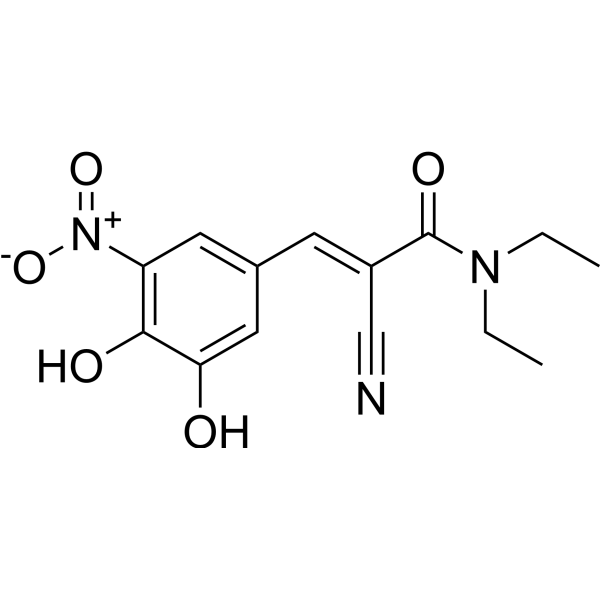
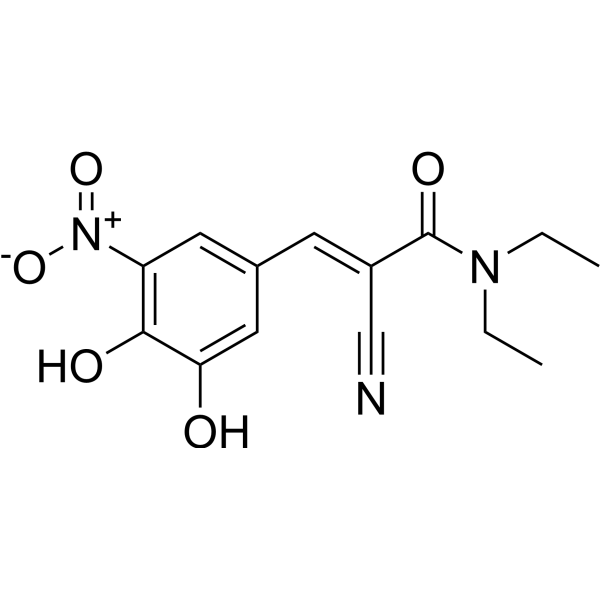
Entacapone is a potent, reversible, peripherally acting and orally active catechol-O-methyltransferase (COMT) inhibitor. Entacapone inhibits COMT from rat brain, erythrocytes and liver with IC50 values of 10 nM, 20 nM, and 160 nM, respectively. Entacapone is selective for COMT over other catecholamine metabolizing enzymes, including MAO-A, MAO-B, phenolsulphotransferase M (PST-M) and PST-P (IC50s>50 μM). Entacapone can be used for the research of Parkinson's disease. Entacapone serves as a inhibitor of FTO demethylation with an IC50 of 3.5 μM, can be used for the research of metabolic disorders.
For research use only. We do not sell to patients.
- Purity : 99.97%
- CAS No.: 130929-57-6
- Formula: C14H15N3O5
- Molecular Weight:305.29
-
Storage:Powder -20°C, 3 years , 4°C, 2 years ; In solvent -80°C, 1 year , -20°C, 6 months

To place orders, for customer services and technical support, please contact: MedChemExpress USA
Tel: 609-228-6898 E-mail: [email protected] [email protected]


-
 Biological Activity
-
Chemical Information
-
Solvent & Solubility
- Protocols
- Purity & Documentation
- References
-
 Help & FAQs


-
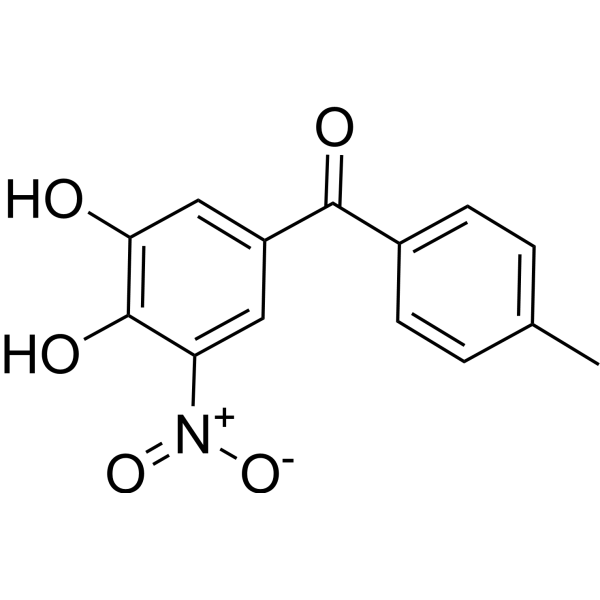
HY-17406
TolcaponeCOMT Inhibitor -
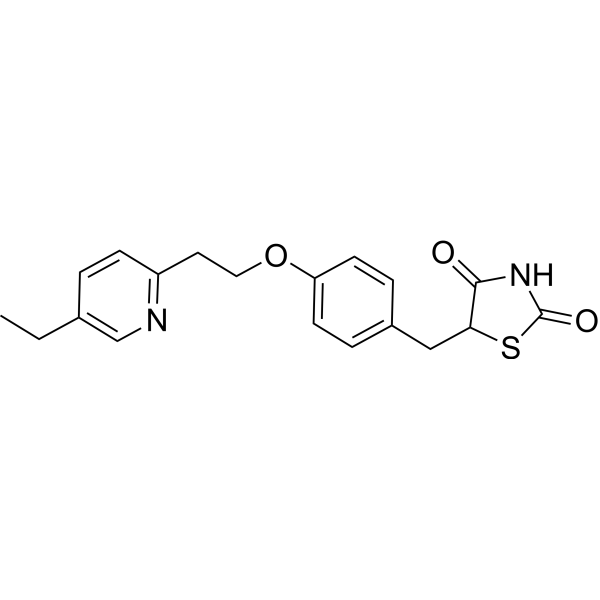
HY-13956
PioglitazonePPARγ Agonist -
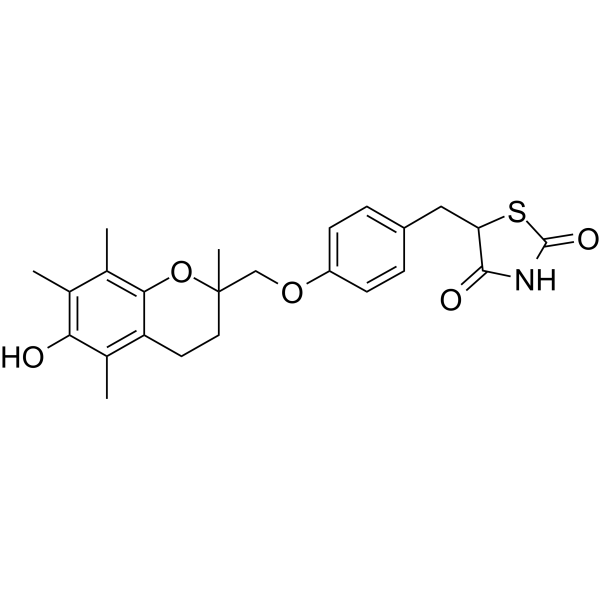
HY-50935
TroglitazonePPARγ Agonist -
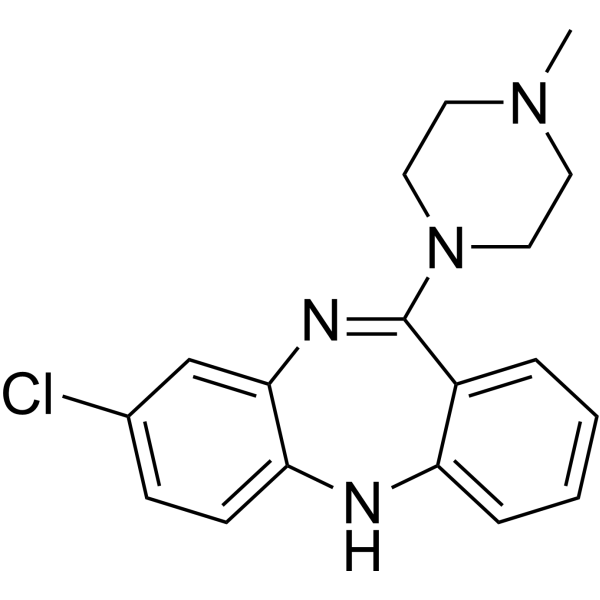
HY-14539
ClozapineAntipsychotic Agent -
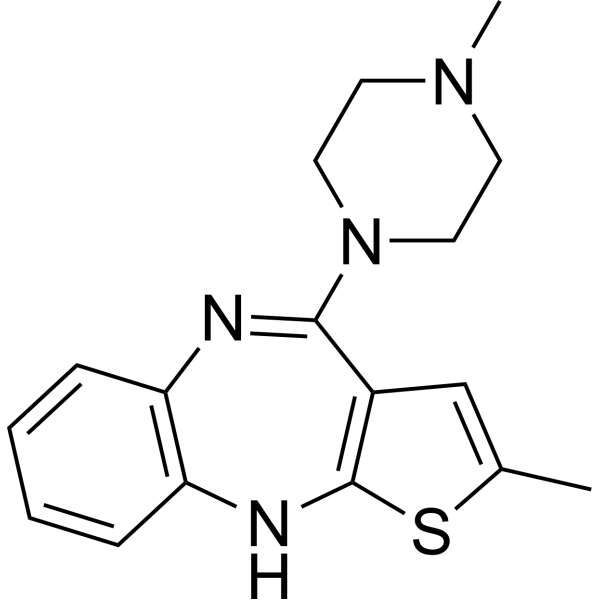
HY-14541
Olanzapine5-HT2/D1/D2 Antagonist -
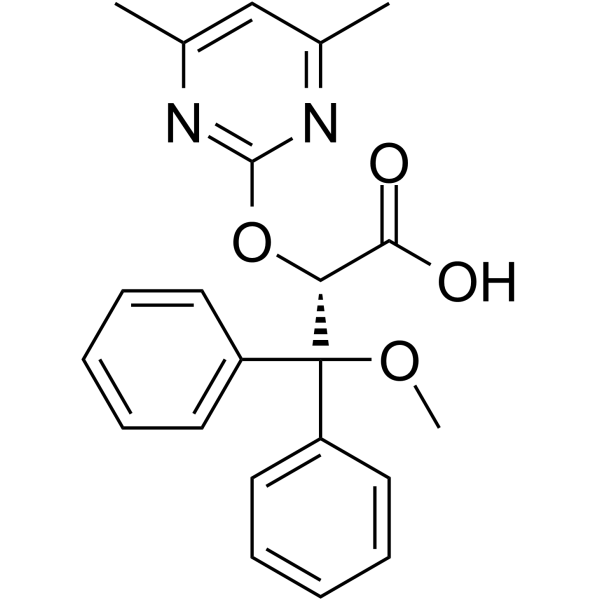
HY-13209
Ambrisentan -
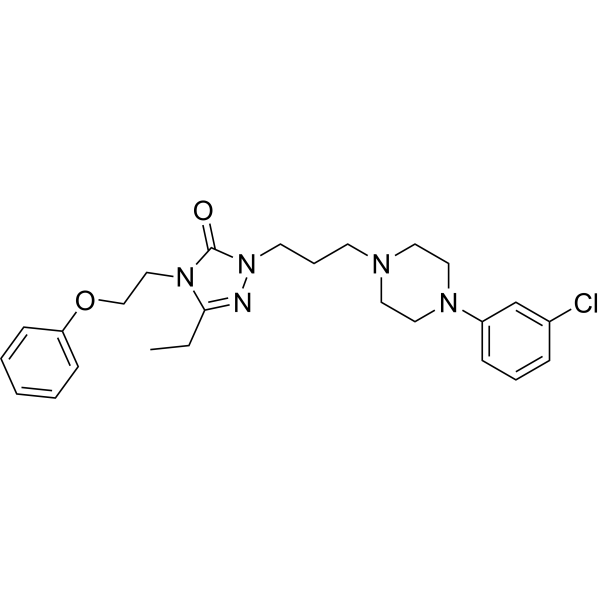
HY-119209
NefazodonePhenylpiperazine Antidepressant -
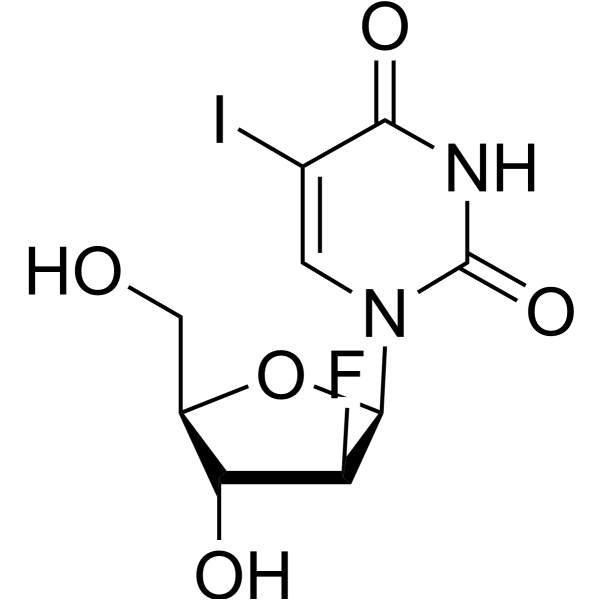
HY-118122
FialuridineAntiviral Agent -
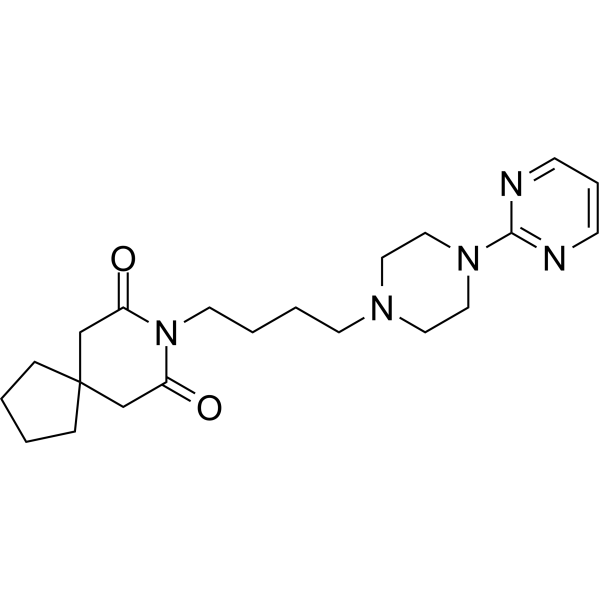
HY-B1115A
BuspironeAnxiolytic Agent -
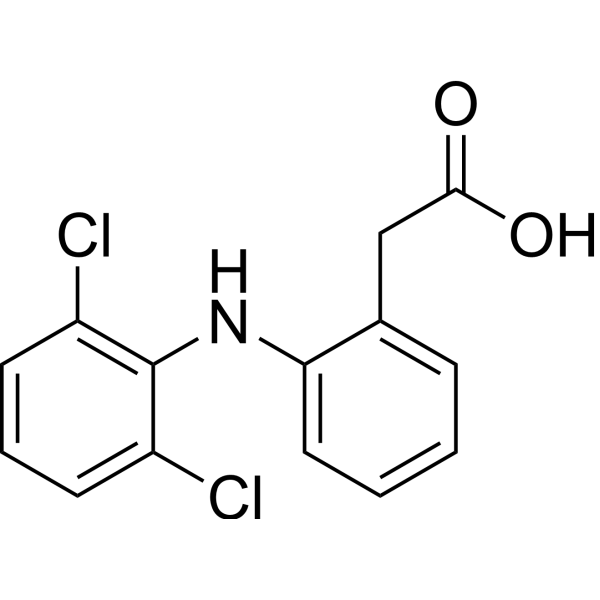
HY-15036
DiclofenacCOX Inhibitor -
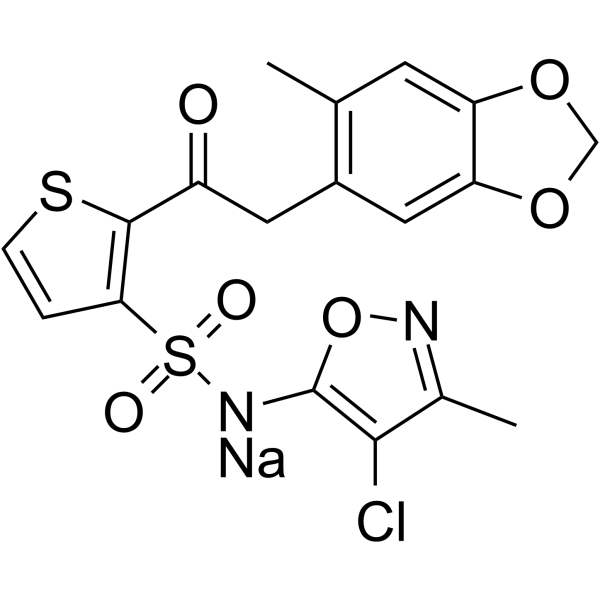
HY-11103
Sitaxsentan sodiumEndothelin A Receptor Antagonist -
HY-14280R
Entacapone (Standard)COMT Inhibitor
Publications Citing Use of MedChemExpress (MCE) Entacapone
More- Cancer Res. 2024 Nov 4;84(21):3640-3656. [Abstract]
- Sensor Actuat B-Chem. 2021, 129983.
- Biochem Pharmacol. 2025 Oct:240:117120. [Abstract]
- Chin J Chem. 2023 Dec 27.
- FASEB J. 2022 Jul;36(7):e22399. [Abstract]
- J Pharm Pharmacol. 2025 Dec 7:rgaf118. [Abstract]
- J Solid State Electrochem. 2025 Jan 17.
- Eur J Drug Metab Pharmacokinet. 2022 Sep;47(5):639-652. [Abstract]
 Customer Validation & Images

-
Bio/Physico-chemical Assay
-
Flow Cytometry
-
IF
-
Bio/Physico-chemical Assay
-
In Vivo Efficacy Study


Biological Activity
Description
IC50 & Target
IC50: 10 nM (rat brain COMT); 20 nM (rat erythrocyte COMT); 160 nM (rat liver COMT)[1]
Cellular Effect
|
Cell Line

|
Type | Value | Description | References |
|---|---|---|---|---|
| HT-29 | EC50 |
5.66 μM
Compound: Entacapone
|
Agonist activity at GPR35 in human HT-29 cells assessed as induction of whole cell dynamic mass redistribution after 50 mins by resonant waveguide grating biosensor analysis
Agonist activity at GPR35 in human HT-29 cells assessed as induction of whole cell dynamic mass redistribution after 50 mins by resonant waveguide grating biosensor analysis
|
10.1039/C2MD20210G |
| U2OS | EC50 |
65.6 μM
Compound: Entacapone
|
Agonist activity at GPR35 in human U2OS cells assessed as induction of beta-arrestin translocation after 5 hrs by beta-lactamase reporter gene assay
Agonist activity at GPR35 in human U2OS cells assessed as induction of beta-arrestin translocation after 5 hrs by beta-lactamase reporter gene assay
|
10.1039/C2MD20210G |
In Vitro
Entacapone (50 μM, 48 hours) enhances the amount of m6A on mRNA in Hep-G2 cells. It does not show any inhibitory effect on the enzymatic activity of the RNA m6A demethylase AlkB homolog 5 (ALKBH5) or the ten-eleven translocation methylcytosine dioxygenase 1 (TET1), nor does it alter the DNA methylation or histone methylation patterns in entacapone-treated Hep-G2 cells[2].
MedChemExpress (MCE) has not independently confirmed the accuracy of these methods. They are for reference only.
In Vivo
MedChemExpress (MCE) has not independently confirmed the accuracy of these methods. They are for reference only.
-
Animal Model:High-fat diet-induced obese (DIO) mouse model[2]
-
Dosage:600 mg/kg
-
Administration:Oral administration; 600 mg/kg per day; 3-9 weeks
-
Result:Regulated the metabolic disorders in DIO mouse.


Chemical Information
-
CAS No. 130929-57-6
-
Appearance Solid
-
Molecular Weight 305.29
-
Formula C14H15N3O5
-
Color Light yellow to yellow
-
SMILES
O=C(N(CC)CC)/C(C#N)=C/C1=CC([N+]([O-])=O)=C(O)C(O)=C1
-
Shipping
Room temperature in continental US; may vary elsewhere.
-
Storage
Powder -20°C 3 years 4°C 2 years In solvent -80°C 1 year -20°C 6 months


Publications (8)
-
Journal Impact Factor
-
Most Recent
-
Cancer Res
Targeting Catechol-O-Methyltransferase Induces Mitochondrial Dysfunction and Enhances the Efficacy of Radiotherapy in Glioma. [Abstract]2024 Nov 4;84(21):3640-3656. PMID: 39088832
Entacapone purchased from MedChemExpress. Usage Cited in: Cancer Res. 2024 Nov 4;84(21):3640-3656. [Abstract]
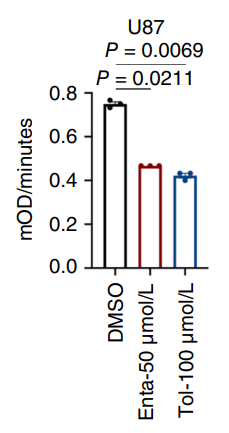
The rate of NADH to NAD+ conversion rate measuring the mitochondrial complex I activity using mitochondrial extracts from U87 cells treated with DMSO, 50 μmol/L Entacapone, or 100 μmol/L Tolcapone for 24 hours.
Entacapone purchased from MedChemExpress. Usage Cited in: Cancer Res. 2024 Nov 4;84(21):3640-3656. [Abstract]
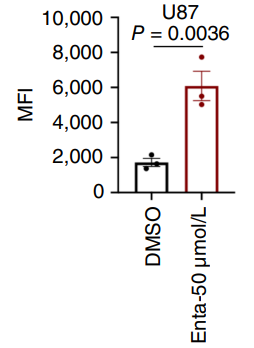
ROS flow cytometry assay comparing the ROS production of U87 cells treated with DMSO (control) or 50 μmol/L Entacapone for 24 hours.
Entacapone purchased from MedChemExpress. Usage Cited in: Cancer Res. 2024 Nov 4;84(21):3640-3656. [Abstract]
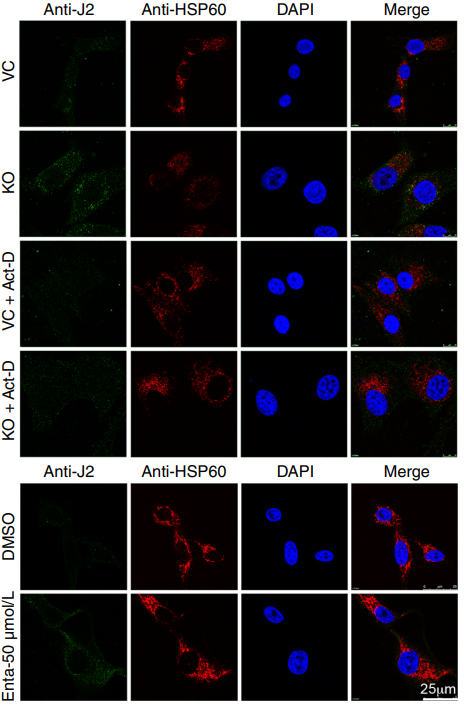
Immunofluorescence showing the localization of the mitochondria (as detected by HSP60) and dsRNA (as detected by J2) in the cytoplasm of VC, COMT-KO, Act-D–treated VC, Act-D–treated COMT-KO U87 cells (top), and wild-type U87 cells treated with DMSO or 50 µmol/L Entacapone for 24 hours (bottom).
Entacapone purchased from MedChemExpress. Usage Cited in: Cancer Res. 2024 Nov 4;84(21):3640-3656. [Abstract]
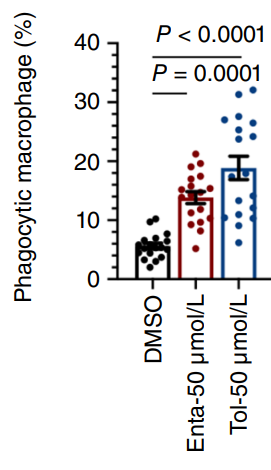
Quantification of the percentage of macrophages that phagocytosed CT2A cells treated with DMSO, 50 µmol/L Entacapone, or 50 µmol/L Tolcapone. CT2A cells were pretreated with COMT inhibitors for 24 hours prior to coculturing with macrophages.
Entacapone purchased from MedChemExpress. Usage Cited in: Cancer Res. 2024 Nov 4;84(21):3640-3656. [Abstract]
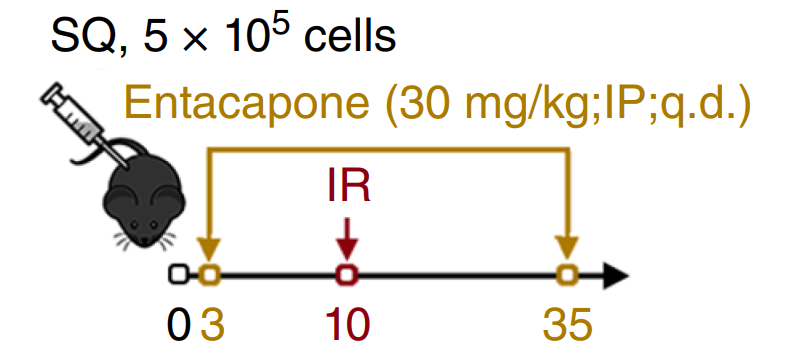
The drug treatment and irradiation schedule in mice bearing subcutaneous CT2A tumors. Vehicle and 30 mg/kg Entacapone were administered intraperitoneally daily from day 3 to day 35. The tumor-bearing right flank was irradiated on day 10 post tumor cell inoculation. IP, intraperitoneal injection; q.d., every day; IR, irradiation.
Entacapone purchased from MedChemExpress. Usage Cited in: Cancer Res. 2024 Nov 4;84(21):3640-3656. [Abstract]
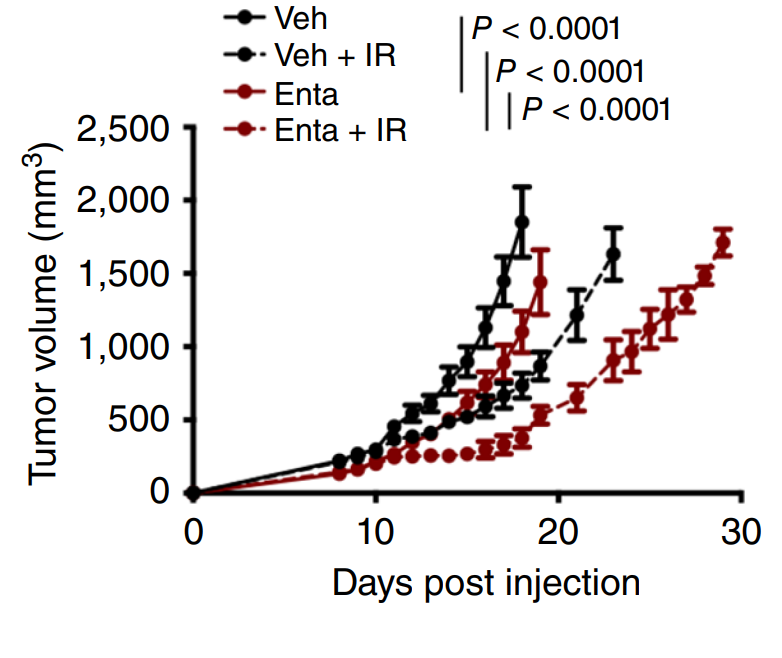
Tumor growth of C57BL/6 mice (n = 6) subcutaneously implanted with 5 × 10⁵ CT2A cells and received Entacapone and Radiotherapy treatments.
-
-
Biochem Pharmacol
Dual inhibition of EGR1/STAT3 transcriptional hubs suppresses macrophage-driven liver fibrosis: A multi-omics-guided drug repurposing strategy. [Abstract]2025 Oct:240:117120. PMID: 40623460 -
-
FASEB J
2022 Jul;36(7):e22399. PMID: 35691001 -
J Pharm Pharmacol
High-dose carbidopa achieves sustained levodopa pharmacokinetics and efficacy in Parkinson's disease models. [Abstract]2025 Dec 7:rgaf118. PMID: 41353579 -
-
Eur J Drug Metab Pharmacokinet
Evaluation of an Ussing Chamber System Equipped with Rat Intestinal Tissues to Predict Intestinal Absorption and Metabolism in Humans. [Abstract]2022 Sep;47(5):639-652. PMID: 35733077


Solvent & Solubility
In Vitro:
DMSO : 33.33 mg/mL (109.17 mM; Need ultrasonic; Hygroscopic DMSO has a significant impact on the solubility of product, please use newly opened DMSO)
H2O : 2 mg/mL (6.55 mM; ultrasonic and adjust pH to 10 with NaOH)
Please refer to the solubility information to select the appropriate solvent. Once prepared, please aliquot and store the solution to prevent product inactivation from repeated freeze-thaw cycles.
Storage method and period of stock solution: -80°C, 1 year; -20°C, 6 months. When stored at -80°C, please use it within 1 year. When stored at -20°C, please use it within 6 months.
* Note: If you choose water as the stock solution, please dilute it to the working solution, then filter and sterilize it with a 0.22 μm filter before use.
Please refer to the solubility information to select the appropriate solvent. Once prepared, please aliquot and store the solution to prevent product inactivation from repeated freeze-thaw cycles.
Storage method and period of stock solution: -80°C, 1 year; -20°C, 6 months. When stored at -80°C, please use it within 1 year. When stored at -20°C, please use it within 6 months.
* Note: If you choose water as the stock solution, please dilute it to the working solution, then filter and sterilize it with a 0.22 μm filter before use.
Concentration (start) × Volume (start) = Concentration (final) × Volume (final)
In Vivo:
Select the appropriate dissolution method based on your experimental animal and administration route.
- For the following dissolution methods, please ensure to first prepare a clear stock solution using an In Vitro approach and then sequentially add co-solvents:
- To ensure reliable experimental results, the clarified stock solution can be appropriately stored based on storage conditions. As for the working solution for In Vivo experiments, it is recommended to prepare freshly and use it on the same day.
- The percentages shown for the solvents indicate their volumetric ratio in the final prepared solution. If precipitation or phase separation occurs during preparation, heat and/or sonication can be used to aid dissolution.
Add each solvent one by one: 10% DMSO 40% PEG300 5% Tween-80 45% Saline
Solubility: ≥ 2.5 mg/mL (8.19 mM); Clear solution
This protocol yields a clear solution of ≥ 2.5 mg/mL (saturation unknown).
Taking 1 mL working solution as an example, add 100 μL DMSO stock solution (25.0 mg/mL) to 400 μL PEG300, and mix evenly; then add 50 μL Tween-80 and mix evenly; then add 450 μL Saline to adjust the volume to 1 mL.
Preparation of Saline: Dissolve 0.9 g sodium chloride in ddH₂O and dilute to 100 mL to obtain a clear Saline solution.
Add each solvent one by one: 10% DMSO 90% (20% SBE-β-CD in Saline)
Solubility: ≥ 2.08 mg/mL (6.81 mM); Clear solution
This protocol yields a clear solution of ≥ 2.08 mg/mL (saturation unknown).
Taking 1 mL working solution as an example, add 100 μL DMSO stock solution (20.8 mg/mL) to 900 μL 20% SBE-β-CD in Saline, and mix evenly.
Preparation of 20% SBE-β-CD in Saline (4°C, storage for one week): 2 g SBE-β-CD powder is dissolved in 10 mL Saline, completely dissolve until clear.
For the following dissolution methods, please prepare the working solution directly:
It is recommended to prepare fresh solutions and use them promptly within a short period of time.
The percentages shown for the solvents indicate their volumetric ratio in the final prepared solution. If precipitation or phase separation occurs during preparation, heat and/or sonication can be used to aid dissolution.
Add each solvent one by one: PBS
Solubility: 1 mg/mL (3.28 mM); Clear solution; Need ultrasonic and warming and heat to 60°C
In Vivo Dissolution Calculator
Please enter the basic information of animal experiments:
-
-
-
-
Recommended: Prepare an additional quantity of animals to account for potential losses during experiments.
Please enter your animal formula composition:
-
%DMSO +
Recommended: Keep the proportion of DMSO in working solution below 2% if your animal is weak.
-
%+
-
+%Tween-80 + +
-
%Saline +
The co-solvents required include: DMSO, . All of co-solvents are available by MedChemExpress (MCE). , Tween 80. All of co-solvents are available by MedChemExpress (MCE).
Working solution concentration: 0.22 mg/mL
Method for preparing stock solution: mg drug dissolved in μL DMSO. Stock solution concentration: mg/mL.
1. Take μL DMSO stock solution;
2. Add μL .
μL , mix evenly;
3. Then add μL Tween 80, mix evenly;
4. Then add μL
Please ensure that the stock solution in the first step is dissolved to a clear state, and add co-solvents in sequence. You can use ultrasonic heating (ultrasonic cleaner, recommended frequency 20-40 kHz), vortexing, etc. to assist dissolution.


Purity & Documentation
-
Data Sheet (285 KB)
-
SDS (394 KB)
- English - EN (394 KB)
- Français - FR (394 KB)
- Deutsch - DE (394 KB)
- Norwegian - NO (394 KB)
- Español - ES (394 KB)
- Swedish - SV (394 KB)
- Italian - IT (394 KB)
- Korean - KR (394 KB)
- Portuguese - PT (394 KB)
-
Handling Instructions (2659 KB)
References
[1]. E Nissinen, et al. Biochemical and pharmacological properties of a peripherally acting catechol-O-methyltransferase inhibitor entacapone. Naunyn Schmiedebergs Arch Pharmacol. 1992 Sep;346(3):262-6. [Content Brief]
[2]. Shiming Peng, et al. Identification of entacapone as a chemical inhibitor of FTO mediating metabolic regulation through FOXO1. Sci Transl Med [Content Brief]


Complete Stock Solution Preparation Table
Please refer to the solubility information to select the appropriate solvent. Once prepared, please aliquot and store the solution to prevent product inactivation from repeated freeze-thaw cycles.
Storage method and period of stock solution: -80°C, 1 year; -20°C, 6 months. When stored at -80°C, please use it within 1 year. When stored at -20°C, please use it within 6 months.
| Optional Solvent | Concentration Solvent Mass | 1 mg | 5 mg | 10 mg | 25 mg |
|---|---|---|---|---|---|
| H2O / DMSO | 1 mM | 3.2756 mL | 16.3779 mL | 32.7557 mL | 81.8893 mL |
| 5 mM | 0.6551 mL | 3.2756 mL | 6.5511 mL | 16.3779 mL | |
| DMSO | 10 mM | 0.3276 mL | 1.6378 mL | 3.2756 mL | 8.1889 mL |
| 15 mM | 0.2184 mL | 1.0919 mL | 2.1837 mL | 5.4593 mL | |
| 20 mM | 0.1638 mL | 0.8189 mL | 1.6378 mL | 4.0945 mL | |
| 25 mM | 0.1310 mL | 0.6551 mL | 1.3102 mL | 3.2756 mL | |
| 30 mM | 0.1092 mL | 0.5459 mL | 1.0919 mL | 2.7296 mL | |
| 40 mM | 0.0819 mL | 0.4094 mL | 0.8189 mL | 2.0472 mL | |
| 50 mM | 0.0655 mL | 0.3276 mL | 0.6551 mL | 1.6378 mL | |
| 60 mM | 0.0546 mL | 0.2730 mL | 0.5459 mL | 1.3648 mL | |
| 80 mM | 0.0409 mL | 0.2047 mL | 0.4094 mL | 1.0236 mL | |
| 100 mM | 0.0328 mL | 0.1638 mL | 0.3276 mL | 0.8189 mL |
* Note: If you choose water as the stock solution, please dilute it to the working solution, then filter and sterilize it with a 0.22 μm filter before use.


Entacapone Related Classifications
HY-14280 Related Classifications
 Powered by Bioz