



STC314

Based on 1 Customer Validation
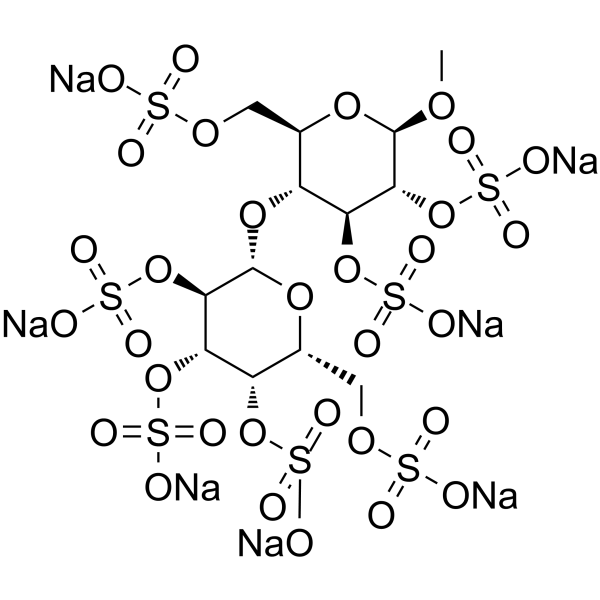
STC314 is a histone-neutralizing agent. STC314 inhibits histone-mediated cytotoxicity, blocks histone-induced erythrocyte aggregation, reduces fragility, restores deformability and inhibits histone-induced aggregation and degranulation in human erythrocytes. STC314 reduces histone-mediated tissue damage, thrombocytopenia, anemia, and cell death, and improves survival in preclinical models. STC314 can be used for the research of sepsis, ischemia-reperfusion injury, and deep-vein thrombosis.
Nur für Forschungszwecke. Wir verkaufen nicht an Patienten.
- Reinheit : 98.0%
- CAS. Nr.: 401513-39-1
- Formel: C13H17Na7O32S7
- Molecular Weight:1070.64
-
Speicherung:Powder -20°C, 3 years ; In solvent -80°C, 6 months , -20°C, 1 month

To place orders, for customer services and technical support, please contact: MedChemExpress USA
Tel: 609-228-6898 E-mail: [email protected] [email protected]


-
 Biologische Aktivität
-
Chemical Information
-
Lösungsmittel & Löslichkeit
- Protokoll
- Reinheit & Dokumentation
- Verweise
-
 Help & FAQs




Biologische Aktivität
Beschreibung
In Vitro
STC314 (Compound mCBS) (20-100 μg/mL; 1 h) potently inhibits histone-mediated cytotoxicity in HMEC-1 cells[1].
STC314 (12.5-400 μg/mL; 15 min-1 h) blocks histone-induced erythrocyte aggregation, reduces fragility, restores deformability and inhibits histone-induced aggregation and degranulation in human erythrocytes[1].
STC314 (mCBS) (0.9-500 μg/mL) stabilizes human NETs and does not displace histones from chicken RBC chromatin[1].
MedChemExpress (MCE) has not independently confirmed the accuracy of these methods. They are for reference only. Further protocols information, click here.
-
Cell Line:human microvascular endothelial cell-1 (HMEC-1)
-
Concentration:0-100 μg/mL
-
Incubation Time:1 h
-
Result:Inhibited histone-mediated HMEC-1 cytotoxicity.
In Vivo
STC314 (100 mg/kg; i.p.; single dose 2 hours post-histone injection) significantly reduces ongoing histone-induced multi-organ damage and cell death in male C57BL/6 mice when administered 2 hours after histone exposure[1].
STC314 (50 mg/kg; i.p.; four total doses: 5 minutes pre-clamp, 5 minutes post-clamp removal, 24 hours post-surgery, 48 hours post-surgery) significantly improves skin flap viability in male Wistar rats following ischemia-reperfusion injury[1].
STC314 (50 mg/kg; i.v.; single dose 5 minutes post-histone injection) almost completely prevents histone-induced deep vein thrombosis in male C57BL/6 mice[1].
MedChemExpress (MCE) has not independently confirmed the accuracy of these methods. They are for reference only.
-
Animal Model:BALB/c (female, 5-6 weeks of age, histone-induced sepsis-like syndrome model)[1]
-
Dosage:6.25 mg/kg; 25 mg/kg; 100 mg/kg
-
Administration:i.p.; single dose 10 minutes pre-histone injection
-
Result:Prevented histone-induced thrombocytopenia (maintained circulating platelet counts near control levels).
Prevented histone-induced anemia (maintained circulating red blood cell counts near control levels and reduced splenic hemoglobin accumulation to near control levels).
Reduced circulating alanine aminotransferase, lactate dehydrogenase, and creatinine levels in a dose-dependent manner, with 100 mg/kg providing the greatest reduction.
-
Animal Model:Wistar (male, 8-12 weeks old, 250-350 g, CLP-induced sepsis model)[2]
-
Dosage:50 mg/kg
-
Administration:i.p.; four total doses: 5 minutes pre-CLP, 5, 10, 15 hours post-CLP
-
Result:Resulted in 100% survival of rats at 20 hours post-CLP (compared to reduced survival in untreated controls).
Normalized circulating alanine aminotransferase and creatinine levels, preventing CLP-induced liver and kidney damage.
-
Animal Model:Wistar (male, 8-12 weeks old, 250-350 g, skin flap ischemia-reperfusion injury model)[1]
-
Dosage:50 mg/kg
-
Administration:i.p.; four total doses: 5 minutes pre-clamp, 5 minutes post-clamp removal, 24 hours post-surgery, 48 hours post-surgery
-
Result:Significantly increased the viable area of the ischemic skin flap, with consistent improvement observed across treated rats.
-
Animal Model:C57BL/6 (male, 8 weeks of age, histone-induced deep vein thrombosis model)[1]
-
Dosage:50 mg/kg
-
Administration:i.v.; single dose 5 minutes post-histone injection
-
Result:Almost completely inhibited histone-induced DVT, with thrombus weights reduced to near sham-operated control levels.
Clinical Trial
| NCT Number | Sponsor | Condition | Start Date |
Phase

|
|---|---|---|---|---|
| NCT01329991 | Plexxikon| | 2011-05 | PHASE1 |


Chemical Information
-
CAS. Nr. 401513-39-1
-
Appearance Solid
-
Molecular Weight 1070.64
-
Formel C13H17Na7O32S7
-
Color White to off-white
-
SMILES
O=[S](O[C@H]([C@H]1O[S](=O)(O[Na])=O)[C@@H]([C@H](O[C@H]1OC)CO[S](=O)(O[Na])=O)O[C@H](O[C@@H]2CO[S](=O)(O[Na])=O)[C@@H]([C@H]([C@@H]2O[S](=O)(O[Na])=O)O[S](=O)(O[Na])=O)O[S](=O)(O[Na])=O)(O[Na])=O
-
Versand
Room temperature in continental US; may vary elsewhere.
-
Speicherung
Powder -20°C 3 years In solvent -80°C 6 months -20°C 1 month


Lösungsmittel & Löslichkeit
In Vitro:
H2O : 8.33 mg/mL (7.78 mM; Need ultrasonic)
Please refer to the solubility information to select the appropriate solvent. Once prepared, please aliquot and store the solution to prevent product inactivation from repeated freeze-thaw cycles.
Storage method and period of stock solution: -80°C, 6 months; -20°C, 1 month. When stored at -80°C, please use it within 6 months. When stored at -20°C, please use it within 1 month.
* Note: If you choose water as the stock solution, please dilute it to the working solution, then filter and sterilize it with a 0.22 μm filter before use.
Please refer to the solubility information to select the appropriate solvent. Once prepared, please aliquot and store the solution to prevent product inactivation from repeated freeze-thaw cycles.
Storage method and period of stock solution: -80°C, 6 months; -20°C, 1 month. When stored at -80°C, please use it within 6 months. When stored at -20°C, please use it within 1 month.
* Note: If you choose water as the stock solution, please dilute it to the working solution, then filter and sterilize it with a 0.22 μm filter before use.
Konzentration (Stammlösung) × Volumen (Stammlösung) = Konzentration (Ziellösung) × Volumen (Ziellösung)

Protokoll
-
Cell Cytotoxicity Assay
Cytotoxicity assays are usually based on the assessment of cell membrane damage, which can also be indirectly detected by measuring cell viability. Detection methods include MTT assay, CKK-8 assay, LDH assay and ATP assay, etc.
-
Mammalian live/dead viability and cytotoxicity staining
Live/dead viability and cytotoxicity staining assays are based on the simultaneous detection of intracellular esterase activity in metabolically active (viable) cells and membrane integrity loss in non-viable cells. In commonly used dual-staining approaches, membrane-permeant fluorogenic substrates are converted by intracellular esterases into fluorescent products in live cells, while impermeant DNA-binding dyes selectively enter cells with compromised plasma membranes and label nucleic acids in dead or dying cells, enabling discrimination between viable and non-viable populations by fluorescence microscopy or flow cytometry.
-
LPS-Induced Endotoxemia/Systemic Inflammation
Lipopolysaccharide (LPS)-induced endotoxemia is a widely used in vivo model of acute systemic inflammation in which LPS, a Gram-negative bacterial endotoxin, activates innate immune signaling primarily through TLR4, leading to rapid and transient induction of pro-inflammatory cytokines such as TNF-α, IL-6, and IL-1β in circulation and tissues. This cytokine surge is commonly used as a measurable readout of systemic inflammatory activation and immune dysregulation, and is typically assessed within hours after intraperitoneal LPS administration in mouse models of endotoxemia. The model captures key features of systemic inflammatory response syndrome, including cytokine release, immune cell activation, and downstream tissue responses, and has been used to evaluate anti-inflammatory interventions such as cytokine modulation, lipid mediators, and immune cell-targeting therapies.
-
Apoptosis Solutions
Apoptosis is a regulated, generally non-lytic cell-death pathway that removes unwanted, damaged, infected, or abnormal cells through coordinated morphological changes, caspase activation, DNA fragmentation, and membrane remodeling. The intrinsic apoptosis pathway is controlled mainly by mitochondrial outer membrane permeabilization, BCL-2 family proteins, cytochrome c release, apoptosome formation, caspase-9 activation, and downstream executioner caspase-3/7 activation. The extrinsic apoptosis pathway is initiated by death receptors such as Fas, TNFR, and TRAIL receptors, which recruit adaptor proteins and activate caspase-8 before engaging executioner caspases or mitochondrial amplification through BID cleavage. Apoptosis is linked to many phenotypes, including cancer cell killing, tissue homeostasis, immune regulation, neurodegeneration, infection response, and treatment-induced cytotoxicity; unresolved questions include how apoptosis interacts with necroptosis, pyroptosis, ferroptos
-
Cell Viability Determination by MTT Colorimetric Assay
The following protocol uses the MTT colorimetric assay as a classic literature-established method for assessing cell viability/metabolic activity in cultured mammalian cells. MTT[3-(4,5-dimethylthiazol-2-yl)-2,5-diphenyltetrazolium bromide] is reduced by metabolically active cells to a colored formazan product; the amount of formazan is quantified spectrophotometrically and provides an indirect measure of metabolically active viable cells. Importantly, MTT reduction reflects cellular oxidoreductase/metabolic activity rather than an absolute direct count of living cells, so changes in cellular metabolism can alter the signal independently of cell number.


Reinheit & Dokumentation
-
Data Sheet (293 KB)
-
SDS (252 KB)
- English - EN (252 KB)
- Français - FR (252 KB)
- Deutsch - DE (252 KB)
- Norwegian - NO (252 KB)
- Español - ES (252 KB)
- Swedish - SV (252 KB)
- Italian - IT (252 KB)
- Korean - KR (252 KB)
- Portuguese - PT (252 KB)
-
Handling Instructions (2659 KB)
Verweise


Complete Stock Solution Preparation Table
Please refer to the solubility information to select the appropriate solvent. Once prepared, please aliquot and store the solution to prevent product inactivation from repeated freeze-thaw cycles.
Storage method and period of stock solution: -80°C, 6 months; -20°C, 1 month. When stored at -80°C, please use it within 6 months. When stored at -20°C, please use it within 1 month.
| Optional Solvent | Concentration Solvent Mass | 1 mg | 5 mg | 10 mg | 25 mg |
|---|---|---|---|---|---|
| H2O | 1 mM | 0.9340 mL | 4.6701 mL | 9.3402 mL | 23.3505 mL |
| 5 mM | 0.1868 mL | 0.9340 mL | 1.8680 mL | 4.6701 mL |
* Note: If you choose water as the stock solution, please dilute it to the working solution, then filter and sterilize it with a 0.22 μm filter before use.


STC314 Related Classifications
HY-145996 Related Classifications
 Powered by Bioz