



Tripalmitolein
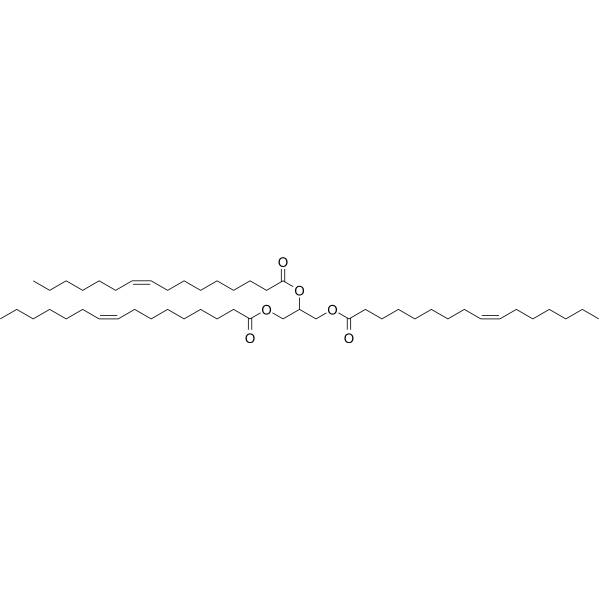
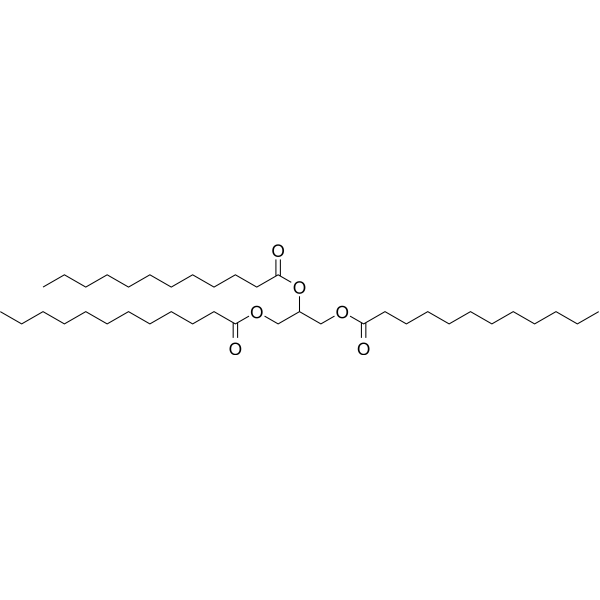
1,2,3-Tripalmitoleoyl-rac-glycerol is a triacylglycerol containing palmitoleic acid at the sn-1, sn-2 and sn-3 positions. It reduces erythrocyte deformability in a concentration-dependent manner in the Reid filtration assay. Hepatic levels of 1,2,3-tripalmitoleoyl-rac-glycerol are increased in a JAK2L mouse model of hepatic steatosis. 1,2,3-Tripalmitoleoyl-rac-glycerol plasma levels are reduced in patients with predialysis renal disease.
For research use only. We do not sell to patients.
- CAS No.: 20246-55-3
- Formula: C51H92O6
- Molecular Weight:801.27
-
Storage:
Please store the product under the recommended conditions in the Certificate of Analysis.

To place orders, for customer services and technical support, please contact: MedChemExpress USA
Tel: 609-228-6898 E-mail: [email protected] [email protected]


-
 Biological Activity
-
Chemical Information
- Protocols
- Purity & Documentation
-
 Help & FAQs


-
HY-N7055
TrierucinTriester -
HY-B1804
TricaprilinKetogenic Agent -
HY-N1981
TrioleinMonoacid Triglyceride -

HY-W923355
1,2,3-Trieicosapentaenoyl glycerolGlyceride -
HY-W013061
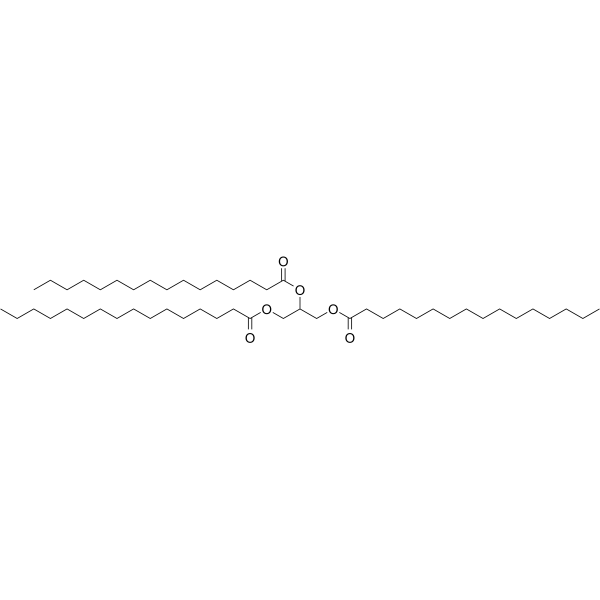
Propane-1,2,3-triyl tripalmitateGlycerol Tristearate Lymphatic Transport Promoter -
HY-W013136
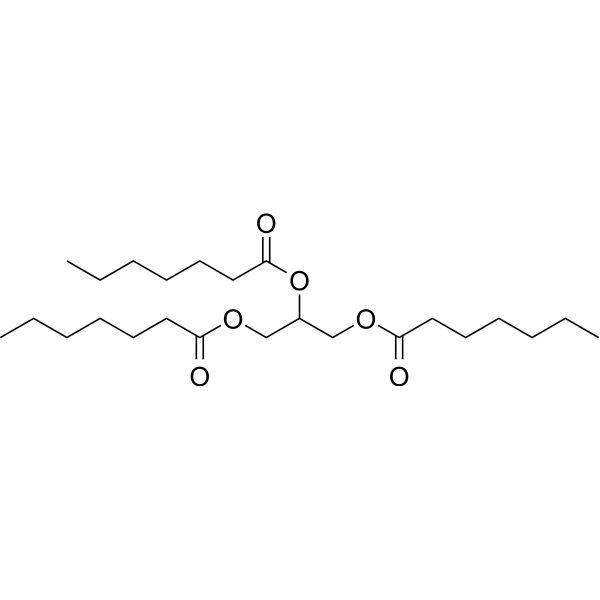
TriheptanoinNutritional Supplement/Anaplerotic Agent -
HY-N7864
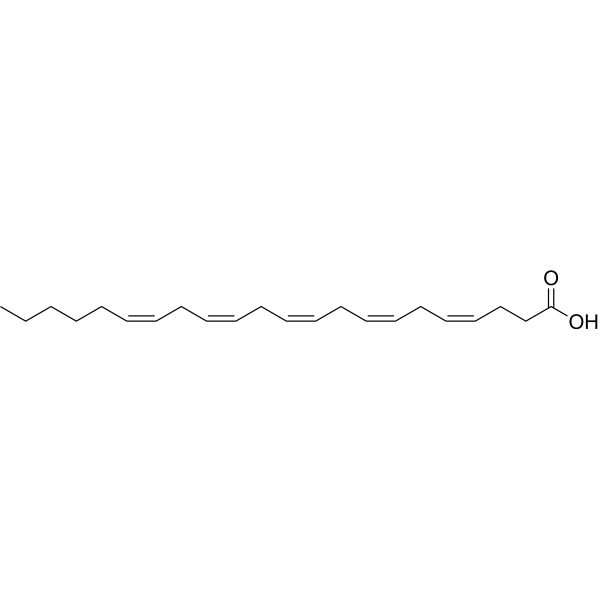
Osbond acidFatty acid -

HY-W704600
1,3-Distearoyl-2-oleoyl glycerolCocoa Butter Improver/Anti-Blooming Agent -

HY-N1981R
Triolein (Standard)Monoacid Triglyceride -
HY-122591
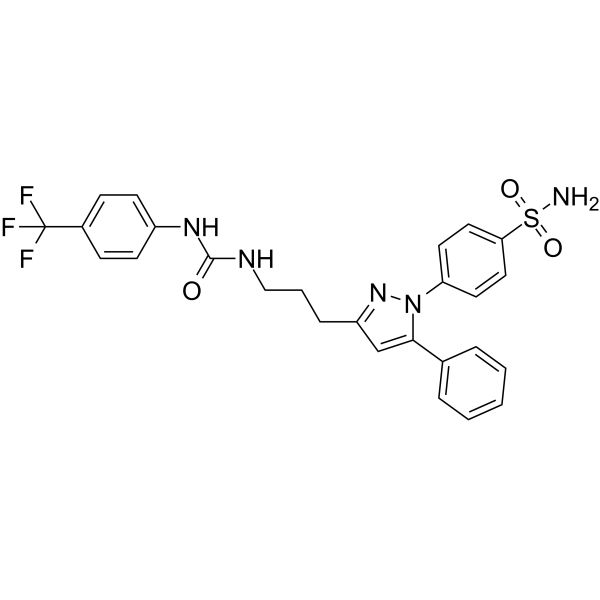
PTUPBsEH/COX-1 Inhibitor -
HY-126573
TrilaurinNeoplasm Inhibitor -

HY-W738465
N,N-Dimethylamidino UreaEndogenous metabolite
All Endogenous Metabolite Isoforms
More

Biological Activity
Description
IC50 & Target
|
Human Endogenous Metabolite |


Chemical Information
-
CAS No. 20246-55-3
-
Molecular Weight 801.27
-
Formula C51H92O6
-
SMILES
CCCCCC/C=C\CCCCCCCC(=O)OCC(COC(=O)CCCCCCC/C=C\CCCCCC)OC(=O)CCCCCCC/C=C\CCCCCC
-
Shipping
Room temperature in continental US; may vary elsewhere.
-
Storage
Please store the product under the recommended conditions in the Certificate of Analysis.

Protocols
-
How to Choose the Right Model Animal
Choosing the right model animal is a validity-driven decision in which the species, strain, sex, age, genetic background, disease-induction method, outcome measures, and welfare burden must match the scientific question rather than laboratory tradition or convenience. A model should be selected by judging face validity, construct validity, and predictive validity: whether it resembles the human phenotype, whether it reproduces relevant mechanisms, and whether results are likely to predict human biology or treatment response. Animal studies often fail to translate because of species differences, weak disease resemblance, poor experimental design, inadequate reporting, publication bias, and underuse of randomization, blinding, and sample-size justification. Unresolved questions include how to rank competing models objectively, how much human-disease complexity must be reproduced for a given objective, and when non-animal systems such as organoids, ex vivo tissue, or computational models
-
Liver Histomorphometry
Liver histomorphometry is a quantitative histological approach used to measure structural alterations in hepatic tissue, including parenchymal loss, steatosis, fibrosis, and vascular remodeling, by combining stained tissue section analysis with stereological or computerized image-based measurements. Classical morphometric frameworks quantify volume fractions of liver compartments and fibrotic regions using systematic sampling and image analysis, enabling objective comparison of pathological changes across experimental groups. These approaches are widely applied in liver cirrhosis and fibrosis studies to reduce subjectivity in histological scoring and improve reproducibility of tissue evaluation. Recent methodological advances integrate automated image analysis and radiomics-based extraction of histological features from standard liver stains (e. g. , H&E and fibrotic stains), enabling quantitative correlation between morphometric features and fibrosis stages in non-alcoholic fatty live


Purity & Documentation

Calculators
Concentration (start) × Volume (start) = Concentration (final) × Volume (final)


Tripalmitolein Related Classifications
HY-W127408 Related Classifications
 Powered by Bioz