



Polyvinyl alcohol (Mw 146000-186000, 99+% hydrolyzed)
Based on 3 publication(s) in Google Scholar
Polyvinyl alcohol (Mw 146000-186000, 99+% hydrolyzed) is a non-biodegradable, hydrophilic, odorless biomedical polymer with cell adhesion/proliferation inhibition, peripheral nerve regeneration induction, dissolution enhancement, and non-toxic, biocompatible properties.
For research use only. We do not sell to patients.
- Assay : 99.60%
- CAS No.: 9002-89-5
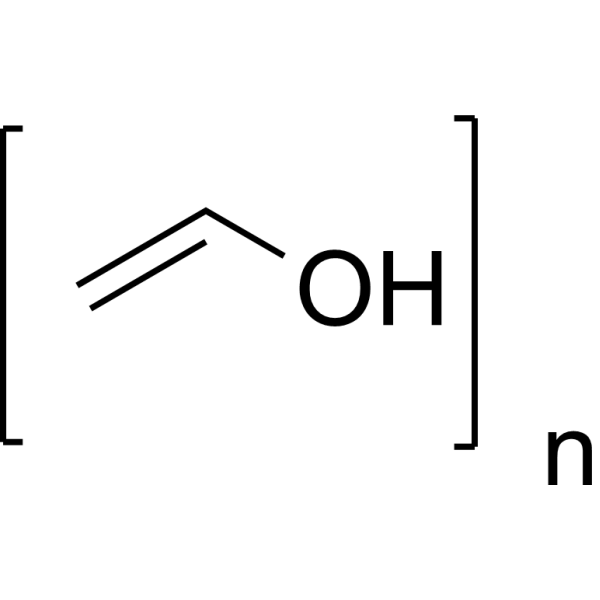
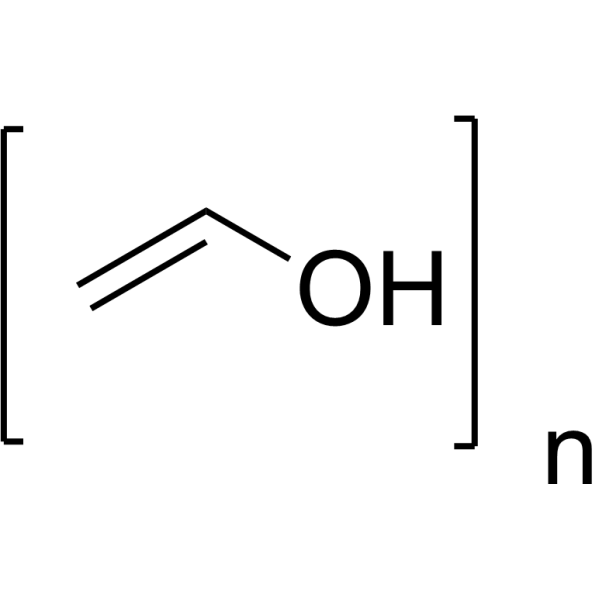
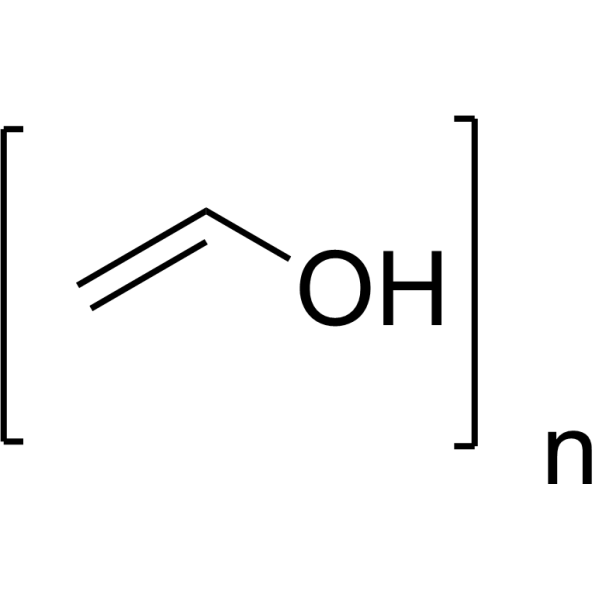
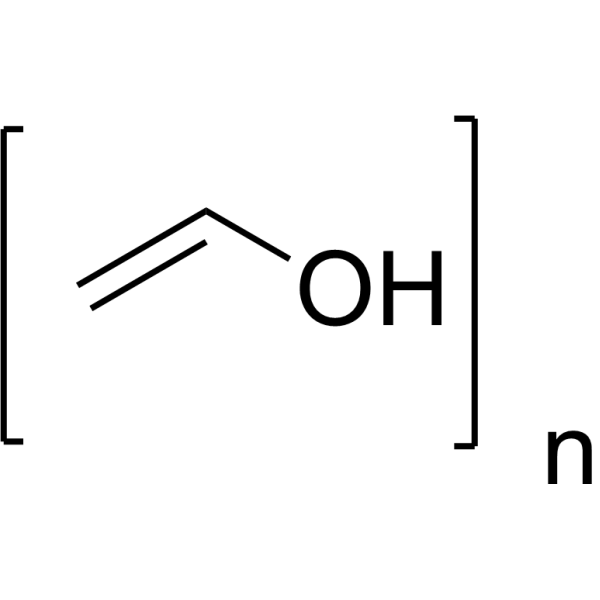
- Formula: (C2H4O)n
- Molecular Weight:146000-186000 (Approximately)
-
Storage:Powder -20°C, 3 years , 4°C, 2 years ; In solvent -80°C, 6 months , -20°C, 1 month

To place orders, for customer services and technical support, please contact: MedChemExpress USA
Tel: 609-228-6898 E-mail: [email protected] [email protected]


-
 Biological Activity
-
Chemical Information
-
Solvent & Solubility
- Protocols
- Purity & Documentation
- References
-
 Help & FAQs


-
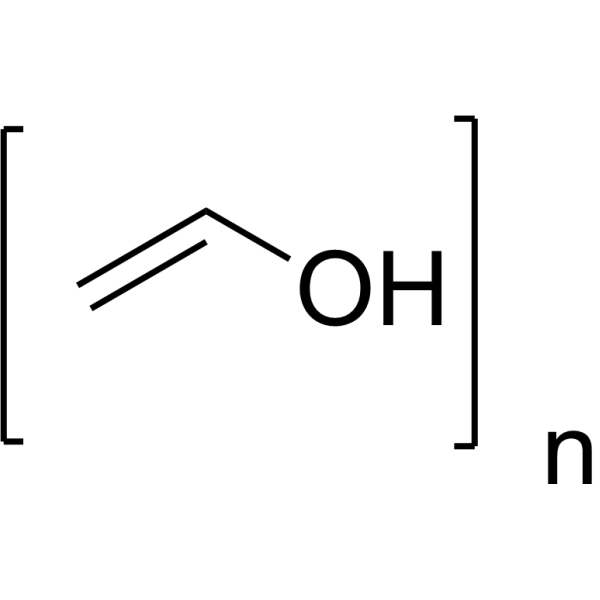
HY-Y0850J
Polyvinyl alcohol (Mw 13000-23000, 87-89% hydrolyzed)Polyvinyl Alcohol -
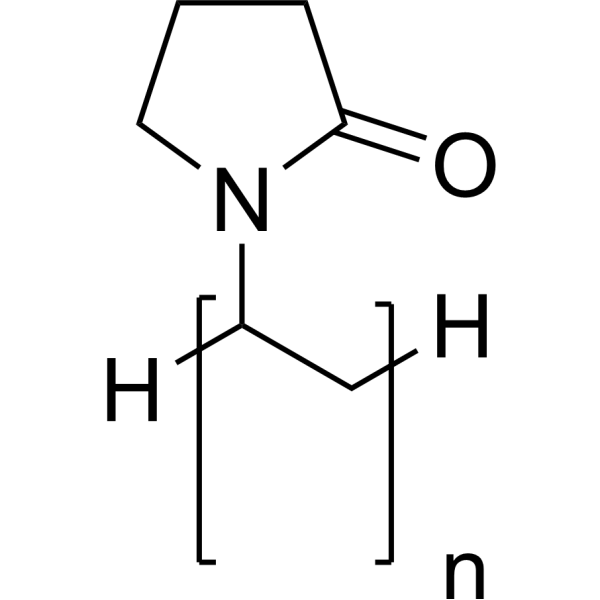
HY-B1620
Polyvinylpyrrolidone K30Disinfectant -
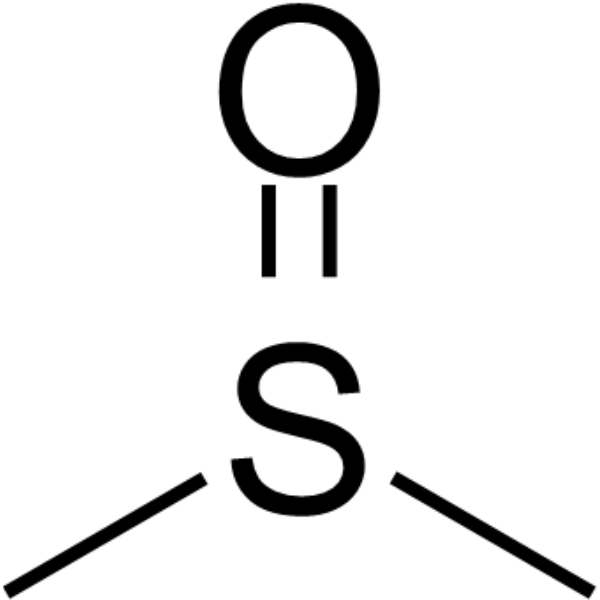
HY-Y0320
Dimethyl sulfoxide, meets analytical specification of Ch.P.Aprotic Solvent -
HY-103701A
L-Ascorbic acid 2-phosphate magnesiumOsteogenic Differentiation Inducer -
HY-B2247
PLGA (50:50)Polymer drug Delivery Vehicle -
HY-Y0850E
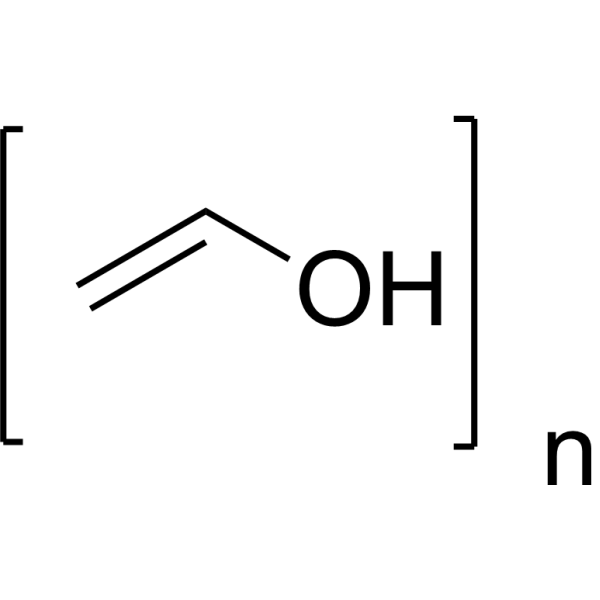
Polyvinyl alcohol (Mw 30000-70000, 87-90% hydrolyzed)Dressing Meterial -

HY-Y0850U4
PVA (Mw 145000, 99+% hydrolyzed, ~3300 polymerization)Polyvinyl Alcohol -

HY-Y0850U
PVA (Mw 31000, 87-89% hydrolyzed, ~630 polymerization)Polymer -
HY-Y0850K
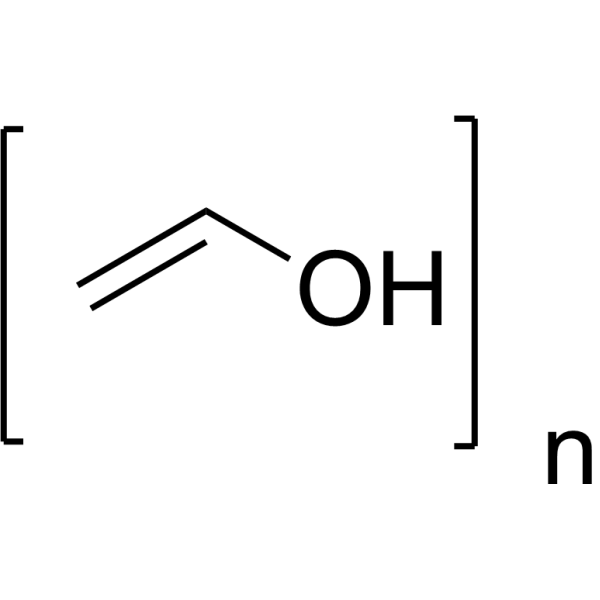
Polyvinyl alcohol (Mw 31000-50000, 98-99% hydrolyzed)Biochemical Reagent -
HY-Y0850O
Polyvinyl alcohol (Mw 31000-50000, 87-89% hydrolyzed)Emulsification Stabilizer -
HY-Y0850H
Polyvinyl alcohol (Mw 89000-98000, 99+% hydrolyzed)Biochemical Reagent -
HY-Y0850I
Polyvinyl alcohol (Mw 9000-10000, 80% hydrolyzed)Biochemical Reagent
Publications Citing Use of MedChemExpress (MCE) Polyvinyl alcohol (Mw 146000-186000, 99+% hydrolyzed)
More

Biological Activity
Description
In Vitro
PVA disk-shaped scaffolds (3-7 days) do not support SH-SY5Y cell adhesion or proliferation in vitro over 7 days[1].
Polyvinyl alcohol (Mw 146000-186000, 98.0-98.8% hydrolyzed) can be fabricated into dimmed disk-shaped scaffolds and highly transparent tubular scaffolds with visible lumens[1].
Polyvinyl alcohol (Mw 146000-186000, 99+% hydrolyzed) hydrogels (with/without sodium sulfate, 1-5 freeze-thaw cycles) exhibit no cytotoxicity to L929 fibroblasts and no haemolytic activity against sheep erythrocytes[2].
MedChemExpress (MCE) has not independently confirmed the accuracy of these methods. They are for reference only. Further protocols information, click here.
-
Cell Line:L929 fibroblasts; sheep erythrocytes
-
Concentration:100 μg/mL (Neutral Red stain); 0.5 mg/mL (MTT stain); 10% (v/v) (Alamar Blue reagent)
-
Incubation Time:24 h
-
Result:Detected no significant difference in L929 viability compared to controls, with some samples showing minor growth stimulation. Matched control cell viability values with small SEM. Observed grade 0 reactivity (no toxicity) with no zones of inhibition for all hydrogel samples. Detected no significant cytotoxic effect, with no statistical difference between absorbance and fluorescence methods. Detected no significant LDH release. Measured haemolysis < 2% for all hydrogels, with no significant difference between samples .
In Vivo
MedChemExpress (MCE) has not independently confirmed the accuracy of these methods. They are for reference only.
-
Animal Model:Sprague-Dawley (weighing 200-250 g)[1]
-
Dosage:10 mm-long conduit
-
Administration:surgical implantation; single administration
-
Result:Supported regeneration of the injured nerve across the 5 mm gap over 12 weeks. Showed well-integrated explantation with no dislocation, inflammatory reaction, or neuroma formation. Achieved a mean regenerated nerve area of 191,485 μm² in the central portion of the conduit. Demonstrated a lower axon density (0.0282 axons/μm²) in the central portion compared to the OxPVA conduit (0.0496 axons/μm²). Showed a lower total axons/nerve count (5,455) in the central portion compared to the reversed-autograft (16,863).


Chemical Information
-
CAS No. 9002-89-5
-
Appearance Solid
-
Molecular Weight 146000-186000 (Approximately)
-
Formula (C2H4O)n
-
Color White to off-white
-
SMILES
CCC(O)C.[n]
-
Shipping
Room temperature in continental US; may vary elsewhere.
-
Storage
Powder -20°C 3 years 4°C 2 years In solvent -80°C 6 months -20°C 1 month


Publications (3)
-
Journal Impact Factor
-
Most Recent
-
Nanoscale Adv
Dexamethasone-loaded lipid-polymeric nanoparticles to improve therapy for cisplatin-induced sensorineural hearing loss. [Abstract]2025 Nov 21. PMID: 41278499 -
-


Solvent & Solubility
In Vitro:
DMSO : 50 mg/mL (ultrasonic and warming and heat to 60°C; Hygroscopic DMSO has a significant impact on the solubility of product, please use newly opened DMSO)
H2O : < 0.1 mg/mL (insoluble)
In Vivo:
Select the appropriate dissolution method based on your experimental animal and administration route.
- For the following dissolution methods, please ensure to first prepare a clear stock solution using an In Vitro approach and then sequentially add co-solvents:
- To ensure reliable experimental results, the clarified stock solution can be appropriately stored based on storage conditions. As for the working solution for In Vivo experiments, it is recommended to prepare freshly and use it on the same day.
- The percentages shown for the solvents indicate their volumetric ratio in the final prepared solution. If precipitation or phase separation occurs during preparation, heat and/or sonication can be used to aid dissolution.
Add each solvent one by one: 10% DMSO 90% (20% SBE-β-CD in Saline)
Solubility: ≥ 1.43 mg/mL; Clear solution
This protocol yields a clear solution of ≥ 1.43 mg/mL (saturation unknown).
Taking 1 mL working solution as an example, add 100 μL DMSO stock solution (14.3 mg/mL) to 900 μL 20% SBE-β-CD in Saline, and mix evenly.
Preparation of 20% SBE-β-CD in Saline (4°C, storage for one week): 2 g SBE-β-CD powder is dissolved in 10 mL Saline, completely dissolve until clear.
In Vivo Dissolution Calculator
Please enter the basic information of animal experiments:
-
-
-
-
Recommended: Prepare an additional quantity of animals to account for potential losses during experiments.
Please enter your animal formula composition:
-
%DMSO +
Recommended: Keep the proportion of DMSO in working solution below 2% if your animal is weak.
-
%+
-
+%Tween-80 + +
-
%Saline +
The co-solvents required include: DMSO, . All of co-solvents are available by MedChemExpress (MCE). , Tween 80. All of co-solvents are available by MedChemExpress (MCE).
Working solution concentration: 0.22 mg/mL
Method for preparing stock solution: mg drug dissolved in μL DMSO. Stock solution concentration: mg/mL.
1. Take μL DMSO stock solution;
2. Add μL .
μL , mix evenly;
3. Then add μL Tween 80, mix evenly;
4. Then add μL
Please ensure that the stock solution in the first step is dissolved to a clear state, and add co-solvents in sequence. You can use ultrasonic heating (ultrasonic cleaner, recommended frequency 20-40 kHz), vortexing, etc. to assist dissolution.

Protocols
-
Cell Viability Determination by MTT Colorimetric Assay
The following protocol uses the MTT colorimetric assay as a classic literature-established method for assessing cell viability/metabolic activity in cultured mammalian cells. MTT[3-(4,5-dimethylthiazol-2-yl)-2,5-diphenyltetrazolium bromide] is reduced by metabolically active cells to a colored formazan product; the amount of formazan is quantified spectrophotometrically and provides an indirect measure of metabolically active viable cells. Importantly, MTT reduction reflects cellular oxidoreductase/metabolic activity rather than an absolute direct count of living cells, so changes in cellular metabolism can alter the signal independently of cell number.


Purity & Documentation
-
Data Sheet (281 KB)
-
SDS (393 KB)
- English - EN (393 KB)
- Français - FR (393 KB)
- Deutsch - DE (393 KB)
- Norwegian - NO (393 KB)
- Español - ES (393 KB)
- Swedish - SV (393 KB)
- Italian - IT (393 KB)
- Korean - KR (393 KB)
- Portuguese - PT (393 KB)
-
Handling Instructions (2659 KB)
References
[1]. Stocco E, et al. Partially oxidized polyvinyl alcohol conduitfor peripheral nerve regeneration. Sci Rep. 2018;8(1):604. Published 2018 Jan 12. [Content Brief]
[2]. Hayes JC, et al. An evaluation of the biocompatibility properties of a salt-modified polyvinyl alcohol hydrogel for a knee meniscus application. Mater Sci Eng C Mater Biol Appl. 2016;59:894-900. [Content Brief]

Calculators
Concentration (start) × Volume (start) = Concentration (final) × Volume (final)


Polyvinyl alcohol (Mw 146000-186000, 99+% hydrolyzed) Related Classifications
HY-Y0850 Related Classifications
 Powered by Bioz