



Polyvinyl alcohol (Mw 85000-124000, 87-89% hydrolyzed)
Based on 3 publication(s) in Google Scholar
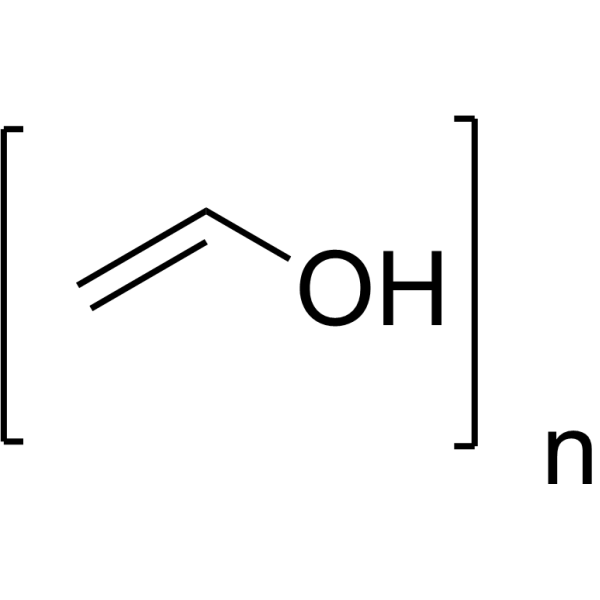
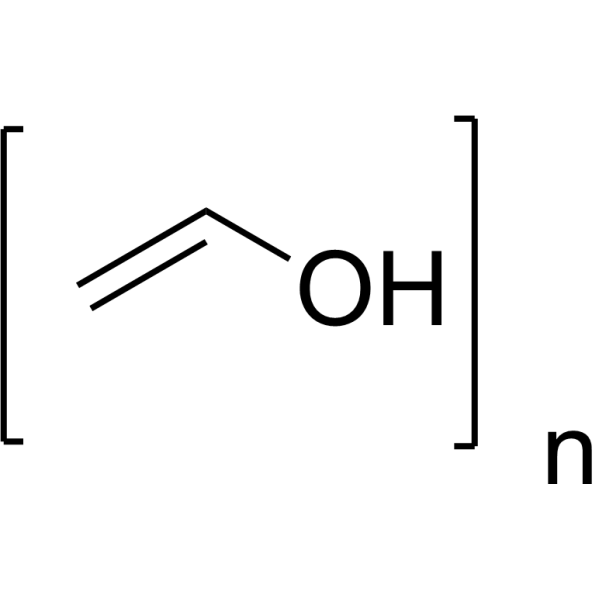
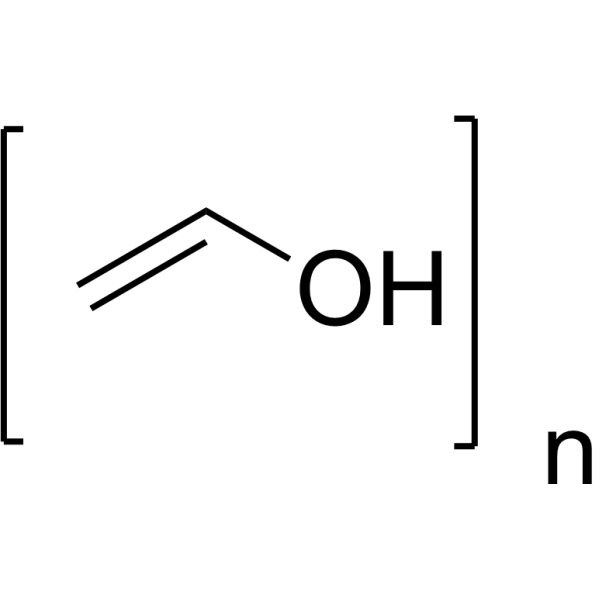
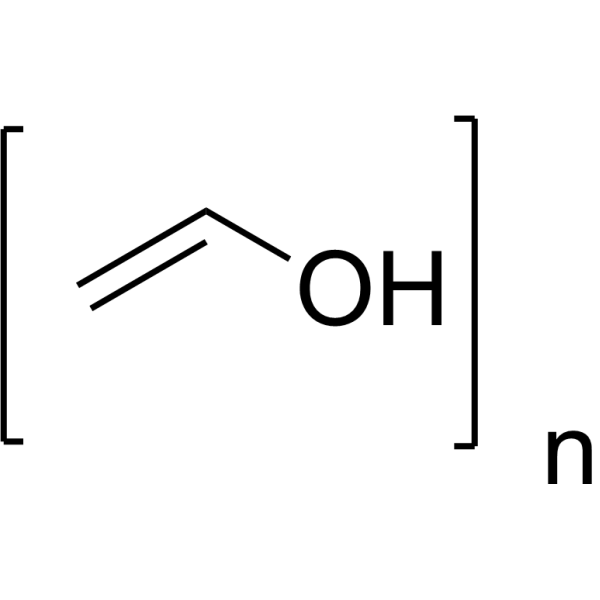
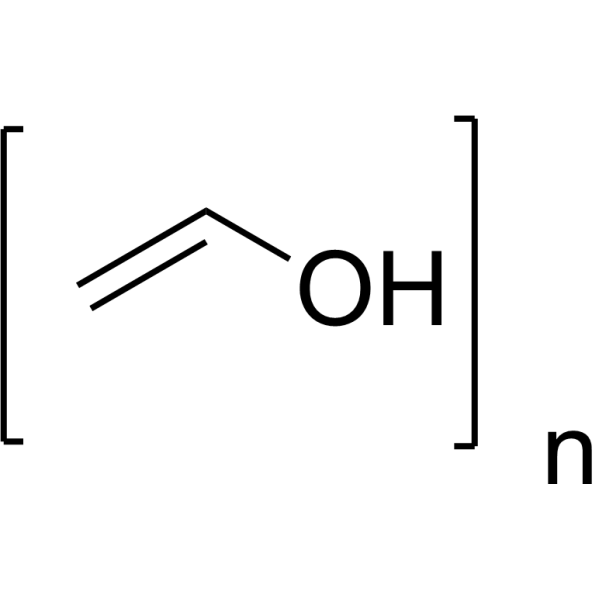
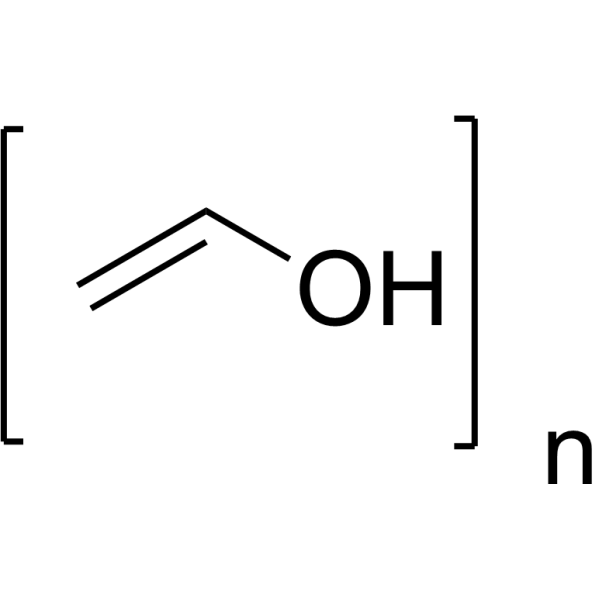
Polyvinyl alcohol (Mw 85000-124000, 87-89% hydrolyzed) is a polyvinyl alcohol with a molecular weight of 85000-124000 and hydrolytic properties. The degree of hydrolysis refers to the degree to which the acetate groups in the original polyvinyl acetate are converted into hydroxyl groups during the hydrolysis process. Polyvinyl alcohol (Mw 85000-124000, 87-89% hydrolyzed) is the hydrolysis and removal of acetate groups after the polymerization of ethylene acetate. And polyvinyl alcohol is obtained. A degree of hydrolysis of 87-89% indicates that a large part of the acetate groups have been removed, resulting in a large number of hydroxyl groups in the PVA structure. Polyvinyl alcohol with different degrees of hydrolysis can be used to self-crosslink to form cryogel, which can be used as biological excipient.
For research use only. We do not sell to patients.
- Assay : 88.7%
- CAS No.: 9002-89-5
- Formula: (C2H4O)n
- Molecular Weight:85000-124000 (Approximately)
-
Storage:
Store at room temperature 3 years.
In solvent -80°C, 2 years , -20°C, 1 year

To place orders, for customer services and technical support, please contact: MedChemExpress USA
Tel: 609-228-6898 E-mail: [email protected] [email protected]


-
 Biological Activity
-
Chemical Information
-
Solvent & Solubility
- Purity & Documentation
- References
-
 Help & FAQs


-
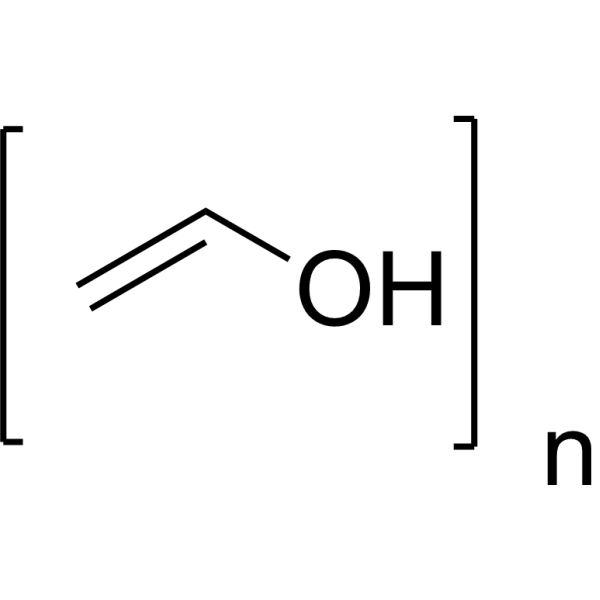
HY-Y0850E
Polyvinyl alcohol (Mw 30000-70000, 87-90% hydrolyzed) -
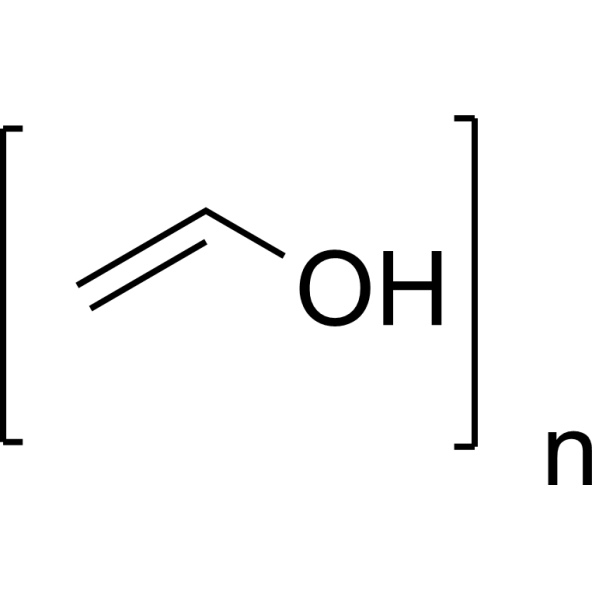
HY-Y0850
Polyvinyl alcohol (Mw 146000-186000, 99+% hydrolyzed) -
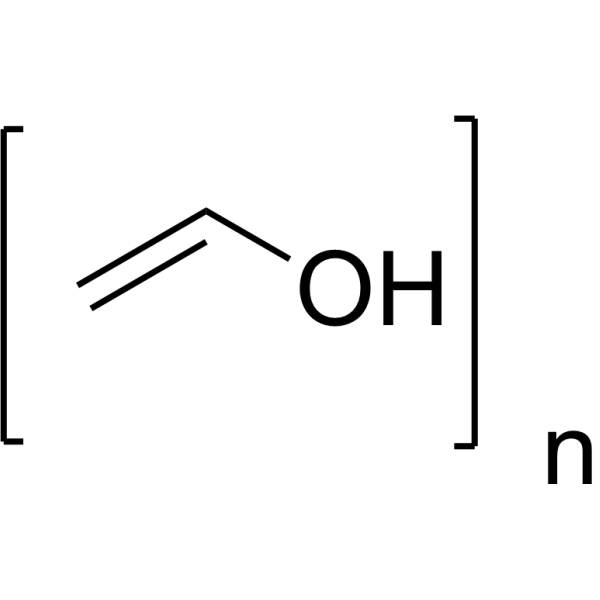
HY-Y0850J
Polyvinyl alcohol (Mw 13000-23000, 87-89% hydrolyzed) -

HY-Y0850U4
PVA (Mw 145000, 99+% hydrolyzed, ~3300 polymerization) -

HY-Y0850U
PVA (Mw 31000, 87-89% hydrolyzed, ~630 polymerization) -
HY-Y0850K
Polyvinyl alcohol (Mw 31000-50000, 98-99% hydrolyzed) -
HY-Y0850O
Polyvinyl alcohol (Mw 31000-50000, 87-89% hydrolyzed) -
HY-Y0850H
Polyvinyl alcohol (Mw 89000-98000, 99+% hydrolyzed) -
HY-Y0850I
Polyvinyl alcohol (Mw 9000-10000, 80% hydrolyzed) -

HY-Y0850U6
PVA (Mw 205000) -
HY-Y0850N
Polyvinyl alcohol (Mw 13000-23000, 98% hydrolyzed) -

HY-Y0850U3
PVA (Mw 125000, 98-99% hydrolyzed, ~2800 polymerization)
Publications Citing Use of MedChemExpress (MCE) Polyvinyl alcohol (Mw 85000-124000, 87-89% hydrolyzed)
More

Biological Activity
Description
In Vitro
Polyvinyl alcohol (Mw 85000-124000, 87-89% hydrolyzed) is a good biocompatible, hydrophilic, relatively inert and easy-to-process polymer, and can used as the main component to establish the skeleton structure of the hydrogel[2][3].
Polyvinyl alcohol (Mw 85000-124000, 87-89% hydrolyzed) can be used for construction of 3D cell culture scaffold, tissue engineering scaffold and drug delivery carrier[3].
MedChemExpress (MCE) has not independently confirmed the accuracy of these methods. They are for reference only.


Chemical Information
-
CAS No. 9002-89-5
-
Appearance Solid
-
Molecular Weight 85000-124000 (Approximately)
-
Formula (C2H4O)n
-
Color White to off-white
-
SMILES
CCC(O)C.[n]
-
Synonyms
PVA (Mw 85000-124000, 87-89% hydrolyzed); Poly(Ethenol) (Mw 85000-124000, 87-89% hydrolyzed)
-
Shipping
Room temperature in continental US; may vary elsewhere.
-
Storage
Store at room temperature 3 years
In solvent -80°C 2 years -20°C 1 year


Publications (3)
-
Journal Impact Factor
-
Most Recent
-
Nanoscale Adv
Dexamethasone-loaded lipid-polymeric nanoparticles to improve therapy for cisplatin-induced sensorineural hearing loss. [Abstract]2025 Nov 21. PMID: 41278499 -
-


Solvent & Solubility
In Vitro:
DMSO : 25 mg/mL (Need ultrasonic; Hygroscopic DMSO has a significant impact on the solubility of product, please use newly opened DMSO)


Purity & Documentation
-
Data Sheet (271 KB)
-
SDS (252 KB)
- English - EN (252 KB)
- Français - FR (252 KB)
- Deutsch - DE (252 KB)
- Norwegian - NO (252 KB)
- Español - ES (252 KB)
- Swedish - SV (252 KB)
- Italian - IT (252 KB)
- Korean - KR (252 KB)
- Portuguese - PT (252 KB)
-
Handling Instructions (2659 KB)
References
[1]. Elsherbiny DA, et al. Self-crosslinked polyvinyl alcohol/cellulose nanofibril cryogels loaded with synthesized aminophosphonates as antimicrobial wound dressings. J Mater Chem B. 2023 Aug 2;11(30):7144-7159. [Content Brief]
[3]. Tran TXT, et al., Synthetic Extracellular Matrix of Polyvinyl Alcohol Nanofibers for Three-Dimensional Cell Culture. J Funct Biomater. 2024 Sep 10;15(9):262. [Content Brief]

Calculators
Concentration (start) × Volume (start) = Concentration (final) × Volume (final)


Polyvinyl alcohol (Mw 85000-124000, 87-89% hydrolyzed) Related Classifications
HY-Y0850M Related Classifications
 Powered by Bioz