



Polyvinyl alcohol (Mw 31000-50000, 87-89% hydrolyzed)
Based on 3 publication(s) in Google Scholar
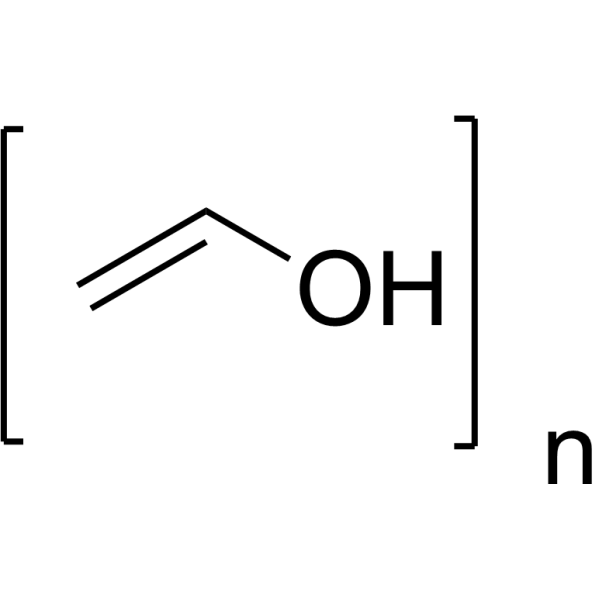
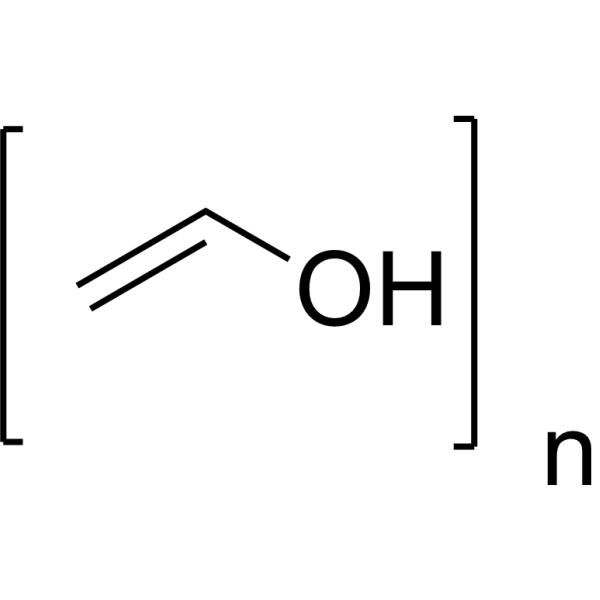
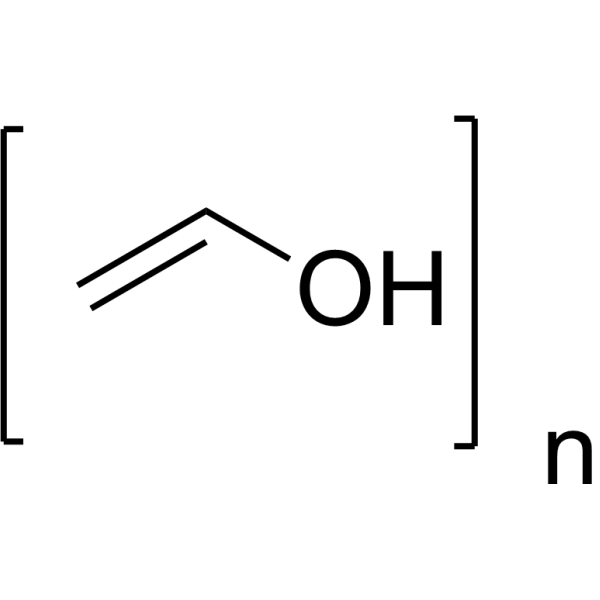
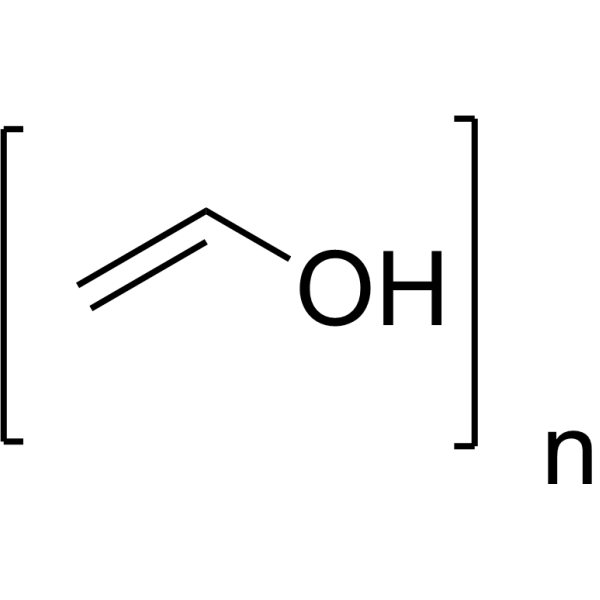
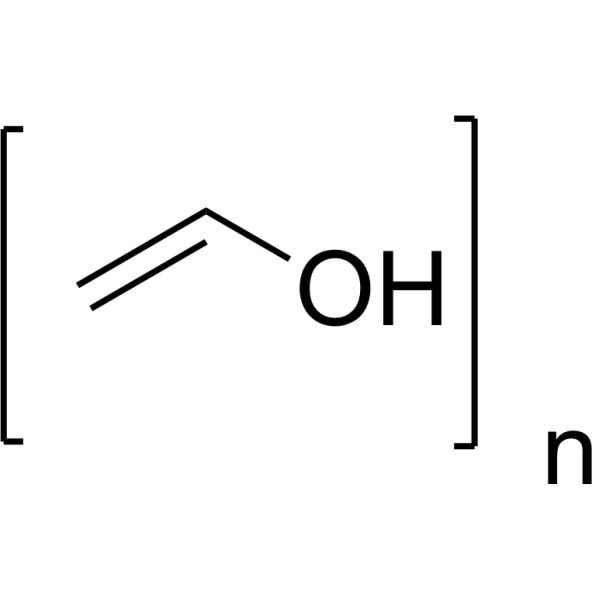
Polyvinyl alcohol (PVA; Poly (Ethenol)) (Mw 31000-50000, 87-89% hydrolyzed) is a polymer with emulsifying and stabilizing properties, with a degree of hydrolysis of 87-89%. Polyvinyl alcohol (Mw 31000-50000, 87-89% hydrolyzed) mainly acts as a stabilizer in the preparation of nanomedicines; it not only maintains the structural integrity of PEGylated PLGA nanoparticles during double emulsion synthesis, but also facilitates the preparation of chitosan/matrine-PLGA nanoparticle aqueous solutions and lipid-polymer nanoparticles. Polyvinyl alcohol (Mw 31000-50000, 87-89% hydrolyzed) can be widely used in research related to fields such as breast cancer.
For research use only. We do not sell to patients.
- Assay : 88.3%
- CAS No.: 9002-89-5
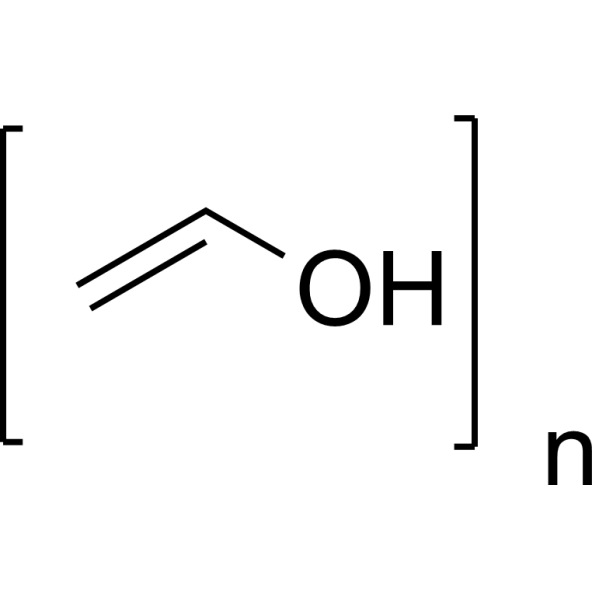
- Formula: (C2H4O)n
- Molecular Weight:31000-50000 (Approximately)
-
Storage:Powder -20°C, 3 years , 4°C, 2 years ; In solvent -80°C, 6 months , -20°C, 1 month

To place orders, for customer services and technical support, please contact: MedChemExpress USA
Tel: 609-228-6898 E-mail: [email protected] [email protected]


-
 Biological Activity
-
Chemical Information
-
Solvent & Solubility
- Protocols
- Purity & Documentation
- References
-
 Help & FAQs


-
HY-Y0850E
Polyvinyl alcohol (Mw 30000-70000, 87-90% hydrolyzed)Dressing Meterial -
HY-Y0850J
Polyvinyl alcohol (Mw 13000-23000, 87-89% hydrolyzed)Polyvinyl Alcohol -
HY-Y0850I
Polyvinyl alcohol (Mw 9000-10000, 80% hydrolyzed)Biochemical Reagent -
HY-Y0850
Polyvinyl alcohol (Mw 146000-186000, 99+% hydrolyzed)Biochemical reagents -

HY-Y0850U4
PVA (Mw 145000, 99+% hydrolyzed, ~3300 polymerization)Polyvinyl Alcohol -

HY-Y0850U
PVA (Mw 31000, 87-89% hydrolyzed, ~630 polymerization)Polymer -
HY-Y0850K
Polyvinyl alcohol (Mw 31000-50000, 98-99% hydrolyzed)Biochemical Reagent -
HY-Y0850H
Polyvinyl alcohol (Mw 89000-98000, 99+% hydrolyzed)Biochemical Reagent -

HY-Y0850U6
PVA (Mw 205000)Polyvinyl Alcohol -
HY-Y0850N
Polyvinyl alcohol (Mw 13000-23000, 98% hydrolyzed)Biochemical Reagent -

HY-Y0850U3
PVA (Mw 125000, 98-99% hydrolyzed, ~2800 polymerization)Wound Dressing -
HY-Y0850P
Polyvinyl alcohol (Mw 146000-186000, 87-89% hydrolyzed)Polyvinyl Alcohol
Publications Citing Use of MedChemExpress (MCE) Polyvinyl alcohol (Mw 31000-50000, 87-89% hydrolyzed)
More

Biological Activity
Description
In Vitro
Polyvinyl alcohol (Mw 31000-50000, 87-89% hydrolyzed) (0.5% (w/w); overnight) acts as a stabilizer during double emulsion solvent evaporation to produce Dexamethasone (HY-14648)-loaded lipid-polymeric nanoparticles with a mean particle size of ~380.5 nm, polydispersity index of 0.233, and z-potential of -21.9 mV[1].
MedChemExpress (MCE) has not independently confirmed the accuracy of these methods. They are for reference only. Further protocols information, click here.
In Vivo
MedChemExpress (MCE) has not independently confirmed the accuracy of these methods. They are for reference only.


Chemical Information
-
CAS No. 9002-89-5
-
Appearance Solid
-
Molecular Weight 31000-50000 (Approximately)
-
Formula (C2H4O)n
-
Color White to off-white
-
SMILES
CCC(O)C.[n]
-
Synonyms
PVA (Mw 31000-50000, 87-89% hydrolyzed); Poly(Ethenol) (Mw 31000-50000, 87-89% hydrolyzed)
-
Shipping
Room temperature in continental US; may vary elsewhere.
-
Storage
Powder -20°C 3 years 4°C 2 years In solvent -80°C 6 months -20°C 1 month


Publications (3)
-
Journal Impact Factor
-
Most Recent
-
Nanoscale Adv
Dexamethasone-loaded lipid-polymeric nanoparticles to improve therapy for cisplatin-induced sensorineural hearing loss. [Abstract]2025 Nov 21. PMID: 41278499 -
-


Solvent & Solubility
In Vitro:
H2O : 20 mg/mL (ultrasonic and warming and heat to 60°C)

Protocols
-
Breast Cancer Modeling
Breast cancer is a heterogeneous cancer, and it has been distinguished into four subtypes: luminal A, luminal B, HER2-positive and basal-like. Molecular mutations, epigenetic alterations, hormone exposure and immune microenvironment are related to the progression of breast cancer.


Purity & Documentation
-
Data Sheet (272 KB)
-
SDS (418 KB)
- English - EN (418 KB)
- Français - FR (418 KB)
- Deutsch - DE (418 KB)
- Norwegian - NO (418 KB)
- Español - ES (418 KB)
- Swedish - SV (418 KB)
- Italian - IT (418 KB)
- Korean - KR (418 KB)
- Portuguese - PT (418 KB)
-
Handling Instructions (2659 KB)
References

Calculators
Concentration (start) × Volume (start) = Concentration (final) × Volume (final)


Polyvinyl alcohol (Mw 31000-50000, 87-89% hydrolyzed) Related Classifications
HY-Y0850O Related Classifications
 Powered by Bioz
Keywords
- Polyvinyl alcohol (Mw 31000-50000, 87-89% hydrolyzed)
- 9002-89-5
- PVA (Mw 31000-50000, 87-89% hydrolyzed)
- Poly(Ethenol) (Mw 31000-50000, 87-89% hydrolyzed)
- Environmental Pollutants
- Biochemical Assay Reagents
- double emulsion synthesis
- lipid-polymeric nanoparticles
- breast cancer
- male C57BL/6 mice
- cisplatin-induced sensorineural hearing loss
- dexamethasone
- chitosan/matrine-poly(lactic-co-glycolic acid) nanoparticles
- PEGylated PLGA nanoparticles
- Inhibitor
- inhibitor
- inhibit