



PVA (Mw 125000, 98-99% hydrolyzed, ~2800 polymerization)

Based on 1 Customer Validation
PVA (Polyvinyl alcohol) (Mw 125000, 98-99% hydrolyzed, ~2800 polymerization) is a water-soluble, biodegradable, biocompatible and non-immunogenic polymer. PVA (Mw 125000, 98-99% hydrolyzed, ~2800 polymerization) causes no irritation to rabbit eyes, no skin sensitization in guinea pigs, promotes the proliferation of human skin keratinocytes, and reduces the loss of corneal endothelial cells. The LD50 of PVA (Mw 125000, 98-99% hydrolyzed, ~2800 polymerization) in rats and dogs is greater than 10 g/kg. PVA (Mw 125000, 98-99% hydrolyzed, ~2800 polymerization) is hardly absorbed by the digestive system, causes no adverse effects upon long-term oral administration, and shows no mutagenicity or carcinogenicity. However, repeated intravenous or portal vein injection of PVA (Mw 125000, 98-99% hydrolyzed, ~2800 polymerization) may induce pathological changes such as glomerular lesions, anemia, hypertension or liver fibrosis in rats or dogs. Crosslinked nanofibers prepared by modifying PVA (Mw 125000, 98-99% hydrolyzed, ~2800 polymerization) can be used in studies related to wound dressings and other applications.
For research use only. We do not sell to patients.
- CAS No.: 9002-89-5
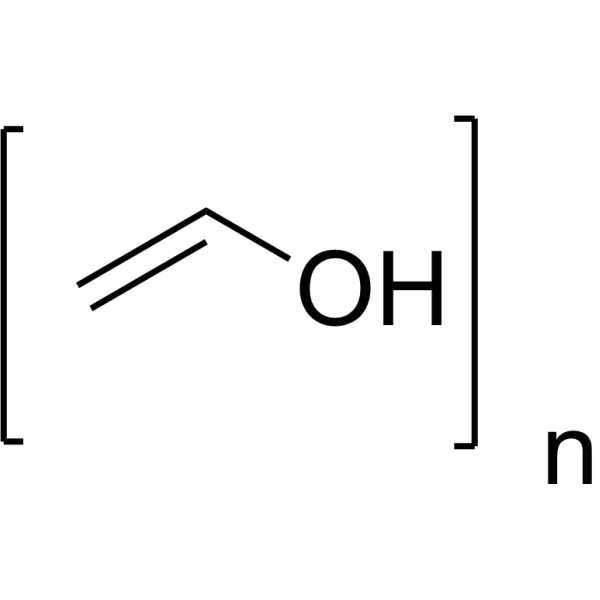
- Formula: (C2H4O)n
- Molecular Weight:125000 (Average)
-
Storage:
Store at room temperature, keep dry and cool.
In solvent -80°C, 1 year , -20°C, 6 months


To place orders, for customer services and technical support, please contact: MedChemExpress USA
Tel: 609-228-6898 E-mail: [email protected] [email protected]


-
 Biological Activity
-
Chemical Information
- Purity & Documentation
- References
-
 Help & FAQs


-
HY-Y0850H
Polyvinyl alcohol (Mw 89000-98000, 99+% hydrolyzed) -

HY-Y0850U6
PVA (Mw 205000) -

HY-B1620L
Polyvinylpyrrolidone, average Mw~40000 -
HY-Y0850E
Polyvinyl alcohol (Mw 30000-70000, 87-90% hydrolyzed) -
HY-Y0850
Polyvinyl alcohol (Mw 146000-186000, 99+% hydrolyzed) -
HY-Y0850J
Polyvinyl alcohol (Mw 13000-23000, 87-89% hydrolyzed) -

HY-Y0850U4
PVA (Mw 145000, 99+% hydrolyzed, ~3300 polymerization) -

HY-Y0850U
PVA (Mw 31000, 87-89% hydrolyzed, ~630 polymerization) -
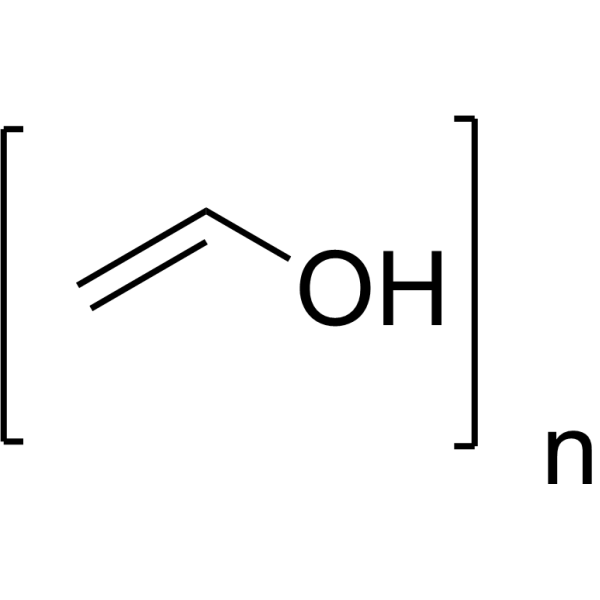
HY-Y0850K
Polyvinyl alcohol (Mw 31000-50000, 98-99% hydrolyzed) -
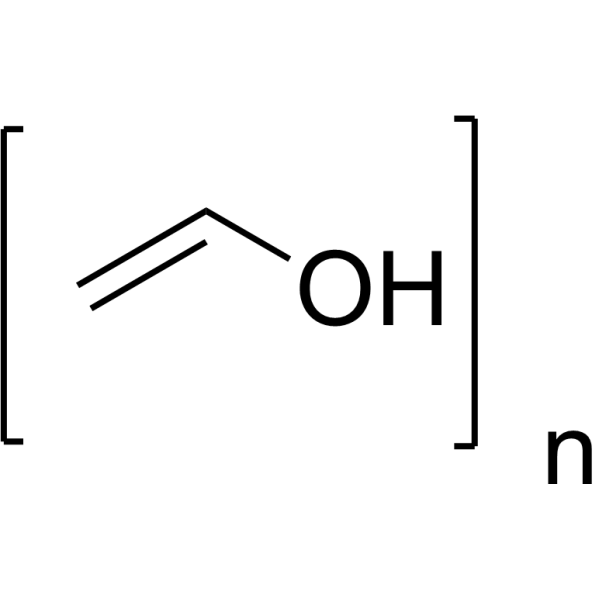
HY-Y0850O
Polyvinyl alcohol (Mw 31000-50000, 87-89% hydrolyzed) -
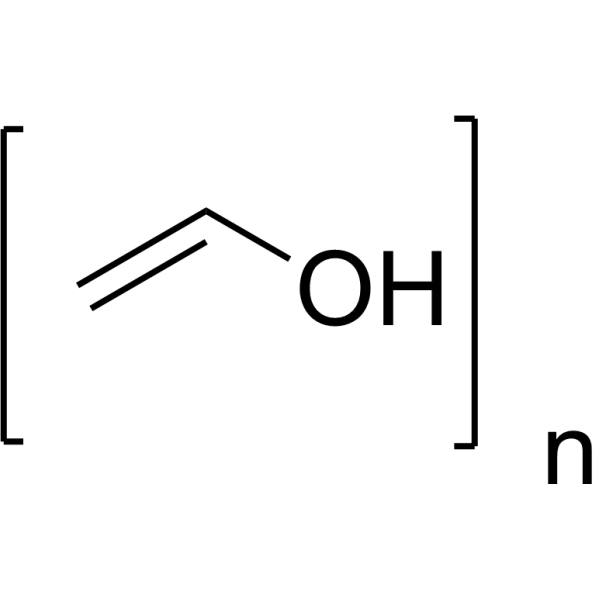
HY-Y0850I
Polyvinyl alcohol (Mw 9000-10000, 80% hydrolyzed) -
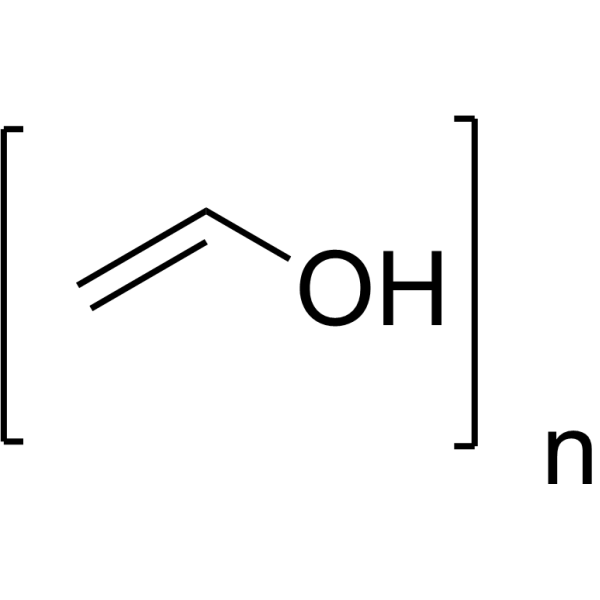
HY-Y0850N
Polyvinyl alcohol (Mw 13000-23000, 98% hydrolyzed)


Biological Activity
Description
In Vitro
PVA (Mw 125000, 98-99% hydrolyzed, ~2800 polymerization) (10% w/v; 72 h at 37 °C) crosslinks to form 10% GA PAcVA hydrogels. After coating with poly-L-lysine and laminin, the hydrogels support the adhesion, growth and proliferation of mHypoE-N1 and A-549 cells, with no significant cytotoxicity compared with the control group[3].
PVA/BTCA, PVA/CA and PVA/H nanofibers (105 cell/mL; 5 d) support the adhesion and proliferation of HS2 human skin keratinocytes, with the highest proliferation density observed on PVA/CA nanofibers[4].
MedChemExpress (MCE) has not independently confirmed the accuracy of these methods. They are for reference only.
-
Cell Line:Embryonic mouse hypothalamic mHypoE-N1 cells, human lung carcinoma A-549 cells
-
Concentration:10% w/v; 50 μg mL-1 laminin
-
Incubation Time:72 h at 37 °C (hydrogel synthesis); 2 h at 37 °C, 5% CO2 (laminin coating); up to 135 h (cell culture)
-
Result:Showed slower proliferation of mHypoE-N1 cells on PAcVA than controls for the first 60 h, similar proliferation between 60-110 h, and faster proliferation after 110 h until reaching comparable cell concentrations.
Showed similar proliferation of A-549 cells to controls for the first 110 h, then reached cell concentrations twice as high as controls.
Exhibited LDH activity (cytotoxicity) of ~7% for mHypoE-N1 on PAcVA (vs ~7% for controls) and ~10% for A-549 on PAcVA (vs ~8% for controls), with no significant differences between PAcVA and controls.
Detected no oxidative stress in cells cultured on PAcVA.


Chemical Information
-
CAS No. 9002-89-5
-
Appearance Solid
-
Molecular Weight 125000 (Average)
-
Formula (C2H4O)n
-
Color White to off-white
-
SMILES
CCC(O)C.[n]
-
Synonyms
Polyvinyl alcohol (Mw 125000, 98-99% hydrolyzed, ~2800 polymerization); Poly(Ethenol) (Mw 125000, 98-99% hydrolyzed, ~2800 polymerization)
-
Shipping
Room temperature in continental US; may vary elsewhere.
-
Storage
Store at room temperature, keep dry and cool
In solvent -80°C 1 year -20°C 6 months


Purity & Documentation
-
Data Sheet (271 KB)
-
SDS (422 KB)
- English - EN (422 KB)
- Français - FR (422 KB)
- Deutsch - DE (422 KB)
- Norwegian - NO (422 KB)
- Español - ES (422 KB)
- Swedish - SV (422 KB)
- Italian - IT (422 KB)
- Korean - KR (422 KB)
- Portuguese - PT (422 KB)
-
Handling Instructions (2659 KB)
References

Calculators
Concentration (start) × Volume (start) = Concentration (final) × Volume (final)


PVA (Mw 125000, 98-99% hydrolyzed, ~2800 polymerization) Related Classifications
HY-Y0850U3 Related Classifications
 Powered by Bioz
Keywords
- PVA (Mw 125000, 98-99% hydrolyzed, ~2800 polymerization)
- 9002-89-5
- Polyvinyl alcohol (Mw 125000, 98-99% hydrolyzed, ~2800 polymerization)
- Poly(Ethenol) (Mw 125000, 98-99% hydrolyzed, ~2800 polymerization)
- Biochemical Assay Reagents
- anti-hapten IgE immune responses
- human skin keratinocytes
- rat kidney glomerular mesangium
- New Zealand white rabbits
- macrophage activation
- Salmonella typhimurium
- rats
- serum complement titer
- dogs
- mesangial hypercellularity
- Inhibitor
- inhibitor
- inhibit