



Polyvinyl alcohol (Mw 85000-124000, 99+% hydrolyzed)
Based on 3 publication(s) in Google Scholar
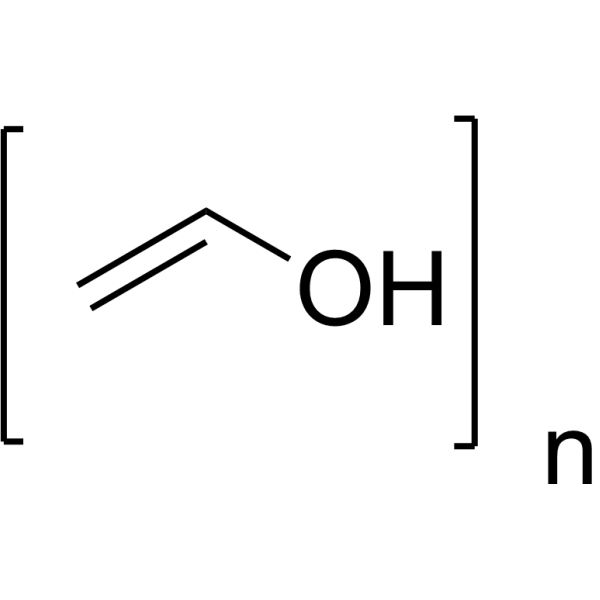
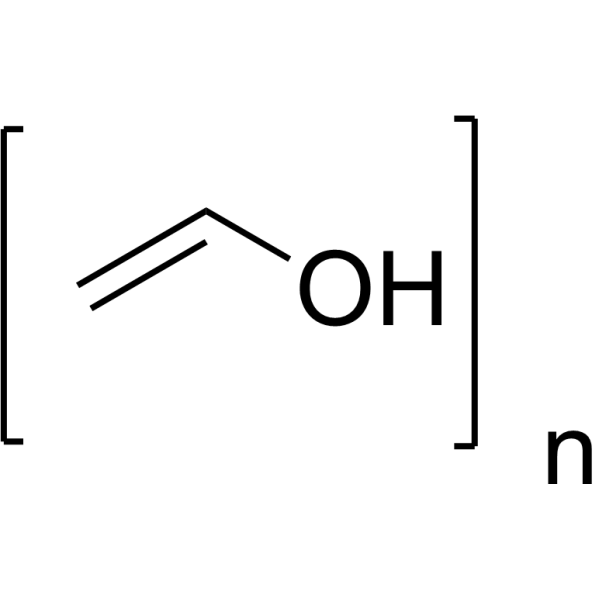
Polyvinyl alcohol (Mw 85000-124000, 99+% hydrolyzed) is a polyvinyl alcohol with a molecular weight of 85000-124000 and hydrolytic properties. Polyvinyl alcohol (Mw 85000-124000, 99+% hydrolyzed) forms hydrogels that can be used to simulate digestive organs and lesion models for the training of endoscopic ultrasound (EUS) and endoscopic ultrasound elastography (EUS-E). Polyvinyl alcohol with different degrees of hydrolysis can be used to self-crosslink to form cryogel, which can be used as biological excipients.
For research use only. We do not sell to patients.
- CAS No.: 9002-89-5
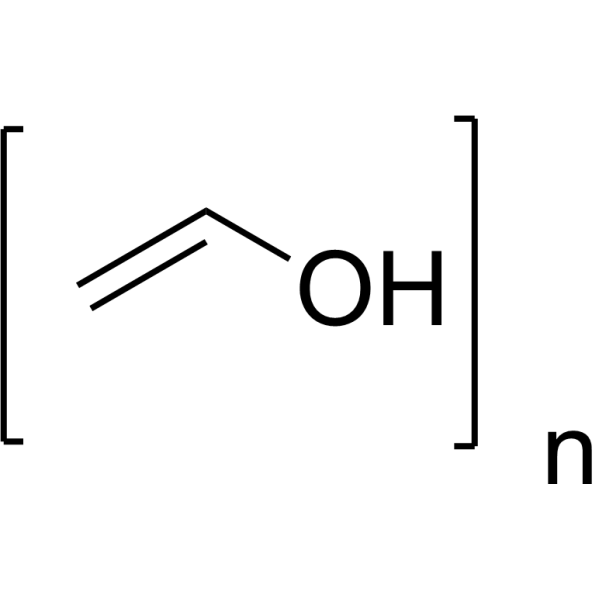
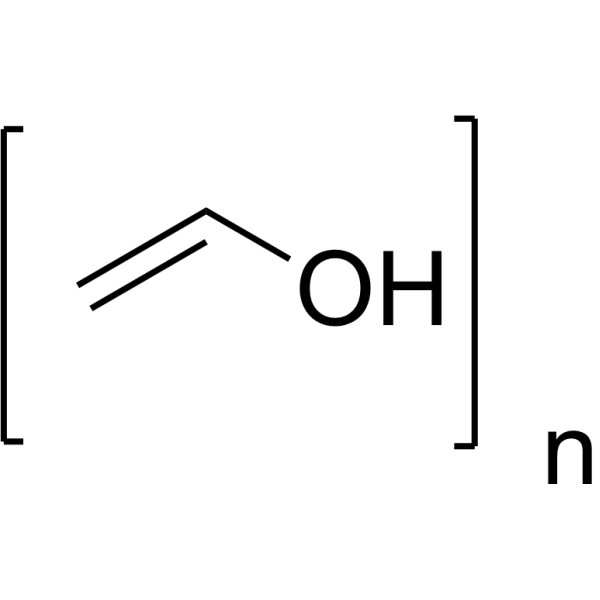
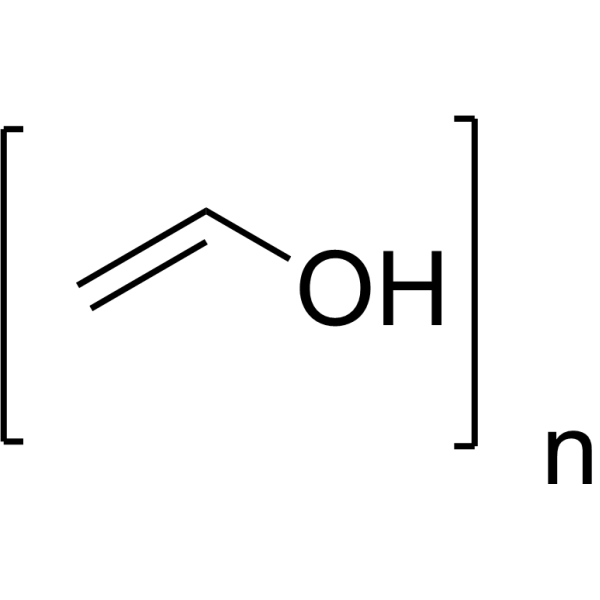
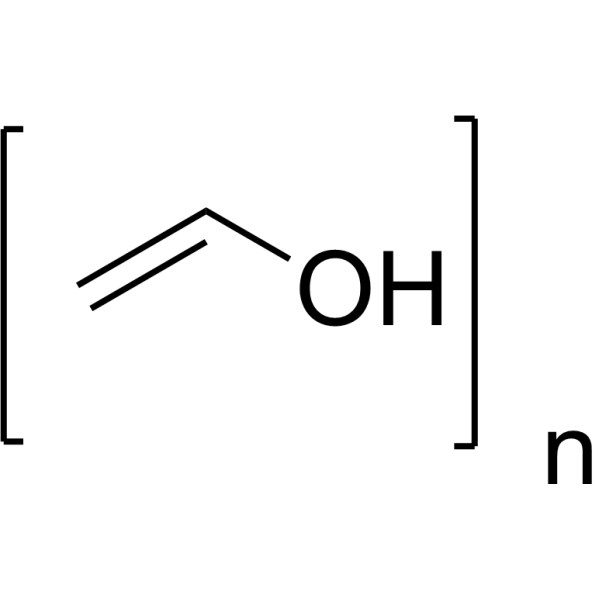
- Formula: (C2H4O)n
- Molecular Weight:85000-124000 (Approximately)
-
Storage:
4°C, protect from light
* In solvent : -80°C, 6 months; -20°C, 1 month (protect from light)

To place orders, for customer services and technical support, please contact: MedChemExpress USA
Tel: 609-228-6898 E-mail: [email protected] [email protected]


-
 Biological Activity
-
Chemical Information
-
Solvent & Solubility
- Purity & Documentation
- References
-
 Help & FAQs


-

HY-Y0850U
PVA (Mw 31000, 87-89% hydrolyzed, ~630 polymerization) -

HY-Y0850U6
PVA (Mw 205000) -
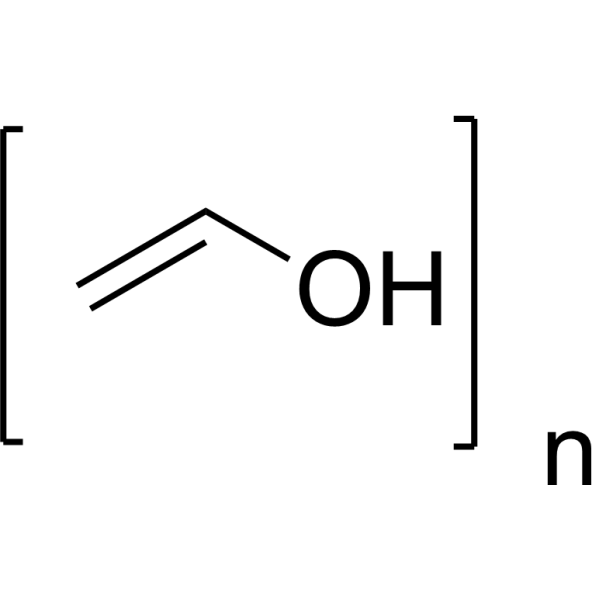
HY-Y0850E
Polyvinyl alcohol (Mw 30000-70000, 87-90% hydrolyzed) -
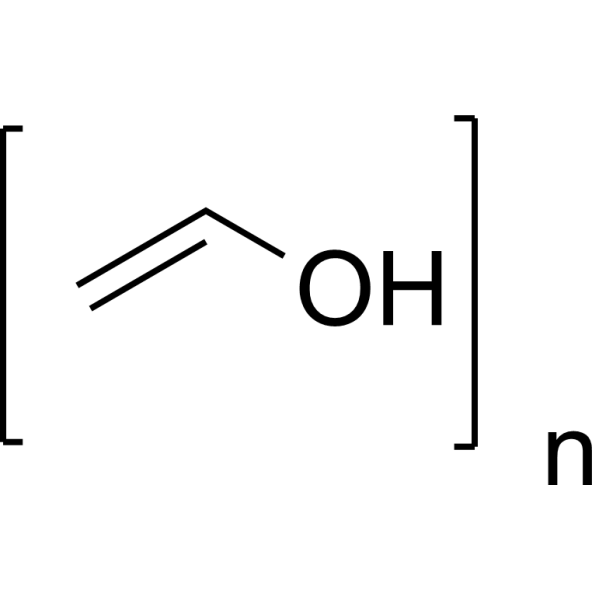
HY-Y0850
Polyvinyl alcohol (Mw 146000-186000, 99+% hydrolyzed) -
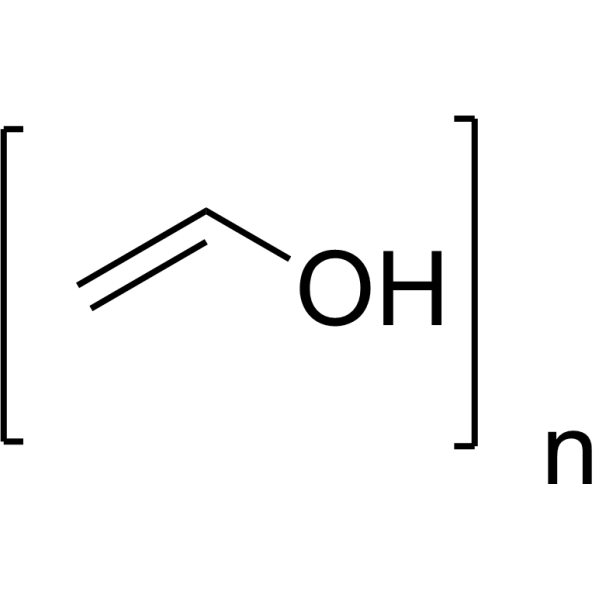
HY-Y0850J
Polyvinyl alcohol (Mw 13000-23000, 87-89% hydrolyzed) -

HY-Y0850U4
PVA (Mw 145000, 99+% hydrolyzed, ~3300 polymerization) -
HY-Y0850K
Polyvinyl alcohol (Mw 31000-50000, 98-99% hydrolyzed) -
HY-Y0850O
Polyvinyl alcohol (Mw 31000-50000, 87-89% hydrolyzed) -
HY-Y0850H
Polyvinyl alcohol (Mw 89000-98000, 99+% hydrolyzed) -
HY-Y0850I
Polyvinyl alcohol (Mw 9000-10000, 80% hydrolyzed) -
HY-Y0850N
Polyvinyl alcohol (Mw 13000-23000, 98% hydrolyzed) -

HY-Y0850U3
PVA (Mw 125000, 98-99% hydrolyzed, ~2800 polymerization)
Publications Citing Use of MedChemExpress (MCE) Polyvinyl alcohol (Mw 85000-124000, 99+% hydrolyzed)
More

Biological Activity
Description
In Vitro
Polyvinyl alcohol has the density and stiffness (Young's modulus) of its hydrogels positively correlated with its molecular weight (MW) and concentration (C), and through regulating its molecular weight, concentration and the number of freeze-thaw cycles, it enables the precise control of the hydrogels’ mechanical properties (e.g., hardness and elasticity), thus mimicking different biological tissues from soft ones (e.g., normal tissues) to rigid ones (e.g., solid tumors)[1][2].
MedChemExpress (MCE) has not independently confirmed the accuracy of these methods. They are for reference only.


Chemical Information
-
CAS No. 9002-89-5
-
Appearance Solid
-
Molecular Weight 85000-124000 (Approximately)
-
Formula (C2H4O)n
-
Color White to off-white
-
SMILES
CCC(O)C.[n]
-
Synonyms
PVA (Mw 85000-124000, 99+% hydrolyzed); Poly(Ethenol) (Mw 85000-124000, 99+% hydrolyzed)
-
Shipping
Room temperature in continental US; may vary elsewhere.
-
Storage
4°C, protect from light
* In solvent : -80°C, 6 months; -20°C, 1 month (protect from light)


Publications (3)
-
Journal Impact Factor
-
Most Recent
-
Nanoscale Adv
Dexamethasone-loaded lipid-polymeric nanoparticles to improve therapy for cisplatin-induced sensorineural hearing loss. [Abstract]2025 Nov 21. PMID: 41278499 -
-


Solvent & Solubility
In Vitro:
DMSO : 7.69 mg/mL (ultrasonic and warming and heat to 60°C; Hygroscopic DMSO has a significant impact on the solubility of product, please use newly opened DMSO)


Purity & Documentation
-
Data Sheet (271 KB)
-
SDS (394 KB)
- English - EN (394 KB)
- Français - FR (394 KB)
- Deutsch - DE (394 KB)
- Norwegian - NO (394 KB)
- Español - ES (394 KB)
- Swedish - SV (394 KB)
- Italian - IT (394 KB)
- Korean - KR (394 KB)
- Portuguese - PT (394 KB)
-
Handling Instructions (2659 KB)
References
[1]. Galvis-García ES, et al. Experimental model standardizing polyvinyl alcohol hydrogel to simulate endoscopic ultrasound and endoscopic ultrasound-elastography. World J Gastroenterol. 2020 Sep 14;26(34):5169-5180. [Content Brief]
[2]. Zhang K, et al. Application of polyvinyl alcohol/chitosan copolymer hydrogels in biomedicine: A review. Int J Biol Macromol. 2023 Jul 1;242(Pt 4):125192. [Content Brief]

Calculators
Concentration (start) × Volume (start) = Concentration (final) × Volume (final)


Polyvinyl alcohol (Mw 85000-124000, 99+% hydrolyzed) Related Classifications
HY-Y0850L Related Classifications
 Powered by Bioz