



G6PD activator AG1
Based on 11 publication(s) in Google Scholar
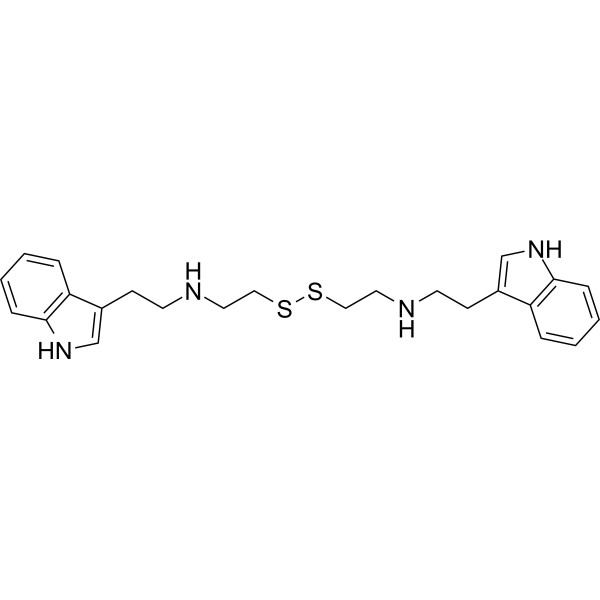
G6PD activator AG1 is a potent and selective glucose-6-phosphate dehydrogenase (G6PD) agonist with an EC50 of 3 μM. G6PD is an oxidoreductase that catalyzes the oxidation of glucose-6-phosphate to 6-phosphogluconolactone and the simultaneous reduction of NAD phosphate (NADP) to reduced NADP (NADPH). G6PD activator AG1 can reduce hemolysis of human erythrocytes.
For research use only. We do not sell to patients.
- Purity : 98.18%
- CAS No.: 421581-52-4
- Formula: C24H30N4S2
- Molecular Weight:438.65
-
Storage:
4°C, protect from light
* The compound is unstable in solutions, freshly prepared is recommended.

To place orders, for customer services and technical support, please contact: MedChemExpress USA
Tel: 609-228-6898 E-mail: [email protected] [email protected]


-
 Biological Activity
-
Chemical Information
-
Solvent & Solubility
- Purity & Documentation
- References
-
 Help & FAQs


-
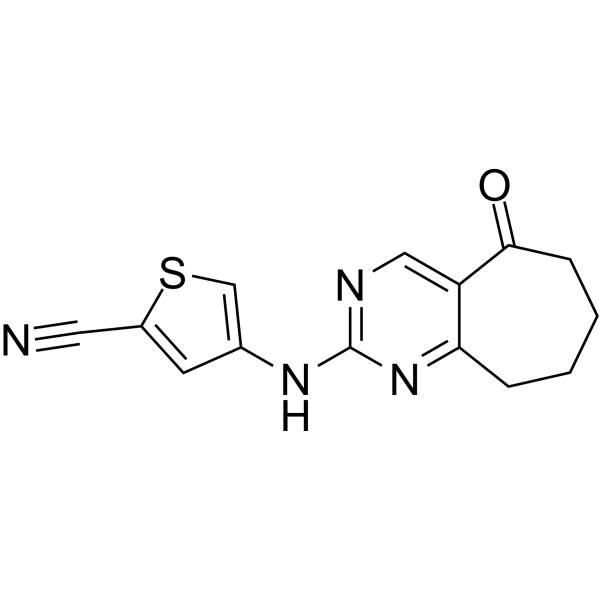
HY-W107464
G6PDi-1G6PD Inhibitor -
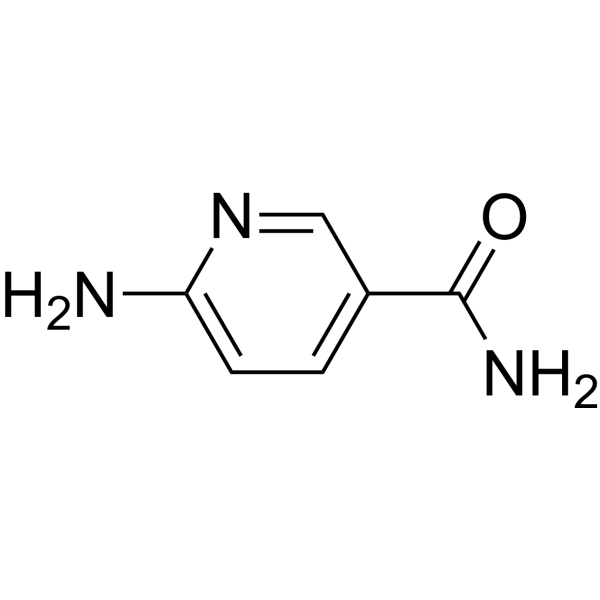
HY-W010342
6-AminonicotinamideG6PD Inhibitor -
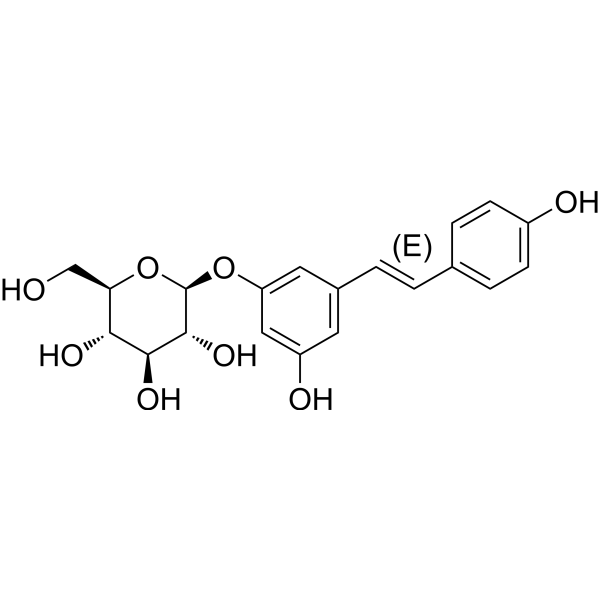
HY-N0120A
PolydatinAutophagy Inducer -
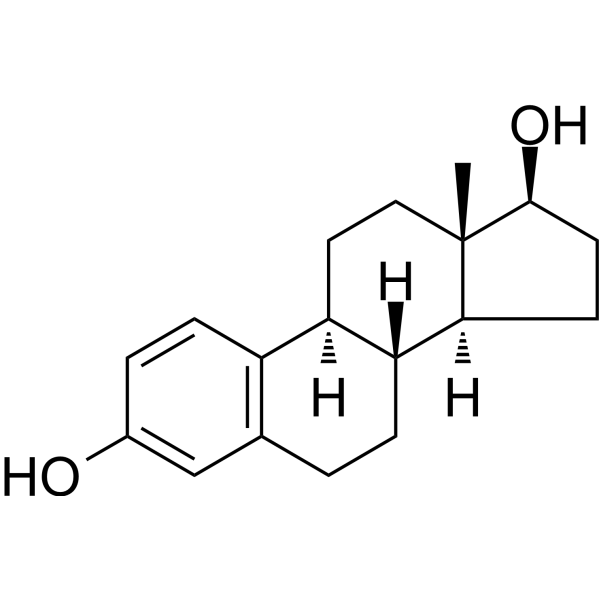
HY-B0141
EstradiolHuman Endogenous Metabolite -
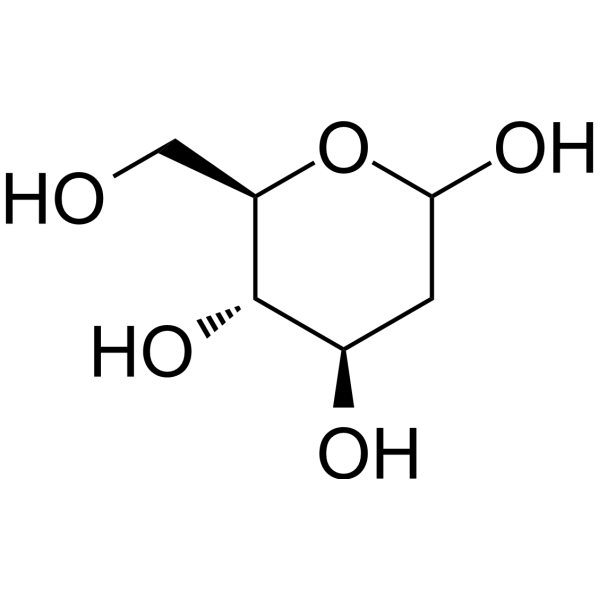
HY-13966
2-Deoxy-D-glucoseGlycolysis Inhibitor -
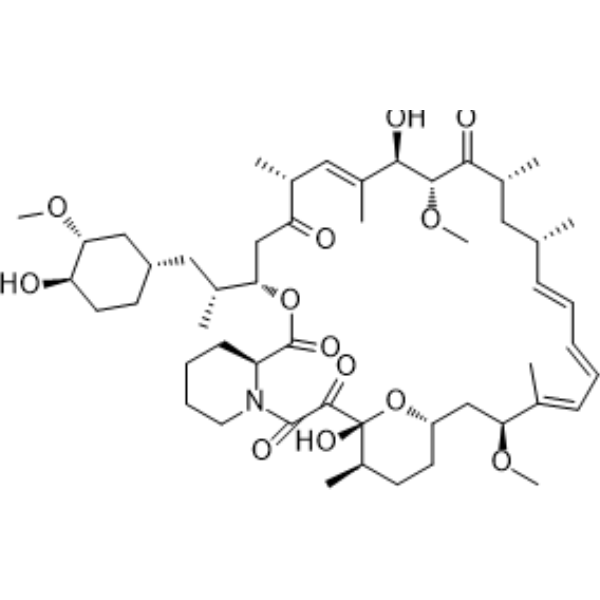
HY-10219
RapamycinmTOR Inhibitor -
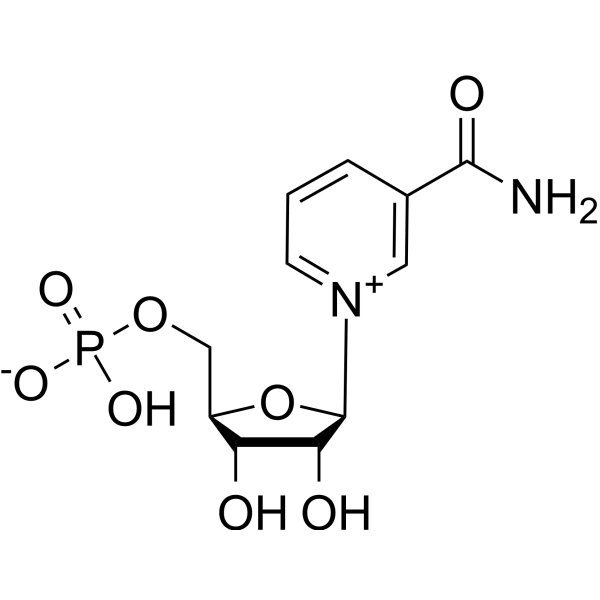
HY-F0004
FosribnicotinamideNAD+ Intermediate -
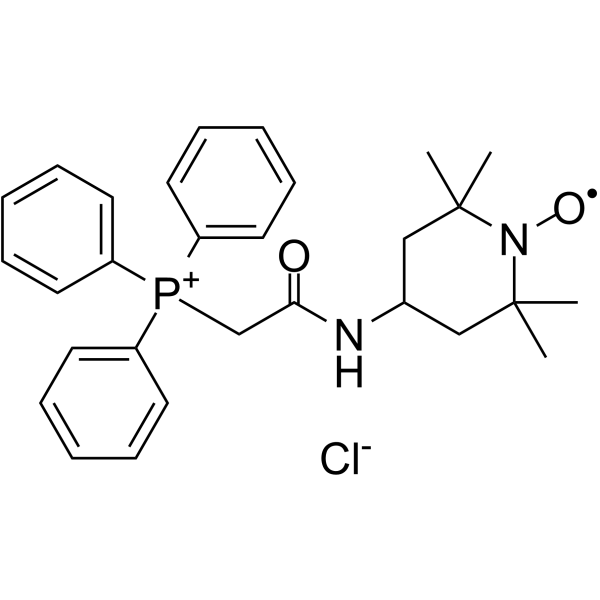
HY-112879
Mito-TEMPOAntioxidant -
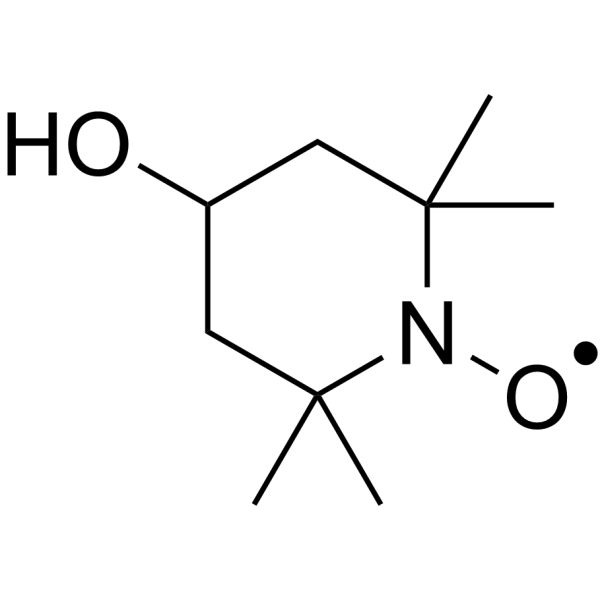
HY-100561
TempolSOD Mimetic Agent -
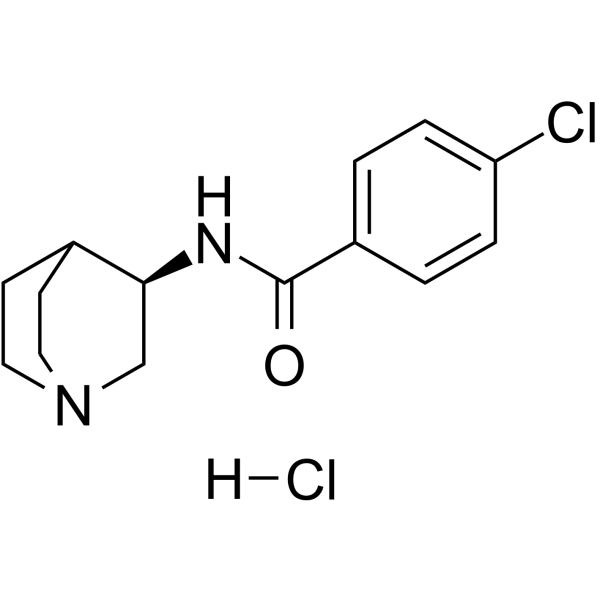
HY-12560A
PNU-282987α7 nAChR Agonist/5-HT3 antagonist -

HY-P7044
IL-6 Protein, Human -
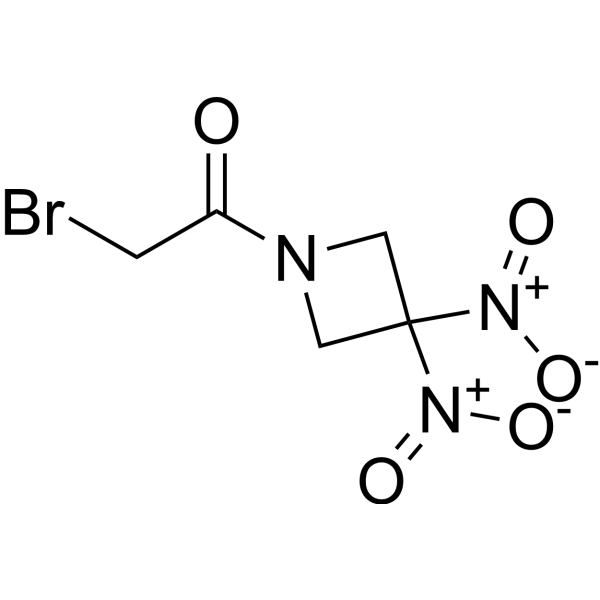
HY-16438
RRx-001Radiosensitizer/CD47 and SIRP-α Inhibitor
Publications Citing Use of MedChemExpress (MCE) G6PD activator AG1
More- Circulation. 2026 Aug 18;154(7):674-677.
- Nat Biomed Eng. 2025 Sep;9(9):1547-1556. [Abstract]
- Redox Biol. 2024 Sep:75:103305. [Abstract]
- Redox Biol. 2024 Aug:74:103236. [Abstract]
- Cell Death Dis. 2026 Jan 7;17(1):8. [Abstract]
- Cell Rep. 2025 Jan 7;44(1):115178. [Abstract]
- Life Metab. 2024 Dec 13;4(1):loae040. [Abstract]
- Sci Rep. 2021 Dec 21;11(1):24307. [Abstract]
- Thromb Res. 2025 Aug:252:109377. [Abstract]
- Ann Med Surg (Lond). 2025 Nov 25;88(1):290-302. [Abstract]
- bioRxiv. 2025 Jul 2:2025.06.30.662346. [Abstract]
 Customer Validation & Images

-
ELISA

-
In Vivo Efficacy Study

-
Flow Cytometry

-
Bio/Physico-chemical Assay

-
WB


Biological Activity
Description
IC50 & Target
IC50: 3 µΜ (G6PD)[1]
In Vitro
AG1 (50, 100, 250, 500, 750, 1000 nM) of 1 μM increases the viability by 20% and the proteolytic stability of Canton G6PD in SH-SY5Y cells. AG1 has no effect when G6PD was knocked down by siRNA, supporting the specificity of AG1 toward G6PD[2].
AG1 (1-5 μΜ; pre-incubated overnight) reduces the extent of hemolysis with 5 μΜ in human erythrocytes suspension (5%) exposed to either 1 mM chloroquine (CQ; 4 hours) or diamide (a GSH oxidant; 4 hours). AG1 increases GSH levels and reduced ROS levels together with increased G6PD activity under these drug-induced oxidative stress[2].
AG1 has no effect on the dimerization or activity of several other NAD- or NADP+-dependent dimeric or tetrameric enzymes, including 6-phosphogluconate dehydrogenase (6PGD), glyceraldehyde 3-phosphate dehydrogenase (GAPDH), aldehyde dehydrogenase 2 (ALDH2), and aldehyde dehydrogenase 3A1 (ALDH3A1)[2].
MedChemExpress (MCE) has not independently confirmed the accuracy of these methods. They are for reference only.


Chemical Information
-
CAS No. 421581-52-4
-
Appearance Solid
-
Molecular Weight 438.65
-
Formula C24H30N4S2
-
Color White to yellow
-
SMILES
C1(CCNCCSSCCNCCC2=CNC3=C2C=CC=C3)=CNC4=C1C=CC=C4
-
Shipping
Room temperature in continental US; may vary elsewhere.
-
Storage
4°C, protect from light
* The compound is unstable in solutions, freshly prepared is recommended.


Publications (11)
-
Journal Impact Factor
-
Most Recent
-
-
Nat Biomed Eng
A live bacteria enzyme assay for identification of human disease mutations and drug screening. [Abstract]2025 Sep;9(9):1547-1556. PMID: 40307426 -
Redox Biol
A potential therapeutic strategy based on acute oxidative stress induction for wild-type NRF2/KEAP1 lung squamous cell carcinoma. [Abstract]2024 Sep:75:103305. PMID: 39137583
G6PD activator AG1 purchased from MedChemExpress. Usage Cited in: Redox Biol. 2024 Sep:75:103305. [Abstract]
G6PD activator AG1 (25–100 μM; 24 h) induced cell death in H226 cells but causes only a low percentage of cell death in active-NRF2 HCC15 cells at 100 μM.
-
Redox Biol
Glucose-6-phosphate dehydrogenase alleviates epileptic seizures by repressing reactive oxygen species production to promote signal transducer and activator of transcription 1-mediated N-methyl-d-aspartic acid receptors inhibition. [Abstract]2024 Aug:74:103236. PMID: 38875958
G6PD activator AG1 purchased from MedChemExpress. Usage Cited in: Redox Biol. 2024 Aug:74:103236. [Abstract]
Quantification of ROS, NADPH/NADP+, and GSH/GSSH in the AG1 (G6PD activator AG1; 1 μM; 12 h) and AG1+DMF groups after kainic acid (KA) treatment of HT22 cells. AG1 decreased ROS levels and increased the NADPH/NADP+ and GSH/GSSH ratios; DMF attenuated these changes.
G6PD activator AG1 purchased from MedChemExpress. Usage Cited in: Redox Biol. 2024 Aug:74:103236. [Abstract]
Representative immunoblots and quantification of STAT1 in agonist (Con, G6PD activator AG1 (AG1, 1 μM; 12 h), and AG1+DMF groups) groups after KA treatment of HT22 cells. AG1 increased STAT1 protein expression, whereas DMF attenuated the G6PD inhibitor, 6-An-induced increase in STAT1 expression.

G6PD activator AG1 purchased from MedChemExpress. Usage Cited in: Redox Biol. 2024 Aug:74:103236. [Abstract]
The seizure susceptibility in the sham and AG1 (G6PD activator AG1; 4 μg; i.h.; single dose) groups following the injection of PTZ (n = 8). AG1 reduced the kindling rate from 100% to 37.5% and delayed cumulative seizure incidence.
-
Cell Death Dis
Post-irradiation dietary restriction impairs hematopoiesis via inhibition of the pentose phosphate pathway in hematopoietic stem and progenitor cells. [Abstract]2026 Jan 7;17(1):8. PMID: 41500989
G6PD activator AG1 purchased from MedChemExpress. Usage Cited in: Cell Death Dis. 2026 Jan 7;17(1):8. [Abstract]
G6PD enzyme activity and NADPH content in bone marrow cells of dietary-restricted C57BL/6 mice 1 month after 4.5 Gy X-ray irradiation and administration of AG1 (G6PD activator AG1; 20 mg/kg; i.p.; every other day for 9 doses), analyzed by ELISA. AG1 increased G6PD activity and NADPH content.
G6PD activator AG1 purchased from MedChemExpress. Usage Cited in: Cell Death Dis. 2026 Jan 7;17(1):8. [Abstract]
Peripheral blood WBC, neutrophil, and lymphocyte counts in dietary-restricted C57BL/6 mice 1 month after 4.5 Gy X-ray irradiation and administration of AG1 (G6PD activator AG1; 20 mg/kg; i.p.; every other day for 9 doses). AG1 increased WBC, neutrophil, and lymphocyte counts.
-
Cell Rep
G6PD deficiency triggers dopamine loss and the initiation of Parkinson's disease pathogenesis. [Abstract]2025 Jan 7;44(1):115178. PMID: 39772392 -
Life Metab
2024 Dec 13;4(1):loae040. PMID: 39872984 -
Sci Rep
Combined effects of double mutations on catalytic activity and structural stability contribute to clinical manifestations of glucose-6-phosphate dehydrogenase deficiency. [Abstract]2021 Dec 21;11(1):24307. PMID: 34934109 -
Thromb Res
Activation of the pentose phosphate pathway mitigates platelet storage lesions and improves platelet preservation quality. [Abstract]2025 Aug:252:109377. PMID: 40516318 -
Ann Med Surg (Lond)
Synergistic mechanism of Shengyang Shiyiwei Pill in enhancing bevacizumab efficacy for hepatocellular carcinoma-associated ascites. [Abstract]2025 Nov 25;88(1):290-302. PMID: 41496997 -
bioRxiv
2025 Jul 2:2025.06.30.662346. PMID: 40631244


Solvent & Solubility
In Vitro:
DMSO : 62.5 mg/mL (142.48 mM; Need ultrasonic; Hygroscopic DMSO has a significant impact on the solubility of product, please use newly opened DMSO)
Please refer to the solubility information to select the appropriate solvent. The compound is unstable in solutions, freshly prepared is recommended.
Please refer to the solubility information to select the appropriate solvent. The compound is unstable in solutions, freshly prepared is recommended.
Concentration (start) × Volume (start) = Concentration (final) × Volume (final)
In Vivo:
Select the appropriate dissolution method based on your experimental animal and administration route.
- For the following dissolution methods, please ensure to first prepare a clear stock solution using an In Vitro approach and then sequentially add co-solvents:
- To ensure reliable experimental results, the clarified stock solution can be appropriately stored based on storage conditions. As for the working solution for In Vivo experiments, it is recommended to prepare freshly and use it on the same day.
- The percentages shown for the solvents indicate their volumetric ratio in the final prepared solution. If precipitation or phase separation occurs during preparation, heat and/or sonication can be used to aid dissolution.
Add each solvent one by one: 10% DMSO 40% PEG300 5% Tween-80 45% Saline
Solubility: ≥ 2.08 mg/mL (4.74 mM); Clear solution
This protocol yields a clear solution of ≥ 2.08 mg/mL (saturation unknown).
Taking 1 mL working solution as an example, add 100 μL DMSO stock solution (20.8 mg/mL) to 400 μL PEG300, and mix evenly; then add 50 μL Tween-80 and mix evenly; then add 450 μL Saline to adjust the volume to 1 mL.
Preparation of Saline: Dissolve 0.9 g sodium chloride in ddH₂O and dilute to 100 mL to obtain a clear Saline solution.
In Vivo Dissolution Calculator
Please enter the basic information of animal experiments:
-
-
-
-
Recommended: Prepare an additional quantity of animals to account for potential losses during experiments.
Please enter your animal formula composition:
-
%DMSO +
Recommended: Keep the proportion of DMSO in working solution below 2% if your animal is weak.
-
%+
-
+%Tween-80 + +
-
%Saline +
The co-solvents required include: DMSO, . All of co-solvents are available by MedChemExpress (MCE). , Tween 80. All of co-solvents are available by MedChemExpress (MCE).
Working solution concentration: 0.22 mg/mL
Method for preparing stock solution: mg drug dissolved in μL DMSO. Stock solution concentration: mg/mL. * The compound is unstable in solutions, freshly prepared is recommended.
1. Take μL DMSO stock solution;
2. Add μL .
μL , mix evenly;
3. Then add μL Tween 80, mix evenly;
4. Then add μL
Please ensure that the stock solution in the first step is dissolved to a clear state, and add co-solvents in sequence. You can use ultrasonic heating (ultrasonic cleaner, recommended frequency 20-40 kHz), vortexing, etc. to assist dissolution.


Purity & Documentation
-
Data Sheet (271 KB)
-
SDS (252 KB)
- English - EN (252 KB)
- Français - FR (252 KB)
- Deutsch - DE (252 KB)
- Norwegian - NO (252 KB)
- Español - ES (252 KB)
- Swedish - SV (252 KB)
- Italian - IT (252 KB)
- Korean - KR (252 KB)
- Portuguese - PT (252 KB)
-
Handling Instructions (2659 KB)
References


Complete Stock Solution Preparation Table
Please refer to the solubility information to select the appropriate solvent. The compound is unstable in solutions, freshly prepared is recommended.
| Optional Solvent | Concentration Solvent Mass | 1 mg | 5 mg | 10 mg | 25 mg |
|---|---|---|---|---|---|
| DMSO | 1 mM | 2.2797 mL | 11.3986 mL | 22.7972 mL | 56.9930 mL |
| 5 mM | 0.4559 mL | 2.2797 mL | 4.5594 mL | 11.3986 mL | |
| 10 mM | 0.2280 mL | 1.1399 mL | 2.2797 mL | 5.6993 mL | |
| 15 mM | 0.1520 mL | 0.7599 mL | 1.5198 mL | 3.7995 mL | |
| 20 mM | 0.1140 mL | 0.5699 mL | 1.1399 mL | 2.8497 mL | |
| 25 mM | 0.0912 mL | 0.4559 mL | 0.9119 mL | 2.2797 mL | |
| 30 mM | 0.0760 mL | 0.3800 mL | 0.7599 mL | 1.8998 mL | |
| 40 mM | 0.0570 mL | 0.2850 mL | 0.5699 mL | 1.4248 mL | |
| 50 mM | 0.0456 mL | 0.2280 mL | 0.4559 mL | 1.1399 mL | |
| 60 mM | 0.0380 mL | 0.1900 mL | 0.3800 mL | 0.9499 mL | |
| 80 mM | 0.0285 mL | 0.1425 mL | 0.2850 mL | 0.7124 mL | |
| 100 mM | 0.0228 mL | 0.1140 mL | 0.2280 mL | 0.5699 mL |


G6PD activator AG1 Related Classifications
HY-123962 Related Classifications
 Powered by Bioz