Search Result
Results for "
beta-lactamases
" in MedChemExpress (MCE) Product Catalog:
1
Biochemical Assay Reagents
27
Isotope-Labeled Compounds
| Cat. No. |
Product Name |
Target |
Research Areas |
Chemical Structure |
-
- HY-14879A
-
|
NXL-104
|
Beta-lactamase
Bacterial
Antibiotic
|
Infection
|
|
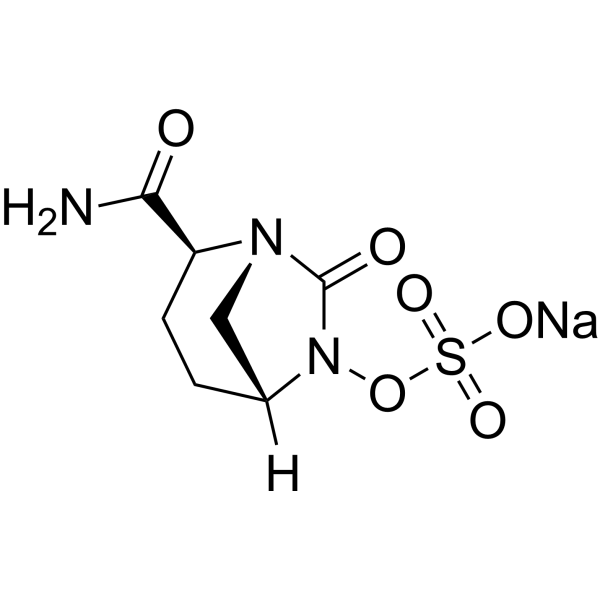
Avibactam sodium (NXL-104) is a covalent and reversible non-β-lactam β-lactamase inhibitor which inhibits β-lactamase TEM-1 and CTX-M-15 with IC50s of 8 nM and 5 nM, respectively .
|
-
-
- HY-16752
-
|
MK-7655
|
Beta-lactamase
Bacterial
|
Infection
|
|
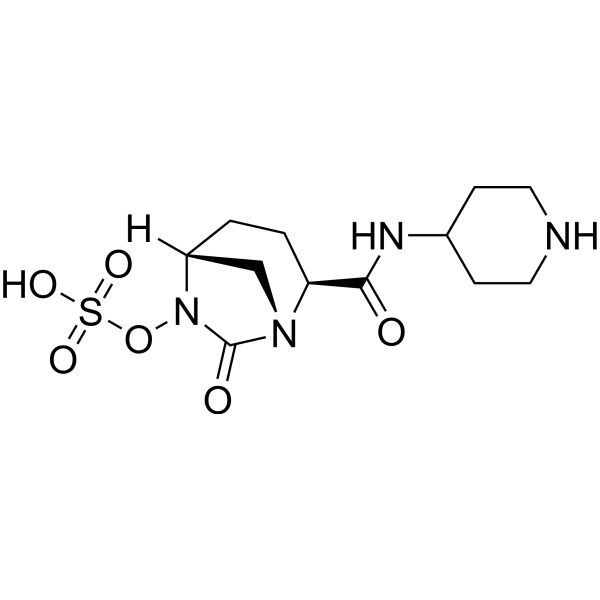
Relebactam is a diazabicyclooctane inhibitor with activity against a wide spectrum of β-lactamases, including class A (extended-spectrum β-lactamases and KPC) and class C (AmpC) enzymes. Relebactam shows antibacterial activity .
|
-
-
- HY-B0593
-
|
GR20263
|
Beta-lactamase
Bacterial
Antibiotic
|
Infection
Cancer
|
|
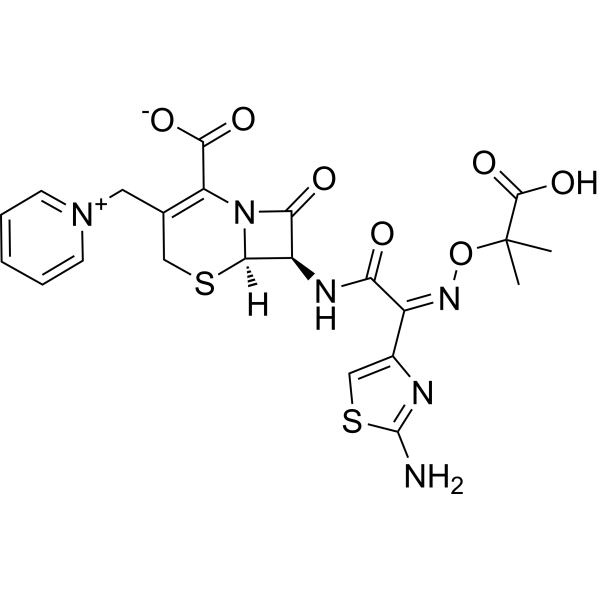
Ceftazidime (GR20263), an antibiotic, has a broad spectrum activity against Gram-positive and Gram-negative aerobic bacteria. Ceftazidime is also active against Enterobacteriaceae (including β-lactamase-positive strains) and is resistant to hydrolysis by most β-lactamases .
|
-
-
- HY-A0090
-
|
|
Bacterial
Antibiotic
|
Infection
|
|
Nitrofurantoin is a potent and orally active broad-spectrum beta-lactamase antimicrobial agent. Nitrofurantoin acts as an antibiotic and can be used for the study of urinary tract infections (UTIs), including cystitis and kidney infections .
|
-
-
- HY-108913
-
|
|
Beta-lactamase
Antibiotic
Bacterial
|
Infection
|
|
Nitrocefin is a highly activated, chromogenic cephalosporin derivative. Nitrocefin is a chromogenic β-lactamase substrate. Nitrocefin undergoes a distinctive color change from yellow to red as the amide bond in the β-lactam ring is hydrolyzed by β-lactamase. Nitrocefin is used in competitive inhibition studies in developmental work on β-lactamase-resistant antibiotics .
|
-
-
- HY-19930
-
-
-
- HY-136072
-
|
|
Bacterial
|
Infection
|
|
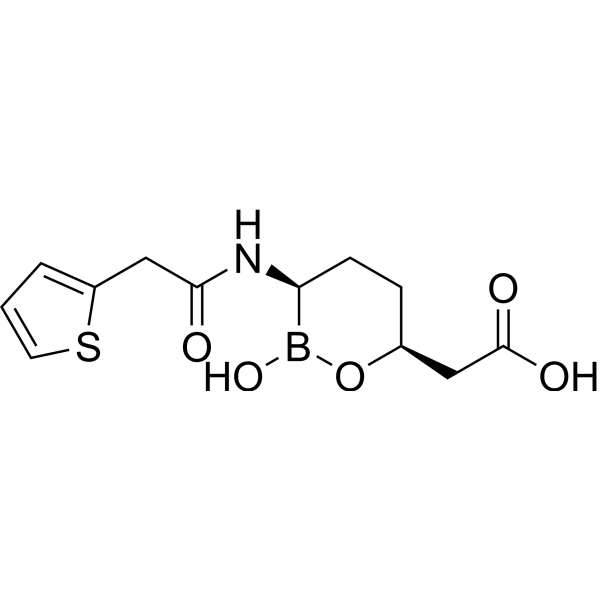
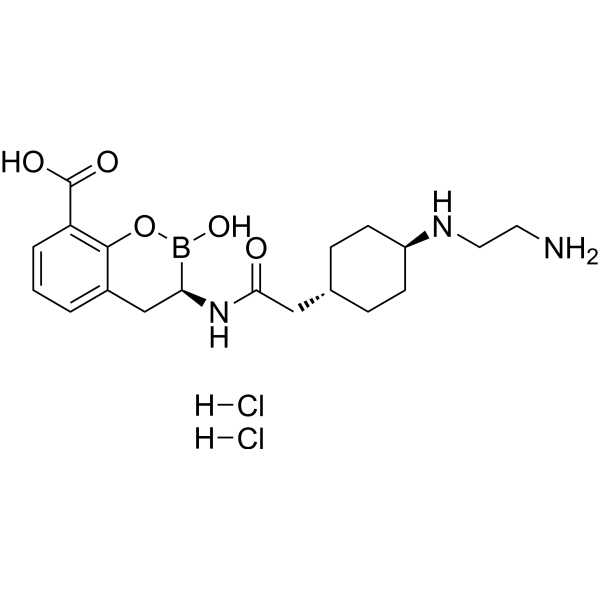
Xeruborbactam disodium is a potent, ultra-broad-spectrum boronic acid beta-lactamase inhibitor. Xeruborbactam disodium inhibits key serine and metallo beta-lactamases at a nano molar range .
|
-
-
- HY-A0256A
-
-
-
- HY-B0334
-
|
CP45899
|
Bacterial
Antibiotic
|
Infection
|
|
Sulbactam (CP45899) is a competitive, irreversible beta-lactamase inhibitor. Sulbactam shows antimicrobial activity against multidrug-resistant (MDR) acinetobacter calcoaceticus--Acinetobacter baumannii (Acb) complex .
|
-
-
- HY-B0593A
-
|
GR20263 pentahydrate
|
Beta-lactamase
Bacterial
Antibiotic
|
Infection
Cancer
|
|
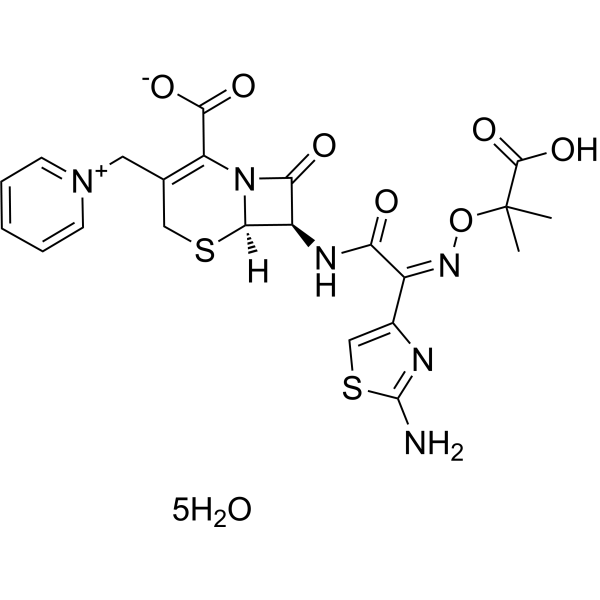
Ceftazidime (GR20263) pentahydrate , an antibiotic, has a broad spectrum activity against Gram-positive and Gram-negative aerobic bacteria. Ceftazidime pentahydrate is also active against Enterobacteriaceae (including β-lactamase-positive strains) and is resistant to hydrolysis by most β-lactamases .
|
-
-
- HY-A0256B
-
-
-
- HY-111521
-
|
Carbavance
|
Antibiotic
Bacterial
Beta-lactamase
|
Infection
|
|
Meropenem-vaborbactam (Carbavance) is a Carbapenem Antibiotic and Boronic acid-based beta-lactamase inhibitor, is a fixed-dose combination product with potent in vitro activity against Enterobacteriaceae that are Klebsiella pneumoniae carbapenemase producers. Meropenem-vaborbactam exhibits activity against Pseudomonas aeruginosa isolates , with an MIC50 of 0.5 μg/mL and an MIC90 of 8 μg/mL .
|
-
-
- HY-W009168
-
|
|
Bacterial
Antibiotic
|
Infection
Cancer
|
|
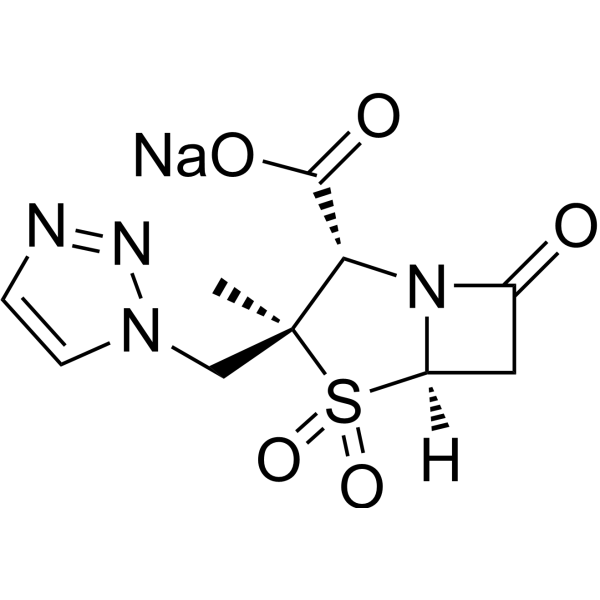
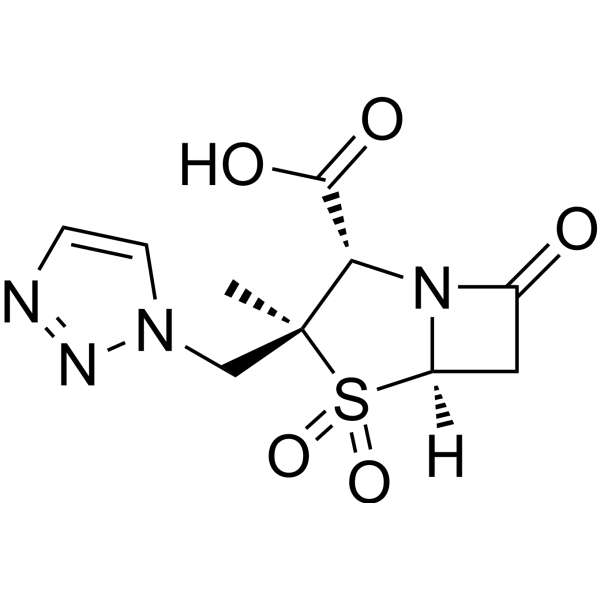
Tazobactam sodium is an antibiotic of the beta-lactamase inhibitor class. Ceftolozane combines with Tazobactam, extends the activity of ceftolozane against many ESBL-producing Enterobacteriaceae and some Bacteroides spp..
|
-
-
- HY-B0334A
-
|
CP45899 sodium
|
Bacterial
Antibiotic
|
Infection
|
|
Sulbactam (CP45899) sodium is a competitive, irreversible beta-lactamase inhibitor. Sulbactam sodium shows antimicrobial activity against multidrug-resistant (MDR) acinetobacter calcoaceticus--Acinetobacter baumannii (Acb) complex .
|
-
-
- HY-14879
-
|
NXL-104 free acid
|
Beta-lactamase
Bacterial
Antibiotic
|
Infection
|
|
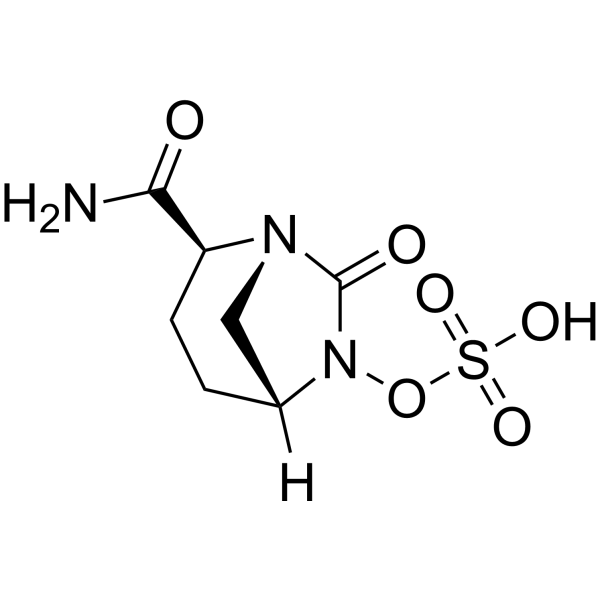
Avibactam (NXL-104) free acid is a covalent and reversible non-β-lactam β-lactamase inhibitor which inhibits β-lactamase TEM-1 and CTX-M-15 with IC50s of 8 nM and 5 nM, respectively .
|
-
-
- HY-147274
-
-
-
- HY-14879AR
-
|
NXL-104 (Standard)
|
Beta-lactamase
Reference Standards
Bacterial
Antibiotic
|
Infection
|
|
Avibactam (sodium) (Standard) is the analytical standard of Avibactam (sodium). This product is intended for research and analytical applications. Avibactam sodium (NXL-104) is a covalent and reversible non-β-lactam β-lactamase inhibitor which inhibits β-lactamase TEM-1 and CTX-M-15 with IC50s of 8 nM and 5 nM, respectively .
|
-
-
- HY-136069
-
|
|
Bacterial
|
Infection
|
|
Xeruborbactam is a potent, ultra-broad-spectrum boronic acid beta-lactamase inhibitor. Xeruborbactam inhibits key serine and metallo beta-lactamases at a nano molar range .
|
-
-
- HY-W654023
-
|
|
Isotope-Labeled Compounds
|
Others
|
|
Tazobactam- 15N3 sodium is the 15N labeled isotope of Tazobactam sodium (HY-W009168) . Tazobactam sodium is an antibiotic of the beta-lactamase inhibitor class.
|
-
-
- HY-142128
-
|
Cyclohexyl-hexyl-β-D-maltoside
|
Bacterial
|
Infection
|
|
Cymal-6 (Cyclohexyl-hexyl-β-D-maltoside) is a potent TEM-1 beta-lactamase inhibitor with an Ki value of 40.05 µM. Cymal-6 (Cyclohexyl-hexyl-β-D-maltoside) can be used as glycosidic surfactant .
|
-
-
- HY-14879B
-
|
NXL-104 hydrate
|
Beta-lactamase
Bacterial
Antibiotic
|
Infection
|
|
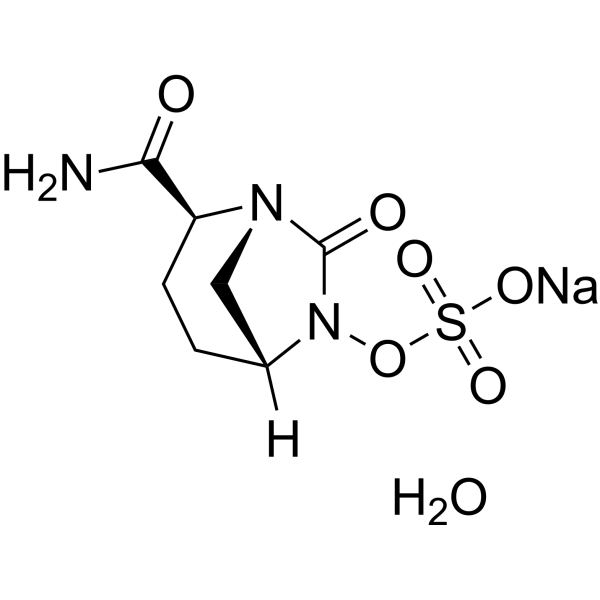
Avibactam sodium (NXL-104) hydrate is a covalent and reversible non-β-lactam β-lactamase inhibitor which inhibits β-lactamase TEM-1 and CTX-M-15 with IC50s of 8 nM and 5 nM, respectively .
|
-
-
- HY-B0593R
-
|
GR20263 (Standard)
|
Beta-lactamase
Reference Standards
Bacterial
Antibiotic
|
Infection
|
|
Ceftazidime (Standard) is the analytical standard of Ceftazidime. This product is intended for research and analytical applications. Ceftazidime (GR20263), an antibiotic, has a broad spectrum activity against Gram-positive and Gram-negative aerobic bacteria. Ceftazidime is also active against Enterobacteriaceae (including β-lactamase-positive strains) and is resistant to hydrolysis by most β-lactamases .
|
-
-
- HY-N7111
-
|
Sultamicillin (tosilate)
|
Bacterial
Antibiotic
|
Infection
|
|
Sultamicillin tosylate is a broad-spectrum and orally active beta-lactamase inhibitor, an antibiotic with antibacterial activity .
|
-
-
- HY-N7115
-
|
|
Bacterial
Antibiotic
|
Infection
|
|
Sultamicillin is a broad-spectrum and orally active beta-lactamase inhibitor, an antibiotic with antibacterial activity .
|
-
-
- HY-148790
-
|
FL058
|
Bacterial
Beta-lactamase
|
Infection
|
|
Pralurbactam (FL058) is a β-lactamase (Beta-lactamase) inhibitor. Pralurbactam enhances the antibacterial activity of Imipenem against Mycobacterium abscessus. Pralurbactam reduces the pulmonary bacterial load in neutropenic mice infected with Mycobacterium abscessus. Pralurbactam can be used in research related to infections caused by Mycobacterium abscessus complex, Escherichia coli, and Klebsiella pneumoniae .
|
-
-
- HY-A0090R
-
|
|
Reference Standards
Bacterial
Antibiotic
|
Infection
|
|
Nitrofurantoin (Standard) is the analytical standard of Nitrofurantoin. This product is intended for research and analytical applications. Nitrofurantoin is a potent and orally active broad-spectrum beta-lactamase antimicrobial agent. Nitrofurantoin acts as an antibiotic and can be used for the study of urinary tract infections (UTIs), including cystitis and kidney infections .
|
-
-
- HY-108062A
-
|
|
Beta-lactamase
Bacterial
|
Infection
|
|
BLI-489 hydrate, a penem β-lactamase inhibitor, is active against class A and class C as well as some class D β-lactamases. The combination of Piperacillin and BLI-489 hydrate is efficacious against murine infections caused by class A (including extended-spectrum β-lactamases), class C (AmpC), and class D β-lactamase-expressing pathogens .
|
-
-
- HY-136306
-
|
|
Beta-lactamase
Bacterial
|
Infection
|
|
Metallo-beta-lactamase ligand 1 is a class B β-lactamase inhibitor with antibacterial activity extracted from patent WO2019221122A1, compound A .
|
-
-
- HY-121694
-
|
|
Beta-lactamase
|
Infection
|
|
CENTA is a colorimetric cephalosporin substrate for β-lactamases. Upon hydrolysis by β-lacatamases, CENTA turns from light yellow to chrome yellow, which can be quantified by colorimetric detection at 405 nm as a measure of β-lactamase activity.
|
-
-
- HY-16752R
-
|
MK-7655 (Standard)
|
Beta-lactamase
Reference Standards
Bacterial
|
Infection
|
|
Relebactam (Standard) is the analytical standard of Relebactam. This product is intended for research and analytical applications. Relebactam is a diazabicyclooctane inhibitor with activity against a wide spectrum of β-lactamases, including class A (extended-spectrum β-lactamases and KPC) and class C (AmpC) enzymes. Relebactam shows antibacterial activity .
|
-
-
- HY-19050
-
-
-
- HY-125604
-
|
|
Beta-lactamase
Bacterial
|
Infection
Inflammation/Immunology
|
|
WCK-4234 is a diazabicyclooctane β-lactamase inhibitor and susceptibility restorer. WCK-4234 lacks direct antibacterial activity. WCK-4234 inhibits class A, C, D β-lactamases and extended-spectrum β-lactamases to potentiate Imipenem (HY-B1369A) and Meropenem (HY-13678) activity against Gram-negative pathogens. WCK-4234 can be used for the research of gram-negative bacterial infections and β-lactamase-mediated carbapenem-resistant bacterial infections .
|
-
-
- HY-119945A
-
-
-
- HY-A0035
-
|
|
Antibiotic
Bacterial
|
Infection
|
|
Faropenem is a potent and orally active beta-lactam antibiotic. Faropenem demonstrates broad-spectrum in vitro antimicrobial activity against many gram-positive and -negative aerobes and anaerobes. Faropenem is resistant to hydrolysis by nearly all beta-lactamases, including extended-spectrum beta-lactamases and AmpC beta-lactamases. Faropenem is developed as an oral proagent, faropenem medoxomil, for the research of respiratory tract infections .
|
-
-
- HY-B0334AS
-
|
|
Bacterial
Antibiotic
|
Infection
|
|
Sulbactam-d5 (sodium) is the deuterium labeled Sulbactam sodium. Sulbactam (CP45899) sodium is a competitive, irreversible beta-lactamase inhibitor. Sulbactam sodium shows antimicrobial activity against multidrug-resistant (MDR) acinetobacter calcoaceticus--Acinetobacter baumannii (Acb) complex .
|
-
-
- HY-B0334AR
-
|
CP45899 sodium (Standard)
|
Reference Standards
Bacterial
Antibiotic
|
Infection
|
|
Sulbactam (sodium) (Standard) is the analytical standard of Sulbactam (sodium). This product is intended for research and analytical applications. Sulbactam (CP45899) sodium is a competitive, irreversible beta-lactamase inhibitor. Sulbactam sodium shows antimicrobial activity against multidrug-resistant (MDR) acinetobacter calcoaceticus--Acinetobacter baumannii (Acb) complex .
|
-
-
- HY-A0090S
-
|
|
Isotope-Labeled Compounds
Antibiotic
Bacterial
|
Others
|
|
Nitrofurantoin- 13C3 is the 13C labeled Nitrofurantoin (HY-A0090) . Nitrofurantoin is a potent and orally active broad-spectrum beta-lactamase antimicrobial agent. Nitrofurantoin acts as an antibiotic and can be used for the study of urinary tract infections (UTIs), including cystitis and kidney infections .
|
-
-
- HY-144659
-
|
|
Beta-lactamase
Apoptosis
Bacterial
|
Infection
|
|
Metallo-β-lactamase-IN-5 (compound 5c) is a potent metallo-β-lactamases (MBL) inhibitor. Metallo-β-lactamase-IN-5 shows inhibitory activity against MBLs NDM-1 and VIM-1. Metallo-β-lactamase-IN-5 inhibits HUVECs with an IC50 of 45 μg/mL. Metallo-β-lactamase-IN-5 plus Imipenem exhibits synergistic antimicrobial activity .
|
-
-
- HY-19773
-
|
|
Beta-lactamase
Bacterial
|
Infection
|
|
β-Lactamase-IN-1 is an inhibitor of β-Lactamase extracted from patent WO2016027249A1, page 77. β-Lactamase-IN-1 can be used to prepare of tricyclic nitrogen containing compound. β-Lactamase-IN-1 can be used for the research of neisseria gonorrhea infection .
|
-
-
- HY-146637
-
|
|
Beta-lactamase
Bacterial
|
Infection
|
|
VIM-2-IN-1 (compound 1dj) is a β-lactamase inhibitor with antibacterial activities. VIM-2-IN-1 has moderate IC50 values of 23 µM, 48 µM and 231 µM for Verona integron-encoded metallo-β-lactamase (VIM-2), German imipenemase-1 (GIM-1) and New Delhi metallo-β-lactamase (NDM-1), respectively .
|
-
-
- HY-138247
-
|
EX-A4764; UUN51204
|
Beta-lactamase
Bacterial
Antibiotic
|
Infection
|
|
β-Lactamase-IN-2 is a beta-lactamase inhibitor, extracted from patent WO 2019075084 A1, compound 1. β-Lactamase-IN-2 has anti-microbial and anti-bacterial effects .
|
-
-
- HY-108062
-
|
|
Beta-lactamase
Bacterial
|
Infection
|
|
BLI-489 is a beta-lactamase inhibitor. BLI-489 combined with Piperacillin (HY-B1923) inhibits infection caused by class A (including ultra-broad spectrum β-lactamase), Class C (AmpC) and Class D β-lactamase expressing pathogens .
|
-
-
- HY-B0334AS1
-
|
CP45899-d2 sodium
|
Bacterial
Antibiotic
|
Infection
|
|
Sulbactam-d2 (sodium) is the deuterium labeled Sulbactam sodium . Sulbactam (CP45899) sodium is a competitive, irreversible beta-lactamase inhibitor. Sulbactam sodium shows antimicrobial activity against multidrug-resistant (MDR) acinetobacter calcoaceticus--Acinetobacter baumannii (Acb) complex .
|
-
-
- HY-B0334S
-
|
CP45899-d3
|
Isotope-Labeled Compounds
Antibiotic
Bacterial
|
Infection
|
|
Sulbactam-d3 (CP45899-d3) is deuterium labeled Sulbactam. Sulbactam (CP45899) is a competitive, irreversible beta-lactamase inhibitor. Sulbactam shows antimicrobial activity against multidrug-resistant (MDR) acinetobacter calcoaceticus--Acinetobacter baumannii (Acb) complex .
|
-
-
- HY-163338
-
|
|
Beta-lactamase
|
Infection
|
|
Metallo-β-lactamase-IN-13 (Compound 13i) is a pan Metallo-β-Lactamase inhibitor. Metallo-β-lactamase-IN-13 provides broader coverage of metallo-β-lactamases expressing Gram-negative (GN) bacteria. Metallo-β-lactamase-IN-13 has antibacterial activity against P. aeruginosa .
|
-
-
- HY-P2998
-
-
-
- HY-108913R
-
|
|
Beta-lactamase
Reference Standards
Antibiotic
|
Infection
|
|
Nitrocefin (Standard) is the analytical standard of Nitrocefin. This product is intended for research and analytical applications. Nitrocefin is a chromogenic β-lactamase substrate that undergoes a distinctive color change from yellow to red as the amide bond in the β-lactam ring is hydrolyzed by β-lactamase. Nitrocefin is used in competitive inhibition studies in developmental work on β-lactamase-resistant antibiotics .
|
-
-
- HY-14879E
-
|
NXL-104 sodium
|
Beta-lactamase
Bacterial
|
Infection
|
|
Ent-Avibactam (NXL-104) sodium is a β-lactamase inhibitor with broad-spectrum antibacterial activity. When combined with Cefazidime (HY-B0593), rel-Avibactam sodium exhibits significant inhibitory effects on Enterobacteriaceae bacteria that produce Ambler A and C types of β-lactamases. The IC50 value of rel-Avibactam sodium is much lower than that of commonly used β-lactamase inhibitors Clavulanic acid (HY-A0256) and Ticarcillin (HY-139805), demonstrating its high efficiency in inhibiting TEM-1 and P99 enzymes .
|
-
-
- HY-121195
-
|
PC-904
|
Bacterial
|
Infection
|
|
Apalcillin (PC-904) in combination with Ro 48-1220, a penam sulfone β-lactamase inhibitor, demonstrated broad-spectrum activity against gram-negative aerobic and anaerobic bacteria, excluding Klebsiella oxytoca. It exhibited potent activity against β-lactamase-producing Moraxella catarrhalis, Haemophilus influenzae, and Neisseria gonorrhoeae, with effective MICs (11 μg/mL). The combination also inhibited Pseudomonas aeruginosa, Stenotrophomonas maltophilia, and Acinetobacter species at low MICs (0.25 to 4 μg/mL). However, its efficacy against oxacillin-resistant staphylococci and certain gram-positive organisms was limited. Apalcillin/Ro 48-1220 showed comparable efficacy to piperacillin/tazobactam against some extended-spectrum β-lactamase-producing Escherichia coli but was less effective against SHV-type β-lactamases .
|
-
-
- HY-14879BR
-
|
NXL-104 hydrate (Standard)
|
Beta-lactamase
Reference Standards
Bacterial
Antibiotic
|
Infection
|
|
Avibactam (sodium hydrate) (Standard) is the analytical standard of Avibactam (sodium hydrate). This product is intended for research and analytical applications. Avibactam sodium (NXL-104) hydrate is a covalent and reversible non-β-lactam β-lactamase inhibitor which inhibits β-lactamase TEM-1 and CTX-M-15 with IC50s of 8 nM and 5 nM, respectively[1].
|
-
- HY-139699
-
-
- HY-W588257
-
-
- HY-106791
-
|
|
Antibiotic
Bacterial
|
Infection
|
|
CGP 31608 is a semisynthetic penem derivative with antibacterial activity. CGP 31608 is resistant to many important beta-lactamases (including the mutationally derepressed chromosomal enzymes). CGP 31608 can be used for the research of infection .
|
-
- HY-105470
-
|
|
Bacterial
|
Infection
|
|
BMY-28271 is an orally active cephalosporin. BMY-28271 has a widely expanded spectrum with high activity against gram-positive and gram-negative bacteria. BMY-28271 is a poor substrate for various beta-lactamases. BMY-28271 can be used for the research of infection .
|
-
- HY-172243
-
-
- HY-19647
-
|
FCE 22891; RIPM-AC; Ritipenem acetoxymethyl ester
|
Beta-lactamase
Antibiotic
Bacterial
|
Infection
|
|
Ritipenem acoxil (FCE 22891; RIPM-AC) is an oral active beta-lactamase antibiotic and can be used for study of bacterial pneumonia .
|
-
- HY-N7111R
-
|
Sultamicillin (tosilate) (Standard)
|
Reference Standards
Bacterial
Antibiotic
|
Infection
|
|
Sultamicillin (tosylate) (Standard) is the analytical standard of Sultamicillin (tosylate). This product is intended for research and analytical applications. Sultamicillin tosylate is a broad-spectrum and orally active beta-lactamase inhibitor, an antibiotic with antibacterial activity .
|
-
- HY-N7115R
-
|
|
Reference Standards
Bacterial
Antibiotic
|
Infection
|
|
Sultamicillin (Standard) is the analytical standard of Sultamicillin. This product is intended for research and analytical applications. Sultamicillin is a broad-spectrum and orally active beta-lactamase inhibitor, an antibiotic with antibacterial activity .
|
-
- HY-116571
-
|
|
Antibiotic
Bacterial
|
Infection
|
|
RU44790 is a monocyclic beta-lactam antibiotic that exerts potent activity against gram-negative bacteria and is highly resistant to hydrolysis by various beta-lactamases. RU44790 can be utilized in anti-bacteria research .
|
-
- HY-B0334R
-
|
CP45899 (Standard)
|
Reference Standards
Bacterial
Antibiotic
|
Infection
|
|
Sulbactam (Standard) is the analytical standard of Sulbactam. This product is intended for research and analytical applications. Sulbactam (CP45899) is a competitive, irreversible beta-lactamase inhibitor. Sulbactam shows antimicrobial activity against multidrug-resistant (MDR) acinetobacter calcoaceticus--Acinetobacter baumannii (Acb) complex .
|
-
- HY-128049
-
|
|
Beta-lactamase
|
Infection
|
|
ML121 is a selective and potent VIM-2 inhibitor with an IC50 of 54 nM and a Ki of 148 nM. ML121 shows inactive in IMP-1 and TEM-1 beta-lactamase assays. ML121 can potentiate the antibiotic activity of Imipenem (HY-B1369A) in VIM-2 transformed E.coli .
|
-
- HY-115872
-
-
- HY-163339
-
|
|
Beta-lactamase
|
Infection
|
|
Metallo-β-lactamase-IN-14 (Compound 17e) is a Metallo-β-Lactamase inhibitor. Metallo-β-lactamase-IN-14 shows inhibition activity against VIM-1 and VIM-2. Metallo-β-lactamase-IN-14 has antibacterial activity against Gram-negative (GN) bacteria and P. aeruginosa .
|
-
- HY-139751
-
|
|
Beta-lactamase
Bacterial
|
Infection
|
|
β-Lactamase-IN-4 is a β-lactamase inhibitor extracted from patent WO2013149121A1, compound 708. β-Lactamase-IN-4 can be used for the research of bacterial infections .
|
-
- HY-146075
-
|
|
Beta-lactamase
Bacterial
|
Infection
|
|
β-Lactamase-IN-8 (compound 20) is a potent and oral bioavailable broad-spectrum cyclic boronate β-lactamase inhibitor. β-Lactamase-IN-8 can be used for researching antibacteria .
|
-
- HY-139779
-
|
|
Beta-lactamase
Bacterial
|
Infection
|
|
β-Lactamase-IN-5 is a β-lactamase inhibitor extracted from patent WO2013149121A1, compound 720. β-Lactamase-IN-5 can be used for the research of bacterial infections .
|
-
- HY-168500
-
|
|
Beta-lactamase
Bacterial
|
Infection
|
|
Metallo-β-lactamase-IN-16 (compound 18) is a sulfone containing metallo-β-lactamase inhibitor with an anti-bacterial activity. Metallo-β-lactamase-IN-16 inhibits NDM-1 (New Dehli metallo-β-lactamase-1), IMP-1 (imipenemase-1), VIM-1 (Verona integron-encoded metallo-β-lactamase), and VIM-2 with IC50 values of 0.16 nM, 0.23 nM, 0.31 nM and 1.0 nM, respectively .
|
-
- HY-144261
-
|
|
Beta-lactamase
Bacterial
|
Infection
|
|
Metallo-β-lactamase-IN-3 (compound 35) is a potent metallo-β-lactamases (MBL) inhibitor. Metallo-β-lactamase-IN-3 shows high activity against VIM-1 and NDM-1, with IC50 of 0.6 and 1.0 μM, respectively. Metallo-β-lactamase-IN-3 does not show inhibition of IMP-7 .
|
-
- HY-155504
-
|
|
Beta-lactamase
Bacterial
|
Infection
|
|
Metallo-β-lactamase-IN-11 (compound 5f) is a Metallo-β-lactamases (MBLs) inhibitor, potent against bacterial metallophyllactamase CphA (IC50=45 µM). Metallo-β-lactamase-IN-11 (10 µM) inhibits NDM-1 by 49% and AIM-1 by 61%. Metallo-β-lactamase-IN-11 can be used in the research of inhibiting antibiotic resistance .
|
-
- HY-161094
-
|
|
Beta-lactamase
Bacterial
|
Infection
|
|
Metallo-β-lactamase-IN-12 is a dual inhibitor of metal β-lactamases (MβLs (NDM-1, IMP-1)) and serine β-lactamases (SβLs (OXA-48, KPC-2)), with IC50 values of 0.64 μM, 1.32 μM, 1.01 μM, and 0.57 μM, respectively. Metallo-β-lactamase-IN-12 has antibacterial activity .
|
-
- HY-158977
-
|
|
Beta-lactamase
Bacterial
|
Infection
|
|
β-Lactamase-IN-9 (compound 2) is a β-lactamase inhibitor that can restore the sensitivity of pathogens to β-lactam antibiotics .
|
-
- HY-144100
-
|
|
Beta-lactamase
Bacterial
|
Infection
|
|
β-Lactamase-IN-7 (compound 14) is a potent VIM-Type metallo-β-lactamase inhibitor, with Kis of 1.26 μM and 0.54 μM for VIM-1 and VIM-4, respectively. β-Lactamase-IN-7 can effectively inhibit Klebsiella pneumoniae .
|
-
- HY-N15020
-
|
|
Beta-lactamase
|
Infection
|
|
Izumenolide is found in the strain of Micromonospora chalcea subsp. izumensis. Izumenolide inhibited some β-lactamases, and the IC50 concentration of TEM-2 β-lactamase was 0.01 μg/mL .
|
-
- HY-N13977
-
|
|
Beta-lactamase
Bacterial
|
Infection
|
|
Carpetimycin A has very strong activity against Gram-positive and negative bacteria (including β-lactamase producing bacteria). Carpetimycin A has a strong inhibitory effect on β-lactamase .
|
-
- HY-N13980
-
|
|
Beta-lactamase
Bacterial
|
Infection
|
|
Carpetimycin D has very strong activity against Gram-positive and negative bacteria (including β-lactamase producing bacteria). Carpetimycin D has a strong inhibitory effect on β-lactamase .
|
-
- HY-N13978
-
|
|
Beta-lactamase
Bacterial
|
Infection
|
|
Carpetimycin B has very strong activity against Gram-positive and negative bacteria (including β-lactamase producing bacteria). Carpetimycin B has a strong inhibitory effect on β-lactamase .
|
-
- HY-N13979
-
|
|
Beta-lactamase
Bacterial
|
Infection
|
|
Carpetimycin C has very strong activity against Gram-positive and negative bacteria (including β-lactamase producing bacteria). Carpetimycin C has a strong inhibitory effect on β-lactamase .
|
-
- HY-143415
-
|
|
Beta-lactamase
Bacterial
|
Infection
|
|
Metallo-β-lactamase-IN-7 is a potent VIM-Type metallo-β-lactamase inhibitor with IC50s of 0.019 μM, 13.64 μM, 0.38 μM for VIM-2, VIM-1 and VIM-5. Metallo-β-lactamase-IN-7 potentiate antibacterial activity of Meropenem against the Gram-negative bacterial strains .
|
-
- HY-146165
-
|
|
Beta-lactamase
Bacterial
|
Infection
|
|
Metallo-β-lactamase-IN-8 (compound 17) is a potent, reversible and competitive broad-spectrum inhibitor of metallo-β-lactamases (MβLs), with IC50s of 1.3 μM, 5.7 μM, 9.8 μM, and 9.9 μM for L1, ImiS, IMP-1 and VIM-2, respectively. Metallo-β-lactamase-IN-8 exhibits antibacterial activity .
|
-
- HY-152105
-
|
|
Beta-lactamase
Bacterial
|
Infection
|
|
Metallo-β-lactamase-IN-9 (Compound 23) is a pan metallo-beta-lactamase (MBL) inhibitor with IC50s of 35, 269 and 369 nM against NDM-1, VIM-1 and IMP-1, respectively .
|
-
- HY-14879C
-
|
NXL-104 dihydrate
|
Beta-lactamase
Bacterial
Antibiotic
|
Infection
|
|
Avibactam sodium (NXL-104) dihydrate is a covalent and reversible non-β-lactam β-lactamase inhibitor which inhibits β-lactamase TEM-1 and CTX-M-15 with IC50s of 8 nM and 5 nM, respectively .
|
-
- HY-N14182
-
-
- HY-144259
-
|
|
Beta-lactamase
Bacterial
|
Infection
|
|
Metallo-β-lactamase-IN-4 (compound 40) is a potent metallo-β-lactamases (MBL) inhibitor, with IC50 values of 0.1 μM (VIM-1), 1.3 μM (NDM-1), and 5.0 μM (IMP-7), respectively .
|
-
- HY-144262
-
|
|
Beta-lactamase
Bacterial
|
Infection
|
|
Metallo-β-lactamase-IN-4 (compound 40) is a potent metallo-β-lactamases (MBL) inhibitor, with IC50 values of 0.5 μM (VIM-1), 2.1 μM (NDM-1), and 3.3 μM (IMP-7), respectively .
|
-
- HY-143414
-
|
|
Beta-lactamase
Bacterial
|
Infection
|
|
Metallo-β-lactamase-IN-6 is a potent VIM-Type metallo-β-lactamase inhibitor with IC50s of 0.56 μM, 29.50 μM and 5.78 μM for VIM-2, VIM-1 and VIM-5. Metallo-β-lactamase-IN-6 displays potent synergistic antibacterial activity with Meropenem against engineered Escherichia coli strains and intractable clinically isolated Pseudomonas aeruginosa producing VIM-2 MBL .
|
-
- HY-169973
-
|
|
Beta-lactamase
Bacterial
|
Infection
|
|
PhoPS is the photocaged inhibitor for β-lactamase. PhoPS is activated upon light irradiation, and active β-lactamase inhibitor Sulbactam (HY-B0334) is released. PhoPS inhibits the synthesis of bacterial cell wall and the formation of E. coli biofilm, exhibits antimicrobial activity .
|
-
- HY-N14185
-
-
- HY-N14183
-
-
- HY-16752A
-
|
MK-7655 sodium
|
Beta-lactamase
Bacterial
|
Infection
|
|
Relebactam sodium (MK-7655 sodium) is a potent and selective β-lactamase inhibitor with the activity of delaying the development of bacterial resistance to antibiotics. Relebactam sodium can bind to a variety of β-lactamases, thereby improving the efficacy of β-lactam antibiotics. Relebactam sodium shows good application potential in inhibiting complicated bacterial infections .
|
-
- HY-16752S1
-
|
MK-7655-d9
|
Isotope-Labeled Compounds
Bacterial
Beta-lactamase
|
Infection
|
|
Relebactam-d9 (MK-7655-d9) is deuterium labeled Relebactam. Relebactam is a diazabicyclooctane inhibitor with activity against a wide spectrum of β-lactamases, including class A (extended-spectrum β-lactamases and KPC) and class C (AmpC) enzymes. Relebactam shows antibacterial activity .
|
-
- HY-14879D
-
|
AVE1330A
|
Beta-lactamase
Bacterial
|
Infection
|
|
Ent-Avibactam sodium (AVE1330A) is a β-lactamase inhibitor with broad-spectrum antibacterial activity. When combined with Cefazidime (HY-B0593), ent-Avibactam sodium exhibits significant inhibitory effects on Enterobacteriaceae bacteria that produce Ambler A and C types of β-lactamases. The IC50 value of ent-Avibactam sodium is much lower than that of commonly used β-lactamase inhibitors Clavulanic acid (HY-A0256) and Ticarcillin (HY-139805), demonstrating its high efficiency in inhibiting TEM-1 and P99 enzymes .
|
-
- HY-119945
-
-
- HY-105560
-
|
|
Bacterial
Beta-lactamase
|
Infection
|
|
Cefcanel is an orally active cephalosporin and antibacterial agent. Cefcanel inhibits growth of methicillin-susceptible Staphylococcus aureus, methicillin-susceptible Staphylococcus epidermidis, Haemophilus influenzae, Moraxella catarrhalis. Cefcanel acts as a substrate hydrolyzed by TEM-1, TEM-3, and Moraxella Bro-1 beta-lactamases .
|
-
- HY-108062R
-
|
|
Reference Standards
Beta-lactamase
Bacterial
|
Infection
|
|
BLI-489 (Standard) is the analytical standard of BLI-489 (HY-108062). This product is intended for research and analytical applications. BLI-489 is a beta-lactamase inhibitor. BLI-489 combined with Piperacillin (HY-B1923) inhibits infection caused by class A (including ultra-broad spectrum β-lactamase), Class C (AmpC) and Class D β-lactamase expressing pathogens .
|
-
- HY-178975
-
|
|
Beta-lactamase
Bacterial
|
Infection
|
|
β-Lactamase-IN-10 (Compound CB1) is a dual-metal β-lactamase (MLB) and serine β-lactamase (SLB) inhibitor. β-Lactamase-IN-10 exhibits antibacterial (antibacterial) activity against various drug-resistant bacteria. β-Lactamase-IN-10 can be used in the research of Gram-negative superbug infections .
|
-
- HY-185351
-
|
Ampicillin/Sulbactam combination
|
Bacterial
Antibiotic
|
Infection
|
|
Ampicillin sodium and Sulbactam sodium are formed by mixing HY-B0522A Ampicillin sodium with HY-B0334A Sulbactam sodium (each 1.5 g of this product contains 1 g amoxicillin sodium and 0.5 g sulbactam sodium). Ampicillin is a β-lactam antimicrobial, whereas sulbactam is a β-lactamase inhibitor. Ampicillin has a broad spectrum of bactericidal activity against many gram-positive and gram-negative aerobic and anaerobic bacteria. However, ampicillin is degraded by beta-lactamases. The combination of ampicillin and sulbactam demonstrates synergy in addressing bacterial strains resistant to ampicillin, thus providing broader coverage. Bacteria susceptible to ampicillin/sulbactam include Haemophilus influenzae, Escherichia coli, Acinetobacter, Klebsiella, Staphylococcus aureus, Enterobacter, and anaerobes.
|
-
- HY-180116
-
|
|
Beta-lactamase
Bacterial
|
Infection
|
|
β-Lactamase-IN-11 is a β-Lactamase Inhibitor with an IC50 of 30.37 μM. β-Lactamase-IN-11 exhibits significant antibacterial activity against Staphylococcus aureus and Pseudomonas aeruginosa, demonstrating potential for combating various drug-resistant bacteria. β-Lactamase-IN-11 can be used for studying infections caused by enzyme-producing drug-resistant bacteria .
|
-
- HY-125604A
-
|
|
Beta-lactamase
Bacterial
|
Infection
Inflammation/Immunology
|
|
WCK-4234 free base is a diazabicyclooctane β-lactamase inhibitor and susceptibility restorer. WCK-4234 free base lacks direct antibacterial activity. WCK-4234 free base inhibits class A, C, D β-lactamases and extended-spectrum β-lactamases to potentiate Imipenem (HY-B1369A) and Meropenem (HY-13678) activity against Gram-negative pathogens. WCK-4234 free base can be used for the research of gram-negative bacterial infections and β-lactamase-mediated carbapenem-resistant bacterial infections .
|
-
- HY-19127
-
|
|
Bacterial
|
Infection
|
|
FK-518 is a potent AmpC β-lactamase inhibitor. FK-518 demonstrates strong antimicrobial activity against P. aeruginosa strains overexpressing AmpC β-lactamase. FK-518 is promising for research of P. aeruginosa infections .
|
-
- HY-111034
-
|
|
Antibiotic
Bacterial
|
Infection
|
|
CGP 31523A is a broad-spectrum aminothiazole cephalosporin. CGP 31523A exhibits potent inhibitory effects on Enterobacteriaceae, Neisseria, Haemophilus influenzae, and Streptococcus (except Enterococcus faecalis), among others. CGP 31523A can be hydrolyzed by the common Escherichia coli type Ic β-lactamase, but is stable against the Ia type enzyme. CGP 31523A is neither an effective β-lactamase inhibitor nor does it induce the production of β-lactamase. CGP 31523A can be used for studying infections caused by Gram-negative bacteria (including drug-resistant strains) .
|
-
- HY-147349
-
|
ANT3310 sodium
|
Beta-lactamase
Bacterial
|
Infection
|
|
Pilabactam (ANT3310) sodium is a broad-spectrum covalent Serine β-Lactamase inhibitor, with IC50 values ranging from 1 nM to 175 nM (a panel of Serine β-Lactamase). Pilabactam sodium potentiates activity of β-lactam antibiotics against Carbapenem-Resistant Enterobacterales (CRE) and Acinetobacter baumannii (CRAB). Pilabactam sodium can be used in the research of bacterial infection .
|
-
- HY-147349A
-
|
ANT3310
|
Bacterial
Beta-lactamase
|
Infection
|
|
Pilabactam (ANT3310) is a broad-spectrum covalent Serine β-Lactamase inhibitor, with IC50 values ranging from 1 nM to 175 nM (a panel of Serine β-Lactamase). Pilabactam potentiates activity of β-lactam antibiotics against Carbapenem-Resistant Enterobacterales (CRE) and Acinetobacter baumannii (CRAB). Pilabactam can be used in the research of bacterial infection .
|
-
- HY-Z14061
-
-
- HY-B0555A
-
|
|
Beta-lactamase
Bacterial
Antibiotic
|
Infection
|
|
Nafcillin sodium monohydrate, an antibiotic, is a reversible inhibitor of β-lactamase. Nafcillin sodium monohydrate can be used for the research of staphylococcal infections .
|
-
- HY-B0555B
-
-
- HY-109008
-
|
OP0595 free acid
|
Beta-lactamase
Bacterial
|
Infection
|
|
Nacubactam (OP0595 free acid) is a potent non-β-lactam-β-lactamase inhibitor with activity against class A and C β-lactamases. Nacubactam acts as a penicillin binding protein (PBP) 2-active antibacterial, and gives β-lactamase-independent potentiation of β-lactams targeting other PBPs. Nacubactam potentiates the antimicrobial activities of Piperacillin (HY-B1923), Cefepime (HY-B0692), and Meropenem (HY-13678) against CTX-M-15-positive Escherichia coli and KPC-positive Klebsiella pneumoniae .
|
-
- HY-14879S2
-
|
NXL-104-13C5
|
Isotope-Labeled Compounds
Antibiotic
Beta-lactamase
Bacterial
|
Infection
|
|
Avibactam sodium salt- 13C5 (NXL-104- 13C5) is 13C labeled Avibactam (sodium). Avibactam sodium (NXL-104) is a covalent and reversible non-β-lactam β-lactamase inhibitor which inhibits β-lactamase TEM-1 and CTX-M-15 with IC50s of 8 nM and 5 nM, respectively .
|
-
- HY-14879R
-
|
NXL-104 free acid (Standard)
|
Beta-lactamase
Reference Standards
Bacterial
Antibiotic
|
Infection
|
|
Avibactam (free acid) (Standard) is the analytical standard of Avibactam (free acid). This product is intended for research and analytical applications. Avibactam (NXL-104) free acid is a covalent and reversible non-β-lactam β-lactamase inhibitor which inhibits β-lactamase TEM-1 and CTX-M-15 with IC50s of 8 nM and 5 nM, respectively[1].
|
-
- HY-B0593AR
-
|
GR20263 pentahydrate (Standard)
|
Beta-lactamase
Reference Standards
Bacterial
Antibiotic
|
Infection
Cancer
|
|
Ceftazidime (pentahydrate) (Standard) is the analytical standard of Ceftazidime (pentahydrate). This product is intended for research and analytical applications. Ceftazidime (GR20263) pentahydrate , an antibiotic, has a broad spectrum activity against Gram-positive and Gram-negative aerobic bacteria. Ceftazidime pentahydrate is also active against Enterobacteriaceae (including β-lactamase-positive strains) and is resistant to hydrolysis by most β-lactamases .
|
-
- HY-155202
-
-
- HY-B1128
-
|
Cephamandole
|
Antibiotic
Bacterial
|
Infection
|
|
Cefamandole (Cephamandole) is a semi-synthetic second-generation cephalosporin antibiotic with broad-spectrum antimicrobial activity. Cefamandole is resistant to hydrolysis by β-lactamases produced by some Gram-negative bacteria. Cefamandole kills Gram-positive cocci and various Gram-negative bacilli mainly by inhibiting cell wall synthesis, but it is inactive against Pseudomonas, Proteus vulgaris and Providencia stuartii, and its efficacy is affected by inoculum size. The plasma elimination half-life of Cefamandole in rats is only 0.4 h, it is mainly excreted in urine in biologically active form, and it hardly penetrates the non-inflamed blood-brain barrier. Cefamandole is widely used in studies related to bacterial infections .
|
-
- HY-B1128A
-
|
Cephamandole sodium
|
Antibiotic
Bacterial
|
Infection
|
|
Cefamandole (Cephamandole) sodium is a semi-synthetic second-generation cephalosporin antibiotic with broad-spectrum antimicrobial activity. Cefamandole sodium is resistant to hydrolysis by β-lactamases produced by some Gram-negative bacteria. Cefamandole sodium kills Gram-positive cocci and various Gram-negative bacilli mainly by inhibiting cell wall synthesis, but it is inactive against Pseudomonas, Proteus vulgaris and Providencia stuartii, and its efficacy is affected by inoculum size. The plasma elimination half-life of Cefamandole sodium in rats is only 0.4 h, it is mainly excreted in urine in biologically active form, and it hardly penetrates the non-inflamed blood-brain barrier. Cefamandole sodium is widely used in studies related to bacterial infections .
|
-
- HY-139744
-
-
- HY-119236
-
|
CP-734432
|
Prostaglandin Receptor
Beta-lactamase
|
Neurological Disease
|
|
CP-432 (CP-734432) is a EP4 receptor agonist with an IC50 of 2 nM for human sources, 8 nM for canine sources, and an EC50 of 1 nM for human sources. CP-432 stimulates cAMP production and activates β-lactamase (β-lactamase) activity via the cAMP response element signaling pathway. CP-432 is applicable to research related to glaucoma .
|
-
- HY-103095
-
|
AAI101
|
Beta-lactamase
Bacterial
|
Infection
|
|
Enmetazobactam (AAI101) is an extended-spectrum β-lactamase inhibitor, against many resistant Gram-negative pathogens .
|
-
- HY-160255
-
|
Cbz-cysteine
|
Beta-lactamase
|
Infection
|
|
N-Cbz-L-Cysteine (Cbz-cysteine) (compound 5) is a potent β-lactamase II inhibitor with a Ki value of 97 µM .
|
-
- HY-136070
-
-
- HY-136071
-
|
|
Beta-lactamase
Bacterial
|
Infection
|
|
Xeruborbactam methoxy acetoxy methy ester is a boronic acid β-lactamase inhibitor, exacted from WO2018005662A1, compound 43 .
|
-
- HY-132824
-
-
- HY-165460
-
|
|
Antibiotic
Beta-lactamase
Bacterial
Penicillin-binding protein (PBP)
|
Infection
|
|
AM-112 is a β-lactamase (β-lactamase) inhibitor and antibacterial agent, with IC50 values ranging from 0.0002 μg/mL to 0.67 μg/mL against class A, C, and D β-lactamase. By inhibiting PBP2, the penicillin-binding protein of E. coli, and protecting Ceftazidime (HY-B0593) from enzymatic hydrolysis, AM-112 significantly enhances the antibacterial efficacy of Ceftazidime against Gram-negative bacteria, enterococci, and staphylococci. AM-112 exhibits favorable pharmacokinetic properties and acid-base stability. AM-112 can be used for the research of bacterial infections .
|
-
- HY-B0593S
-
|
GR20263-d5
|
Isotope-Labeled Compounds
Antibiotic
Beta-lactamase
Bacterial
|
Infection
Cancer
|
|
Ceftazidime-d5 (GR20263-d5) is the deuterium labeled Ceftazidime (HY-B0593). Ceftazidime (GR20263), an antibiotic, has a broad spectrum activity against Gram-positive and Gram-negative aerobic bacteria. Ceftazidime is also active against Enterobacteriaceae (including β-lactamase-positive strains) and is resistant to hydrolysis by most β-lactamases .
|
-
- HY-132823
-
|
VNRX-5236
|
Beta-lactamase
Bacterial
|
Infection
|
|
Iedaborbactam (VNRX-5236), as a β-lactamase inhibitor (WO2015191907, Example 62), can be used for the research of bacterial infections .
|
-
- HY-129042
-
-
- HY-154438
-
-
- HY-103095A
-
|
AAI101 iodide
|
Bacterial
Antibiotic
|
Others
|
|
Enmetazobactam (iodide) (AAI101 (iodide)) is an extended-spectrum β-lactamase inhibitor, against many resistant Gram-negative pathogens .
|
-
- HY-P2998B
-
|
|
Beta-lactamase
|
Infection
|
|
β-Lactamase Blend (EC 3.5.2.6) inactivates β-lactam antibiotics by breaking open the β-lactam ring.
|
-
- HY-109008R
-
|
OP0595 free acid (Standard)
|
Beta-lactamase
Reference Standards
Bacterial
|
Infection
|
|
Nacubactam (Standard) is the analytical standard of Nacubactam (HY-109008). This product is intended for research and analytical applications. Nacubactam (OP0595 free acid) is a potent non-β-lactam-β-lactamase inhibitor with activity against class A and C β-lactamases. Nacubactam acts as a penicillin binding protein (PBP) 2-active antibacterial, and gives β-lactamase-independent potentiation of β-lactams targeting other PBPs. Nacubactam potentiates the antimicrobial activities of Piperacillin (HY-B1923), Cefepime (HY-B0692), and Meropenem (HY-13678) against CTX-M-15-positive Escherichia coli and KPC-positive Klebsiella pneumoniae .
|
-
- HY-162174
-
|
|
Beta-lactamase
Bacterial
|
Infection
|
|
MBL-IN-2 ((2R, 2R')-5αC) is an inhibitor of Metallo-β-lactamase (MBL) that can inhibit New Delhi Metallo-β-lactamase-1 (NDM-1) with an IC50 of 0.3 μM. MBL-IN-2 ((2R, 2R')-5αC) can be used for the study of resistance to β-lactam antibiotics .
|
-
- HY-120235
-
|
|
Beta-lactamase
Bacterial
|
Infection
|
|
CB-618 is a β-lactamase inhibitor. CB-618 reversibly covalently inhibits Ambler class A, C, and some class D serine β-lactamases. CB-618 has weak antibacterial activity as a single agent, but it significantly enhances the antibacterial activity of Meropenem (HY-13678) against enzyme-producing Enterobacteriaceae. CB-618 can be used in research on drug-resistant bacteria .
|
-
- HY-160255A
-
|
Cbz-D-Cys
|
Beta-lactamase
|
Infection
|
|
N-Cbz-D-Cysteine (Cbz-D-Cys) (compound 5) is a potent β-lactamase II inhibitor with a Ki value of 20.1 µM .
|
-
- HY-117951
-
|
|
Beta-lactamase
|
Infection
|
|
ANT431 is a metallo-β-lactamase inhibitor that also restores the effectiveness of Meropenem (HY-13678) in a mouse thigh Escherichia coli infection model .
|
-
- HY-P2998A
-
|
|
Beta-lactamase
|
Infection
|
|
β-Lactamase, Pseudomonas aeruginosa (EC 3.5.2.6) inactivates β-lactam antibiotics by breaking open the β-lactam ring.
|
-
- HY-W151758
-
|
|
Beta-lactamase
|
Others
|
|
2'-Hydroxybiphenyl-3-carboxylic acid is a β-lactamase oxa-48 inhibitor (IC50 = 50 µM; Kd = 1750 µM) .
|
-
- HY-A0112
-
|
|
Antibiotic
Bacterial
|
Infection
|
|
Cefcapene is an orally active cephem antibiotic. Cefcapene inactivates chromosome-encoded class C β-lactamases. Cefcapene can be used for antibacterial research .
|
-
- HY-106922A
-
|
GV104326 sodium
|
Antibiotic
Bacterial
|
Infection
|
|
Sanfetrinem (GV104326) sodium is a beta-lactamase-stable antibiotic. Sanfetrinem sodium has broad-spectrum activity against gram-positive and gram-negative bacteria .
|
-
- HY-P2998C
-
-
- HY-B0555
-
|
|
Beta-lactamase
Antibiotic
Bacterial
|
Infection
|
|
Nafcillin, an antibiotic, is a reversible inhibitor of β-lactamase. Nafcillin exhibits bactericidal activity, and can be used for the research of staphylococcal infections .
|
-
- HY-178229
-
|
|
Antibiotic
Bacterial
Beta-lactamase
|
Infection
|
|
Piperacillin mixture with tazobactam (8:1) is a compound antibiotic consisting of Piperacillin (HY-B1923) and Tazobactam (HY-B1418), with a ratio of 8:1. Piperacillin mixture with tazobactam (8:1) is a β-lactam/β-lactamase inhibitor combination, with broad-spectrum antibacterial activity, capable of covering most Gram-positive bacteria, Gram-negative aerobic bacteria and anaerobic bacteria, including many pathogens that produce β-lactamase .
|
-
- HY-W856812
-
|
|
Drug Intermediate
|
Others
|
|
Penicillanic acid (sodium) is a key drug intermediate. Penicillanic acid (sodium) can be used to synthesize β-lactamase inhibitors and prodrugs. Penicillanic acid (sodium) derivative Mecillinam has antibacterial activity .
|
-
- HY-N14919
-
|
|
Beta-lactamase
Antibiotic
Bacterial
|
Infection
|
|
Olivanic acid is a β -lactam antibiotic. Olivanic acid has the effect of anti -Gram-positive bacteria and anti-Gram-negative bacteria. Olivanic acid inhibits β-lactamase .
|
-
- HY-B1418
-
Tazobactam
Maximum Cited Publications
18 Publications Verification
CL-298741; YTR-830H
|
Beta-lactamase
Antibiotic
Bacterial
|
Infection
Cancer
|
|
Tazobactam (CL-298741) is a potent β-lactamases inhibitor and penicillin antibiotic. Tazobactam has antibacterial activity. Tazobactam can be used for pneumonia research .
|
-
- HY-106922
-
|
GV104326
|
Antibiotic
Bacterial
|
Infection
|
|
Sanfetrinem (GV104326) is a β-lactamase-stable antibiotic. Sanfetrinem has broad-spectrum antimicrobial activity against both Gram-positive and Gram-negative bacteria .
|
-
- HY-N14693
-
|
|
Antibiotic
Bacterial
|
Infection
|
|
Pluracidomycin B is a carbapenem antibiotic. Pluracidomycin B has anti-Gram-positive bacteria and Gram-negative bacteria activity, and has the effect of inhibiting β-lactamase .
|
-
- HY-139746
-
|
|
Beta-lactamase
Bacterial
|
Infection
|
|
FPI-1602 is a β-lactamase inhibitor. FPI-1602 displays marked antimicrobial activity against P. aeruginosa, E. coli, and Enterobacter spp. .
|
-
- HY-150758
-
-
- HY-B0555BS
-
-
- HY-U00380
-
|
|
Antibiotic
Beta-lactamase
Bacterial
|
Infection
|
|
Tigemonam is an orally active monobactam antibiotic with a Ki of 0.86 μM against Enterobacter cloacae P99 β-lactamase and 50.8 μM against Escherichia coli TEM-1 β-lactamase. Tigemonam binds to penicillin-binding proteins 1a, 3, and 4, inhibits bacterial cell wall synthesis, and exhibits bactericidal activity against aerobic gram-negative bacteria including Enterobacteriaceae, Haemophilus influenzae, and Neisseria gonorrhoeae. Tigemonam resists hydrolysis by multiple β-lactamase enzymes, reduces bacterial load in systemic, pyelonephritic, lung, and thigh muscle infections in rodents, and shows minimal difference between minimum inhibitory and bactericidal concentrations. Tigemonam can be used for the research of gram-negative bacterial infections, acute pyelonephritis, lung infection, and thigh muscle infection .
|
-
- HY-12826
-
|
|
Beta-lactamase
Bcl-2 Family
Bacterial
|
Cancer
|
|
IMB-XH1 is an inhibitor of myeloid cell factor 1 (Mcl-1) . IMB-XH1 is a non-competitive Delhi metallo-β-lactamase (NDM-1) inhibitor. The IC50s of IMB-XH1 against metallo-β-lactamases NDM-1, IMP-4, ImiS and L1 are 0.4637 μM, 3.980 μM, 0.2287 μM and 1.158 μM, respectively .
|
-
- HY-14879S7
-
|
NXL-104-13C5,15N sodium
|
Isotope-Labeled Compounds
Antibiotic
Beta-lactamase
Bacterial
|
Infection
|
|
Avibactam- 13C5,15N sodium (NXL-104- 13C5, 15N sodium) is the 13C- and 15N-labeled Avibactam (HY-14879). Avibactam (NXL-104) free acid is a covalent and reversible non-β-lactam β-lactamase inhibitor which inhibits β-lactamase TEM-1 and CTX-M-15 with IC50s of 8 nM and 5 nM, respectively .
|
-
- HY-A0256BR
-
-
- HY-155283
-
|
|
Beta-lactamase
Bacterial
|
Infection
|
|
Zndm19 is a New Delhi Metallo-β-lactamase-1 (NDM-1) inhibitor. Zndm19 can be used for the research of drug-resistant bacterial infections .
|
-
- HY-B1459
-
|
|
Beta-lactamase
Bacterial
Antibiotic
|
Infection
|
|
Dicloxacillin sodium is a β-lactam antibiotic of the penicillin family. Dicloxacillin sodium against Gram-positive bacteria. Dicloxacillin sodium is active against β-lactamase-producing organisms such as Staphylococcus aureus .
|
-
- HY-B1459A
-
|
|
Beta-lactamase
Bacterial
Antibiotic
|
Infection
|
|
Dicloxacillin is a β-lactam antibiotic of the penicillin family. Dicloxacillin against Gram-positive bacteria. Dicloxacillin is active against β-lactamase-producing organisms such as Staphylococcus aureus .
|
-
- HY-N14694
-
|
|
Antibiotic
Bacterial
|
Infection
|
|
Pluracidomycin C1 is a carbapenem antibiotic. Pluracidomycin C1 has anti-Gram-positive bacteria and Gram-negative bacteria activity, and has the effect of inhibiting β-lactamase .
|
-
- HY-120859A
-
-
- HY-N14692
-
|
|
Antibiotic
Bacterial
|
Infection
|
|
Pluracidomycin A1 is a carbapenem antibiotic . Pluracidomycin A1 has anti-Gram-positive bacteria and Gram-negative bacteria activity, and has the effect of inhibiting β-lactamase .
|
-
- HY-B1256A
-
|
Kefurox
|
Beta-lactamase
Bacterial
Antibiotic
|
Infection
Cancer
|
|
Cefuroxime is an orally active second-generation cephalosporin antibiotic with increased stability to β-lactamase. Cefuroxime has a broad spectrum activity against Gram-positive and Gram-negative bacteria .
|
-
- HY-120859
-
-
- HY-B1256
-
|
|
Beta-lactamase
Bacterial
Antibiotic
|
Infection
Cancer
|
|
Cefuroxime sodium is an orally active second-generation cephalosporin antibiotic with increased stability to β-lactamase. Cefuroxime sodium has a broad spectrum activity against Gram-positive and Gram-negative bacteria .
|
-
- HY-N13994
-
|
|
Fungal
|
Infection
|
|
Clavamycin A has strong anti-candida activity, and its action can be antagonized by dipeptide or tripeptide, but amino acid can not cancel its action. No antibacterial activity and no inhibition of β-lactamase .
|
-
- HY-N13997
-
|
|
Fungal
|
Infection
|
|
Clavamycin C has strong anti-candida activity, and its action can be antagonized by dipeptide or tripeptide, but amino acid can not cancel its action. No antibacterial activity and no inhibition of β-lactamase .
|
-
- HY-182598
-
|
|
Drug Intermediate
|
Infection
|
|
Clavulanic acid methyl ester is an intermediate in the preparation of Clavulanic acid (HY-A0256). Clavulanic acid is a naturally occurring and potent inhibitor of bacterial β-lactamase, which can be used to study bacterial infections .
|
-
- HY-N13996
-
|
|
Fungal
|
Infection
|
|
Clavamycin B has strong anti-candida activity, and its action can be antagonized by dipeptide or tripeptide, but amino acid can not cancel its action. No antibacterial activity and no inhibition of β-lactamase .
|
-
- HY-N13999
-
|
|
Fungal
|
Infection
|
|
Clavamycin D has strong anti-candida activity, and its action can be antagonized by dipeptide or tripeptide, but amino acid can not cancel its action. No antibacterial activity and no inhibition of β-lactamase .
|
-
- HY-B0555AR
-
|
|
Beta-lactamase
Reference Standards
Bacterial
Antibiotic
|
Infection
|
|
Nafcillin (sodium monohydrate) (Standard) is the analytical standard of Nafcillin (sodium monohydrate). This product is intended for research and analytical applications. Nafcillin sodium monohydrate, an antibiotic, is a reversible inhibitor of β-lactamase. Nafcillin sodium monohydrate can be used for the research of staphylococcal infections .
|
-
- HY-155104
-
|
|
Beta-lactamase
Bacterial
|
Infection
|
|
MBL-IN-1 (compound 41) is a β-Lactamase inhibitor, with the IC50 ranging from 0.10 to 25.85 µM. MBL-IN-1 can be used for research of bacterial infections .
|
-
- HY-171112
-
|
|
Beta-lactamase
Bacterial
|
Infection
|
|
KSP-1007 is a bicyclic boronate-based broad-spectrum β-lactamase inhibitor. KSP-1007 can effectively inhibit class A, B, C and D β-lactamases, including serine-type, metallo-type (such as NDM, VIM, IMP) and Acinetobacter baumannii OXA-type enzymes. KSP-1007 can enhance the antibacterial activity of Meropenem (HY-13678), reduce its MIC value, and be effective against carbapenemase-producing Enterobacteriaceae, Acinetobacter baumannii, and Pseudomonas aeruginosa. KSP-1007 can be used for the research of bacterial infection .
|
-
- HY-B1434
-
|
7-ACA
|
Beta-lactamase
Bacterial
Antibiotic
|
Infection
|
|
7-aminocephalosporanic acid (7-ACA) is a HSP90β inhibitor and an antibiotic. 7-Aminocephalosporanic acid is the core chemical structure of the synthesis of cephalosporin antibiotics and an effective β-lactamase inhibitor .
|
-
- HY-A0256
-
|
|
Beta-lactamase
Antibiotic
Bacterial
|
Infection
Inflammation/Immunology
|
|
Clavulanic acid is a naturally occurring powerful bacterial β-lactamases inhibitor for research of infections caused by bacteria, including infections of the ears. Clavulanic acid is active against a wide spectrum of gram-positive and gram-negative bacterias .
|
-
- HY-B1484A
-
|
Latamoxef; Lamoxactam; LY-127935
|
Beta-lactamase
Bacterial
Antibiotic
|
Infection
|
|
Moxalactam (Latamoxef) is a synthetic oxa-β-lactam antibiotic. Moxalactam has a broad spectrum of activity against Gram-positive and Gram-negative aerobic and anaerobic bacteria. Moxalactam inhibits production of β-lactamases .
|
-
- HY-B1484
-
|
Latamoxef sodium; Lamoxactam sodium; LY-127935 sodium
|
Beta-lactamase
Bacterial
Antibiotic
|
Infection
|
|
Moxalactam (Latamoxef) sodium salt is a synthetic oxa-β-lactam antibiotic. Moxalactam sodium salt has a broad spectrum of activity against Gram-positive and Gram-negative aerobic and anaerobic bacteria. Moxalactam sodium salt inhibits production of β-lactamases .
|
-
- HY-100871
-
|
|
Beta-lactamase
HDAC
Apoptosis
|
Cancer
|
|
WT-161 is a potent and selective HDAC6 inhibitor with an IC50 of 0.40 nM . WT-161 also inhibits metallo-β-lactamase domain-containing protein 2 (MBLAC2) .
|
-
- HY-A0088A
-
-
- HY-120203
-
|
|
Antibiotic
Bacterial
|
Infection
|
|
DA 1131 is an anionic Carbapenem antibiotic. DA 1131 has broad spectrum antibacterial activity for both gram-positive and gram-negative organisms. DA 1131 is resistant to degradation by various types of β-lactamases .
|
-
- HY-A0088
-
|
Cefotaxim sodium; HR-756 sodium
|
Beta-lactamase
Bacterial
Antibiotic
|
Infection
Neurological Disease
|
|
Cefotaxime (Cefotaxim) sodium, a β-lactamase stable cephalosporin and a third-generation cephalosporin antibiotic, possesses broad-spectrum antibiotic activity against numerous Gram-positive and Gram-negative bacteria .
|
-
- HY-132987
-
|
ARX-1796; AV-006
|
Beta-lactamase
Bacterial
Drug Intermediate
|
Infection
|
|
Avibactam tomilopil (ARX-1796, AV-006) is an orally active prodrug of Avibactam and a β-lactamase inhibitor. Avibactam tomilopil can be used in the study of diseases such as urinary tract infections .
|
-
- HY-145158
-
|
|
Bacterial
Antibiotic
Drug Derivative
Beta-lactamase
|
Infection
|
|
Temocillin is a derivative of Ticarcillin (HY-100577) and a β-lactamase-resistant Antibiotic. Temocillin blocks water molecules from entering the active sites of Ambler class A and class C serine-dependent β-lactamases, resisting hydrolysis by these enzymes. Temocillin exhibits antibacterial activity against Enterobacteriaceae and Neisseria gonorrhoeae. Temocillin shows antagonistic effects against some isolated strains when used in combination with Ticarcillin (HY-100577) or Cefazolin (HY-B1892). Temocillin can be used in research related to sepsis, urinary tract infections, and lower respiratory tract infections .
|
-
- HY-13428
-
|
|
Beta-lactamase
HDAC
Virus Protease
|
Cancer
|
|
Tubacin is a potent and selective inhibitor of HDAC6, with an IC50 value of 4 nM and approximately 350-fold selectivity over HDAC1. Tubacin also inhibits metallo-β-lactamase domain-containing protein 2 (MBLAC2).
|
-
- HY-B1825
-
|
|
Antibiotic
Bacterial
Beta-lactamase
|
Infection
|
|
Cefoxitin is a cephalosporin-class antibiotic. Cefoxitin is highly stable against β-Lactamase (HY-P2998). Cefoxitin has a broad spectrum of antibacterial activity, including Gram-negative and Gram-positive bacteria .
|
-
- HY-19328
-
ACY-775
2 Publications Verification
|
HDAC
|
Cardiovascular Disease
Neurological Disease
|
|
ACY-775 is a potent and selective inhibitor of the of histone deacetylase 6 (HDAC6) with an IC50 of 7.5 nM . ACY775 also inhibits metallo-β-lactamase domain-containing protein 2 (MBLAC2) .
|
-
- HY-W002684
-
|
|
Beta-lactamase
|
Others
|
|
(S)-2-Benzylsuccinic acid is an intermediate of KAD-1229 (HY-B0682A). (S)-2-Benzylsuccinic acid exerts weak inhibitory activity against IMP-1 metallo-β-lactamase .
|
-
- HY-B0977
-
|
Dicloxacillin sodium salt monohydrate
|
Bacterial
Antibiotic
|
Infection
Inflammation/Immunology
|
|
Dicloxacillin Sodium hydrate (Dicloxacillin sodium salt monohydrate) is a narrow-spectrum β-Lactam antibiotic of the penicillin class, is used to treat infections caused by susceptible Gram-positive bacteria, active against beta-lactamase-producing organisms such as Staphylococcus aureus .
|
-
- HY-103095R
-
|
AAI101 (Standard)
|
Beta-lactamase
Reference Standards
Bacterial
|
Infection
|
|
Enmetazobactam (Standard) is the analytical standard of Enmetazobactam (HY-103095). This product is intended for research and analytical applications. Enmetazobactam (AAI101) is an extended-spectrum β-lactamase inhibitor, against many resistant Gram-negative pathogens .
|
-
- HY-B1256S
-
|
|
Isotope-Labeled Compounds
Bacterial
Antibiotic
|
Infection
|
|
Cefuroxime-d3 is deuterium labeled Cefuroxime (sodium). Cefuroxime sodium is an orally active second-generation cephalosporin antibiotic with increased stability to β-lactamase. Cefuroxime sodium has a broad spectrum activity against Gram-positive and Gram-negative bacteria .
|
-
- HY-10990
-
|
CRA 024781; PCI-24781
|
HDAC
|
Cancer
|
|
Abexinostat (CRA 024781) is a novel pan-HDAC inhibitor mostly targeting HDAC1 with Ki of 7 nM. Abexinostat also inhibits metallo-β-lactamase domain-containing protein 2 (MBLAC2) hydrolase activity with an EC50 below 10 nM .
|
-
- HY-149929
-
|
|
Beta-lactamase
Bacterial
|
Infection
|
|
EBL-3183, an indole-2-carboxylate, is a potent metallo-β-lactamase (MBL) inhibitor. EBL-3183 is reversibly binding, non-covalent, competitive NDM-1 inhibitor with a pIC50 of 7.7 .
|
-
- HY-177949
-
|
|
Beta-lactamase
Bacterial
|
Infection
|
|
ETX1317 is a β-lactamase inhibitor that restores the antibacterial activity of several classes of β-lactam antibiotics, including third-generation cephalosporins such as Cefpodoxime (HY-A0251). ETX1317 can be used for research on bacterial infection .
|
-
- HY-107163
-
|
|
Antibiotic
Bacterial
|
Infection
|
|
CS 461 is a cephalosporin antibiotic. CS 461 shows potent and well-balanced antibacterial activity against Gram-positive and Gram-negative bacteria including some β-lactamase producing species. CS 461 can be used for the research of infection .
|
-
- HY-B1418R
-
|
CL-298741 (Standard); YTR-830H (Standard)
|
Beta-lactamase
Reference Standards
Antibiotic
Bacterial
|
Infection
|
|
Tazobactam (Standard) is the analytical standard of Tazobactam. This product is intended for research and analytical applications. Tazobactam (CL-298741) is a potent β-lactamases inhibitor and penicillin antibiotic. Tazobactam has antibacterial activity. Tazobactam can be used for pneumonia research .
|
-
- HY-113590
-
|
|
Bacterial
|
Infection
|
|
FR295389 is a dihydroimidazopyrazolium cephalosporin with antibacterial activity. FR295389 shows activity against IMP-type metallo-β-lactamases (MBL)-producing Klebsiella pneumoniae, Acinetobacter baumanii and Pseudomonas putida with MIC values ranging from 4 to 32 mg/mL .
|
-
- HY-178976
-
|
|
Beta-lactamase
|
Infection
|
|
YL6113 is a potent and selective dual inhibitor of metallo-β-lactamases (MBLs) and serine-β-lactamases (SBLs). YL6113 shows inhibitory effect to MBLs, such as NDm-1, VIM-2, IMP-1, with IC50 values of 0.25, 27.16 and 3.55 μM. YL6113 shows inhibitory effect to SBLs, such as KPC-2, AmpC, OXA-48, with IC50 values of 0.2, 34.1 and 1.31 μM. YL6113 enhances the antibacterial efficacy of Meropenem (HY-13678) against carbapenem-resistant Gram-negative bacteria. YL6113 can be used for the research of infection .
|
-
- HY-W140346
-
|
|
Environmental Pollutants
Beta-lactamase
|
Infection
Cancer
|
|
Copper (II) pyrithione is a New Delhi metallo-β-lactamase 1 inhibitor. Copper (II) pyrithione inhibits New Delhi metallo-β-lactamase 1 via transmetallation of its zinc (II) cofactor with copper (II). Copper (II) pyrithione exerts cytotoxic effects on pancreatic cancer cells and osteosarcoma cells. Copper (II) pyrithione exhibits antibacterial activity against Gram-positive bacteria and some Gram-negative bacteria. Copper (II) pyrithione can synergistically enhance the activity of β-lactam antibiotics against β-lactam-resistant bacteria. Copper (II) pyrithione can be used in studies related to pancreatic cancer, osteosarcoma and bacterial infections .
|
-
- HY-108288
-
|
Pivsulbactam; CP 47904
|
Beta-lactamase
Antibiotic
Bacterial
|
Infection
|
|
Sulbactam pivoxil (Pivsulbactam) is a prodrug of Sulbactam (HY-B0334) with oral activity. Sulbactam is a β-lactamase inhibitor with antibacterial activity. Sulbactam pivoxil is better absorbed than Sulbactam and results in higher serum levels after oral administration .
|
-
- HY-B1354
-
|
SM-1652 free acid; Wy-44635 free acid
|
Beta-lactamase
Antibiotic
Bacterial
|
Infection
|
|
Cefpiramide (SM-1652) free acid is a semisynthetic cephalosporin with broad-spectrum antibacterial activity. Cefpiramide free acid shows strong antibacterial effect on both gram-positive bacteria and gram-negative bacteria. Cefpiramide free acid is moderately susceptible to β-lactamase .
|
-
- HY-13322
-
|
SB939
|
Beta-lactamase
HDAC
Apoptosis
|
Cancer
|
|
Pracinostat is a potent histone deacetylase (HDAC) inhibitor, with IC50s of 40-140 nM, used for cancer research. Pracinostat also inhibits metallo-β-lactamase domain-containing protein 2 (MBLAC2) hydrolase activity with an EC50 below 10 nM .
|
-
- HY-105246
-
|
|
Beta-lactamase
HDAC
Apoptosis
|
Cancer
|
|
Pracinostat dihydrochloride is a potent histone deacetylase (HDAC) inhibitor, with IC50s of 40-140 nM, used for cancer research. Pracinostat dihydrochloride also inhibits metallo-β-lactamase domain-containing protein 2 (MBLAC2) hydrolase activity with an EC50 below 10 nM .
|
-
- HY-B1117
-
|
MK-306
|
Bacterial
Antibiotic
Beta-lactamase
|
Infection
|
|
Cefoxitin sodium (MK-306) is a cephalosporin-class antibiotic. Cefoxitin sodium is highly stable against β-Lactamase (HY-P2998). Cefoxitin sodium has a broad spectrum of antibacterial activity, including Gram-negative and Gram-positive bacteria .
|
-
- HY-B1459AR
-
|
|
Beta-lactamase
Reference Standards
Bacterial
Antibiotic
|
Infection
|
|
Dicloxacillin (Standard) is the analytical standard of Dicloxacillin. This product is intended for research and analytical applications. Dicloxacillin is a β-lactam antibiotic of the penicillin family. Dicloxacillin against Gram-positive bacteria. Dicloxacillin is active against β-lactamase-producing organisms such as Staphylococcus aureus .
|
-
- HY-161310
-
|
|
Beta-lactamase
|
Infection
|
|
Metallo-β-lactamase-IN-15 (Compound ±13) is a potent MBL inhibitor, the IC50 values for NDM-1、IMP-1 and VIM-2 were 0.29 μM, 0.088 μM and 0.063 μM, respectively .
|
-
- HY-120859R
-
-
- HY-A0088S
-
|
Cefotaxim-d3 sodium; HR-756-d3 sodium
|
Isotope-Labeled Compounds
Beta-lactamase
Bacterial
Antibiotic
|
Infection
|
|
Cefotaxime-d3 (sodium) is the deuterium labeled Cefotaxime (sodium salt). Cefotaxime sodium salt, a β-lactamase stable cephalosporin and a third-generation cephalosporin antibiotic, possesses broad-spectrum antibiotic activity against numerous Gram-positive and Gram-negative bacteria .
|
-
- HY-B1256AR
-
|
Kefurox (Standard)
|
Beta-lactamase
Reference Standards
Bacterial
Antibiotic
|
Infection
Cancer
|
|
Cefuroxime (Standard) is the analytical standard of Cefuroxime. This product is intended for research and analytical applications. Cefuroxime is an orally active second-generation cephalosporin antibiotic with increased stability to β-lactamase. Cefuroxime has a broad spectrum activity against Gram-positive and Gram-negative bacteria .
|
-
- HY-B1256R
-
|
|
Beta-lactamase
Reference Standards
Bacterial
Antibiotic
|
Infection
|
|
Cefuroxime (sodium) (Standard) is the analytical standard of Cefuroxime (sodium). This product is intended for research and analytical applications. Cefuroxime sodium is an orally active second-generation cephalosporin antibiotic with increased stability to β-lactamase. Cefuroxime sodium has a broad spectrum activity against Gram-positive and Gram-negative bacteria .
|
-
- HY-B0466A
-
-
- HY-B0466
-
|
|
Beta-lactamase
Bacterial
Antibiotic
|
Infection
Inflammation/Immunology
Cancer
|
|
Cloxacillin sodium monohydrate is an orally active antibacterial agent and β-lactamase inhibitor with an IC50 of 0.04 µM. Cloxacillin sodium monohydrate can suppress the S. aureus-induced inflammatory response by inhibiting the activation of MAPKs, NF-кB and NLRP3-related proteins .
|
-
- HY-119002
-
|
|
Antibiotic
|
Others
|
|
BO-1236 is a compound with antibacterial activity. It has strong activity against Gram-negative bacteria including Pseudomonas aeruginosa. It has shown activity superior to or equivalent to that of some commonly used antibiotics in in vitro and in vivo experiments, and has a certain stability against β-lactamase.
|
-
- HY-B0466B
-
-
- HY-121765
-
|
N,S-Diacetyl-L-cysteine
|
Endogenous Metabolite
|
Metabolic Disease
|
|
Dacisteine (N,S-Diacetyl-L-cysteine) is a cysteine derivative and displays a less New Delhi metallo-beta-lactamase-1 (NDM-1) inhibitor with an IC50 value of 1000 μM . Dacisteine can be used for the treatment of cardiovascular and cerebrovascular diseases caused by platelet aggregation .
|
-
- HY-170803
-
|
|
Bacterial
|
Infection
|
|
KPC-IN-1 (compound 1e) is an inhibitor of Klebsiella pneumoniae carbapenemase KPC-2 (IC50=8.3 nM). KPC is a β-lactamase expressed in Gram-negative bacteria that hydrolyzes carbapenems. KPC causes significant bacterial resistance to carbapenem antibiotics .
|
-
- HY-155011
-
|
|
Bacterial
|
Infection
|
|
MB076 is a novel heterocyclic triazole with improved plasma stability. MB076 inhibits seven different Class C Acinetobacter-derived cephalosporinases (ADCs) β-lactamase variants with Ki values <1 μM. MB076 acts synergistically in combination with multiple cephalosporins to restore pBCSK(-) susceptibility .
|
-
- HY-105914
-
|
|
Antibiotic
Beta-lactamase
Bacterial
|
Infection
|
|
OCA 983 is an orally active tetrahydrofuranyl 1β-methylcarbapenem antibiotic. OCA 983 exhibits potent inhibitory activity against class A and class C β-lactamases. OCA 983 possesses a broad antibacterial spectrum, and can be used in the research of infectious diseases .
|
-
- HY-116617R
-
|
15-Keto Fluprostenol isopropyl ester (Standard)
|
Drug Metabolite
Reference Standards
|
Others
|
|
Cefotaxime (Standard) is the analytical standard of Cefotaxime. This product is intended for research and analytical applications. Cefotaxime, a β-lactamase stable cephalosporin and a third-generation cephalosporin antibiotic, possesses broad-spectrum antibiotic activity against numerous Gram-positive and Gram-negative bacteria .
|
-
- HY-A0088AR
-
|
Cefotaxim (Standard); HR-756 (Standard)
|
Beta-lactamase
Reference Standards
Bacterial
Antibiotic
|
Infection
Inflammation/Immunology
|
|
Cefotaxime (Standard) is the analytical standard of Cefotaxime. This product is intended for research and analytical applications. Cefotaxime, a β-lactamase stable cephalosporin and a third-generation cephalosporin antibiotic, possesses broad-spectrum antibiotic activity against numerous Gram-positive and Gram-negative bacteria .
|
-
- HY-B1117R
-
|
MK-306 (Standard)
|
Reference Standards
Bacterial
Antibiotic
Beta-lactamase
|
Infection
|
|
Cefoxitin sodium (Standard) is the analytical standard of Cefoxitin sodium. This product is intended for research and analytical applications. Cefoxitin sodium is a cephalosporin-class antibiotic. Cefoxitin sodium is highly stable against β-Lactamase (HY-P2998). Cefoxitin sodium has a broad spectrum of antibacterial activity, including Gram-negative and Gram-positive bacteria.
|
-
- HY-B1459AS
-
|
|
Bacterial
Antibiotic
|
Infection
|
|
Dicloxacillin- 13C4 is the 13C labeled Dicloxacillin (HY-B1459A) . Dicloxacillin is a β-lactam antibiotic of the penicillin family. Dicloxacillin against Gram-positive bacteria. Dicloxacillin is active against β-lactamase-producing organisms such as Staphylococcus aureus .
|
-
- HY-A0256R
-
|
|
Beta-lactamase
Reference Standards
Antibiotic
Bacterial
|
Infection
Inflammation/Immunology
|
|
Clavulanic acid (Standard) is the analytical standard of Clavulanic acid. This product is intended for research and analytical applications. Clavulanic acid is a naturally occurring powerful bacterial β-lactamases inhibitor for research of infections caused by bacteria, including infections of the ears. Clavulanic acid is active against a wide spectrum of gram-positive and gram-negative bacterias[1].
|
-
- HY-A0088R
-
|
Cefotaxim sodium (Standard); HR-756 sodium (Standard)
|
Beta-lactamase
Reference Standards
Bacterial
Antibiotic
|
Infection
|
|
Cefotaxime (sodium) (Standard) is the analytical standard of Cefotaxime (sodium). This product is intended for research and analytical applications. Cefotaxime (Cefotaxim) sodium, a β-lactamase stable cephalosporin and a third-generation cephalosporin antibiotic, possesses broad-spectrum antibiotic activity against numerous Gram-positive and Gram-negative bacteria .
|
-
- HY-117974
-
|
ETX2514
|
Bacterial
|
Infection
|
|
Durlobactam sodium salt (ETX2514) is a broad-spectrum β-lactamase inhibitor with IC50s of 4, 14 and 190 nM for Class A KPC-2, Class C AmpC and Class D OXA-24, respectively. For the treatment of drug-resistant Gram-negative bacteria including Acinetobacter baumannii .
|
-
- HY-W654101
-
|
Cefotaxim-d3; HR-756-d3
|
Isotope-Labeled Compounds
Antibiotic
Bacterial
|
Infection
|
|
Cefotaxime-d3 is the deuterium labeled Cefotaxime (HY-A0088A). Cefotaxime is the β-lactamase stable cephalosporin and the third-generation cephalosporin antibiotic. Cefotaxime possesses broad-spectrum antibiotic activity against numerous Gram-positive and Gram-negative bacteria .
|
-
- HY-B1286
-
|
Sodium piperacillin
|
Bacterial
Antibiotic
Penicillin-binding protein (PBP)
|
Infection
Cancer
|
|
Piperacillin sodium is a semisynthetic broad-spectrum β-lactam antibiotic which exhibits potent bactericidal activity against Gram-negative bacteria as well as select Gram-positive strains through penicillin-binding proteins. Piperacillin is most commonly used in combination with the β-lactamase inhibitor Tazobactam .
|
-
- HY-B1825R
-
|
|
Reference Standards
Antibiotic
Bacterial
Beta-lactamase
|
Infection
|
|
Cefoxitin (Standard) is the analytical standard of Cefoxitin. This product is intended for research and analytical applications. Cefoxitin is a cephalosporin-class antibiotic. Cefoxitin is highly stable against β-Lactamase (HY-P2998). Cefoxitin has a broad spectrum of antibacterial activity, including Gram-negative and Gram-positive bacteria .
|
-
- HY-B1923S
-
-
- HY-13428R
-
|
|
Beta-lactamase
HDAC
Virus Protease
|
Cancer
|
|
Tubacin (Standard) is the analytical standard of Tubacin. This product is intended for research and analytical applications. Tubacin is a potent and selective inhibitor of HDAC6, with an IC50 value of 4 nM and approximately 350-fold selectivity over HDAC1. Tubacin also inhibits metallo-β-lactamase domain-containing protein 2 (MBLAC2).
|
-
- HY-B1923
-
|
Pipracil
|
Antibiotic
Bacterial
Beta-lactamase
Penicillin-binding protein (PBP)
|
Infection
Cancer
|
|
Piperacillin is a semisynthetic broad-spectrum β-lactam antibiotic which exhibits potent bactericidal activity against Gram-negative bacteria as well as select Gram-positive strains through penicillin-binding proteins. Piperacillin is most commonly used in combination with the β-lactamase inhibitor Tazobactam .
|
-
- HY-139745A
-
|
|
Beta-lactamase
Bacterial
|
Infection
|
|
FPI-1523, a derivative of Avibactam, is a potent β-lactamase inhibitor, with Kds of 4 nM and 34 nM for CTX-M-15 and OXA-48, respectively. FPI-1523 also inhibits PBP2, with an IC50 of 3.2 μM. FPI-1523 exhibits considerable antimicrobial activity .
|
-
- HY-B0977R
-
|
Dicloxacillin sodium salt monohydrate (Standard)
|
Reference Standards
Bacterial
Antibiotic
|
Infection
Inflammation/Immunology
|
|
Dicloxacillin (Sodium hydrate) (Standard) is the analytical standard of Dicloxacillin (Sodium hydrate). This product is intended for research and analytical applications. Dicloxacillin Sodium hydrate (Dicloxacillin sodium salt monohydrate) is a narrow-spectrum β-Lactam antibiotic of the penicillin class, is used to treat infections caused by susceptible Gram-positive bacteria, active against beta-lactamase-producing organisms such as Staphylococcus aureus .
|
-
- HY-13271A
-
|
|
Beta-lactamase
HDAC
Autophagy
Apoptosis
|
Cancer
|
|
Tubastatin A is a potent and selective HDAC6 inhibitor with an IC50 of 15 nM in a cell-free assay, and is selective (1000-fold more) against all other isozymes except HDAC8 (57-fold more). Tubastatin A also inhibits HDAC10 and metallo-β-lactamase domain-containing protein 2 (MBLAC2).
|
-
- HY-139745
-
|
|
Beta-lactamase
Bacterial
|
Infection
|
|
FPI-1523 sodium, a derivative of Avibactam, is a potent β-lactamase inhibitor, with Kds of 4 nM and 34 nM for CTX-M-15 and OXA-48, respectively. FPI-1523 sodium also inhibits PBP2, with an IC50 of 3.2 μM. FPI-1523 sodium exhibits considerable antimicrobial activity .
|
-
- HY-B1434R
-
|
7-ACA (Standard)
|
Beta-lactamase
Reference Standards
Bacterial
Antibiotic
|
Infection
|
|
7-Aminocephalosporanic acid (Standard) is the analytical standard of 7-Aminocephalosporanic acid. This product is intended for research and analytical applications. 7-aminocephalosporanic acid (7-ACA) is a HSP90β inhibitor and an antibiotic. 7-Aminocephalosporanic acid is the core chemical structure of the synthesis of cephalosporin antibiotics and an effective β-lactamase inhibitor .
|
-
- HY-118051
-
|
|
Antibiotic
|
Infection
|
|
LY 186826 is a γ-lactam antibiotic containing an aminothioazole methoxyacetic acid side chain at the C-7 position. LY186826 exhibits potent antibacterial activity against a wide range of Gram-positive and Gram-negative bacteria. LY186826 is inactivated by β-lactamases and Enterobacterases, showing stronger activity against Enterobacter strains.
|
-
- HY-B1418S2
-
-
- HY-13271
-
|
Tubastatin A HCl; TSA HCl
|
Beta-lactamase
HDAC
Autophagy
Apoptosis
|
Cancer
|
|
Tubastatin A Hydrochloride (Tubastatin A HCl) is a potent and selective HDAC6 inhibitor with IC50 of 15 nM in a cell-free assay, and is selective (1000-fold more) against all other isozymes except HDAC8 (57-fold more). Tubastatin A Hydrochloride also inhibits HDAC10 and metallo-β-lactamase domain-containing protein 2 (MBLAC2).
|
-
- HY-W654157
-
|
|
Antibiotic
Isotope-Labeled Compounds
Bacterial
|
Infection
|
|
Dicloxacillin- 13C4 sodium hydrate is the 13C-labeled Dicloxacillin Sodium hydrate (HY-B0977). Dicloxacillin Sodium hydrate (Dicloxacillin sodium salt monohydrate) is a narrow-spectrum β-Lactam antibiotic of the penicillin class, is used to study infections caused by susceptible Gram-positive bacteria, active against beta-lactamase-producing organisms such as Staphylococcus aureus .
|
-
- HY-13322R
-
|
SB939 (Standard)
|
Beta-lactamase
HDAC
Apoptosis
Reference Standards
|
Cancer
|
|
Pracinostat (Standard) is the analytical standard of Pracinostat. This product is intended for research and analytical applications. Pracinostat is a potent histone deacetylase (HDAC) inhibitor, with IC50s of 40-140 nM, used for cancer research. Pracinostat also inhibits metallo-β-lactamase domain-containing protein 2 (MBLAC2) hydrolase activity with an EC50 below 10 nM .
|
-
- HY-B1300A
-
|
|
Antibiotic
Bacterial
Beta-lactamase
Interleukin Related
|
Infection
|
|
Cefonicid is a long-acting cephalosporin antibiotic. Cefonicid also acts as a noncompetitive class I β-lactamase inhibitor with a Ki value of 0.8 μM. Cefonicid exhibits broad-spectrum antimicrobial activity and is effective against a variety of Gram-positive and Gram-negative bacteria. Cefonicid can be used for research on infections .
|
-
- HY-N2598
-
|
|
Environmental Pollutants
Bacterial
|
Infection
Cancer
|
|
Methyl oleate is a fatty acid methyl ester (FAME) with anti-extended spectrum β-Lactamase (ESBL) potential, anticancer and antibacterial activities. Methyl oleate substantially improves the antioxidation ability but markedly impaired the antiwear capacity of zinc dialkyldithiophosphate (ZDDP). Methyl oleate is promising for research of ESBL producing multi drug resistant (MDR) pathogens .
|
-
- HY-B1923A
-
|
Pipracil hydrate
|
Antibiotic
Bacterial
Beta-lactamase
Penicillin-binding protein (PBP)
|
Infection
Cancer
|
|
Piperacillin hydrate is a semisynthetic broad-spectrum β-lactam antibiotic which exhibits potent bactericidal activity against Gram-negative bacteria as well as select Gram-positive strains through penicillin-binding proteins. Piperacillin hydrate is most commonly used in combination with the β-lactamase inhibitor Tazobactam (HY-B1418) .
|
-
- HY-B1300
-
|
|
Antibiotic
Bacterial
Beta-lactamase
Interleukin Related
|
Infection
|
|
Cefonicid sodium is a long-acting cephalosporin antibiotic. Cefonicid sodium also acts as a noncompetitive class I β-lactamase inhibitor with a Ki value of 0.8 μM. Cefonicid sodium exhibits broad-spectrum antimicrobial activity and is effective against a variety of Gram-positive and Gram-negative bacteria. Cefonicid sodium can be used for research on infections .
|
-
- HY-176565
-
|
|
Beta-lactamase
|
Infection
|
|
ZN148 is a zinc-chelating synthetic metallo-β-lactamase (MBL) inhibitor which attenuates MBL-mediated carbapenem resistance. ZN148 can restore the in vitro clinical susceptibility to carbapenems in >98% of a large international collection of MBL-producing clinical Enterobacterales strains. ZN148 can be utilized in research on anti MBL-producing bacteria .
|
-
- HY-121329
-
|
AMA-1080; Ro 17-2301
|
Penicillin-binding protein (PBP)
Antibiotic
Bacterial
|
Infection
|
|
Carumonam (AMA-1080; Ro 17-2301) is a sulfonated monocyclic β-Lactam Antibiotic, targeting to penicillin-binding protein (PBP). Carumonam exerts highly activity against Enterobacteriaceae, Pseudomonas aeruginosa, and Haemophilus influenzae, while it weakly and even inactively inhibits Streptococcus pneumoniae and Staphylococcus aureus. Carumonam is resistant to beta-lactamase-mediated hydrolysis .
|
-
- HY-100871R
-
|
|
Beta-lactamase
HDAC
Reference Standards
Apoptosis
|
Cancer
|
|
WT-161 (Standard) is the analytical standard of WT-161 (HY-100871). This product is intended for research and analytical applications. WT-161 is a potent and selective HDAC6 inhibitor with an IC50 of 0.40 nM . WT-161 also inhibits metallo-β-lactamase domain-containing protein 2 (MBLAC2) .
|
-
- HY-B0466BR
-
|
|
Beta-lactamase
Reference Standards
Bacterial
Antibiotic
|
Infection
Inflammation/Immunology
Cancer
|
|
Cloxacillin (sodium) (Standard) is the analytical standard of Cloxacillin (sodium). This product is intended for research and analytical applications. Cloxacillin sodium is an orally active antibacterial agent and β-lactamase inhibitor with an IC50 of 0.04 μM. Cloxacillin sodium can suppress the S. aureus-induced inflammatory response by inhibiting the activation of MAPKs, NF-кB and NLRP3-related proteins .
|
-
- HY-B0466R
-
|
|
Beta-lactamase
Reference Standards
Bacterial
Antibiotic
|
Infection
Inflammation/Immunology
Cancer
|
|
Cloxacillin (sodium monohydrate) (Standard) is the analytical standard of Cloxacillin (sodium monohydrate). This product is intended for research and analytical applications. Cloxacillin sodium monohydrate is an orally active antibacterial agent and β-lactamase inhibitor with an IC50 of 0.04 μM. Cloxacillin sodium monohydrate can suppress the S. aureus-induced inflammatory response by inhibiting the activation of MAPKs, NF-кB and NLRP3-related proteins .
|
-
- HY-19964
-
|
Potassium clavulanate:cellulose (1:1)
|
Beta-lactamase
Bacterial
Antibiotic
|
Infection
|
|
Potassium clavulanate cellulose (Potassium clavulanate:cellulose (1:1)) is a mixture of potassium clavulanate and cellulose, is a bacterial β-lactamase inhibitor. Clavulanate potassium is a form of Clavulanic acid. Clavulanate potassium fights bacteria that resistant to penicillins and other antibiotics. Potassium clavulanate with the combination of amoxicillin can be used for the research of different infections caused by bacteria, such as sinusitis, pneumonia, ear infections, bronchitis, urinary tract infections, and infections of the skin .
|
-
- HY-148493
-
|
|
Bacterial
|
Infection
|
|
MK-3402 (Compound303) is a metallo-beta-lactamase inhibitor, with IC50 values of 0.53, 0.25 and 0.169 nM against IMP-1, NDM-1, and VIM-1, respectively. MK-3402 can be used in bacterial research and shows a synergistic effect when used in combination with beta-lactam antibiotics .
|
-
- HY-105751
-
|
Kalamycin; U-19718
|
Antibiotic
Bacterial
Beta-lactamase
Fungal
|
Infection
|
|
Kalafungin is an antibiotic, antimicrobial agent and a β-lactamase inhibitor from marine Streptomyces, with IC50 of 225.37 μM. Kalafungin destroys cell membranes. Kalafungin shows inhibitory activities against a variety of pathogenic fungi, yeasts, protozoa, gram-positive bacteria (such as S. aureus ATCC 33591 and S. aureus ATCC 23591), and, to a lesser extent, gram-negative bacteria .
|
-
- HY-109124
-
|
VNRX-5133
|
Beta-lactamase
Bacterial
|
Infection
|
|
Taniborbactam (VNRX-5133) is a reversible and selective boronic acid-containing pan-spectrum β-lactamase inhibitor with IC50s of 8-530 nM. Taniborbactam has IC50s of 30 nM, 32 nM, 42 nM, 20 nM for KPC-2, AmpC, OXA-48, and VIM-2. Taniborbactam is against Gram-negative bacteria .
|
-
- HY-B1300B
-
|
|
Antibiotic
Bacterial
Beta-lactamase
Interleukin Related
|
Infection
|
|
Cefonicid monosodium is a long-acting cephalosporin antibiotic. Cefonicid monosodium also acts as a noncompetitive class I β-lactamase inhibitor with a Ki value of 0.8 μM. Cefonicid monosodium exhibits broad-spectrum antimicrobial activity and is effective against a variety of Gram-positive and Gram-negative bacteria. Cefonicid monosodium can be used for research on infections .
|
-
- HY-121765R
-
|
N,S-Diacetyl-L-cysteine (Standard)
|
Reference Standards
Endogenous Metabolite
|
Metabolic Disease
|
|
Dacisteine (Standard) is the analytical standard of Dacisteine. This product is intended for research and analytical applications. Dacisteine (N,S-Diacetyl-L-cysteine) is a cysteine derivative and displays a less New Delhi metallo-beta-lactamase-1 (NDM-1) inhibitor with an IC50 value of 1000 μM . Dacisteine can be used for the treatment of cardiovascular and cerebrovascular diseases caused by platelet aggregation .
|
-
- HY-109124A
-
|
VNRX-5133 hydrochloride
|
Beta-lactamase
Bacterial
|
Infection
|
|
Taniborbactam hydrochloride (VNRX-5133 hydrochloride) is a reversible and selective boronic acid-containing pan-spectrum β-lactamase inhibitor with IC50s of 8-530 nM. Taniborbactam hydrochloride has IC50s of 30 nM, 32 nM, 42 nM, 20 nM for KPC-2, AmpC, OXA-48, and VIM-2. Taniborbactam hydrochloride is against Gram-negative bacteria .
|
-
- HY-13271B
-
|
TSA TFA
|
HDAC
Autophagy
Apoptosis
|
Cancer
|
|
Tubastatin A (TSA) TFA is a potent and selective?HDAC6?inhibitor with?IC50?of 15 nM in a cell-free assay, and is selective (1000-fold more) against all other isozymes except HDAC8 (57-fold more). Tubastatin A TFA also inhibits HDAC10 and metallo-β-lactamase domain-containing protein?2 (MBLAC2).
|
-
- HY-N6736
-
|
|
Beta-lactamase
PKC
Bacterial
Apoptosis
|
Infection
Cancer
|
|
K-252c, a staurosporine analog isolated from Nocardiopsis sp., is a cell-permeable PKC inhibitor, with an IC50 of 2.45 µM. K-252c induces apoptosis in human chronic myelogenous leukemia cancer cells. K-252c also inhibits β-lactamase, chymotrypsin, and malate dehydrogenase .
|
-
- HY-B1286R
-
|
Sodium piperacillin (Standard)
|
Reference Standards
Bacterial
Antibiotic
Penicillin-binding protein (PBP)
|
Infection
|
|
Piperacillin (sodium) (Standard) is the analytical standard of Piperacillin (sodium). This product is intended for research and analytical applications. Piperacillin sodium is a semisynthetic broad-spectrum β-lactam antibiotic which exhibits potent bactericidal activity against Gram-negative bacteria as well as select Gram-positive strains through penicillin-binding proteins. Piperacillin is most commonly used in combination with the β-lactamase inhibitor Tazobactam .
|
-
- HY-B1923R
-
|
Pipracil (Standard)
|
Bacterial
Reference Standards
Antibiotic
Beta-lactamase
Penicillin-binding protein (PBP)
|
Infection
Cancer
|
|
Piperacillin (Standard) is the analytical standard of Piperacillin. This product is intended for research and analytical applications. Piperacillin is a semisynthetic broad-spectrum β-lactam antibiotic which exhibits potent bactericidal activity against Gram-negative bacteria as well as select Gram-positive strains through penicillin-binding proteins. Piperacillin is most commonly used in combination with the β-lactamase inhibitor Tazobactam .
|
-
- HY-108288R
-
|
Pivsulbactam (Standard); CP 47904 (Standard)
|
Beta-lactamase
Reference Standards
Antibiotic
Bacterial
|
Infection
|
|
Sulbactam pivoxil (Standard) (Pivsulbactam (Standard)) is the analytical standard of Sulbactam pivoxil (HY-108288). This product is intended for research and analytical applications. Sulbactam pivoxil (Pivsulbactam) is a prodrug of Sulbactam (HY-B0334) with oral activity. Sulbactam is a β-lactamase inhibitor with antibacterial activity. Sulbactam pivoxil is better absorbed than Sulbactam and results in higher serum levels after oral administration .
|
-
- HY-13271AR
-
|
|
Beta-lactamase
HDAC
Autophagy
Apoptosis
|
Cancer
|
|
Tubastatin A (Standard) is the analytical standard of Tubastatin A. This product is intended for research and analytical applications. Tubastatin A is a potent and selective HDAC6 inhibitor with an IC50 of 15 nM in a cell-free assay, and is selective (1000-fold more) against all other isozymes except HDAC8 (57-fold more). Tubastatin A also inhibits HDAC10 and metallo-β-lactamase domain-containing protein 2 (MBLAC2).
|
-
- HY-B0368A
-
|
SQ 14225 hydrochloride
|
Angiotensin-converting Enzyme (ACE)
|
Cardiovascular Disease
Cancer
|
|
Captopril (SQ 14225) hydrochloride, antihypertensive agent, is a thiol-containing competitive, orally active angiotensin-converting enzyme (ACE) inhibitor (IC50=0.025 μM) and has been widely used for research of hypertension and congestive heart failure. Captopril hydrochloride is also a New Delhi metallo-β-lactamase-1 (NDM-1) inhibitor with an IC50 of 7.9 μM .
|
-
- HY-17452
-
|
ME 1206
|
Beta-lactamase
Bacterial
|
Infection
Inflammation/Immunology
|
|
Cefditoren sodium (ME 1206) is a broad-spectrum, third-generation, oral cephalosporin antibacterial with enhanced stability against many common β lactamases. Cefditoren sodium has activity against Gram-negative organisms and Gram-positive organisms. Cefditoren sodium can be used in the research of infection diseases such as acute exacerbations of chronic bronchitis, community-acquired pneumonia (CAP), streptococcal pharyngitis/tonsillitis, or uncomplicated skin and skin structure infections .
|
-
- HY-B0368
-
|
SQ 14225
|
Angiotensin-converting Enzyme (ACE)
|
Cardiovascular Disease
Cancer
|
|
Captopril (SQ 14225), antihypertensive agent, is a thiol-containing competitive, orally active angiotensin-converting enzyme (ACE) inhibitor (IC50=0.025 μM) and has been widely used for research of hypertension and congestive heart failure. Captopril is also a New Delhi metallo-β-lactamase-1 (NDM-1) inhibitor with an IC50 of 7.9 μM .
|
-
- HY-13271R
-
|
Tubastatin A HCl (Standard); TSA HCl (Standard)
|
Beta-lactamase
HDAC
Autophagy
Apoptosis
Reference Standards
|
Cancer
|
|
Tubastatin A (Hydrochloride) (Standard) is the analytical standard of Tubastatin A (Hydrochloride). This product is intended for research and analytical applications. Tubastatin A Hydrochloride (Tubastatin A HCl) is a potent and selective HDAC6 inhibitor with IC50 of 15 nM in a cell-free assay, and is selective (1000-fold more) against all other isozymes except HDAC8 (57-fold more). Tubastatin A Hydrochloride also inhibits HDAC10 and metallo-β-lactamase domain-containing protein 2 (MBLAC2).
|
-
- HY-116815
-
|
|
Beta-lactamase
Bacterial
|
Infection
Neurological Disease
|
|
Lalistat 1 is a potent, selective, and competitive inhibitor of lysosomal acid lipase (LAL) and against purified human LAL (phLAL) with an IC50 of 68 nM. Lalistat 1 is a inhibitor of immunoglobulin A1 protease (IgA1P) proteases for H. influenzae, has less effects on other serine hydrolases (trypsin or β-lactamase, etc.). Lalistat 1 can be used for the research of niemann-pick type C (NPC) disease .
|
-
- HY-B1149A
-
|
|
Drug Derivative
Bacterial
|
Infection
|
|
Bacampicillin hydrochloride is an orally active semi-synthetic aminopenicillin derivative, prodrug and bactericide that is readily inactivated by β-lactamases. Bacampicillin hydrochloride is hydrolyzed by carboxylester hydrolases and non-specific esterases in the gastrointestinal wall and plasma to form Ampicillin (HY-B0522), and produces higher levels of Ampicillin in rodents in vivo. Bacampicillin hydrochloride exhibits bactericidal activity against Gram-positive and Gram-negative bacteria. Bacampicillin hydrochloride can be used in studies related to bacterial infections .
|
-
- HY-179709
-
|
|
Beta-lactamase
Bacterial
|
Infection
|
|
NDM-1-IN-12 (Compound 10c) is an inhibitor of NDM-1 metallo-β-lactamase, with an IC50 value of 9 nM. NDM-1-IN-12 effectively reverses bacterial resistance to β-lactam antibiotics and shows an additive effect when used in combination with antibiotics and SBL inhibitors. NDM-1-IN-12 can be used in the research of anti-multi-drug resistant bacteria .
|
-
- HY-17452A
-
|
Cefditoren pivoxyl; Cefditoren pivaloyloxymethyl ester; ME 1207
|
Beta-lactamase
Bacterial
Antibiotic
|
Infection
Inflammation/Immunology
|
|
Cefditoren Pivoxil (ME 1207) is a broad-spectrum, third-generation, oral cephalosporin antibacterial with enhanced stability against many common β lactamases. Cefditoren Pivoxil has activity against Gram-negative organisms and Gram-positive organisms. Cefditoren Pivoxil can be used in the research of infection diseases such as acute exacerbations of chronic bronchitis, community-acquired pneumonia (CAP), streptococcal pharyngitis/tonsillitis, or uncomplicated skin and skin structure infections .
|
-
- HY-162493
-
|
|
Bacterial
|
Infection
|
|
MBL-IN-3 (compound 72922413) is a New Delhi metallo-β-lactamase-1 (NDM-1) inhibitor(IC50=54±4 μM). MBL-IN-3 is identified and shown to lower minimum inhibitory concentrations (MICs) of Meropenem (HY-13678) for a panel of E. coli and K. pneumoniae clinical isolates expressing NDM-1. MBL-IN-3 can be used for antibiotic sensitizer research .
|
-
- HY-17452B
-
|
Cefditoren pivoxyl hydrochloride; Cefditoren pivaloyloxymethyl ester hydrochloride; ME 1207 hydrochloride
|
Beta-lactamase
Bacterial
Antibiotic
|
Infection
Inflammation/Immunology
|
|
Cefditoren Pivoxil (ME 1207) hydrochloride is a broad-spectrum, third-generation, oral cephalosporin antibacterial with enhanced stability against many common β lactamases. Cefditoren Pivoxil has activity against Gram-negative organisms and Gram-positive organisms. Cefditoren Pivoxil can be used in the research of infection diseases such as acute exacerbations of chronic bronchitis, community-acquired pneumonia (CAP), streptococcal pharyngitis/tonsillitis, or uncomplicated skin and skin structure infections .
|
-
- HY-B1300R
-
|
|
Reference Standards
Antibiotic
Bacterial
Beta-lactamase
Interleukin Related
|
Infection
|
|
Cefonicid sodium (Standard) is the analytical standard of Cefonicid sodium (HY-B1300). This product is intended for research and analytical applications. Cefonicid sodium is a long-acting cephalosporin antibiotic. Cefonicid sodium also acts as a noncompetitive class I β-lactamase inhibitor with a Ki value of 0.8 μM. Cefonicid sodium exhibits broad-spectrum antimicrobial activity and is effective against a variety of Gram-positive and Gram-negative bacteria. Cefonicid sodium can be used for research on infections .
|
-
- HY-B1824
-
|
HR-810 sulfate
|
Bacterial
Antibiotic
|
Infection
|
|
Cefpirome (HR-810) sulfate is a cephalosporin antibiotic that can cross cell membranes and the blood-brain barrier. Cefpirome sulfate binds to penicillin-binding proteins with high affinity, thereby inhibiting bacterial cell wall synthesis. Cefpirome sulfate exhibits bactericidal and growth-inhibitory activities against Gram-negative bacteria, Gram-positive bacteria, and susceptible anaerobic bacteria (including some β-lactamase-producing strains) .
|
-
- HY-B1149
-
|
|
Drug Derivative
Bacterial
|
Infection
|
|
Bacampicillin is an orally active semi-synthetic aminopenicillin derivative, prodrug and bactericide that is readily inactivated by β-lactamases. Bacampicillin is hydrolyzed by carboxylester hydrolases and non-specific esterases in the gastrointestinal wall and plasma to form Ampicillin (HY-B0522), and produces higher levels of Ampicillin in rodents in vivo. Bacampicillin exhibits bactericidal activity against Gram-positive and Gram-negative bacteria. Bacampicillin can be used in studies related to bacterial infections .
|
-
- HY-B1275
-
|
Cefalotin sodium
|
Beta-lactamase
Bacterial
Antibiotic
|
Infection
|
|
Cephalothin (Cephalotin) sodium is a semi-synthetic cephalosporin antibiotic and beta-lactam antibiotic. Cephalothin inhibits class C β-lactamase AmpC, with an Ki of 0.32 µM. Cephalothin sodium binds to penicillin-binding proteins, interfering with the cross-linking of peptidoglycan in the cell wall and thus hindering the normal synthesis of the bacterial cell wall. Cephalothin sodium shows antibacterial activity against a variety of bacteria. Cephalothin sodium can be used in hematological and nephrotoxicity studies .
|
-
- HY-B0368C
-
|
epi-D-SQ 14225
|
Beta-lactamase
|
Infection
|
|
epi-D-Captopril (epi-D-SQ 14225) is a stereoisomer of Captopril (HY-B0368) and an inhibitor of metallo-β-lactamases (MBLs). The IC50 values of epi-D-Captopril against NDM-1, IMP-1, and VIM-2 are 64 μM, 173 μM, and 5.5 μM, respectively. epi-D-Captopril is expected to be used in the research of diseases caused by MBLs-related drug-resistant bacterial infections .
|
-
- HY-108877
-
|
BMY-28142 hydrochloride
|
Antibiotic
Bacterial
GABA Receptor
|
Infection
|
|
Cefepime (BMY-28142) hydrochloride is a broad-spectrum, blood-brain barrier-permeable cephalosporin antibiotic with hPON1 inhibitory activity, with an IC50 of 21.115 mM and a Ki of 35.092 mM. Cefepime hydrochloride inhibits hPON1 via a non-competitive mechanism and blocks GABAA receptors. Cefepime hydrochloride penetrates the outer membrane of Gram-negative bacteria, inhibits the growth of Gram-positive and Gram-negative bacteria, and does not induce the production of β-lactamase .
|
-
- HY-B0368S
-
|
SQ 14225-d3
|
Isotope-Labeled Compounds
Angiotensin-converting Enzyme (ACE)
|
Cardiovascular Disease
|
|
Captopril-d3 is deuterium labeled Captopril. Captopril (SQ 14225), antihypertensive agent, is a thiol-containing competitive, orally active angiotensin-converting enzyme (ACE) inhibitor (IC50=0.025 μM) and has been widely used for research of hypertension and congestive heart failure. Captopril is also a New Delhi metallo-β-lactamase-1 (NDM-1) inhibitor with an IC50 of 7.9 μM .
|
-
- HY-168861
-
|
|
Beta-lactamase
Bacterial
|
Infection
|
|
NDM-1 inhibitor-8 (Compound 18b) is the covalent inhibitor for new delhi metallo-β-lactamase-1 (NDM-1) with an IC50 of 7.03 μM. NDM-1 inhibitor-8 inhibits the drug resistant strains, exhibits synergistic antibacterial effect with the use of Meropenem (HY-13678). NDM-1 inhibitor-8 exhibits anti-infectious activity in mouse models .
|
-
- HY-B0616
-
|
|
Antibiotic
Bacterial
GABA Receptor
|
Infection
|
|
Cefepime (BMY-28142) Dihydrochloride Monohydrate is a broad-spectrum, blood-brain barrier-permeable cephalosporin antibiotic with hPON1 inhibitory activity, with an IC50 of 21.115 mM and a Ki of 35.092 mM. Cefepime Dihydrochloride Monohydrate inhibits hPON1 via a non-competitive mechanism and blocks GABAA receptors. Cefepime Dihydrochloride Monohydrate penetrates the outer membrane of Gram-negative bacteria, inhibits the growth of Gram-positive and Gram-negative bacteria, and does not induce the production of β-lactamase .
|
-
- HY-B0692A
-
|
BMY-28142 chloride
|
Antibiotic
Bacterial
GABA Receptor
|
Infection
|
|
Cefepime (BMY-28142) chloride is a broad-spectrum, blood-brain barrier-permeable cephalosporin antibiotic with hPON1 inhibitory activity, with an IC50 of 21.115 mM and a Ki of 35.092 mM. Cefepime chloride inhibits hPON1 via a non-competitive mechanism and blocks GABAA receptors. Cefepime chloride penetrates the outer membrane of Gram-negative bacteria, inhibits the growth of Gram-positive and Gram-negative bacteria, and does not induce the production of β-lactamase .
|
-
- HY-122262
-
|
|
Beta-lactamase
Bacterial
|
Infection
|
|
NDM-1-IN-6 (Compound 1) is a potent, selective and competitive New Delhi Metallo-β-lactamase-1 (NDM-1) inhibitor with a Ki of 0.72 μM. NDM-1-IN-6 has a synergistic antibacterial effect with the carbapenem antibiotic Meropenem (HY-13678). NDM-1-IN-6 is mainly used for research on NDM-1-mediated multidrug-resistant bacterial infections .
|
-
- HY-110061
-
|
|
HDAC
Virus Protease
Beta-lactamase
|
Infection
|
|
(2R,4R,6S)-Tubacin is the 2R,4R,6S enantiomer of Tubacin (HY-13428). Tubacin is a potent and selective inhibitor of HDAC6, with an IC50 value of 4 nM and approximately 350-fold selectivity over HDAC1. Tubacin also inhibits metallo-β-lactamase domain-containing protein 2 (MBLAC2) .
|
-
- HY-B0692
-
|
BMY-28142
|
Antibiotic
Bacterial
GABA Receptor
|
Infection
|
|
Cefepime (BMY-28142) is a broad-spectrum, blood-brain barrier-permeable cephalosporin antibiotic with hPON1 inhibitory activity, with an IC50 of 21.115 mM and a Ki of 35.092 mM. Cefepime inhibits hPON1 via a non-competitive mechanism and blocks GABAA receptors. Cefepime penetrates the outer membrane of Gram-negative bacteria, inhibits the growth of Gram-positive and Gram-negative bacteria, and does not induce the production of β-lactamase .
|
-
- HY-B1275A
-
|
Cephalotin
|
Beta-lactamase
Bacterial
Antibiotic
|
Infection
Cardiovascular Disease
|
|
Cephalothin (Cephalotin) is a semi-synthetic cephalosporin antibiotic and beta-lactam antibiotic. Cephalothin inhibits class C β-lactamase AmpC, with an Ki of 0.32 µM. Cephalothin binds to penicillin-binding proteins, interfering with the cross-linking of peptidoglycan in the cell wall and thus hindering the normal synthesis of the bacterial cell wall. Cephalothin shows antibacterial activity against a variety of bacteria. Cephalothin can be used in hematological and nephrotoxicity studies .
|
-
- HY-173472
-
|
|
Bacterial
Beta-lactamase
|
Infection
|
|
MBL-IN-5 is a metallo-β-lactamase (MBL) inhibitor. MBL-IN-5 inhibits three clinically relevant B1 subfamily MBLs (NDM-1, VIM-1, and IMP-1) with IC50s of 0.05 nM, 14 nM and 21 nM respectively. MBL-IN-5 remarkably enhances carbapenems’ effectiveness against MBL-producing clinical strains and significantly reduces the bacterial load in a neutropenic murine thigh infection model combined with the IPM antibiotic .
|
-
- HY-B0616R
-
|
|
Reference Standards
Antibiotic
Bacterial
GABA Receptor
|
Infection
|
|
Cefepime (BMY-28142) Dihydrochloride Monohydrate (Standard) is the analytical standard of Cefepime Dihydrochloride Monohydrate. This product is intended for research and analytical applications. Cefepime Dihydrochloride Monohydrate is a broad-spectrum, blood-brain barrier-permeable cephalosporin antibiotic with hPON1 inhibitory activity, with an IC50 of 21.115 mM and a Ki of 35.092 mM. Cefepime Dihydrochloride Monohydrate inhibits hPON1 via a non-competitive mechanism and blocks GABAA receptors. Cefepime Dihydrochloride Monohydrate penetrates the outer membrane of Gram-negative bacteria, inhibits the growth of Gram-positive and Gram-negative bacteria, and does not induce the production of β-lactamase.
|
-
- HY-122699
-
|
|
Beta-lactamase
Bacterial
|
Infection
|
|
LN-1-255 sodium is a β-lactamase inhibitor. LN-1-255 sodium has broad-spectrum inhibitory effect on type D carbapenemases (CHDLs) with an IC50 for OXA-48 of 3 nM, and it also has strong activity against OXA-23, OXA-24/40, etc. LN-1-255 sodium combined with carbapenem antibiotics has a synergistic effect. LN-1-255 sodium can be used to study the bacterial resistance crisis caused by CHDLs .
|
-
- HY-B0368R
-
|
SQ 14225 (Standard)
|
Reference Standards
Angiotensin-converting Enzyme (ACE)
|
Cardiovascular Disease
Cancer
|
|
Captopril (Standard) is the analytical standard of Captopril. This product is intended for research and analytical applications. Captopril (SQ 14225), antihypertensive agent, is a thiol-containing competitive, orally active angiotensin-converting enzyme (ACE) inhibitor (IC50=0.025 μM) and has been widely used for research of hypertension and congestive heart failure. Captopril is also a New Delhi metallo-β-lactamase-1 (NDM-1) inhibitor with an IC50 of 7.9 μM .
|
-
- HY-118013
-
|
|
Bacterial
|
Infection
|
|
NDM-1 inhibitor-2 is an inhibitor of New Delhi metallo-β-lactamase-1 (NDM-1) and has the ability to inhibit NDM-1 activity. NDM-1 inhibitor-2 exhibits a good inhibitory effect on drug-resistant bacterial strains that overexpress NDM-1. When NDM-1 inhibitor-2 is used in combination with the carbapenem antibiotic meropenem, a favorable synergistic effect can be produced .
|
-
- HY-13271AG
-
|
|
HDAC
Beta-lactamase
Autophagy
Apoptosis
|
Cancer
|
|
Tubastatin A (GMP) is the Tubastatin A (HY-13271A) produced by using GMP guidelines. GMP small molecules work appropriately as an auxiliary reagent for cell therapy manufacture. Tubastatin A is a potent and selective HDAC6 inhibitor with an IC50 of 15 nM in a cell-free assay, and is selective (1000-fold more) against all other isozymes except HDAC8 (57-fold more). Tubastatin A also inhibits HDAC10 and metallo-β-lactamase domain-containing protein 2 (MBLAC2).
|
-
- HY-129836
-
|
|
Antibiotic
|
Infection
|
|
L-Amoxicillin is an antibiotic with activity against a wide range of bacterial infections. L-Amoxicillin is commonly used in antibacterial combinations when used in combination with the β-lactamase inhibitor potassium clavulanic acid. The related substances analysis method for L-Amoxicillin has been developed and validated according to the International Conference on Harmonization (ICH) guidelines, ensuring its effectiveness and accuracy in mixtures. L-Amoxicillin and some of its impurities have been further analyzed in stress testing and stability studies, providing support for optimizing its application .
|
-
- HY-W740028
-
|
ME 1206-d3
|
Isotope-Labeled Compounds
Bacterial
Beta-lactamase
|
Infection
Inflammation/Immunology
|
|
Cefditoren-d3 (sodium) (ME 1206-d3) is deuterium labeled Cefditoren (sodium). Cefditoren sodium (ME 1206) is a broad-spectrum, third-generation, oral cephalosporin antibacterial with enhanced stability against many common β lactamases. Cefditoren sodium has activity against Gram-negative organisms and Gram-positive organisms. Cefditoren sodium can be used in the research of infection diseases such as acute exacerbations of chronic bronchitis, community-acquired pneumonia (CAP), streptococcal pharyngitis/tonsillitis, or uncomplicated skin and skin structure infections .
|
-
- HY-17452AR
-
|
Cefditoren pivoxyl (Standard); Cefditoren pivaloyloxymethyl ester (Standard); ME 1207 (Standard)
|
Beta-lactamase
Reference Standards
Bacterial
Antibiotic
|
Infection
Inflammation/Immunology
|
|
Cefditoren Pivoxil (Standard) is the analytical standard of Cefditoren Pivoxil. This product is intended for research and analytical applications. Cefditoren Pivoxil (ME 1207) is a broad-spectrum, third-generation, oral cephalosporin antibacterial with enhanced stability against many common β lactamases. Cefditoren Pivoxil has activity against Gram-negative organisms and Gram-positive organisms. Cefditoren Pivoxil can be used in the research of infection diseases such as acute exacerbations of chronic bronchitis, community-acquired pneumonia (CAP), streptococcal pharyngitis/tonsillitis, or uncomplicated skin and skin structure infections .
|
-
- HY-B1824R
-
|
HR-810 sulfate (Standard)
|
Reference Standards
Antibiotic
Bacterial
|
Infection
|
|
Cefpirome (HR-810) sulfate (Standard) is the analytical standard of Cefpirome sulfate. This product is intended for research and analytical applications. Cefpirome sulfate is a cephalosporin antibiotic that can cross cell membranes and the blood-brain barrier. Cefpirome sulfate binds to penicillin-binding proteins with high affinity, thereby inhibiting bacterial cell wall synthesis. Cefpirome sulfate exhibits bactericidal and growth-inhibitory activities against Gram-negative bacteria, Gram-positive bacteria, and susceptible anaerobic bacteria (including some β-lactamase-producing strains).
|
-
- HY-B0692R
-
|
BMY-28142 (Standard)
|
Reference Standards
Antibiotic
Bacterial
GABA Receptor
|
Infection
|
|
Cefepime (BMY-28142) (Standard) is the analytical standard of Cefepime. This product is intended for research and analytical applications. Cefepime is a broad-spectrum, blood-brain barrier-permeable cephalosporin antibiotic with hPON1 inhibitory activity, with an IC50 of 21.115 mM and a Ki of 35.092 mM. Cefepime inhibits hPON1 via a non-competitive mechanism and blocks GABAA receptors. Cefepime penetrates the outer membrane of Gram-negative bacteria, inhibits the growth of Gram-positive and Gram-negative bacteria, and does not induce the production of β-lactamase .
|
-
- HY-185643
-
|
|
Prostaglandin Receptor
|
Neurological Disease
|
|
PF-04475270 is a prodrug of CP-734432 (HY-119236), as well as an agonist of the EP4 prostaglandin receptor, with IC50 values of 2 nM and 8 nM against human and canine sources, respectively. PF-04475270 is rapidly hydrolyzed into its active metabolite CP-734432 by ocular esterases or corneal homogenate, stimulates cAMP production, and activates cAMP response element-mediated β-lactamase activity in cells expressing EP4. PF-04475270 can be used in research related to glaucoma .
|
-
- HY-143831S
-
|
|
Isotope-Labeled Compounds
Antibiotic
Bacterial
GABA Receptor
|
Infection
|
|
Cefepime-d8 (BMY-28142-d8) sulfate is deuterium labeled Cefepime sulfate. Cefepime sulfate is a broad-spectrum, blood-brain barrier-permeable cephalosporin antibiotic with hPON1 inhibitory activity, with an IC50 of 21.115 mM and a Ki of 35.092 mM. Cefepime sulfate inhibits hPON1 via a non-competitive mechanism and blocks GABAA receptors. Cefepime sulfate penetrates the outer membrane of Gram-negative bacteria, inhibits the growth of Gram-positive and Gram-negative bacteria, and does not induce the production of β-lactamase.
|
-
- HY-B0368S1
-
|
SQ 14225-13C5,15N
|
Isotope-Labeled Compounds
Angiotensin-converting Enzyme (ACE)
|
Cardiovascular Disease
Cancer
|
|
Captopril- 13C5, 15N (SQ 14225- 13C5, 15N) is 13C and 15N labeled Captopril. Captopril (SQ 14225), antihypertensive agent, is a thiol-containing competitive, orally active angiotensin-converting enzyme (ACE) inhibitor (IC50=0.025 μM) and has been widely used for research of hypertension and congestive heart failure. Captopril is also a New Delhi metallo-β-lactamase-1 (NDM-1) inhibitor with an IC50 of 7.9 μM .
|
-
- HY-17452AS
-
|
Cefditoren pivoxyl-d3; Cefditoren pivaloyloxymethyl ester-d3; ME 1207-d3
|
Isotope-Labeled Compounds
Antibiotic
Beta-lactamase
Bacterial
|
Infection
Inflammation/Immunology
|
|
Cefditoren Pivoxil-d3 (Cefditoren pivoxyl-d3) is deuterium labeled Cefditoren Pivoxil. Cefditoren Pivoxil (ME 1207) is a broad-spectrum, third-generation, oral cephalosporin antibacterial with enhanced stability against many common β lactamases. Cefditoren Pivoxil has activity against Gram-negative organisms and Gram-positive organisms. Cefditoren Pivoxil can be used in the research of infection diseases such as acute exacerbations of chronic bronchitis, community-acquired pneumonia (CAP), streptococcal pharyngitis/tonsillitis, or uncomplicated skin and skin structure infections .
|
-
- HY-W654100
-
|
|
Isotope-Labeled Compounds
Antibiotic
Bacterial
GABA Receptor
|
Infection
|
|
Cefepime-d3 (BMY-28142-d3) sulfate is deuterium labeled Cefepime sulfate. Cefepime sulfate is a broad-spectrum, blood-brain barrier-permeable cephalosporin antibiotic with hPON1 inhibitory activity, with an IC50 of 21.115 mM and a Ki of 35.092 mM. Cefepime sulfate inhibits hPON1 via a non-competitive mechanism and blocks GABAA receptors. Cefepime sulfate penetrates the outer membrane of Gram-negative bacteria, inhibits the growth of Gram-positive and Gram-negative bacteria, and does not induce the production of β-lactamase.
|
-
- HY-P1195
-
|
|
iGluR
|
Neurological Disease
|
|
PDZ1 Domain inhibitor peptide, a cyclic peptide, incorporates a β-Ala lactam side chain linker and targets the PDZ1 domains of the postsynaptic density protein 95 (PSD-95). PDZ1 Domain inhibitor peptide disrupts the GluR6/PSD-95 interaction and is very efficient in competing against the C terminus of GluR6 for the PDZ1 domain .
|
-
- HY-P1195A
-
|
|
iGluR
|
Neurological Disease
|
|
PDZ1 Domain inhibitor peptide TFA, a cyclic peptide, incorporates a β-Ala lactam side chain linker and targets the PDZ1 domains of the postsynaptic density protein 95 (PSD-95). PDZ1 Domain inhibitor peptide TFA disrupts the GluR6/PSD-95 interaction and is very efficient in competing against the C terminus of GluR6 for the PDZ1 domain .
|
-
- HY-W015786R
-
|
|
Reference Standards
Bacterial
|
Infection
Metabolic Disease
|
|
L-Amoxicillin (Standard) is the analytical standard of L-Amoxicillin. This product is intended for research and analytical applications. L-Amoxicillin is an antibiotic with activity against a wide range of bacterial infections. L-Amoxicillin is commonly used in antibacterial combinations when used in combination with the β-lactamase inhibitor potassium clavulanic acid. The related substances analysis method for L-Amoxicillin has been developed and validated according to the International Conference on Harmonization (ICH) guidelines, ensuring its effectiveness and accuracy in mixtures. L-Amoxicillin and some of its impurities have been further analyzed in stress testing and stability studies, providing support for optimizing its application .
|
-
- HY-B1275AR
-
|
Cephalotin (Standard)
|
Beta-lactamase
Reference Standards
Bacterial
Antibiotic
|
Cardiovascular Disease
Infection
|
|
Cephalothin (Cephalotin) (Standard) is the analytical standard of Cephalothin (HY-B1275A). This product is intended for research and analytical applications. Cephalothin is a semi-synthetic cephalosporin antibiotic and beta-lactam antibiotic. Cephalothin inhibits class C β-lactamase AmpC, with an Ki of 0.32 µM. Cephalothin binds to penicillin-binding proteins, interfering with the cross-linking of peptidoglycan in the cell wall and thus hindering the normal synthesis of the bacterial cell wall. Cephalothin shows antibacterial activity against a variety of bacteria. Cephalothin can be used in hematological and nephrotoxicity studies .
|
-
- HY-W743258
-
|
|
Isotope-Labeled Compounds
Antibiotic
Bacterial
|
Others
|
|
L-Amoxicillin-d4 sodium is the deuterium labeled L-Amoxicillin (HY-129836). L-Amoxicillin is an antibiotic with activity against a wide range of bacterial infections. L-Amoxicillin is commonly used in antibacterial combinations when used in combination with the β-lactamase inhibitor potassium clavulanic acid. The related substances analysis method for L-Amoxicillin has been developed and validated according to the International Conference on Harmonization (ICH) guidelines, ensuring its effectiveness and accuracy in mixtures. L-Amoxicillin and some of its impurities have been further analyzed in stress testing and stability studies, providing support for optimizing its application .
|
-
- HY-129836R
-
|
|
Antibiotic
Reference Standards
|
Infection
|
|
L-Amoxicillin (Standard) is the analytical standard of L-Amoxicillin. This product is intended for research and analytical applications. L-Amoxicillin is an antibiotic with activity against a wide range of bacterial infections. L-Amoxicillin is commonly used in antibacterial combinations when used in combination with the β-lactamase inhibitor potassium clavulanic acid. The related substances analysis method for L-Amoxicillin has been developed and validated according to the International Conference on Harmonization (ICH) guidelines, ensuring its effectiveness and accuracy in mixtures. L-Amoxicillin and some of its impurities have been further analyzed in stress testing and stability studies, providing support for optimizing its application .
|
-
- HY-B1275R
-
|
Cefalotin sodium (Standard)
|
Reference Standards
Bacterial
Antibiotic
|
Cardiovascular Disease
Infection
|
|
Cephalothin (Cephalotin) sodium (Standard) is the analytical standard of Cephalothin sodium (HY-B1275). This product is intended for research and analytical applications. Cephalothin sodium is a semi-synthetic cephalosporin antibiotic and beta-lactam antibiotic. Cephalothin inhibits class C β-lactamase AmpC, with an Ki of 0.32 µM. Cephalothin sodium binds to penicillin-binding proteins, interfering with the cross-linking of peptidoglycan in the cell wall and thus hindering the normal synthesis of the bacterial cell wall. Cephalothin sodium shows antibacterial activity against a variety of bacteria. Cephalothin sodium can be used in hematological and nephrotoxicity studies .
|
-
- HY-183611
-
|
|
Bacterial
Interleukin Related
TNF Receptor
|
Infection
|
|
LPZ-51 is a Vibrio β-lactam resistance sensor kinase (VbrK) inhibitor with a Ki value of 1.09 μM. LPZ-51 inhibits blaA gene expression at the transcriptional level by blocking the kinase activity of VbrK, reduces β-lactamase synthesis, and does not affect bacterial growth. LPZ-51 acts synergistically with β-lactam antibiotics. LPZ-51 decreases bacterial load, alleviates intestinal inflammation, and improves survival rate in zebrafish infection models. LPZ-51 can be used in studies related to Vibrio parahaemolyticus infection .
|
-
- HY-178019
-
|
|
Beta-lactamase
Bacterial
|
Infection
|
|
NDM-1-IN-10 (Compound CS-23) is an irreversible and covalent New Delhi metallo-β-lactamase-1 (NDM-1) inhibitor with an IC50 of 36 nM. NDM-1-IN-10 shows a synergistic effect with Meropenem (HY-13678) against NDM-1-expressing E. coli ( MIC of 0.25 μg/mL for E. coli BL21/pET15b-blaNDM-1). NDM-1-IN-10 can be used for bacterial infections research .
|
-
- HY-125356
-
|
|
Beta-lactamase
|
Infection
|
|
ETX0282 is an orally active prodrug, with its active form being ETX1317. ETX0282 and ETX1317 are β-lactamase inhibitors of the dioxolane-dibenzo-p-heptane (DBO) type. ETX0282 exhibits high stability during intestinal absorption and can be efficiently converted into ETX1317 in the liver. ETX0282 alone has no bactericidal activity, but in a mouse model of neutropenic thigh infection, it can significantly reduce bacterial load when used in combination with Cefpodoxime Proxetil (HY-N7101). ETX0282 can be used for the study of infections caused by drug-resistant Gram-negative bacteria .
|
-
- HY-P2064
-
|
|
Bacterial
|
Infection
|
|
Lariatins is a novel anti-mycobacterial peptides with a lasso structure produced by Rhodococcus jostii K01-B0171 .
|
-
- HY-P10135
-
|
|
Endothelin Receptor
|
Cardiovascular Disease
|
|
RES-701-1 is a cyclic peptide composed of 16 common L-amino acids, acting as a specific antagonist for the ETB receptor. RES-701-1 can inhibit the binding of 125I-ET-1 (125I-labeled Endothelin (ET)-1) to the ETB receptor, with an IC50 value of 10 nM .
|
-
- HY-175724
-
|
|
Beta-lactamase
Bacterial
|
Infection
|
|
MBL-IN-6 (Compound 6d) is a Metallo-β-lactamase (MBL) inhibitor with Kis of 2.6 and 0.08 μM for NDM-1 and VIM-2, respectively. MBL-IN-6 has a synergistic activities with Imipenem (HY-B1369A) on MBL-producing clinical isolates (such as E. coli SI-M001, K. pneumonia T2301 and S. marcescens SI-1591) with MICs of 2-64 μg/mL. MBL-IN-6 does not have off-target effects without ACE-1 inhibition activity. MBL-IN-6 can be used for antimicrobial resistance research .
|
-
- HY-129200
-
|
|
Endogenous Metabolite
|
Others
|
|
Aspergillomarasmine A is a natural aminopolycarboxylic acid with potent inhibitory activity against class B metallo-β-lactamases (MBLs). Aspergillomarasmine A inactivates MBLs by removing a catalytic Zn2+ cofactor. Aspergillomarasmine A acts as a selective Zn2+ scavenger, promoting the dissociation of the metal cofactor, thereby indirectly inactivating NDM-1. Aspergillomarasmine A causes the loss of Zn2+ ions from the low-affinity binding site of NDM-1. The action of Aspergillomarasmine A results in the rapid degradation of Zn2+-deficient NDM-1, thereby enhancing its potency as a β-lactam enhancer. The mechanism of Aspergillomarasmine A has broad applicability among different Zn2+ chelators .
|
-
- HY-P0007
-
|
Carbocalcitonin
|
Drug Intermediate
|
Metabolic Disease
|
|
Elcatonin (Carbocalcitonin) is a synthetic analog of eel calcitonin. Elcatonin increases bone mineral density, inhibits bone resorption and processes a central analgesic effect .
|
-
- HY-B1128B
-
|
Cephamandole lithium
|
Antibiotic
Bacterial
|
Infection
|
|
Cefamandole (Cephamandole) lithium is a semi-synthetic second-generation cephalosporin antibiotic with broad-spectrum antimicrobial activity. Cefamandole lithium is resistant to hydrolysis by β-lactamases produced by some Gram-negative bacteria. Cefamandole lithium kills Gram-positive cocci and various Gram-negative bacilli mainly by inhibiting cell wall synthesis, but it is inactive against Pseudomonas, Proteus vulgaris and Providencia stuartii, and its efficacy is affected by inoculum size. The plasma elimination half-life of Cefamandole lithium in rats is only 0.4 h, it is mainly excreted in urine in biologically active form, and it hardly penetrates the non-inflamed blood-brain barrier. Cefamandole lithium is widely used in studies related to bacterial infections .
|
-
- HY-B1128AR
-
|
Cephamandole sodium (Standard)
|
Reference Standards
Antibiotic
Bacterial
|
Infection
|
|
Cefamandole (sodium) (Standard) is the analytical standard of Cefamandole (sodium). This product is intended for research and analytical applications. Cefamandole (Cephamandole) sodium is a semi-synthetic second-generation cephalosporin antibiotic with broad-spectrum antimicrobial activity. Cefamandole sodium is resistant to hydrolysis by β-lactamases produced by some Gram-negative bacteria. Cefamandole sodium kills Gram-positive cocci and various Gram-negative bacilli mainly by inhibiting cell wall synthesis, but it is inactive against Pseudomonas, Proteus vulgaris and Providencia stuartii, and its efficacy is affected by inoculum size. The plasma elimination half-life of Cefamandole sodium in rats is only 0.4 h, it is mainly excreted in urine in biologically active form, and it hardly penetrates the non-inflamed blood-brain barrier. Cefamandole sodium is widely used in studies related to bacterial infections .
|
-
- HY-182058
-
|
|
Beta-lactamase
|
Infection
|
|
ATM potentiator-1 (compound 9) is a β-lactamase inhibitor and efflux pump inhibitor, with an IC50 of 1.6 μM against NDM-1, IC50 values of 12.5 μM and 5.4 μM against OXA-10, an IC50 of 5.0 μM against VIM-2, an IC50 of 26.7 μM against KPC-2, and an IC50 of 3.4 μM against OXA-48. ATM potentiator-1 inhibits the efflux pump activity of *Pseudomonas aeruginosa* and exerts a synergistic inhibitory effect when combined with CCCP. ATM potentiators-1 can be used for the research of carbapenem-resistant *Pseudomonas aeruginosa* (CRPA) infections .
|
-
- HY-18678A
-
|
PT-141 Acetate
|
Melanocortin Receptor
|
Metabolic Disease
|
|
Bremelanotide (PT-141) Acetate is a melanocortin receptor agonist. Bremelanotide Acetate can activate MC4R and increases dopamine release. Bremelanotide Acetate induces appetitive sexual behaviors, female mounting behavior, and repetitive self-grooming. Bremelanotide Acetate can be used for the research of hypoactive sexual desire disorders .
|
-
- HY-P10768
-
|
|
PACAP Receptor
|
Inflammation/Immunology
|
|
Ro 25-1553 is a selective VIP2 receptor (VPAC2 receptor) agonist. Ro 25-1553 exhibits bronchodilatory effects on tracheal smooth muscle contractions induced by nerve stimulation or Carbachol (HY-B1208). Ro 25-1553 produces a superimposed effect when combined with Formoterol and Salmeterol (HY-14302). Ro 25-1553 can be used for the study of bronchoconstriction .
|
-
- HY-P10768B
-
|
|
PACAP Receptor
|
Inflammation/Immunology
|
|
Ro 25-1553 acetate is a selective VIP2 receptor (VPAC2 receptor) agonist. Ro 25-1553 acetate exhibits bronchodilatory effects on tracheal smooth muscle contractions induced by nerve stimulation or Carbachol (HY-B1208). Ro 25-1553 acetate produces a superimposed effect when combined with Formoterol and Salmeterol (HY-14302). Ro 25-1553 acetate can be used for the study of bronchoconstriction .
|
-
- HY-P10768A
-
|
|
PACAP Receptor
|
Inflammation/Immunology
|
|
Ro 25-1553 TFA is a 31 amino acid vasoactive intestinal peptide (VIP) analog, that acts as an agonist for VIP2 receptor (VPAC2 receptor). Ro 25-1553 TFA exhibits a bronchodilator effect in nerve-induced or Carbachol (HY-B1208)-induced tracheal smooth muscle contraction in guinea pig model .
|
-
- HY-P0267
-
-
- HY-P3100
-
|
|
Parasite
|
Infection
|
|
Orfamide A is a major metabolite of insecticidal biosurfactant in Pseudomonas sp. F6 and has aphidicidal activity. Orfamide A can be used for aphid control in organic agriculture. Orfamide A exhibits dose-dependent mortality against aphids with an LC50 value of 34.5 μg/mL .
|
-
- HY-P0267A
-
|
|
Melanocortin Receptor
|
Neurological Disease
Metabolic Disease
Endocrinology
|
|
Melanotan (MT)-II acetate is a melanocortin receptor agonist that crosses the blood-brain barrier. Melanotan (MT)-II acetate activates melanocortin receptor 3 and melanocortin receptor 4, and stimulates the release of central endogenous oxytocin. Melanotan (MT)-II acetate reverses recognition memory impairment, increased anxiety levels and reduced exploratory tendency in zebrafish exposed to short-term high-fat diet. Melanotan (MT)-II acetate improves impaired social behavior indicators in mouse models of autism spectrum disorder. Melanotan (MT)-II acetate induces weight loss, reduces food intake and exerts anorectic effects. Melanotan (MT)-II acetate increases intracavernous pressure and erectile activity in brown rats. Melanotan (MT)-II acetate can be used in studies related to memory impairment, anxiety, reduced exploratory behavior, autism spectrum disorder, obesity and erectile dysfunction .
|
-
- HY-P5189A
-
|
|
Endogenous Metabolite
Cholinesterase (ChE)
|
Others
|
|
His-D-beta-Nal-Ala-Trp-D-Phe-Lys-NH2 TFA, is a growth hormone releasing peptide, as well as a metabolite of GHRP-1. GHRP-1, or Ala-His-D-beta Nal-Ala-Trp-D-Phe-Lys-NH2, has the effect of promoting the release of growth hormone (GH). GHRP-1 increases GH release and increases [Ca2+]i levels in static monolayer cells of rat pituitary gland, but does not affect cAMP levels .
|
-
- HY-P1193
-
|
|
Neurokinin Receptor
|
Neurological Disease
|
|
GR 82334 is a potent and specific reversible tachykinin NK1 receptor antagonist . GR 82334 inhibits substance P-induced sensitization by blocking SP NK1 receptors in naked mole-rats .
|
-
- HY-P2123A
-
|
|
Bacterial
Antibiotic
|
Infection
|
|
Colistin A sulfate hydrate is a major component of Colistin. Colistin is a polymyxin antibiotic and can be used to combat infections caused by problematic gram-negative bacteria .
|
-
- HY-106178
-
PMX-53
Maximum Cited Publications
8 Publications Verification
3D53
|
Complement System
|
Cardiovascular Disease
Inflammation/Immunology
Cancer
|
|
PMX-53 (3D53) is a synthetic peptidic and a potent and orally active complement C5a receptor (CD88) antagonist with an IC50 of 20 nM. PMX-53 is also a low-affinity MrgX2 agonist that stimulates MrgX2-mediated mast cell degranulation. PMX-53 specifically binds to C5aR1 and does not bind to the second C5aR (C5L2) and C3aR. PMX-53 has anti-inflammatory, anticancer and antiatherosclerotic effects .
|
-
- HY-P1208A
-
|
|
Melanocortin Receptor
|
Inflammation/Immunology
|
|
PG-931 TFA, an analog of SHU 9119 (HY-P0227), is a potent melanocortin 4 (MC4) receptor (IC50=0.58 nM) agonist and is more selective than for the hMC3R (IC50=55 nM) or the hMC5R(IC50=2.4 nM). PG-931 TFA can reverse haemorrhagic shock and prevent multiple organ damage in vivo .
|
-
- HY-P2123S
-
-
- HY-P1209A
-
|
|
Melanocortin Receptor
|
Metabolic Disease
|
|
PG106 TFA is a potent and selective human melanocortin 3 (hMC3) receptor antagonist (IC50= 210 nM) and has noactivity at hMC4 receptors (EC50=9900 nM) and hMC5 receptor .
|
-
- HY-P0227
-
|
|
Melanocortin Receptor
|
Metabolic Disease
|
|
SHU 9119 is a potent human melanocortin 3 and 4 receptors (MC3/4R) antagonist and a partial MC5R agonist; with IC50 values of 0.23, 0.06, and 0.09 nM for human MC3R, MC4R and MC5R, respectively.
|
-
- HY-P1208
-
|
|
Melanocortin Receptor
|
Inflammation/Immunology
|
|
PG-931, an analog of SHU 9119 (HY-P0227), is a potent melanocortin 4 (MC4) receptor (IC50=0.58 nM) agonist and is more selective than for the hMC3R (IC50=55 nM) or the hMC5R (IC50=2.4 nM). PG-931 can reverse haemorrhagic shock and prevent multiple organ damage in vivo .
|
-
- HY-P1209
-
-
- HY-P5568
-
|
RP 71955
|
HIV
|
Infection
|
|
RP 71955 is an antimicrobial peptide against HIV-1 .
|
-
- HY-P11596
-
|
|
Integrin
|
Cancer
|
|
NOTA-Asp2-αvβ6L is an integrin αvβ6 binder with selective accumulation in αvβ6-positive pancreatic cancer cells and tumors. NOTA-Asp2-αvβ6L can be used as a PET/CT tracer for imaging pancreatic ductal adenocarcinoma (PDAC) .
|
-
- HY-P2202
-
|
|
Bacterial
|
Others
|
|
Desferriferribactin is a cyclic peptide containing a thirteen-membered ring. Desferriferribactin is a precursor of pyoverdins .
|
-
- HY-P11232
-
|
|
Toll-like Receptor (TLR)
Bacterial
|
Infection
|
|
NAB815 is a specific inhibitor of the Stx2a (Kd = 0.01 μM)/TLR4 interaction. NAB815 inhibits the neutrophil/Stx2a interaction (IC50 = 0.057 μg/mL). NAB815 inhibits the formation of Stx2-containing extracellular vesicles (EVs) produced by leukocytes and platelets and reduces their toxic effects in cellular (Vero cells) and animal models (CD-1 mice). NAB815 reduces bacterial loads in the kidneys, urine, and bladders of Escherichia coli-infected mice. NAB815 is useful in the study of hemolytic uremic syndrome (HUS) .
|
-
- HY-P11290
-
-
- HY-P11676
-
|
BRII-693; QPX9003
|
Antibiotic
Bacterial
|
Infection
|
|
Soralimixin (BRII-693), a Polymyxin derivative, is a next-generation intravenous (IV)-administered synthetic macrocyclic peptide antibiotic. Soralimixin can be used for the study of infections caused by drug-resistant Gram-negative pathogens .
|
-
- HY-P2120
-
|
|
Bacterial
|
Others
|
|
Pseudobactin A is a non-fluorescent extracellular iron carrier produced by the plant growth-promoting bacterium Pseudomonas B10 .
|
-
- HY-P11607
-
|
|
Bacterial
|
Infection
|
|
CyLip-10 is a microbial-derived cyclic-lipid antimicrobial peptide. CyLip-10 has broad-spectrum antimicrobial efficacy, low hemolytic activity, and excellent stability. CyLip-10 can disrupt membrane integrity, inhibit biofilm formation and induce membrane permeabilization and bacterial cell death. CyLip-10 reduces bacterial load, promotes wound healing, and alleviates inflammatory responses in a mouse Methicillin (HY-121544)-resistant Staphylococcus aureus skin wound infection model. CyLip-10 can be used for the bacterial infection .
|
-
- HY-P2209
-
|
Daechuine S27; N-Demethylamphibine H
|
Parasite
Phosphodiesterase (PDE)
|
Infection
|
|
Nummularine B (Daechuine S27; N-Demethylamphibine H) is an anti-parasite agent. Nummularine B inhibits calmodulin-dependent phosphodiesterase activity with an IC50 of 16.8 μM. Nummularine B inhibits the growth of Plasmodium and Leishmania donovani in vitro. Nummularine B inhibits the calmodulin-dependent activity of actomyosin Ca 2+-ATPase. Nummularine B is applicable to research related to malaria and visceral leishmaniasis .
|
-
- HY-145632
-
|
ALT-801
|
GLP Receptor
GCGR
|
Metabolic Disease
|
|
Pemvidutide (ALT-801) is a GLP-1R/GCGR dual agonist, shows striking reductions in body weight, liver fat and serum lipids. Pemvidutide can be used in non-alcoholic steatohepatitis (NASH) and obesity research .
|
-
- HY-A0248AS1
-
|
|
Isotope-Labeled Compounds
Bacterial
|
Infection
|
|
Polymyxin B1-D-Leu-d7 TFA is the deuterium labeled Polymyxin B1 (HY-A0248A). Polymyxin B1 is a potent antimicrobial lipopeptide first derived from Bacilus polymyxa. Polymyxin B1 is the major component in Polymyxin B (HY-A0248). Polymyxin B1 can induce lysis of bacterial cells through interaction with their membranes. Polymyxin B1 has the potential for multidrug-resistant Gram-negative bacterial infections treatment .
|
-
- HY-A0248A
-
|
|
Bacterial
|
Infection
|
|
Polymyxin B1 is a potent antimicrobial lipopeptide first derived from Bacilus polymyxa. Polymyxin B1 is the major component in Polymyxin B (HY-A0248). Polymyxin B1 can induce lysis of bacterial cells through interaction with their membranes. Polymyxin B1 has the potential for multidrug-resistant Gram-negative bacterial infections treatment .
|
-
- HY-A0248AS
-
|
|
Isotope-Labeled Compounds
Bacterial
|
Infection
|
|
Polymyxin B1-d7 TFA is the deuterium labeled Polymyxin B1 TFA (HY-A0248A). Polymyxin B1 is a potent antimicrobial lipopeptide first derived from Bacilus polymyxa. Polymyxin B1 is the major component in Polymyxin B (HY-A0248). Polymyxin B1 can induce lysis of bacterial cells through interaction with their membranes. Polymyxin B1 has the potential for multidrug-resistant Gram-negative bacterial infections treatment .
|
-
- HY-P10447
-
|
Fengycin IX; SNA-60-367-3
|
Phospholipase
Fungal
|
Infection
|
|
Plipastatin A1 (Fengycin IX; SNA-60-367-3) is a lipopeptide with phospholipase A2 inhibitory activity. Plipastatin A1 inhibits conidial germination of Botrytis cinerea in vitro and reduces the incidence of gray mold on tomato leaves. Plipastatin A1 is applicable to research related to gray mold [1][2].
|
-
- HY-145632A
-
|
ALT-801 TFA
|
GLP Receptor
GCGR
|
Metabolic Disease
|
|
Pemvidutide (ALT-801) TFA is a GLP-1R/GCGR dual agonist, shows striking reductions in body weight, liver fat and serum lipids. Pemvidutide TFA can be used in non-alcoholic steatohepatitis (NASH) and obesity research .
|
-
| Cat. No. |
Product Name |
Type |
-
- HY-129042
-
|
|
Fluorescent Dyes
|
|
Cibacron Blue 3G-A is an anthraquinone dye, inhibits the R46 β-lactamase with a Ki value of 1.2 uM .
|
-
- HY-121694
-
|
|
Fluorescent Dyes
|
|
CENTA is a colorimetric cephalosporin substrate for β-lactamases. Upon hydrolysis by β-lacatamases, CENTA turns from light yellow to chrome yellow, which can be quantified by colorimetric detection at 405 nm as a measure of β-lactamase activity.
|
-
- HY-13271AG
-
|
|
Fluorescent Dyes
|
|
Tubastatin A (GMP) is the Tubastatin A (HY-13271A) produced by using GMP guidelines. GMP small molecules work appropriately as an auxiliary reagent for cell therapy manufacture. Tubastatin A is a potent and selective HDAC6 inhibitor with an IC50 of 15 nM in a cell-free assay, and is selective (1000-fold more) against all other isozymes except HDAC8 (57-fold more). Tubastatin A also inhibits HDAC10 and metallo-β-lactamase domain-containing protein 2 (MBLAC2).
|
| Cat. No. |
Product Name |
Type |
-
- HY-13271AG
-
|
|
Biochemical Assay Reagents
|
|
Tubastatin A (GMP) is the Tubastatin A (HY-13271A) produced by using GMP guidelines. GMP small molecules work appropriately as an auxiliary reagent for cell therapy manufacture. Tubastatin A is a potent and selective HDAC6 inhibitor with an IC50 of 15 nM in a cell-free assay, and is selective (1000-fold more) against all other isozymes except HDAC8 (57-fold more). Tubastatin A also inhibits HDAC10 and metallo-β-lactamase domain-containing protein 2 (MBLAC2).
|
| Cat. No. |
Product Name |
Target |
Research Area |
-
- HY-P0267
-
-
- HY-106178
-
PMX-53
Maximum Cited Publications
8 Publications Verification
3D53
|
Complement System
|
Cardiovascular Disease
Inflammation/Immunology
Cancer
|
|
PMX-53 (3D53) is a synthetic peptidic and a potent and orally active complement C5a receptor (CD88) antagonist with an IC50 of 20 nM. PMX-53 is also a low-affinity MrgX2 agonist that stimulates MrgX2-mediated mast cell degranulation. PMX-53 specifically binds to C5aR1 and does not bind to the second C5aR (C5L2) and C3aR. PMX-53 has anti-inflammatory, anticancer and antiatherosclerotic effects .
|
-
- HY-18678A
-
|
PT-141 Acetate
|
Melanocortin Receptor
|
Metabolic Disease
|
|
Bremelanotide (PT-141) Acetate is a melanocortin receptor agonist. Bremelanotide Acetate can activate MC4R and increases dopamine release. Bremelanotide Acetate induces appetitive sexual behaviors, female mounting behavior, and repetitive self-grooming. Bremelanotide Acetate can be used for the research of hypoactive sexual desire disorders .
|
-
- HY-P0227
-
|
|
Melanocortin Receptor
|
Metabolic Disease
|
|
SHU 9119 is a potent human melanocortin 3 and 4 receptors (MC3/4R) antagonist and a partial MC5R agonist; with IC50 values of 0.23, 0.06, and 0.09 nM for human MC3R, MC4R and MC5R, respectively.
|
-
- HY-145632
-
|
ALT-801
|
GLP Receptor
GCGR
|
Metabolic Disease
|
|
Pemvidutide (ALT-801) is a GLP-1R/GCGR dual agonist, shows striking reductions in body weight, liver fat and serum lipids. Pemvidutide can be used in non-alcoholic steatohepatitis (NASH) and obesity research .
|
-
- HY-A0248A
-
|
|
Bacterial
|
Infection
|
|
Polymyxin B1 is a potent antimicrobial lipopeptide first derived from Bacilus polymyxa. Polymyxin B1 is the major component in Polymyxin B (HY-A0248). Polymyxin B1 can induce lysis of bacterial cells through interaction with their membranes. Polymyxin B1 has the potential for multidrug-resistant Gram-negative bacterial infections treatment .
|
-
- HY-P5189A
-
|
|
Endogenous Metabolite
Cholinesterase (ChE)
|
Others
|
|
His-D-beta-Nal-Ala-Trp-D-Phe-Lys-NH2 TFA, is a growth hormone releasing peptide, as well as a metabolite of GHRP-1. GHRP-1, or Ala-His-D-beta Nal-Ala-Trp-D-Phe-Lys-NH2, has the effect of promoting the release of growth hormone (GH). GHRP-1 increases GH release and increases [Ca2+]i levels in static monolayer cells of rat pituitary gland, but does not affect cAMP levels .
|
-
- HY-P11290
-
-
- HY-P10447
-
|
Fengycin IX; SNA-60-367-3
|
Phospholipase
Fungal
|
Infection
|
|
Plipastatin A1 (Fengycin IX; SNA-60-367-3) is a lipopeptide with phospholipase A2 inhibitory activity. Plipastatin A1 inhibits conidial germination of Botrytis cinerea in vitro and reduces the incidence of gray mold on tomato leaves. Plipastatin A1 is applicable to research related to gray mold [1][2].
|
-
- HY-P1208
-
|
|
Melanocortin Receptor
|
Inflammation/Immunology
|
|
PG-931, an analog of SHU 9119 (HY-P0227), is a potent melanocortin 4 (MC4) receptor (IC50=0.58 nM) agonist and is more selective than for the hMC3R (IC50=55 nM) or the hMC5R (IC50=2.4 nM). PG-931 can reverse haemorrhagic shock and prevent multiple organ damage in vivo .
|
-
- HY-A0248AS
-
|
|
Isotope-Labeled Compounds
Bacterial
|
Infection
|
|
Polymyxin B1-d7 TFA is the deuterium labeled Polymyxin B1 TFA (HY-A0248A). Polymyxin B1 is a potent antimicrobial lipopeptide first derived from Bacilus polymyxa. Polymyxin B1 is the major component in Polymyxin B (HY-A0248). Polymyxin B1 can induce lysis of bacterial cells through interaction with their membranes. Polymyxin B1 has the potential for multidrug-resistant Gram-negative bacterial infections treatment .
|
-
- HY-145632A
-
|
ALT-801 TFA
|
GLP Receptor
GCGR
|
Metabolic Disease
|
|
Pemvidutide (ALT-801) TFA is a GLP-1R/GCGR dual agonist, shows striking reductions in body weight, liver fat and serum lipids. Pemvidutide TFA can be used in non-alcoholic steatohepatitis (NASH) and obesity research .
|
-
- HY-P1195
-
|
|
iGluR
|
Neurological Disease
|
|
PDZ1 Domain inhibitor peptide, a cyclic peptide, incorporates a β-Ala lactam side chain linker and targets the PDZ1 domains of the postsynaptic density protein 95 (PSD-95). PDZ1 Domain inhibitor peptide disrupts the GluR6/PSD-95 interaction and is very efficient in competing against the C terminus of GluR6 for the PDZ1 domain .
|
-
- HY-P10278
-
|
|
Peptides
|
Endocrinology
|
|
Anantin binds competitively to the receptor of atrial natriuretic factor (ANF) from bovine adrenal cortex (Kd = 0.6 μM) and acts as natriuretic peptide receptor A antagonist .
|
-
- HY-P10768A
-
|
|
PACAP Receptor
|
Inflammation/Immunology
|
|
Ro 25-1553 TFA is a 31 amino acid vasoactive intestinal peptide (VIP) analog, that acts as an agonist for VIP2 receptor (VPAC2 receptor). Ro 25-1553 TFA exhibits a bronchodilator effect in nerve-induced or Carbachol (HY-B1208)-induced tracheal smooth muscle contraction in guinea pig model .
|
-
- HY-P3100
-
|
|
Parasite
|
Infection
|
|
Orfamide A is a major metabolite of insecticidal biosurfactant in Pseudomonas sp. F6 and has aphidicidal activity. Orfamide A can be used for aphid control in organic agriculture. Orfamide A exhibits dose-dependent mortality against aphids with an LC50 value of 34.5 μg/mL .
|
-
- HY-P1209A
-
|
|
Melanocortin Receptor
|
Metabolic Disease
|
|
PG106 TFA is a potent and selective human melanocortin 3 (hMC3) receptor antagonist (IC50= 210 nM) and has noactivity at hMC4 receptors (EC50=9900 nM) and hMC5 receptor .
|
-
- HY-P2064
-
|
|
Bacterial
|
Infection
|
|
Lariatins is a novel anti-mycobacterial peptides with a lasso structure produced by Rhodococcus jostii K01-B0171 .
|
-
- HY-P0007
-
|
Carbocalcitonin
|
Drug Intermediate
|
Metabolic Disease
|
|
Elcatonin (Carbocalcitonin) is a synthetic analog of eel calcitonin. Elcatonin increases bone mineral density, inhibits bone resorption and processes a central analgesic effect .
|
-
- HY-P10768
-
|
|
PACAP Receptor
|
Inflammation/Immunology
|
|
Ro 25-1553 is a selective VIP2 receptor (VPAC2 receptor) agonist. Ro 25-1553 exhibits bronchodilatory effects on tracheal smooth muscle contractions induced by nerve stimulation or Carbachol (HY-B1208). Ro 25-1553 produces a superimposed effect when combined with Formoterol and Salmeterol (HY-14302). Ro 25-1553 can be used for the study of bronchoconstriction .
|
-
- HY-P1193
-
|
|
Neurokinin Receptor
|
Neurological Disease
|
|
GR 82334 is a potent and specific reversible tachykinin NK1 receptor antagonist . GR 82334 inhibits substance P-induced sensitization by blocking SP NK1 receptors in naked mole-rats .
|
-
- HY-P2123A
-
|
|
Bacterial
Antibiotic
|
Infection
|
|
Colistin A sulfate hydrate is a major component of Colistin. Colistin is a polymyxin antibiotic and can be used to combat infections caused by problematic gram-negative bacteria .
|
-
- HY-P1209
-
-
- HY-P2120
-
|
|
Bacterial
|
Others
|
|
Pseudobactin A is a non-fluorescent extracellular iron carrier produced by the plant growth-promoting bacterium Pseudomonas B10 .
|
-
- HY-P1195A
-
|
|
iGluR
|
Neurological Disease
|
|
PDZ1 Domain inhibitor peptide TFA, a cyclic peptide, incorporates a β-Ala lactam side chain linker and targets the PDZ1 domains of the postsynaptic density protein 95 (PSD-95). PDZ1 Domain inhibitor peptide TFA disrupts the GluR6/PSD-95 interaction and is very efficient in competing against the C terminus of GluR6 for the PDZ1 domain .
|
-
- HY-P10135
-
|
|
Endothelin Receptor
|
Cardiovascular Disease
|
|
RES-701-1 is a cyclic peptide composed of 16 common L-amino acids, acting as a specific antagonist for the ETB receptor. RES-701-1 can inhibit the binding of 125I-ET-1 (125I-labeled Endothelin (ET)-1) to the ETB receptor, with an IC50 value of 10 nM .
|
-
- HY-P1208A
-
|
|
Melanocortin Receptor
|
Inflammation/Immunology
|
|
PG-931 TFA, an analog of SHU 9119 (HY-P0227), is a potent melanocortin 4 (MC4) receptor (IC50=0.58 nM) agonist and is more selective than for the hMC3R (IC50=55 nM) or the hMC5R(IC50=2.4 nM). PG-931 TFA can reverse haemorrhagic shock and prevent multiple organ damage in vivo .
|
-
- HY-P5568
-
|
RP 71955
|
HIV
|
Infection
|
|
RP 71955 is an antimicrobial peptide against HIV-1 .
|
-
- HY-P2202
-
|
|
Bacterial
|
Others
|
|
Desferriferribactin is a cyclic peptide containing a thirteen-membered ring. Desferriferribactin is a precursor of pyoverdins .
|
-
- HY-P11232
-
|
|
Toll-like Receptor (TLR)
Bacterial
|
Infection
|
|
NAB815 is a specific inhibitor of the Stx2a (Kd = 0.01 μM)/TLR4 interaction. NAB815 inhibits the neutrophil/Stx2a interaction (IC50 = 0.057 μg/mL). NAB815 inhibits the formation of Stx2-containing extracellular vesicles (EVs) produced by leukocytes and platelets and reduces their toxic effects in cellular (Vero cells) and animal models (CD-1 mice). NAB815 reduces bacterial loads in the kidneys, urine, and bladders of Escherichia coli-infected mice. NAB815 is useful in the study of hemolytic uremic syndrome (HUS) .
|
-
- HY-P10768B
-
|
|
PACAP Receptor
|
Inflammation/Immunology
|
|
Ro 25-1553 acetate is a selective VIP2 receptor (VPAC2 receptor) agonist. Ro 25-1553 acetate exhibits bronchodilatory effects on tracheal smooth muscle contractions induced by nerve stimulation or Carbachol (HY-B1208). Ro 25-1553 acetate produces a superimposed effect when combined with Formoterol and Salmeterol (HY-14302). Ro 25-1553 acetate can be used for the study of bronchoconstriction .
|
-
- HY-P0267A
-
|
|
Melanocortin Receptor
|
Neurological Disease
Metabolic Disease
Endocrinology
|
|
Melanotan (MT)-II acetate is a melanocortin receptor agonist that crosses the blood-brain barrier. Melanotan (MT)-II acetate activates melanocortin receptor 3 and melanocortin receptor 4, and stimulates the release of central endogenous oxytocin. Melanotan (MT)-II acetate reverses recognition memory impairment, increased anxiety levels and reduced exploratory tendency in zebrafish exposed to short-term high-fat diet. Melanotan (MT)-II acetate improves impaired social behavior indicators in mouse models of autism spectrum disorder. Melanotan (MT)-II acetate induces weight loss, reduces food intake and exerts anorectic effects. Melanotan (MT)-II acetate increases intracavernous pressure and erectile activity in brown rats. Melanotan (MT)-II acetate can be used in studies related to memory impairment, anxiety, reduced exploratory behavior, autism spectrum disorder, obesity and erectile dysfunction .
|
-
- HY-P2123S
-
-
- HY-P11596
-
|
|
Integrin
|
Cancer
|
|
NOTA-Asp2-αvβ6L is an integrin αvβ6 binder with selective accumulation in αvβ6-positive pancreatic cancer cells and tumors. NOTA-Asp2-αvβ6L can be used as a PET/CT tracer for imaging pancreatic ductal adenocarcinoma (PDAC) .
|
-
- HY-P11676
-
|
BRII-693; QPX9003
|
Antibiotic
Bacterial
|
Infection
|
|
Soralimixin (BRII-693), a Polymyxin derivative, is a next-generation intravenous (IV)-administered synthetic macrocyclic peptide antibiotic. Soralimixin can be used for the study of infections caused by drug-resistant Gram-negative pathogens .
|
-
- HY-P11607
-
|
|
Bacterial
|
Infection
|
|
CyLip-10 is a microbial-derived cyclic-lipid antimicrobial peptide. CyLip-10 has broad-spectrum antimicrobial efficacy, low hemolytic activity, and excellent stability. CyLip-10 can disrupt membrane integrity, inhibit biofilm formation and induce membrane permeabilization and bacterial cell death. CyLip-10 reduces bacterial load, promotes wound healing, and alleviates inflammatory responses in a mouse Methicillin (HY-121544)-resistant Staphylococcus aureus skin wound infection model. CyLip-10 can be used for the bacterial infection .
|
-
- HY-P2209
-
|
Daechuine S27; N-Demethylamphibine H
|
Parasite
Phosphodiesterase (PDE)
|
Infection
|
|
Nummularine B (Daechuine S27; N-Demethylamphibine H) is an anti-parasite agent. Nummularine B inhibits calmodulin-dependent phosphodiesterase activity with an IC50 of 16.8 μM. Nummularine B inhibits the growth of Plasmodium and Leishmania donovani in vitro. Nummularine B inhibits the calmodulin-dependent activity of actomyosin Ca 2+-ATPase. Nummularine B is applicable to research related to malaria and visceral leishmaniasis .
|
-
- HY-A0248AS1
-
|
|
Isotope-Labeled Compounds
Bacterial
|
Infection
|
|
Polymyxin B1-D-Leu-d7 TFA is the deuterium labeled Polymyxin B1 (HY-A0248A). Polymyxin B1 is a potent antimicrobial lipopeptide first derived from Bacilus polymyxa. Polymyxin B1 is the major component in Polymyxin B (HY-A0248). Polymyxin B1 can induce lysis of bacterial cells through interaction with their membranes. Polymyxin B1 has the potential for multidrug-resistant Gram-negative bacterial infections treatment .
|
| Cat. No. |
Product Name |
Category |
Target |
Chemical Structure |
-
- HY-B1418
-
-
-
- HY-N2598
-
-
-
- HY-A0248A
-
-
-
- HY-B1434
-
-
-
- HY-121765
-
-
-
- HY-N7111
-
-
-
- HY-A0248AS
-
-
-
- HY-B1418R
-
-
-
- HY-N6736
-
-
-
- HY-105751
-
|
Kalamycin; U-19718
|
Microorganisms
Antibiotics
Other Antibiotics
Source Classification
|
Antibiotic
Bacterial
Beta-lactamase
Fungal
|
|
Kalafungin is an antibiotic, antimicrobial agent and a β-lactamase inhibitor from marine Streptomyces, with IC50 of 225.37 μM. Kalafungin destroys cell membranes. Kalafungin shows inhibitory activities against a variety of pathogenic fungi, yeasts, protozoa, gram-positive bacteria (such as S. aureus ATCC 33591 and S. aureus ATCC 23591), and, to a lesser extent, gram-negative bacteria .
|
-
-
- HY-N15020
-
-
-
- HY-N13977
-
-
-
- HY-N13980
-
-
-
- HY-N13978
-
-
-
- HY-N13979
-
-
-
- HY-N14182
-
-
-
- HY-N14185
-
-
-
- HY-N14183
-
-
-
- HY-N14919
-
-
-
- HY-N14693
-
-
-
- HY-N14694
-
-
-
- HY-N14692
-
-
-
- HY-N13994
-
-
-
- HY-N13997
-
-
-
- HY-N13999
-
-
-
- HY-121765R
-
|
N,S-Diacetyl-L-cysteine (Standard)
|
Natural Products
Endogenous metabolite
Source Classification
|
Reference Standards
Endogenous Metabolite
|
|
Dacisteine (Standard) is the analytical standard of Dacisteine. This product is intended for research and analytical applications. Dacisteine (N,S-Diacetyl-L-cysteine) is a cysteine derivative and displays a less New Delhi metallo-beta-lactamase-1 (NDM-1) inhibitor with an IC50 value of 1000 μM . Dacisteine can be used for the treatment of cardiovascular and cerebrovascular diseases caused by platelet aggregation .
|
-
-
- HY-W015786R
-
|
|
Structural Classification
Monophenols
Phenols
Endogenous metabolite
Source Classification
|
Reference Standards
Bacterial
|
|
L-Amoxicillin (Standard) is the analytical standard of L-Amoxicillin. This product is intended for research and analytical applications. L-Amoxicillin is an antibiotic with activity against a wide range of bacterial infections. L-Amoxicillin is commonly used in antibacterial combinations when used in combination with the β-lactamase inhibitor potassium clavulanic acid. The related substances analysis method for L-Amoxicillin has been developed and validated according to the International Conference on Harmonization (ICH) guidelines, ensuring its effectiveness and accuracy in mixtures. L-Amoxicillin and some of its impurities have been further analyzed in stress testing and stability studies, providing support for optimizing its application .
|
-
-
- HY-129200
-
|
|
Human Gut Microbiota Metabolites
Microorganisms
Endogenous metabolite
Source Classification
|
Endogenous Metabolite
|
|
Aspergillomarasmine A is a natural aminopolycarboxylic acid with potent inhibitory activity against class B metallo-β-lactamases (MBLs). Aspergillomarasmine A inactivates MBLs by removing a catalytic Zn2+ cofactor. Aspergillomarasmine A acts as a selective Zn2+ scavenger, promoting the dissociation of the metal cofactor, thereby indirectly inactivating NDM-1. Aspergillomarasmine A causes the loss of Zn2+ ions from the low-affinity binding site of NDM-1. The action of Aspergillomarasmine A results in the rapid degradation of Zn2+-deficient NDM-1, thereby enhancing its potency as a β-lactam enhancer. The mechanism of Aspergillomarasmine A has broad applicability among different Zn2+ chelators .
|
-
-
- HY-N13996
-
-
-
- HY-P2209
-
-
-
- HY-A0248AS1
-
-
| Cat. No. |
Product Name |
Chemical Structure |
-
- HY-B1923S
-
|
|
|
Piperacillin-d5 is deuterium labeled Piperacillin. Piperacillin is kind of semisynthetic penicillins. Piperacillin has a broad spectrum of activity against Gram-positive and Gram-negative aerobic and anaerobic bacteria. Piperacillin has shown greater activity against β-lactamase-producing organisms than the other penicillins .
|
-
-
- HY-W654023
-
|
|
|
Tazobactam- 15N3 sodium is the 15N labeled isotope of Tazobactam sodium (HY-W009168) . Tazobactam sodium is an antibiotic of the beta-lactamase inhibitor class.
|
-
-
- HY-14879S2
-
|
|
|
Avibactam sodium salt- 13C5 (NXL-104- 13C5) is 13C labeled Avibactam (sodium). Avibactam sodium (NXL-104) is a covalent and reversible non-β-lactam β-lactamase inhibitor which inhibits β-lactamase TEM-1 and CTX-M-15 with IC50s of 8 nM and 5 nM, respectively .
|
-
-
- HY-143831S
-
|
|
|
Cefepime-d8 (BMY-28142-d8) sulfate is deuterium labeled Cefepime sulfate. Cefepime sulfate is a broad-spectrum, blood-brain barrier-permeable cephalosporin antibiotic with hPON1 inhibitory activity, with an IC50 of 21.115 mM and a Ki of 35.092 mM. Cefepime sulfate inhibits hPON1 via a non-competitive mechanism and blocks GABAA receptors. Cefepime sulfate penetrates the outer membrane of Gram-negative bacteria, inhibits the growth of Gram-positive and Gram-negative bacteria, and does not induce the production of β-lactamase.
|
-
-
- HY-B0593S
-
|
|
|
Ceftazidime-d5 (GR20263-d5) is the deuterium labeled Ceftazidime (HY-B0593). Ceftazidime (GR20263), an antibiotic, has a broad spectrum activity against Gram-positive and Gram-negative aerobic bacteria. Ceftazidime is also active against Enterobacteriaceae (including β-lactamase-positive strains) and is resistant to hydrolysis by most β-lactamases .
|
-
-
- HY-W654100
-
|
|
|
Cefepime-d3 (BMY-28142-d3) sulfate is deuterium labeled Cefepime sulfate. Cefepime sulfate is a broad-spectrum, blood-brain barrier-permeable cephalosporin antibiotic with hPON1 inhibitory activity, with an IC50 of 21.115 mM and a Ki of 35.092 mM. Cefepime sulfate inhibits hPON1 via a non-competitive mechanism and blocks GABAA receptors. Cefepime sulfate penetrates the outer membrane of Gram-negative bacteria, inhibits the growth of Gram-positive and Gram-negative bacteria, and does not induce the production of β-lactamase.
|
-
-
- HY-A0248AS
-
|
|
|
Polymyxin B1-d7 TFA is the deuterium labeled Polymyxin B1 TFA (HY-A0248A). Polymyxin B1 is a potent antimicrobial lipopeptide first derived from Bacilus polymyxa. Polymyxin B1 is the major component in Polymyxin B (HY-A0248). Polymyxin B1 can induce lysis of bacterial cells through interaction with their membranes. Polymyxin B1 has the potential for multidrug-resistant Gram-negative bacterial infections treatment .
|
-
-
- HY-B0334AS
-
|
|
|
Sulbactam-d5 (sodium) is the deuterium labeled Sulbactam sodium. Sulbactam (CP45899) sodium is a competitive, irreversible beta-lactamase inhibitor. Sulbactam sodium shows antimicrobial activity against multidrug-resistant (MDR) acinetobacter calcoaceticus--Acinetobacter baumannii (Acb) complex .
|
-
-
- HY-A0090S
-
|
|
|
Nitrofurantoin- 13C3 is the 13C labeled Nitrofurantoin (HY-A0090) . Nitrofurantoin is a potent and orally active broad-spectrum beta-lactamase antimicrobial agent. Nitrofurantoin acts as an antibiotic and can be used for the study of urinary tract infections (UTIs), including cystitis and kidney infections .
|
-
-
- HY-B0555BS
-
|
|
|
Nafcillin-d5 (sodium) is the deuterium labeled Nafcillin sodium. Nafcillin sodium, an antibiotic, is a reversible inhibitor of β-lactamase. Nafcillin sodium can be used for the research of staphylococcal infections .
|
-
-
- HY-B1256S
-
|
|
|
Cefuroxime-d3 is deuterium labeled Cefuroxime (sodium). Cefuroxime sodium is an orally active second-generation cephalosporin antibiotic with increased stability to β-lactamase. Cefuroxime sodium has a broad spectrum activity against Gram-positive and Gram-negative bacteria .
|
-
-
- HY-W654101
-
|
|
|
Cefotaxime-d3 is the deuterium labeled Cefotaxime (HY-A0088A). Cefotaxime is the β-lactamase stable cephalosporin and the third-generation cephalosporin antibiotic. Cefotaxime possesses broad-spectrum antibiotic activity against numerous Gram-positive and Gram-negative bacteria .
|
-
-
- HY-W654157
-
|
|
|
Dicloxacillin- 13C4 sodium hydrate is the 13C-labeled Dicloxacillin Sodium hydrate (HY-B0977). Dicloxacillin Sodium hydrate (Dicloxacillin sodium salt monohydrate) is a narrow-spectrum β-Lactam antibiotic of the penicillin class, is used to study infections caused by susceptible Gram-positive bacteria, active against beta-lactamase-producing organisms such as Staphylococcus aureus .
|
-
-
- HY-B0334AS1
-
|
|
|
Sulbactam-d2 (sodium) is the deuterium labeled Sulbactam sodium . Sulbactam (CP45899) sodium is a competitive, irreversible beta-lactamase inhibitor. Sulbactam sodium shows antimicrobial activity against multidrug-resistant (MDR) acinetobacter calcoaceticus--Acinetobacter baumannii (Acb) complex .
|
-
-
- HY-B0334S
-
|
|
|
Sulbactam-d3 (CP45899-d3) is deuterium labeled Sulbactam. Sulbactam (CP45899) is a competitive, irreversible beta-lactamase inhibitor. Sulbactam shows antimicrobial activity against multidrug-resistant (MDR) acinetobacter calcoaceticus--Acinetobacter baumannii (Acb) complex .
|
-
-
- HY-A0088S
-
|
|
|
Cefotaxime-d3 (sodium) is the deuterium labeled Cefotaxime (sodium salt). Cefotaxime sodium salt, a β-lactamase stable cephalosporin and a third-generation cephalosporin antibiotic, possesses broad-spectrum antibiotic activity against numerous Gram-positive and Gram-negative bacteria .
|
-
-
- HY-B1418S2
-
|
|
|
Tazobactam- 15N,d2 (CL-298741- 15N,d2) is 15N and deuterium labeled Tazobactam. Tazobactam (CL-298741) is a potent β-lactamases inhibitor and penicillin antibiotic. Tazobactam has antibacterial activity. Tazobactam can be used for pneumonia research .
|
-
-
- HY-16752S1
-
|
|
|
Relebactam-d9 (MK-7655-d9) is deuterium labeled Relebactam. Relebactam is a diazabicyclooctane inhibitor with activity against a wide spectrum of β-lactamases, including class A (extended-spectrum β-lactamases and KPC) and class C (AmpC) enzymes. Relebactam shows antibacterial activity .
|
-
-
- HY-B1459AS
-
|
|
|
Dicloxacillin- 13C4 is the 13C labeled Dicloxacillin (HY-B1459A) . Dicloxacillin is a β-lactam antibiotic of the penicillin family. Dicloxacillin against Gram-positive bacteria. Dicloxacillin is active against β-lactamase-producing organisms such as Staphylococcus aureus .
|
-
-
- HY-B0368S
-
|
|
|
Captopril-d3 is deuterium labeled Captopril. Captopril (SQ 14225), antihypertensive agent, is a thiol-containing competitive, orally active angiotensin-converting enzyme (ACE) inhibitor (IC50=0.025 μM) and has been widely used for research of hypertension and congestive heart failure. Captopril is also a New Delhi metallo-β-lactamase-1 (NDM-1) inhibitor with an IC50 of 7.9 μM .
|
-
-
- HY-W740028
-
|
|
|
Cefditoren-d3 (sodium) (ME 1206-d3) is deuterium labeled Cefditoren (sodium). Cefditoren sodium (ME 1206) is a broad-spectrum, third-generation, oral cephalosporin antibacterial with enhanced stability against many common β lactamases. Cefditoren sodium has activity against Gram-negative organisms and Gram-positive organisms. Cefditoren sodium can be used in the research of infection diseases such as acute exacerbations of chronic bronchitis, community-acquired pneumonia (CAP), streptococcal pharyngitis/tonsillitis, or uncomplicated skin and skin structure infections .
|
-
-
- HY-B0368S1
-
|
|
|
Captopril- 13C5, 15N (SQ 14225- 13C5, 15N) is 13C and 15N labeled Captopril. Captopril (SQ 14225), antihypertensive agent, is a thiol-containing competitive, orally active angiotensin-converting enzyme (ACE) inhibitor (IC50=0.025 μM) and has been widely used for research of hypertension and congestive heart failure. Captopril is also a New Delhi metallo-β-lactamase-1 (NDM-1) inhibitor with an IC50 of 7.9 μM .
|
-
-
- HY-17452AS
-
|
|
|
Cefditoren Pivoxil-d3 (Cefditoren pivoxyl-d3) is deuterium labeled Cefditoren Pivoxil. Cefditoren Pivoxil (ME 1207) is a broad-spectrum, third-generation, oral cephalosporin antibacterial with enhanced stability against many common β lactamases. Cefditoren Pivoxil has activity against Gram-negative organisms and Gram-positive organisms. Cefditoren Pivoxil can be used in the research of infection diseases such as acute exacerbations of chronic bronchitis, community-acquired pneumonia (CAP), streptococcal pharyngitis/tonsillitis, or uncomplicated skin and skin structure infections .
|
-
-
- HY-W743258
-
|
|
|
L-Amoxicillin-d4 sodium is the deuterium labeled L-Amoxicillin (HY-129836). L-Amoxicillin is an antibiotic with activity against a wide range of bacterial infections. L-Amoxicillin is commonly used in antibacterial combinations when used in combination with the β-lactamase inhibitor potassium clavulanic acid. The related substances analysis method for L-Amoxicillin has been developed and validated according to the International Conference on Harmonization (ICH) guidelines, ensuring its effectiveness and accuracy in mixtures. L-Amoxicillin and some of its impurities have been further analyzed in stress testing and stability studies, providing support for optimizing its application .
|
-
-
- HY-14879S7
-
|
|
|
Avibactam- 13C5,15N sodium (NXL-104- 13C5, 15N sodium) is the 13C- and 15N-labeled Avibactam (HY-14879). Avibactam (NXL-104) free acid is a covalent and reversible non-β-lactam β-lactamase inhibitor which inhibits β-lactamase TEM-1 and CTX-M-15 with IC50s of 8 nM and 5 nM, respectively .
|
-
-
- HY-P2123S
-
-
-
- HY-A0248AS1
-
|
|
|
Polymyxin B1-D-Leu-d7 TFA is the deuterium labeled Polymyxin B1 (HY-A0248A). Polymyxin B1 is a potent antimicrobial lipopeptide first derived from Bacilus polymyxa. Polymyxin B1 is the major component in Polymyxin B (HY-A0248). Polymyxin B1 can induce lysis of bacterial cells through interaction with their membranes. Polymyxin B1 has the potential for multidrug-resistant Gram-negative bacterial infections treatment .
|
-
| Cat. No. |
Product Name |
Target |
Research Areas |
Chemical Structure |
-
- HY-13271AG
-
|
|
HDAC
Beta-lactamase
Autophagy
Apoptosis
|
Cancer
|
|
Tubastatin A (GMP) is the Tubastatin A (HY-13271A) produced by using GMP guidelines. GMP small molecules work appropriately as an auxiliary reagent for cell therapy manufacture. Tubastatin A is a potent and selective HDAC6 inhibitor with an IC50 of 15 nM in a cell-free assay, and is selective (1000-fold more) against all other isozymes except HDAC8 (57-fold more). Tubastatin A also inhibits HDAC10 and metallo-β-lactamase domain-containing protein 2 (MBLAC2).
|
-
Your information is safe with us. * Required Fields.
Inquiry Information
- Product Name:
- Cat. No.:
- Quantity:
- MCE Japan Authorized Agent:

