



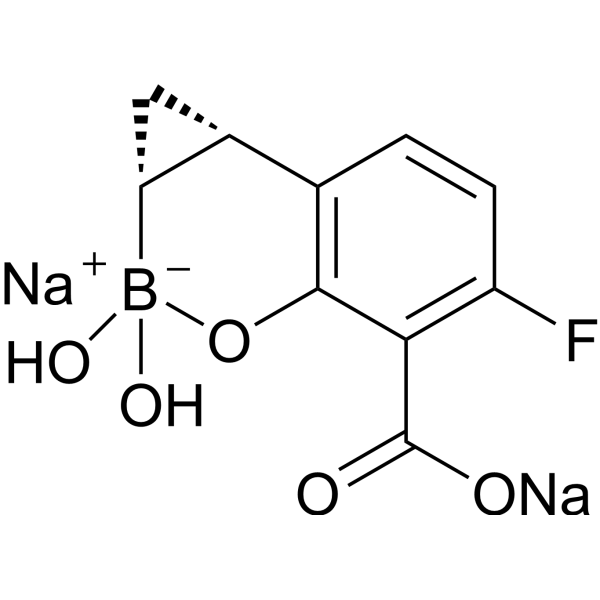
Xeruborbactam disodium
Based on 6 publication(s) in Google Scholar
Xeruborbactam disodium is a potent, ultra-broad-spectrum boronic acid beta-lactamase inhibitor. Xeruborbactam disodium inhibits key serine and metallo beta-lactamases at a nano molar range.
For research use only. We do not sell to patients.
- Purity : 99.0%
- CAS No.: 2170848-99-2
- Formula: C10H8BFNa2O5
- Molecular Weight:283.96
-
Storage:
-20°C, sealed storage, away from moisture and light
* In solvent : -80°C, 6 months; -20°C, 1 month (sealed storage, away from moisture and light)

To place orders, for customer services and technical support, please contact: MedChemExpress USA
Tel: 609-228-6898 E-mail: [email protected] [email protected]


-
 Biological Activity
-
Chemical Information
-
Solvent & Solubility
- Purity & Documentation
- References
-
 Help & FAQs


-
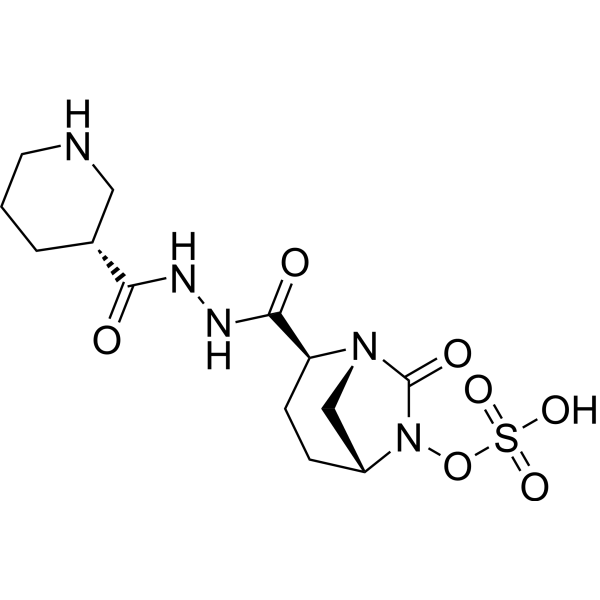
HY-120859
Zidebactamβ-lactamase/PBP2 Inhibitor -
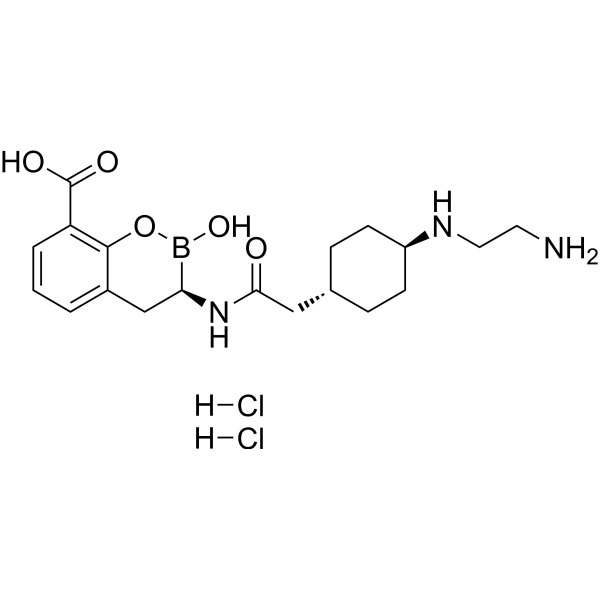
HY-109124A
Taniborbactam hydrochlorideβ-lactamase Inhibitor -
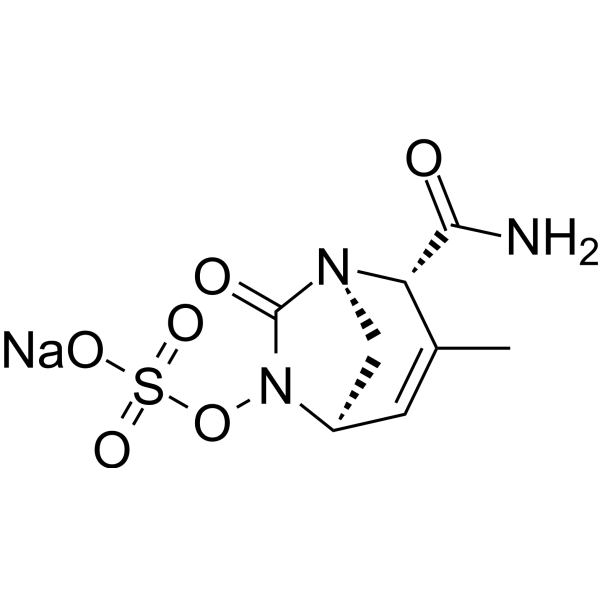
HY-117974
Durlobactam sodiumβ-lactamase Inhibitor -
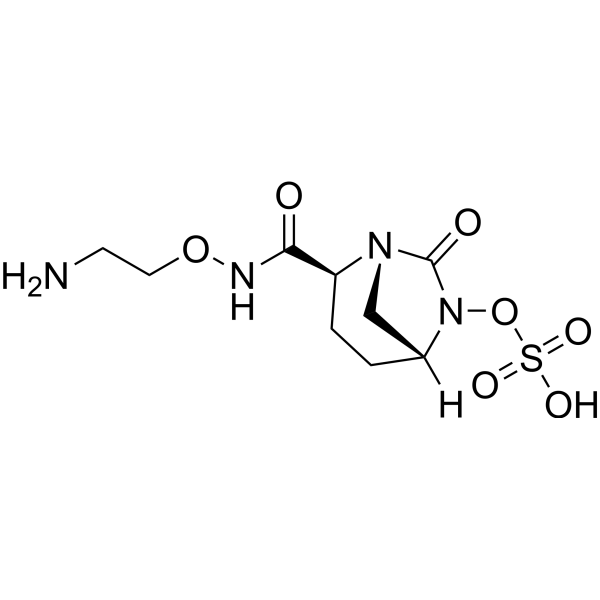
HY-109008
Nacubactamβ-Lactamase Inhibitor -
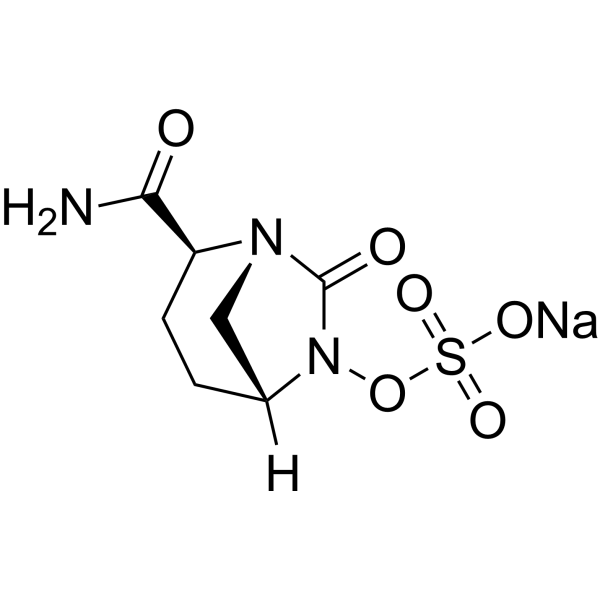
HY-14879A
Avibactam sodiumBeta-lactamase Inhibitor -
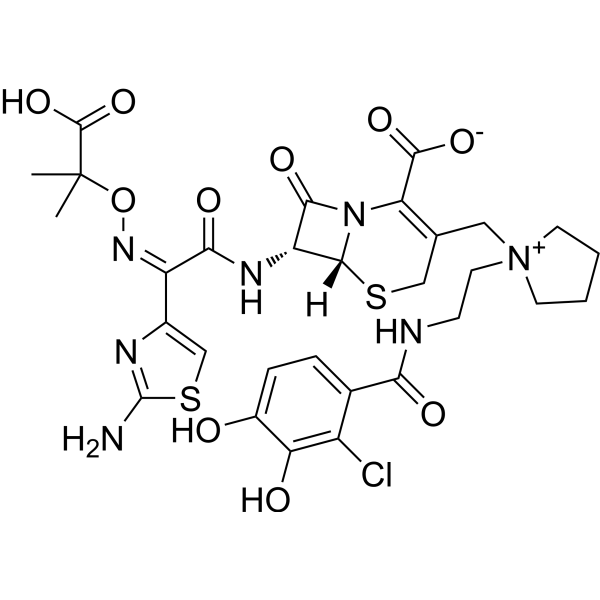
HY-17628
CefiderocolAntibiotic -
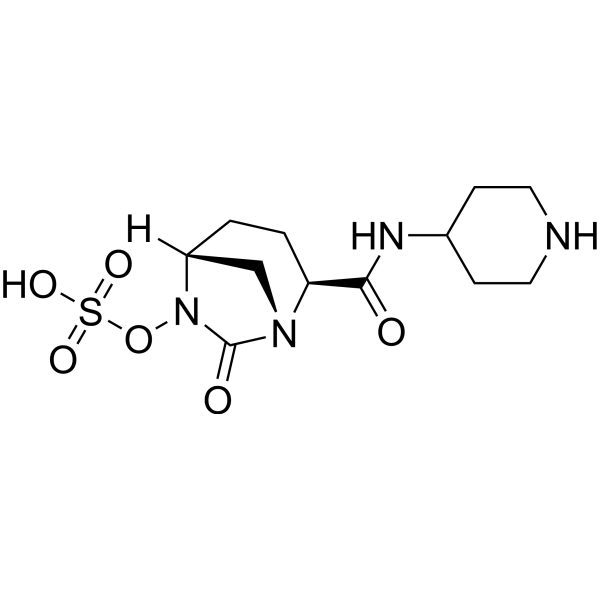
HY-16752
RelebactamBeta-lactamase Inhibitor -
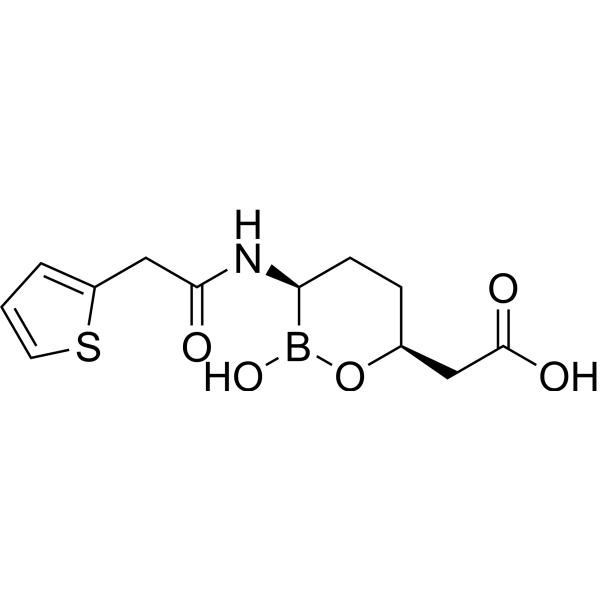
HY-19930
Vaborbactamβ-lactamase Inhibitor -
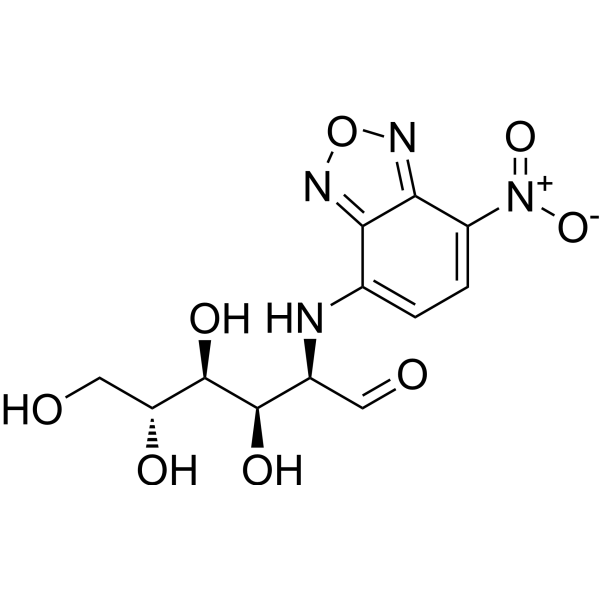
HY-116215
2-NBDGFluorescent Indicator -
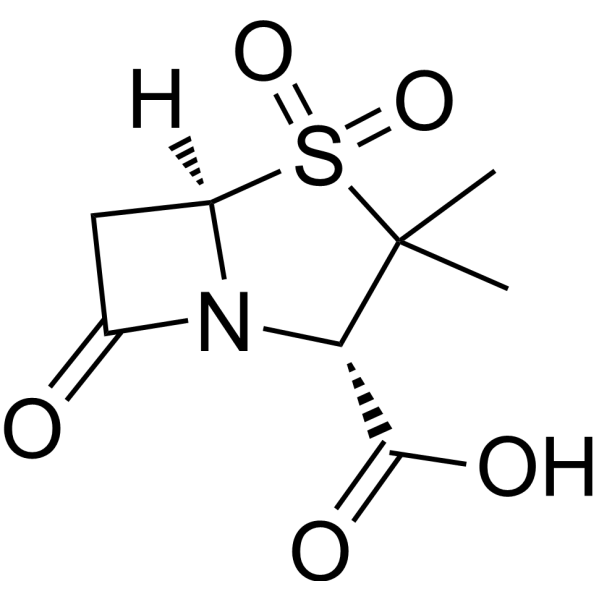
HY-B0334
SulbactamBeta-lactamase Inhibitor -
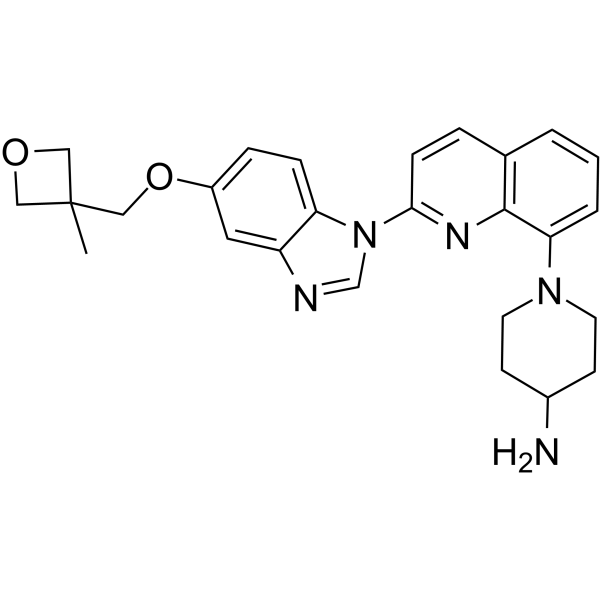
HY-13223
CrenolanibFLT3 Inhibitor -
HY-K0301
Cell Counting Kit-8
Publications Citing Use of MedChemExpress (MCE) Xeruborbactam disodium
More- Sci Rep. 2025 Sep 29;15(1):33616. [Abstract]
- Int J Infect Dis. 2026 Feb:163:108279. [Abstract]
- Antimicrob Agents Chemother. 2025 Oct 10:e0085725. [Abstract]
- Antimicrob Agents Chemother. 2025 Jul 2;69(7):e0029725. [Abstract]
- Antimicrob Agents Chemother. 2024 Nov 6;68(11):e0077524. [Abstract]
- Antimicrob Agents Chemother. 2024 Jun 5;68(6):e0157023. [Abstract]


Biological Activity
Description
In Vitro
Xeruborbactam disodium is a potent inhibitor of Class D carbapenemases from A. baumannii[1].
Xeruborbactam disodium is minimally affected by the activity of major MDR efflux pumps from P. aeruginosa, representing a significant improvement over the earlier generation boronate beta-lactamase inhibitor (BLI) vaborbactam[1].
The ultra-broad-spectrum beta-lactamase inhibition profile combined with enhancement of the activity of multiple beta-lactam antibiotics with varying sensitivity to the intrinsic resistance mechanisms of efflux and permeability indicate Xeruborbactam disodium is a useful inhibitor for use with multiple beta-lactam antibiotics[1].
MedChemExpress (MCE) has not independently confirmed the accuracy of these methods. They are for reference only. .


Chemical Information
-
CAS No. 2170848-99-2
-
Appearance Solid
-
Molecular Weight 283.96
-
Formula C10H8BFNa2O5
-
Color Off-white to yellow
-
SMILES
O[B-](O1)(O)[C@@H]2C[C@@H]2C3=C1C(C(O[Na])=O)=C(C=C3)F.[Na+]
-
Shipping
Room temperature in continental US; may vary elsewhere.
-
Storage
-20°C, sealed storage, away from moisture and light
* In solvent : -80°C, 6 months; -20°C, 1 month (sealed storage, away from moisture and light)


Publications (6)
-
Journal Impact Factor
-
Most Recent
-
Sci Rep
Sporadic cefiderocol resistance in Escherichia coli from the United Arab Emirates involves multifactorial mechanisms reversible by novel beta-lactamase inhibitors. [Abstract]2025 Sep 29;15(1):33616. PMID: 41023121 -
Int J Infect Dis
Susceptibilities of cefiderocol, meropenem-xeruborbactam, cefepime-taniborbactam, aztreonam-avibactam, and sulbactam-durlobactam against imipenem-non-susceptible Gram-negative bacilli in Taiwan. [Abstract]2026 Feb:163:108279. PMID: 41349864 -
Antimicrob Agents Chemother
Efficacy of cefiderocol in combination with xeruborbactam versus taniborbactam against cefiderocol-resistant NDM-producing Pseudomonas aeruginosa. [Abstract]2025 Oct 10:e0085725. PMID: 41071171 -
Antimicrob Agents Chemother
The emerging concern of IMP variants being resistant to the only IMP-type metallo-β-lactamase inhibitor, xeruborbactam. [Abstract]2025 Jul 2;69(7):e0029725. PMID: 40488615 -
Antimicrob Agents Chemother
Relative inhibitory activities of newly developed diazabicyclooctanes, boronic acid derivatives, and penicillin-based sulfone β-lactamase inhibitors against broad-spectrum AmpC β-lactamases. [Abstract]2024 Nov 6;68(11):e0077524. PMID: 39365068 -
Antimicrob Agents Chemother
Relative inhibitory activities of the broad-spectrum β-lactamase inhibitor xeruborbactam in comparison with taniborbactam against metallo-β-lactamases produced in Escherichia coli and Pseudomonas aeruginosa. [Abstract]2024 Jun 5;68(6):e0157023. PMID: 38727224


Solvent & Solubility
In Vitro:
DMSO : 100 mg/mL (352.16 mM; Need ultrasonic; Hygroscopic DMSO has a significant impact on the solubility of product, please use newly opened DMSO)
H2O : 76.67 mg/mL (270.00 mM; Need ultrasonic)
Please refer to the solubility information to select the appropriate solvent. Once prepared, please aliquot and store the solution to prevent product inactivation from repeated freeze-thaw cycles.
Storage method and period of stock solution: -80°C, 6 months; -20°C, 1 month (sealed storage, away from moisture and light). When stored at -80°C, please use it within 6 months. When stored at -20°C, please use it within 1 month.
* Note: If you choose water as the stock solution, please dilute it to the working solution, then filter and sterilize it with a 0.22 μm filter before use.
Please refer to the solubility information to select the appropriate solvent. Once prepared, please aliquot and store the solution to prevent product inactivation from repeated freeze-thaw cycles.
Storage method and period of stock solution: -80°C, 6 months; -20°C, 1 month (sealed storage, away from moisture and light). When stored at -80°C, please use it within 6 months. When stored at -20°C, please use it within 1 month.
* Note: If you choose water as the stock solution, please dilute it to the working solution, then filter and sterilize it with a 0.22 μm filter before use.
Concentration (start) × Volume (start) = Concentration (final) × Volume (final)
In Vivo:
For the following dissolution methods, please prepare the working solution directly:
It is recommended to prepare fresh solutions and use them promptly within a short period of time.
The percentages shown for the solvents indicate their volumetric ratio in the final prepared solution. If precipitation or phase separation occurs during preparation, heat and/or sonication can be used to aid dissolution.
Add each solvent one by one: PBS
Solubility: 66.67 mg/mL (234.79 mM); Clear solution; Need ultrasonic


Purity & Documentation
-
Data Sheet (279 KB)
-
SDS (252 KB)
- English - EN (252 KB)
- Français - FR (252 KB)
- Deutsch - DE (252 KB)
- Norwegian - NO (252 KB)
- Español - ES (252 KB)
- Swedish - SV (252 KB)
- Italian - IT (252 KB)
- Korean - KR (252 KB)
- Portuguese - PT (252 KB)
-
Handling Instructions (2659 KB)
References
[1]. Lomovskaya O, et al, The Impact of Intrinsic Resistance Mechanisms on Potency of QPX7728, a New Ultra-Broad-Spectrum Beta-lactamase Inhibitor of Serine and Metallo Beta-Lactamases in Enterobacteriaceae, Pseudomonas aeruginosa, and Acinetobacter baumannii. Antimicrob Agents Chemother. 2020 Mar 30. pii: AAC.00552-20. [Content Brief]
[2]. Hecker SJ, Reddy KR, Lomovskaya O, et al. Discovery of Cyclic Boronic Acid QPX7728, an Ultrabroad-Spectrum Inhibitor of Serine and Metallo-β-lactamases. J Med Chem. 2020;63(14):7491-7507. [Content Brief]


Complete Stock Solution Preparation Table
Please refer to the solubility information to select the appropriate solvent. Once prepared, please aliquot and store the solution to prevent product inactivation from repeated freeze-thaw cycles.
Storage method and period of stock solution: -80°C, 6 months; -20°C, 1 month (sealed storage, away from moisture and light). When stored at -80°C, please use it within 6 months. When stored at -20°C, please use it within 1 month.
| Optional Solvent | Concentration Solvent Mass | 1 mg | 5 mg | 10 mg | 25 mg |
|---|---|---|---|---|---|
| H2O / DMSO | 1 mM | 3.5216 mL | 17.6081 mL | 35.2162 mL | 88.0406 mL |
| 5 mM | 0.7043 mL | 3.5216 mL | 7.0432 mL | 17.6081 mL | |
| 10 mM | 0.3522 mL | 1.7608 mL | 3.5216 mL | 8.8041 mL | |
| 15 mM | 0.2348 mL | 1.1739 mL | 2.3477 mL | 5.8694 mL | |
| 20 mM | 0.1761 mL | 0.8804 mL | 1.7608 mL | 4.4020 mL | |
| 25 mM | 0.1409 mL | 0.7043 mL | 1.4086 mL | 3.5216 mL | |
| 30 mM | 0.1174 mL | 0.5869 mL | 1.1739 mL | 2.9347 mL | |
| 40 mM | 0.0880 mL | 0.4402 mL | 0.8804 mL | 2.2010 mL | |
| 50 mM | 0.0704 mL | 0.3522 mL | 0.7043 mL | 1.7608 mL | |
| 60 mM | 0.0587 mL | 0.2935 mL | 0.5869 mL | 1.4673 mL | |
| 80 mM | 0.0440 mL | 0.2201 mL | 0.4402 mL | 1.1005 mL | |
| 100 mM | 0.0352 mL | 0.1761 mL | 0.3522 mL | 0.8804 mL |
* Note: If you choose water as the stock solution, please dilute it to the working solution, then filter and sterilize it with a 0.22 μm filter before use.


Xeruborbactam disodium Related Classifications
HY-136072 Related Classifications
 Powered by Bioz