



Tazobactam sodium
Based on 20 publication(s) in Google Scholar
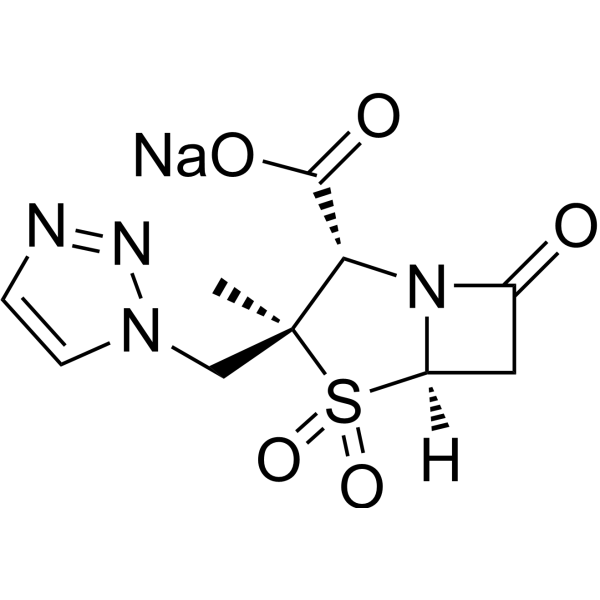
Tazobactam sodium is an antibiotic of the beta-lactamase inhibitor class. Ceftolozane combines with Tazobactam, extends the activity of ceftolozane against many ESBL-producing Enterobacteriaceae and some Bacteroides spp..
For research use only. We do not sell to patients.
- Purity : 99.87%
- CAS No.: 89785-84-2
- Formula: C10H11N4NaO5S
- Molecular Weight:322.27
-
Storage:
4°C, sealed storage, away from moisture
* In solvent : -80°C, 6 months; -20°C, 1 month (sealed storage, away from moisture)

To place orders, for customer services and technical support, please contact: MedChemExpress USA
Tel: 609-228-6898 E-mail: [email protected] [email protected]


-
 Biological Activity
-
Chemical Information
-
Solvent & Solubility
- Purity & Documentation
- References
-
 Help & FAQs


-
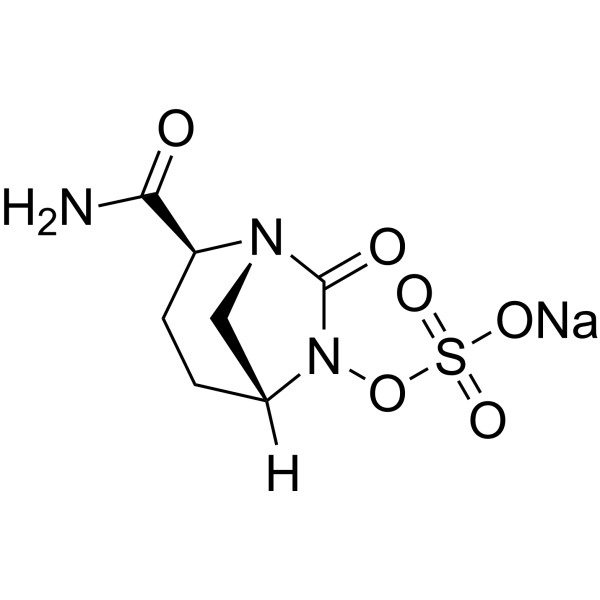
HY-14879A
Avibactam sodiumBeta-lactamase Inhibitor -
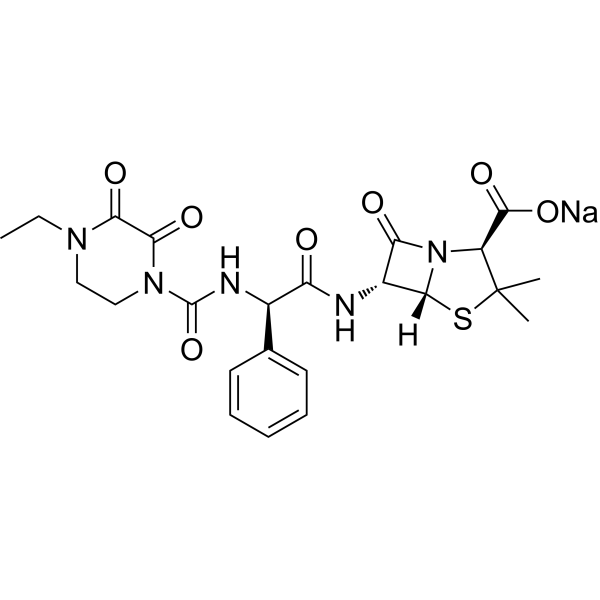
HY-B1286
Piperacillin sodiumBacterial Inhibitor -
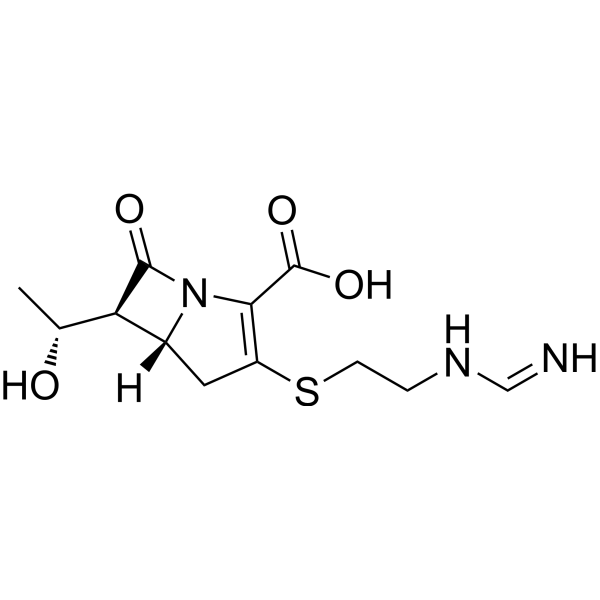
HY-B1369A
ImipenemAntibiotic -
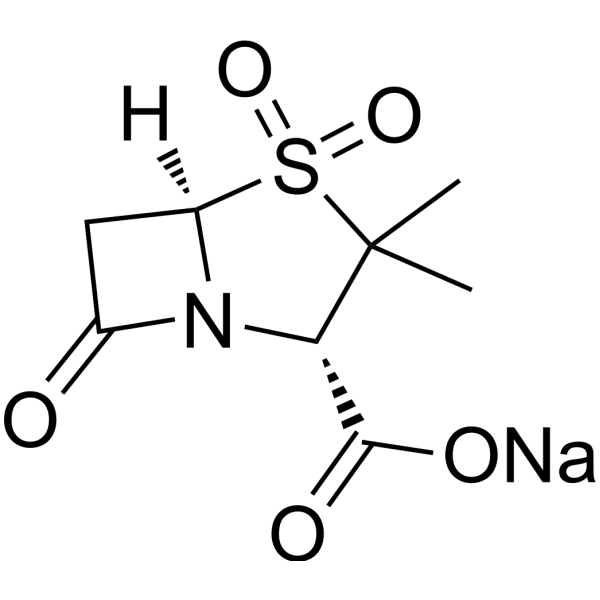
HY-B0334A
Sulbactam sodiumBeta-lactamase Inhibitor -
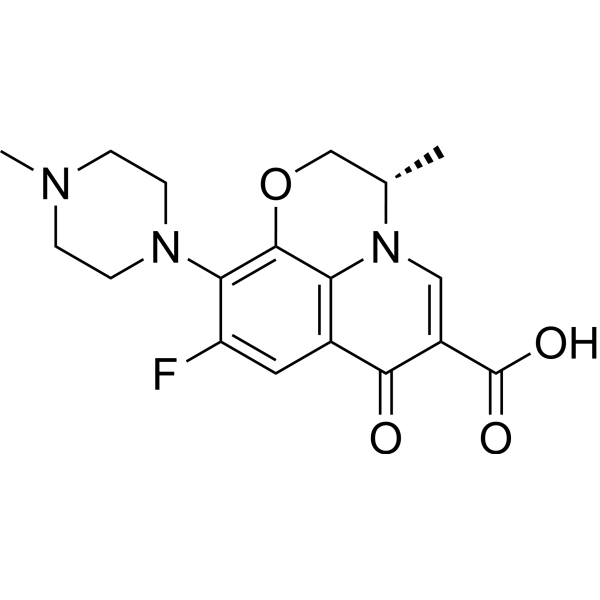
HY-B0330
LevofloxacinDNA Gyrase/Topoisomerase Inhibitor -
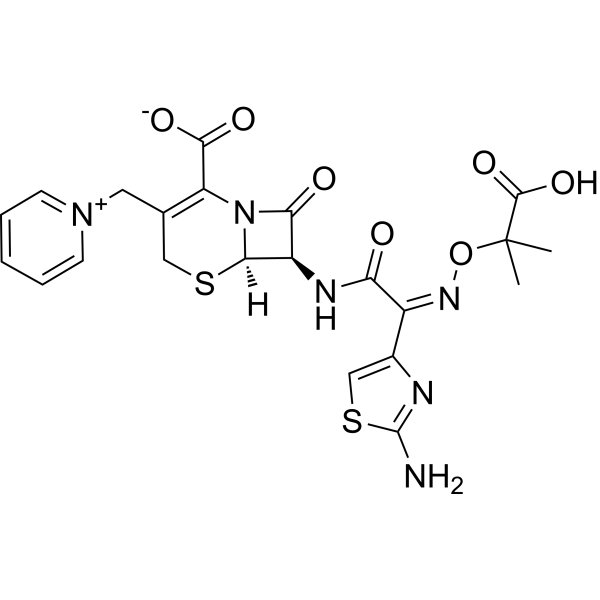
HY-B0593
CeftazidimeAntibiotic -
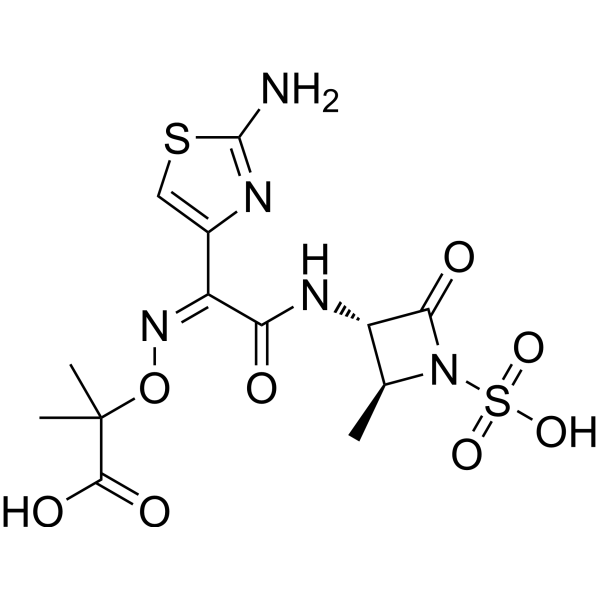
HY-B0129
AztreonamBacterial Inhibitor -
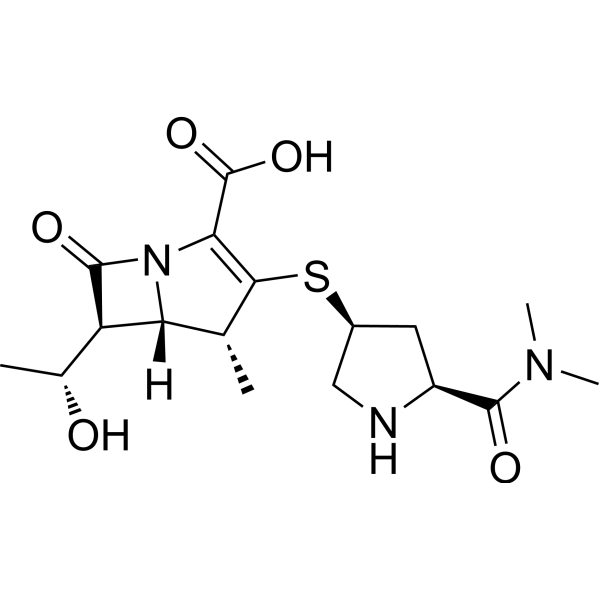
HY-13678
MeropenemAntimicrobial Agent -
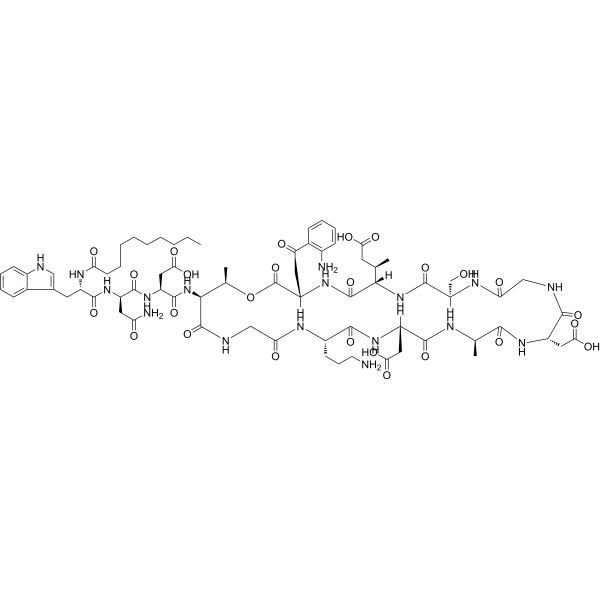
HY-B0108
DaptomycinBacterial Inhibitor -

HY-W009168R
Tazobactam sodium (Standard)Beta-lactamase Inhibitor -
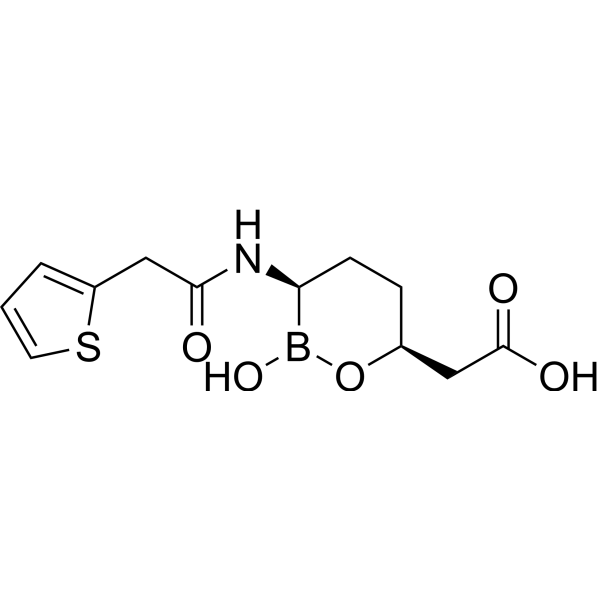
HY-19930
Vaborbactamβ-lactamase Inhibitor -
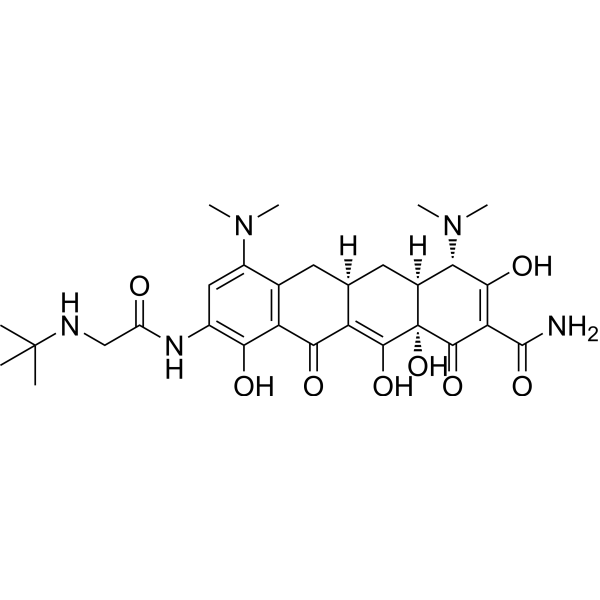
HY-B0117
TigecyclineBacterial Inhibitor
Publications Citing Use of MedChemExpress (MCE) Tazobactam sodium
More- Nat Commun. 2022 Mar 2;13(1):1116. [Abstract]
- ACS Environ Au. 2025 Aug 5;5(6):573-582. [Abstract]
- Anal Chem. 2025 Jun 3;97(21):11099-11109. [Abstract]
- Virulence. 2026 Dec 31;17(1):2646808. [Abstract]
- Molecules. 2025 Mar 9;30(6):1224. [Abstract]
- Int J Antimicrob Agents. 2025 Oct;66(4):107551. [Abstract]
- PLoS Pathog. 2024 Dec 31;20(12):e1012783. [Abstract]
- Antimicrob Agents Chemother. 2026 Jun 3;70(6):e0126725. [Abstract]
- Antimicrob Agents Chemother. 2024 Nov 6;68(11):e0077524. [Abstract]
- Antimicrob Agents Chemother. 2023 Jun 15;67(6):e0160322. [Abstract]
- J Antimicrob Chemother. 2025 Nov 5:dkaf408. [Abstract]
- Microbiol Spectr. 2023 Jun 15;11(3):e0069223. [Abstract]
- Microbiol Spectr. 2023 Feb 14;11(1):e0303822. [Abstract]
- Infect Drug Resist. 2026 May 8;19.
- Eur J Clin Microbiol Infect Dis. 2025 Mar;44(3):571-585. [Abstract]
- Eur J Clin Microbiol Infect Dis. 2025 Feb;44(2):277-284. [Abstract]
- Int J Med Microbiol. 2021 Oct;70(10). [Abstract]
- medRxiv. 2025 Mar 13:2025.03.11.25323422. [Abstract]
- bioRxiv. 2024 May 10.
- Research Square Preprint. 2021 Aug.
All Antibiotic Isoforms
More

Biological Activity
Description
IC50 & Target
|
β-lactam |
In Vitro
Tazobactam sodium (0.045 mg/mL Piperacillin/Tazobactam, 3 days) causes oxidative stress and mitochondrial damage, leads to apoptosis in HK-2 cell with the combined use of Piperacillin (HY-B1923)[2].
MedChemExpress (MCE) has not independently confirmed the accuracy of these methods. They are for reference only. .
-
Cell Line:HK-2
-
Concentration:0.045 mg/mL of Piperacillin/Tazobactam
-
Incubation Time:3 days
-
Result:Caused loss of mitochondrial membrane potential.
In Vivo
MedChemExpress (MCE) has not independently confirmed the accuracy of these methods. They are for reference only.
-
Animal Model:C57BL/6 mouse models[2]
-
Dosage:300-500 mg/kg of Piperacillin/Tazobactam
-
Administration:iv, single dose
-
Result:Caused tubular damage and mitochondrial structure alternation.


Chemical Information
-
CAS No. 89785-84-2
-
Appearance Solid
-
Molecular Weight 322.27
-
Formula C10H11N4NaO5S
-
Color White to off-white
-
SMILES
C[C@]([C@@H](N1[C@@]2([H])CC1=O)C(O[Na])=O)([S]2(=O)=O)CN3C=CN=N3
-
Shipping
Room temperature in continental US; may vary elsewhere.
-
Storage
4°C, sealed storage, away from moisture
* In solvent : -80°C, 6 months; -20°C, 1 month (sealed storage, away from moisture)


Publications (20)
-
Journal Impact Factor
-
Most Recent
-
Nat Commun
Antimicrobial resistance and population genomics of multidrug-resistant Escherichia coli in pig farms in mainland China. [Abstract]2022 Mar 2;13(1):1116. PMID: 35236849 -
ACS Environ Au
Machine Learning-Assisted Recognition of Environmental Sulfur-Containing Chemicals in Nontargeted Mass Spectrometry Analysis of Inadequate Mass Resolution. [Abstract]2025 Aug 5;5(6):573-582. PMID: 41277996 -
Anal Chem
Exposome-Scale Investigation of Cl-/Br-Containing Chemicals Using High-Resolution Mass Spectrometry, Multistage Machine Learning, and Cloud Computing. [Abstract]2025 Jun 3;97(21):11099-11109. PMID: 40401576 -
Virulence
Antibacterial efficacy and mechanism of the novel antimicrobial peptide lachnospirin-1 against Acinetobacter baumannii. [Abstract]2026 Dec 31;17(1):2646808. PMID: 41838520 -
Molecules
Seeking Correlation Among Porin Permeabilities and Minimum Inhibitory Concentrations Through Machine Learning: A Promising Route to the Essential Molecular Descriptors. [Abstract]2025 Mar 9;30(6):1224. PMID: 40142001 -
Int J Antimicrob Agents
Elucidating adaptive compensatory tigecycline resistance mechanisms of RamA, RarA and SoxS in Klebsiella pneumoniae. [Abstract]2025 Oct;66(4):107551. PMID: 40499596 -
PLoS Pathog
Differential contribution of PBP occupancy and efflux on the effectiveness of β-lactams at their target site in clinical isolates of Neisseria gonorrhoeae. [Abstract]2024 Dec 31;20(12):e1012783. PMID: 39739989 -
Antimicrob Agents Chemother
Improved hydrolysis of piperacillin by OXA-48-like R214G variants, a selective advantage under piperacillin-tazobactam exposure. [Abstract]2026 Jun 3;70(6):e0126725. PMID: 42053451 -
Antimicrob Agents Chemother
Relative inhibitory activities of newly developed diazabicyclooctanes, boronic acid derivatives, and penicillin-based sulfone β-lactamase inhibitors against broad-spectrum AmpC β-lactamases. [Abstract]2024 Nov 6;68(11):e0077524. PMID: 39365068 -
Antimicrob Agents Chemother
Penicillin-Binding Protein 5/6 Acting as a Decoy Target in Pseudomonas aeruginosa Identified by Whole-Cell Receptor Binding and Quantitative Systems Pharmacology. [Abstract]2023 Jun 15;67(6):e0160322. PMID: 37199612 -
J Antimicrob Chemother
Unravelling the triad of penicillin-binding proteins, β-lactamase activity, and mRNA dynamics in Pseudomonas aeruginosa AmpC induction. [Abstract]2025 Nov 5:dkaf408. PMID: 41206063 -
Microbiol Spectr
Penicillin-Binding Protein Occupancy Dataset for 18 β-Lactams and 4 β-Lactamase Inhibitors in Neisseria gonorrhoeae. [Abstract]2023 Jun 15;11(3):e0069223. PMID: 37093051 -
Microbiol Spectr
PBP Target Profiling by β-Lactam and β-Lactamase Inhibitors in Intact Pseudomonas aeruginosa: Effects of the Intrinsic and Acquired Resistance Determinants on the Periplasmic Drug Availability. [Abstract]2023 Feb 14;11(1):e0303822. PMID: 36475840 -
-
Eur J Clin Microbiol Infect Dis
In-vitro activity of the novel β-lactam/β-lactamase inhibitor combinations and cefiderocol against carbapenem-resistant Pseudomonas spp. clinical isolates collected in Switzerland in 2022. [Abstract]2025 Mar;44(3):571-585. PMID: 39704920 -
Eur J Clin Microbiol Infect Dis
In-vitro activity of newly-developed β-lactamase inhibitors avibactam, relebactam and vaborbactam in combination with anti-pseudomonal β-lactam antibiotics against AmpC-overproducing clinical Pseudomonas aeruginosa isolates. [Abstract]2025 Feb;44(2):277-284. PMID: 39589655 -
Int J Med Microbiol
In vitro synergistic activity of aztreonam (AZT) plus novel and old β-lactamase inhibitor combinations against metallo-β-lactamase-producing AZT-resistant Enterobacterales. [Abstract]2021 Oct;70(10). PMID: 34605763 -
medRxiv
The association between undetected heteroresistance and antibiotic treatment failure in complicated urinary tract infection. [Abstract]2025 Mar 13:2025.03.11.25323422. PMID: 40162257 -
-


Solvent & Solubility
In Vitro:
H2O : 250 mg/mL (775.75 mM; Need ultrasonic)
DMSO : ≥ 200 mg/mL (620.60 mM; Hygroscopic DMSO has a significant impact on the solubility of product, please use newly opened DMSO)
* "≥" means soluble, but saturation unknown.
Please refer to the solubility information to select the appropriate solvent. Once prepared, please aliquot and store the solution to prevent product inactivation from repeated freeze-thaw cycles.
Storage method and period of stock solution: -80°C, 6 months; -20°C, 1 month (sealed storage, away from moisture). When stored at -80°C, please use it within 6 months. When stored at -20°C, please use it within 1 month.
* Note: If you choose water as the stock solution, please dilute it to the working solution, then filter and sterilize it with a 0.22 μm filter before use.
Please refer to the solubility information to select the appropriate solvent. Once prepared, please aliquot and store the solution to prevent product inactivation from repeated freeze-thaw cycles.
Storage method and period of stock solution: -80°C, 6 months; -20°C, 1 month (sealed storage, away from moisture). When stored at -80°C, please use it within 6 months. When stored at -20°C, please use it within 1 month.
* Note: If you choose water as the stock solution, please dilute it to the working solution, then filter and sterilize it with a 0.22 μm filter before use.
Concentration (start) × Volume (start) = Concentration (final) × Volume (final)
In Vivo:
Select the appropriate dissolution method based on your experimental animal and administration route.
- For the following dissolution methods, please ensure to first prepare a clear stock solution using an In Vitro approach and then sequentially add co-solvents:
- To ensure reliable experimental results, the clarified stock solution can be appropriately stored based on storage conditions. As for the working solution for In Vivo experiments, it is recommended to prepare freshly and use it on the same day.
- The percentages shown for the solvents indicate their volumetric ratio in the final prepared solution. If precipitation or phase separation occurs during preparation, heat and/or sonication can be used to aid dissolution.
Add each solvent one by one: 10% DMSO 40% PEG300 5% Tween-80 45% Saline
Solubility: ≥ 5 mg/mL (15.51 mM); Clear solution
This protocol yields a clear solution of ≥ 5 mg/mL (saturation unknown).
Taking 1 mL working solution as an example, add 100 μL DMSO stock solution (50.0 mg/mL) to 400 μL PEG300, and mix evenly; then add 50 μL Tween-80 and mix evenly; then add 450 μL Saline to adjust the volume to 1 mL.
Preparation of Saline: Dissolve 0.9 g sodium chloride in ddH₂O and dilute to 100 mL to obtain a clear Saline solution.
Add each solvent one by one: 10% DMSO 90% (20% SBE-β-CD in Saline)
Solubility: ≥ 5 mg/mL (15.51 mM); Clear solution
This protocol yields a clear solution of ≥ 5 mg/mL (saturation unknown).
Taking 1 mL working solution as an example, add 100 μL DMSO stock solution (50.0 mg/mL) to 900 μL 20% SBE-β-CD in Saline, and mix evenly.
Preparation of 20% SBE-β-CD in Saline (4°C, storage for one week): 2 g SBE-β-CD powder is dissolved in 10 mL Saline, completely dissolve until clear.
In Vivo Dissolution Calculator
Please enter the basic information of animal experiments:
-
-
-
-
Recommended: Prepare an additional quantity of animals to account for potential losses during experiments.
Working solution concentration: 0.22 mg/mL
This product has good water solubility, please refer to the measured solubility data in water/PBS/Saline for details.


Purity & Documentation
-
Data Sheet (296 KB)
-
SDS (394 KB)
- English - EN (394 KB)
- Français - FR (394 KB)
- Deutsch - DE (394 KB)
- Norwegian - NO (394 KB)
- Español - ES (394 KB)
- Swedish - SV (394 KB)
- Italian - IT (394 KB)
- Korean - KR (394 KB)
- Portuguese - PT (394 KB)
-
Handling Instructions (2659 KB)
References
[1]. Giacobbe DR, et al. Ceftolozane/tazobactam: place in therapy. Expert Rev Anti Infect Ther. 2018;16(4):307‐320. [Content Brief]
[2]. Yang J, et al., Mechanisms of Piperacillin/Tazobactam Nephrotoxicity: Piperacillin/Tazobactam-Induced Direct Tubular Damage in Mice. Antibiotics (Basel). 2023 Jun 28;12(7):1121. [Content Brief]


Complete Stock Solution Preparation Table
Please refer to the solubility information to select the appropriate solvent. Once prepared, please aliquot and store the solution to prevent product inactivation from repeated freeze-thaw cycles.
Storage method and period of stock solution: -80°C, 6 months; -20°C, 1 month (sealed storage, away from moisture). When stored at -80°C, please use it within 6 months. When stored at -20°C, please use it within 1 month.
| Optional Solvent | Concentration Solvent Mass | 1 mg | 5 mg | 10 mg | 25 mg |
|---|---|---|---|---|---|
| DMSO / H2O | 1 mM | 3.1030 mL | 15.5149 mL | 31.0299 mL | 77.5747 mL |
| 5 mM | 0.6206 mL | 3.1030 mL | 6.2060 mL | 15.5149 mL | |
| 10 mM | 0.3103 mL | 1.5515 mL | 3.1030 mL | 7.7575 mL | |
| 15 mM | 0.2069 mL | 1.0343 mL | 2.0687 mL | 5.1716 mL | |
| 20 mM | 0.1551 mL | 0.7757 mL | 1.5515 mL | 3.8787 mL | |
| 25 mM | 0.1241 mL | 0.6206 mL | 1.2412 mL | 3.1030 mL | |
| 30 mM | 0.1034 mL | 0.5172 mL | 1.0343 mL | 2.5858 mL | |
| 40 mM | 0.0776 mL | 0.3879 mL | 0.7757 mL | 1.9394 mL | |
| 50 mM | 0.0621 mL | 0.3103 mL | 0.6206 mL | 1.5515 mL | |
| 60 mM | 0.0517 mL | 0.2586 mL | 0.5172 mL | 1.2929 mL | |
| 80 mM | 0.0388 mL | 0.1939 mL | 0.3879 mL | 0.9697 mL | |
| 100 mM | 0.0310 mL | 0.1551 mL | 0.3103 mL | 0.7757 mL |
* Note: If you choose water as the stock solution, please dilute it to the working solution, then filter and sterilize it with a 0.22 μm filter before use.


Tazobactam sodium Related Classifications
HY-W009168 Related Classifications
 Powered by Bioz