



タゾバクタム
Based on 20 publication(s) in Google Scholar
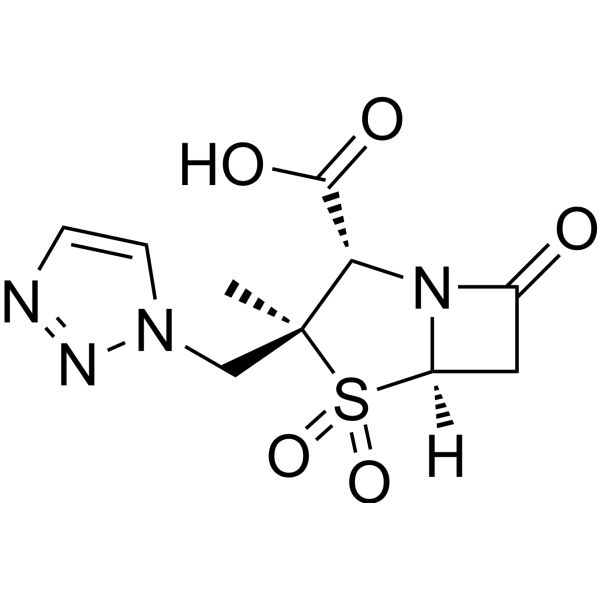
Tazobactam (CL-298741) is a potent β-lactamases inhibitor and penicillin antibiotic. Tazobactam has antibacterial activity. Tazobactam can be used for pneumonia research.
商品は「研究用試薬」です。人や動物の医療用・臨床診断用・食品用の製品ではありません。
研究用途以外に使用した場合、当社は一切の責任を負いかねます。
- 純度 : 99.91%
- CAS 番号: 89786-04-9
- 分子式: C10H12N4O5S
- 分子量:300.29
-
保管条件:Powder -20°C, 3 years , 4°C, 2 years ; In solvent -80°C, 6 months , -20°C, 1 month

To place orders, for customer services and technical support, please contact: MedChemExpress USA
Tel: 609-228-6898 E-mail: [email protected] [email protected]


-
 生物活性
生物活性
-
化学情報
-
溶剤 & 溶解度
- プロトコル
- 純度とドキュメンテーション
- 参考文献
-
 Help & FAQs


-
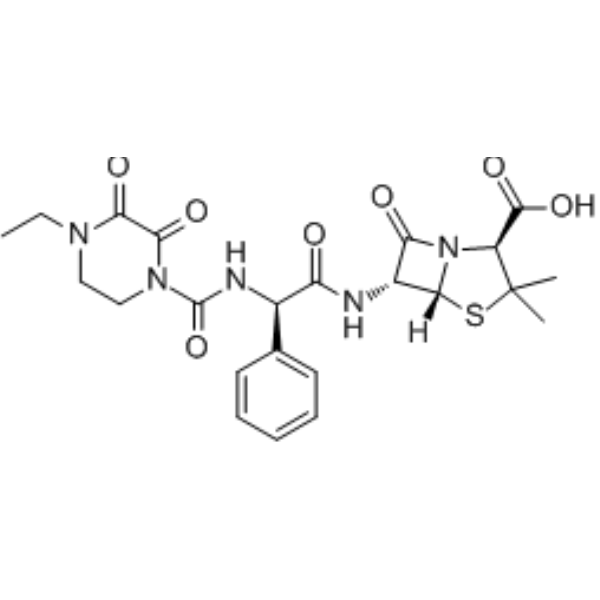
HY-B1923
Piperacillinβ-lactam Antibiotic -
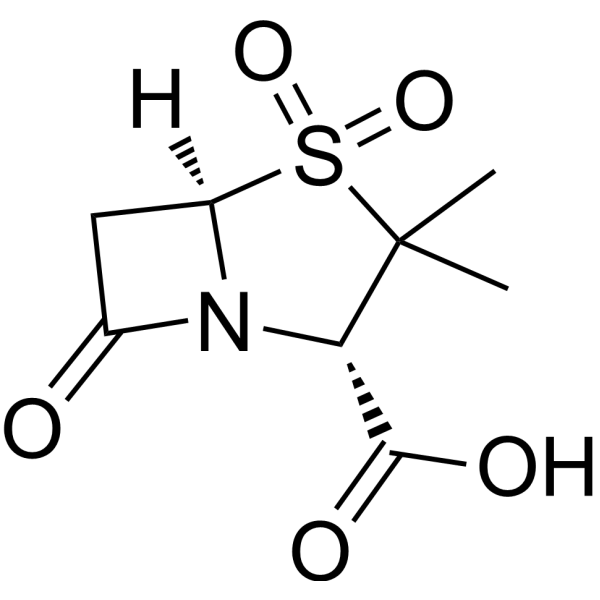
HY-B0334
SulbactamBeta-lactamase Inhibitor -
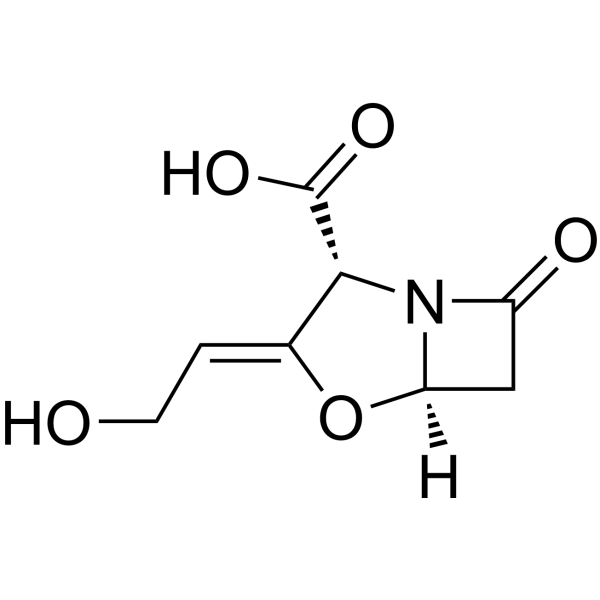
HY-A0256
Clavulanic acidβ-lactamase Inhibitor -
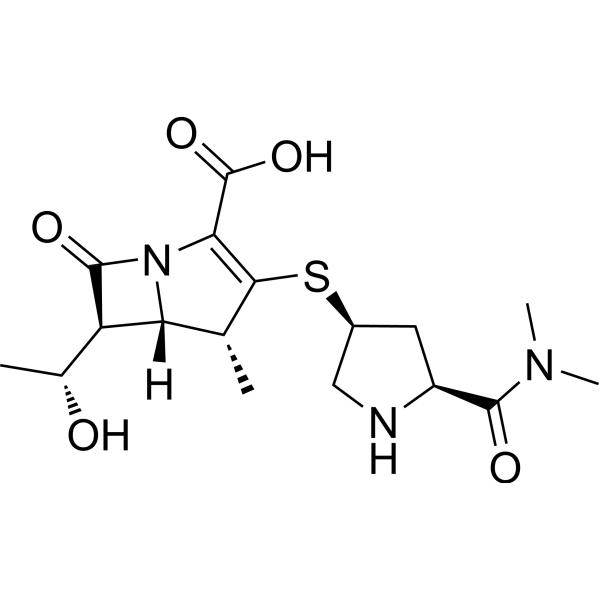
HY-13678
MeropenemAntimicrobial Agent -
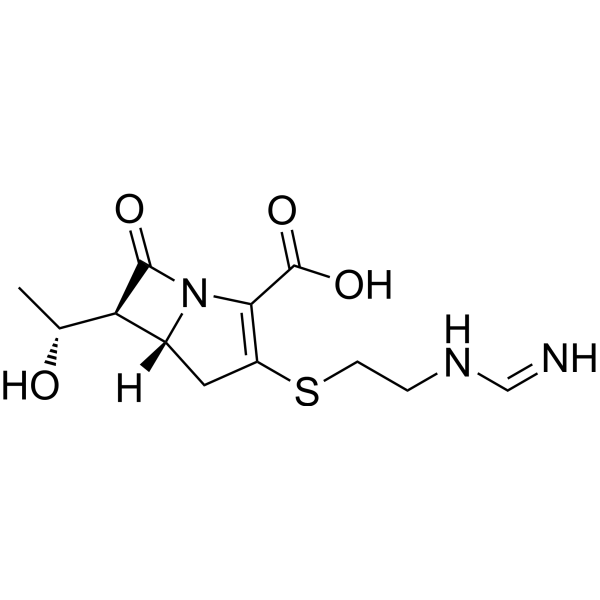
HY-B1369A
ImipenemAntibiotic -
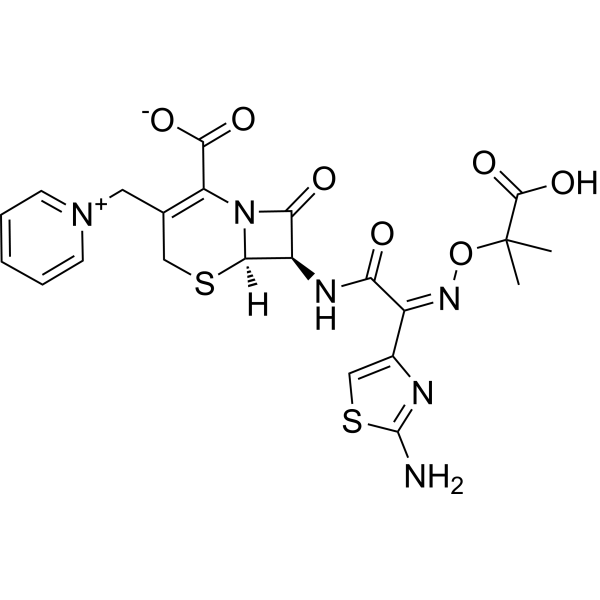
HY-B0593
CeftazidimeAntibiotic -
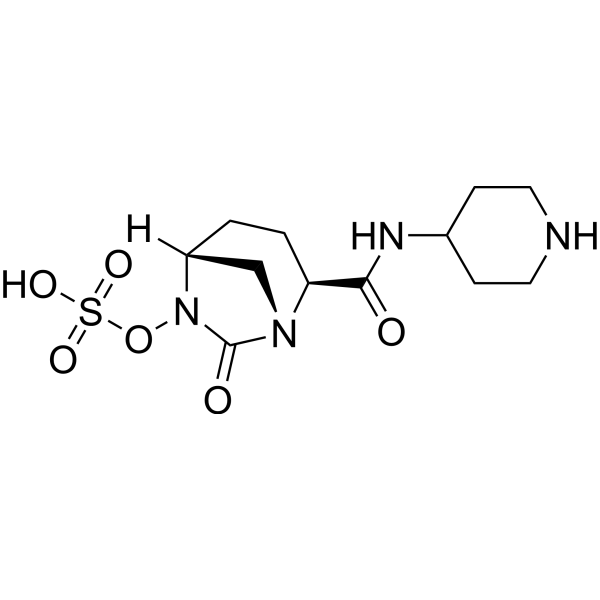
HY-16752
RelebactamBeta-lactamase Inhibitor -
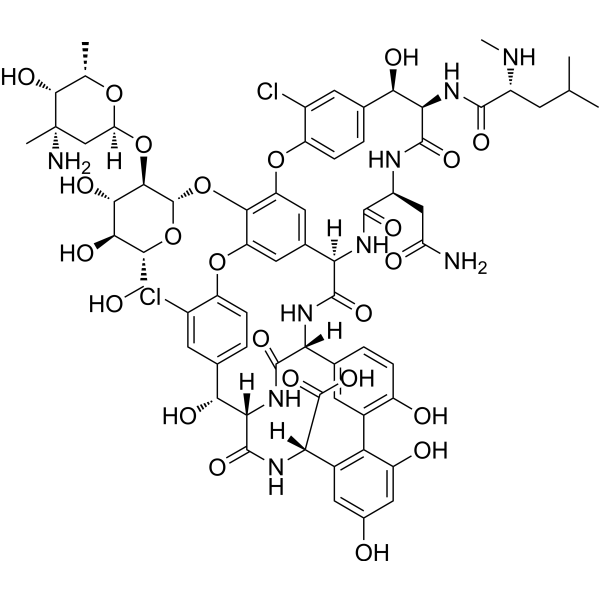
HY-B0671
VancomycinAntibiotic -
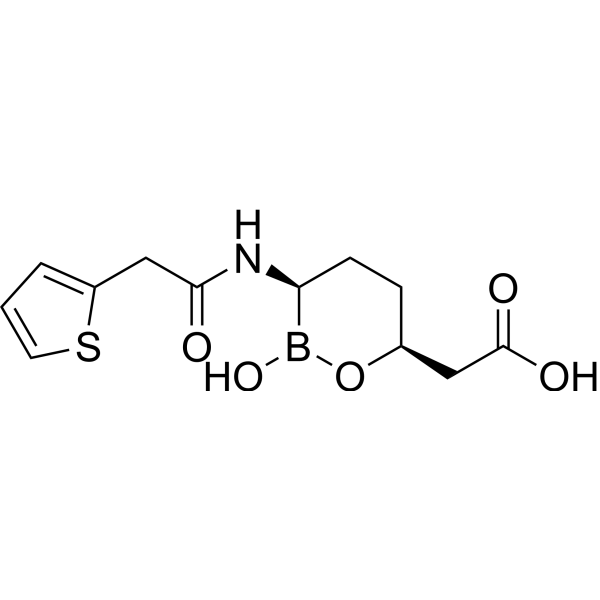
HY-19930
Vaborbactamβ-lactamase Inhibitor -
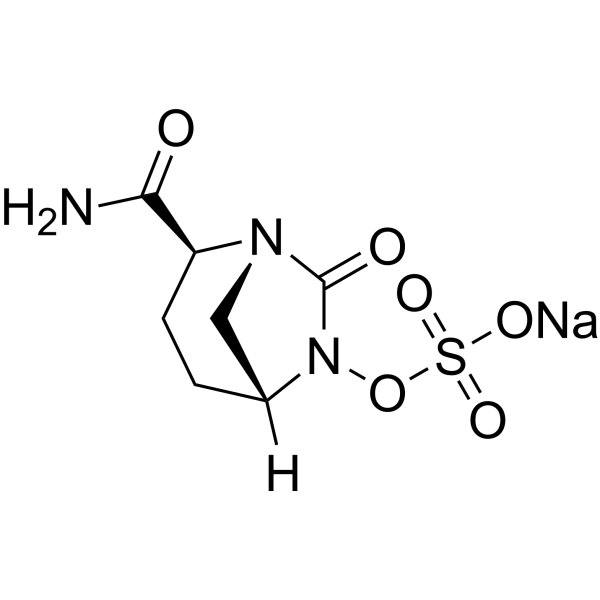
HY-14879A
Avibactam sodiumBeta-lactamase Inhibitor -
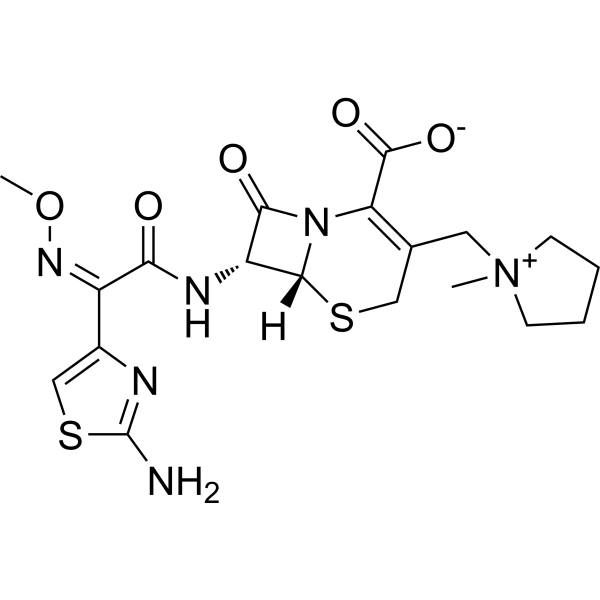
HY-B0692
CefepimeAntibiotic -
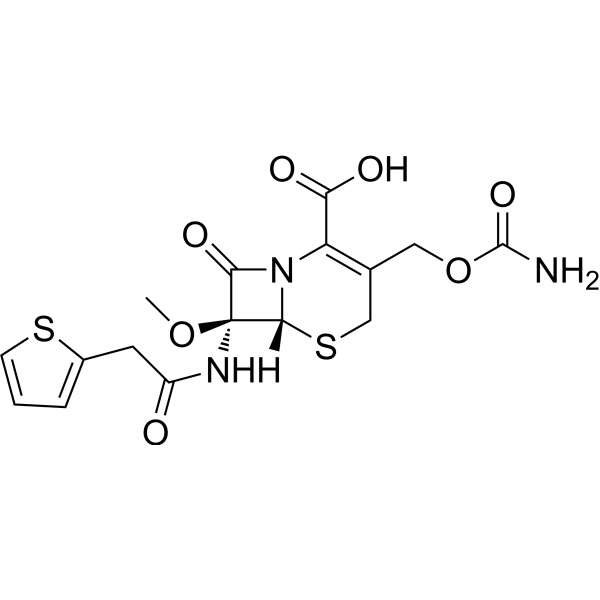
HY-B1825
CefoxitinAntibiotic
MedChemExpress(MCE)の使用を引用している文献 Tazobactam
More- Nat Commun. 2022 Mar 2;13(1):1116. [Abstract]
- ACS Environ Au. 2025 Aug 5;5(6):573-582. [Abstract]
- Anal Chem. 2025 Jun 3;97(21):11099-11109. [Abstract]
- Virulence. 2026 Dec 31;17(1):2646808. [Abstract]
- Molecules. 2025 Mar 9;30(6):1224. [Abstract]
- Int J Antimicrob Agents. 2025 Oct;66(4):107551. [Abstract]
- PLoS Pathog. 2024 Dec 31;20(12):e1012783. [Abstract]
- Antimicrob Agents Chemother. 2026 Jun 3;70(6):e0126725. [Abstract]
- Antimicrob Agents Chemother. 2024 Nov 6;68(11):e0077524. [Abstract]
- Antimicrob Agents Chemother. 2023 Jun 15;67(6):e0160322. [Abstract]
- J Antimicrob Chemother. 2025 Nov 5:dkaf408. [Abstract]
- Microbiol Spectr. 2023 Jun 15;11(3):e0069223. [Abstract]
- Microbiol Spectr. 2023 Feb 14;11(1):e0303822. [Abstract]
- Infect Drug Resist. 2026 May 8;19.
- Eur J Clin Microbiol Infect Dis. 2025 Mar;44(3):571-585. [Abstract]
- Eur J Clin Microbiol Infect Dis. 2025 Feb;44(2):277-284. [Abstract]
- Int J Med Microbiol. 2021 Oct;70(10). [Abstract]
- medRxiv. 2025 Mar 13:2025.03.11.25323422. [Abstract]
- bioRxiv. 2024 May 10.
- Research Square Preprint. 2021 Aug.
Beta-lactamase アイソフォーム固有の製品をすべて表示
MoreAntibiotic アイソフォーム固有の製品をすべて表示
More

生物活性
製品説明
IC50 & Target
|
β-lactam |
体外実験
Tazobactam (CL-298741) (5 μg/mL; 18 hours) has bactericidal activity and inhibit the growth of the bacteria in a dose-dependent manner[2].
Tazobactam (CL-298741) (1-10 μg/mL; 6 hours; Prot. vulgaris and M. morgan) inhibits various types β-lactamase activity and with ID50 values of < 10 μg/mL, respectively[2].
MedChemExpress (MCE) has not independently confirmed the accuracy of these methods. They are for reference only. Further protocols information, click here.
体内実験
MedChemExpress (MCE) has not independently confirmed the accuracy of these methods. They are for reference only.
-
Animal Model:BALB/c mice[1]
-
Dosage:1000 mg/kg
-
Administration:Intraperitoneal injection; four times a day, for 36 and 84 hours
-
Result:Decraesed the number of bacteria and neutrophils in BALF than in the control group.
臨床実験
| NCT Number | Sponsor | Condition | Start Date |
Phase

|
|---|---|---|---|---|
| NCT01329991 | Plexxikon| | 2011-05 | PHASE1 |


化学情報
-
CAS 番号 89786-04-9
-
性状 Solid
-
分子量 300.29
-
分子式 C10H12N4O5S
-
Color White to off-white
-
SMILES
O=C([C@@H]([C@@](CN1N=NC=C1)(C)S([C@]2([H])C3)(=O)=O)N2C3=O)O
-
別名
Tazobactam; CL-298741; YTR-830H
-
Initial Source
Gram-negative bacilli
-
輸送条件
Room temperature in continental US; may vary elsewhere.
-
保管条件
Powder -20°C 3 years 4°C 2 years In solvent -80°C 6 months -20°C 1 month


Publications (20)
-
Journal Impact Factor
-
Most Recent
-
Nat Commun
Antimicrobial resistance and population genomics of multidrug-resistant Escherichia coli in pig farms in mainland China. [Abstract]2022 Mar 2;13(1):1116. PMID: 35236849 -
ACS Environ Au
Machine Learning-Assisted Recognition of Environmental Sulfur-Containing Chemicals in Nontargeted Mass Spectrometry Analysis of Inadequate Mass Resolution. [Abstract]2025 Aug 5;5(6):573-582. PMID: 41277996 -
Anal Chem
Exposome-Scale Investigation of Cl-/Br-Containing Chemicals Using High-Resolution Mass Spectrometry, Multistage Machine Learning, and Cloud Computing. [Abstract]2025 Jun 3;97(21):11099-11109. PMID: 40401576 -
Virulence
Antibacterial efficacy and mechanism of the novel antimicrobial peptide lachnospirin-1 against Acinetobacter baumannii. [Abstract]2026 Dec 31;17(1):2646808. PMID: 41838520 -
Molecules
Seeking Correlation Among Porin Permeabilities and Minimum Inhibitory Concentrations Through Machine Learning: A Promising Route to the Essential Molecular Descriptors. [Abstract]2025 Mar 9;30(6):1224. PMID: 40142001 -
Int J Antimicrob Agents
Elucidating adaptive compensatory tigecycline resistance mechanisms of RamA, RarA and SoxS in Klebsiella pneumoniae. [Abstract]2025 Oct;66(4):107551. PMID: 40499596 -
PLoS Pathog
Differential contribution of PBP occupancy and efflux on the effectiveness of β-lactams at their target site in clinical isolates of Neisseria gonorrhoeae. [Abstract]2024 Dec 31;20(12):e1012783. PMID: 39739989 -
Antimicrob Agents Chemother
Improved hydrolysis of piperacillin by OXA-48-like R214G variants, a selective advantage under piperacillin-tazobactam exposure. [Abstract]2026 Jun 3;70(6):e0126725. PMID: 42053451 -
Antimicrob Agents Chemother
Relative inhibitory activities of newly developed diazabicyclooctanes, boronic acid derivatives, and penicillin-based sulfone β-lactamase inhibitors against broad-spectrum AmpC β-lactamases. [Abstract]2024 Nov 6;68(11):e0077524. PMID: 39365068 -
Antimicrob Agents Chemother
Penicillin-Binding Protein 5/6 Acting as a Decoy Target in Pseudomonas aeruginosa Identified by Whole-Cell Receptor Binding and Quantitative Systems Pharmacology. [Abstract]2023 Jun 15;67(6):e0160322. PMID: 37199612 -
J Antimicrob Chemother
Unravelling the triad of penicillin-binding proteins, β-lactamase activity, and mRNA dynamics in Pseudomonas aeruginosa AmpC induction. [Abstract]2025 Nov 5:dkaf408. PMID: 41206063 -
Microbiol Spectr
Penicillin-Binding Protein Occupancy Dataset for 18 β-Lactams and 4 β-Lactamase Inhibitors in Neisseria gonorrhoeae. [Abstract]2023 Jun 15;11(3):e0069223. PMID: 37093051 -
Microbiol Spectr
PBP Target Profiling by β-Lactam and β-Lactamase Inhibitors in Intact Pseudomonas aeruginosa: Effects of the Intrinsic and Acquired Resistance Determinants on the Periplasmic Drug Availability. [Abstract]2023 Feb 14;11(1):e0303822. PMID: 36475840 -
-
Eur J Clin Microbiol Infect Dis
In-vitro activity of the novel β-lactam/β-lactamase inhibitor combinations and cefiderocol against carbapenem-resistant Pseudomonas spp. clinical isolates collected in Switzerland in 2022. [Abstract]2025 Mar;44(3):571-585. PMID: 39704920 -
Eur J Clin Microbiol Infect Dis
In-vitro activity of newly-developed β-lactamase inhibitors avibactam, relebactam and vaborbactam in combination with anti-pseudomonal β-lactam antibiotics against AmpC-overproducing clinical Pseudomonas aeruginosa isolates. [Abstract]2025 Feb;44(2):277-284. PMID: 39589655 -
Int J Med Microbiol
In vitro synergistic activity of aztreonam (AZT) plus novel and old β-lactamase inhibitor combinations against metallo-β-lactamase-producing AZT-resistant Enterobacterales. [Abstract]2021 Oct;70(10). PMID: 34605763 -
medRxiv
The association between undetected heteroresistance and antibiotic treatment failure in complicated urinary tract infection. [Abstract]2025 Mar 13:2025.03.11.25323422. PMID: 40162257 -
-


溶剤 & 溶解度
体外:
DMSO : 50 mg/mL (166.51 mM; Need ultrasonic; Hygroscopic DMSO has a significant impact on the solubility of product, please use newly opened DMSO)
H2O : < 0.1 mg/mL (insoluble)
Please refer to the solubility information to select the appropriate solvent. Once prepared, please aliquot and store the solution to prevent product inactivation from repeated freeze-thaw cycles.
Storage method and period of stock solution: -80°C, 6 months; -20°C, 1 month. When stored at -80°C, please use it within 6 months. When stored at -20°C, please use it within 1 month.
Please refer to the solubility information to select the appropriate solvent. Once prepared, please aliquot and store the solution to prevent product inactivation from repeated freeze-thaw cycles.
Storage method and period of stock solution: -80°C, 6 months; -20°C, 1 month. When stored at -80°C, please use it within 6 months. When stored at -20°C, please use it within 1 month.
濃度 (開始) × 体積 (開始) = 濃度 (終了) × 体積 (終了)
体内:
Select the appropriate dissolution method based on your experimental animal and administration route.
- For the following dissolution methods, please ensure to first prepare a clear stock solution using an In Vitro approach and then sequentially add co-solvents:
- To ensure reliable experimental results, the clarified stock solution can be appropriately stored based on storage conditions. As for the working solution for In Vivo experiments, it is recommended to prepare freshly and use it on the same day.
- The percentages shown for the solvents indicate their volumetric ratio in the final prepared solution. If precipitation or phase separation occurs during preparation, heat and/or sonication can be used to aid dissolution.
Add each solvent one by one: 10% DMSO 40% PEG300 5% Tween-80 45% Saline
Solubility: ≥ 2.08 mg/mL (6.93 mM); Clear solution
This protocol yields a clear solution of ≥ 2.08 mg/mL (saturation unknown).
Taking 1 mL working solution as an example, add 100 μL DMSO stock solution (20.8 mg/mL) to 400 μL PEG300, and mix evenly; then add 50 μL Tween-80 and mix evenly; then add 450 μL Saline to adjust the volume to 1 mL.
Preparation of Saline: Dissolve 0.9 g sodium chloride in ddH₂O and dilute to 100 mL to obtain a clear Saline solution.
Add each solvent one by one: 10% DMSO 90% (20% SBE-β-CD in Saline)
Solubility: ≥ 2.08 mg/mL (6.93 mM); Clear solution
This protocol yields a clear solution of ≥ 2.08 mg/mL (saturation unknown).
Taking 1 mL working solution as an example, add 100 μL DMSO stock solution (20.8 mg/mL) to 900 μL 20% SBE-β-CD in Saline, and mix evenly.
Preparation of 20% SBE-β-CD in Saline (4°C, storage for one week): 2 g SBE-β-CD powder is dissolved in 10 mL Saline, completely dissolve until clear.
In Vivo Dissolution Calculator
Please enter the basic information of animal experiments:
-
-
-
-
Recommended: Prepare an additional quantity of animals to account for potential losses during experiments.
Please enter your animal formula composition:
-
%DMSO +
Recommended: Keep the proportion of DMSO in working solution below 2% if your animal is weak.
-
%+
-
+%Tween-80 + +
-
%Saline +
The co-solvents required include: DMSO, . All of co-solvents are available by MedChemExpress (MCE). , Tween 80. All of co-solvents are available by MedChemExpress (MCE).
Working solution concentration: 0.22 mg/mL
Method for preparing stock solution: mg drug dissolved in μL DMSO. Stock solution concentration: mg/mL.
1. Take μL DMSO stock solution;
2. Add μL .
μL , mix evenly;
3. Then add μL Tween 80, mix evenly;
4. Then add μL
Please ensure that the stock solution in the first step is dissolved to a clear state, and add co-solvents in sequence. You can use ultrasonic heating (ultrasonic cleaner, recommended frequency 20-40 kHz), vortexing, etc. to assist dissolution.

プロトコル
-
Research Protocol for Infectious Diseases
Infectious-disease experiments test how pathogens interact with host barriers, innate immune receptors, inflammatory signaling, pathogen replication, and tissue injury; pattern-recognition receptors such as TLRs, RIG-I-like receptors, NOD-like receptors, and inflammasomes detect microbial molecules and activate NF-κB, interferon, and cytokine responses. The central hypothesis is that infection severity reflects the balance between pathogen burden and host response: protective inflammation restricts pathogen growth, whereas excessive or mislocalized inflammation contributes to tissue damage and disease phenotype. Unresolved questions include which host pathways are protective versus pathogenic, why some infection models fail to translate to human disease, and which combined readouts best predict clinically relevant infection outcomes.
-
Bacterial live/dead nucleic-acid viability staining
The LIVE/DEAD bacterial viability staining method is based on differential permeability of nucleic-acid-binding fluorescent dyes, most commonly SYTO 9 and propidium iodide (PI), which enables discrimination of bacterial populations with intact versus compromised cytoplasmic membranes. SYTO 9 penetrates both intact and damaged bacterial membranes and binds nucleic acids to produce green fluorescence, whereas propidium iodide penetrates only cells with compromised membranes and fluoresces red while also reducing SYTO 9 signal through competitive binding and fluorescence interactions. The resulting fluorescence pattern is interpreted as a proxy for membrane integrity, which is widely used as an indicator of bacterial viability in microscopy, flow cytometry, and spectroscopic platforms. However, mechanistic studies show that SYTO 9 and PI interactions involve displacement and fluorescence resonance energy transfer effects, which can influence signal interpretation depending on dye ratios a


純度とドキュメンテーション
-
データシート (280 KB)
-
SDS (396 KB)
- English - EN (396 KB)
- Français - FR (396 KB)
- Deutsch - DE (396 KB)
- Norwegian - NO (396 KB)
- Español - ES (396 KB)
- Swedish - SV (396 KB)
- Italian - IT (396 KB)
- Korean - KR (396 KB)
- Portuguese - PT (396 KB)
-
取扱説明書 (2659 KB)
参考文献
[1]. Harada Y, et, al. In vitro and in vivo activities of piperacillin-tazobactam and meropenem at different inoculum sizes of ESBL-producing Klebsiella pneumoniae. Clin Microbiol Infect. 2014 Nov;20(11):O831-9. [Content Brief]
[2]. Higashitani F, et, al. Inhibition of beta-lactamases by tazobactam and in-vitro antibacterial activity of tazobactam combined with piperacillin. J Antimicrob Chemother. 1990 Apr;25(4):567-74. [Content Brief]


Complete Stock Solution Preparation Table
Please refer to the solubility information to select the appropriate solvent. Once prepared, please aliquot and store the solution to prevent product inactivation from repeated freeze-thaw cycles.
Storage method and period of stock solution: -80°C, 6 months; -20°C, 1 month. When stored at -80°C, please use it within 6 months. When stored at -20°C, please use it within 1 month.
| Optional Solvent | Concentration Solvent Mass | 1 mg | 5 mg | 10 mg | 25 mg |
|---|---|---|---|---|---|
| DMSO | 1 mM | 3.3301 mL | 16.6506 mL | 33.3011 mL | 83.2529 mL |
| 5 mM | 0.6660 mL | 3.3301 mL | 6.6602 mL | 16.6506 mL | |
| 10 mM | 0.3330 mL | 1.6651 mL | 3.3301 mL | 8.3253 mL | |
| 15 mM | 0.2220 mL | 1.1100 mL | 2.2201 mL | 5.5502 mL | |
| 20 mM | 0.1665 mL | 0.8325 mL | 1.6651 mL | 4.1626 mL | |
| 25 mM | 0.1332 mL | 0.6660 mL | 1.3320 mL | 3.3301 mL | |
| 30 mM | 0.1110 mL | 0.5550 mL | 1.1100 mL | 2.7751 mL | |
| 40 mM | 0.0833 mL | 0.4163 mL | 0.8325 mL | 2.0813 mL | |
| 50 mM | 0.0666 mL | 0.3330 mL | 0.6660 mL | 1.6651 mL | |
| 60 mM | 0.0555 mL | 0.2775 mL | 0.5550 mL | 1.3875 mL | |
| 80 mM | 0.0416 mL | 0.2081 mL | 0.4163 mL | 1.0407 mL | |
| 100 mM | 0.0333 mL | 0.1665 mL | 0.3330 mL | 0.8325 mL |


Tazobactam 関連分類
HY-B1418 関連分類
 Powered by Bioz