



Cefuroxime sodium
Based on 11 publication(s) in Google Scholar
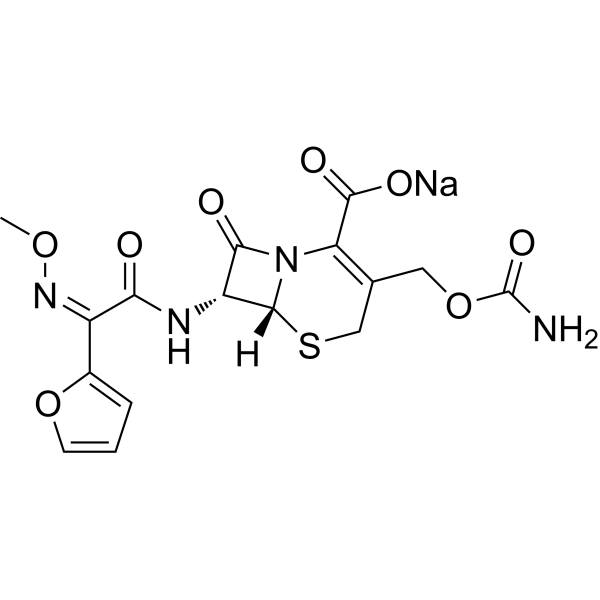
Cefuroxime sodium is an orally active second-generation cephalosporin antibiotic with increased stability to β-lactamase. Cefuroxime sodium has a broad spectrum activity against Gram-positive and Gram-negative bacteria.
For research use only. We do not sell to patients.
- Purity : 99.75%
- CAS No.: 56238-63-2
- Formula: C16H15N4NaO8S
- Molecular Weight:446.37
-
Storage:
4°C, sealed storage, away from moisture
* In solvent : -80°C, 6 months; -20°C, 1 month (sealed storage, away from moisture)

To place orders, for customer services and technical support, please contact: MedChemExpress USA
Tel: 609-228-6898 E-mail: [email protected] [email protected]


-
 Biological Activity
-
Chemical Information
-
Solvent & Solubility
- Protocols
- Purity & Documentation
- References
-
 Help & FAQs


-
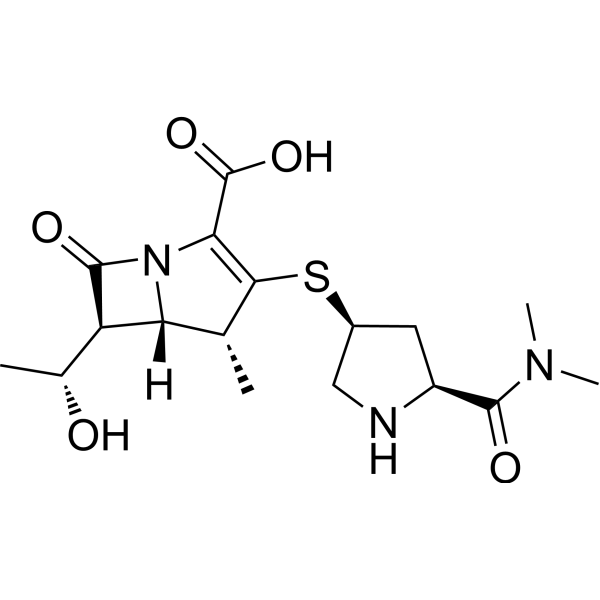
HY-13678
MeropenemAntimicrobial Agent -
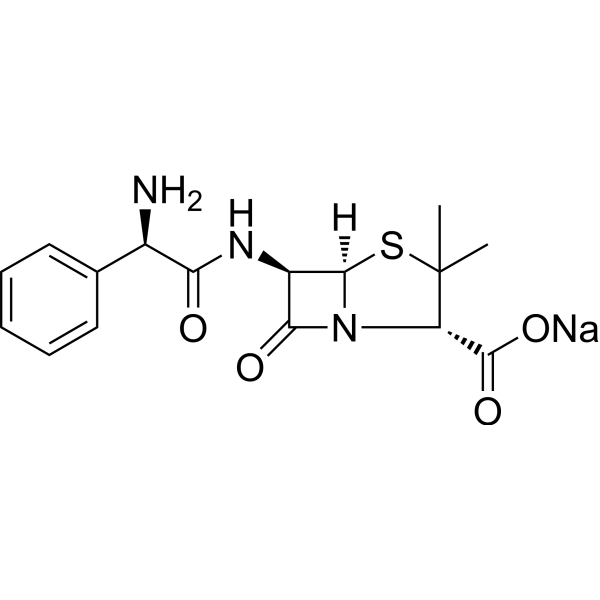
HY-B0522A
Ampicillin sodiumBacterial Inhibitor -
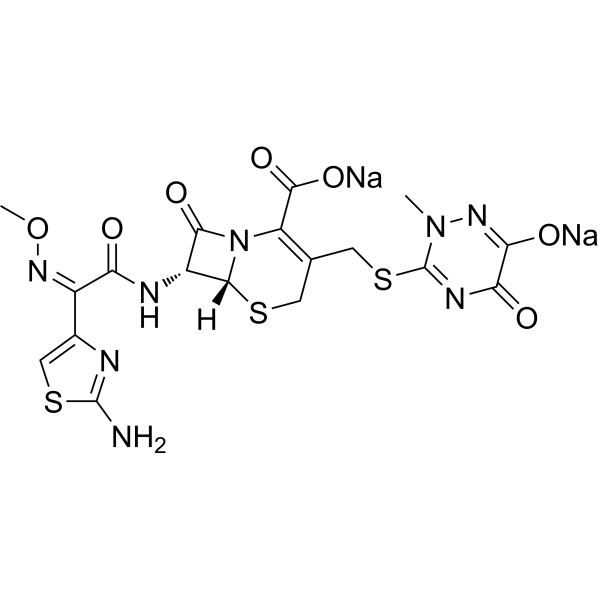
HY-B0712B
Ceftriaxone sodium saltAurora B inhibitor -
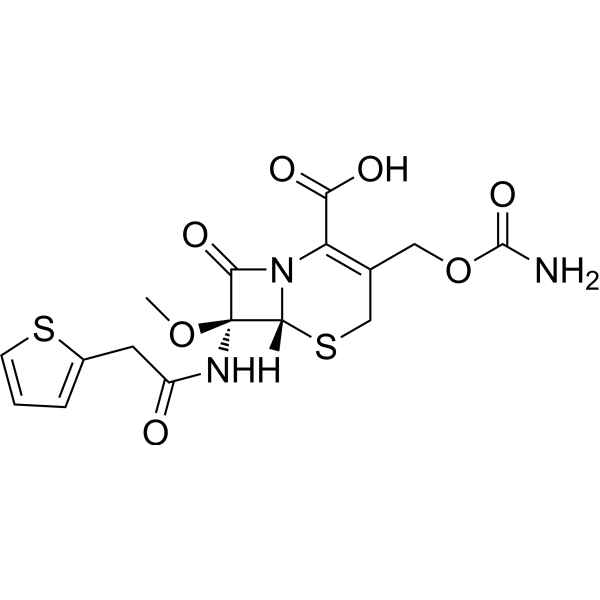
HY-B1825
CefoxitinAntibiotic -
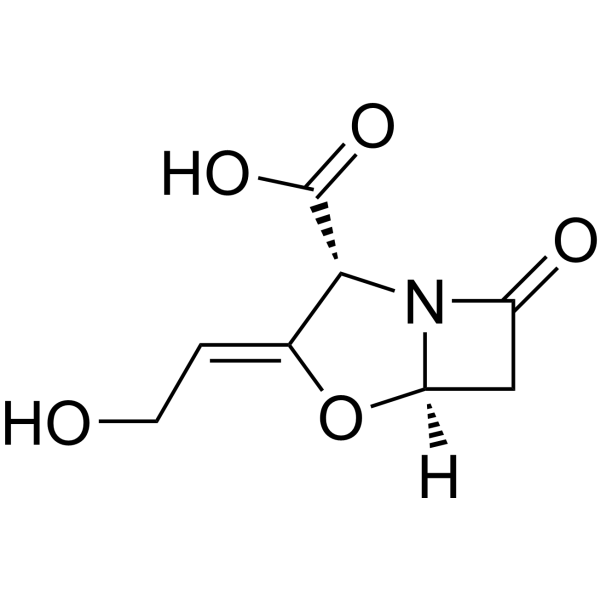
HY-A0256
Clavulanic acidβ-lactamase Inhibitor -
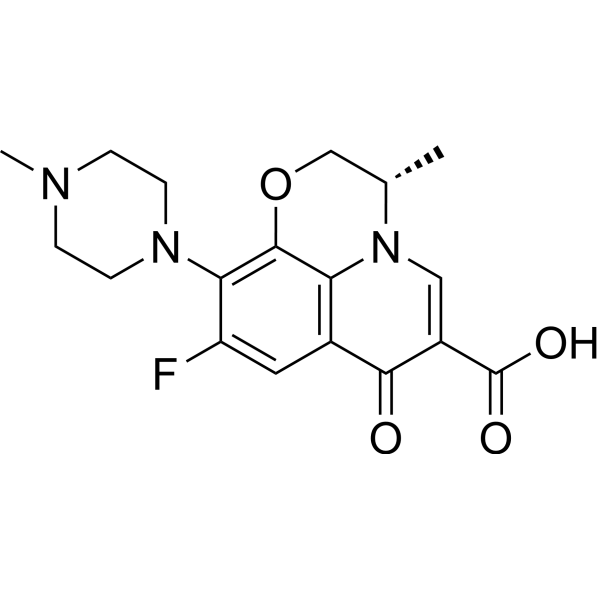
HY-B0330
LevofloxacinDNA Gyrase/Topoisomerase Inhibitor -
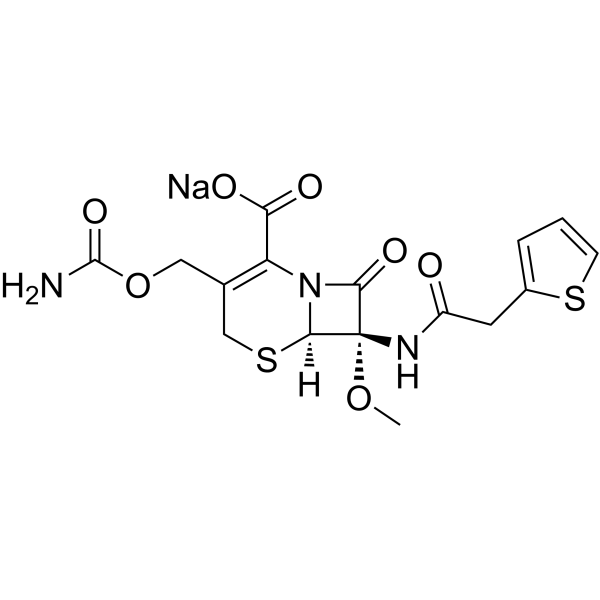
HY-B1117
Cefoxitin sodiumAntibiotic -
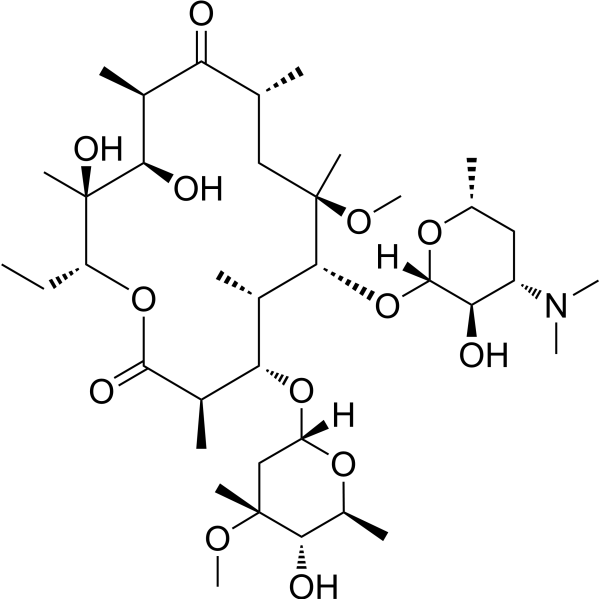
HY-17508
ClarithromycinAntimicrobial Agent -
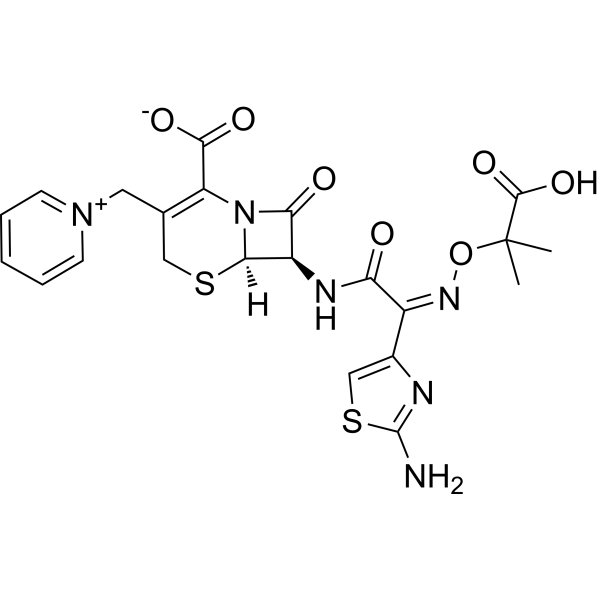
HY-B0593
CeftazidimeAntibiotic -
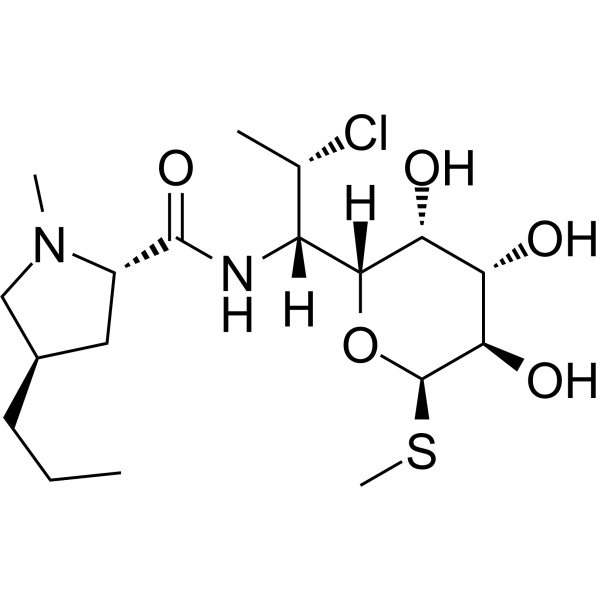
HY-B1455
ClindamycinLincosamide Antibiotic -
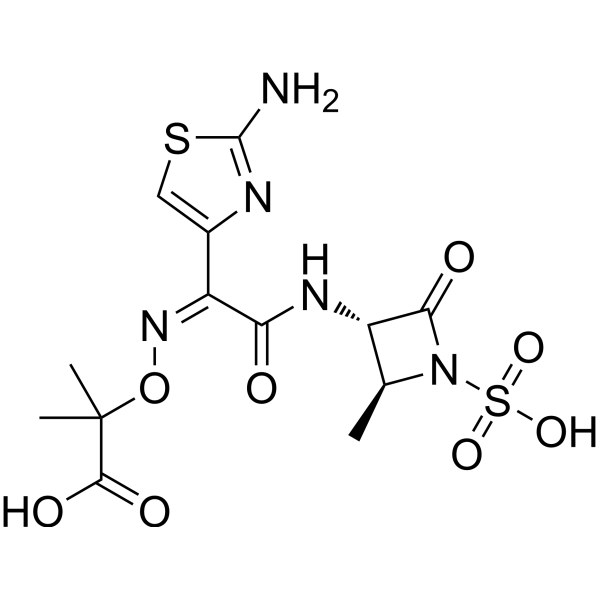
HY-B0129
AztreonamBacterial Inhibitor -
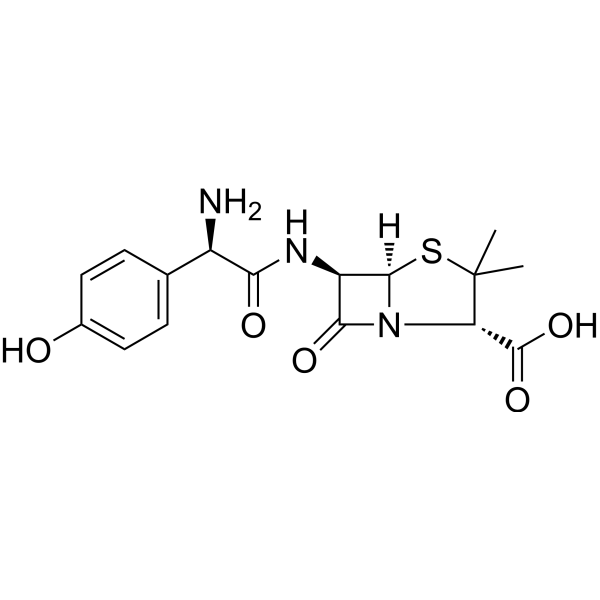
HY-B0467A
AmoxicillinAntibiotic
Publications Citing Use of MedChemExpress (MCE) Cefuroxime sodium
More- Signal Transduct Target Ther. 2025 Dec 15;10(1):406. [Abstract]
- Adv Funct Mater. 2024 Jun 19.
- Nat Commun. 2023 Mar 22;14(1):1594. [Abstract]
- Nat Commun. 2022 Mar 2;13(1):1116. [Abstract]
- J Chem Inf Model. 2021 Apr 26;61(4):2016-2025. [Abstract]
- RSC Adv. 2026 Jan 16;16(4):3694-3711. [Abstract]
- Int J Antimicrob Agents. 2024 Aug;64(2):107229. [Abstract]
- Biomed Res Int. 2018 Jul 2:2018:3579832. [Abstract]
- Diagn Microbiol Infect Dis. 2026 Nov;116(3):117584.
- Diagn Microbiol Infect Dis. 2026 Feb;114(2):117181. [Abstract]
- University of Texas. 2025.
All Beta-lactamase Isoforms
MoreAll Antibiotic Isoforms
More

Biological Activity
Description
IC50 & Target
|
β-lactam |
In Vitro
Cefuroxime sodium is highly active against S. aureus (MIC=0.25 μg/ml), regardless of whether the strains produces a penicillinase. It is against Staphylococcus aureus methicillin susceptible; S. aureus, methicillin resistant, Streptococcus pyogenes, S. pneumoniae, S. viridans, S. faecalis, and Clostridium spp with MIC values of 0.25 μg/ml, 5.9 μg/ml, 0.125 μg/ml, 0.125 μg/ml, 0.125 μg/ml, >125.0 μg/ml, and 1.2 μg/ml, respectively[1].Cefuroxime sodium (10-100 μg/ml; 2-6 hours) rapidly bactericidal, its action is comparatively slow against the strains of S. aureus, but, even so, over 99% of the initial inoculum is killed by 6 h. The gram-negative organisms are killed rapidly, and in most cases over 99% of the very large inocula are killed within 2 h; the β-lactamase-producing strains are killed as quickly as non-enzyme-producing strains[1].
MedChemExpress (MCE) has not independently confirmed the accuracy of these methods. They are for reference only. Further protocols information, click here.
In Vivo
MedChemExpress (MCE) has not independently confirmed the accuracy of these methods. They are for reference only.
Clinical Trial
| NCT Number | Sponsor | Condition | Start Date |
Phase

|
|---|---|---|---|---|
| NCT01329991 | Plexxikon| | 2011-05 | PHASE1 |


Chemical Information
-
CAS No. 56238-63-2
-
Appearance Solid
-
Molecular Weight 446.37
-
Formula C16H15N4NaO8S
-
Color White to off-white
-
SMILES
O=C(C(N12)=C(COC(N)=O)CS[C@]2([H])[C@H](NC(/C(C3=CC=CO3)=N\OC)=O)C1=O)O[Na]
-
Shipping
Room temperature in continental US; may vary elsewhere.
-
Storage
4°C, sealed storage, away from moisture
* In solvent : -80°C, 6 months; -20°C, 1 month (sealed storage, away from moisture)


Publications (11)
-
Journal Impact Factor
-
Most Recent
-
Signal Transduct Target Ther
Selective depletion of tumor-associated SAMHD1 enhances chemotherapeutic efficacy and antitumor immune responses. [Abstract]2025 Dec 15;10(1):406. PMID: 41392286 -
-
Nat Commun
2023 Mar 22;14(1):1594. PMID: 36949052 -
Nat Commun
Antimicrobial resistance and population genomics of multidrug-resistant Escherichia coli in pig farms in mainland China. [Abstract]2022 Mar 2;13(1):1116. PMID: 35236849 -
J Chem Inf Model
Macrolides May Prevent Severe Acute Respiratory Syndrome Coronavirus 2 Entry into Cells: A Quantitative Structure Activity Relationship Study and Experimental Validation. [Abstract]2021 Apr 26;61(4):2016-2025. PMID: 33734704 -
RSC Adv
Synthesis, characterization, and performance of the Fe-HApBio heterogeneous catalyst for electro-Fenton degradation of cefuroxime sodium. [Abstract]2026 Jan 16;16(4):3694-3711. PMID: 41550804 -
Int J Antimicrob Agents
The New Delhi metallo-β-lactamase-1 biosensor rapidly and accurately detected antibiotic plasma concentrations in cefuroxime-treated patients. [Abstract]2024 Aug;64(2):107229. PMID: 38823493 -
Biomed Res Int
In Vitro Activity of β-Lactams in Combination with β-Lactamase Inhibitors against Mycobacterium tuberculosis Clinical Isolates. [Abstract]2018 Jul 2:2018:3579832. PMID: 30065936 -
-
Diagn Microbiol Infect Dis
2026 Feb;114(2):117181. PMID: 41205476 -


Solvent & Solubility
In Vitro:
DMSO : ≥ 100 mg/mL (224.03 mM; Hygroscopic DMSO has a significant impact on the solubility of product, please use newly opened DMSO)
H2O : 50 mg/mL (112.01 mM; Need ultrasonic)
* "≥" means soluble, but saturation unknown.
Please refer to the solubility information to select the appropriate solvent. Once prepared, please aliquot and store the solution to prevent product inactivation from repeated freeze-thaw cycles.
Storage method and period of stock solution: -80°C, 6 months; -20°C, 1 month (sealed storage, away from moisture). When stored at -80°C, please use it within 6 months. When stored at -20°C, please use it within 1 month.
* Note: If you choose water as the stock solution, please dilute it to the working solution, then filter and sterilize it with a 0.22 μm filter before use.
Please refer to the solubility information to select the appropriate solvent. Once prepared, please aliquot and store the solution to prevent product inactivation from repeated freeze-thaw cycles.
Storage method and period of stock solution: -80°C, 6 months; -20°C, 1 month (sealed storage, away from moisture). When stored at -80°C, please use it within 6 months. When stored at -20°C, please use it within 1 month.
* Note: If you choose water as the stock solution, please dilute it to the working solution, then filter and sterilize it with a 0.22 μm filter before use.
Concentration (start) × Volume (start) = Concentration (final) × Volume (final)
In Vivo:
Select the appropriate dissolution method based on your experimental animal and administration route.
- For the following dissolution methods, please ensure to first prepare a clear stock solution using an In Vitro approach and then sequentially add co-solvents:
- To ensure reliable experimental results, the clarified stock solution can be appropriately stored based on storage conditions. As for the working solution for In Vivo experiments, it is recommended to prepare freshly and use it on the same day.
- The percentages shown for the solvents indicate their volumetric ratio in the final prepared solution. If precipitation or phase separation occurs during preparation, heat and/or sonication can be used to aid dissolution.
Add each solvent one by one: 10% DMSO 40% PEG300 5% Tween-80 45% Saline
Solubility: ≥ 2.5 mg/mL (5.60 mM); Clear solution
This protocol yields a clear solution of ≥ 2.5 mg/mL (saturation unknown).
Taking 1 mL working solution as an example, add 100 μL DMSO stock solution (25.0 mg/mL) to 400 μL PEG300, and mix evenly; then add 50 μL Tween-80 and mix evenly; then add 450 μL Saline to adjust the volume to 1 mL.
Preparation of Saline: Dissolve 0.9 g sodium chloride in ddH₂O and dilute to 100 mL to obtain a clear Saline solution.
Add each solvent one by one: 10% DMSO 90% (20% SBE-β-CD in Saline)
Solubility: ≥ 2.5 mg/mL (5.60 mM); Clear solution
This protocol yields a clear solution of ≥ 2.5 mg/mL (saturation unknown).
Taking 1 mL working solution as an example, add 100 μL DMSO stock solution (25.0 mg/mL) to 900 μL 20% SBE-β-CD in Saline, and mix evenly.
Preparation of 20% SBE-β-CD in Saline (4°C, storage for one week): 2 g SBE-β-CD powder is dissolved in 10 mL Saline, completely dissolve until clear.
For the following dissolution methods, please prepare the working solution directly:
It is recommended to prepare fresh solutions and use them promptly within a short period of time.
The percentages shown for the solvents indicate their volumetric ratio in the final prepared solution. If precipitation or phase separation occurs during preparation, heat and/or sonication can be used to aid dissolution.
Add each solvent one by one: PBS
Solubility: 55 mg/mL (123.22 mM); Clear solution; Need ultrasonic
In Vivo Dissolution Calculator
Please enter the basic information of animal experiments:
-
-
-
-
Recommended: Prepare an additional quantity of animals to account for potential losses during experiments.
Working solution concentration: 0.22 mg/mL
This product has good water solubility, please refer to the measured solubility data in water/PBS/Saline for details.

Protocols
-
Gram Staining of Tissue Sections
Gram staining of tissue sections is a histochemical technique used to differentiate Gram-positive and Gram-negative bacteria within histological specimens based on differences in bacterial cell wall structure and dye retention, adapted from classical bacteriological Gram staining into tissue-compatible “histological Gram stain” variants. In tissue applications, modifications of the Brown-Hopps and Brown-Brenn methods are commonly used to improve differentiation of microorganisms embedded within host connective tissue and to reduce overstaining or loss of Gram-negative signal, which are known limitations of earlier approaches. The principle relies on crystal violet-iodine complex retention in Gram-positive organisms and subsequent decolorization and counterstaining steps that allow contrast visualization of Gram-negative organisms against tissue background.


Purity & Documentation
-
Data Sheet (277 KB)
-
SDS (393 KB)
- English - EN (393 KB)
- Français - FR (393 KB)
- Deutsch - DE (393 KB)
- Norwegian - NO (393 KB)
- Español - ES (393 KB)
- Swedish - SV (393 KB)
- Italian - IT (393 KB)
- Korean - KR (393 KB)
- Portuguese - PT (393 KB)
-
Handling Instructions (2659 KB)
References
[1]. Callaghan, et al. Cefuroxime sodium, a New Cephalosporin Antibiotic: Activity in Vitro. Antimicrob Agents Chemother. 1976 Mar;9(3):511-9. [Content Brief]
[2]. D M Ryan, et al. Cefuroxime sodium, a New Cephalosporin Antibiotic: Activity in Vivo. Antimicrob Agents Chemother. 1976 Mar;9(3):520-5. [Content Brief]


Complete Stock Solution Preparation Table
Please refer to the solubility information to select the appropriate solvent. Once prepared, please aliquot and store the solution to prevent product inactivation from repeated freeze-thaw cycles.
Storage method and period of stock solution: -80°C, 6 months; -20°C, 1 month (sealed storage, away from moisture). When stored at -80°C, please use it within 6 months. When stored at -20°C, please use it within 1 month.
| Optional Solvent | Concentration Solvent Mass | 1 mg | 5 mg | 10 mg | 25 mg |
|---|---|---|---|---|---|
| H2O / DMSO | 1 mM | 2.2403 mL | 11.2015 mL | 22.4029 mL | 56.0073 mL |
| 5 mM | 0.4481 mL | 2.2403 mL | 4.4806 mL | 11.2015 mL | |
| 10 mM | 0.2240 mL | 1.1201 mL | 2.2403 mL | 5.6007 mL | |
| 15 mM | 0.1494 mL | 0.7468 mL | 1.4935 mL | 3.7338 mL | |
| 20 mM | 0.1120 mL | 0.5601 mL | 1.1201 mL | 2.8004 mL | |
| 25 mM | 0.0896 mL | 0.4481 mL | 0.8961 mL | 2.2403 mL | |
| 30 mM | 0.0747 mL | 0.3734 mL | 0.7468 mL | 1.8669 mL | |
| 40 mM | 0.0560 mL | 0.2800 mL | 0.5601 mL | 1.4002 mL | |
| 50 mM | 0.0448 mL | 0.2240 mL | 0.4481 mL | 1.1201 mL | |
| 60 mM | 0.0373 mL | 0.1867 mL | 0.3734 mL | 0.9335 mL | |
| 80 mM | 0.0280 mL | 0.1400 mL | 0.2800 mL | 0.7001 mL | |
| 100 mM | 0.0224 mL | 0.1120 mL | 0.2240 mL | 0.5601 mL |
* Note: If you choose water as the stock solution, please dilute it to the working solution, then filter and sterilize it with a 0.22 μm filter before use.


Cefuroxime sodium Related Classifications
HY-B1256 Related Classifications
 Powered by Bioz