



Cefuroxime axetil

Based on 1 Customer Validation
Cefuroxime axetil is an orally effective broad-spectrum β-lactam antibiotic that targets bacterial penicillin-binding proteins (PBPs, such as PBP3 and PBP1). Cefuroxime axetil inhibits cell wall synthesis, leading to bacterial lysis and death, with a minimum inhibitory concentration (MIC) of 0.12-4 mg/L for non-typeable Haemophilus influenzae (NTHi). Cefuroxime axetil is hydrolyzed by esterase to the active ingredient Cefuroxime (HY-B1256A) after oral absorption. Topical administration of Cefuroxime via bioadhesive nanoparticles (BNPs) can prolong the drug's retention time in the middle ear (≥7 days). Cefuroxime axetil can be used in the study of otitis media (especially NTHi infection). Cefuroxime axetil can achieve precise antibacterial effects through oral or topical nano-delivery systems, reducing systemic exposure and the risk of antibiotic resistance.
For research use only. We do not sell to patients.
- Purity : 99.29%
- CAS No.: 64544-07-6
- Formula: C20H22N4O10S
- Molecular Weight:510.47
-
Storage:
4°C, protect from light
* In solvent : -80°C, 6 months; -20°C, 1 month (protect from light)

To place orders, for customer services and technical support, please contact: MedChemExpress USA
Tel: 609-228-6898 E-mail: [email protected] [email protected]


-
 Biological Activity
-
Chemical Information
-
Solvent & Solubility
- Protocols
- Purity & Documentation
- References
-
 Help & FAQs


-
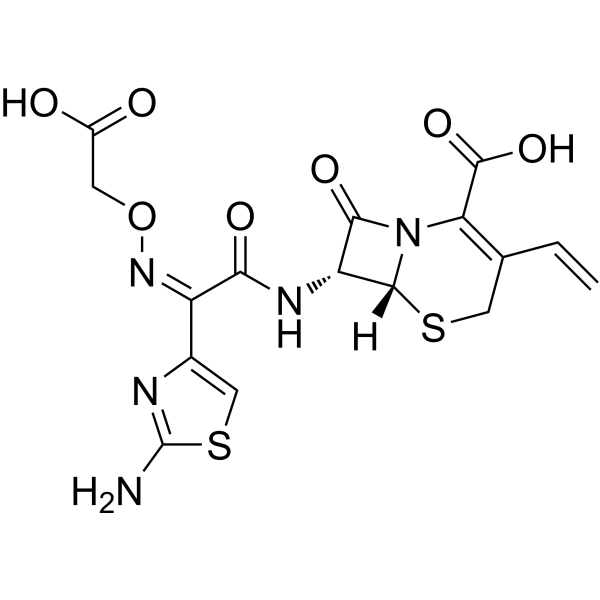
HY-B1381
CefiximeBacterial Inhibitor -
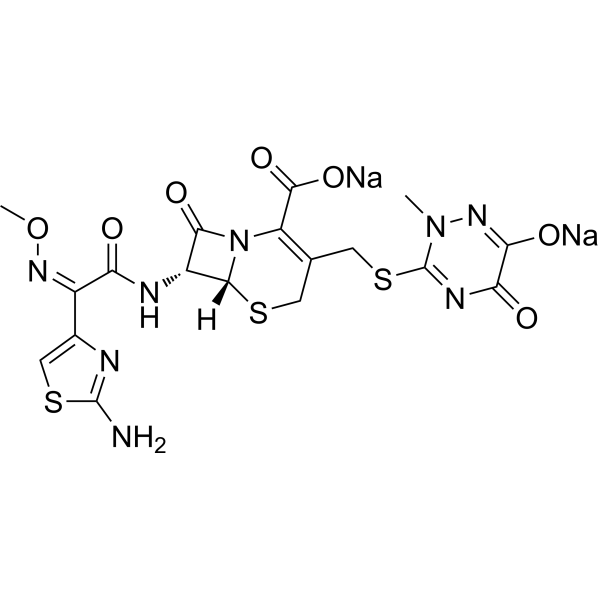
HY-B0712B
Ceftriaxone sodium saltAurora B inhibitor -
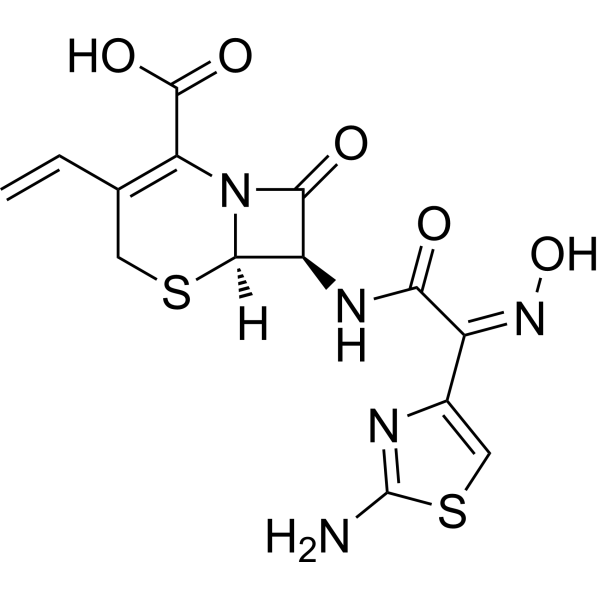
HY-B0136
CefdinirBacterial Inhibitor -
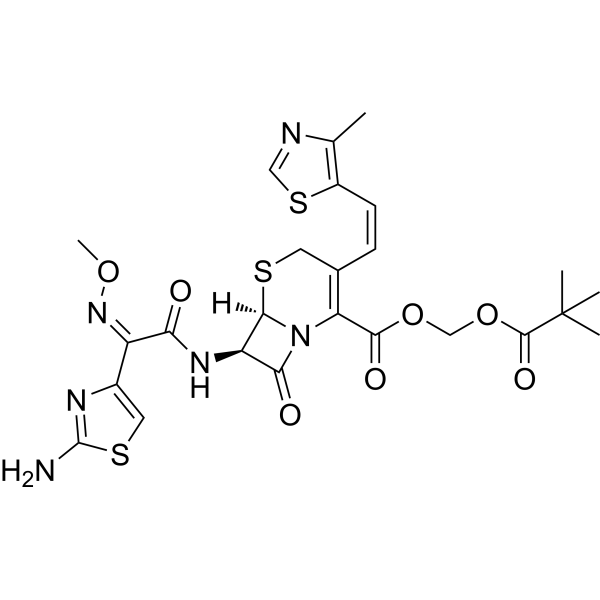
HY-17452A
Cefditoren PivoxilAntibacterial Agent -
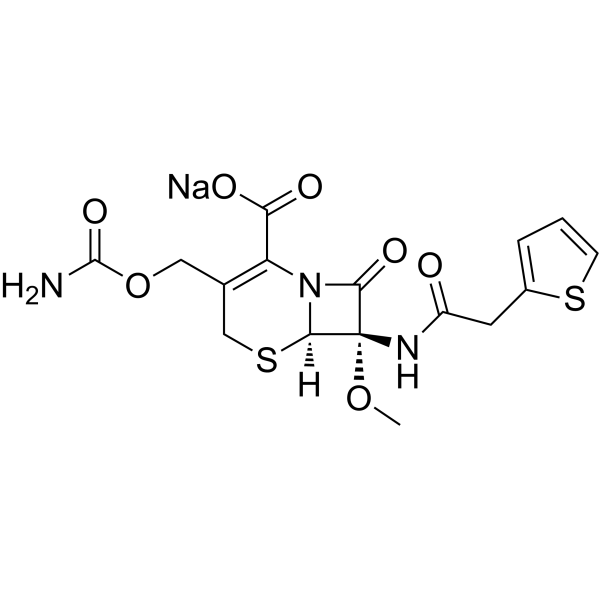
HY-B1117
Cefoxitin sodiumAntibiotic -

HY-B1117R
Cefoxitin sodium (Standard)Antibiotic -

HY-B1325R
Cefuroxime axetil (Standard)Bacterial Inhibitor -
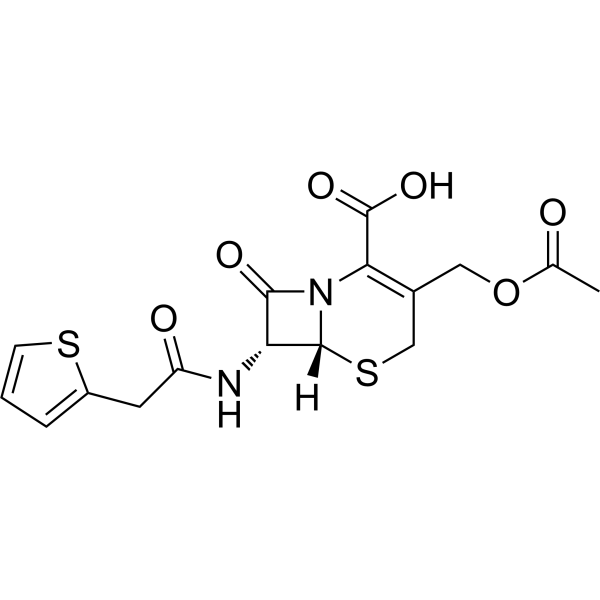
HY-B1275A
Cephalothinβ-Lactam Antibiotic -
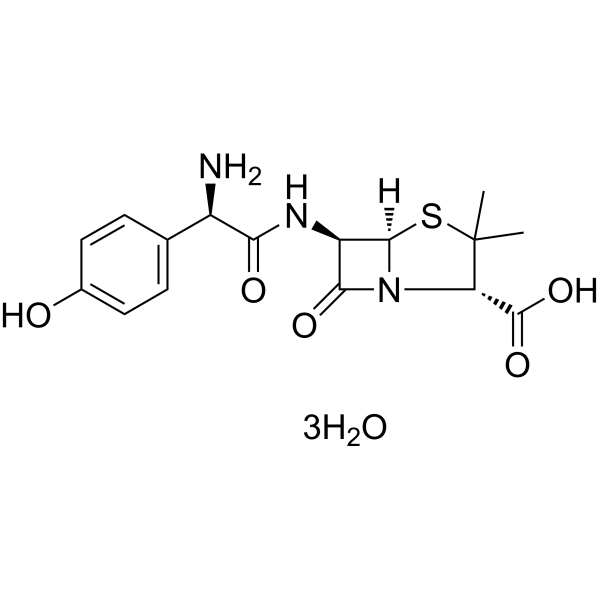
HY-B0467B
Amoxicillin trihydrateAntibiotic -
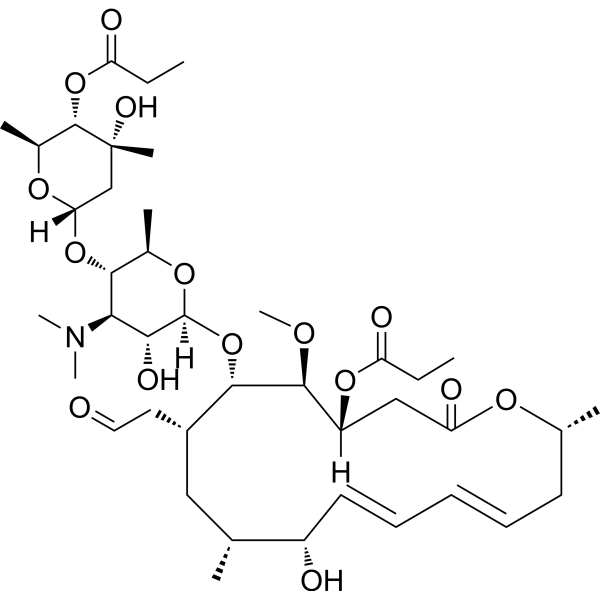
HY-B1908
MidecamycinBacterial Inhibitor -
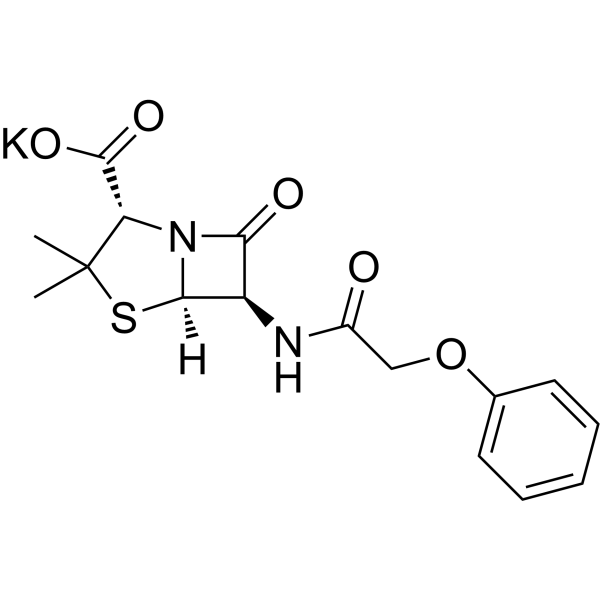
HY-B0975
Penicillin V PotassiumAntibiotic -

HY-B0136R
Cefdinir (Standard)Bacterial Inhibitor
All Antibiotic Isoforms
More

Biological Activity
Description
IC50 & Target
|
β-lactam |
In Vitro
Kinase activity assay:
Cefuroxime axetil has a potent inhibitory effect on penicillin-binding proteins (PBPs) of Gram-positive bacteria (such as Streptococcus pneumoniae and Streptococcus pyogenes) and Gram-negative bacteria (such as Haemophilus influenzae and Moraxella catarrhalis). The MIC90 for penicillin-sensitive Streptococcus pneumoniae is ≤0.25 mg/L, and the MIC90 for β-lactamase-producing Haemophilus influenzae and Moraxella catarrhalis are 1-2 mg/L and 0.5 mg/L, respectively[1].
In vitro antibacterial tests:
Cefuroxime axetil has limited activity against penicillin-resistant Streptococcus pneumoniae (MIC90=2-8 mg/L) and methicillin-susceptible Staphylococcus aureus (MIC90=2-4 mg/L), with highly sensitive to Neisseria gonorrhoeae (MIC90=0.06-0.125 mg/L)[1].
MedChemExpress (MCE) has not independently confirmed the accuracy of these methods. They are for reference only.
In Vivo
Cefuroxime axetil (30 mg/kg; oral gavage; twice daily; 5-10 days) significantly inhibits the bacterial load in the middle ear in the acute otitis media model induced by non-typical Haemophilus influenzae (NTHi) in C57BL/6J female mice (6-8 weeks old). The middle ear effusion disappeares after 7 days, and histopathology shows a significant reduction in inflammation. The blood concentration is below the detection limit without systemic toxicity[1].
Community-acquired pneumonia (CAP) rat model:
Cefuroxime axetil (20 mg/kg/day; oral; twice daily; 7-14 days) shows comparable bacterial clearance to the control group in the adult rat CAP model compared with sequential treatment with intravenous cefuroxime (HY-B1256A) with good gastrointestinal tolerance[1].
MedChemExpress (MCE) has not independently confirmed the accuracy of these methods. They are for reference only.
-
Animal Model:Female C57BL/6J mice (6-8 weeks old) with NTHi-induced acute otitis media model[1]
-
Dosage:30 mg/kg
-
Administration:Oral gavage, twice daily, for 5-10 days
-
Result:Reduced bacterial colony-forming units (CFU) in middle ear effusion by >99% compared to vehicle control.
At day 7, clinical signs of inflammation (e.g., tympanic membrane redness, effusion) resolved in 93% of treated mice, with no histopathological evidence of tissue damage.
Remained serum drug concentrations undetectable, confirming minimal systemic exposure.
-
Animal Model:Adult Sprague-Dawley rats (~200-250 g) with community-acquired pneumonia model[1]
-
Dosage:250 mg or 500 mg (tablet formulation)
-
Administration:Oral administration, twice daily, for 7-14 days
-
Result:Resulted clinical cure rates of 85% (250 mg group) and 94% (500 mg group) at end-of-treatment, comparable to intravenous cefuroxime followed by oral cefuroxime axetil (sequential therapy).
Bacterial eradication rates were 89%-95% for Streptococcus pneumoniae and Haemophilus influenzae isolates, without significant differences in safety profiles compared to comparators.
Gastrointestinal adverse events (e.g., diarrhea) occurred in <5% of treated animals.
Clinical Trial
| NCT Number | Sponsor | Condition | Start Date |
Phase

|
|---|---|---|---|---|
| NCT01329991 | Plexxikon| | 2011-05 | PHASE1 |


Chemical Information
-
CAS No. 64544-07-6
-
Appearance Solid
-
Molecular Weight 510.47
-
Formula C20H22N4O10S
-
Color White to off-white
-
SMILES
O=C(C(N12)=C(COC(N)=O)CS[C@]2([H])[C@H](NC(/C(C3=CC=CO3)=N\OC)=O)C1=O)OC(OC(C)=O)C
-
Shipping
Room temperature in continental US; may vary elsewhere.
-
Storage
4°C, protect from light
* In solvent : -80°C, 6 months; -20°C, 1 month (protect from light)


Solvent & Solubility
In Vitro:
DMSO : 125 mg/mL (244.87 mM; Need ultrasonic; Hygroscopic DMSO has a significant impact on the solubility of product, please use newly opened DMSO)
Please refer to the solubility information to select the appropriate solvent. Once prepared, please aliquot and store the solution to prevent product inactivation from repeated freeze-thaw cycles.
Storage method and period of stock solution: -80°C, 6 months; -20°C, 1 month (protect from light). When stored at -80°C, please use it within 6 months. When stored at -20°C, please use it within 1 month.
Please refer to the solubility information to select the appropriate solvent. Once prepared, please aliquot and store the solution to prevent product inactivation from repeated freeze-thaw cycles.
Storage method and period of stock solution: -80°C, 6 months; -20°C, 1 month (protect from light). When stored at -80°C, please use it within 6 months. When stored at -20°C, please use it within 1 month.
Concentration (start) × Volume (start) = Concentration (final) × Volume (final)
In Vivo:
Select the appropriate dissolution method based on your experimental animal and administration route.
- For the following dissolution methods, please ensure to first prepare a clear stock solution using an In Vitro approach and then sequentially add co-solvents:
- To ensure reliable experimental results, the clarified stock solution can be appropriately stored based on storage conditions. As for the working solution for In Vivo experiments, it is recommended to prepare freshly and use it on the same day.
- The percentages shown for the solvents indicate their volumetric ratio in the final prepared solution. If precipitation or phase separation occurs during preparation, heat and/or sonication can be used to aid dissolution.
Add each solvent one by one: 10% DMSO 40% PEG300 5% Tween-80 45% Saline
Solubility: ≥ 2.08 mg/mL (4.07 mM); Clear solution
This protocol yields a clear solution of ≥ 2.08 mg/mL (saturation unknown).
Taking 1 mL working solution as an example, add 100 μL DMSO stock solution (20.8 mg/mL) to 400 μL PEG300, and mix evenly; then add 50 μL Tween-80 and mix evenly; then add 450 μL Saline to adjust the volume to 1 mL.
Preparation of Saline: Dissolve 0.9 g sodium chloride in ddH₂O and dilute to 100 mL to obtain a clear Saline solution.
Add each solvent one by one: 10% DMSO 90% (20% SBE-β-CD in Saline)
Solubility: ≥ 2.08 mg/mL (4.07 mM); Clear solution
This protocol yields a clear solution of ≥ 2.08 mg/mL (saturation unknown).
Taking 1 mL working solution as an example, add 100 μL DMSO stock solution (20.8 mg/mL) to 900 μL 20% SBE-β-CD in Saline, and mix evenly.
Preparation of 20% SBE-β-CD in Saline (4°C, storage for one week): 2 g SBE-β-CD powder is dissolved in 10 mL Saline, completely dissolve until clear.
In Vivo Dissolution Calculator
Please enter the basic information of animal experiments:
-
-
-
-
Recommended: Prepare an additional quantity of animals to account for potential losses during experiments.
Please enter your animal formula composition:
-
%DMSO +
Recommended: Keep the proportion of DMSO in working solution below 2% if your animal is weak.
-
%+
-
+%Tween-80 + +
-
%Saline +
The co-solvents required include: DMSO, . All of co-solvents are available by MedChemExpress (MCE). , Tween 80. All of co-solvents are available by MedChemExpress (MCE).
Working solution concentration: 0.22 mg/mL
Method for preparing stock solution: mg drug dissolved in μL DMSO. Stock solution concentration: mg/mL. * In solvent : -80°C, 6 months; -20°C, 1 month (protect from light)
1. Take μL DMSO stock solution;
2. Add μL .
μL , mix evenly;
3. Then add μL Tween 80, mix evenly;
4. Then add μL
Please ensure that the stock solution in the first step is dissolved to a clear state, and add co-solvents in sequence. You can use ultrasonic heating (ultrasonic cleaner, recommended frequency 20-40 kHz), vortexing, etc. to assist dissolution.


Purity & Documentation
-
Data Sheet (283 KB)
-
SDS (557 KB)
- English - EN (557 KB)
- Français - FR (557 KB)
- Deutsch - DE (557 KB)
- Norwegian - NO (557 KB)
- Español - ES (557 KB)
- Swedish - SV (557 KB)
- Italian - IT (557 KB)
- Korean - KR (557 KB)
- Portuguese - PT (557 KB)
-
Handling Instructions (2659 KB)
References
[1]. Scott LJ, et al. Cefuroxime axetil: an updated review of its use in the management of bacterial infections. Drugs. 2001;61(10):1455-500. [Content Brief]
[2]. Lin H, et al. In Vivo Evaluation of Cefuroxime Axetil-Loaded Bioadhesive Nanoparticles to Treat Haemophilus influenzae-Induced Otitis Media. Front Bioeng Biotechnol. 2022 Apr 29;10:884797. [Content Brief]


Complete Stock Solution Preparation Table
Please refer to the solubility information to select the appropriate solvent. Once prepared, please aliquot and store the solution to prevent product inactivation from repeated freeze-thaw cycles.
Storage method and period of stock solution: -80°C, 6 months; -20°C, 1 month (protect from light). When stored at -80°C, please use it within 6 months. When stored at -20°C, please use it within 1 month.
| Optional Solvent | Concentration Solvent Mass | 1 mg | 5 mg | 10 mg | 25 mg |
|---|---|---|---|---|---|
| DMSO | 1 mM | 1.9590 mL | 9.7949 mL | 19.5898 mL | 48.9745 mL |
| 5 mM | 0.3918 mL | 1.9590 mL | 3.9180 mL | 9.7949 mL | |
| 10 mM | 0.1959 mL | 0.9795 mL | 1.9590 mL | 4.8974 mL | |
| 15 mM | 0.1306 mL | 0.6530 mL | 1.3060 mL | 3.2650 mL | |
| 20 mM | 0.0979 mL | 0.4897 mL | 0.9795 mL | 2.4487 mL | |
| 25 mM | 0.0784 mL | 0.3918 mL | 0.7836 mL | 1.9590 mL | |
| 30 mM | 0.0653 mL | 0.3265 mL | 0.6530 mL | 1.6325 mL | |
| 40 mM | 0.0490 mL | 0.2449 mL | 0.4897 mL | 1.2244 mL | |
| 50 mM | 0.0392 mL | 0.1959 mL | 0.3918 mL | 0.9795 mL | |
| 60 mM | 0.0326 mL | 0.1632 mL | 0.3265 mL | 0.8162 mL | |
| 80 mM | 0.0245 mL | 0.1224 mL | 0.2449 mL | 0.6122 mL | |
| 100 mM | 0.0196 mL | 0.0979 mL | 0.1959 mL | 0.4897 mL |


Cefuroxime axetil Related Classifications
HY-B1325 Related Classifications
 Powered by Bioz