



Zidebactam
Based on 12 publication(s) in Google Scholar
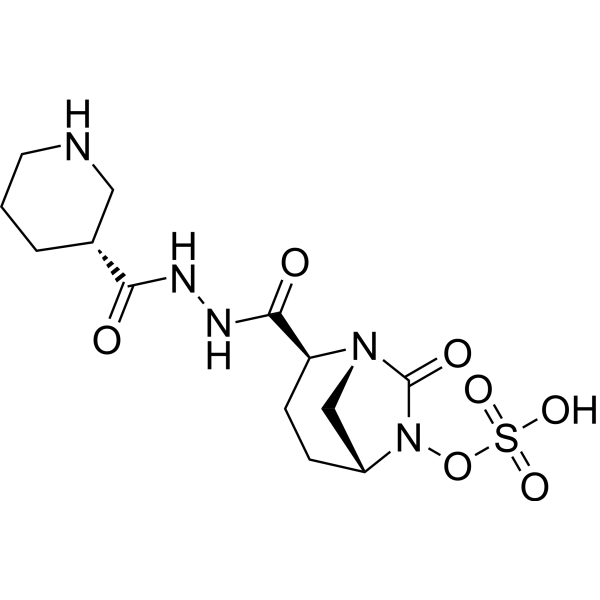
Zidebactam (WCK-5107) is a potent β-lactamase inhibitor. Zidebactam also is a penicillin-binding protein2 (PBP2) inhibitor with an IC50 of 0.26 μg/mL.
Nur für Forschungszwecke. Wir verkaufen nicht an Patienten.
- Reinheit : 98.55%
- CAS. Nr.: 1436861-97-0
- Formel: C13H21N5O7S
- Molecular Weight:391.40
-
Speicherung:Powder -20°C, 3 years , 4°C, 2 years ; In solvent -80°C, 2 years , -20°C, 1 year

To place orders, for customer services and technical support, please contact: MedChemExpress USA
Tel: 609-228-6898 E-mail: [email protected] [email protected]


-
 Biologische Aktivität
-
Chemical Information
-
Lösungsmittel & Löslichkeit
- Reinheit & Dokumentation
- Verweise
-
 Help & FAQs


-
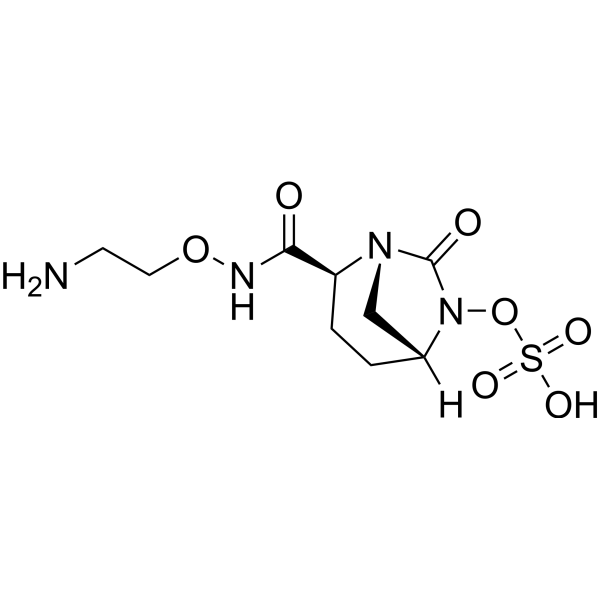
HY-109008
Nacubactamβ-Lactamase Inhibitor -
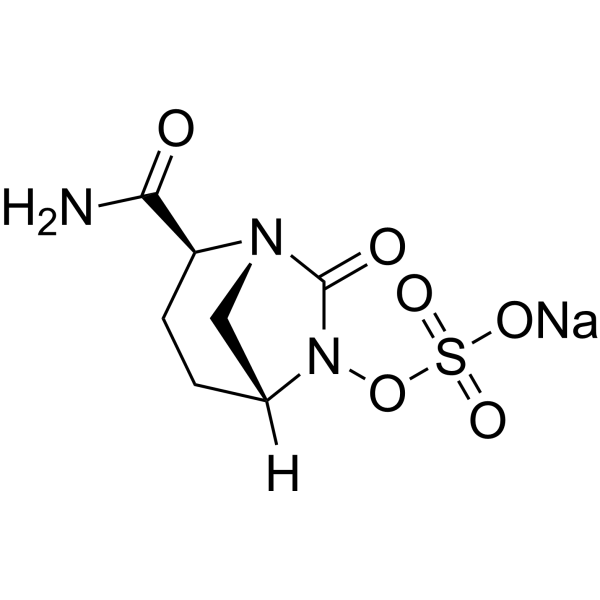
HY-14879A
Avibactam sodiumBeta-lactamase Inhibitor -
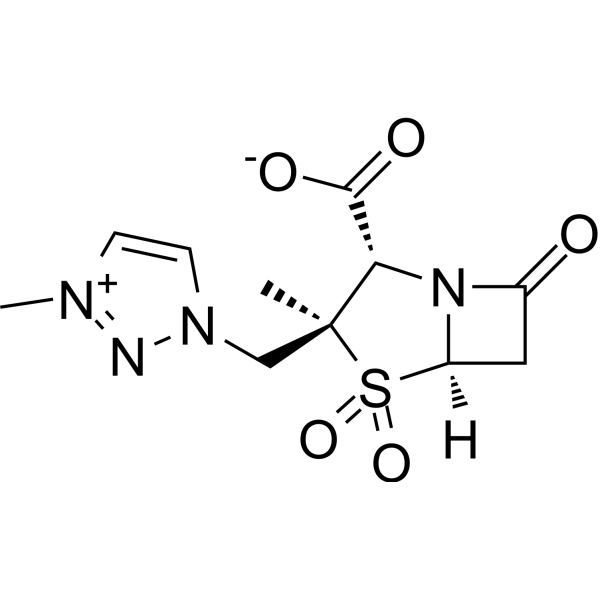
HY-103095
Enmetazobactamβ-lactamase Inhibitor -
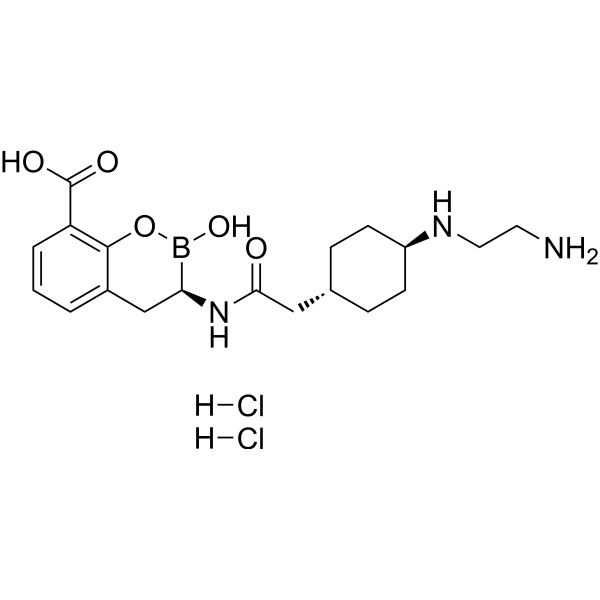
HY-109124A
Taniborbactam hydrochlorideβ-lactamase Inhibitor -
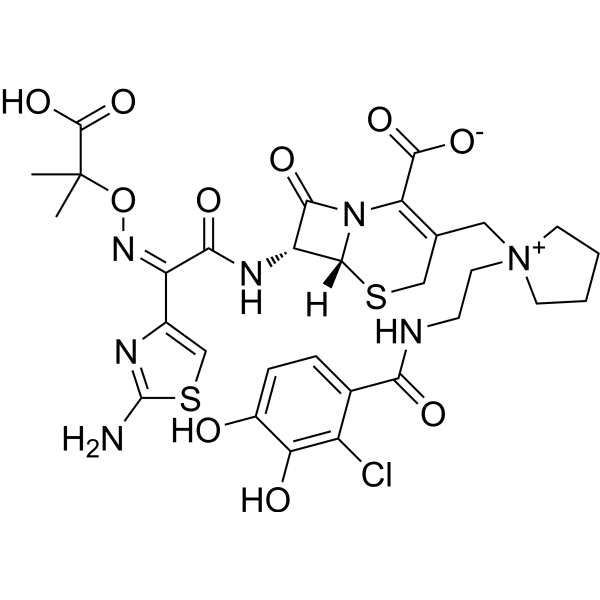
HY-17628
CefiderocolAntibiotic -
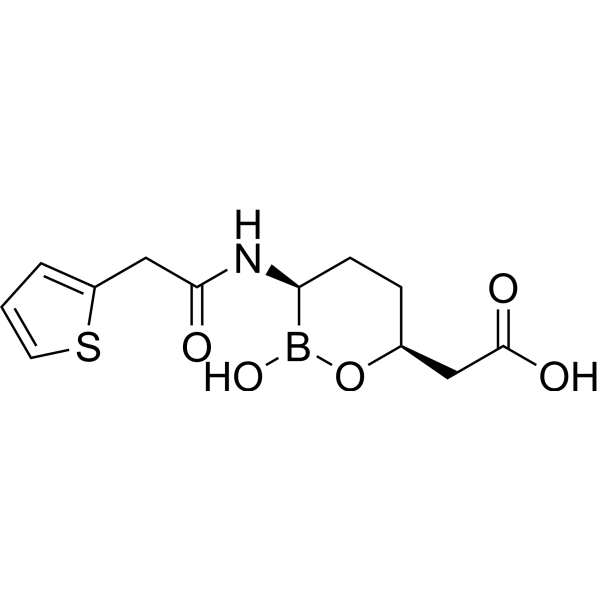
HY-19930
Vaborbactamβ-lactamase Inhibitor -
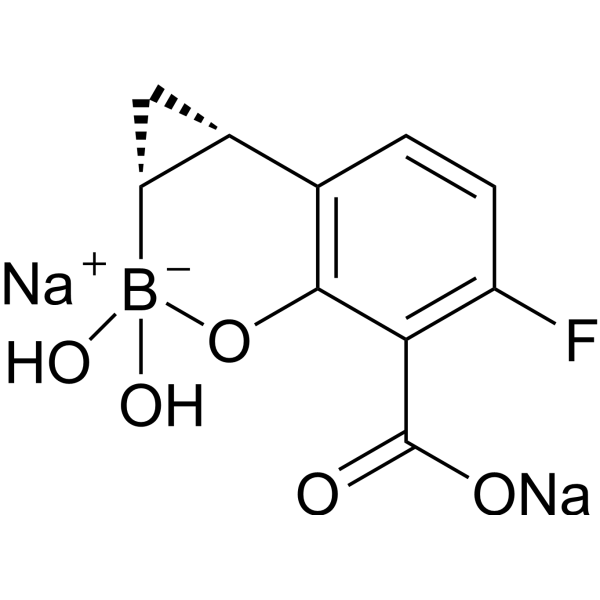
HY-136072
Xeruborbactam disodiumBeta-lactamase Inhibitor -
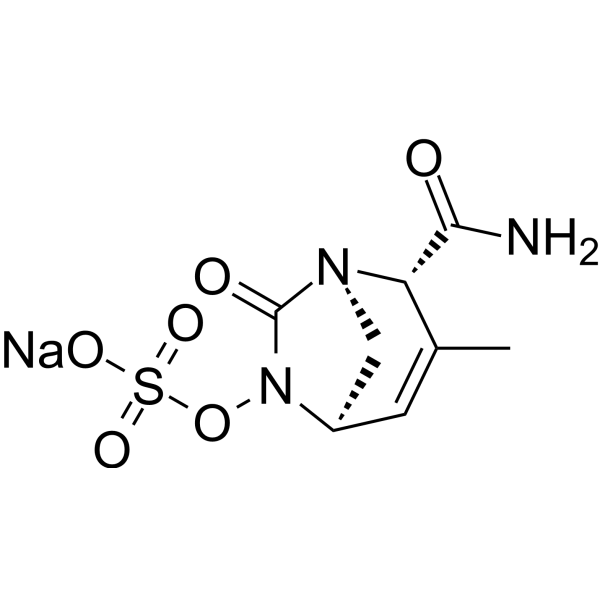
HY-117974
Durlobactam sodiumβ-lactamase Inhibitor -
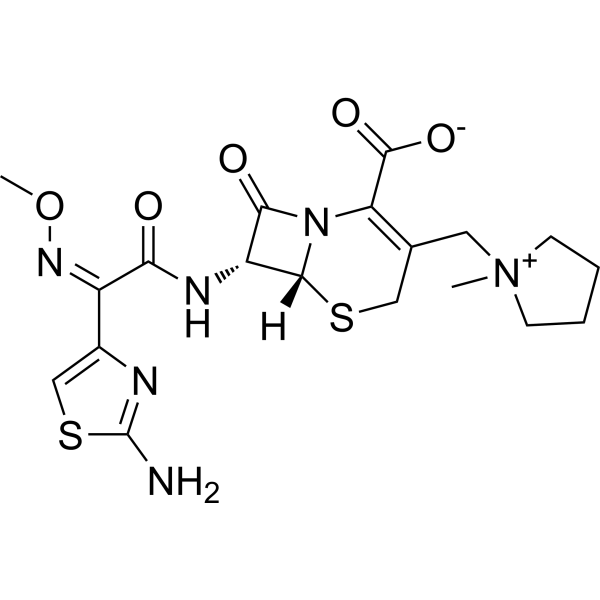
HY-B0692
CefepimeAntibiotic -
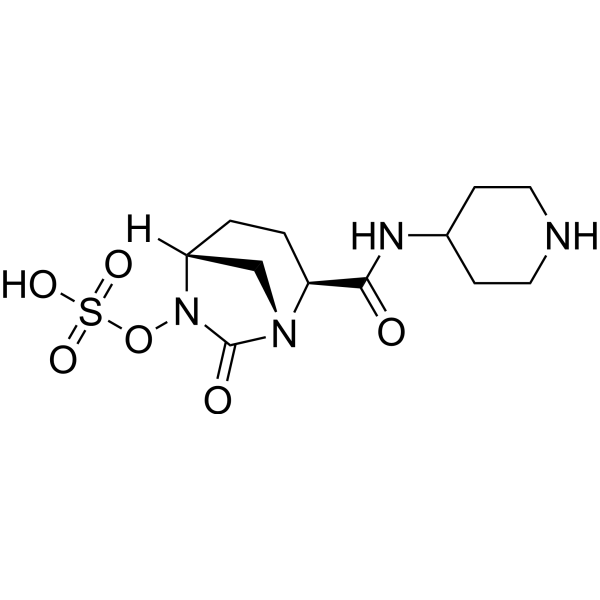
HY-16752
RelebactamBeta-lactamase Inhibitor -
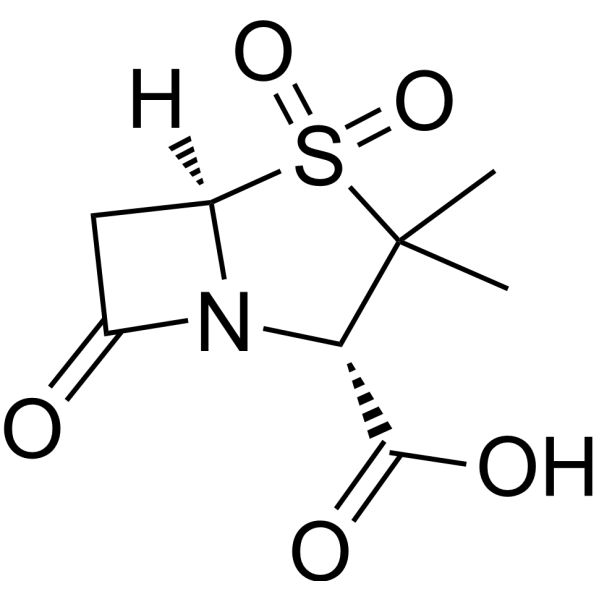
HY-B0334
SulbactamBeta-lactamase Inhibitor -
HY-15141
StaurosporinePKC/PKA Inhibitor
Publications Citing Use of MedChemExpress (MCE) Zidebactam
More- NPJ Antimicrob Resist. 2026 Jul 11.
- Antibiotics (Basel). 2021 Nov 3;10(11):1341. [Abstract]
- Sci Rep. 2025 Sep 29;15(1):33616. [Abstract]
- Antimicrob Agents Chemother. 2026 Sep 9:e0012926.
- Antimicrob Agents Chemother. 2024 Nov 6;68(11):e0077524. [Abstract]
- Antimicrob Agents Chemother. 2023 Jul 18;67(7):e0033923. [Abstract]
- Antimicrob Agents Chemother. 2022 Feb 15;66(2):e0167621. [Abstract]
- J Antimicrob Chemother. 2025 Apr 2;80(4):1137-1140. [Abstract]
- J Antimicrob Chemother. 2023 May 3;78(5):1191-1194. [Abstract]
- Microbiol Spectr. 2022 Feb 23;10(1):e0267821. [Abstract]
- University of Skovde. 2025.
- bioRxiv. 2025 January 21.
 Customer Validation & Images

-
Cell Proliferation/Viability Assay
-
Cell Proliferation/Viability Assay
Alle Beta-lactamase Isoform-spezifische Produkte anzeigen
More

Biologische Aktivität
Beschreibung
IC50 & Target
IC50: 0.26 μg/mL (P. aeruginosa PAO1 PBP2)[2]
In Vitro
Zidebactam (WCK-5107) inhibits WT Enterobacteriaceae with a MIC50 of 0.25 mg/L. Zidebactam alone exhibits variable activity when tested against E. coli (MIC50/90 0.12/0.12 mg/L) and Enterobacter spp. (MIC50/90 0.12/0.25 mg/L)[1].
MedChemExpress (MCE) has not independently confirmed the accuracy of these methods. They are for reference only.
Clinical Trial
| NCT Number | Sponsor | Condition | Start Date |
Phase

|
|---|---|---|---|---|
| NCT01329991 | Plexxikon| | 2011-05 | PHASE1 |


Chemical Information
-
CAS. Nr. 1436861-97-0
-
Appearance Solid
-
Molecular Weight 391.40
-
Formel C13H21N5O7S
-
Color White to yellow
-
SMILES
O=C([C@@H]1CCCNC1)NNC([C@@H]2CC[C@@H]3C[N@]2C(N3OS(=O)(O)=O)=O)=O
-
Synonyms
WCK-5107
-
Versand
Room temperature in continental US; may vary elsewhere.
-
Speicherung
Powder -20°C 3 years 4°C 2 years In solvent -80°C 2 years -20°C 1 year


Publications (12)
-
Journal Impact Factor
-
Most Recent
-
-
Antibiotics (Basel)
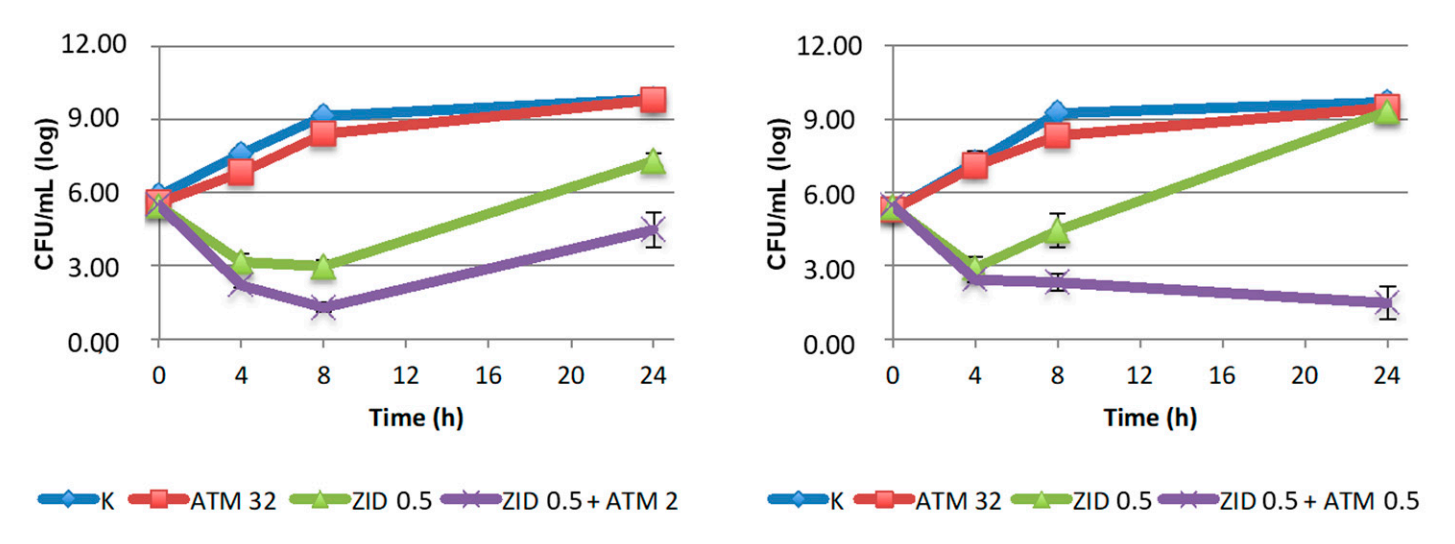
Antimicrobial Activity of Aztreonam in Combination with Old and New β-Lactamase Inhibitors against MBL and ESBL Co-Producing Gram-Negative Clinical Isolates: Possible Options for the Treatment of Complicated Infections. [Abstract]2021 Nov 3;10(11):1341. PMID: 34827279
Zidebactam purchased from MedChemExpress. Usage Cited in: Antibiotics (Basel). 2021 Nov 3;10(11):1341. [Abstract]
time–kill curves of Zidebactam (ZID) (0.5 µg/mL; 24 h) on C. amalonaticus N18 and K. pneumoniae KL 12 SG.
-
Sci Rep
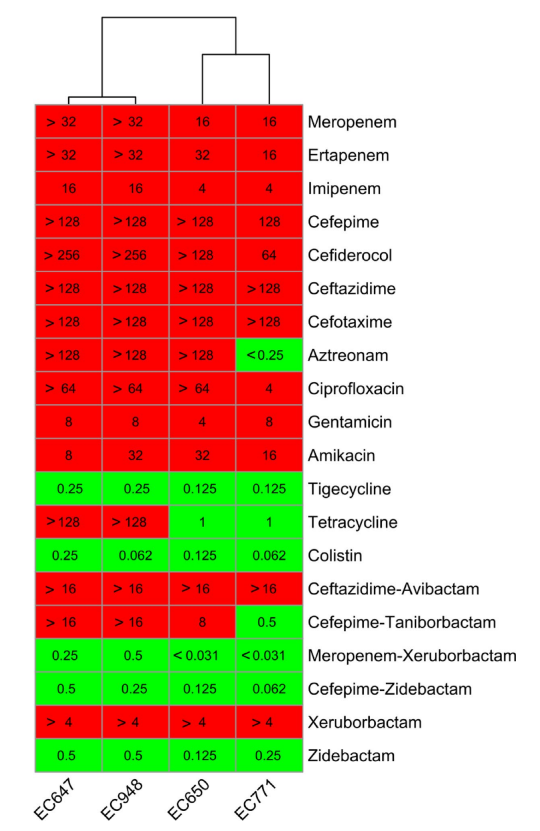
Sporadic cefiderocol resistance in Escherichia coli from the United Arab Emirates involves multifactorial mechanisms reversible by novel beta-lactamase inhibitors. [Abstract]2025 Sep 29;15(1):33616. PMID: 41023121
Zidebactam purchased from MedChemExpress. Usage Cited in: Sci Rep. 2025 Sep 29;15(1):33616. [Abstract]
Zidebactam (0.125-0.5 µg/mL) had a potent antibacterial effect on four E. coli strains.
-
-
Antimicrob Agents Chemother
Relative inhibitory activities of newly developed diazabicyclooctanes, boronic acid derivatives, and penicillin-based sulfone β-lactamase inhibitors against broad-spectrum AmpC β-lactamases. [Abstract]2024 Nov 6;68(11):e0077524. PMID: 39365068 -
Antimicrob Agents Chemother
Impact of Acquired Broad Spectrum β-Lactamases on Susceptibility to Novel Combinations Made of β-Lactams (Aztreonam, Cefepime, Meropenem, and Imipenem) and Novel β-Lactamase Inhibitors in Escherichia coli and Pseudomonas aeruginosa. [Abstract]2023 Jul 18;67(7):e0033923. PMID: 37255469 -
Antimicrob Agents Chemother
Assessment of Activity and Resistance Mechanisms to Cefepime in Combination with the Novel β-Lactamase Inhibitors Zidebactam, Taniborbactam, and Enmetazobactam against a Multicenter Collection of Carbapenemase-Producing Enterobacterales. [Abstract]2022 Feb 15;66(2):e0167621. PMID: 34807754 -
J Antimicrob Chemother
Decreased susceptibility to cefepime/zidebactam among carbapenemase-producing Escherichia coli from Stockholm, Sweden with alterations in PBP2. [Abstract]2025 Apr 2;80(4):1137-1140. PMID: 39960091 -
J Antimicrob Chemother
In vitro activity of cefepime/zidebactam and cefepime/taniborbactam against aztreonam/avibactam-resistant NDM-like-producing Escherichia coli clinical isolates. [Abstract]2023 May 3;78(5):1191-1194. PMID: 36921067 -
Microbiol Spectr
Molecular Characterization of WCK 5222 (Cefepime/Zidebactam)-Resistant Mutants Developed from a Carbapenem-Resistant Pseudomonas aeruginosa Clinical Isolate. [Abstract]2022 Feb 23;10(1):e0267821. PMID: 35196805 -
-


Lösungsmittel & Löslichkeit
In Vitro:
DMSO : 100 mg/mL (255.49 mM; Need ultrasonic; Hygroscopic DMSO has a significant impact on the solubility of product, please use newly opened DMSO)
H2O : 100 mg/mL (255.49 mM; Need ultrasonic)
Please refer to the solubility information to select the appropriate solvent. Once prepared, please aliquot and store the solution to prevent product inactivation from repeated freeze-thaw cycles.
Storage method and period of stock solution: -80°C, 2 years; -20°C, 1 year. When stored at -80°C, please use it within 2 years. When stored at -20°C, please use it within 1 year.
* Note: If you choose water as the stock solution, please dilute it to the working solution, then filter and sterilize it with a 0.22 μm filter before use.
Please refer to the solubility information to select the appropriate solvent. Once prepared, please aliquot and store the solution to prevent product inactivation from repeated freeze-thaw cycles.
Storage method and period of stock solution: -80°C, 2 years; -20°C, 1 year. When stored at -80°C, please use it within 2 years. When stored at -20°C, please use it within 1 year.
* Note: If you choose water as the stock solution, please dilute it to the working solution, then filter and sterilize it with a 0.22 μm filter before use.
Konzentration (Stammlösung) × Volumen (Stammlösung) = Konzentration (Ziellösung) × Volumen (Ziellösung)
In Vivo:
Select the appropriate dissolution method based on your experimental animal and administration route.
- For the following dissolution methods, please ensure to first prepare a clear stock solution using an In Vitro approach and then sequentially add co-solvents:
- To ensure reliable experimental results, the clarified stock solution can be appropriately stored based on storage conditions. As for the working solution for In Vivo experiments, it is recommended to prepare freshly and use it on the same day.
- The percentages shown for the solvents indicate their volumetric ratio in the final prepared solution. If precipitation or phase separation occurs during preparation, heat and/or sonication can be used to aid dissolution.
Add each solvent one by one: 10% DMSO 90% (20% SBE-β-CD in Saline)
Solubility: ≥ 2.08 mg/mL (5.31 mM); Clear solution
This protocol yields a clear solution of ≥ 2.08 mg/mL (saturation unknown).
Taking 1 mL working solution as an example, add 100 μL DMSO stock solution (20.8 mg/mL) to 900 μL 20% SBE-β-CD in Saline, and mix evenly.
Preparation of 20% SBE-β-CD in Saline (4°C, storage for one week): 2 g SBE-β-CD powder is dissolved in 10 mL Saline, completely dissolve until clear.
Add each solvent one by one: 10% DMSO 40% PEG300 5% Tween-80 45% Saline
Solubility: ≥ 1.98 mg/mL (5.06 mM); Clear solution
This protocol yields a clear solution of ≥ 1.98 mg/mL (saturation unknown).
Taking 1 mL working solution as an example, add 100 μL DMSO stock solution (19.8 mg/mL) to 400 μL PEG300, and mix evenly; then add 50 μL Tween-80 and mix evenly; then add 450 μL Saline to adjust the volume to 1 mL.
Preparation of Saline: Dissolve 0.9 g sodium chloride in ddH₂O and dilute to 100 mL to obtain a clear Saline solution.
For the following dissolution methods, please prepare the working solution directly:
It is recommended to prepare fresh solutions and use them promptly within a short period of time.
The percentages shown for the solvents indicate their volumetric ratio in the final prepared solution. If precipitation or phase separation occurs during preparation, heat and/or sonication can be used to aid dissolution.
Add each solvent one by one: PBS
Solubility: 100 mg/mL (255.49 mM); Clear solution; Need ultrasonic and warming and heat to 60°C
In Vivo Dissolution Calculator
Please enter the basic information of animal experiments:
-
-
-
-
Recommended: Prepare an additional quantity of animals to account for potential losses during experiments.
Working solution concentration: 0.22 mg/mL
This product has good water solubility, please refer to the measured solubility data in water/PBS/Saline for details.


Reinheit & Dokumentation
-
Data Sheet (278 KB)
-
SDS (254 KB)
- English - EN (254 KB)
- Français - FR (254 KB)
- Deutsch - DE (254 KB)
- Norwegian - NO (254 KB)
- Español - ES (254 KB)
- Swedish - SV (254 KB)
- Italian - IT (254 KB)
- Korean - KR (254 KB)
- Portuguese - PT (254 KB)
-
Handling Instructions (2659 KB)
Verweise
[1]. Sader HS, et al. WCK 5222 (cefepime/zidebactam) antimicrobial activity tested against Gram-negative organisms producing clinically relevant β-lactamases. J Antimicrob Chemother. 2017 Jun 1;72(6):1696-1703. [Content Brief]
[2]. Moya B, et al. WCK 5107 (Zidebactam) and WCK 5153 Are Novel Inhibitors of PBP2 Showing Potent "β-Lactam Enhancer" Activity against Pseudomonas aeruginosa, Including Multidrug-Resistant Metallo-β-Lactamase-Producing High-Risk Clones. Antimicrob Agents Chemother. 2017 May 24;61(6). [Content Brief]


Complete Stock Solution Preparation Table
Please refer to the solubility information to select the appropriate solvent. Once prepared, please aliquot and store the solution to prevent product inactivation from repeated freeze-thaw cycles.
Storage method and period of stock solution: -80°C, 2 years; -20°C, 1 year. When stored at -80°C, please use it within 2 years. When stored at -20°C, please use it within 1 year.
| Optional Solvent | Concentration Solvent Mass | 1 mg | 5 mg | 10 mg | 25 mg |
|---|---|---|---|---|---|
| DMSO / H2O | 1 mM | 2.5549 mL | 12.7747 mL | 25.5493 mL | 63.8733 mL |
| 5 mM | 0.5110 mL | 2.5549 mL | 5.1099 mL | 12.7747 mL | |
| 10 mM | 0.2555 mL | 1.2775 mL | 2.5549 mL | 6.3873 mL | |
| 15 mM | 0.1703 mL | 0.8516 mL | 1.7033 mL | 4.2582 mL | |
| 20 mM | 0.1277 mL | 0.6387 mL | 1.2775 mL | 3.1937 mL | |
| 25 mM | 0.1022 mL | 0.5110 mL | 1.0220 mL | 2.5549 mL | |
| 30 mM | 0.0852 mL | 0.4258 mL | 0.8516 mL | 2.1291 mL | |
| 40 mM | 0.0639 mL | 0.3194 mL | 0.6387 mL | 1.5968 mL | |
| 50 mM | 0.0511 mL | 0.2555 mL | 0.5110 mL | 1.2775 mL | |
| 60 mM | 0.0426 mL | 0.2129 mL | 0.4258 mL | 1.0646 mL | |
| 80 mM | 0.0319 mL | 0.1597 mL | 0.3194 mL | 0.7984 mL | |
| 100 mM | 0.0255 mL | 0.1277 mL | 0.2555 mL | 0.6387 mL |
* Note: If you choose water as the stock solution, please dilute it to the working solution, then filter and sterilize it with a 0.22 μm filter before use.


Zidebactam Related Classifications
HY-120859 Related Classifications
 Powered by Bioz