
1. Search Result
Search Result
Results for "

K-1

" in MedChemExpress (MCE) Product Catalog:

190

Inhibitors & Agonists

1

Biochemical Assay Reagents

13

Peptides

1

MCE Kits

8

Inhibitory Antibodies

30

Natural
Products

17

Recombinant Proteins

9

Isotope-Labeled Compounds

60

Antibodies

1

Click Chemistry

20

Oligonucleotides

Cat. No. Product Name Target Research Areas Chemical Structure
  • HY-N0684
    Vitamin K1
    5+ Cited Publications

    Phylloquinone; Phytomenadione

    Others Cardiovascular Disease Cancer
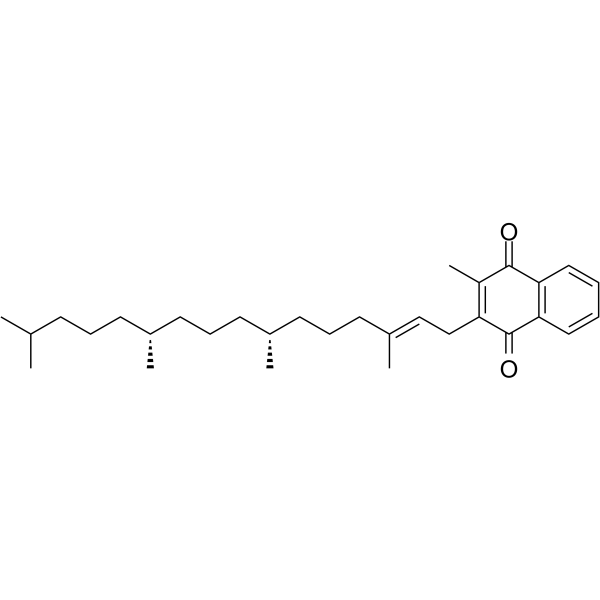
    Vitamin K1 a naturally occurring vitamin required for blood coagulation and bone and vascular metabolism.
    Vitamin K1
  • HY-P4146

    BI 456906

    GLP Receptor GCGR Metabolic Disease
    Survodutide (BI 456906) is a potent, selective glucagon receptor/GLP-1 receptor (GCGR/GLP-1R) dual agonist with EC50s of 0.52 nM and 0.33 nM in CHO-K1 cells, respectively. Survodutide, a 29-amino-acid peptide, is a potent acylated peptide containing a C18 fatty acid. Survodutide has robust anti-obesity efficacy achieved by increasing energy expenditure and decreasing food intake [1].
    Survodutide
  • HY-N6742
    Borrelidin
    1 Publications Verification

    Treponemycin

    CDK Parasite Apoptosis Antibiotic Infection
    Borrelidin (Treponemycin) is a bacterial and eukaryal threonyl-tRNA synthetase inhibitor which is a nitrile-containing macrolide antibiotic isolated from Streptomyces rochei [1]. Borrelidin is an inhibitor of Cdc28/Cln2 of the budding yeast, with an IC50 of 24 μM . Borrelidin is a potent angiogenesis inhibitor, with an IC50 of 0.8 nM. Borrelidin induces apoptosis in the tube-forming cells . Borrelidin has strong antimalarial activities, with IC50s of 1.9 nM and 1.8 nM against K1 and FCR3 strains of Plasmodium falciparum, respectively .
    Borrelidin
  • HY-P990534

    K1-70

    TSH Receptor Endocrinology Cancer
    Anti-TSHR Antibody (K1-70) is an anti-TSHR monoclonal antibody. Anti-TSHR Antibody (K1-70) incorporates a single-chain variable fragment into a chimeric antigen receptor to redirect T cells to TSHR-expressing cells. Anti-TSHR Antibody (K1-70) shows antitumor activity with no apparent toxicity. Anti-TSHR Antibody (K1-70) can be used for the research of differentiated thyroid cancer (DTC) [1].
    Anti-TSHR Antibody (K1-70)
  • HY-108003

    Apelin Receptor (APJ) Cardiovascular Disease
    MM 07 is a biased apelin receptor agonist, with a KD of 300 nM in CHO-K1 cells and a KD of 172 nM in human heart.
    MM 07
  • HY-18313

    Ribosomal S6 Kinase (RSK) JAK CDK Metabolic Disease
    S6K1-IN-1 is a selective S6K1 inhibitor with an IC50 value of 52 nM. S6K1-IN-1 can be used in the research of obesity and insulin resistance-related diseases [1].
    S6K1-IN-1
  • HY-N6688

    Potassium Channel Bacterial Infection Neurological Disease
    Verruculogen is a tremorgenic mycotoxin and inhibitor of the M phase of the mammalian cell cycle. Verruculogen is produced by Penicillium and Aspergillus species. Verruculogen enhances the binding of ChTX to maxi-k channels with a K1/2 value of 170 nM. Verruculogen inhibits the amplitude of Ca 2+-activated K + currents. Verruculogen induces severe tremors in infected animals [1] .
    Verruculogen
  • HY-161247

    5-HT Receptor Metabolic Disease
    5HT2A antagonist 2 is an orally active, selective antagonist for 5HT2A with IC50 of 14 nM. 5-HT2A antagonist 2 exhibits good chemical, hepatocyte, and plasma stability, without significant cytotoxicity in cell lines VERO, HFL-1, L929, NIH3T3, CHO-K1 [1].
    5-HT2A antagonist 2
  • HY-P5203

    EntK1

    Bacterial Infection
    Enterocin K1 (EntK1) is a bacteriocin. Enterocin K1 is a ribosomal synthetic peptide. Enterocin K1 specifically targets Enterococcus faecalis via the Eep protein on the bacterial membrane. Enterocin K1 displays a potent antibacterial activity against VRE. Enterocin K1 can be used for related studies of VRE infections [1].
    Enterocin K1
  • HY-N0684A

    cis-Phylloquinone; cis-Phytomenadione

    Drug Isomer Cardiovascular Disease
    cis-Vitamin K1 (cis-Phylloquinone; cis-Phytomenadione) is an isomer of Vitamin K1 (HY-N0684) that can be used for the synthesis of Vitamin K1 (HY-N0684) [1].
    cis-Vitamin K1
  • HY-P99870

    ASLAN004; CSL-334; MK-6105

    Interleukin Related Others
    Eblasakimab (ASLAN004; CSL-334) is a human IgG4 antibody that specifically targets IL13RA1 and is primarily expressed by CHO-K1 cells [1].
    Eblasakimab
  • HY-P990009

    NIS-793

    TGF-beta/Smad Cancer
    Nisevokitug (NIS-793) is a human, IgG2λ antibody targeting TGF-β (TGFB1/TGFB2). Nisevokitug is expressed by CHO-K1 cells [1].
    Nisevokitug
  • HY-N5109

    Parasite Infection
    Cheilanthifoline, an alkaloid, is isolated from Corydalis calliantha. Cheilanthifoline exhibits antiplasmodial activities against Plasmodium falciparum, with IC50s of 0.90 μg/mL and 1.22 μg/mL for wild type (TM4) and multidrug resistant (K1) strains, respectively [1].
    Cheilanthifoline
  • HY-123335A

    Somatostatin Receptor Neurological Disease
    L-796778 acetate is a selective agonist of the sst3 receptor. In CHO-K1 cells expressing the hsst3 receptor, L-796778 acetate is a partial agonist that inhibits Forskolin (HY-15371)-stimulated cAMP production with an IC50 value of 18 nM. L-796778 acetate has anticonvulsant effect [1].
    L-796778 acetate
  • HY-W107616

    Endogenous Metabolite Others
    3,7,11,15-Tetramethyl-2-hexadecen-1-ol can be used to synthesize vitamin E and vitamin E's precursor vitamin K1. 3,7,11,15-Tetramethyl-2-hexadecen-1-ol regulates transcription in cells through the transcription factor PPAR-alpha and the retinoid X receptor (RXR)43 [1].
    3,7,11,15-Tetramethyl-2-hexadecen-1-ol
  • HY-N0684S

    Phylloquinone-d7; Phytomenadione-d7

    Isotope-Labeled Compounds Cardiovascular Disease
    Vitamin K1-d7 is the deuterium labeled Vitamin K1. Vitamin K1 a naturally occurring vitamin required for blood coagulation and bone and vascular metabolism [1] .
    Vitamin K1-d7
  • HY-N0684S3

    Phylloquinone-13C6; Phytomenadione-13C6

    Isotope-Labeled Compounds Cardiovascular Disease
    Vitamin K1- 13C6 is the 13C-labeled Vitamin K1. Vitamin K1 a naturally occurring vitamin required for blood coagulation and bone and vascular metabolism.
    Vitamin K1-13C6
  • HY-113164

    Endogenous Metabolite Others
    Vitamin K1 2,3-epoxide is an inactive metabolite form of Vitamin K1 (HY-N0684), which is reduced to active vitamin by microsomal epoxide reductase in the vitamin K epoxide cycle. Vitamin K1 2,3-epoxide is involved in blood clotting [1].
    Vitamin K1 2,3-epoxide
  • HY-N0684R

    Phylloquinone (Standard); Phytomenadione (Standard)

    Reference Standards Cardiovascular Disease
    Vitamin K1 (Standard) is the analytical standard of Vitamin K1. This product is intended for research and analytical applications. Vitamin K1 a naturally occurring vitamin required for blood coagulation and bone and vascular metabolism.
    Vitamin K1 (Standard)
  • HY-163476

    PI4P5K Inflammation/Immunology Cancer
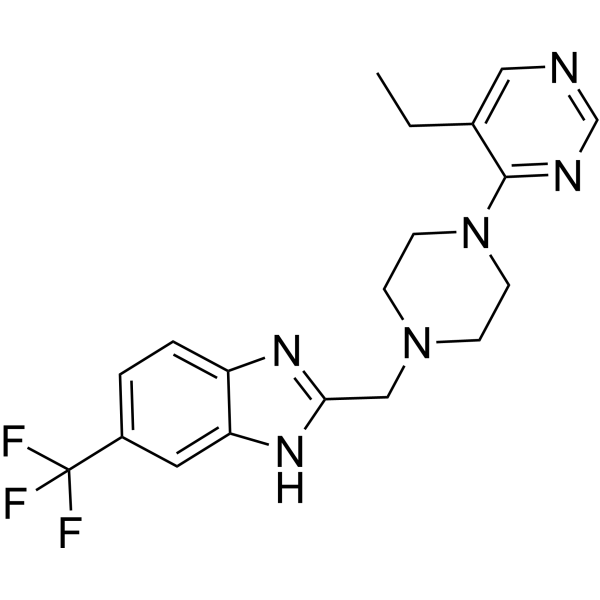
    PIP5K1C-IN-1 (Compound 30) is a potent PIP5K1C inhibitor, with an IC50 of 0.80 nM. PIP5K1C-IN-1 exhibits low total clearance in mice and high levels of kinase selectivity. PIP5K1C-IN-1 can be used for the research of cancer and chronic pain [1].
    PIP5K1C-IN-1
  • HY-163572

    PI4P5K Cancer
    PIP5K1α-IN-1 (Compound 3e) is an inhibitor for phosphatidylinositol 4-phosphate 5-kinase type I α (PIP5K1α) with an IC50 of 0.46 μM [1].
    PIP5K1α-IN-1
  • HY-152944

    Ribosomal S6 Kinase (RSK) Cancer
    S6K1-IN-DG2 (Compound 66) is a p70S6K inhibitor (IC50: < 100 nM) [1].
    S6K1-IN-DG2
  • HY-136895

    Prostaglandin Receptor Cancer
    AZ12672857 is an orally active inhibitor of EphB4 (IC50=1.3 nM) and Src kinases. AZ12672857 shows good inhibition of proliferation of c-Src transfected 3T3 cells (IC50=2 nM) as well as autophosphorylation of EphB4 in transfected CHO-K1 cells (IC50=9 nM) [1].
    AZ12672857
  • HY-W341547

    Adrenergic Receptor Inflammation/Immunology
    3,4-Dihydro-6,7-isoquinolinediol (compound 7) is a β2-AR agonist with an EC50 of 106.9 μM in CH-K1/GA1S cells. 3,4-Dihydro-6,7-isoquinolinediol can also inhibit the production of NO in mouse macrophage RAW 264.7 cells induced by lipopolysaccharide, showing anti-inflammatory activity [1].
    3,4-Dihydro-6,7-isoquinolinediol
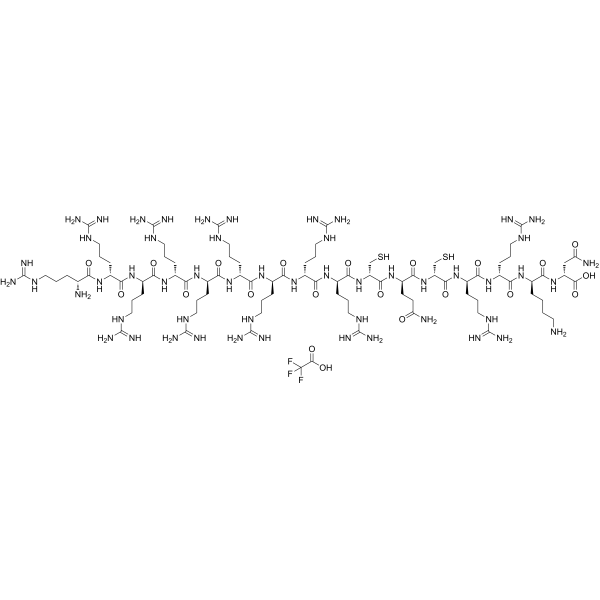
  • HY-P5964A

    GABA Receptor Neurological Disease
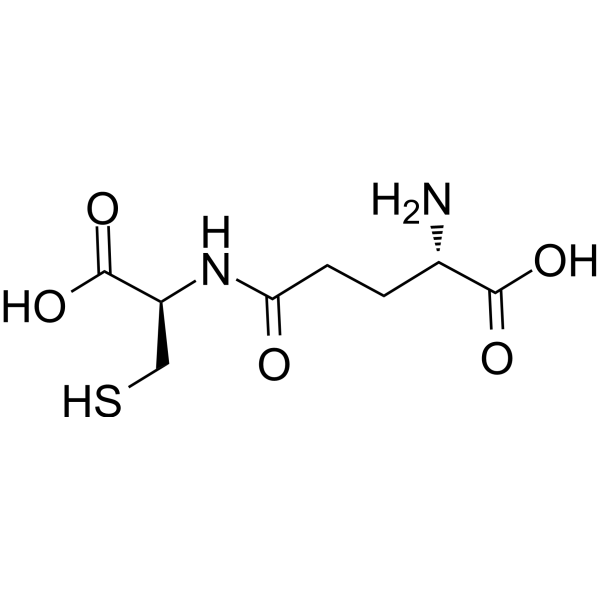
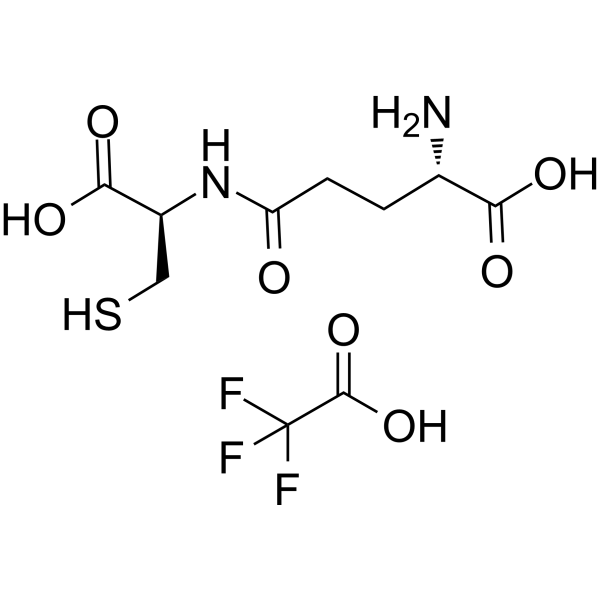
    K1 peptide TFA is a high-affinity peptide ligand for GABAA receptor-associated protein (GABARAP) [1].
    K1 peptide TFA
  • HY-B0918

    Chlophenadione; Indaliton; G-25766

    VD/VDR Cardiovascular Disease
    Chlorindione (Chlophenadione) is a potent anticoagulant. Chlorindione also is a vitamin K1 antagonist [1].
    Chlorindione
  • HY-P99888

    EGFR Others
    Pimurutamab is a humanized IgG1-κ antibody targeting EGFR. Mainly expressed by CHO-K1 cells [1].
    Pimurutamab
  • HY-123335

    Somatostatin Receptor Others
    L-796778 is an agonist of the hsst3 receptor. In CHO-K1 cells expressing the hsst3 receptor, L-796778 is a partial agonist that inhibits forskolin (HY-15371)-stimulated cAMP production with an IC50 value of 18 nM [1].
    L-796778
  • HY-117617

    Histone Acetyltransferase Cancer
    CAY10669 (compound 6d) is an anacardic acid (HY-N2020) derivative that inhibits histone acetyltransferase PCAF with an IC50 of 662 μM [1]. CAY10669 enhances the SAHA-induced acetylation in HEPG2 cells, exhibits cytotoxicity in zebrafish embryo, promotes transgene expression in CHO-K1 cells [1] .
    CAY10669
  • HY-P991114

    FLT3 Inflammation/Immunology
    Adezkibart is a human monoclonal antibody immunosuppressant targeting the human FMS-like tyrosine kinase 3 ligand (FLT3LG). Adezkibart is found in the Chinese hamster ovary cell line CHO-K1, which binds to FLT3LG to block the relevant signaling pathway, inhibits the immune response, and exerts immunosuppressive activity. Adezkibart is promising for research of immune-related diseases [1].
    Adezkibart
  • HY-162653

    Others
    SGC-CDKL2/AAK1/BMP2K-1 (Compound 9) is a potent and selective CDKL2 (Cyclin-dependent kinase-like 2) inhibitor with an IC50 value of 460 nM. CDKL2 is involved in various biological processes such as tumorigenesis, development, and viral infections. SGC-CDKL2/AAK1/BMP2K-1 serves as a powerful tool for studying the biological functions of CDKL2 and holds promise for research in fields related to cancer, infections, and other diseases [1].
    SGC-CDKL2/AAK1/BMP2K-1
  • HY-P5964

    GABA Receptor Neurological Disease
    K1 peptide is a high-affinity peptide ligand for GABAA receptor-associated protein (GABARAP) [1].
    K1 peptide
  • HY-N15748

    (-)-Pelorol

    Parasite Infection
    Pelorol ((-)-Pelorol) is a sesquiterpene found in the tropical marine sponge Dactylospongia elegans. Pelorol has weak antitrypanosomal activity with an IC50 of 17.4 μg/mL and antiplasmodial activity against Plasmodium falciparum clones K1 and NF54 with IC50 values of 786 ng/mL and 1911 ng/mL, respectively. Pelorol is promising for research of parasitic diseases, such as trypanosomiasis and malaria [1].
    Pelorol
  • HY-N1074

    Scandenolone

    Parasite PKA Infection Inflammation/Immunology
    Warangalone is an anti-malarial compound which can inhibit the growth of both strains of parasite 3D7 (chloroquine sensitive) and K1 (chloroquine resistant) with IC50s of 4.8 μg/mL and 3.7 μg/mL, respectively. Warangalone can also inhibit cyclic AMP-dependent protein kinase catalytic subunit (cAK) with an IC50 of 3.5 μM.
    Warangalone
  • HY-P4146A

    BI 456906 TFA

    GLP Receptor GCGR Metabolic Disease
    Survodutide (BI 456906) TFA is a potent, selective glucagon receptor/GLP-1 receptor (GCGR/GLP-1R) dual agonist with EC50s of 0.52 nM and 0.33 nM in CHO-K1 cells, respectively. Survodutide TFA, a 29-amino-acid peptide, is a potent acylated peptide containing a C18 fatty acid. Survodutide TFA has robust anti-obesity efficacy achieved by increasing energy expenditure and decreasing food intake [1].
    Survodutide TFA
  • HY-W020111

    Sirtuin Parasite Infection
    7-Chloro-4-(piperazin-1-yl)quinolone is an important scaffold in medicinal chemistry. 7-Chloro-4-(piperazin-1-yl)quinolone is a potent sirtuin inhibitor and also inhibits the serotonin uptake (IC50 of 50 μM). 7-Chloro-4-(piperazin-1-yl)quinolone exhibits antimalarial activity on D10 and K1 strains of P. falciparum with IC50s of 1.18 μM and 0.97 μM, respectively [1].
    7-Chloro-4-(piperazin-1-yl)quinoline
  • HY-171854

    G2A (GPR132) Neurological Disease Inflammation/Immunology
    SB-583355 (Compound 56) is a potent G2A antagonist. SB-583355 can be prepared by a Suzuki reaction between 4-methoxyphenyl boronic acid and 3-bromo-4-hydroxybenzoic acid following the conditions followed by an amide coupling reaction. SB-583355 blocks the activation of G2A mediated either by 9-HOPE or T-10148 in human G2A expressing CHO-K1 cells. SB-583355 can be studied in research for inflammation, myeloid leukemia, and neuropathic pain [1].
    SB-583355
  • HY-N0684S1

    Phylloquinone-d4; Phytomenadione-d4

    Isotope-Labeled Compounds Cardiovascular Disease
    Vitamin K1-d4 is the deuterium labeled Vitamin K1. Vitamin K1 a naturally occurring vitamin required for blood coagulation and bone and vascular metabolism [1].
    Vitamin K1-d4
  • HY-N7485

    (-)-Gomisin K1

    Others Cancer
    Gomisin K1 ((-)-Gomisin K1) is a lignan that exhibits anti-cancer activity. Gomisin K1 inhibits HeLa cell growth, with an IC50 of 5.46 μM [1].
    Gomisin K1
  • HY-N14885

    Antibiotic Bacterial Infection
    Pyridindolol K1 is an alkaloid antibiotic found in Str. Sp. K93-0711 [1].
    Pyridindolol K1
  • HY-113164S

    Isotope-Labeled Compounds Others
    Vitamin K1 2,3-epoxide-d7 is the deuterium labeled Vitamin K1 2,3-epoxide [1].
    Vitamin K1 2,3-epoxide-d7
  • HY-127162

    PGK1

    Prostaglandin Receptor Others
    Prostaglandin K1 (compound 46) is a structurally modified analog of prostacyclin (prostanoid) with an EC50 of 2800 nM for EP1 and a Ki of 2800 nM [1].
    Prostaglandin K1
  • HY-170219

    Parasite Epigenetic Reader Domain Infection
    RMM23 is an inhibitor targeting PfBDP1 with a Kd value of 1.24 μM. RMM23 against the wild-type strains 3D7 and NF54, and the multidrug-resistant K1 strain in vitro blood stage, with EC50 values of 18 μM, 14 μM, 20 μM, respectively [1].
    RMM23
  • HY-E70842

    MEK Cancer
    MAP2K1 (also known as MEK1) is downstream of the RAF family and activation results in ERK1/2 activation. Activating mutations in MAP2K1 have been reported almost exclusively in exons 1 and 2 in both hematologic malignancies. MAP2K1 L115P is a mutant of MAP2K1. MAP2K1 L115P Recombinant Human Active Protein Kinase is a recombinant MAP2K1 L115P protein that can be used to study MAP2K1 L115P-related functions [1].
    MAP2K1 L115P Recombinant Human Active Protein Kinase
  • HY-126640

    Parasite Infection Cancer
    Phomoxanthone A is a xanthone dimer, which can be isolated from Phomopsis. Phomoxanthone A exhibits antimalarial and antitubercular activities against Plasmodium falciparum (K1, multidrug-resistant strain, IC50 is 0.11 µg/mL) and Mycobacterium tuberculosis (H37Ra strain, MIC is 0.50 µg/mL). Phomoxanthone A exhibits cytotoxicity in cells KB, BC-1 and Vero, IC50 is 0.99, 0.51 and 1.4 µg/mL, respectively [1].
    Phomoxanthone A
  • HY-P4146B

    BI 456906 sodium

    GLP Receptor GCGR Metabolic Disease
    Survodutide (BI 456906) sodium is a potent, selective glucagon receptor/GLP-1 receptor (GCGR/GLP-1R) dual agonist with EC50s of 0.52 nM and 0.33 nM in CHO-K1 cells, respectively. Survodutide sodium, a 29-amino-acid peptide, is a potent acylated peptide containing a C18 fatty acid. Survodutide sodium has robust anti-obesity efficacy achieved by increasing energy expenditure and decreasing food intake [1].
    Survodutide sodium
  • HY-137749A

    2'-Deoxy-3'-MANT-ADP trisodium

    Biochemical Assay Reagents Others
    MANT-dADP (trisodium) (2'-Deoxy-3'-MANT-ADP (trisodium)) is a fluorescent nucleotide derivative, with an emission maximum of 453 nm upon excitation at 350 nm. MANT-dADP (trisodium) can decrease inositol phoshate formation in CHO-K1 cells that express human purinergic P2Y12 receptor. MANT-dADP (trisodium) can be studied in research on the interaction between cardiac troponin I and myofibrils [1] .
    MANT-dADP trisodium
  • HY-RS10567

    Small Interfering RNA (siRNA) Others

    PIP5K1B Human Pre-designed siRNA Set A contains three designed siRNAs for PIP5K1B gene (Human), as well as a negative control, a positive control, and a FAM-labeled negative control.

    PIP5K1B Human Pre-designed siRNA Set A
    PIP5K1B Human Pre-designed siRNA Set A
  • HY-157892

    Parasite Infection
    Antimalarial agent 38 is an orally active antimalarial agent, which inhibits Plasmodium falciparum D6 strain, Chloroquine (HY-17589A)-sensitive Thai strain and Chloroquine-resistant FcB1 strain and K1 strain, with IC50s of 0.5, 13, 1 and 13 μM, respectively. Antimalarial agent 38 is non-cytotoxic for mammalian cells MCR58 (IC50 >140 μM). Antimalarial agent 38 improves the survival rate of Plasmodium yoelii nigeriensis infected mouse model [1].
    Antimalarial agent 38
  • HY-N0684AS

    cis-Phylloquinone-d7; cis-Phytomenadione-d7

    Isotope-Labeled Compounds Others
    cis-Vitamin K1-d7 is the deuterium labeled cis-Vitamin K1, is an endogenous metabolite of Vitamin K .
    cis-Vitamin K1-d7

Inquiry Online

Your information is safe with us. * Required Fields.

Salutation


Country or Region *

Applicant Name *


Organization Name *

Department *


Email Address *


Product Name *

Cat. No.


Requested quantity *

Phone Number *


Remarks

Inquiry Online

Inquiry Information

Product Name:
Cat. No.:
Quantity:
MCE Japan Authorized Agent:

