



FzM1.8
Based on 2 publication(s) in Google Scholar
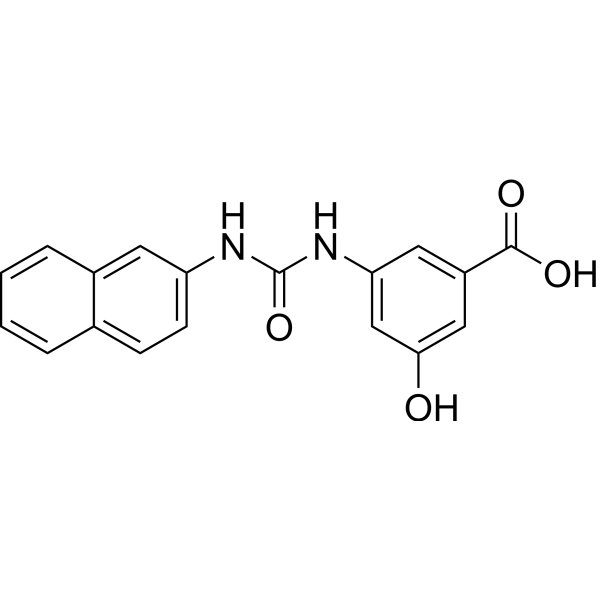
FzM1.8 is a Wnt/β-catenin signaling pathway agonist and an allosteric agonist of Frizzled 4 (FZD4), with a pEC50 of 6.4 for FZD4. FzM1.8 stabilizes a conformation with increased affinity for heterotrimeric G proteins, promoting Gβγ release and subsequent PI3K activation. FzM1.8 activates the AKT pathway downstream of FZD4. FzM1.8 does not affect FZD4 maturation or plasma membrane localization and does not induce FZD4 endocytosis. FzM1.8 upregulates the WNT-responsive genes C-myc and Cyclin D1, while leaving lgr5 expression unchanged. FzM1.8 can be used for colon cancer research.
Nur für Forschungszwecke. Wir verkaufen nicht an Patienten.
- Reinheit : 98.93%
- CAS. Nr.: 2204290-85-5
- Formel: C18H14N2O4
- Molecular Weight:322.31
-
Speicherung:Powder -20°C, 3 years , 4°C, 2 years ; In solvent -80°C, 2 years , -20°C, 1 year

To place orders, for customer services and technical support, please contact: MedChemExpress USA
Tel: 609-228-6898 E-mail: [email protected] [email protected]


-
 Biologische Aktivität
-
Chemical Information
-
Lösungsmittel & Löslichkeit
- Protokoll
- Reinheit & Dokumentation
- Verweise
-
 Help & FAQs


-
HY-122816
HLY78Wnt/β-catenin Activator -
HY-116553
FzM1FZD4 Inhibitor -
HY-101085
SKL2001Wnt/β-catenin Pathway Agonist -
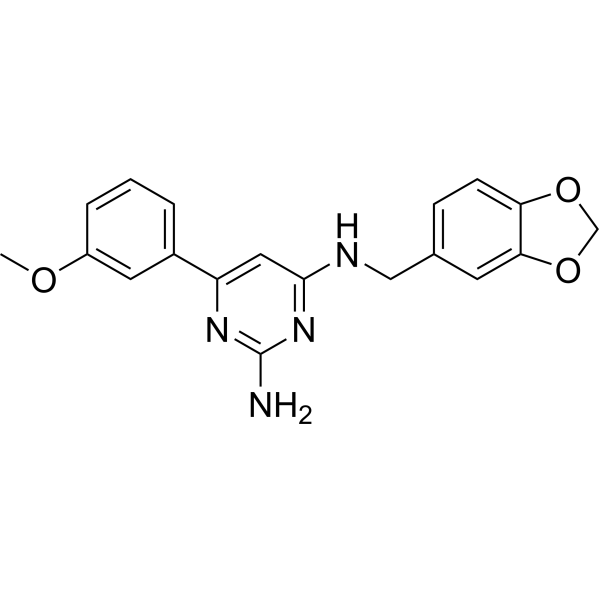
HY-19987
BML-284Wnt Signaling Activator -
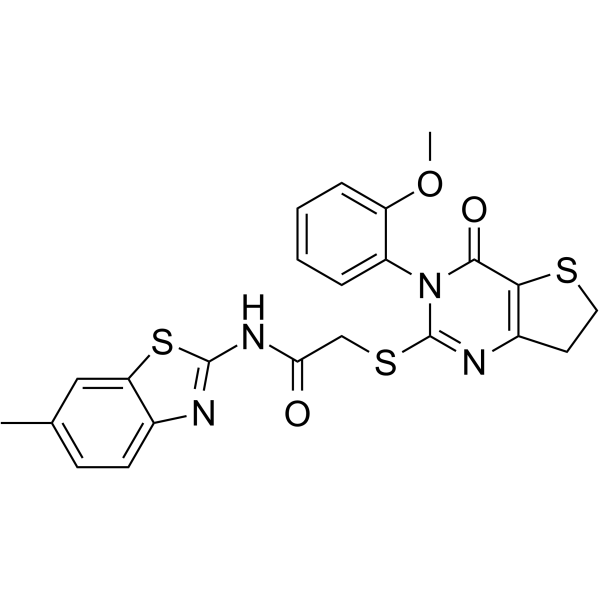
HY-12879
IWP-4Wnt/CK1δ/ε Inhibitor -
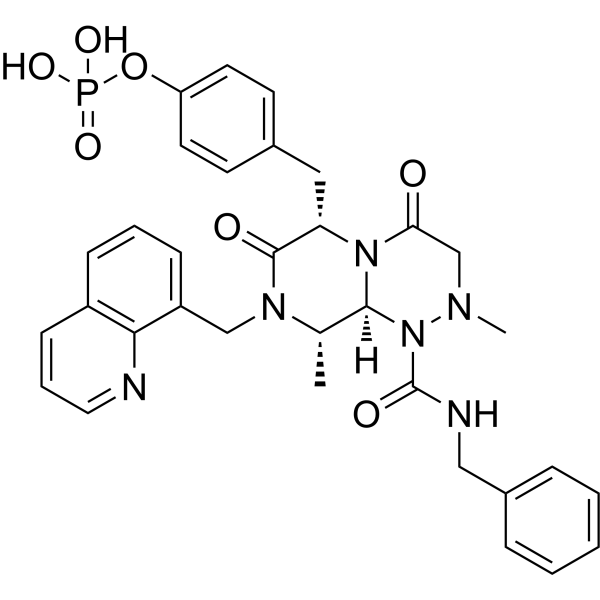
HY-112045
Foscenvivint -
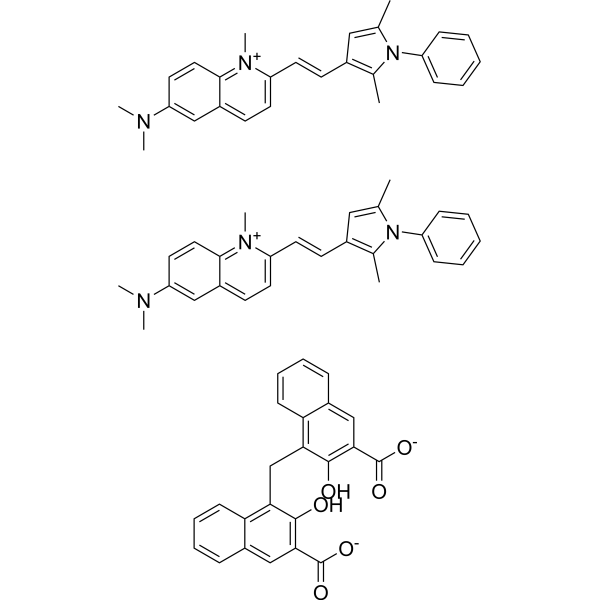
HY-A0293
Pyrvinium pamoateWnt Inhibitor -
HY-101130
PNU-74654β-catenin/TCF Interaction Inhibitor -
HY-101090
KYA1797KWnt/β-catenin Inhibitor -
HY-13815
KY02111WNT Signaling/β-catenin Inhibitor -
HY-10593
IQ 1Wnt/β-catenin/CBP Signaling Sustainer -
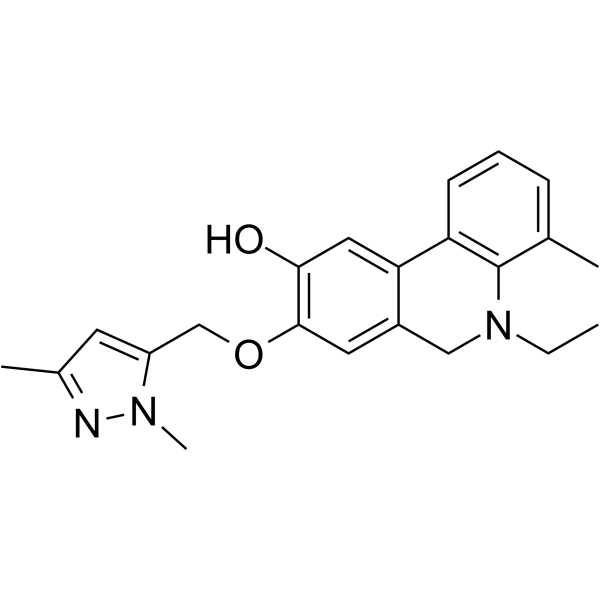
HY-114321
Wnt/β-catenin agonist 1Wnt Agonist
Publications Citing Use of MedChemExpress (MCE) FzM1.8
More

Biologische Aktivität
Beschreibung
IC50 & Target
pEC50: 6.4 (FzM1.8)[1]
Cellular Effect
|
Cell Line

|
Type | Value | Description | References |
|---|---|---|---|---|
| HEK293 | EC50 |
0.4 μM
|
Agonistic activity against HEK293 cells expressing HA-FZD4-wt assessed as increase in WRE-GFP reporter activity in the absence of WNT ligand.
Agonistic activity against HEK293 cells expressing HA-FZD4-wt assessed as increase in WRE-GFP reporter activity in the absence of WNT ligand.
|
29293331 |
| HEK293 | EC50 |
3.2 μM
|
Inhibitory activity against HEK293 cells expressing HA-FZD4-wt assessed as decrease in WRE-GFP reporter activity at higher concentrations in a hormetic dose-response.
Inhibitory activity against HEK293 cells expressing HA-FZD4-wt assessed as decrease in WRE-GFP reporter activity at higher concentrations in a hormetic dose-response.
|
29293331 |
In Vitro
FzM1.8 (2 µM) counteracts 48 h SMG-induced Wnt/β-catenin pathway inhibition and up-regulates P-gp expression in Caco-2 cells[1].
FzM1.8 activates a FZD4/PI3K signaling axis involving heterotrimeric G proteins and CBP/p300 in HEK293 cells, as its activity is blocked by Ly294002, I-CBP 112, Suramin, and Gallein but not by PKC or NFAT inhibitors[2].
Expression of a dominant-negative AKT mutant (K179M) abolishes FzM1.8-induced WRE activation in HEK293 cells, confirming AKT's essential role in the pathway[2].
The FZD4-wt/FZD4-T425D hetero-oligomer mimics the FzM1.8-bound state of FZD4, as it biases signaling toward the PI3K pathway, but the FZD4-T425D homocomplex does not[2].
FzM1.8 binds to the ICL3 allosteric site of FZD4, reducing its solvent accessibility while increasing the solvent accessibility of TM6[2].
FzM1.8 (30 min-2 h) induces phosphorylation of AKT at Thr-308 in HEK293 cells expressing FZD4[2].
FzM1.8 promotes proliferation and preserves stemness in CaCo-2 cells by activating the FZD4/PI3K axis, as evidenced by increased c-myc and cyclin D1 expression and unchanged lgr5 expression[2].
MedChemExpress (MCE) has not independently confirmed the accuracy of these methods. They are for reference only. Further protocols information, click here.
-
Cell Line:Caco-2
-
Concentration:2 µM
-
Incubation Time:48 h SMG treatment
-
Result:Activated the Wnt/β-catenin signaling pathway and increased P-gp expression in Caco-2 cells.
Counteracted the effect of SMG by activating the pathway and up-regulating P-gp expression.


Chemical Information
-
CAS. Nr. 2204290-85-5
-
Appearance Solid
-
Molecular Weight 322.31
-
Formel C18H14N2O4
-
Color Off-white to light yellow
-
SMILES
O=C(O)C1=CC(NC(NC2=CC=C3C=CC=CC3=C2)=O)=CC(O)=C1
-
Versand
Room temperature in continental US; may vary elsewhere.
-
Speicherung
Powder -20°C 3 years 4°C 2 years In solvent -80°C 2 years -20°C 1 year


Publications (2)
-
Journal Impact Factor
-
Most Recent
-
Biochem Biophys Res Commun
2025 May 26:760:151709. PMID: 40168709 -
Res Sq
Spatial Transcriptomics and Dual Dye Mapping Identify Wnt-Driven BBB Protection in Endothelial EphA4-Deficiency. [Abstract]2026 Apr 9:rs.3.rs-9261231. PMID: 41994141


Lösungsmittel & Löslichkeit
In Vitro:
DMSO : 83.33 mg/mL (258.54 mM; Need ultrasonic; Hygroscopic DMSO has a significant impact on the solubility of product, please use newly opened DMSO)
Please refer to the solubility information to select the appropriate solvent. Once prepared, please aliquot and store the solution to prevent product inactivation from repeated freeze-thaw cycles.
Storage method and period of stock solution: -80°C, 2 years; -20°C, 1 year. When stored at -80°C, please use it within 2 years. When stored at -20°C, please use it within 1 year.
Please refer to the solubility information to select the appropriate solvent. Once prepared, please aliquot and store the solution to prevent product inactivation from repeated freeze-thaw cycles.
Storage method and period of stock solution: -80°C, 2 years; -20°C, 1 year. When stored at -80°C, please use it within 2 years. When stored at -20°C, please use it within 1 year.
Konzentration (Stammlösung) × Volumen (Stammlösung) = Konzentration (Ziellösung) × Volumen (Ziellösung)
In Vivo:
Select the appropriate dissolution method based on your experimental animal and administration route.
- For the following dissolution methods, please ensure to first prepare a clear stock solution using an In Vitro approach and then sequentially add co-solvents:
- To ensure reliable experimental results, the clarified stock solution can be appropriately stored based on storage conditions. As for the working solution for In Vivo experiments, it is recommended to prepare freshly and use it on the same day.
- The percentages shown for the solvents indicate their volumetric ratio in the final prepared solution. If precipitation or phase separation occurs during preparation, heat and/or sonication can be used to aid dissolution.
Add each solvent one by one: 10% DMSO 40% PEG300 5% Tween-80 45% Saline
Solubility: ≥ 2.08 mg/mL (6.45 mM); Clear solution
This protocol yields a clear solution of ≥ 2.08 mg/mL (saturation unknown).
Taking 1 mL working solution as an example, add 100 μL DMSO stock solution (20.8 mg/mL) to 400 μL PEG300, and mix evenly; then add 50 μL Tween-80 and mix evenly; then add 450 μL Saline to adjust the volume to 1 mL.
Preparation of Saline: Dissolve 0.9 g sodium chloride in ddH₂O and dilute to 100 mL to obtain a clear Saline solution.
Add each solvent one by one: 10% DMSO 90% (20% SBE-β-CD in Saline)
Solubility: ≥ 2.08 mg/mL (6.45 mM); Clear solution
This protocol yields a clear solution of ≥ 2.08 mg/mL (saturation unknown).
Taking 1 mL working solution as an example, add 100 μL DMSO stock solution (20.8 mg/mL) to 900 μL 20% SBE-β-CD in Saline, and mix evenly.
Preparation of 20% SBE-β-CD in Saline (4°C, storage for one week): 2 g SBE-β-CD powder is dissolved in 10 mL Saline, completely dissolve until clear.
In Vivo Dissolution Calculator
Please enter the basic information of animal experiments:
-
-
-
-
Recommended: Prepare an additional quantity of animals to account for potential losses during experiments.
Please enter your animal formula composition:
-
%DMSO +
Recommended: Keep the proportion of DMSO in working solution below 2% if your animal is weak.
-
%+
-
+%Tween-80 + +
-
%Saline +
The co-solvents required include: DMSO, . All of co-solvents are available by MedChemExpress (MCE). , Tween 80. All of co-solvents are available by MedChemExpress (MCE).
Working solution concentration: 0.22 mg/mL
Method for preparing stock solution: mg drug dissolved in μL DMSO. Stock solution concentration: mg/mL.
1. Take μL DMSO stock solution;
2. Add μL .
μL , mix evenly;
3. Then add μL Tween 80, mix evenly;
4. Then add μL
Please ensure that the stock solution in the first step is dissolved to a clear state, and add co-solvents in sequence. You can use ultrasonic heating (ultrasonic cleaner, recommended frequency 20-40 kHz), vortexing, etc. to assist dissolution.

Protokoll
-
RNA extraction experimental
By lysing cells, releasing RNA, and removing impurities such as proteins and DNA, high-purity RNA products are finally obtained. The commonly used traditional method is the guanidine isothiocyanate/phenol/chloroform method (Trizol), which is suitable for a variety of animal materials including animal tissues, microorganisms, cultured cells, etc., and most plant materials.


Reinheit & Dokumentation
-
Data Sheet (275 KB)
-
SDS (251 KB)
- English - EN (251 KB)
- Français - FR (251 KB)
- Deutsch - DE (251 KB)
- Norwegian - NO (251 KB)
- Español - ES (251 KB)
- Swedish - SV (251 KB)
- Italian - IT (251 KB)
- Korean - KR (251 KB)
- Portuguese - PT (251 KB)
-
Handling Instructions (2659 KB)
Verweise


Complete Stock Solution Preparation Table
Please refer to the solubility information to select the appropriate solvent. Once prepared, please aliquot and store the solution to prevent product inactivation from repeated freeze-thaw cycles.
Storage method and period of stock solution: -80°C, 2 years; -20°C, 1 year. When stored at -80°C, please use it within 2 years. When stored at -20°C, please use it within 1 year.
| Optional Solvent | Concentration Solvent Mass | 1 mg | 5 mg | 10 mg | 25 mg |
|---|---|---|---|---|---|
| DMSO | 1 mM | 3.1026 mL | 15.5130 mL | 31.0260 mL | 77.5651 mL |
| 5 mM | 0.6205 mL | 3.1026 mL | 6.2052 mL | 15.5130 mL | |
| 10 mM | 0.3103 mL | 1.5513 mL | 3.1026 mL | 7.7565 mL | |
| 15 mM | 0.2068 mL | 1.0342 mL | 2.0684 mL | 5.1710 mL | |
| 20 mM | 0.1551 mL | 0.7757 mL | 1.5513 mL | 3.8783 mL | |
| 25 mM | 0.1241 mL | 0.6205 mL | 1.2410 mL | 3.1026 mL | |
| 30 mM | 0.1034 mL | 0.5171 mL | 1.0342 mL | 2.5855 mL | |
| 40 mM | 0.0776 mL | 0.3878 mL | 0.7757 mL | 1.9391 mL | |
| 50 mM | 0.0621 mL | 0.3103 mL | 0.6205 mL | 1.5513 mL | |
| 60 mM | 0.0517 mL | 0.2586 mL | 0.5171 mL | 1.2928 mL | |
| 80 mM | 0.0388 mL | 0.1939 mL | 0.3878 mL | 0.9696 mL | |
| 100 mM | 0.0310 mL | 0.1551 mL | 0.3103 mL | 0.7757 mL |


FzM1.8 Related Classifications
HY-117163 Related Classifications
 Powered by Bioz