


1. Search Result
Search Result
Results for "

S/hereditary persistence of fetal haemoglobin

" in MedChemExpress (MCE) Product Catalog:

197

Inhibitors & Agonists

2

Screening Libraries

3

Fluorescent Dyes

8

Biochemical Assay Reagents

9

Peptides

4

MCE Kits

8

Inhibitory Antibodies

22

Natural
Products

14

Recombinant Proteins

26

Isotope-Labeled Compounds

9

Antibodies

1

Click Chemistry

17

Oligonucleotides

Cat. No. Product Name Target Research Areas Chemical Structure
  • HY-12040
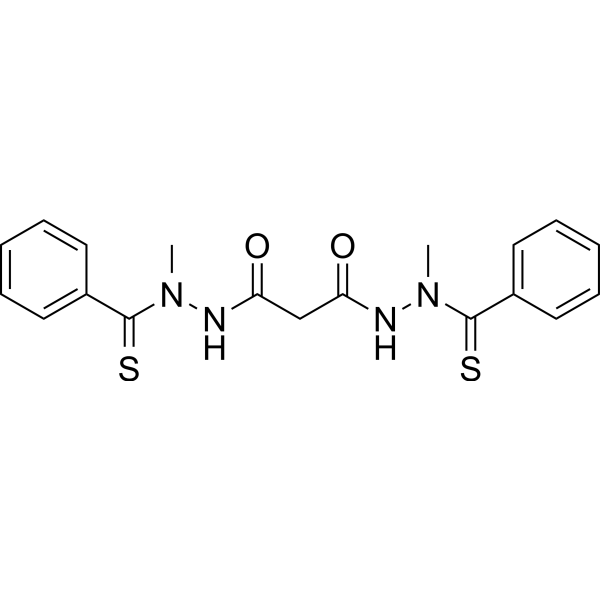
    Elesclomol
    Maximum Cited Publications
    115 Publications Verification

    STA-4783

    Reactive Oxygen Species (ROS) Apoptosis Cuproptosis Cancer
    Elesclomol (STA-4783) is a potent copper ionophore and promotes copper-dependent cell death (cuproptosis). Elesclomol specifically binds ferredoxin 1 (FDX1) α2/α3 helices and β5 strand. Elesclomol inhibits FDX1-mediated Fe-S cluster biosynthesis. Elesclomol is an oxidative stress inducer that induces cancer cell apoptosis. Elesclomol is a reactive oxygen species (ROS) inducer. Elesclomol can be used for Menkes and associated disorders of hereditary copper deficiency research .
    Elesclomol
  • HY-B0607
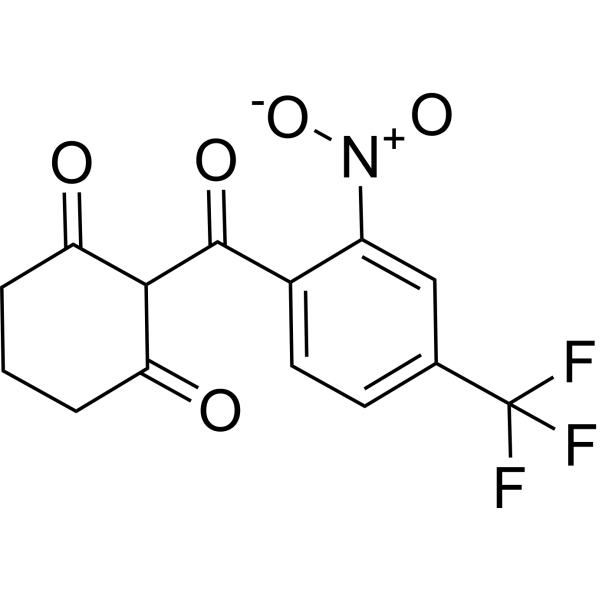
    Nitisinone
    2 Publications Verification

    NTBC; Nitisone; SC0735

    HPPD Metabolic Disease
    Nitisinone is an orally active, competitive and reversible 4-hydroxyphenylpyruvate dioxygenase (4-HPPD) inhibitor with an IC50 of 173 nM. Nitisinone promotes tyrosine accumulation in a dose-dependent manner. nitisinone can be used in studies of hereditary tyrosinemia type 1 (HT-1) (a rare genetic disorder) and albinism .
    Nitisinone
  • HY-P2352
    Fetuin, Fetal Bovine Serum
    5 Publications Verification

    Biochemical Assay Reagents Metabolic Disease
    Fetuin, Fetal Bovine Serum is a liver-secreted 64 kDa plasma glycoprotein isolated from fetal bovine serum. Fetuin, Fetal Bovine Serum inhibits trypsin activity and promote cellular attachment, growth, and differentiation .
    Fetuin, Fetal Bovine Serum
  • HY-13570
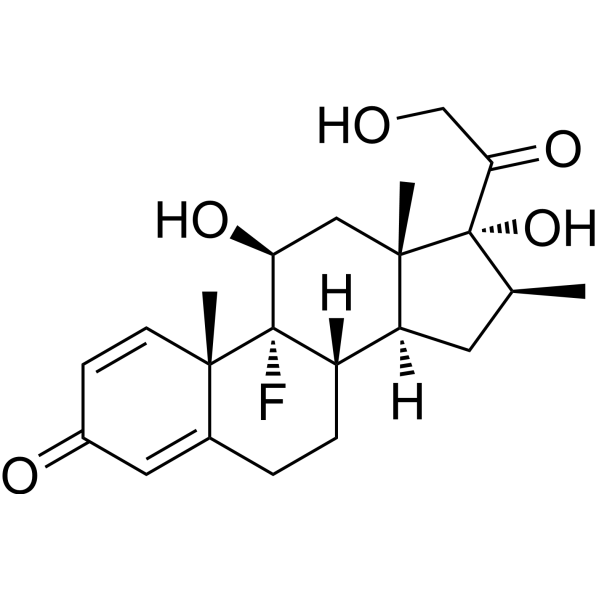
    Betamethasone
    3 Publications Verification

    Glucocorticoid Receptor Apoptosis Inflammation/Immunology Endocrinology Cancer
    Betamethasone is a synthetic glucocorticoid with anti-inflammatory and immunosuppressive activities. Betamethasone accelerates fetal lung maturation and induces gene expression and apoptosis .
    Betamethasone
  • HY-B0401
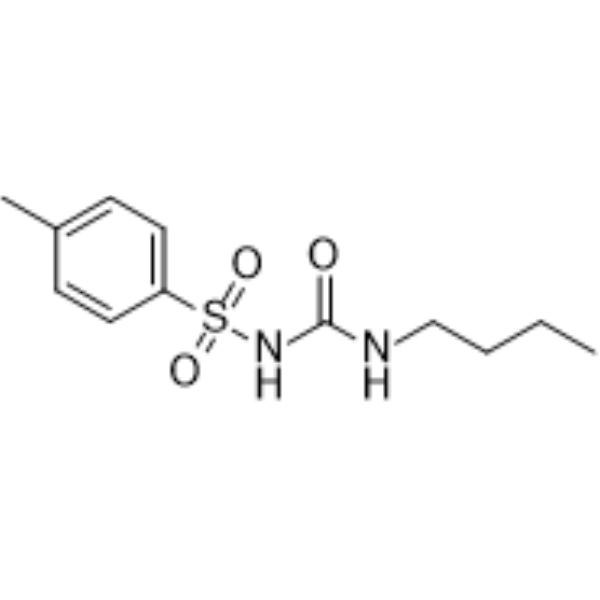
    Tolbutamide
    5+ Cited Publications

    Na+/K+ ATPase Metabolic Disease Cancer
    Tolbutamide is an orally active KATP inhibitor. Tolbutamide inhibits cell proliferation, stimulates exocytosis of glucagon and reduces fetal lethality of mice. Tolbutamide can be used in the research of diabete .
    Tolbutamide
  • HY-P99187

    PF-04950615; RN316

    PCSK9 Cardiovascular Disease Metabolic Disease
    Bococizumab (PF-04950615) is an anti-human PCSK9 inhibitory antibody that reduces LDL cholesterol levels. Bococizumab can be used in the research of hypercholesterolemia .
    Bococizumab
  • HY-132609
    Patisiran sodium
    1 Publications Verification

    Small Interfering RNA (siRNA) Transthyretin (TTR) Neurological Disease
    Patisiran sodium is a double-stranded small interfering RNA that targets a sequence within the transthyretin (TTR) messenger RNA. Patisiran sodium specifically inhibits hepatic synthesis of mutant and wild-type TTR. Patisiran sodium can be used for the research of hereditary TTR amyloidosis .
    Patisiran sodium
  • HY-18681
    Voxelotor
    5+ Cited Publications

    GBT 440

    Hemoglobin Cardiovascular Disease
    Voxelotor (GBT 440) is a potent inhibitor of haemoglobin S (HbS) polymerization. Voxelotor has the potential for sickle cell disease (SCD) treatment .
    Voxelotor
  • HY-P10272

    PTG-300

    Ferroportin Others
    Rusfertide is a peptide mimetic of natural hepcidin, which targets and degrades ferroportin, reduces serum iron and transferrin-saturation, and thus regulates the production of red blood cells. Rusfertide ameliorates the polycythemia vera, β-thalassemia and hereditary hemochromatosis .
    Rusfertide
  • HY-125934

    Endogenous Metabolite Cancer
    Allocholic acid is a typically fetal bile acid found in vertebrates and reappears during liver regeneration and carcinogenesis, besides it is also a conjugate acid of allocholate and an isomer of cholic acid. Allocholic acid is a potent and specific stimulant of the adult olfactory system, it has a role as a marine metabolite, a rat metabolite and a human metabolite .
    Allocholic acid
  • HY-W269593
    Perfluorodecanoic acid
    1 Publications Verification

    PFDA

    Caspase Interleukin Related Metabolic Disease
    Perfluorodecanoic acid (PFDA) is an orally active perfluoroalkyl substance. Perfluorodecanoic acid causes dysfunction of rat fetal Leydig cells via endoplasmic reticulum stress-mediated changes in lipid components. Perfluorodecanoic acid reduces testosterone biosynthesis in rat R2C Leydig cells by inducing endoplasmic reticulum stress. Perfluorodecanoic acid can be used in studies related to fetal Leydig cell dysfunction .
    Perfluorodecanoic acid
  • HY-16735
    Avoralstat
    4 Publications Verification

    BCX4161

    Kallikrein Others
    Avoralstat (BCX4161), a potent and orally active plasma kallikrein (PKK) inhibitor, is used for hereditary angioedema research .
    Avoralstat
  • HY-P99631
    Garadacimab
    1 Publications Verification

    CSL312

    Factor Xa Cardiovascular Disease
    Garadacimab (CSL312) is a first-in-class, fully human IgG4 monoclonal antibody targeting activated factor XII (FXIIa). Garadacimab has the potential for hereditary angioedema research .
    Garadacimab
  • HY-132608

    ISIS-420915 sodium

    Transthyretin (TTR) Neurological Disease
    Inotersen (ISIS-420915) sodium is a 2′-O-methoxyethyl-modified antisense oligonucleotide. Inotersen sodium inhibits the production of transthyretin (TTR) protein by targeting the TTR RNA transcript and reduces the levels of the TTR transcript. Inotersen sodium can be used for the research of hereditary TTR amyloidosis polyneuropathy .
    Inotersen sodium
  • HY-13619
    Efaproxiral
    1 Publications Verification

    RSR13

    Hemoglobin Infection Cancer
    Efaproxiral (RSR13) is a haemoglobin (Hb) synthetic allosteric modifier. Efaproxiral decreases Hb-oxygen (O2) binding affinity and enhances oxygenation of hypoxic tumours during radiation therapy .
    Efaproxiral
  • HY-112974

    GSK-2998728; ISIS-420915

    Transthyretin (TTR) Cardiovascular Disease Neurological Disease
    Inotersen (GSK-2998728; ISIS-420915) is a 2'-O-methoxyethyl-modified antisense oligonucleotide and transthyretin (TTR) inhibitor with low genotoxicity. Inotersen triggers RNase H1-mediated degradation by binding to TTR mRNA, thereby effectively reducing the production of both mutant and wild-type transthyretin in the liver. Inotersen significantly reduces amyloid fiber deposition, yet specific toxicities such as inflammation or tumors are observed at high doses in some animal models. Inotersen is used in studies of hereditary transthyretin amyloidosis and the associated polyneuropathy and cardiomyopathy .
    Inotersen
  • HY-113427A

    Antibiotic Cancer
    cis-Vaccenic acid, the antiviral extract from Rhodopseudomonas capsulate and the predominant active component of Rhodopseudomonas capsulate , acts a potential fetal hemoglobin inducer .
    cis-Vaccenic acid
  • HY-15641
    FG-2216
    5+ Cited Publications

    IOX3; YM311

    HIF/HIF Prolyl-Hydroxylase Metabolic Disease
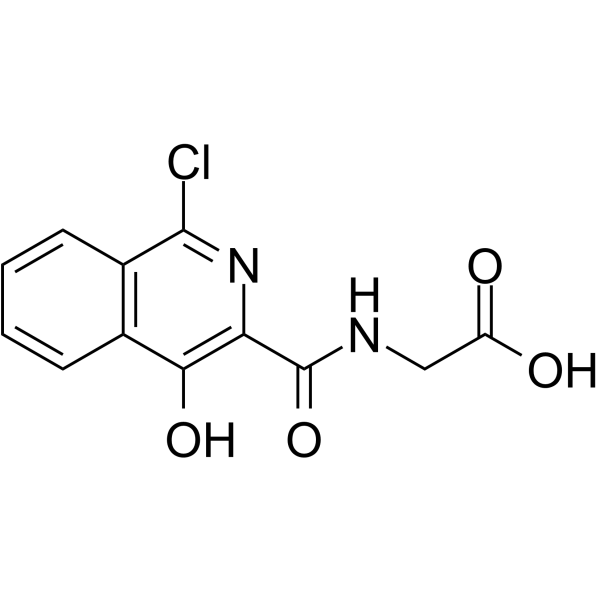
    FG-2216 (IOX3) is a potent and orally active inhibitor of HIF prolyl hydroxylase-2 (PHD2), with an IC50 of 3.9 μM. FG-2216 induces robust erythropoietin and modest fetal hemoglobin in vivo .
    FG-2216
  • HY-109127
    Berotralstat
    1 Publications Verification

    BCX7353

    Kallikrein Cardiovascular Disease Cancer
    Berotralstat (BCX7353) is an orally active plasma kallikrein inhibitor. Berotralstat can reduce brain edema and is being studied for glioblastoma and hereditary angioedema .
    Berotralstat
  • HY-173189A

    2′,5′-ApApA pentasodium; 2′,5′-trioligoadenylate pentasodium; 5'-O-Triphosphoryladenylyl-(2'→5')-adenylyl-(2'→5')-adenosine pentasodium

    RSV DNA/RNA Synthesis Infection Cancer
    2-5A (2′,5′-ApApA) pentasodium solution 100 mM is a high-affinity (Ka=0.04 nM) RNase L binder. 2-5A pentasodium solution 100 mM activates the nuclease activity of latent RNase L to cleave single-stranded RNA by inducing conformational changes and dimerization of latent RNase L, thereby mediating critical antiviral responses and enhancing interferon effects. 2-5A pentasodium solution 100 mM not only effectively inhibits Rauscher murine leukemia virus replication, reduces viremia and splenomegaly, but also enhances antileukemic efficacy when combined with amphotericin B and exhibits favorable high-dose tolerance. 2-5A pentasodium solution 100 mM is an important tool molecule for investigating the pathological mechanisms of viral infection, hereditary prostate cancer and leukemia .
    2-5A pentasodium solution (100 mM)
  • HY-159098

    Molecular Glues PROTACs Histone Acetyltransferase Cardiovascular Disease
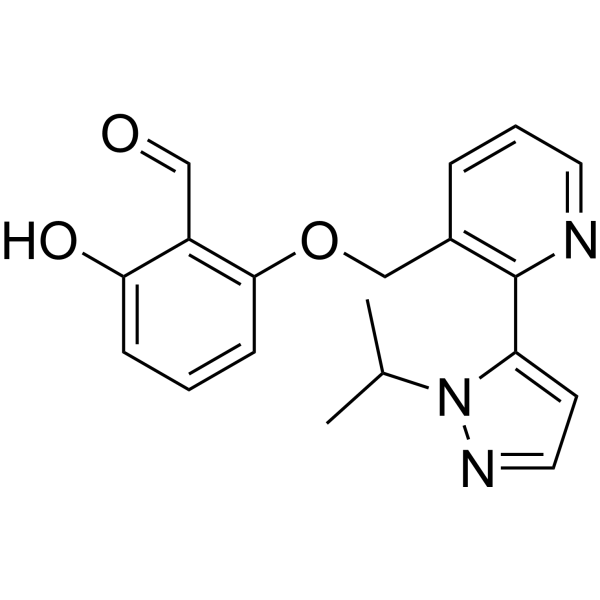
    dWIZ-1 is an orally active molecular glue and chemical probe targeting the WIZ transcription factor, which based on an IMiD backbone, binding to human WIZ with an affinity of 3.5 μM. dWIZ-1 recruits WIZ to the cereblon-DDB1 complex via its ZF7 domain, thereby triggering proteasome-dependent degradation of WIZ. dWIZ-1 significantly induces fetal hemoglobin expression in erythroblasts while reducing the level of inhibitory H3K9 dimethylation at WIZ binding sites such as the β-globin locus. Meanwhile, dWIZ-1 does not affect the proliferation and differentiation of erythroblasts, and no cytotoxicity is observed in in vitro cells or cynomolgus monkey models. dWIZ-1 serves as a critical tool molecule for investigating the mechanism and underlying pathways of sickle cell disease .
    dWIZ-1
  • HY-B1972

    Napropamid

    Environmental Pollutants DNA/RNA Synthesis Herbicide Others
    Napropamide (Napropamid) is an amide herbicide that can be used to control weeds in fruits, vegetables, tobacco, and ornamental plants. Napropamide mainly exerts its effect by inhibiting DNA synthesis and cell division. Napropamide has moderate to high persistence in the field, with a half-life of 24-131 days, and is prone to photodegradation .
    Napropamide
  • HY-21197

    Perfluoroheptanoic acid; Tridecafluoroheptanoic acid; PFHpA

    PPAR Neurological Disease Metabolic Disease Inflammation/Immunology
    Perfluoroenanthic acid (Perfluoroheptanoic acid) is a kind of perfluoroalkyl carboxylic acid organic pollutant. Perfluoroenanthic acid has environmental persistence and bioaccumulation, and exposure can occur via oral, dermal and other routes. Perfluoroenanthic acid exhibits reproductive toxicity, neurotoxicity, hepatotoxicity, immunotoxicity and endocrine-disrupting effects. Perfluoroenanthic acid exerts definite adverse effects on development, spermatogenesis, neuronal activity and liver tissue .
    Perfluoroenanthic acid
  • HY-P99110

    SHP643; DX-2930; X124-G01

    Kallikrein Inflammation/Immunology
    Lanadelumab (SHP643) is a human IgG1 monoclonal antibody against plasma kallikrein (pKal) with an Ki value of 0.12 nM. Lanadelumab inhibits both free and HMWK (high molecular weight kininogen)-bound pKal. Lanadelumab has the potential for the research of hereditary angioedema .
    Lanadelumab
  • HY-13619A
    Efaproxiral sodium
    1 Publications Verification

    RSR13 sodium

    Hemoglobin Infection Cancer
    Efaproxiral (RSR13) sodium is a haemoglobin (Hb) synthetic allosteric modifier. Efaproxiral sodium decreases Hb-oxygen (O2) binding affinity and enhances oxygenation of hypoxic tumours during radiation therapy .
    Efaproxiral sodium
  • HY-P5523A

    NOD-like Receptor (NLR) NF-κB Interleukin Related Metabolic Disease
    iE-DAP dihydrochloride is a Nod1 agonist. iE-DAP dihydrochloride activates NOD1, which in turn activates the NF-κB signaling pathway and MLCK signaling pathway, inducing cellular inflammatory responses and tight junction disruption. iE-DAP dihydrochloride downregulates the expression of ZO-1 and Occludin genes. iE-DAP dihydrochloride increases the secretion of IL-6, GRO-α, MCP-1, IL-8 and MIP-1β in term human trophoblast cell cultures. iE-DAP dihydrochloride triggers preterm birth in pregnant mice, reduces fetal body weight, and induces fetal inflammation. iE-DAP dihydrochloride can be used in studies related to mastitis and preterm birth .
    iE-DAP dihydrochloride
  • HY-150151A

    LYTACs Cardiovascular Disease
    GalNac-siRNA negative control (21nt) is the negative control form of GalNac-siRNA. GalNac-siRNA is an Asialoglycoprotein receptor (ASGPR)-targeted inhibitor conjugate. GalNac-siRNA is promising for research of hereditary transthyretin amyloidosis, acute hepatic porphyria, hemophilia and hypercholesterolemia .
    GalNac-siRNA negative control (21nt)
  • HY-139787

    ISIS-721744 free acid; IONIS-PKK-LRX free acid

    Kallikrein Cardiovascular Disease Inflammation/Immunology
    Donidalorsen (ISIS-721744; IONIS-PKK-LRX free acid) is an antisense oligonucleotide targeting prekallikrein (PKK). Donidalorsen inhibits kallikrein activity and reduces the production of Bradykinin (HY-P0206) by specifically binding to and degrading PKK mRNA in the liver. Donidalorsen can be used in the research of hereditary angioedema .
    Donidalorsen
  • HY-139787A

    ISIS-721744; IONIS-PKK-LRX

    Kallikrein Cardiovascular Disease Inflammation/Immunology
    Donidalorsen (ISIS-721744; IONIS-PKK-LRX) sodium is an antisense oligonucleotide targeting prekallikrein (PKK). Donidalorsen sodium inhibits kallikrein activity and reduces the production of Bradykinin (HY-P0206) by specifically binding to and degrading PKK mRNA in the liver. Donidalorsen sodium can be used in the research of hereditary angioedema .
    Donidalorsen sodium
  • HY-W009066

    EHDPP; Octicizer

    PPAR Progesterone Receptor Estrogen Receptor/ERR Endocrinology
    2-Ethylhexyl diphenyl phosphate is an organophosphate flame retardants (OPFRs) and a PPARG agonist (EC20: 2.04 µM). 2-Ethylhexyl diphenyl phosphate also inhibits ERRγ transcriptional activity (IC50: 1.3 µM). 2-Ethylhexyl diphenyl phosphate upregulates 3β-HSD1, human chorionic gonadotropin (hCG) and progesterone secretion. 2-Ethylhexyl diphenyl phosphate can be used in studies of female reproduction and fetal development .
    2-Ethylhexyl diphenyl phosphate
  • HY-13570R
    Betamethasone (Standard)
    3 Publications Verification

    Reference Standards Glucocorticoid Receptor Apoptosis Inflammation/Immunology Endocrinology Cancer
    Betamethasone (Standard) is the analytical standard of Betamethasone. This product is intended for research and analytical applications. Betamethasone is a synthetic glucocorticoid with anti-inflammatory and immunosuppressive activities. Betamethasone accelerates fetal lung maturation and induces gene expression and apoptosis .
    Betamethasone (Standard)
  • HY-153609

    Transthyretin (TTR) Small Interfering RNA (siRNA) Neurological Disease
    AS-Patisiran sodium is an antisense strand of Patisiran. Patisiran is a double-stranded small interfering RNA that targets a sequence within the transthyretin (TTR) messenger RNA. Patisiran specifically inhibits hepatic synthesis of mutant and wild-type TTR. Patisiran can be used for the research of hereditary TTR amyloidosis .
    AS-Patisiran sodium
  • HY-21200

    1-Perfluoroheptanesulfonic acid; Perfluoroheptanesulphonic acid; PFHpS

    iGluR Infection
    Perfluoroheptanesulfonic acid (1-Perfluoroheptanesulfonic acid; Perfluoroheptanesulphonic acid) is a perfluoroalkyl substance (PFAS). PFHpS can induce malformations in zebrafish larvae (EC50=168.1 μM). It has also been found in landfill leachate, and fetal exposure to PFHpS can lead to reduced birth weight.
    Perfluoroheptanesulfonic acid
  • HY-B0401R

    Reference Standards Na+/K+ ATPase Metabolic Disease Cancer
    Tolbutamide (Standard) is the analytical standard of Tolbutamide. This product is intended for research and analytical applications. Tolbutamide is an orally active KATP inhibitor. Tolbutamide inhibits cell proliferation, stimulates exocytosis of glucagon and reduces fetal lethality of mice. Tolbutamide can be used in the research of diabete .
    Tolbutamide (Standard)
  • HY-W007511

    Isohexanol; Isohexyl alcohol

    Drug Derivative Neurological Disease
    4-Methyl-1-pentanol is a volatile aroma component of red wine, which is often used in the production and blending of wine. 4-Methyl-1-pentanol can also be used as an alcohol antagonist to antagonize the effects of ethanol and 1-butanol on cell-cell adhesion, and is used in the study of fetal alcohol syndrome .
    4-Methyl-1-pentanol
  • HY-109127A
    Berotralstat dihydrochloride
    1 Publications Verification

    BCX7353 dihydrochloride

    Kallikrein Cardiovascular Disease Cancer
    Berotralstat dihydrochloride (BCX7353 dihydrochloride) is an orally active plasma kallikrein inhibitor. Berotralstat can reduce brain edema and is being studied for glioblastoma and hereditary angioedema .
    Berotralstat dihydrochloride
  • HY-113031

    16α-Hydroxy-DHEA; 16α-OH-DHEA; 16α-hydroxy DHEA

    Cytochrome P450 Endocrinology
    16a-Hydroxydehydroisoandrosterone (16α-Hydroxy-DHEA) is a metabolite of the endogenous steroid hormone dehydroepiandrosterone. 16α-hydroxy Dehydroepiandrosterone is formed from dehydroepiandrosterone via 16-hydroxylation by the cytochrome P450 (CYP) isoforms CYP3A4 and CYP3A5 in adult human liver microsomes, as well as by fetal recombinant CYP3A7. It is a precursor to fetal estrogens, including estriol.
    16a-Hydroxydehydroisoandrosterone
  • HY-Y1718S1

    N-Tridecanoic acid-d25

    Isotope-Labeled Compounds Endogenous Metabolite Bacterial Cancer
    Tridecanoic acid-d25 is the deuterium labeled Tridecanoic acid. Tridecanoic acid (N-Tridecanoic acid), a 13-carbon medium-chain saturated fatty acid, can serve as an antipersister and antibiofilm agent that may be applied to research bacterial infections. Tridecanoic acid inhibits Escherichia coli persistence and biofilm formation .
    Tridecanoic acid-d25
  • HY-Y1718S

    N-Tridecanoic acid-d2

    Isotope-Labeled Compounds Endogenous Metabolite Bacterial Infection
    Tridecanoic acid-d2 is the deuterium labeled Tridecanoic acid. Tridecanoic acid (N-Tridecanoic acid), a 13-carbon medium-chain saturated fatty acid, can serve as an antipersister and antibiofilm agent that may be applied to research bacterial infections. Tridecanoic acid inhibits Escherichia coli persistence and biofilm formation .
    Tridecanoic acid-d2
  • HY-P991629

    Ser/Thr Protease Inflammation/Immunology
    C1 Esterase Inhibitor (Human) is a C1 Esterase inhibitor derived from human plasma. C1 Esterase Inhibitor (Human), a glycoprotein, is a serum protease inhibitor (serpin) that binds covalently and inactivates C1r, C1s, and mannan-binding protein-associated proteases (MASPs). C1 Esterase Inhibitor (Human) has anti-inflammatory effects. C1 Esterase Inhibitor (Human) can be used to prevent angioedema attacks associated with hereditary angioedema .
    C1 Esterase Inhibitor (Human)
  • HY-135514

    H-Lys-Phe-OH

    Amino Acid Derivatives Cardiovascular Disease
    Lys-Phe is a dipeptide that inhibits both cell sickling and the gelation of solutions of sickle-cell haemoglobin .
    Lys-Phe
  • HY-147278

    Divesiran; SLN124

    Ser/Thr Protease Small Interfering RNA (siRNA) TMPRSS6 Cardiovascular Disease
    Manusiran (Divesiran) is a GalNac-siRNA targeting liver and transmembrane serine protease 6 (Serine protease 6). Manusiran increases hepatic Hepcidin synthesis and plasma levels by silencing TMPRSS6, a negative regulator of hepcidin production, and limits the availability of iron required for erythropoiesis. Combined use of Manusiran with Deferiprone (HY-B0568) reduces ineffective erythropoiesis and hepatic iron overload in a mouse model of β-thalassemia. Manusiran can be used for research on polycythemia vera, type 1 hereditary hemochromatosis, and β-thalassemia .
    Manusiran
  • HY-P99545

    r-anti-D

    Biochemical Assay Reagents Others
    Trinbelimab (r-anti-D) is a recombinant anti-D immunoglobulin that targets the RhD antigen. Trinbelimab exerts immunosuppressive effects to block maternal-fetal RhD alloimmunization. Trinbelimab can be used for the study of maternal-fetal immunity associated with RhD incompatibility .
    Trinbelimab
  • HY-Z8033

    Cytochrome P450 Metabolic Disease
    N-Desmethyl diltiazem hydrochloride is a substrate for CYP3A7 metabolism, which is the predominant fetal form and is minimally expressed in adults .
    N-Desmethyl diltiazem hydrochloride
  • HY-N0347

    Progesterone Receptor Endocrinology
    17α-Hydroxyprogesterone acetate possesses progestational activity. 17α-Hydroxyprogesterone acetate has antiinflammatory effects at the murine maternal-fetal interface .
    17α-Hydroxyprogesterone acetate
  • HY-B1849

    Environmental Pollutants Herbicide Others
    Hexazinone is a triazinone herbicide with high mobility and persistence in soil. Hexazinone is mainly degraded by soil microorganisms, and its degradation and mineralization processes are significantly affected by soil texture (faster in clay loam) and application method (mixed application can improve its bioavailability and mineralization rate). Hexazinone exhibits mild to moderate acute oral toxicity and has significant eye irritation .
    Hexazinone
  • HY-P5523

    NOD-like Receptor (NLR) NF-κB Interleukin Related Metabolic Disease
    iE-DAP is a Nod1 agonist. iE-DAP activates NOD1, which in turn activates the NF-κB signaling pathway and MLCK signaling pathway, inducing cellular inflammatory responses and tight junction disruption. iE-DAP downregulates the expression of ZO-1 and Occludin genes. iE-DAP increases the secretion of IL-6, GRO-α, MCP-1, IL-8 and MIP-1β in term human trophoblast cell cultures. iE-DAP triggers preterm birth in pregnant mice, reduces fetal body weight, and induces fetal inflammation. iE-DAP is applicable to research related to mastitis and preterm birth .
    iE-DAP
  • HY-111302

    Progesterone Receptor Endocrinology
    Norgestrienone is a progestin receptor agonist. Norgestrienone is commonly used as a progesterone compound in birth control pills and can be combined with ethinylestradiol. Norgestrienone is a click chemical. It contains Alkyne groups and can undergo copper-catalyzed azide-alkyne cycloaddition reactions (CuAAc) with molecules containing Azide groups. Norgestrienone can be used in the study of hereditary angioneurotic edema .
    Norgestrienone
  • HY-106509

    BW 12C; 12C79; BW 12C79

    Hemoglobin Cardiovascular Disease Cancer
    Velaresol (BW 12C) is a small molecule oxyhemoglobin stabilizer. Velaresol stabilizes hemoglobin’s oxy-conformation, shifts oxygen dissociation curves left, induces tumor hypoxia, alters radiosensitivity, protects normal tissues from radiation damage, and reduces sickled cell counts. Velaresol can be used for the research of cancer and sickle cell disease .
    Velaresol
  • HY-150287B

    ITS-A

    Biochemical Assay Reagents Others
    Insulin-Transferrin-Selenium-Sodium Pyruvate (ITS-A) is a basal media supplement used to reduce the amount of fetal bovine serum (FBS) used to culture cells.
    Insulin-Transferrin-Selenium-Sodium Pyruvate

Inquiry Online

Your information is safe with us. * Required Fields.

Salutation


Country or Region *

Applicant Name *


Organization Name *

Department *


Email Address *


Product Name *

Cat. No.


Requested quantity *

Phone Number *


Remarks

Inquiry Online

Inquiry Information

Product Name:
Cat. No.:
Quantity:
MCE Japan Authorized Agent:

