



cis-Vaccenic acid

Based on 1 Customer Validation
cis-Vaccenic acid, the antiviral extract from Rhodopseudomonas capsulate and the predominant active component of Rhodopseudomonas capsulate, acts a potential fetal hemoglobin inducer.
For research use only. We do not sell to patients.
- Purity : 99.91%
- CAS No.: 506-17-2
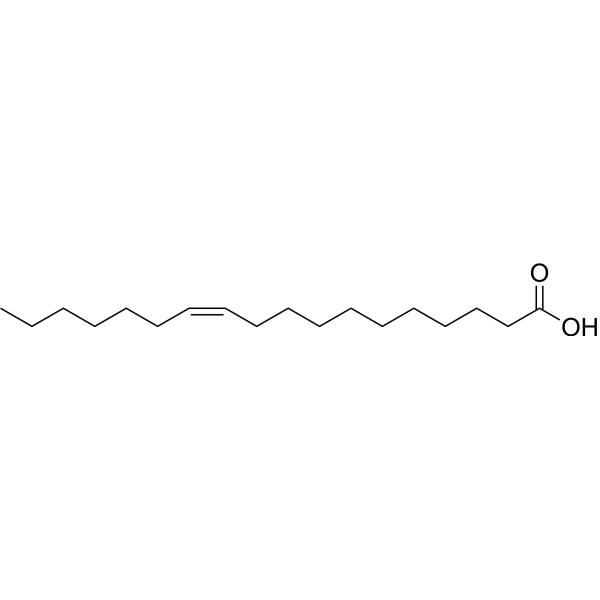
- Formula: C18H34O2
- Molecular Weight:282.46
-
Storage:
Solution, -20°C, 2 years

To place orders, for customer services and technical support, please contact: MedChemExpress USA
Tel: 609-228-6898 E-mail: [email protected] [email protected]


-
 Biological Activity
-
Chemical Information
- Protocols
- Purity & Documentation
- References
-
 Help & FAQs


-
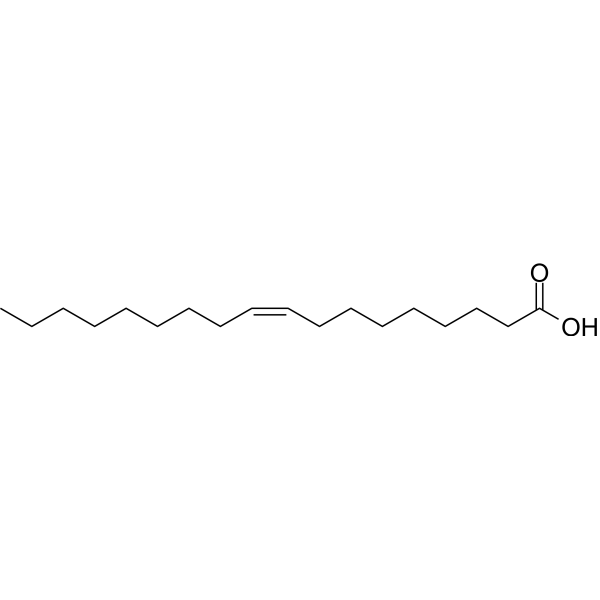
HY-N1446
Oleic acidMonounsaturated Fatty Acid -
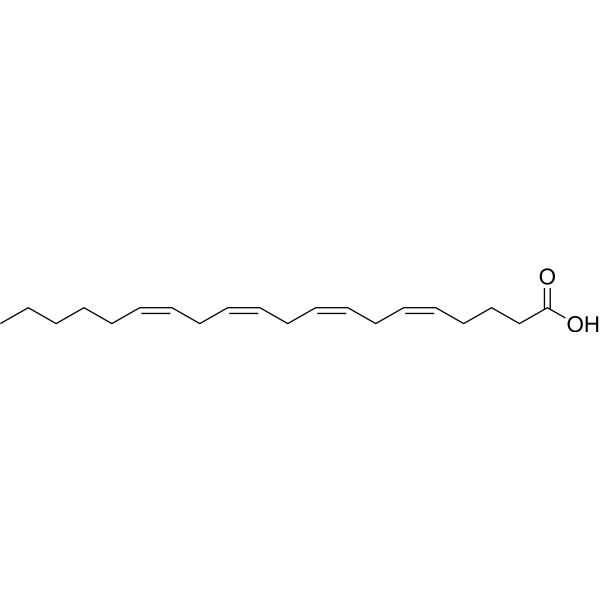
HY-109590
Arachidonic acidPolyunsaturated Fatty Acid -
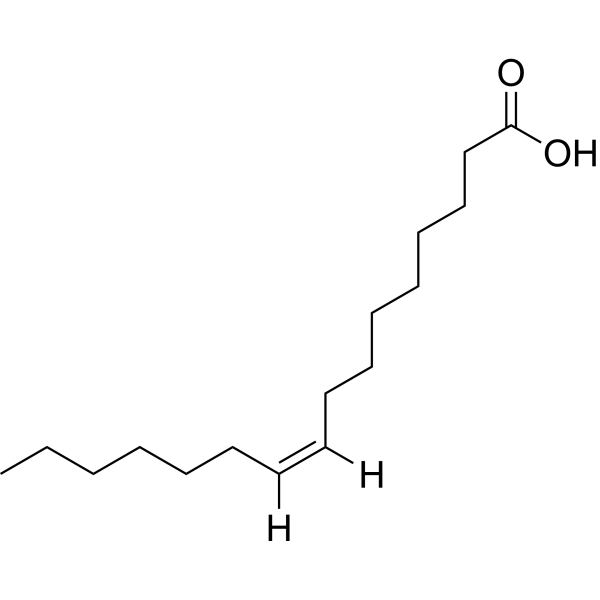
HY-W011873
Palmitoleic acid -
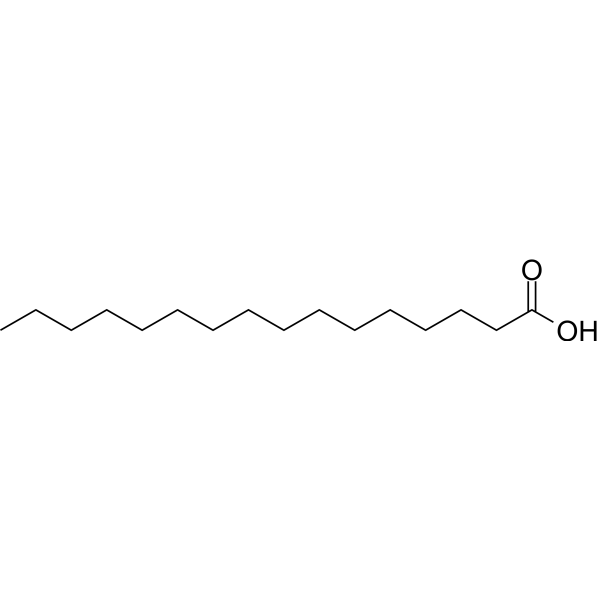
HY-N0830
Palmitic acidEndogenous Metabolite -
HY-Y0366
Lauric acidMiddle Chain-free Fatty Acid -

HY-W747599
Ganglioside GQ1b (bovine) sodiumImmunostimulator -
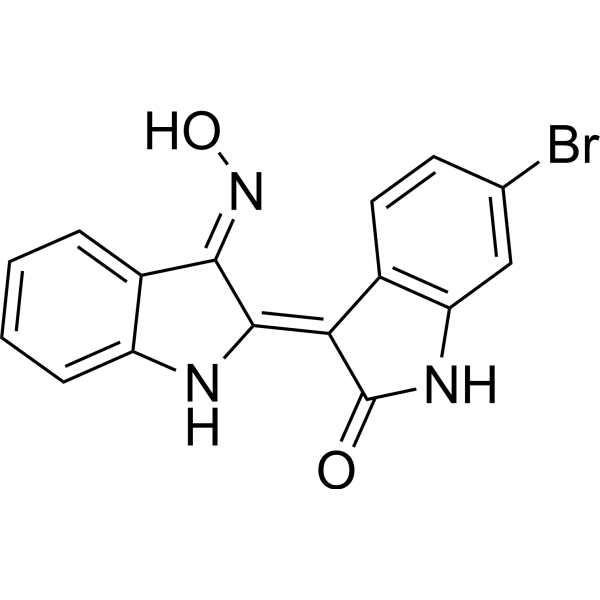
HY-10580
GSK 3 Inhibitor IXATP-Competitive Inhibitor -

HY-W588256
12-Tridecenoic acidBacterial Metabolite -
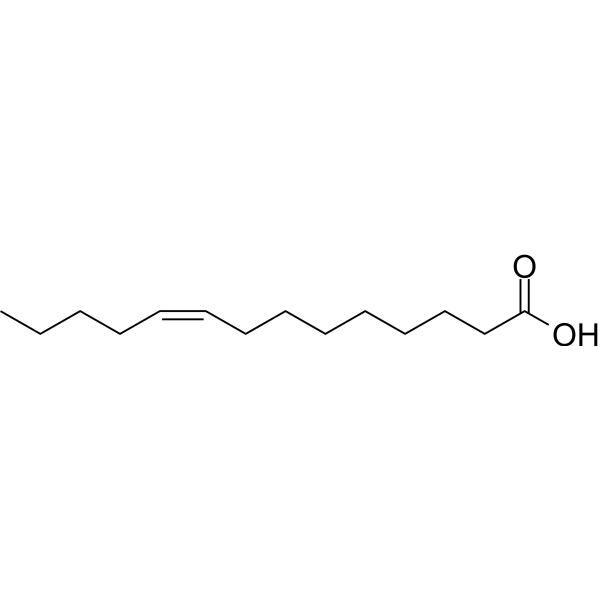
HY-113332
Myristoleic acidNecrosis Activator -

HY-10580R
GSK 3 Inhibitor IX (Standard)Reference Standard -
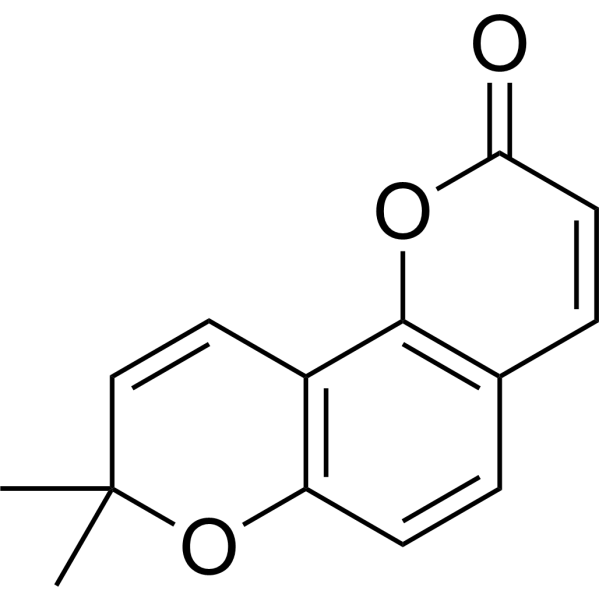
HY-W505771
SeselinAnti-inflammatory Agent
All Antibiotic Isoforms
More

Biological Activity
Description
Cellular Effect
|
Cell Line

|
Type | Value | Description | References |
|---|---|---|---|---|
| K562 | IC50 |
16 μM
Compound: vaccenic acid
|
Inhibition of telomerase extracted from human K562 cells preincubated for 10 mins followed by dNTPs and telomerase substrate primer TS-A addition measured after 30 mins by TRAP assay
Inhibition of telomerase extracted from human K562 cells preincubated for 10 mins followed by dNTPs and telomerase substrate primer TS-A addition measured after 30 mins by TRAP assay
|
10.1039/C0MD00241K |
In Vitro
cis-Vaccenic acid (CVA) (50 μM, 70 μM and 100 μM) induces differentiation and up-regulates gamma globin synthesis in K562, JK1 and transgenic mice erythroid progenitor stem cells[2]. cis-Vaccenic acid (50 μM) also increased the percentage of benzidine positive JK-1 cell[2].
MedChemExpress (MCE) has not independently confirmed the accuracy of these methods. They are for reference only. Further protocols information, click here.
-
Cell Line:K562 cells
-
Concentration:50 μM, 70 μM and 100 μM
-
Incubation Time:48 and 120 hours
-
Result:Induced differentiation appeared to be concentration dependent in K562 cells with 50 μM CVA being the most effective concentration with more than 20% of the K562 cells showing positive for Benzidine stain after 48 h of incubation with CVA.


Chemical Information
-
CAS No. 506-17-2
-
Appearance Liquid
-
Molecular Weight 282.46
-
Formula C18H34O2
-
Color Colorless to light yellow
-
SMILES
CCCCCC/C=C\CCCCCCCCCC(O)=O
-
Structure Classification
-
Initial Source
Rhodopseudomonas capsulate
-
Shipping
Room temperature in continental US; may vary elsewhere.
-
Storage
Solution, -20°C, 2 years

Protocols
-
Research Protocol for Infectious Diseases
Infectious-disease experiments test how pathogens interact with host barriers, innate immune receptors, inflammatory signaling, pathogen replication, and tissue injury; pattern-recognition receptors such as TLRs, RIG-I-like receptors, NOD-like receptors, and inflammasomes detect microbial molecules and activate NF-κB, interferon, and cytokine responses. The central hypothesis is that infection severity reflects the balance between pathogen burden and host response: protective inflammation restricts pathogen growth, whereas excessive or mislocalized inflammation contributes to tissue damage and disease phenotype. Unresolved questions include which host pathways are protective versus pathogenic, why some infection models fail to translate to human disease, and which combined readouts best predict clinically relevant infection outcomes.


Purity & Documentation
-
Data Sheet (261 KB)
-
SDS (394 KB)
- English - EN (394 KB)
- Français - FR (394 KB)
- Deutsch - DE (394 KB)
- Norwegian - NO (394 KB)
- Español - ES (394 KB)
- Swedish - SV (394 KB)
- Italian - IT (394 KB)
- Korean - KR (394 KB)
- Portuguese - PT (394 KB)
-
Handling Instructions (2659 KB)
References
[1]. H Hirotani, et al. Inactivation of T5 phage by cis-vaccenic acid, an antivirus substance from Rhodopseudomonas capsulata, and by unsaturated fatty acids and related alcohols. FEMS Microbiol Lett. 1991 Jan 1;61(1):13-7. [Content Brief]
[2]. Idowu A Aimola, et al. Cis-vaccenic acid induces differentiation and up-regulates gamma globin synthesis in K562, JK1 and transgenic mice erythroid progenitor stem cells. Eur J Pharmacol. 2016 Apr 5;776:9-18. [Content Brief]

Calculators
Concentration (start) × Volume (start) = Concentration (final) × Volume (final)


cis-Vaccenic acid Related Classifications
HY-113427A Related Classifications
 Powered by Bioz