



Nitisinone
Based on 3 publication(s) in Google Scholar
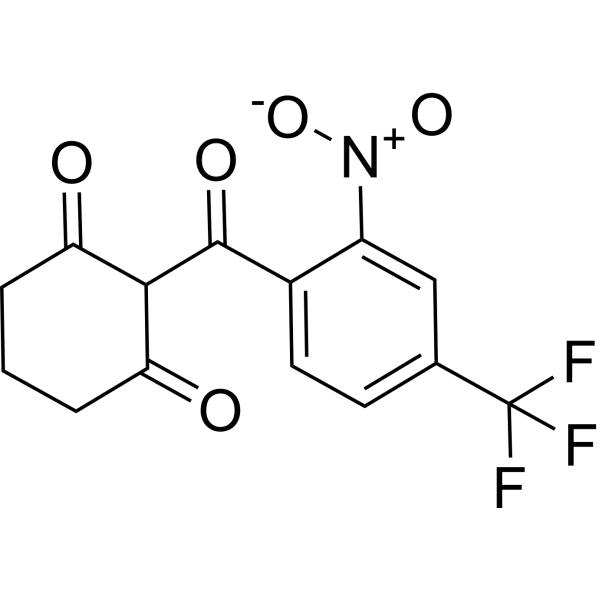
Nitisinone is an orally active, competitive and reversible 4-hydroxyphenylpyruvate dioxygenase (4-HPPD) inhibitor with an IC50 of 173 nM. Nitisinone promotes tyrosine accumulation in a dose-dependent manner. nitisinone can be used in studies of hereditary tyrosinemia type 1 (HT-1) (a rare genetic disorder) and albinism.
For research use only. We do not sell to patients.
- Purity : 99.93%
- CAS No.: 104206-65-7
- Formula: C14H10F3NO5
- Molecular Weight:329.23
-
Storage:Powder -20°C, 3 years , 4°C, 2 years ; In solvent -80°C, 6 months , -20°C, 1 month

To place orders, for customer services and technical support, please contact: MedChemExpress USA
Tel: 609-228-6898 E-mail: [email protected] [email protected]


-
 Biological Activity
-
Chemical Information
-
Solvent & Solubility
- Purity & Documentation
- References
-
 Help & FAQs


-
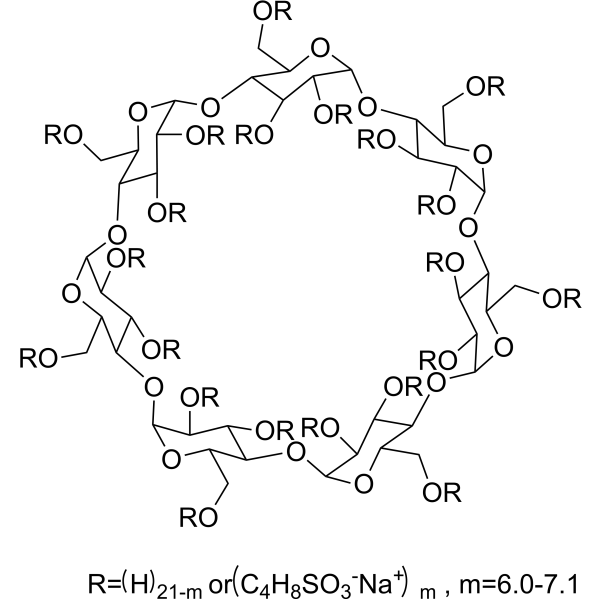
HY-17031
SBE-β-CDExcipient -
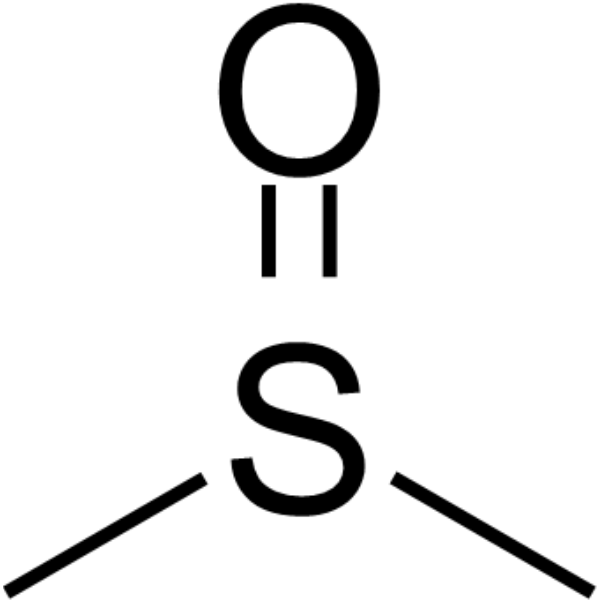
HY-Y0320
Dimethyl sulfoxide, meets analytical specification of Ch.P.Aprotic Solvent -
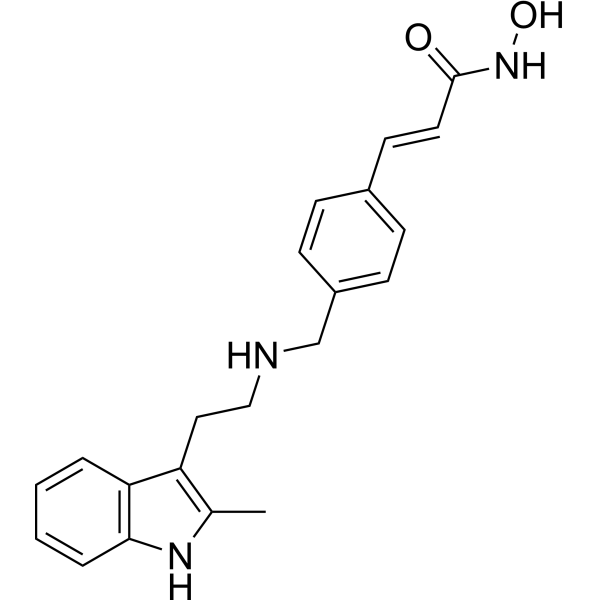
HY-10224
PanobinostatHDAC Inhibitor -
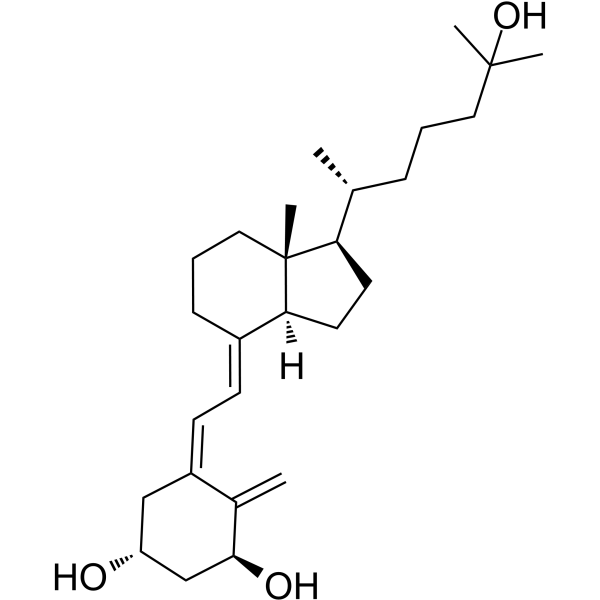
HY-10002
CalcitriolVDR Agonist -
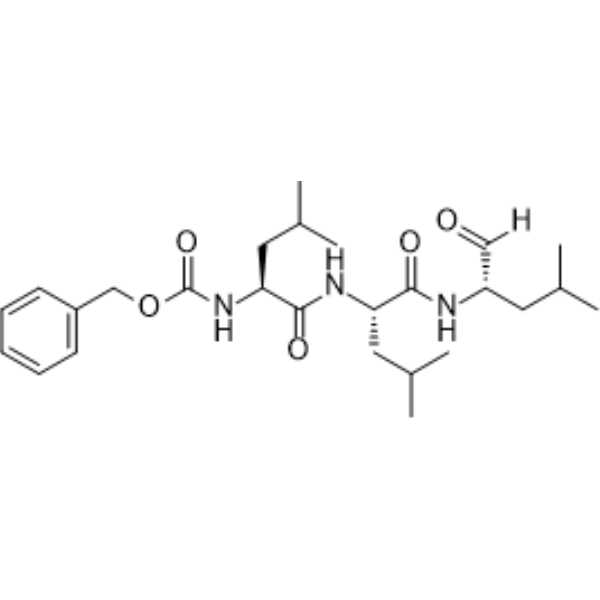
HY-13259
MG-132Proteasome Inhibitor -
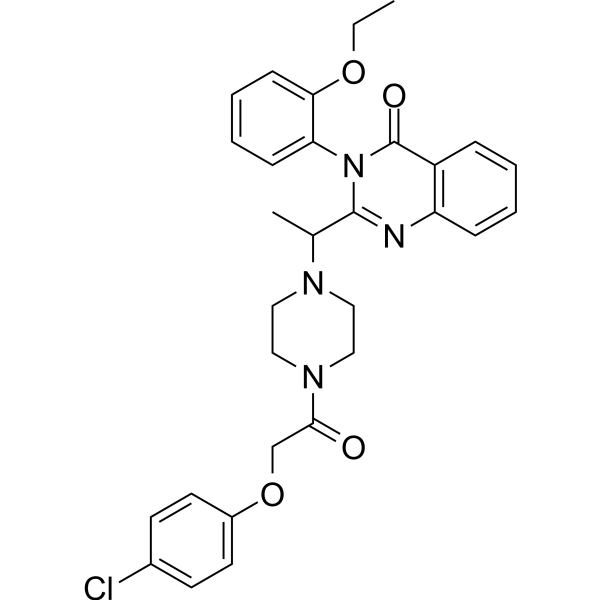
HY-15763
ErastinFerroptosis Inducer -
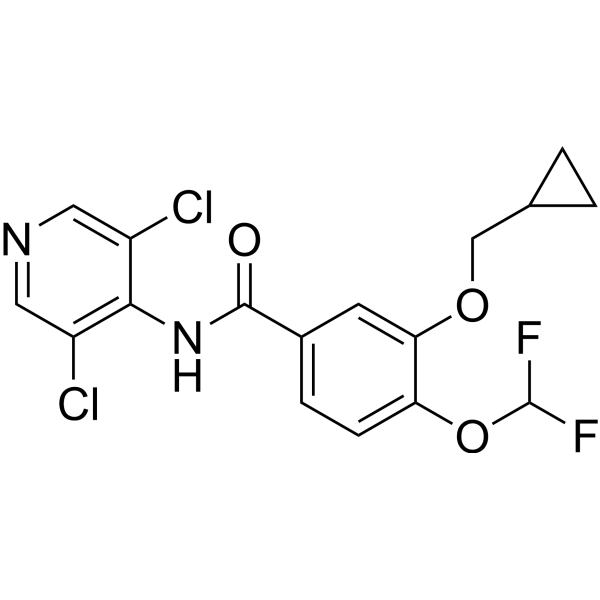
HY-15455
RoflumilastPDE4 Inhibitor -
HY-15371
ForskolinAdenylate Cyclase Activator -
HY-10162
OlaparibPARP Inhibitor -
HY-Y0873
PEG300Neutral Polymer -
HY-15531
VenetoclaxBCL-2 Inhibitor -
HY-100218A
RSL3GPX4 Inhibitor
Publications Citing Use of MedChemExpress (MCE) Nitisinone
More Customer Validation & Images

-
Cell Proliferation/Viability Assay
-
IF
-
WB
-
WB
-
IHC


Biological Activity
Description
Cellular Effect
|
Cell Line

|
Type | Value | Description | References |
|---|---|---|---|---|
| HCT-116 | IC50 |
108 μM
Compound: 7
|
Antiproliferative activity against human HCT-116 cells assessed as inhibition of cell growth incubated for 48 hrs by CCK-8 assay
Antiproliferative activity against human HCT-116 cells assessed as inhibition of cell growth incubated for 48 hrs by CCK-8 assay
|
[PMID: 37983010] |
| HUVEC | IC50 |
338 μM
Compound: 7
|
Cytotoxicity against HUVEC cells assessed as inhibition of cell growth incubated for 48 hrs by CCK-8 assay
Cytotoxicity against HUVEC cells assessed as inhibition of cell growth incubated for 48 hrs by CCK-8 assay
|
[PMID: 37983010] |
| L02 | IC50 |
104 μM
Compound: 7
|
Cytotoxicity against human L02 cells assessed as inhibition of cell growth incubated for 48 hrs by CCK-8 assay
Cytotoxicity against human L02 cells assessed as inhibition of cell growth incubated for 48 hrs by CCK-8 assay
|
[PMID: 37983010] |
| MC-38 | IC50 |
96 μM
Compound: 7
|
Antiproliferative activity against mouse MC-38 cells assessed as inhibition of cell growth incubated for 48 hrs by CCK-8 assay
Antiproliferative activity against mouse MC-38 cells assessed as inhibition of cell growth incubated for 48 hrs by CCK-8 assay
|
[PMID: 37983010] |
In Vitro
Nitisinone (0.01-10 μM; 72 h) promotes tyrosine accumulation in a dose-dependent manner[1].
MedChemExpress (MCE) has not independently confirmed the accuracy of these methods. They are for reference only.
-
Cell Line:Human primary fibroblasts (HFb)
-
Concentration:0.01-10 µM
-
Incubation Time:72 h
-
Result:Exhibited massive intracellular accumulation of tyrosine in human cell cultures.
In Vivo
Nitisinone (4 mg/kg; p.o.; single daily; one day interval for 1 month) elevates tyrosine in both OCA-1A and OCA-1B model[3].
Nitisinone (4 mg/kg; p.o.; single daily; one day interval for 1 month) increases coat and iris pigmentation and melanin content in the melanosomes of ocular tissues in a mouse model of OCA-1B[3].
Note: Oculocutaneous albinism, type 1 (OCA1). There are 2 forms of OCA1, OCA-1A and OCA-1B. Individuals with the former lack functional tyrosinase and therefore lack melanin, while individuals with the latter produce some melanin[3].
MedChemExpress (MCE) has not independently confirmed the accuracy of these methods. They are for reference only.
-
Animal Model:Male Wistar rats (120-150 g)[2].
-
Dosage:5, 10 mg/kg
-
Administration:Oral gavage; 5 days aweek for 6 weeks.
-
Result:Inhibited HPPD in a dose- and time- dependent manner in rat liver. (rat liver form animal model, incubate with 0-200 nM Nitisinone for 3 min).
-
Animal Model:C57BL/6J mice (WT mice), Tyrc-2J/c-2J mice (model of OCA-1A) and Tyrc-h/c-h mice (model of OCA-1B) (all are 3 to 4-month-age)[3].
-
Dosage:4 mg/kg
-
Administration:Oral gavage; single daily; every other day for 1 month.
-
Result:Elevated plasma tyrosine levels 4- to 6- fold compared with placebo-treated controls, after 1 month in both OCA-1A and OCA-1B model.
Increased pigmentation in the irides and pigmentation in areas of new hair growth upon physical, in OCA-1B model.
Significant increased in the number of pigmented melanosomes in OCA-1B model.
Showed substantial pigmentation in the irides of Tyrc-h/c-h pups born of Nitisinone-treated mothers.
Clinical Trial
| NCT Number | Sponsor | Condition | Start Date |
Phase
|
|---|---|---|---|---|
| NCT01329991 | Plexxikon| | 2011-05 | PHASE1 |


Chemical Information
-
CAS No. 104206-65-7
-
Appearance Solid
-
Molecular Weight 329.23
-
Formula C14H10F3NO5
-
Color Light yellow to yellow
-
SMILES
O=C1C(C(C2=CC=C(C(F)(F)F)C=C2[N+]([O-])=O)=O)C(CCC1)=O
-
Synonyms
NTBC; Nitisone; SC0735
-
Shipping
Room temperature in continental US; may vary elsewhere.
-
Storage
Powder -20°C 3 years 4°C 2 years In solvent -80°C 6 months -20°C 1 month


Publications (3)
-
Journal Impact Factor
-
Most Recent
-
-
Eur J Pharmacol
Nitisinone attenuates cartilage degeneration and subchondral osteoclastogenesis in osteoarthritis and concomitantly inhibits the cGAS/STING/NF-κB pathway. [Abstract]2024 Feb 15:965:176326. PMID: 38220141
Nitisinone purchased from MedChemExpress. Usage Cited in: Eur J Pharmacol. 2024 Feb 15:965:176326. [Abstract]
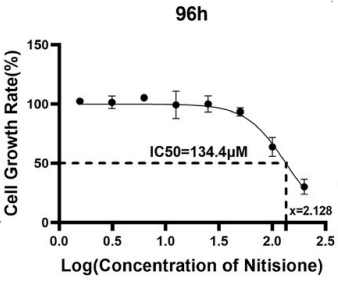
The concentrations of Nitisinone (NTBC) used in this study (25, 50, and 100 μM) did not have any significant effect on cell viability.
Nitisinone purchased from MedChemExpress. Usage Cited in: Eur J Pharmacol. 2024 Feb 15:965:176326. [Abstract]
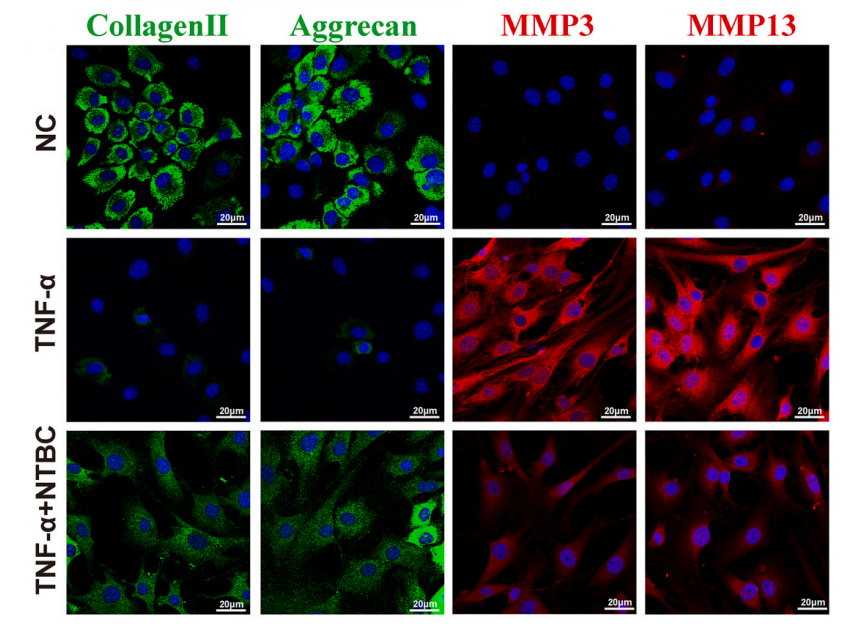
The representative fluorescence images demonstrated that Nitisinone (NTBC) could significantly improve the increase in MMP3 (3.38 ± 0.38) and MMP13 (2.25 ± 0.21) and decrease in Collagen II (0.91 ± 0.09) and Aggrecan (0.82 ± 0.09), thereby improving the degradation of extracellular matrix.
Nitisinone purchased from MedChemExpress. Usage Cited in: Eur J Pharmacol. 2024 Feb 15:965:176326. [Abstract]
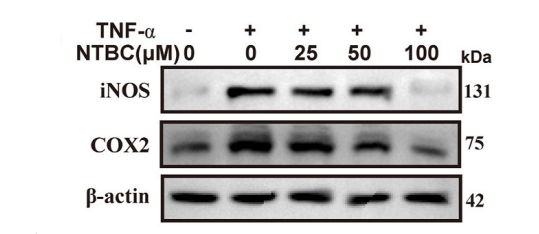
The results showed that the levels of iNOS and COX2 in the 100 μM Nitisinone (NTBC) group were only 0.09 times and 0.23 times that in the untreated group, respectively.
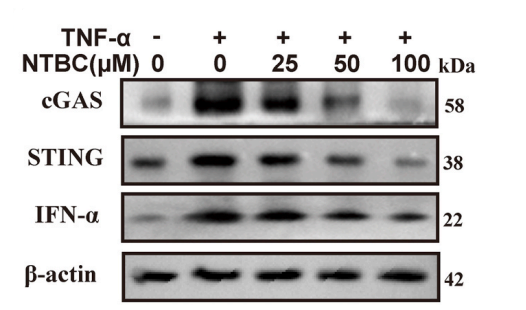
Nitisinone purchased from MedChemExpress. Usage Cited in: Eur J Pharmacol. 2024 Feb 15:965:176326. [Abstract]
Western blotting results showed that Nitisinone (NTBC) inhibited the expression of cGAS, STING, and INF-α.
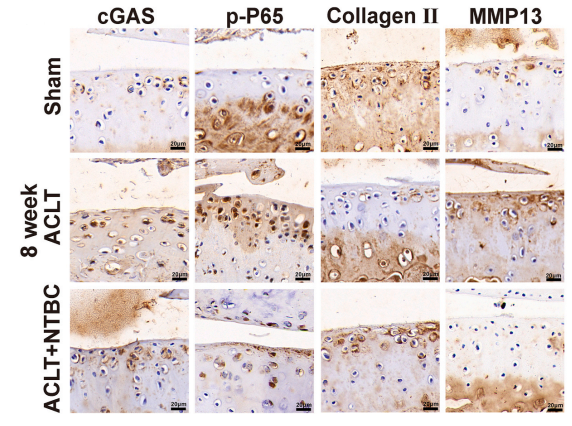
Nitisinone purchased from MedChemExpress. Usage Cited in: Eur J Pharmacol. 2024 Feb 15:965:176326. [Abstract]
Nitisinone (NTBC: 100 μM) inhibited the expression of cGAS and p-P65, leading to increased expression of type II collagen and decreased expression of MMP13.
-
Int Immunopharmacol
A tyrosine catabolic intermediate 4-hydroxyphenylpyruate attenuates murine endotoxic shock by blocking NLRP3 inflammasome activation. [Abstract]2022 Oct:111:109098. PMID: 35944460


Solvent & Solubility
In Vitro:
DMSO : 41.67 mg/mL (126.57 mM; Need ultrasonic; Hygroscopic DMSO has a significant impact on the solubility of product, please use newly opened DMSO)
H2O : < 0.1 mg/mL (insoluble)
Please refer to the solubility information to select the appropriate solvent. Once prepared, please aliquot and store the solution to prevent product inactivation from repeated freeze-thaw cycles.
Storage method and period of stock solution: -80°C, 6 months; -20°C, 1 month. When stored at -80°C, please use it within 6 months. When stored at -20°C, please use it within 1 month.
Please refer to the solubility information to select the appropriate solvent. Once prepared, please aliquot and store the solution to prevent product inactivation from repeated freeze-thaw cycles.
Storage method and period of stock solution: -80°C, 6 months; -20°C, 1 month. When stored at -80°C, please use it within 6 months. When stored at -20°C, please use it within 1 month.
Concentration (start) × Volume (start) = Concentration (final) × Volume (final)
In Vivo:
Select the appropriate dissolution method based on your experimental animal and administration route.
- For the following dissolution methods, please ensure to first prepare a clear stock solution using an In Vitro approach and then sequentially add co-solvents:
- To ensure reliable experimental results, the clarified stock solution can be appropriately stored based on storage conditions. As for the working solution for In Vivo experiments, it is recommended to prepare freshly and use it on the same day.
- The percentages shown for the solvents indicate their volumetric ratio in the final prepared solution. If precipitation or phase separation occurs during preparation, heat and/or sonication can be used to aid dissolution.
Add each solvent one by one: 10% DMSO 40% PEG300 5% Tween-80 45% Saline
Solubility: ≥ 2.5 mg/mL (7.59 mM); Clear solution
This protocol yields a clear solution of ≥ 2.5 mg/mL (saturation unknown).
Taking 1 mL working solution as an example, add 100 μL DMSO stock solution (25.0 mg/mL) to 400 μL PEG300, and mix evenly; then add 50 μL Tween-80 and mix evenly; then add 450 μL Saline to adjust the volume to 1 mL.
Preparation of Saline: Dissolve 0.9 g sodium chloride in ddH₂O and dilute to 100 mL to obtain a clear Saline solution.
In Vivo Dissolution Calculator
Please enter the basic information of animal experiments:
-
-
-
-
Recommended: Prepare an additional quantity of animals to account for potential losses during experiments.
Please enter your animal formula composition:
-
%DMSO +
Recommended: Keep the proportion of DMSO in working solution below 2% if your animal is weak.
-
%+
-
+%Tween-80 + +
-
%Saline +
The co-solvents required include: DMSO, . All of co-solvents are available by MedChemExpress (MCE). , Tween 80. All of co-solvents are available by MedChemExpress (MCE).
Working solution concentration: 0.22 mg/mL
Method for preparing stock solution: mg drug dissolved in μL DMSO. Stock solution concentration: mg/mL.
1. Take μL DMSO stock solution;
2. Add μL .
μL , mix evenly;
3. Then add μL Tween 80, mix evenly;
4. Then add μL
Please ensure that the stock solution in the first step is dissolved to a clear state, and add co-solvents in sequence. You can use ultrasonic heating (ultrasonic cleaner, recommended frequency 20-40 kHz), vortexing, etc. to assist dissolution.


Purity & Documentation
-
Data Sheet (284 KB)
-
SDS (396 KB)
- English - EN (396 KB)
- Français - FR (396 KB)
- Deutsch - DE (396 KB)
- Norwegian - NO (396 KB)
- Español - ES (396 KB)
- Swedish - SV (396 KB)
- Italian - IT (396 KB)
- Korean - KR (396 KB)
- Portuguese - PT (396 KB)
-
Handling Instructions (2659 KB)
References
[1]. Laschi M, et al. Inhibition of para-Hydroxyphenylpyruvate Dioxygenase by Analogues of the Herbicide Nitisinone As a Strategy to Decrease Homogentisic Acid Levels, the Causative Agent of Alkaptonuria. ChemMedChem. 2016 Apr 5;11(7):674-8. [Content Brief]
[2]. Ellis MK, et al. Inhibition of 4-hydroxyphenylpyruvate dioxygenase by 2-(2-nitro-4-trifluoromethylbenzoyl)-cyclohexane-1,3-dione and 2-(2-chloro-4-methanesulfonylbenzoyl)-cyclohexane-1,3-dione. Toxicol Appl Pharmacol. 1995 Jul;133(1):12-9. [Content Brief]
[3]. Onojafe IF, et al. Nitisinone improves eye and skin pigmentation defects in a mouse model of oculocutaneous albinism. J Clin Invest. 2011 Oct;121(10):3914-23. [Content Brief]
[4]. Aktuglu-Zeybek A, et al. Nitisinone: a review. Orphan Drugs: Research and Reviews, 2017, 7.


Complete Stock Solution Preparation Table
Please refer to the solubility information to select the appropriate solvent. Once prepared, please aliquot and store the solution to prevent product inactivation from repeated freeze-thaw cycles.
Storage method and period of stock solution: -80°C, 6 months; -20°C, 1 month. When stored at -80°C, please use it within 6 months. When stored at -20°C, please use it within 1 month.
| Optional Solvent | Concentration Solvent Mass | 1 mg | 5 mg | 10 mg | 25 mg |
|---|---|---|---|---|---|
| DMSO | 1 mM | 3.0374 mL | 15.1870 mL | 30.3739 mL | 75.9348 mL |
| 5 mM | 0.6075 mL | 3.0374 mL | 6.0748 mL | 15.1870 mL | |
| 10 mM | 0.3037 mL | 1.5187 mL | 3.0374 mL | 7.5935 mL | |
| 15 mM | 0.2025 mL | 1.0125 mL | 2.0249 mL | 5.0623 mL | |
| 20 mM | 0.1519 mL | 0.7593 mL | 1.5187 mL | 3.7967 mL | |
| 25 mM | 0.1215 mL | 0.6075 mL | 1.2150 mL | 3.0374 mL | |
| 30 mM | 0.1012 mL | 0.5062 mL | 1.0125 mL | 2.5312 mL | |
| 40 mM | 0.0759 mL | 0.3797 mL | 0.7593 mL | 1.8984 mL | |
| 50 mM | 0.0607 mL | 0.3037 mL | 0.6075 mL | 1.5187 mL | |
| 60 mM | 0.0506 mL | 0.2531 mL | 0.5062 mL | 1.2656 mL | |
| 80 mM | 0.0380 mL | 0.1898 mL | 0.3797 mL | 0.9492 mL | |
| 100 mM | 0.0304 mL | 0.1519 mL | 0.3037 mL | 0.7593 mL |


Nitisinone Related Classifications
HY-B0607 Related Classifications
 Powered by Bioz