



Praeruptorin E

Based on 1 Customer Validation
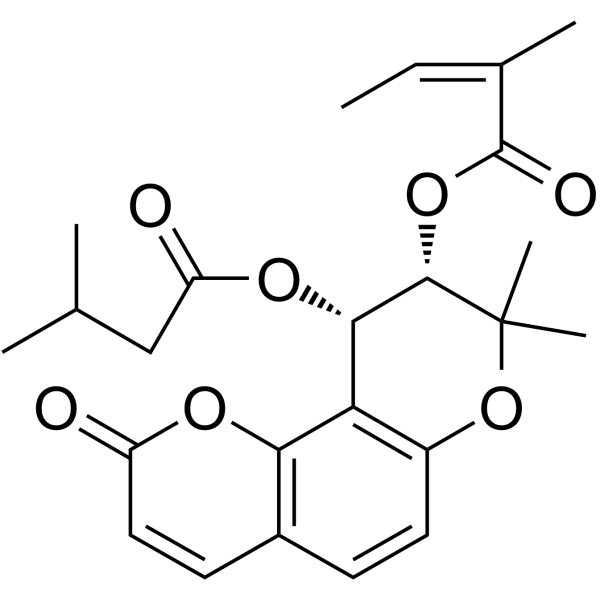
Praeruptorin E is an orally active pyranocoumarin compound. Praeruptorin E can be isolated from the dried roots of Peucedanum praeruptorum Dunn. Praeruptorin E reduces the expression of NF-κB. Praeruptorin E upregulates the expression of PXR and CYP3A4. Praeruptorin E inhibits Th2 cytokines, TNF-α, IL6, MPO, and blocks the Ca2+ slow channel. Praeruptorin E promotes pulmonary tissue repair and relaxes porcine coronary artery strips. Praeruptorin E protects mice from lipopolysaccharide- and hydrochloric acid-induced acute lung injury. Praeruptorin E can be used in studies related to asthma and acute lung injury.
For research use only. We do not sell to patients.
- Purity : 99.18%
- CAS No.: 78478-28-1
- Formula: C24H28O7
- Molecular Weight:428.47
-
Storage:
-20°C, protect from light
* In solvent : -80°C, 6 months; -20°C, 1 month (protect from light)

To place orders, for customer services and technical support, please contact: MedChemExpress USA
Tel: 609-228-6898 E-mail: [email protected] [email protected]


-
 Biological Activity
-
Chemical Information
-
Solvent & Solubility
- Protocols
- Purity & Documentation
- References
-
 Help & FAQs


-
HY-N0334A
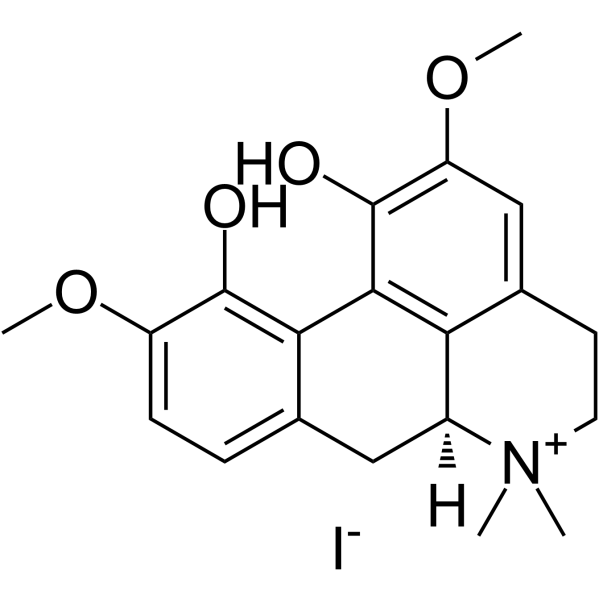
(+)-Magnoflorine iodideAnti-inflammatory/Anti-tumor/Anti-fungal/Neuroprotective Agent -
HY-10588
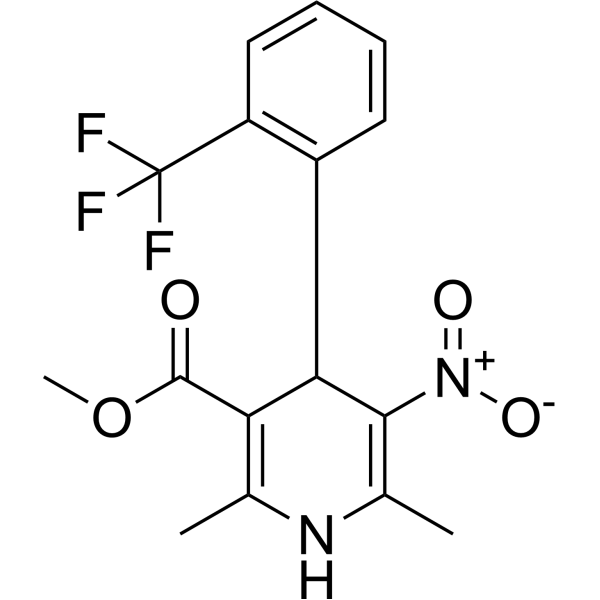
Bay K 8644L-type Ca2+ Channel Agonist -
HY-15124
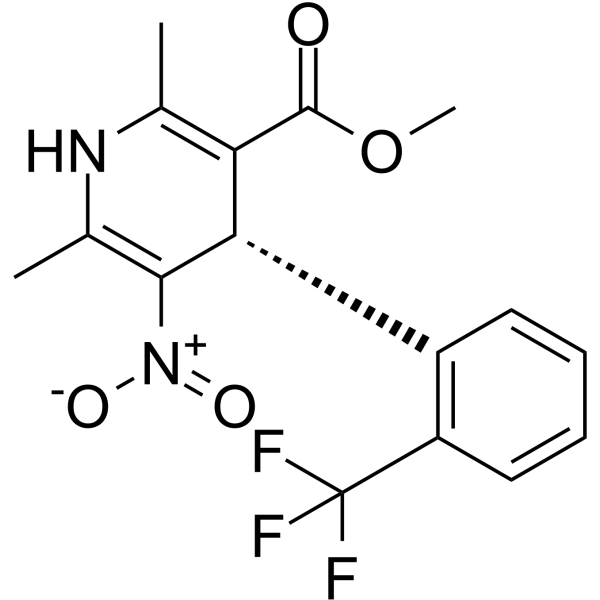
(S)-(-)-Bay-K-8644Calcium Channel Agonist -
HY-12498
GV-58Calcium Channel Agonist -

HY-N6066R
Praeruptorin E (Standard)Calcium Channel Antagonist -

HY-10588R
Bay K 8644 (Standard)L-type Ca2+ Channel Agonist
All Calcium Channel Isoforms
More

Biological Activity
Description
|
CYP3A4 |
IL-6 |
In Vitro
Praeruptorin E (60 μM; 24 h) reduces NF-κB p65 expression and increases PXR and CYP3A4 expression in LPS-induced human L-02 fetal hepatocytes, and this effect is partially dependent on PXR expression[1].
Praeruptorin E (60 μM) reduces the binding of NF-κB p65 to the PXR gene promoter in human L-02 fetal hepatocytes, as evidenced by a significant decrease in NF-κB enrichment at this region[1].
Praeruptorin E (4.7 μM) acts as a calcium antagonist on potassium-depolarized swine coronary artery strips with a pD2' value of 5.2, inhibiting Ca2+-induced maximum contraction and shifting the Ca2+ concentration-response curve rightward in a non-parallel manner[3].
MedChemExpress (MCE) has not independently confirmed the accuracy of these methods. They are for reference only.
In Vivo
Praeruptorin E (20-80 mg/kg; p.o.; single administration 1 hour prior to LPS challenge) dose-dependently attenuates LPS-induced acute lung injury in male BALB/c mice. At the dose of 80 mg/kg, it inhibits neutrophil (PMNs) infiltration by 53%, TNF-α release by 56%, and IL-6 release by 51%, while also suppressing the activation of the NF-κB pathway and ameliorating histopathological changes in lung tissue[2].
Praeruptorin E (80 mg/kg; p.o.; single administration 1 h prior to hydrochloric acid challenge) protects male BALB/c mice against hydrochloric acid-induced acute lung injury by reducing polymorphonuclear neutrophil (PMNs) infiltration, IL-6 release, protein extravasation and pulmonary histopathological damage[2].
MedChemExpress (MCE) has not independently confirmed the accuracy of these methods. They are for reference only.
-
Animal Model:BALB/c (male, 18-22 g, ovalbumin-induced asthma)[1]
-
Dosage:2.5 mg/kg; 10 mg/kg; 40 mg/kg
-
Administration:i.g.; daily; 7 days
-
Result:Significantly reduced total inflammatory cells, eosinophils, monocytes, neutrophils, and lymphocytes in bronchoalveolar lavage fluid compared to aminophylline alone, with the 40 mg/kg dose showing the greatest reduction.
Significantly lowered lung and bronchial histopathological scores compared to aminophylline alone, with the 40 mg/kg dose showing the least severe pathological changes including reduced inflammatory cell infiltration, alveolar wall thickening, and bronchial mucosal edema.
Significantly reduced mucus secretion (PAS-positive area) and collagen deposition (fibrosis area) in lung tissue compared to aminophylline alone, with the 40 mg/kg dose showing the largest reduction.
Significantly lowered concentrations of BALF IL-4, IL-5, IL-13, serum IgE, and NF-κB p65 compared to aminophylline alone.
Significantly reduced lung tissue NF-κB p65 protein and mRNA expression compared to aminophylline alone, while significantly increased liver tissue PXR and CYP3A11 protein and mRNA expression compared to aminophylline alone.
Showed no significant differences in CYP1A2 and CYP2E1 expression across groups.
Improved heart rhythm regularity, reduced premature ventricular beats, and significantly lowered serum LDH and CK-MB levels compared to aminophylline alone when combined with a high (cardiotoxic) dose of aminophylline (450 mg/kg).
-
Animal Model:BALB/c (male, 6-8 weeks old, 20-25 g, LPS-induced acute lung injury)[2]
-
Dosage:20 mg/kg; 40 mg/kg; 80 mg/kg
-
Administration:p.o.; single dose 1 hour before LPS challenge
-
Result:Reduced bronchoalveolar lavage fluid total cell counts from 792×103/mL to 472×103/mL at 80 mg/kg.
Reduced bronchoalveolar lavage fluid PMNs counts from 648×103/mL to 381×103/mL at 80 mg/kg.
Reduced bronchoalveolar lavage fluid TNF-α levels from 6.645 ng/mL to 3.962 ng/mL at 80 mg/kg.
Reduced bronchoalveolar lavage fluid IL-6 levels from 1.096 ng/mL to 0.523 ng/mL at 80 mg/kg.
Caused 11%, 43%, and 53% inhibition of LPS-induced PMNs counts at 20 mg/kg, 40 mg/kg, and 80 mg/kg, respectively.
Achieved 56% inhibition of TNF-α levels and 51% inhibition of IL-6 levels at 80 mg/kg.
Reduced LPS-induced protein extravasation in bronchoalveolar lavage fluid in a dose-dependent manner.
Reduced lung myeloperoxidase (MPO) activity at 80 mg/kg.
Attenuated LPS-induced lung pathological changes including neutrophil infiltration, alveolar wall swelling, hemorrhage, and alveolar structural damage at 80 mg/kg.
Inhibited LPS-induced cytoplasmic loss of IκB-α protein at 80 mg/kg.
Suppressed translocation of NF-κB p65 from cytoplasm to nucleus at 80 mg/kg.
-
Animal Model:BALB/c (male, 6-8 weeks old, 20-25 g, HCl-induced acute lung injury)[2]
-
Dosage:80 mg/kg
-
Administration:p.o.; single dose 1 hour before HCl challenge
-
Result:Reduced HCl-induced PMNs counts in bronchoalveolar lavage fluid.
Decreased HCl-induced IL-6 levels in bronchoalveolar lavage fluid.
Inhibited HCl-induced protein extravasation in bronchoalveolar lavage fluid.
Attenuated HCl-induced lung pathological changes including severe hemorrhage, neutrophil infiltration, and alveolar structural damage.


Chemical Information
-
CAS No. 78478-28-1
-
Appearance Solid
-
Molecular Weight 428.47
-
Formula C24H28O7
-
Color White to off-white
-
SMILES
CC(C)CC(O[C@H]1C2=C(OC(C)(C)[C@H]1OC(/C(C)=C\C)=O)C=CC(C=C3)=C2OC3=O)=O
-
Structure Classification
-
Shipping
Room temperature in continental US; may vary elsewhere.
-
Storage
-20°C, protect from light
* In solvent : -80°C, 6 months; -20°C, 1 month (protect from light)


Solvent & Solubility
In Vitro:
DMSO : 25 mg/mL (58.35 mM; Need ultrasonic; Hygroscopic DMSO has a significant impact on the solubility of product, please use newly opened DMSO)
Please refer to the solubility information to select the appropriate solvent. Once prepared, please aliquot and store the solution to prevent product inactivation from repeated freeze-thaw cycles.
Storage method and period of stock solution: -80°C, 6 months; -20°C, 1 month (protect from light). When stored at -80°C, please use it within 6 months. When stored at -20°C, please use it within 1 month.
Please refer to the solubility information to select the appropriate solvent. Once prepared, please aliquot and store the solution to prevent product inactivation from repeated freeze-thaw cycles.
Storage method and period of stock solution: -80°C, 6 months; -20°C, 1 month (protect from light). When stored at -80°C, please use it within 6 months. When stored at -20°C, please use it within 1 month.
Concentration (start) × Volume (start) = Concentration (final) × Volume (final)
In Vivo:
Select the appropriate dissolution method based on your experimental animal and administration route.
- For the following dissolution methods, please ensure to first prepare a clear stock solution using an In Vitro approach and then sequentially add co-solvents:
- To ensure reliable experimental results, the clarified stock solution can be appropriately stored based on storage conditions. As for the working solution for In Vivo experiments, it is recommended to prepare freshly and use it on the same day.
- The percentages shown for the solvents indicate their volumetric ratio in the final prepared solution. If precipitation or phase separation occurs during preparation, heat and/or sonication can be used to aid dissolution.
In Vivo Dissolution Calculator
Please enter the basic information of animal experiments:
-
-
-
-
Recommended: Prepare an additional quantity of animals to account for potential losses during experiments.
Please enter your animal formula composition:
-
%DMSO +
Recommended: Keep the proportion of DMSO in working solution below 2% if your animal is weak.
-
%+
-
+%Tween-80 + +
-
%Saline +
The co-solvents required include: DMSO, . All of co-solvents are available by MedChemExpress (MCE). , Tween 80. All of co-solvents are available by MedChemExpress (MCE).
Working solution concentration: 0.22 mg/mL
Method for preparing stock solution: mg drug dissolved in μL DMSO. Stock solution concentration: mg/mL. * In solvent : -80°C, 6 months; -20°C, 1 month (protect from light)
1. Take μL DMSO stock solution;
2. Add μL .
μL , mix evenly;
3. Then add μL Tween 80, mix evenly;
4. Then add μL
Please ensure that the stock solution in the first step is dissolved to a clear state, and add co-solvents in sequence. You can use ultrasonic heating (ultrasonic cleaner, recommended frequency 20-40 kHz), vortexing, etc. to assist dissolution.


Purity & Documentation
-
Data Sheet (290 KB)
-
SDS (251 KB)
- English - EN (251 KB)
- Français - FR (251 KB)
- Deutsch - DE (251 KB)
- Norwegian - NO (251 KB)
- Español - ES (251 KB)
- Swedish - SV (251 KB)
- Italian - IT (251 KB)
- Korean - KR (251 KB)
- Portuguese - PT (251 KB)
-
Handling Instructions (2659 KB)
References
[1]. Xu R, et al. Chinese herbal component, Praeruptorin E, enhances anti-asthma efficacy and prevents toxicity of aminophylline by targeting the NF-κB/PXR/CYP3A4 pathway. Ann Transl Med. 2022;10(4):225. [Content Brief]
[2]. Yu PJ, et al. Praeruptorin D and E attenuate lipopolysaccharide/hydrochloric acid induced acute lung injury in mice. Eur J Pharmacol. 2013 Jun 15;710(1-3):39-48. [Content Brief]
[3]. Rao MR, et al. Effects of praeruptorin C and E isolated from 'Qian-Hu' on swine coronary artery and guinea-pig atria. Eur J Pharmacol. 1988 Oct 18;155(3):293-6. [Content Brief]


Complete Stock Solution Preparation Table
Please refer to the solubility information to select the appropriate solvent. Once prepared, please aliquot and store the solution to prevent product inactivation from repeated freeze-thaw cycles.
Storage method and period of stock solution: -80°C, 6 months; -20°C, 1 month (protect from light). When stored at -80°C, please use it within 6 months. When stored at -20°C, please use it within 1 month.
| Optional Solvent | Concentration Solvent Mass | 1 mg | 5 mg | 10 mg | 25 mg |
|---|---|---|---|---|---|
| DMSO | 1 mM | 2.3339 mL | 11.6694 mL | 23.3389 mL | 58.3471 mL |
| 5 mM | 0.4668 mL | 2.3339 mL | 4.6678 mL | 11.6694 mL | |
| 10 mM | 0.2334 mL | 1.1669 mL | 2.3339 mL | 5.8347 mL | |
| 15 mM | 0.1556 mL | 0.7780 mL | 1.5559 mL | 3.8898 mL | |
| 20 mM | 0.1167 mL | 0.5835 mL | 1.1669 mL | 2.9174 mL | |
| 25 mM | 0.0934 mL | 0.4668 mL | 0.9336 mL | 2.3339 mL | |
| 30 mM | 0.0778 mL | 0.3890 mL | 0.7780 mL | 1.9449 mL | |
| 40 mM | 0.0583 mL | 0.2917 mL | 0.5835 mL | 1.4587 mL | |
| 50 mM | 0.0467 mL | 0.2334 mL | 0.4668 mL | 1.1669 mL |


Praeruptorin E Related Classifications
HY-N6066 Related Classifications
 Powered by Bioz