Search Result
Results for "
and schizophrenia
" in MedChemExpress (MCE) Product Catalog:
2
Biochemical Assay Reagents
31
Isotope-Labeled Compounds
| Cat. No. |
Product Name |
Target |
Research Areas |
Chemical Structure |
-
- HY-12472
-
|
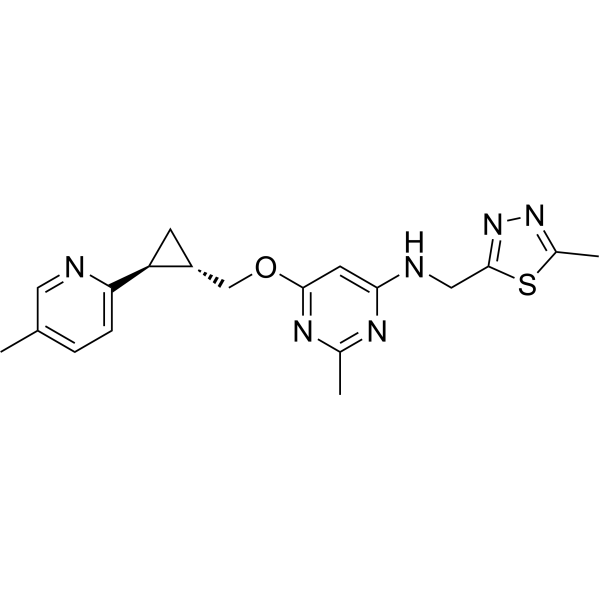
TAK-063
|
Phosphodiesterase (PDE)
|
Infection
Neurological Disease
Cancer
|
|
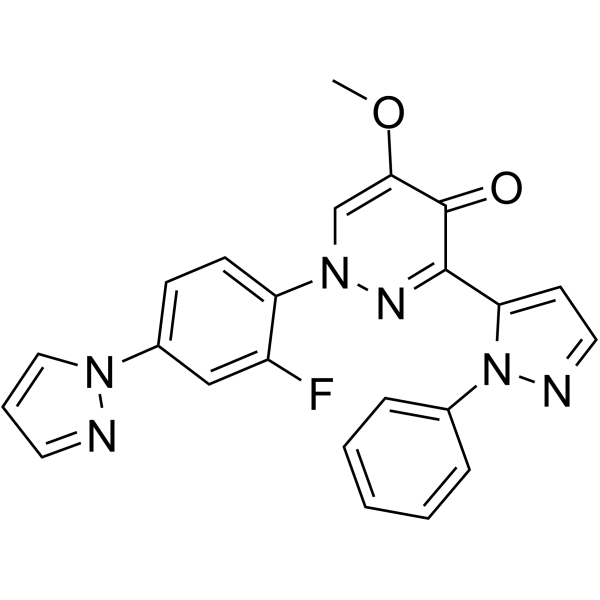
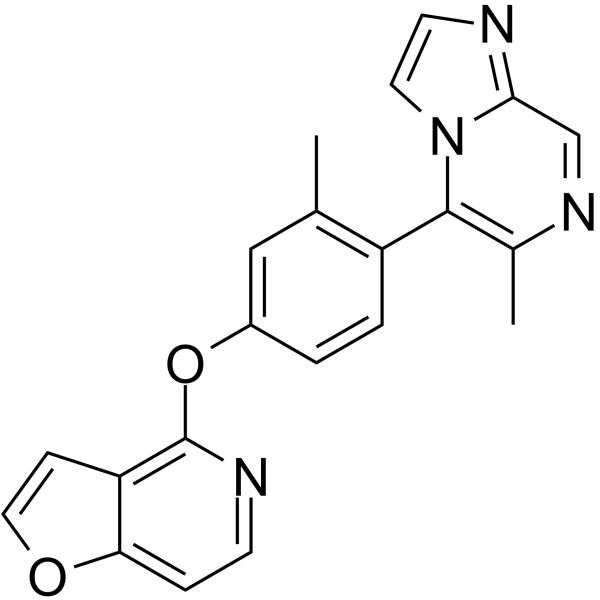
Balipodect (TAK-063) is a selective, brain-penetrant and orally active PDE10A inhibitor with an IC50 of 0.30 nM. Balipodect shows >15000-fold selectivity over other PDEs. Balipodect elevates striatal cAMP and cGMP levels in mice. Balipodect can be used for the study of schizophrenia[1].
|
-
-
- HY-138935
-
|
BI-425809
|
GlyT
|
Neurological Disease
|
|
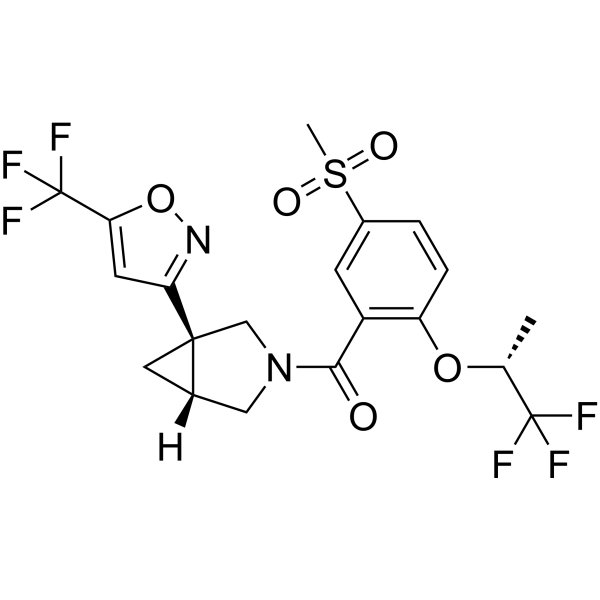
Iclepertin (BI-425809) is a potent, selective and orally active glycine transporter 1 (GlyT1) inhibitor. Iclepertin is inactive against GlyT2. Iclepertin can be used for Alzheimer disease and schizophrenia research .
|
-
-
- HY-10933
-
CX516
2 Publications Verification
BDP 12
|
iGluR
|
Neurological Disease
|
|
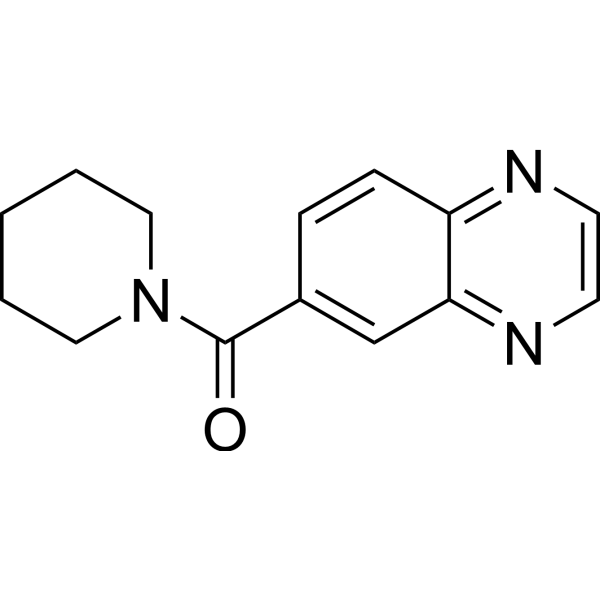
CX516 (BDP 12) is an ampakine and acts as an AMPA receptor positive allosteric modulator for the research of Alzheimer's disease, schizophrenia and mild cognitive impairment (MCI) .
|
-
-
- HY-17410
-
-
-
- HY-153093
-
-
-
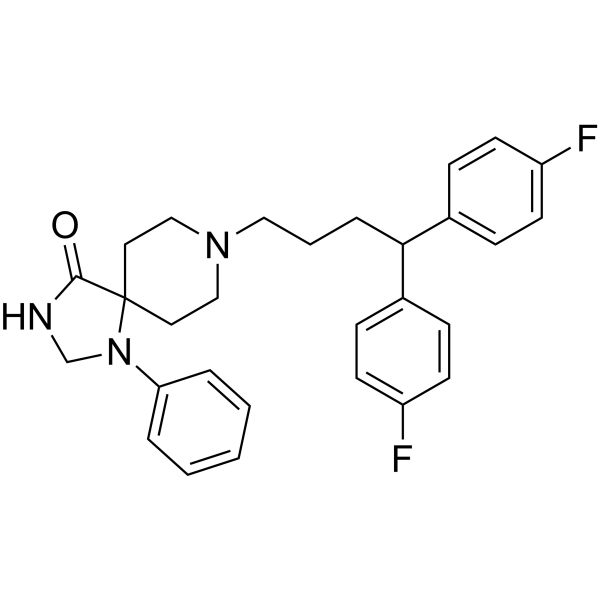
- HY-B1655
-
|
R 6218; Redeptin
|
Calcium Channel
|
Neurological Disease
|
|
Fluspirilene is a non-competitive antagonist of L-type calcium channels with an IC50 of 0.03 μM. Fluspirileneis a long-acting injectable depot antipsychotic agent used for schizophrenia.
|
-
-
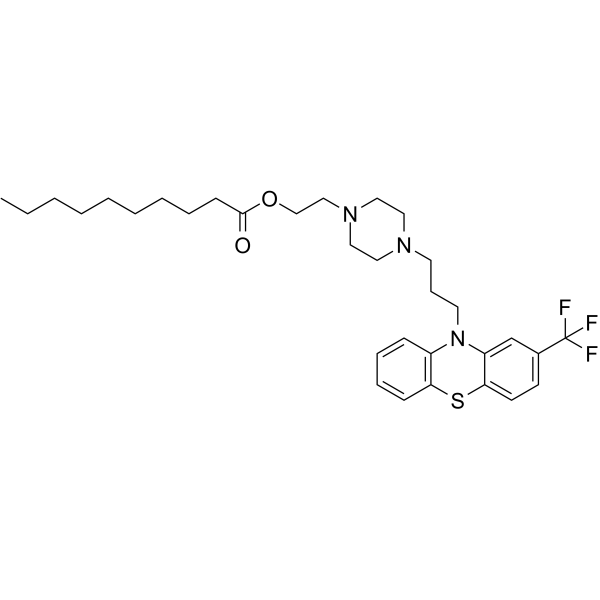
- HY-B1904
-
|
|
Dopamine Receptor
|
Neurological Disease
|
|
Fluphenazine decanoate is a CNS-penetrant dopamine D2 receptor inhibitor, is a long-acting phenothiazine neuroleptic. Fluphenazine can be used for schizophrenia research .
|
-
-
- HY-132228
-
|
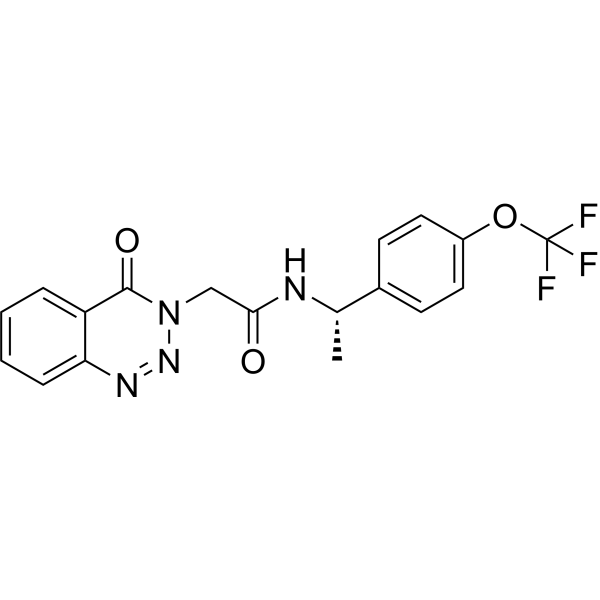
TAK-041; NBI-1065846
|
GPR139
|
Neurological Disease
|
|
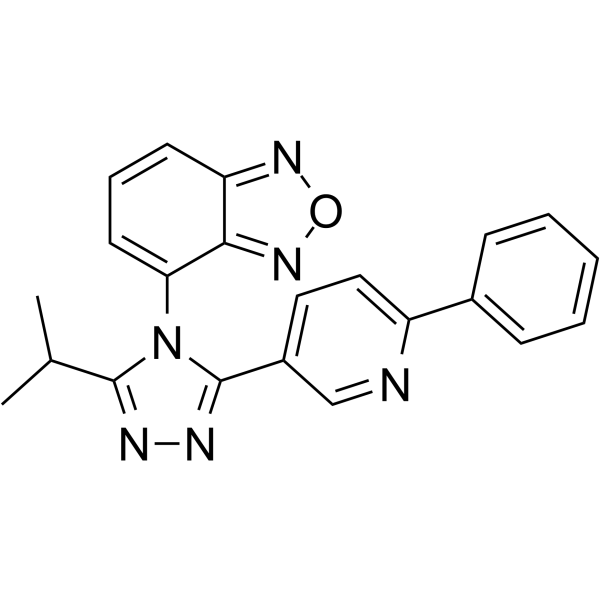
Zelatriazin (TAK-041; NBI-1065846) is a potent and selective GPR139 agonist with an EC50 of 22 nM. Zelatriazin has the potential for the research of negative symptoms associated with schizophrenia .
|
-
-
- HY-W009390
-
|
|
Endogenous Metabolite
|
Metabolic Disease
|
|
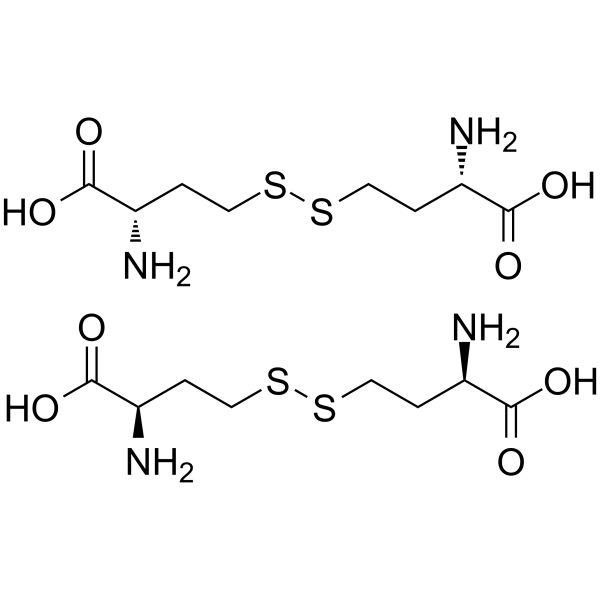
DL-Homocystine is the double-bonded form of homocysteine and homocysteine is recognized as an important substance in the pathogenesis and pathophysiology of schizophrenia.
|
-
-
- HY-119943
-
|
|
Dopamine Receptor
|
Neurological Disease
|
|
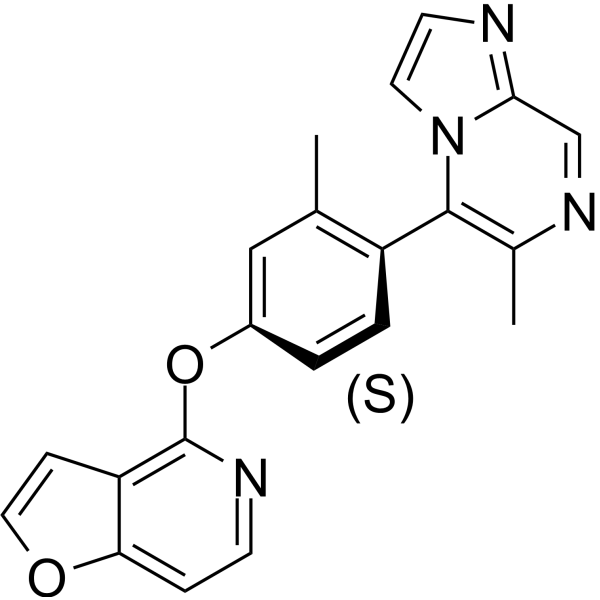
PF-06256142 is a potent, selective, CNS-penetrant and orally active agonist of the D1 receptor, with an EC50 and Ki of 33 nM and 12 nM, respectively. PF-06256142 has the potential for the research of schizophrenia and Parkinson's disease .
|
-
-
- HY-108698
-
|
(-)-3-PPP hydrochloride
|
Dopamine Receptor
|
Neurological Disease
|
|
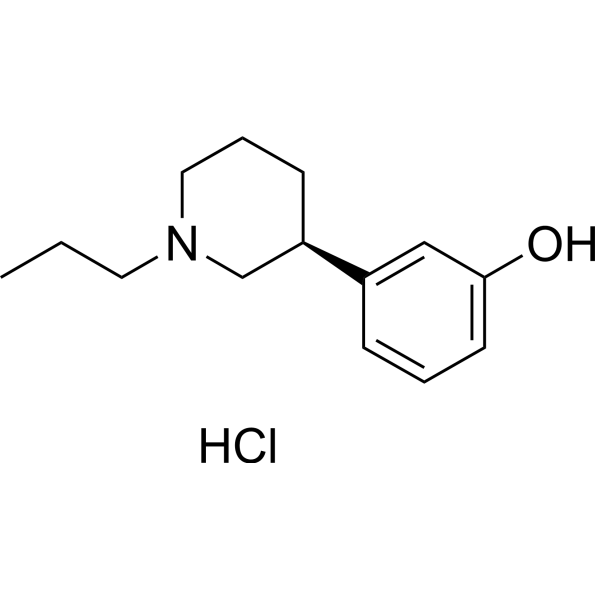
Preclamol hydrochloride ((-)-3-PPP hydrochloride) is a selective dopamine autoreceptor agonist. Preclamol hydrochloride has the potential for the research of schizophrenia .
|
-
-
- HY-14551
-
|
SR142801
|
Neurokinin Receptor
|
Neurological Disease
|
|
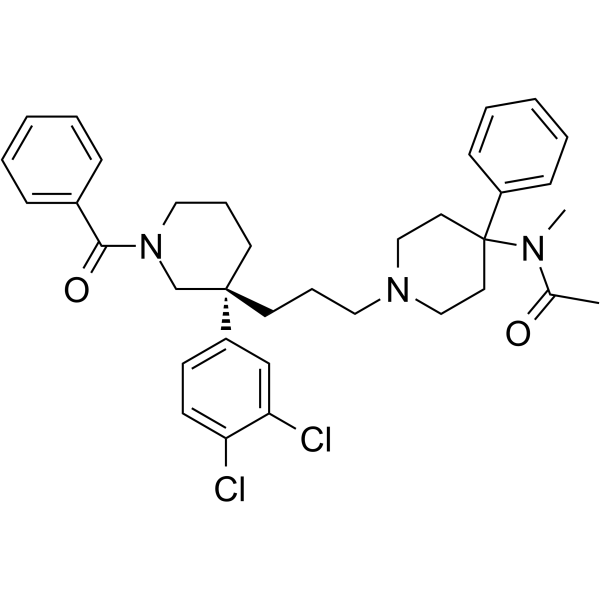
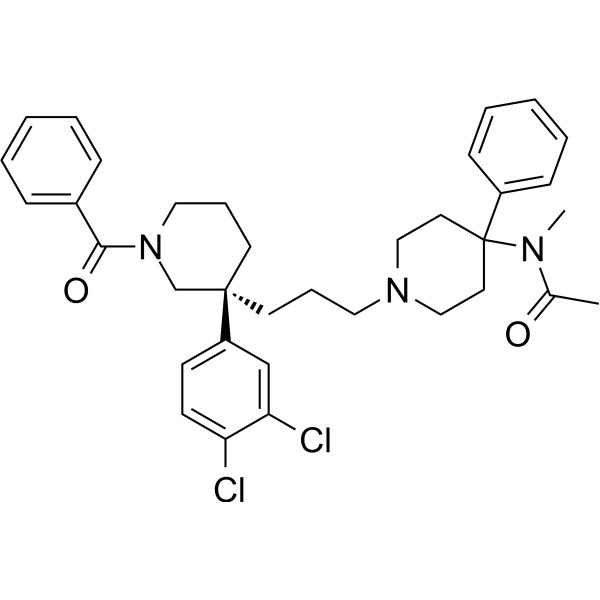
Osanetant (SR142801) is a selective NK3 receptor antagonist. Osanetant produces anxiolytic- and antidepressant-like effects and is researched for schizophrenia .
|
-
-
- HY-120023
-
|
|
mAChR
|
Neurological Disease
|
|
VU0453595 is a highly selective, systemically active M1 positive allosteric modulator (PAM, EC50=2140 nM) for the research of schizophrenia .
|
-
-
- HY-42346
-
-
-
- HY-114753A
-
|
CR-2249 hydrochloride; XY-2401 hydrochloride
|
iGluR
|
Neurological Disease
|
|
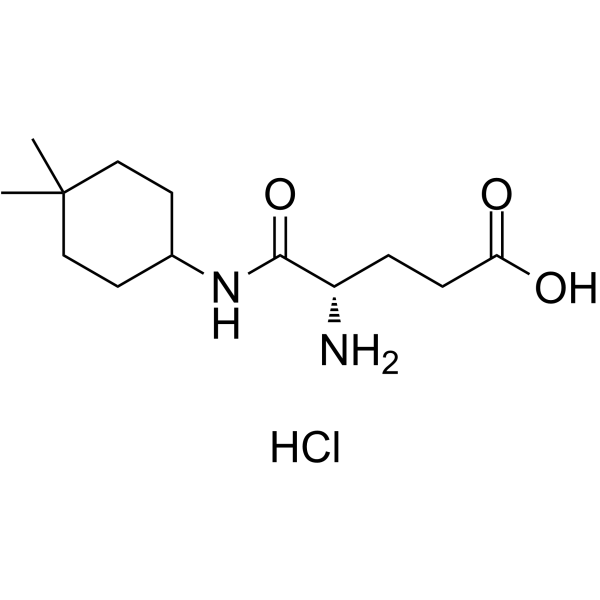
Neboglamine (CR-2249, XY-2401) hydrochloride is an orally active NMDA receptor glycine site positive modulator that can be used in schizophrenia research .
|
-
-
- HY-14539S2
-
-
-
- HY-14538B
-
|
|
Dopamine Receptor
|
Neurological Disease
Cancer
|
|
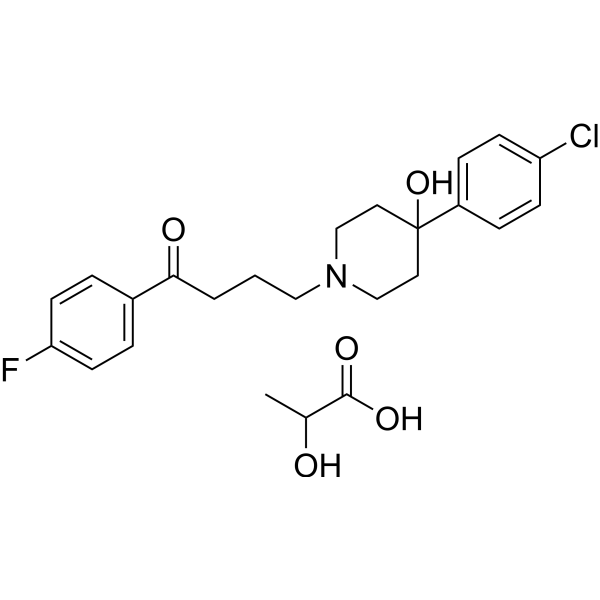
Haloperidol lactate is a potent antipsychotic agent. Haloperidol lactate can be used in acute and chronic schizophrenia and gilles de la tourette's syndrome. Haloperidol lactate has the potential for the research of psychotic disorders .
|
-
-
- HY-10716A
-
|
|
GlyT
|
Neurological Disease
|
|
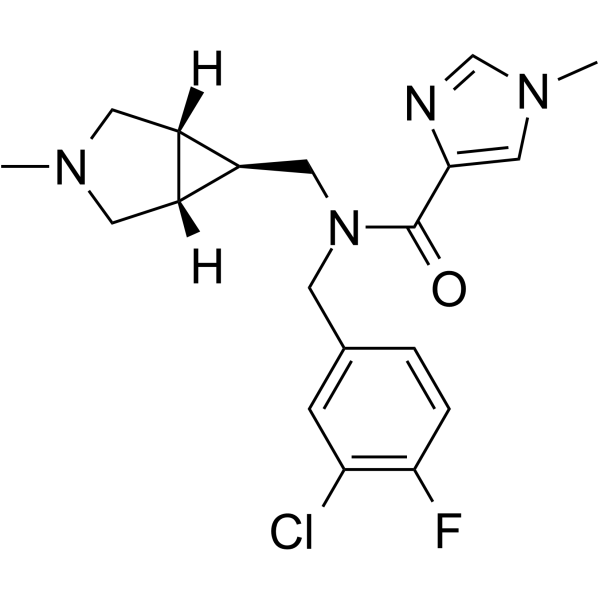
PF-03463275 is a centrally penetrant, orally available, selective, and competitive GlyT1 (glycine transporter-1) reversible inhibitor, with a Ki of 11.6 nM. PF-03463275 has the potential for Schizophrenia research .
|
-
-
- HY-14338A
-
|
Lu AE58054 hydrochloride
|
5-HT Receptor
|
Neurological Disease
|
|
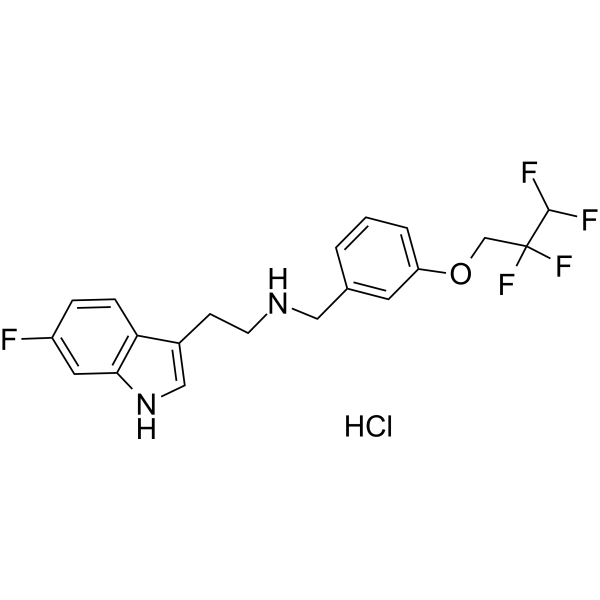
Idalopirdine hydrochloride (Lu AE58054 hydrochloride) is a potent, selective 5-HT6 receptor antagonist with a Ki value of 0.83 nM. Idalopirdine hydrochloride may be used in studies of Alzheimer's disease and schizophrenia, among other related disorders .
|
-
-
- HY-117699
-
-

-
- HY-G0001A
-
|
|
Drug Metabolite
|
Neurological Disease
|
|
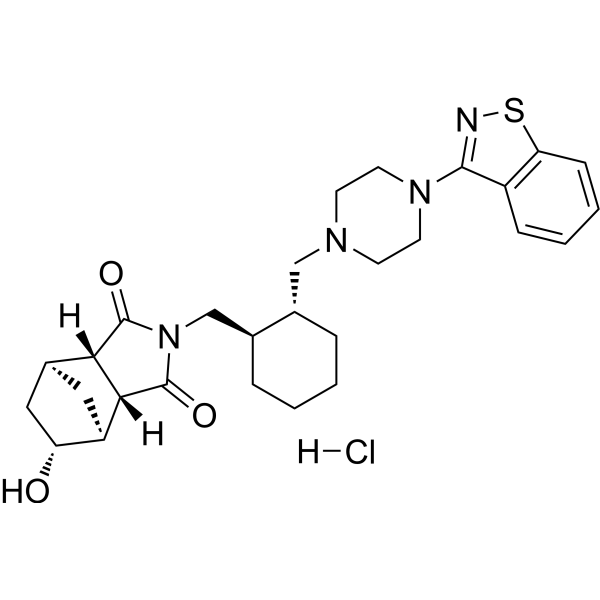
Lurasidone Metabolite 14283 hydrochloride is a major active metabolite of Lurasidone. Lurasidone is a FDA approved agent for the treatment of schizophrenia.
|
-
-
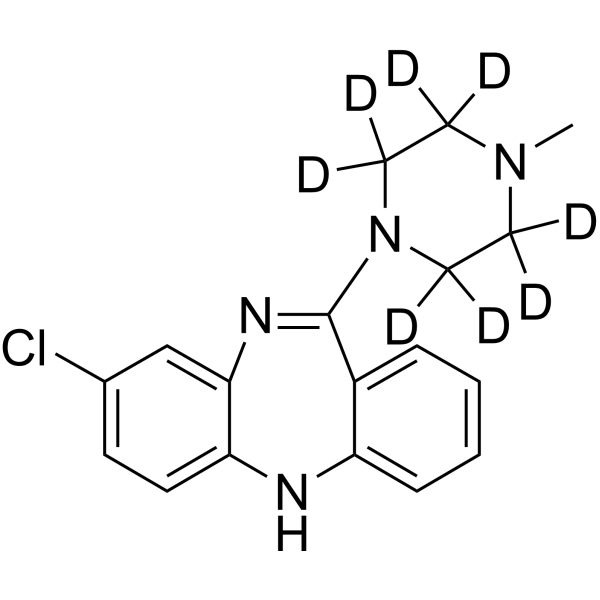
- HY-14539S
-
-
-
- HY-G0003
-
|
P88; Hydroxy Iloperidone
|
Drug Metabolite
|
Neurological Disease
|
|
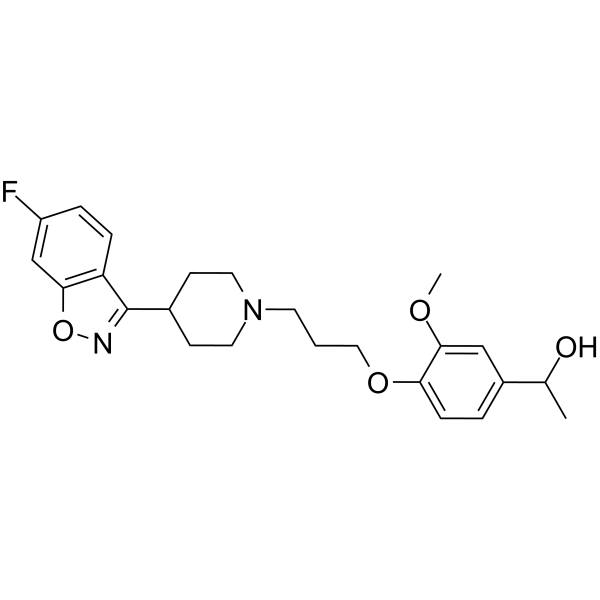
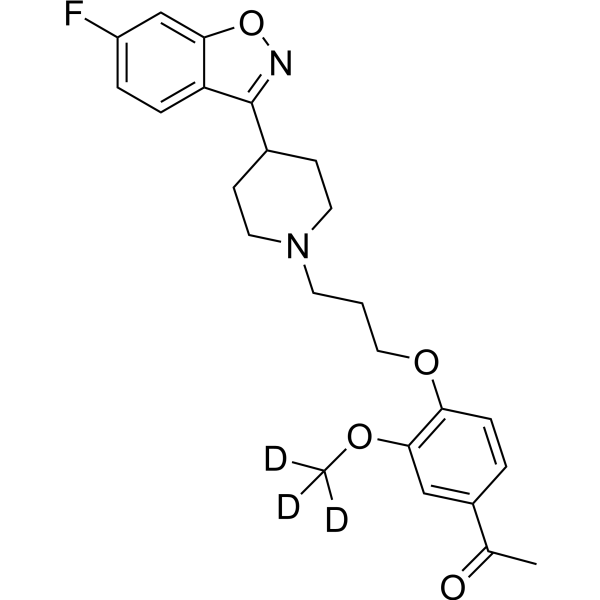
Iloperidone metabolite Hydroxy Iloperidone (P88; Hydroxy Iloperidone) is an active reduced metabolite of Iloperidone (HY-17410). Iloperidone metabolite Hydroxy Iloperidone can be used for the research of schizophrenia .
|
-
-
- HY-A0151
-
|
RP 7843; SKF 5883; Thioperazine
|
Dopamine Receptor
|
Neurological Disease
|
|
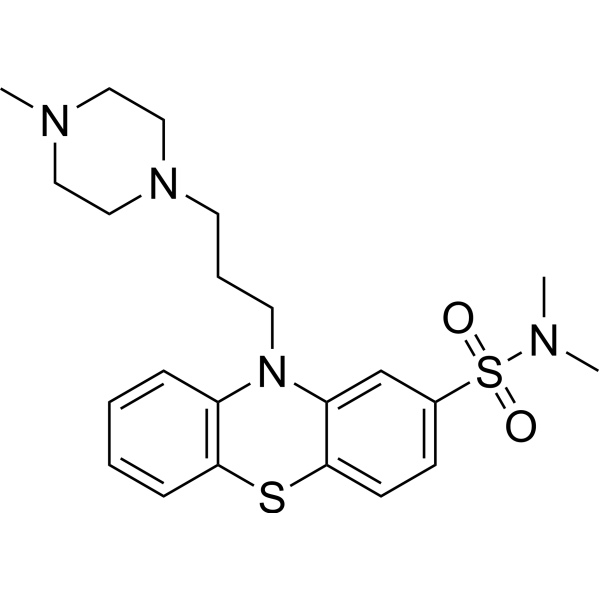
Thioproperazine (RP 7843) is an orally active antipsychotic agent with calming, antiemetic activity. Thioproperazine is effective in promoting the release of dopamine in rat striatum. Thioproperazine can be used in studies of schizophrenia and bipolar disorder .
|
-
-
- HY-105040C
-
|
LY2140023 hydrochloride
|
mGluR
|
Neurological Disease
|
|
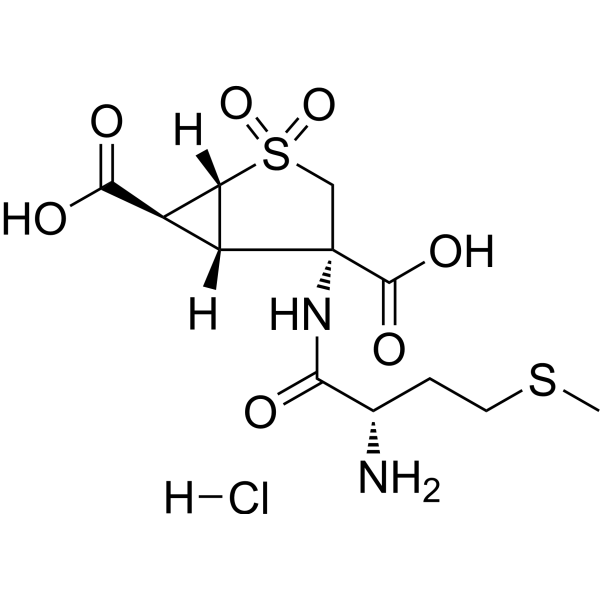
Pomaglumetad methionil hydrochloride (LY2140023 hydrochloride) is an orally active, methionine prodrug of the selective mGlu2/3 receptor agonist LY404039. Pomaglumetad methionil hydrochloride has the potential for schizophrenia research .
|
-
-
- HY-A0163A
-
|
|
Dopamine Receptor
|
Neurological Disease
|
|
Clopenthixol is a thiaquinoline compound with inhibitory effects similar to those of phenothiazine antipsychotics. Clopenthixol is an antagonist of D1 and D2 dopamine receptors. Clopenthixol is mainly used to suppress schizophrenia and other mental disorders .
|
-

-
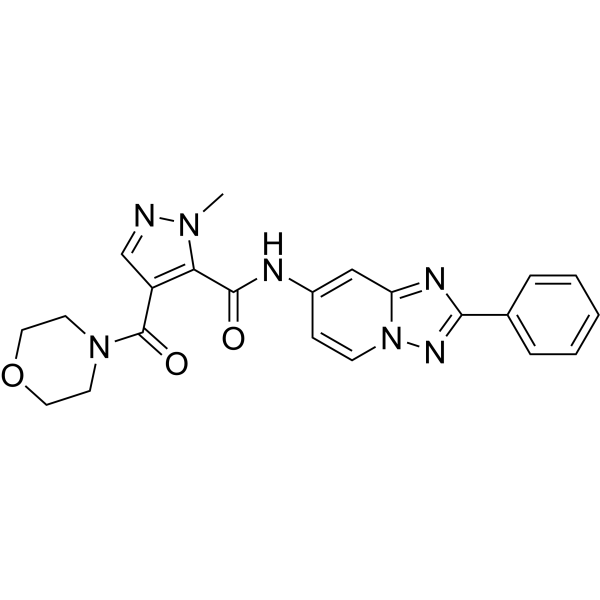
- HY-152838
-
-
-
- HY-B1904A
-
|
|
Dopamine Receptor
|
Neurological Disease
|
|
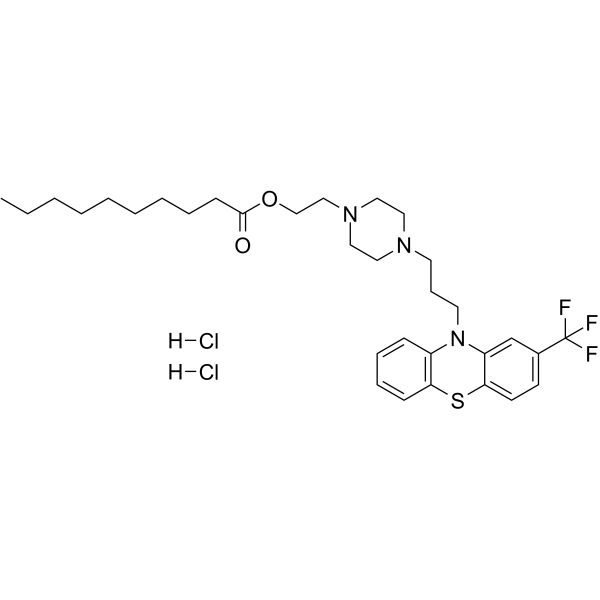
Fluphenazine decanoate dihydrochloride is a CNS-penetrant dopamine D2 receptor inhibitor, is a long-acting phenothiazine neuroleptic. Fluphenazine can be used for schizophrenia research .
|
-
-
- HY-107434
-
|
(±)-Molindone; SPN-810M
|
Dopamine Receptor
|
Neurological Disease
|
|
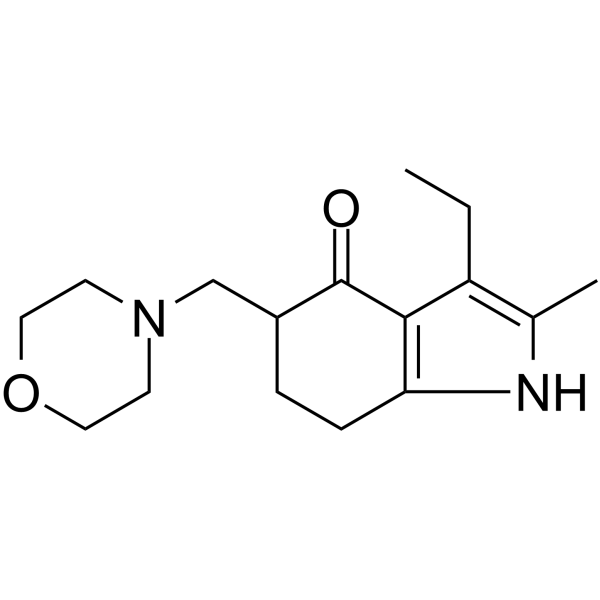
Molindone ((±)-Molindone), an indole derivative, is a potent dopamine D2 and D5 receptor antagonist. Molindone ((±)-Molindone) can be used for the research of schizophrenia and severe mental illness .
|
-
-
- HY-127086A
-
|
|
Dopamine Receptor
|
Neurological Disease
|
|
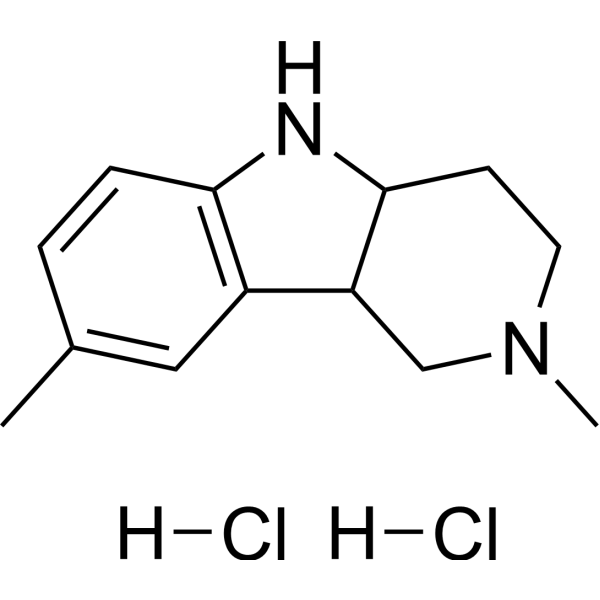
Dicarbine dihydrochloride blocks dopamine receptors in various brain parts and prevents the depression of the conditioned defence reflexes caused by stimulation of the mesencephalic portion of the reticular formation. Dicarbine dihydrochloride could be used in the schizophrenia and alcoholic psychosis studies .
|
-
-
- HY-17410S
-
-
-
- HY-110176
-
|
|
GlyT
|
Neurological Disease
|
|
ASP2535 is a potent, orally bioavailable, selective, brain permeable and centrally-active glycine transporter-1 (GlyT1) inhibitor. ASP2535 can improve cognitive impairment in animal models of schizophrenia and Alzheimer's disease .
|
-
-
- HY-169742
-
|
|
nAChR
|
Neurological Disease
|
|
Epibatidine is a α7nACh agonist with a Kd of 100 nM. Epibatidine can be used in the study of Alzheimer's, Parkinson's and schizophrenia .
|
-

-
- HY-117046
-
|
|
5-HT Receptor
Histamine Receptor
Adrenergic Receptor
|
Neurological Disease
|
|
AVN-101 is a potent, brain-penetrant and orally active 5-HT7 receptor antagonist (Ki of 153 pM), with slightly lesser potency toward 5-HT6, 5-HT2A, and 5HT-2C receptors (Ki values of 2.04 nM, 1.56 nM, and 1.17 nM, respectively). AVN-101 also exhibits a rather high affinity toward histamine H1 (Ki of 0.58 nM) and adrenergic α2A, α2B, and α2C (Ki= 0.41-3.6 nM) receptors. AVN-101 can be studied in such diseases as general anxiety disorders, depression, schizophrenia, Alzheimer’s disease, and multiple sclerosis .
|
-

-
- HY-14555
-
|
|
Dopamine Receptor
|
Neurological Disease
|
|
S33138 is a D3 receptor antagonist. S33138 inhibits addiction in animal models of addiction. S33138 reduces cognitive impairment in rodent and primate models of schizophrenia and Parkinson's disease. S33138 can be used in research on neurological disorders such as schizophrenia and Parkinson's disease .
|
-

-
- HY-168977
-
|
RL-007; FSV7-007
|
GABA Receptor
|
Neurological Disease
|
|
Inidascamine is the modulator for cholinergic, glutamatergic, and GABAB receptor, and can be used for researchs of schizophrenia .
|
-

-
- HY-136678A
-
-
-
- HY-129507
-
|
DAB-452 fumarate
|
Dopamine Receptor
|
Neurological Disease
|
|
Aplindore fumarate (DAB-452 fumarate) is a dopamine D2 receptor partial agonist. Aplindore fumarate could be used in studies of Parkinson's disease and schizophrenia .
|
-

-
- HY-105795
-
|
|
Drug Derivative
|
Neurological Disease
|
|
Metiapine is a new antipsychotic agent and Dibenzothiazepine derivative. Metiapine produces a decrease in food consumption. Metiapine can be used in the research of schizophrenia .
|
-

-
- HY-17410A
-
-
-
- HY-14551B
-
|
(S)-SR142801
|
Neurotensin Receptor
|
Neurological Disease
|
|
(S)-Osanetant is the S-enantiomer of Osanetant. Osanetant (SR142801) is a selective NK3 receptor antagonist. Osanetant produces anxiolytic- and antidepressant-like effects and is researched for schizophrenia .
|
-
-
- HY-106862A
-
|
|
Dopamine Receptor
|
Neurological Disease
|
|
CGS 15873A is an orally active benzopyranopyridine derivative. CGS 15873A has selective dopamine receptor activation activity. CGS 15873A can be used for research on schizophrenia or Parkinson's disease .
|
-

-
- HY-116916
-
|
|
Dopamine Receptor
|
Neurological Disease
|
|
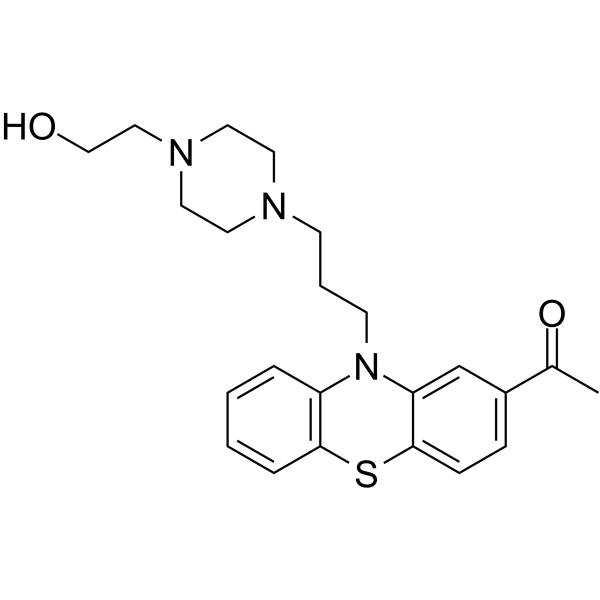
Acetophenazine, a phenothiazine derivative, is an antipsychotic agent. Acetophenazine primarily blocks dopamine D2 receptors in the brain. Acetophenazine can be used for researching psychotic disorders such as schizophrenia and anxious depression .
|
-
-
- HY-127120
-
|
|
Dopamine Receptor
|
Neurological Disease
|
|
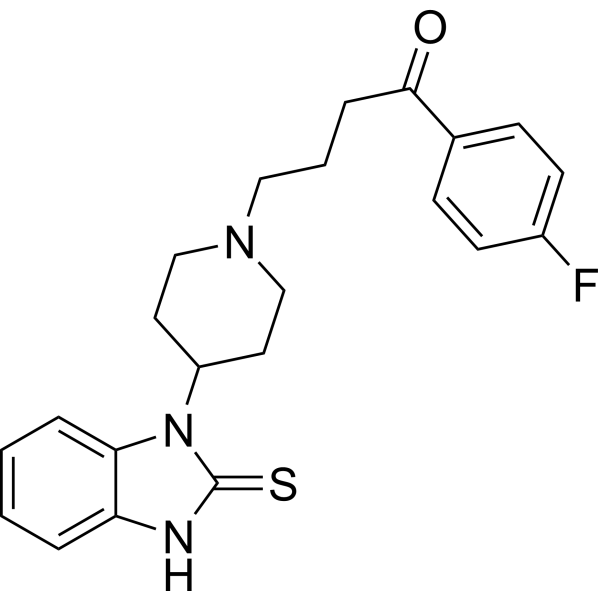
Timiperone has a strong affinity for cerebral dopamine D2 receptor. Timiperone has antipsychotic activity, and inhibits stereotyped behaviour. Timiperone can be used for research of schizophrenia .
|
-
-
- HY-19332R
-
|
FR-900494 (Standard)
|
Reference Standards
Glycosidase
Others
|
Inflammation/Immunology
|
|
Bromperidol decanoate (Standard) is the analytical standard of Bromperidol decanoate. This product is intended for research and analytical applications. Bromperidol decanoate (R46541) is a compound used for the inhibition of schizophrenia and has certain clinical inhibitory activity.
|
-

-
- HY-113745
-
|
|
Amino acid Transporter
|
Neurological Disease
|
|
LX-6171 is an orally active SLC6A7 inhibitor. LX-6171 can be used to study diseases characterized by cognitive impairment, such as Alzheimer's disease, schizophrenia or vascular dementia .
|
-

-
- HY-168537
-
-

-
- HY-14554
-
|
LY2140023
|
mGluR
|
Neurological Disease
|
|
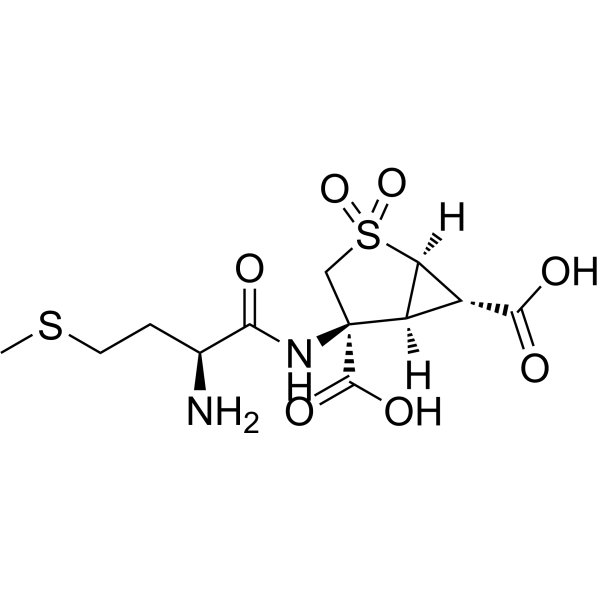
Pomaglumetad methionil anhydrous (LY2140023) is an orally active, methionine prodrug of the selective mGlu2/3 receptor agonist LY404039. LY2140023 has the potential for schizophrenia research .
|
-
-
- HY-112320
-
|
|
Dopamine Receptor
|
Neurological Disease
|
|
UCSF34 (Compound 54) is a Haloperidol (HY-14538) analogue. UCSF34 binds to the human D2L receptor, with an estimated pKi of 7.49. UCSF34 can be used in the research of schizophrenia .
|
-

-
- HY-127086
-
|
|
Dopamine Receptor
|
Neurological Disease
|
|
Dicarbine blocks dopamine receptors in various brain parts and prevents the depression of the conditioned defence reflexes caused by stimulation of the mesencephalic portion of the reticular formation. Dicarbine could be used in the schizophrenia and alcoholic psychosis studies .
|
-
- HY-E70395
-
|
PE; PEP
|
Biochemical Assay Reagents
|
Neurological Disease
|
|
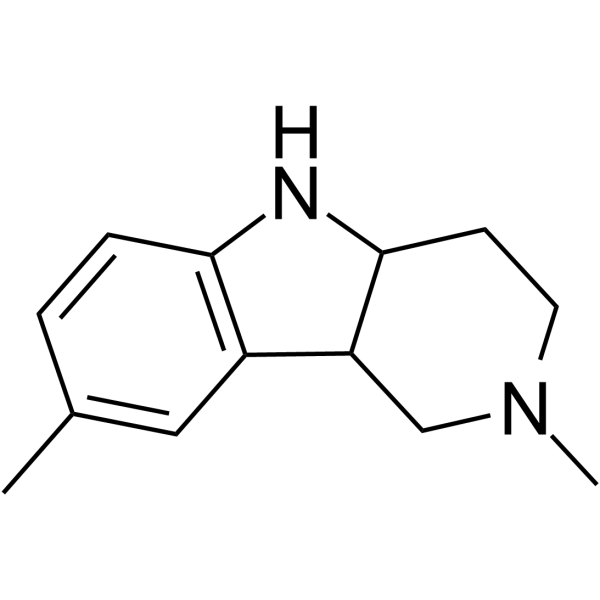
Prolyl Endopeptidase, highly active in brain and other tissues, catabolizes proline-containing peptides such as substance P, neurotensin, luteinizing hormone-releasing hormone, thyrotropin releasing hormone, bradykinin and angiotensin II. Prolyl Endopeptidase can be used for study of neuropsychiatric diseases such as stress disorder, depression, and schizophrenia .
|
-

- HY-10030
-
|
PF-2545920 succinate
|
Phosphodiesterase (PDE)
|
Neurological Disease
|
|
Mardepodect succinate (PF-2545920 succinate) is a potent and specific phosphodiesterase 10A (PDE10A) inhibitor with potential activity in the treatment of schizophrenia. Mardepodect succinate has been further optimized to improve brain penetration and compound-like properties for use in schizophrenia research .
|
-

- HY-107947
-
|
|
Others
|
Neurological Disease
|
|
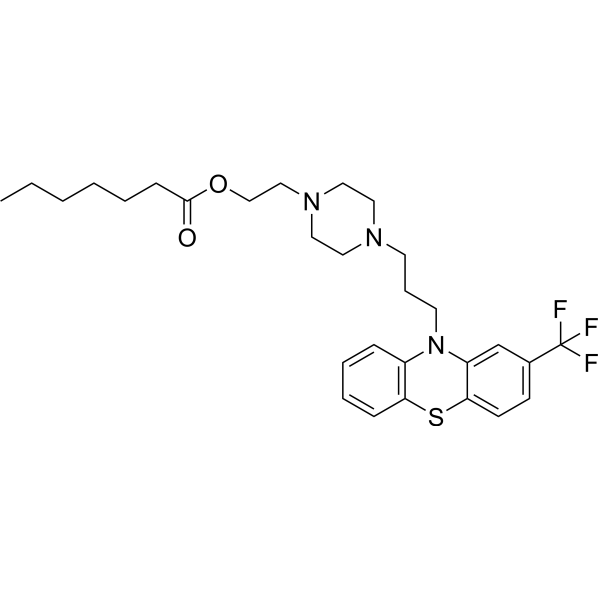
Fluphenazine enanthate is a long-acting injectable (LAI) antipsychotic for the treatment of schizophrenia .
|
-
- HY-169806
-
|
|
iGluR
|
Neurological Disease
|
|
Methalthiazide enhances the activity of natural stimulators of AMPA receptors and can be used in the study of schizophrenia .
|
-

- HY-115896
-
|
|
Others
|
Neurological Disease
|
|
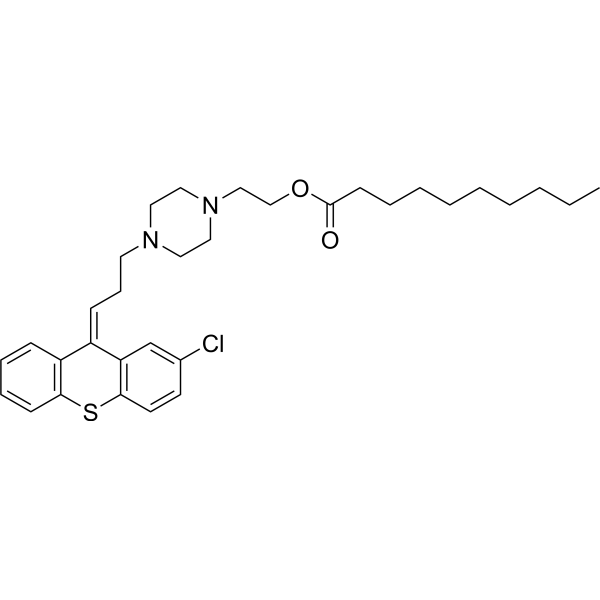
Zuclopenthixol decanoate is a long-acting agent for schizophrenia and other serious mental illnesses research .
|
-
- HY-123788
-
-

- HY-118551
-
|
R46541
|
Dopamine Receptor
|
Others
|
|
Bromperidol decanoate (R46541) is a compound used for the inhibition of schizophrenia and has certain clinical inhibitory activity.
|
-

- HY-116546
-
-

- HY-139568
-
-
- HY-173031
-
|
|
mAChR
|
Neurological Disease
|
|
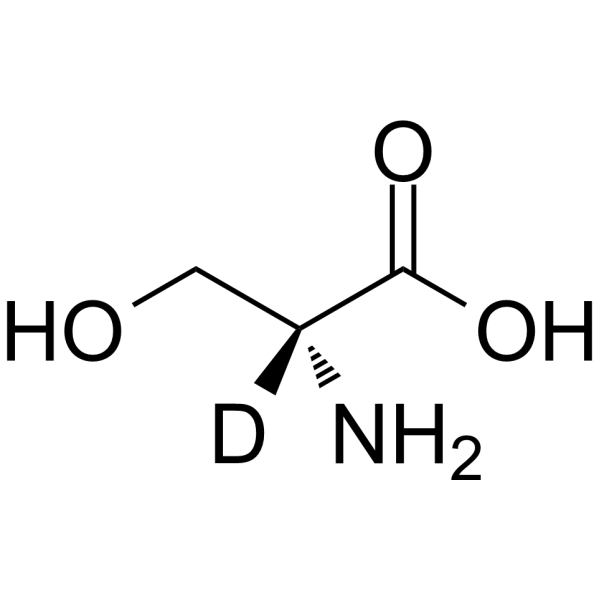
KTX-005 is the agonist for mAChR that regulates the signaling pathway of the neurotransmitter acetylcholine, and can be used for research of schizophrenia .
|
-

- HY-123182
-
-

- HY-W502657
-
-
- HY-105657
-
|
|
Dopamine Receptor
|
Neurological Disease
|
|
Flupenthixol decanoate is a dopamine D2 receptor antagonist with antipsychotic effects. Flupenthixol decanoate can be used for schizophrenia and depression research .
|
-

- HY-160001
-
-
- HY-117847
-
-

- HY-A0211A
-
|
|
Drug Derivative
|
Neurological Disease
|
|
Carphenazine dimaleate is a Phenothiazine (HY-Y0055) class antipsychotic active molecule. Carphenazine can be used in research on chronic schizophrenia .
|
-

- HY-112015
-
|
R-1838
|
Dopamine Receptor
|
Neurological Disease
|
|
Deschlorohaloperidol (compound 8h) is an analogue of Haloperidol (HY-14538). Haloperidol is a dopamine D2 receptor (D2R) antagonist for schizophrenia .
|
-

- HY-141832
-
|
|
mGluR
|
Neurological Disease
|
|
mGluR5 modulator 1 is a mGluR5 positive allosteric modulator. mGluR5 modulator 1 can be used for the research of the schizophrenia and cognitive impairments .
|
-
- HY-117408
-
|
|
mAChR
|
Neurological Disease
|
|
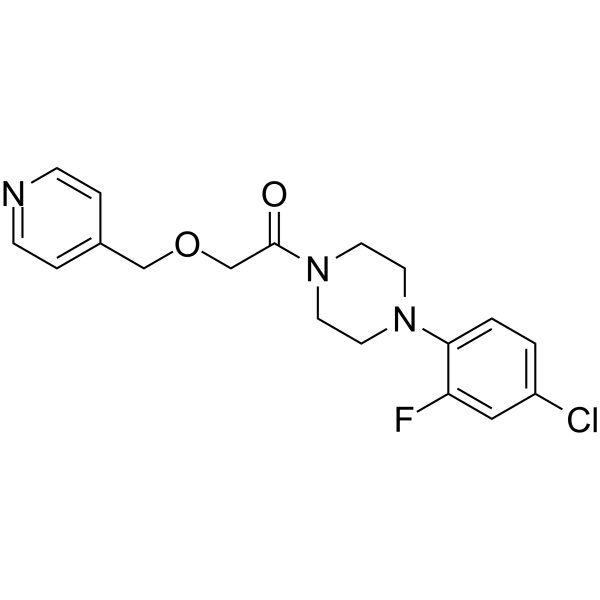
VU6004256 is a potent and selective M1 muscarinic positive allosteric modulator (PAM) with an EC50 value of 155 nM. VU6004256 has the potential for the research of schizophrenia .
|
-
- HY-10814
-
|
|
nAChR
|
Neurological Disease
|
|
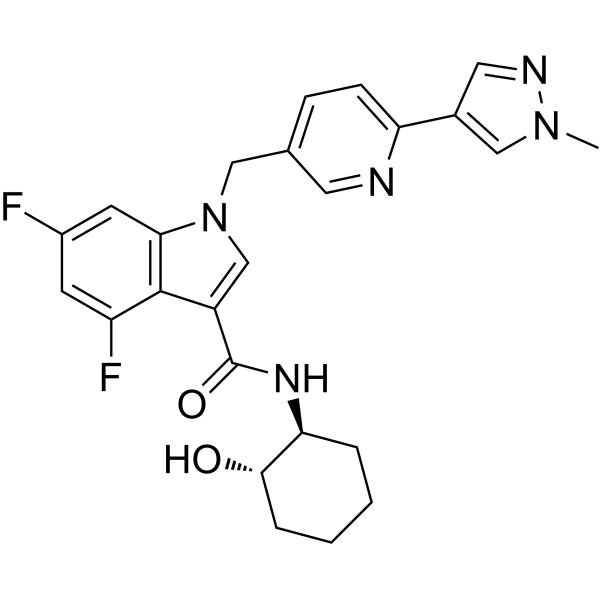
CP-810123 is a brain-permeable agonist of α7 nAChR for the research of cognitive impairment associated with psychiatric or neurological disorders such as schizophrenia and Alzheimer's disease .
|
-

- HY-130689
-
|
|
Endogenous Metabolite
|
Neurological Disease
|
|
Pinoxepin hydrochloride is an antipsychotic drug with sedative and antidepressant activities. Pinoxepin hydrochloride is used to suppress mental disorders such as schizophrenia and depression. Pinoxepin hydrochloride also has the effect of improving sleep quality .
|
-

- HY-12798CR
-
|
AR-13324 M1 metabolite (Standard)
|
Reference Standards
PKC
ROCK
|
Cardiovascular Disease
|
|
Fluanisone (Standard) is the analytical standard of Fluanisone. This product is intended for research and analytical applications. Fluanisone has potent sedative effect in vivo. Fluanisone can be used to study schizophrenia .
|
-

- HY-117699R
-
-

- HY-19456
-
-
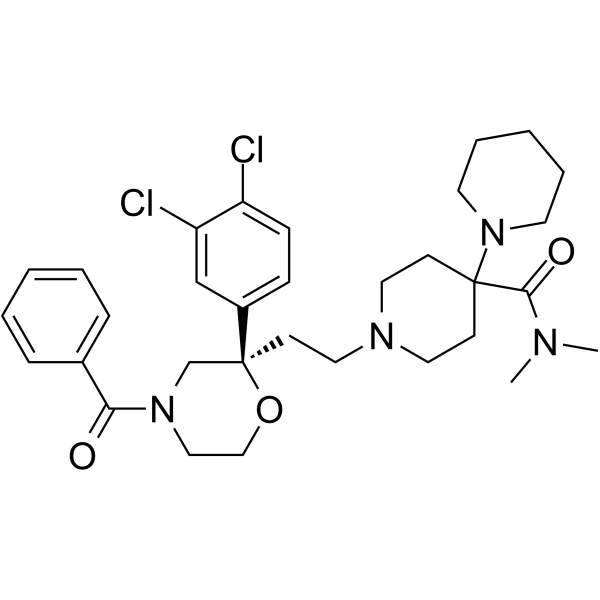
- HY-157955A
-
-
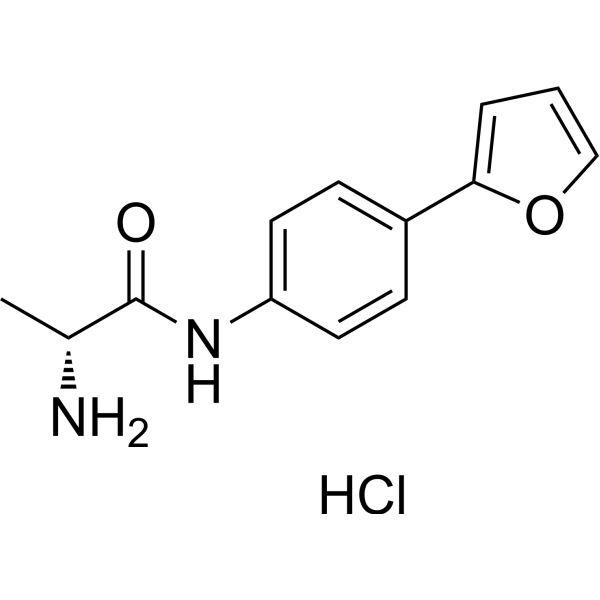
- HY-107677
-
|
|
nAChR
|
Neurological Disease
|
|
A 844606 is a highly potent and selective α4β2 nAChR agonist. A 844606 can be used in the study of schizophrenia, Huntington's disease, Alzheimer's disease, and Parkinson's disease .
|
-

- HY-119677R
-
|
WIN-18501-2 (Standard)
|
Others
|
Neurological Disease
|
|
Oxypertine (Standard) is the analytical standard of Oxypertine. This product is intended for research and analytical applications. Oxypertine is a neuroprotective agent. Oxypertine can be used in the research of neurological conditions, such as anxiety and schizophrenia .
|
-

- HY-158237
-
-
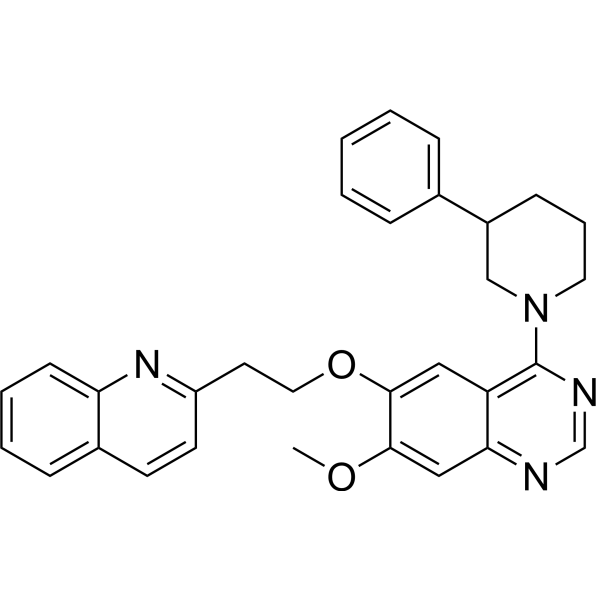
- HY-167947
-
|
(Rac)-SB-202026; (Rac)-Memric
|
mAChR
|
Neurological Disease
|
|
(Rac)-Sabcomeline ((Rac)-SB-202026) serves as an M1/M4 muscarinic agonist, making it a valuable tool in the exploration of neurological disorders, including schizophrenia.
|
-

- HY-14793
-
|
|
Dopamine Receptor
|
Neurological Disease
|
|
Lensiprazine is a potent dopamine D2 receptor (D2R) antagonist that acts as a serotonin reuptake inhibitor. Lensiprazine can be used to study bipolar disorder and schizophrenia .
|
-

- HY-105903
-
|
Ro 22-1319
|
Dopamine Receptor
|
Neurological Disease
|
|
Piquindone (Ro 22-1319) is a potent antipsychotic agent. Piquindone binds to a D2 dopaminergic receptor subtype in a sodium-dependent manner. Piquindone can be used in the research of schizophrenia .
|
-

- HY-A0163B
-
|
(Z)-Clopenthixol dihydrochloride
|
Dopamine Receptor
|
Neurological Disease
|
|
Zuclopenthixol ((Z)-Clopenthixol) dihydrochloride is a thioxanthene derivative which acts as a mixed dopamine D1/D2 receptor antagonist. Zuclopenthixol dihydrochloride is used in the study of schizophrenia .
|
-
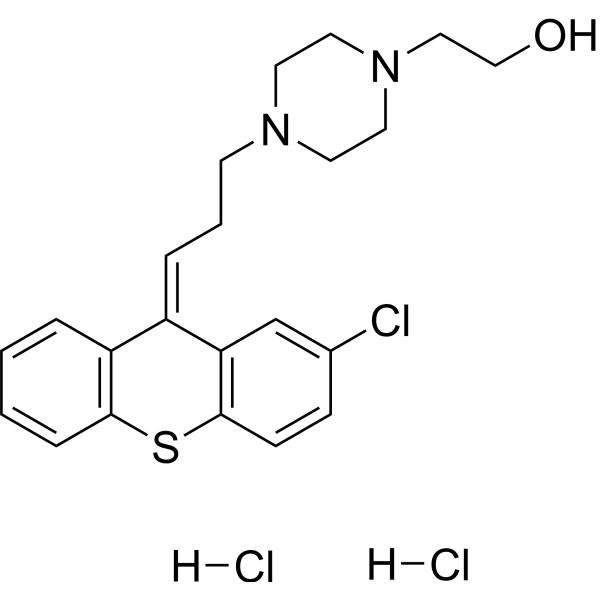
- HY-117838
-
|
|
Phosphodiesterase (PDE)
|
Neurological Disease
|
|
Phosphodiesterase 10-IN-2 (THPP-4) is an oral active phosphodiesterase 10A (PDE10A) inhibitor with the Ki of 4.5 nM. Phosphodiesterase 10-IN-2 can be used for study of schizophrenia .
|
-

- HY-118551R
-
|
R46541 (Standard)
|
Dopamine Receptor
Reference Standards
|
Others
|
|
Bromperidol decanoate (Standard) is the analytical standard of Bromperidol decanoate. This product is intended for research and analytical applications. Bromperidol decanoate (R46541) is a compound used for the inhibition of schizophrenia and has certain clinical inhibitory activity.
|
-

- HY-103406
-
-
- HY-103406A
-
|
|
Dopamine Receptor
CCR
|
Neurological Disease
|
|
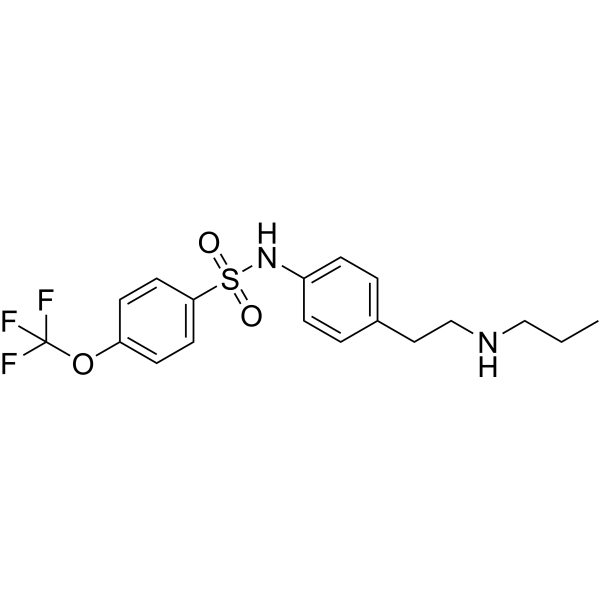
PNU-177864 is a potent, selective, orally active dopamine D3 receptor antagonist. PNU-177864 induces phospholipid metabolism in vivo and has anti-schizophrenia activity .
|
-
- HY-B1262
-
|
|
Dopamine Receptor
|
Neurological Disease
|
|
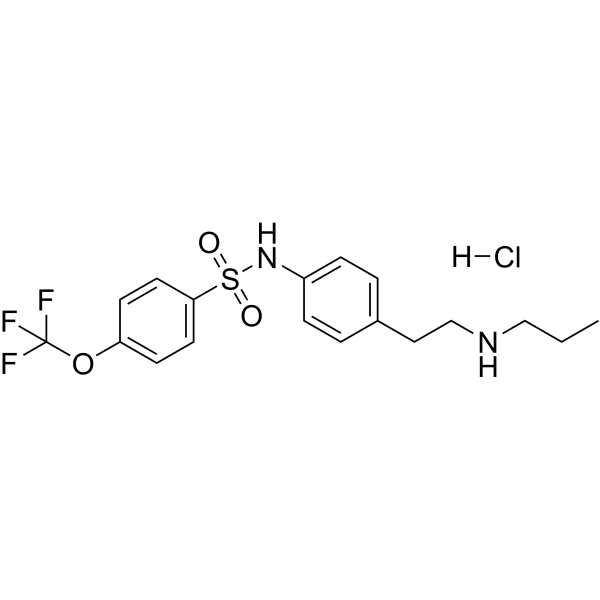
Acetophenazine dimaleate, a phenothiazine derivative, is an antipsychotic agent. Acetophenazine dimaleate primarily blocks dopamine D2 receptors in the brain. Acetophenazine dimaleate can be used for researching psychotic disorders such as schizophrenia and anxious depression .
|
-
- HY-107434S
-
|
(±)-Molindone-d8; SPN-810M-d8
|
Isotope-Labeled Compounds
Dopamine Receptor
|
Neurological Disease
|
|
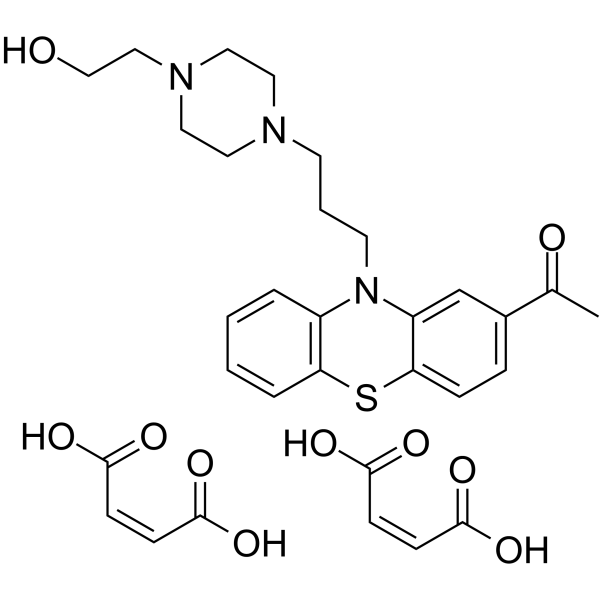
Molindone-d8 is the deuterium labeled Molindone. Molindone hydrochloride (EN-1733A) is a therapeutic antipsychotic, used in the treatment of schizophrenia, works by blocking the effects of dopamine in the brain, leading to diminished psychoses .
|
-
- HY-W062702
-
|
|
nAChR
|
Neurological Disease
|
|
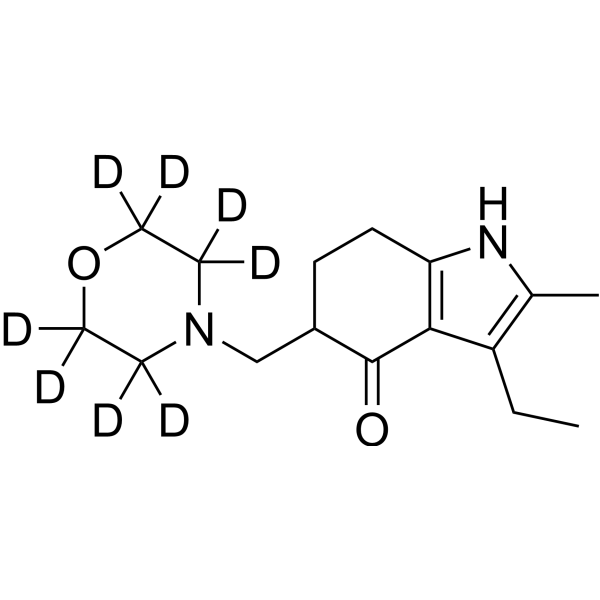
BMS-933043 is a potent and selective α7 nACh receptor partial agonist. BMS-933043 attenuates the cognitive impairment in mice and can be utilized in research related to cognitive dysfunction in schizophrenia .
|
-

- HY-10716
-
|
|
GlyT
|
Neurological Disease
|
|
PF-03463275 hydrochloride is a centrally penetrant, orally available, selective, and competitive GlyT1 (glycine transporter-1) reversible inhibitor, with a Ki of 11.6 nM. PF-03463275 hydrochloride has the potential for Schizophrenia research .
|
-

- HY-17612A
-
|
NW-3509 hydrochloride
|
Sodium Channel
|
Neurological Disease
|
|
Evenamide hydrochloride is an orally available voltage-gated sodium channel (VGSC) blocker (Ki=0.4 μM) for the research of schizophrenia. Evenamide hydrochloride shows efficacy in a broad spectrum of rodent models of psychosis, mania, depression, and aggressiveness .
|
-

- HY-123154
-
|
|
Phosphodiesterase (PDE)
|
Others
|
|
PDE10A-IN-4 (compound 38) is a compound used to inhibit schizophrenia. As a PDE10A inhibitor, it is less effective than placebo in inhibiting acute schizophrenia and does not show antipsychotic effect.
|
-

- HY-120022
-
-

- HY-180718
-
-

- HY-W708196
-
|
|
Dopamine Receptor
|
Neurological Disease
|
|
Dehydrohaloperidol, Haloperidol (HY-14538) analogue, is a selective human dopamine D2 receptor antagonist with a pKd of 8 and a pki of 8. Dehydrohaloperidol can be used for the research of schizophrenia .
|
-

- HY-W698445
-
|
|
Drug Isomer
nAChR
|
Neurological Disease
|
|
α-Nicotine is the α-isomer of Nicotine. Nicotine is a nicotinic acetylcholine receptor (nAChR) agonist. Nicotine is promising for research of neuropsychiatric disorders (e.g., schizophrenia, ADHD) .
|
-

- HY-W700598
-
|
|
Dopamine Receptor
|
Neurological Disease
|
|
Pipotiazine palmitate is a dopamine receptor antagonist. Pipotiazine palmitate is a long-acting phenothiazine antipsychotic agent that can be administered by intramuscular injection. Pipotiazine palmitate can be used in the research of mental illnesses such as schizophrenia .
|
-

- HY-181425
-
-

- HY-108698R
-
|
(-)-3-PPP hydrochloride (Standard)
|
Reference Standards
Dopamine Receptor
|
Neurological Disease
|
|
Preclamol hydrochloride (Standard) is the analytical standard of Preclamol (hydrochloride) (HY-108698). This product is intended for research and analytical applications. Preclamol hydrochloride ((-)-3-PPP hydrochloride) is a selective dopamine autoreceptor agonist. Preclamol hydrochloride has the potential for the research of schizophrenia .
|
-

- HY-180421
-
|
|
mAChR
|
Neurological Disease
|
|
VU6009048 is a CNS-penetrant human M4 muscarinic acetylcholine receptor (mAChR4) positive allosteric modulator. VU6009048 can be used for the research of parkinson’s disease, huntington’s disease, schizophrenia .
|
-

- HY-131336
-
|
|
mGluR
|
Neurological Disease
|
|
MGS0274, an ester-based lipophilic proagent of a metabotropic glutamate (mGlu)2 and mGlu3 receptor agonist MGS0008, shows improved oral bioavailability. MGS0274 has the potential for the research of schizophrenia .
|
-
- HY-147398
-
|
|
Dopamine Receptor
|
Neurological Disease
|
|
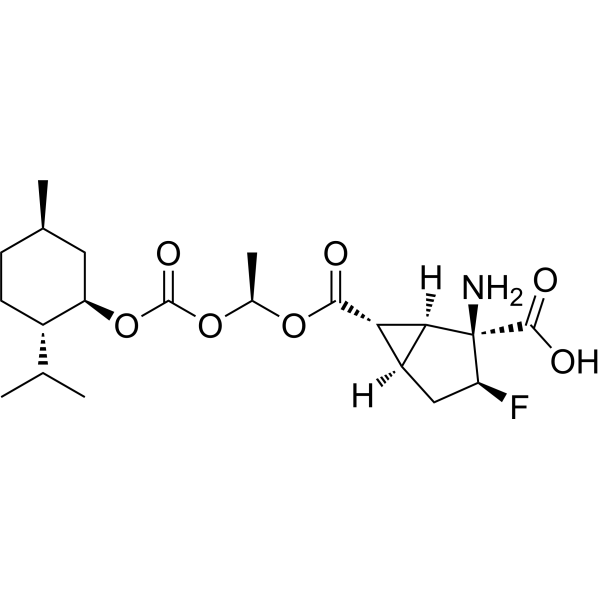
Dopamine D4 receptor antagonist-1 is a selective DRD4 antagonists, with a Ki of 9.0 nM for Hd4.2. Dopamine D4 receptor antagonist-1 can be used in study of schizophrenia .
|
-
- HY-14338
-
|
Lu AE58054
|
5-HT Receptor
|
Neurological Disease
|
|
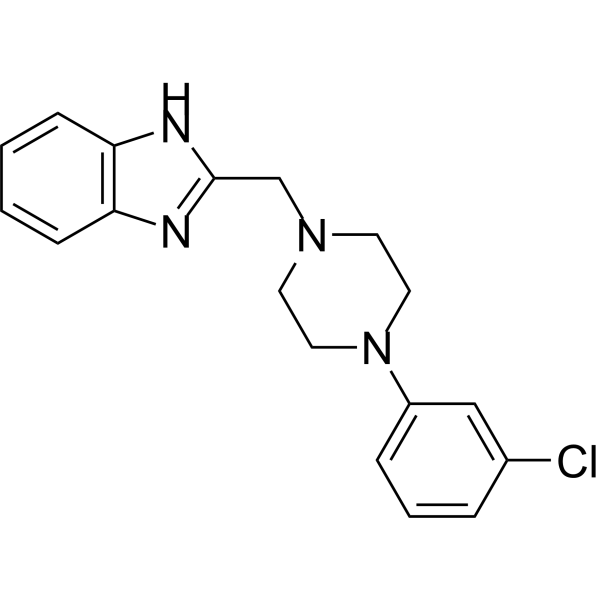
Idalopirdine (Lu AE58054 ) is a potent, selective 5-HT6 receptor antagonist with a Ki value of 0.83 nM. Idalopirdine may be used in studies of Alzheimer's disease and schizophrenia, among other related disorders .
|
-
- HY-105182
-
|
LY-246708
|
mAChR
|
Neurological Disease
|
|
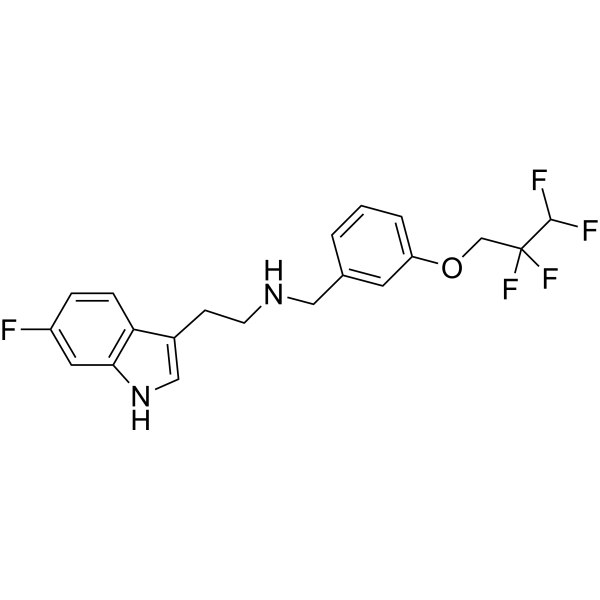
Xanomeline, as an effective and selective muscarinic type 1 and type 4 (M1/M4) receptor agonist, increases neuronal excitability. Xanomeline can be used for the research of neurological disorders, such as schizophrenia .
|
-
- HY-128783
-
|
|
mAChR
|
Neurological Disease
|
|
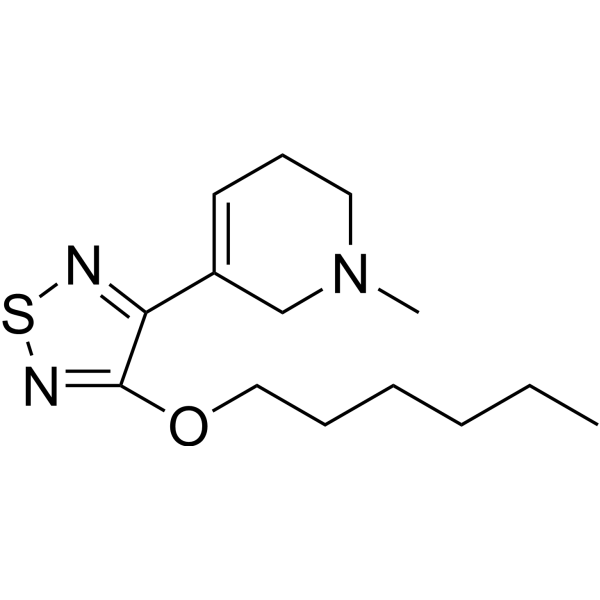
VU0090157 is a positive allosteric modulator (PAM) of the M1 muscarinic acetylcholine receptor (mAChR). VU0090157 increases the affinity of ACh by binding to the allosteric site. VU0090157 can be used in the study of schizophrenia and Alzheimer's disease .
|
-

- HY-121164
-
|
|
Neurokinin Receptor
|
Neurological Disease
|
|
GSK172981 is a brain-penetrant tachykinin NK3 receptor antagonist with pKi values of 7.7 and 7.8 for human and native guinea pig NK3 receptors, respectively. GSK172981 can be used for the study of schizophrenia .
|
-

- HY-17670
-
|
|
iGluR
|
Neurological Disease
|
|
AMPA receptor modulator-11 (example 210) is a positive allosteric AMPA receptor modulator. AMPA receptor modulator-11 can be used for research on depression, schizophrenia, Alzheimer's disease or attention deficit hyperactivity disorder (ADHD) .
|
-

- HY-10715
-
|
|
GlyT
|
Neurological Disease
|
|
SSR504734 is an orally active, selective and reversible inhibitor of human, rat, and mouse GlyT1 (IC50=18, 15, and 38 nM, respectively). SSR504734 shows anti-schizophrenia, anti-anxiety and anti-depression activities .
|
-
- HY-17410R
-
|
HP 873 (Standard)
|
5-HT Receptor
Dopamine Receptor
Reference Standards
|
Neurological Disease
|
|
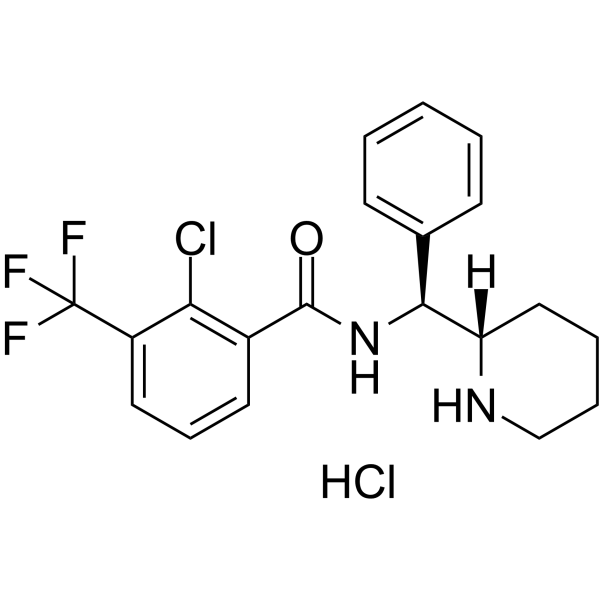
Iloperidone (Standard) is the analytical standard of Iloperidone. This product is intended for research and analytical applications. Iloperidone (HP 873) is a D2/5-HT2 receptor antagonist. Iloperidone is an atypical antipsychotic for the schizophrenia symptoms .
|
-

- HY-137546
-
|
Haloperidol metabolite II
|
Drug Metabolite
|
|
|
Reduced Haloperidol (Haloperidol metabolite II) is an antipsychotic compound with neurotransmitter modulating activity. Reduced Haloperidol is commonly used to inhibit schizophrenia and other psychotic disorders. Reduced Haloperidol helps reduce the occurrence of hallucinations and delusions by inhibiting the activity of dopamine receptors.
|
-

- HY-14538A
-
|
|
Dopamine Receptor
|
Neurological Disease
Cancer
|
|
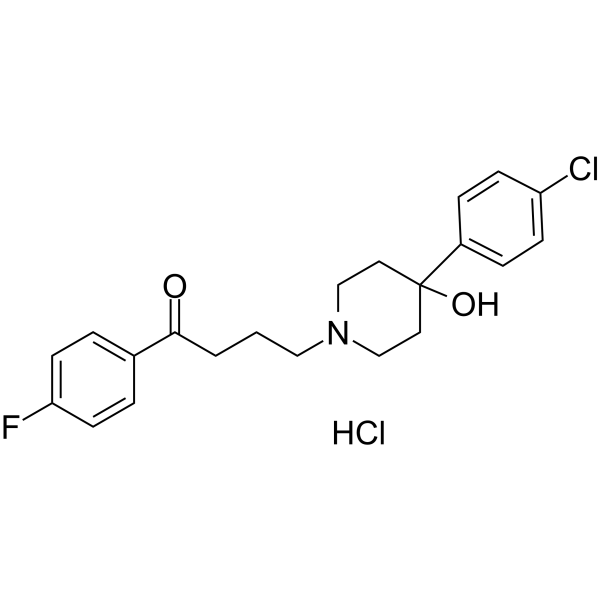
Haloperidol hydrochloride is a potent dopamine D2 receptor antagonist, widely used as an antipsychotic agent. Haloperidol hydrochloride can be used in the study of schizophrenia, tics in Tourette syndrome, mania in bipolar disorder, delirium, agitation, acute psychosis, and hallucinations from alcohol withdrawal.
|
-
- HY-10711A
-
|
(R)-NFPS hydrochloride
|
GlyT
|
Neurological Disease
|
|
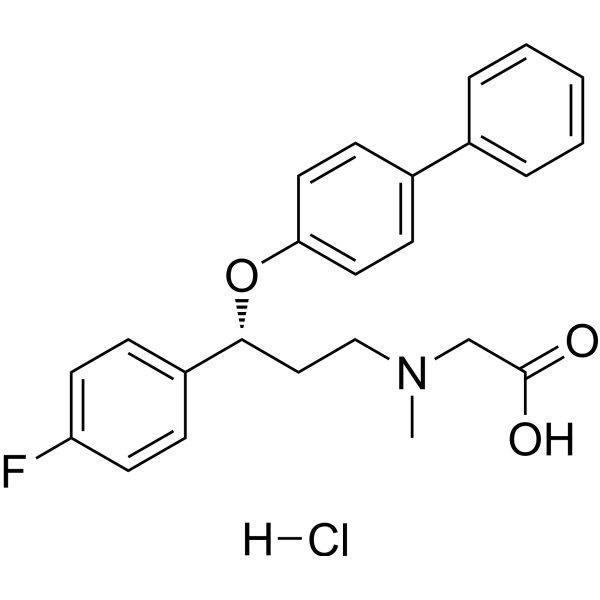
ALX-5407 ((R)-NFPS) hydrochloride is a selective and orally active glycine transporter GlyT1 inhibitor with an IC50 value of 3 nM. ALX-5407 hydrochloride can be used the research of N-methyl-D-aspartate-receptor function and schizophrenia .
|
-
- HY-146405
-
|
|
nAChR
|
Neurological Disease
Inflammation/Immunology
|
|
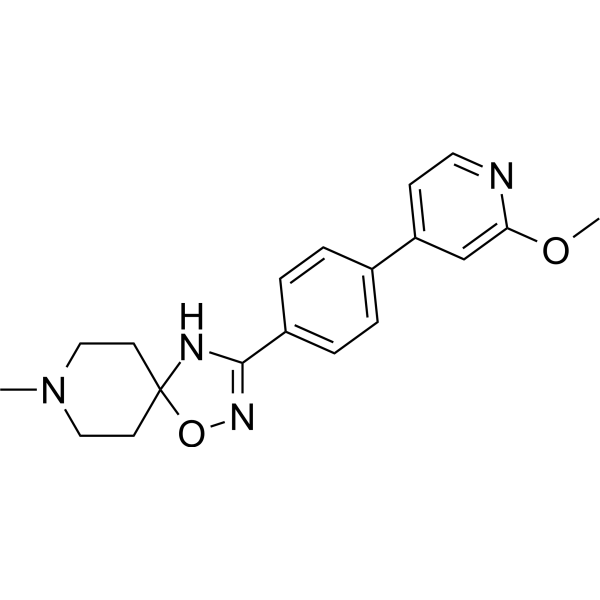
nAChR antagonist 1 (compound B15) is an excellent α7 nAChR antagonist with an IC50 value of 3.3 μM. nAChR antagonist 1 can be used for researching schizophrenia, Alzheimer’s disease and inflammatory disorders .
|
-
- HY-10711
-
|
(R)-NFPS
|
GlyT
|
Neurological Disease
|
|
ALX-5407 ((R)-NFPS) is a selective and orally active glycine transporter GlyT1 inhibitor with an IC50 value of 3 nM. ALX-5407 can be used the research of N-methyl-D-aspartate-receptor function and schizophrenia .
|
-

- HY-17410S1
-
-
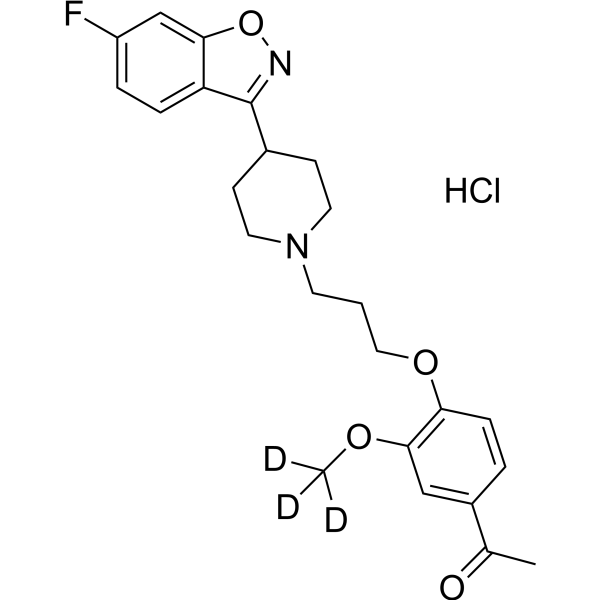
- HY-177410
-
|
|
mAChR
|
Neurological Disease
|
|
Muscarinic M1 receptor agonist-1 (Ex.1-21) is a Muscarinic M1 receptor agonist. Muscarinic M1 receptor agonist-1 can be used in the research of psychiatric disorders such as schizophrenia .
|
-

- HY-14538
-
|
|
Dopamine Receptor
|
Neurological Disease
Cancer
|
|
Haloperidol is a potent dopamine D2 receptor antagonist, widely used as an antipsychotic agent. Haloperidol can be used in the study of schizophrenia, tics in Tourette syndrome, mania in bipolar disorder, delirium, agitation, acute psychosis, and hallucinations from alcohol withdrawal.
|
-
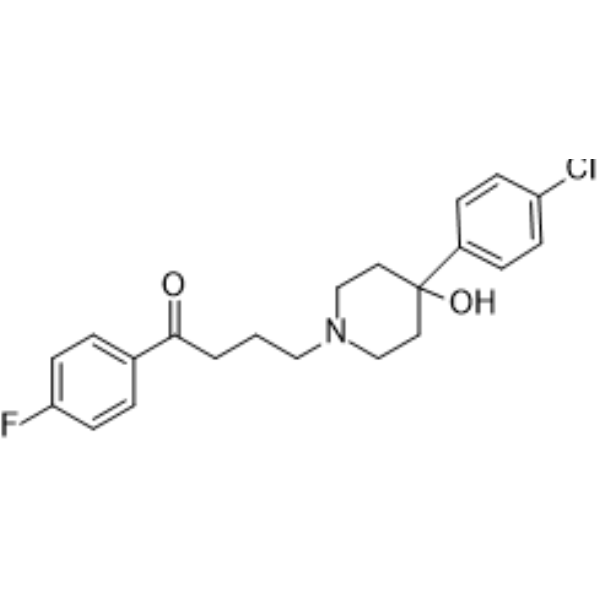
- HY-17612
-
|
NW-3509
|
Sodium Channel
|
Neurological Disease
|
|
Evenamide (NW-3509) is an orally available voltage-gated sodium channel (VGSC) blocker (Ki=0.4 µM) for the research of schizophrenia. Evenamide shows efficacy in a broad spectrum of rodent models of psychosis, mania, depression, and aggressiveness .
|
-
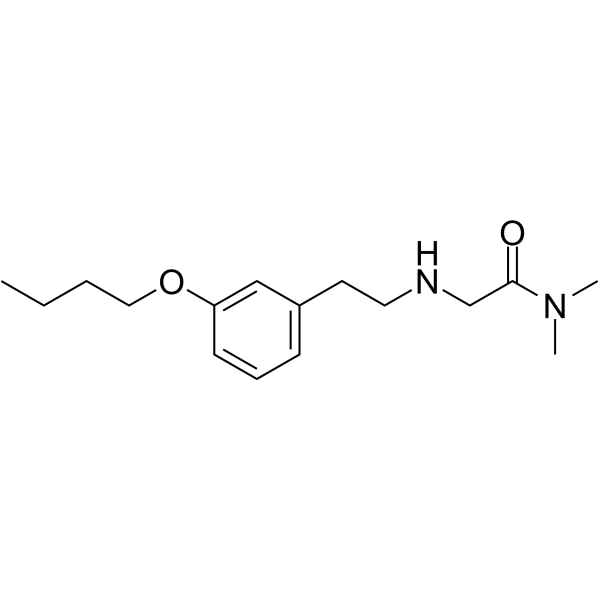
- HY-14561
-
|
RX 781094
|
Adrenergic Receptor
Imidazoline Receptor
|
Neurological Disease
|
|
Idazoxan (RX 781094) is a potent antagonist of α2 adrenergic receptor (α2AR) and potential I2 imidazoline receptor agonist. Idazoxan can be used in the research of antidepression and schizophrenia. Idazoxan has oral bioactivity .
|
-

- HY-10933S
-
|
BDP 12-d10
|
Isotope-Labeled Compounds
iGluR
|
Neurological Disease
|
|
CX516-d10 is the deuterium labeled CX516. CX516 (BDP 12) is an ampakine and acts as an AMPA receptor positive allosteric modulator for the research of Alzheimer's disease, schizophrenia and mild cognitive impairment (MCI) .
|
-
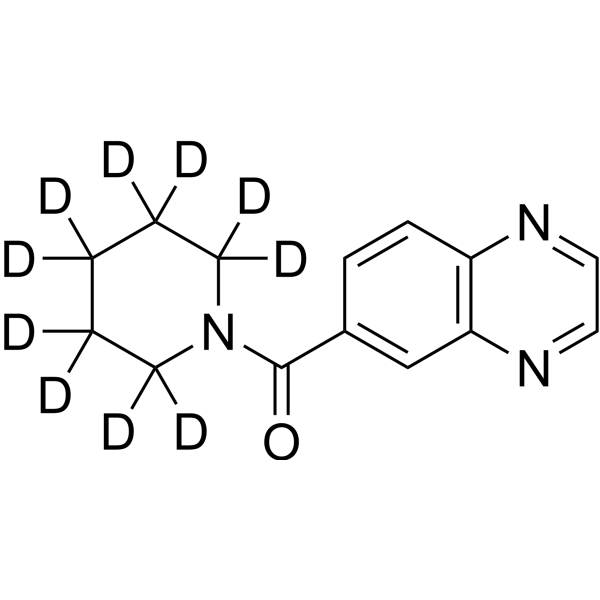
- HY-105567A
-
|
|
GABA Receptor
|
Neurological Disease
|
|
Carbiphene hydrochloride is a GABAA receptor allosteric modulator. Carbiphene hydrochloride inhibits [ 35S] TBPS binding and enhances [ 3H] muscimol binding on rat forebrain membranes, acting on specific GABAA receptor subsets. Carbiphene hydrochloride can be used in research related to schizophrenia .
|
-

- HY-105567
-
|
|
GABA Receptor
|
Neurological Disease
|
|
Carbiphene is a GABAA receptor allosteric modulator. Carbiphene inhibits [ 35S] TBPS binding and enhances [ 3H] muscimol binding on rat forebrain membranes, acting on specific GABAA receptor subsets. Carbiphene can be used in research related to schizophrenia .
|
-

- HY-19841
-
|
|
Dopamine Receptor
|
Neurological Disease
|
|
AVE-5997 is a selective b>D3 antagonist. AVE-5997 antagonizes MK-801 (HY-15084B)-induced hyperactivity. AVE-5997 can be used in the research of schizophrenia .
|
-

- HY-120945
-
|
|
Phosphodiesterase (PDE)
|
Neurological Disease
|
|
PDE10A-IN-1 is a phosphodiesterase 10A (PDE10A) inhibitor with an IC50 of 250 nM and the ability to cross the blood-brain barrier. PDE10A-IN-1 can be used in research on neurological disorders such as schizophrenia .
|
-

- HY-182551
-
|
|
Neurotensin Receptor
|
Others
Neurological Disease
|
|
SR-12062 is a Neurotensin receptor 1 (NTSR1) full agonist that modulates NTSR1 to trigger intracellular Ca 2+ mobilization. SR-12062 can be used for the research of schizophrenia, parkinson’s disease, drug addiction .
|
-

- HY-162235
-
|
|
Orexin Receptor (OX Receptor)
|
Cardiovascular Disease
|
|
CVN766 is an orally active inhibitor of orexin 1 receptor antagonist with blood-brain permeability with the IC50 values of 8 nM and >10 μM for OX1R and OX2R, respectively. CVN766 can be used for study schizophrenia .
|
-
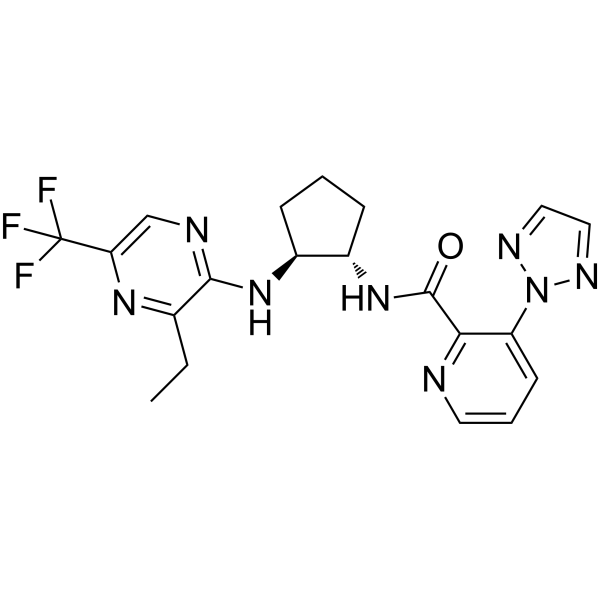
- HY-B1904R
-
|
|
Reference Standards
Dopamine Receptor
|
Neurological Disease
|
|
Fluphenazine decanoate (Standard) is the analytical standard of Fluphenazine decanoate. This product is intended for research and analytical applications. Fluphenazine decanoate is a dopamine D2 receptor inhibitor, is a long-acting phenothiazine neuroleptic. Fluphenazine can be used for schizophrenia research .
|
-

- HY-111066A
-
|
|
Dopamine Receptor
|
Neurological Disease
|
|
JNJ-37822681 dihydrochloride is a potent, specific, centrally active, fast-dissociating dopamine D2 receptor antagonist with a moderate binding affinity for the dopamine D2L receptor (Ki =158 nM), which has potential for the treatment of schizophrenia and bipolar disorder .
|
-
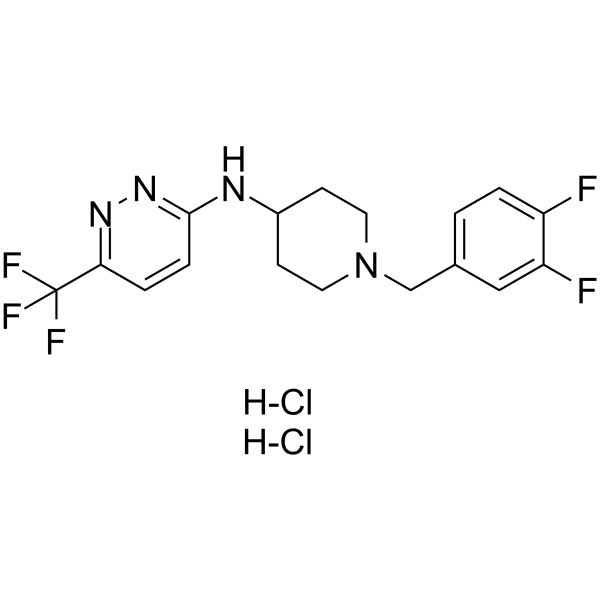
- HY-114549
-
|
|
Dopamine Receptor
|
Neurological Disease
|
|
(R)-SCH-23982 hydrochloride is the R-enantiomer of SCH-23982 hydrochloride. SCH-23982 hydrochloride is a selective dopamine D1 receptor antagonist. (R)-SCH-23982 hydrochloride is promising for research of central nervous system disorders such as schizophrenia, Parkinson’s disease .
|
-

- HY-123852
-
|
|
mAChR
|
Neurological Disease
|
|
PF-06764427 is a selective M1 muscarinic acetylcholine receptor positive allosteric modulator. PF-06764427 exhibits robust M1 agonist activity. PF-06764427 can be used in the research of Alzheimer's disease and schizophrenia .
|
-

- HY-106820
-
|
|
Dopamine Receptor
|
Neurological Disease
|
|
BRL 34778 is a potent, selective and orally active dopamine D2 receptor antagonist with a Ki of 2.14 nM. BRL 34778 exhibits antipsychotic activity with low activity for extrapyramidal effects and sedation. BRL 34778 can be used for the research of neurological disease, such as schizophrenia .
|
-

- HY-105040
-
|
LY2140023 hydrate
|
mGluR
|
Neurological Disease
|
|
Pomaglumetad methionil (LY2140023 hydrate) is an oral methionine prodrug of the potent specific mGlu2/3 receptor agonist LY404039 (HY-50906). Pomaglumetad methionil is well-tolerated and has a distinct safety profile, and can be used for schizophrenia .
|
-
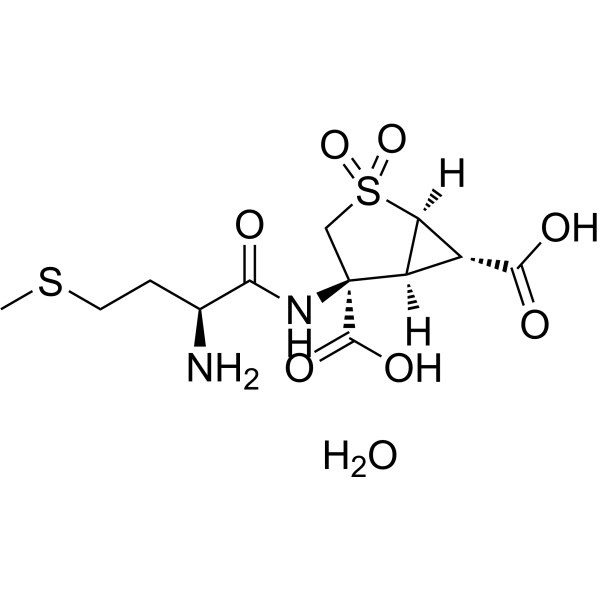
- HY-103115
-
|
EMD 281014; LY 2422347 hydrochloride
|
5-HT Receptor
|
Neurological Disease
|
|
Pruvanserin hydrochloride (EMD 281014) is a selective serotonin 5-HT2A receptor antagonist with IC50 values of 0.35 nM and 1 nM for human and rat 5-HT2A receptors. Pruvanserin (hydrochloride) can be used for the research of schizophrenia .
|
-
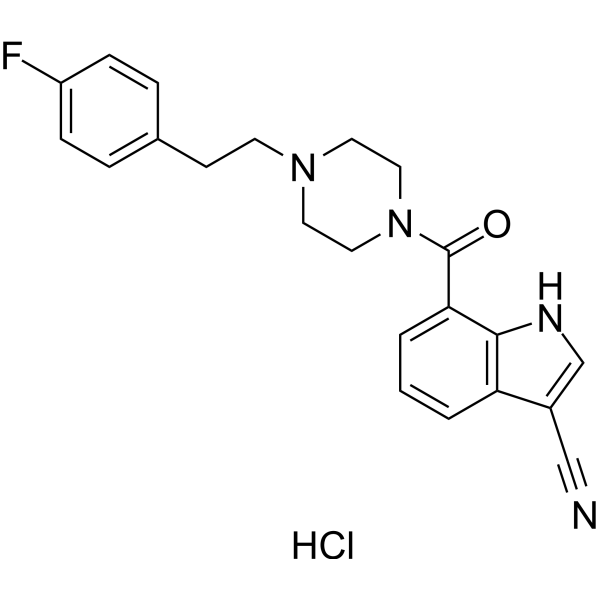
- HY-185187
-
|
|
AAK1
|
Neurological Disease
|
|
AAK1-IN-12 (Compound 4) is a selective, orally active AAK1 inhibitor that can cross the blood-brain barrier. AAK1-IN-12 is applicable to the research of schizophrenia, Parkinson's disease, neuropathic pain and Alzheimer's disease .
|
-

- HY-119943A
-
|
|
Dopamine Receptor
|
Neurological Disease
|
|
(Rac)-PF-06256142 is the less effective enantiomer of PF-06256142 (HY-119943). (Rac)-PF-06256142 is an agonist of D1 receptor, with an EC50 of 107 nM. (Rac)-PF-06256142 can be used for the research of schizophrenia and Parkinson's disease .
|
-
- HY-P5857
-
|
Micrurotoxin 2
|
GABA Receptor
|
Neurological Disease
|
|
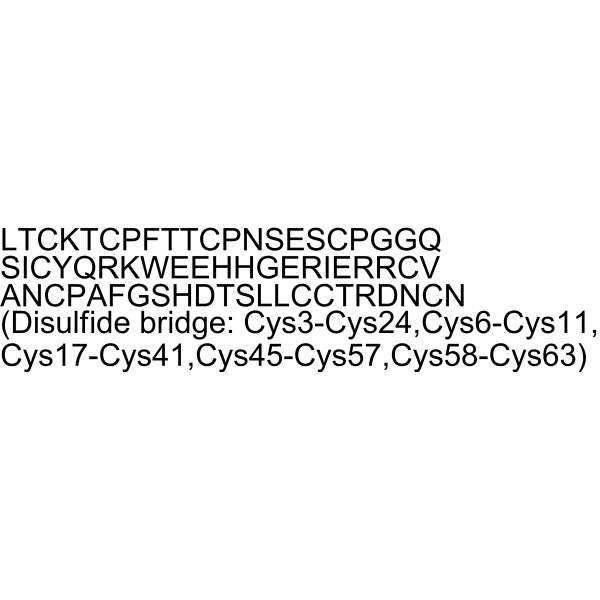
MmTx2 toxin is a GABAA receptor modulator that enhances GABAA receptor sensitivity to agonists. MmTx2 toxin can be obtained from venom of coral snake. MmTx2 toxin can be used in the study of neurological diseases such as epilepsy, schizophrenia and chronic pain .
|
-
- HY-117021
-
|
|
Trace Amine-associated Receptor (TAAR)
|
Neurological Disease
|
|
RO 5073012 is a selective, orally active and brain-penetrant TAAR1 agonist. RO 5073012 shows a Ki of 6 nM for hTAAR1 and EC50 values of 23 and 25 nM for mTAAR1 and rTAAR1. RO 5073012 can be used for the research of neurological disease, such as schizophrenia .
|
-

- HY-105182A
-
|
LY 246708 tartrate
|
mAChR
|
Neurological Disease
|
|
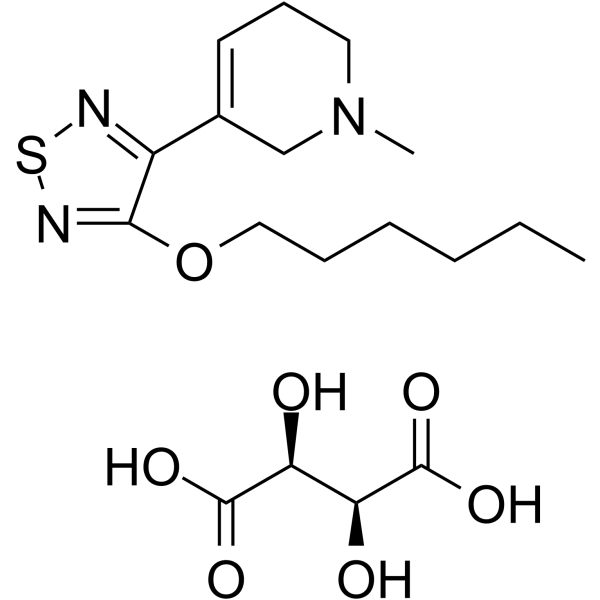
Xanomeline (LY 246708) is the potent agonist of muscarinic M1/M4 receptor with antipsychotic-like activity. Xanomeline (LY 246708) increases neuronal excitability. Xanomeline (LY 246708) can be used for the research of schizophrenia .
|
-
- HY-180422
-
|
|
Dopamine Receptor
|
Neurological Disease
|
|
(-)-UH 232 is a central dopamine (DA) receptor agonist. (-)-UH 232 weakly decreases 3, 4-dihydroxyphenylalanine (DOPA) formation in striatal and limbic brain regions in rats. (-)-UH 232 can be used for the research of neurological diseases including parkinson's disease and schizophrenia .
|
-

- HY-116874
-
|
|
Dopamine Receptor
|
Neurological Disease
|
|
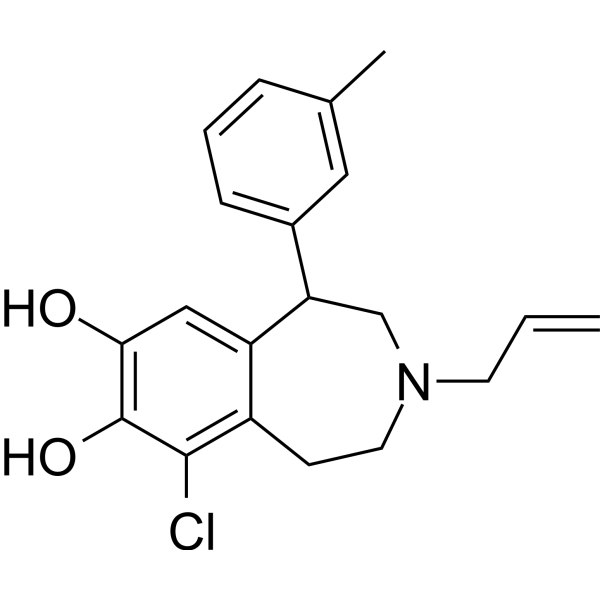
SKF 83822 is an atypical agonist of dopamine D1 receptor. SKF 83822 activates adenylyl cyclase (AC), but not phospholipase C (PLC). SKF 83822 is also proved to stimulate AC via cAMP production. SKF 83822 can be used for research of schizophrenia .
|
-
- HY-114895
-
|
|
GlyT
|
Neurological Disease
|
|
SSR504734 free base is an orally active, selective and reversible inhibitor of human, rat, and mouse GlyT1 (IC50=18, 15, and 38 nM, respectively). SSR504734 free base shows anti-schizophrenia, anti-anxiety and anti-depression activities .
|
-

- HY-101220
-
|
|
Dopamine Receptor
|
Neurological Disease
|
|
RMI-61140 is an orally active neuroleptics. RMI-61140 decreases spontaneous motility and muscle tone in mice. RMI-61140 increases barbit urate-induced sleep and causes eyelid ptosis. RMI-61140 can be used for schizophrenia research .
|
-
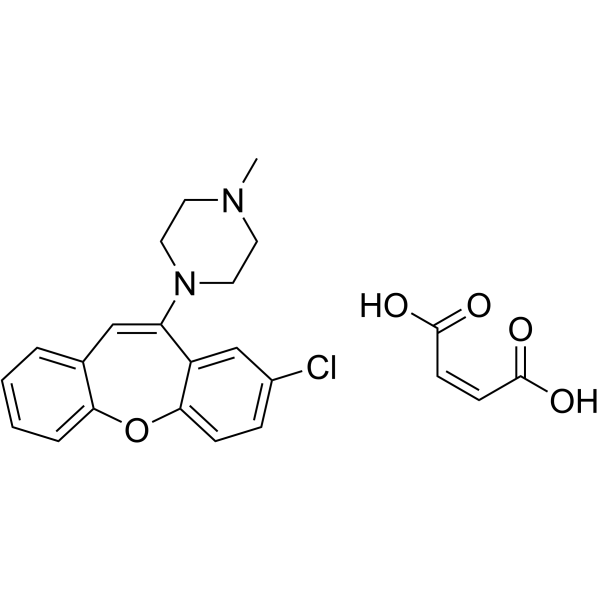
- HY-W009390S
-
|
|
Endogenous Metabolite
|
Metabolic Disease
|
|
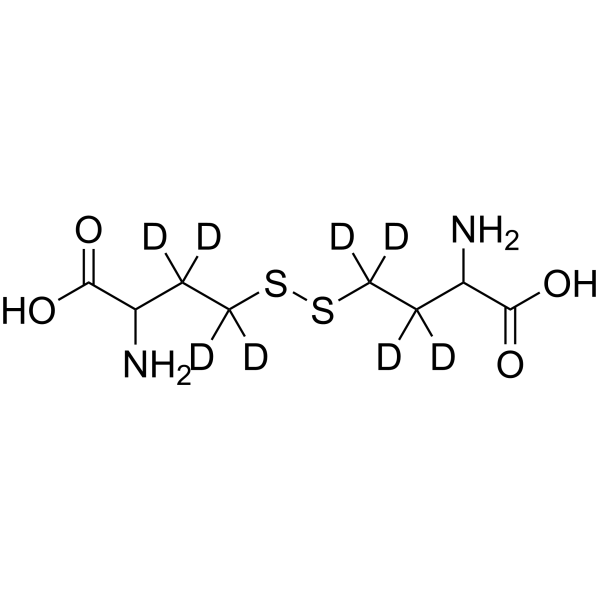
DL-Homocystine-3,3,3’,3’,4,4,4’,4’-d8 is the deuterium labeled DL-Homocystine. DL-Homocystine is the double-bonded form of homocysteine and homocysteine is recognized as an important substance in the pathogenesis and pathophysiology of schizophrenia .
|
-
- HY-B1131R
-
|
Sodium taurocholate hydrate (Standard); N-Choloyltaurine sodium salt hydrate (Standard)
|
Reference Standards
Endogenous Metabolite
|
Inflammation/Immunology
|
|
Zuclopenthixol (dihydrochloride) (Standard) is the analytical standard of Zuclopenthixol (dihydrochloride). This product is intended for research and analytical applications. Zuclopenthixol ((Z)-Clopenthixol) dihydrochloride is a thioxanthene derivative which acts as a mixed dopamine D1/D2 receptor antagonist. Zuclopenthixol dihydrochloride is used in the study of schizophrenia .
|
-

- HY-A0163BR
-
|
(Z)-Clopenthixol dihydrochloride (Standard)
|
Reference Standards
Dopamine Receptor
|
Neurological Disease
|
|
Zuclopenthixol (dihydrochloride) (Standard) is the analytical standard of Zuclopenthixol (dihydrochloride). This product is intended for research and analytical applications. Zuclopenthixol ((Z)-Clopenthixol) dihydrochloride is a thioxanthene derivative which acts as a mixed dopamine D1/D2 receptor antagonist. Zuclopenthixol dihydrochloride is used in the study of schizophrenia .
|
-

- HY-18039
-
|
SEN15924
|
Cholinesterase (ChE)
|
Neurological Disease
|
|
WAY-361789 (SEN15924) is an orally active agonist for α7 nicotinic acetylcholine receptor (α7 nAChR) with an EC50 of 0.18 μM. WAY-361789 improves the cognitive function, exhibits potential in ameliorating Alzheimer’s Disease and schizophrenia .
|
-

- HY-183734
-
-

- HY-119677
-
|
WIN-18501-2
|
5-HT Receptor
Dopamine Receptor
|
Neurological Disease
|
|
Oxypertine (WIN-18501-2) is a neuroprotective agent. Oxypertine shows high affinity for the 5-HT2 and dopamine D2 receptors with Kis of 8.6 nM and 30 nM, respectively. Oxypertine can be used in the research of neurological conditions, such as anxiety and schizophrenia .
|
-
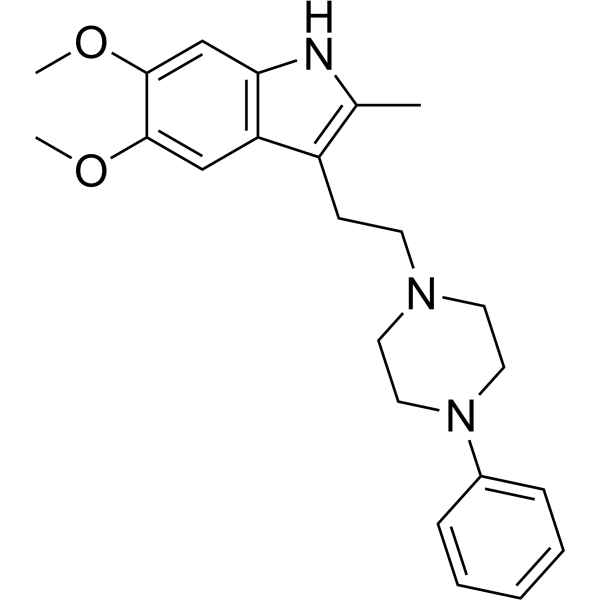
- HY-101037
-
|
N-Methylglycine; Sarcosin
|
Endogenous Metabolite
GlyT
|
Cancer
|
|
Sarcosine (N-Methylglycine), an endogenous amino acid, is a competitive glycine transporter type I (GlyT1) inhibitor and N-methyl-D-aspartate (NMDA) receptor co-agonist. Sarcosine increases the glycine concentration, resulting in an indirect potentiation of the NMDA receptor. Sarcosine is commonly used for the research of schizophrenia .
|
-
- HY-103423
-
|
|
Dopamine Receptor
|
Neurological Disease
|
|
PAOPA, an analog of L-proline-l-leucine-glycine amide (PLG) peptide, is an allosteric modulator of Dopamine D2 Receptor. PAOPA can effectively reduce behavioral abnormalities in rodent models of schizophrenia. PAOPA increases the high affinity dopamine D2 receptor and promotes its binding to agonists .
|
-
- HY-19490A
-
|
(S)-AQW-051
|
nAChR
|
Neurological Disease
|
|
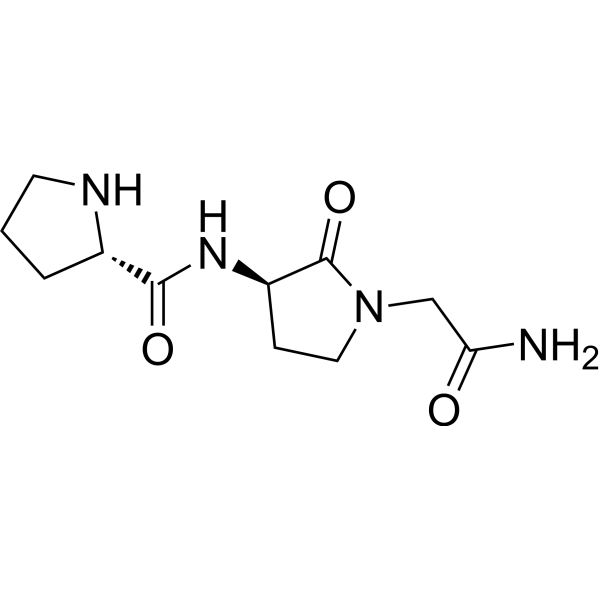
(S)-VQW-765 ((S)-AQW-051) is an orally active, selective and effective α7 nicotinic ACh receptor (nAChR) partial agonist. (S)-VQW-765 has potential applications in cognitive disorders related to neurological diseases, such as Alzheimer's disease or schizophrenia .
|
-
- HY-157955
-
-
- HY-10121B
-
-
- HY-P2912
-
|
|
Glutamate Dehydrogenase (GLDH)
Biochemical Assay Reagents
|
Neurological Disease
|
|
Glutamate dehydrogenase (NADP) is the catalytic enzyme for glutamate production. Dysfunction of Glutamate dehydrogenase (NADP) may induce various neurodegenerative diseases, such as Parkinson's disease, epilepsy, Alzheimer's disease, schizophrenia, and frontotemporal dementia. Glutamate dehydrogenase (NADP) can be used in research on neurological diseases such as Parkinson's disease, epilepsy, and Alzheimer's disease .
|
-
- HY-10121
-
-
- HY-116020
-
|
|
Dopamine Receptor
|
Neurological Disease
|
|
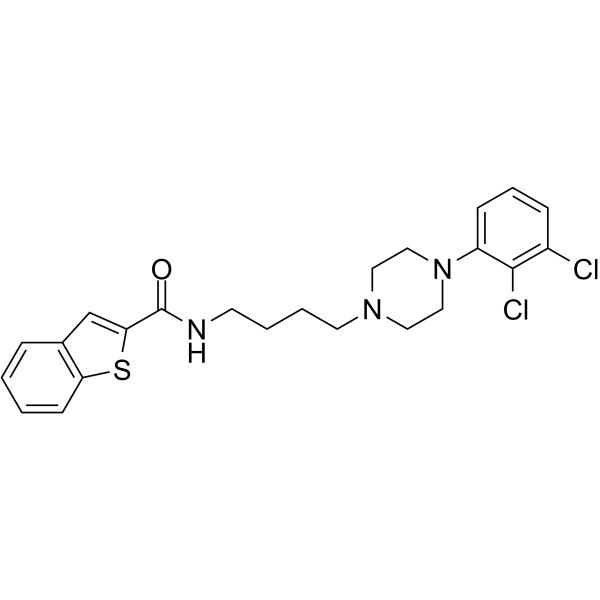
FAUC 365 is a highly dopamine D3 receptor-selective antagonist with Ki values of 0.5 nM, 340, 2600, and 3600 nM at D3, D4.4, D2short, and D2Long receptors, respectively. FAUC 365 can be used for the research of schizophrenia, and Parkinson's disease .
|
-
- HY-182437
-
|
|
Dopamine Receptor
|
Neurological Disease
|
|
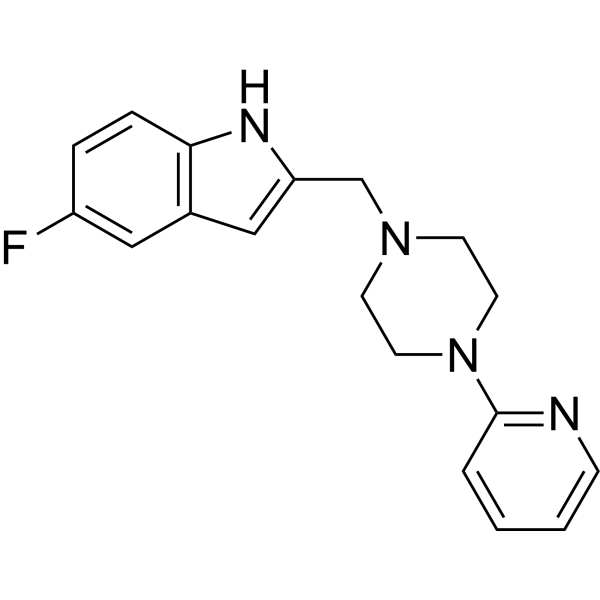
ASP4345 free base is a blood-brain barrier-permeable dopamine D1 receptor modulator. ASP4345 free base binds to the allosteric site of the dopamine D1 receptor, thereby enhancing dopamine activity. ASP4345 free base can be used in the research of schizophrenia and Parkinson's disease .
|
-

- HY-14338AR
-
|
Lu AE58054 hydrochloride (Standard)
|
5-HT Receptor
Reference Standards
|
Neurological Disease
|
|
Idalopirdine (hydrochloride) (Standard) is the analytical standard of Idalopirdine (hydrochloride). This product is intended for research and analytical applications. Idalopirdine hydrochloride (Lu AE58054 hydrochloride) is a potent, selective 5-HT6 receptor antagonist with a Ki value of 0.83 nM. Idalopirdine hydrochloride may be used in studies of Alzheimer's disease and schizophrenia, among other related disorders .
|
-

- HY-120291
-
|
|
Phosphodiesterase (PDE)
|
Neurological Disease
|
|
ASP9436 is an orally active and blood-brain barrier permeable PDE10A inhibitor with an IC50 of 8 nM against human PDE10A. ASP9436 attenuates locomotor activity in mouse hyperactivity models and ameliorates visual recognition memory impairment in neonatal mice. ASP9436 is applicable to research related to schizophrenia .
|
-

- HY-17410S2
-
-

- HY-116082
-
|
|
Dopamine Receptor
|
Neurological Disease
|
|
CP 226269 is a potent dopamine D4 receptor agonist that induces calcium flux with EC50 of 32 nM. CP 226269 stimulates phospholipid methylation (PLM) in SK-N-MC neuroblastoma cells with an EC50 of 2.9 nM. CP 226269 can be used in the research of schizophrenia and other related diseases .
|
-
- HY-105182R
-
|
LY-246708 (Standard)
|
Reference Standards
mAChR
|
Neurological Disease
|
|
Xanomeline (Standard) is the analytical standard of Xanomeline. This product is intended for research and analytical applications. Xanomeline, as an effective and selective muscarinic type 1 and type 4 (M1/M4) receptor agonist, increases neuronal excitability. Xanomeline can be used for the research of neurological disorders, such as schizophrenia .
|
-

- HY-176141
-
|
|
Trace Amine-associated Receptor (TAAR)
|
Neurological Disease
|
|
ZH8965 is an orally active TAAR1-Gs/Gq agonist (EC50: 6.1/14.8 nM). ZH8965 improves antipsychotic-like phenotypes and cognitive impairment in the MK-801-induced mouse psychosis model. ZH8965 can be used in schizophrenia research .
|
-

- HY-110168
-
|
|
nAChR
|
Neurological Disease
|
|
NS9283 is a positive positive allosteric modulator of (α4)3(β2)2 nicotinic ACh receptors. NS9283 can be used in a series of neurological conditions such as attention deficit hyperactivity disorder (ADHD), schizophrenia, Parkinson's disease and Alzheimer's disease .
|
-
- HY-19029
-
|
|
5-HT Receptor
Dopamine Receptor
|
Neurological Disease
|
|
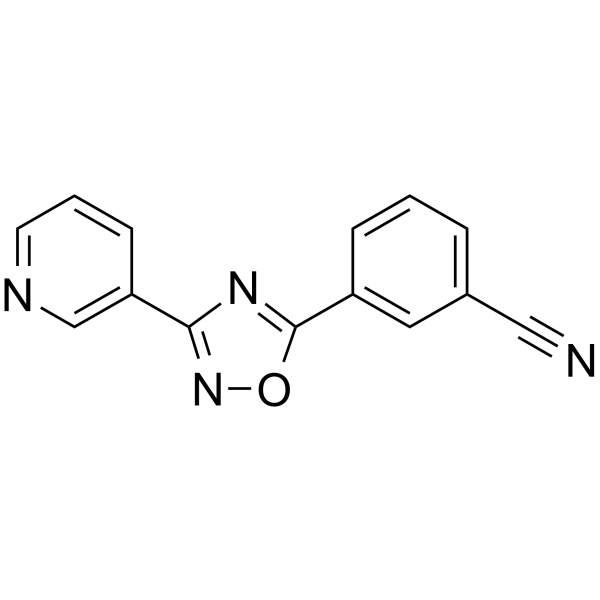
SDZ 208-912 is a dual-action 5-HT1A/2 receptor agonist and dopamine D1 receptor antagonist. SDZ 208-912 exhibits partial dopamine agonism and atypical neurosedative effects in rodent models. SDZ 208-912 can be used in research on neurological disorders such as schizophrenia .
|
-

- HY-118256
-
|
|
mGluR
|
Neurological Disease
|
|
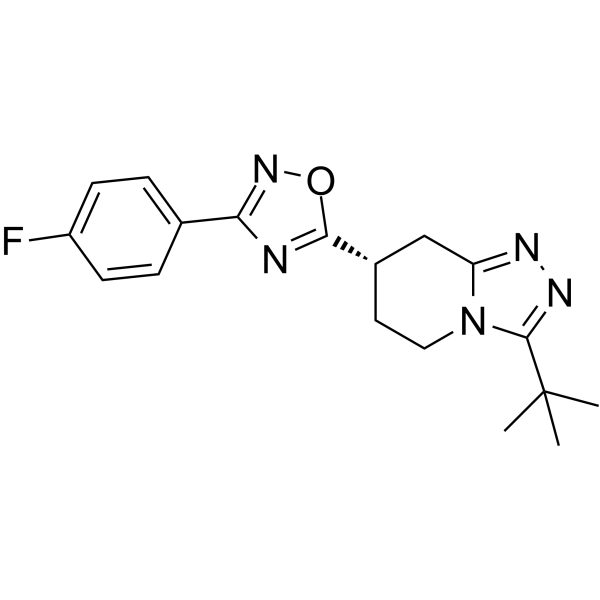
LSN2814617 is an orally active, potent, brain-penetrant, and selective mGlu5 (metabotropic glutamate 5) positive allosteric modulator (PAM), with EC50 values of 52 nM (Human mGlu5) and 42 nM (rat mGlu5). LSN2814617 shows wake-promoting effect. LSN2814617 can be used for schizophrenia research .
|
-
- HY-120229
-
|
|
Protein Prenyltransferase
|
Neurological Disease
|
|
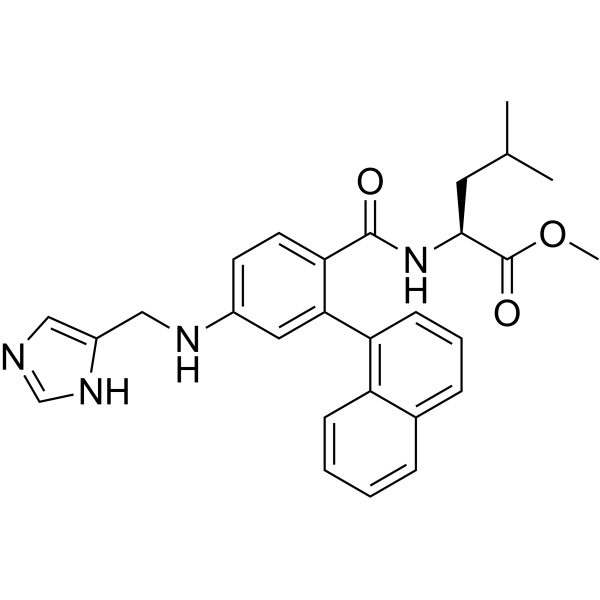
GGTI-2147 is a potent GGTase I inhibitor. GGTI-2147 blocks geranyl-geranylation of Rap1A and reduces the activity of Rac1 (one of substrates for GGTI) and ameliorates the OGD/R-induced neuronal apoptosis.GGTI-2147 can be used for neurodevelopmental disorders research, such as autism, depression, and schizophrenia .
|
-
- HY-G0003S1
-
|
P88-d3; Hydroxy Iloperidone-d3
|
Drug Metabolite
|
Neurological Disease
|
|
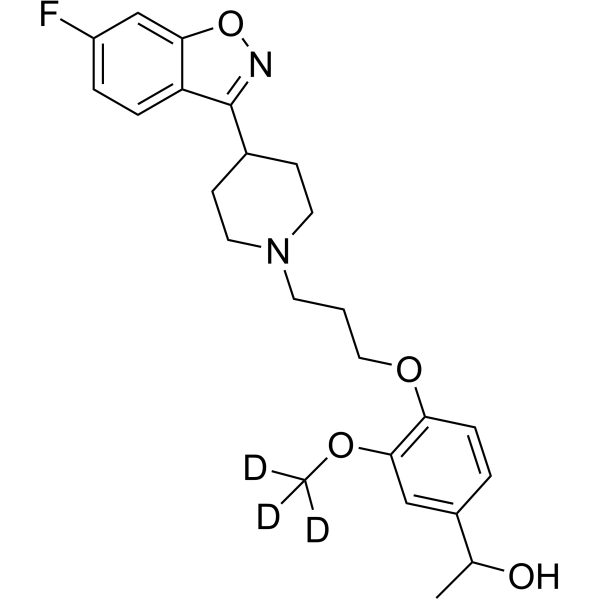
Iloperidone metabolite Hydroxy Iloperidone-d3 is the deuterium labeled Iloperidone metabolite Hydroxy Iloperidone (HY-G0003). Iloperidone metabolite Hydroxy Iloperidone (P88; Hydroxy Iloperidone) is an active reduced metabolite of Iloperidone (HY-17410). Iloperidone metabolite Hydroxy Iloperidone can be used for the research of schizophrenia .
|
-
- HY-183428
-
|
|
Trace Amine-associated Receptor (TAAR)
|
Neurological Disease
|
|
LK00764 is a TAAR1 agonist with an EC50 of 4 nM. LK00764 alleviates Dizocilpine (HY-15084B)-induced hyperlocomotion, reduces vertical locomotor activity, attenuates spontaneous hyperlocomotion in dopamine transporter knockout rats, and inhibits stress-induced hyperthermia in rats. LK00764 can be used for the research of schizophrenia .
|
-

- HY-W012922
-
|
2-Methylpent-4-enoic acid
|
Drug Intermediate
|
Neurological Disease
Metabolic Disease
|
|
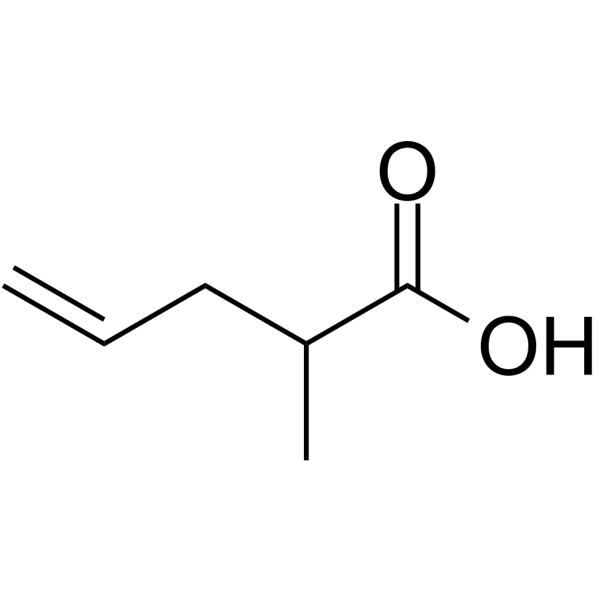
2-Methyl-4-pentenoic Acid (2-Methylpent-4-enoic acid) is an organic acid that can be used as a precursor for synthesizing other compounds. Additionally, changes in the level of 2-Methyl-4-pentenoic Acid may be associated with the susceptibility to schizophrenia and type 2 diabetes .
|
-
- HY-136109H
-
|
(Rac)-SEP-363856 hydrochloride; (Rac)-SEP-856 hydrochloride
|
5-HT Receptor
|
Neurological Disease
|
|
(Rac)-Ulotaront hydrochloride ((Rac)-SEP-363856 hydrochloride) is the racemate of Ulotaront hydrochloride (HY-136109). Ulotaront hydrochloride, an orally active and CNS active psychotropic agent with a unique, non-D2/5-HT2A mechanism of action, exerts its antipsychotic-like effects. Ulotaront has the potential for the treatment of schizophrenia .
|
-

- HY-19100
-
|
CEE 03-310; NNC 687
|
Dopamine Receptor
Adenylate Cyclase
|
Neurological Disease
|
|
ADX-10061 (compound NNC 687) is a dopamine D1 receptor antagonist with the Ki values of 9.1 nM, 5.8 nM, > 10 000 nM and 355 nM for adenylyl cyclase, D1, D2 and 5-HT2 receptor, respectively. ADX-10061 can be used for study of schizophrenia .
|
-

- HY-113323
-
|
HMPG; MHPG; MOPEG
|
Endogenous Metabolite
|
Neurological Disease
|
|
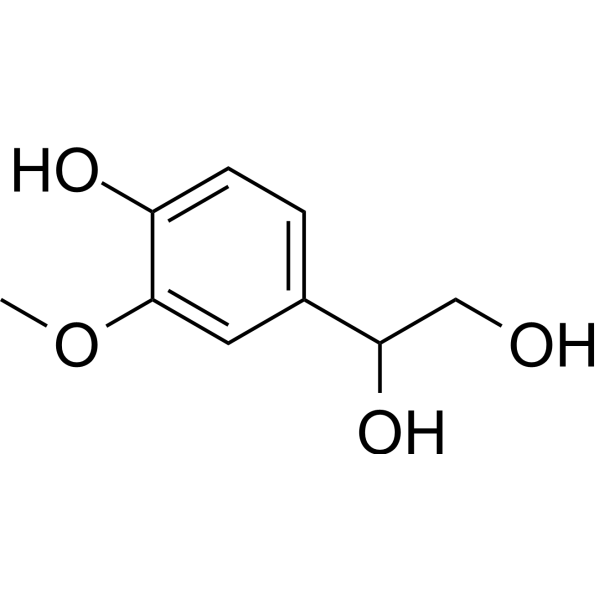
3-Methoxy-4-hydroxyphenylglycol (HMPG) is a metabolite of norepinephrine degradation in the brain. 3-Methoxy-4-hydroxyphenylglycol is an indicators of central nervous system noradrenergic activity. 3-Methoxy-4-hydroxyphenylglycol can be used for research of depression, chronic schizophrenia, etc .
|
-
- HY-149651
-
|
|
GPR139
|
Neurological Disease
|
|
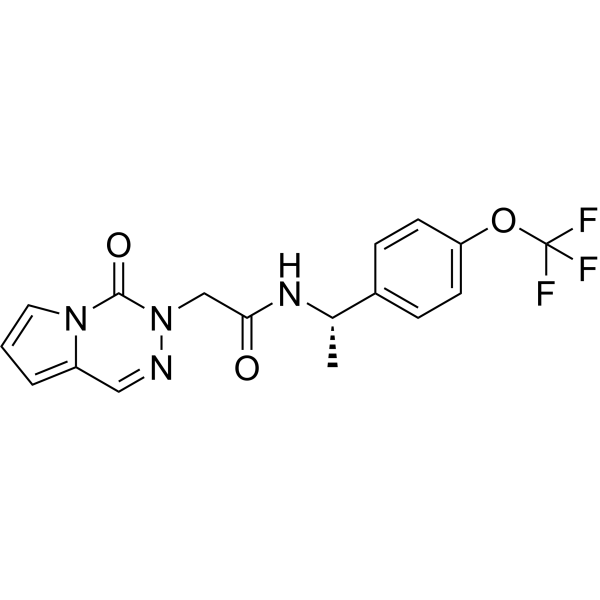
GPR139 agonist-2 (compound 20a) is a potent GPR139 agonist with an EC50 of 24.7 nM. GPR139 agonist-2 rescues the social interaction deficits and alleviates cognitive deficits in murine schizophrenia models. GPR139 agonist-2 has the potential for antischizophrenia drug research .
|
-
- HY-120170
-
|
|
ASCT
Adrenergic Receptor
Dopamine Transporter
|
Neurological Disease
|
|
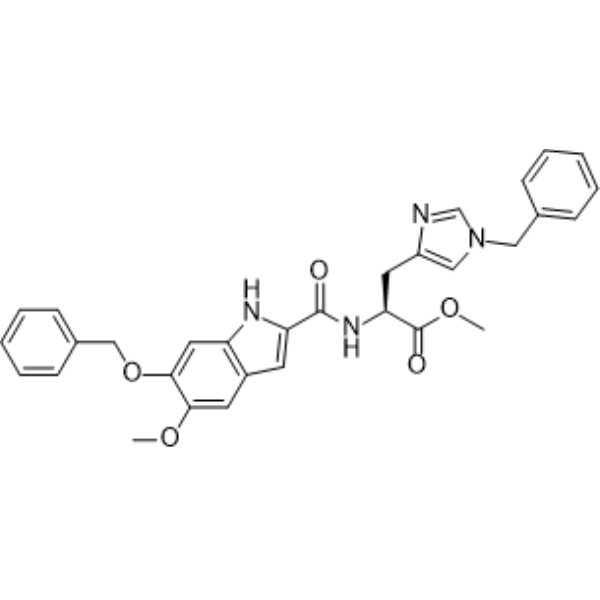
BMS-466442 is a potent and selective inhibitor of asc-1 (alanine serine cysteine transporter-1), with an IC50 of 11 nM. BMS-466442 inhibits [ 3H] D-serine uptake into rat brain synaptosomes, with an IC50 of 400 nM. BMS-466442 can be used for schizophrenia research .
|
-
- HY-W741434
-
|
|
Isotope-Labeled Compounds
Dopamine Receptor
|
Neurological Disease
|
|
Acetophenazine dimaleate-d4 is the deuterium labeled Acetophenazine (dimaleate) (HY-B1262). Acetophenazine dimaleate, a phenothiazine derivative, is an antipsychotic agent. Acetophenazine dimaleate primarily blocks dopamine D2 receptors in the brain. Acetophenazine dimaleate can be used for researching psychotic disorders such as schizophrenia and anxious depression .
|
-

- HY-18078
-
|
|
Phosphodiesterase (PDE)
|
Neurological Disease
|
|
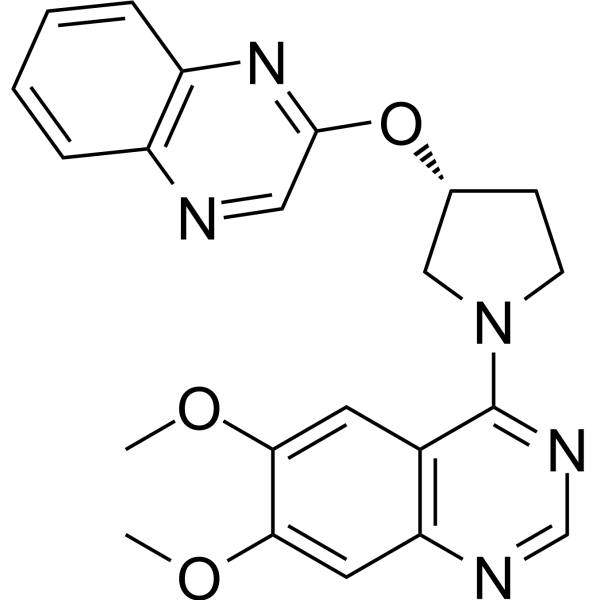
PQ-10 is a potent inhibitor of Phosphodiesterase 10A (PDE10A) with IC50 andED50 of 4.6 nM and 13 mg/kg, respectively. PQ-10 induces patterns of brain glucose metabolism which can be a potential translational biomarker. PQ-10 has the potential for researching psychiatric disorders like schizophrenia .
|
-
- HY-131292
-
|
|
mGluR
|
Neurological Disease
|
|
Ro-65-3479 is a selective metabotropic glutamate receptor (mGlu2/3) antagonist. Ro-65-3479 blocks glutamate-induced signaling and modulates calcium channel activity. Ro-65-3479 is promising for research of disorders involving glutamatergic dysregulation, such as anxiety, schizophrenia, and neurodegenerative diseases .
|
-

- HY-109157
-
|
RO6889450
|
Trace Amine-associated Receptor (TAAR)
5-HT Receptor
Dopamine Receptor
|
Neurological Disease
|
|
Ralmitaront (RO6889450) is an orally active agonist of trace amine-associated receptor 1 (TAAR1) with a EC50 value of 110.4 nM. Ralmitaront has antipsychotic, cognitively improvement, and antidepressant activity in rodents. Ralmitaront can be used as a neurosuppressant in the study of neuro-related diseases, such as schizophrenia (SCZ), schizoaffective disorder .
|
-
- HY-115511
-
|
|
Phosphodiesterase (PDE)
|
Neurological Disease
|
|
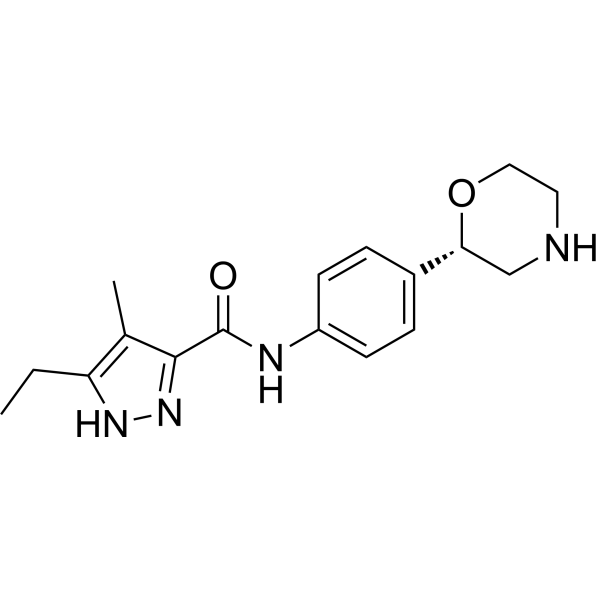
PyP-1 is a highly selective and potent PDE10 inhibitor. PyP-1 has a strong inhibitory effect on human PDE10A2 enzyme (Ki = 0.32 nM). PyP-1 can improve cognitive behavior. PyP-1 commonly used in research on conditions such as schizophrenia and cognitive impairment .
|
-

- HY-16567
-
-
- HY-15522
-
|
|
Oxytocin Receptor
|
Neurological Disease
|
|
WAY-267464 is a non-peptide oxytocin receptor (OTR) agonist. WAY-267464 can impair social recognition memory in rats through a vasopressin 1A receptor antagonist action. WAY-267464 can be used for the research of psychiatric disorders, such disorders include autism spectrum disorder, schizophrenia, and social anxiety disorder .
|
-
- HY-131293
-
|
|
mGluR
|
Neurological Disease
|
|
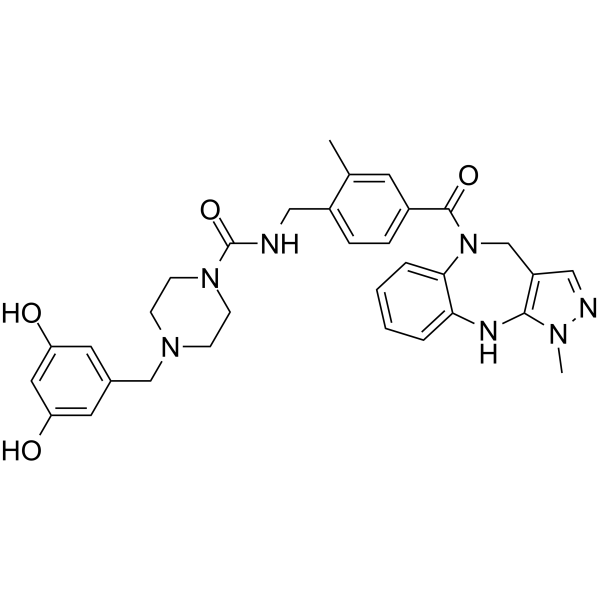
MGS0008 is an orally active and brain-penetrant metabotropic glutamate receptor 2/3 (mGlu2/3) agonist with EC50 values of 29.4 nM and 45.4 nM for mGluR2 and mGluR3, respectively. MGS0008 is promising for research of central nervous system disorders, including schizophrenia, anxiety, and neurodegenerative diseases .
|
-

- HY-114555
-
|
|
GlyT
|
Neurological Disease
|
|
TASP0315003 is a glycine transporter 1 (GlyT1) inhibitor. TASP0315003 potentiates NMDA receptor function by increasing synaptic glycine levels. TASP0315003 can improve cognitive dysfunction and the negative symptoms of schizophrenia without having undesirable central nervous system side effects. TASP0315003 can be used for the research of neurological disease .
|
-

- HY-108679
-
|
|
Oxytocin Receptor
|
Neurological Disease
|
|
WAY-267464 (hydrochloride) is a non-peptide oxytocin receptor (OTR) agonist. WAY-267464 (hydrochloride) can impair social recognition memory in rats through a vasopressin 1A receptor antagonist action. WAY-267464 (hydrochloride) can be used for the research of psychiatric disorders, such disorders include autism spectrum disorder, schizophrenia, and social anxiety disorder .
|
-
- HY-105040CR
-
|
LY2140023 hydrochloride (Standard)
|
Reference Standards
mGluR
|
Neurological Disease
|
|
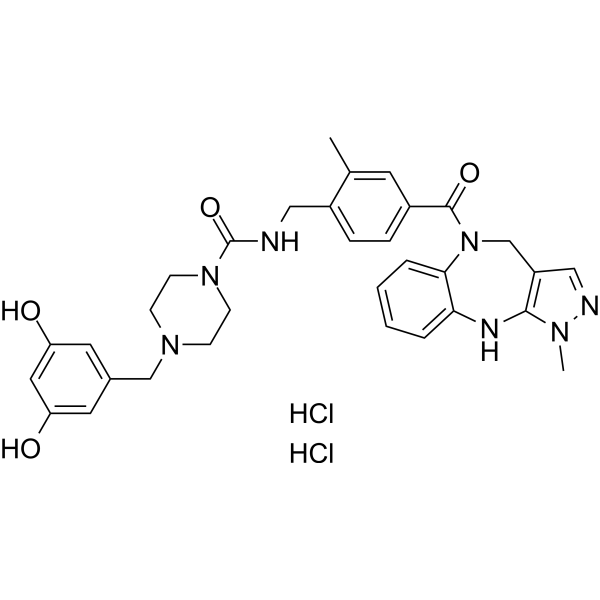
Pomaglumetad methionil hydrochloride (Standard) is the analytical standard of Pomaglumetad methionil hydrochloride (HY-105040C). This product is intended for research and analytical applications. Pomaglumetad methionil hydrochloride (LY2140023 hydrochloride) is an orally active, methionine prodrug of the selective mGlu2/3 receptor agonist LY404039. Pomaglumetad methionil hydrochloride has the potential for schizophrenia research .
|
-

- HY-105182S1
-
|
LY-246708-d3
|
Isotope-Labeled Compounds
mAChR
|
Neurological Disease
|
|
Xanomeline-d3 (LY-246708-d3) is deuterium labeled Xanomeline. Xanomeline, as an effective and selective muscarinic type 1 and type 4 (M1/M4) receptor agonist, increases neuronal excitability. Xanomeline can be used for the research of neurological disorders, such as schizophrenia .
|
-

- HY-W574030
-
|
|
Neurotensin Receptor
|
Neurological Disease
|
|
Fmoc-DL-Leu-OH acts as a partial agonist of the neurotensin NTS1 receptor (NTS1R) with an EC50 of 215.50 μM. Fmoc-DL-Leu-OH triggers intracellular calcium mobilization, and its activity is blocked by selective NTS1R antagonists. Fmoc-DL-Leu-OH can be used in the research of schizophrenia .
|
-

- HY-11100
-
|
Org 5222 maleate
|
5-HT Receptor
|
Neurological Disease
|
|
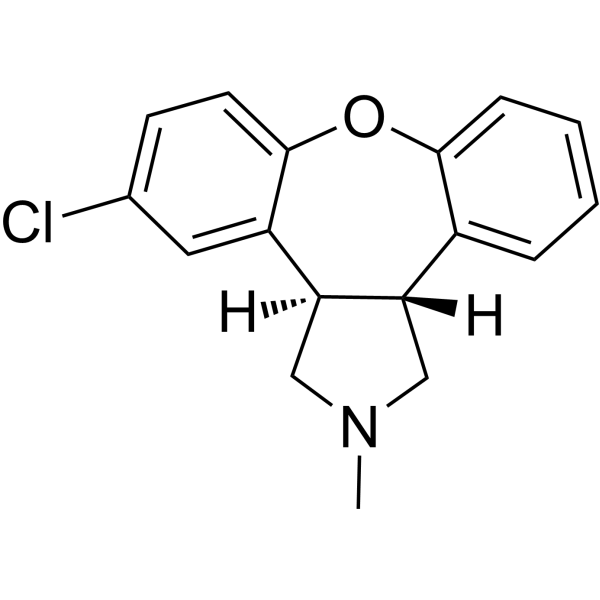
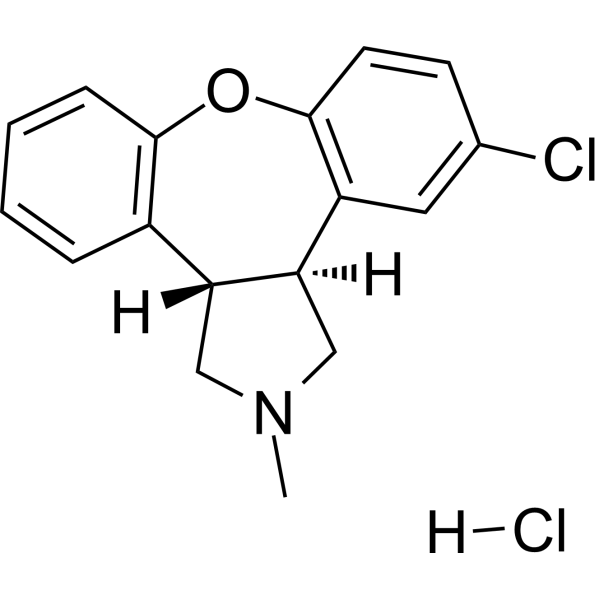
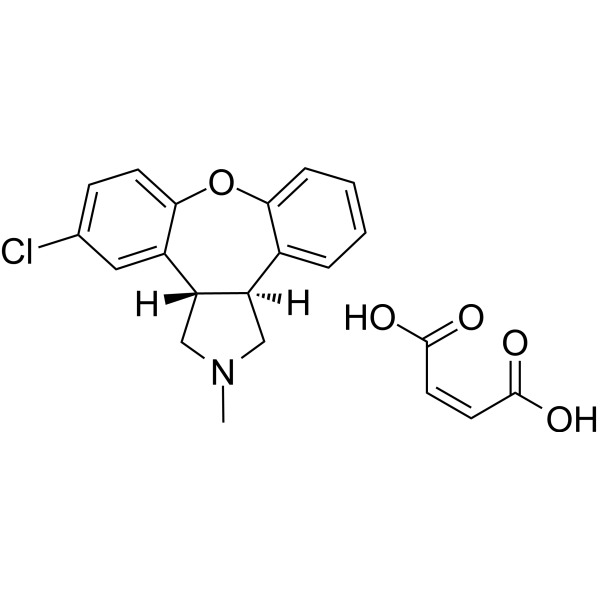
Asenapine (Org 5222) maleate, a brain-penetrant atypical antipsychotic, is an antagonist of serotonin receptors (pKi: 8.4-10.5), adrenoceptors (pKi: 8.9-9.5), dopamine receptors (pKi: 8.9-9.4) and histamine receptors (pKi: 8.2-9.0). Asenapine maleate can be used in the research of schizophrenia and bipolar disorder .
|
-
- HY-65036
-
|
4-Bromo-2-pyridone
|
Biochemical Assay Reagents
Drug Intermediate
|
Neurological Disease
|
|
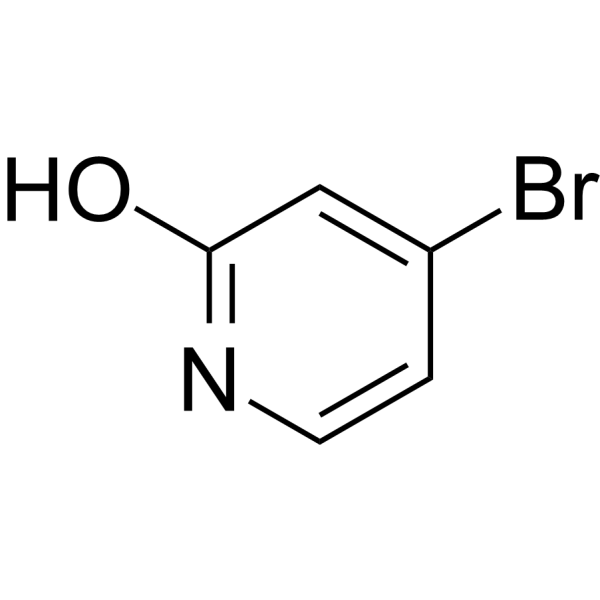
4-Bromo-2-hydroxypyridine is an intermediate. 4-Bromo-2-hydroxypyridine can be used to synthesize M1 muscarinic acetylcholine receptor (M1 mAChR) positive allosteric modulators. 4-Bromo-2-hydroxypyridine can be used in the research of Alzheimer's disease and schizophrenia .
|
-
- HY-19733
-
|
ITI-007 tosylate
|
5-HT Receptor
Dopamine Receptor
|
Neurological Disease
Cancer
|
|
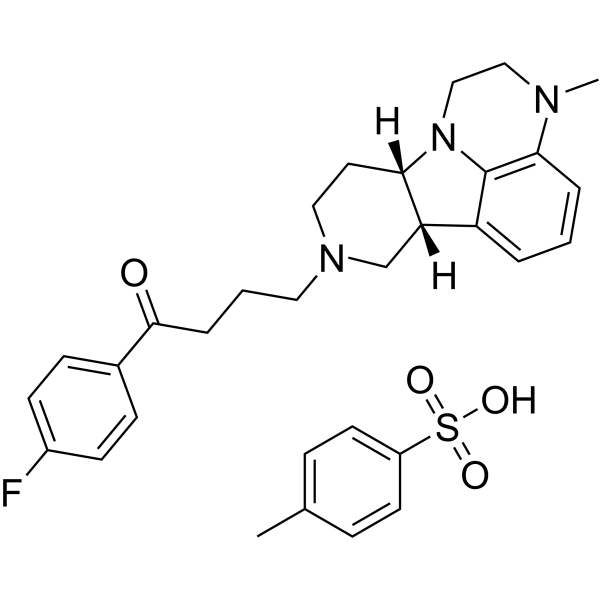
Lumateperone (ITI-007) tosylate is a 5-HT2A receptor antagonist (Ki = 0.54 nM), a partial agonist of presynaptic D2 receptors and an antagonist of postsynaptic D2 receptors (Ki = 32 nM), and a dopamine D1 receptor modulator. Lumateperone tosylate has anticancer activity and can also be used in studies of psychiatric disorders such as schizophrenia .
|
-
- HY-123778
-
|
|
mAChR
|
Neurological Disease
|
|
VU6007678 is a CNS-penetrant muscarinic acetylcholine receptor (mAChR) modulator. VU6007678 potentiates acetylcholine-mediated signaling at human M1, M3, M5 and rat M1, M3, M4, M5 muscarinic acetylcholine receptors. VU6007678 is applicable to research related to Alzheimer's disease, schizophrenia, and ischemic stroke .
|
-

- HY-16654
-
|
|
mGluR
|
Neurological Disease
|
|
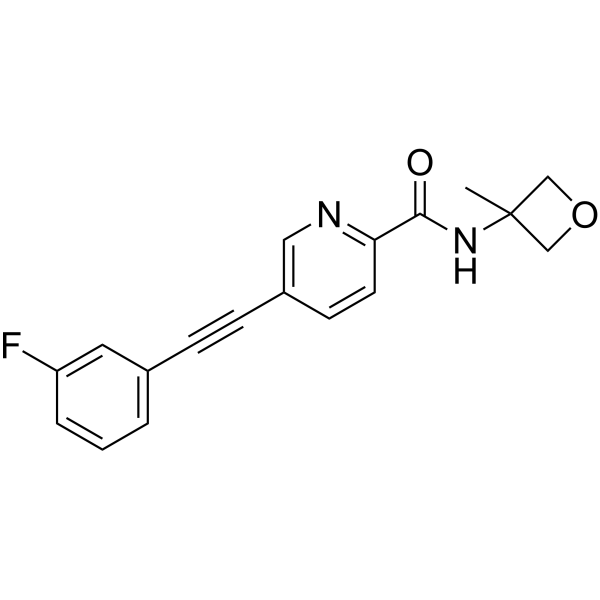
ML254 is a potent mGlu5 potentiator, with EC50 and pEC50 of 9.3 nM and 8.03 nM for rat mGlu5, respectively. ML254 can be used for researching schizophrenia . ML254 is a click chemistry reagent, it contains an Alkyne group and can undergo copper-catalyzed azide-alkyne cycloaddition (CuAAc) with molecules containing Azide groups.
|
-
- HY-105182AR
-
|
LY 246708 tartrate (Standard)
|
Reference Standards
mAChR
|
Neurological Disease
|
|
Xanomeline (tartrate) (Standard) is the analytical standard of Xanomeline (tartrate). This product is intended for research and analytical applications. Xanomeline (LY 246708) is the potent agonist of muscarinic M1/M4 receptor with antipsychotic-like activity. Xanomeline (LY 246708) increases neuronal excitability. Xanomeline (LY 246708) can be used for the research of schizophrenia .
|
-

- HY-10715R
-
|
|
Reference Standards
GlyT
|
Neurological Disease
|
|
SSR504734 (Standard) is the analytical standard of SSR504734 (HY-10715). This product is intended for research and analytical applications. SSR504734 is an orally active, selective and reversible inhibitor of human, rat, and mouse GlyT1 (IC50=18, 15, and 38 nM, respectively). SSR504734 shows anti-schizophrenia, anti-anxiety and anti-depression activities .
|
-

- HY-G0003R
-
|
P88 (Standard); Hydroxy Iloperidone (Standard)
|
Reference Standards
Drug Metabolite
|
Neurological Disease
|
|
Iloperidone metabolite Hydroxy Iloperidone (Standard) is the analytical standard of Iloperidone metabolite Hydroxy Iloperidone (HY-G0003). This product is intended for research and analytical applications. Iloperidone metabolite Hydroxy Iloperidone (P88; Hydroxy Iloperidone) is an active reduced metabolite of Iloperidone (HY-17410). Iloperidone metabolite Hydroxy Iloperidone can be used for the research of schizophrenia .
|
-

- HY-101037S1
-
|
N-Methylglycine-d3; Sarcosin-d3
|
Isotope-Labeled Compounds
Endogenous Metabolite
GlyT
|
Cancer
|
|
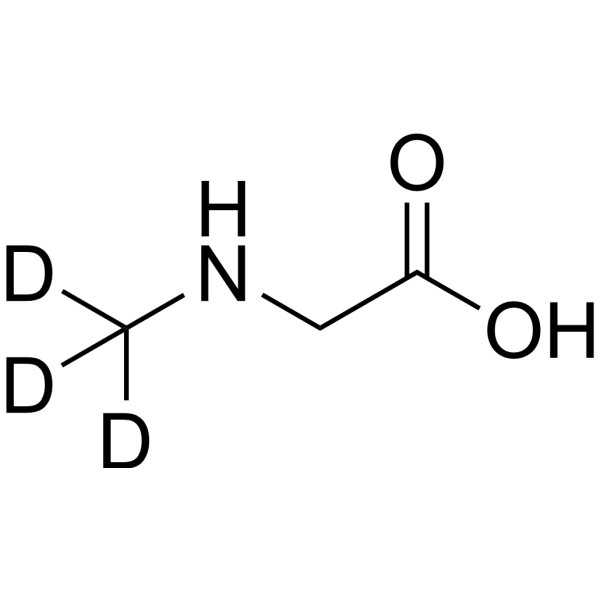
Sarcosine-d3 is the deuterium labeled Sarcosine. Sarcosine (N-Methylglycine), an endogenous amino acid, is a competitive glycine transporter type I (GlyT1) inhibitor and N-methyl-D-aspartate (NMDA) receptor co-agonist. Sarcosine increases the glycine concentration, resulting in an indirect potentiation of the NMDA receptor. Sarcosine is commonly used for the research of schizophrenia .
|
-
- HY-103308
-
|
|
Potassium Channel
|
Neurological Disease
|
|
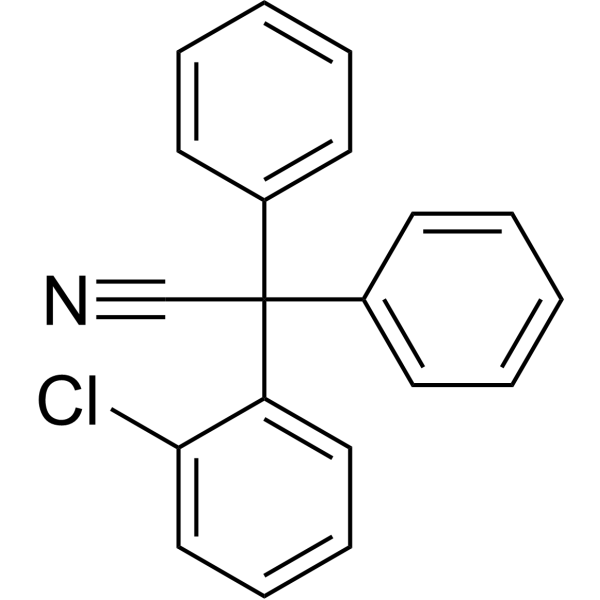
TRAM-39 is a selective blocker of intermediate conductance Ca2+-activated K+ (IKCa) channels. TRAM-39 inhibits KCa3.1 channel with an IC50 value of 60 nM. TRAM-39 can be used for the research of ataxia, epilepsy, memory disorders, schizophrenia and Parkinson’s disease .
|
-
- HY-109183
-
|
TAK-831
|
Xanthine Oxidase
|
Others
|
|
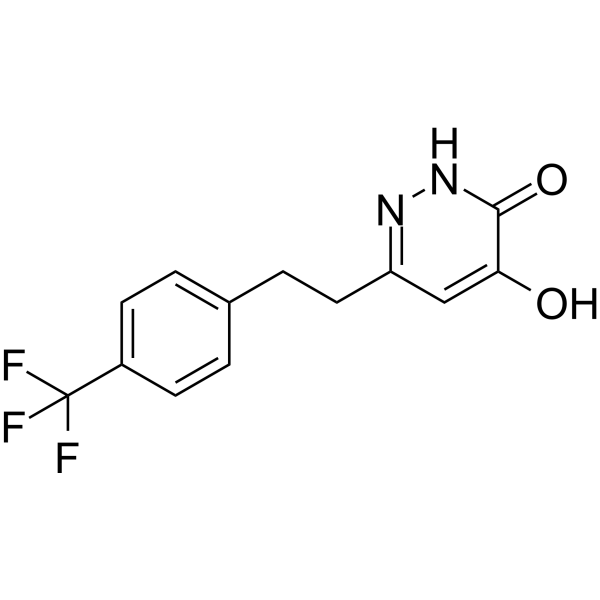
Luvadaxistat (TAK-831) is an orally active, highly selective, potent D-amino acid oxidase (DAAO) inhibitor. Luvadaxistat inhibits oxidative deamination of D-serine via the human recombinant DAAO enzyme with an IC50 of 14 nM. Luvadaxistat significantly increases D-serine levels in the rodent brain, plasma, and cerebrospinal fluid. Luvadaxistat has the potential for schizophrenia research .
|
-
- HY-13340
-
|
VU152100
|
mAChR
|
Neurological Disease
|
|
VU0152100 (VU152100) is a highly selective mAChR positive allosteric modulator (permeable to the blood-brain barrier). VU0152100 reverses Amphetamine-induced hypermotility in rats and increased levels of extracellular dopamine in nucleus accumbens and caudate-putamen. VU0152100 has good research potential in psychosis and cognitive impairment associated with mental disorders such as schizophrenia .
|
-
- HY-75405
-
|
|
Drug Intermediate
|
Neurological Disease
|
|
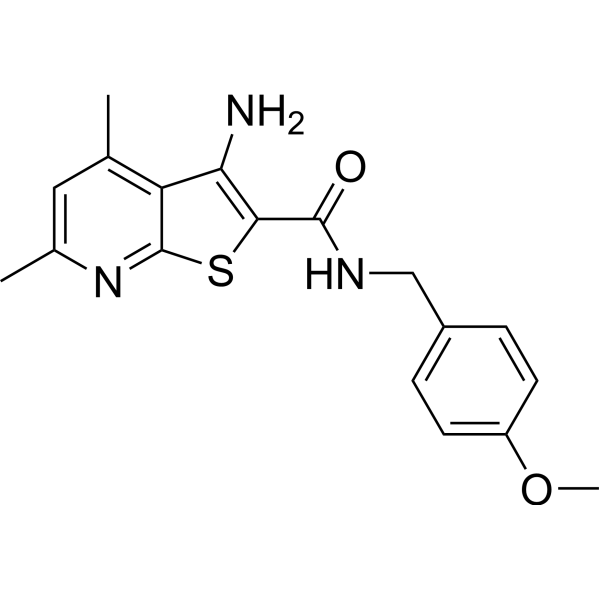
Asenapine impurity 1 is an impurity of Asenapine (HY-10121). Asenapine, an atypical antipsychotic, is an antagonist of serotonin receptors (pKi: 8.4-10.5), adrenoceptors (pKi: 8.9-9.5), dopamine receptors (pKi: 8.9-9.4) and histamine receptors (pKi: 8.2-9.0). Asenapine can be used in the research of schizophrenia and bipolar disorder .
|
-

- HY-108751
-
|
|
Dopamine Receptor
|
Neurological Disease
|
|
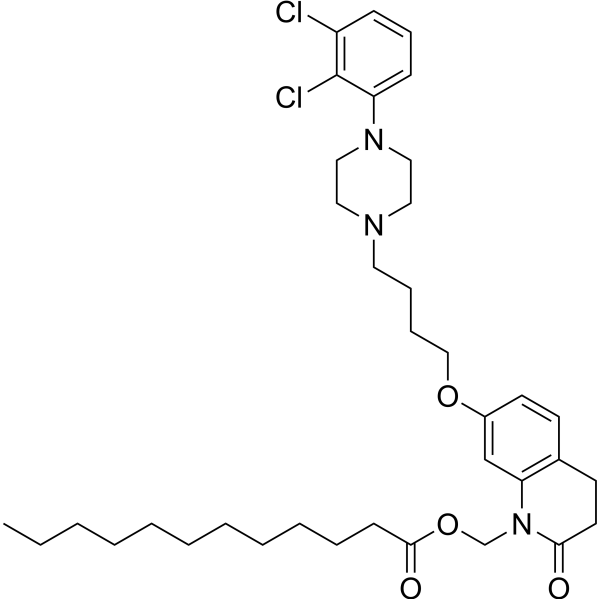
Aripiprazole lauroxil, an N-acyloxymethyl proagent of Aripiprazole (HY-14546), is a Long-acting injectable (LAI) typical antipsychotic for schizophrenia and a ligand of dopamine receptor D2R/D4R. Aripiprazole lauroxil is cleaved by body’s enzyme esterase to N-hydroxymethyl aripiprazole (plus lauric acid) and then to aripiprazole (plus formaldehyde), no toxicity.
|
-
- HY-160111
-
|
|
Phosphodiesterase (PDE)
|
Neurological Disease
|
|
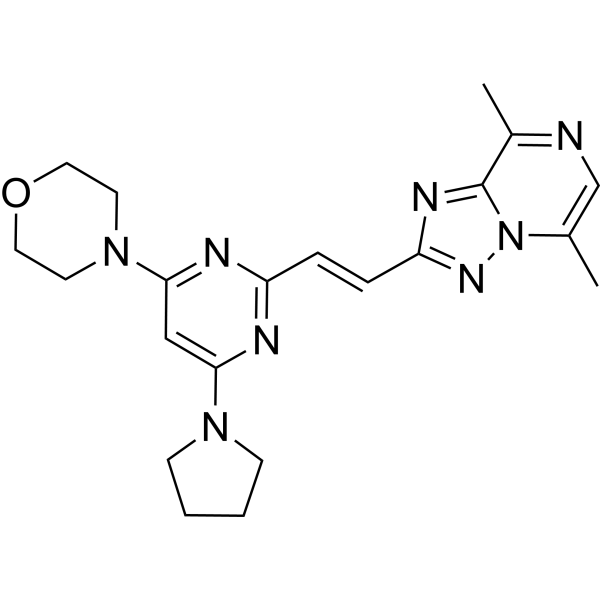
PDM-042 is a potent, selective, and orally active phosphodiesterase 10A (PDE10A) inhibitor. PDM-042 shows potent inhibitory activities for human and rat PDE10A with IC50 values of less than 1 nM and more than 1000-fold selectivity against other phosphodiesterases. PDM-042 can be used for the research of schizophrenia .
|
-
- HY-111066AR
-
|
|
Dopamine Receptor
|
Neurological Disease
|
|
JNJ-37822681 (dihydrochloride) (Standard) is the analytical standard of JNJ-37822681 (dihydrochloride). This product is intended for research and analytical applications. JNJ-37822681 dihydrochloride is a potent, specific, centrally active, fast-dissociating dopamine D2 receptor antagonist with a moderate binding affinity for the dopamine D2L receptor (Ki =158 nM), which has potential for the treatment of schizophrenia and bipolar disorder .
|
-

- HY-113323A
-
|
HMPG sulfate; MHPG sulfate; MOPEG sulfate
|
Endogenous Metabolite
|
Neurological Disease
|
|
3-Methoxy-4-hydroxyphenylglycol sulfate (HMPG sulfate) is a metabolite of norepinephrine degradation in the brain. 3-Methoxy-4-hydroxyphenylglycol sulfate is an indicators of central nervous system noradrenergic activity. 3-Methoxy-4-hydroxyphenylglycol sulfate can be used for research of depression, chronic schizophrenia, etc .
|
-

- HY-10716AR
-
|
|
Reference Standards
GlyT
|
Neurological Disease
|
|
PF-03463275 (Standard) is the analytical standard of PF-03463275 (HY-10716A). This product is intended for research and analytical applications. PF-03463275 is a centrally penetrant, orally available, selective, and competitive GlyT1 (glycine transporter-1) reversible inhibitor, with a Ki of 11.6 nM. PF-03463275 has the potential for Schizophrenia research .
|
-

- HY-182479
-
|
|
iGluR
|
Others
Neurological Disease
|
|
MDL 100748 is an NMDA receptor glycine site antagonist. MDL 100748 modulates NMDA receptor function by acting at the strychnine-insensitive glycine site, which is required for NMDA receptor activation alongside glutamate. MDL 100748 decreases response rates in operant conditioning sessions in phencyclidin (PCP)-trained rats. MDL 100748 can be used for reserach on dementias and schizophrenia .
|
-

- HY-A0019
-
|
9-Hydroxyrisperidone
|
Drug Metabolite
Dopamine Receptor
5-HT Receptor
Adrenergic Receptor
|
Neurological Disease
|
|
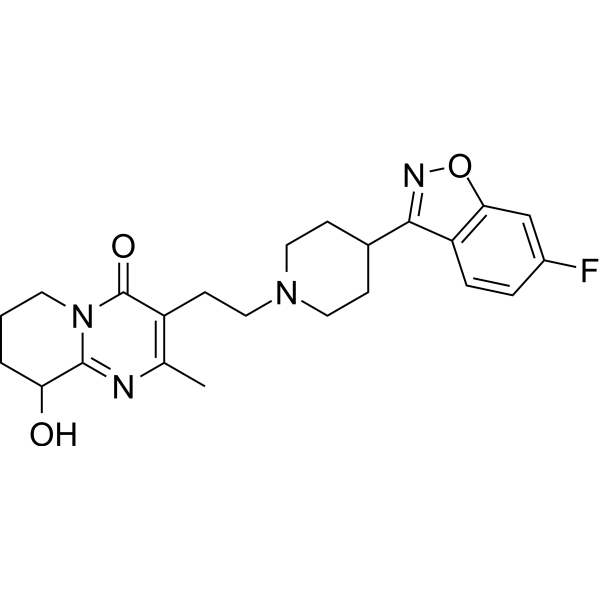
Paliperidone (9-Hydroxyrisperidone), the major active metabolite of Risperidone, is a dopamine D2 antagonist and 5-HT2A antagonist. Paliperidone is also active as an antagonist at α1 and α2 adrenergic receptors and H1-histaminergic receptors. Paliperidone, a antipsychotic agent, shows efficacy against schizophrenia .
|
-
- HY-101037S
-
|
N-Methylglycine-15N; Sarcosin-15N
|
Endogenous Metabolite
GlyT
|
Cancer
|
|
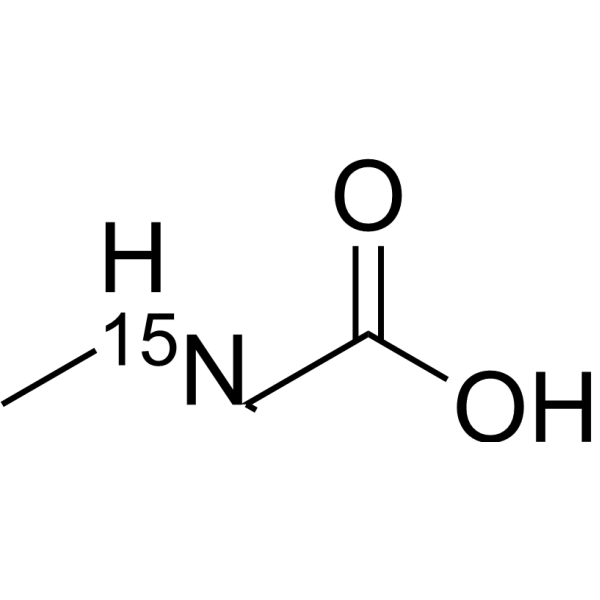
Sarcosine- 15N is the 15N-labeled Sarcosine. Sarcosine (N-Methylglycine), an endogenous amino acid, is a competitive glycine transporter type I (GlyT1) inhibitor and N-methyl-D-aspartate (NMDA) receptor co-agonist. Sarcosine increases the glycine concentration, resulting in an indirect potentiation of the NMDA receptor. Sarcosine is commonly used for the research of schizophrenia .
|
-
- HY-182707
-
|
|
nAChR
Interleukin Related
TNF Receptor
NF-κB
|
Neurological Disease
|
|
JWX-A0108 is a selective human α7 nAChR positive allosteric modulator with an EC50 of 4.35 μM. JWX-A0108 potentiates α7 nAChR currents only in the presence of acetylcholine, with no direct activating effect or alteration of desensitization. JWX-A0108 enhances hippocampal GABAergic synaptic transmission by increasing spontaneous inhibitory postsynaptic currents. JWX-A0108 reduces the brain expression levels of IL-1β, TNF-α, and IL-6 by blocking the NF-κB signaling pathway, and reduces microglial activation by downregulating Iba1. JWX-A0108 effectively improves cognitive deficits, neuroinflammation, and hippocampal neuronal damage in mouse models of schizophrenia and Alzheimer's disease. JWX-A0108 can be used for research related to schizophrenia and Alzheimer's disease .
|
-

- HY-136109
-
|
SEP-363856 hydrochloride; SEP-856 hydrochloride
|
5-HT Receptor
|
Neurological Disease
|
|
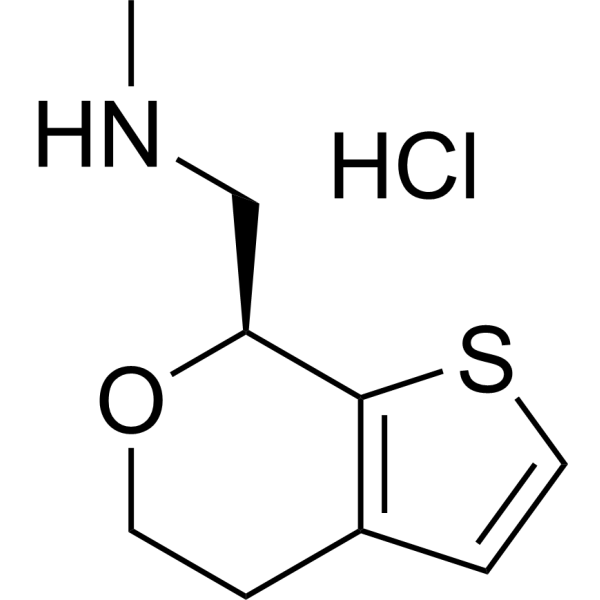
SEP-363856 (SEP-856) hydrochloride, an orally active TAAR1 and 5-HT1A agonist and CNS active psychotropic agent with a unique, non-D2/5-HT2A mechanism of action, exerts its antipsychotic-like effects. SEP-363856 hydrochloride has the potential for the study of schizophrenia .
|
-
- HY-17637
-
|
ITI-007
|
Dopamine Receptor
5-HT Receptor
|
Neurological Disease
Cancer
|
|
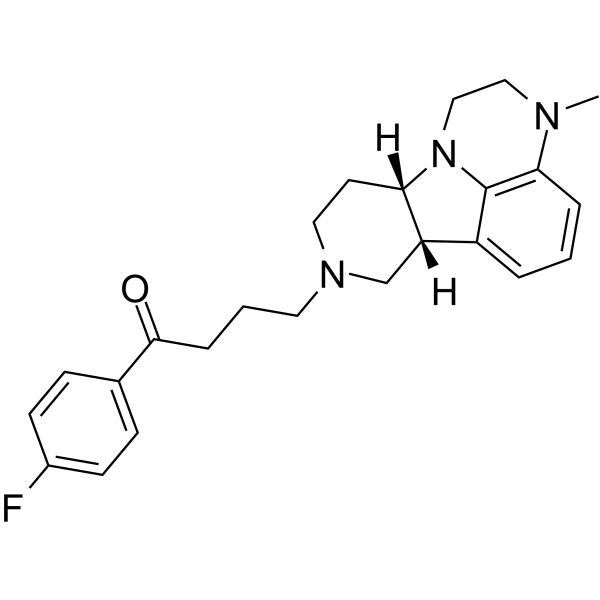
Lumateperone (ITI-007) is an orally active 5-HT2A receptor antagonist (Ki = 0.54 nM), a partial agonist of presynaptic D2 receptors and an antagonist of postsynaptic D2 receptors (Ki = 32 nM), and a dopamine D1 receptor modulator. Lumateperone has anticancer activity and can also be used for the study of schizophrenia and bipolar depression .
|
-
- HY-160978
-
|
KC-7507 free base
|
GABA Receptor
|
Neurological Disease
|
|
Timelotem (KC-7507 free base) is a representative of a class of 1, 2-cyclo1, 4-benzodiazepines. Timelotem shows significant antipsychotic properties. Timelotem produces sedative, anti-anxiety and anti-convulsant effects by enhancing the action of the neurotransmitter gamma-aminobutyric acid (GABA). Timelotem can be used in studies of schizophrenia and other mental disorders .
|
-

- HY-101037R
-
|
N-Methylglycine (Standard); Sarcosin (Standard)
|
Reference Standards
Endogenous Metabolite
GlyT
|
Cancer
|
|
Sarcosine (Standard) is the analytical standard of Sarcosine. This product is intended for research and analytical applications. Sarcosine (N-Methylglycine), an endogenous amino acid, is a competitive glycine transporter type I (GlyT1) inhibitor and N-methyl-D-aspartate (NMDA) receptor co-agonist. Sarcosine increases the glycine concentration, resulting in an indirect potentiation of the NMDA receptor. Sarcosine is commonly used for the research of schizophrenia .
|
-

- HY-136109E
-
|
SEP-856 mesylate
|
5-HT Receptor
|
Neurological Disease
|
|
SEP-363856 (SEP-856) mesylate, an orally active TAAR1 and 5-HT1A agonist and CNS active psychotropic agent with a unique, non-D2/5-HT2A mechanism of action, exerts its antipsychotic-like effects. SEP-363856 mesylate has the potential for the study of schizophrenia .
|
-

- HY-105670A
-
|
|
nAChR
|
Neurological Disease
|
|
PHA-543613 hydrochloride is an oral or active α7 nAChR agonist with brain permeability, For α3β4, α1β1γδ, α4β2 and 5-HT3 receptors selective. PHA-543613 hydrochloride affects sensory gating and memory in an in vivo model of schizophrenia .
|
-
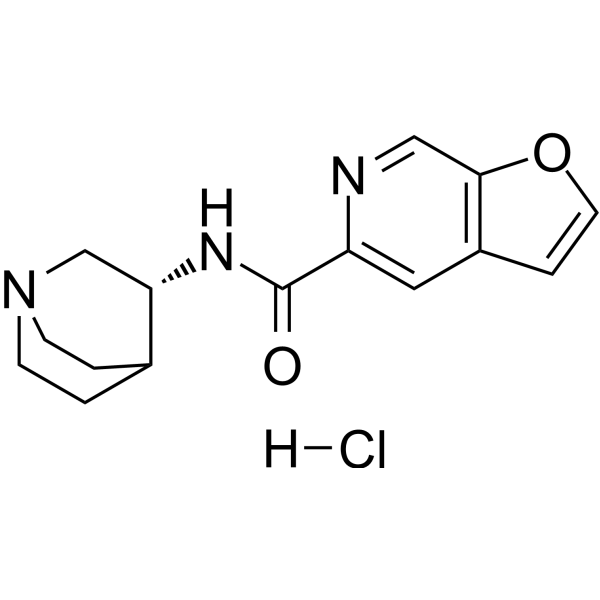
- HY-14552
-
|
SB 223412
|
Neurokinin Receptor
|
Neurological Disease
Endocrinology
|
|
Talnetant (SB 223412) is a selective, competitive, brain-permeable NK3 receptor antagonist with a Ki of 1.4 nM in hNK-3-CHO cells. Talnetant is 100-fold more selective for hNK-3 relative to the hNK-2 receptor and has no affinity for hNK-1. Talnetant can be used in schizophrenia-related studies .
|
-
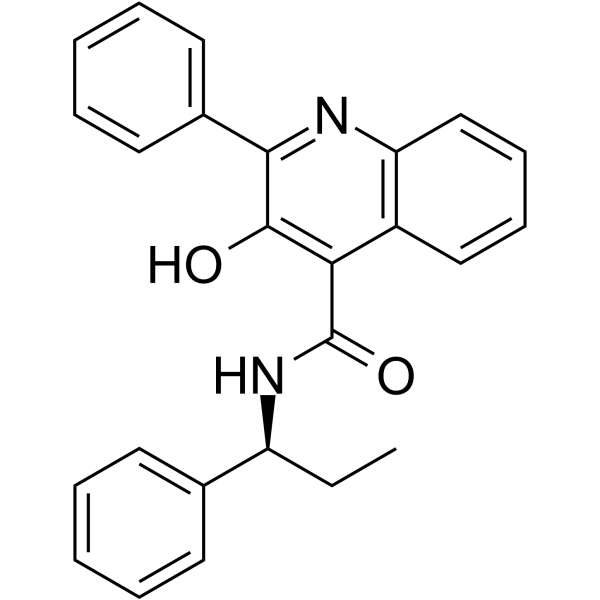
- HY-W750825A
-
|
|
Drug Intermediate
|
Neurological Disease
|
|
4,7,10,13,16,19-Docosahexaenoyl chloride is an ester derivative formed by Iloperidone (HY-17410) metabolite P-88-8991 and polyunsaturated fatty acid (linoleic acid derivative), which acts as a prodrug of P-88-8991. 4,7,10,13,16,19-Docosahexaenoyl chloride can be used for the research of mental disorders (schizophrenia, bipolar disorder) .
|
-

- HY-W424918
-
|
|
Dopamine Receptor
|
Neurological Disease
|
|
Opromazine hydrochloride is an antipsychotic medication that exhibits sedative and antiemetic pharmacological effects, making it effective for treating psychiatric disorders such as schizophrenia and psychosis. Opromazine hydrochloride functions by reducing dopaminergic activity through the blockade of dopamine receptors in the brain. Opromazine hydrochloride has been analyzed for its metabolites in various microsomal enzymes, revealing differences in formation rates that underscore the variability of drug-metabolizing enzymes in human liver and placenta microsomes.
|
-

- HY-153093A
-
|
(1R,2R)-MK-8189
|
Phosphodiesterase (PDE)
|
Neurological Disease
|
|
(1R,2R)-Elpipodect ((1R,2R)-MK-8189) is the (1R,2R) enantiomer of Elpipodect (HY-153093). Elpipodect (MK-8189) is an orally active and selective PDE10A inhibitor with a Ki of 29 pM. Elpipodect can be used in research of schizophrenia .
|
-

- HY-33009
-
|
|
Amino Acid Oxidase
|
Neurological Disease
|
|
AS057278 is a potent, selective, orally active and blood-brain barrier (BBB) penetrant non-peptidic D-amino acid oxidase (DAAO) inhibitor with an IC50 value of 0.91 μM and EC50 of 2.2-3.95 μM. AS057278 can normalize phencyclidine (PCP)-induced prepulse inhibition in mice. AS057278 can be used for researching schizophrenia .
|
-
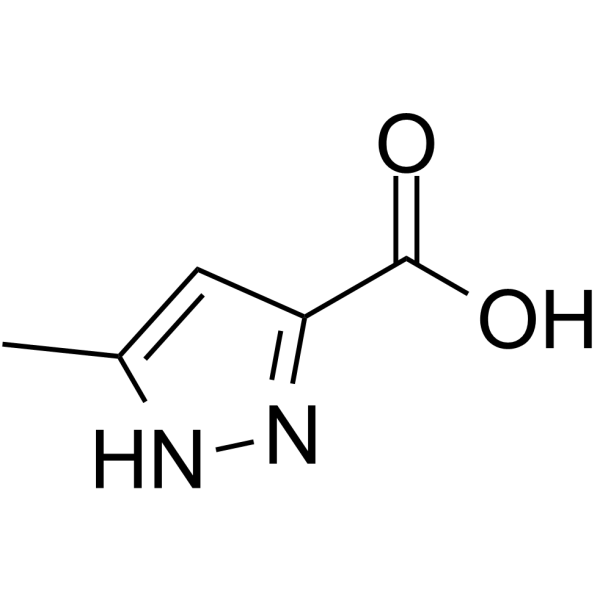
- HY-78509
-
|
|
Biochemical Assay Reagents
Drug Intermediate
|
Neurological Disease
|
|
Dibenzosuberone belongs to the family of tricyclic antidepressant drugs, commonly referred to as Tricyclic antidepressants (TCAs), and is widely used in research on migraine, tension headaches, anxiety disorders, and schizophrenia. Dibenzosuberone is also a key intermediate in the synthesis of various active pharmaceutical ingredients (APIs), such as Amitriptyline (HY-B0527), Nortriptyline (HY-118620), Noxiptiline or Cyproheptadine (HY-B1622) .
|
-

- HY-14552A
-
|
SB 223412 hydrochloride; SB 223412-A
|
Neurokinin Receptor
|
Neurological Disease
Endocrinology
|
|
Talnetant (SB 223412) hydrochloride is a selective, competitive, brain-permeable NK3 receptor antagonist with a Ki of 1.4 nM in hNK-3-CHO cells. Talnetant hydrochloride is 100-fold more selective for hNK-3 relative to the hNK-2 receptor and has no affinity for hNK-1. Talnetant hydrochloride can be used in schizophrenia-related studies .
|
-
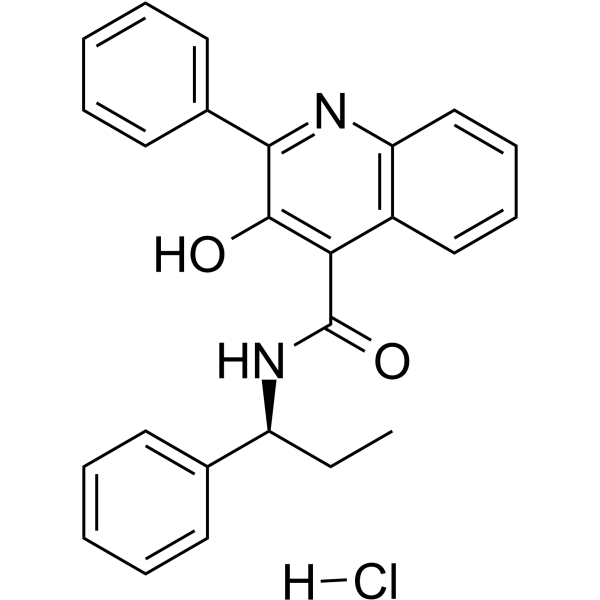
- HY-167824
-
|
|
Endogenous Metabolite
|
Neurological Disease
|
|
SSR180711 is a potent and subtype-selective α7 agonist with activity in Alzheimer's disease and schizophrenia research. SSR180711 can be used to study subtypes of intracerebral hemorrhage associated with cerebral small vessel disease. SSR180711 shows potential in electrophysiological and behavioral studies to evaluate its effects on cognitive function. SSR180711 also has potential for studying cerebrovascular lesions and their effects .
|
-

- HY-15856B
-
|
Flupenthixol dihydrochloride
|
Dopamine Receptor
PI3K
Apoptosis
|
Neurological Disease
Cancer
|
|
Flupentixol is an orally active D1/D2 dopamine receptor antagonist and new PI3K inhibitor (PI3Kα IC50=127 nM). Flupentixol shows anti-proliferative activity to cancer cells and induces apoptosis. Flupentixol can also be used in schizophrenia, anxiolytic and depressive research .
|
-
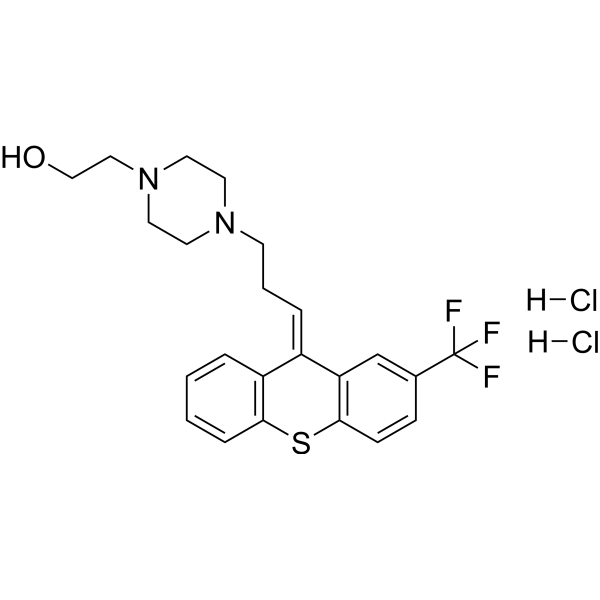
- HY-111066
-
|
|
Dopamine Receptor
|
Others
|
|
JNJ-37822681 is a fast dissociating D2 antagonist with activity in inhibiting schizophrenia. JNJ-37822681 has high specificity for D2 receptors and is effective in animal models, inducing increased levels of extracellular serotonin, dopamine, and norepinephrine in the rat cerebral cortex, and exhibiting antidepressant activity in the mouse tail suspension test, while having a good brain distribution and lower prolactin release.
|
-

- HY-117639
-
|
|
Potassium Channel
|
Neurological Disease
|
|
AUT1 is a recombinant human Kv3 channel modulator. AUT1 modulates Kv3.1b and Kv3.2a channels in human recombinant with pEC50 values of 5.33 and 5.31 μM, respectively. AUT1 can be used for the research of disorders associated with dysfunction of inhibitory feedback in corticolimbic circuits, such as schizophrenia .
|
-
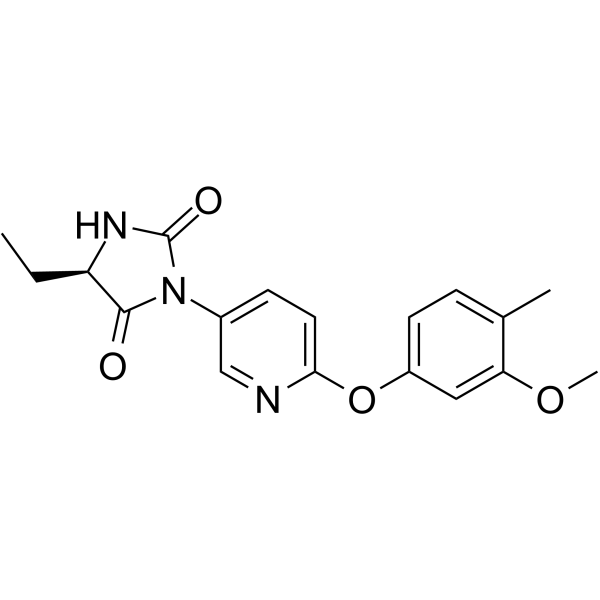
- HY-136109B
-
|
(Rac)-SEP-363856; (Rac)-SEP-856
|
5-HT Receptor
|
Neurological Disease
|
|
(Rac)-SEP-363856 is the racemate of SEP-363856. SEP-363856(SEP-856), an orally active and CNS active psychotropic agent with a unique, non-D2/5-HT2A mechanism of action, exerts its antipsychotic-like effects. SEP-363856 (SEP-856) has the potential for the treatment of schizophrenia .
|
-
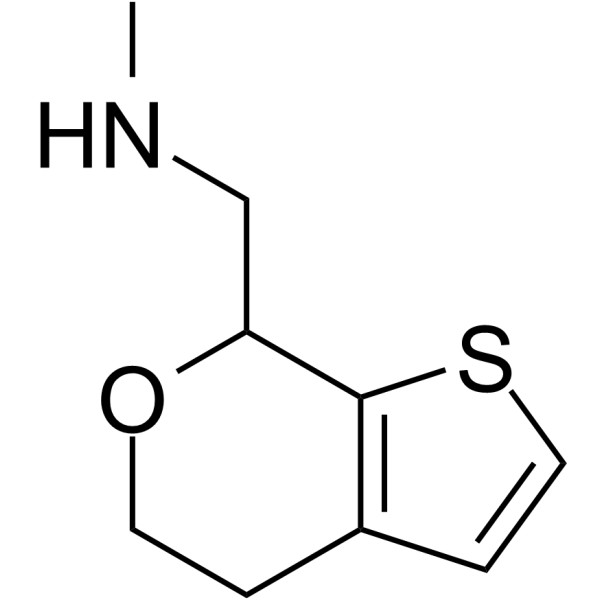
- HY-120727
-
|
|
mGluR
|
Neurological Disease
|
|
VU0364289 is a highly selective mGlu5 positive allosteric modulator (PAM) (binds to the MPEP (HY-14609A) site), with an EC50 of 1.6 μM. VU0364289 shows excellent central nervous system penetration. VU0364289 can reverse amphetamine-induced hyperlocomotion in a dose-dependent manner, which can be used for schizophrenia and other psychiatric research .
|
-
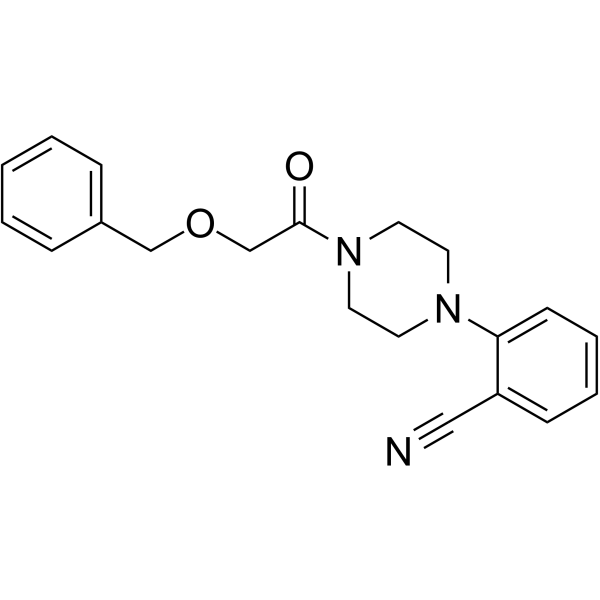
- HY-15856A
-
|
Flupenthixol
|
Dopamine Receptor
PI3K
Apoptosis
|
Neurological Disease
|
|
Flupentixol is an orally active D1/D2 dopamine receptor antagonist and new PI3K inhibitor (PI3Kα IC50=127 nM). Flupentixol shows anti-proliferative activity to cancer cells and induces apoptosis. Flupentixol can also be used in schizophrenia, anxiolytic and depressive research .
|
-
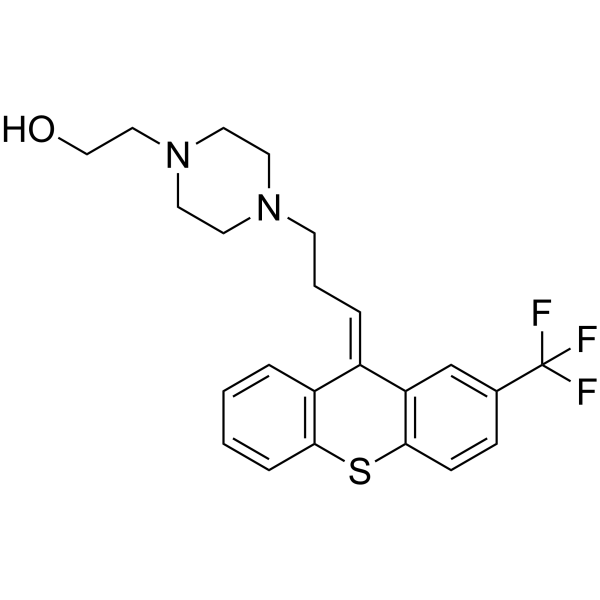
- HY-10121D
-
|
rel-Org 5222 hydrochloride
|
5-HT Receptor
Adrenergic Receptor
Dopamine Receptor
Histamine Receptor
Drug Isomer
|
Neurological Disease
|
|
rel-Asenapine (rel-Org 5222) hydrochloride is a relative configuration of Asenapine hydrochloride (HY-16567). Asenapine (Org 5222) hydrochloride, an atypical antipsychotic, is an antagonist of serotonin receptors (pKi: 8.4-10.5), adrenoceptors (pKi: 8.9-9.5), dopamine receptors (pKi: 8.9-9.4) and histamine receptors (pKi: 8.2-9.0). Asenapine hydrochloride can be used in the research of schizophrenia and bipolar disorder .
|
-

- HY-103130A
-
|
|
5-HT Receptor
|
Neurological Disease
|
|
EMD386088 free base is a potent serotonin 6 receptor (5-HT6R) agonist. EMD386088 free base induces cell death. EMD386088 free base regulates the activity of ERK1/2. EMD386088 free base has the potential for the research of alzheimer's disease (AD) and schizophrenia .
|
-

- HY-120641
-
|
|
mGluR
|
Neurological Disease
|
|
BMS-955829 is an orally active and selective mGluR5 positive allosteric modulator with an EC50 of 2.6 nM. BMS-955829 has no intrinsic agonist activity and a low glutamate fold shift (2.4). BMS-955829 can effectively improve cognitive and executive function deficits in rodents. BMS-955829 can be used in the research of cognitive impairment diseases such as schizophrenia .
|
-

- HY-10121R
-
-

- HY-W002112
-
|
Nornicotine
|
Endogenous Metabolite
Drug Metabolite
nAChR
β-catenin
|
Cardiovascular Disease
Neurological Disease
|
|
(±)-Nornicotine is a major metabolite of Nicotine. (±)-Nornicotine is a partial nAChRs agonist, specifically activating receptor subtypes containing α7 and α6 subunits. (±)-Nornicotine disrupts β-catenin and ZO-1, and induces F-actin depolymerization. (±)-Nornicotine supports self-administration behavior. (±)-Nornicotine can be used in the research of atherosclerosis, Alzheimer's disease, and schizophrenia .
|
-

- HY-119800
-
|
|
5-HT Receptor
Dopamine Receptor
|
Neurological Disease
|
|
Setoperone is an orally active and potent 5-HT₂ receptor antagonist and a moderate dopamine D₂ receptor blocker. Setoperone dissociates from the receptors relatively quickly, but it is easily "captured" by serotonin receptors in the body, resulting in persistent receptor inhibition even after elution. Setoperone can be used to study the negative symptoms of type II schizophrenia and associated mood disorders .
|
-

- HY-14547A
-
|
|
Dopamine Receptor
5-HT Receptor
|
Neurological Disease
|
|
Bifeprunox mesylate is a potent dopamine D2-like and 5-HT1A receptor partial agonist with pKis of 7.19 and 8.83 for cortex 5-HT1A and striatum D2, and a pEC50 of 6.37 for hippocampus 5-HT1A, respectively. Bifeprunox mesylate is an antipsychotic for the research of schizophrenia .
|
-
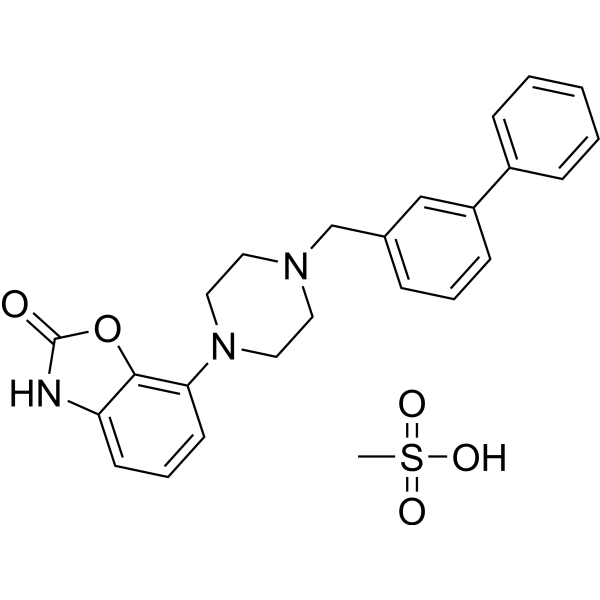
- HY-B0532
-
|
|
Dopamine Receptor
Adrenergic Receptor
P-glycoprotein
CaMK
Influenza Virus
Autophagy
|
Neurological Disease
|
|
Trifluoperazine, an antipsychotic agent, acts by blocking central dopamine receptors. Trifluoperazine is a potent α1-adrenergic receptor antagonist. Trifluoperazine is a potent NUPR1 inhibitor exerting anticancer activity. Trifluoperazine is a calmodulin inhibitor, and also inhibits P-glycoprotein. Trifluoperazine can be used for the research of schizophrenia. Trifluoperazine acts as a reversible inhibitor of influenza virus morphogenesis .
|
-
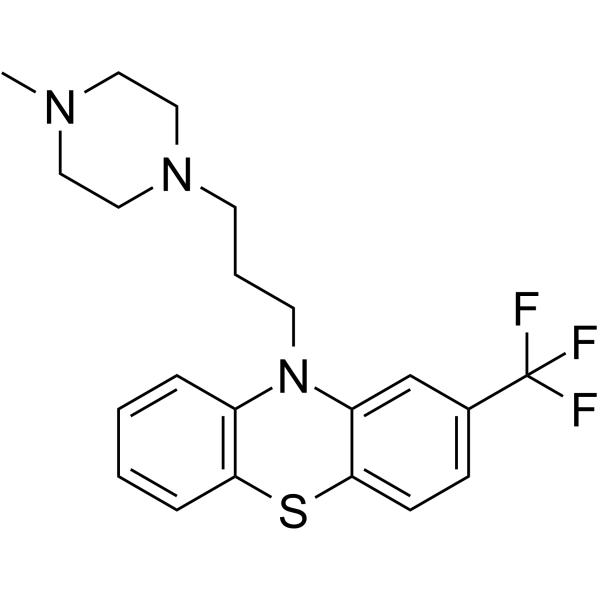
- HY-13225A
-
|
RJR-2403; (E)-Metanicotine
|
nAChR
|
Neurological Disease
|
|
Rivanicline (RJR-2403) is a neuronal nicotinic receptor agonist. Rivanicline is highly selective for the rat brain cortex nAChRs (Ki = 26 nM, EC50 of 732 nM) and α4β2 subtype (Ki = 26 nM, EC50 = 16 μM). Rivanicline can significantly restore the learning impairment and cognitive dysfunction. Rivanicline can be used for the study of neurodegenerative diseases (such as schizophrenia or Alzheimer's disease) .
|
-
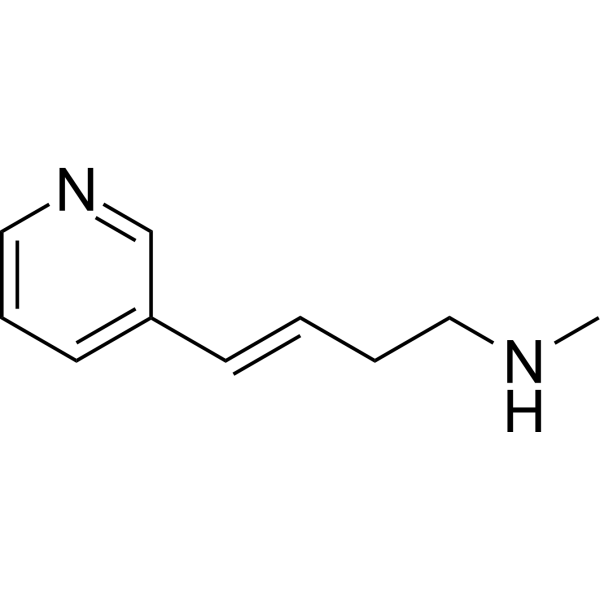
- HY-118997
-
|
|
Dopamine Receptor
|
Neurological Disease
|
|
PD-89211 is a selective dopamine D4 receptor antagonist with a Ki value of 3.7 nM. PD-89211 reverses Quinpirole (HY-B1752A)-induced [3H]thymidine uptake in CHOpro5 cells (IC50 = 2.1 nM). PD-89211 regulates dopamine/norepinephrine metabolism in the hippocampus and can be used for research on central nervous system disorders such as schizophrenia .
|
-

- HY-13225H
-
|
RJR-2403 hydrochloride; Metanicotine hydrochloride
|
nAChR
|
Neurological Disease
|
|
Rivanicline (RJR-2403) hydrochloride is a neuronal nicotinic receptor agonist. Rivanicline hydrochloride is highly selective for the rat brain cortex nAChRs (Ki = 26 nM, EC50 of 732 nM) and α4β2 subtype (Ki = 26 nM, EC50 = 16 μM). Rivanicline hydrochloride can significantly restore the learning impairment and cognitive dysfunction. Rivanicline hydrochloride can be used for the study of neurodegenerative diseases (such as schizophrenia or Alzheimer's disease) .
|
-

- HY-14547
-
|
|
Dopamine Receptor
5-HT Receptor
|
Neurological Disease
|
|
Bifeprunox is a potent dopamine D2-like and 5-HT1A receptor partial agonist with pKis of 7.19 and 8.83 for cortex 5-HT1A and striatum D2, and a pEC50 of 6.37 for hippocampus 5-HT1A, respectively. Bifeprunox is an antipsychotic for the research of schizophrenia .
|
-
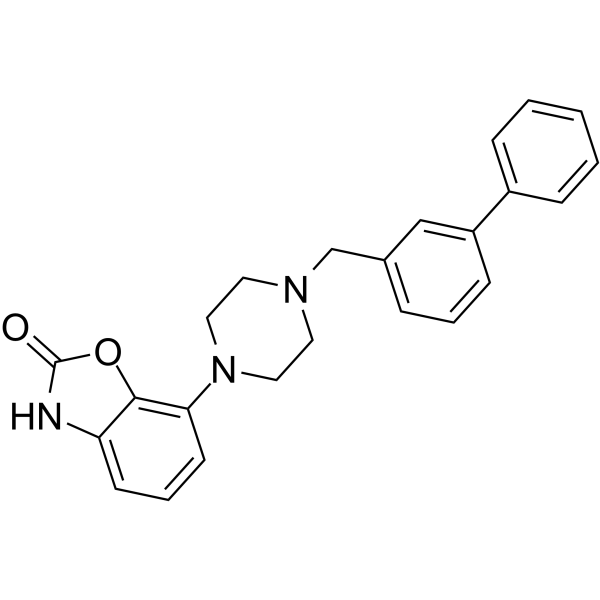
- HY-122255
-
|
|
mGluR
|
Neurological Disease
|
|
LY487379 is a selective human mGluR2 positive allosteric modulator (PAM). LY487379 potentiates glutamate-stimulated [ 35S]GTPγS binding with EC50 values of 1.7 μM and >10 μM for mGlu2 and mGlu3 receptors respectively. LY487379 promotes cognitive flexibility and facilitates behavioral inhibition in a rat model. LY487379 can be used for schizophrenia research .
|
-
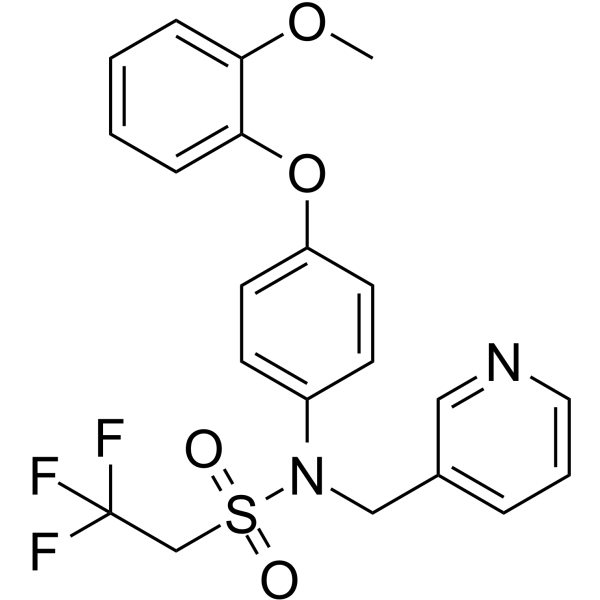
- HY-110168R
-
|
|
nAChR
|
Neurological Disease
|
|
NS 9283 (Standard) is the analytical standard of NS 9283. This product is intended for research and analytical applications. NS9283 is a positive positive allosteric modulator of (α4)3(β2)2 nicotinic ACh receptors. NS9283 can be used in a series of neurological conditions such as attention deficit hyperactivity disorder (ADHD), schizophrenia, Parkinson's disease and Alzheimer's disease .
|
-

- HY-13225D
-
|
RJR-2403 fumarate; (E)-Metanicotine fumarate
|
nAChR
|
Neurological Disease
|
|
Rivanicline (RJR-2403) fumarate is a neuronal nicotinic receptor agonist. Rivanicline fumarate is highly selective for the rat brain cortex nAChRs (Ki = 26 nM, EC50 of 732 nM) and α4β2 subtype (Ki = 26 nM, EC50 = 16 μM). Rivanicline fumarate can significantly restore the learning impairment and cognitive dysfunction. Rivanicline fumarate can be used for the study of neurodegenerative diseases (such as schizophrenia or Alzheimer's disease) .
|
-

- HY-126068
-
|
(S)-Amisulpride; (S)-Aramisulpride; (S)-DAN 2163
|
Dopamine Receptor
5-HT Receptor
|
Neurological Disease
|
|
Esamisulpride ((S)-Amisulpride) is the S-isomer of Amisulpride (HY-14545). Esamisulpride is a potent dopamine D2/D3 receptor antagonist with Ki values of 4.43 nM for D2R and 0.72 nM for D3R. Esamisulpride is a 5-HT7 receptor antagonist with a Ki of 900 nM. Esamisulpride can be used in the research of schizophrenia and depression .
|
-
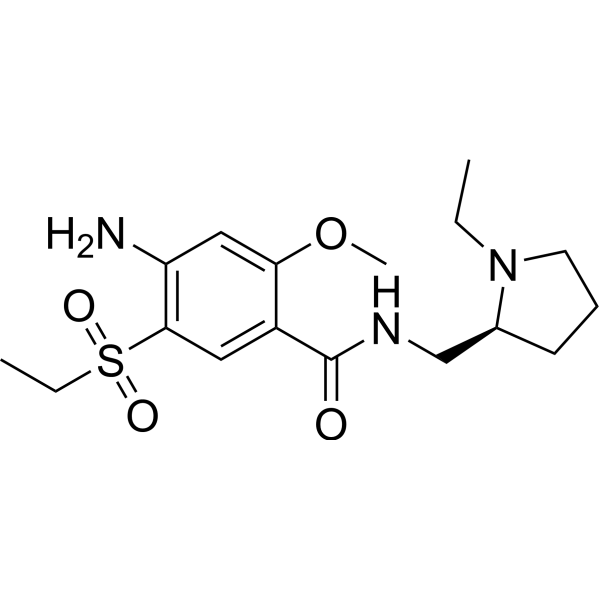
- HY-136109A
-
|
SEP-363856; SEP-856
|
5-HT Receptor
|
Neurological Disease
|
|
SEP-363856 (SEP-856), an orally active TAAR1 and 5-HT1A agonist and CNS active psychotropic agent with a unique, non-D2/5-HT2A mechanism of action, exerts its antipsychotic-like effects. SEP-363856 (SEP-856) has the potential for the study of schizophrenia .
|
-
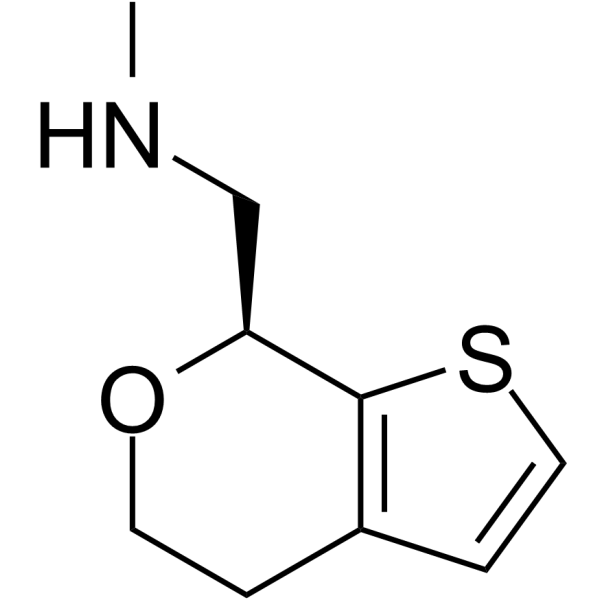
- HY-149702
-
|
|
mAChR
|
Neurological Disease
|
|
M1/M4 muscarinic agonist 1 (compound 41) is a selective muscarinic M4/M1 agonist with EC50 values of 14 and 55 nM for M4 and M1, respectively. M1/M4 muscarinic agonist 1 can be used for research on mental diseases, such as schizophrenia, delusional disorder, etc .
|
-
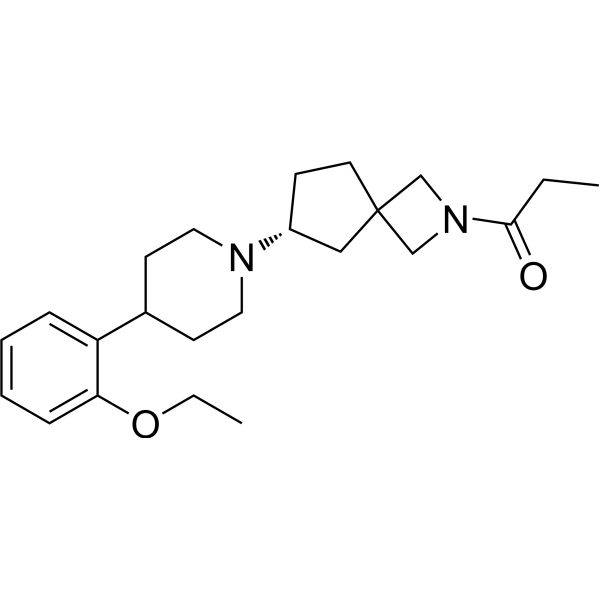
- HY-103552
-
|
|
mGluR
|
Neurological Disease
|
|
LY487379 hydrochloride is a selective human mGluR2 positive allosteric modulator (PAM). LY487379 hydrochloride potentiates glutamate-stimulated [ 35S]GTPγS binding with EC50 values of 1.7 μM and >10 μM for mGlu2 and mGlu3 receptors respectively. LY487379 hydrochloride promotes cognitive flexibility and facilitates behavioral inhibition in a rat model. LY487379 hydrochloride can be used for schizophrenia research .
|
-
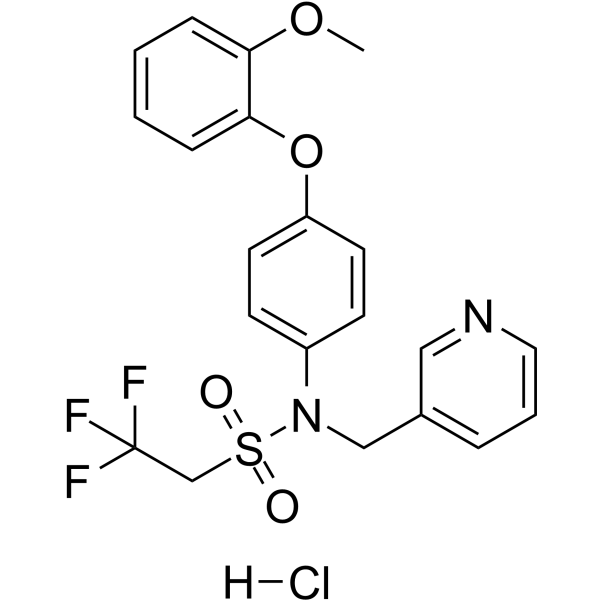
- HY-182694
-
|
|
nAChR
|
Neurological Disease
|
|
α7 nAChR Modulator-4 is a positive allosteric modulator of α7 nAChR, with an EC50 of 910 nM. α7 nAChR Modulator-4 interacts with α7 nAChR to trigger downstream effects associated with inflammatory regulation. α7 nAChR Modulator-4 can be used in the research of Alzheimer's disease, Parkinson's disease and schizophrenia .
|
-

- HY-103423R
-
|
|
Reference Standards
Dopamine Receptor
|
Neurological Disease
|
|
PAOPA (Standard) is the analytical standard of PAOPA (HY-103423). This product is intended for research and analytical applications. PAOPA, an analog of L-proline-l-leucine-glycine amide (PLG) peptide, is an allosteric modulator of Dopamine D2 Receptor. PAOPA can effectively reduce behavioral abnormalities in rodent models of schizophrenia. PAOPA increases the high affinity dopamine D2 receptor and promotes its binding to agonists .
|
-

- HY-B0532A
-
|
|
Dopamine Receptor
Adrenergic Receptor
CaMK
P-glycoprotein
Influenza Virus
Autophagy
|
Neurological Disease
Cancer
|
|
Trifluoperazine dihydrochloride, an antipsychotic agent, acts by blocking central dopamine receptors. Trifluoperazine dihydrochloride is a potent α1-adrenergic receptor antagonist. Trifluoperazine dihydrochloride is a potent NUPR1 inhibitor exerting anticancer activity. Trifluoperazine dihydrochloride is a calmodulin inhibitor, and also inhibits P-glycoprotein. Trifluoperazine dihydrochloride can be used for the research of schizophrenia. Trifluoperazine dihydrochloride acts as a reversible inhibitor of influenza virus morphogenesis .
|
-
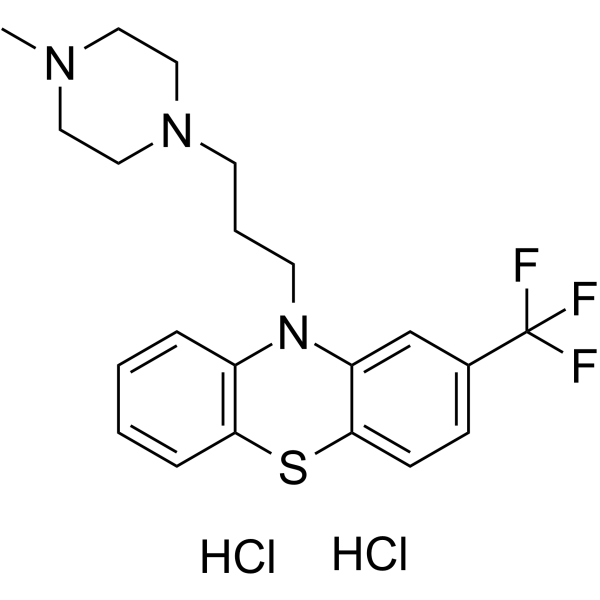
- HY-19752
-
|
CID-25010775 free base
|
mAChR
|
Neurological Disease
|
|
VU0357017 (CID-25010775) is a potent, selective and brain-penetrant allosteric agonist of M1 muscarinic acetylcholine receptor, with an EC50 of 477 nM. VU0357017 is highly selective for M1 and has no activity at M2-M5 up to the highest concentrations tested (30 μM). VU0357017 can be used for the research of Alzheimer’s disease and schizophrenia .
|
-

- HY-19752A
-
|
CID-25010775
|
mAChR
|
Neurological Disease
|
|
VU0357017 hydrochloride (CID-25010775) is a potent, selective and brain-penetrant allosteric agonist of M1 muscarinic acetylcholine receptor, with an EC50 of 477 nM. VU0357017 hydrochloride is highly selective for M1 and has no activity at M2-M5 up to the highest concentrations tested (30 μM). VU0357017 hydrochloride can be used for the research of Alzheimer’s disease and schizophrenia .
|
-
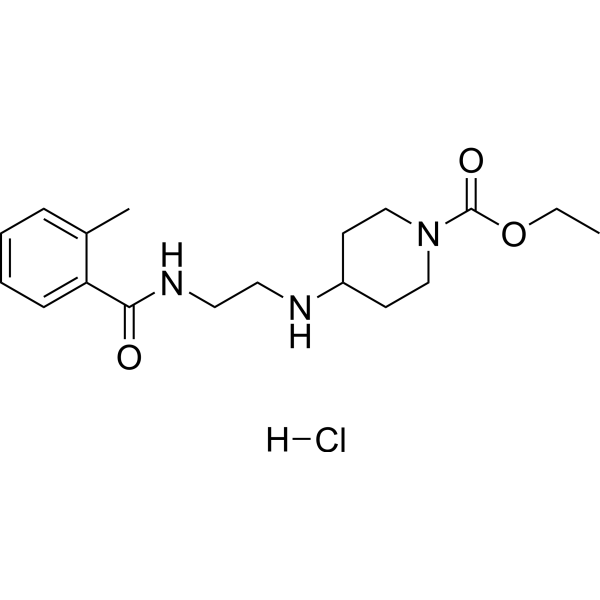
- HY-10121S2
-
-
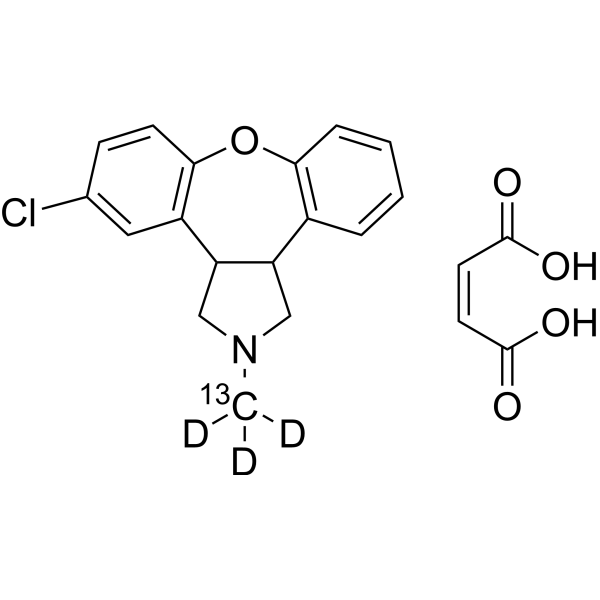
- HY-116723
-
|
|
mGluR
|
Neurological Disease
|
|
CFMMC is a selective allosteric metabotropic glutamate receptor 1 (mGluR1) antagonist. CFMMC inhibits L-glutamate-induced intracellular Ca 2+ mobilization ([Ca 2+]i) in Chinese hamster ovary cells expressing recombinant human mGluR1a with an IC50 value of 50 nM. CFMMC is promising for research of various central nervous system disorders, such as schizophrenia, epilepsy, anxiety, pain, cognitive dysfunction and drug abuse .
|
-

- HY-102043
-
|
|
Phosphodiesterase (PDE)
|
Neurological Disease
|
|
PDM-631 is a selective and orally active PDE2A inhibitor with blood-brain barrier penetration. PDM-631 exhibits potent inhibitory activity against human and rat recombinant PDE2A with IC50 values of 1.5 nM and 4.2 nM, respectively. PDM-631 increases cGMP levels in the rat cerebral cortex. PDM-631 can be used for the study of schizophrenia and neurodegenerative disorders .
|
-

- HY-B1152
-
|
|
Dopamine Receptor
CD276/B7-H3
FOXO
|
Neurological Disease
Cancer
|
|
Piperacetazine is an orally active dopamine receptor antagonist and phenothiazine antipsychotic. Piperacetazine can directly bind to the PAX3::FOXO1 fusion protein and inhibit its transcriptional activity. Piperacetazine also exhibits antitumor activity with an IC50 of 7.627 μM against PANC-1 cells. Piperacetazine can be used for the research of diseases such as schizophrenia and pancreatic cancer and other tumors .
|
-
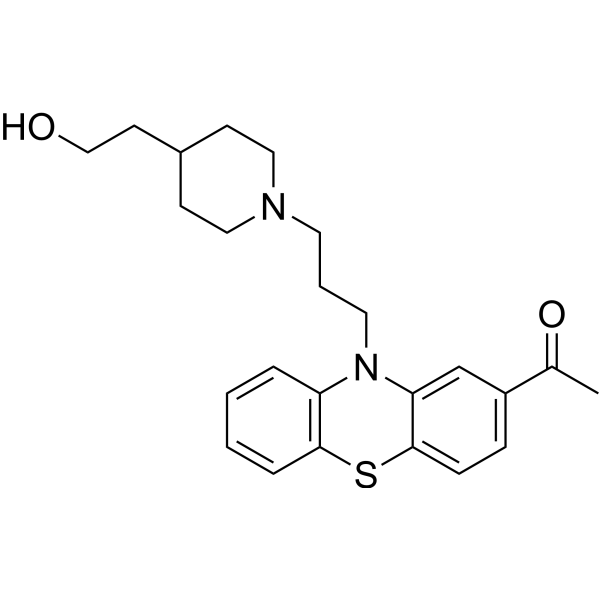
- HY-110168S
-
|
|
Isotope-Labeled Compounds
nAChR
|
Neurological Disease
|
|
NS 9283-d4 is the deuterium labeled NS 9283 (HY-110168). NS 9283 is a positive positive allosteric modulator of (α4)3(β2)2 nicotinic ACh receptors. NS 9283 can be used in a series of neurological conditions such as attention deficit hyperactivity disorder (ADHD), schizophrenia, Parkinson's disease and Alzheimer's disease .
|
-

- HY-128128
-
|
|
Transmembrane Glycoprotein
|
Cardiovascular Disease
Neurological Disease
Inflammation/Immunology
|
|
ASN04421891 is a GPR17 agonist with nanomolar EC50 and high specificity. ASN04421891 promotes oligodendrocyte precursor cell maturation to mature myelinating oligodendrocytes. ASN04421891 can be used for the research of cerebral ischaemia, cardiac ischaemia, renal ischaemia, cerebral trauma, multiple sclerosis, schizophrenia, depression, alzheimer's disease, alzheimer-like dementia, parkinson's disease, huntington's chorea, amyotrophic lateral sclerosis (ALS), neuroinflammatory disorders .
|
-
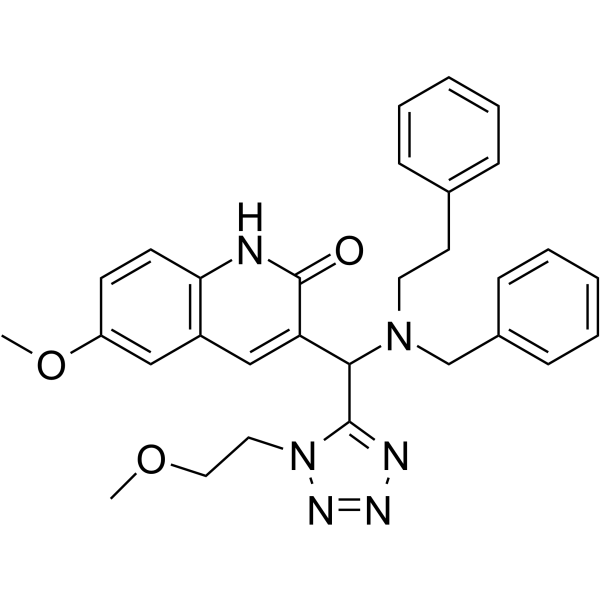
- HY-176200
-
|
AF98943
|
mAChR
|
Neurological Disease
|
|
VU6008055 (AF98943) is a brain-penetrant, orally active and selective muscarinic acetylcholine receptor subtype 4 (mAChR4) activator with human EC50 values of 73.4 nM. VU6008055 potentiates mAChR4 receptor activity in the presence of acetylcholine, and exhibits no activity at mAChR1, mAChR3, or mAChR5. VU6008055 can be used for the research of schizophrenia, parkinson’s disease, alzheimer’s disease .
|
-

- HY-107969
-
|
|
Dopamine Receptor
COX
NO Synthase
|
Neurological Disease
Cancer
|
|
Haloperidol decanoate is a depot preparation of haloperidol, a commonly used butyrophenone derivative with antipsychotic activity. Haloperidol decanoate can increase the striatal D2 receptor in rat. Haloperidol decanoate can improve conditions of psychoses (mainly schizophrenia). Haloperidol decanoate can lead to increased accumulation of the dopamine metabolites homo-vanillic acid. Haloperidol decanoate can reduce intestinal transport, increase gastric emptying and reduce acid output in rat model .
|
-
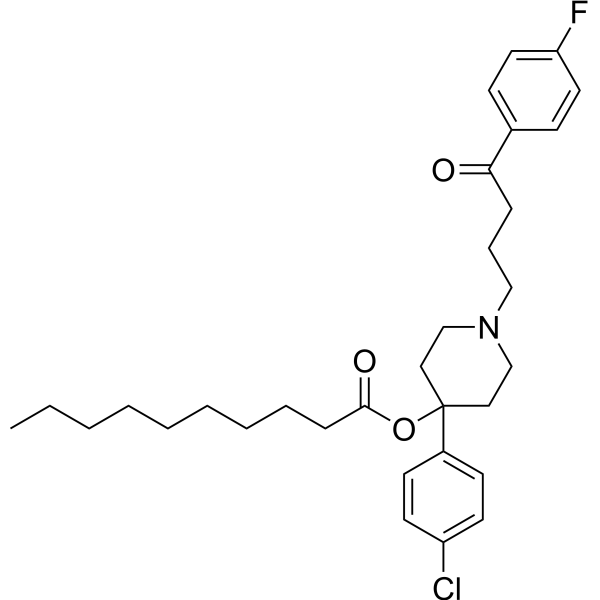
- HY-14539B
-
|
HF 1854 dihydrochloride
|
Dopamine Receptor
mAChR
Adrenergic Receptor
5-HT Receptor
|
Neurological Disease
Cancer
|
|
Clozapine (HF 1854) dihydrochloride is an antipsychotic used for the research of schizophrenia. Clozapine has high affinity for a number of neuroreceptors. Clozapine is a potent antagonist of dopamine D2 with a Ki of 75 nM. Clozapine inhibits the muscarinic M1 receptor and serotonin 5HT2A receptor with Kis of 9.5 nM and 4 nM, respectively . Clozapine is also a potent and selective agonist at the muscarinic M4 receptor (EC50=11 nM) .
|
-

- HY-A0019S
-
|
|
Dopamine Receptor
5-HT Receptor
Adrenergic Receptor
|
Neurological Disease
|
|
Paliperidone-d4 is the deuterium labeled Paliperidone. Paliperidone (9-Hydroxyrisperidone), the major active metabolite of Risperidone, is a dopamine D2 antagonist and 5-HT2A antagonist. Paliperidone is also active as an antagonist at α1 and α2 adrenergic receptors and H1-histaminergic receptors. Paliperidone, a antipsychotic agent, shows efficacy against schizophrenia .
|
-
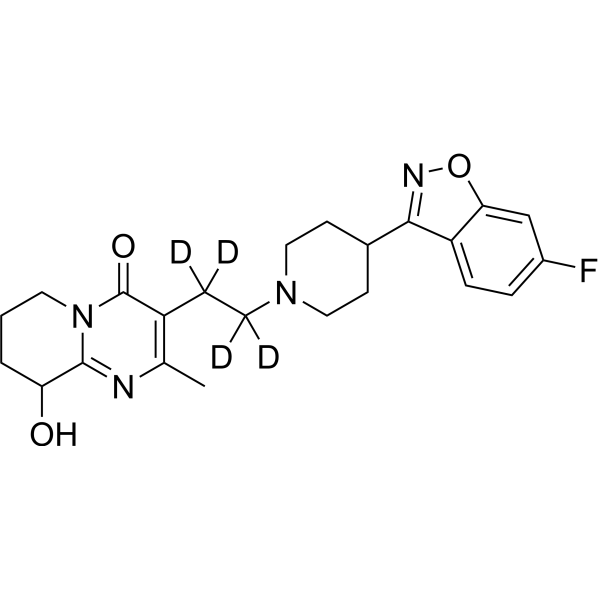
- HY-119333
-
|
|
mAChR
|
Neurological Disease
|
|
NNC 11-1607 is a selective M1/M4 muscarinic acetylcholine receptor (mAChR) agonist. NNC 11-1607 inhibits Forskolin (HY-15371)-stimulated cAMP accumulation in Chinese hamster ovary cells expressing the human M2 or M4 mAChR. NNC 11-1607 is promising for research of central nervous system disorders, such as Alzheimer’s disease and schizophrenia .
|
-

- HY-14539
-
|
HF 1854; ZINC000019796155
|
Dopamine Receptor
mAChR
Adrenergic Receptor
5-HT Receptor
Ligands for E3 Ligase
|
Neurological Disease
Cancer
|
|
Clozapine (HF 1854) is an antipsychotic used for the research of schizophrenia. Clozapine has high affinity for a number of neuroreceptors. Clozapine is a potent antagonist of dopamine D2 with a Ki of 75 nM. Clozapine inhibits the muscarinic M1 receptor and serotonin 5HT2A receptor with Kis of 9.5 nM and 4 nM, respectively . Clozapine is also a potent and selective agonist at the muscarinic M4 receptor (EC50=11 nM) .
|
-
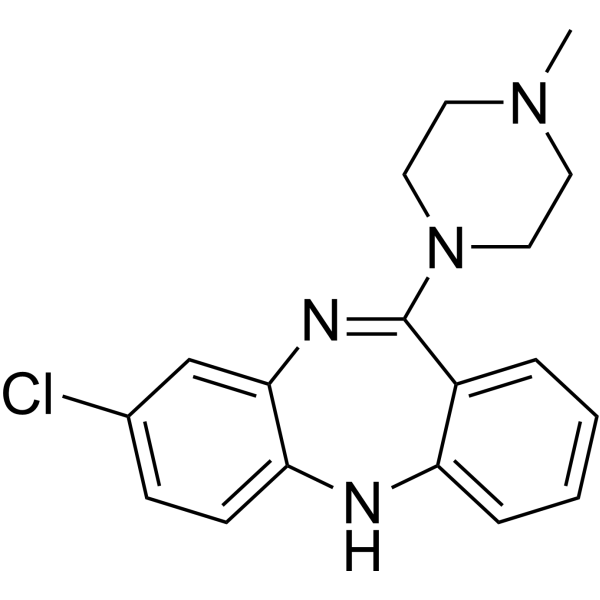
- HY-10554
-
|
|
nAChR
|
Neurological Disease
|
|
WYE-103914 is an orally active α7 nAChR (EC50 = 0.49 µM for rat α7 nAChR, EC50 = 0.57 µM for human α7 nAChR) agonist. WYE-103914 exhibits the ability to enhance memory in multiple cognitive models. WYE-103914 is used in combination with antipsychotic drugs. WYE-103914 can be used for research on schizophrenia .
|
-

- HY-14539A
-
|
HF 1854 hydrochloride
|
Dopamine Receptor
mAChR
Adrenergic Receptor
5-HT Receptor
|
Neurological Disease
|
|
Clozapine hydrochloride (HF 1854 hydrochloride) is an antipsychotic used for the research of schizophrenia. Clozapine hydrochloride has high affinity for a number of neuroreceptors. Clozapine hydrochloride is a potent antagonist of dopamine D2 with a Ki of 75 nM. Clozapine hydrochloride inhibits the muscarinic M1 receptor and serotonin 5HT2A receptor with Kis of 9.5 nM and 4 nM, respectively . Clozapine hydrochloride is also a potent and selective agonist at the muscarinic M4 receptor (EC50=11 nM) .
|
-

- HY-179240
-
|
|
Dopamine Receptor
|
Neurological Disease
|
|
UNC9815 is a D1 dopamine receptor (D1R) orthosteric allosteric modulator (PAM). UNC9815 can dose-dependently enhance the functional efficacy of dopamine in β-inhibitory protein recruitment experiments and cAMP accumulation experiments. When used in combination with other PAMs, UNC9815 exhibits a significant synergistic enhancement effect. UNC9815 can be used to study neurological and psychiatric diseases such as Parkinson's disease and schizophrenia .
|
-

- HY-13225B
-
|
RJR-2403 hemioxalate; (E)-Metanicotine hemioxalate
|
nAChR
|
Neurological Disease
|
|
Rivanicline (RJR-2403) hemioxalate is a neuronal nicotinic receptor agonist. Rivanicline hemioxalate is highly selective for the rat brain cortex nAChRs (Ki = 26 nM, EC50 of 732 nM) and α4β2 subtype (Ki = 26 nM, EC50 = 16 μM). Rivanicline hemioxalate can significantly restore the learning impairment and cognitive dysfunction. Rivanicline hemioxalate can be used for the study of neurodegenerative diseases (such as schizophrenia or Alzheimer's disease) .
|
-
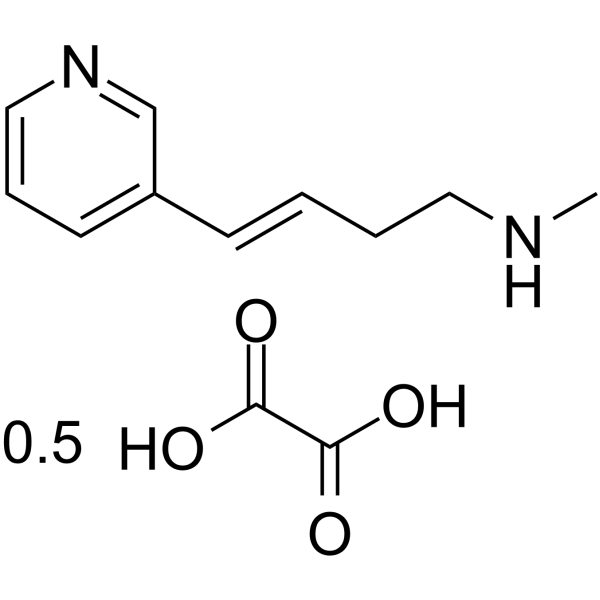
- HY-106194
-
|
|
Dopamine Receptor
Serotonin Transporter
|
Neurological Disease
|
|
SLV310 is an orally active dopamine D2 receptor antagonist (Ki: 5 nM) and serotonin reuptake receptor inhibitor. SLV310 antagonizes Apomorphine (HY-12723) induced climbing behaviour and 5-HTP (HY-N0122) induced serotonin syndrome like behaviour in mice (ED50: 5.6 and 5.9 mg/kg, p.o.). SLV310 is an antipsychotic compound and can be used for schizophrenia research .
|
-

- HY-148325
-
|
|
nAChR
|
Neurological Disease
|
|
α7 Nicotinic receptor agonist-1 (Preparation 5) is an α7 nAChR agonist. α7 Nicotinic receptor agonist-1 can be used in studies of psychiatric disorders (such as schizophrenia, manic or hypomanic depression and anxiety disorders) and intellectual disorders (such as alzheimer's disease, learning deficits, cognitive deficits, attention deficits, memory loss, lewy body dementia and attention deficit hyperactivity disorder) .
|
-
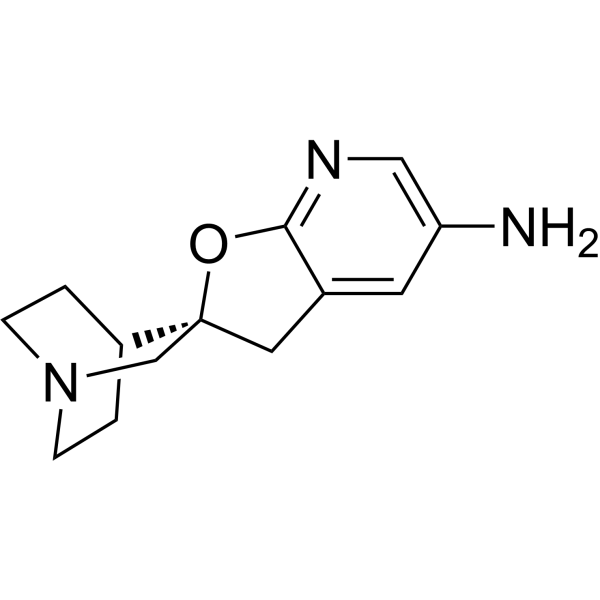
- HY-130125
-
|
|
EAAT
|
Neurological Disease
|
|
SLC1A1/EAAT3-IN-1 (Compound 3e) is a selective EAAT3 inhibitor with an IC50 of 7.2 μM for hEAAT3 over EAAT1,2,4 (IC50: ∼ 250 μM). SLC1A1/EAAT3-IN-1 can be used for psychiatric disorders such as obsessive compulsive disorder and schizophrenia research .
|
-

- HY-A0019R
-
|
9-Hydroxyrisperidone (Standard)
|
Drug Metabolite
Reference Standards
Dopamine Receptor
5-HT Receptor
Adrenergic Receptor
|
Neurological Disease
|
|
Paliperidone (Standard) is the analytical standard of Paliperidone. This product is intended for research and analytical applications. Paliperidone (9-Hydroxyrisperidone), the major active metabolite of Risperidone, is a dopamine D2 antagonist and 5-HT2A antagonist. Paliperidone is also active as an antagonist at α1 and α2 adrenergic receptors and H1-histaminergic receptors. Paliperidone, a antipsychotic agent, shows efficacy against schizophrenia .
|
-

- HY-107678
-
|
WAY-317538
|
nAChR
|
Neurological Disease
|
|
SEN 12333 (WAY-317538) is a potent, selective and orally active α7 nAChR agonist. SEN12333 displays high affinity for the rat α7 nAChRs expressed in GH4C1 cells (K>i=260 nM) and acts as full agonist in functional Ca 2+ flux studies (EC50=1.6 μM). SEN 12333 is used for AD and schizophrenia research .
|
-
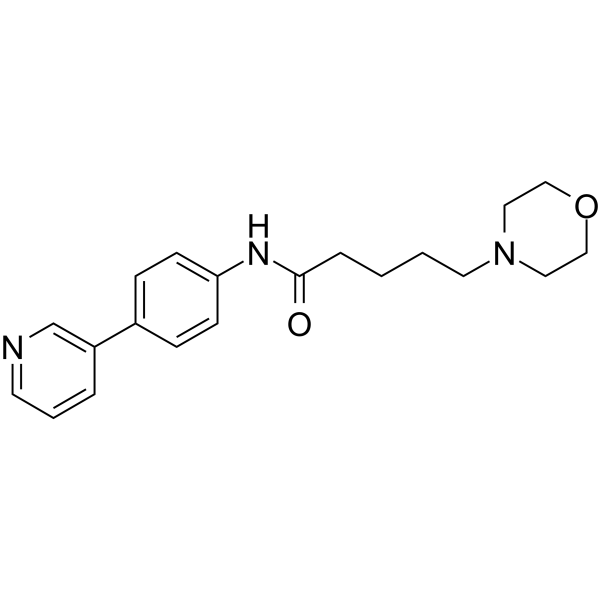
- HY-136569
-
|
|
Phosphodiesterase (PDE)
|
Neurological Disease
|
|
DSR-141562 is a novel, orally active, and selective brain-penetrant phosphodiesterase 1 (PDE1) inhibitor. DSR-141562 shows preferential selectivity for human PDE1B with an IC50 of 43.9 nM, and the IC50 values for human PDE1A and 1C are 97.6 and 431.8 nM, respectively. DSR-141562 can be used for the study of positive symptoms, negative symptoms and cognitive impairments associated with schizophrenia .
|
-
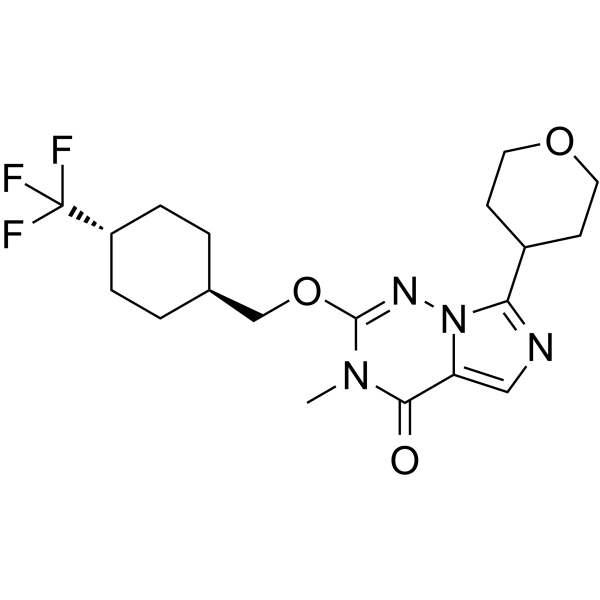
- HY-13225
-
|
RJR-2403 oxalate; (E)-Metanicotine oxalate
|
nAChR
|
Neurological Disease
|
|
Rivanicline (RJR-2403) oxalate is a neuronal nicotinic receptor agonist. Rivanicline oxalate is highly selective for the rat brain cortex nAChRs (Ki = 26 nM, EC50 of 732 nM) and α4β2 subtype (Ki = 26 nM, EC50 = 16 μM). Rivanicline oxalate can significantly restore the learning impairment and cognitive dysfunction. Rivanicline oxalate can be used for the study of neurodegenerative diseases (such as schizophrenia or Alzheimer's disease) .
|
-
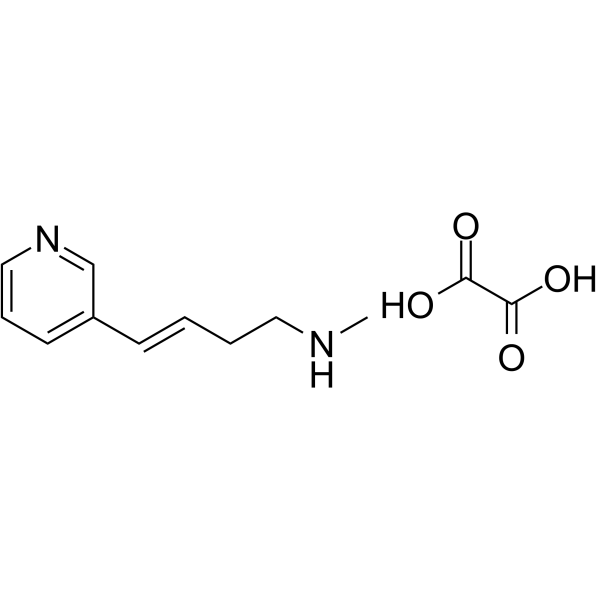
- HY-W769200
-
|
Org 5222-13C,d3 maleate
|
Isotope-Labeled Compounds
5-HT Receptor
Adrenergic Receptor
Dopamine Receptor
Histamine Receptor
|
Others
|
|
Asenapine- 13C,d3 Maleate is the deuterium labeled and 13C-Asenapine Maleate (HY-11100). Asenapine (Org 5222) Maleate, an atypical antipsychotic, is an antagonist of serotonin receptors (pKi: 8.4-10.5), adrenoceptors (pKi: 8.9-9.5), dopamine receptors (pKi: 8.9-9.4) and histamine receptors (pKi: 8.2-9.0). Asenapine Maleate can be used in the research of schizophrenia and bipolar disorder .
|
-

- HY-182484
-
|
|
GlyT
|
Neurological Disease
|
|
Org 24461 is a selective and brain-penetrant GlyT-1 inhibitor. Org 24461 blocks glycine uptake, reuptake, reverse operation, [ 3H]glycine efflux and release. Org 24461 enhances NMDA receptor function, modulates striatal monoamine/glutamate levels, and reverses PCP-induced behavioral and electrographic abnormalities. Org 24461 can be used for the research of retinal hypoxia/ischemia, and schizophrenia .
|
-

- HY-182695
-
|
|
5-HT Receptor
|
Neurological Disease
Cancer
|
|
AS2030680 is a blood-brain barrier-permeable, orally active 5-HT5A receptor antagonist. AS2030680 regulates 5-HT5A-related downstream signaling pathways, reduces the frequency of tumorsphere-initiating cells in breast cancer cells, and exerts procognitive activity in animal models. AS2030680 can be used to study cognitive impairments associated with dementia and schizophrenia, as well as breast cancer .
|
-

- HY-103112A
-
|
|
5-HT Receptor
|
Neurological Disease
|
|
SB 243213 dihydrochloride is an orally active, selective and high-affinity 5-HT2C receptor antagonist with a pKi of 9.37 and a pKb of 9.8 for human 5-HT2C receptor. SB 243213 dihydrochloride shows greater than a 100-fold selectivity over a wide range of neurotransmitter receptors, enzymes and ion channels. SB 243213 dihydrochloride has improved anxiolytic profile and has the potential for schizophrenia and motor disorders .
|
-
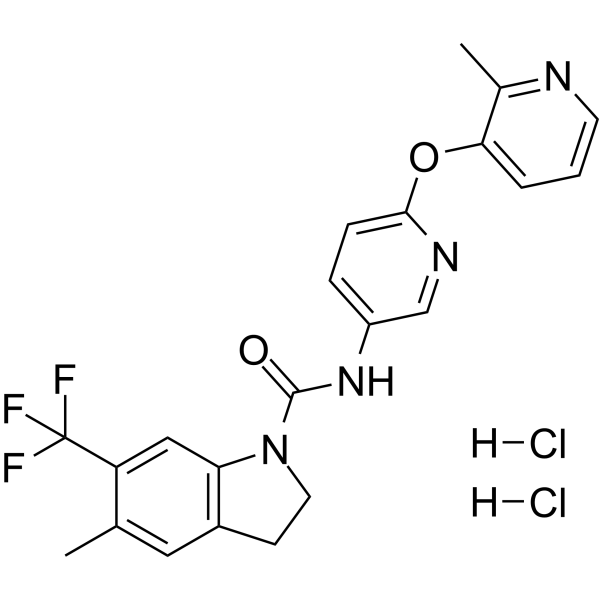
- HY-15856BR
-
|
Flupenthixol dihydrochloride (Standard)
|
Reference Standards
Dopamine Receptor
PI3K
Apoptosis
|
Neurological Disease
Cancer
|
|
Flupentixol (dihydrochloride) (Standard) is the analytical standard of Flupentixol (dihydrochloride). This product is intended for research and analytical applications. Flupentixol is an orally active D1/D2 dopamine receptor antagonist and new PI3K inhibitor (PI3Kα IC50=127 nM). Flupentixol shows anti-proliferative activity to cancer cells and induces apoptosis. Flupentixol can also be used in schizophrenia, anxiolytic and depressive research .
|
-
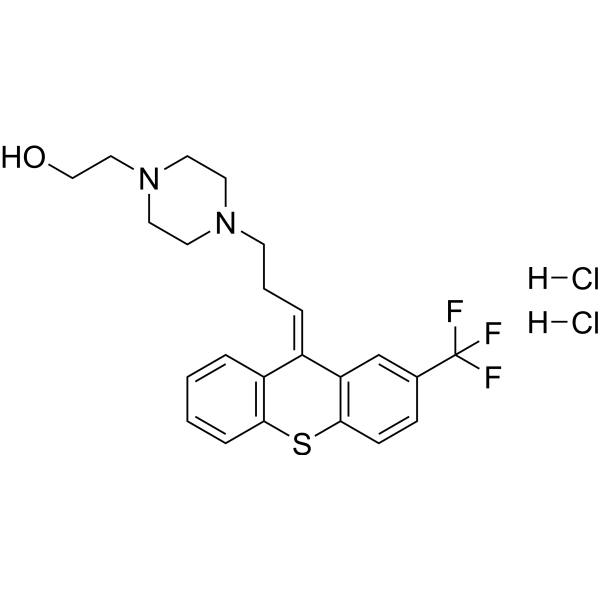
- HY-W748519
-
|
N-Methylglycine-13C3; Sarcosin-13C3
|
Isotope-Labeled Compounds
GlyT
Endogenous Metabolite
|
Cancer
|
|
Sarcosine- 13C3 (N-Methylglycine- 13C3; Sarcosin- 13C3) is the 13C-labeled Sarcosine (HY-101037). Sarcosine (N-Methylglycine), an endogenous amino acid, is a competitive glycine transporter type I (GlyT1) inhibitor and N-methyl-D-aspartate (NMDA) receptor co-agonist. Sarcosine increases the glycine concentration, resulting in an indirect potentiation of the NMDA receptor. Sarcosine is commonly used for the research of schizophrenia .
|
-

- HY-103112
-
|
|
5-HT Receptor
|
Neurological Disease
|
|
SB 243213 hydrochloride is an orally active, selective and high-affinity 5-HT2C receptor antagonist with a pKi of 9.37 and a pKb of 9.8 for human 5-HT2C receptor. SB 243213 hydrochloride shows greater than a 100-fold selectivity over a wide range of neurotransmitter receptors, enzymes and ion channels. SB 243213 hydrochloride has improved anxiolytic profile and has the potential for schizophrenia and motor disorders .
|
-
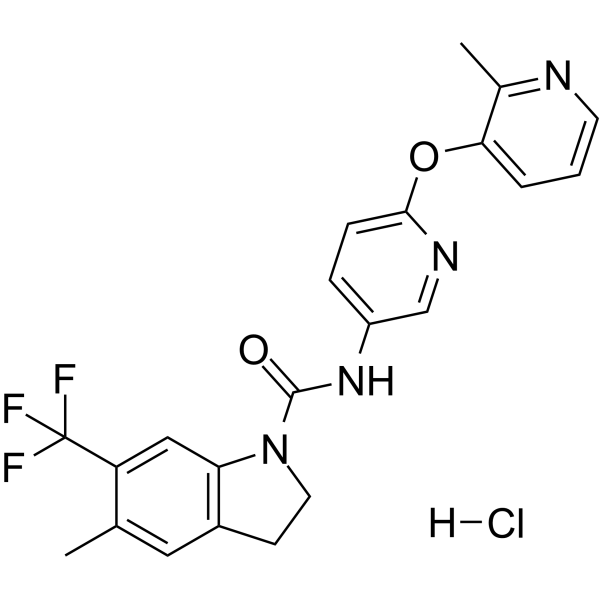
- HY-108751R
-
|
|
Others
Reference Standards
|
Neurological Disease
|
|
Aripiprazole Lauroxil (Standard) is the analytical standard of Aripiprazole Lauroxil. This product is intended for research and analytical applications. Aripiprazole lauroxil, an N-acyloxymethyl proagent of Aripiprazole (HY-14546), is a Long-acting injectable (LAI) typical antipsychotic for schizophrenia and a ligand of dopamine receptor D2R/D4R. Aripiprazole lauroxil is cleaved by body’s enzyme esterase to N-hydroxymethyl aripiprazole (plus lauric acid) and then to aripiprazole (plus formaldehyde), no toxicity.
|
-

- HY-33009R
-
|
|
Others
|
Neurological Disease
|
|
AS057278 (Standard) is the analytical standard of AS057278. This product is intended for research and analytical applications. AS057278 is a potent, selective, orally active and blood-brain barrier (BBB) penetrant non-peptidic D-amino acid oxidase (DAAO) inhibitor with an IC50 value of 0.91 μM and EC50 of 2.2-3.95 μM. AS057278 can normalize phencyclidine (PCP)-induced prepulse inhibition in mice. AS057278 can be used for researching schizophrenia .
|
-

- HY-13340R
-
|
VU152100 (Standard)
|
mAChR
Reference Standards
|
Neurological Disease
|
|
VU0152100 (Standard) is the analytical standard of VU0152100. This product is intended for research and analytical applications. VU0152100 (VU152100) is a highly selective mAChR positive allosteric modulator (permeable to the blood-brain barrier). VU0152100 reverses Amphetamine-induced hypermotility in rats and increased levels of extracellular dopamine in nucleus accumbens and caudate-putamen. VU0152100 has good research potential in psychosis and cognitive impairment associated with mental disorders such as schizophrenia .
|
-

- HY-W115718R
-
|
|
Reference Standards
Dopamine β-hydroxylase
|
Neurological Disease
|
|
Cuprizone is a copper chelating agent that forms a deep blue copper ketone complex with copper (II). The copper ketone reaction can be used in colorimetric tests for the presence of trace copper. Cuprizone can be used to induce some schizophrenia-like behavior in mice. Cuprizone acts on copper enzymes, including SOD1, cytochrome oxidase, and DβH, thereby causing oxidative stress and increasing DA levels in certain brain regions such as the medial prefrontal cortex (PFC) .
|
-

- HY-W115718
-
|
|
Dopamine β-hydroxylase
|
Neurological Disease
|
|
Cuprizone is a copper chelating agent that forms a deep blue copper ketone complex with copper (II). The copper ketone reaction can be used in colorimetric tests for the presence of trace copper. Cuprizone can be used to induce some schizophrenia-like behavior in mice. Cuprizone acts on copper enzymes, including SOD1, cytochrome oxidase, and DβH, thereby causing oxidative stress and increasing DA levels in certain brain regions such as the medial prefrontal cortex (PFC) .
|
-
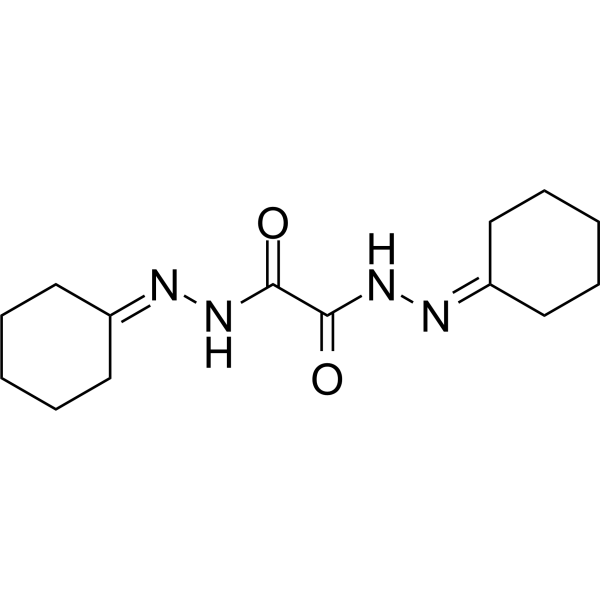
- HY-17637R
-
|
ITI-007 (Standard)
|
Dopamine Receptor
5-HT Receptor
Reference Standards
|
Neurological Disease
Cancer
|
|
Lumateperone (Standard) is the analytical standard of Lumateperone. This product is intended for research and analytical applications. Lumateperone (ITI-007) is an orally active 5-HT2A receptor antagonist (Ki = 0.54 nM), a partial agonist of presynaptic D2 receptors and an antagonist of postsynaptic D2 receptors (Ki = 32 nM), and a dopamine D1 receptor modulator. Lumateperone has anticancer activity and can also be used for the study of schizophrenia and bipolar depression .
|
-

- HY-183489
-
|
|
Trace Amine-associated Receptor (TAAR)
|
Neurological Disease
Metabolic Disease
|
|
TAAR1-agonist-4 is a TAAR1 agonist and oral hypoglycemic agent with an EC50 of 0.0046 μM for TAAR1. TAAR1-agonist-4 alleviates antipsychotic-related metabolic side effects, improves negative and cognitive symptoms, and reduces drug abuse behaviors. TAAR1-agonist-4 is applicable to research on schizophrenia, acute manic episodes associated with bipolar disorder, and glucose intolerance .
|
-

- HY-173451
-
-

- HY-118363
-
|
|
mAChR
|
Neurological Disease
|
|
Lu AE51090 is selective muscarinic M1 receptor agonist with blood-brain barrier penetration. Lu AE51090 activates human M1 receptor with EC50 of 61 nM, while showing no significant agonism at M2-M5 receptors. Lu AE51090 exerts procognitive effects in mice. Lu AE51090 can be used for the study of Alzheimer’s disease (AD) and cognitive impairment associated with schizophrenia (CIAS) .
|
-

- HY-B0532AS
-
|
|
Isotope-Labeled Compounds
Dopamine Receptor
Adrenergic Receptor
CaMK
P-glycoprotein
Influenza Virus
Autophagy
|
Neurological Disease
Cancer
|
|
Trifluoperazine-d3 (dihydrochloride) is deuterium labeled Trifluoperazine (dihydrochloride). Trifluoperazine dihydrochloride, an antipsychotic agent, acts by blocking central dopamine receptors. Trifluoperazine dihydrochloride is a potent α1-adrenergic receptor antagonist. Trifluoperazine dihydrochloride is a potent NUPR1 inhibitor exerting anticancer activity. Trifluoperazine dihydrochloride is a calmodulin inhibitor, and also inhibits P-glycoprotein. Trifluoperazine dihydrochloride can be used for the research of schizophrenia. Trifluoperazine dihydrochloride acts as a reversible inhibitor of influenza virus morphogenesis .
|
-

- HY-103112B
-
|
|
5-HT Receptor
|
Neurological Disease
|
|
SB 243213 is an orally active, selective and high-affinity 5-HT2C receptor antagonist with a pKi of 9.37 and a pKb of 9.8 for human 5-HT2C receptor. SB 243213 shows greater than a 100-fold selectivity over a wide range of neurotransmitter receptors, enzymes and ion channels. SB 243213 has improved anxiolytic profile and has the potential for schizophrenia and motor disorders .
|
-
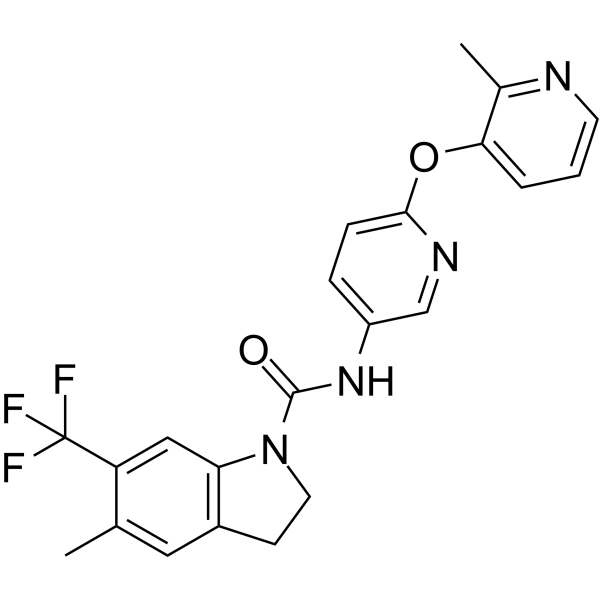
- HY-B1482A
-
|
TPS-23
|
Potassium Channel
|
Neurological Disease
|
|
Mesoridazine (TPS-23) , a metabolite of Thioridazine (HY-B0965A), acts as an orally active phenothiazine antipsychotic agent. Mesoridazine is a potent and rapid open-channel blocker of human ether-a-go-go related gene (hERG) channels and blocks hERG currents with an IC50 of 550 nM (at 0 mV) in human embryonic kidney 293 cells .Mesoridazine can be used for the research of schizophrenia, as well as certain other psychiatric disorders .
|
-
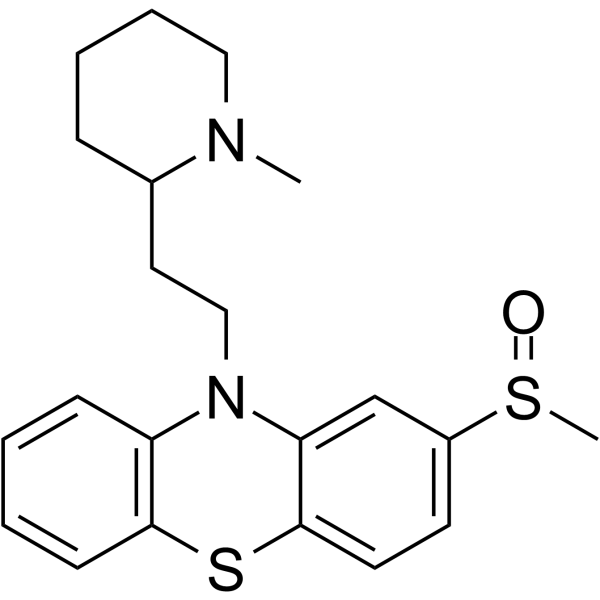
- HY-118575
-
|
|
5-HT Receptor
|
Neurological Disease
|
|
DR-4004 is a 5-HT7 receptor antagonist that attenuates the decreased level of performance produced by mCPP and the performance levels after p-chloroamphetamine (PCA) lesion of the 5-HT system. DR-4004 also reverses amnesia induced by Scopolamine (HY-N0296) and Dizocilpine (HY-15084B). DR-4004 is promising for research of schizophrenia, cognitive deficits and atypical antipsychotic agents .
|
-

- HY-186116A
-
|
|
Histone Demethylase
|
Neurological Disease
|
|
LSD1-IN-49 hydrochloride (Compound (±) 1) is an irreversible LSD1/KDM1A inhibitor with an IC50 of 29 nM against hLSD1. LSD1-IN-49 hydrochloride irreversibly inhibits the enzymatic activity of LSD1 by forming an adduct with flavin adenine dinucleotide (FAD) in the binding pocket of LSD1. LSD1-IN-49 hydrochloride is applicable to research related to schizophrenia, autism spectrum disorder and Huntington's disease .
|
-

- HY-10121S4
-
-

- HY-B0532B
-
|
|
Dopamine Receptor
Adrenergic Receptor
P-glycoprotein
CaMK
Influenza Virus
Autophagy
|
Infection
Neurological Disease
Cancer
|
|
Trifluoperazine dimaleate, an antipsychotic agent, acts by blocking central dopamine receptors. Trifluoperazine dimaleate is a potent α1-adrenergic receptor antagonist. Trifluoperazine dimaleate is a potent NUPR1 inhibitor exerting anticancer activity. Trifluoperazine dimaleate is a calmodulin inhibitor, and also inhibits P-glycoprotein. Trifluoperazine dimaleate can be used for the research of schizophrenia. Trifluoperazine dimaleate acts as a reversible inhibitor of influenza virus morphogenesis .
|
-

- HY-B1482
-
|
TPS-23 benzenesulfonate
|
Potassium Channel
|
Neurological Disease
|
|
Mesoridazine (TPS-23) benzenesulfonate, a metabolite of Thioridazine (HY-B0965A), acts as an orally active phenothiazine antipsychotic agent. Mesoridazine benzenesulfonate is a potent and rapid open-channel blocker of human ether-a-go-go related gene (hERG) channels and blocks hERG currents with an IC50 of 550 nM (at 0 mV) in human embryonic kidney 293 cells .Mesoridazine benzenesulfonate can be used for the research of schizophrenia, as well as certain other psychiatric disorders .
|
-
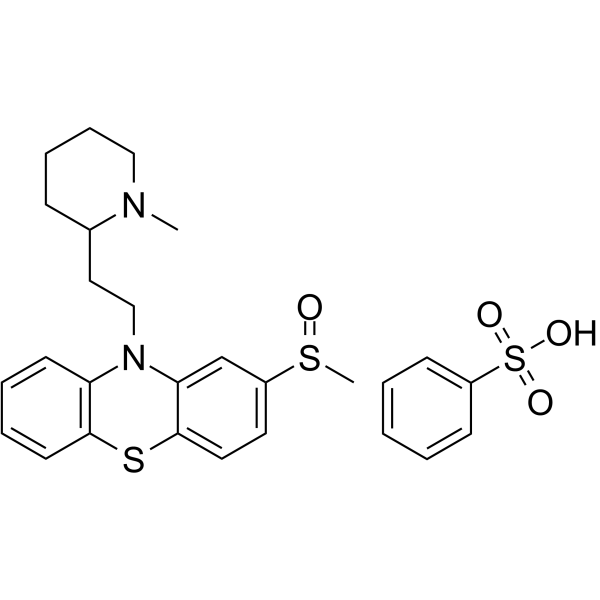
- HY-103344
-
|
|
Aminopeptidase
Carboxypeptidase
mGluR
|
Neurological Disease
|
|
ZJ43 is a NAAG peptidase inhibitor and glutamate carboxypeptidase II/III (GCP II/III) inhibitor with human GCP II IC50 of 2.4 nM and Ki of 0.8 nM. ZJ43 blocks N-acetylaspartylglutamate hydrolysis, elevates extracellular N-acetylaspartylglutamate levels, and activates group II metabotropic glutamate receptors (mGluR). ZJ43 can be used for the research of schizophrenia, inflammatory pain, neuropathic pain, and traumatic brain injury .
|
-
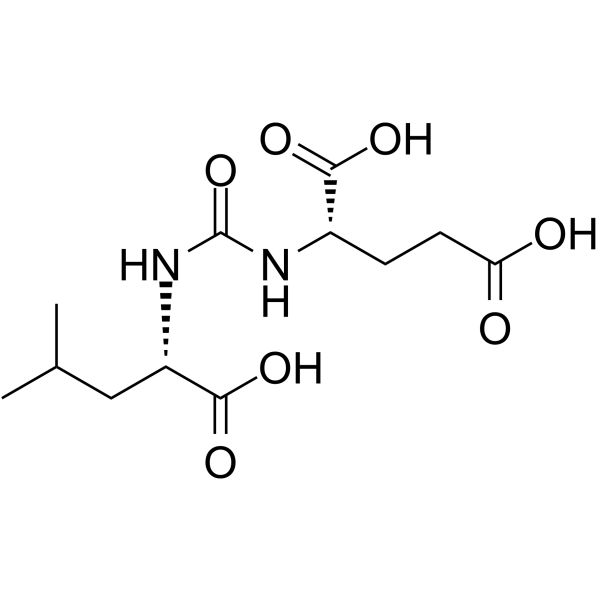
- HY-W030796R
-
|
|
Taste Receptor
Reference Standards
|
Metabolic Disease
|
|
Trifluoperazine (dihydrochloride) (Standard) is the analytical standard of Trifluoperazine (dihydrochloride). This product is intended for research and analytical applications. Trifluoperazine dihydrochloride, an antipsychotic agent, acts by blocking central dopamine receptors. Trifluoperazine dihydrochloride is a potent α1-adrenergic receptor antagonist. Trifluoperazine dihydrochloride is a potent NUPR1 inhibitor exerting anticancer activity. Trifluoperazine dihydrochloride is a calmodulin inhibitor, and also inhibits P-glycoprotein. Trifluoperazine dihydrochloride can be used for the research of schizophrenia. Trifluoperazine dihydrochloride acts as a reversible inhibitor of influenza virus morphogenesis .
|
-

- HY-W002112R
-
|
Nornicotine (Standard)
|
Reference Standards
Endogenous Metabolite
Drug Metabolite
nAChR
β-catenin
|
Cardiovascular Disease
Neurological Disease
|
|
(±)-Nornicotine (Standard) is the analytical standard of (±)-Nornicotine (HY-W002112). This product is intended for research and analytical applications. (±)-Nornicotine is a major metabolite of Nicotine. (±)-Nornicotine is a partial nAChRs agonist, specifically activating receptor subtypes containing α7 and α6 subunits. (±)-Nornicotine disrupts β-catenin and ZO-1, and induces F-actin depolymerization. (±)-Nornicotine supports self-administration behavior. (±)-Nornicotine can be used in the research of atherosclerosis, Alzheimer's disease, and schizophrenia .
|
-

- HY-14690
-
|
SCH 39166
|
Dopamine Receptor
5-HT Receptor
Adrenergic Receptor
|
Neurological Disease
Metabolic Disease
|
|
Ecopipam (SCH 39166) is a potent, selective and orally active antagonist of dopamine D1/D5 receptor, with Kis of 1.2 nM and 2.0 nM, respectively. Ecopipam shows more than 40-flod selectivity over D2, D4, 5-HT, and α2a receptor (Ki=0.98, 5.52, 0.08, and 0.73 μM, respectively). Ecopipam can be used for the research of schizophrenia and obesity .
|
-
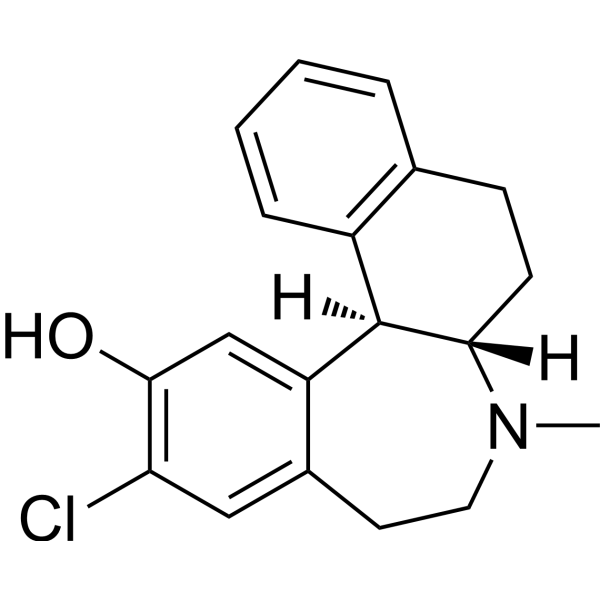
- HY-B0532AR
-
|
|
Reference Standards
Dopamine Receptor
Adrenergic Receptor
CaMK
P-glycoprotein
Influenza Virus
Autophagy
|
Neurological Disease
Cancer
|
|
Trifluoperazine (dihydrochloride) (Standard) is the analytical standard of Trifluoperazine (dihydrochloride). This product is intended for research and analytical applications. Trifluoperazine dihydrochloride, an antipsychotic agent, acts by blocking central dopamine receptors. Trifluoperazine dihydrochloride is a potent α1-adrenergic receptor antagonist. Trifluoperazine dihydrochloride is a potent NUPR1 inhibitor exerting anticancer activity. Trifluoperazine dihydrochloride is a calmodulin inhibitor, and also inhibits P-glycoprotein. Trifluoperazine dihydrochloride can be used for the research of schizophrenia. Trifluoperazine dihydrochloride acts as a reversible inhibitor of influenza virus morphogenesis .
|
-

- HY-103130
-
|
|
5-HT Receptor
|
Neurological Disease
|
|
EMD386088 is a potent and selective 5-HT6 receptor (5-HT6R) agonist with an EC50 of 1.0 nM. EMD-386088 is inactive against other HT receptors except 5-HT3R (IC50 of 34 nM). EMD386088 regulates the activity of ERK1/2. EMD386088 has the potential for the research of alzheimer's disease (AD) and schizophrenia .
|
-
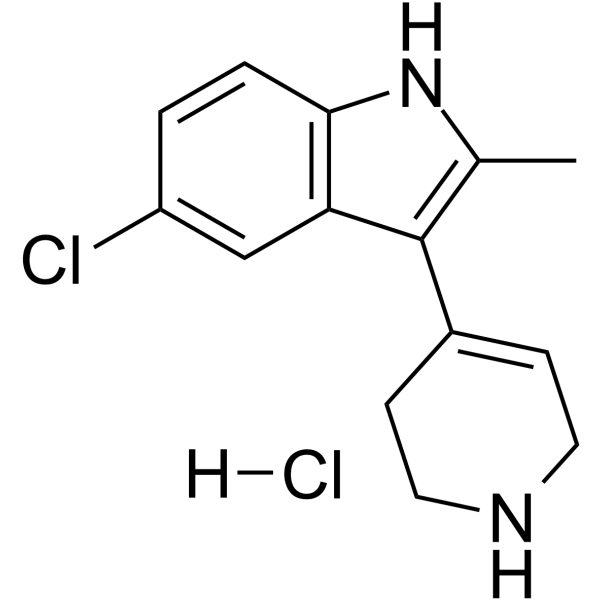
- HY-14689
-
|
SCH 39166 hydrochloride
|
Dopamine Receptor
5-HT Receptor
Adrenergic Receptor
|
Neurological Disease
Metabolic Disease
|
|
Ecopipam (SCH 39166) hydrochloride is a potent, selective and orally active antagonist of dopamine D1/D5 receptor, with Kis of 1.2 nM and 2.0 nM, respectively. Ecopipam hydrochloride shows more than 40-flod selectivity over D2, D4, 5-HT, and α2a receptor (Ki=0.98, 5.52, 0.08, and 0.73 μM, respectively). Ecopipam hydrochloride can be used for the research of schizophrenia and obesity .
|
-
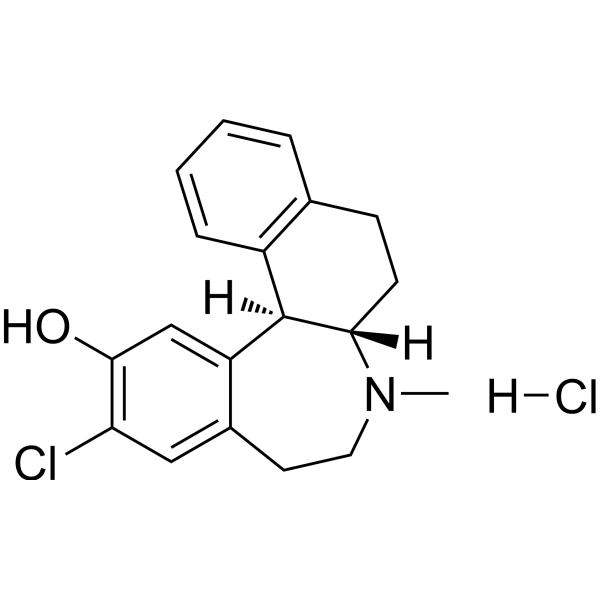
- HY-W003486
-
|
|
Phosphodiesterase (PDE)
|
Neurological Disease
Cancer
|
|
5,7-Dichloropyrazolo[1,5-a]pyrimidine is a PDE10A inhibitor with a Ki of 24 μM. 5,7-Dichloropyrazolo[1,5-a]pyrimidine serves as a key intermediate in the synthesis of 5,7-disubstituted pyrazolo[1,5-a]pyrimidine derivatives (HIV-1 non-nucleoside reverse transcriptase inhibitors). 5,7-Dichloropyrazolo[1,5-a]pyrimidine can be used for the research of schizophrenia .
|
-
![5,7-Dichloropyrazolo[1,5-a]pyrimidine](//file.medchemexpress.com/product_pic/hy-w003486.gif)
- HY-14539R
-
|
HF 1854 (Standard)
|
Reference Standards
Dopamine Receptor
mAChR
Adrenergic Receptor
5-HT Receptor
|
Neurological Disease
|
|
Clozapine (Standard) is the analytical standard of Clozapine. This product is intended for research and analytical applications. Clozapine (HF 1854) is an antipsychotic used for the research of schizophrenia. Clozapine has high affinity for a number of neuroreceptors. Clozapine is a potent antagonist of dopamine D2 with a Ki of 75 nM. Clozapine inhibits the muscarinic M1 receptor and serotonin 5HT2A receptor with Kis of 9.5 nM and 4 nM, respectively . Clozapine is also a potent and selective agonist at the muscarinic M4 receptor (EC50=11 nM) .
|
-
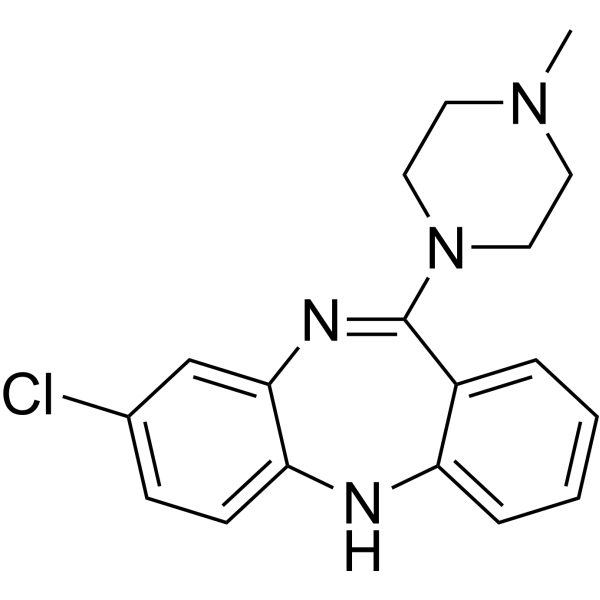
- HY-103308R
-
|
|
Reference Standards
Potassium Channel
|
Neurological Disease
|
|
TRAM-39 (Standard) is the analytical standard of TRAM-39 (HY-103308). This product is intended for research and analytical applications. TRAM-39 is a selective blocker of intermediate conductance Ca2+-activated K+ (IKCa) channels. TRAM-39 inhibits KCa3.1 channel with an IC50 value of 60 nM. TRAM-39 can be used for the research of ataxia, epilepsy, memory disorders, schizophrenia and Parkinson’s disease .
|
-

- HY-106587
-
|
Clorotepine
|
5-HT Receptor
Drug Derivative
|
Neurological Disease
|
|
Octoclothepine (Clorotepine), an analog of Clozapine (HY-14539), is a neuroleptic and antipsychotic agent. Octoclothepine exists in enantiomeric forms, where the (+)-form acts as an atypical antipsychotic, while the (-)-functions as a typical antipsychotic. (+)-Octoclothepine exhibits extremely high binding affinity for 5-HT₆ and 5-HT₇ receptors, with Ki values of 0.41 and 0.38 nM; the Ki values of (-)-Octoclothepine are 17.7 and 1.3 nM, respectively. Octoclothepine can be used in research related to schizophrenia .
|
-

- HY-17637S2
-
|
ITI-007-d4
|
Isotope-Labeled Compounds
Dopamine Receptor
5-HT Receptor
|
Neurological Disease
Cancer
|
|
Lumateperone-d4 (ITI-007-d4) is deuterium labeled Lumateperone. Lumateperone (ITI-007) is an orally active 5-HT2A receptor antagonist (Ki = 0.54 nM), a partial agonist of presynaptic D2 receptors and an antagonist of postsynaptic D2 receptors (Ki = 32 nM), and a dopamine D1 receptor modulator. Lumateperone has anticancer activity and can also be used for the study of schizophrenia and bipolar depression .
|
-

- HY-W002112S1
-
|
Nornicotine-d7
|
Isotope-Labeled Compounds
Endogenous Metabolite
Drug Metabolite
nAChR
β-catenin
|
Cardiovascular Disease
Neurological Disease
|
|
(±)-Nornicotine-d7 is the deuterium labeled (±)-Nornicotine (HY-W002112). (±)-Nornicotine is a major metabolite of Nicotine. (±)-Nornicotine is a partial nAChRs agonist, specifically activating receptor subtypes containing α7 and α6 subunits. (±)-Nornicotine disrupts β-catenin and ZO-1, and induces F-actin depolymerization. (±)-Nornicotine supports self-administration behavior. (±)-Nornicotine can be used in the research of atherosclerosis, Alzheimer's disease, and schizophrenia .
|
-

- HY-W002112S
-
|
Nornicotine-d4
|
nAChR
Isotope-Labeled Compounds
Endogenous Metabolite
Drug Metabolite
β-catenin
|
Cardiovascular Disease
Neurological Disease
|
|
(±)-Nornicotine-d4 is the deuterium labeled (±)-Nornicotine (HY-W002112). (±)-Nornicotine is a major metabolite of Nicotine. (±)-Nornicotine is a partial nAChRs agonist, specifically activating receptor subtypes containing α7 and α6 subunits. (±)-Nornicotine disrupts β-catenin and ZO-1, and induces F-actin depolymerization. (±)-Nornicotine supports self-administration behavior. (±)-Nornicotine can be used in the research of atherosclerosis, Alzheimer's disease, and schizophrenia .
|
-

- HY-106587A
-
|
Clorotepine maleate salt
|
Drug Derivative
5-HT Receptor
|
Neurological Disease
|
|
Octoclothepine (Clorotepine) maleate salt, an analog of Clozapine (HY-14539), is a neuroleptic and antipsychotic agent. Octoclothepine maleate salt exists in enantiomeric forms, where the (+)-form acts as an atypical antipsychotic, while the (-)-functions as a typical antipsychotic. (+)-Octoclothepine maleate salt exhibits extremely high binding affinity for 5-HT₆ and 5-HT₇ receptors, with Ki values of 0.41 and 0.38 nM; the Ki values of (-)-Octoclothepine maleate salt are 17.7 and 1.3 nM, respectively. Octoclothepine maleate salt can be used in research related to schizophrenia .
|
-
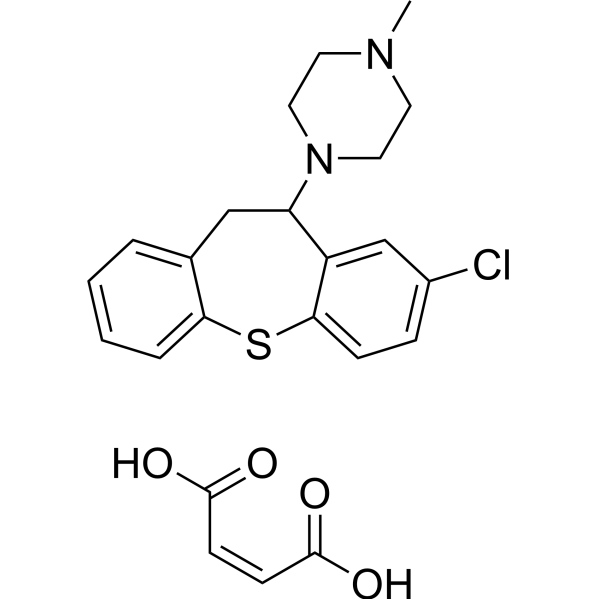
- HY-106964A
-
|
|
5-HT Receptor
|
Neurological Disease
|
|
(Rac)-S 16924 is a partial agonist of the 5-HT1A receptor. (Rac)-S 16924 regulates signaling through its interaction with the 5-HT1A receptor, and (Rac)-S 16924 can stabilize the receptor in its G-protein-coupled conformation without fully activating it, which may affect intracellular signaling pathways associated with this receptor. (Rac)-S 16924 can be used to study the 5-HT1A receptor in mental disorders, especially schizophrenia .
|
-

- HY-14546
-
|
OPC-14597
|
5-HT Receptor
Dopamine Receptor
|
Infection
Neurological Disease
Inflammation/Immunology
|
|
Aripiprazole (OPC-14597), an atypical antipsychotic, is a potent and high-affinity dopamine D2 receptor partial agonist. Aripiprazole is an inverse agonist at 5-HT2B and 5-HT2A receptors and displays partial agonist actions at 5-HT1A, 5-HT2C, D3, and D4 receptors. Aripiprazole can be used for the research of schizophrenia and COVID19 .
|
-
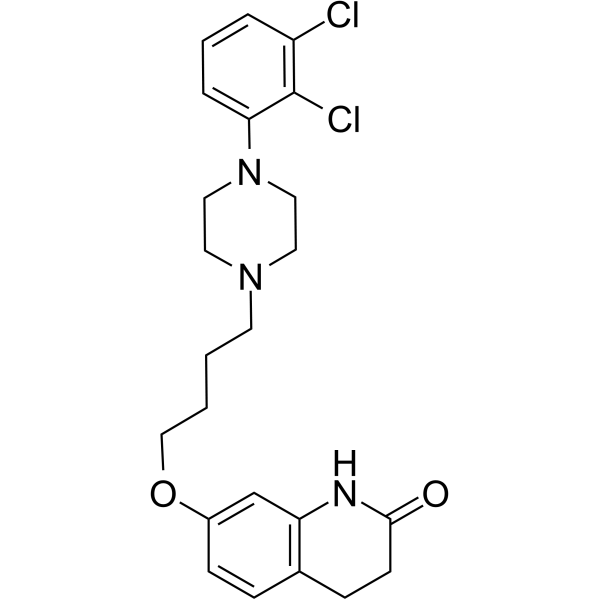
- HY-14546A
-
|
OPC-14597 monohydrate
|
5-HT Receptor
Dopamine Receptor
|
Infection
Neurological Disease
Inflammation/Immunology
|
|
Aripiprazole (OPC-14597) monohydrate, an atypical antipsychotic, is a potent and high-affinity dopamine D2 receptor partial agonist. Aripiprazole monohydrate is an inverse agonist at 5-HT2B and 5-HT2A receptors and displays partial agonist actions at 5-HT1A, 5-HT2C, D3, and D4 receptors. Aripiprazole monohydrate can be used for the research of schizophrenia and COVID19 .
|
-
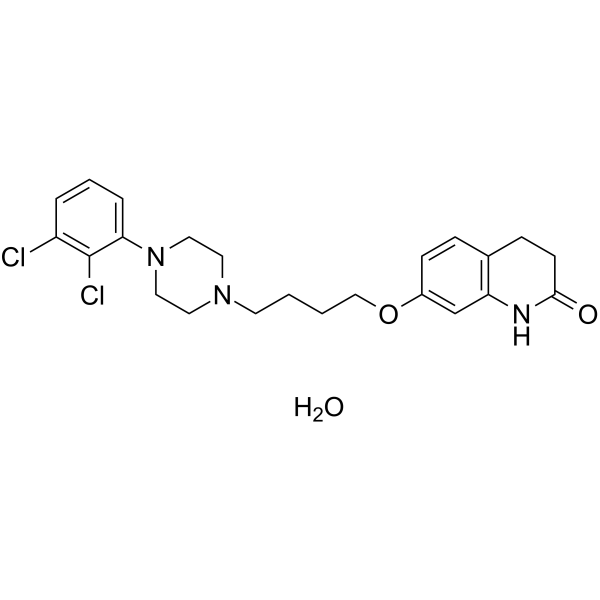
- HY-W402208
-
|
|
MAP4K
|
Neurological Disease
Cancer
|
|
MAP4K4-IN-7 (Compound 8) is a MAP4K4 inhibitor. MAP4K4-IN-7 shows moderate inhibitory activity against TNIK, MAP4K4, and MINK1 with pIC50 values of 6.8, 6.8, and 6.7 respectively. MAP4K4-IN-7 can be used for the researches of cancer and neurological disease, such as schizophrenia .
|
-

- HY-W001160
-
|
|
Endogenous Metabolite
Calcium Channel
nAChR
|
Neurological Disease
Endocrinology
Cancer
|
|
5-Hydroxyindole is an orally active hydroxylated indole and tryptophan metabolite. 5-Hydroxyindole activates α7 nicotinic acetylcholine receptors and acts on intestinal L-type calcium channels. 5-Hydroxyindole slows down the desensitization of 5-HT3 receptor-mediated ion currents in cells. 5-Hydroxyindole causes convulsions and loss of consciousness. 5-Hydroxyindole is used in the study of neuroblastoma, schizophrenia, and diseases related to intestinal motility disorders .
|
-
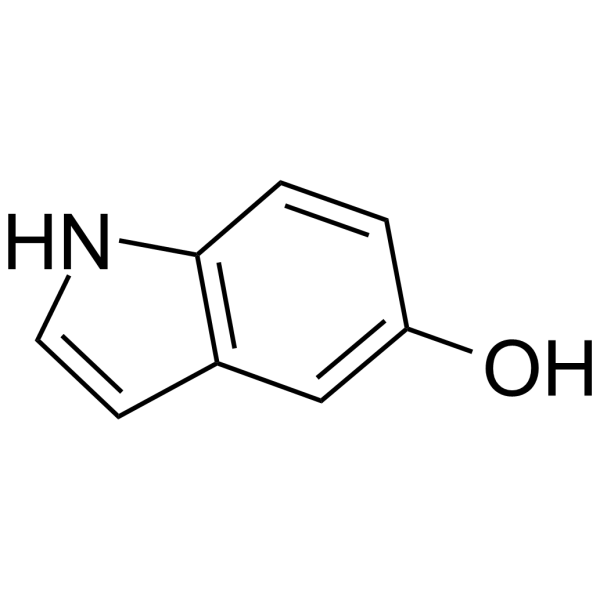
- HY-19733S
-
|
ITI-007-13C,d3 tosylate
|
Isotope-Labeled Compounds
Dopamine Receptor
5-HT Receptor
|
Neurological Disease
Cancer
|
|
Lumateperone- 13C,d3 (ITI-007- 13C,d3) tosylate is 13C and deuterium labeled Lumateperone (tosylate). Lumateperone (ITI-007) tosylate is a 5-HT2A receptor antagonist (Ki = 0.54 nM), a partial agonist of presynaptic D2 receptors and an antagonist of postsynaptic D2 receptors (Ki = 32 nM), and a dopamine D1 receptor modulator. Lumateperone tosylate has anticancer activity and can also be used in studies of psychiatric disorders such as schizophrenia .
|
-

- HY-105670
-
|
|
nAChR
|
Neurological Disease
|
|
PHA-543613 is a potent, orally active, brain-penetrant and selective α7 nAChR agonist with a Ki of 8.8 nM. PHA-543613 displays selectivity for α7-nAChR over α3β4, α1β1γδ, α4β2 and 5-HT3 receptors . PHA-543613 can be used for the cognitive deficits of Alzheimer's disease and schizophrenia research .
|
-
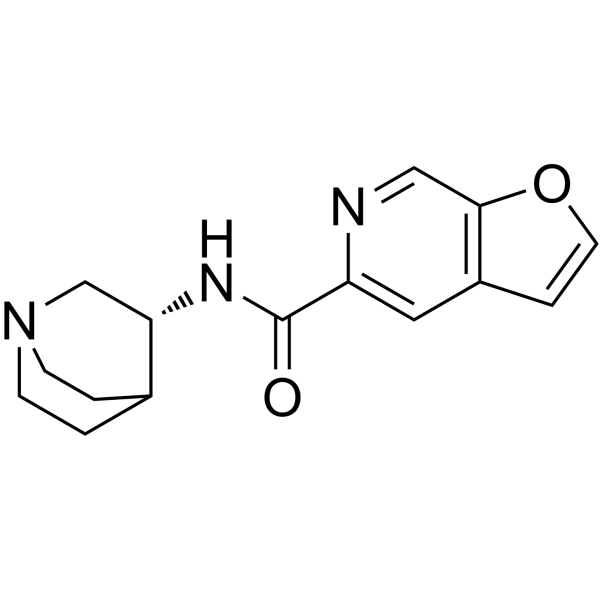
- HY-110033
-
|
SCH 39166 hydrobromide
|
Dopamine Receptor
5-HT Receptor
Adrenergic Receptor
|
Neurological Disease
Metabolic Disease
|
|
Ecopipam (SCH 39166) hydrobromide is a potent, selective and orally active antagonist of dopamine D1/D5 receptor, with Kis of 1.2 nM and 2.0 nM, respectively. Ecopipam hydrobromide shows more than 40-flod selectivity over D2, D4, 5-HT, and α2a receptor (Ki=0.98, 5.52, 0.08, and 0.73 μM, respectively). Ecopipam hydrobromide can be used for the research of schizophrenia and obesity .
|
-
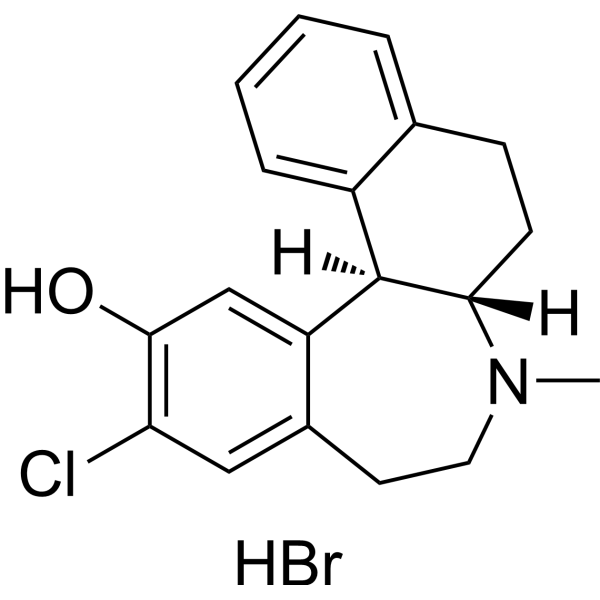
- HY-A0019A
-
|
9-Hydroxyrisperidone palmitate
|
Dopamine Receptor
5-HT Receptor
|
Neurological Disease
|
|
Paliperidone palmitate is an orally effective competitive antagonist of dopamine D2 receptors and 5-hydroxytryptamine 2A (5-HT2A) receptors that can cross the blood-brain barrier. Paliperidone palmitate competitively inhibits the effects of dopamine and 5-hydroxytryptamine by binding to dopamine D2 receptors and 5-HT2A receptors, regulating the balance of the neurotransmitter system and thus exerting antipsychotic activity. Paliperidone palmitate is mainly used in the research field of schizophrenia .
|
-
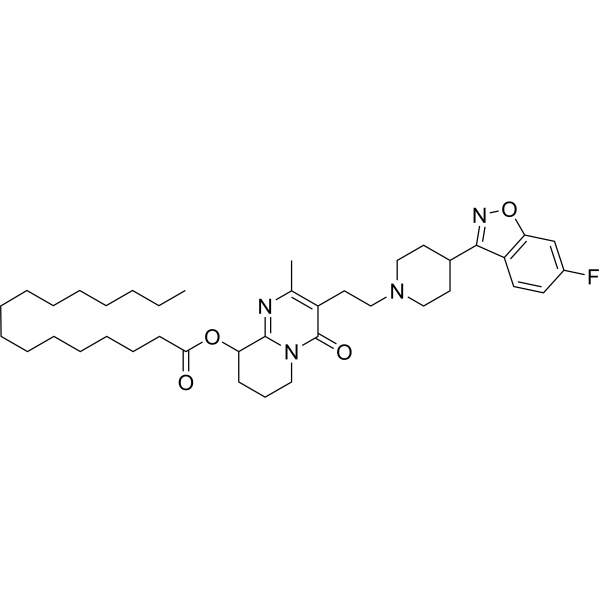
- HY-138830A
-
|
|
Histone Demethylase
|
Neurological Disease
|
|
(S,S)-TAK-418 is a potent inhibitor of lysine-specific demethylase 1 (LSD1), demonstrating significant normalization of aberrant gene expression in neurodevelopmental disorders. (S,S)-TAK-418 also ameliorates ASD-like behaviors in rodent models affected by maternal exposure to valproate or poly I:C. (S,S)-TAK-418 modulates gene expression differently across various models and ages, indicating its potential as a therapeutic agent for conditions like autism spectrum disorder and schizophrenia.
|
-

- HY-113323S
-
|
HMPG-d3; MHPG-d3; MOPEG-d3
|
Isotope-Labeled Compounds
Endogenous Metabolite
|
Neurological Disease
|
|
3-Methoxy-4-hydroxyphenylglycol-d3 (HMPG-d3) is the deuterium labeled 3-Methoxy-4-hydroxyphenylglycol. 3-Methoxy-4-hydroxyphenylglycol is a metabolite of norepinephrine degradation in the brain. 3-Methoxy-4-hydroxyphenylglycol (HMPG) serves as an indicator of noradrenergic activity in the central nervous system. 3-Methoxy-4-hydroxyphenylglycol (HMPG) can be used for research on diseases such as depression and chronic schizophrenia.
|
-
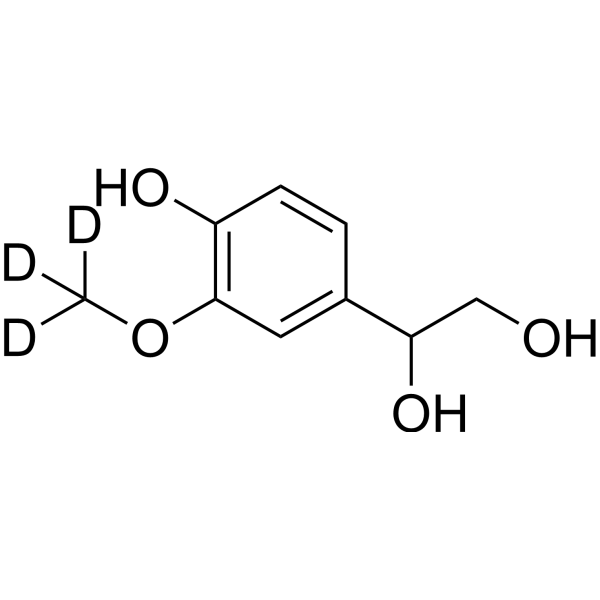
- HY-B0807A
-
|
|
Dopamine Receptor
NADPH Oxidase
Dengue Virus
Flavivirus
|
Neurological Disease
Inflammation/Immunology
Cancer
|
|
Prochlorperazine dimaleate is an orally active phenothiazine-type dopamine D2 receptor (D2R) antagonist. Prochlorperazine exhibits anti-cancer activity in vitro against various cancer cell lines. Prochlorperazine dimaleate exhibits IC50 values of 6.4 μM, 4.5 μM and 2.3 μM for NOX1, NOX2 and NOX5, respectively. Prochlorperazine dimaleate has antedesmosidic activity against dengue virus (DENV). Prochlorperazine dimaleate can be used for research on nausea, vomiting, migraine, and schizophrenia .
|
-

- HY-B1482AS
-
|
|
Isotope-Labeled Compounds
Potassium Channel
|
Neurological Disease
|
|
Mesoridazine-d3 is the deuterium labeled Mesoridazine (HY-B1482A). Mesoridazine (TPS-23) , a metabolite of Thioridazine (HY-B0965A), acts as an orally active phenothiazine antipsychotic agent. Mesoridazine is a potent and rapid open-channel blocker of human ether-a-go-go related gene (hERG) channels and blocks hERG currents with an IC50 of 550 nM (at 0 mV) in human embryonic kidney 293 cells .Mesoridazine can be used for the research of schizophrenia, as well as certain other psychiatric disorders .
|
-

- HY-P6292A
-
|
|
PACAP Receptor
|
Neurological Disease
Inflammation/Immunology
Cancer
|
|
KS-133 TFA is a highly selective and potent antagonist of the vascular active enteropeptide receptor 2 (VIPR2) with IC50 values for Ca influx measurement and cAMP measurement of 24.8 nM and 500 nM, respectively. KS-133 TFA reverses the tumor-promoting M2 phenotype of tumor-associated macrophages to the anti-tumor M1 phenotype, alters the tumor immune microenvironment, and inhibits tumor growth. KS-133 TFA can be used for research on schizophrenia and cancer immune regulation .
|
-

- HY-107969R
-
|
|
Dopamine Receptor
Reference Standards
COX
NO Synthase
|
Neurological Disease
|
|
Haloperidol decanoate (Standard) is the analytical standard of Haloperidol decanoate. This product is intended for research and analytical applications. Haloperidol decanoate is a depot preparation of haloperidol, a commonly used butyrophenone derivative with antipsychotic activity. Haloperidol decanoate can increase the striatal D2 receptor in rat. Haloperidol decanoate can improve conditions of psychoses (mainly schizophrenia). Haloperidol decanoate can lead to increased accumulation of the dopamine metabolites homo-vanillic acid. Haloperidol decanoate can reduce intestinal transport, increase gastric emptying and reduce acid output in rat model .
|
-

- HY-105670B
-
|
|
nAChR
|
Neurological Disease
|
|
PHA-543613 dihydrochloride is a potent, orally active, brain-penetrant and selective α7 nAChR agonist with a Ki value of 8.8 nM. PHA-543613 dihydrochloride displays selectivity for α7-nAChR over α3β4, α1β1γδ, α4β2 and 5-HT3 receptors . PHA-543613 dihydrochloride can be used for the cognitive deficits of Alzheimer's disease and schizophrenia research .
|
-
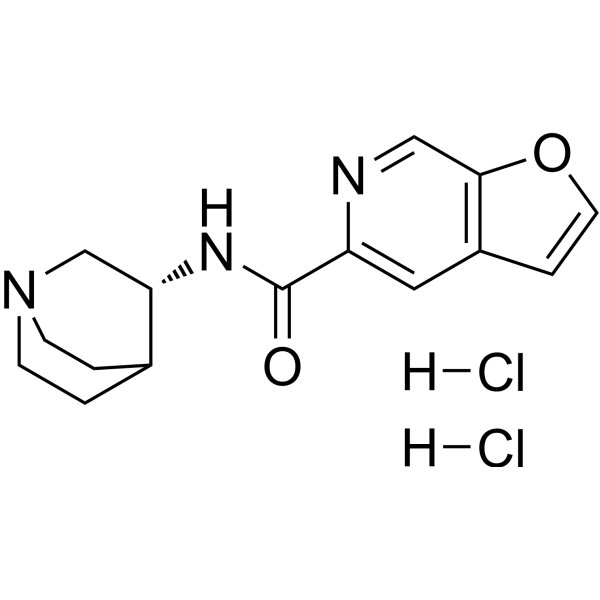
- HY-14562
-
|
|
mAChR
Amyloid-β
|
Neurological Disease
Inflammation/Immunology
|
|
TBPB (tert-butyl peroxybenzoate) is a highly selective, blood-brain-permeable M1 mAChR allosteric agonist (EC50=289 nM) with anti-schizophrenia and anti-inflammatory activities. TBPB can enhance the sensitivity of M1 receptors to acetylcholine, activate downstream signaling pathways, and inhibit the release of pro-inflammatory cytokines (TNF-α, IL-6). TBPB can regulate the processing of amyloid and can be used in the study of neurodegenerative diseases (such as Alzheimer's disease) and inflammation-related diseases (such as sepsis) .
|
-
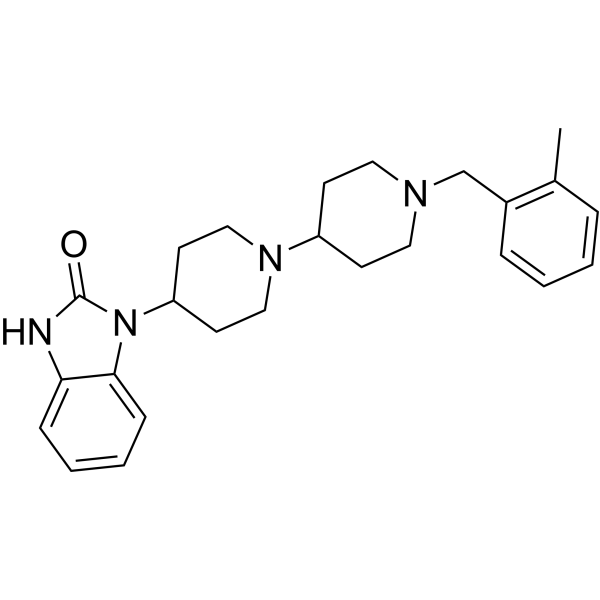
- HY-109968A
-
|
CEP-26401 hydrochloride
|
Histamine Receptor
|
Neurological Disease
|
|
Irdabisant (CEP-26401) hydrochloride is a selective, orally active and blood-brain barrier (BBB) penetrant histamine H3 receptor (H3R) inverse agonist/inverse agonist with Ki values of 7.2 nM and 2.0 nM for rat H3R and human H3R, respectively. Irdabisant hydrochloride has relatively low inhibitory activity against hERG current with an IC50 of 13.8 μM. Irdabisant hydrochloride has cognition-enhancing and wake-promoting activities in the rat social recognition model. Irdabisant hydrochloride can be used to research schizophrenia or cognitive impairment .
|
-
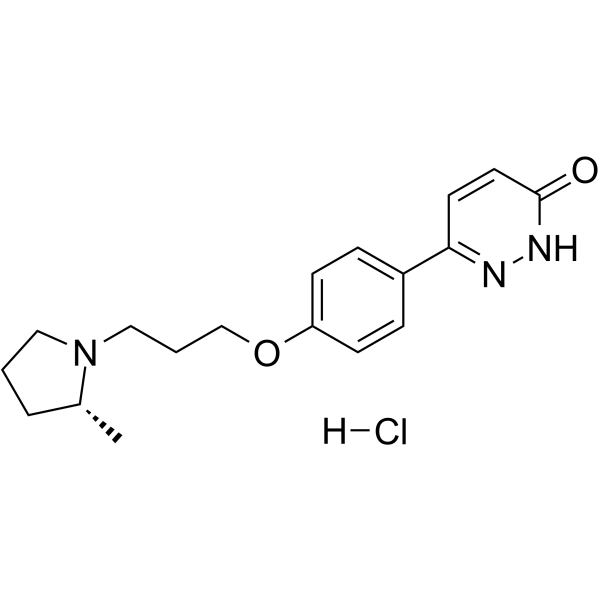
- HY-177873
-
|
|
iGluR
|
Neurological Disease
|
|
AMPA receptor modulator-10 (Compound 9a) is an orally active AMPA receptor (AMPAR) positive allosteric modulator. AMPA receptor modulator-10 exhibits potent activity (pEC50 = 5.0) on the GluA2 subtype of AMPAR, significantly enhancing glutamate-induced calcium influx and current responses. AMPA receptor modulator-10 can reverse the memory impairment induced by Scopolamine (HY-N0296) and enhance cognitive function. AMPA receptor modulator-10 can be used for the research of neurological disease, such as schizophrenia .
|
-

- HY-178103
-
|
|
Dopamine Receptor
Arrestin
|
Neurological Disease
|
|
D1R antagonist 2 (Compound 13a) is a BBB-penetrable D1R antagonist with IC50s of 35.6 and 70 nM for cAMP-based D1R and β-arrestin-based D1R, respectively. D1R antagonist 2 effectively antagonizes D1R-mediated cAMP and β-arrestin recruitment. D1R antagonist 2 can be used for neurodegenerative and neuropsychiatric diseases such as schizophrenia, Parkinson’s disease and Alzheimer’s disease research .
|
-

- HY-107678R
-
|
WAY-317538 (Standard)
|
Reference Standards
nAChR
|
Neurological Disease
|
|
SEN12333 (Standard) is the analytical standard of SEN12333 (HY-107678). This product is intended for research and analytical applications. SEN 12333 (WAY-317538) is a potent, selective and orally active α7 nAChR agonist. SEN12333 displays high affinity for the rat α7 nAChRs expressed in GH4C1 cells (K>i=260 nM) and acts as full agonist in functional Ca2+ flux studies (EC50=1.6 μM). SEN 12333 is used for AD and schizophrenia research .
|
-

- HY-I1070
-
|
(R)-Isoleucine
|
ASCT
|
Neurological Disease
|
|
D-Isoleucine is a selective competitive activator of the Asc-1 antiporter (Ki=0.98 mM). D-Isoleucine promotes the release of D-serine and glycine by binding to the Asc-1 protein on the neuronal cell membrane, and enhances NMDA receptor-dependent synaptic plasticity. D-Isoleucine can be used in the study of neurodegenerative diseases (such as Alzheimer's disease and schizophrenia). D-Isoleucine also acts as a non-classical D-amino acid, interferes with bacterial peptidoglycan synthesis, and inhibits the formation of Staphylococcus aureus biofilm, and has potential antibacterial application value[1][2].
|
-
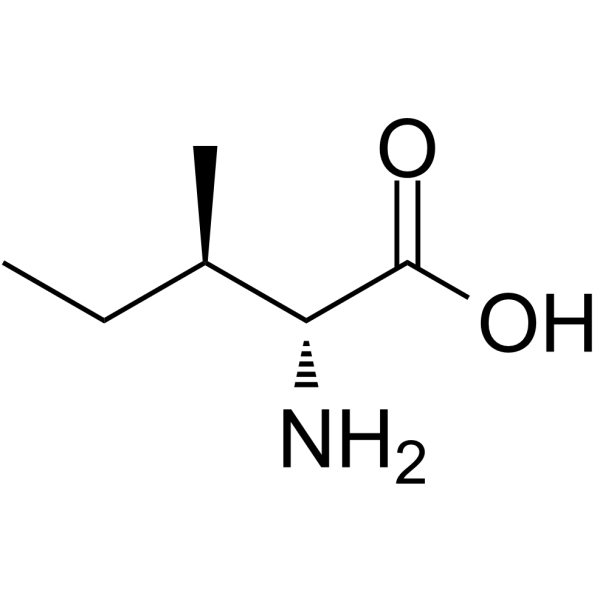
- HY-109968
-
|
CEP-26401
|
Histamine Receptor
|
Neurological Disease
Metabolic Disease
|
|
Irdabisant (CEP-26401) is a selective, orally active and blood-brain barrier (BBB) penetrant histamine H3 receptor (H3R) inverse agonist/inverse agonist with Ki values of 7.2 nM and 2.0 nM for rat H3R and human H3R, respectively. Irdabisant has relatively low inhibitory activity against hERG current with an IC50 of 13.8 μM. Irdabisant has cognition-enhancing and wake-promoting activities in the rat social recognition model. Irdabisant can be used to research schizophrenia or cognitive impairment .
|
-
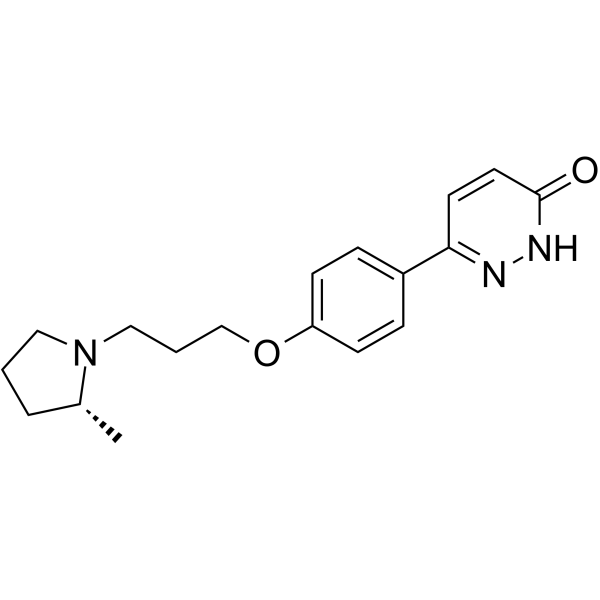
- HY-149704
-
|
|
mAChR
|
Neurological Disease
|
|
M1/M2/M4 muscarinic agonist 1 (Compound 42) is a muscarinic M4/M1/M2 agonist with EC50 values of 6.5, 26 and 210 nM for M4/M1/M2, respectively. M1/M2/M4 muscarinic agonist 1 can be used for research on mental diseases, such as schizophrenia, delusion, etc .
|
-
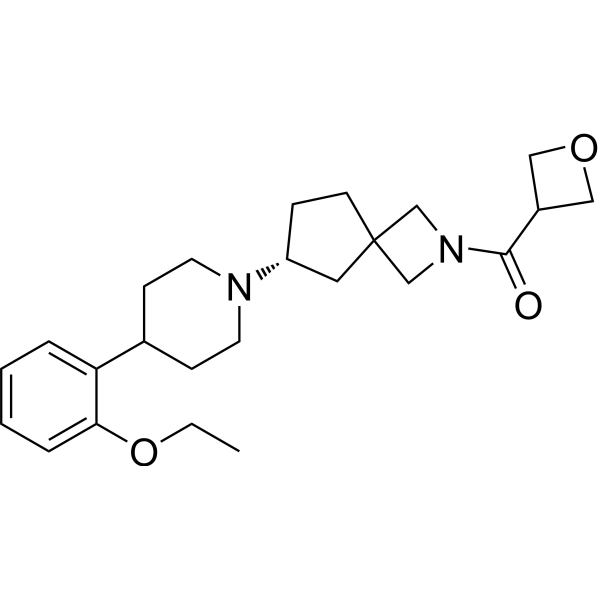
- HY-181559S
-
|
AG06827
|
mAChR
|
Neurological Disease
|
|
VU6025733 (AG06827) is a highly selective, orally active and blood-brain barrier-penetrant positive allosteric modulator of the muscarinic acetylcholine receptor subtype M4 (M4 mAChR). VU6025733 exerts a potentiating effect on acetylcholine-induced receptor activation with an EC50 of 23 nM for hM4 and 55 nM for rM4. VU6025733 shows high selectivity over other muscarinic acetylcholine receptor subtypes, dose-dependently reduces amphetamine-induced hyperlocomotion in rats. VU6025733 is applicable to the research of schizophrenia, Parkinson's disease, and Alzheimer's disease .
|
-

- HY-14539S3
-
|
HF 1854-d3
|
Isotope-Labeled Compounds
5-HT Receptor
Adrenergic Receptor
Dopamine Receptor
mAChR
|
Neurological Disease
Cancer
|
|
Clozapine-d3 (HF 1854-d3) is deuterium labeled Clozapine. Clozapine (HF 1854) is an antipsychotic used for the research of schizophrenia. Clozapine has high affinity for a number of neuroreceptors. Clozapine is a potent antagonist of dopamine D2 with a Ki of 75 nM. Clozapine inhibits the muscarinic M1 receptor and serotonin 5HT2A receptor with Kis of 9.5 nM and 4 nM, respectively . Clozapine is also a potent and selective agonist at the muscarinic M4 receptor (EC50=11 nM) .
|
-

- HY-133910
-
|
|
Sodium Channel
|
Neurological Disease
|
|
Lu AE98134, an activator of voltage-gated sodium channels, acts as a partly selective Nav1.1 channels positive modulator. Lu AE98134 also increases the activity of Nav1.2 and Nav1.5 channels but not of Nav1.4, Nav1.6 and Nav1.7 channels. Lu AE98134 can be used to analyze pathophysiological functions of the Nav1.1 channel in various central nervous system diseases, including cognitive restoring in schizophrenia, et al .
|
-
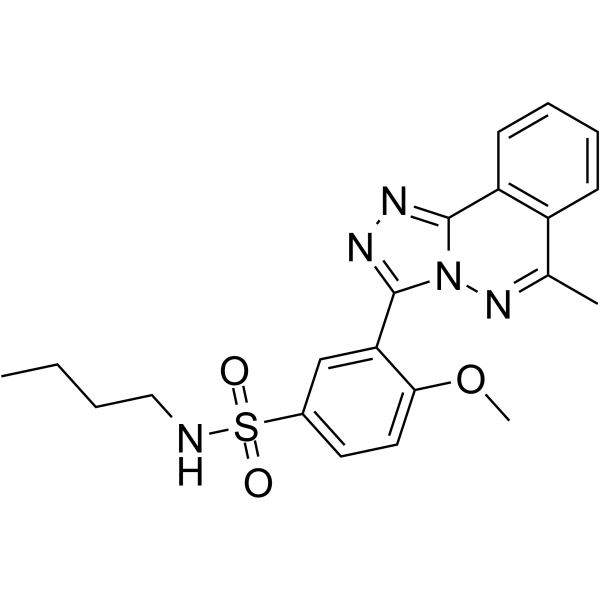
- HY-16713A
-
|
(5S)-Fluorowillardiine hydrochloride; (S)-5-Fluorowillardiine hydrochloride
|
iGluR
|
Neurological Disease
|
|
(S)-(-)-5-Fluorowillardiine ((5S)-Fluorowillardiine; (S)-5-Fluorowillardiine) hydrochloride is a potent, highly selective non-NMDA ionotropic glutamate receptor (iGluR, AMPA/Kainate receptor) agonist . (S)-(-)-5-Fluorowillardiine hydrochloride activates high-affinity AMPA-preferring receptors (EC50 = 0.70 μM) and low-affinity kainate-preferring receptors (EC50 = 170 μM), thereby inducing biphasic dose-dependent neurotoxicity/excitotoxicity. (S)-(-)-5-Fluorowillardiine hydrochloride is applicable to research related to schizophrenia, temporal lobe epilepsy, and bipolar disorder .
|
-
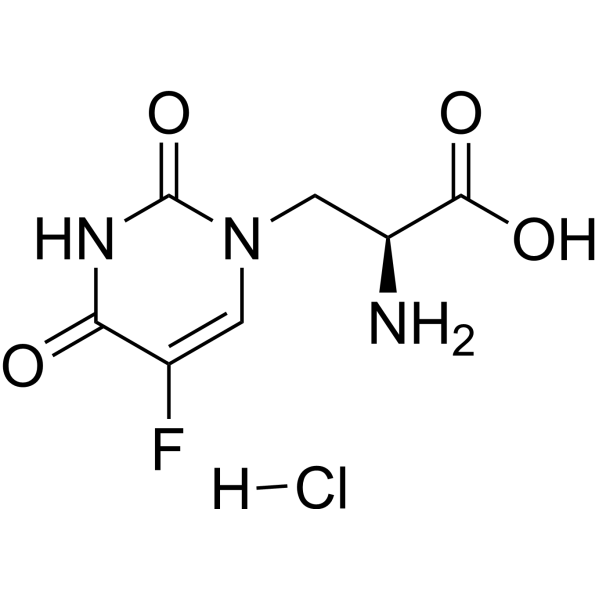
- HY-16713
-
|
(5S)-Fluorowillardiine; (S)-5-Fluorowillardiine
|
iGluR
|
Neurological Disease
|
|
(S)-(-)-5-Fluorowillardiine ((5S)-Fluorowillardiine; (S)-5-Fluorowillardiine) is a potent, highly selective non-NMDA ionotropic glutamate receptor (iGluR, AMPA/Kainate receptor) agonist . (S)-(-)-5-Fluorowillardiine activates high-affinity AMPA-preferring receptors (EC50 = 0.70 μM) and low-affinity kainate-preferring receptors (EC50 = 170 μM), thereby inducing biphasic dose-dependent neurotoxicity/excitotoxicity. (S)-(-)-5-Fluorowillardiine is applicable to research related to schizophrenia, temporal lobe epilepsy, and bipolar disorder .
|
-
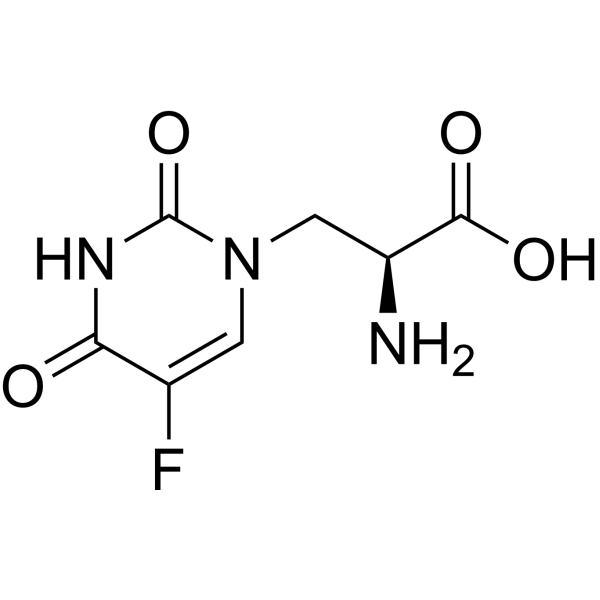
- HY-13409
-
|
|
5-HT Receptor
|
Neurological Disease
Metabolic Disease
|
|
SB 242084 is a selective, competitive and high-affinity (pKi=9.0) 5-HT2C receptor antagonist (crosses the blood-brain barrier). SB 242084 increases basal activity of dopaminergic neurons in the ventral tegmental area (VTA) of the midbrain and dopamine release in the vomeronasal nucleus. SB 242084 also increases mitochondrial gene expression and oxidative metabolism via 5-HT2A receptor. SB 242084 has good research potential in the negative symptoms of anxiety, depression and schizophrenia, as well as in acute organ damage .
|
-
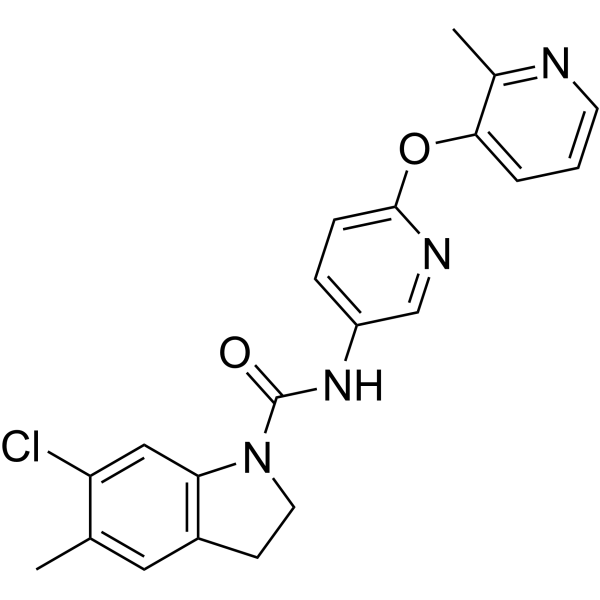
- HY-14546R
-
|
OPC-14597 (Standard)
|
Reference Standards
5-HT Receptor
Dopamine Receptor
|
Infection
Neurological Disease
Inflammation/Immunology
|
|
Aripiprazole (Standard) is the analytical standard of Aripiprazole. This product is intended for research and analytical applications. Aripiprazole (OPC-14597), an atypical antipsychotic, is a potent and high-affinity dopamine D2 receptor partial agonist. Aripiprazole is an inverse agonist at 5-HT2B and 5-HT2A receptors and displays partial agonist actions at 5-HT1A, 5-HT2C, D3, and D4 receptors. Aripiprazole can be used for the research of schizophrenia and COVID19 .
|
-
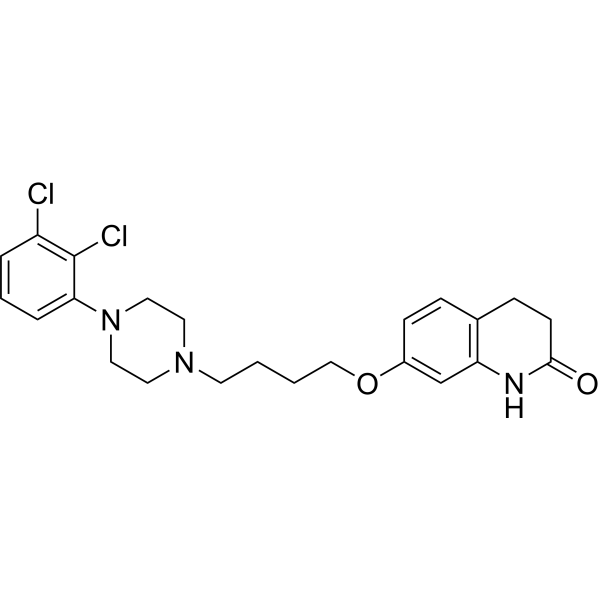
- HY-147319
-
|
|
Trace Amine-associated Receptor (TAAR)
|
Neurological Disease
|
|
RTI-7470-44 is a potent, selective and blood-brain barrier (BBB) penetrant human trace amine-associated receptor subtype 1 (hTAAR1) antagonist with an IC50 value of 8.4 nM and a Ki value of 0.3 nM. RTI-7470-44 has moderate metabolic stability, and a favorable preliminary off-target profile. RTI-7470-44 can increase the spontaneous firing rate of mouse ventral tegmental area (VTA) dopaminergic neurons. RTI-7470-44 can be used for researching schizophrenia, agent addiction, and Parkinson’s disease (PD) .
|
-
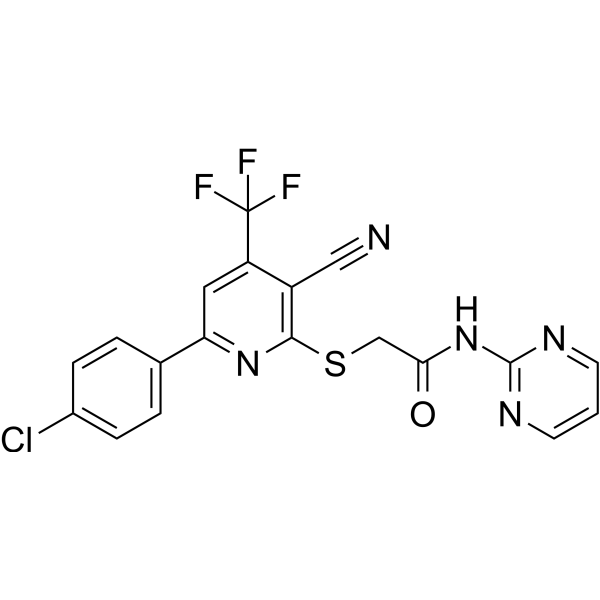
- HY-116268
-
|
|
Neurokinin Receptor
|
Neurological Disease
|
|
GSK256471 is a non-peptide tachykinin NK3 receptor antagonist with a pKi of 8.9 for the human recombinant NK3 receptor and 8.4 for the guinea pig native receptor. GSK256471 exhibits >100-fold selectivity for NK1 (pKi = 5.2) and NK2 (pKi = 7.3) receptors. GSK256471 noncompetitively inhibits neurokinin B (NKB) (HY-P0242)-induced inositol phosphate accumulation, and this inhibition is irreversible. GSK256471 inhibits wet dog shaking behavior and suppresses dopamine release. GSK256471 could be used to study schizophrenia .
|
-

- HY-13409A
-
|
|
5-HT Receptor
|
Neurological Disease
Metabolic Disease
|
|
SB 242084 dihydrochloride is a selective, competitive and high-affinity (pKi=9.0) 5-HT2C receptor antagonist (crosses the blood-brain barrier). SB 242084 dihydrochloride increases basal activity of dopaminergic neurons in the ventral tegmental area (VTA) of the midbrain and dopamine release in the vomeronasal nucleus. SB 242084 dihydrochloride also increases mitochondrial gene expression and oxidative metabolism via 5-HT2A receptor. SB 242084 dihydrochloride has good research potential in the negative symptoms of anxiety, depression and schizophrenia, as well as in acute organ damage .
|
-
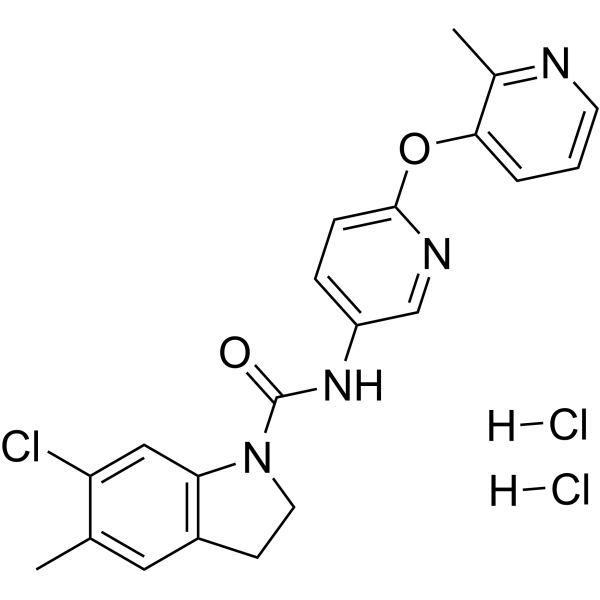
- HY-B1077
-
|
R-16341
|
Calcium Channel
Dopamine Receptor
Autophagy
Apoptosis
|
Neurological Disease
Inflammation/Immunology
Cancer
|
|
Penfluridol (R-16341) is a potent, long-acting, first-generation, oral diphenylbutylpiperidine antipsychotic agent by targeting D2-like dopamine receptor. Penfluridol effectively inhibits TNFα-induced NF-κB activation and alleviates the severity of arthritis and colitis in vivo. Penfluridol is a Ca2+-calmodulin inhibitor. Penfluridol induces apoptosis and autophagy. Penfluridol is used for chronic schizophrenia, acute psychosis, Tourette syndrome and autoimmune diseases. Penfluridol inhibites the growth of E. faecalis planktonic cells with the MIC of 7.81 μg/ml .
|
-
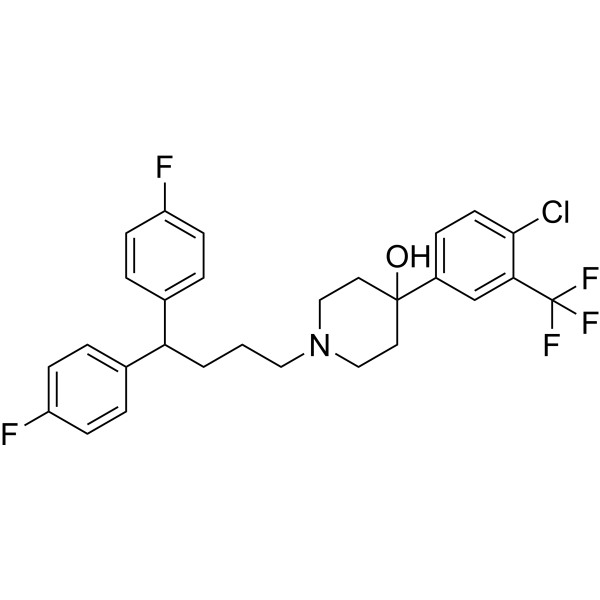
- HY-W012922R
-
|
2-Methylpent-4-enoic acid (Standard)
|
Reference Standards
Drug Intermediate
|
Neurological Disease
Metabolic Disease
|
|
2-Methyl-4-pentenoic Acid (Standard) (2-Methylpent-4-enoic acid (Standard)) is the analytical standard of 2-Methyl-4-pentenoic Acid (HY-W012922). This product is intended for research and analytical applications. 2-Methyl-4-pentenoic Acid (2-Methylpent-4-enoic acid) is an organic acid that can be used as a precursor for synthesizing other compounds. Additionally, changes in the level of 2-Methyl-4-pentenoic Acid may be associated with the susceptibility to schizophrenia and type 2 diabetes.
|
-

- HY-125931
-
|
DM232
|
iGluR
|
Neurological Disease
Inflammation/Immunology
|
|
Unifiram (DM232) is a AMPA receptor activator and cognitive enhancer. Unifiram activates the AMPA-mediated neurotransmission system. Unifiram reverses NBQX-induced amnesia in the passive avoidance test in mice. Unifiram reverses the antagonistic effect of kynurenic acid on NMDA-mediated [ 3H]NA release in rat hippocampal slices. Unifiram enhances excitatory synaptic transmission in the rat hippocampus in vitro. Unifiram can be used in studies related to amnesia and cognitive dysfunction, including age-related memory decline, neurodegenerative diseases such as Alzheimer's disease or Parkinson's disease, multiple sclerosis, schizophrenia, and attention deficit hyperactivity disorder .
|
-
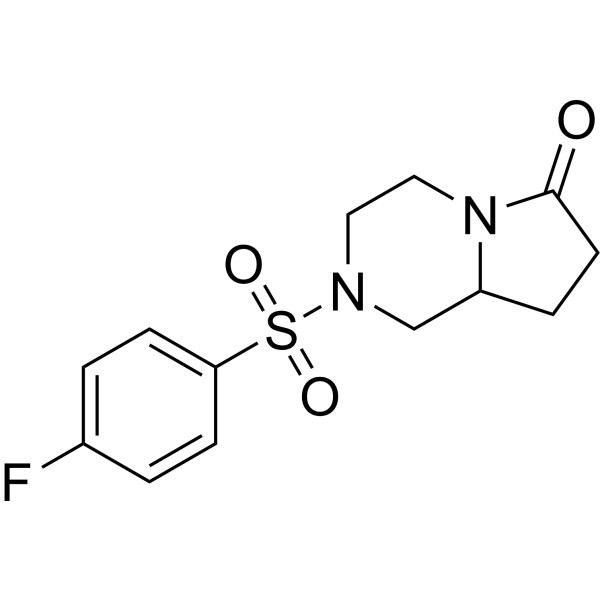
- HY-103130R
-
|
|
Reference Standards
5-HT Receptor
|
Neurological Disease
|
|
EMD386088 (Standard) is the analytical standard of EMD386088 (HY-103130). This product is intended for research and analytical applications. EMD386088 is a potent and selective 5-HT6 receptor (5-HT6R) agonist with an EC50 of 1.0 nM. EMD-386088 is inactive against other HT receptors except 5-HT3R (IC50 of 34 nM). EMD386088 regulates the activity of ERK1/2. EMD386088 has the potential for the research of alzheimer's disease (AD) and schizophrenia .
|
-

- HY-P992360
-
|
|
GABA Receptor
|
Neurological Disease
Cancer
|
|
GT-002 is a partial positive allosteric modulator targeting the α3 subtype of GABAA receptors, as well as a specific binder of tumor-associated TF-glycosylated LYPD3. GT-002 mildly enhances GABA-induced chloride currents by binding to the benzodiazepine site of GABAA receptors, thereby alleviating prefrontal hypofunction and improving cognitive, memory and social interaction abilities. GT-002 can be used in research related to schizophrenia spectrum disorders, various squamous cell carcinomas, colorectal cancer, non-small cell lung cancer, and aromatic L-amino acid decarboxylase deficiency .
|
-

- HY-182638
-
|
|
Phosphodiesterase (PDE)
mAChR
Potassium Channel
|
Neurological Disease
|
|
CPL500036 is an orally active, blood-brain barrier permeable phosphodiesterase 10A (PDE10A) inhibitor with IC50 values of 1 nM (Reference 1) and 35 nM (Reference 2). CPL500036 acts as a negative allosteric modulator of the M2 muscarinic receptor with an IC50 of 9.2 μM. CPL500036 alters cyclic nucleotide levels in basal ganglia circuits, inhibits the hydrolysis of cAMP and cGMP, and suppresses hERG potassium channel tail currents. CPL500036 induces catalepsy in rats and reverses injury-induced contralateral forelimb use impairment. CPL500036 can be used in research related to schizophrenia, Parkinson's disease, and levodopa-induced dyskinesia .
|
-

- HY-103112BR
-
|
|
Reference Standards
5-HT Receptor
|
Neurological Disease
|
|
SB 243213 (Standard) is the analytical standard of SB 243213 (HY-103112B). This product is intended for research and analytical applications. SB 243213 is an orally active, selective and high-affinity 5-HT2C receptor antagonist with a pKi of 9.37 and a pKb of 9.8 for human 5-HT2C receptor. SB 243213 shows greater than a 100-fold selectivity over a wide range of neurotransmitter receptors, enzymes and ion channels. SB 243213 has improved anxiolytic profile and has the potential for schizophrenia and motor disorders .
|
-

- HY-14546S
-
|
OPC-14597-d8
|
5-HT Receptor
|
Neurological Disease
|
|
Aripiprazole-d8 (OPC-14597-d8) is the deuterium labeled Aripiprazole (HY-14546). Aripiprazole (OPC-14597), an atypical antipsychotic, is a potent and high-affinity dopamine D2 receptor partial agonist. Aripiprazole is an inverse agonist at 5-HT2B and 5-HT2A receptors and displays partial agonist actions at 5-HT1A, 5-HT2C, D3, and D4 receptors. Aripiprazole can be used for the research of schizophrenia and COVID19.
|
-
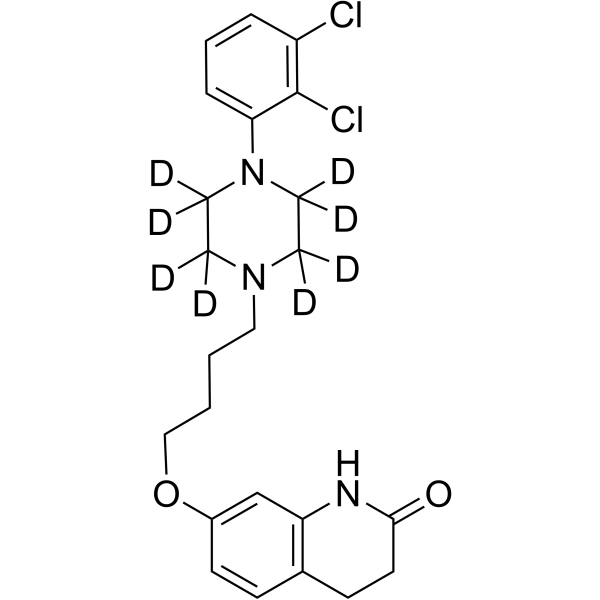
- HY-13409B
-
|
|
5-HT Receptor
|
Neurological Disease
Metabolic Disease
|
|
SB 242084 monohydrochloride is a selective, competitive and high-affinity (pKi=9.0) 5-HT2C receptor antagonist (crosses the blood-brain barrier). SB 242084 monohydrochloride increases basal activity of dopaminergic neurons in the ventral tegmental area (VTA) of the midbrain and dopamine release in the vomeronasal nucleus. SB 242084 also increases mitochondrial gene expression and oxidative metabolism via 5-HT2A receptor. SB 242084 monohydrochloride has good research potential in the negative symptoms of anxiety, depression and schizophrenia, as well as in acute organ damage .
|
-

- HY-A0019AR
-
|
9-Hydroxyrisperidone palmitate (Standard)
|
Dopamine Receptor
5-HT Receptor
Reference Standards
|
Neurological Disease
|
|
Paliperidone palmitate (Standard) is the analytical standard of Paliperidone palmitate. This product is intended for research and analytical applications. Paliperidone palmitate is an orally effective competitive antagonist of dopamine D2 receptors and 5-hydroxytryptamine 2A (5-HT2A) receptors that can cross the blood-brain barrier. Paliperidone palmitate competitively inhibits the effects of dopamine and 5-hydroxytryptamine by binding to dopamine D2 receptors and 5-HT2A receptors, regulating the balance of the neurotransmitter system and thus exerting antipsychotic activity. Paliperidone palmitate is mainly used in the research field of schizophrenia .
|
-

- HY-159829
-
|
NBI-1117568; HTL-0016878
|
mAChR
|
Neurological Disease
|
|
Direclidine (NBI-1117568, HTL-0016878) is a selective orthosteric agonist targeting the muscarinic acetylcholine M4 receptor, exhibiting very low affinity for M1, M2, M3, and M5 receptors. It binds to the orthosteric site of the M4 receptor in a non-covalent, competitive manner. Direclidine specifically activates the M4 receptor, inhibiting the release of acetylcholine from striatal cholinergic interneurons, thereby regulating the balance of the dopaminergic system and reducing psychiatric symptoms associated with excessive dopamine release. Direclidine can improve symptoms associated with neuropsychiatric disorders and is used in research on schizophrenia and other neuropsychiatric disorders .
|
-

- HY-105670R
-
|
|
Reference Standards
nAChR
|
Neurological Disease
|
|
PHA-543613 (Standard) is the analytical standard of PHA-543613 (HY-105670). This product is intended for research and analytical applications. PHA-543613 is a potent, orally active, brain-penetrant and selective α7 nAChR agonist with a Ki of 8.8 nM. PHA-543613 displays selectivity for α7-nAChR over α3β4, α1β1γδ, α4β2 and 5-HT3 receptors . PHA-543613 can be used for the cognitive deficits of Alzheimer's disease and schizophrenia research .
|
-

- HY-15401
-
|
|
5-HT Receptor
|
Neurological Disease
Metabolic Disease
|
|
WAY 163909 is an orally active, blood-brain barrier permeable 5-HT2C receptor-selective agonist. WAY 163909 exhibits an EC50 of 8 nM and a Ki of 10.5 nM for h5-HT2C. Instead of triggering apoptosis, WAY 163909 induces anorectic, antipsychotic-like, antidepressant-like, anti-aggressive and anti-compulsive effects. WAY 163909 alleviates ketamine-induced hypothermia, but impairs sexual function at high doses. With rapid antidepressant-like properties, WAY 163909 can be used in research related to obesity, schizophrenia, depression, obsessive-compulsive disorder, and anesthesia-induced hypothermia .
|
-
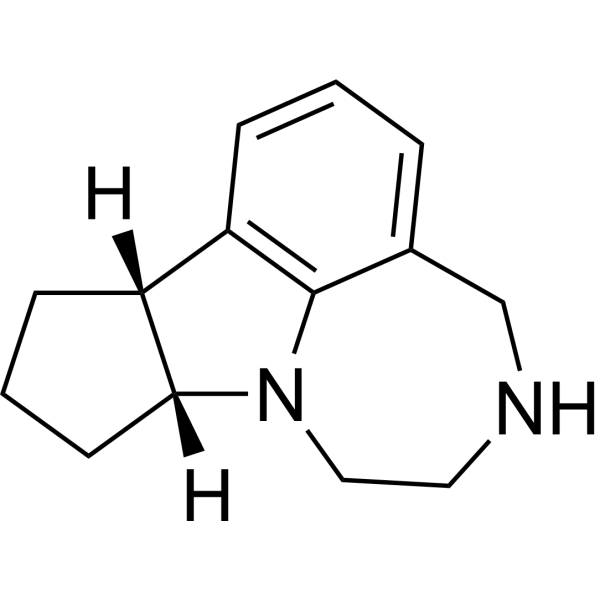
- HY-15401A
-
|
|
5-HT Receptor
|
Neurological Disease
Metabolic Disease
|
|
WAY 163909 hydrochloride is an orally active, blood-brain barrier permeable 5-HT2C receptor-selective agonist. WAY 163909 hydrochloride exhibits an EC50 of 8 nM and a Ki of 10.5 nM for h5-HT2C. Instead of triggering apoptosis, WAY 163909 hydrochloride induces anorectic, antipsychotic-like, antidepressant-like, anti-aggressive and anti-compulsive effects. WAY 163909 hydrochloride alleviates ketamine-induced hypothermia, but impairs sexual function at high doses. With rapid antidepressant-like properties, WAY 163909 hydrochloride can be used in research related to obesity, schizophrenia, depression, obsessive-compulsive disorder, and anesthesia-induced hypothermia .
|
-

- HY-B0530A
-
|
γ-pipradol hydrochloride
|
Reactive Oxygen Species (ROS)
mAChR
NADPH Oxidase
|
Cancer
|
|
Azacyclonol (γ-pipradol) hydrochloride is a compound with promising anticancer activity, showing effectiveness in inhibiting NOX-derived ROS in A549 human lung cancer cells. Azacyclonol hydrochloride exhibits enhanced proliferation inhibition against androgen-refractory cancer cell lines, specifically DU145 and PC-3. Azacyclonol hydrochloride demonstrates antitumor activity in DU145-xenografted chorioallantoic membrane tumor models. Azacyclonol hydrochloride also acts as a ligand for the M3 muscarinic acetylcholine receptor, which is overexpressed in ARPC. Azacyclonol hydrochloride effectively blocks carbachol-induced proliferation and NOX activity in DU145 cells. Azacyclonol hydrochloride can also be utilized for the treatment of chronic schizophrenia.
|
-

- HY-B1077R
-
|
R-16341 (Standard)
|
Reference Standards
Calcium Channel
Dopamine Receptor
Autophagy
Apoptosis
|
Neurological Disease
Inflammation/Immunology
Cancer
|
|
Penfluridol (Standard) is the analytical standard of Penfluridol. This product is intended for research and analytical applications. Penfluridol (R-16341) is a potent, long-acting, first-generation, oral diphenylbutylpiperidine antipsychotic agent by targeting D2-like dopamine receptor. Penfluridol effectively inhibits TNFα-induced NF-κB activation and alleviates the severity of arthritis and colitis in vivo. Penfluridol is a Ca2+-calmodulin inhibitor. Penfluridol induces apoptosis and autophagy. Penfluridol is used for chronic schizophrenia, acute psychosis, Tourette syndrome and autoimmune diseases. Penfluridol inhibites the growth of E. faecalis planktonic cells with the MIC of 7.81 μg/ml .
|
-

- HY-106584
-
|
Clospipramine
|
Drug Derivative
Dopamine Receptor
5-HT Receptor
|
Neurological Disease
|
|
Mosapramine (Clospipramine) is an orally active antipsychotic agent and one of the metabolites of Clocapramine (HY-B2073) after oral absorption. Mosapramine exerts its effects by specifically binding to striatal dopamine D2 receptors and frontal lobe 5-HT2 receptors, with a D2/5-HT2 receptor occupancy ratio of 7.4. Mosapramine induces typical neuropharmacological responses in rat brain regions, including extrapyramidal symptoms, hyperprolactinemia, increased salivation, constipation, and upregulated Fos protein expression. Mosapramine also features a reduced incidence of weight loss. Mosapramine is applicable to research related to schizophrenia .
|
-
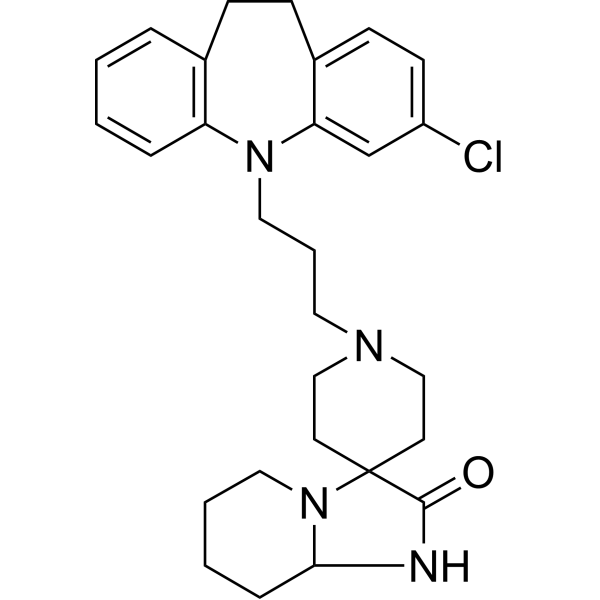
- HY-G0002
-
|
|
Drug Metabolite
Dopamine Receptor
5-HT Receptor
|
Neurological Disease
|
|
Lurasidone metabolite 14326 is a minor active metabolite of Lurasidone (HY-B0032A) generated via metabolism by CYP3A4. Lurasidone metabolite 14326 shares similar receptor-binding properties with Lurasidone, acting as an antagonist of the dopamine D2 receptor (dopamine D2 receptor), an antagonist of the serotonin 5-HT2A and 5-HT7 receptors (5-HT2A and 5-HT7 receptor), and a partial agonist of the serotonin 5-HT1A receptor. Lurasidone metabolite 14326 can be used in the research of schizophrenia and bipolar depression .
|
-
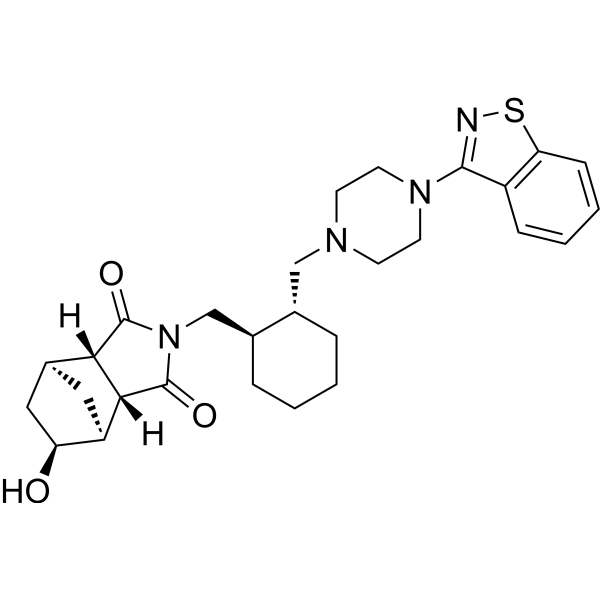
- HY-W001160R
-
|
|
Reference Standards
Endogenous Metabolite
nAChR
Calcium Channel
|
Neurological Disease
Endocrinology
Cancer
|
|
5-Hydroxyindole (Standard) is the analytical standard of 5-Hydroxyindole (HY-W001160). This product is intended for research and analytical applications. 5-Hydroxyindole is an orally active hydroxylated indole and tryptophan metabolite. 5-Hydroxyindole activates α7 nicotinic acetylcholine receptors and acts on intestinal L-type calcium channels. 5-Hydroxyindole slows down the desensitization of 5-HT3 receptor-mediated ion currents in cells. 5-Hydroxyindole causes convulsions and loss of consciousness. 5-Hydroxyindole is used in the study of neuroblastoma, schizophrenia, and diseases related to intestinal motility disorders .
|
-

- HY-A0019AS
-
|
9-Hydroxyrisperidone palmitate-d4
|
Isotope-Labeled Compounds
Dopamine Receptor
5-HT Receptor
|
Neurological Disease
|
|
Paliperidone palmitate-d4 (9-Hydroxyrisperidone palmitate-d4) is the deuterium labeled Paliperidone palmitate (HY-A0019A). Paliperidone palmitate is an orally effective competitive antagonist of dopamine D2 receptors and 5-hydroxytryptamine 2A (5-HT2A) receptors that can cross the blood-brain barrier. Paliperidone palmitate competitively inhibits the effects of dopamine and 5-hydroxytryptamine by binding to dopamine D2 receptors and 5-HT2A receptors, regulating the balance of the neurotransmitter system and thus exerting antipsychotic activity. Paliperidone palmitate is mainly used in the research field of schizophrenia .
|
-

- HY-182504
-
|
|
Dopamine Receptor
5-HT Receptor
Adrenergic Receptor
|
Neurological Disease
|
|
NRA‑0562 is a dopamine antagonist with high affinities for dopamine D1/D2/D3/D4, 5‑HT2A and α1‑adrenoceptors. NRA-0562 dose‑dependently reverses induced suppression of firing activity in rat A9 and A10 midbrain dopamine neurons, with preferential potency at A10 neurons (ED50 = 0.3 mg/kg). NRA-0562 elevates Fos-like immunoreactivity in rat nucleus accumbens and dorsolateral striatum. NRA-0562 can be used for preclinical research on schizophrenia . .
|
-

- HY-100656
-
|
|
Dopamine Receptor
5-HT Receptor
|
Neurological Disease
|
|
Desmethyl cariprazine is a major active metabolite of cariprazine, with activities at human dopamine receptors and serotonin receptors, showing a pEC50 of 8.90 at human D2 receptors, a pEC50 of 8.09 at D3 receptors, and a pEC50 of 6.28 at 5-HT1A receptors. Desmethyl cariprazine inhibits forskolin-induced cAMP production at D2, D3 and 5-HT1A receptors, and suppresses serotonin-induced Ca 2+ release at 5-HT2B receptors. Desmethyl cariprazine is applicable to research related to schizophrenia, bipolar disorder type I and bipolar disorder.
|
-
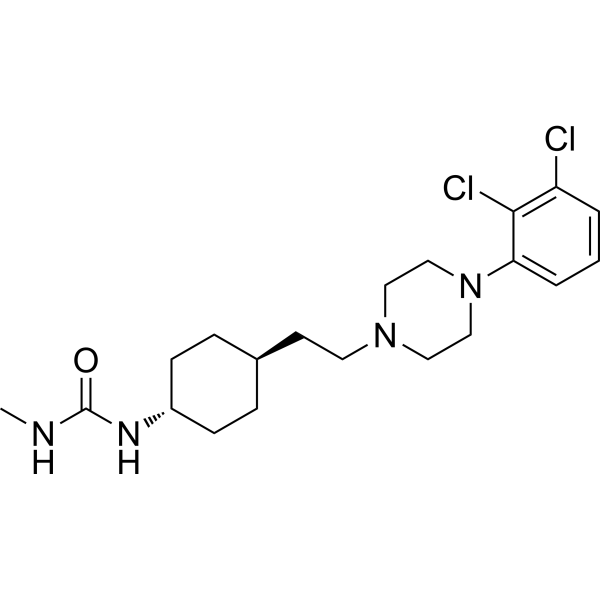
- HY-13409AR
-
|
|
5-HT Receptor
|
Neurological Disease
Metabolic Disease
|
|
SB 242084 (dihydrochloride) (Standard) is the analytical standard of SB 242084 (dihydrochloride). This product is intended for research and analytical applications. SB 242084 dihydrochloride is a selective, competitive and high-affinity (pKi=9.0) 5-HT2C receptor antagonist (crosses the blood-brain barrier). SB 242084 dihydrochloride increases basal activity of dopaminergic neurons in the ventral tegmental area (VTA) of the midbrain and dopamine release in the vomeronasal nucleus. SB 242084 dihydrochloride also increases mitochondrial gene expression and oxidative metabolism via 5-HT2A receptor. SB 242084 dihydrochloride has good research potential in the negative symptoms of anxiety, depression and schizophrenia, as well as in acute organ damage .
|
-

- HY-120155
-
|
|
Sigma Receptor
iGluR
|
Neurological Disease
|
|
MS-377 is a selective and orally active sigma-1 receptor ligand (Ki=73 nM) with weak affinity for sigma-2 receptor (Ki=6900 nM) and no affinity for any other receptors including dopamine, serotonin, PCP site, glutamate, γ-aminobutylic acid, adenosine, adrenergic receptors, etc. (Ki: >10 μM). MS-377 indirectly modulates the NMDA receptor ion-channel complex. MS-377 is a antipsychotic agent. MS-377 inhibits PCP-induced behaviors by inhibition of the increase in dopamine and serotonin release in the rat medial prefrontal cortex. MS-377 can be used for research of schizophrenia .
|
-

- HY-13409R
-
|
|
5-HT Receptor
|
Neurological Disease
Metabolic Disease
|
|
SB 242084 (Standard) is the analytical standard of SB 242084. This product is intended for research and analytical applications. SB 242084 is a selective, competitive and high-affinity (pKi=9.0) 5-HT2C receptor antagonist (crosses the blood-brain barrier). SB 242084 increases basal activity of dopaminergic neurons in the ventral tegmental area (VTA) of the midbrain and dopamine release in the vomeronasal nucleus. SB 242084 also increases mitochondrial gene expression and oxidative metabolism via 5-HT2A receptor. SB 242084 has good research potential in the negative symptoms of anxiety, depression and schizophrenia, as well as in acute organ damage .
|
-

- HY-165527
-
|
|
Dopamine Receptor
5-HT Receptor
|
Neurological Disease
|
|
S18327 is a multi-target antipsychotic agent. S18327 exerts its efficacy by acting on multiple neurotransmitter systems in the brain, and it has antagonistic effects on dopamine receptors (particularly the D2 receptor) and 5-hydroxytryptamine 2A receptors (5-HT2A receptor). S18327 can counteract excessive dopamine activity and hypo-function of glutamate. S18327 exhibits a multi-parameter pharmacological profile that is highly similar to that of Clozapine (HY-14539). S18327 can produce the same discriminative stimulus as Clozapine, improve cognitive filtering deficits associated with schizophrenia, and display anxiolytic properties. S18327 has relatively weak affinity for histaminergic receptors and muscarinic receptors, which avoids the side effects of Clozapine .
|
-

- HY-100656AS
-
|
|
Isotope-Labeled Compounds
Dopamine Receptor
5-HT Receptor
|
Neurological Disease
|
|
Desmethyl cariprazine-d8 is the deuterium labeled Desmethyl cariprazine (HY-100656). Desmethyl cariprazine is a major active metabolite of cariprazine, with activities at human dopamine receptors and serotonin receptors, showing a pEC50 of 8.90 at human D2 receptors, a pEC50 of 8.09 at D3 receptors, and a pEC50 of 6.28 at 5-HT1A receptors. Desmethyl cariprazine inhibits forskolin-induced cAMP production at D2, D3 and 5-HT1A receptors, and suppresses serotonin-induced Ca 2+ release at 5-HT2B receptors. Desmethyl cariprazine is applicable to research related to schizophrenia, bipolar disorder type I and bipolar disorder.
|
-

- HY-59201
-
|
|
nAChR
5-HT Receptor
ERK
Epigenetic Reader Domain
|
Neurological Disease
|
|
A-582941 is a selective, orally active, blood-brain barrier-permeable α7 nAChR agonist, with Ki values of 10.8 nM and 17 nM in rat brain and human frontal cortex, respectively. A-582941 exhibits agonistic activity at 5-HT3 receptors, with a Ki of 150 nM. A-582941 triggers phosphorylation of ERK1/2 and CREB, inhibits GSK-3β via Ser-9 phosphorylation, increases acetylcholine release, induces the expression of Arc and c-Fos, activates brain regions associated with working memory and attention, and reduces cell death caused by nerve growth factor (NGF) deprivation. A-582941 is applicable for the research of Alzheimer's disease and schizophrenia .
|
-

- HY-59201A
-
|
|
ERK
5-HT Receptor
Epigenetic Reader Domain
nAChR
|
Neurological Disease
Metabolic Disease
|
|
A-582941 dihydrochloride is a selective, orally active, blood-brain barrier-permeable α7 nAChR agonist, with Ki values of 10.8 nM and 17 nM in rat brain and human frontal cortex, respectively. A-582941 dihydrochloride exhibits agonistic activity at 5-HT3 receptors, with a Ki of 150 nM. A-582941 dihydrochloride triggers phosphorylation of ERK1/2 and CREB, inhibits GSK-3β via Ser-9 phosphorylation, increases acetylcholine release, induces the expression of Arc and c-Fos, activates brain regions associated with working memory and attention, and reduces cell death caused by nerve growth factor (NGF) deprivation. A-582941 dihydrochloride is applicable for the research of Alzheimer's disease and schizophrenia .
|
-
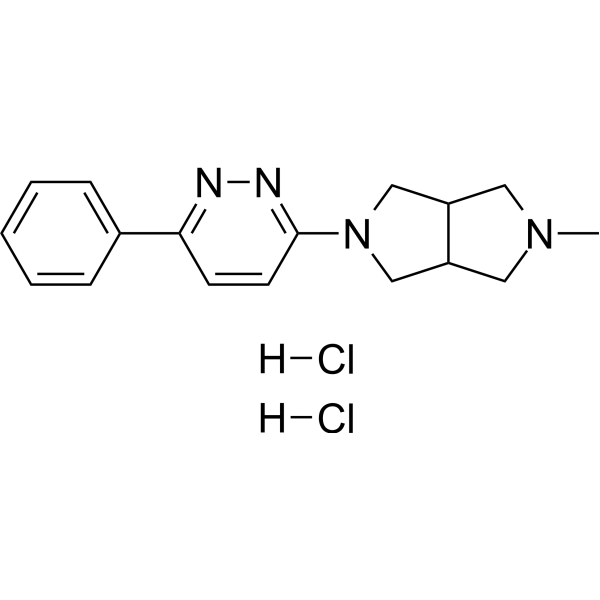
- HY-B2169
-
|
|
5-HT Receptor
Dopamine Receptor
Adrenergic Receptor
Cytochrome P450
|
Neurological Disease
|
|
Melperone is a butyrophenone with atypical antipsychotic properties. Melperone is a multireceptor antagonist with Kds of 102 nM, 180 nM, 180 nM, and 150 nM for 5-HT2A, dopamine D2, α1-adrenergic, and α2-adrenergic receptors, respectively. Melperone has weak binding to histamine H1, 5-HT2C, 5-HT1A, 5-HT1D, and muscarinic receptors, with Kd values of 580 nM, 2100 nM, 2200 nM, 3400 nM, >10000 nM, respectively. Melperone is also a CYP2D6 inhibitor. Melperone can be used for the study of schizophrenia, and agitation in the elderly .
|
-
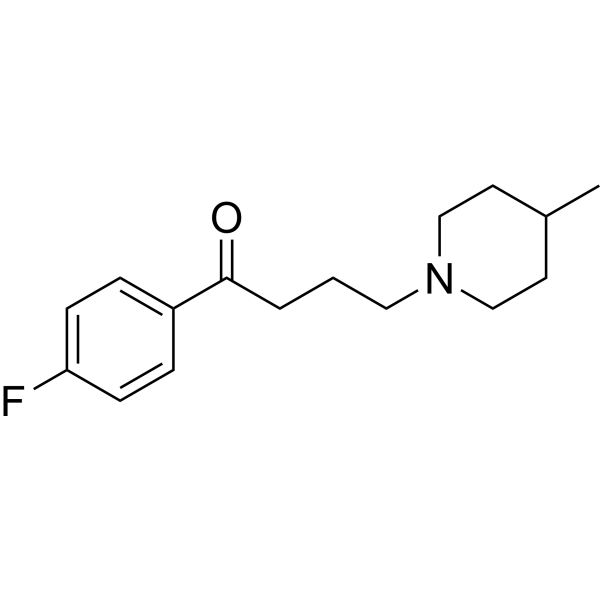
- HY-124057
-
|
|
nAChR
|
Neurological Disease
|
|
RO5126946 is a selective, orally active α7 nAChR allosteric potentiator with EC50 values of 0.06 μM (hα7 nAChR) and 770 nM (α7 nAChR), and it crosses the blood-brain barrier. RO5126946 enhances synaptic transmission and positively modulates GABA-ergic responses by increasing peak current, slowing current decay, and elevating the frequency of spontaneous inhibitory postsynaptic currents, without affecting the recovery of receptors from the desensitized state. RO5126946 not only enhances subthreshold nicotine effects and improves associative learning, but also does not interfere with the original pro-cognitive effects of nicotine. RO5126946 can be used to study cognitive impairments associated with diseases such as Alzheimer's disease and schizophrenia .
|
-

- HY-103109
-
|
|
5-HT Receptor
Dopamine Receptor
Adrenergic Receptor
Cytochrome P450
|
Neurological Disease
|
|
Melperone hydrochloride is a butyrophenone with atypical antipsychotic properties. Melperone hydrochloride is a multireceptor antagonist with Kds of 102 nM, 180 nM, 180 nM, and 150 nM for 5-HT2A, dopamine D2, α1-adrenergic, and α2-adrenergic receptors, respectively. Melperone hydrochloride has weak binding to histamine H1, 5-HT2C, 5-HT1A, 5-HT1D, and muscarinic receptors, with Kd values of 580 nM, 2100 nM, 2200 nM, 3400 nM, >10000 nM, respectively. Melperone hydrochloride is also a CYP2D6 inhibitor. Melperone hydrochloride can be used for the study of schizophrenia, and agitation in the elderly .
|
-

- HY-B2169R
-
|
|
5-HT Receptor
Reference Standards
Dopamine Receptor
Adrenergic Receptor
Cytochrome P450
|
Neurological Disease
|
|
Melperone (Standard) is the analytical standard of Melperone (HY-B2169). This product is intended for research and analytical applications. Melperone is a butyrophenone with atypical antipsychotic properties. Melperone is a multireceptor antagonist with Kds of 102 nM, 180 nM, 180 nM, and 150 nM for 5-HT2A, dopamine D2, α1-adrenergic, and α2-adrenergic receptors, respectively. Melperone has weak binding to histamine H1, 5-HT2C, 5-HT1A, 5-HT1D, and muscarinic receptors, with Kd values of 580 nM, 2100 nM, 2200 nM, 3400 nM, >10000 nM, respectively. Melperone is also a CYP2D6 inhibitor. Melperone can be used for the study of schizophrenia, and agitation in the elderly.
|
-

- HY-B2169S2
-
|
|
Isotope-Labeled Compounds
5-HT Receptor
Dopamine Receptor
Adrenergic Receptor
Cytochrome P450
|
Neurological Disease
|
|
Melperone-d4 hydrochloride is the deuterium labeled Melperone hydrochloride (HY-103109) . Melperone hydrochloride is a butyrophenone with atypical antipsychotic properties. Melperone hydrochloride is a multireceptor antagonist with Kds of 102 nM, 180 nM, 180 nM, and 150 nM for 5-HT2A, dopamine D2, α1-adrenergic, and α2-adrenergic receptors, respectively. Melperone hydrochloride has weak binding to histamine H1, 5-HT2C, 5-HT1A, 5-HT1D, and muscarinic receptors, with Kd values of 580 nM, 2100 nM, 2200 nM, 3400 nM, >10000 nM, respectively. Melperone hydrochloride is also a CYP2D6 inhibitor. Melperone hydrochloride can be used for the study of schizophrenia, and agitation in the elderly .
|
-
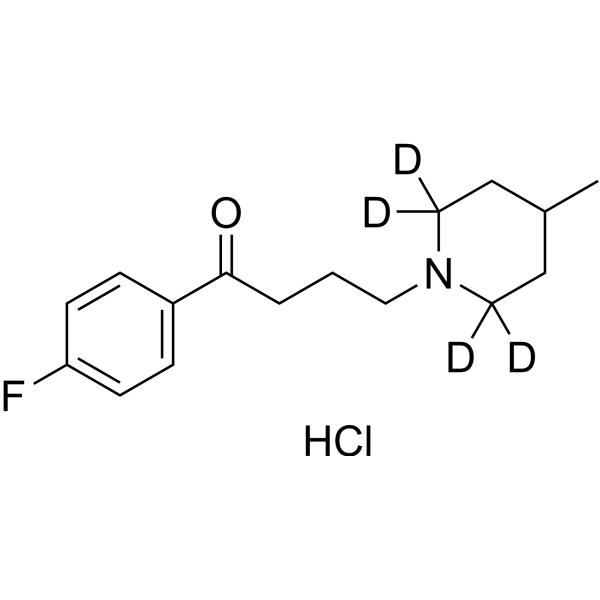
- HY-182423
-
|
|
Neurokinin Receptor
|
Neurological Disease
|
|
RO5328673 is an orally active, blood-brain barrier permeable neurokinin receptor antagonist that effectively targets human NK3 receptors (Ki=0.4 nM, Ka=0.1 nM), human NK2 receptors (Ki=1.1 nM, Ka=0.9 nM), and guinea pig NK3 receptors (Ka=0.1 nM and 0.13 nM). RO5328673 acts as an insurmountable antagonist of NK3 receptors with a slow dissociation rate, while it shows rapid association and dissociation rates at human NK2 receptors. RO5328673 potently inhibits senktide (HY-P0187)-induced enhancement of spontaneous activity in dopaminergic neurons and reverses senktide-induced changes in motor activity of gerbils. RO5328673 is widely applicable to research related to schizophrenia .
|
-

- HY-N2125
-
|
|
5-HT Receptor
iGluR
Caspase
Interleukin Related
TNF Receptor
SOD
NF-κB
|
Neurological Disease
Inflammation/Immunology
|
|
Parishin C is a brain-penetrant major bioactive component found in Gastrodia elata Blume. Parishin C is a 5-HT1A receptor agonist with an EC50 of 34 nM. Parishin C has antipsychotic and neuroprotective effects. Parishin C protects against Aβ-induced long-term potentiation damage and NMDA receptor current impairment. Parishin C reduces oxidative stress, pro-inflammatory cytokine levels, caspase activity, brain water content, and cerebral infarct volume; increases antioxidant enzyme activity and BDNF levels; improves nerve function and histopathological brain damage. Parishin C attenuates phencyclidine-induced immobility time increases, sociability deficits, and visual recognition memory impairment. Parishin C can be used for the research of ischemic stroke, Alzheimer's disease, and schizophrenia-like psychosis .
|
-
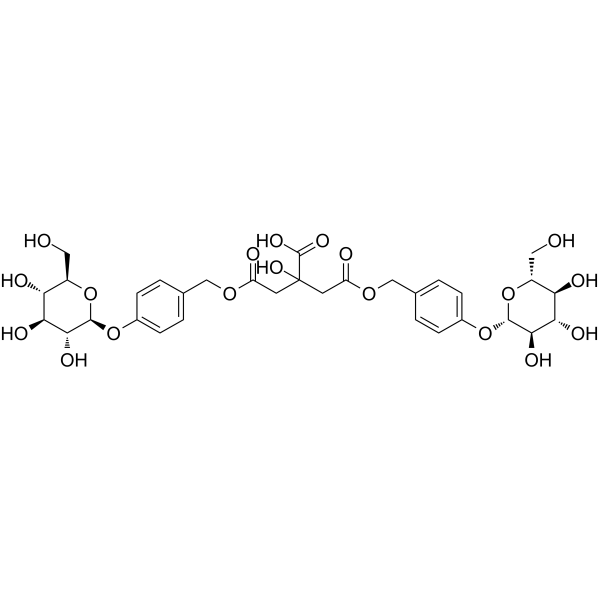
- HY-117046A
-
|
|
5-HT Receptor
Histamine Receptor
Adrenergic Receptor
|
Neurological Disease
|
|
AVN-101 hydrochloride is a potent, brain-penetrant and orally active 5-HT7 receptor antagonist (Ki of 153 pM), with slightly lesser potency toward 5-HT6, 5-HT2A, and 5HT-2C receptors (Ki values of 2.04 nM, 1.56 nM, and 1.17 nM, respectively). AVN-101 hydrochloride also exhibits a rather high affinity toward histamine H1 (Ki of 0.58 nM) and adrenergic α2A, α2B, and α2C (Ki= 0.41-3.6 nM) receptors. AVN-101 hydrochloride can be studied in such diseases as general anxiety disorders, depression, schizophrenia, Alzheimer’s disease, and multiple sclerosis .
|
-
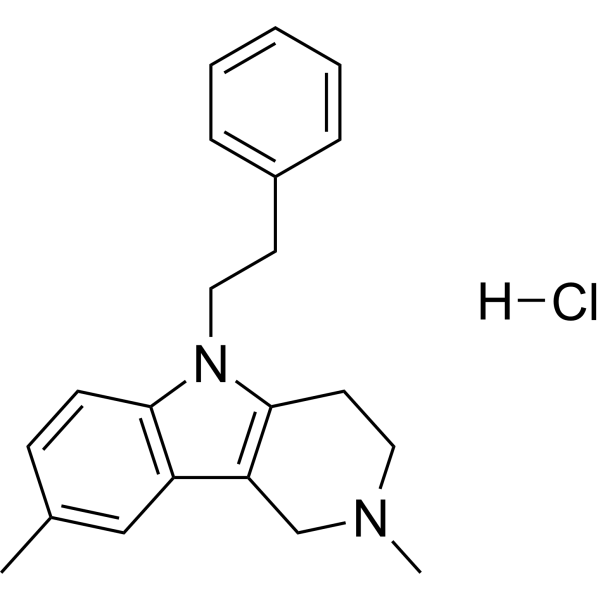
- HY-101349
-
|
|
Dopamine Receptor
Apoptosis
Autophagy
PDGFR
ERK
mTOR
|
Neurological Disease
Cancer
|
|
L 741742 is a highly selective and brain-penetrant D4 dopamine receptor antagonist, with Ki values of 3.5 nM, 770 nM and >1700 nM for human D4, D3 and D2 receptors, respectively. L 741742 suppresses PDGFRβ, ERK1/2, and mTOR signaling pathways, and impairs autophagic flux while disrupting lysosomal function.L 741742 induces G0/G1 cell-cycle arrest and apoptosis, promotes neuronal differentiation of normal human neural stem cells, selectively inhibits growth and clonogenic potential of glioblastoma neural stem cells and primary glioblastoma tumor cells, exerts synergistic effects with Temozolomide (TMZ) (HY-17364) against glioblastoma neural stem cells in vitro, and inhibits glioblastoma neural stem cell xenograft growth in immunocompromised mice. L 741742 can be used for the research of schizophrenia and glioblastoma .
|
-

- HY-12708
-
Chlorpromazine
Maximum Cited Publications
128 Publications Verification
|
Dopamine Receptor
Cytochrome P450
Autophagy
5-HT Receptor
|
Cardiovascular Disease
Neurological Disease
Cancer
|
|
Chlorpromazine is an orally active, blood-brain barrier-transparent antipsychotic agent that effectively antagonises D2 dopamine receptors and 5-HT2A, which is widely used in schizophrenia and other psychiatric disorders. Chlorpromazine exerts anti-cancer activity through a variety of pathways, including anti-proliferation, induction of autophagy and cycle arrest (G2-M phase), inhibition of cytochrome c oxidase (CcO), inhibition of tumour growth and metastasis, and inhibition of tumour immune escape. Chlorpromazine also blocks hNav1.7 channels (IC50=25.9 μM; concentration-dependent) and HERG potassium channels (IC50=21.6 μM), which has potential for analgesic and cardiac arrhythmic studies. Chlorpromazine also can inhibit clathrin-mediated endocytosis .
|
-
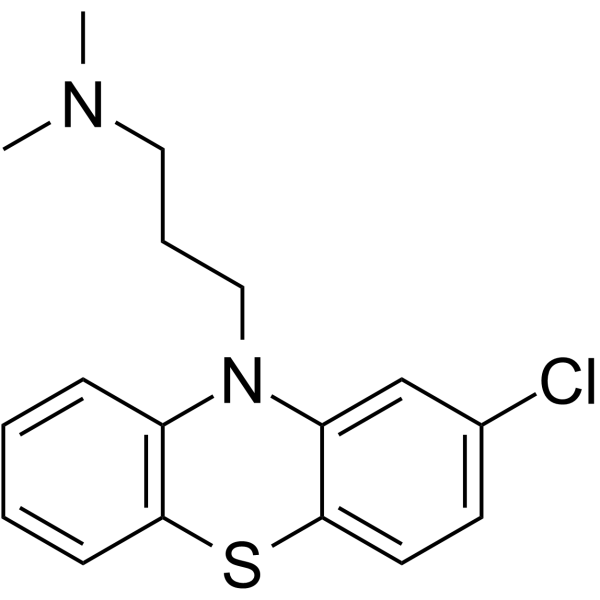
- HY-B1752
-
|
LY 171555; (-)-LY 141865
|
Dopamine Receptor
Calcium Channel
Bcl-2 Family
iGluR
Apoptosis
|
Neurological Disease
|
|
Quinpirole (LY 171555; (-)-LY 141865) is a D2/D3 dopamine receptor agonist and a CaV1.3 calcium channel modulator. Quinpirole normalizes dendritic spine density in dopamine-depleted striatum, upregulates the protein expression of BCL2 and GluR2, downregulates the protein expression of BAX, and delays the onset of seizures. Quinpirole enhances learning and memory, inhibits neuronal apoptosis (apoptosis), and induces anxiety-like, stereotyped, and compulsive behaviors. Quinpirole disrupts prepulse inhibition in rhesus monkeys, enhances the activity of paraventricular thalamic neurons to promote recovery from Isoflurane anesthesia, and alters the composition of the gut microbiota in rats. Quinpirole can be used in research related to dyskinesia, pain, epilepsy, and neurological disorders including anxiety disorder, obsessive-compulsive disorder, and schizophrenia .
|
-

- HY-101349A
-
|
|
Dopamine Receptor
Apoptosis
Autophagy
PDGFR
ERK
mTOR
|
Neurological Disease
Cancer
|
|
L 741742 hydrochloride is a highly selective and brain-penetrant D4 dopamine receptor antagonist, with Ki values of 3.5 nM, 770 nM and >1700 nM for human D4, D3 and D2 receptors, respectively. L 741742 hydrochloride suppresses PDGFRβ, ERK1/2, and mTOR signaling pathways, and impairs autophagic flux while disrupting lysosomal function.L 741742 hydrochloride induces G0/G1 cell-cycle arrest and apoptosis, promotes neuronal differentiation of normal human neural stem cells, selectively inhibits growth and clonogenic potential of glioblastoma neural stem cells and primary glioblastoma tumor cells, exerts synergistic effects with Temozolomide (TMZ) (HY-17364) against glioblastoma neural stem cells in vitro, and inhibits glioblastoma neural stem cell xenograft growth in immunocompromised mice. L 741742 hydrochloride can be used for the research of schizophrenia and glioblastoma .
|
-
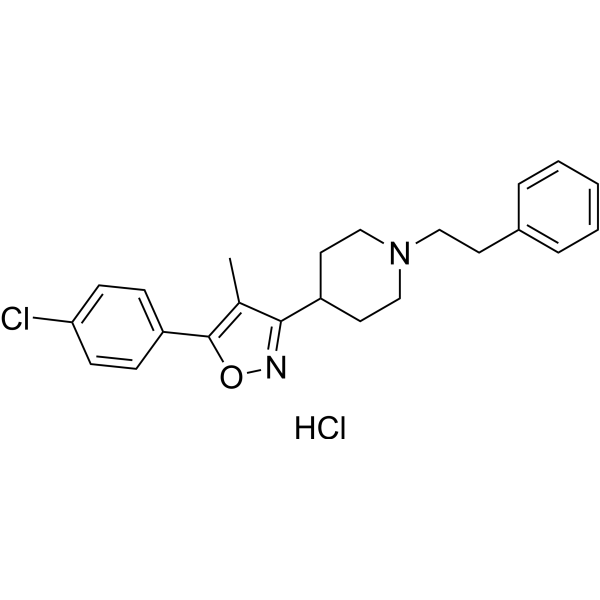
- HY-B0407A
-
|
|
Dopamine Receptor
Autophagy
Cytochrome P450
5-HT Receptor
|
Cardiovascular Disease
Neurological Disease
Cancer
|
|
Chlorpromazine hydrochloride is an orally active, blood-brain barrier-transparent antipsychotic agent that effectively antagonises D2 dopamine receptors and 5-HT2A, which is widely used in schizophrenia and other psychiatric disorders. Chlorpromazine hydrochloride exerts anti-cancer activity through a variety of pathways, including anti-proliferation, induction of autophagy and cycle arrest (G2-M phase), inhibition of cytochrome c oxidase (CcO), inhibition of tumour growth and metastasis, and inhibition of tumour immune escape. Chlorpromazine hydrochloride also blocks hNav1.7 channels (IC50=25.9 μM; concentration-dependent) and HERG potassium channels (IC50=21.6 μM), which has potential for analgesic and cardiac arrhythmic studies. Chlorpromazine hydrochloride also can inhibit clathrin-mediated endocytosis .
|
-
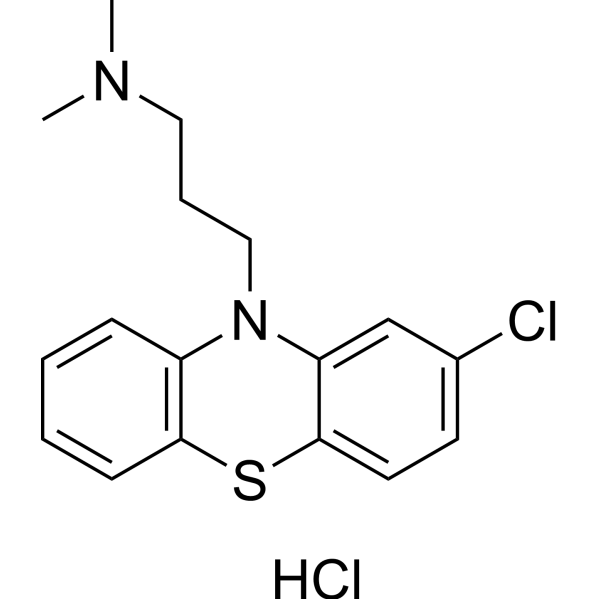
- HY-132806
-
|
RG-7816; RO-7017773
|
GABA Receptor
|
Neurological Disease
|
|
Alogabat is a positive allosteric modulator (PAM) and agonist (Ki <100 nM) of the GABAA α5 receptor, targeting the α5β3γ2 subunit with a Ki of 8.7 nM. Alogabat increases the expression level of α5β3γ2 in oocytes (1.97-fold). GABAA has been implicated in cognitive impairment associated with central nervous system (CNS) disorders, brain cancer (including brain tumors such as medulloblastoma), and can be used in the study of mild cognitive impairment (MCI), amnestic MCI (aMCI), age-associated memory impairment (AAMI), age-related cognitive decline (ARCD), dementia, Alzheimer's disease (AD), prodromal AD, post-traumatic stress disorder (PTSD), schizophrenia, bipolar disorder, amyotrophic lateral sclerosis (ALS), cognitive impairment associated with cancer treatment, mental retardation, Parkinson's disease (PD), autism spectrum disorder, fragile X, Rett syndrome, obsessive-compulsive behavior, and substance addiction .
|
-
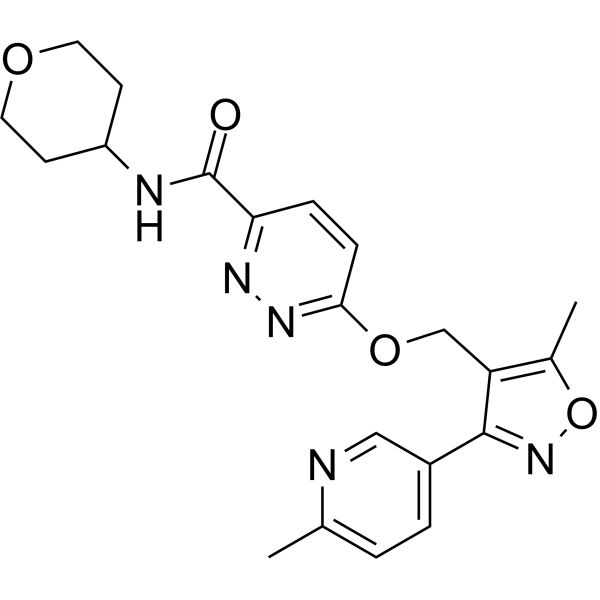
- HY-B0407AR
-
|
|
Reference Standards
Dopamine Receptor
Autophagy
Cytochrome P450
5-HT Receptor
|
Cardiovascular Disease
Neurological Disease
Cancer
|
|
Chlorpromazine (hydrochloride) (Standard) is the analytical standard of Chlorpromazine (hydrochloride). This product is intended for research and analytical applications. Chlorpromazine hydrochloride is an orally active, blood-brain barrier-transparent antipsychotic agent that effectively antagonises D2 dopamine receptors and 5-HT2A, which is widely used in schizophrenia and other psychiatric disorders. Chlorpromazine hydrochloride exerts anti-cancer activity through a variety of pathways, including anti-proliferation, induction of autophagy and cycle arrest (G2-M phase), inhibition of cytochrome c oxidase (CcO), inhibition of tumour growth and metastasis, and inhibition of tumour immune escape. Chlorpromazine hydrochloride also blocks hNav1.7 channels (IC50=25.9 μM; concentration-dependent) and HERG potassium channels (IC50=21.6 μM), which has potential for analgesic and cardiac arrhythmic studies. Chlorpromazine hydrochloride also can inhibit clathrin-mediated endocytosis .
|
-

- HY-175532
-
|
|
mAChR
|
Neurological Disease
|
|
M4 mAChR Modulator-2 is an orally active, selective, brain-penetrant positive allosteric modulator (PAM) of the M4 muscarinic acetylcholine receptor (M4 mAChR) (EC50 = 513 nM). M4 mAChR Modulator-2 exhibits high target selectivity, showing negligible affinity and low inhibition rates for non-target receptors (D1R/D2R/D3R, 5-HT subtypes, κ/δ/μ opioid receptors, H1, M1/M2) while specifically binding to M4 mAChR with a Ki of 377 nM and an inhibition rate of 62.8%. M4 mAChR Modulator-2 reverses Dizocilpine (MK-801) (HY-15084B)-induced hyperlocomotion in mice. M4 mAChR Modulator-2 can be used for the study of schizophrenia
|
-

- HY-N2125R
-
|
|
Reference Standards
5-HT Receptor
iGluR
Caspase
Interleukin Related
TNF Receptor
SOD
NF-κB
|
Neurological Disease
Inflammation/Immunology
|
|
Parishin C (Standard) is the analytical standard of Parishin C (HY-N2125). This product is intended for research and analytical applications. Parishin C is a brain-penetrant major bioactive component found in Gastrodia elata Blume. Parishin C is a 5-HT1A receptor agonist with an EC50 of 34 nM. Parishin C has antipsychotic and neuroprotective effects. Parishin C protects against Aβ-induced long-term potentiation damage and NMDA receptor current impairment. Parishin C reduces oxidative stress, pro-inflammatory cytokine levels, caspase activity, brain water content, and cerebral infarct volume; increases antioxidant enzyme activity and BDNF levels; improves nerve function and histopathological brain damage. Parishin C attenuates phencyclidine-induced immobility time increases, sociability deficits, and visual recognition memory impairment. Parishin C can be used for the research of ischemic stroke, Alzheimer's disease, and schizophrenia-like psychosis .
|
-

- HY-W041470R
-
|
|
Reference Standards
Endogenous Metabolite
|
Metabolic Disease
|
|
Chlorpromazine (hydrochloride) (Standard) is the analytical standard of Chlorpromazine (hydrochloride). This product is intended for research and analytical applications. Chlorpromazine hydrochloride is an orally active, blood-brain barrier-transparent antipsychotic agent that effectively antagonises D2 dopamine receptors and 5-HT2A, which is widely used in schizophrenia and other psychiatric disorders. Chlorpromazine hydrochloride exerts anti-cancer activity through a variety of pathways, including anti-proliferation, induction of autophagy and cycle arrest (G2-M phase), inhibition of cytochrome c oxidase (CcO), inhibition of tumour growth and metastasis, and inhibition of tumour immune escape. Chlorpromazine hydrochloride also blocks hNav1.7 channels (IC50=25.9 μM; concentration-dependent) and HERG potassium channels (IC50=21.6 μM), which has potential for analgesic and cardiac arrhythmic studies. Chlorpromazine hydrochloride also can inhibit clathrin-mediated endocytosis .
|
-

- HY-P6292
-
|
|
PACAP Receptor
PKA
ERK
PI3K
Akt
GSK-3
|
Neurological Disease
Cancer
|
|
KS-133 is a bicyclic peptide with VIPR2 antagonistic activity that can cross the blood-brain barrier. KS-133 selectively blocks VIPR2-mediated Gq/Ca, Gs/cAMP, cAMP/PKA/ERK and PI3K/AKT/GSK3β signaling pathways. KS-133 inhibits VIPR2 agonist-induced CREB phosphorylation in the prefrontal cortex of mice. KS-133 shifts the polarization direction of macrophages toward M1. KS-133 attenuates cancer cell proliferation and reduces the cell cycle distribution level at the S-M phase. KS-133 exerts antitumor effects in a mouse model of colorectal cancer. KS-133 reverses cognitive decline in mouse models of psychiatric disorders. KS-133 can be used for research related to schizophrenia, colorectal cancer and breast cancer .
|
-

- HY-B2167R
-
|
DHA (Standard); Cervonic acid (Standard)
|
Reference Standards
Endogenous Metabolite
|
Neurological Disease
Cancer
|
|
Docosahexaenoic acid (Standard) is the analytical standard of Docosahexaenoic acid. This product is intended for research and analytical applications. Docosahexaenoic Acid (DHA) is an omega-3 fatty acid abundantly present brain and retina. It can be obtained directly from fish oil and maternal milk.
In Vitro: Docosahexaenoic acid (DHA) is essential for the growth and functional development of the brain in infants. DHA is also required for maintenance of normal brain function in adults. The inclusion of plentiful DHA in the diet improves learning ability and memory . DHA is an essential requirement in every step of brain development like neural cell proliferation, migration, differentiation, synaptogenesis. The multiple double bonds and unique structure allow DHA to impart special membrane characteristics for effective cell signaling. Many development disorders like dyslexia, autism spectrum disorder, attention deficit hyperactivity disorder, schizophrenia etc. are causally related to decreased level of DHA . DHA is a potent RXR ligand inducing robust RXR activation already at low micro molar concentrations. The EC50 for RXRα activation by DHA is about 5-10 μM fatty acid .
In Vivo: Docosahexaenoic acid administration over 10 weeks significantly reduces the number of reference memory errors, without affecting the number of working memory errors, and significantly increases the docosahexaenoic acid content and the docosahexaenoic acid/arachidonic acid ratio in both the hippocampus and the cerebral cortex . DHA treatment exerts neuroprotective actions on an experimental mouse model of PD. There is a decrease tendency in brain lipid oxidation of MPTP mice but it does not significantly .
|
-

| Cat. No. |
Product Name |
Type |
-
- HY-65036
-
|
4-Bromo-2-pyridone
|
Biochemical Assay Reagents
|
|
4-Bromo-2-hydroxypyridine is an intermediate. 4-Bromo-2-hydroxypyridine can be used to synthesize M1 muscarinic acetylcholine receptor (M1 mAChR) positive allosteric modulators. 4-Bromo-2-hydroxypyridine can be used in the research of Alzheimer's disease and schizophrenia .
|
-
- HY-15401A
-
|
|
Biochemical Assay Reagents
|
|
WAY 163909 hydrochloride is an orally active, blood-brain barrier permeable 5-HT2C receptor-selective agonist. WAY 163909 hydrochloride exhibits an EC50 of 8 nM and a Ki of 10.5 nM for h5-HT2C. Instead of triggering apoptosis, WAY 163909 hydrochloride induces anorectic, antipsychotic-like, antidepressant-like, anti-aggressive and anti-compulsive effects. WAY 163909 hydrochloride alleviates ketamine-induced hypothermia, but impairs sexual function at high doses. With rapid antidepressant-like properties, WAY 163909 hydrochloride can be used in research related to obesity, schizophrenia, depression, obsessive-compulsive disorder, and anesthesia-induced hypothermia .
|
| Cat. No. |
Product Name |
Target |
Research Area |
-
- HY-P6292A
-
|
|
PACAP Receptor
|
Neurological Disease
Inflammation/Immunology
Cancer
|
|
KS-133 TFA is a highly selective and potent antagonist of the vascular active enteropeptide receptor 2 (VIPR2) with IC50 values for Ca influx measurement and cAMP measurement of 24.8 nM and 500 nM, respectively. KS-133 TFA reverses the tumor-promoting M2 phenotype of tumor-associated macrophages to the anti-tumor M1 phenotype, alters the tumor immune microenvironment, and inhibits tumor growth. KS-133 TFA can be used for research on schizophrenia and cancer immune regulation .
|
-
- HY-P6292
-
|
|
PACAP Receptor
PKA
ERK
PI3K
Akt
GSK-3
|
Neurological Disease
Cancer
|
|
KS-133 is a bicyclic peptide with VIPR2 antagonistic activity that can cross the blood-brain barrier. KS-133 selectively blocks VIPR2-mediated Gq/Ca, Gs/cAMP, cAMP/PKA/ERK and PI3K/AKT/GSK3β signaling pathways. KS-133 inhibits VIPR2 agonist-induced CREB phosphorylation in the prefrontal cortex of mice. KS-133 shifts the polarization direction of macrophages toward M1. KS-133 attenuates cancer cell proliferation and reduces the cell cycle distribution level at the S-M phase. KS-133 exerts antitumor effects in a mouse model of colorectal cancer. KS-133 reverses cognitive decline in mouse models of psychiatric disorders. KS-133 can be used for research related to schizophrenia, colorectal cancer and breast cancer .
|
-
- HY-U00372
-
|
|
Peptides
|
Neurological Disease
|
|
2: PN: US20040072744 SEQID: 2 claimed protein is a synthetic peptide, used for the research of Down's syndrome and schizophrenia.
|
-
- HY-P5857
-
|
Micrurotoxin 2
|
GABA Receptor
|
Neurological Disease
|
|
MmTx2 toxin is a GABAA receptor modulator that enhances GABAA receptor sensitivity to agonists. MmTx2 toxin can be obtained from venom of coral snake. MmTx2 toxin can be used in the study of neurological diseases such as epilepsy, schizophrenia and chronic pain .
|
| Cat. No. |
Product Name |
Target |
Research Area |
Image |
-
- HY-P992360
-
|
|
GABA Receptor
|
Neurological Disease
Cancer
|
|
GT-002 is a partial positive allosteric modulator targeting the α3 subtype of GABAA receptors, as well as a specific binder of tumor-associated TF-glycosylated LYPD3. GT-002 mildly enhances GABA-induced chloride currents by binding to the benzodiazepine site of GABAA receptors, thereby alleviating prefrontal hypofunction and improving cognitive, memory and social interaction abilities. GT-002 can be used in research related to schizophrenia spectrum disorders, various squamous cell carcinomas, colorectal cancer, non-small cell lung cancer, and aromatic L-amino acid decarboxylase deficiency .
|
-

(5)
| Cat. No. |
Product Name |
Category |
Target |
Chemical Structure |
-
- HY-101037
-
-
-
- HY-A0019
-
-
-
- HY-I1070
-
|
(R)-Isoleucine
|
Microorganisms
Source Classification
|
ASCT
|
|
D-Isoleucine is a selective competitive activator of the Asc-1 antiporter (Ki=0.98 mM). D-Isoleucine promotes the release of D-serine and glycine by binding to the Asc-1 protein on the neuronal cell membrane, and enhances NMDA receptor-dependent synaptic plasticity. D-Isoleucine can be used in the study of neurodegenerative diseases (such as Alzheimer's disease and schizophrenia). D-Isoleucine also acts as a non-classical D-amino acid, interferes with bacterial peptidoglycan synthesis, and inhibits the formation of Staphylococcus aureus biofilm, and has potential antibacterial application value[1][2].
|
-
-
- HY-W002112
-
-
-
- HY-W001160
-
-
-
- HY-B2167R
-
|
DHA (Standard); Cervonic acid (Standard)
|
Structural Classification
Human Gut Microbiota Metabolites
Microorganisms
Ketones, Aldehydes, Acids
Disease markers
Endogenous metabolite
Cardiovascular System Disorder
Source Classification
|
Reference Standards
Endogenous Metabolite
|
|
Docosahexaenoic acid (Standard) is the analytical standard of Docosahexaenoic acid. This product is intended for research and analytical applications. Docosahexaenoic Acid (DHA) is an omega-3 fatty acid abundantly present brain and retina. It can be obtained directly from fish oil and maternal milk.
In Vitro: Docosahexaenoic acid (DHA) is essential for the growth and functional development of the brain in infants. DHA is also required for maintenance of normal brain function in adults. The inclusion of plentiful DHA in the diet improves learning ability and memory . DHA is an essential requirement in every step of brain development like neural cell proliferation, migration, differentiation, synaptogenesis. The multiple double bonds and unique structure allow DHA to impart special membrane characteristics for effective cell signaling. Many development disorders like dyslexia, autism spectrum disorder, attention deficit hyperactivity disorder, schizophrenia etc. are causally related to decreased level of DHA . DHA is a potent RXR ligand inducing robust RXR activation already at low micro molar concentrations. The EC50 for RXRα activation by DHA is about 5-10 μM fatty acid .
In Vivo: Docosahexaenoic acid administration over 10 weeks significantly reduces the number of reference memory errors, without affecting the number of working memory errors, and significantly increases the docosahexaenoic acid content and the docosahexaenoic acid/arachidonic acid ratio in both the hippocampus and the cerebral cortex . DHA treatment exerts neuroprotective actions on an experimental mouse model of PD. There is a decrease tendency in brain lipid oxidation of MPTP mice but it does not significantly .
|
-
-
- HY-113323
-
-
-
- HY-W012922
-
-
-
- HY-W009390
-
-
-
- HY-N2125
-
|
|
Structural Classification
Gastrodia elata Bl.
Orchidaceae
Phenols
Plants
Source Classification
|
5-HT Receptor
iGluR
Caspase
Interleukin Related
TNF Receptor
SOD
NF-κB
|
|
Parishin C is a brain-penetrant major bioactive component found in Gastrodia elata Blume. Parishin C is a 5-HT1A receptor agonist with an EC50 of 34 nM. Parishin C has antipsychotic and neuroprotective effects. Parishin C protects against Aβ-induced long-term potentiation damage and NMDA receptor current impairment. Parishin C reduces oxidative stress, pro-inflammatory cytokine levels, caspase activity, brain water content, and cerebral infarct volume; increases antioxidant enzyme activity and BDNF levels; improves nerve function and histopathological brain damage. Parishin C attenuates phencyclidine-induced immobility time increases, sociability deficits, and visual recognition memory impairment. Parishin C can be used for the research of ischemic stroke, Alzheimer's disease, and schizophrenia-like psychosis .
|
-
-
- HY-101037R
-
-
-
- HY-19332R
-
-
-
- HY-139568
-
-
-
- HY-B1131R
-
|
Sodium taurocholate hydrate (Standard); N-Choloyltaurine sodium salt hydrate (Standard)
|
Structural Classification
Endogenous metabolite
Steroids
Source Classification
|
Reference Standards
Endogenous Metabolite
|
|
Zuclopenthixol (dihydrochloride) (Standard) is the analytical standard of Zuclopenthixol (dihydrochloride). This product is intended for research and analytical applications. Zuclopenthixol ((Z)-Clopenthixol) dihydrochloride is a thioxanthene derivative which acts as a mixed dopamine D1/D2 receptor antagonist. Zuclopenthixol dihydrochloride is used in the study of schizophrenia .
|
-
-
- HY-A0019R
-
-
-
- HY-W002112R
-
-
-
- HY-W012922R
-
|
2-Methylpent-4-enoic acid (Standard)
|
Structural Classification
other families
Ketones, Aldehydes, Acids
Plants
Source Classification
|
Reference Standards
Drug Intermediate
|
|
2-Methyl-4-pentenoic Acid (Standard) (2-Methylpent-4-enoic acid (Standard)) is the analytical standard of 2-Methyl-4-pentenoic Acid (HY-W012922). This product is intended for research and analytical applications. 2-Methyl-4-pentenoic Acid (2-Methylpent-4-enoic acid) is an organic acid that can be used as a precursor for synthesizing other compounds. Additionally, changes in the level of 2-Methyl-4-pentenoic Acid may be associated with the susceptibility to schizophrenia and type 2 diabetes.
|
-
-
- HY-W001160R
-
-
-
- HY-N2125R
-
|
|
Structural Classification
Gastrodia elata Bl.
Orchidaceae
Phenols
Plants
Source Classification
|
Reference Standards
5-HT Receptor
iGluR
Caspase
Interleukin Related
TNF Receptor
SOD
NF-κB
|
|
Parishin C (Standard) is the analytical standard of Parishin C (HY-N2125). This product is intended for research and analytical applications. Parishin C is a brain-penetrant major bioactive component found in Gastrodia elata Blume. Parishin C is a 5-HT1A receptor agonist with an EC50 of 34 nM. Parishin C has antipsychotic and neuroprotective effects. Parishin C protects against Aβ-induced long-term potentiation damage and NMDA receptor current impairment. Parishin C reduces oxidative stress, pro-inflammatory cytokine levels, caspase activity, brain water content, and cerebral infarct volume; increases antioxidant enzyme activity and BDNF levels; improves nerve function and histopathological brain damage. Parishin C attenuates phencyclidine-induced immobility time increases, sociability deficits, and visual recognition memory impairment. Parishin C can be used for the research of ischemic stroke, Alzheimer's disease, and schizophrenia-like psychosis .
|
-
-
- HY-W041470R
-
|
|
Ketones, Aldehydes, Acids
Endogenous metabolite
Source Classification
|
Reference Standards
Endogenous Metabolite
|
|
Chlorpromazine (hydrochloride) (Standard) is the analytical standard of Chlorpromazine (hydrochloride). This product is intended for research and analytical applications. Chlorpromazine hydrochloride is an orally active, blood-brain barrier-transparent antipsychotic agent that effectively antagonises D2 dopamine receptors and 5-HT2A, which is widely used in schizophrenia and other psychiatric disorders. Chlorpromazine hydrochloride exerts anti-cancer activity through a variety of pathways, including anti-proliferation, induction of autophagy and cycle arrest (G2-M phase), inhibition of cytochrome c oxidase (CcO), inhibition of tumour growth and metastasis, and inhibition of tumour immune escape. Chlorpromazine hydrochloride also blocks hNav1.7 channels (IC50=25.9 μM; concentration-dependent) and HERG potassium channels (IC50=21.6 μM), which has potential for analgesic and cardiac arrhythmic studies. Chlorpromazine hydrochloride also can inhibit clathrin-mediated endocytosis .
|
-
-
- HY-180718
-
-
| Cat. No. |
Product Name |
Chemical Structure |
-
- HY-101037S1
-
|
|
|
Sarcosine-d3 is the deuterium labeled Sarcosine. Sarcosine (N-Methylglycine), an endogenous amino acid, is a competitive glycine transporter type I (GlyT1) inhibitor and N-methyl-D-aspartate (NMDA) receptor co-agonist. Sarcosine increases the glycine concentration, resulting in an indirect potentiation of the NMDA receptor. Sarcosine is commonly used for the research of schizophrenia .
|
-
-
- HY-14539S2
-
|
|
|
Clozapine-d4 is the deuterium labeled Clozapine. Clozapine is an antipsychotic used for the research of schizophrenia. Clozapine has high affinity for a number of neuroreceptors .
|
-
-
- HY-14539S
-
|
|
|
Clozapine-d8 is the deuterium labeled Clozapine. Clozapine is an antipsychotic used for the research of schizophrenia. Clozapine has high affinity for a number of neuroreceptors .
|
-
-
- HY-113323S
-
|
|
|
3-Methoxy-4-hydroxyphenylglycol-d3 (HMPG-d3) is the deuterium labeled 3-Methoxy-4-hydroxyphenylglycol. 3-Methoxy-4-hydroxyphenylglycol is a metabolite of norepinephrine degradation in the brain. 3-Methoxy-4-hydroxyphenylglycol (HMPG) serves as an indicator of noradrenergic activity in the central nervous system. 3-Methoxy-4-hydroxyphenylglycol (HMPG) can be used for research on diseases such as depression and chronic schizophrenia.
|
-
-
- HY-105182S1
-
|
|
|
Xanomeline-d3 (LY-246708-d3) is deuterium labeled Xanomeline. Xanomeline, as an effective and selective muscarinic type 1 and type 4 (M1/M4) receptor agonist, increases neuronal excitability. Xanomeline can be used for the research of neurological disorders, such as schizophrenia .
|
-
-
- HY-101037S
-
|
|
|
Sarcosine- 15N is the 15N-labeled Sarcosine. Sarcosine (N-Methylglycine), an endogenous amino acid, is a competitive glycine transporter type I (GlyT1) inhibitor and N-methyl-D-aspartate (NMDA) receptor co-agonist. Sarcosine increases the glycine concentration, resulting in an indirect potentiation of the NMDA receptor. Sarcosine is commonly used for the research of schizophrenia .
|
-
-
- HY-W002112S
-
|
|
|
(±)-Nornicotine-d4 is the deuterium labeled (±)-Nornicotine (HY-W002112). (±)-Nornicotine is a major metabolite of Nicotine. (±)-Nornicotine is a partial nAChRs agonist, specifically activating receptor subtypes containing α7 and α6 subunits. (±)-Nornicotine disrupts β-catenin and ZO-1, and induces F-actin depolymerization. (±)-Nornicotine supports self-administration behavior. (±)-Nornicotine can be used in the research of atherosclerosis, Alzheimer's disease, and schizophrenia .
|
-
-
- HY-17410S
-
|
|
|
Iloperidone-d3 is the deuterium labeled Iloperidone. Iloperidone (HP 873) is a D2/5-HT2 receptor antagonist. Iloperidone is an atypical antipsychotic for the schizophrenia symptoms .
|
-
-
- HY-W009390S
-
|
|
|
DL-Homocystine-3,3,3’,3’,4,4,4’,4’-d8 is the deuterium labeled DL-Homocystine. DL-Homocystine is the double-bonded form of homocysteine and homocysteine is recognized as an important substance in the pathogenesis and pathophysiology of schizophrenia .
|
-
-
- HY-A0019S
-
|
|
|
Paliperidone-d4 is the deuterium labeled Paliperidone. Paliperidone (9-Hydroxyrisperidone), the major active metabolite of Risperidone, is a dopamine D2 antagonist and 5-HT2A antagonist. Paliperidone is also active as an antagonist at α1 and α2 adrenergic receptors and H1-histaminergic receptors. Paliperidone, a antipsychotic agent, shows efficacy against schizophrenia .
|
-
-
- HY-14546S
-
|
|
|
Aripiprazole-d8 (OPC-14597-d8) is the deuterium labeled Aripiprazole (HY-14546). Aripiprazole (OPC-14597), an atypical antipsychotic, is a potent and high-affinity dopamine D2 receptor partial agonist. Aripiprazole is an inverse agonist at 5-HT2B and 5-HT2A receptors and displays partial agonist actions at 5-HT1A, 5-HT2C, D3, and D4 receptors. Aripiprazole can be used for the research of schizophrenia and COVID19.
|
-
-
- HY-W748519
-
|
|
|
Sarcosine- 13C3 (N-Methylglycine- 13C3; Sarcosin- 13C3) is the 13C-labeled Sarcosine (HY-101037). Sarcosine (N-Methylglycine), an endogenous amino acid, is a competitive glycine transporter type I (GlyT1) inhibitor and N-methyl-D-aspartate (NMDA) receptor co-agonist. Sarcosine increases the glycine concentration, resulting in an indirect potentiation of the NMDA receptor. Sarcosine is commonly used for the research of schizophrenia .
|
-
-
- HY-17637S2
-
|
|
|
Lumateperone-d4 (ITI-007-d4) is deuterium labeled Lumateperone. Lumateperone (ITI-007) is an orally active 5-HT2A receptor antagonist (Ki = 0.54 nM), a partial agonist of presynaptic D2 receptors and an antagonist of postsynaptic D2 receptors (Ki = 32 nM), and a dopamine D1 receptor modulator. Lumateperone has anticancer activity and can also be used for the study of schizophrenia and bipolar depression .
|
-
-
- HY-A0019AS
-
|
|
|
Paliperidone palmitate-d4 (9-Hydroxyrisperidone palmitate-d4) is the deuterium labeled Paliperidone palmitate (HY-A0019A). Paliperidone palmitate is an orally effective competitive antagonist of dopamine D2 receptors and 5-hydroxytryptamine 2A (5-HT2A) receptors that can cross the blood-brain barrier. Paliperidone palmitate competitively inhibits the effects of dopamine and 5-hydroxytryptamine by binding to dopamine D2 receptors and 5-HT2A receptors, regulating the balance of the neurotransmitter system and thus exerting antipsychotic activity. Paliperidone palmitate is mainly used in the research field of schizophrenia .
|
-
-
- HY-B2169S2
-
|
|
|
Melperone-d4 hydrochloride is the deuterium labeled Melperone hydrochloride (HY-103109) . Melperone hydrochloride is a butyrophenone with atypical antipsychotic properties. Melperone hydrochloride is a multireceptor antagonist with Kds of 102 nM, 180 nM, 180 nM, and 150 nM for 5-HT2A, dopamine D2, α1-adrenergic, and α2-adrenergic receptors, respectively. Melperone hydrochloride has weak binding to histamine H1, 5-HT2C, 5-HT1A, 5-HT1D, and muscarinic receptors, with Kd values of 580 nM, 2100 nM, 2200 nM, 3400 nM, >10000 nM, respectively. Melperone hydrochloride is also a CYP2D6 inhibitor. Melperone hydrochloride can be used for the study of schizophrenia, and agitation in the elderly .
|
-
-
- HY-107434S
-
|
|
|
Molindone-d8 is the deuterium labeled Molindone. Molindone hydrochloride (EN-1733A) is a therapeutic antipsychotic, used in the treatment of schizophrenia, works by blocking the effects of dopamine in the brain, leading to diminished psychoses .
|
-
-
- HY-17410S1
-
|
|
|
Iloperidone-d3 hydrochloride is deuterated labeled Iloperidone (HY-17410). Iloperidone (HP 873) is a D2/5-HT2 receptor antagonist. Iloperidone is an atypical antipsychotic for the schizophrenia symptoms .
|
-
-
- HY-10933S
-
|
|
|
CX516-d10 is the deuterium labeled CX516. CX516 (BDP 12) is an ampakine and acts as an AMPA receptor positive allosteric modulator for the research of Alzheimer's disease, schizophrenia and mild cognitive impairment (MCI) .
|
-
-
- HY-17410S2
-
|
|
|
Iloperidone- 13C,d3 (HP 873- 13C,d3) is 13C labeled Iloperidone. Iloperidone (HP 873) is a D2/5-HT2 receptor antagonist. Iloperidone is an atypical antipsychotic for the schizophrenia symptoms .
|
-
-
- HY-G0003S1
-
|
|
|
Iloperidone metabolite Hydroxy Iloperidone-d3 is the deuterium labeled Iloperidone metabolite Hydroxy Iloperidone (HY-G0003). Iloperidone metabolite Hydroxy Iloperidone (P88; Hydroxy Iloperidone) is an active reduced metabolite of Iloperidone (HY-17410). Iloperidone metabolite Hydroxy Iloperidone can be used for the research of schizophrenia .
|
-
-
- HY-W741434
-
|
|
|
Acetophenazine dimaleate-d4 is the deuterium labeled Acetophenazine (dimaleate) (HY-B1262). Acetophenazine dimaleate, a phenothiazine derivative, is an antipsychotic agent. Acetophenazine dimaleate primarily blocks dopamine D2 receptors in the brain. Acetophenazine dimaleate can be used for researching psychotic disorders such as schizophrenia and anxious depression .
|
-
-
- HY-10121S2
-
|
|
|
Asenapine- 13C,d3 is 13C and deuterated labeled Asenapine (HY-10121). Asenapine (Org 5222), an atypical antipsychotic, is an antagonist of serotonin receptors (pKi: 8.4-10.5), adrenoceptors (pKi: 8.9-9.5), dopamine receptors (pKi: 8.9-9.4) and histamine receptors (pKi: 8.2-9.0). Asenapine can be used in the research of schizophrenia and bipolar disorder .
|
-
-
- HY-W769200
-
|
|
|
Asenapine- 13C,d3 Maleate is the deuterium labeled and 13C-Asenapine Maleate (HY-11100). Asenapine (Org 5222) Maleate, an atypical antipsychotic, is an antagonist of serotonin receptors (pKi: 8.4-10.5), adrenoceptors (pKi: 8.9-9.5), dopamine receptors (pKi: 8.9-9.4) and histamine receptors (pKi: 8.2-9.0). Asenapine Maleate can be used in the research of schizophrenia and bipolar disorder .
|
-
-
- HY-B0532AS
-
|
|
|
Trifluoperazine-d3 (dihydrochloride) is deuterium labeled Trifluoperazine (dihydrochloride). Trifluoperazine dihydrochloride, an antipsychotic agent, acts by blocking central dopamine receptors. Trifluoperazine dihydrochloride is a potent α1-adrenergic receptor antagonist. Trifluoperazine dihydrochloride is a potent NUPR1 inhibitor exerting anticancer activity. Trifluoperazine dihydrochloride is a calmodulin inhibitor, and also inhibits P-glycoprotein. Trifluoperazine dihydrochloride can be used for the research of schizophrenia. Trifluoperazine dihydrochloride acts as a reversible inhibitor of influenza virus morphogenesis .
|
-
-
- HY-10121S4
-
|
|
|
Asenapine-d3, 13C (Org 5222-d3, 13C) is deuterium and 13C labeled Asenapine. Asenapine (Org 5222), an atypical antipsychotic, is an antagonist of serotonin receptors (pKi: 8.4-10.5), adrenoceptors (pKi: 8.9-9.5), dopamine receptors (pKi: 8.9-9.4) and histamine receptors (pKi: 8.2-9.0). Asenapine can be used in the research of schizophrenia and bipolar disorder .
|
-
-
- HY-W002112S1
-
|
|
|
(±)-Nornicotine-d7 is the deuterium labeled (±)-Nornicotine (HY-W002112). (±)-Nornicotine is a major metabolite of Nicotine. (±)-Nornicotine is a partial nAChRs agonist, specifically activating receptor subtypes containing α7 and α6 subunits. (±)-Nornicotine disrupts β-catenin and ZO-1, and induces F-actin depolymerization. (±)-Nornicotine supports self-administration behavior. (±)-Nornicotine can be used in the research of atherosclerosis, Alzheimer's disease, and schizophrenia .
|
-
-
- HY-19733S
-
|
|
|
Lumateperone- 13C,d3 (ITI-007- 13C,d3) tosylate is 13C and deuterium labeled Lumateperone (tosylate). Lumateperone (ITI-007) tosylate is a 5-HT2A receptor antagonist (Ki = 0.54 nM), a partial agonist of presynaptic D2 receptors and an antagonist of postsynaptic D2 receptors (Ki = 32 nM), and a dopamine D1 receptor modulator. Lumateperone tosylate has anticancer activity and can also be used in studies of psychiatric disorders such as schizophrenia .
|
-
-
- HY-B1482AS
-
|
|
|
Mesoridazine-d3 is the deuterium labeled Mesoridazine (HY-B1482A). Mesoridazine (TPS-23) , a metabolite of Thioridazine (HY-B0965A), acts as an orally active phenothiazine antipsychotic agent. Mesoridazine is a potent and rapid open-channel blocker of human ether-a-go-go related gene (hERG) channels and blocks hERG currents with an IC50 of 550 nM (at 0 mV) in human embryonic kidney 293 cells .Mesoridazine can be used for the research of schizophrenia, as well as certain other psychiatric disorders .
|
-
-
- HY-14539S3
-
|
|
|
Clozapine-d3 (HF 1854-d3) is deuterium labeled Clozapine. Clozapine (HF 1854) is an antipsychotic used for the research of schizophrenia. Clozapine has high affinity for a number of neuroreceptors. Clozapine is a potent antagonist of dopamine D2 with a Ki of 75 nM. Clozapine inhibits the muscarinic M1 receptor and serotonin 5HT2A receptor with Kis of 9.5 nM and 4 nM, respectively . Clozapine is also a potent and selective agonist at the muscarinic M4 receptor (EC50=11 nM) .
|
-
-
- HY-110168S
-
|
|
|
NS 9283-d4 is the deuterium labeled NS 9283 (HY-110168). NS 9283 is a positive positive allosteric modulator of (α4)3(β2)2 nicotinic ACh receptors. NS 9283 can be used in a series of neurological conditions such as attention deficit hyperactivity disorder (ADHD), schizophrenia, Parkinson's disease and Alzheimer's disease .
|
-
-
- HY-100656AS
-
|
|
|
Desmethyl cariprazine-d8 is the deuterium labeled Desmethyl cariprazine (HY-100656). Desmethyl cariprazine is a major active metabolite of cariprazine, with activities at human dopamine receptors and serotonin receptors, showing a pEC50 of 8.90 at human D2 receptors, a pEC50 of 8.09 at D3 receptors, and a pEC50 of 6.28 at 5-HT1A receptors. Desmethyl cariprazine inhibits forskolin-induced cAMP production at D2, D3 and 5-HT1A receptors, and suppresses serotonin-induced Ca 2+ release at 5-HT2B receptors. Desmethyl cariprazine is applicable to research related to schizophrenia, bipolar disorder type I and bipolar disorder.
|
-
Your information is safe with us. * Required Fields.
Inquiry Information
- Product Name:
- Cat. No.:
- Quantity:
- MCE Japan Authorized Agent:





![5,7-Dichloropyrazolo[1,5-a]pyrimidine](http://file.medchemexpress.com/product_pic/hy-w003486.gif)





