



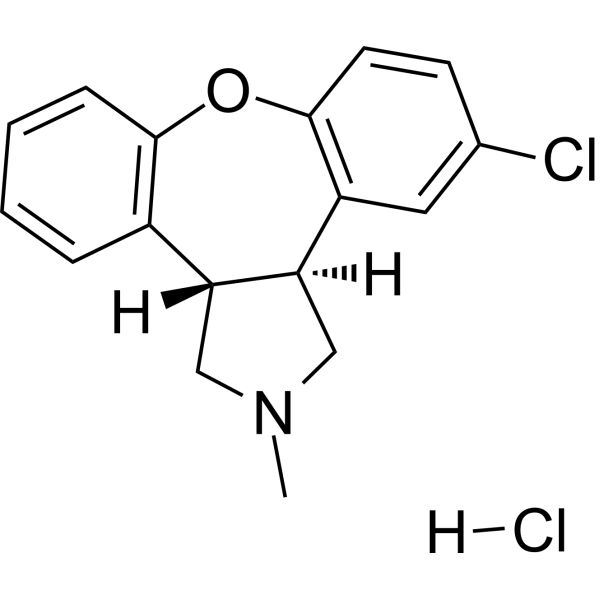
Asenapine hydrochloride
Based on 4 publication(s) in Google Scholar
Asenapine (Org 5222) hydrochloride, an atypical antipsychotic, is an antagonist of serotonin receptors (pKi: 8.4-10.5), adrenoceptors (pKi: 8.9-9.5), dopamine receptors (pKi: 8.9-9.4) and histamine receptors (pKi: 8.2-9.0). Asenapine hydrochloride can be used in the research of schizophrenia and bipolar disorderr.
Nur für Forschungszwecke. Wir verkaufen nicht an Patienten.
- Reinheit : 99.95%
- CAS. Nr.: 1412458-61-7
- Formel: C17H17Cl2NO
- Molecular Weight:322.23
-
Speicherung:
4°C, sealed storage, away from moisture
* In solvent : -80°C, 6 months; -20°C, 1 month (sealed storage, away from moisture)

To place orders, for customer services and technical support, please contact: MedChemExpress USA
Tel: 609-228-6898 E-mail: [email protected] [email protected]


-
 Biologische Aktivität
-
Chemical Information
-
Lösungsmittel & Löslichkeit
- Reinheit & Dokumentation
- Verweise
-
 Help & FAQs


-
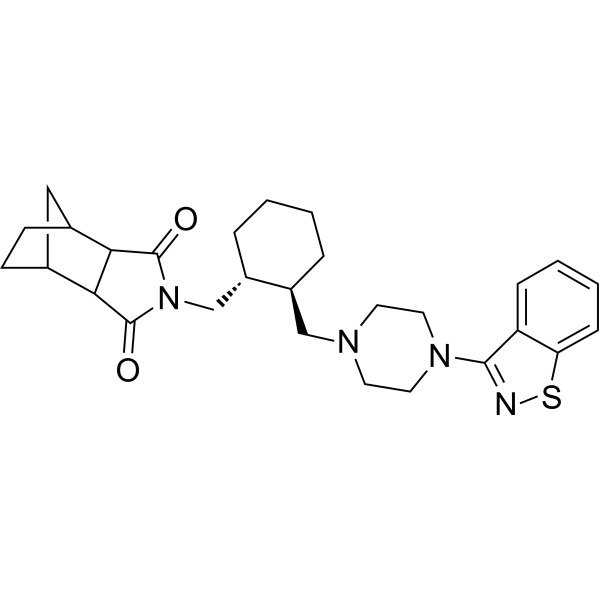
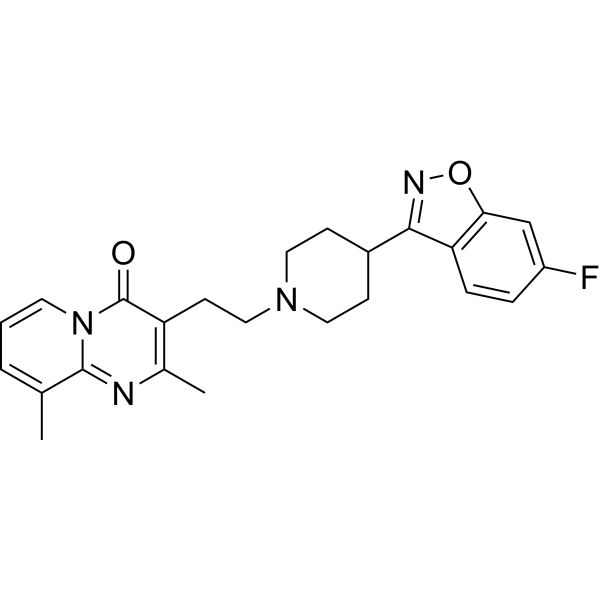
HY-B0032A
Lurasidone -
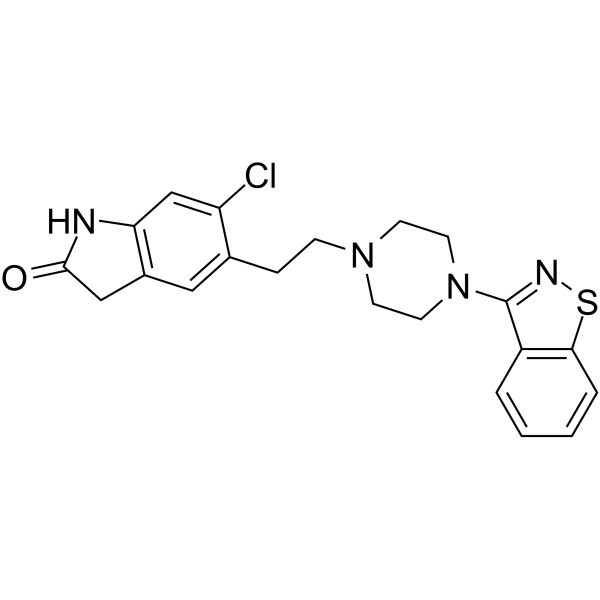
HY-14542
Ziprasidone5-HT/DA Receptor Antagonist -
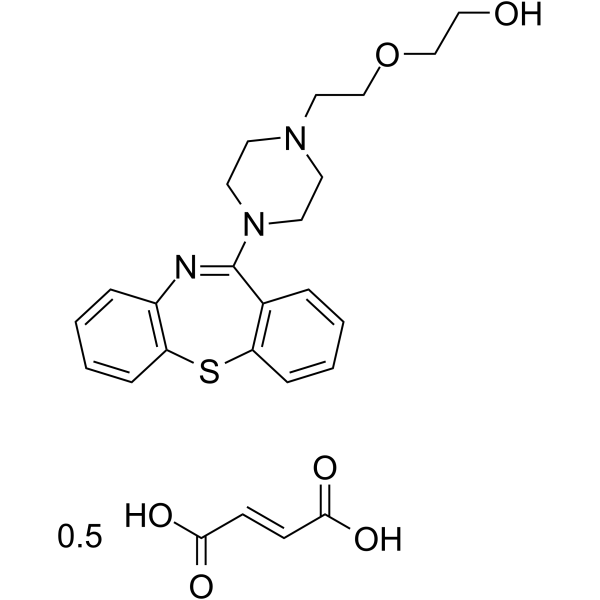
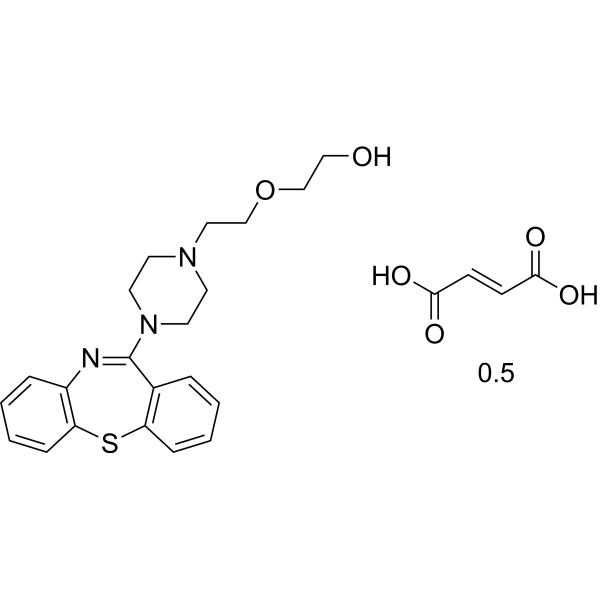
HY-B0031
Quetiapine hemifumarate5-HT Agonist/D2 Antagonist -
HY-101094
Ocaperidone5-HT2/Dopamine D2 Antagonist -
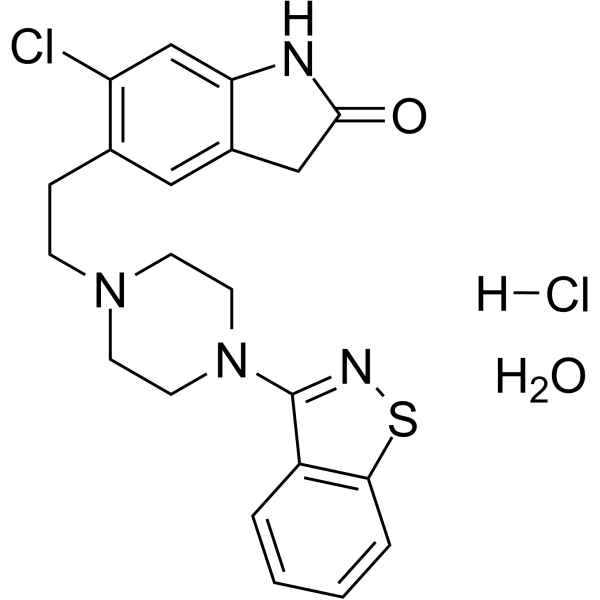
HY-17407
Ziprasidone hydrochloride monohydrate5-HT/DA Receptor Antagonist -
HY-B0031R
Quetiapine hemifumarate (Standard) -
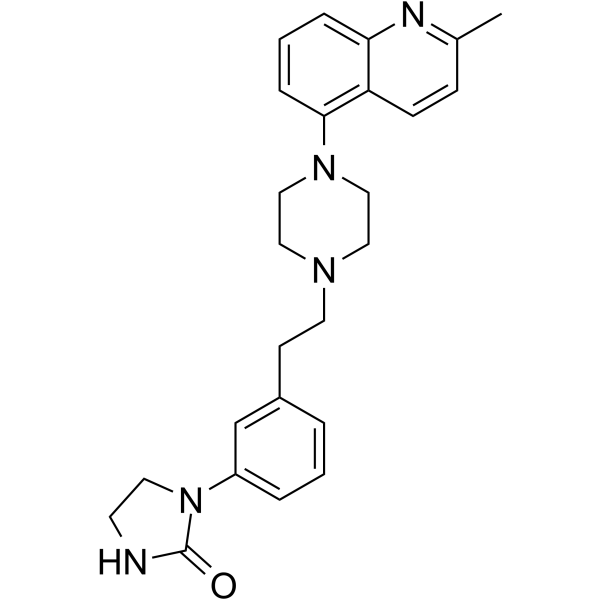
HY-14348
GSK1630905-HT1A/1B/1D Receptor Antagonist -

HY-14542R
Ziprasidone (Standard)5-HT/DA Receptor Antagonist -

HY-B0032AR
Lurasidone (Standard) -

HY-101094R
Ocaperidone (Standard)5-HT2/Dopamine D2 Antagonist -

HY-17407R
Ziprasidone hydrochloride monohydrate (Standard)5-HT/DA Receptor Antagonist -
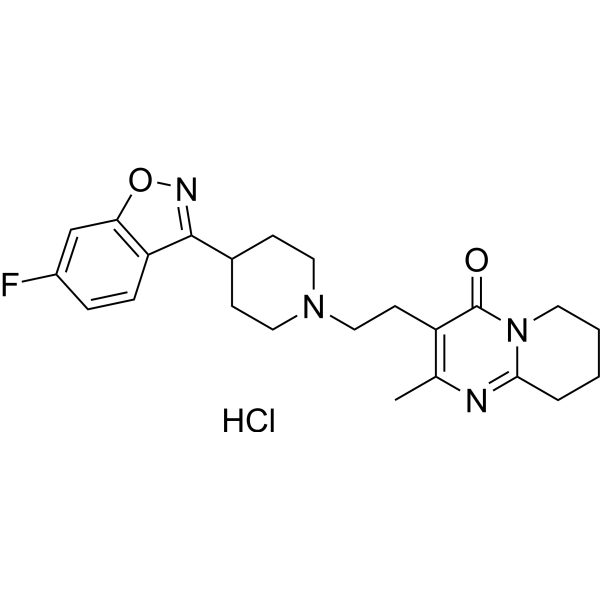
HY-11018A
Risperidone hydrochlorideP-glycoprotein Inhibitor
Publications Citing Use of MedChemExpress (MCE) Asenapine hydrochloride
MoreAlle 5-HT Receptor Isoform-spezifische Produkte anzeigen
MoreAlle Dopamine Receptor Isoform-spezifische Produkte anzeigen
MoreAlle Adrenergic Receptor Isoform-spezifische Produkte anzeigen
MoreAlle Histamine Receptor Isoform-spezifische Produkte anzeigen
More

Biologische Aktivität
Beschreibung
IC50 & Target
[1]|
sPLA2 2.5 nM (Ki) |
5-HT2A Receptor 0.06 nM (Ki) |
5-HT2C Receptor 0.03 nM (Ki) |
5-HT7 Receptor 0.13 nM (Ki) |
D2 Receptor 1.3 nM (Ki) |
D3 Receptor 0.42 nM (Ki) |
D4 Receptor 1.1 nM (Ki) |
In Vitro
Relative to its D2 receptor affinity, Asenapine has a higher affinity for 5-HT2C, 5-HT2A, 5-HT2B, 5-HT7, 5-HT6, α2B and D3 receptors, suggesting stronger engagement of these targets at therapeutic doses. Asenapine behaves as a potent antagonist (pKB) at 5-HT1A (7.4), 5-HT1B (8.1), 5-HT2A (9.0), 5-HT2B (9.3), 5-HT2C (9.0), 5-HT6 (8.0), 5-HT7 (8.5), D2 (9.1), D3 (9.1), α2A (7.3), α2B (8.3), α2C (6.8) and H1 (8.4) receptors[2].
MedChemExpress (MCE) has not independently confirmed the accuracy of these methods. They are for reference only. .
In Vivo
MedChemExpress (MCE) has not independently confirmed the accuracy of these methods. They are for reference only.


Chemical Information
-
CAS. Nr. 1412458-61-7
-
Appearance Solid
-
Molecular Weight 322.23
-
Formel C17H17Cl2NO
-
Color White to off-white
-
SMILES
[H]Cl.ClC1=CC2=C(C=C1)OC3=C(C=CC=C3)[C@](C4)([H])[C@]2([H])CN4C
-
Synonyms
Org 5222 hydrochloride
-
Versand
Room temperature in continental US; may vary elsewhere.
-
Speicherung
4°C, sealed storage, away from moisture
* In solvent : -80°C, 6 months; -20°C, 1 month (sealed storage, away from moisture)


Publications (4)
-
Journal Impact Factor
-
Most Recent
-
-
Int J Biol Macromol
Structural and expression analysis of the dopamine receptors reveals their crucial roles in regulating the insulin signaling pathway in oysters. [Abstract]2023 Aug 30:247:125703. PMID: 37414315 -
Insect Biochem Mol Biol
Molecular and pharmacological characterization of the dopamine receptors in the oriental fruit fly, Bactrocera dorsalis. [Abstract]2025 May:180:104312. PMID: 40245998 -
Biomed Pharmacother
Identification of the atypical antipsychotic Asenapine as a direct survivin inhibitor with anticancer properties and sensitizing effects to conventional therapies. [Abstract]2025 Jan:182:117756. PMID: 39693907


Lösungsmittel & Löslichkeit
In Vitro:
H2O : 100 mg/mL (310.34 mM; Need ultrasonic)
DMSO : 50 mg/mL (155.17 mM; Need ultrasonic; Hygroscopic DMSO has a significant impact on the solubility of product, please use newly opened DMSO)
Please refer to the solubility information to select the appropriate solvent. Once prepared, please aliquot and store the solution to prevent product inactivation from repeated freeze-thaw cycles.
Storage method and period of stock solution: -80°C, 6 months; -20°C, 1 month (sealed storage, away from moisture). When stored at -80°C, please use it within 6 months. When stored at -20°C, please use it within 1 month.
* Note: If you choose water as the stock solution, please dilute it to the working solution, then filter and sterilize it with a 0.22 μm filter before use.
Please refer to the solubility information to select the appropriate solvent. Once prepared, please aliquot and store the solution to prevent product inactivation from repeated freeze-thaw cycles.
Storage method and period of stock solution: -80°C, 6 months; -20°C, 1 month (sealed storage, away from moisture). When stored at -80°C, please use it within 6 months. When stored at -20°C, please use it within 1 month.
* Note: If you choose water as the stock solution, please dilute it to the working solution, then filter and sterilize it with a 0.22 μm filter before use.
Konzentration (Stammlösung) × Volumen (Stammlösung) = Konzentration (Ziellösung) × Volumen (Ziellösung)
In Vivo:
Select the appropriate dissolution method based on your experimental animal and administration route.
- For the following dissolution methods, please ensure to first prepare a clear stock solution using an In Vitro approach and then sequentially add co-solvents:
- To ensure reliable experimental results, the clarified stock solution can be appropriately stored based on storage conditions. As for the working solution for In Vivo experiments, it is recommended to prepare freshly and use it on the same day.
- The percentages shown for the solvents indicate their volumetric ratio in the final prepared solution. If precipitation or phase separation occurs during preparation, heat and/or sonication can be used to aid dissolution.
Add each solvent one by one: 10% DMSO 40% PEG300 5% Tween-80 45% Saline
Solubility: ≥ 2.5 mg/mL (7.76 mM); Clear solution
This protocol yields a clear solution of ≥ 2.5 mg/mL (saturation unknown).
Taking 1 mL working solution as an example, add 100 μL DMSO stock solution (25.0 mg/mL) to 400 μL PEG300, and mix evenly; then add 50 μL Tween-80 and mix evenly; then add 450 μL Saline to adjust the volume to 1 mL.
Preparation of Saline: Dissolve 0.9 g sodium chloride in ddH₂O and dilute to 100 mL to obtain a clear Saline solution.
Add each solvent one by one: 10% DMSO 90% (20% SBE-β-CD in Saline)
Solubility: ≥ 2.5 mg/mL (7.76 mM); Clear solution
This protocol yields a clear solution of ≥ 2.5 mg/mL (saturation unknown).
Taking 1 mL working solution as an example, add 100 μL DMSO stock solution (25.0 mg/mL) to 900 μL 20% SBE-β-CD in Saline, and mix evenly.
Preparation of 20% SBE-β-CD in Saline (4°C, storage for one week): 2 g SBE-β-CD powder is dissolved in 10 mL Saline, completely dissolve until clear.
In Vivo Dissolution Calculator
Please enter the basic information of animal experiments:
-
-
-
-
Recommended: Prepare an additional quantity of animals to account for potential losses during experiments.
Working solution concentration: 0.22 mg/mL
This product has good water solubility, please refer to the measured solubility data in water/PBS/Saline for details.


Reinheit & Dokumentation
-
Data Sheet (283 KB)
-
SDS (252 KB)
- English - EN (252 KB)
- Français - FR (252 KB)
- Deutsch - DE (252 KB)
- Norwegian - NO (252 KB)
- Español - ES (252 KB)
- Swedish - SV (252 KB)
- Italian - IT (252 KB)
- Korean - KR (252 KB)
- Portuguese - PT (252 KB)
-
Handling Instructions (2659 KB)
Verweise
[1]. Shahid M, et al. Asenapine: a novel psychopharmacologic agent with a unique human receptor signature. J Psychopharmacol. 2009 Jan;23(1):65-73. [Content Brief]
[2]. Olivia Frånberg, et al. Asenapine, a novel psychopharmacologic agent: preclinical evidence for clinical effects in schizophrenia. Psychopharmacology (Berl). 2008 Feb;196(3):417-29. [Content Brief]
[3]. Ohyama M,et al. Asenapine reduces anxiety-related behaviours in rat conditioned fear stress model. Acta Neuropsychiatr. 2016 Dec;28(6):327-336. [Content Brief]
[4]. Ene HM, et al. Effects of repeated asenapine in a battery of tests for anxiety-like behaviours in mice. Acta Neuropsychiatr. 2016 Apr;28(2):85-91. [Content Brief]
[5]. Stoner SC, Pace HA. Asenapine: a clinical review of a second-generation antipsychotic. Clin Ther. 2012 May;34(5):1023-40. [Content Brief]


Complete Stock Solution Preparation Table
Please refer to the solubility information to select the appropriate solvent. Once prepared, please aliquot and store the solution to prevent product inactivation from repeated freeze-thaw cycles.
Storage method and period of stock solution: -80°C, 6 months; -20°C, 1 month (sealed storage, away from moisture). When stored at -80°C, please use it within 6 months. When stored at -20°C, please use it within 1 month.
| Optional Solvent | Concentration Solvent Mass | 1 mg | 5 mg | 10 mg | 25 mg |
|---|---|---|---|---|---|
| DMSO / H2O | 1 mM | 3.1034 mL | 15.5169 mL | 31.0337 mL | 77.5843 mL |
| 5 mM | 0.6207 mL | 3.1034 mL | 6.2067 mL | 15.5169 mL | |
| 10 mM | 0.3103 mL | 1.5517 mL | 3.1034 mL | 7.7584 mL | |
| 15 mM | 0.2069 mL | 1.0345 mL | 2.0689 mL | 5.1723 mL | |
| 20 mM | 0.1552 mL | 0.7758 mL | 1.5517 mL | 3.8792 mL | |
| 25 mM | 0.1241 mL | 0.6207 mL | 1.2413 mL | 3.1034 mL | |
| 30 mM | 0.1034 mL | 0.5172 mL | 1.0345 mL | 2.5861 mL | |
| 40 mM | 0.0776 mL | 0.3879 mL | 0.7758 mL | 1.9396 mL | |
| 50 mM | 0.0621 mL | 0.3103 mL | 0.6207 mL | 1.5517 mL | |
| 60 mM | 0.0517 mL | 0.2586 mL | 0.5172 mL | 1.2931 mL | |
| 80 mM | 0.0388 mL | 0.1940 mL | 0.3879 mL | 0.9698 mL | |
| 100 mM | 0.0310 mL | 0.1552 mL | 0.3103 mL | 0.7758 mL |
* Note: If you choose water as the stock solution, please dilute it to the working solution, then filter and sterilize it with a 0.22 μm filter before use.


Asenapine hydrochloride Related Classifications
HY-16567 Related Classifications
 Powered by Bioz