



Parishin C

Based on 1 Customer Validation
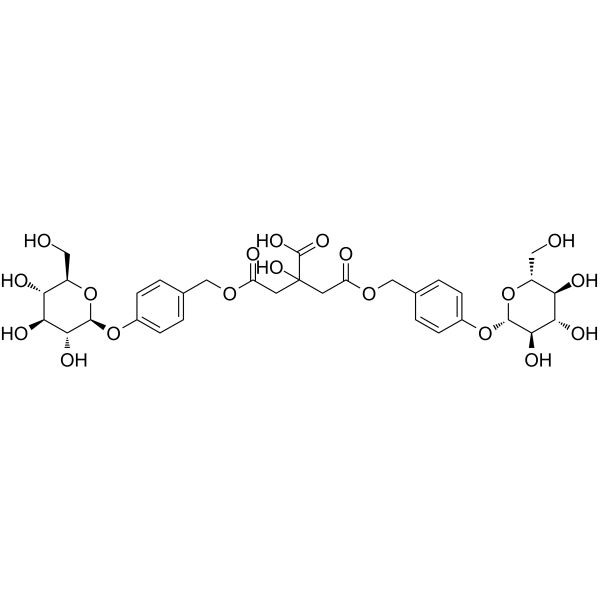
Parishin C is a brain-penetrant major bioactive component found in Gastrodia elata Blume. Parishin C is a 5-HT1A receptor agonist with an EC50 of 34 nM. Parishin C has antipsychotic and neuroprotective effects. Parishin C protects against Aβ-induced long-term potentiation damage and NMDA receptor current impairment. Parishin C reduces oxidative stress, pro-inflammatory cytokine levels, caspase activity, brain water content, and cerebral infarct volume; increases antioxidant enzyme activity and BDNF levels; improves nerve function and histopathological brain damage. Parishin C attenuates phencyclidine-induced immobility time increases, sociability deficits, and visual recognition memory impairment. Parishin C can be used for the research of ischemic stroke, Alzheimer's disease, and schizophrenia-like psychosis.
For research use only. We do not sell to patients.
- Purity : 99.24%
- CAS No.: 174972-80-6
- Formula: C32H40O19
- Molecular Weight:728.65
-
Storage:
4°C, protect from light
* In solvent : -80°C, 6 months; -20°C, 1 month (protect from light)

To place orders, for customer services and technical support, please contact: MedChemExpress USA
Tel: 609-228-6898 E-mail: [email protected] [email protected]


-
 Biological Activity
-
Chemical Information
-
Solvent & Solubility
- Protocols
- Purity & Documentation
- References
-
 Help & FAQs


-
HY-N2124
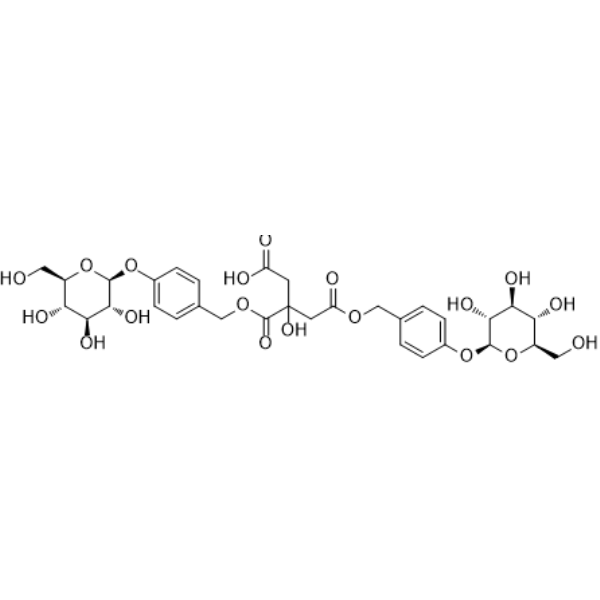
Parishin BMulti-Target Biological Agent, Anticancer Agent -
HY-N0190
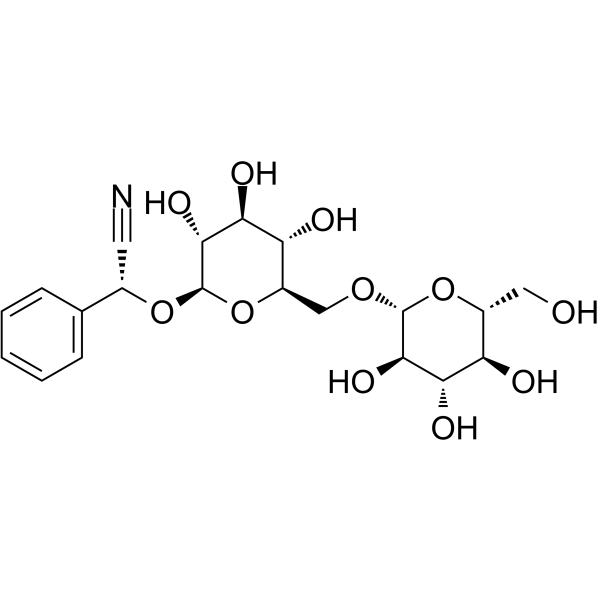
AmygdalinGlucoside -
HY-N7910
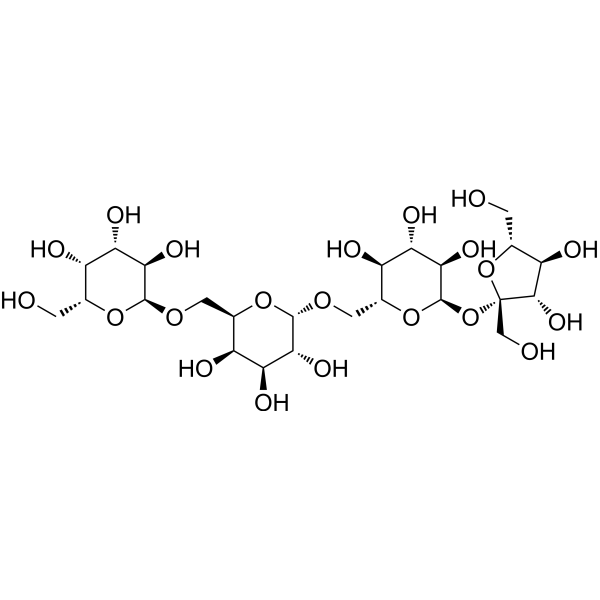
StachyoseHypoglycemic Agent -
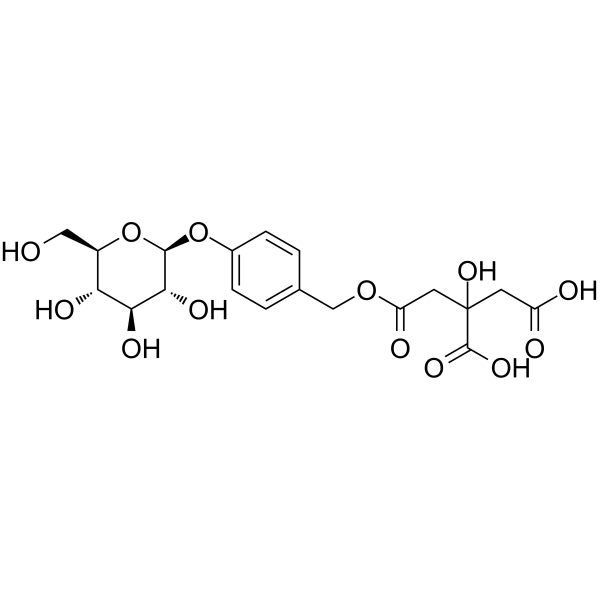
HY-N2126
Parishin Ehexokinase 2 Modulator, lactate dehydrogenase A Modulator, sirtuin 6 Modulator -
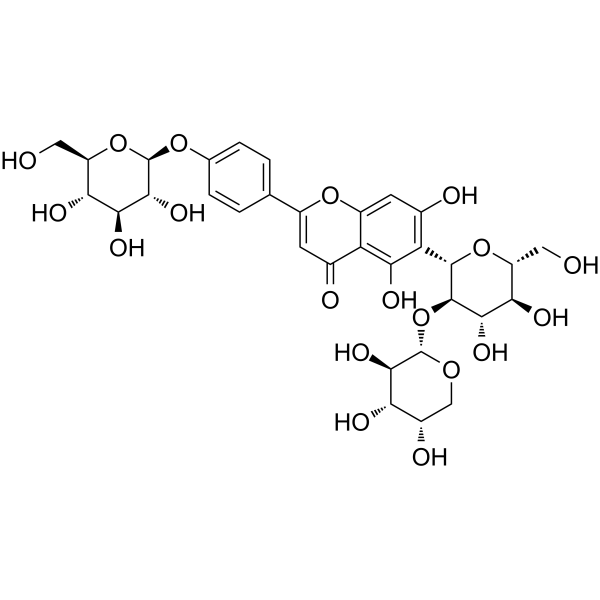
HY-N1419
VaccarinAKT/ERK/AMPK Agonists -
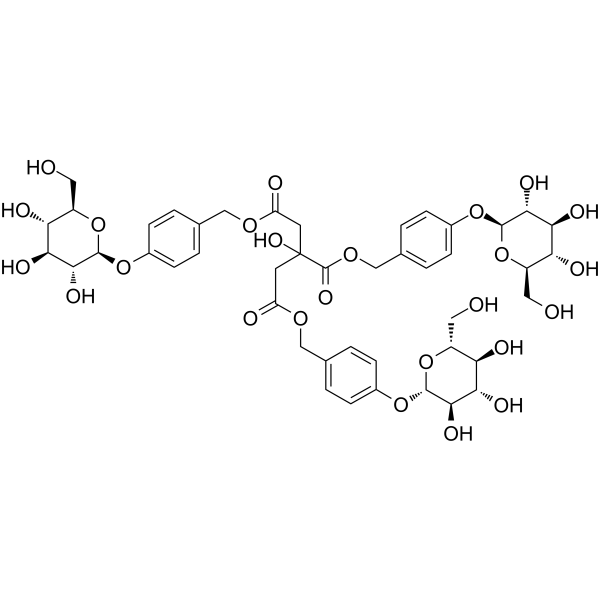
HY-N2031
ParishinSir2/Uth1/TOR Modulator -
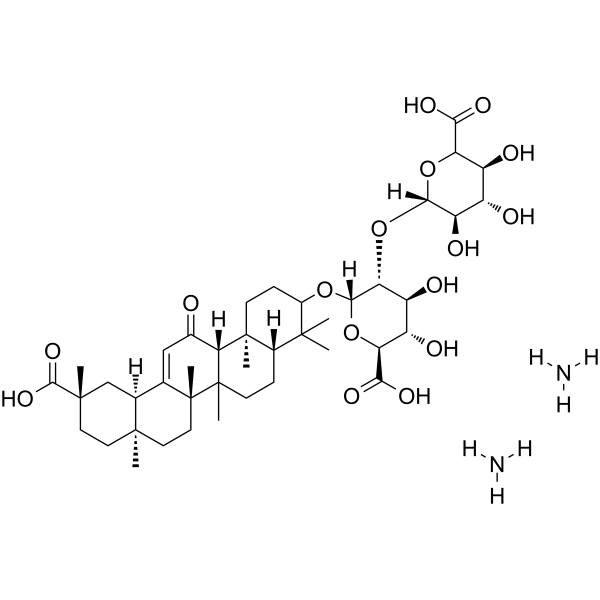
HY-N6804
Diammonium GlycyrrhizinateAnti-Inflammatory Agent -
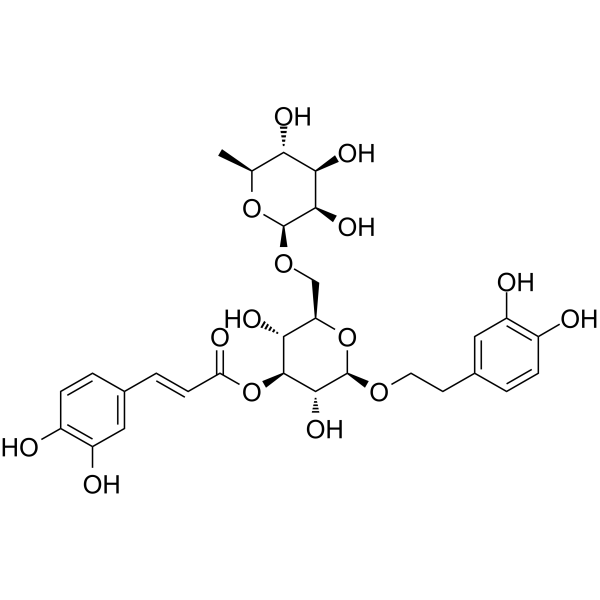
HY-N2594
IsoforsythiasideAntibacterial Agent -
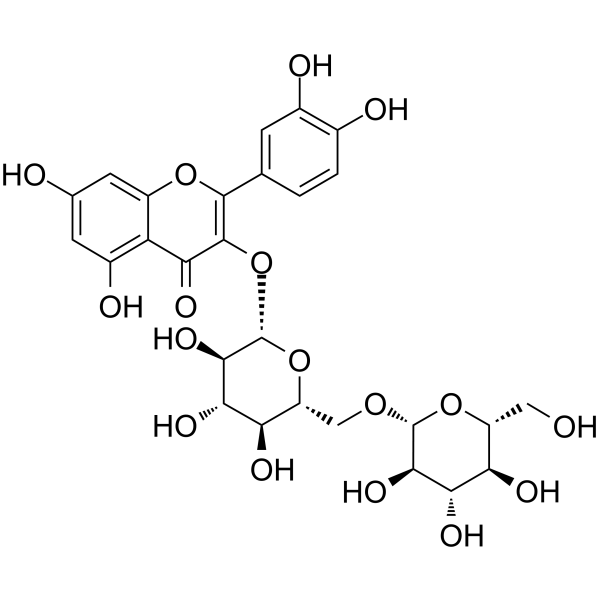
HY-N4089
Quercetin 3-gentiobiosideAromatase Inhibitor -
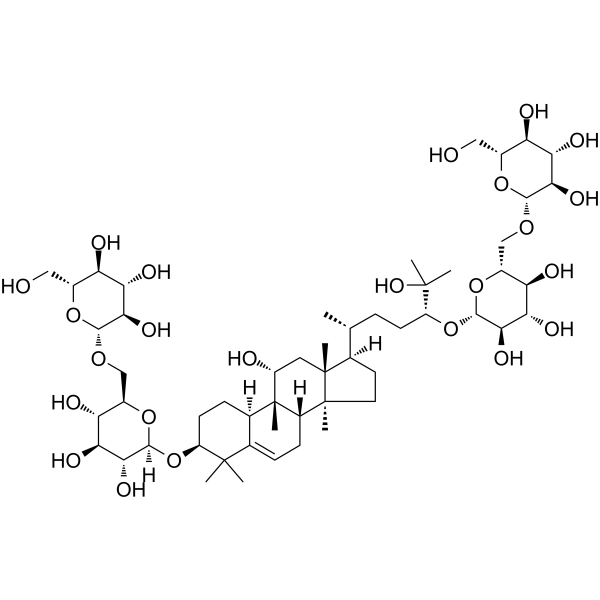
HY-N6942
Mogroside IV-APLSCR1 Inhibitor


Biological Activity
Description
IC50 & Target
[1]|
IL-6 |
IL-1β |
Caspase 3 |
Caspase 9 |
NMDA Receptor |
In Vitro
Parishin C (10 μM; 0-28 min) does not alter AMPAR and NMDAR currents in primary cultured rat hippocampal pyramidal neurons[2].
Parishin C (10 μM) does not alter voltage-dependent sodium, potassium, or calcium currents in primary cultured rat hippocampal neurons[2].
Parishin C (10 μM; 0-20 min) prevents soluble Aβ1-42 oligomer-induced NMDAR current impairment in primary cultured rat hippocampal pyramidal neurons[2].
Parishin C (10-10-10-5 M) displays high binding affinity for 5-HT1A receptors in isolated rat hippocampal membranes, with a Ki of 1.54 nM[3].
Parishin C (10-10-10-5 M) acts as a 5-HT1A receptor full agonist in isolated rat hippocampal membranes, stimulating [35S]GTPγS binding by 78.4% with an EC50 of 34 nM[3].
MedChemExpress (MCE) has not independently confirmed the accuracy of these methods. They are for reference only.
In Vivo
Parishin C (20 mg/kg; i.p.; two consecutive days or 10 μM; i.c.v.; 10 minutes before Aβ1-42 injection) significantly ameliorates soluble Aβ1-42 oligomer-induced LTP impairment in male Wistar rats[2].
Parishin C (20 mg/kg; i.p.; single dose) does not alter baseline synaptic transmission or LTP induction in healthy male Wistar rats[2].
Parishin C (25-100 mg/kg; i.p.; daily; 26 days) dose-dependently attenuates phencyclidine-induced schizophrenia-like behavioral deficits in male C57BL/6J mice via activation of 5-HT1A receptors[3].
MedChemExpress (MCE) has not independently confirmed the accuracy of these methods. They are for reference only.
-
Animal Model:Wistar (male, 8-10 weeks old, 200-220 g, middle cerebral artery occlusion/reperfusion model)[1]
-
Dosage:25 mg/kg/day; 50 mg/kg/day; 100 mg/kg/day
-
Administration:i.p.; daily; 21 days
-
Result:Significantly reduced neurological deficit scores in a dose-dependent manner compared to the MCAO-only group.
Significantly reduced brain water conten.
Reduced neuronal necrobiosis and inflammatory cell infiltration.
Significantly increased brain tissue activities of superoxide dismutase (SOD), catalase (CAT), and glutathione peroxidase (GSH-Px).
Significantly reduced brain tissue malondialdehyde (MDA) levels.
Significantly up-regulated mRNA expression of SOD1, CAT, and GSH-Px.
Significantly reduced brain tissue levels of tumor necrosis factor-alpha (TNF-α), interleukin-6 (IL-6), interleukin-1β (IL-1β), and nuclear factor-kappa B (NF-κB).
Significantly reduced brain tissue activities of Caspase-3 and Caspase-9, and increased brain-derived neurotrophic factor (BDNF) levels.
Significantly reduced cerebral infarct volume.
-
Animal Model:Wistar (male, 240-260 g, Alzheimer's disease model induced by i.c.v. injection of soluble Aβ1-42 oligomers)[2]
-
Dosage:20 mg/kg (i.p. group); 10 μmol/L (i.c.v. group)
-
Administration:i.p.; two consecutive days; 10 μM; i.c.v.; 10 minutes before Aβ1-42 injection
-
Result:Ameliorated Aβ1-42-induced LTP impairment significantly, resulting in a population spike amplitude of 179% of baseline (compared to the Aβ1-42 group's 149%, P < 0.05, n=5).
Protected against Aβ1-42-induced LTP reduction significantly, resulting in a population spike amplitude of 210% of baseline (compared to the Aβ1-42 group's 149%, P < 0.05, n=5).
-
Animal Model:Phencyclidine-induced schizophrenia-like C57BL/6J (male, 25 g)[3]
-
Dosage:25, 50, 100 mg/kg
-
Administration:i.p.; daily; 26 days
-
Result:Attenuated PCP-induced increases in immobility time in the forced swimming test in a dose-dependent manner.
Attenuated phencyclidine (PCP)-induced sociability deficits in the social interaction test in a dose-dependent manner.
Attenuated PCP-impaired visual recognition memory in the novel object recognition test in a dose-dependent manner.
Showed all behavioral effects significantly inhibited by co-administration of the 5-HT1A antagonist WAY 100635 (HY-10349) at 100 mg/kg.


Chemical Information
-
CAS No. 174972-80-6
-
Appearance Solid
-
Molecular Weight 728.65
-
Formula C32H40O19
-
Color White to off-white
-
SMILES
O[C@H]([C@@H](O)[C@@H]1O)[C@@H](O[C@@H]1CO)OC2=CC=C(COC(CC(C(O)=O)(O)CC(OCC3=CC=C(O[C@@H]([C@@H]([C@@H](O)[C@@H]4O)O)O[C@@H]4CO)C=C3)=O)=O)C=C2
-
Structure Classification
-
Initial Source
-
Shipping
Room temperature in continental US; may vary elsewhere.
-
Storage
4°C, protect from light
* In solvent : -80°C, 6 months; -20°C, 1 month (protect from light)


Solvent & Solubility
In Vitro:
DMSO : 100 mg/mL (137.24 mM; Need ultrasonic; Hygroscopic DMSO has a significant impact on the solubility of product, please use newly opened DMSO)
H2O : ≥ 100 mg/mL (137.24 mM)
* "≥" means soluble, but saturation unknown.
Please refer to the solubility information to select the appropriate solvent. Once prepared, please aliquot and store the solution to prevent product inactivation from repeated freeze-thaw cycles.
Storage method and period of stock solution: -80°C, 6 months; -20°C, 1 month (protect from light). When stored at -80°C, please use it within 6 months. When stored at -20°C, please use it within 1 month.
* Note: If you choose water as the stock solution, please dilute it to the working solution, then filter and sterilize it with a 0.22 μm filter before use.
Please refer to the solubility information to select the appropriate solvent. Once prepared, please aliquot and store the solution to prevent product inactivation from repeated freeze-thaw cycles.
Storage method and period of stock solution: -80°C, 6 months; -20°C, 1 month (protect from light). When stored at -80°C, please use it within 6 months. When stored at -20°C, please use it within 1 month.
* Note: If you choose water as the stock solution, please dilute it to the working solution, then filter and sterilize it with a 0.22 μm filter before use.
Concentration (start) × Volume (start) = Concentration (final) × Volume (final)
In Vivo:
Select the appropriate dissolution method based on your experimental animal and administration route.
- For the following dissolution methods, please ensure to first prepare a clear stock solution using an In Vitro approach and then sequentially add co-solvents:
- To ensure reliable experimental results, the clarified stock solution can be appropriately stored based on storage conditions. As for the working solution for In Vivo experiments, it is recommended to prepare freshly and use it on the same day.
- The percentages shown for the solvents indicate their volumetric ratio in the final prepared solution. If precipitation or phase separation occurs during preparation, heat and/or sonication can be used to aid dissolution.
Add each solvent one by one: 10% DMSO 40% PEG300 5% Tween-80 45% Saline
Solubility: ≥ 2.5 mg/mL (3.43 mM); Clear solution
This protocol yields a clear solution of ≥ 2.5 mg/mL (saturation unknown).
Taking 1 mL working solution as an example, add 100 μL DMSO stock solution (25.0 mg/mL) to 400 μL PEG300, and mix evenly; then add 50 μL Tween-80 and mix evenly; then add 450 μL Saline to adjust the volume to 1 mL.
Preparation of Saline: Dissolve 0.9 g sodium chloride in ddH₂O and dilute to 100 mL to obtain a clear Saline solution.
Add each solvent one by one: 10% DMSO 90% (20% SBE-β-CD in Saline)
Solubility: ≥ 2.5 mg/mL (3.43 mM); Clear solution
This protocol yields a clear solution of ≥ 2.5 mg/mL (saturation unknown).
Taking 1 mL working solution as an example, add 100 μL DMSO stock solution (25.0 mg/mL) to 900 μL 20% SBE-β-CD in Saline, and mix evenly.
Preparation of 20% SBE-β-CD in Saline (4°C, storage for one week): 2 g SBE-β-CD powder is dissolved in 10 mL Saline, completely dissolve until clear.
In Vivo Dissolution Calculator
Please enter the basic information of animal experiments:
-
-
-
-
Recommended: Prepare an additional quantity of animals to account for potential losses during experiments.
Working solution concentration: 0.22 mg/mL
This product has good water solubility, please refer to the measured solubility data in water/PBS/Saline for details.


Purity & Documentation
-
Data Sheet (280 KB)
-
SDS (393 KB)
- English - EN (393 KB)
- Français - FR (393 KB)
- Deutsch - DE (393 KB)
- Norwegian - NO (393 KB)
- Español - ES (393 KB)
- Swedish - SV (393 KB)
- Italian - IT (393 KB)
- Korean - KR (393 KB)
- Portuguese - PT (393 KB)
-
Handling Instructions (2659 KB)
References
[1]. Wang T, et al. Ameliorative Effect of Parishin C Against Cerebral Ischemia-Induced Brain Tissue Injury by Reducing Oxidative Stress and Inflammatory Responses in Rat Model. Neuropsychiatr Dis Treat. 2021;17:1811-1823. Published 2021 Jun 4. [Content Brief]
[2]. Liu Z, et al. Parishin C's prevention of Aβ 1-42-induced inhibition of long-term potentiation is related to NMDA receptors. Acta Pharm Sin B. 2016;6(3):189-197. [Content Brief]
[3]. Shin EJ, et al. Parishin C attenuates phencyclidine-induced schizophrenia-like psychosis in mice: involvements of 5-HT1A receptor. J Pharmacol Sci. 2010;113(4):404-408. [Content Brief]


Complete Stock Solution Preparation Table
Please refer to the solubility information to select the appropriate solvent. Once prepared, please aliquot and store the solution to prevent product inactivation from repeated freeze-thaw cycles.
Storage method and period of stock solution: -80°C, 6 months; -20°C, 1 month (protect from light). When stored at -80°C, please use it within 6 months. When stored at -20°C, please use it within 1 month.
| Optional Solvent | Concentration Solvent Mass | 1 mg | 5 mg | 10 mg | 25 mg |
|---|---|---|---|---|---|
| DMSO / H2O | 1 mM | 1.3724 mL | 6.8620 mL | 13.7240 mL | 34.3100 mL |
| 5 mM | 0.2745 mL | 1.3724 mL | 2.7448 mL | 6.8620 mL | |
| 10 mM | 0.1372 mL | 0.6862 mL | 1.3724 mL | 3.4310 mL | |
| 15 mM | 0.0915 mL | 0.4575 mL | 0.9149 mL | 2.2873 mL | |
| 20 mM | 0.0686 mL | 0.3431 mL | 0.6862 mL | 1.7155 mL | |
| 25 mM | 0.0549 mL | 0.2745 mL | 0.5490 mL | 1.3724 mL | |
| 30 mM | 0.0457 mL | 0.2287 mL | 0.4575 mL | 1.1437 mL | |
| 40 mM | 0.0343 mL | 0.1716 mL | 0.3431 mL | 0.8578 mL | |
| 50 mM | 0.0274 mL | 0.1372 mL | 0.2745 mL | 0.6862 mL | |
| 60 mM | 0.0229 mL | 0.1144 mL | 0.2287 mL | 0.5718 mL | |
| 80 mM | 0.0172 mL | 0.0858 mL | 0.1716 mL | 0.4289 mL | |
| 100 mM | 0.0137 mL | 0.0686 mL | 0.1372 mL | 0.3431 mL |
* Note: If you choose water as the stock solution, please dilute it to the working solution, then filter and sterilize it with a 0.22 μm filter before use.


Parishin C Related Classifications
HY-N2125 Related Classifications
 Powered by Bioz
Keywords
- Parishin C
- 174972-80-6
- 5-HT Receptor
- iGluR
- Caspase
- Interleukin Related
- TNF Receptor
- SOD
- NF-κB
- schizophrenia-like psychosis
- BDNF
- rat hippocampal pyramidal neurons
- ischemic stroke
- Gastrodia elata
- NMDA receptor
- 5-HT1A receptor
- Alzheimer's disease
- Aβ-induced long-term potentiation damage
- blood-brain barrier
- Inhibitor
- inhibitor
- inhibit