1. Search Result
Search Result
Results for "

signal-transduction

" in MedChemExpress (MCE) Product Catalog:

258

Inhibitors & Agonists

12

Bibliotecas de Screening

15

Biochemical Assay Reagents

13

Peptides

22

Inhibitory Antibodies

39

Natural
Products

1

Recombinant Proteins

26

Isotope-Labeled Compounds

6

Antibodies

1

Click Chemistry

17

Oligonucleotides

Cat. No. Nombre del producto Target Áreas de investigación Chemical Structure
  • HY-13756
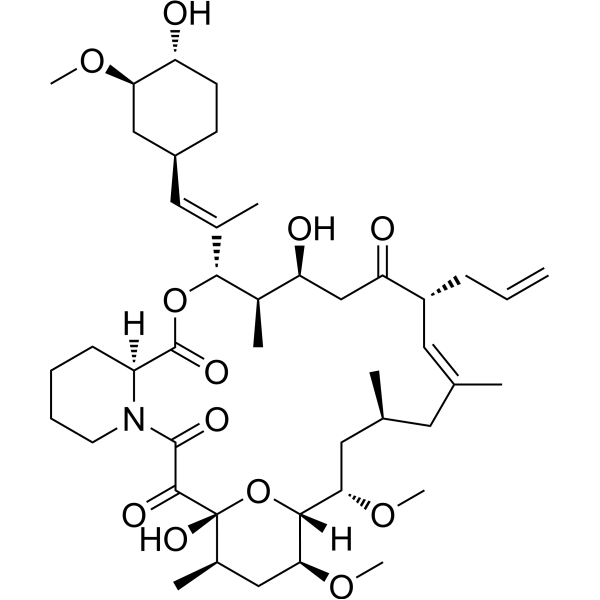
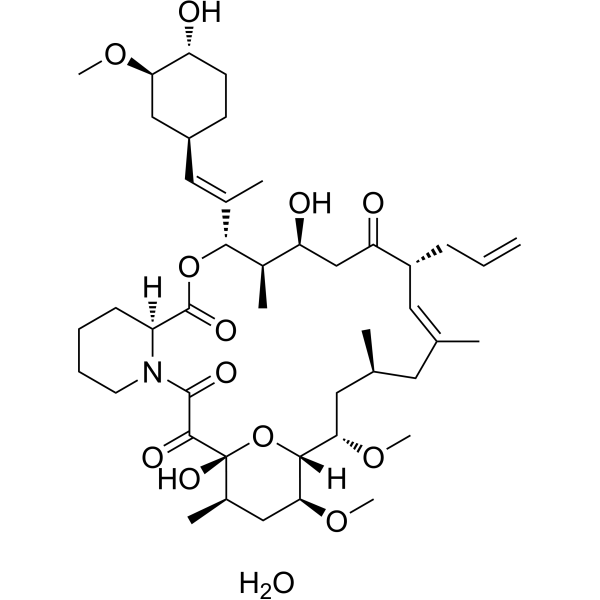
    Tacrolimus
    Maximum Cited Publications
    101 Publications Verification

    FK506; Fujimycin; FR900506

    Phosphatase FKBP Bacterial Autophagy Antibiotic Infection Inflammation/Immunology Cancer
    Tacrolimus (FK506), a macrocyclic lactone, binds to FK506 binding protein (FKBP) to form a complex. Tacrolimus inhibits calcineurin phosphatase, which inhibits T-lymphocyte signal transduction and IL-2 transcription. Immunosuppressive properties .
    Tacrolimus
  • HY-130149
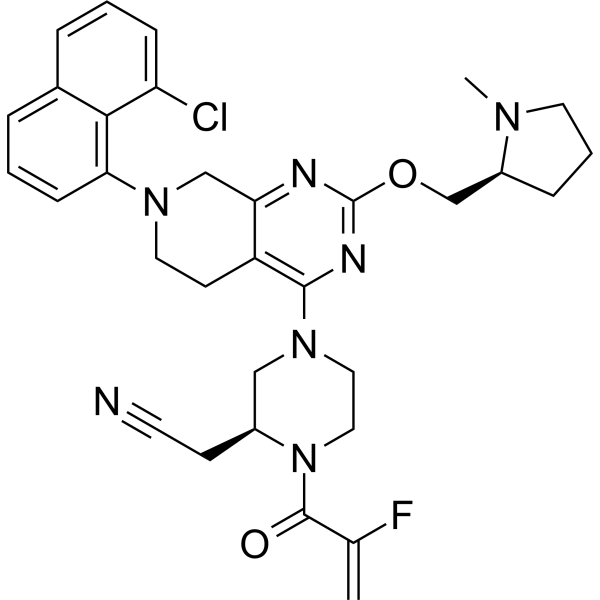
    Adagrasib
    55+ Cited Publications

    MRTX849

    Ras Cancer
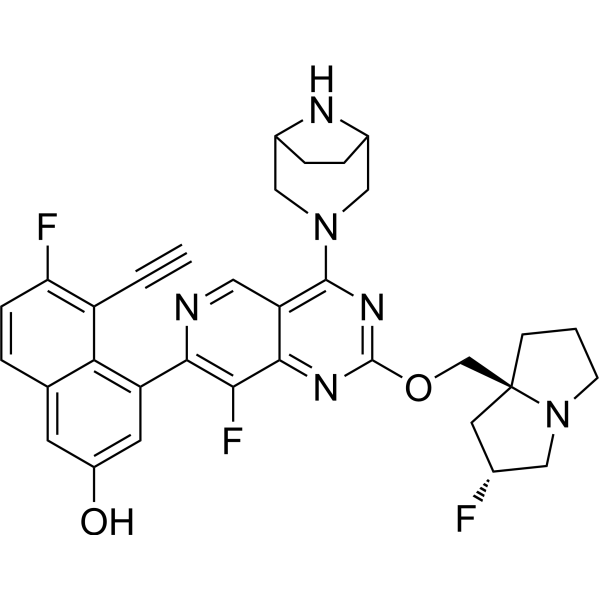
    Adagrasib (MRTX849) is a potent, orally-available, and mutation-selective covalent inhibitor of KRAS G12C with potential antineoplastic activity. Adagrasib covalently binds to KRAS G12C at the cysteine at residue 12, locks the protein in its inactive GDP-bound conformation, and inhibits KRAS-dependent signal transduction .
    Adagrasib
  • HY-A0181
    Adenosine monophosphate
    15+ Cited Publications

    AMP

    Endogenous Metabolite Adenosine Receptor HSV Infection Metabolic Disease
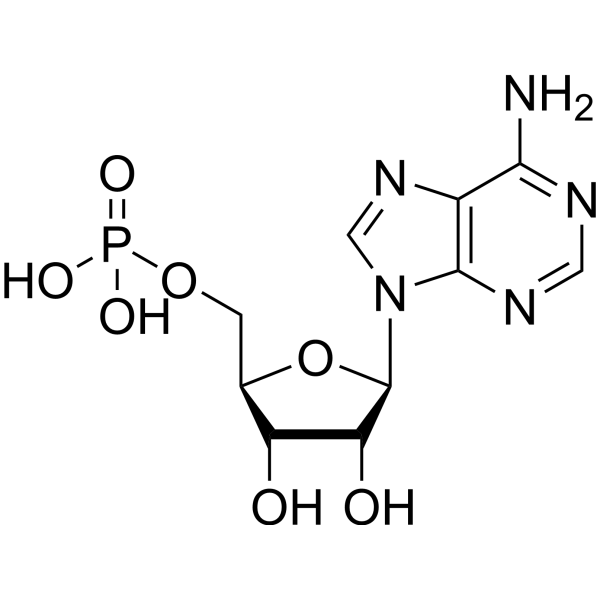
    Adenosine monophosphate is an adenosine A1 receptor agonist. Adenosine monophosphate has significant antiviral activity against HSV-1 and HSV-2. Adenosine monophosphate is a key cellular metabolite regulating energy homeostasis and signal transduction .
    Adenosine monophosphate
  • HY-D0886

    Phosphatase Endogenous Metabolite ERK Metabolic Disease Cancer
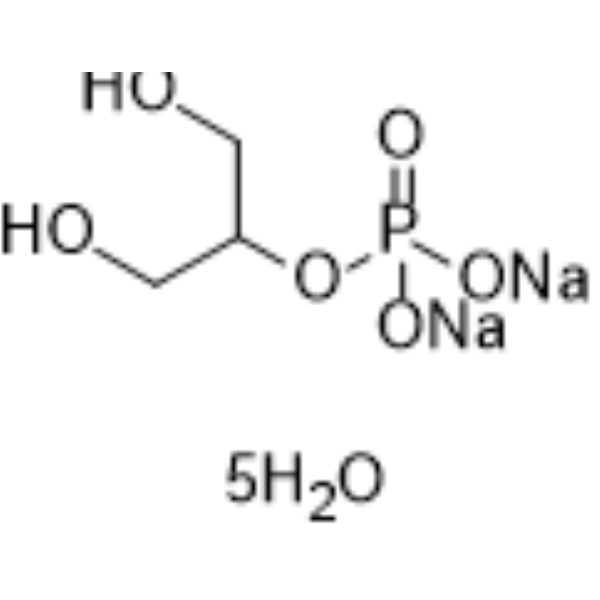
    β-Glycerophosphate disodium salt pentahydrate is a bioactive endogenous metabolite and a phosphatase inhibitor. β-Glycerophosphate disodium salt pentahydrate plays an important role in inducing and maintaining osteoblast differentiation, mineral metabolism and signal transduction, and can be used as a drug carrier to form heat-sensitive hydrogels. β-Glycerophosphate disodium salt hydrate accelerates the calcification of vascular smooth muscle cells .
    β-Glycerophosphate disodium salt pentahydrate
  • HY-B1411
    i-Inositol
    5+ Cited Publications

    myo-Inositol; meso-Inositol

    Endogenous Metabolite Others
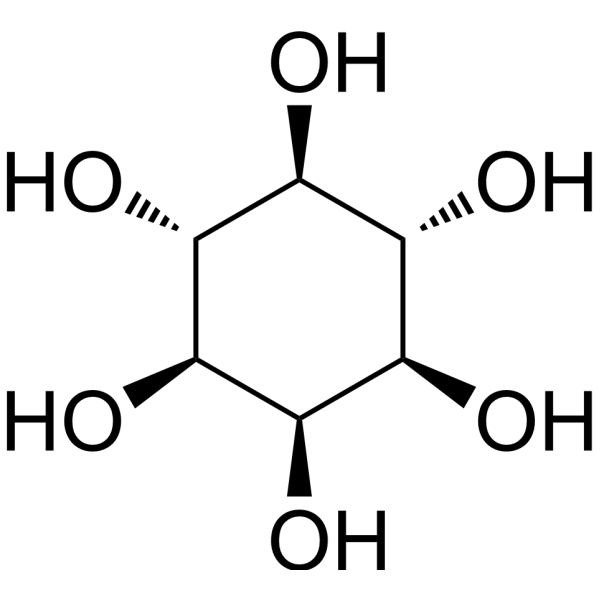
    i-Inositol (myo-Inositol) is a compound of sugar alcohols. i-Inositol is involved in a series of biological processes such as insulin signal transduction and cytoskeletal transduction. i-Inositol mainly exists in glial cells and plays an osmotic role .
    i-Inositol
  • HY-113498
    Sphingomyelin
    1 Publications Verification

    Endogenous Metabolite Neurological Disease Metabolic Disease Inflammation/Immunology
    Sphingomyelin is a eukaryotic sphingolipid and one of the major constituents of cell membranes and particularly abundant in the myelin sheath that surrounds neuronal axons. Sphingomyelin plays an important role in cell processes, the regulation of inflammatory responses, and signal transduction. Sphingomyelin metabolism is associated with various central nervous system diseases and Niemann–Pick disease .
    Sphingomyelin
  • HY-126304

    Phosphatase Endogenous Metabolite ERK Metabolic Disease
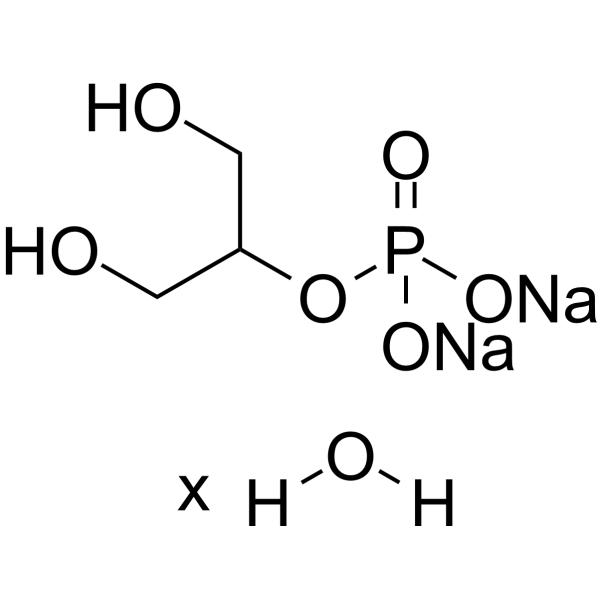
    β-Glycerophosphate disodium salt pentahydrate is a bioactive endogenous metabolite and a phosphatase inhibitor. β-Glycerophosphate disodium salt pentahydrate plays an important role in inducing and maintaining osteoblast differentiation, mineral metabolism and signal transduction, and can be used as a drug carrier to form heat-sensitive hydrogels. β-Glycerophosphate disodium salt hydrate accelerates the calcification of vascular smooth muscle cells .
    β-Glycerophosphate disodium salt hydrate
  • HY-15959
    Savolitinib
    5+ Cited Publications

    Volitinib; HMPL-504; AZD-6094

    c-Met/HGFR Cancer
    Savolitinib (AZD-6094) is a potent, highly selective, and orally bioavailable c-Met inhibitor with IC50 s of 5 nM and 3 nM for c-Met and p-Met, respectively. Savolitinib (AZD-6094) selectively binds to and inhibits the activation of c-Met in an ATP-competitive manner, and disrupts c-Met signal transduction pathways. Antineoplastic activity .
    Savolitinib
  • HY-111557
    YM-254890
    15+ Cited Publications

    P2Y Receptor Cardiovascular Disease
    YM-254890 is a selective Gαq/11 protein inhibitor isolated from Chromobacterium sp. YM-254890 shows no inhibition of other G protein subtypes. YM-254890 inhibits platelet aggregation induced by ADP by blocking the P2Y1 signal transduction pathway, with an IC50 value below 0.6 μM .
    YM-254890
  • HY-13756A
    Tacrolimus monohydrate
    Maximum Cited Publications
    101 Publications Verification

    FK506 monohydrate; Fujimycin monohydrate; FR900506 monohydrate

    Phosphatase FKBP Autophagy Bacterial Antibiotic Infection Inflammation/Immunology Cancer
    Tacrolimus monohydrate (FK506 monohydrate), a macrocyclic lactone, binds to FK506 binding protein (FKBP) to form a complex and inhibits calcineurin phosphatase, which inhibits T-lymphocyte signal transduction and IL-2 transcription. Immunosuppressive properties .
    Tacrolimus monohydrate
  • HY-114364
    UDP-Galactose disodium
    4 Publications Verification

    Endogenous Metabolite P2Y Receptor Metabolic Disease
    UDP-Galactose disodium is a monosaccharide and a key glycosyl donor molecule in cells that participates in nucleotide sugar metabolism. UDP-Galactose disodium is the natural agonist of the P2Y14 receptor coupled to Gi proteins in the immune system (IC50 = 0.67 μM, hP2Y14). UDP-Galactose disodium can be used to study cell signal transduction and substance metabolism .
    UDP-Galactose disodium
  • HY-W013706

    ITP trisodium salt; Inosine triphosphate trisodium salt

    Endogenous Metabolite Metabolic Disease
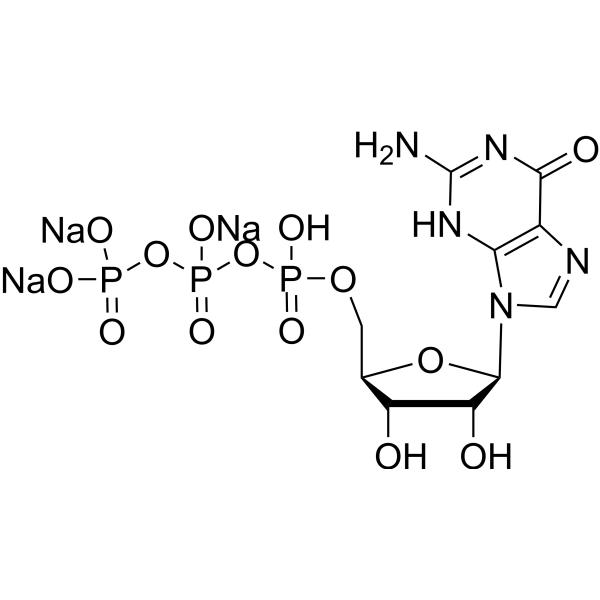
    Inosine-5'-triphosphate trisodium salt is a nucleotide analogue that acts on multiple G proteins and is widely used in G protein-related research. It can bind to the α -subunit of G proteins and participate in G protein-mediated signal transduction as a substitute for GTP. Its mechanism of action is to interact with the nucleotide-binding site of the G protein α -subunit, affecting the activity and function of G proteins. In the research field, it is mainly used to explore the role of the G protein signaling pathway in cellular physiological and pathological processes. For example, in HL-60 leukemia cells, its impact on G protein-mediated signal transduction can be studied .
    Inosine-5'-triphosphate trisodium salt
  • HY-10569
    Ponesimod
    5+ Cited Publications

    ACT-128800

    LPL Receptor Inflammation/Immunology
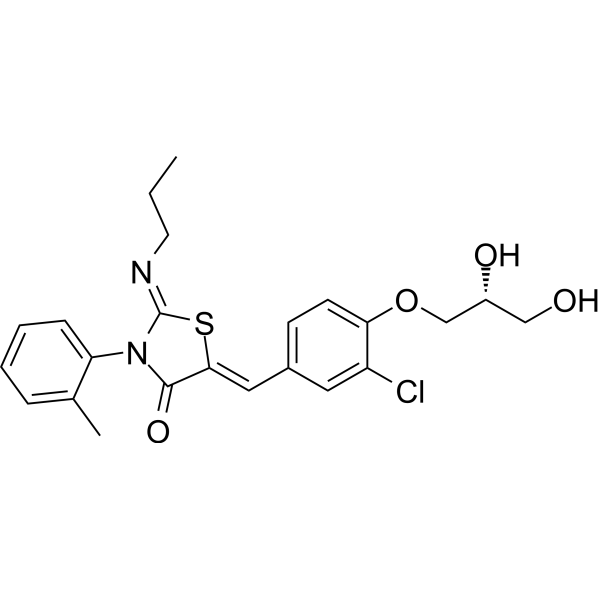
    Ponesimod (ACT-128800) is a potent, selective and orally active agonist of S1P1, with an IC50 of 6 nM in a radioligand binding assay. Ponesimod activates S1P1-mediated signal transduction with high potency (EC50=5.7 nM). Ponesimod can protect against lymphocyte-mediated tissue inflammation .
    Ponesimod
  • HY-13756S
    Tacrolimus-13C,d2
    1 Publications Verification

    FK506-13C,d2; Fujimycin-13C,d2; FR900506-13C,d2

    Phosphatase FKBP Bacterial Autophagy Antibiotic Infection Inflammation/Immunology Cancer
    Tacrolimus- 13C,d2 is a 13C-labeled and deuterium labeled Tacrolimus. Tacrolimus (FK506), a macrocyclic lactone, binds to FK506 binding protein (FKBP) to form a complex. Tacrolimus inhibits calcineurin phosphatase, which inhibits T-lymphocyte signal transduction and IL-2 transcription. Immunosuppressive properties .
    Tacrolimus-13C,d2
  • HY-P99936

    LJM716

    EGFR Cancer
    Elgemtumab(LJM716) is a fully human IgG monoclonal antibody. Elgemtumab can specifically bind to HER3, block ligand-dependent and independent HER3 signal transduction and cell proliferation, and has good anti-tumor potential .
    Elgemtumab
  • HY-W145561

    Neu5Ac alpha(2-3)Gal beta MP glycoside

    Biochemical Assay Reagents Others
    Neu5Acα(2-3)Galβ MP glycoside (Neu5Ac alpha(2-3)Gal beta MP glycoside) is a glycoside used in glycobiology research to explore cell surface interactions and signal transduction pathways.
    Neu5Acα(2-3)Galβ MP glycoside
  • HY-P3281

    FGFR Neurological Disease
    FGL peptide is a fibroblast growth factor receptor (FGFR) modulator and blood-brain barrier-penetrant. FGL peptide activates NCAM-FGFR and FGFR1 signaling pathways. FGL peptide alters expression of apoptosis, signal transduction and metabolism regulator genes in traumatic brain injury contexts. FGL peptide can be used for the research of traumatic brain injury .
    FGL peptide
  • HY-145295
    Flupyradifurone
    2 Publications Verification

    Environmental Pollutants nAChR Infection
    Flupyradifurone is a systemic nAChR agonist that interferes with signal transduction in the central nervous system of sucking pests. Flupyradifurone can be used as a butenolide insecticide .
    Flupyradifurone
  • HY-A0181S1

    Isotope-Labeled Compounds Endogenous Metabolite Adenosine Receptor HSV Infection Metabolic Disease
    Adenosine monophosphate- 15N5 dilithium is the 15N labeled Adenosine monophosphate (HY-A0181). Adenosine monophosphate is an adenosine A1 receptor agonist. Adenosine monophosphate has significant antiviral activity against HSV-1 and HSV-2. Adenosine monophosphate is a key cellular metabolite regulating energy homeostasis and signal transduction .
    Adenosine monophosphate-15N5 dilithium
  • HY-W587552

    Liposome Endogenous Metabolite
    1,3-Diolein is a phospholipid compound that has the activity of regulating cell membrane fluidity and signal transduction. 1,3-Diolein is widely used in cell biology research to study lipid-mediated signal transduction pathways and membrane protein interactions. 1,3-Diolein can also serve as a functional carrier in compound delivery systems to help improve the bioavailability of compounds.
    1,3-Diolein
  • HY-P99223

    MEDI-575

    PDGFR Cancer
    Tovetumab (MEDI-575) is an anti-PDGFRα monoclonal antibody that selectively blocks the PDGFRα signal transduction. Tovetumab can be used in the research of glioblastoma and non-small cell lung cancer (NSCLC) .
    Tovetumab
  • HY-156004

    Bacterial Others
    Ziapin 2 is a membrane potential modulator and an intracellular membrane photoactuator. Ziapin 2 binds to the bacterial plasma membrane, and upon embedding into the lipid bilayer, undergoes trans-cis isomerization under 470 nm light irradiation, which triggers membrane potential hyperpolarization and induces the opening of ion channels on bacterial cell membranes. Through interactions with lipids, Ziapin 2 increases the overall flexibility of the lipid bilayer. Ziapin 2 can form photosensitive transmembrane dimers to trigger cellular signal transduction. Ziapin 2 is applicable to the research and regulation of bacterial electrical signal transduction and the regulation of membrane physical properties .
    Ziapin 2
  • HY-W587861
    5β-Dihydroprogesterone
    1 Publications Verification

    5βDHP

    Oxytocin Receptor Endocrinology
    5β-Dihydroprogesterone (5βDHP) is the metabolite of Progesterone (HY-N0437). 5β-Dihydroprogesterone binds to oxytocin receptor, reduces the Oxytocin (HY-17571)-induced calcium signal transduction, thereby exhibiting the tocolytic activity .
    5β-Dihydroprogesterone
  • HY-13756R

    FK506 (Standard); Fujimycin (Standard); FR900506 (Standard)

    Reference Standards Phosphatase FKBP Bacterial Autophagy Antibiotic Infection Inflammation/Immunology Cancer
    Tacrolimus (Standard) is the analytical standard of Tacrolimus. This product is intended for research and analytical applications. Tacrolimus (FK506), a macrocyclic lactone, binds to FK506 binding protein (FKBP) to form a complex. Tacrolimus inhibits calcineurin phosphatase, which inhibits T-lymphocyte signal transduction and IL-2 transcription. Immunosuppressive properties .
    Tacrolimus (Standard)
  • HY-150524

    Endogenous Metabolite P2Y Receptor Metabolic Disease
    UDP-Galactose is a monosaccharide and a key glycosyl donor molecule in cells that participates in nucleotide sugar metabolism. UDP-Galactose is the natural agonist of the P2Y14 receptor coupled to Gi proteins in the immune system (IC50 = 0.67 μM, hP2Y14). UDP-Galactose can be used to study cell signal transduction and substance metabolism .
    UDP-Galactose
  • HY-126154
    L48H37
    1 Publications Verification

    Toll-like Receptor (TLR) Inflammation/Immunology
    L48H37 is an analog of Curcumin (HY-N0005) with improved chemical stability. L48H37 is a potent and specific myeloid differentiation protein 2 (MD2) inhibitor and inhibits the interaction and signaling transduction of LPS-TLR4/MD2. L48H37 is used for the research of sepsis or lung injury treatment .
    L48H37
  • HY-141873
    Wnt/β-catenin agonist 2
    1 Publications Verification

    Wnt β-catenin Others
    Wnt/β-catenin agonist 2 is a potent Wnt agonist. Wnt/β-catenin agonist 2 activates Wnt/β-catenin signaling and can be used in the research of diseases related to the signal transduction . (From patent WO2007078113A1, compound 39)
    Wnt/β-catenin agonist 2
  • HY-P99659

    ANB 019

    Interleukin Related Inflammation/Immunology
    Imsidolimab (ANB 019) is a high-affinity, humanized monoclonal antibody of anti-IL-36R. Imsidolimab antagonizes IL-36 cytokine signal transduction. Imsidolimab has potential application in generalized pustular psoriasis (GPP) and other inflammatory skin diseases .
    Imsidolimab
  • HY-P99266

    Anti-Human CD4 Recombinant Antibody

    Transmembrane Glycoprotein Inflammation/Immunology Cancer
    Zanolimumab (Anti-Human CD4 Recombinant Antibody) is a fully human monoclonal antibody targets CD4. Zanolimumab effectively inhibits T-cell receptor (TCR) signal transduction. Zanolimumab can be used for the research of heumatoid arthritis, psoriasis, melanoma, cutaneous and peripheral T-cell lymphoma .
    Zanolimumab
  • HY-16125
    Carboxyamidotriazole Orotate
    4 Publications Verification

    L-651582 Orotate; CAI Orotate

    Calcium Channel Cardiovascular Disease Inflammation/Immunology Cancer
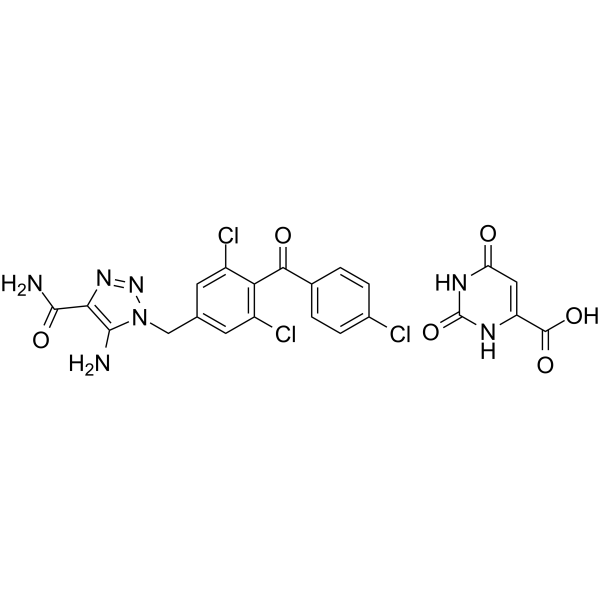
    Carboxyamidotriazole Orotate (L-651582 Orotate) is the orotate salt form of Carboxyamidotriazole (CAI), an orally bioavailable signal transduction inhibitor. Carboxyamidotriazole Orotate is a cytostatic inhibitor of nonvoltage-operated calcium channels and calcium channel-mediated signaling pathways. Carboxyamidotriazole Orotate shows anti-tumor, anti-inflammatory and antiangiogenic effects .
    Carboxyamidotriazole Orotate
  • HY-B1411R

    myo-Inositol (Standard); meso-Inositol (Standard)

    Reference Standards Endogenous Metabolite Others
    i-Inositol (Standard) is the analytical standard of i-Inositol. This product is intended for research and analytical applications. i-Inositol (myo-Inositol) is a compound of sugar alcohols. i-Inositol is involved in a series of biological processes such as insulin signal transduction and cytoskeletal transduction. i-Inositol mainly exists in glial cells and plays an osmotic role .
    i-Inositol (Standard)
  • HY-W045537

    Biochemical Assay Reagents Others
    Sodium 5-bromo-4-chloro-1H-indol-3-yl phosphate is commonly used as a substrate for phosphatase assays in biochemistry and molecular biology. This compound is converted by phosphatases to a yellow compound that can be easily measured spectrophotometrically or fluorometrically. Furthermore, it has been used as a useful reagent in enzyme-catalyzed reactions and a tool for studying signal transduction pathways.
    5-Bromo-4-chloro-1H-indol-3-yl phosphate sodium
  • HY-128465

    Endogenous Metabolite Others
    1,2-Dilauroyl-sn-glycerol is a saturated diacylglycerol and may play a role in second messenger signal transduction .
    1,2-Dilauroyl-sn-glycerol
  • HY-W654041

    AMP-13C5

    Isotope-Labeled Compounds Endogenous Metabolite Others
    Adenosine monophosphate- 13C5 (AMP- 13C5) is 13C labeled Adenosine monophosphate. Adenosine monophosphate is a key cellular metabolite regulating energy homeostasis and signal transduction .
    Adenosine monophosphate-13C5
  • HY-P10208A
    RKH acetate
    1 Publications Verification

    Toll-like Receptor (TLR) Infection Inflammation/Immunology
    RKH acetate exerts protective effects against sepsis-induced death and organ damage. RKH acetate can directly bind to Toll-like receptor 4 (TLR4) and block TLR4 signal transduction in immune cells .
    RKH acetate
  • HY-W127699

    N,N,N-Trimethyl-2-(propionyloxy)ethanaminium (p-toluenesulfonate)

    Biochemical Assay Reagents Others
    Propionylcholine (p-toluenesulfonate) is an organic compound commonly used in biochemical research and neuroscience research. It can be used to study cholinergic signal transduction and esterase activity, and is widely used in biomedical research and pharmacological research. In addition, this compound is also used as a substrate or catalyst in certain biochemical reactions.
    Propionylcholine (p-toluenesulfonate)
  • HY-P2948

    Ser/Thr protein kinase

    Biochemical Assay Reagents Infection
    Protein serine/threonine kinase is a type of serine/threonine protein kinase. Protein serine/threonine kinases are pleiotropic signaling proteins that can phosphorylate various substrates, thereby initiating branched signaling pathways. Mycobacteria protein serine/threonine kinase plays a crucial role in signal transduction pathways, ultimately determining the growth and metabolic adaptability of mycobacteria .
    Protein serine/threonine kinase
  • HY-13756S2

    FK506-d3; Fujimycin-d3; FR900506-d3

    Isotope-Labeled Compounds Autophagy FKBP Bacterial Antibiotic Phosphatase Infection Inflammation/Immunology Cancer
    Tacrolimus-d3 (FK506-d3) is deuterium labeled Tacrolimus. Tacrolimus (FK506), a macrocyclic lactone, binds to FK506 binding protein (FKBP) to form a complex. Tacrolimus inhibits calcineurin phosphatase, which inhibits T-lymphocyte signal transduction and IL-2 transcription. Immunosuppressive properties .
    Tacrolimus-d3
  • HY-100923

    PKA 5-HT Receptor EGFR Neurological Disease
    H-9 Dihydrochloride is a PKA (protein kinase) inhibitor. H-9 Dihydrochloride (10 μM) significantly reduces the excitatory response to 5-HT. H-9 Dihydrochloride also has a direct effect on pharyngeal activity. H-9 Dihydrochloride inhibits signal-transduction and cell growth in EGF (epidermal growth factor)-dependent epithelial cell lines .
    H-9 Dihydrochloride
  • HY-150163

    Endogenous Metabolite Metabolic Disease
    RBM14C12 is a compound with cell signal transduction activity. RBM14C12 has important uses in studying lipid metabolism and cell membrane structure. RBM14C12 can also be used to develop novel compounds to regulate the biological mechanisms of lipid-related diseases.
    RBM14C12
  • HY-164770A

    ApU sodium

    DNA/RNA Synthesis Others
    Adenosyl-(3′→5′)-uridine (ApU) sodium is a nucleotide, which is composed of an adenine base and a uracil sugar molecule through a 3'-5' phosphodiester bond. Adenosyl-(3′→5′)-uridine (ApU) sodium participates in the biological processes, such as gene expression regulation, signal transduction, and protein synthesis .
    Adenosyl-(3′→5′)-uridine sodium
  • HY-P3971

    TGF-beta/Smad Inflammation/Immunology
    H-Leu-Ser-Lys-Leu-OH (LSYL) is a latency-associated peptide at the amino terminus of LAP, with inhibitory effect on TGF-β1 activation. H-Leu-Ser-Lys-Leu-OH, binding with KRFK (HY-P3970), can block the signal transduction of TGF-β1, and prevent the progression of hepatic damage and fibrosis .
    H-Leu-Ser-Lys-Leu-OH
  • HY-W590849

    Endogenous Metabolite Metabolic Disease
    F1874-108 is an inhibitor of brassinosteroid biosynthesis and signal transduction .
    F1874-108
  • HY-W749117

    Endogenous Metabolite Metabolic Disease
    Inosine 5’-diphosphate sodium is a purine ribonucleoside 5’-diphosphate with inosine as the nucleobase, which can participate in intracellular energy metabolism and signal transduction processes .
    Inosine 5′-diphosphate sodium
  • HY-W750777

    Isotope-Labeled Compounds nAChR Infection
    Flupyradifurone-d5 is the deuterium labeled Flupyradifurone (HY-145295). Flupyradifurone is a systemic?nAChR?agonist that interferes with signal transduction in the central nervous system of sucking pests. Flupyradifurone can be used as a butenolide?insecticide .
    Flupyradifurone-d5
  • HY-N3149

    STAT Apoptosis Reactive Oxygen Species (ROS) Cancer
    (E)-2-Hydroxycinnamaldehyde is an aldehyde that can be separated from the stem bark of cinnamon. (E)-2-Hydroxycinnamaldehyde inhibits cell proliferation and induces apoptosis by inhibiting signal transduction of STAT3 and reactive oxygen species production. (E)-2-Hydroxycinnamaldehyde has antitumor activity .
    (E)-2-Hydroxycinnamaldehyde
  • HY-P11286

    Complement System Cancer
    A7RC is a multifunctional peptide used in tumor-targeted therapy, with Cysteine added to the C-terminal of the A7R peptide (sequence: ATWLPPR). A7R (HY-P1663) is a ligand of the NRP-1 receptor, regulating intracellular signal transduction related to tumor vascularization and tumor growth .
    A7RC
  • HY-W703190

    Inositol 1,4,5,6-tetraphosphate; D-Ins(1,4,5,6)P4

    Endogenous Metabolite Metabolic Disease
    D-myo-Inositol-1,4,5,6-tetraphosphate (D-Ins(1,4,5,6)P4) is one of several different inositol oligophosphate isomers implicated in signal transduction. It almost completely inhibits calcium-activated chloride channels at a concentration of 8-10 μM .
    D-myo-Inositol-1,4,5,6-tetraphosphate
  • HY-W014883

    1,12-DD; 1,12-Diamino dodecane

    Potassium Channel Metabolic Disease
    1,12-Dodecanediamine (1,12-DD) is a reversible Maxi calcium-activated potassium channel blocker. 1,12-Dodecanediamine can reduce the single-channel current amplitude, mean channel open time, and channel open probability. 1,12-Dodecanediamine is promising for research of cell electrical signal transduction mechanism .
    1,12-Dodecanediamine
  • HY-N16499

    Interleukin Related GDNF Receptor Trk Receptor ERK Neurological Disease Inflammation/Immunology
    Hericene A is an orally active aromatic hericene derivative. Hericene A exhibits anti-inflammatory and neurotrophic activities, and can found in the fruiting bodies of Hericium erinaceus. Hericene A inhibits the secretion of pro-inflammatory mediators. Hericene A promotes axonal growth, neurite branching, neurotrophic factor expression and downstream signal transduction. Hericene A can be used for the research of inflammatory and neurological diseases .
    Hericene A

Consulta en línea

Your information is safe with us. * Required Fields.

Saludo


Country or Region *

Nombre del solicitante *


Nombre de la Organizaciòn *

Department *


Direcciòn del E-mail *


Nombre del producto *

Cat. No.


Requested quantity *

Número de teléfono *


Observaciones

Consulta en línea

Inquiry Information

Nombre del producto:
Cat. No.:
Cantidad:
MCE Japan Authorized Agent:

