



N-Acetylputrescine hydrochloride
Based on 1 publication(s) in Google Scholar
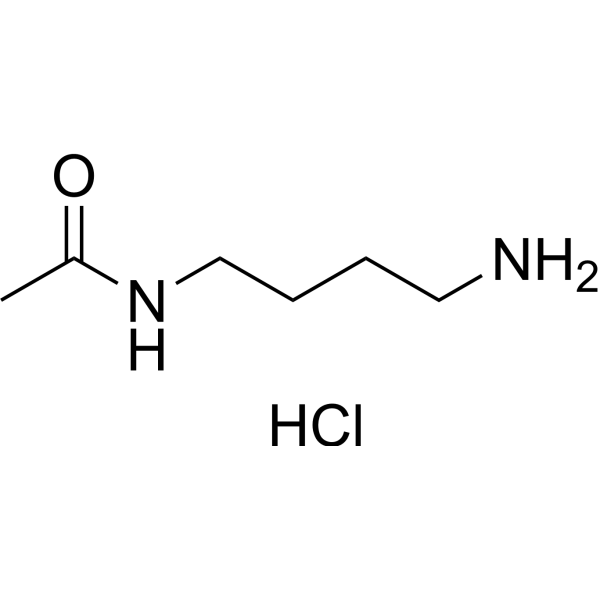
N-Acetylputrescine hydrochloride is a polyamine metabolite that regulates cell proliferation and signal transduction mainly by participating in polyamine acetylation modification. N-Acetylputrescine hydrochloride may reduce the positive charge of polyamines, affect protein-nucleic acid interactions, and promote cell growth. The concentration changes of N-Acetylputrescine hydrochloride can help disease diagnosis (such as early screening and efficacy evaluation of lung cancer) and microbial cell wall structure research. N-Acetylputrescine hydrochloride can be used as a potential biomarker for the progression of squamous cell carcinoma of the lung (SCCL) and Parkinson's disease (PD).
For research use only. We do not sell to patients.
- Purity : 99.0%
- CAS No.: 18233-70-0
- Formula: C6H15ClN2O
- Molecular Weight:166.65
-
Storage:
4°C, sealed storage, away from moisture
* In solvent : -80°C, 6 months; -20°C, 1 month (sealed storage, away from moisture)

To place orders, for customer services and technical support, please contact: MedChemExpress USA
Tel: 609-228-6898 E-mail: [email protected] [email protected]


-
 Biological Activity
-
Chemical Information
-
Solvent & Solubility
- Purity & Documentation
- References
-
 Help & FAQs


-
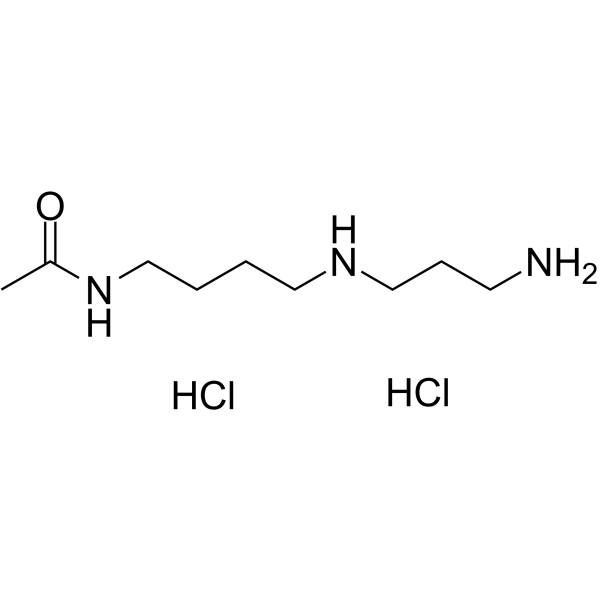
HY-113253A
N8-Acetylspermidine dihydrochloride -
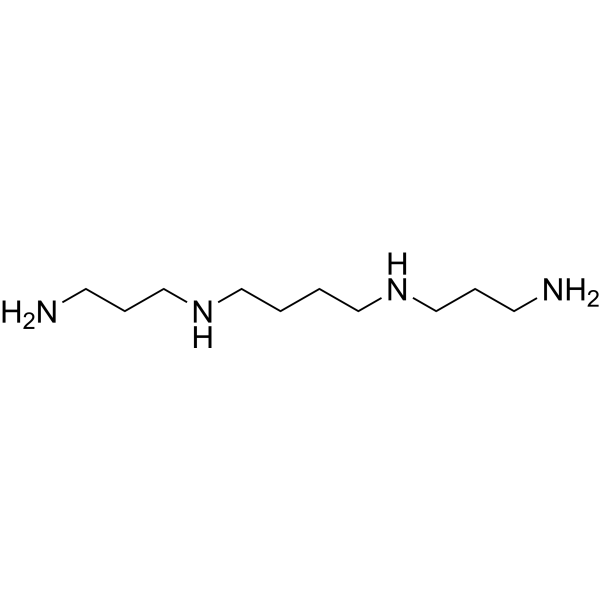
HY-B1777
Spermine -
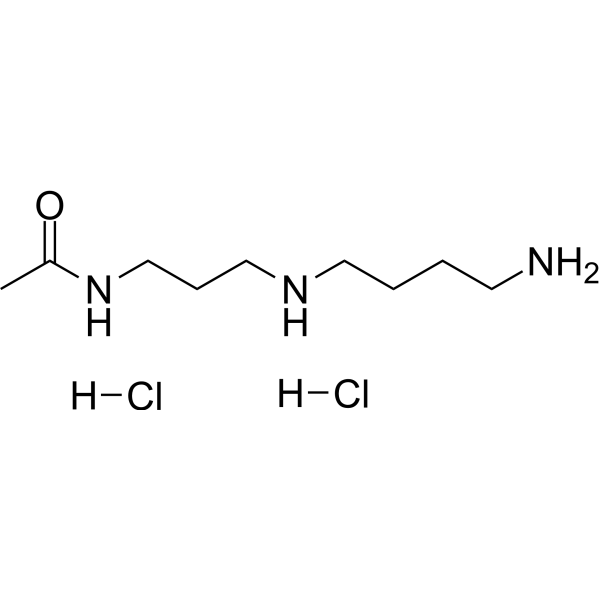
HY-113056A
N1-Acetylspermidine hydrochloride -
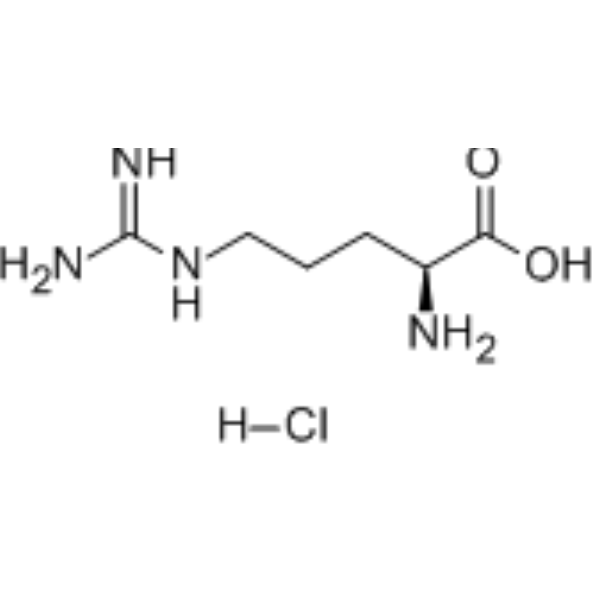
HY-N0455A
L-Arginine hydrochloride -
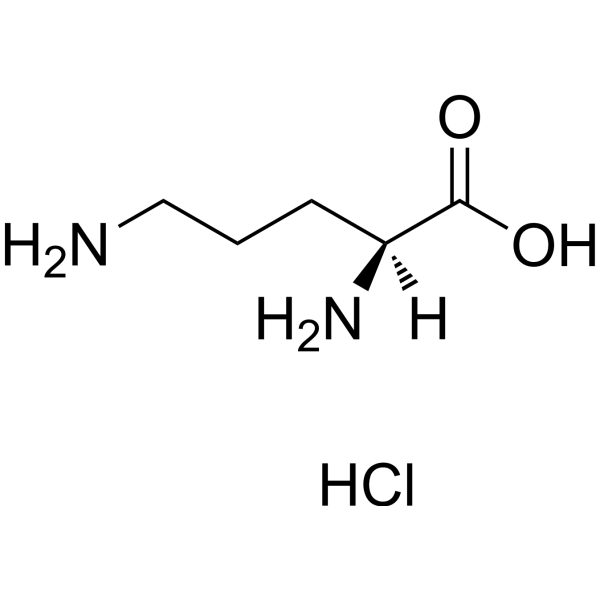
HY-W017018
L-Ornithine hydrochloride -
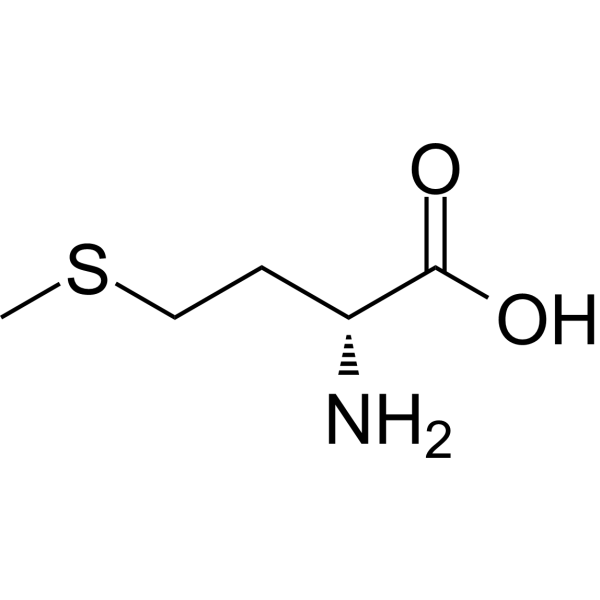
HY-13694
Methionine -
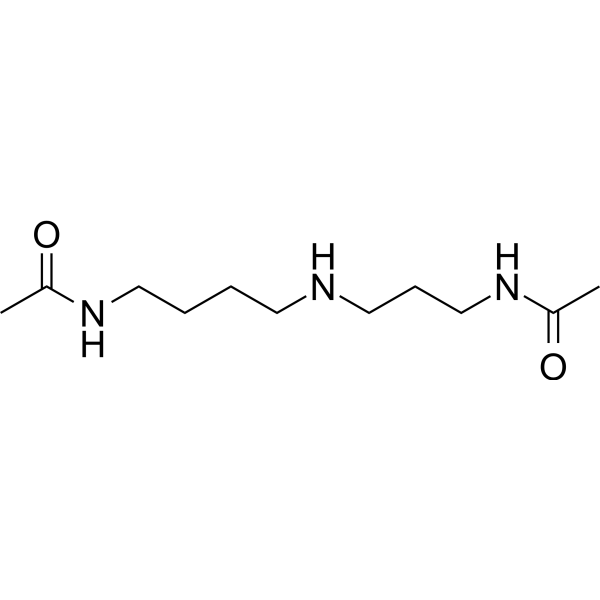
HY-129912
N1,N8-Diacetylspermidine -
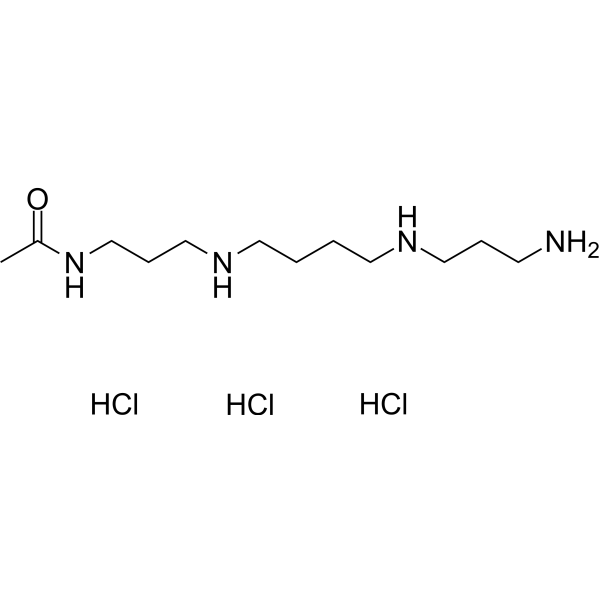
HY-113200A
N1-Acetylspermine trihydrochloride -

HY-113100R
N-Acetylputrescine hydrochloride (Standard)
Publications Citing Use of MedChemExpress (MCE) N-Acetylputrescine hydrochloride
MoreAll Endogenous Metabolite Isoforms
More

Biological Activity
Description
IC50 & Target
|
Microbial Metabolite |
Human Endogenous Metabolite |
In Vitro
N-Acetylputrescine hydrochloride is identified as a characteristic component in the peptidoglycan of the cyanobacteria Glaucocystis nostochinearum and Cyanoptyche gloeocystis, and participates in the composition of the cell wall structure by modifying D-glutamic acid residues[1].
N-Acetylputrescine hydrochloride (radiolabeled; 72 h) is synthesized from putrescine in human lymphocyte culture and can be released into the culture medium. Its production is related to the cell proliferation state and may be involved in the regulation of polyamine metabolism[2].
MedChemExpress (MCE) has not independently confirmed the accuracy of these methods. They are for reference only.
In Vivo
MedChemExpress (MCE) has not independently confirmed the accuracy of these methods. They are for reference only.
Clinical Trial
| NCT Number | Sponsor | Condition | Start Date |
Phase

|
|---|---|---|---|---|
| NCT01329991 | Plexxikon| | 2011-05 | PHASE1 |


Chemical Information
-
CAS No. 18233-70-0
-
Appearance Solid
-
Molecular Weight 166.65
-
Formula C6H15ClN2O
-
Color White to off-white
-
SMILES
CC(NCCCCN)=O.Cl
-
Structure Classification
-
Initial Source
-
Shipping
Room temperature in continental US; may vary elsewhere.
-
Storage
4°C, sealed storage, away from moisture
* In solvent : -80°C, 6 months; -20°C, 1 month (sealed storage, away from moisture)


Publications (1)
-
Journal Impact Factor
-
Most Recent
-
Nat Commun
2025 Dec 8. PMID: 41361241


Solvent & Solubility
In Vitro:
H2O : 200 mg/mL (1200.12 mM; Need ultrasonic)
DMSO : ≥ 125 mg/mL (750.08 mM; Hygroscopic DMSO has a significant impact on the solubility of product, please use newly opened DMSO)
* "≥" means soluble, but saturation unknown.
Please refer to the solubility information to select the appropriate solvent. Once prepared, please aliquot and store the solution to prevent product inactivation from repeated freeze-thaw cycles.
Storage method and period of stock solution: -80°C, 6 months; -20°C, 1 month (sealed storage, away from moisture). When stored at -80°C, please use it within 6 months. When stored at -20°C, please use it within 1 month.
* Note: If you choose water as the stock solution, please dilute it to the working solution, then filter and sterilize it with a 0.22 μm filter before use.
Please refer to the solubility information to select the appropriate solvent. Once prepared, please aliquot and store the solution to prevent product inactivation from repeated freeze-thaw cycles.
Storage method and period of stock solution: -80°C, 6 months; -20°C, 1 month (sealed storage, away from moisture). When stored at -80°C, please use it within 6 months. When stored at -20°C, please use it within 1 month.
* Note: If you choose water as the stock solution, please dilute it to the working solution, then filter and sterilize it with a 0.22 μm filter before use.
Concentration (start) × Volume (start) = Concentration (final) × Volume (final)
In Vivo:
Select the appropriate dissolution method based on your experimental animal and administration route.
- For the following dissolution methods, please ensure to first prepare a clear stock solution using an In Vitro approach and then sequentially add co-solvents:
- To ensure reliable experimental results, the clarified stock solution can be appropriately stored based on storage conditions. As for the working solution for In Vivo experiments, it is recommended to prepare freshly and use it on the same day.
- The percentages shown for the solvents indicate their volumetric ratio in the final prepared solution. If precipitation or phase separation occurs during preparation, heat and/or sonication can be used to aid dissolution.
Add each solvent one by one: 10% DMSO 40% PEG300 5% Tween-80 45% Saline
Solubility: ≥ 2.08 mg/mL (12.48 mM); Clear solution
This protocol yields a clear solution of ≥ 2.08 mg/mL (saturation unknown).
Taking 1 mL working solution as an example, add 100 μL DMSO stock solution (20.8 mg/mL) to 400 μL PEG300, and mix evenly; then add 50 μL Tween-80 and mix evenly; then add 450 μL Saline to adjust the volume to 1 mL.
Preparation of Saline: Dissolve 0.9 g sodium chloride in ddH₂O and dilute to 100 mL to obtain a clear Saline solution.
Add each solvent one by one: 10% DMSO 90% (20% SBE-β-CD in Saline)
Solubility: ≥ 2.08 mg/mL (12.48 mM); Clear solution
This protocol yields a clear solution of ≥ 2.08 mg/mL (saturation unknown).
Taking 1 mL working solution as an example, add 100 μL DMSO stock solution (20.8 mg/mL) to 900 μL 20% SBE-β-CD in Saline, and mix evenly.
Preparation of 20% SBE-β-CD in Saline (4°C, storage for one week): 2 g SBE-β-CD powder is dissolved in 10 mL Saline, completely dissolve until clear.
For the following dissolution methods, please prepare the working solution directly:
It is recommended to prepare fresh solutions and use them promptly within a short period of time.
The percentages shown for the solvents indicate their volumetric ratio in the final prepared solution. If precipitation or phase separation occurs during preparation, heat and/or sonication can be used to aid dissolution.
Add each solvent one by one: PBS
Solubility: 100 mg/mL (600.06 mM); Clear solution; Need ultrasonic
In Vivo Dissolution Calculator
Please enter the basic information of animal experiments:
-
-
-
-
Recommended: Prepare an additional quantity of animals to account for potential losses during experiments.
Working solution concentration: 0.22 mg/mL
This product has good water solubility, please refer to the measured solubility data in water/PBS/Saline for details.


Purity & Documentation
-
Data Sheet (271 KB)
-
SDS (393 KB)
- English - EN (393 KB)
- Français - FR (393 KB)
- Deutsch - DE (393 KB)
- Norwegian - NO (393 KB)
- Español - ES (393 KB)
- Swedish - SV (393 KB)
- Italian - IT (393 KB)
- Korean - KR (393 KB)
- Portuguese - PT (393 KB)
-
Handling Instructions (2659 KB)
References
[1]. Pfanzagl B, et al. N-acetylputrescine as a characteristic constituent of cyanelle peptidoglycan in glaucocystophyte algae. J Bacteriol. 1996 Dec;178(23):6994-7. [Content Brief]
[2]. Menashe M, et al. Formulation of N-acetylputrescine and N1-acetylspermidine in cultured human lymphocytes. Biochem J. 1980 Apr 15;188(1):263-7. [Content Brief]
[3]. Liu R, et al. Plasma N-acetylputrescine, cadaverine and 1,3-diaminopropane: potential biomarkers of lung cancer used to evaluate the efficacy of anticancer drugs. Oncotarget. 2017 Jul 17;8(51):88575-88585. [Content Brief]


Complete Stock Solution Preparation Table
Please refer to the solubility information to select the appropriate solvent. Once prepared, please aliquot and store the solution to prevent product inactivation from repeated freeze-thaw cycles.
Storage method and period of stock solution: -80°C, 6 months; -20°C, 1 month (sealed storage, away from moisture). When stored at -80°C, please use it within 6 months. When stored at -20°C, please use it within 1 month.
| Optional Solvent | Concentration Solvent Mass | 1 mg | 5 mg | 10 mg | 25 mg |
|---|---|---|---|---|---|
| DMSO / H2O | 1 mM | 6.0006 mL | 30.0030 mL | 60.0060 mL | 150.0150 mL |
| 5 mM | 1.2001 mL | 6.0006 mL | 12.0012 mL | 30.0030 mL | |
| 10 mM | 0.6001 mL | 3.0003 mL | 6.0006 mL | 15.0015 mL | |
| 15 mM | 0.4000 mL | 2.0002 mL | 4.0004 mL | 10.0010 mL | |
| 20 mM | 0.3000 mL | 1.5002 mL | 3.0003 mL | 7.5008 mL | |
| 25 mM | 0.2400 mL | 1.2001 mL | 2.4002 mL | 6.0006 mL | |
| 30 mM | 0.2000 mL | 1.0001 mL | 2.0002 mL | 5.0005 mL | |
| 40 mM | 0.1500 mL | 0.7501 mL | 1.5002 mL | 3.7504 mL | |
| 50 mM | 0.1200 mL | 0.6001 mL | 1.2001 mL | 3.0003 mL | |
| 60 mM | 0.1000 mL | 0.5001 mL | 1.0001 mL | 2.5003 mL | |
| 80 mM | 0.0750 mL | 0.3750 mL | 0.7501 mL | 1.8752 mL | |
| 100 mM | 0.0600 mL | 0.3000 mL | 0.6001 mL | 1.5002 mL |
* Note: If you choose water as the stock solution, please dilute it to the working solution, then filter and sterilize it with a 0.22 μm filter before use.


N-Acetylputrescine hydrochloride Related Classifications
HY-113100 Related Classifications
 Powered by Bioz