Search Result
Results for "
major metabolite
" in MedChemExpress (MCE) Product Catalog:
-
- HY-N1902
-
-
-
- HY-111741
-
|
|
Fungal
|
Infection
|
|
M700F048 is a major plant metabolite of fungicide Fluxapyroxad .
|
-
-
- HY-124265
-
|
|
Endogenous Metabolite
|
Metabolic Disease
|
|
4β-Hydroxycholesterol is a major Cholesterol (HY-N0322) metabolite and a precursor in the synthesis of bile acids that is found in human circulation .
|
-
-
- HY-Z0548
-
|
Protocatechuic acid methyl ester; Methyl protocatechuate
|
Keap1-Nrf2
Apoptosis
|
Inflammation/Immunology
Cancer
|
|
Methyl 3,4-dihydroxybenzoate (Protocatechuic acid methyl ester; Methyl protocatechuate) is a major metabolite of antioxidant polyphenols found in green tea. Antioxidant and anti-inflammatory effect .
|
-
-
- HY-138795
-
|
|
Endogenous Metabolite
|
Cancer
|
|
Curcumin-β-D-glucuronide is a major metabolite after oral intake of Curcumin in hepatic tissue and portal blood. Curcumin-β-D-glucuronide can be used for the research of colon cancer .
|
-
-
- HY-N3059
-
-
-
- HY-125643
-
-
-
- HY-19657
-
-
-
- HY-W086896
-
-
-
- HY-103005S
-
|
|
Melatonin Receptor
Drug Metabolite
|
Neurological Disease
Endocrinology
|
|
Ramelteon metabolite M-II-d3 is the deuterium labeled Ramelteon metabolite M-II. Ramelteon metabolite M-II is the major metabolite of Ramelteon, with IC50s of 208 pM, 1470 pM for human melatonin receptors (MT1 or MT2). Ramelteon is a selective melatonin agonist .
|
-
-
- HY-13332
-
-
-
- HY-141626S
-
-
-
- HY-N7143
-
-
-
- HY-126857
-
-
-
- HY-118166
-
|
NSC 329491; 1,3,7-Trihydroxyxanthone
|
5-HT Receptor
|
Neurological Disease
|
|
Gentisein (NSC 329491), the major metabolite of Mangiferin, shows the most potent serotonin uptake inhibition with an IC50 value of 4.7 µM .
|
-
-
- HY-113344
-
-
-
- HY-135335
-
|
|
Drug Metabolite
|
Metabolic Disease
|
|
3'-Hydroxy Repaglinide is the major CYP2C8 metabolite of Repaglinide (HY-15209). Repaglinide is a carbamoylmethylbenzoic acid (CMBA) derivative that acts on type 2 diabetes .
|
-
-
- HY-W019151
-
|
|
Endogenous Metabolite
|
Metabolic Disease
|
|
Meconine is an endogenous metabolite of Noscapine (HY-13716). Meconine is the major metabolite in all three species, accounting for about 3, 8 and 2% of the dose in the first 24 h urines of rats, rabbits and humans, respectively. Meconine can be used as a marker to detect illicit opiate use .
|
-
-
- HY-114914
-
-
-
- HY-103005
-
-
-
- HY-117605
-
|
Desmethylsildenafil; UK-103,320
|
Phosphodiesterase (PDE)
|
Cardiovascular Disease
|
|
N-Desmethyl Sildenafil (Desmethylsildenafil) is a major metabolite of Sildenafil. Sildenafil is a potent phosphodiesterase type 5 (PDE5) inhibitor .
|
-
-
- HY-105014
-
|
Norastemizole
|
Histamine Receptor
|
Inflammation/Immunology
|
|
Tecastemizole (Norastemizole), a major metabolite of Astemizole, is a potent and selective H1 receptor antagonist. Tecastemizole shows anti-inflammatory activities .
|
-
-
- HY-G0001A
-
|
|
Drug Metabolite
|
Neurological Disease
|
|
Lurasidone Metabolite 14283 hydrochloride is a major active metabolite of Lurasidone. Lurasidone is a FDA approved agent for the treatment of schizophrenia.
|
-
-
- HY-101723
-
-
-
- HY-I0177
-
|
|
Drug Metabolite
|
Others
|
|
Vilazodone carboxylic acid is a vilazodone metabolite observed in both urine (major) and plasma (minor) .
|
-
-
- HY-118093
-
|
|
Drug Metabolite
|
Others
|
|
N-benzoyl-L-aspartic acid, a major metabolite of benzyl glucosinolate, can be used for modification of peptides or proteins .
|
-
-
- HY-100046
-
|
Desmethyldoxepin hydrochloride
|
Drug Metabolite
|
Neurological Disease
|
|
Nordoxepin hydrochloride is the major metabolite of Doxepin. Doxepin is a tricyclic antidepressant that is widely prescribed for the research of mild depression .
|
-
-
- HY-107850S
-
-
-
- HY-W052051
-
|
N-Acetylbenzylamine
|
Endogenous Metabolite
|
Others
|
|
N-Benzylacetamide (N-Acetylbenzylamine), as an endogenous metabolite, is the major component of the plasma metabolic profile of Benznidazole (HY-B1548) .
|
-
-
- HY-136609
-
|
|
nAChR
|
Neurological Disease
|
|
5-AMAM-2-CP is a major metabolite of Acetamiprid. Acetamiprid is a neonicotinoid insecticide used worldwide and is a nAChR agonist .
|
-
-
- HY-135811A
-
|
|
Parasite
Toll-like Receptor (TLR)
Autophagy
|
Infection
|
|
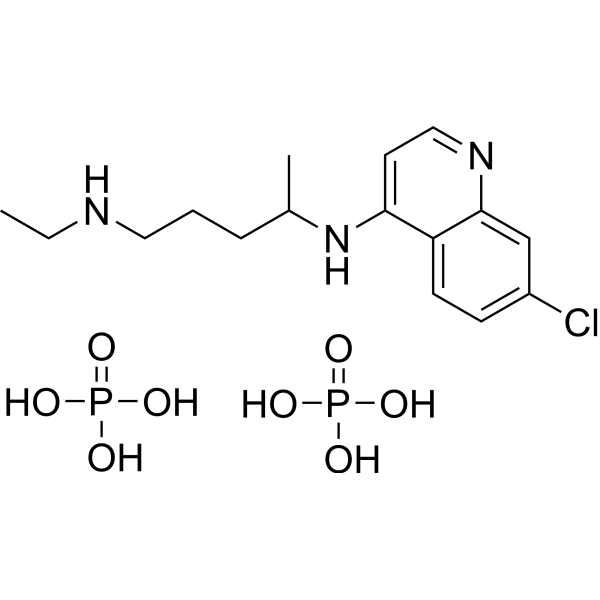
Desethyl chloroquine diphosphate is a major desethyl metabolite of Chloroquine. Chloroquine diphosphate is an inhibitor of autophagy and toll-like receptors (TLRs). Desethyl chloroquine diphosphate possesses antiplasmodic activity .
|
-
-
- HY-116026
-
-
-
- HY-137532
-
-
-
- HY-W004464
-
-
-
- HY-W400496
-
|
|
HDAC
|
Cancer
|
|
Valproic acid β-D-glucuronide is the major urinary metabolite of Valproic acid (HY-10585) .
|
-
-
- HY-126708
-
|
|
ADC Payload
Antibiotic
|
Infection
|
|
Luisol A, an aromatic tetraol, is a major metabolite of an estuarine marine actinomycete of the genus Streptomyces. Luisol A, is an anthraquinone antibiotic analog .
|
-
-
- HY-P2643
-
-
-
- HY-136327
-
|
|
DNA Alkylator/Crosslinker
|
Cancer
|
|
Phenylacetic acid mustard is the major metabolite of the cancer chemotherapeutic agent Chlorambucil (HY-13593). Chlorambucil is an alkylating agent with antitumor activity .
|
-
-
- HY-136608
-
|
|
nAChR
|
Neurological Disease
|
|
5-AAM-2-CP is a major metabolite of Acetamiprid. Acetamiprid is a neonicotinoid insecticide used worldwide and is a nAChR agonist .
|
-
-
- HY-135811
-
|
|
Parasite
Toll-like Receptor (TLR)
Autophagy
|
Infection
|
|
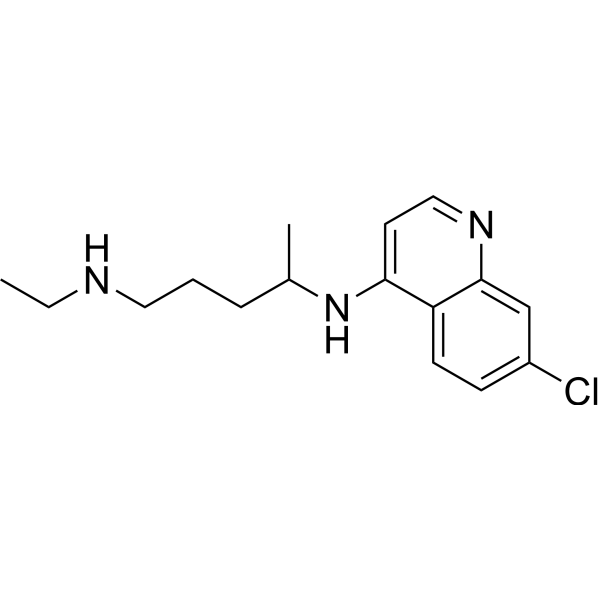
Desethyl chloroquine is a major desethyl metabolite of Chloroquine. Chloroquine diphosphate is an inhibitor of autophagy and toll-like receptors (TLRs). Desethyl chloroquine possesses antiplasmodic activity .
|
-
-
- HY-122139
-
|
|
Bacterial
|
Infection
|
|
Desethylene Ciprofloxacin hydrochloride is a major metabolite of Ciprofloxacin (HY-B0356). Ciprofloxacin is an orally active topoisomerase IV inhibitor. Desethylene Ciprofloxacin hydrochloride has antibacterial activity .
|
-
-
- HY-126857A
-
|
|
Drug Metabolite
|
Others
|
|
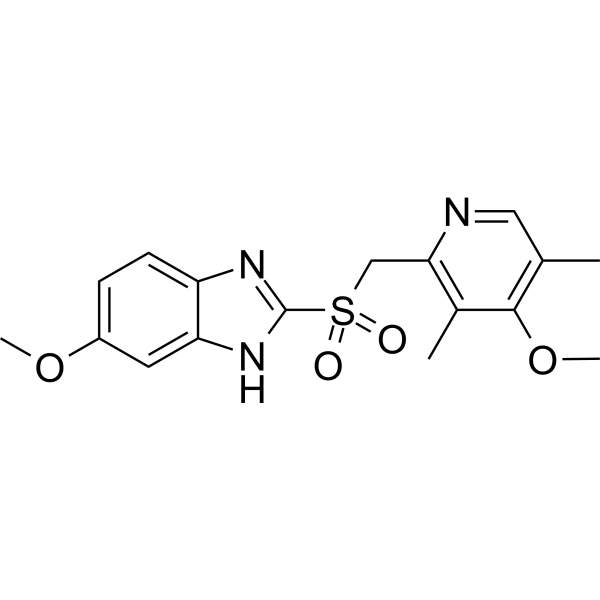
5-Hydroxyomeprazole sodium is the major metabolite of Omeprazole (HY-B0113). Measuring 5-Hydroxyomeprazole levels in plasma can determine the extent of Omeprazole metabolism .
|
-
-
- HY-126857R
-
|
Hydroxyomeprazole (Standard)
|
Drug Metabolite
Reference Standards
|
Others
|
|
5-Hydroxyomeprazole (Standard) is the analytical standard of 5-Hydroxyomeprazole. This product is intended for research and analytical applications. 5-Hydroxyomeprazole is the major metabolite of Omeprazole (HY-B0113).
|
-
-
- HY-G0016
-
|
MADDS; Monoacetyldapsone
|
Drug Metabolite
|
Others
|
|
N-Acetyl dapsone (MADDS) is the major metabolite of Dapsone (HY-B0688). Dapsone is an orally active and blood-brain penetrant sulfonamide antibiotic with bacteriostatic, antimycobacterial and antiprotozoal activities .
|
-
-
- HY-136611
-
|
|
Drug Metabolite
|
Infection
|
|
ω-Hydroxy-DEET is a major metabolite of insect repellent N-N-diethyl-meta-toluamide (DEET). ω-Hydroxy-DEET has anti-proliferative effects. DEET is a spatial repellent and an irritant that commonly used to prevent contact with mosquitoes .
|
-
-
- HY-W739812
-
|
Finasteride carboxylic acid
|
Aldose Reductase
|
Cancer
|
|
Carboxy finasteride is a metabolite of the 5α-reductase inhibitor Finasteride (HY-13635). Finasteride is biotransformed by cytochrome P450 (CYP3A4) and is successively oxidized to Hydroxy finasteride and Carboxy finasteride. Carboxy finasteride is the major metabolite in urine, while Hydroxy finasteride is the major metabolite in plasma .
|
-
-
- HY-131622
-
-
-
- HY-43711
-
|
|
mAChR
|
Neurological Disease
|
|
Nor-benzetimide is a major metabolite of Benzetimide. Benzetimide is a mAChR antagonist with anticholinergic activity .
|
-
-
- HY-138573
-
-
-
- HY-136347
-
|
|
Drug Metabolite
|
Others
|
|
3α-Hydroxy pravastatin sodium is the major metabolite of Pravastatin (HY-B0165A). Pravastatin is a competitive HMG-CoA reductase inhibitor .
|
-
- HY-172540
-
-
- HY-100652A
-
|
|
Factor Xa
|
Cardiovascular Disease
|
|
O-Desmethyl apixaban sulfate sodium is a major circulating metabolite of Apixaban in humans. O-Desmethyl apixaban sulfate sodium inhibits factor X (FXa) with a Ki of 58 μM .
|
-
- HY-N16470
-
|
|
Endogenous Metabolite
|
Others
|
|
Echiumine, a pyrrolizidine alkaloid, is a major dehydropyrrolizidine metabolite of Echium plantagineum. Echiumine has significant hepatotoxic activity and can persist intact from honey through to the resulting mead .
|
-
- HY-135847
-
|
SSR97213
|
Parasite
Drug Metabolite
|
Infection
|
|
Desmethyl ferroquine (SSR97213) is the active and major metabolite of Ferroquine. Ferroquine is an antimalarial. Desmethyl ferroquine shows significant activity against Chloroquine-susceptible and resistant P. falciparum strains .
|
-
- HY-122423
-
|
N-Deethylamiodarone; LB 33020
|
Apoptosis
Drug Metabolite
|
Cardiovascular Disease
Cancer
|
|
Desethylamiodarone (N-Deethylamiodarone) is the major metabolite of antiarrhythmic compound Amiodarone (HY-14187). Desethylamiodarone has antiarrhythmic activity. Desethylamiodaron also induces cancer cell apoptosis .
|
-
- HY-136347R
-
|
|
Reference Standards
Drug Metabolite
|
Cardiovascular Disease
|
|
3α-Hydroxy pravastatin sodium (Standard) is the analytical standard of 3α-Hydroxy pravastatin sodium. This product is intended for research and analytical applications. 3α-Hydroxy pravastatin sodium is the major metabolite of Pravastatin (HY-B0165A). Pravastatin is a competitive HMG-CoA reductase inhibitor .
|
-
- HY-116026R
-
-
- HY-W704938
-
-
- HY-W777199
-
|
|
Drug Metabolite
|
Others
|
|
Tianeptine metabolite MC5 sodium salt is a major active metabolite of tianeptine. Tianeptine and MC5 metabolite are eliminated with bile as glucuronide and glutamine conjugates .
|
-
- HY-118163
-
-
- HY-138151
-
-
- HY-124320
-
-
- HY-W264038
-
-
- HY-117703
-
-
- HY-129903
-
|
|
Drug Metabolite
|
Others
|
|
N-Desethyl vardenafil is the major metabolite of Vardenafil (HY-B0442) and can be detected in human urine .
|
-
- HY-132675S
-
|
|
Isotope-Labeled Compounds
|
Others
|
|
Prochlorperazine Sulfoxide-d3 is a deuterium labeled Prochlorperazine Sulfoxide. Prochlorperazine Sulfoxide is the major metabolite of the antiemetic Prochlorperazine .
|
-
- HY-137393
-
-
- HY-117179
-
|
|
Parasite
|
Infection
|
|
Endosulfan sulfate is the major metabolite of the insecticide Endosulfan, used for various crops. Endosulfan sulfate is more toxic and persistent than Endosulfan .
|
-
- HY-175078
-
|
19(20)-DHDP; (±)19,20-DiHDoPE
|
Endogenous Metabolite
|
Others
|
|
(±)19(20)-DiHDPA is one of the major metabolites produces when docosahexaenoic acid is incubated with NADPH-supplemented rat liver microsomes .
|
-
- HY-101723R
-
|
BMY 40327 (Standard); MJ 14030 (Standard)
|
Reference Standards
Drug Metabolite
|
Cardiovascular Disease
|
|
Modecainide (Standard) is the analytical standard of Modecainide. This product is intended for research and analytical applications. Modecainide is a major metabolite of Encainide, which is an antiarrhythmic agent.
|
-
- HY-148846
-
|
|
Drug Metabolite
|
Metabolic Disease
|
|
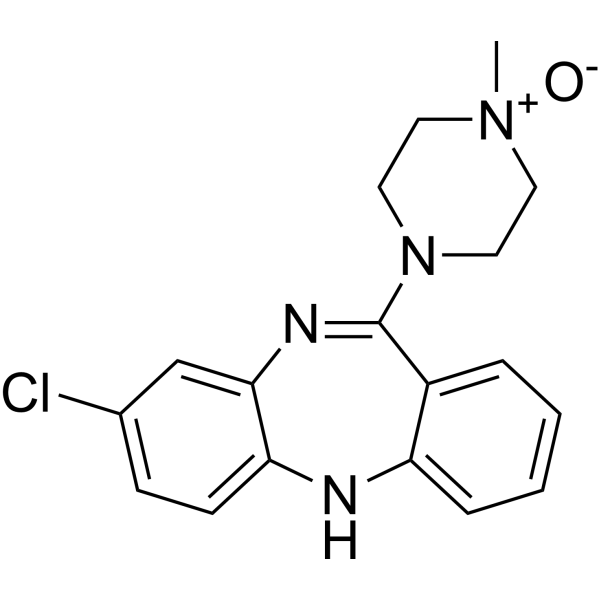
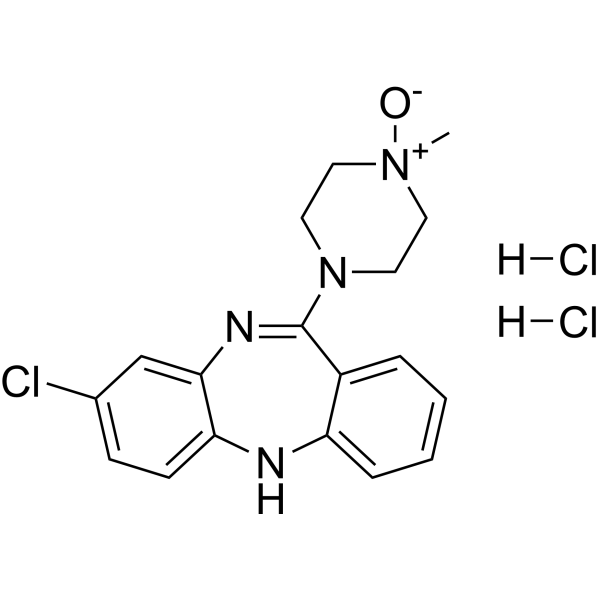
Mosapride N-Oxide is a major active metabolite of Mosapride. Mosapride is a gastroprokinetic agent that acts as a selective 5HT4 agonist.
|
-
- HY-116029
-
-
- HY-100635S
-
-
- HY-Z12431
-
|
KMD-3293
|
Endogenous Metabolite
|
Metabolic Disease
|
|
Silodosin carboxylic acid impurity (KMD-3293) is an inactive silodosin metabolite. Silodosin carboxylic acid impurity is the major metabolite that can be generated via oxidation by alcohol and aldehyde dehydrogenase. Silodosin carboxylic acid impurity can be studied in research for benign prostatic hyperplasia .
|
-
- HY-136611R
-
|
|
Reference Standards
Drug Metabolite
|
Infection
|
|
Carbasalate calcium (Standard) is the analytical standard of Carbasalate calcium. This product is intended for research and analytical applications. Carbasalate calcium is an anti-inflammatory, antipyretic, and analgesic agent.
|
-
- HY-Z4690
-
-
- HY-12772A
-
|
rel-R-63373
|
Drug Isomer
|
Infection
|
|
rel-Hydroxy Itraconazole (rel-R-63373) is a relative stereoisomer of Hydroxy Itraconazole. Hydroxy Itraconazole is the major active metabolite of the antifungal compound Itraconazole (HY-17514) .
|
-
- HY-125632
-
|
|
Parasite
|
Infection
|
|
Ro 19-9638 is the major metabolite of Ro 15-0216. Ro 19-9638 exhibits antiparasitic efficacy against Trypanosoma brucei rhodesiense with an IC50 of 0.0341 µg/mL .
|
-
- HY-W704657
-
-
- HY-100046R
-
|
Desmethyldoxepin hydrochloride (Standard)
|
Reference Standards
Drug Metabolite
|
Neurological Disease
|
|
Nordoxepin (hydrochloride) (Standard) is the analytical standard of Nordoxepin (hydrochloride). This product is intended for research and analytical applications. Nordoxepin hydrochloride is the major metabolite of Doxepin. Doxepin is a tricyclic antidepressant that is widely prescribed for the research of mild depression .
|
-
- HY-168801
-
-
- HY-137532S
-
-
- HY-100662S
-
|
Bisdesethylchloroquine-d4
|
Isotope-Labeled Compounds
Drug Metabolite
|
Cardiovascular Disease
|
|
Didesethyl chloroquine-d4 is the deuterium labeled Didesethyl chloroquine. Didesethyl chloroquine (Bisdesethylchloroquine) is a major metabolite of the antimalarial agent Chloroquine. Didesethyl chloroquine is a potent myocardial depressant .
|
-
- HY-137532S1
-
|
|
Isotope-Labeled Compounds
|
Neurological Disease
|
|
7-Hydroxyquetiapine-d4 (hemifumarate) is deuterium labeled 7-Hydroxyquetiapine. 7-Hydroxyquetiapine (ICI 214227) is the major active metabolite of antipsychotic medicine Quetiapine .
|
-
- HY-N3059R
-
|
trans-Pinostilbene (Standard)
|
Drug Metabolite
Reference Standards
|
Neurological Disease
Cancer
|
|
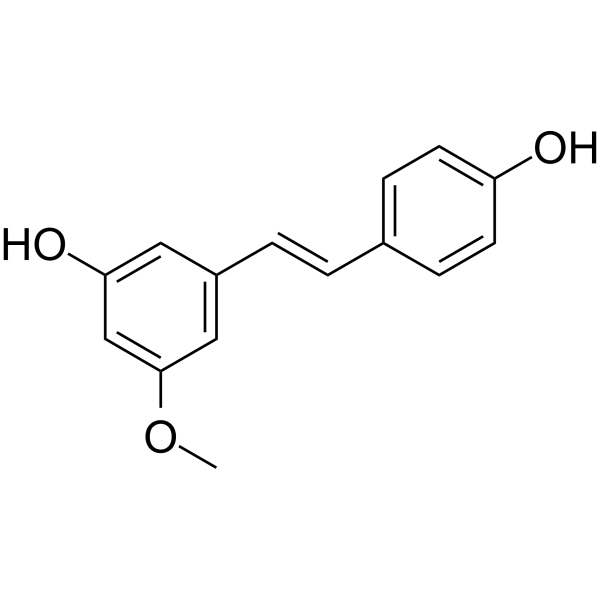
Pinostilbene (Standard) is the analytical standard of Pinostilbene. This product is intended for research and analytical applications. Pinostilbene (trans-Pinostilbene) is a major metabolite of Pterostilbene. Pinostilbene exhibits inhibitory effects on colon cancer cells .
|
-
- HY-B1178R
-
|
(-)-Cotinine (Standard); (S)-Cotinine (Standard); NIH-10498 (Standard)
|
Reference Standards
Endogenous Metabolite
nAChR
|
Cardiovascular Disease
Inflammation/Immunology
|
|
Cotinine (Standard) is the analytical standard of Cotinine. This product is intended for research and analytical applications. Cotinine ((-)-Cotinine), an alkaloid in tobacco and a major metabolite of nicotine, is used as a biological indicator to measure the composition of tobacco smoke
|
-
- HY-N8491C
-
|
|
Others
|
Others
|
|
(+)-Neodihydrocarveol is a monoterpenoid compound. (+)-Neodihydrocarveol is a major metabolite during the biotransformation of (-)-limonene (HY-Z0478) by the fungus Aspergillus cellulosae M-77 .
|
-
- HY-W588209
-
-
- HY-W728123
-
-
- HY-N17811
-
|
|
Drug Metabolite
|
Cancer
|
|
Vincristine metabolite-1 (Compound M1) is the major metabolite of Vincristine (HY-N0488A) by CYP3A4 and CYP3A5 .
|
-
- HY-129883
-
-
- HY-W700165
-
-
- HY-W739861
-
|
1'-Hydroxytriazolam
|
Endogenous Metabolite
|
Others
|
|
α-Hydroxytriazolam (1'-Hydroxytriazolam) is a major metabolite of ranitidine (HY-B0693) .
|
-
- HY-164611
-
-
- HY-180335
-
|
|
Drug Metabolite
|
Cardiovascular Disease
|
|
L 691121 (free base) is the major metabolite of L 691121 in plasma. L 691121 (free base) is a class IIIantiarrhythmic agent that blocks potassium currents .
|
-
- HY-120618
-
|
BMS-180492
|
Drug Derivative
|
Neurological Disease
|
|
Triazoledione (BMS-180492) is a phenylpiperazine compound and the major metabolite of Nefazodone (HY-119209). Triazoledione is used in the research of depression .
|
-
- HY-W701713
-
|
|
Drug Derivative
|
Others
|
|
Fenamiphos sulfoxide is the major oxidative metabolite of the organophosphate pesticide fenamiphos. Fenamiphos sulfoxide can be transformed by aquatic and terrestrial algae, and undergoes bioaccumulation in these organisms .
|
-
- HY-129240
-
|
Isoacitretin; Ro 13-7652
|
Drug Derivative
|
Others
|
|
13-cis Acitretin (Isoacitretin; Ro 13-7652) is a retinoid and the major in vivo metabolite of etretinate. 13-cis Acitretin is formed via in vivo isomerization of etretinate. 13-cis Acitretin serves as the primary metabolite in blood .
|
-
- HY-131566
-
|
|
Endogenous Metabolite
|
Cardiovascular Disease
|
|
Amiquinsin hydrochloride monohydrate is a compound with hypotensive activity. Amiquinsin hydrochloride monohydrate is metabolized in vivo, and the major metabolite is 4-amino-6,7-dimethoxy-3-quinolinol hydrochloride hydrate .
|
-
- HY-W014277
-
|
|
Environmental Pollutants
Drug Metabolite
|
Others
|
|
2,6-Diisopropylnaphthalene is a substituted naphthalene compound and metabolite precursor. 2,6-Diisopropylnaphthalene undergoes metabolism exclusively via oxidation of its isopropyl chain in Rattus norvegicus (rats), producing five major unconjugated urinary metabolites. 2,6-Diisopropylnaphthalene forms glucuronide conjugates of these metabolites, and a small amount of unchanged compound is excreted in urine .
|
-
- HY-W587411
-
|
Mono[2-(carboxymethyl)hexyl] phthalate; MCHP
|
Drug Metabolite
|
Metabolic Disease
|
|
Mono[2-(carboxymethyl)hexyl] phthalate (MCHP) is a metabolite of Di-(2-ethylhexyl)phthalate (DEHP). DEH is an endocrine disrupting chemical that is widely used as the major plasticizer .
|
-
- HY-N7143S
-
|
|
Isotope-Labeled Compounds
|
Endocrinology
|
|
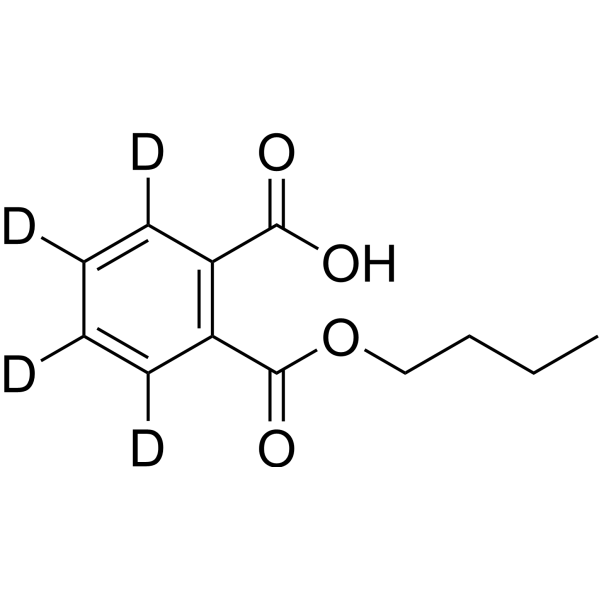
Monobutyl phthalate-d4 is the deuterium labeled Monobutyl phthalate . Monobutyl phthalate, a major metabolite of dibutyl phthalate (DBP), possesses antiandrogenic effects. Monobutyl phthalate is an embryotoxicant .
|
-
- HY-124464
-
-
- HY-135176
-
|
|
Endogenous Metabolite
|
Cancer
|
|
13-Dihydrocarminomycin (compound D788-12) is the major metabolite of the antitumor antibiotic Carminomycin (HY-B2171). 13-Dihydrocarminomycin has weak antitumor activity .
|
-
- HY-N7387
-
|
3-Dehydrocholic acid
|
Endogenous Metabolite
|
Metabolic Disease
|
|
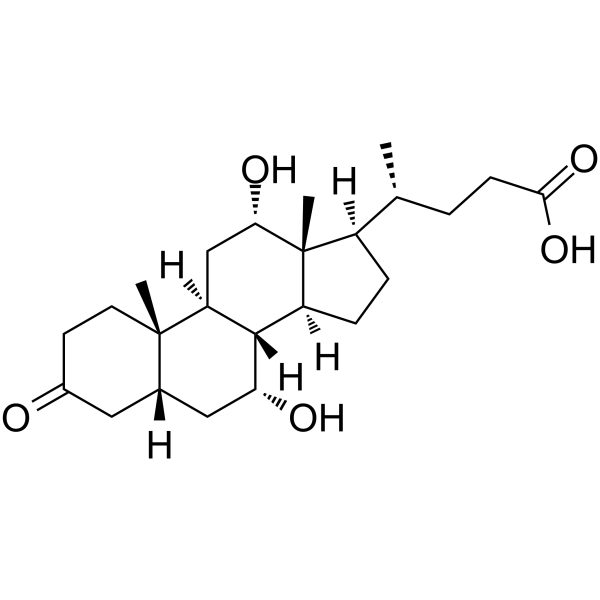
3-Oxocholic acid is an oxo-bile acid metabolite and also a major degradation product from cholic by C. perfringens in the intestine. 3-Oxocholic acid is steroid acid found predominantly in bile of mammals .
|
-
- HY-124087
-
|
4-en-VPA; 2-Allylpentanoic acid
|
Drug Metabolite
|
Others
|
|
(±)-2-Propyl-4-pentenoic acid (4-en-VPA) is a major toxic metabolite of Valproic acid. (±)-2-Propyl-4-pentenoic acid exhibits neuroteratogenicity .
|
-
- HY-130569A
-
|
|
Drug Metabolite
|
Metabolic Disease
|
|
7-Hydroxymethotrexate sodium is a major metabolite of Methotrexate (HY-14519). Methotrexate, an antimetabolite and antifolate agent, inhibits the enzyme dihydrofolate reductase, thereby preventing the conversion of folic acid into tetrahydrofolate, and inhibiting DNA synthesis .
|
-
- HY-130353
-
|
N-desethylamiodarone hydrochloride; LB 33020 hydrochloride
|
Potassium Channel
Autophagy
|
Cardiovascular Disease
|
|
Desethylamiodarone hydrochloride (N-desethylamiodarone hydrochloride) is a major active metabolite of Amiodarone. Desethylamiodarone hydrochloride is formed by CYP3A isoenzymes. Amiodarone is an antiarrhythmic agent for inhibition of ATP-sensitive potassium channel with an IC50 of 19.1 μM .
|
-
- HY-135895
-
-
- HY-148051
-
|
|
Drug Metabolite
|
Inflammation/Immunology
Cancer
|
|
Ilaprazole sulfone is the major metabolite of Ilaprazole (HY-101664), is predominantly catalysed by CYP3A4/5. Ilaprazole (IY-81149) is an orally active proton pump inhibitor .
|
-
- HY-W009934
-
|
α-Phenyl-2-pyridineacetonitrile
|
Drug Metabolite
|
Endocrinology
|
|
2-Phenyl-2-(2-pyridyl)acetonitrile is the major metabolite of SC 15396 metabolized by the supernatant fraction of rat liver homogenate. SC 15396 is an antigastrin that inhibits gastric secretion .
|
-
- HY-130569
-
|
|
Drug Metabolite
|
Inflammation/Immunology
Cancer
|
|
7-Hydroxymethotrexate is a major metabolite of Methotrexate (HY-14519). Methotrexate, an antimetabolite and antifolate agent, inhibits the enzyme dihydrofolate reductase, thereby preventing the conversion of folic acid into tetrahydrofolate, and inhibiting DNA synthesis .
|
-
- HY-N0929
-
|
|
COX
Reactive Oxygen Species (ROS)
|
Cancer
|
|
Hexahydrocurcumin is one of the major metabolites of curcumin and a selective, orally active COX-2 inhibitor. Hexahydrocurcumin is inactive against COX-1. Hexahydrocurcumin has antioxidant, anticancer and anti-inflammatory activities .
|
-
- HY-N7143R
-
|
|
Drug Metabolite
Reference Standards
|
Metabolic Disease
Endocrinology
|
|
Monobutyl phthalate (Standard) is the analytical standard of Monobutyl phthalate. This product is intended for research and analytical applications. Monobutyl phthalate, a major metabolite of dibutyl phthalate (DBP), possesses antiandrogenic effects. Monobutyl phthalate is an embryotoxicant .
|
-
- HY-W709055
-
-
- HY-118093R
-
|
|
Drug Metabolite
Reference Standards
|
Others
|
|
N-benzoyl-L-aspartic acid (Standard) is the analytical standard of N-benzoyl-L-aspartic acid. This product is intended for research and analytical applications. N-benzoyl-L-aspartic acid, a major metabolite of benzyl glucosinolate, can be used for modification of peptides or proteins .
|
-
- HY-W401407
-
|
|
Drug Metabolite
Cytochrome P450
|
Metabolic Disease
|
|
Diosmetin-3-O-glucuronide is a major circulating metabolite of Diosmetin (HY-N0125) in plasma and in urine. Diosmetin is a natural flavonoid which inhibits human CYP1A enzyme activity .
|
-
- HY-W749323
-
|
|
Mineralocorticoid Receptor
|
Cardiovascular Disease
|
|
21-Hydroxyeplerenone is a major metabolite of the mineralocorticoid receptor antagonist Eplerenone (HY-B0251). 21-Hydroxyeplerenone is formed from eplerenone by the cytochrome P450 (CYP) isoform CYP3A4.
|
-
- HY-148377
-
|
|
Drug Metabolite
|
Cancer
|
|
Abiraterone sulfate N-oxide is a carboxylic acid. Abiraterone sulfate N-oxide also is a major metabolite of Abiraterone (HY-70013). Abiraterone sulfate N-oxide can be used for the research of prostate cancer .
|
-
- HY-W740139
-
-
- HY-105014R
-
|
Norastemizole (Standard)
|
Reference Standards
Histamine Receptor
|
Inflammation/Immunology
|
|
Tecastemizole (Standard) is the analytical standard of Tecastemizole. This product is intended for research and analytical applications. Tecastemizole (Norastemizole), a major metabolite of Astemizole, is a potent and selective H1 receptor antagonist. Tecastemizole shows anti-inflammatory activities .
|
-
- HY-15852
-
|
|
Drug Metabolite
|
Others
|
|
THRX-195518 is the major metabolite of Revefenacin (HY-15851), a lung-selective and long-acting muscarinic antagonist. THRX-195518 can be utilized in research related to chronic obstructive pulmonary disease .
|
-
- HY-107850R
-
|
NSC 1612 (Standard); NSC 47462 (Standard)
|
Endogenous Metabolite
Reference Standards
|
Metabolic Disease
|
|
Pregnanediol (Standard) is the analytical standard of Pregnanediol. This product is intended for research and analytical applications. Pregnanediol is the major metabolite of progesterone and can be excreted via urine. Pregnanediol offers an indirect way to measure progesterone levels in vivo .
|
-
- HY-128038
-
|
|
Opioid Receptor
|
Neurological Disease
|
|
N-Desmethyl-loperamide is a major metabolite of loperamide, a drug that selectively activates peripheral μopioid receptors with a Ki value of 0.16 nM. N-Desmethyl-loperamide is a substrate of the ATP-dependent efflux transporter P-glycoprotein .
|
-
- HY-W707158
-
|
(±)-Norfenfluramine hydrochloride
|
Drug Metabolite
Serotonin Transporter
|
Neurological Disease
|
|
Norfenfluramine hydrochloride ((±)-Norfenfluramine hydrochloride) is a major and brain-penetrant metabolite of Fenfluramine. Norfenfluramine hydrochloride can interact with 5-HT transporters to release 5-HT from neurons. Norfenfluramine hydrochloride displays antiepileptic effects in vivo .
|
-
- HY-142075
-
|
|
Bacterial
|
Infection
|
|
Antibacterial agent 134 (compound 1) is an diketopiperazine alkaloid with antimicrobial activity. Antibacterial agent 134 is the major metabolite in the culture of Hymeniacidon perleve associated bioactive bacterium Pseudomonas sp. NJ6-3-1 .
|
-
- HY-W742809
-
|
|
Drug Derivative
|
Others
|
|
(S)-7-Hydroxywarfarin is the S stereoisomer of 7-Hydroxywarfarin (HY-139167). (S)-7-Hydroxywarfarin is the inactive, major metabolite of racemic Warfarin (HY-B0687) .
|
-
- HY-121273
-
|
Dichlorfop acid; (±)-Diclofop
|
Acetyl-CoA Carboxylase
Parasite
Drug Metabolite
|
Infection
|
|
Diclofop (Dichlorfop acid) is an acetyl-CoA carboxylase (ACC) inhibitor. Diclofop is also the major metabolite of the herbicide Diclofop-methyl (HY-136367). Diclofop exhibits antimalarial activity with an IC50 of 210 μM against P. falciparum .
|
-
- HY-B0989
-
|
4-Sulfamoylbenzoic acid
|
Drug Metabolite
Carbonic Anhydrase
|
Neurological Disease
Cancer
|
|
Carzenide (4-Sulfamoylbenzoic acid) is the major circulating metabolite of Mafenide (HY-B0614) in plasma. Carzenide is a strong CAII competitive inhibitor. Carzenide can be used in the research of epilepsy and cervical cancer .
|
-
- HY-118166R
-
|
NSC 329491 (Standard); 1,3,7-Trihydroxyxanthone (Standard)
|
5-HT Receptor
Reference Standards
|
Neurological Disease
|
|
Gentisein (Standard) is the analytical standard of Gentisein. This product is intended for research and analytical applications. Gentisein (NSC 329491), the major metabolite of Mangiferin, shows the most potent serotonin uptake inhibition with an IC50 value of 4.7 µM .
|
-
- HY-125505
-
|
|
Factor Xa
|
Cardiovascular Disease
|
|
BI-11634 is a factor Xa inhibitor. BI-11634 is metabolized by CYP3A4 to form one major metabolite and this reaction is inhibited by Quinidine (HY-B1751H) with a Ki of 7 µM .
|
-
- HY-15661A
-
|
CP 373413
|
Drug Metabolite
|
Cancer
|
|
OSI-413 (free base) (CP 373413) is a major metabolite of Erlotinib (HY-50896). Erlotinib (CP-358774) is a directly acting EGFR tyrosine kinase inhibitor, with an IC50 of 2 nM for human EGFR .
|
-
- HY-W394903
-
|
|
Drug Metabolite
JAK
|
Inflammation/Immunology
|
|
GS-829845 is a is a major, active metabolite of Filgotinib (HY-18300). GS-829845 is a JAK1 preferential inhibitor but is approximately 10-fold less potent than the parent and with a longer half-life .
|
-
- HY-12753S
-
|
SR35021-d7
|
Isotope-Labeled Compounds
Drug Metabolite
|
Cardiovascular Disease
|
|
Debutyldronedarone-d7 is deuterium labeled Debutyldronedarone. Debutyldronedarone is a major circulating active metabolite of dronedarone (HY-A0016) in humans.Debutyldronedarone exhibits a potency that is 1/10 to 1/3 of that of the parent agent .
|
-
- HY-182255
-
|
|
Endogenous Metabolite
|
Others
|
|
ED-594 is the glucuronide form of NB-506. ED-594 is one of the major metabolites of NB-506 in rat bile, mouse liver microsomes, rat liver microsomes and human liver microsomes .
|
-
- HY-19657R
-
-
- HY-131479A
-
|
|
Drug Metabolite
|
Neurological Disease
|
|
Threo-dihydrobupropion is a major metabolite of Bupropion, formed via oxidation and reduction exhibit pharmacological activity. Bupropion, a dual dopamine-norepinephrine uptake inhibitor and a nicotine receptor antagonist, is widely used in the management of depression and as a smoking cessation aid .
|
-
- HY-W121884
-
|
|
Drug Metabolite
Drug Intermediate
|
Others
|
|
Fenclofenac glucuronide is the major urinary metabolite of Fenclofenac (HY-114806) in horses. Fenclofenac glucuronide undergoes intramolecular structural rearrangement to form a β-glucuronidase-resistant isomer, and releases Fenclofenac via complete alkaline hydrolysis .
|
-
- HY-117179R
-
|
|
Reference Standards
Parasite
|
Infection
|
|
Endosulfan sulfate (Standard) is the analytical standard of Endosulfan sulfate. This product is intended for research and analytical applications. Endosulfan sulfate is the major metabolite of the insecticide Endosulfan, used for various crops. Endosulfan sulfate is more toxic and persistent than Endosulfan .
|
-
- HY-12753S1
-
|
SR35021 D6 hydrochloride
|
Isotope-Labeled Compounds
Drug Metabolite
|
Cardiovascular Disease
|
|
Debutyldronedarone-d6 (hydrochloride) is deuterium labeled Debutyldronedarone. Debutyldronedarone is a major circulating active metabolite of dronedarone (HY-A0016) in humans. Debutyldronedarone exhibits a potency that is 1/10 to 1/3 of that of the parent agent .
|
-
- HY-13434AR
-
-
- HY-W096561
-
|
|
Endogenous Metabolite
|
Cardiovascular Disease
|
|
Amiquinsin is a compound with hypotensive activity. Amiquinsin is metabolized in vivo, and the major metabolite is 4-amino-6,7-dimethoxy-3-quinolinol hydrochloride hydrate. The pharmacological and toxicological properties of amiquinsin have been widely discussed .
|
-
- HY-135811S
-
-
- HY-W004464R
-
|
|
Reference Standards
Endogenous Metabolite
|
Neurological Disease
|
|
2-(1-Piperazinyl)pyrimidine (Standard) is the analytical standard of 2-(1-Piperazinyl)pyrimidine. This product is intended for research and analytical applications. 2-(1-Piperazinyl)pyrimidine is the major metabolite of Tandospirone (HY-14558) .
|
-
- HY-129903R
-
|
|
Drug Metabolite
Reference Standards
|
Others
|
|
N-Desethyl vardenafil (Standard) is the analytical standard of N-Desethyl vardenafil. This product is intended for research and analytical applications. N-Desethyl vardenafil is the major metabolite of Vardenafil (HY-B0442) and can be detected in human urine .
|
-
- HY-17011
-
|
|
Fungal
|
Metabolic Disease
|
|
Croconazole is an antifungal agent containing imidazole rings. Croconazole has a unique structural feature of aryl vinyl at the imidazole ring N-1. Croconazole can be used for the identification and quantitative study of major metabolites in rat urine and bile .
|
-
- HY-135811S1
-
-
- HY-B0212
-
|
|
Bacterial
Antibiotic
|
Infection
Inflammation/Immunology
|
|
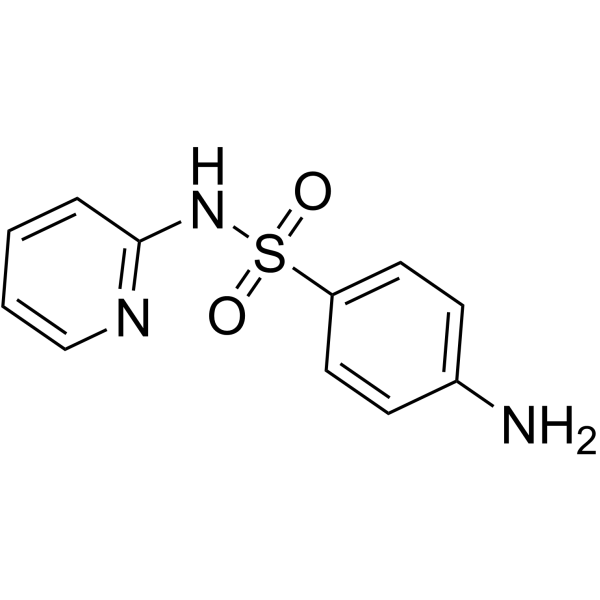
Sulfapyridine, a major metabolite of Sulfasalazine, is a sulfonamide antibiotic agent. Sulfapyridine inhibits recombinant P. carinii dihydropteroate synthetase (DHPS) with an IC50 of 0.18 μM. Sulfapyridine has antibacterial, anti-inflammatory and anti-rheumatic activities .
|
-
- HY-136410
-
|
|
Endogenous Metabolite
|
Metabolic Disease
|
|
4-hydroxy Nonenal Mercapturic Acid is a major urinary metabolite of 4-hydroxy-2-nonenal (4-HNE). 4-hydroxy Nonenal Mercapturic Acid metabolites include reduced alcohols, aldehydes, and carboxylic acids, which further form gamma-lactols and gamma-lactones, resulting in 4-5 final urinary metabolites in vivo. 4-hydroxy Nonenal Mercapturic Acid can be used as a biomarker to assess oxidative stress .
|
-
- HY-W019151S
-
|
|
Isotope-Labeled Compounds
Endogenous Metabolite
|
Metabolic Disease
|
|
Meconin-d3 is the deuterium labeled Meconine (HY-W019151). Meconine is an endogenous metabolite of Noscapine (HY-13716). Meconine is the major metabolite in all three species, accounting for about 3, 8 and 2% of the dose in the first 24 h urines of rats, rabbits and humans, respectively. Meconine can be used as a marker to detect illicit opiate use.
|
-
- HY-P1488
-
|
|
Drug Metabolite
|
Cardiovascular Disease
|
|
Bradykinin (1-5) is a major stable metabolite of Bradykinin (HY-P0206), formed by the proteolytic action of angiotensin-converting enzyme (ACE) . Bradykinin (1-5) inhibits α- and γ-thrombin-induced platelet aggregation .
|
-
- HY-150162
-
|
T4-Glc
|
Drug Metabolite
|
Others
|
|
Thyroxine 4'-O-β-D-glucuronide (T4-Glc) is a conjugate of Thyroxine (T4) and Glucuronic acid. Thyroxine 4'-O-β-D-glucuronide is a major metabolite of Thyroxine (HY-18341) .
|
-
- HY-135408
-
|
|
Drug Metabolite
|
Cardiovascular Disease
Inflammation/Immunology
|
|
Trimetazidine-N-oxide is the major active metabolite of Trimetazidine. Trimetazidine is a selective long chain 3-ketoyl coenzyme A thiolase inhibitor with an IC50 of 75 nM. Trimetazidine is an effective antianginal agent, has anti-oxidant, anti-inflammatory, antinociceptive and gastroprotective properties.
|
-
- HY-B2150
-
|
4-Hydroxyphenazone; NSC 174055
|
Drug Metabolite
|
Others
|
|
4-Hydroxyantipyrine (4-Hydroxyphenazone; NSC 174055) is the major metabolite of Antipyrine (HY-B0171), can be as a biodistribution promoter. 4-Hydroxyantipyrine can increase distribution of concentration ratio of Citicoline and Antipyrine in the brain .
|
-
- HY-12766
-
|
|
Dopamine Transporter
nAChR
|
Neurological Disease
|
|
Bupropion morpholinol (Hydroxy Bupropion) is a major metabolite of Bupropion. Bupropion morpholinol inhibits Dopamine, Norepinephrine transporters and the α4β2 nicotinic receptor in vitro. Bupropion morpholinol contributes to antidepressant and smoking cessation activities .
|
-
- HY-117605S
-
-
- HY-N1902S
-
-
- HY-117605R
-
|
Desmethylsildenafil (Standard); UK-103,320 (Standard)
|
Reference Standards
Phosphodiesterase (PDE)
|
Cardiovascular Disease
|
|
N-Desmethyl Sildenafil (Standard) is the analytical standard of N-Desmethyl Sildenafil. This product is intended for research and analytical applications. N-Desmethyl Sildenafil (Desmethylsildenafil) is a major metabolite of Sildenafil. Sildenafil is a potent phosphodiesterase type 5 (PDE5) inhibitor .
|
-
- HY-133005
-
|
4-Desacetylvinblastine; Desacetylvincaleukoblastine
|
Drug Metabolite
|
Cancer
|
|
Desacetylvinblastine (4-Desacetylvinblastine) is the major metabolite of Vinblastine (HY-13780) and a cytotoxic agent. When used alone, desacetylvinblastine has poor anti-tumor effects, but it can exert significant anti-tumor activity when in the presence of specific conjugates .
|
-
- HY-B0602B
-
|
O-Desmethylvenlafaxine fumarate
|
5-HT Receptor
Adrenergic Receptor
Drug Metabolite
|
Neurological Disease
|
|
Desvenlafaxine (O-Desmethylvenlafaxine) fumarate is a selective serotonin and norepinephrine reuptake inhibitor. Desvenlafaxine (O-Desmethylvenlafaxine) fumarate is the major metabolite of the antidepressant venlafaxine. Desvenlafaxine (O-Desmethylvenlafaxine) fumarate has the potential for the research of depression and related disorders and diseases (extracted from patent WO2009049354A1) .
|
-
- HY-N1902S1
-
|
|
Keap1-Nrf2
Endogenous Metabolite
|
Metabolic Disease
|
|
4-Hydroxyphenylacetic acid-d4 is the deuterium labeled 4-Hydroxyphenylacetic acid . 4-hydroxyphenylacetic acid, a major microbiota-derived metabolite of polyphenols, is involved in the antioxidative action. 4-hydroxyphenylacetic acid induces expression of Nrf2 .
|
-
- HY-B0602C
-
|
O-Desmethylvenlafaxine hydrochloride
|
5-HT Receptor
Adrenergic Receptor
Drug Metabolite
|
Neurological Disease
|
|
Desvenlafaxine (O-Desmethylvenlafaxine) hydrochloride is a selective serotonin and norepinephrine reuptake inhibitor. Desvenlafaxine (O-Desmethylvenlafaxine) hydrochloride is the major metabolite of the antidepressant venlafaxine. Desvenlafaxine (O-Desmethylvenlafaxine) hydrochloride has the potential for the research of depression and related disorders and diseases (extracted from patent WO2009049354A1) .
|
-
- HY-W769286
-
|
|
Isotope-Labeled Compounds
HDAC
|
Cancer
|
|
Valproic acid β-D-glucuronide-d15 is the deuterium labeled Valproic acid β-D-glucuronide (HY-W400496). Valproic acid β-D-glucuronide is the major urinary metabolite of Valproic acid (HY-10585) .
|
-
- HY-P1488A
-
|
|
Drug Metabolite
|
Cardiovascular Disease
|
|
Bradykinin (1-5) (TFA) is a major stable metabolite of Bradykinin (HY-P0206), formed by the proteolytic action of angiotensin-converting enzyme (ACE). Bradykinin (1-5) (TFA) inhibits α- and γ-thrombin-induced platelet aggregation .
|
-
- HY-100637
-
|
|
Drug Metabolite
Adrenergic Receptor
nAChR
|
Neurological Disease
|
|
Hydroxybupropion is the major active metabolite of Bupropion. Hydroxybupropion is metabolized by CYP2B6. Bupropion is an atypical antidepressant and smoking-cessation agent. Hydroxybupropion inhibits norepinephrine uptake with an IC50 value of 1.7 μM. Hydroxybupropion is also a nACh receptor antagonist .
|
-
- HY-W019151R
-
|
|
Reference Standards
Endogenous Metabolite
|
Metabolic Disease
|
|
Meconine (Standard) is the analytical standard of Meconine (HY-W019151). This product is intended for research and analytical applications. Meconine is an endogenous metabolite of Noscapine (HY-13716). Meconine is the major metabolite in all three species, accounting for about 3, 8 and 2% of the dose in the first 24 h urines of rats, rabbits and humans, respectively. Meconine can be used as a marker to detect illicit opiate use.
|
-
- HY-116462
-
|
|
Drug Metabolite
|
Others
|
|
ONO-EI-601 is the major metabolite of human neutrophil elastase inhibitor ONO-5046. ONO-5046 has the potential for the study of acute lung injury/acute respiratory distress syndrome or disseminated intravascular coagulation in COVID-19 .
|
-
- HY-B2150S
-
|
4-Hydroxyphenazone-d3; NSC 174055-d3
|
Drug Metabolite
Isotope-Labeled Compounds
|
Others
|
|
4-Hydroxyantipyrine-d3 is the deuterium labeled 4-Hydroxyantipyrine. 4-Hydroxyantipyrine is the major metabolite of Antipyrine, can be as a biodistribution promoter. 4-Hydroxyantipyrine can increase distribution of concentration ratio of Antipyrine in the brain .
|
-
- HY-136591
-
|
|
Drug Metabolite
|
Neurological Disease
Cancer
|
|
Demoxepam is a major metabolite of Chlordiazepoxide. Demoxepam exhibits cytotoxicity activity against cancer cell lines. Demoxepam has anticonvulsant and anxiolytic effects. Demoxepam has an inhibitory effect on in vitro [ 3H]tryptophan binding to rat hepatic nuclei .
|
-
- HY-P3100
-
|
|
Parasite
|
Infection
|
|
Orfamide A is a major metabolite of insecticidal biosurfactant in Pseudomonas sp. F6 and has aphidicidal activity. Orfamide A can be used for aphid control in organic agriculture. Orfamide A exhibits dose-dependent mortality against aphids with an LC50 value of 34.5 μg/mL .
|
-
- HY-132343S
-
|
|
Isotope-Labeled Compounds
|
Neurological Disease
|
|
Zolmitriptan N-Oxide-d6 is a deuterium labeled Zolmitriptan N-Oxide. Zolmitriptan N-Oxide is the major metabolite of Zolmitriptan. Zolmitriptan is a 5-HT1B/1D receptor partial agonist .
|
-
- HY-W052051R
-
|
N-Acetylbenzylamine (Standard)
|
Endogenous Metabolite
Reference Standards
|
Others
|
|
N-Benzylacetamide (Standard) is the analytical standard of N-Benzylacetamide (HY-W052051). This product is intended for research and analytical applications. N-Benzylacetamide (N-Acetylbenzylamine), as an endogenous metabolite, is the major component of the plasma metabolic profile of Benznidazole (HY-B1548) .
|
-
- HY-135811R
-
|
|
Reference Standards
Parasite
Toll-like Receptor (TLR)
Autophagy
|
Infection
|
|
Desethyl chloroquine (Standard) is the analytical standard of Desethyl chloroquine. This product is intended for research and analytical applications. Desethyl chloroquine is a major desethyl metabolite of Chloroquine. Chloroquine diphosphate is an inhibitor of autophagy and toll-like receptors (TLRs). Desethyl chloroquine possesses antiplasmodic activity .
|
-
- HY-122139R
-
|
|
Bacterial
Reference Standards
|
Infection
|
|
Desethylene Ciprofloxacin (hydrochloride) (Standard) is the analytical standard of Desethylene Ciprofloxacin (hydrochloride). This product is intended for research and analytical applications. Desethylene Ciprofloxacin hydrochloride is a major metabolite of Ciprofloxacin (HY-B0356). Ciprofloxacin is an orally active topoisomerase IV inhibitor. Desethylene Ciprofloxacin hydrochloride has antibacterial activity .
|
-
- HY-W700378
-
|
|
Isotope-Labeled Compounds
HDAC
|
Cancer
|
|
Valproic acid β-D-glucuronide-d6-1 is the deuterium labeled Valproic acid β-D-glucuronide (HY-W400496). Valproic acid β-D-glucuronide is the major urinary metabolite of Valproic acid (HY-10585) .
|
-
- HY-W016388
-
|
9-Hydroxyfluorene
|
Dopamine Receptor
Drug Metabolite
|
Neurological Disease
|
|
9-Fluorenol (9-Hydroxyfluorene; compound 3) is a dopamine (DAT) inhibitor with IC50 value of 9 µM. 9-Fluorenol is a major metabolite of compound developed as a wake promoting agent. 9-Fluorenol shows wake promotion activity in vivo .
|
-
- HY-W309310
-
|
|
Histamine Receptor
Endogenous Metabolite
|
Inflammation/Immunology
|
|
Etofesalamide is a nonsteroidal antiinflammatory agent. Etofesalamide has major phase II metabolites of glucoside and riboside conjugations (such as etofesalamide-2-glucuronide) in filamentous fungi. Etofesalamide can be used for allergic and autoimmune skin diseases like toacne, psoriasis and sensitization dermatitis research .
|
-
- HY-130353S
-
|
|
Isotope-Labeled Compounds
Potassium Channel
Autophagy
|
Cardiovascular Disease
|
|
Desethyl Amiodarone-d4 (hydrochloride) is the deuterium labeled Desethylamiodarone hydrochloride. Desethylamiodarone hydrochloride (N-desethylamiodarone hydrochloride) is a major active metabolite of Amiodarone. Desethylamiodarone hydrochloride is formed by CYP3A isoenzymes. Amiodarone is an antiarrhythmic agent for inhibition of ATP-sensitive potassium channel with an IC50 of 19.1 μM .
|
-
- HY-109619
-
|
Δ4-Abiraterone; CB-7627; Abiraterone D4A metabolite
|
Androgen Receptor
Cytochrome P450
|
Cancer
|
|
D4-abiraterone is a major metabolite of abiraterone. D4-abiraterone is an inhibitor of CYP17A1, 3b-hydroxysteroid dehydrogenase (3βHSD) and steroid-5a-reductase (SRD5A) and also an antagonist of androgen receptor.
|
-
- HY-19657S
-
-
- HY-W766140
-
|
4-Hydroxy duloxetine glucuronide sodium; LY550408 sodium
|
Drug Metabolite
|
Metabolic Disease
|
|
4-Hydroxy duloxetine β-D-glucuronide (4-Hydroxy duloxetine glucuronide) sodium is a major metabolite of Duloxetine (HY-B0161). 4-Hydroxy duloxetine β-D-glucuronide sodium is promising for research of hepatic or renal impairment .
|
-
- HY-B1986S
-
|
4,4'-DDE-d8; p,p'-Dichlorodiphenyldichloroethylene-d8
|
Androgen Receptor
Drug Metabolite
|
Endocrinology
|
|
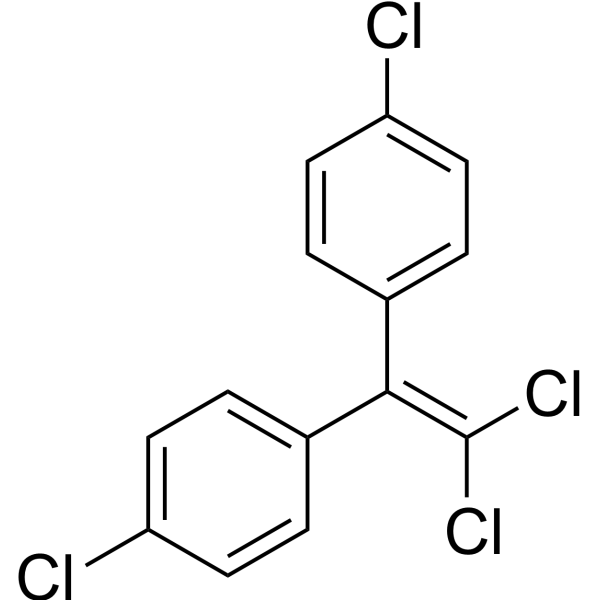
p,p'-DDE-d8 is the deuterium labeled p,p'-DDE . p,p'-DDE (4,4'-DDE), a major metabolite of persistent dichlorodiphenyltrichloroethane (DDT), is a potent androgen receptor antagonist, with an IC50 of 5 μM and a Ki of 3.5 μM .
|
-
- HY-15895
-
|
ACT-132577
|
Endothelin Receptor
|
Cardiovascular Disease
Endocrinology
|
|
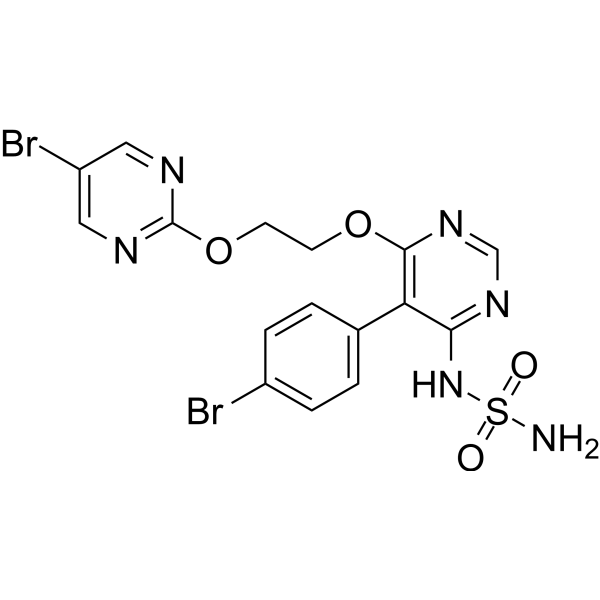
Aprocitentan (ACT-132577) is the major and pharmacologically active metabolite of Macitentan. Aprocitentan is an orally active dual ETA/ETB antagonist with IC50s of 3.4 nM and 987 nM, and pA2 valus of 6.7 and 5.5, respectively. Aprocitentan is an antihypertensive agent .
|
-
- HY-124265S2
-
|
|
Endogenous Metabolite
|
Metabolic Disease
|
|
4β-Hydroxycholesterol-d4 is the deuterium labeled 4β-Hydroxycholesterol (HY-124265) . 4β-Hydroxycholesterol is a major Cholesterol (HY-N0322) metabolite and a precursor in the synthesis of bile acids that is found in human circulation .
|
-
- HY-124265S
-
|
|
Endogenous Metabolite
|
Metabolic Disease
|
|
4β-Hydroxycholesterol-d7 is the deuterium labeled 4β-Hydroxycholesterol (HY-124265). 4β-Hydroxycholesterol is a major Cholesterol (HY-N0322) metabolite and a precursor in the synthesis of bile acids that is found in human circulation .
|
-
- HY-124265S1
-
-
- HY-122009
-
|
Indoxyl-β-D-glucoside
|
P-glycoprotein
OAT
Fluorescent Dye
|
Others
|
|
Indican (Indoxyl-β-D-glucoside), a glycoside of indoxyl, is a precursor of the dyesindigo and indirubin. Indican has a major metabolite, indoxyl sulfate (IS). IS, an uremic toxin, is a substrate/inhibitor of organic anion transporter (OAT) 1, OAT 3 and multidrug resistance-associated protein (MRP) 4 .
|
-
- HY-N1902S2
-
-
- HY-N8796
-
|
|
Endogenous Metabolite
|
Cancer
|
|
2',4'-Dihydroxy-4,6'-diMethoxydihydrochalcone is a dihydrochalcone compound isolated from Iryanthera juruensis Warb. 2',4'-Dihydroxy-4,6'-diMethoxydihydrochalcone is a major cytotoxic metabolite when tested against a panel of cancer cell lines .
|
-
- HY-W753141
-
|
4,4'-DDE-13C12; p,p'-Dichlorodiphenyldichloroethylene-13C12
|
Isotope-Labeled Compounds
Androgen Receptor
Drug Metabolite
|
Endocrinology
|
|
p,p'-DDE- 13C12 is 13C labeled p,p'-DDE. p,p'-DDE (4,4'-DDE), a major metabolite of persistent dichlorodiphenyltrichloroethane (DDT), is a potent androgen receptor antagonist, with an IC50 of 5 μM and a Ki of 3.5 μM .
|
-
- HY-12766S
-
|
|
Isotope-Labeled Compounds
nAChR
Dopamine Transporter
|
Neurological Disease
|
|
Bupropion morpholinol-d6 is the deuterated form of Bupropion morpholinol. Bupropion morpholinol is a major metabolite of Bupropion. Bupropion morpholinol inhibits Dopamine, Norepinephrine transporters and the α4β2 nicotinic receptor in vitro. Bupropion morpholinol contributes to antidepressant and smoking cessation activities .
|
-
- HY-130353R
-
|
N-desethylamiodarone hydrochloride(Standard); LB 33020 hydrochloride (Standard)
|
Reference Standards
Potassium Channel
Autophagy
|
Cardiovascular Disease
|
|
Desethylamiodarone (hydrochloride) (Standard) is the analytical standard of Desethylamiodarone (hydrochloride). This product is intended for research and analytical applications. Desethylamiodarone hydrochloride (N-desethylamiodarone hydrochloride) is a major active metabolite of Amiodarone. Desethylamiodarone hydrochloride is formed by CYP3A isoenzymes. Amiodarone is an antiarrhythmic agent for inhibition of ATP-sensitive potassium channel with an IC50 of 19.1 μM .
|
-
- HY-136578
-
-
- HY-N0929R
-
|
|
Reference Standards
COX
Reactive Oxygen Species (ROS)
|
Cancer
|
|
Hexahydrocurcumin (Standard) is the analytical standard of Hexahydrocurcumin. This product is intended for research and analytical applications. Hexahydrocurcumin is one of the major metabolites of curcumin and a selective, orally active COX-2 inhibitor. Hexahydrocurcumin is inactive against COX-1. Hexahydrocurcumin has antioxidant, anticancer and anti-inflammatory activities .
|
-
- HY-B0539S1
-
-
- HY-113344R
-
|
16αOHE (Standard)
|
Endogenous Metabolite
Reference Standards
|
Metabolic Disease
|
|
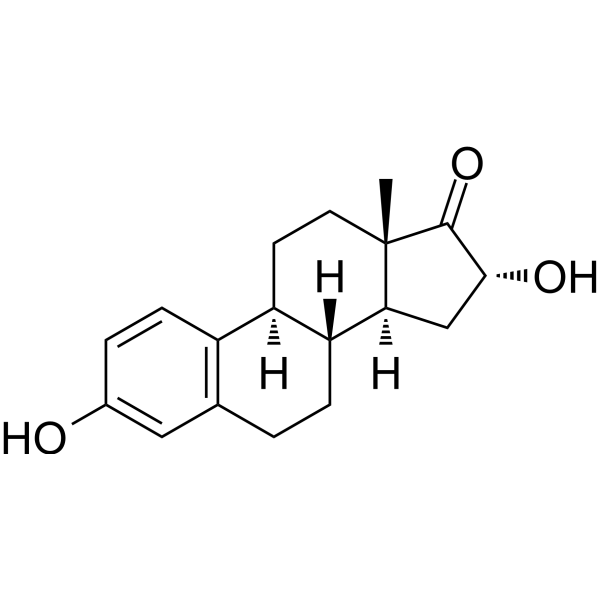
16α-Hydroxyestrone (Standard) is the analytical standard of 16α-Hydroxyestrone. This product is intended for research and analytical applications. 16α-Hydroxyestrone (16αOHE) is a major Estradiol metabolite. 16α-Hydroxyestrone (16αOHE) can be used for the research of metabolic disease .
|
-
- HY-130569S1
-
|
|
Isotope-Labeled Compounds
Drug Metabolite
|
Metabolic Disease
|
|
7-Hydroxymethotrexate-d3 is the deuterium labeled 7-Hydroxymethotrexate. 7-Hydroxymethotrexate is a major metabolite of Methotrexate (HY-14519). Methotrexate, an antimetabolite and antifolate agent, inhibits the enzyme dihydrofolate reductase, thereby preventing the conversion of folic acid into tetrahydrofolate, and inhibiting DNA synthesis .
|
-
- HY-W018392
-
|
MEHP; Phthalic acid mono-2-ethylhexyl ester
|
Endogenous Metabolite
|
Metabolic Disease
|
|
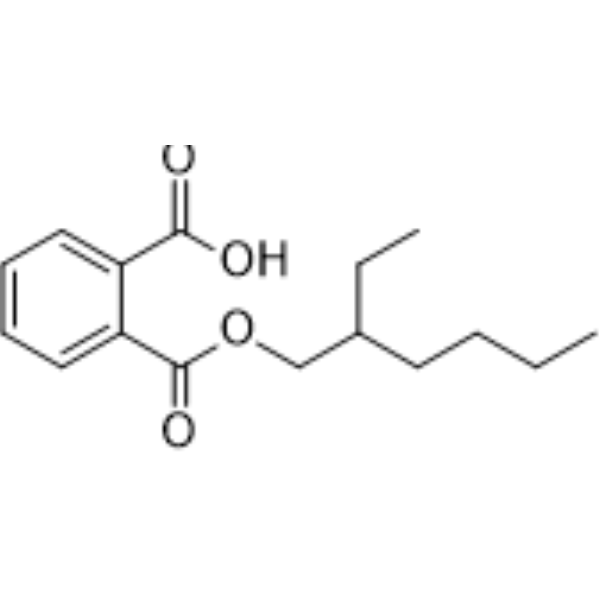
Mono-(2-ethylhexyl) phthalate (MEHP) is a major bioactive metabolite of diethylhexyl phthalate (DEHP). Mono-(2-ethylhexyl) phthalate can promote fatty acid synthesis in hepatocytes by regulating the expression of relevant genes and proteins, contributing to non-alcoholic fatty liver disease (NAFLD) .
|
-
- HY-Z0548S1
-
|
|
Isotope-Labeled Compounds
Keap1-Nrf2
Apoptosis
|
Inflammation/Immunology
Cancer
|
|
Methyl 3,4-dihydroxybenzoate-d3-1 is the deuterium labeled Methyl 3,4-dihydroxybenzoate. Methyl 3,4-dihydroxybenzoate (Protocatechuic acid methyl ester; Methyl protocatechuate) is a major metabolite of antioxidant polyphenols found in green tea. Antioxidant and anti-inflammatory effect .
|
-
- HY-B0539S3
-
-
- HY-18646
-
|
24-Oxo-23,25-dihydroxyvitamin D3
|
Endogenous Metabolite
|
Metabolic Disease
|
|
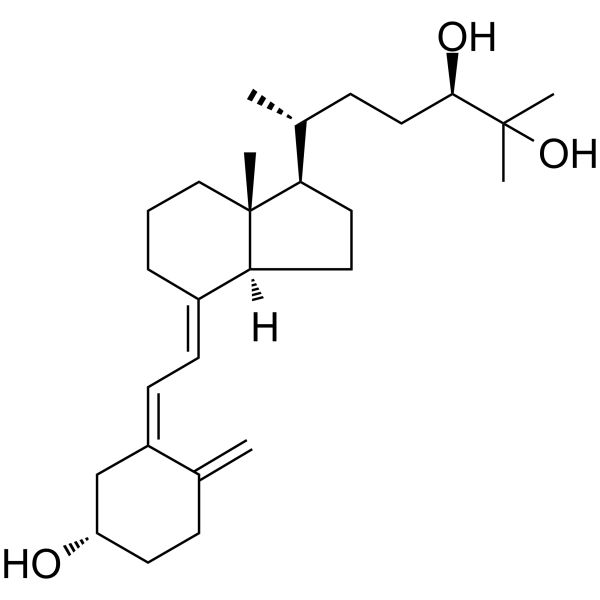
23,25-Dihydroxy-24-oxovitamin D3 is a major metabolite of 24(R),25-Dihydroxyvitamin D3. 23,25-Dihydroxy-24-oxovitamin D3 can be used for the research of metabolic diseases .
|
-
- HY-135811AR
-
|
|
Parasite
Toll-like Receptor (TLR)
Autophagy
|
Infection
|
|
Desethyl chloroquine (diphosphate) (Standard) is the analytical standard of Desethyl chloroquine (diphosphate). This product is intended for research and analytical applications. Desethyl chloroquine diphosphate is a major desethyl metabolite of Chloroquine. Chloroquine diphosphate is an inhibitor of autophagy and toll-like receptors (TLRs). Desethyl chloroquine diphosphate possesses antiplasmodic activity .
|
-
- HY-130569S
-
|
|
Isotope-Labeled Compounds
Drug Metabolite
|
Inflammation/Immunology
Cancer
|
|
7-Hydroxymethotrexate-d3 (sodium) is deuterium labeled 7-Hydroxymethotrexate. 7-Hydroxymethotrexate is a major metabolite of Methotrexate (HY-14519). Methotrexate, an antimetabolite and antifolate agent, inhibits the enzyme dihydrofolate reductase, thereby preventing the conversion of folic acid into tetrahydrofolate, and inhibiting DNA synthesis .
|
-
- HY-137263
-
|
|
Antibiotic
|
Infection
|
|
Propionylmaridomycin is a macrolide antibiotic with antibacterial activity. Propionylmaridomycin is rapidly absorbed from the gastrointestinal tract and rapidly distributed to tissues. Propionylmaridomycin radioactivity levels in the liver, kidneys, and lungs were significantly higher than in plasma, while distribution to the brain was less. Propionylmaridomycin is excreted primarily through the feces, and the high fecal recovery rate is due to unabsorbed compounds and biliary excretion of compounds and their metabolites. Propionylmaridomycin exhibits the highest antibacterial activity in the lungs. Propionylmaridomycin is completely converted to several metabolites in rats, of which 4''-depropionyl-9-propionylmaridomycin was identified as the major metabolite .
|
-
- HY-W745860
-
|
|
Reactive Oxygen Species (ROS)
|
Cancer
|
|
Hexahydrocurcumin-d6 is the deuterium labeled Hexahydrocurcumin (HY-N0929). Hexahydrocurcumin is one of the major metabolites of curcumin and a selective, orally active COX-2 inhibitor. Hexahydrocurcumin is inactive against COX-1. Hexahydrocurcumin has antioxidant, anticancer and anti-inflammatory activities .
|
-
- HY-W750677
-
|
|
Endogenous Metabolite
|
Others
|
|
7,8-Didehydroastaxanthin is a major carotenoid found in Crown-of-Thorns Starfish. 7,8-Didehydroastaxanthin is an oxidative metabolite of diatoxanthin. Carotenoids are important biological active, and may regulate cellular differentiation, growth control, photooxidative protection, cell membrane stability, photosynthesis, vision process and nutrition .
|
-
- HY-118010A
-
|
d-Norfenfluramine hydrochloride
|
5-HT Receptor
|
Cardiovascular Disease
|
|
(+)-Norfenfluramine hydrochloride, a major hepatic metabolite of (+)-fenfluramine, is a selective 5-HT2B receptor agonist (Ki: 11.2 nM). (+)-Norfenfluramine hydrochloride potently stimulates the hydrolysis of inositol phosphates and increases intracellular Ca 2+. (+)-Norfenfluramine hydrochloride can be used for the research of primary pulmonary hypertension and valvular heart disease .
|
-
- HY-B0539S
-
-
- HY-107096
-
|
TP3076
|
Topoisomerase
|
Cancer
|
|
CH-0793076 (TP3076), a hexacyclic camptothecin analog, is active drug and major metabolite of TP300. CH-0793076 inhibits DNA topoisomerase I with an IC50 of 2.3 μM. CH-0793076 is efficacious against cells expressing BCRP (breast cancer resistance protein) .
|
-
- HY-W131725
-
|
d-Norfenfluramine
|
5-HT Receptor
|
Cardiovascular Disease
|
|
(+)-Norfenfluramine a major hepatic metabolite of (+)-fenfluramine, is a selective 5-HT2B receptor agonist (Ki: 11.2 nM). (+)-Norfenfluramine potently stimulates the hydrolysis of inositol phosphates and increases intracellular Ca 2+. (+)-Norfenfluramine can be used for the research of primary pulmonary hypertension and valvular heart disease .
|
-
- HY-148642
-
|
12-hydroxy-NVP; 12-OH-NVP
|
Drug Metabolite
|
Infection
|
|
12-Hydroxynevirapine (12-hydroxy-NVP; 12-OH-NVP) is a major oxidative metabolite of Nevirapine (HY-10570). Nevirapine is a non-nucleoside reverse transcriptase inhibitor indicated for the HIV-1 infections. Nevirapine causes idiosyncratic hepatotoxicity and mild-to-severe skin rashes. 12-Hydroxynevirapine, a non-reactive metabolite, can be bioactivated by sulphotransferases (SULTs) in the liver and skin, yielding the reactive species 12-Sulphoxy-nevirapine .
|
-
- HY-128554S
-
|
|
Isotope-Labeled Compounds
Parasite
|
Infection
|
|
N-Desethyl amodiaquine-d5 is the deuterium labeled N-Desethyl amodiaquine. N-Desethyl amodiaquine is the major biologically active metabolite of Amodiaquine. N-Desethyl amodiaquine is an antiparasitic agent. IC50 values for strains V1/S and 3D7 are 97 nM and 25 nM, respectively .
|
-
- HY-125296
-
|
|
GABA Receptor
|
Neurological Disease
|
|
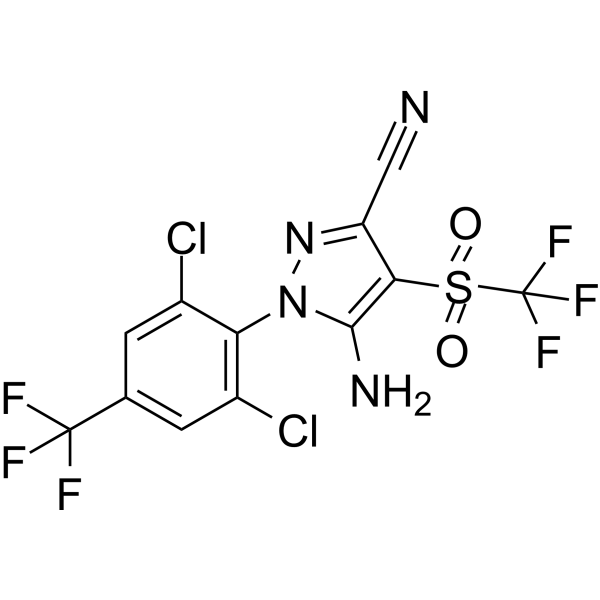
Fipronil sulfone is the major metabolite of Fipronil.Fipronil sulfone selectively inhibits GABA receptor with IC50 of 175 nM (assayed by displacement of 4′-ethynyl-4-n-[2,3-3H2]- propylbicycloorthobenzoate ([3H]EBOB) from the noncompetitive blocker site).
|
-
- HY-135392R
-
|
AC-279 (Standard)
|
Reference Standards
Drug Metabolite
|
Neurological Disease
|
|
Methyl 3,4-dihydroxybenzoate (Standard) is the analytical standard of Methyl 3,4-dihydroxybenzoate. This product is intended for research and analytical applications. Methyl 3,4-dihydroxybenzoate (Protocatechuic acid methyl ester; Methyl protocatechuate) is a major metabolite of antioxidant polyphenols found in green tea. Antioxidant and anti-inflammatory effect .
|
-
- HY-Z0548R
-
|
Protocatechuic acid methyl ester (Standard); Methyl protocatechuate (Standard)
|
Reference Standards
Keap1-Nrf2
Apoptosis
|
Inflammation/Immunology
Cancer
|
|
Methyl 3,4-dihydroxybenzoate (Standard) is the analytical standard of Methyl 3,4-dihydroxybenzoate. This product is intended for research and analytical applications. Methyl 3,4-dihydroxybenzoate (Protocatechuic acid methyl ester; Methyl protocatechuate) is a major metabolite of antioxidant polyphenols found in green tea. Antioxidant and anti-inflammatory effect .
|
-
- HY-W032915
-
|
5-Phenylpentanoic acid
|
Endogenous Metabolite
|
Others
|
|
5-Phenylvaleric acid (5-Phenylpentanoic acid) is a major metabolite produced by the gut microbiota during the metabolism of flavan-3-ols and can serve as a biomarker for flavan-3-ol intake. 5-Phenylvaleric acid can also be used as a raw material for the synthesis of polyhydroxyalkanoates .
|
-
- HY-128554S1
-
|
|
Isotope-Labeled Compounds
Parasite
|
Infection
|
|
N-Desethyl amodiaquine-d5 dihydrochloride is the deuterium labeled N-Desethyl amodiaquine dihydrochloride. N-Desethyl amodiaquine dihydrochloride is the major biologically active metabolite of Amodiaquine. N-Desethyl amodiaquine dihydrochloride is an antiparasitic agent. IC50 values for strains V1/S and 3D7 are 97 nM and 25 nM, respectively .
|
-
- HY-15895S
-
|
ACT-132577-d4
|
Isotope-Labeled Compounds
Endothelin Receptor
|
Cardiovascular Disease
Endocrinology
|
|
Aprocitentan-d4 is a deuterium labeled Aprocitentan. Aprocitentan is a major and pharmacologically active metabolite of Macitentan. Aprocitentan is an orally active dual ETA/ETB antagonist with IC50s of 3.4 nM and 987 nM, and pA2 valus of 6.7 and 5.5, respectively. Aprocitentan is an antihypertensive agent .
|
-
- HY-130569S2
-
|
|
Isotope-Labeled Compounds
Drug Metabolite
|
Metabolic Disease
|
|
7-Hydroxymethotrexate-d3 (ammonium) is the deuterium labeled 7-Hydroxymethotrexate ammonium. 7-Hydroxymethotrexate is a major metabolite of Methotrexate (HY-14519). Methotrexate, an antimetabolite and antifolate agent, inhibits the enzyme dihydrofolate reductase, thereby preventing the conversion of folic acid into tetrahydrofolate, and inhibiting DNA synthesis .
|
-
- HY-19197
-
|
|
Drug Metabolite
|
Others
|
|
2-NAP is a major metabolite of polycyclic aromatic hydrocarbons (PAHs). 2-NAP induces oxidative stress and inflammatory responses, impairs enamel formation, and disrupts oral microbiome balance, increasing the risk of early childhood caries (ECC). 2-NAP is promising for research of development-related diseases such as childhood caries .
|
-
- HY-129099
-
|
|
PKC
Estrogen Receptor/ERR
Drug Metabolite
Endogenous Metabolite
|
Cancer
|
|
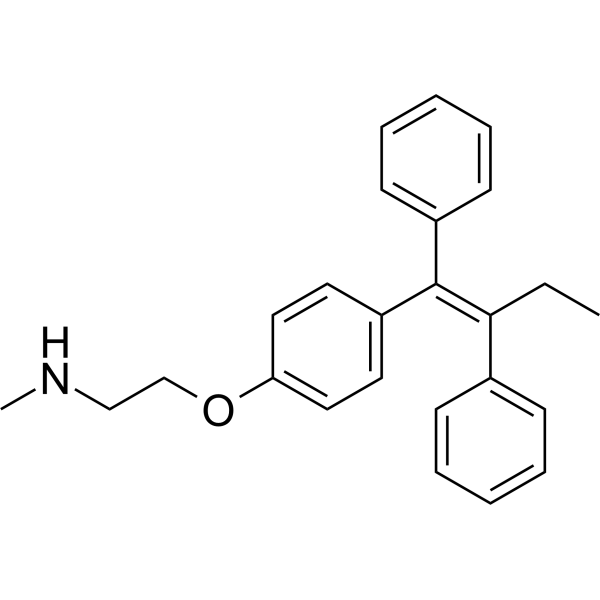
N-Desmethyltamoxifen is the major metabolite of tamoxifen in humans. N-Desmethyltamoxifen, a poor antiestrogen, is a ten-fold more potent protein kinase C (PKC) inhibitor than Tamoxifen. N-Desmethyltamoxifen is also a potent regulator of ceramide metabolism in human AML cells, limiting ceramide glycosylation, hydrolysis, and sphingosine phosphorylation .
|
-
- HY-D0300
-
|
|
Biochemical Assay Reagents
|
Others
|
|
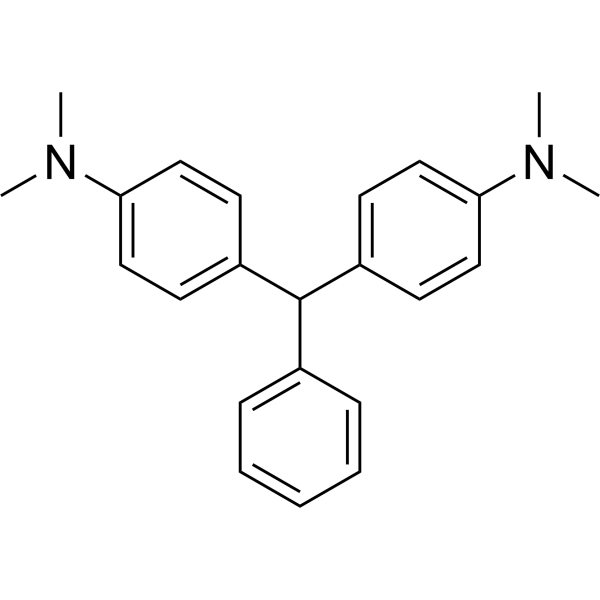
Leucomalachite green is the major reduced metabolite of malachite green (MG) and has lower cytotoxicity (such as HEp-2 and Caco-2) than malachite green. Leucomalachite green may be involved in interfering with cell metabolism or redox balance and can be used to evaluate its potential harm to human cells as a food contaminant .
|
-
- HY-W654227
-
|
|
Isotope-Labeled Compounds
Drug Metabolite
|
Inflammation/Immunology
|
|
7-Hydroxy methotrexate-d3 (ammonium salt) is deuterium labeled 7-Hydroxymethotrexate. 7-Hydroxymethotrexate is a major metabolite of Methotrexate (MTX; HY-14519). Methotrexate, an antimetabolite and antifolate agent, inhibits the enzyme dihydrofolate reductase, thereby preventing the conversion of folic acid into tetrahydrofolate, and inhibiting DNA synthesis .
|
-
- HY-W587771
-
|
MECPTP
|
Drug Metabolite
|
Metabolic Disease
|
|
Mono-2-ethyl-5-carboxypentyl terephthalate (MECPTP) is a major metabolite of Di-2-ethylhexyl terephthalate (DEHTP). Mono-2-ethyl-5-carboxypentyl terephthalate is promising for research of metabolic liver diseases, such as nonalcoholic fatty liver disease (NAFLD) .
|
-
- HY-124953
-
|
|
MAP3K
Apoptosis
|
Cancer
|
|
7,3',4'-Trihydroxyisoflavone, a major metabolite of Daidzein, is an ATP-competitive inhibitor of Cot (Tpl2/MAP3K8) and MKK4. 7,3',4'-Trihydroxyisoflavone has anticancer, anti-angiogenic, chemoprotective, and free radical scavenging activities .
|
-
- HY-B0212R
-
|
|
Reference Standards
Bacterial
Antibiotic
|
Infection
Inflammation/Immunology
|
|
Sulfapyridine (Standard) is the analytical standard of Sulfapyridine. This product is intended for research and analytical applications. Sulfapyridine, a major metabolite of Sulfasalazine, is a sulfonamide antibiotic agent. Sulfapyridine inhibits recombinant P. carinii dihydropteroate synthetase (DHPS) with an IC50 of 0.18 μM. Sulfapyridine has antibacterial, anti-inflammatory and anti-rheumatic activities .
|
-
- HY-124265R
-
|
|
Reference Standards
Endogenous Metabolite
|
Metabolic Disease
|
|
4β-hydroxy Cholesterol (Standard) is the analytical reference standard of 4β-hydroxy Cholesterol (HY-124265). This product is used for research and analytical applications. 4β-Hydroxycholesterol is a major Cholesterol (HY-N0322) metabolite and a precursor in the synthesis of bile acids that is found in human circulation .
|
-
- HY-124542
-
|
|
Drug Metabolite
Apoptosis
|
Cancer
|
|
5-Hydroxydiclofenac is a major metabolite of Diclofenac (HY-15036). 5-Hydroxydiclofenac is formed by the cytochrome P450 (CYP) isoforms CYP3A4, CYP2C189, CYP2C19, and CYP2C8. 5-Hydroxydiclofenac shows apoptotic effects in hepatocytes .
|
-
- HY-165423
-
|
|
Vasopressin Receptor
Drug Metabolite
|
Cardiovascular Disease
|
|
DM-4111, one of the major monohydroxyl metabolites of Tolvaptan (HY-17000), is a potent vasopressin V2 receptor inhibitor. DM-4111 inhibits water reabsorption in the renal tubules, thereby promoting the excretion of electrolyte-free water. DM-4111 is promising for research of cardiovascular diseases .
|
-
- HY-107096B
-
|
TP3076 TFA
|
Topoisomerase
|
Cancer
|
|
CH-0793076 (TP3076) TFA, a hexacyclic camptothecin analog, is active drug and major metabolite of TP300. CH-0793076 TFA inhibits DNA topoisomerase I with an IC50 of 2.3 μM. CH-0793076 TFA is efficacious against cells expressing BCRP (breast cancer resistance protein) .
|
-
- HY-15895R
-
|
ACT-132577 (Standard)
|
Reference Standards
Endothelin Receptor
|
Cardiovascular Disease
Endocrinology
|
|
Aprocitentan (Standard) is the analytical standard of Aprocitentan. This product is intended for research and analytical applications. Aprocitentan (ACT-132577) is the major and pharmacologically active metabolite of Macitentan. Aprocitentan is dual ETA/ETB antagonist with IC50s of 3.4 nM and 987 nM, and pA2 valus of 6.7 and 5.5, respectively .
|
-
- HY-B0539R
-
-
- HY-129099A
-
|
|
PKC
Estrogen Receptor/ERR
Drug Metabolite
Endogenous Metabolite
|
Cancer
|
|
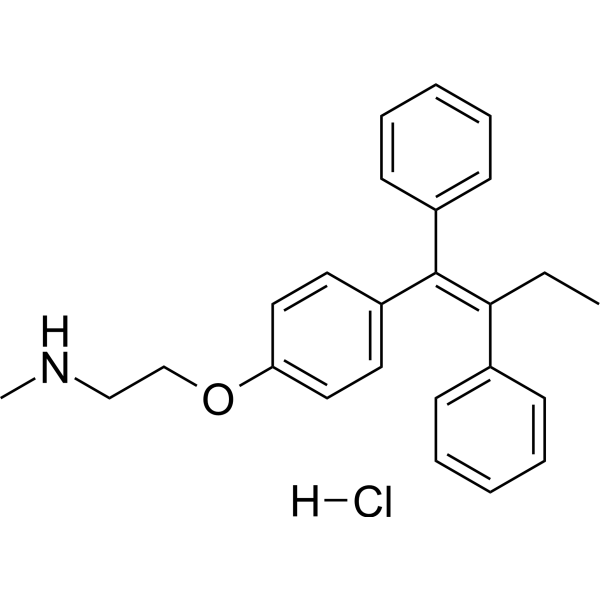
N-Desmethyltamoxifen hydrochloride is the major metabolite of tamoxifen in humans. N-Desmethyltamoxifen, a poor antiestrogen, is a ten-fold more potent protein kinase C (PKC) inhibitor than Tamoxifen. N-Desmethyltamoxifen hydrochloride is also a potent regulator of ceramide metabolism in human AML cells, limiting ceramide glycosylation, hydrolysis, and sphingosine phosphorylation .
|
-
- HY-120045A
-
|
|
Opioid Receptor
|
Neurological Disease
|
|
DuP 747 hydrochloride is an analgesic with selective kappa-opioid receptor agonist activity. DuP 747 showed less spiradoline-appropriate selection when administered SC, but showed a partial generalized response to spiradoline when administered IP or PO. The 5-hydroxy-desmethoxy metabolite of DuP 747 induced selection of the saline-appropriate lever only. The effects of DuP 747 suggest that its metabolites may play a major role in the similar responses to spiradoline after IP and PO administration .
|
-
- HY-136591R
-
|
|
Drug Metabolite
Reference Standards
|
Neurological Disease
Cancer
|
|
Demoxepam (Standard) is the analytical standard of Demoxepam. This product is intended for research and analytical applications. Demoxepam is a major metabolite of Chlordiazepoxide. Demoxepam exhibits cytotoxicity activity against cancer cell lines. Demoxepam has anticonvulsant and anxiolytic effects. Demoxepam has an inhibitory effect on in vitro [ 3H]tryptophan binding to rat hepatic nuclei .
|
-
- HY-N0179
-
|
α-Ecdysone
|
Endogenous Metabolite
Apoptosis
|
Metabolic Disease
|
|
Ecdysone (α-Ecdysone), a major steroid hormone in insects and herbs, triggers mineralocorticoid receptor (MR) activation and induces cellular apoptosis. Ecdysone plays essential roles in coordinating developmental transitions and homeostatic sleep regulation through its active metabolite 20-hydroxyecdysone (Crustecdysone; 20E; HY-N6979) .
|
-
- HY-N1967
-
|
|
PNPLA3
|
Metabolic Disease
|
|
Dihydrocurcumin, a major metabolites of curcumin, reduces lipid accumulation and oxidative stress. Dihydrocurcumin regulates mRNA and protein expression levels of SREBP-1C, PNPLA3 and PPARα, increases protein expression levels of pAKT and PI3K, and reduced the levels of cellular NO and ROS via Nrf2 signaling pathways .
|
-
- HY-P1141
-
|
|
GCGR
|
Metabolic Disease
|
|
GLP-1(9-36)amide is a major metabolite of glucagon-like peptide-1-(7-36) amide formed by the enzyme dipeptidyl peptidase-4 (DPP-4). GLP-1(9-36)amide acts as an antagonist to the human pancreatic GLP-1 receptor .
|
-
- HY-W750297
-
|
4,4'-DDD-13C12; p,p'-Dichlorodiphenyl dichloroethane-13C12
|
Isotope-Labeled Compounds
Drug Metabolite
|
Others
|
|
p,p'-DDD- 13C12 is 13C labeled p,p'-DDD. p,p'-DDD is a major metabolite of p,p'-DDT. p,p'-DDD occurs in the feces and livers of rats, that are given p,p'-DDT by stomach tube, but not of rats injected intraperitoneally with p,p'-DDT .
|
-
- HY-161125
-
|
|
Drug Metabolite
|
Others
|
|
(+)-JQ1-OH is the major metabolite of (+)-JQ1(HY-13030). (+)-JQ-1 (JQ1) is a potent, specific, and reversible BET bromodomain inhibitor, with IC50s of 77 and 33 nM for the first and second bromodomain (BRD4(1/2)). (+)-JQ-1 also activates autophagy .
|
-
- HY-B0539S4
-
-
- HY-P1141A
-
|
|
GCGR
|
Metabolic Disease
|
|
GLP-1(9-36)amide TFA is a major metabolite of glucagon-like peptide-1-(7-36) amide formed by the enzyme dipeptidyl peptidase-4 (DPP-4). GLP-1(9-36)amide TFA acts as an antagonist to the human pancreatic GLP-1 receptor .
|
-
- HY-135810
-
|
Desethylhydroxychloroquine
|
CHIKV
Influenza Virus
Parasite
|
Infection
Inflammation/Immunology
|
|
Cletoquine (Desethylhydroxychloroquine) is a major active metabolite of Hydroxychloroquine. Cletoquine is produced in the liver by CYP2D6, CYP3A4, CYP3A5, and CYP2C8 isoenzymes. Cletoquine is also a Chloroquine derivative and has the ability to against the chikungunya virus (CHIKV). Cletoquine has antimalarial effects and has the potential for autoimmune diseases treatment .
|
-
- HY-Y0469
-
|
|
Drug Metabolite
|
Others
|
|
1-Aminohydantoin hydrochloride is a major metabolite of nitrofurantoin in animal tissues and can be used as a standard for the determination of residues of veterinary agents in meat, milk et.al. 1-Aminohydantoin hydrochloride covalently binds to tissue proteins and is released from the tissues under slightly acidic conditions and derivatized with 2-nitrobenzaldehyde to form nitrophenyl derivatives of AHD before detection .
|
-
- HY-B0539S2
-
-
- HY-B2150R
-
|
4-Hydroxyphenazone (Standard); NSC 174055 (Standard)
|
Reference Standards
Drug Metabolite
|
Others
|
|
4-Hydroxyantipyrine (Standard) is the analytical standard of 4-Hydroxyantipyrine. This product is intended for research and analytical applications. 4-Hydroxyantipyrine (4-Hydroxyphenazone; NSC 174055) is the major metabolite of Antipyrine (HY-B0171), can be as a biodistribution promoter. 4-Hydroxyantipyrine can increase distribution of concentration ratio of Citicoline and Antipyrine in the brain .
|
-
- HY-A0019
-
|
9-Hydroxyrisperidone
|
Drug Metabolite
Dopamine Receptor
5-HT Receptor
Adrenergic Receptor
|
Neurological Disease
|
|
Paliperidone (9-Hydroxyrisperidone), the major active metabolite of Risperidone, is a dopamine D2 antagonist and 5-HT2A antagonist. Paliperidone is also active as an antagonist at α1 and α2 adrenergic receptors and H1-histaminergic receptors. Paliperidone, a antipsychotic agent, shows efficacy against schizophrenia .
|
-
- HY-N18029
-
|
|
Drug Derivative
|
Inflammation/Immunology
Cancer
|
|
(24S)-Ginsenoside V is a monooxygenated derivative of Ginsenoside Rb1 (HY-N0039). (24S)-Ginsenoside V is the major circulating metabolite of Ginsenoside Rb1 in rat plasma. (24S)-Ginsenoside V appears in rat urine after intravenous and oral administration of Ginsenoside Rb1 to rats .
|
-
- HY-76569
-
|
PNU-200577; 5-Hydroxymethyl Tolterodine
|
mAChR
|
Neurological Disease
Cancer
|
|
Desfesoterodine (PNU-200577) is a potent and selective muscarinic receptor (mAChR) antagonist with a KB and a pA2 of 0.84 nM and 9.14, respectively . Desfesoterodine is a major pharmacologically active metabolite of Tolterodine (PNU-200583; HY-A0024) and Fesoterodine (HY-70053) . Desfesoterodine improves cerebral infarction induced detrusor overactivity in rats .
|
-
- HY-B0602
-
|
O-Desmethylvenlafaxine
|
Environmental Pollutants
Serotonin Transporter
|
Neurological Disease
|
|
Desvenlafaxine, the succinate salt form of the isolated major active metabolite of Venlafaxine (HY-B0196), is an orally active and BBB penetrated 5-HT and norepinephrine reuptake inhibitor, with IC50 values of 47.3 nM and 531.3 nM for hSERT and hNET, respectively. Desvenlafaxine shows weak binding affinity (62% inhibition at 100 μM) at the human dopamine (DA) transporter .
|
-
- HY-135334
-
|
|
Drug Metabolite
Btk
Cytochrome P450
|
Cancer
|
|
ACP-5862 is a major active, circulating, pyrrolidine ring-opened metabolite of Acalabrutinib with an IC50 of 5.0 nM for Bruton tyrosine kinase (BTK). ACP‐5862 is a weak time‐dependent inactivator of CYP3A4 and CYP2C8. Acalabrutinib is an orally active, irreversible, and highly selective BTK inhibitor, with an IC50 of 3 nM and EC50 of 8 nM .
|
-
- HY-139427
-
|
β-Methylglutaconic acid
|
GABA Receptor
|
Cardiovascular Disease
Neurological Disease
Metabolic Disease
|
|
3-Methylglutaconic acid is the major metabolites accumulating in 3-Methylglutaconic aciduria (MGTA). 3-Methylglutaconic acid can induce lipid oxidative damage and protein oxidative. 3-Methylglutaconic acid decreases the non-enzymatic antioxidant defenses in cerebral cortex supernatants to elicit oxidative stress in the cerebral cortex. 3-Methylglutaconic acid can be used for brain damage disease research .
|
-
- HY-G0021
-
|
Norclozapine; Desmethylclozapine; Normethylclozapine
|
mAChR
Opioid Receptor
Drug Metabolite
Virus Protease
|
Infection
|
|
N-Desmethylclozapine is a major active metabolite of the atypical antipsychotic agent Clozapine. N-Desmethylclozapine is a potent, allosteric and partial M1 receptors agonist (EC50=115 nM) and is able to potentiate hippocampal N-methyl-d-aspartate (NMDA) receptor currents through M1 receptor activation. N-Desmethylclozapine is also a δ-opioid agonist .
|
-
- HY-108263B
-
|
(R)-CGP52421
|
FLT3
Drug Metabolite
|
Cancer
|
|
(R)-3-Hydroxy Midostaurin ((R)-CGP52421) is a potent kinases inhibitor. (R)-3-Hydroxy Midostaurin is a major metabolite of midostaurin (PKC412; HY-10230) undergoing by the hepatic CYP3A4 enzyme. (R)-3-Hydroxy Midostaurin has the potential for acute myeloid leukemia (AML) .
|
-
- HY-B0602A
-
|
O-Desmethylvenlafaxine succinate hydrate
|
Serotonin Transporter
|
Neurological Disease
|
|
Desvenlafaxine succinate hydrate, the succinate salt form of the isolated major active metabolite of Venlafaxine (HY-B0196), is an orally active and BBB penetrated 5-HT and norepinephrine reuptake inhibitor, with IC50 values of 47.3 nM and 531.3 nM for hSERT and hNET, respectively. Desvenlafaxine succinate hydrate shows weak binding affinity (62% inhibition at 100 μM) at the human dopamine (DA) transporter .
|
-
- HY-W016388R
-
|
9-Hydroxyfluorene (Standard)
|
Reference Standards
Dopamine Receptor
Drug Metabolite
|
Neurological Disease
|
|
9-Fluorenol (Standard) is the analytical standard of 9-Fluorenol. This product is intended for research and analytical applications. 9-Fluorenol (9-Hydroxyfluorene; compound 3) is a dopamine (DAT) inhibitor with IC50 value of 9 μM. 9-Fluorenol is a major metabolite of compound developed as a wake promoting agent. 9-Fluorenol shows wake promotion activity in vivo .
|
-
- HY-D0004
-
|
Azure B chloride
|
Monoamine Oxidase
|
Neurological Disease
|
|
Azure B is a cationic dye and the major metabolite of Methylene blue. Azure B is used in making Azure eosin stains for blood smear staining. Azure B is a high-potency, selective and reversible inhibitor of monoamine oxidases (MAO)-A, with IC50s of 11 and 968 nM for recombinant human MAO-A and MAO-B, respectively. Azure B possesses significant antidepressant-like effects .
|
-
- HY-160828
-
|
PF-05199265
|
Drug Metabolite
EGFR
|
Cancer
|
|
O-Desmethyl dacomitinib (PF-05199265) is the major circulating metabolite of dacomitinib (HY-13272) and acts as a pan-epidermal growth factor receptor (ErbB) tyrosine kinase inhibitor. O-Desmethyl dacomitinib exhibits a much lower exposure level than dacomitinib in the body. O-Desmethyl dacomitinib is highly dependent on the enzymatic activity of CYP2D6 for its formation .
|
-
- HY-W096638A
-
|
(S)-Glycerolphosphocholine
|
Endogenous Metabolite
|
Neurological Disease
Metabolic Disease
Cancer
|
|
Glycerophosphocholine ((S)-Glycerolphosphocholine) is an orally active metabolite that crosses the blood-brain barrier. Glycerophosphocholine acts as a precursor of acetylcholine, a specific marker for phosphatidylcholine breakdown, a major water-soluble storage form of choline, and an intermediate in phosphatidylcholine metabolism. Glycerophosphocholine is specifically elevated in the cerebrospinal fluid of Alzheimer's disease models, and it also promotes growth hormone secretion and fat oxidation. Glycerophosphocholine is also a potential biomarker for breast cancer .
|
-
- HY-124087R
-
|
4-en-VPA (Standard); 2-Allylpentanoic acid (Standard)
|
Reference Standards
Drug Metabolite
|
Others
|
|
(±)-2-Propyl-4-pentenoic acid (Standard) is the analytical standard of (±)-2-Propyl-4-pentenoic acid. This product is intended for research and analytical applications. (±)-2-Propyl-4-pentenoic acid (4-en-VPA) is a major toxic metabolite of Valproic acid. (±)-2-Propyl-4-pentenoic acid exhibits neuroteratogenicity[1][2].
|
-
- HY-W002112
-
|
Nornicotine
|
Endogenous Metabolite
Drug Metabolite
nAChR
β-catenin
|
Cardiovascular Disease
Neurological Disease
|
|
(±)-Nornicotine is a major metabolite of Nicotine. (±)-Nornicotine is a partial nAChRs agonist, specifically activating receptor subtypes containing α7 and α6 subunits. (±)-Nornicotine disrupts β-catenin and ZO-1, and induces F-actin depolymerization. (±)-Nornicotine supports self-administration behavior. (±)-Nornicotine can be used in the research of atherosclerosis, Alzheimer's disease, and schizophrenia .
|
-
- HY-W086896R
-
|
|
Reference Standards
Drug Metabolite
|
Inflammation/Immunology
|
|
α-Demethylnaproxen (Standard) is the analytical standard of α-Demethylnaproxen (HY-W086896). This product is intended for research and analytical applications. α-Demethylnaproxen (Compound 6-MNA) is the major metabolite of Nabumetone (HY-B0559). Nabumetone is an orally active non-acidic anti-inflammatory agent, acts as a potent and selective COX-2 inhibitor .
|
-
- HY-W777649
-
-
- HY-N7307
-
|
|
Bacterial
|
Infection
|
|
Pachybasin is a major metabolite from culture broth of endophytic coelomyceteous AFKR-18 fungus. Pachybasin showes antimicrobial activities against E. coli, B. subtilis, M. luteus, S. cerevisiae, C. albicans, A. niger, and A. flavus, with MIC values of 64.0 μg/mL, and against S. aureus and F. oxysporum with MIC values of 32.0 and 16.0 μg/mL respectively .
|
-
- HY-16170
-
|
O-Desmethylvenlafaxine succinate; Wy-45233 succinate
|
Serotonin Transporter
|
Neurological Disease
Metabolic Disease
|
|
Desvenlafaxine succinate, the succinate salt form of the isolated major active metabolite of Venlafaxine (HY-B0196), is an orally active and BBB penetrated 5-HT and norepinephrine reuptake inhibitor, with IC50 values of 47.3 nM and 531.3 nM for hSERT and hNET, respectively. Desvenlafaxine succinate (DVS) shows weak binding affinity (62% inhibition at 100 μM) at the human dopamine (DA) transporter .
|
-
- HY-135774
-
|
|
Drug Metabolite
Phosphatase
|
Cardiovascular Disease
|
|
6-Hydroxybenzbromarone is the major metabolite of Benzbromarone with a longer half-life and greater pharmacological potency than the parent compound. 6-Hydroxybenzbromarone is a protein Eyes Absent 3 (EYA3) inhibitor with an IC50 value of 21.5 μM. 6-Hydroxybenzbromarone is an anti-angiogenic agent, has strong inhibitory effects on cell migration, tubulogenesis, and angiogenic sprouting .
|
-
- HY-B1986
-
|
4,4'-DDE; p,p'-Dichlorodiphenyldichloroethylene
|
Environmental Pollutants
Drug Metabolite
Androgen Receptor
|
Metabolic Disease
Endocrinology
|
|
p,p'-DDE (4,4'-DDE) is the major and persistent metabolite of DDT. p,p'-DDE is a orally active androgen receptor antagonist with an IC50 of 5 μM and a Ki of 3.5 μM. p,p'-DDE can affect the development and function of the male reproductive system. Additionally, high serum concentrations of p,p'-DDE may be a risk factor for type 2 diabetes in women .
|
-
- HY-136611S
-
|
|
Isotope-Labeled Compounds
Drug Metabolite
|
Infection
|
|
ω-Hydroxy-DEET-d10 is the deuterium labeled ω-Hydroxy-DEET (HY-136611). ω-Hydroxy-DEET is a major metabolite of insect repellent N-N-diethyl-meta-toluamide (DEET). ω-Hydroxy-DEET has anti-proliferative effects. DEET is a spatial repellent and an irritant that commonly used to prevent contact with mosquitoes .
|
-
- HY-125296R
-
|
|
GABA Receptor
Reference Standards
|
Neurological Disease
|
|
Fipronil sulfone (Standard) is the analytical standard of Fipronil sulfone. This product is intended for research and analytical applications. Fipronil sulfone is the major metabolite of Fipronil.Fipronil sulfone selectively inhibits GABA receptor with IC50 of 175 nM (assayed by displacement of 4′-ethynyl-4-n-[2,3-3H2]- propylbicycloorthobenzoate ([3H]EBOB) from the noncompetitive blocker site).
|
-
- HY-135810A
-
|
Desethylhydroxychloroquine oxalate
|
CHIKV
Influenza Virus
Parasite
|
Infection
Inflammation/Immunology
|
|
Cletoquine oxalate (Desethylhydroxychloroquine oxalate) is a major active metabolite of Hydroxychloroquine. Cletoquine oxalate is produced in the liver by CYP2D6, CYP3A4, CYP3A5, and CYP2C8 isoenzymes. Cletoquine oxalate is also a Chloroquine derivative and has the ability to against the chikungunya virus (CHIKV). Cletoquine oxalate has antimalarial effects and has the potential for autoimmune diseases treatment .
|
-
- HY-123349
-
|
|
Drug Metabolite
|
Cardiovascular Disease
|
|
5α-Hydroxy-6-keto cholesterol is major metabolite of β-epoxide (5α,6β-epoxycholesterol) during direct exposure of intact cultured human bronchial epithelial cells (16-HBE) to ozone. 5α-Hydroxy-6-keto cholesterol inhibits cholesterol synthesis with an IC50 of 350 nM .
|
-
- HY-108041
-
|
BCI 838
|
mGluR
|
Neurological Disease
|
|
MGS 0210 (BCI 838) is an orally active metabolite of glutamate receptor 2/3 (mGluR2/3) agonists. MGS 0210 improves amnesia and reduces anxiety in APP mice. MGS 0210 improves PTSD-related behaviors in a mouse model of post-traumatic stress disorder (PTSD). MGS 0210 can be used in research on neurological disorders such as Alzheimer's disease and major depressive disorder .
|
-
- HY-N6720
-
|
|
Endogenous Metabolite
|
Metabolic Disease
|
|
T-2 Triol is a trichothecene mycotoxin derived by the metabolism of T-2 toxin. It is less toxic than T-2 toxin . T-2 Triol major metabolites are evaluated in broiler chickens with Half-lives (t1/2λz), Peak plasma concentrations (Cmax) and Tmax values of 9.6 mins, 563 ng/ml , 2.5 mins, respectively .
|
-
- HY-D0300S
-
|
|
Isotope-Labeled Compounds
Biochemical Assay Reagents
|
Others
|
|
Leucomalachite green-d5 is the deuterated derivative of Leucomalachite green (HY-D0300). Leucomalachite green is the major reduced metabolite of malachite green (MG) and has lower cytotoxicity (such as HEp-2 and Caco-2) than malachite green. Leucomalachite green may be involved in interfering with cell metabolism or redox balance and can be used to evaluate its potential harm to human cells as a food contaminant .
|
-
- HY-135810S
-
|
Desethylhydroxychloroquine-d4
|
Isotope-Labeled Compounds
CHIKV
Influenza Virus
Parasite
|
Infection
Inflammation/Immunology
|
|
Cletoquine-d4 is deuterium labeled Cletoquine. Cletoquine (Desethylhydroxychloroquine) is a major active metabolite of Hydroxychloroquine. Cletoquine is produced in the liver by CYP2D6, CYP3A4, CYP3A5, and CYP2C8 isoenzymes. Cletoquine is also a Chloroquine derivative and has the ability to against the chikungunya virus (CHIKV). Cletoquine has antimalarial effects and has the potential for autoimmune diseases treatment .
|
-
- HY-B0602S3
-
|
|
Isotope-Labeled Compounds
Serotonin Transporter
|
Neurological Disease
|
|
Desvenlafaxine-d10 is deuterium labeled Desvenlafaxine. Desvenlafaxine, the succinate salt form of the isolated major active metabolite of Venlafaxine (HY-B0196), is an orally active and BBB penetrated 5-HT and norepinephrine reuptake inhibitor, with IC50 values of 47.3 nM and 531.3 nM for hSERT and hNET, respectively. Desvenlafaxine shows weak binding affinity (62% inhibition at 100 μM) at the human dopamine (DA) transporter .
|
-
- HY-135810S1
-
|
Desethylhydroxychloroquine-d4-1
|
Isotope-Labeled Compounds
CHIKV
Influenza Virus
Parasite
|
Infection
Inflammation/Immunology
|
|
Cletoquine-d4-1 is the deuterium labeled Cletoquine. Cletoquine (Desethylhydroxychloroquine) is a major active metabolite of Hydroxychloroquine. Cletoquine is produced in the liver by CYP2D6, CYP3A4, CYP3A5, and CYP2C8 isoenzymes. Cletoquine is also a Chloroquine derivative and has the ability to against the chikungunya virus (CHIKV). Cletoquine has antimalarial effects and has the potential for autoimmune diseases treatment .
|
-
- HY-B0602S2
-
|
|
Isotope-Labeled Compounds
Serotonin Transporter
|
Neurological Disease
|
|
Desvenlafaxine-d6 is deuterium labeled Desvenlafaxine. Desvenlafaxine, the succinate salt form of the isolated major active metabolite of Venlafaxine (HY-B0196), is an orally active and BBB penetrated 5-HT and norepinephrine reuptake inhibitor, with IC50 values of 47.3 nM and 531.3 nM for hSERT and hNET, respectively. Desvenlafaxine shows weak binding affinity (62% inhibition at 100 μM) at the human dopamine (DA) transporter .
|
-
- HY-129099AR
-
|
|
Reference Standards
PKC
Estrogen Receptor/ERR
Drug Metabolite
Endogenous Metabolite
|
Cancer
|
|
N-Desmethyltamoxifen (hydrochloride) (Standard) is the analytical standard of N-Desmethyltamoxifen (hydrochloride). This product is intended for research and analytical applications. N-Desmethyltamoxifen hydrochloride is the major metabolite of tamoxifen in humans. N-Desmethyltamoxifen, a poor antiestrogen, is a ten-fold more potent protein kinase C (PKC) inhibitor than Tamoxifen. N-Desmethyltamoxifen hydrochloride is also a potent regulator of ceramide metabolism in human AML cells, limiting ceramide glycosylation, hydrolysis, and sphingosine phosphorylation[1][2][3].
|
-
- HY-A0252A
-
|
|
Adrenergic Receptor
|
Cancer
|
|
Bupranolol hydrochloride is a non-selective β-adrenergic blocker with potent membrane stabilizing activity. Bupranolol hydrochloride is able to significantly modulate the contractile activity of the non-pregnant human uterus. Bupranolol hydrochloride showed significant effects on spontaneous uterine contractions in an in vitro study in patients with ovarian cancer. Bupranolol hydrochloride is similar in potency to propranolol, another β-adrenergic blocker. Bupranolol hydrochloride is rapidly and completely absorbed in vivo, and its major metabolite is carboxybupranolol .
|
-
- HY-A0019S
-
|
|
Dopamine Receptor
5-HT Receptor
Adrenergic Receptor
|
Neurological Disease
|
|
Paliperidone-d4 is the deuterium labeled Paliperidone. Paliperidone (9-Hydroxyrisperidone), the major active metabolite of Risperidone, is a dopamine D2 antagonist and 5-HT2A antagonist. Paliperidone is also active as an antagonist at α1 and α2 adrenergic receptors and H1-histaminergic receptors. Paliperidone, a antipsychotic agent, shows efficacy against schizophrenia .
|
-
- HY-D0300S1
-
|
|
Isotope-Labeled Compounds
Biochemical Assay Reagents
|
Others
|
|
Leucomalachite green-d6 is the deuterated derivative of Leucomalachite green (HY-D0300). Leucomalachite green is the major reduced metabolite of malachite green (MG) and has lower cytotoxicity (such as HEp-2 and Caco-2) than malachite green. Leucomalachite green may be involved in interfering with cell metabolism or redox balance and can be used to evaluate its potential harm to human cells as a food contaminant .
|
-
- HY-W009934R
-
|
α-Phenyl-2-pyridineacetonitrile (Standard)
|
Drug Metabolite
Reference Standards
|
Endocrinology
|
|
2-Phenyl-2-(2-pyridyl)acetonitrile (Standard) is the analytical standard of 2-Phenyl-2-(2-pyridyl)acetonitrile. This product is intended for research and analytical applications. 2-Phenyl-2-(2-pyridyl)acetonitrile is the major metabolite of SC 15396 metabolized by the supernatant fraction of rat liver homogenate. SC 15396 is an antigastrin that inhibits gastric secretion[1].
|
-
- HY-W015788
-
|
Styrene Glycol
|
Environmental Pollutants
Drug Metabolite
Biochemical Assay Reagents
|
Neurological Disease
|
|
1-Phenylethane-1,2-diol (Styrene Glycol) is a benzyl diol compound, which is the major metabolite of Styrene. 1-Phenylethane-1,2-diol can be oxidized to hydroxyl ketone (2-hydroxy-1-phenylethan-1-one) selectively with variety of catalysts, including organocatalysts, metal complexes, non-noble metal oxides, bimetallics .
|
-
- HY-17366A
-
|
|
mAChR
Dopamine Receptor
Drug Metabolite
|
Neurological Disease
|
|
Clozapine N-oxide dihydrochloride is a major metabolite of Clozapine and a human muscarinic designer receptors (DREADDs) agonist. Clozapine N-oxide dihydrochloride activates the DREADD receptor hM3Dq and hM4Di. Clozapine N-oxide dihydrochloride cannot cross the blood-brain barrier . Clozapine is a potent dopamine antagonist and also a potent and selective muscarinic M4 receptor (EC50=11 nM) agonist .
|
-
- HY-17366
-
|
|
Drug Metabolite
mAChR
Dopamine Receptor
|
Neurological Disease
|
|
Clozapine N-oxide is a major metabolite of Clozapine and a human muscarinic designer receptors (DREADDs) agonist. Clozapine N-oxide activates the DREADD receptor hM3Dq and hM4Di. Clozapine N-oxide can't cross the blood-brain barrier . Clozapine is a potent dopamine antagonist and also a potent and selective muscarinic M4 receptor (EC50=11 nM) agonist .
|
-
- HY-N0407
-
|
6'-Cinnamoylcatalpol
|
STAT
|
Inflammation/Immunology
|
|
Picroside I is the major ingredient of Picrorhiza scrophulariiflora. Picrorhiza scrophulariiflora is a high value medicinal herb due to rich source of hepatoprotective metabolites, Picroside-I and Picroside-II . Picroside I is a promising agent for the management of asthma. Picroside I reduces the inflammation significantly at its higher dose. Picroside I also downregulates pSTAT6 and GATA3 expressions. Picroside I dose-dependently increases the serum levels of IFN-γ .
|
-
- HY-W032915R
-
|
5-Phenylpentanoic acid (Standard)
|
Reference Standards
Endogenous Metabolite
|
Others
|
|
5-Phenylvaleric acid (Standard) is an analytical standard for 5-Phenylvaleric acid (HY-W032915). This product is used for research and analytical applications. 5-Phenylvaleric acid (5-Phenylpentanoic acid) is a major metabolite produced by the gut microbiota during the metabolism of flavan-3-ols and can serve as a biomarker for flavan-3-ol intake. 5-Phenylvaleric acid can also be used as a raw material for the synthesis of polyhydroxyalkanoates.
|
-
- HY-A0019R
-
|
9-Hydroxyrisperidone (Standard)
|
Drug Metabolite
Reference Standards
Dopamine Receptor
5-HT Receptor
Adrenergic Receptor
|
Neurological Disease
|
|
Paliperidone (Standard) is the analytical standard of Paliperidone. This product is intended for research and analytical applications. Paliperidone (9-Hydroxyrisperidone), the major active metabolite of Risperidone, is a dopamine D2 antagonist and 5-HT2A antagonist. Paliperidone is also active as an antagonist at α1 and α2 adrenergic receptors and H1-histaminergic receptors. Paliperidone, a antipsychotic agent, shows efficacy against schizophrenia .
|
-
- HY-W237019
-
|
|
Bacterial
|
Infection
|
|
3-Ethoxybenzamide is an alkoxybenzamide compound with antibacterial activity and a FtsZ inhibitor that can cross the blood-brain barrier. 3-Ethoxybenzamide distributes widely and rapidly in vivo, rapidly reaches equilibrium between various tissues and blood, and is linearly taken up by hepatocytes. 3-Ethoxybenzamide is completely dependent on hepatic microsomal oxidation for clearance, with salicylamide as its major metabolite. 3-Ethoxybenzamide can be used for the study of bacterial infections .
|
-
- HY-133941
-
|
2,3-Dinor-6-keto-PGF1α
|
Drug Metabolite
|
Cardiovascular Disease
|
|
2,3-Dinor-6-keto-prostaglandin F1α (2,3-Dinor-6-keto-PGF1α) is the major urinary metabolite of Prostaglandin I2 (HY-A0126A). 2,3-Dinor-6-keto-prostaglandin F1α is applicable to the research of coronary heart disease .
|
-
- HY-W751669
-
|
9-Hydroxyfluorene-d9
|
Isotope-Labeled Compounds
Dopamine Receptor
Drug Metabolite
|
Neurological Disease
|
|
9-Fluorenol-d9 (9-Hydroxyfluorene-d9) is the deuterium labeled 9-Fluorenol (HY-W016388). 9-Fluorenol (9-Hydroxyfluorene; compound 3) is a dopamine (DAT) inhibitor with IC50 value of 9 μM. 9-Fluorenol is a major metabolite of compound developed as a wake promoting agent. 9-Fluorenol shows wake promotion activity in vivo .
|
-
- HY-G0021S
-
|
Norclozapine-d8; Desmethylclozapine-d8; Normethylclozapine-d8
|
mAChR
Opioid Receptor
Drug Metabolite
Virus Protease
|
Infection
|
|
N-Desmethylclozapine-d8 is the deuterium labeled N-Desmethylclozapine. N-Desmethylclozapine is a major active metabolite of the atypical antipsychotic agent Clozapine. N-Desmethylclozapine is a potent, allosteric and partial M1 receptors agonist (EC50=115 nM) and is able to potentiate hippocampal N-methyl-d-aspartate (NMDA) receptor currents through M1 receptor activation. N-Desmethylclozapine is also a δ-opioid agonist .
|
-
- HY-100662
-
|
Bisdesethylchloroquine
|
Drug Metabolite
|
Cardiovascular Disease
Infection
|
|
Didesethyl chloroquine (Bisdesethylchloroquine) is the major metabolite of the antimalarial agent Chloroquine (HY-17589A). Didesethyl chloroquine is a potent myocardial inhibitor. Didesethyl chloroquine reduces calcium binding and accumulation in cardiac mitochondria, induces mitochondrial swelling, rupture and membrane conformational changes. Didesethyl chloroquine inhibits the growth of Plasmodium falciparum strains. Didesethyl chloroquine can be used in research related to malaria, chikungunya virus infection, and cardiovascular and cerebrovascular diseases .
|
-
- HY-123669
-
|
|
P2Y Receptor
Drug Metabolite
|
Cardiovascular Disease
|
|
R-138727, the major active metabolite of Prasugrel (HY-15284), is a highly potent and selective irreversible antagonist of the P2Y12 receptor, with an IC50 of 2.5 μM. R-138727 covalently binds to the P2Y12 receptor on the platelet surface, blocking adenosine diphosphate-mediated platelet activation and aggregation. R-138727 can be used to study stroke, cerebral infarction and neurological deficits.
|
-
- HY-76569R
-
|
PNU-200577 (Standard); 5-Hydroxymethyl Tolterodine (Standard)
|
Reference Standards
mAChR
|
Neurological Disease
|
|
Desfesoterodine (Standard) is the analytical standard of Desfesoterodine. This product is intended for research and analytical applications. Desfesoterodine (PNU-200577) is a potent and selective muscarinic receptor (mAChR) antagonist with a KB and a pA2 of 0.84 nM and 9.14, respectively . Desfesoterodine is a major pharmacologically active metabolite of Tolterodine (PNU-200583; HY-A0024) and Fesoterodine (HY-70053) . Desfesoterodine improves cerebral infarction induced detrusor overactivity in rats .
|
-
- HY-G0021S1
-
|
Norclozapine-d8 hydrochloride; Desmethylclozapine-d8 hydrochloride; Normethylclozapine-d8 hydrochloride
|
mAChR
Opioid Receptor
Drug Metabolite
Virus Protease
|
Infection
|
|
N-Desmethylclozapine-d8 (hydrochloride) is the deuterium labeled N-Desmethylclozapine hydrochloride. N-Desmethylclozapine hydrochloride is a major active metabolite of the atypical antipsychotic agent Clozapine. N-Desmethylclozapine hydrochloride is a potent, allosteric and partial M1 receptors agonist (EC50=115 nM) and is able to potentiate hippocampal N-methyl-d-aspartate (NMDA) receptor currents through M1 receptor activation. N-Desmethylclozapine hydrochloride is also a δ-opioid agonist .
|
-
- HY-W018392S
-
|
MEHP-d4; Phthalic acid mono-2-ethylhexyl ester-d4
|
Isotope-Labeled Compounds
Endogenous Metabolite
|
Metabolic Disease
|
|
Mono-(2-ethylhexyl) phthalate-d4 is a deuterium labeled Mono-(2-ethylhexyl) phthalate (HY-W018392). Mono-(2-ethylhexyl) phthalate (MEHP) is a major bioactive metabolite of diethylhexyl phthalate (DEHP). Mono-(2-ethylhexyl) phthalate can promote fatty acid synthesis in hepatocytes by regulating the expression of relevant genes and proteins, contributing to non-alcoholic fatty liver disease (NAFLD) .
|
-
- HY-137522AS1
-
|
3'-Azido-3'-deoxythymidine β-D-glucuronide-13C6
|
Isotope-Labeled Compounds
Drug Metabolite
|
Others
|
|
Zidovudine Glucuronide- 13C6 (3'-Azido-3'-deoxythymidine β-D-glucuronide- 13C6) is 13C labeled Zidovudine O-β-D-glucuronide. Zidovudine O-β-D-glucuronide (3'-Azido-3'-deoxythymidine β-D-glucuronide) sodium is the major metabolite of Zidovudine. Zidovudine is a nucleoside reverse transcriptase inhibitor (NRTI), widely used to treat HIV infection .
|
-
- HY-B0602R
-
|
O-Desmethylvenlafaxine (Standard)
|
Reference Standards
Serotonin Transporter
|
Neurological Disease
|
|
Desvenlafaxine (Standard) is the analytical standard of Desvenlafaxine. This product is intended for research and analytical applications. Desvenlafaxine, the succinate salt form of the isolated major active metabolite of Venlafaxine (HY-B0196), is an orally active and BBB penetrated 5-HT and norepinephrine reuptake inhibitor, with IC50 values of 47.3 nM and 531.3 nM for hSERT and hNET, respectively. Desvenlafaxine shows weak binding affinity (62% inhibition at 100 μM) at the human dopamine (DA) transporter .
|
-
- HY-W018392R
-
|
MEHP (Standard); Phthalic acid mono-2-ethylhexyl ester (Standard)
|
Reference Standards
Endogenous Metabolite
|
Metabolic Disease
|
|
Mono-(2-ethylhexyl) phthalate (Standard) is the analytical standard of Mono-(2-ethylhexyl) phthalate. This product is intended for research and analytical applications. Mono-(2-ethylhexyl) phthalate (MEHP) is a major bioactive metabolite of diethylhexyl phthalate (DEHP). Mono-(2-ethylhexyl) phthalate can promote fatty acid synthesis in hepatocytes by regulating the expression of relevant genes and proteins, contributing to non-alcoholic fatty liver disease (NAFLD) .
|
-
- HY-113085
-
|
|
Endogenous Metabolite
|
Neurological Disease
|
|
3-Hydroxyhippuric acid is an acylglycine. 3-Hydroxyhippuric acid inhibits kynureninase (Ki=60 μM). The concentration of 3-Hydroxyhippuric acid in autistic experimental groups is higher than that in control groups. 3-Hydroxyhippuric acid is a biomarker for Clostridium and is positively correlated with the content of Clostridium. 3-Hydroxyhippuric acid is one of the major metabolites of catechin-rich and wine polyphenol-rich diets. 3-Hydroxyhippuric acid can be used in the research of neurodegenerative diseases and autism spectrum disorders .
|
-
- HY-G0021R
-
|
Norclozapine (Standard); Desmethylclozapine (Standard); Normethylclozapine (Standard)
|
Reference Standards
mAChR
Opioid Receptor
Drug Metabolite
Virus Protease
|
Infection
|
|
N-Desmethylclozapine (Standard) is the analytical standard of N-Desmethylclozapine. This product is intended for research and analytical applications. N-Desmethylclozapine is a major active metabolite of the atypical antipsychotic agent Clozapine. N-Desmethylclozapine is a potent, allosteric and partial M1 receptors agonist (EC50=115 nM) and is able to potentiate hippocampal N-methyl-d-aspartate (NMDA) receptor currents through M1 receptor activation. N-Desmethylclozapine is also a δ-opioid agonist .
|
-
- HY-D0300R
-
|
|
Biochemical Assay Reagents
Reference Standards
|
Others
|
|
Leucomalachite green (Standard) is the analytical standard of Leucomalachite green (HY-D0300). This product is intended for research and analytical applications. Leucomalachite green is the major reduced metabolite of malachite green (MG) and has lower cytotoxicity (such as HEp-2 and Caco-2) than malachite green. Leucomalachite green may be involved in interfering with cell metabolism or redox balance and can be used to evaluate its potential harm to human cells as a food contaminant .
|
-
- HY-N2426R
-
|
|
Reference Standards
Interleukin Related
|
Inflammation/Immunology
|
|
Desvenlafaxine (Standard) is the analytical standard of Desvenlafaxine. This product is intended for research and analytical applications. Desvenlafaxine, the succinate salt form of the isolated major active metabolite of Venlafaxine (HY-B0196), is an orally active and BBB penetrated 5-HT and norepinephrine reuptake inhibitor, with IC50 values of 47.3 nM and 531.3 nM for hSERT and hNET, respectively. Desvenlafaxine shows weak binding affinity (62% inhibition at 100 μM) at the human dopamine (DA) transporter .
|
-
- HY-135334S
-
|
|
Isotope-Labeled Compounds
Drug Metabolite
Btk
Cytochrome P450
|
Cancer
|
|
ACP-5862-d4 is deuterium labeled ACP-5862. ACP-5862 is a major active, circulating, pyrrolidine ring-opened metabolite of Acalabrutinib with an IC50 of 5.0 nM for Bruton tyrosine kinase (BTK). ACP‐5862 is a weak time‐dependent inactivator of CYP3A4 and CYP2C8. Acalabrutinib is an orally active, irreversible, and highly selective BTK inhibitor, with an IC50 of 3 nM and EC50 of 8 nM .
|
-
- HY-W702908
-
|
|
P-glycoprotein
|
Metabolic Disease
|
|
DM-4107 is a major metabolite of Tolvaptan (HY-17000) that is metabolized primarily by the CYP3A4 enzyme in the liver. DM-4107 inhibits the ability of human liver transporters NTCP, BSEP, MRP3, MRP4 (IC50 values are 95.6, 119, 61.2, 37.9 μM, respectively) and bile acid transport in SCHH cells. DM-4107 can be used in the study of autosomal dominant polycystic kidney disease (ADPKD) .
|
-
- HY-124953R
-
|
|
MAP3K
Apoptosis
|
Cancer
|
|
7,3',4'-Trihydroxyisoflavone (Standard) is the analytical standard of 7,3',4'-Trihydroxyisoflavone. This product is intended for research and analytical applications. 7,3',4'-Trihydroxyisoflavone, a major metabolite of Daidzein, is an ATP-competitive inhibitor of Cot (Tpl2/MAP3K8) and MKK4. 7,3',4'-Trihydroxyisoflavone has anticancer, anti-angiogenic, chemoprotective, and free radical scavenging activities .
|
-
- HY-32343
-
|
(24R)-24,25-Dihydroxyvitamin D3
|
Endogenous Metabolite
VD/VDR
|
Metabolic Disease
Inflammation/Immunology
|
|
Secalciferol ((24R)-24,25-Dihydroxyvitamin D3) is the major active metabolite of Vitamin D. Secalciferol activates vitamin D receptor (VDR) with an EC50 value of 150 nM. Secalciferol is involved in a wide range of biological functions such as calcium homeostasis, cellular differentiation and proliferation processes, as well as other functions related to the immune system, which is promising for research of rickets, osteomalacia, hypercalcemia and autoimmune disorders .
|
-
- HY-76569S1
-
|
PNU-200577-d14; 5-Hydroxymethyl Tolterodine-d14
|
mAChR
Isotope-Labeled Compounds
|
Neurological Disease
|
|
(R)-Hydroxytolterodine-d14 is deuterated labeled Desfesoterodine (HY-76569). Desfesoterodine (PNU-200577) is a potent and selective muscarinic receptor (mAChR) antagonist with a KB and a pA2 of 0.84 nM and 9.14, respectively . Desfesoterodine is a major pharmacologically active metabolite of Tolterodine (PNU-200583; HY-A0024) and Fesoterodine (HY-70053) . Desfesoterodine improves cerebral infarction induced detrusor overactivity in rats .
|
-
- HY-16676
-
|
4-epi-Docetaxel; 7-Epidocetaxel; 7-Epitaxotere
|
Drug Metabolite
Cytochrome P450
|
Cancer
|
|
7-Epi-docetaxel (4-epi-Docetaxel; 7-Epidocetaxel; 7-Epitaxotere) is the major C7 epimeric impurity/in vivo metabolite of Docetaxel (HY-B0011). 7-Epi-docetaxel acts as a potent allosteric activator of rhCYP1B1. 7-Epi-docetaxel exhibits certain cell line-specific anti-migratory activity . 7-Epi-docetaxel can be used in research related to melanoma and lung adenocarcinoma .
|
-
- HY-N6660
-
|
Tricaprin; Glyceryl tridecanoate
|
Endogenous Metabolite
Androgen Receptor
|
Cardiovascular Disease
Metabolic Disease
|
|
Trisdecanoin (Tricaprin; Glyceryl tridecanoate) is an orally available precursor of decanoic acid (DA precursor) that can be hydrolyzed to decanoic acid. Trisdecanoin and its metabolite capric acid not only provide the body with a quick source of energy, but can also affect lipid metabolism. Trisdecanoin is a major component of medium chain triglycerides (MCT), which has preventive or inhibitory properties for abdominal aortic aneurysms (AAA), inhibition of cardiovascular disease, and anti-androgen (NSAA) and anti-hyperglycemic properties. Trisdecanoin can be used as an additive in food, medicine and cosmetics .
|
-
- HY-D0004R
-
|
Azure B chloride (Standard)
|
Reference Standards
Monoamine Oxidase
|
Neurological Disease
|
|
Azure B (Standard) is the analytical standard of Azure B. This product is intended for research and analytical applications. Azure B is a cationic dye and the major metabolite of Methylene blue. Azure B is used in making Azure eosin stains for blood smear staining. Azure B is a high-potency, selective and reversible inhibitor of monoamine oxidases (MAO)-A, with IC50s of 11 and 968 nM for recombinant human MAO-A and MAO-B, respectively. Azure B possesses significant antidepressant-like effects .
|
-
- HY-W002112R
-
|
Nornicotine (Standard)
|
Reference Standards
Endogenous Metabolite
Drug Metabolite
nAChR
β-catenin
|
Cardiovascular Disease
Neurological Disease
|
|
(±)-Nornicotine (Standard) is the analytical standard of (±)-Nornicotine (HY-W002112). This product is intended for research and analytical applications. (±)-Nornicotine is a major metabolite of Nicotine. (±)-Nornicotine is a partial nAChRs agonist, specifically activating receptor subtypes containing α7 and α6 subunits. (±)-Nornicotine disrupts β-catenin and ZO-1, and induces F-actin depolymerization. (±)-Nornicotine supports self-administration behavior. (±)-Nornicotine can be used in the research of atherosclerosis, Alzheimer's disease, and schizophrenia .
|
-
- HY-W032915S
-
|
5-Phenylpentanoic acid-13
|
Isotope-Labeled Compounds
Endogenous Metabolite
|
Others
|
|
5-Phenylvaleric acid-d13 (5-Phenylpentanoic acid-d13) is the deuterium labeled 5-Phenylvaleric acid (HY-W032915). 5-Phenylvaleric acid (5-Phenylpentanoic acid) is a major metabolite produced by the gut microbiota during the metabolism of flavan-3-ols and can serve as a biomarker for flavan-3-ol intake. 5-Phenylvaleric acid can also be used as a raw material for the synthesis of polyhydroxyalkanoates .
|
-
- HY-W002112S1
-
|
Nornicotine-d7
|
Isotope-Labeled Compounds
Endogenous Metabolite
Drug Metabolite
nAChR
β-catenin
|
Cardiovascular Disease
Neurological Disease
|
|
(±)-Nornicotine-d7 is the deuterium labeled (±)-Nornicotine (HY-W002112). (±)-Nornicotine is a major metabolite of Nicotine. (±)-Nornicotine is a partial nAChRs agonist, specifically activating receptor subtypes containing α7 and α6 subunits. (±)-Nornicotine disrupts β-catenin and ZO-1, and induces F-actin depolymerization. (±)-Nornicotine supports self-administration behavior. (±)-Nornicotine can be used in the research of atherosclerosis, Alzheimer's disease, and schizophrenia .
|
-
- HY-W002112S
-
|
Nornicotine-d4
|
nAChR
Isotope-Labeled Compounds
Endogenous Metabolite
Drug Metabolite
β-catenin
|
Cardiovascular Disease
Neurological Disease
|
|
(±)-Nornicotine-d4 is the deuterium labeled (±)-Nornicotine (HY-W002112). (±)-Nornicotine is a major metabolite of Nicotine. (±)-Nornicotine is a partial nAChRs agonist, specifically activating receptor subtypes containing α7 and α6 subunits. (±)-Nornicotine disrupts β-catenin and ZO-1, and induces F-actin depolymerization. (±)-Nornicotine supports self-administration behavior. (±)-Nornicotine can be used in the research of atherosclerosis, Alzheimer's disease, and schizophrenia .
|
-
- HY-W777442
-
|
|
Isotope-Labeled Compounds
Influenza Virus
Parasite
CHIKV
|
Infection
|
|
Cletoquine-d4 Oxalate is the deuterium labeled Cletoquine (oxalate) (HY-135810A). Cletoquine oxalate (Desethylhydroxychloroquine oxalate) is a major active metabolite of Hydroxychloroquine. Cletoquine oxalate is produced in the liver by CYP2D6, CYP3A4, CYP3A5, and CYP2C8 isoenzymes. Cletoquine oxalate is also a Chloroquine derivative and has the ability to against the chikungunya virus (CHIKV). Cletoquine oxalate has antimalarial effects and has the potential for autoimmune diseases treatment .
|
-
- HY-123393
-
|
|
Topoisomerase
|
Others
|
|
PNU-142586 is the major metabolite of Linezolid (HY-10394). PNU-142586 can inhibit the activity of DNA topoisomerase 2-α (TOP2A) and DNA topoisomerase 2-β (TOP2B). PNU-142586 interferes with DNA replication and transcription by blocking the binding of DNA to TOP2 and inhibiting ATP hydrolysis, ultimately leading to antiproliferative and cytotoxic effects, including mitochondrial dysfunction. PNU-142586 can be used to study Linezolid-induced hematotoxicity and its molecular mechanism .
|
-
- HY-W654323
-
|
|
Topoisomerase
Drug Metabolite
|
Others
|
|
PNU-142586 sodiu) is the major metabolite of Linezolid (HY-10394). PNU-142586 can inhibit the activity of DNA topoisomerase 2-α (TOP2A) and DNA topoisomerase 2-β (TOP2B). PNU-142586 interferes with DNA replication and transcription by blocking the binding of DNA to TOP2 and inhibiting ATP hydrolysis, ultimately leading to antiproliferative and cytotoxic effects, including mitochondrial dysfunction. PNU-142586 can be used to study Linezolid-induced hematotoxicity and its molecular mechanism .
|
-
- HY-B1984
-
|
4,4'-DDD; p,p'-Dichlorodiphenyl dichloroethane
|
Environmental Pollutants
Drug Metabolite
Apoptosis
Insecticide
Necroptosis
|
Infection
Neurological Disease
Cancer
|
|
p,p'-DDD (4,4’-DDD) is an organochlorine insecticide, a major metabolite of p,p'-DDT. p,p'-DDD is an agonist at estrogen receptor α(ERα) and ERβ. p,p'-DDD increases DNA damage, apoptosis and necrosis in peripheral blood. p,p'-DDD stimulates cell proliferation in SKBR3 cells. p,p'-DDD activates the AP-1 transcription factor. p,p'-DDD decreases sleep times of barbiturates and steroids in rats .
|
-
- HY-121057
-
|
3-OH FNTZ
|
Drug Metabolite
Cytochrome P450
|
Metabolic Disease
|
|
3-Hydroxyflunitrazepam (3-OH FNTZ) is the major metabolite of Flunitrazepam (FNTZ), generated via 3-hydroxylation by CYP3A4 (Km = 286 μM), and represents the dominant metabolic pathway (>80%) in liver microsomes. Its formation is significantly inhibited by CYP3A4 inhibitors such as Ketoconazole (HY-B0105) (IC50 = 0.11 μM) and Ritonavir (HY-90001) (IC50 = 0.041 μM), indicating a strong dependence on CYP3A4 activity and potential drug interactions .
|
-
- HY-B1986R
-
|
4,4'-DDE (Standard); p,p'-Dichlorodiphenyldichloroethylene (Standard)
|
Reference Standards
Androgen Receptor
Drug Metabolite
|
Metabolic Disease
Endocrinology
|
|
p,p'-DDE (Standard) is the analytical standard of p,p'-DDE. This product is intended for research and analytical applications. p,p'-DDE (4,4'-DDE) is the major and persistent metabolite of DDT. p,p'-DDE is a orally active androgen receptor antagonist with an IC50 of 5 μM and a Ki of 3.5 μM. p,p'-DDE can affect the development and function of the male reproductive system. Additionally, high serum concentrations of p,p'-DDE may be a risk factor for type 2 diabetes in women .
|
-
- HY-N0407R
-
|
6'-Cinnamoylcatalpol (Standard)
|
Reference Standards
STAT
|
Inflammation/Immunology
|
|
Picroside I (Standard) is the analytical standard of Picroside I. This product is intended for research and analytical applications. Picroside I is the major ingredient of Picrorhiza scrophulariiflora. Picrorhiza scrophulariiflora is a high value medicinal herb due to rich source of hepatoprotective metabolites, Picroside-I and Picroside-II . Picroside I is a promising agent for the management of asthma. Picroside I reduces the inflammation significantly at its higher dose. Picroside I also downregulates pSTAT6 and GATA3 expressions. Picroside I dose-dependently increases the serum levels of IFN-γ .
|
-
- HY-16940
-
|
24S-OHC; 24S-HC; Cerebrosterol
|
LXR
iGluR
Endogenous Metabolite
|
Metabolic Disease
|
|
24(S)-Hydroxycholesterol (24S-OHC), the major brain cholesterol metabolite, plays an important role to maintain homeostasis of cholesterol in the brain. 24(S)-Hydroxycholesterol (24S-OHC) is one of the most efficient endogenous LXR agonist known and is present in the brain and in the circulation at relatively high levels. 24(S)-Hydroxycholesterol (24S-OHC) is a very potent, direct, and selective positive allosteric modulator of NMDARs with a mechanism that does not overlapthat of other allosteric modulators .
|
-
- HY-W016183
-
|
o,o'-Biphenol
|
COX
AP-1
NF-κB
|
Inflammation/Immunology
|
|
2,2'-Biphenol (o,o'-Biphenol) is an anti-inflammatory agent and the major non-protein-bound phenolic metabolite activated by rat bone marrow homogenate and hydrogen peroxide. 2,2'-Biphenol inhibits lipopolysaccharide (LPS) (HY-D1056)-induced COX-2 mRNA and protein expression. 2,2'-Biphenol suppresses the binding of AP-1 and NF-κB to their respective consensus sequences. 2,2'-Biphenol is applicable to research related to inflammation .
|
-
- HY-W702907
-
|
|
P-glycoprotein
|
Metabolic Disease
|
|
DM-4103 is a major metabolite of Tolvaptan (HY-17000) that is metabolized primarily by the CYP3A4 enzyme in the liver. DM-4103 inhibits the ability of human liver transporters NTCP, BSEP, MRP2, MRP3, MRP4 (IC50 values are 16.3, 4.15, 51.0, 44.6, 4.26 μM, respectively) and bile acid transport in SCHH cells. DM-4103 can be used in the study of autosomal dominant polycystic kidney disease (ADPKD) .
|
-
- HY-W012168
-
|
|
Carbonic Anhydrase
|
Metabolic Disease
|
|
4-Chloro-3-sulfamoylbenzoic acid is a weak inhibitor of human carbonic anhydrase isoforms hCA I, hCA II, hCA IV, and hCA IX, and a synthesis intermediate for carbonic anhydrase inhibitors. 4-Chloro-3-sulfamoylbenzoic acid is the major metabolite of tripamide detected in tissues, urine, and feces of rats and rabbits following Tripamide (HY-106570) administration. 4-Chloro-3-sulfamoylbenzoic acid can be used for the study of carbonic anhydrase inhibition and species differences in drug metabolism .
|
-
- HY-17366R
-
|
|
Reference Standards
mAChR
Dopamine Receptor
Drug Metabolite
|
Neurological Disease
|
|
Clozapine N-oxide (Standard) is the analytical standard of Clozapine N-oxide. This product is intended for research and analytical applications. Clozapine N-oxide is a major metabolite of Clozapine and a human muscarinic designer receptors (DREADDs) agonist. Clozapine N-oxide activates the DREADD receptor hM3Dq and hM4Di. Clozapine N-oxide cannot cross the blood-brain barrier[1][2][3][4]. Clozapine is a potent dopamine antagonist and also a potent and selective muscarinic M4 receptor (EC50=11 nM) agonist[5][6].
|
-
- HY-17366AR
-
|
|
Reference Standards
mAChR
Dopamine Receptor
Drug Metabolite
|
Neurological Disease
|
|
Clozapine N-oxide (dihydrochloride) (Standard) is the analytical standard of Clozapine N-oxide (dihydrochloride). This product is intended for research and analytical applications. Clozapine N-oxide dihydrochloride is a major metabolite of Clozapine and a human muscarinic designer receptors (DREADDs) agonist. Clozapine N-oxide dihydrochloride activates the DREADD receptor hM3Dq and hM4Di. Clozapine N-oxide dihydrochloride can cross the blood-brain barrier[1][2][3][4]. Clozapine is a potent dopamine antagonist and also a potent and selective muscarinic M4 receptor (EC50=11 nM) agonist[5][6].
|
-
- HY-Y0469R
-
|
|
Reference Standards
Drug Metabolite
|
Cancer
|
|
1-Aminohydantoin hydrochloride (Standard) is the analytical standard of 1-Aminohydantoin hydrochloride (HY-Y0469). This product is intended for research and analytical applications. 1-Aminohydantoin hydrochloride is a major metabolite of Nitrofurantoin (HY-A0090) in animal tissues and can be used as a standard for the determination of residues of veterinary agents in meat, milk et.al. 1-Aminohydantoin hydrochloride covalently binds to tissue proteins and is released from the tissues under slightly acidic conditions and derivatized with 2-nitrobenzaldehyde to form nitrophenyl derivatives of 1-Aminohydantoin hydrochloride before detection .
|
-
- HY-W748582
-
|
|
Isotope-Labeled Compounds
Dopamine Receptor
mAChR
Drug Metabolite
|
Neurological Disease
|
|
Clozapine N-oxide-d8 is the deuterium labeled Clozapine N-oxide (HY-17366). Clozapine N-oxide is a major metabolite of Clozapine and a human muscarinic designer receptors (DREADDs) agonist. Clozapine N-oxide activates the DREADD receptor hM3Dq and hM4Di. Clozapine N-oxide can't cross the blood-brain barrier . Clozapine is a potent dopamine antagonist and also a potent and selective muscarinic M4 receptor (EC50=11 nM) agonist .
|
-
- HY-N6660R
-
|
Tricaprin (Standard); Glyceryl tridecanoate (Standard)
|
Reference Standards
Endogenous Metabolite
Androgen Receptor
|
Metabolic Disease
|
|
Trisdecanoin (Standard) is the analytical standard of Trisdecanoin. This product is intended for research and analytical applications. Trisdecanoin (Tricaprin; Glyceryl tridecanoate) is an orally available precursor of decanoic acid (DA precursor) that can be hydrolyzed to decanoic acid. Trisdecanoin and its metabolite capric acid not only provide the body with a quick source of energy, but can also affect lipid metabolism. Trisdecanoin is a major component of medium chain triglycerides (MCT), which has preventive or inhibitory properties for abdominal aortic aneurysms (AAA), inhibition of cardiovascular disease, and anti-androgen (NSAA) and anti-hyperglycemic properties. Trisdecanoin can be used as an additive in food, medicine and cosmetics .
|
-
- HY-135541
-
|
YM150 maleate
|
Endogenous Metabolite
|
Cardiovascular Disease
|
|
Darexaban maleate (YM150 maleate) is a direct factor Xa inhibitor with activity in preventing venous thromboembolism. The major metabolite of Darexaban maleate in humans is Darexaban glucitol, which acts pharmacologically. The glucitolation reaction of Darexaban maleate is mainly catalyzed by UGT1A9 and UGT1A10 in the human liver and intestine. The K(m) value of Darexaban maleate glucitolation in the liver is greater than 250 μM, while in the intestine it exhibits substrate inhibition kinetics with a K(m) value of 27.3 μM. The unbound K(m) value of Darexaban maleate is significantly reduced by the influence of fatty acid-free bovine serum albumin in both HLM and UGT1A9 .
|
-
- HY-B1984R
-
|
4,4'-DDD (Standard); p,p'-Dichlorodiphenyl dichloroethane (Standard)
|
Reference Standards
Drug Metabolite
Apoptosis
Necroptosis
Insecticide
|
Infection
Neurological Disease
Cancer
|
|
p,p'-DDD (Standard) is the analytical standard of p,p'-DDD (HY-B1984) . This product is intended for research and analytical applications. p,p'-DDD (4,4’-DDD) is an organochlorine insecticide, a major metabolite of p,p'-DDT. p,p'-DDD is an agonist at estrogen receptor α(ERα) and ERβ. p,p'-DDD increases DNA damage, apoptosis and necrosis in peripheral blood. p,p'-DDD stimulates cell proliferation in SKBR3 cells. p,p'-DDD activates the AP-1 transcription factor. p,p'-DDD decreases sleep times of barbiturates and steroids in rats.
|
-
- HY-17639
-
|
RX-10045
|
Biochemical Assay Reagents
|
Inflammation/Immunology
|
|
Navamepent is an analog of naturally occurring resolvin E1 (a major dietary omega-3 polyunsaturated fatty-acid metabolite) with potent anti-inflammatory and cell survival benefits. Navamepent is highly effective against dry eye and goblet cell loss thereby accelerating tear production. Also, Navamepent can reduce corneal inflammation, epithelial damage, and accelerate corneal tissue repair. In addition, Navamepent can inhibit the release of several key proinflammatory mediators from corneal epithelial cells. Navamepent is a click chemistry reagent, it contains an Alkyne group and can undergo copper-catalyzed azide-alkyne cycloaddition (CuAAc) with molecules containing Azide groups.
|
-
- HY-W015788R
-
|
Styrene Glycol (Standard)
|
Biochemical Assay Reagents
Reference Standards
Drug Metabolite
|
Neurological Disease
|
|
1-Phenylethane-1,2-diol (Standard) is the analytical standard of 1-Phenylethane-1,2-diol. This product is intended for research and analytical applications. 1-Phenylethane-1,2-diol (Styrene Glycol) is a benzyl diol compound, which is the major metabolite of Styrene. 1-Phenylethane-1,2-diol can be oxidized to hydroxyl ketone (2-hydroxy-1-phenylethan-1-one) selectively with variety of catalysts, including organocatalysts, metal complexes, non-noble metal oxides, bimetallics[1][2][3].
|
-
- HY-B1984S
-
|
4,4'-DDD-d8; p,p'-Dichlorodiphenyl dichloroethane-d8
|
Drug Metabolite
Apoptosis
Necroptosis
Insecticide
|
Infection
Neurological Disease
Cancer
|
|
p,p'-DDD-d8 is the deuterium labeled p,p'-DDD[1]. p,p'-DDD (4,4’-DDD) is an organochlorine insecticide, a major metabolite of p,p'-DDT. p,p'-DDD is an agonist at estrogen receptor α(ERα) and ERβ. p,p'-DDD increases DNA damage, apoptosis and necrosis in peripheral blood. p,p'-DDD stimulates cell proliferation in SKBR3 cells. p,p'-DDD activates the AP-1 transcription factor. p,p'-DDD decreases sleep times of barbiturates and steroids in rats .
|
-
- HY-133668
-
|
|
Drug Metabolite
Cytochrome P450
PPAR
|
Endocrinology
Cancer
|
|
Monoethyl phthalate is an orally active PDX-1 activator and the major hydrolytic metabolite of Diethyl phthalate (HY-Y0284) in vivo, with reproductive toxicity. Monoethyl phthalate targets aromatase (aromatase/CYP19A1) and PPAR to induce cell proliferation. The plasma protein binding rate of Monoethyl phthalate in rats and humans is lower than that of Diethyl phthalate. It exhibits significant enterohepatic circulation in rats and mainly accumulates in liver tissues. Monoethyl phthalate shows no estrogenic activity in estrogen-dependent human breast cancer cells. Monoethyl phthalate can be used in studies of reproductive toxicity and related environmental endocrine disruption mechanisms .
|
-
- HY-100656
-
|
|
Dopamine Receptor
5-HT Receptor
|
Neurological Disease
|
|
Desmethyl cariprazine is a major active metabolite of cariprazine, with activities at human dopamine receptors and serotonin receptors, showing a pEC50 of 8.90 at human D2 receptors, a pEC50 of 8.09 at D3 receptors, and a pEC50 of 6.28 at 5-HT1A receptors. Desmethyl cariprazine inhibits forskolin-induced cAMP production at D2, D3 and 5-HT1A receptors, and suppresses serotonin-induced Ca 2+ release at 5-HT2B receptors. Desmethyl cariprazine is applicable to research related to schizophrenia, bipolar disorder type I and bipolar disorder.
|
-
- HY-W353470
-
|
2,3-Dinor-8-isoPGF2α
|
Drug Metabolite
|
Metabolic Disease
|
|
2,3-Dinor-8-iso prostaglandin F₂α (2,3-Dinor-8-isoPGF2α) is the major β-oxidation metabolite of 8-iso-prostaglandin F₂α. 2,3-Dinor-8-iso prostaglandin F₂α serves as a biomarker to evaluate the in vivo production of 8-iso-prostaglandin F₂α and the level of lipid peroxidation. 2,3-Dinor-8-iso prostaglandin F₂α is promising for research of oxidative stress-related diseases such as arteriosclerosis and diabetes .
|
-
- HY-148682
-
|
Glycyrrhetic acid 3-O-hydrogen sulfate
|
OAT
11β-HSD
Drug Metabolite
|
Metabolic Disease
Inflammation/Immunology
|
|
18β-Glycyrrhetyl-3-O-sulfate (Glycyrrhetic acid 3-O-(hydrogen sulfate)) is a potent type 2 11β-hydroxysteroid dehydrogenase (11β-HSD2) inhibitor with an IC50 of 0.10 µM using rat kidney microsome. 18β-Glycyrrhetyl-3-O-sulfate is the major metabolite of Glycyrrhetinic acid (GA). 18β-Glycyrrhetyl-3-O-sulfate is the substrate of organic anion transporter (OAT) 1 and OAT3. 18β-Glycyrrhetyl-3-O-sulfate has anti-inflammatory effects and has the potential for pseudohyperaldosteronism research .
|
-
- HY-133668S
-
|
|
Isotope-Labeled Compounds
Drug Metabolite
Cytochrome P450
PPAR
|
Cancer
|
|
Monoethyl phthalate-d4 is the deuterium labeled Monoethyl phthalate. Monoethyl phthalate is an orally active PDX-1 activator and the major hydrolytic metabolite of Diethyl phthalate (HY-Y0284) in vivo, with reproductive toxicity. Monoethyl phthalate targets aromatase (aromatase/CYP19A1) and PPAR to induce cell proliferation. The plasma protein binding rate of Monoethyl phthalate in rats and humans is lower than that of Diethyl phthalate. It exhibits significant enterohepatic circulation in rats and mainly accumulates in liver tissues. Monoethyl phthalate shows no estrogenic activity in estrogen-dependent human breast cancer cells. Monoethyl phthalate can be used in studies of reproductive toxicity and related environmental endocrine disruption mechanisms .
|
-
- HY-100656AS
-
|
|
Isotope-Labeled Compounds
Dopamine Receptor
5-HT Receptor
|
Neurological Disease
|
|
Desmethyl cariprazine-d8 is the deuterium labeled Desmethyl cariprazine (HY-100656). Desmethyl cariprazine is a major active metabolite of cariprazine, with activities at human dopamine receptors and serotonin receptors, showing a pEC50 of 8.90 at human D2 receptors, a pEC50 of 8.09 at D3 receptors, and a pEC50 of 6.28 at 5-HT1A receptors. Desmethyl cariprazine inhibits forskolin-induced cAMP production at D2, D3 and 5-HT1A receptors, and suppresses serotonin-induced Ca 2+ release at 5-HT2B receptors. Desmethyl cariprazine is applicable to research related to schizophrenia, bipolar disorder type I and bipolar disorder.
|
-
- HY-113331
-
|
|
Prostaglandin Receptor
|
Cardiovascular Disease
Inflammation/Immunology
|
|
Thromboxane B2 is a prostaglandin derivative that is released during anaphylaxis. Thromboxane B2 induces arterial contraction and platelet aggregation. Thromboxane B2 is a biological inactive product and circulating catabolite of thromboxane A2. Thromboxane B2 levels in peripheral venous blood and coronary sinus blood can be used as a diagnostic marker for angina. Thromboxane B2 level in serum is also associated with inhibition of COX-1 activity inhibition in platelets. Thromboxane B2 is a major product of prostaglandin endoperoxide metabolism. Thromboxane B2 produces dose-related decreases in airflow rate, tidal volume and dynamic lung compliance, whilst simultaneously increasing pulmonary airway resistance in dog model. Thromboxane B2 appears to be a naturally occurring bronchoactive metabolite in the bioconversion of arachidonic acid .
|
-
- HY-G0007
-
|
Omeprazole sulphone
|
Drug Metabolite
Cytochrome P450
Aryl Hydrocarbon Receptor
|
Inflammation/Immunology
|
|
Omeprazole sulfone (Omeprazole sulphone) is one of the major circulating metabolites of Omeprazole (HY-B0113) in vivo, and belongs to class 4 non-mutagenic impurities. Omeprazole sulfone does not bind to the aryl hydrocarbon receptor (AhR), nor does it induce the expression of CYP1A1 or CYP1A2. However, Omeprazole sulfone promotes the migration of gastric epithelial cells under basal conditions and reverses the inhibitory effect of Indomethacin (HY-14397) on cell migration. Omeprazole sulfone does not promote cell proliferation, nor does it upregulate COX-2 expression or activate signaling pathways such as ERK, P38 MAPK and PI3K. Omeprazole sulfone maintains basal ulcer healing under non-acid-dependent conditions and can be used in studies related to gastric ulcer repair .
|
-
- HY-183246
-
|
|
PAK
Cdc42-binding kinase
|
Cancer
|
|
Rac/Cdc42-IN-1, the major phase I metabolite of the oral Rac/Cdc42 inhibitor MBQ-167 (HY-112842) in vivo, is a selective Rac inhibitor. Rac/Cdc42-IN-1 functions by blocking the GTP-binding activation of Rac1, targeting the autophosphorylation of Thr 423/Thr 402/Thr 436 and Ser 141/Ser 144/Ser 154 in downstream PAK1/2/3, with an inhibitory effect superior to that of MBQ-167. Rac/Cdc42-IN-1 significantly inhibits cell migration, and suppresses tumor growth and distant metastasis to the lung, liver and kidney in HER2+ breast cancer mouse models. Rac/Cdc42-IN-1 can be used for targeted research on metastatic breast cancer .
|
-
- HY-G0007S
-
|
Omeprazole sulfone-d3; Omeprazole sulphone-d3
|
Isotope-Labeled Compounds
Drug Metabolite
Cytochrome P450
Aryl Hydrocarbon Receptor
|
Infection
Cancer
|
|
Omeprazole sulfone-d3 is the deuterium labeled Omeprazole sulfone. Omeprazole sulfone (Omeprazole sulphone) is one of the major circulating metabolites of Omeprazole (HY-B0113) in vivo, and belongs to class 4 non-mutagenic impurities. Omeprazole sulfone does not bind to the aryl hydrocarbon receptor (AhR), nor does it induce the expression of CYP1A1 or CYP1A2. However, Omeprazole sulfone promotes the migration of gastric epithelial cells under basal conditions and reverses the inhibitory effect of Indomethacin (HY-14397) on cell migration. Omeprazole sulfone does not promote cell proliferation, nor does it upregulate COX-2 expression or activate signaling pathways such as ERK, P38 MAPK and PI3K. Omeprazole sulfone maintains basal ulcer healing under non-acid-dependent conditions and can be used in studies related to gastric ulcer repair .
|
-
- HY-G0007S1
-
|
Omeprazole sulfone-13C,d3; Omeprazole sulphone-13C,d3
|
Isotope-Labeled Compounds
Drug Metabolite
Cytochrome P450
Aryl Hydrocarbon Receptor
|
Others
|
|
Omeprazole sulfone- 13C,d3 is the deuterium and 13C labeled Omeprazole sulfone. Omeprazole sulfone (Omeprazole sulphone) is one of the major circulating metabolites of Omeprazole (HY-B0113) in vivo, and belongs to class 4 non-mutagenic impurities. Omeprazole sulfone does not bind to the aryl hydrocarbon receptor (AhR), nor does it induce the expression of CYP1A1 or CYP1A2. However, Omeprazole sulfone promotes the migration of gastric epithelial cells under basal conditions and reverses the inhibitory effect of Indomethacin (HY-14397) on cell migration. Omeprazole sulfone does not promote cell proliferation, nor does it upregulate COX-2 expression or activate signaling pathways such as ERK, P38 MAPK and PI3K. Omeprazole sulfone maintains basal ulcer healing under non-acid-dependent conditions and can be used in studies related to gastric ulcer repair .
|
-
- HY-G0007R
-
|
Omeprazole sulphone (Standard)
|
Reference Standards
Drug Metabolite
Cytochrome P450
Aryl Hydrocarbon Receptor
|
Infection
Cancer
|
|
Omeprazole sulfone (Standard) is the analytical standard of Omeprazole sulfone. This product is intended for research and analytical applications. Omeprazole sulfone (Omeprazole sulphone) is one of the major circulating metabolites of Omeprazole (HY-B0113) in vivo, and belongs to class 4 non-mutagenic impurities. Omeprazole sulfone does not bind to the aryl hydrocarbon receptor (AhR), nor does it induce the expression of CYP1A1 or CYP1A2. However, Omeprazole sulfone promotes the migration of gastric epithelial cells under basal conditions and reverses the inhibitory effect of Indomethacin (HY-14397) on cell migration. Omeprazole sulfone does not promote cell proliferation, nor does it upregulate COX-2 expression or activate signaling pathways such as ERK, P38 MAPK and PI3K. Omeprazole sulfone maintains basal ulcer healing under non-acid-dependent conditions and can be used in studies related to gastric ulcer repair .
|
-
- HY-128866
-
|
|
Bacterial
|
Infection
|
|
TBAJ-876 is an orally active diarylquinoline anti-Mycobacterium agent. TBAJ-876 regulates energy metabolism by targeting the c and ε subunits of Mycobacterium tuberculosis F-ATP synthase, exerts bactericidal activity against replicating Mycobacterium tuberculosis, and retains activity against strains carrying the Rv0678 mutation. TBAJ-876 undergoes N-demethylation in vivo to form its major active metabolite TBAJ-876-M3, which has lower lipophilicity and hERG potassium channel binding affinity. TBAJ-876 is well tolerated in BALB/c mice and significantly reduces the colony-forming units of Mycobacterium tuberculosis in the lungs. In addition, TBAJ-876 exhibits inhibitory activity against Mycobacterium abscessus, reduces bacterial loads in the lungs and spleens of infected mice, and shows no antagonistic effect when used in combination with common antibiotics. TBAJ-876 can be used in studies related to tuberculosis and Mycobacterium abscessus pulmonary diseases .
|
-
- HY-N1902R
-
|
|
Reference Standards
Keap1-Nrf2
Endogenous Metabolite
|
Metabolic Disease
|
|
4-Hydroxyphenylacetic acid (Standard) is the analytical standard of 4-Hydroxyphenylacetic acid. This product is intended for research and analytical applications. 4-hydroxyphenylacetic acid, a major microbiota-derived metabolite of polyphenols, is involved in the antioxidative action. 4-hydroxyphenylacetic acid induces expression of Nrf2 .
IC50 & Target:Nrf2
In Vivo: 4-Hydroxyphenylacetic acid (6, 12, or 25 mg/kg) increases Nrf2 translocation to the nucleus and enhances the activity of phase II and antioxidant enzymes. The protein levels of nuclear Nrf2 are increased by 170% and 230% in pre-treated 12 and 25 mg/kg 4-Hydroxyphenylacetic acid groups, respectively, compared with the control group.The 4-Hydroxyphenylacetic acid pretreatment at a final dose of 25 mg/kg markedly and selectively up-regulated the target genes of phase II enzymes and resulted in higher up-regulation than that of the control group by 270%, 400%, and 500% or UGT1A1, UGT1A9, and SULT2A1, respectively. 4-Hydroxyphenylacetic acid also suppresses the expression of CYP2E1 .
|
-
-
- HY-D0004
-
|
Azure B chloride
|
蛍光色素
|
|
Azure B is a cationic dye and the major metabolite of Methylene blue. Azure B is used in making Azure eosin stains for blood smear staining. Azure B is a high-potency, selective and reversible inhibitor of monoamine oxidases (MAO)-A, with IC50s of 11 and 968 nM for recombinant human MAO-A and MAO-B, respectively. Azure B possesses significant antidepressant-like effects .
|
-
- HY-D0300
-
|
|
蛍光色素
|
|
Leucomalachite green is the major reduced metabolite of malachite green (MG) and has lower cytotoxicity (such as HEp-2 and Caco-2) than malachite green. Leucomalachite green may be involved in interfering with cell metabolism or redox balance and can be used to evaluate its potential harm to human cells as a food contaminant .
|
-
- HY-D0004R
-
|
Azure B chloride (Standard)
|
蛍光色素
|
|
Azure B (Standard) is the analytical standard of Azure B. This product is intended for research and analytical applications. Azure B is a cationic dye and the major metabolite of Methylene blue. Azure B is used in making Azure eosin stains for blood smear staining. Azure B is a high-potency, selective and reversible inhibitor of monoamine oxidases (MAO)-A, with IC50s of 11 and 968 nM for recombinant human MAO-A and MAO-B, respectively. Azure B possesses significant antidepressant-like effects .
|
-
- HY-D0300R
-
|
|
蛍光色素
|
|
Leucomalachite green (Standard) is the analytical standard of Leucomalachite green (HY-D0300). This product is intended for research and analytical applications. Leucomalachite green is the major reduced metabolite of malachite green (MG) and has lower cytotoxicity (such as HEp-2 and Caco-2) than malachite green. Leucomalachite green may be involved in interfering with cell metabolism or redox balance and can be used to evaluate its potential harm to human cells as a food contaminant .
|
-
- HY-W264038
-
|
p-Fluorohippuric acid; YM-385461
|
生化学アッセイ試薬
|
|
4-Fluorohippuric acid is a major metabolite of flupirtine with research potential against pain and epilepsy .
|
-
- HY-P1141
-
|
|
GCGR
|
Metabolic Disease
|
|
GLP-1(9-36)amide is a major metabolite of glucagon-like peptide-1-(7-36) amide formed by the enzyme dipeptidyl peptidase-4 (DPP-4). GLP-1(9-36)amide acts as an antagonist to the human pancreatic GLP-1 receptor .
|
-
- HY-P1488
-
|
|
Drug Metabolite
|
Cardiovascular Disease
|
|
Bradykinin (1-5) is a major stable metabolite of Bradykinin (HY-P0206), formed by the proteolytic action of angiotensin-converting enzyme (ACE) . Bradykinin (1-5) inhibits α- and γ-thrombin-induced platelet aggregation .
|
-
- HY-P1141A
-
|
|
GCGR
|
Metabolic Disease
|
|
GLP-1(9-36)amide TFA is a major metabolite of glucagon-like peptide-1-(7-36) amide formed by the enzyme dipeptidyl peptidase-4 (DPP-4). GLP-1(9-36)amide TFA acts as an antagonist to the human pancreatic GLP-1 receptor .
|
-
- HY-P2643
-
-
- HY-P3100
-
|
|
Parasite
|
Infection
|
|
Orfamide A is a major metabolite of insecticidal biosurfactant in Pseudomonas sp. F6 and has aphidicidal activity. Orfamide A can be used for aphid control in organic agriculture. Orfamide A exhibits dose-dependent mortality against aphids with an LC50 value of 34.5 μg/mL .
|
-
- HY-P1488A
-
|
|
Drug Metabolite
|
Cardiovascular Disease
|
|
Bradykinin (1-5) (TFA) is a major stable metabolite of Bradykinin (HY-P0206), formed by the proteolytic action of angiotensin-converting enzyme (ACE). Bradykinin (1-5) (TFA) inhibits α- and γ-thrombin-induced platelet aggregation .
|
| 製品番号 |
製品名 |
Target |
研究分野 |
Image |
-
- HY-P99469
-
|
PB 2452; MEDI 2452
|
阻害性抗体
|
Metabolic Disease
|
|
Bentracimab (PB 2452) is a neutralizing monoclonal antibody that binds Ticagrelor (HY-1006) and its major active circulating metabolite with high affinity. Bentracimab can rapidly reverse the antiplatelet effect of Ticagrelor .
|
-
(5)
| 製品番号 |
製品名 |
Category |
Target |
構造式 |
-
- HY-N1902
-
-
-
- HY-W018392
-
-
-
- HY-16940
-
-
-
- HY-N7387
-
-
-
- HY-A0019
-
-
-
- HY-32343
-
-
-
- HY-124265
-
-
-
- HY-Z0548
-
-
-
- HY-N0407
-
-
-
- HY-133668
-
|
|
Other disease
Disease markers
Endogenous metabolite
|
Drug Metabolite
Cytochrome P450
PPAR
|
|
Monoethyl phthalate is an orally active PDX-1 activator and the major hydrolytic metabolite of Diethyl phthalate (HY-Y0284) in vivo, with reproductive toxicity. Monoethyl phthalate targets aromatase (aromatase/CYP19A1) and PPAR to induce cell proliferation. The plasma protein binding rate of Monoethyl phthalate in rats and humans is lower than that of Diethyl phthalate. It exhibits significant enterohepatic circulation in rats and mainly accumulates in liver tissues. Monoethyl phthalate shows no estrogenic activity in estrogen-dependent human breast cancer cells. Monoethyl phthalate can be used in studies of reproductive toxicity and related environmental endocrine disruption mechanisms .
|
-
-
- HY-W002112
-
-
-
- HY-N3059
-
-
-
- HY-19657
-
-
-
- HY-122009
-
-
-
- HY-N0179
-
-
-
- HY-N1967
-
-
-
- HY-W096638A
-
|
(S)-Glycerolphosphocholine
|
Structural Classification
Human Gut Microbiota Metabolites
Ketones, Aldehydes, Acids
Endogenous metabolite
Source Classification
|
Endogenous Metabolite
|
|
Glycerophosphocholine ((S)-Glycerolphosphocholine) is an orally active metabolite that crosses the blood-brain barrier. Glycerophosphocholine acts as a precursor of acetylcholine, a specific marker for phosphatidylcholine breakdown, a major water-soluble storage form of choline, and an intermediate in phosphatidylcholine metabolism. Glycerophosphocholine is specifically elevated in the cerebrospinal fluid of Alzheimer's disease models, and it also promotes growth hormone secretion and fat oxidation. Glycerophosphocholine is also a potential biomarker for breast cancer .
|
-
-
- HY-W015788
-
-
-
- HY-N0929
-
-
-
- HY-W032915
-
-
-
- HY-113085
-
-
-
- HY-N6660
-
|
Tricaprin; Glyceryl tridecanoate
|
Ketones, Aldehydes, Acids
umbellularia californica
Metabolic Disease
Plants
Lauraceae
Disease Research Fields
Source Classification
|
Endogenous Metabolite
Androgen Receptor
|
|
Trisdecanoin (Tricaprin; Glyceryl tridecanoate) is an orally available precursor of decanoic acid (DA precursor) that can be hydrolyzed to decanoic acid. Trisdecanoin and its metabolite capric acid not only provide the body with a quick source of energy, but can also affect lipid metabolism. Trisdecanoin is a major component of medium chain triglycerides (MCT), which has preventive or inhibitory properties for abdominal aortic aneurysms (AAA), inhibition of cardiovascular disease, and anti-androgen (NSAA) and anti-hyperglycemic properties. Trisdecanoin can be used as an additive in food, medicine and cosmetics .
|
-
-
- HY-N7143
-
-
-
- HY-118166
-
-
-
- HY-113344
-
-
-
- HY-W019151
-
-
-
- HY-129099A
-
-
-
- HY-W019151R
-
-
-
- HY-W052051
-
-
-
- HY-129099
-
-
-
- HY-N1902R
-
|
|
Structural Classification
Human Gut Microbiota Metabolites
Monophenols
Phenols
Plants
Compositae
Endogenous metabolite
Erythrina latissima E. Mey.
Source Classification
|
Reference Standards
Keap1-Nrf2
Endogenous Metabolite
|
|
4-Hydroxyphenylacetic acid (Standard) is the analytical standard of 4-Hydroxyphenylacetic acid. This product is intended for research and analytical applications. 4-hydroxyphenylacetic acid, a major microbiota-derived metabolite of polyphenols, is involved in the antioxidative action. 4-hydroxyphenylacetic acid induces expression of Nrf2 .
IC50 & Target:Nrf2
In Vivo: 4-Hydroxyphenylacetic acid (6, 12, or 25 mg/kg) increases Nrf2 translocation to the nucleus and enhances the activity of phase II and antioxidant enzymes. The protein levels of nuclear Nrf2 are increased by 170% and 230% in pre-treated 12 and 25 mg/kg 4-Hydroxyphenylacetic acid groups, respectively, compared with the control group.The 4-Hydroxyphenylacetic acid pretreatment at a final dose of 25 mg/kg markedly and selectively up-regulated the target genes of phase II enzymes and resulted in higher up-regulation than that of the control group by 270%, 400%, and 500% or UGT1A1, UGT1A9, and SULT2A1, respectively. 4-Hydroxyphenylacetic acid also suppresses the expression of CYP2E1 .
|
-
-
- HY-W004464
-
-
-
- HY-126708
-
-
-
- HY-142075
-
|
|
Alkaloids
Microorganisms
Source Classification
|
Bacterial
|
|
Antibacterial agent 134 (compound 1) is an diketopiperazine alkaloid with antimicrobial activity. Antibacterial agent 134 is the major metabolite in the culture of Hymeniacidon perleve associated bioactive bacterium Pseudomonas sp. NJ6-3-1 .
|
-
-
- HY-N0929R
-
-
-
- HY-N16470
-
-
-
- HY-19657R
-
-
-
- HY-13434AR
-
-
-
- HY-124265R
-
-
-
- HY-N7307
-
-
-
- HY-N6720
-
-
-
- HY-W018392R
-
|
MEHP (Standard); Phthalic acid mono-2-ethylhexyl ester (Standard)
|
Structural Classification
Ketones, Aldehydes, Acids
Endogenous metabolite
Source Classification
|
Reference Standards
Endogenous Metabolite
|
|
Mono-(2-ethylhexyl) phthalate (Standard) is the analytical standard of Mono-(2-ethylhexyl) phthalate. This product is intended for research and analytical applications. Mono-(2-ethylhexyl) phthalate (MEHP) is a major bioactive metabolite of diethylhexyl phthalate (DEHP). Mono-(2-ethylhexyl) phthalate can promote fatty acid synthesis in hepatocytes by regulating the expression of relevant genes and proteins, contributing to non-alcoholic fatty liver disease (NAFLD) .
|
-
-
- HY-N0407R
-
|
6'-Cinnamoylcatalpol (Standard)
|
Structural Classification
Iridoids
Terpenoids
Scrophulariaceae
Plants
Picrorhiza scrophulariiflora Pennell
Source Classification
|
Reference Standards
STAT
|
|
Picroside I (Standard) is the analytical standard of Picroside I. This product is intended for research and analytical applications. Picroside I is the major ingredient of Picrorhiza scrophulariiflora. Picrorhiza scrophulariiflora is a high value medicinal herb due to rich source of hepatoprotective metabolites, Picroside-I and Picroside-II . Picroside I is a promising agent for the management of asthma. Picroside I reduces the inflammation significantly at its higher dose. Picroside I also downregulates pSTAT6 and GATA3 expressions. Picroside I dose-dependently increases the serum levels of IFN-γ .
|
-
-
- HY-137393
-
-
-
- HY-N3059R
-
-
-
- HY-B1178R
-
-
-
- HY-135176
-
-
-
- HY-N7143R
-
-
-
- HY-107850R
-
-
-
- HY-118166R
-
-
- HY-W004464R
-
-
- HY-18646
-
-
- HY-113344R
-
-
- HY-Z0548R
-
-
- HY-B0539R
-
-
- HY-129099AR
-
-
- HY-W032915R
-
-
- HY-A0019R
-
-
- HY-N2426R
-
|
|
Clerodendrum trichotomum Thunb.
Flavonoids
Verbenaceae
Plants
Isoflavones
|
Reference Standards
Interleukin Related
|
|
Desvenlafaxine (Standard) is the analytical standard of Desvenlafaxine. This product is intended for research and analytical applications. Desvenlafaxine, the succinate salt form of the isolated major active metabolite of Venlafaxine (HY-B0196), is an orally active and BBB penetrated 5-HT and norepinephrine reuptake inhibitor, with IC50 values of 47.3 nM and 531.3 nM for hSERT and hNET, respectively. Desvenlafaxine shows weak binding affinity (62% inhibition at 100 μM) at the human dopamine (DA) transporter .
|
-
- HY-W002112R
-
-
- HY-N6660R
-
|
Tricaprin (Standard); Glyceryl tridecanoate (Standard)
|
Ketones, Aldehydes, Acids
umbellularia californica
Plants
Lauraceae
Source Classification
|
Reference Standards
Endogenous Metabolite
Androgen Receptor
|
|
Trisdecanoin (Standard) is the analytical standard of Trisdecanoin. This product is intended for research and analytical applications. Trisdecanoin (Tricaprin; Glyceryl tridecanoate) is an orally available precursor of decanoic acid (DA precursor) that can be hydrolyzed to decanoic acid. Trisdecanoin and its metabolite capric acid not only provide the body with a quick source of energy, but can also affect lipid metabolism. Trisdecanoin is a major component of medium chain triglycerides (MCT), which has preventive or inhibitory properties for abdominal aortic aneurysms (AAA), inhibition of cardiovascular disease, and anti-androgen (NSAA) and anti-hyperglycemic properties. Trisdecanoin can be used as an additive in food, medicine and cosmetics .
|
-
- HY-W015788R
-
|
Styrene Glycol (Standard)
|
天然物
Microorganisms
|
Biochemical Assay Reagents
Reference Standards
Drug Metabolite
|
|
1-Phenylethane-1,2-diol (Standard) is the analytical standard of 1-Phenylethane-1,2-diol. This product is intended for research and analytical applications. 1-Phenylethane-1,2-diol (Styrene Glycol) is a benzyl diol compound, which is the major metabolite of Styrene. 1-Phenylethane-1,2-diol can be oxidized to hydroxyl ketone (2-hydroxy-1-phenylethan-1-one) selectively with variety of catalysts, including organocatalysts, metal complexes, non-noble metal oxides, bimetallics[1][2][3].
|
-
- HY-N8491C
-
-
- HY-N17811
-
-
- HY-129240
-
-
- HY-W052051R
-
-
- HY-W750677
-
|
|
天然物
Animals
Source Classification
|
Endogenous Metabolite
|
|
7,8-Didehydroastaxanthin is a major carotenoid found in Crown-of-Thorns Starfish. 7,8-Didehydroastaxanthin is an oxidative metabolite of diatoxanthin. Carotenoids are important biological active, and may regulate cellular differentiation, growth control, photooxidative protection, cell membrane stability, photosynthesis, vision process and nutrition .
|
-
- HY-N18029
-
-
- HY-133941
-
-
- HY-W016183
-
|
o,o'-Biphenol
|
Structural Classification
Phenols
Polyphenols
Poaceae
Plants
Zizania aquatica L.
Source Classification
|
COX
AP-1
NF-κB
|
|
2,2'-Biphenol (o,o'-Biphenol) is an anti-inflammatory agent and the major non-protein-bound phenolic metabolite activated by rat bone marrow homogenate and hydrogen peroxide. 2,2'-Biphenol inhibits lipopolysaccharide (LPS) (HY-D1056)-induced COX-2 mRNA and protein expression. 2,2'-Biphenol suppresses the binding of AP-1 and NF-κB to their respective consensus sequences. 2,2'-Biphenol is applicable to research related to inflammation .
|
-
-
- HY-128554S
-
|
|
|
N-Desethyl amodiaquine-d5 is the deuterium labeled N-Desethyl amodiaquine. N-Desethyl amodiaquine is the major biologically active metabolite of Amodiaquine. N-Desethyl amodiaquine is an antiparasitic agent. IC50 values for strains V1/S and 3D7 are 97 nM and 25 nM, respectively .
|
-
-
- HY-103005S
-
|
|
|
Ramelteon metabolite M-II-d3 is the deuterium labeled Ramelteon metabolite M-II. Ramelteon metabolite M-II is the major metabolite of Ramelteon, with IC50s of 208 pM, 1470 pM for human melatonin receptors (MT1 or MT2). Ramelteon is a selective melatonin agonist .
|
-
-
- HY-13332
-
|
|
|
Calcifediol-d6 is the deuterium labeled Calcifediol. Calcifediol, a major circulating metabolite of vitamin D3, is a potent VDR ligand .
|
-
-
- HY-141626S
-
|
|
|
6β-Hydroxytestosterone-d7 is a deuterated labeled 6β-Hydroxytestosterone. 6β-Hydroxytestosterone is a major metabolite of Testosterone .
|
-
-
- HY-124265S
-
|
|
|
4β-Hydroxycholesterol-d7 is the deuterium labeled 4β-Hydroxycholesterol (HY-124265). 4β-Hydroxycholesterol is a major Cholesterol (HY-N0322) metabolite and a precursor in the synthesis of bile acids that is found in human circulation .
|
-
-
- HY-124265S2
-
|
|
|
4β-Hydroxycholesterol-d4 is the deuterium labeled 4β-Hydroxycholesterol (HY-124265) . 4β-Hydroxycholesterol is a major Cholesterol (HY-N0322) metabolite and a precursor in the synthesis of bile acids that is found in human circulation .
|
-
-
- HY-15895S
-
|
|
|
Aprocitentan-d4 is a deuterium labeled Aprocitentan. Aprocitentan is a major and pharmacologically active metabolite of Macitentan. Aprocitentan is an orally active dual ETA/ETB antagonist with IC50s of 3.4 nM and 987 nM, and pA2 valus of 6.7 and 5.5, respectively. Aprocitentan is an antihypertensive agent .
|
-
-
- HY-12766S
-
|
|
|
Bupropion morpholinol-d6 is the deuterated form of Bupropion morpholinol. Bupropion morpholinol is a major metabolite of Bupropion. Bupropion morpholinol inhibits Dopamine, Norepinephrine transporters and the α4β2 nicotinic receptor in vitro. Bupropion morpholinol contributes to antidepressant and smoking cessation activities .
|
-
-
- HY-107850S
-
|
|
|
Pregnanediol-d5 is the deuterium labeled Pregnanediol. Pregnanediol is the major metabolite of progesterone and can be excreted via urine. Pregnanediol offers an indirect way to measure progesterone levels in vivo .
|
-
-
- HY-12753S1
-
|
|
|
Debutyldronedarone-d6 (hydrochloride) is deuterium labeled Debutyldronedarone. Debutyldronedarone is a major circulating active metabolite of dronedarone (HY-A0016) in humans. Debutyldronedarone exhibits a potency that is 1/10 to 1/3 of that of the parent agent .
|
-
-
- HY-W018392S
-
|
|
|
Mono-(2-ethylhexyl) phthalate-d4 is a deuterium labeled Mono-(2-ethylhexyl) phthalate (HY-W018392). Mono-(2-ethylhexyl) phthalate (MEHP) is a major bioactive metabolite of diethylhexyl phthalate (DEHP). Mono-(2-ethylhexyl) phthalate can promote fatty acid synthesis in hepatocytes by regulating the expression of relevant genes and proteins, contributing to non-alcoholic fatty liver disease (NAFLD) .
|
-
-
- HY-N7143S
-
|
|
|
Monobutyl phthalate-d4 is the deuterium labeled Monobutyl phthalate . Monobutyl phthalate, a major metabolite of dibutyl phthalate (DBP), possesses antiandrogenic effects. Monobutyl phthalate is an embryotoxicant .
|
-
-
- HY-N1902S
-
|
|
|
4-Hydroxyphenylacetic acid-d6 is the deuterium labeled 4-Hydroxyphenylacetic acid. 4-hydroxyphenylacetic acid, a major microbiota-derived metabolite of polyphenols, is involved in the antioxidative action. 4-hydroxyphenylacetic acid induces expression of Nrf2 .
|
-
-
- HY-128554S1
-
|
|
|
N-Desethyl amodiaquine-d5 dihydrochloride is the deuterium labeled N-Desethyl amodiaquine dihydrochloride. N-Desethyl amodiaquine dihydrochloride is the major biologically active metabolite of Amodiaquine. N-Desethyl amodiaquine dihydrochloride is an antiparasitic agent. IC50 values for strains V1/S and 3D7 are 97 nM and 25 nM, respectively .
|
-
-
- HY-W002112S
-
|
|
|
(±)-Nornicotine-d4 is the deuterium labeled (±)-Nornicotine (HY-W002112). (±)-Nornicotine is a major metabolite of Nicotine. (±)-Nornicotine is a partial nAChRs agonist, specifically activating receptor subtypes containing α7 and α6 subunits. (±)-Nornicotine disrupts β-catenin and ZO-1, and induces F-actin depolymerization. (±)-Nornicotine supports self-administration behavior. (±)-Nornicotine can be used in the research of atherosclerosis, Alzheimer's disease, and schizophrenia .
|
-
-
- HY-W019151S
-
|
|
|
Meconin-d3 is the deuterium labeled Meconine (HY-W019151). Meconine is an endogenous metabolite of Noscapine (HY-13716). Meconine is the major metabolite in all three species, accounting for about 3, 8 and 2% of the dose in the first 24 h urines of rats, rabbits and humans, respectively. Meconine can be used as a marker to detect illicit opiate use.
|
-
-
- HY-N1902S1
-
|
|
|
4-Hydroxyphenylacetic acid-d4 is the deuterium labeled 4-Hydroxyphenylacetic acid . 4-hydroxyphenylacetic acid, a major microbiota-derived metabolite of polyphenols, is involved in the antioxidative action. 4-hydroxyphenylacetic acid induces expression of Nrf2 .
|
-
-
- HY-B1986S
-
|
|
|
p,p'-DDE-d8 is the deuterium labeled p,p'-DDE . p,p'-DDE (4,4'-DDE), a major metabolite of persistent dichlorodiphenyltrichloroethane (DDT), is a potent androgen receptor antagonist, with an IC50 of 5 μM and a Ki of 3.5 μM .
|
-
-
- HY-B0539S3
-
|
|
|
Desloratadine-d5 is deuterium labeled Desloratadine. Desloratadine (Sch34117) is the orally active major metabolite of the nonsedating H1-antihistamine Loratadine. Desloratadine is a selective H1-receptor antagonist that has anti-allergic and anti-inflammatory activities .
|
-
-
- HY-A0019S
-
|
|
|
Paliperidone-d4 is the deuterium labeled Paliperidone. Paliperidone (9-Hydroxyrisperidone), the major active metabolite of Risperidone, is a dopamine D2 antagonist and 5-HT2A antagonist. Paliperidone is also active as an antagonist at α1 and α2 adrenergic receptors and H1-histaminergic receptors. Paliperidone, a antipsychotic agent, shows efficacy against schizophrenia .
|
-
-
- HY-G0021S1
-
|
|
|
N-Desmethylclozapine-d8 (hydrochloride) is the deuterium labeled N-Desmethylclozapine hydrochloride. N-Desmethylclozapine hydrochloride is a major active metabolite of the atypical antipsychotic agent Clozapine. N-Desmethylclozapine hydrochloride is a potent, allosteric and partial M1 receptors agonist (EC50=115 nM) and is able to potentiate hippocampal N-methyl-d-aspartate (NMDA) receptor currents through M1 receptor activation. N-Desmethylclozapine hydrochloride is also a δ-opioid agonist .
|
-
-
- HY-117605S
-
|
|
|
N-Desmethyl Sildenafil-d8 is the deuterium labeled N-Desmethyl Sildenafil (HY-117605). N-Desmethyl Sildenafil is a major metabolite of Sildenafil. Sildenafil is a potent phosphodiesterase type 5 (PDE5) inhibitor .
|
-
-
- HY-130353S
-
|
|
|
Desethyl Amiodarone-d4 (hydrochloride) is the deuterium labeled Desethylamiodarone hydrochloride. Desethylamiodarone hydrochloride (N-desethylamiodarone hydrochloride) is a major active metabolite of Amiodarone. Desethylamiodarone hydrochloride is formed by CYP3A isoenzymes. Amiodarone is an antiarrhythmic agent for inhibition of ATP-sensitive potassium channel with an IC50 of 19.1 μM .
|
-
-
- HY-19657S
-
|
|
|
Oxypurinol- 13C, 15N2 is 15N and 13C labeled Oxypurinol (HY-19657). Oxipurinol (Oxipurinol), the major active metabolite of Allopurinol, is an inhibitor of xanthine oxidase. Oxipurinol can be used to regulate blood urate levels and treat gout .
|
-
-
- HY-124265S1
-
|
|
|
4β-Hydroxycholesterol-d5 is the deuterium labeled 4β-Hydroxycholesterol (HY-124265). 4β-Hydroxycholesterol is a major Cholesterol (HY-N0322) metabolite and a precursor in the synthesis of bile acids that is found in human circulation .
|
-
-
- HY-B0602S2
-
|
|
|
Desvenlafaxine-d6 is deuterium labeled Desvenlafaxine. Desvenlafaxine, the succinate salt form of the isolated major active metabolite of Venlafaxine (HY-B0196), is an orally active and BBB penetrated 5-HT and norepinephrine reuptake inhibitor, with IC50 values of 47.3 nM and 531.3 nM for hSERT and hNET, respectively. Desvenlafaxine shows weak binding affinity (62% inhibition at 100 μM) at the human dopamine (DA) transporter .
|
-
-
- HY-D0300S1
-
|
|
|
Leucomalachite green-d6 is the deuterated derivative of Leucomalachite green (HY-D0300). Leucomalachite green is the major reduced metabolite of malachite green (MG) and has lower cytotoxicity (such as HEp-2 and Caco-2) than malachite green. Leucomalachite green may be involved in interfering with cell metabolism or redox balance and can be used to evaluate its potential harm to human cells as a food contaminant .
|
-
-
- HY-G0021S
-
|
|
|
N-Desmethylclozapine-d8 is the deuterium labeled N-Desmethylclozapine. N-Desmethylclozapine is a major active metabolite of the atypical antipsychotic agent Clozapine. N-Desmethylclozapine is a potent, allosteric and partial M1 receptors agonist (EC50=115 nM) and is able to potentiate hippocampal N-methyl-d-aspartate (NMDA) receptor currents through M1 receptor activation. N-Desmethylclozapine is also a δ-opioid agonist .
|
-
-
- HY-B1984S
-
|
|
|
p,p'-DDD-d8 is the deuterium labeled p,p'-DDD[1]. p,p'-DDD (4,4’-DDD) is an organochlorine insecticide, a major metabolite of p,p'-DDT. p,p'-DDD is an agonist at estrogen receptor α(ERα) and ERβ. p,p'-DDD increases DNA damage, apoptosis and necrosis in peripheral blood. p,p'-DDD stimulates cell proliferation in SKBR3 cells. p,p'-DDD activates the AP-1 transcription factor. p,p'-DDD decreases sleep times of barbiturates and steroids in rats .
|
-
-
- HY-132675S
-
|
|
|
Prochlorperazine Sulfoxide-d3 is a deuterium labeled Prochlorperazine Sulfoxide. Prochlorperazine Sulfoxide is the major metabolite of the antiemetic Prochlorperazine .
|
-
-
- HY-100635S
-
|
|
|
Diacetolol-d7 is a deuterium labeled Diacetolol. Diacetolol is the major metabolite of Acebutolol. Diacetolol is a β-adrenoceptor blocking and anti-arrhythmic agent .
|
-
-
- HY-W704657
-
|
|
|
Monobutyl phosphate-d9 is the deuterium labeled Monobutyl phosphate (HY-N7143). Monobutyl phthalate, a major metabolite of dibutyl phthalate (DBP), possesses antiandrogenic effects .
|
-
-
- HY-137532S
-
|
|
|
7-Hydroxy Quetiapine-d8 is the deuterium labeled 7-Hydroxyquetiapine. 7-Hydroxyquetiapine (ICI 214227) is the major active metabolite of antipsychotic medicine Quetiapine .
|
-
-
- HY-100662S
-
|
|
|
Didesethyl chloroquine-d4 is the deuterium labeled Didesethyl chloroquine. Didesethyl chloroquine (Bisdesethylchloroquine) is a major metabolite of the antimalarial agent Chloroquine. Didesethyl chloroquine is a potent myocardial depressant .
|
-
-
- HY-137532S1
-
|
|
|
7-Hydroxyquetiapine-d4 (hemifumarate) is deuterium labeled 7-Hydroxyquetiapine. 7-Hydroxyquetiapine (ICI 214227) is the major active metabolite of antipsychotic medicine Quetiapine .
|
-
-
- HY-W709055
-
|
|
|
Pantoprazole sulfone-d6 (major) is the deuterium labeled Pantoprazole sulfone (HY-117225). Pantoprazole sulfone is a metabolite of the gastric H+/K+ ATPase pump inhibitor Pantoprazole (HY-17507) .
|
-
-
- HY-W740139
-
|
|
|
4-Hydroxy midazolam methanoate-d5 is the deuterium labeled 4-Hydroxymidazolam (HY-100050). 4-Hydroxymidazolam is a major metabolite of Midazolam. Midazolam is a potent benzodiazepine with anxiolytic properties.
|
-
-
- HY-12753S
-
|
|
|
Debutyldronedarone-d7 is deuterium labeled Debutyldronedarone. Debutyldronedarone is a major circulating active metabolite of dronedarone (HY-A0016) in humans.Debutyldronedarone exhibits a potency that is 1/10 to 1/3 of that of the parent agent .
|
-
-
- HY-135811S
-
|
|
|
Desethyl chloroquine-d4 is the deuterium labeled Desethyl chloroquine. Desethyl chloroquine is a major desethyl metabolite of Chloroquine. Chloroquine diphosphate is an inhibitor of autophagy and toll-like receptors (TLRs). Desethyl chloroquine possesses antiplasmodic activity .
|
-
-
- HY-135811S1
-
|
|
|
Desethyl chloroquine-d5 is deuterium labeled Desethyl chloroquine. Desethyl chloroquine is a major desethyl metabolite of Chloroquine. Chloroquine diphosphate is an inhibitor of autophagy and toll-like receptors (TLRs). Desethyl chloroquine possesses antiplasmodic activity .
|
-
-
- HY-W769286
-
|
|
|
Valproic acid β-D-glucuronide-d15 is the deuterium labeled Valproic acid β-D-glucuronide (HY-W400496). Valproic acid β-D-glucuronide is the major urinary metabolite of Valproic acid (HY-10585) .
|
-
-
- HY-B2150S
-
|
|
|
4-Hydroxyantipyrine-d3 is the deuterium labeled 4-Hydroxyantipyrine. 4-Hydroxyantipyrine is the major metabolite of Antipyrine, can be as a biodistribution promoter. 4-Hydroxyantipyrine can increase distribution of concentration ratio of Antipyrine in the brain .
|
-
-
- HY-W700378
-
|
|
|
Valproic acid β-D-glucuronide-d6-1 is the deuterium labeled Valproic acid β-D-glucuronide (HY-W400496). Valproic acid β-D-glucuronide is the major urinary metabolite of Valproic acid (HY-10585) .
|
-
-
- HY-W753141
-
|
|
|
p,p'-DDE- 13C12 is 13C labeled p,p'-DDE. p,p'-DDE (4,4'-DDE), a major metabolite of persistent dichlorodiphenyltrichloroethane (DDT), is a potent androgen receptor antagonist, with an IC50 of 5 μM and a Ki of 3.5 μM .
|
-
-
- HY-B0539S1
-
|
|
|
Desloratadine-d9 is the deuterium labeled Desloratadine. Desloratadine (Sch34117) is the orally active major metabolite of the nonsedating H1-antihistamine Loratadine. Desloratadine is a selective H1-receptor antagonist that has anti-allergic and anti-inflammatory activities .
|
-
-
- HY-130569S1
-
|
|
|
7-Hydroxymethotrexate-d3 is the deuterium labeled 7-Hydroxymethotrexate. 7-Hydroxymethotrexate is a major metabolite of Methotrexate (HY-14519). Methotrexate, an antimetabolite and antifolate agent, inhibits the enzyme dihydrofolate reductase, thereby preventing the conversion of folic acid into tetrahydrofolate, and inhibiting DNA synthesis .
|
-
-
- HY-Z0548S1
-
|
|
|
Methyl 3,4-dihydroxybenzoate-d3-1 is the deuterium labeled Methyl 3,4-dihydroxybenzoate. Methyl 3,4-dihydroxybenzoate (Protocatechuic acid methyl ester; Methyl protocatechuate) is a major metabolite of antioxidant polyphenols found in green tea. Antioxidant and anti-inflammatory effect .
|
-
-
- HY-130569S
-
|
|
|
7-Hydroxymethotrexate-d3 (sodium) is deuterium labeled 7-Hydroxymethotrexate. 7-Hydroxymethotrexate is a major metabolite of Methotrexate (HY-14519). Methotrexate, an antimetabolite and antifolate agent, inhibits the enzyme dihydrofolate reductase, thereby preventing the conversion of folic acid into tetrahydrofolate, and inhibiting DNA synthesis .
|
-
-
- HY-W745860
-
|
|
|
Hexahydrocurcumin-d6 is the deuterium labeled Hexahydrocurcumin (HY-N0929). Hexahydrocurcumin is one of the major metabolites of curcumin and a selective, orally active COX-2 inhibitor. Hexahydrocurcumin is inactive against COX-1. Hexahydrocurcumin has antioxidant, anticancer and anti-inflammatory activities .
|
-
-
- HY-B0539S
-
|
|
|
Desloratadine-d4 is the deuterium labeled Desloratadine. Desloratadine (Sch34117) is the orally active major metabolite of the nonsedating H1-antihistamine Loratadine. Desloratadine is a selective H1-receptor antagonist that has anti-allergic and anti-inflammatory activities[1][2].
|
-
- HY-130569S2
-
|
|
|
7-Hydroxymethotrexate-d3 (ammonium) is the deuterium labeled 7-Hydroxymethotrexate ammonium. 7-Hydroxymethotrexate is a major metabolite of Methotrexate (HY-14519). Methotrexate, an antimetabolite and antifolate agent, inhibits the enzyme dihydrofolate reductase, thereby preventing the conversion of folic acid into tetrahydrofolate, and inhibiting DNA synthesis .
|
-
- HY-W654227
-
|
|
|
7-Hydroxy methotrexate-d3 (ammonium salt) is deuterium labeled 7-Hydroxymethotrexate. 7-Hydroxymethotrexate is a major metabolite of Methotrexate (MTX; HY-14519). Methotrexate, an antimetabolite and antifolate agent, inhibits the enzyme dihydrofolate reductase, thereby preventing the conversion of folic acid into tetrahydrofolate, and inhibiting DNA synthesis .
|
-
- HY-W750297
-
|
|
|
p,p'-DDD- 13C12 is 13C labeled p,p'-DDD. p,p'-DDD is a major metabolite of p,p'-DDT. p,p'-DDD occurs in the feces and livers of rats, that are given p,p'-DDT by stomach tube, but not of rats injected intraperitoneally with p,p'-DDT .
|
-
- HY-B0539S4
-
|
|
|
Desloratadine-d4 hydrobromide is deuterated labeled Desloratadine (HY-B0539). Desloratadine (Sch34117) is the orally active major metabolite of the nonsedating H1-antihistamine Loratadine. Desloratadine is a selective H1-receptor antagonist that has anti-allergic and anti-inflammatory activities .
|
-
- HY-B0539S2
-
|
|
|
Desloratadine-3,3,5,5-d4 is the deuterium labeled Desloratadine. Desloratadine (Sch34117) is the orally active major metabolite of the nonsedating H1-antihistamine Loratadine. Desloratadine is a selective H1-receptor antagonist that has anti-allergic and anti-inflammatory activities[1][2].
|
-
- HY-W777649
-
|
|
|
Oxypurinol- 13C, 15N2-1 (Oxipurinol- 13C, 15N2-1) is 15N and 13C labeled Oxypurinol (HY-19657). Oxipurinol, the major active metabolite of Allopurinoll (HY-B0219), is an inhibitor of xanthine oxidase. Oxipurinol can be used to regulate blood urate levels and treat gout .
|
-
- HY-136611S
-
|
|
|
ω-Hydroxy-DEET-d10 is the deuterium labeled ω-Hydroxy-DEET (HY-136611). ω-Hydroxy-DEET is a major metabolite of insect repellent N-N-diethyl-meta-toluamide (DEET). ω-Hydroxy-DEET has anti-proliferative effects. DEET is a spatial repellent and an irritant that commonly used to prevent contact with mosquitoes .
|
-
- HY-D0300S
-
|
|
|
Leucomalachite green-d5 is the deuterated derivative of Leucomalachite green (HY-D0300). Leucomalachite green is the major reduced metabolite of malachite green (MG) and has lower cytotoxicity (such as HEp-2 and Caco-2) than malachite green. Leucomalachite green may be involved in interfering with cell metabolism or redox balance and can be used to evaluate its potential harm to human cells as a food contaminant .
|
-
- HY-135810S
-
|
|
|
Cletoquine-d4 is deuterium labeled Cletoquine. Cletoquine (Desethylhydroxychloroquine) is a major active metabolite of Hydroxychloroquine. Cletoquine is produced in the liver by CYP2D6, CYP3A4, CYP3A5, and CYP2C8 isoenzymes. Cletoquine is also a Chloroquine derivative and has the ability to against the chikungunya virus (CHIKV). Cletoquine has antimalarial effects and has the potential for autoimmune diseases treatment .
|
-
- HY-B0602S3
-
|
|
|
Desvenlafaxine-d10 is deuterium labeled Desvenlafaxine. Desvenlafaxine, the succinate salt form of the isolated major active metabolite of Venlafaxine (HY-B0196), is an orally active and BBB penetrated 5-HT and norepinephrine reuptake inhibitor, with IC50 values of 47.3 nM and 531.3 nM for hSERT and hNET, respectively. Desvenlafaxine shows weak binding affinity (62% inhibition at 100 μM) at the human dopamine (DA) transporter .
|
-
- HY-135810S1
-
|
|
|
Cletoquine-d4-1 is the deuterium labeled Cletoquine. Cletoquine (Desethylhydroxychloroquine) is a major active metabolite of Hydroxychloroquine. Cletoquine is produced in the liver by CYP2D6, CYP3A4, CYP3A5, and CYP2C8 isoenzymes. Cletoquine is also a Chloroquine derivative and has the ability to against the chikungunya virus (CHIKV). Cletoquine has antimalarial effects and has the potential for autoimmune diseases treatment .
|
-
- HY-W751669
-
|
|
|
9-Fluorenol-d9 (9-Hydroxyfluorene-d9) is the deuterium labeled 9-Fluorenol (HY-W016388). 9-Fluorenol (9-Hydroxyfluorene; compound 3) is a dopamine (DAT) inhibitor with IC50 value of 9 μM. 9-Fluorenol is a major metabolite of compound developed as a wake promoting agent. 9-Fluorenol shows wake promotion activity in vivo .
|
-
- HY-135334S
-
|
|
|
ACP-5862-d4 is deuterium labeled ACP-5862. ACP-5862 is a major active, circulating, pyrrolidine ring-opened metabolite of Acalabrutinib with an IC50 of 5.0 nM for Bruton tyrosine kinase (BTK). ACP‐5862 is a weak time‐dependent inactivator of CYP3A4 and CYP2C8. Acalabrutinib is an orally active, irreversible, and highly selective BTK inhibitor, with an IC50 of 3 nM and EC50 of 8 nM .
|
-
- HY-76569S1
-
|
|
|
(R)-Hydroxytolterodine-d14 is deuterated labeled Desfesoterodine (HY-76569). Desfesoterodine (PNU-200577) is a potent and selective muscarinic receptor (mAChR) antagonist with a KB and a pA2 of 0.84 nM and 9.14, respectively . Desfesoterodine is a major pharmacologically active metabolite of Tolterodine (PNU-200583; HY-A0024) and Fesoterodine (HY-70053) . Desfesoterodine improves cerebral infarction induced detrusor overactivity in rats .
|
-
- HY-W002112S1
-
|
|
|
(±)-Nornicotine-d7 is the deuterium labeled (±)-Nornicotine (HY-W002112). (±)-Nornicotine is a major metabolite of Nicotine. (±)-Nornicotine is a partial nAChRs agonist, specifically activating receptor subtypes containing α7 and α6 subunits. (±)-Nornicotine disrupts β-catenin and ZO-1, and induces F-actin depolymerization. (±)-Nornicotine supports self-administration behavior. (±)-Nornicotine can be used in the research of atherosclerosis, Alzheimer's disease, and schizophrenia .
|
-
- HY-W777442
-
|
|
|
Cletoquine-d4 Oxalate is the deuterium labeled Cletoquine (oxalate) (HY-135810A). Cletoquine oxalate (Desethylhydroxychloroquine oxalate) is a major active metabolite of Hydroxychloroquine. Cletoquine oxalate is produced in the liver by CYP2D6, CYP3A4, CYP3A5, and CYP2C8 isoenzymes. Cletoquine oxalate is also a Chloroquine derivative and has the ability to against the chikungunya virus (CHIKV). Cletoquine oxalate has antimalarial effects and has the potential for autoimmune diseases treatment .
|
-
- HY-W748582
-
|
|
|
Clozapine N-oxide-d8 is the deuterium labeled Clozapine N-oxide (HY-17366). Clozapine N-oxide is a major metabolite of Clozapine and a human muscarinic designer receptors (DREADDs) agonist. Clozapine N-oxide activates the DREADD receptor hM3Dq and hM4Di. Clozapine N-oxide can't cross the blood-brain barrier . Clozapine is a potent dopamine antagonist and also a potent and selective muscarinic M4 receptor (EC50=11 nM) agonist .
|
-
- HY-133668S
-
|
|
|
Monoethyl phthalate-d4 is the deuterium labeled Monoethyl phthalate. Monoethyl phthalate is an orally active PDX-1 activator and the major hydrolytic metabolite of Diethyl phthalate (HY-Y0284) in vivo, with reproductive toxicity. Monoethyl phthalate targets aromatase (aromatase/CYP19A1) and PPAR to induce cell proliferation. The plasma protein binding rate of Monoethyl phthalate in rats and humans is lower than that of Diethyl phthalate. It exhibits significant enterohepatic circulation in rats and mainly accumulates in liver tissues. Monoethyl phthalate shows no estrogenic activity in estrogen-dependent human breast cancer cells. Monoethyl phthalate can be used in studies of reproductive toxicity and related environmental endocrine disruption mechanisms .
|
-
- HY-G0007S
-
|
|
|
Omeprazole sulfone-d3 is the deuterium labeled Omeprazole sulfone. Omeprazole sulfone (Omeprazole sulphone) is one of the major circulating metabolites of Omeprazole (HY-B0113) in vivo, and belongs to class 4 non-mutagenic impurities. Omeprazole sulfone does not bind to the aryl hydrocarbon receptor (AhR), nor does it induce the expression of CYP1A1 or CYP1A2. However, Omeprazole sulfone promotes the migration of gastric epithelial cells under basal conditions and reverses the inhibitory effect of Indomethacin (HY-14397) on cell migration. Omeprazole sulfone does not promote cell proliferation, nor does it upregulate COX-2 expression or activate signaling pathways such as ERK, P38 MAPK and PI3K. Omeprazole sulfone maintains basal ulcer healing under non-acid-dependent conditions and can be used in studies related to gastric ulcer repair .
|
-
- HY-G0007S1
-
|
|
|
Omeprazole sulfone- 13C,d3 is the deuterium and 13C labeled Omeprazole sulfone. Omeprazole sulfone (Omeprazole sulphone) is one of the major circulating metabolites of Omeprazole (HY-B0113) in vivo, and belongs to class 4 non-mutagenic impurities. Omeprazole sulfone does not bind to the aryl hydrocarbon receptor (AhR), nor does it induce the expression of CYP1A1 or CYP1A2. However, Omeprazole sulfone promotes the migration of gastric epithelial cells under basal conditions and reverses the inhibitory effect of Indomethacin (HY-14397) on cell migration. Omeprazole sulfone does not promote cell proliferation, nor does it upregulate COX-2 expression or activate signaling pathways such as ERK, P38 MAPK and PI3K. Omeprazole sulfone maintains basal ulcer healing under non-acid-dependent conditions and can be used in studies related to gastric ulcer repair .
|
-
- HY-132343S
-
|
|
|
Zolmitriptan N-Oxide-d6 is a deuterium labeled Zolmitriptan N-Oxide. Zolmitriptan N-Oxide is the major metabolite of Zolmitriptan. Zolmitriptan is a 5-HT1B/1D receptor partial agonist .
|
-
- HY-N1902S2
-
|
|
|
4-Hydroxyphenylacetic acid-d2 is the deuterium labeled 4-Hydroxyphenylacetic acid (HY-N1902). 4-hydroxyphenylacetic acid, a major microbiota-derived metabolite of polyphenols, is involved in the antioxidative action. 4-hydroxyphenylacetic acid induces expression of Nrf2 .
|
-
- HY-137522AS1
-
|
|
|
Zidovudine Glucuronide- 13C6 (3'-Azido-3'-deoxythymidine β-D-glucuronide- 13C6) is 13C labeled Zidovudine O-β-D-glucuronide. Zidovudine O-β-D-glucuronide (3'-Azido-3'-deoxythymidine β-D-glucuronide) sodium is the major metabolite of Zidovudine. Zidovudine is a nucleoside reverse transcriptase inhibitor (NRTI), widely used to treat HIV infection .
|
-
- HY-W032915S
-
|
|
|
5-Phenylvaleric acid-d13 (5-Phenylpentanoic acid-d13) is the deuterium labeled 5-Phenylvaleric acid (HY-W032915). 5-Phenylvaleric acid (5-Phenylpentanoic acid) is a major metabolite produced by the gut microbiota during the metabolism of flavan-3-ols and can serve as a biomarker for flavan-3-ol intake. 5-Phenylvaleric acid can also be used as a raw material for the synthesis of polyhydroxyalkanoates .
|
-
- HY-100656AS
-
|
|
|
Desmethyl cariprazine-d8 is the deuterium labeled Desmethyl cariprazine (HY-100656). Desmethyl cariprazine is a major active metabolite of cariprazine, with activities at human dopamine receptors and serotonin receptors, showing a pEC50 of 8.90 at human D2 receptors, a pEC50 of 8.09 at D3 receptors, and a pEC50 of 6.28 at 5-HT1A receptors. Desmethyl cariprazine inhibits forskolin-induced cAMP production at D2, D3 and 5-HT1A receptors, and suppresses serotonin-induced Ca 2+ release at 5-HT2B receptors. Desmethyl cariprazine is applicable to research related to schizophrenia, bipolar disorder type I and bipolar disorder.
|
-
-
- HY-17639
-
|
RX-10045
|
|
Alkynes
|
|
Navamepent is an analog of naturally occurring resolvin E1 (a major dietary omega-3 polyunsaturated fatty-acid metabolite) with potent anti-inflammatory and cell survival benefits. Navamepent is highly effective against dry eye and goblet cell loss thereby accelerating tear production. Also, Navamepent can reduce corneal inflammation, epithelial damage, and accelerate corneal tissue repair. In addition, Navamepent can inhibit the release of several key proinflammatory mediators from corneal epithelial cells. Navamepent is a click chemistry reagent, it contains an Alkyne group and can undergo copper-catalyzed azide-alkyne cycloaddition (CuAAc) with molecules containing Azide groups.
|
-
- HY-15661A
-
|
CP 373413
|
|
Alkynes
|
|
OSI-413 (free base) (CP 373413) is a major metabolite of Erlotinib (HY-50896). Erlotinib (CP-358774) is a directly acting EGFR tyrosine kinase inhibitor, with an IC50 of 2 nM for human EGFR .
|
入力情報は安全に管理されます. ※ 必須入力項目.
Inquiry Information
- 製品名:
- 製品番号:
- 数量:
- MCE 日本正規代理店:

