



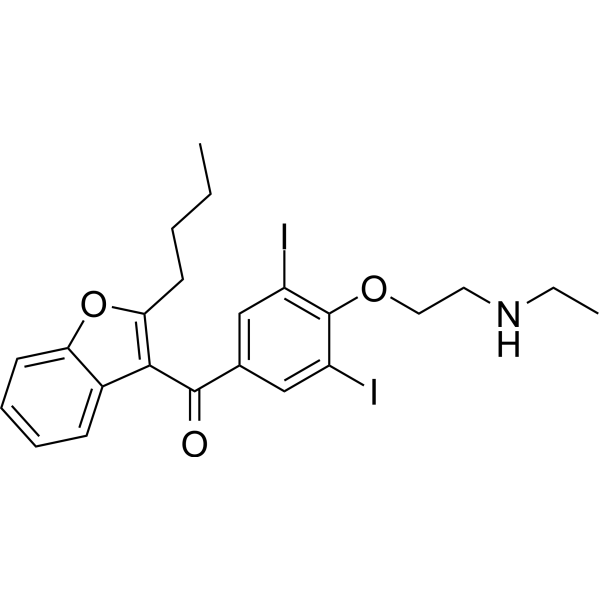
Desethylamiodarone
Desethylamiodarone (N-Desethylamiodarone; LB 33020) is the major active metabolite of Amiodarone (HY-14187) generated via CYP3A4 metabolism. Desethylamiodarone downregulates p‑Akt, p‑Bad and Bcl‑2, upregulates Bax, promotes mitochondrial release of cytochrome c, activates caspase‑3 and cleaves PARP‑1, thereby inducing cell cycle arrest and apoptosis. Desethylamiodarone can be used in cervical cancer-related research.
For research use only. We do not sell to patients.
- CAS No.: 83409-32-9
- Formula: C23H25I2NO3
- Molecular Weight:617.26
-
Storage:
Please store the product under the recommended conditions in the Certificate of Analysis.

To place orders, for customer services and technical support, please contact: MedChemExpress USA
Tel: 609-228-6898 E-mail: [email protected] [email protected]


-
 Biological Activity
-
Chemical Information
- Protocols
- Purity & Documentation
- References
-
 Help & FAQs


All Caspase Isoforms
More

Biological Activity
Description
IC50 & Target
|
CYP3A4 |
Caspase-3 |
PARP-1 |
Bax |
Bcl-2 |
bad |
Akt |
Cellular Effect
|
Cell Line

|
Type | Value | Description | References |
|---|---|---|---|---|
| HEK293 | EC50 |
33 nM
Compound: 4, dE-Ami
|
Antagonist activity at rat TAAR1 expressed in HEK293 cells assessed as intracellular cAMP level
Antagonist activity at rat TAAR1 expressed in HEK293 cells assessed as intracellular cAMP level
|
[PMID: 18752950] |
| LLC-PK1 | IC50 |
15.4 μM
Compound: Desethylamiodarone
|
TP_TRANSPORTER: inhibition of Daunorubicin transepithelial transport (basal to apical) (Daunorubicin: 0.035 uM) in MDR1-expressing LLC-PK1 cells
TP_TRANSPORTER: inhibition of Daunorubicin transepithelial transport (basal to apical) (Daunorubicin: 0.035 uM) in MDR1-expressing LLC-PK1 cells
|
[PMID: 11231118] |
| LLC-PK1 | IC50 |
25.2 μM
Compound: Desethylamiodarone
|
TP_TRANSPORTER: inhibition of Digoxin transepithelial transport (basal to apical) (Digoxin: 0.025 uM) in MDR1-expressing LLC-PK1 cells
TP_TRANSPORTER: inhibition of Digoxin transepithelial transport (basal to apical) (Digoxin: 0.025 uM) in MDR1-expressing LLC-PK1 cells
|
[PMID: 11231118] |
In Vitro
Desethylamiodarone (DEA) (2.5-10 μM; 24-72 h) reduces the viability of human cervical cancer HeLa cells in a dose- and time-dependent manner[1].
Desethylamiodarone (0.5-2 μM; 7 days) inhibits colony formation of human cervical cancer HeLa cells in a dose-dependent manner[1].
Desethylamiodarone (2.5-5 μM; 24 h) inhibits the PI3K-Akt pathway in human cervical cancer HeLa cells in a dose-dependent manner by reducing the phosphorylation levels of Akt and its downstream target Bad; it also regulates the expression of apoptosis-related proteins in human cervical cancer HeLa cells in a dose-dependent manner: downregulating Bcl-2, upregulating Bax, inducing cytochrome c release, and activating the cleavage of caspase-3 and PARP-1[1].
Desethylamiodarone (5-10 μM; 24 h) induces apoptosis-related nuclear morphological changes (pyknosis and fragmentation) in human cervical cancer HeLa cells; it also induces apoptosis in human cervical cancer HeLa cells in a dose-dependent manner[1].
Desethylamiodarone (5 μM; 24 h) induces G0/G1 cell cycle arrest in human cervical cancer HeLa cells[1].
Desethylamiodarone (2.5-12.5 μg/mL; 1-4 days) exerts strong direct cytotoxicity against human thyroid cell line SGHTL-34 cultured in vitro, with an EC50 of 6.8 μg/mL at 24 h. It reduces cell numbers through cell destruction rather than decreasing cell adhesion, and induces vacuolization after 4 days of exposure[2].
Desethylamiodarone exhibits strong direct cytotoxicity against primary human retro-orbital fibroblasts in vitro, and a reduction in cell number is detected via protein content assay after 4 days of exposure[2].
MedChemExpress (MCE) has not independently confirmed the accuracy of these methods. They are for reference only. Further protocols information, click here.
-
Cell Line:HeLa human cervical cancer cells
-
Concentration:2.5, 5, 7.5, 10 μM
-
Incubation Time:24 h, 48 h, 72 h
-
Result:Inhibited HeLa cell viability in a dose- and time-dependent manner.
Caused dose-dependent reductions in total viable cell counts over time, with 10 μM causing a decrease in viable cell numbers after 24 h that continued through 72 h.
-
Cell Line:HeLa human cervical cancer cells
-
Concentration:0.5, 1, 1.5, 2 μM
-
Incubation Time:7 days
-
Result:Strongly reduced colony formation in a dose-dependent manner.
-
Cell Line:HeLa human cervical cancer cells
-
Concentration:5, 10 μM
-
Incubation Time:24 h
-
Result:Induced characteristic apoptotic nuclear morphology, including condensed and fragmented nuclei, as indicated by bright fluorescent staining of affected nuclei.\nIncreased total apoptosis in a dose-dependent manner.
Increased total apoptosis to ~33% (23% early apoptotic, ~10% late apoptotic) at 5 μM, compared to ~13% in controls.
Increased total apoptosis to ~61% (16% early apoptotic, ~45% late apoptotic) at 10 μM.
-
Cell Line:HeLa human cervical cancer cells
-
Concentration:5 μM
-
Incubation Time:24 h
-
Result:Increased the percentage of cells in G0/G1 phase to ~70.5% (from ~55.5% in controls).
Decreased the percentage of cells in S phase to ~22.1% (from ~34.0% in controls).
-
Cell Line:HeLa human cervical cancer cells
-
Concentration:2.5, 5 μM
-
Incubation Time:24 h
-
Result:Dose‑dependently diminished Akt and Bad phosphorylation while leaving total Akt and Bad protein levels unaltered.
Decreased phospho‑Akt to ~70 % of control and phospho‑Bad to ~75 % of control at 2.5 μM.
Lowered phospho‑Akt to ~35 % of control and phospho‑Bad to ~20 % of control at 5 μM.
Dose‑dependently suppressed anti‑apoptotic Bcl‑2, elevated pro‑apoptotic Bax, triggered mitochondrial‑to‑cytosolic cytochrome c release, induced caspase‑3 cleavage‑mediated activation, and promoted cleavage of PARP‑1 (caspase‑3 downstream substrate).
Attenuated Bcl‑2 to ~25 % of control, raised Bax, cytosolic cytochrome c, cleaved caspase‑3 and cleaved PARP‑1 by ~100 % relative to control at 5 μM.
-
Cell Line:immortalized functional human thyrocyte line SGHTL-34
-
Concentration:2.5, 7.5, 12.5, 6.8 μg/mL
-
Incubation Time:4 days
-
Result:Markedly reduced SGHTL-34 cell number as measured by DNA and protein content.
Induced vacuole formation in SGHTL-34 cells after 4-day incubation with 7.5 μg/mL.
Had cytotoxic effect unmodified by co-incubation with T3 (up to 0.75 μg/mL) at 2.5 μg/mL or 7.5 μg/mL over 4 days.
In Vivo
MedChemExpress (MCE) has not independently confirmed the accuracy of these methods. They are for reference only.
-
Animal Model:Swiss mice (adult female, 20-25 g)[3]
-
Dosage:100 mg/kg (generated via amiodarone metabolism)
-
Administration:i.p.; single dose; 30 min prior to testing
-
Result:Significantly elevated brain concentrations when coadministered with oxcarbazepine compared to amiodarone alone.
Significantly elevated brain concentrations when coadministered with pregabalin compared to amiodarone alone.
Did not significantly alter brain concentrations when coadministered with lamotrigine compared to amiodarone alone.


Chemical Information
-
CAS No. 83409-32-9
-
Molecular Weight 617.26
-
Formula C23H25I2NO3
-
SMILES
O=C(C1=CC(I)=C(C(I)=C1)OCCNCC)C2=C(OC3=CC=CC=C23)CCCC
-
Synonyms
N-Desethylamiodarone; LB 33020
-
Shipping
Room temperature in continental US; may vary elsewhere.
-
Storage
Please store the product under the recommended conditions in the Certificate of Analysis.

Protocols
-
Detection of Apoptosis
Apoptosis, also called programmed cell death, is generally characterized by distinct morphological characteristics.
-
TUNEL staining for apoptotic DNA fragmentation
TUNEL staining detects DNA strand breaks by using terminal deoxynucleotidyl transferase to add labeled nucleotides to exposed 3′-OH DNA termini, generating either microscopic staining in fixed cells or tissue sections, or fluorescence/cytometric signal in cell suspensions. TUNEL positivity reflects DNA fragmentation but should not be interpreted alone as definitive apoptosis, because TUNEL can also label necrotic, autolytic, mechanically damaged, or DNA-repair-associated DNA breaks.
-
Flow cytometric DNA-content cell-cycle staining
Flow cytometric DNA-content cell-cycle staining measures the fluorescence intensity of DNA-bound fluorochromes in single cells or nuclei to estimate DNA content distributions, allowing assignment of populations to G0/G1, S, and G2/M phases by DNA histogram deconvolution. Propidium iodide (PI) intercalates into DNA, and PI fluorescence is proportional to cellular DNA content when staining is performed under conditions that make DNA accessible and minimize non-DNA signal. Cells with G2/M DNA content are expected to show approximately twice the fluorescence intensity of G0/G1 cells, while S-phase cells occupy intermediate fluorescence values. PI-based DNA-content analysis can also detect cells with fractional DNA content, often reported as sub-G1, when DNA fragmentation and extraction during staining reduce retained DNA signal in apoptotic cells. DAPI is an alternative DNA fluorochrome for univariate DNA-content analysis, while bivariate approaches combining DNA content with proliferation
-
Annexin V plus membrane-impermeant dye apoptosis staining
Annexin V-based apoptosis assays rely on the detection of phosphatidylserine (PS) externalization from the inner leaflet of the plasma membrane to the outer leaflet, an early biochemical hallmark of apoptosis. Fluorescently labeled Annexin V binds PS in a calcium-dependent manner, enabling identification of early apoptotic cells by flow cytometry or fluorescence microscopy. When combined with a membrane-impermeant DNA-binding dye (e. g. , propidium iodide), this approach allows discrimination between viable (Annexin V−/dye−), early apoptotic (Annexin V+/dye−), and late apoptotic or necrotic (Annexin V+/dye+) cell populations by assessing membrane integrity and PS exposure.
-
BrdU Incorporation Assay
Bromodeoxyuridine (BrdU) incorporation assay is based on the principle that BrdU, a thymidine analog, is incorporated into newly synthesized DNA during the S phase of the cell cycle, thereby serving as a marker of DNA replication and cellular proliferation. Incorporated BrdU can be detected using anti-BrdU antibodies following DNA denaturation, enabling visualization or quantification of proliferating cells through immunochemical detection methods such as immunofluorescence or immunohistochemistry.
-
Apoptosis Solutions
Apoptosis is a regulated, generally non-lytic cell-death pathway that removes unwanted, damaged, infected, or abnormal cells through coordinated morphological changes, caspase activation, DNA fragmentation, and membrane remodeling. The intrinsic apoptosis pathway is controlled mainly by mitochondrial outer membrane permeabilization, BCL-2 family proteins, cytochrome c release, apoptosome formation, caspase-9 activation, and downstream executioner caspase-3/7 activation. The extrinsic apoptosis pathway is initiated by death receptors such as Fas, TNFR, and TRAIL receptors, which recruit adaptor proteins and activate caspase-8 before engaging executioner caspases or mitochondrial amplification through BID cleavage. Apoptosis is linked to many phenotypes, including cancer cell killing, tissue homeostasis, immune regulation, neurodegeneration, infection response, and treatment-induced cytotoxicity; unresolved questions include how apoptosis interacts with necroptosis, pyroptosis, ferroptos
-
Protocol for Cell Cycle
Cell-cycle analysis by flow cytometry measures DNA content in single cells to estimate the fraction of cells in G0/G1, S, and G2/M phases. Propidium iodide intercalates into DNA, and after RNA removal with RNase, fluorescence intensity reflects cellular DNA content: 2N cells are assigned to G0/G1, cells between 2N and 4N to S phase, and 4N cells to G2/M. DNA-content analysis alone cannot reliably separate G0 from G1 or G2 from M. Ki-67 can distinguish quiescent G0 cells from cycling cells, EdU or BrdU incorporation marks active DNA synthesis in S phase, and phospho-histone H3 staining identifies mitotic cells within the 4N population.


Purity & Documentation
References

Calculators
Concentration (start) × Volume (start) = Concentration (final) × Volume (final)


Desethylamiodarone Related Classifications
HY-122423 Related Classifications
 Powered by Bioz
Keywords
- Desethylamiodarone
- 83409-32-9
- N-Desethylamiodarone
- LB 33020
- LB33020
- LB 33020
- LB-33020
- Drug Metabolite
- Cytochrome P450
- Akt
- Bcl-2 Family
- Caspase
- PARP
- Apoptosis
- phosphorylated Akt
- Bax
- proliferation
- HeLa human cervical cancer cells
- blood-brain barrier
- phosphorylated Bad
- apoptosis
- Bcl-2
- PI3K-Akt signaling
- SGHTL-34 human thyrocytes
- Inhibitor
- inhibitor
- inhibit