



Sulfapyridine
Based on 2 publication(s) in Google Scholar
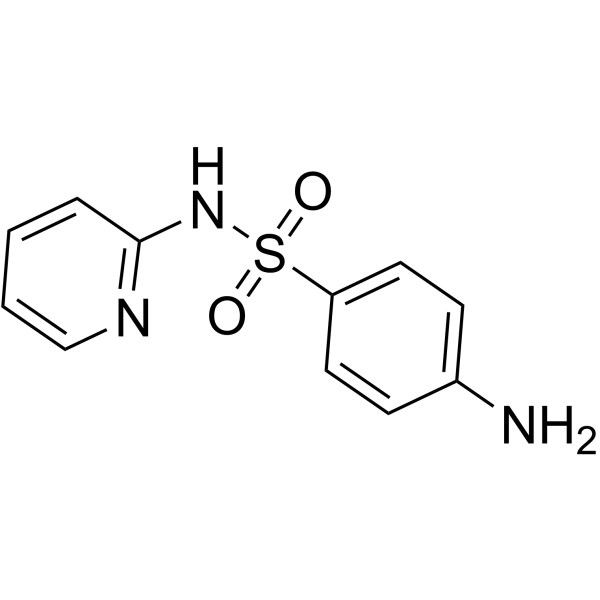
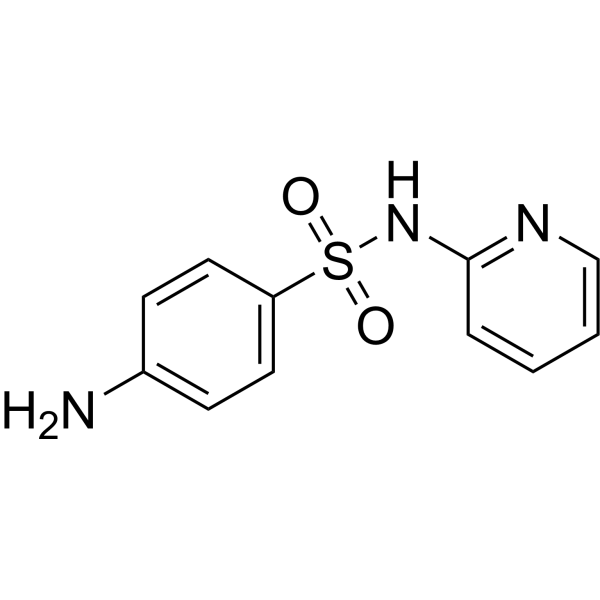
Sulfapyridine, a major metabolite of Sulfasalazine, is a sulfonamide antibiotic agent. Sulfapyridine inhibits recombinant P. carinii dihydropteroate synthetase (DHPS) with an IC50 of 0.18 μM. Sulfapyridine has antibacterial, anti-inflammatory and anti-rheumatic activities.
For research use only. We do not sell to patients.
- Purity : 99.85%
- CAS No.: 144-83-2
- Formula: C11H11N3O2S
- Molecular Weight:249.29
-
Storage:Powder -20°C, 3 years , 4°C, 2 years ; In solvent -80°C, 2 years , -20°C, 1 year

To place orders, for customer services and technical support, please contact: MedChemExpress USA
Tel: 609-228-6898 E-mail: [email protected] [email protected]


-
 Biological Activity
-
Chemical Information
-
Solvent & Solubility
- Protocols
- Purity & Documentation
- References
-
 Help & FAQs


-
HY-B0273
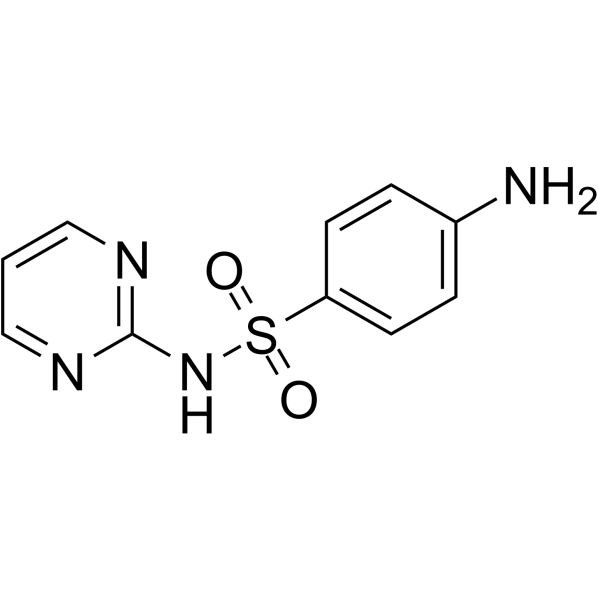
SulfadiazineSulfonamide Antibiotic -
HY-14655
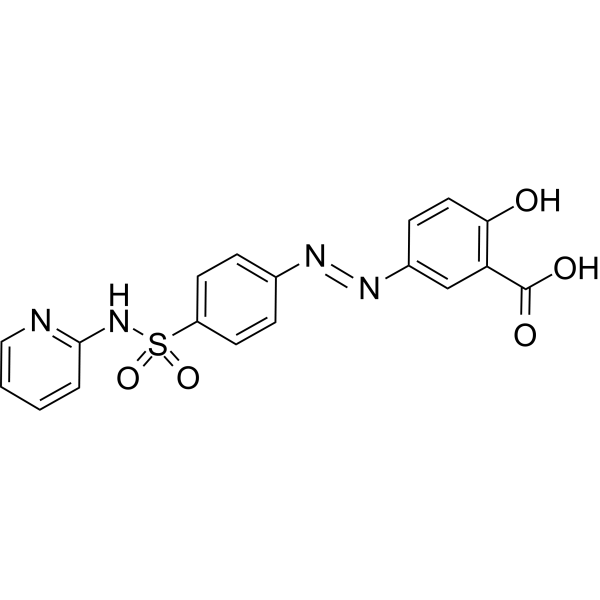
SulfasalazineAnti-rheumatic Agent -
HY-15027
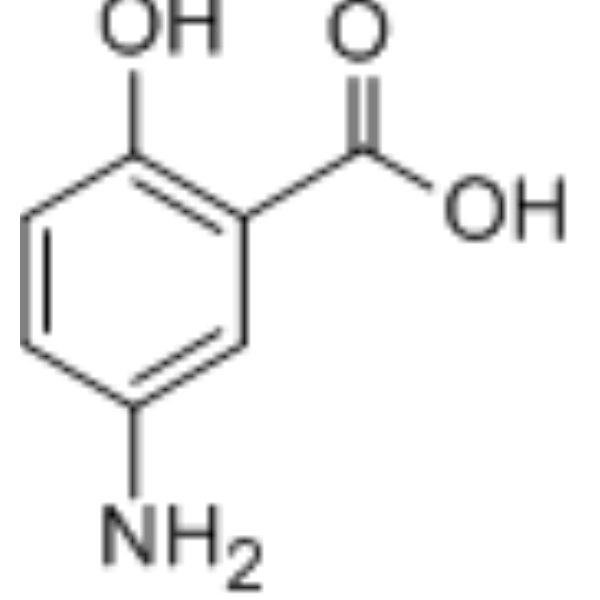
5-Aminosalicylic AcidEndogenous Metabolite -
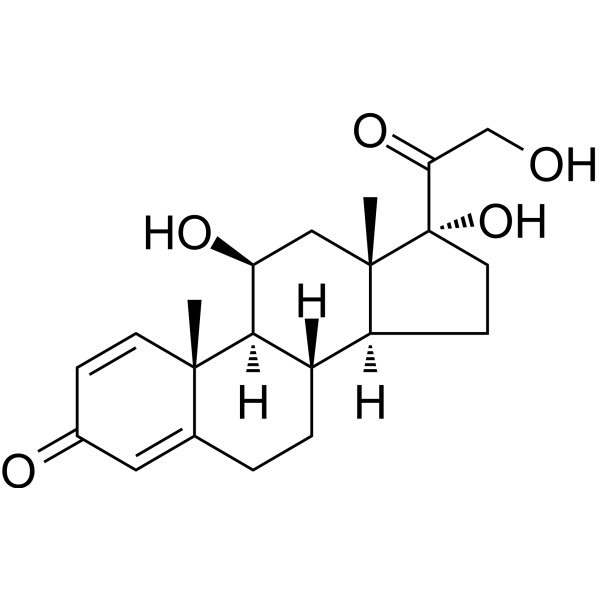
HY-17463
PrednisoloneGlucocorticoid -
HY-B0212R
Sulfapyridine (Standard)Antibiotic Agent -
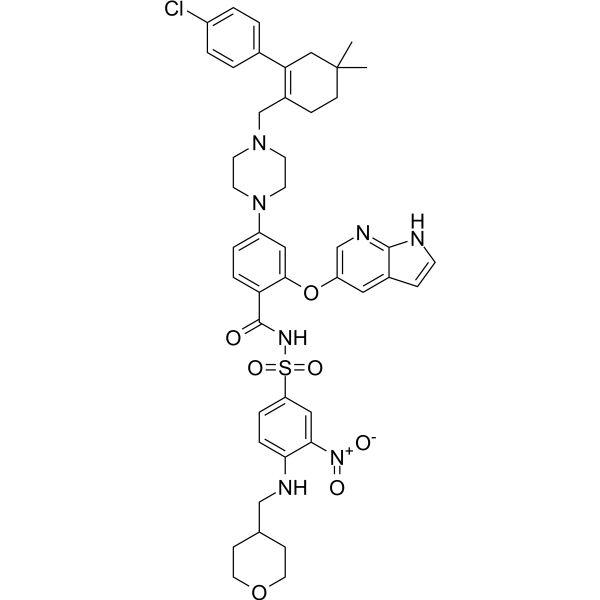
HY-15531
VenetoclaxBCL-2 Inhibitor -
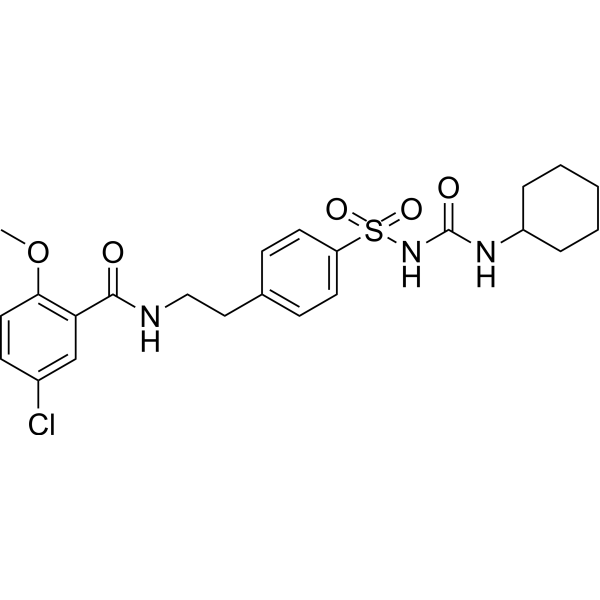
HY-15206
GlibenclamideKATP Inhibitor -
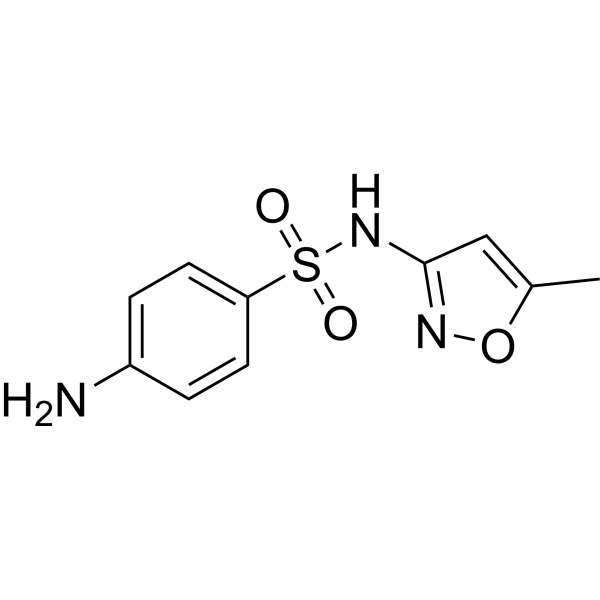
HY-B0322
SulfamethoxazoleSulfonamide Antibiotic -
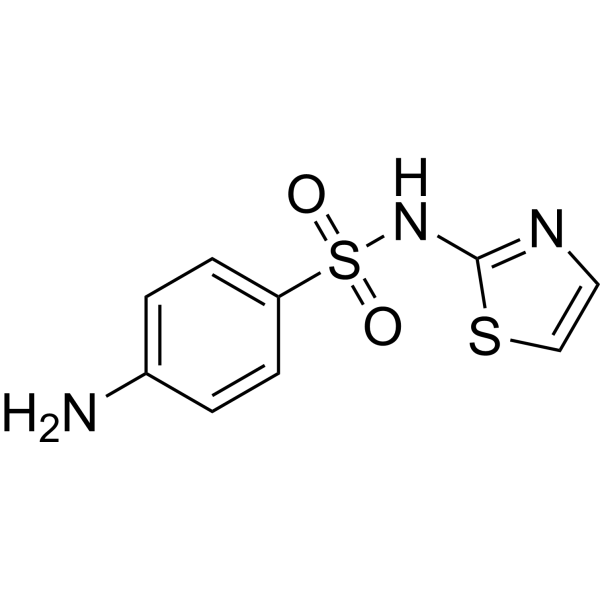
HY-B0507
SulfathiazoleAntibiotics -
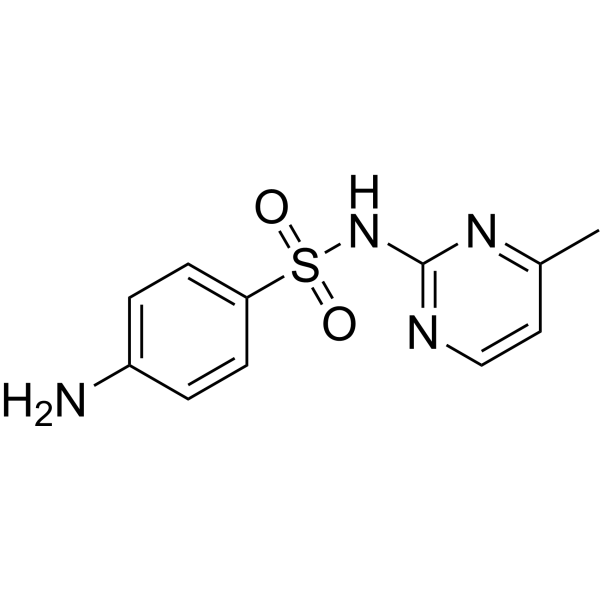
HY-B0512
Sulfamerazineα-Synuclein Inhibitor -

HY-B0273B
Sulfadiazine 100 µg/mL in methanolSulfonamide Antibiotic -

HY-B0273R
Sulfadiazine (Standard)Reference Standard
Publications Citing Use of MedChemExpress (MCE) Sulfapyridine
MoreAll Antibiotic Isoforms
More

Biological Activity
Description
Cellular Effect
|
Cell Line

|
Type | Value | Description | References |
|---|---|---|---|---|
| U-87MG ATCC | IC50 |
>1000 μM
Compound: 3
|
Inhibition of xc-cystine-glutamate antiporter-mediated cystine uptake in human U87 cells using L-[14C]cystine as substrate after 15 mins by liquid scintillation counting
Inhibition of xc-cystine-glutamate antiporter-mediated cystine uptake in human U87 cells using L-[14C]cystine as substrate after 15 mins by liquid scintillation counting
|
[PMID: 21889337] |
In Vitro
Sulfapyridine inhibits production of IL-8, chemokine (C-X-C motif) ligand 1 (CXCL1), and monocyte chemotactic protein-1 (MCP-1) in synovial cells of rheumatoid arthritis (RA)[1].
MIC range of Sulfapyridine for Y. enterocolitica is 3.1-25 μg/mL and for Salmonella 25-100 μg/mL. Campylobacter jejuni/coli are less susceptible to Sulfapyridine with MIC values ranging from 200 to 800 μg/mL. Shigella and three of five E. coli strains are resistant to 1600 μg/mL of sulfapyridine. Two strains of E. coli are inhibited by 25 μg/mL[2].
MedChemExpress (MCE) has not independently confirmed the accuracy of these methods. They are for reference only.
In Vivo
MedChemExpress (MCE) has not independently confirmed the accuracy of these methods. They are for reference only.


Chemical Information
-
CAS No. 144-83-2
-
Appearance Solid
-
Molecular Weight 249.29
-
Formula C11H11N3O2S
-
Color White to off-white
-
SMILES
O=S(C1=CC=C(N)C=C1)(NC2=NC=CC=C2)=O
-
Shipping
Room temperature in continental US; may vary elsewhere.
-
Storage
Powder -20°C 3 years 4°C 2 years In solvent -80°C 2 years -20°C 1 year


Publications (2)
-
Journal Impact Factor
-
Most Recent
-
ACS Environ Au
Machine Learning-Assisted Recognition of Environmental Sulfur-Containing Chemicals in Nontargeted Mass Spectrometry Analysis of Inadequate Mass Resolution. [Abstract]2025 Aug 5;5(6):573-582. PMID: 41277996 -
Anal Chem
Exposome-Scale Investigation of Cl-/Br-Containing Chemicals Using High-Resolution Mass Spectrometry, Multistage Machine Learning, and Cloud Computing. [Abstract]2025 Jun 3;97(21):11099-11109. PMID: 40401576


Solvent & Solubility
In Vitro:
DMSO : 60 mg/mL (240.68 mM; Need ultrasonic; Hygroscopic DMSO has a significant impact on the solubility of product, please use newly opened DMSO)
H2O : < 0.1 mg/mL (insoluble)
Please refer to the solubility information to select the appropriate solvent. Once prepared, please aliquot and store the solution to prevent product inactivation from repeated freeze-thaw cycles.
Storage method and period of stock solution: -80°C, 2 years; -20°C, 1 year. When stored at -80°C, please use it within 2 years. When stored at -20°C, please use it within 1 year.
Please refer to the solubility information to select the appropriate solvent. Once prepared, please aliquot and store the solution to prevent product inactivation from repeated freeze-thaw cycles.
Storage method and period of stock solution: -80°C, 2 years; -20°C, 1 year. When stored at -80°C, please use it within 2 years. When stored at -20°C, please use it within 1 year.
Concentration (start) × Volume (start) = Concentration (final) × Volume (final)
In Vivo:
Select the appropriate dissolution method based on your experimental animal and administration route.
- For the following dissolution methods, please ensure to first prepare a clear stock solution using an In Vitro approach and then sequentially add co-solvents:
- To ensure reliable experimental results, the clarified stock solution can be appropriately stored based on storage conditions. As for the working solution for In Vivo experiments, it is recommended to prepare freshly and use it on the same day.
- The percentages shown for the solvents indicate their volumetric ratio in the final prepared solution. If precipitation or phase separation occurs during preparation, heat and/or sonication can be used to aid dissolution.
Add each solvent one by one: 10% DMSO 40% PEG300 5% Tween-80 45% Saline
Solubility: ≥ 3 mg/mL (12.03 mM); Clear solution
This protocol yields a clear solution of ≥ 3 mg/mL (saturation unknown).
Taking 1 mL working solution as an example, add 100 μL DMSO stock solution (30.0 mg/mL) to 400 μL PEG300, and mix evenly; then add 50 μL Tween-80 and mix evenly; then add 450 μL Saline to adjust the volume to 1 mL.
Preparation of Saline: Dissolve 0.9 g sodium chloride in ddH₂O and dilute to 100 mL to obtain a clear Saline solution.
Add each solvent one by one: 10% DMSO 90% (20% SBE-β-CD in Saline)
Solubility: ≥ 3 mg/mL (12.03 mM); Clear solution
This protocol yields a clear solution of ≥ 3 mg/mL (saturation unknown).
Taking 1 mL working solution as an example, add 100 μL DMSO stock solution (30.0 mg/mL) to 900 μL 20% SBE-β-CD in Saline, and mix evenly.
Preparation of 20% SBE-β-CD in Saline (4°C, storage for one week): 2 g SBE-β-CD powder is dissolved in 10 mL Saline, completely dissolve until clear.
For the following dissolution methods, please prepare the working solution directly:
It is recommended to prepare fresh solutions and use them promptly within a short period of time.
The percentages shown for the solvents indicate their volumetric ratio in the final prepared solution. If precipitation or phase separation occurs during preparation, heat and/or sonication can be used to aid dissolution.
Add each solvent one by one: 50% PEG300 50% Saline
Solubility: 3.33 mg/mL (13.36 mM); Clear solution; Need ultrasonic and warming and heat to 50°C
In Vivo Dissolution Calculator
Please enter the basic information of animal experiments:
-
-
-
-
Recommended: Prepare an additional quantity of animals to account for potential losses during experiments.
Please enter your animal formula composition:
-
%DMSO +
Recommended: Keep the proportion of DMSO in working solution below 2% if your animal is weak.
-
%+
-
+%Tween-80 + +
-
%Saline +
The co-solvents required include: DMSO, . All of co-solvents are available by MedChemExpress (MCE). , Tween 80. All of co-solvents are available by MedChemExpress (MCE).
Working solution concentration: 0.22 mg/mL
Method for preparing stock solution: mg drug dissolved in μL DMSO. Stock solution concentration: mg/mL.
1. Take μL DMSO stock solution;
2. Add μL .
μL , mix evenly;
3. Then add μL Tween 80, mix evenly;
4. Then add μL
Please ensure that the stock solution in the first step is dissolved to a clear state, and add co-solvents in sequence. You can use ultrasonic heating (ultrasonic cleaner, recommended frequency 20-40 kHz), vortexing, etc. to assist dissolution.


Purity & Documentation
-
Data Sheet (289 KB)
-
SDS (418 KB)
- English - EN (418 KB)
- Français - FR (418 KB)
- Deutsch - DE (418 KB)
- Norwegian - NO (418 KB)
- Español - ES (418 KB)
- Swedish - SV (418 KB)
- Italian - IT (418 KB)
- Korean - KR (418 KB)
- Portuguese - PT (418 KB)
-
Handling Instructions (2659 KB)
References
[1]. Kazuki Omoteyama, et al. Effects of salazosulfapyridine on the profile of cell surface proteins, revealed by biotinylation of cell surface proteins and 2-dimentional electrophoresis. Biochim Biophys Acta Proteins Proteom. 2019 Jan;1867(1):47-56. [Content Brief]
[2]. J J Andreasen, et al. In vitro susceptibility of diarrhoea producing gram negative enteric bacteria to sulfasalazine, 5-aminosalicylic acid, sulfapyridine and four quinolones. Brief report. APMIS. 1988 Jun;96(6):568-70. [Content Brief]
[3]. Y L Hong, et al. Inhibition of recombinant Pneumocystis carinii dihydropteroate synthetase by sulfa drugs. Antimicrob Agents Chemother. 1995 Aug;39(8):1756-63. [Content Brief]
[4]. H M Kim, et al. Inhibitory effect of mast cell-mediated immediate-type allergic reactions by sulfapyridine. Immunopharmacol Immunotoxicol. 2000 May;22(2):253-66. [Content Brief]


Complete Stock Solution Preparation Table
Please refer to the solubility information to select the appropriate solvent. Once prepared, please aliquot and store the solution to prevent product inactivation from repeated freeze-thaw cycles.
Storage method and period of stock solution: -80°C, 2 years; -20°C, 1 year. When stored at -80°C, please use it within 2 years. When stored at -20°C, please use it within 1 year.
| Optional Solvent | Concentration Solvent Mass | 1 mg | 5 mg | 10 mg | 25 mg |
|---|---|---|---|---|---|
| DMSO | 1 mM | 4.0114 mL | 20.0570 mL | 40.1139 mL | 100.2848 mL |
| 5 mM | 0.8023 mL | 4.0114 mL | 8.0228 mL | 20.0570 mL | |
| 10 mM | 0.4011 mL | 2.0057 mL | 4.0114 mL | 10.0285 mL | |
| 15 mM | 0.2674 mL | 1.3371 mL | 2.6743 mL | 6.6857 mL | |
| 20 mM | 0.2006 mL | 1.0028 mL | 2.0057 mL | 5.0142 mL | |
| 25 mM | 0.1605 mL | 0.8023 mL | 1.6046 mL | 4.0114 mL | |
| 30 mM | 0.1337 mL | 0.6686 mL | 1.3371 mL | 3.3428 mL | |
| 40 mM | 0.1003 mL | 0.5014 mL | 1.0028 mL | 2.5071 mL | |
| 50 mM | 0.0802 mL | 0.4011 mL | 0.8023 mL | 2.0057 mL | |
| 60 mM | 0.0669 mL | 0.3343 mL | 0.6686 mL | 1.6714 mL | |
| 80 mM | 0.0501 mL | 0.2507 mL | 0.5014 mL | 1.2536 mL | |
| 100 mM | 0.0401 mL | 0.2006 mL | 0.4011 mL | 1.0028 mL |


Sulfapyridine Related Classifications
HY-B0212 Related Classifications
 Powered by Bioz