



7,3',4'-Trihydroxyisoflavone

Based on 1 Customer Validation
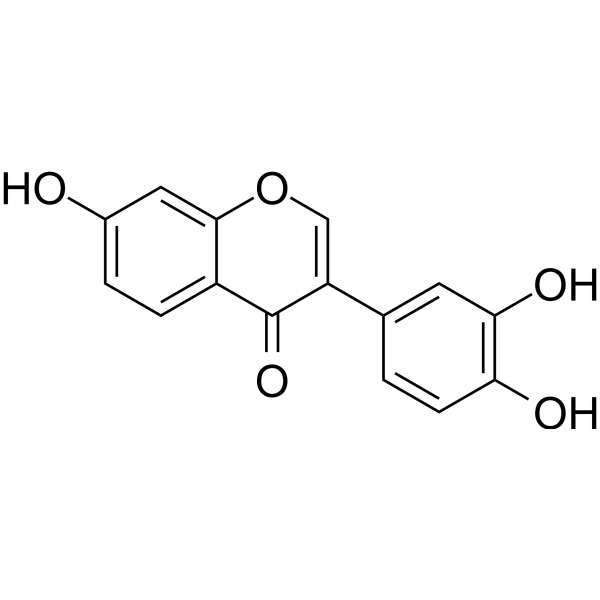
7,3',4'-Trihydroxyisoflavone, a major metabolite of Daidzein, is an ATP-competitive inhibitor of Cot (Tpl2/MAP3K8) and MKK4. 7,3',4'-Trihydroxyisoflavone has anticancer, anti-angiogenic, chemoprotective, and free radical scavenging activities.
For research use only. We do not sell to patients.
- Purity : 99.83%
- CAS No.: 485-63-2
- Formula: C15H10O5
- Molecular Weight:270.24
-
Storage:Powder -20°C, 3 years ; In solvent -80°C, 6 months , -20°C, 1 month

To place orders, for customer services and technical support, please contact: MedChemExpress USA
Tel: 609-228-6898 E-mail: [email protected] [email protected]


-
 Biological Activity
-
Chemical Information
-
Solvent & Solubility
- Purity & Documentation
- References
-
 Help & FAQs


-
HY-N0019
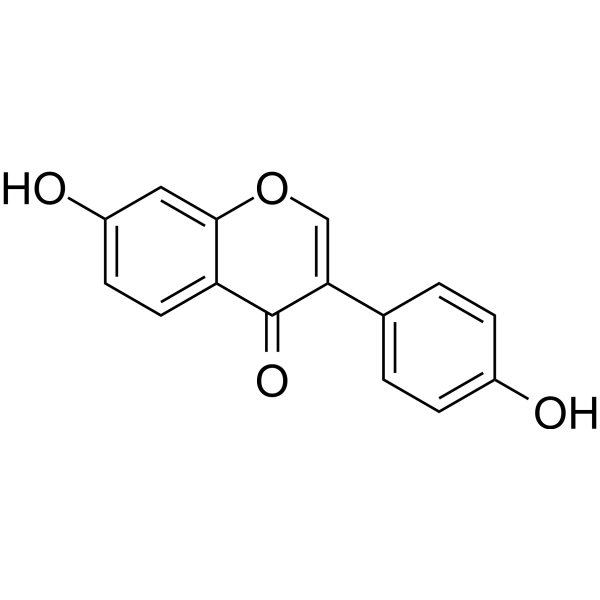
DaidzeinEndogenous Metabolite -
HY-N0183
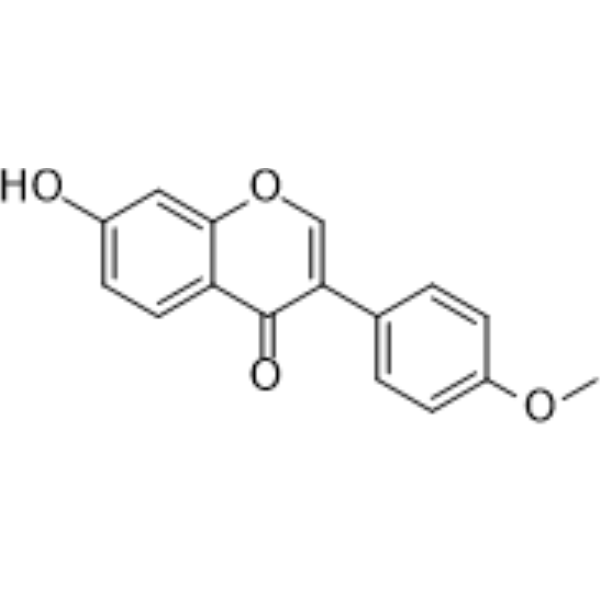
FormononetinFGFR2 Inhibitor -

HY-124953R
7,3',4'-Trihydroxyisoflavone (Standard)Cot/MKK4 Inhibitor -
HY-W010696
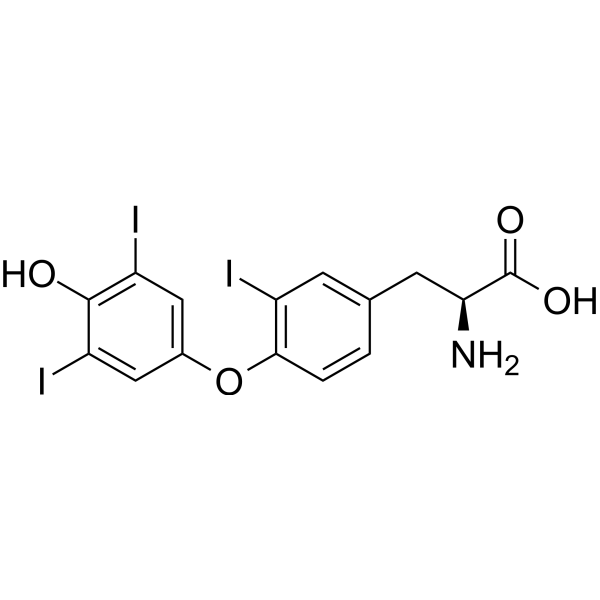
Reverse T3Thyroid Hormone -
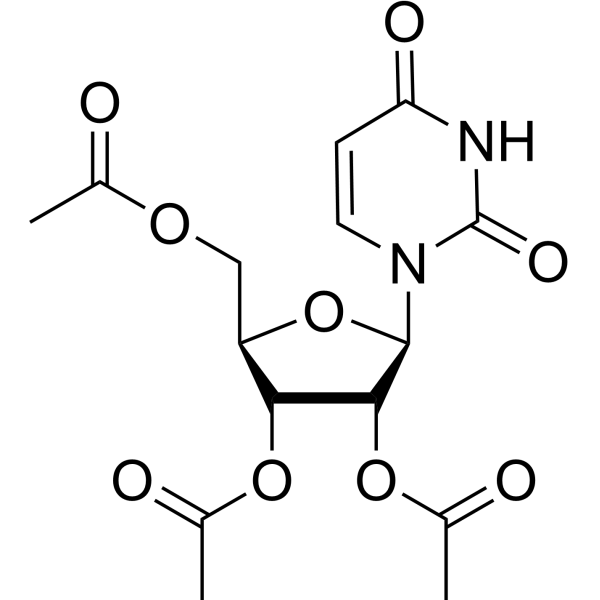
HY-14905
Uridine triacetateUridine Prodrug -
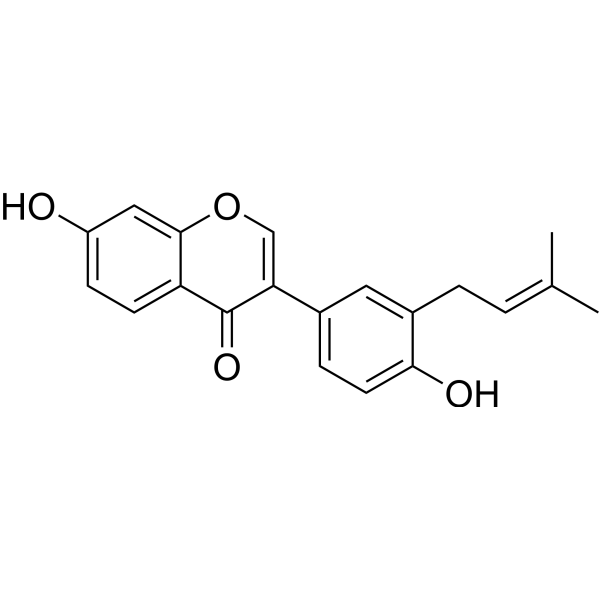
HY-N0720
NeobavaisoflavoneApoptosis Inducer -
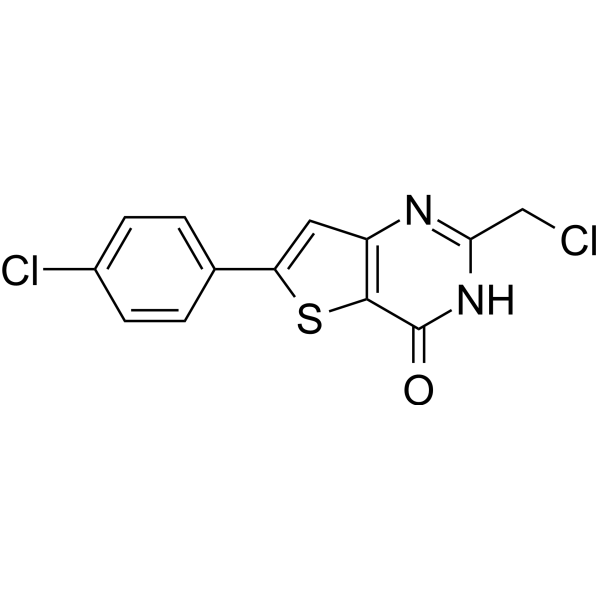
HY-162065
N6F11Ferroptosis Inducer -
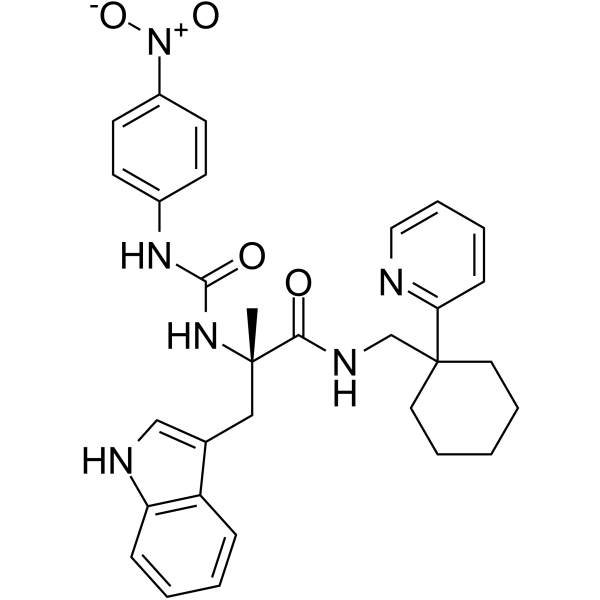
HY-116216
PD 168368NMB-R/GRPR Antagonist -
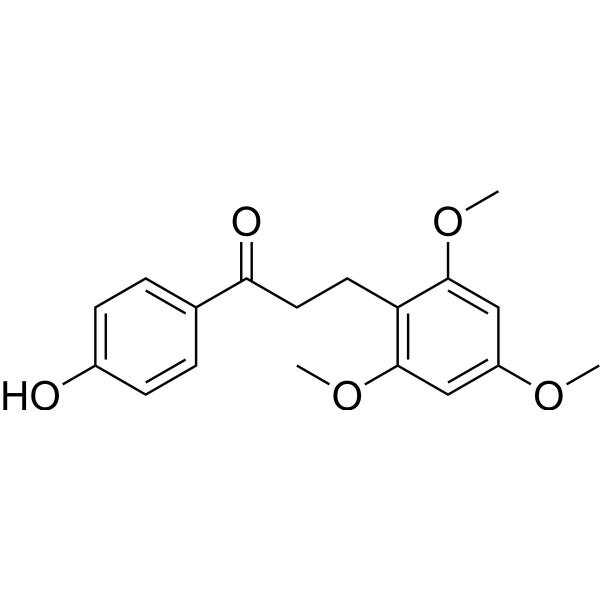
HY-N1504
Loureirin BPAI-1 Inhibitor -

HY-W010696R
Reverse T3 (Standard)Thyroid Hormone -
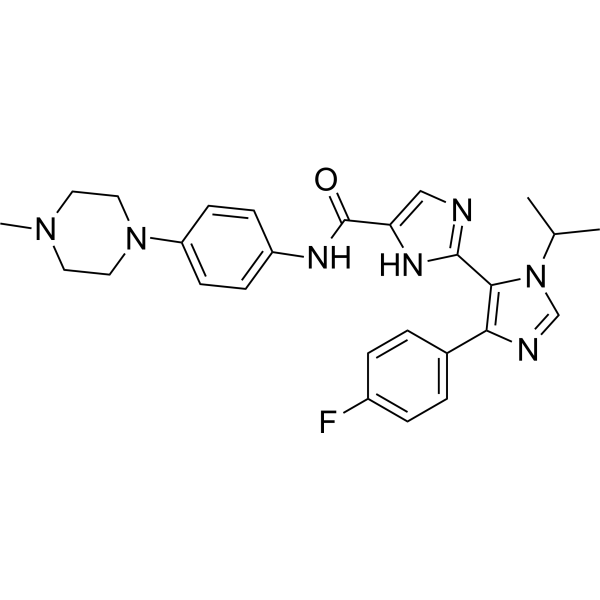
HY-160623
RentosertibTNIK/MAP4K4 Inhibitor -
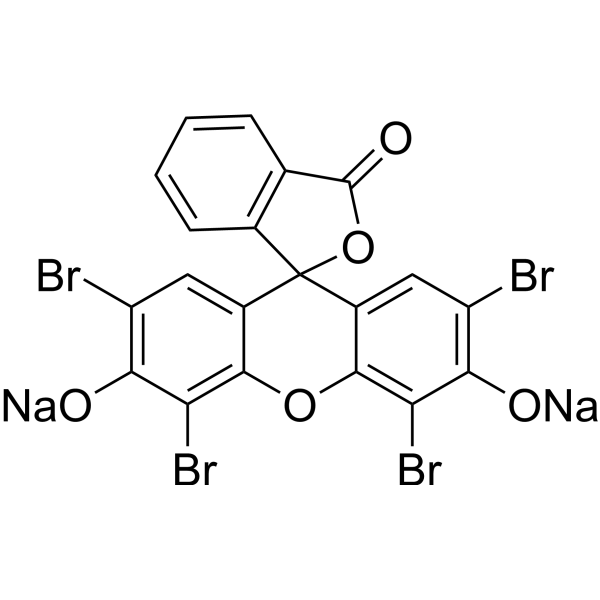
HY-D0505A
Eosin Y disodiumDye Molecule
All MAP3K Isoforms
More

Biological Activity
Description
Cellular Effect
|
Cell Line

|
Type | Value | Description | References |
|---|---|---|---|---|
| BV-2 | IC50 |
>100 μM
Compound: 7
|
Antineuroinflammatory activity in mouse BV2 cells assessed as inhibition of LPS-induced NO production after 24 hrs in presence of LPS by Griess reaction based assay
Antineuroinflammatory activity in mouse BV2 cells assessed as inhibition of LPS-induced NO production after 24 hrs in presence of LPS by Griess reaction based assay
|
[PMID: 28911817] |
| Melan-a | IC50 |
7.83 μM
Compound: 2
|
Inhibition of melanin formation in mouse Melan-a cells after 5 days by ELISA
Inhibition of melanin formation in mouse Melan-a cells after 5 days by ELISA
|
[PMID: 20022495] |
| N9 | IC50 |
>100 μM
Compound: 7
|
Antineuroinflammatory activity in mouse N9 cells assessed as inhibition of LPS-induced nitric oxide production after 24 hrs by Griess assay
Antineuroinflammatory activity in mouse N9 cells assessed as inhibition of LPS-induced nitric oxide production after 24 hrs by Griess assay
|
[PMID: 28073678] |
| Vero | IC50 |
135 μM
Compound: 7,3',4'-trihydroxyisoflavone
|
Cytotoxicity against african green monkey Vero cells
Cytotoxicity against african green monkey Vero cells
|
[PMID: 16441066] |
In Vitro
7,3',4'-Trihydroxyisoflavone triggers cell cycle arrest at the G1 phase and displays an anti-proliferative effect against EGF receptor-positive skin cancer[1].
7,3',4'-Trihydroxyisoflavone also significantly inhibits UVB-induced COX-2 expression by suppressing the NF-B transcription activity in mouse skin epidermal JB6 P+ cells[1].
MedChemExpress (MCE) has not independently confirmed the accuracy of these methods. They are for reference only. .
In Vivo
MedChemExpress (MCE) has not independently confirmed the accuracy of these methods. They are for reference only.


Chemical Information
-
CAS No. 485-63-2
-
Appearance Solid
-
Molecular Weight 270.24
-
Formula C15H10O5
-
Color White to off-white
-
SMILES
OC1=CC=C2C(C(C3=CC(O)=C(C=C3)O)=COC2=C1)=O
-
Shipping
Room temperature in continental US; may vary elsewhere.
-
Storage
Powder -20°C 3 years In solvent -80°C 6 months -20°C 1 month


Solvent & Solubility
In Vitro:
DMSO : 100 mg/mL (370.04 mM; Need ultrasonic; Hygroscopic DMSO has a significant impact on the solubility of product, please use newly opened DMSO)
Please refer to the solubility information to select the appropriate solvent. Once prepared, please aliquot and store the solution to prevent product inactivation from repeated freeze-thaw cycles.
Storage method and period of stock solution: -80°C, 6 months; -20°C, 1 month. When stored at -80°C, please use it within 6 months. When stored at -20°C, please use it within 1 month.
Please refer to the solubility information to select the appropriate solvent. Once prepared, please aliquot and store the solution to prevent product inactivation from repeated freeze-thaw cycles.
Storage method and period of stock solution: -80°C, 6 months; -20°C, 1 month. When stored at -80°C, please use it within 6 months. When stored at -20°C, please use it within 1 month.
Concentration (start) × Volume (start) = Concentration (final) × Volume (final)
In Vivo:
Select the appropriate dissolution method based on your experimental animal and administration route.
- For the following dissolution methods, please ensure to first prepare a clear stock solution using an In Vitro approach and then sequentially add co-solvents:
- To ensure reliable experimental results, the clarified stock solution can be appropriately stored based on storage conditions. As for the working solution for In Vivo experiments, it is recommended to prepare freshly and use it on the same day.
- The percentages shown for the solvents indicate their volumetric ratio in the final prepared solution. If precipitation or phase separation occurs during preparation, heat and/or sonication can be used to aid dissolution.
Add each solvent one by one: 10% DMSO 40% PEG300 5% Tween-80 45% Saline
Solubility: ≥ 2.08 mg/mL (7.70 mM); Clear solution
This protocol yields a clear solution of ≥ 2.08 mg/mL (saturation unknown).
Taking 1 mL working solution as an example, add 100 μL DMSO stock solution (20.8 mg/mL) to 400 μL PEG300, and mix evenly; then add 50 μL Tween-80 and mix evenly; then add 450 μL Saline to adjust the volume to 1 mL.
Preparation of Saline: Dissolve 0.9 g sodium chloride in ddH₂O and dilute to 100 mL to obtain a clear Saline solution.
In Vivo Dissolution Calculator
Please enter the basic information of animal experiments:
-
-
-
-
Recommended: Prepare an additional quantity of animals to account for potential losses during experiments.
Please enter your animal formula composition:
-
%DMSO +
Recommended: Keep the proportion of DMSO in working solution below 2% if your animal is weak.
-
%+
-
+%Tween-80 + +
-
%Saline +
The co-solvents required include: DMSO, . All of co-solvents are available by MedChemExpress (MCE). , Tween 80. All of co-solvents are available by MedChemExpress (MCE).
Working solution concentration: 0.22 mg/mL
Method for preparing stock solution: mg drug dissolved in μL DMSO. Stock solution concentration: mg/mL.
1. Take μL DMSO stock solution;
2. Add μL .
μL , mix evenly;
3. Then add μL Tween 80, mix evenly;
4. Then add μL
Please ensure that the stock solution in the first step is dissolved to a clear state, and add co-solvents in sequence. You can use ultrasonic heating (ultrasonic cleaner, recommended frequency 20-40 kHz), vortexing, etc. to assist dissolution.


Purity & Documentation
-
Data Sheet (272 KB)
-
SDS (393 KB)
- English - EN (393 KB)
- Français - FR (393 KB)
- Deutsch - DE (393 KB)
- Norwegian - NO (393 KB)
- Español - ES (393 KB)
- Swedish - SV (393 KB)
- Italian - IT (393 KB)
- Korean - KR (393 KB)
- Portuguese - PT (393 KB)
-
Handling Instructions (2659 KB)
References
[1]. Yu-Li Lo, et al. 7,3',4'-Trihydroxyisoflavone modulates multidrug resistance transporters and induces apoptosis via production of reactive oxygen species. Toxicology. 2012 Dec 16;302(2-3):221-32. [Content Brief]
[2]. Dong Eun Lee, et al. 7,3',4'-Trihydroxyisoflavone, a metabolite of the soy isoflavone daidzein, suppresses ultraviolet B-induced skin cancer by targeting Cot and MKK4. J Biol Chem. 2011 Apr 22;286(16):14246-56. [Content Brief]


Complete Stock Solution Preparation Table
Please refer to the solubility information to select the appropriate solvent. Once prepared, please aliquot and store the solution to prevent product inactivation from repeated freeze-thaw cycles.
Storage method and period of stock solution: -80°C, 6 months; -20°C, 1 month. When stored at -80°C, please use it within 6 months. When stored at -20°C, please use it within 1 month.
| Optional Solvent | Concentration Solvent Mass | 1 mg | 5 mg | 10 mg | 25 mg |
|---|---|---|---|---|---|
| DMSO | 1 mM | 3.7004 mL | 18.5021 mL | 37.0041 mL | 92.5104 mL |
| 5 mM | 0.7401 mL | 3.7004 mL | 7.4008 mL | 18.5021 mL | |
| 10 mM | 0.3700 mL | 1.8502 mL | 3.7004 mL | 9.2510 mL | |
| 15 mM | 0.2467 mL | 1.2335 mL | 2.4669 mL | 6.1674 mL | |
| 20 mM | 0.1850 mL | 0.9251 mL | 1.8502 mL | 4.6255 mL | |
| 25 mM | 0.1480 mL | 0.7401 mL | 1.4802 mL | 3.7004 mL | |
| 30 mM | 0.1233 mL | 0.6167 mL | 1.2335 mL | 3.0837 mL | |
| 40 mM | 0.0925 mL | 0.4626 mL | 0.9251 mL | 2.3128 mL | |
| 50 mM | 0.0740 mL | 0.3700 mL | 0.7401 mL | 1.8502 mL | |
| 60 mM | 0.0617 mL | 0.3084 mL | 0.6167 mL | 1.5418 mL | |
| 80 mM | 0.0463 mL | 0.2313 mL | 0.4626 mL | 1.1564 mL | |
| 100 mM | 0.0370 mL | 0.1850 mL | 0.3700 mL | 0.9251 mL |


7,3',4'-Trihydroxyisoflavone Related Classifications
HY-124953 Related Classifications
 Powered by Bioz