Search Result
Results for "
BChE inhibitors
" in MedChemExpress (MCE) Product Catalog:
1
Biochemical Assay Reagents
5
Isotope-Labeled Compounds
| Cat. No. |
Product Name |
Target |
Research Areas |
Chemical Structure |
-
- HY-N10488
-
|
|
Cholinesterase (ChE)
|
Neurological Disease
|
|
BChE-IN-11 (compound 10) is a potent, selective and non-competitive BChE (butyrylcholinesterase) inhibitor, with an IC50 of 2.1 μM. BChE-IN-11 can be used for Alzheimer's disease (AD) research .
|
-
-
- HY-155140
-
|
|
Cholinesterase (ChE)
|
Neurological Disease
|
|
BChE-IN-17 (compound 6n) is a potent and selective BChE inhibitor with IC50s of 10.5 nM and 32.5 nM for eqBChE and hBChE, respectively. BChE-IN-17 shows over 1000-fold selectivity to BChE against AChE. BChE-IN-17 shows low neurotoxicity and moderate neuroprotective effects .
|
-
-
- HY-159977
-
-
-
- HY-157982
-
|
|
Cholinesterase (ChE)
|
Neurological Disease
|
|
BChE-IN-28 (compound 6J) is a selective butyrylcholinesterase (BChE) inhibitor with an IC50 of 8 nM and a Ki of 12.16 nM. BChE-IN-28 shows the lower inhibition against AChE, MAO-A and MAO-B .
|
-
-
- HY-178356
-
|
|
Cholinesterase (ChE)
nAChR
Interleukin Related
TNF Receptor
|
Neurological Disease
Inflammation/Immunology
|
|
BChE-IN-44 is a potent, brain-penetrant, highly selective BChE inhibitor [equine BChE IC50 = 18.00 pM, human BChE IC50 = 1.50 nM]. BChE-IN-44 shows neuroprotective effects against the Aβ1-42-induced injury model and inhibitory effects on Aβ1-42 self-aggregation. BChE-IN-44 reduces the levels of inflammatory factors (NO, IL-6, and TNF-α) in Lipopolysaccharides (HY-D1056)-induced BV2 cells. BChE-IN-44 can significantly ameliorate Scopolamine (HY-N0296)-induced cognition impairment. BChE-IN-44 exhibits capacity in the regulation of BChE and acetylcholine levels in the mouse hippocampus. BChE-IN-44 can be used for the study of Alzheimer’s disease (AD) .
|
-
-
- HY-175973
-
|
|
Cholinesterase (ChE)
|
Neurological Disease
|
|
AChE/BChE-IN-30 (Compound 3g) is a Cholinesterase dual-target competitive inhibitor. AChE/BChE-IN-30 can inhibit AChE and BChE with IC50 values of 0.338 and 2.087 μM and Ki values of 0.045 and 0.789 μM. AChE/BChE-IN-30 can be used for the research of neurological disease, such as Alzheimer's disease .
|
-
-
- HY-179126
-
|
|
Cholinesterase (ChE)
Monoamine Oxidase
|
Inflammation/Immunology
|
|
BChE/MAO-A-IN-1 (compound 7j) is a BChE/MAO-A inhibitor. BChE/MAO-A-IN-1 exhibits inhibitory activity against BChE (IC50 = 0.03 nM) and MAO-A (IC50 = 0.32 nM), while also having inhibitory effects on MAO-B. BChE/MAO-A-IN-1 has good anti glycation, antioxidant activity, and low cytotoxicity. BChE/MAO-A-IN-1 can be used in the research of diabetes and Alzheimer's disease .
|
-
-
- HY-178017
-
|
|
Cholinesterase (ChE)
Carbonic Anhydrase
|
Neurological Disease
|
|
BChE/hCA II-IN-1 (Compound 20) is a dual-functional inhibitor of Butyrylcholinesterase (BChE) and human carbonic anhydrase II (hCA II) with IC50s of 76.50 and 10.69 μM for BChE and hCA II, respectively. BChE/hCA II-IN-1 can be used for neurodegenerative diseases like Alzheimer's and glaucoma research .
|
-
-
- HY-W272207
-
|
|
Cholinesterase (ChE)
Drug Intermediate
|
Neurological Disease
Inflammation/Immunology
|
|
AChE/BChE-IN-31 (Compound 3c) is a cholinesterase inhibitor. AChE/BChE-IN-31 exhibits certain inhibitory activity against hAChE and eqBChE. AChE/BChE-IN-31 also possesses antioxidant properties with an IC50 value of 105.04 μM against DPPH. AChE/BChE-IN-31 can be used in the research of diseases such as Alzheimer’s disease .
|
-
-
- HY-178433
-
|
|
Cholinesterase (ChE)
p38 MAPK
|
Neurological Disease
|
|
BChE/p38-α MAPK-IN-2 is a BChE and p38-α MAPK dual inhibitor. BChE/p38-α MAPK-IN-2 inhibits hBChE with an IC50 of 5.1 nM, showing 1000-fold selectivity over hAChE. BChE/p38-α MAPK-IN-2 inhibits p38α MAPK with an IC50 of 8.12 μM. BChE/p38-α MAPK-IN-2 exhibits neuroprotective effect and can be used for the research of neurological disease, such as Alzheimer’s disease .
|
-
-
- HY-179363
-
|
|
Cholinesterase (ChE)
COX
|
Neurological Disease
|
|
BChE-IN-46 is a selective and brain-penetrant BChE inhibitor (eqBChE IC50 = 7.44 × 10 −5 μM, SI > 270,000; hBChE, IC50 = 1.48 × 10 −3 μM). BChE-IN-46 has COX-2 inhibitory activity (IC50 = 0.11 μM). BChE-IN-46 exhibits neuroprotective effects, enhances acetylcholine levels, and alleviates cognitive deficits, anxiety, and learning/memory impairments. BChE-IN-46 can be used for the development of anti-Alzheimer's disease drugs .
|
-
-
- HY-162138
-
-
-
- HY-163883
-
|
|
Cholinesterase (ChE)
|
Neurological Disease
|
|
BChE-IN-34 is a potent and selective butyrylcholinesterase (BChE) inhibitor with an IIC50 of 25 nM. BChE-IN-34 shows excellent selectivity against BChE over acetylcholinesterase. BChE-IN-34 has neuroprotective and antioxidant effects .
|
-
-
- HY-161311
-
-
-
- HY-175211
-
|
|
Cholinesterase (ChE)
|
Neurological Disease
|
|
BChE-IN-42 (Compound 4a) is a BChE inhibitor with an IC50 of 10.01 nM. BChE-IN-42 can be used for neurological diseases like Alzheimer's disease (AD) research .
|
-
-
- HY-157981
-
|
|
Cholinesterase (ChE)
Monoamine Oxidase
|
Neurological Disease
|
|
AChE-IN-60 (compound 6k) is a potant acetylcholinesterase (AChE) and butyrylcholinesterase (BChE) inhibitor with IC50s of 27 nM and 43 nM, respectively. AChE-IN-60 also inhibits monoamine oxidase (MAO)-A and MAO-B with IC50s of 353 nM and 716 nM, respectively .
|
-
-
- HY-159081
-
|
|
Cholinesterase (ChE)
|
Neurological Disease
|
|
AChE/BChE-IN-20 (compound 3m) is an acetylcholinesterase (AChE, IC50=34.81 μM) and butylcholinesterase (BChE, IC50=20.66 μM) inhibitor, which has been demonstrated to have affinity for key enzyme pockets and favorable interaction profiles by molecular docking and kinetic simulations, and can be used in the study of Alzheimer's disease .
|
-
-
- HY-161331
-
|
|
Cholinesterase (ChE)
|
Neurological Disease
|
|
S16–1029 is a selective and orally active butyrylcholinesterase (BChE) inhibitor with IC50s of 11.35 nM and 48.1 nM for eqBChE and hBChE, respectively. S16–1029 could cross the blood-brain barrier (BBB) and reach the central nervous system (CNS). S16–1029 can be used for Alzheimer's disease (AD) research .
|
-
-
- HY-143465
-
|
|
Cholinesterase (ChE)
|
Neurological Disease
|
|
BChE-IN-5 is a potent and selective BChE inhibitor of hBChE over hAChE with an IC50 of 2.8 nM for BChE. BChE-IN-5 has the potential for the research of alzheimer’s disease .
|
-
-
- HY-169234
-
|
|
Cholinesterase (ChE)
|
Neurological Disease
|
|
BChE-IN-35 (Azo-9) is a BChE inhibitor. BChE-IN-35 has a dynamic cis/trans conformational change, where the cis isomer preferentially binds to BChE. BChE-IN-35 can be used in Alzheimer's disease (AD) research .
|
-
-
- HY-155368
-
|
|
Cholinesterase (ChE)
|
Neurological Disease
|
|
BChE-IN-20 (compound 7c) is a highly potent BChE-selective inhibitor and exhibits IC50s of 105 and 2.3 nM for eqBChE and hBChE, respectively. BChE-IN-20 inhibits P glycoprotein with IC50 of 0.27 μM. BChE-IN-20 is a promising template to improve design and development of BChE-selective ligands of pharmaceutical interest, including inhibitors and fluorogenic probes.
|
-
-
- HY-163441
-
|
|
Cholinesterase (ChE)
|
Neurological Disease
|
|
BChE-IN-31 (Compound 14d) is a selective BChE inhibitor with an IC50 of 65 nM. BChE-IN-31 inhibits the self-induced aggregation of neurotoxic amyloid-β (Aβ) peptide .
|
-
-
- HY-139974
-
|
|
Cholinesterase (ChE)
|
Neurological Disease
|
|
BChE-IN-2 (compound 22) is a potent inhibitor of BChE with a Ki of 0.099 μM. BChE-IN-2 is a pyrimidine and pyridine derivative. BChE-IN-2 has the potential for the research of Alzheimer’s disease (AD) .
|
-
-
- HY-169961
-
|
|
Cholinesterase (ChE)
|
Cancer
|
|
BChE-IN-38 (compound 13) is a potent BChE inhibitor with Ki values of 62.05, 28.78, 14.09, 1.15 nM for hCAI, hCAII, AChE, BChE, respectively. BChE-IN-38 shows cytotoxic activity .
|
-
-
- HY-162338
-
|
|
Cholinesterase (ChE)
|
Neurological Disease
|
|
BChE-IN-29 (Compound 27a) is a BChE inhibitor (IC50: 0.078 μM and 0.74 μM for BChE and AChE respectively). BChE-IN-29 has anti-inflammatory activity and can be used for research of AD .
|
-
-
- HY-155369
-
-
-
- HY-146669
-
|
|
Cholinesterase (ChE)
|
Neurological Disease
|
|
BChE-IN-6 (compound 12) is a potent BChE inhibitor, with a Ki of 0.182 μM. BChE-IN-6 shows chelating capacity on Zn 2+. BChE-IN-6 can be used for Alzheimer’s disease (AD) research .
|
-
-
- HY-163175
-
|
|
Cholinesterase (ChE)
|
Neurological Disease
|
|
BChE-IN-24 is a selective and reversible BChE inhibitor with an IC50 of 9 nM. BChE-IN-24 can be used for the research of Alzheimer’s disease and related neurodegenerative disorders .
|
-
-
- HY-146313
-
|
|
Cholinesterase (ChE)
|
Neurological Disease
|
|
BChE-IN-7 (compound 13) is a potent, selective, BBB-penetrated and reversible AChE and BChE inhibitor, with an IC50 of 0.06 μM (BChE). BChE-IN-7 can protect neuronal-like cells from toxic Aβ-species .
|
-
-
- HY-146665
-
|
|
Cholinesterase (ChE)
|
Neurological Disease
|
|
AChE/BChE-IN-5 (BMC-16) is a dual AChE and BChE inhibitor with IC50 values of 266 nM and 10.6 nM against human AChE (hAChE) and human BChE (hBChE), respectively. AChE/BChE-IN-5 can cross the BBB .
|
-
-
- HY-143464
-
|
|
Cholinesterase (ChE)
|
Neurological Disease
|
|
BChE-IN-4 is a potent and cross the blood-brain barrier BChE inhibitor. BChE-IN-4 attenuates learning and memory deficits caused by cholinergic deficit in mouse model. BChE-IN-4 has the potential for the research of alzheimer’s disease .
|
-
-
- HY-161508
-
|
|
Cholinesterase (ChE)
|
Neurological Disease
|
|
AChE/BChE-IN-19 (Compound 12) is a nicotinic hydrazide derivative. AChE/BChE-IN-19 is a inhibitor of AChE (IC50 = 21.45 nM) and BChE (IC50 =18.42 nM). AChE/BChE-IN-19 can be used in Alzheimer's disease research .
|
-
-
- HY-157520
-
|
|
Cholinesterase (ChE)
|
Others
|
|
BChE-IN-25 (compound 4I) is a selective BChE inhibitor (IC50: 3.77μM), which is 22 times more selective for BChE than AChE .
|
-
-
- HY-N10701
-
|
|
Cholinesterase (ChE)
|
Neurological Disease
|
|
AChE/BChE-IN-11 (compound 1) is a potent is a dual AChE and BChE inhibitor with IC50 values of 70 and 71 μM for AChE and BChE, respectively. AChE/BChE-IN-11 is a natural product that could be isolated from the leaf of artichoke . AChE/BChE-IN-11 can be used in research of Alzheimer’s disease (AD) research .
|
-
-
- HY-N10489
-
|
|
Cholinesterase (ChE)
|
Neurological Disease
|
|
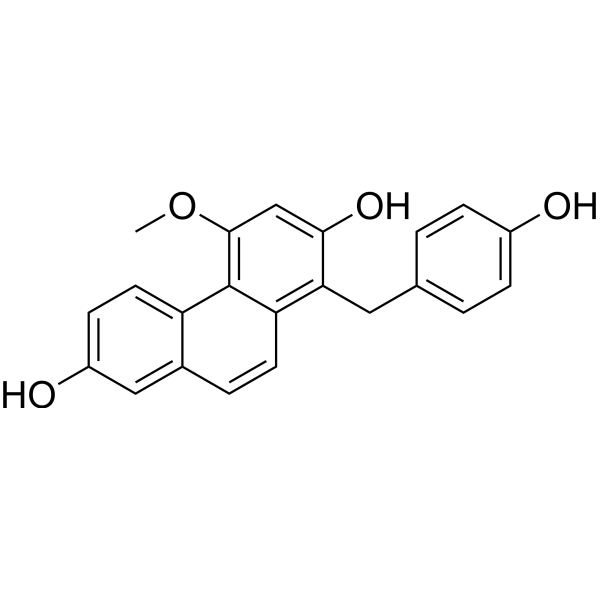
BChE-IN-12 (compound 12) is a potent butyrylcholinesterase (BChE) non-competitive inhibitor with an IC50 value of 2.3 μM. BChE-IN-12 can be isolated from Bletilla striata. BChE-IN-12 can be used for the research of Alzheimer's disease (AD) .
|
-
-
- HY-N10486
-
|
|
Cholinesterase (ChE)
|
Neurological Disease
|
|
BChE-IN-10 (compound 6) is a potent butyrylcholinesterase (BChE) mixed-type inhibitor with an IC50 value of 6.4 μM. BChE-IN-10 can be isolated from Bletilla striata. BChE-IN-10 can be used for the research of Alzheimer's disease (AD) .
|
-
-
- HY-149484
-
|
|
Cholinesterase (ChE)
|
Neurological Disease
|
|
AChE/BChE-IN-15 (Compound 6d) is an AChE/BChE inhibitor, with IC50s of 20 nM and 220 nM respectively. AChE/BChE-IN-15 binds to both catalytic anionic site (CAS) and peripheral anionic site (PAS) in the active sites of AChE and BChE. AChE/BChE-IN-15 can be used for research of Alzheimer’s disease .
|
-
-
- HY-144753
-
|
|
Cholinesterase (ChE)
|
Neurological Disease
|
|
AChE/BChE-IN-2 (Compound 13b) is a potent inhibitor of AChE/BChE (AChE IC50 = 0.96 ± 0.14 µM, BChE IC50 = 1.23 ± 0.23 µM). AChE/BChE-IN-2 has the potential for the research of AD diseases .
|
-
-
- HY-161150
-
-
-
- HY-159898
-
-
-
- HY-179122
-
|
|
Cholinesterase (ChE)
|
Neurological Disease
|
|
BChE-IN-45 (compound 4p) is a competitive (cholinesterase) dual acting inhibitor (Ki = 11.13 μM). BChE-IN-45 has an IC50 of 13.8 μM for BChE and 35.63 μM for AChE. BChE-IN-45 can be used for research on Alzheimer's disease .
|
-
-
- HY-174464
-
|
|
Cholinesterase (ChE)
|
Neurological Disease
|
|
AChE/BChE-IN-28 (Compound 5q) is a BChE inhibitor with an IC50 of 13.49 μM. AChE/BChE-IN-28 also exerts moderate inhibitory effect on AChE, with an IC50 of 35.23 μM. AChE/BChE-IN-28 can be used in the research of Alzheimer's disease .
|
-
-
- HY-144689
-
|
|
Cholinesterase (ChE)
|
Neurological Disease
|
|
BChE-IN-3 (compound 45a) is a potent, selective, time-dependent and pseudoirreversible BChE inhibitor, with an IC50 of 56.9 nM. BChE-IN-3 also shows marginal and reversible (not time-dependent) inhibition of AChE .
|
-
-
- HY-146668
-
|
|
Cholinesterase (ChE)
|
Neurological Disease
|
|
AChE/BChE-IN-8 (Compound 5a) is an uncompetitive AChE and mixed BChE inhibitor with Ki values of 0.788 μM and 2.364 μM against Electrophorus electricus AChE (EeAChE) and equine BChE (eqBChE), respectively. AChE/BChE-IN-8 can cross the BBB and has low cytotoxicity .
|
-
-
- HY-151368
-
|
|
Cholinesterase (ChE)
|
Neurological Disease
|
|
AChE/BChE-IN-10 (Compound 7b) is a potent dual AChE and BChE inhibitor with IC50 values of 0.176, and 0.47 μM, respectively. AChE/BChE-IN-10 shows good blood brain barrier permeability. AChE/BChE-IN-10 can inhibit Aβ-aggregation and be used in Alzheimer’s disease (AD) research .
|
-
-
- HY-152232
-
|
|
Cholinesterase (ChE)
|
Cancer
|
|
BChE-IN-15 (Compound 6) is a pseudo-irreversible and covalent BChE inhibitor with an IC50 of 1.76 nM against hBChE .
|
-
-
- HY-161156
-
|
|
Cholinesterase (ChE)
|
Neurological Disease
Cancer
|
|
BChE-IN-26 (Compound 7b) is a selective AChE and BChE inhibitor with Ki value of 35 μM and 1.6 μM. BChE-IN-26 has cytotoxicity to human neuroblastoma (SH-SY5Y) cell line. BChE-IN-26 can be used for the research of Alzheimer’s disease .
|
-
-
- HY-159880
-
|
|
Cholinesterase (ChE)
|
Neurological Disease
|
|
AChE/BChE-IN-24 (compound 5k) is a neuroprotective agent through cholinesterase inhibition. AChE/BChE-IN-24 inhibits AChE and BChE with IC50 values of 16.38 μM and 10.44 μM, respectively .
|
-
-
- HY-147880
-
-
-
- HY-170389
-
|
|
Cholinesterase (ChE)
|
Neurological Disease
|
|
BChE-IN-39 (Compound 7c) is a selective inhibitor for butyrylcholinesterase (BChE) with an IC50 of 0.08 μM (IC50=3.98 μM for AChE). BChE-IN-39 downregulates the GSK-3β expression, inhibits the hyperphosphorylation of tau protein .
|
-
- HY-149243
-
|
|
Cholinesterase (ChE)
|
Neurological Disease
|
|
BChE-IN-16 (compound 87) is a highly potent BChE inhibitor with an IC50 of 3.8 nM for hBChE. BChE-IN-16 has low cytotoxicity, potential CNS permeability, unique adaptability and can be used in Alzheimer's disease (AD) research.
|
-
- HY-146663
-
|
|
Cholinesterase (ChE)
|
Neurological Disease
|
|
AChE/BChE-IN-3 (BMC-1) is a dual AChE and BChE inhibitor with IC50 values of 6.08 μM and 0.383 μM against electric eel AChE (elAChE) and equine serum BChE (eqBChE), respectively .
|
-
- HY-146663A
-
|
|
Cholinesterase (ChE)
|
Neurological Disease
|
|
AChE/BChE-IN-3 (BMC-1) hydrochloride is a dual AChE and BChE inhibitor with IC50 values of 6.08 μM and 0.383 μM against electric eel AChE (elAChE) and equine serum BChE (eqBChE), respectively .
|
-
- HY-147859
-
|
|
Amyloid-β
|
Neurological Disease
|
|
BChE-IN-8 (compound 20) is an orally active, potent and BBB-penetrated BChE (butyrylcholinesterase) inhibitor, with IC50 values of 0.15 nM (eqBChE, equine serum BChE) and 45.2 nM (hBChE), respectively. High stability of BChE-IN-8 contributes to significantly improved blood concentration and tissue exposure. BChE-IN-8 can exert neuro-protecting and cognition improving properties through multiple modulations, including cholinergic system, Aβ aggregation, neuropeptide levels. BChE-IN-8 can be used for Alzheimer's disease (AD) research .
|
-
- HY-152114
-
|
|
Monoamine Oxidase
Cholinesterase (ChE)
|
Neurological Disease
|
|
AChE/BChE/MAO-B-IN-4, an indan-1-one derivative, is a potent MAO-B inhibitor with an IC50 of 0.0393 μM for human MAO-B. AChE/BChE/MAO-B-IN-4 is a potent AChE and BChE enzyme inhibitor, with IC50s of 0.0458 μM and 0.075 μM for human AChE and BChE enzyme, respectively. AChE/BChE/MAO-B-IN-4 shows significant antioxidant activity and prevent β-amyloid plaque aggregation. AChE/BChE/MAO-B-IN-4 has the potential for Alzheimer's disease (AD) research .
|
-
- HY-175658
-
|
|
Cholinesterase (ChE)
Amyloid-β
Tau Protein
|
Neurological Disease
|
|
AChE/BChE-IN-29 is an AChE/BChE inhibitor. AChE/BChE-IN-29 exhibits balanced dual cholinesterase inhibitory activity with IC50 values of 2.1 μM for Electrophorus electricus AChE (eeAChE) and 6.3 μM for equine serum butyrylcholinesterase (eqBChE). AChE/BChE-IN-29 effectively inhibits amyloid-β (Aβ42) aggregation and tau protein aggregation in E. coli cell models. AChE/BChE-IN-29 can be used for the study of Alzheimer’s disease (AD) .
|
-
- HY-152113
-
|
|
Monoamine Oxidase
Cholinesterase (ChE)
|
Neurological Disease
|
|
AChE/BChE/MAO-B-IN-3, an indan-1-one derivative, is a potent MAO-B inhibitor with an IC50 of 0.0359 μM for human MAO-B. AChE/BChE/MAO-B-IN-3 is a potent AChE and BChE enzyme inhibitor, with IC50s of 0.0473 μM and 0.0782 μM for human AChE and BChE enzyme, respectively. AChE/BChE/MAO-B-IN-3 shows significant antioxidant activity and has the potential for Alzheimer's disease (AD) research .
|
-
- HY-159143
-
|
|
Cholinesterase (ChE)
Cytochrome P450
|
Neurological Disease
|
|
BChE-IN-33 (compound 4r), an arylaminonaphthol derivative, is a potent butyrylcholinesterase (BChE) inhibitor with an IC50 of 14.78 µM. BChE-IN-33 also inhibits CYP2C19, CYP2C9, CYP2D6. BChE-IN-33 shows potent antioxidant activity with IC50 values of 150.48 μM, 2.56 μM and 4.61 μM by DPPH, ABTS, Ferric-phenanthroline assay, respectively. BChE-IN-33 has the potential for Alzheimer research .
|
-
- HY-149418
-
|
|
HDAC
Cholinesterase (ChE)
Tau Protein
|
Neurological Disease
|
|
BChE/HDAC6-IN-2 (compound 29a) is a dual inhibitor of BChE and HDAC6 with IC50s of 1.8 nM and 71.0 nM, respectively. BChE/HDAC6-IN-2 has prominently neuroprotective effects and reactive oxygen species (ROS) scavenging activity. BChE/HDAC6-IN-2 is also an effective chelator of metal ion (Fe 2+ and Cu 2+). BChE/HDAC6-IN-2 inhibits phosphorylation of tau, and exhibits moderate immunomodulatory effect.
|
-
- HY-155708
-
|
|
Cholinesterase (ChE)
|
Neurological Disease
|
|
AChE/BChE-IN-13 (compound 5j) is a potent dual inhibitor of AChE and BChE with IC50s of 20.89 and 17.37 μM, respectively. AChE/BChE-IN-13 can be used in Alzheimer’s disease (AD) research .
|
-
- HY-146315
-
|
|
Cholinesterase (ChE)
Monoamine Oxidase
|
Neurological Disease
|
|
AChE/BChE-IN-6 (compound 22) is a potent dual AChE/BChE inhibitor with IC50 values of 0.809 µM, 2.248 µM and > 100 µM for hBChE, hAChE and hMAO-B, respectively. AChE/BChE-IN-6 penetrates the blood-brain barrier (BBB). AChE/BChE-IN-6 can be used for Alzheimer’s disease (AD) research .
|
-
- HY-174381
-
|
|
Cholinesterase (ChE)
Amyloid-β
Tau Protein
|
Neurological Disease
|
|
BChE-IN-41 is a highly selective Butyrylcholinesterase (BChE) inhibitor (IC50 =12 nM, Ki = 6.6 nM). BChE-IN-41 has high brain penetration with a brain-to-plasma ratio of 9.0. BChE-IN-41 has pro-cognitive effects on mice with AD-like symptoms induced by Scopolamine (HY-N0296) and Aβ1-42 .
|
-
- HY-151389
-
|
|
Cholinesterase (ChE)
|
Neurological Disease
|
|
BChE-IN-14 (compound 19c) is a selective butyrylcholinesterase (BChE) inhibitor with IC50s of 0.23 and 0.011 μM for eqBChE and hBChE, respectively. BChE-IN-14 shows good blood brain barrier permeation and primary cell safety. BChE-IN-14 is able to restore cognitive impairment in vivo, it can be used for the research of Alzheimer’s disease .
|
-
- HY-174399
-
|
|
Cholinesterase (ChE)
Reactive Oxygen Species (ROS)
|
Neurological Disease
|
|
AChE/BChE-IN-27 is a blood-brain barrier-permeable mixed inhibitor (Pe = 4.12) of AChE and BChE, with IC50 values of 3.72 μM and 9.65 μM, respectively. AChE/BChE-IN-27 has potent antioxidant activity with an IC50 value of 6.32 μM in the DPPH (HY-112053) assay and also exhibits potent in vitro antioxidant activity. AChE/BChE-IN-27 exhibits metal chelating properties. AChE/BChE-IN-27 has neuroprotective potential against oxidative stress. AChE/BChE-IN-27 significantly reduces intracellular reactive oxygen species (ROS). In in vivo experiments, AChE/BChE-IN-27 effectively restored AChE and BChE levels, improved cognition, and can be used for Alzheimer's disease (AD) .
|
-
- HY-174328
-
|
|
Cholinesterase (ChE)
|
Neurological Disease
|
|
BChE/AChE-IN-1 (Compound 4m) is a potent dual inhibitor of acetylcholinesterase (AChE) and butyrylcholinesterase (BChE) with IC50 values of 0.7 μM and 0.2 μM, respectively. BChE/AChE-IN-1 is promising for research of neurodegenerative diseases such as Alzheimer’s disease (AD) .
|
-
- HY-149211
-
|
|
Cholinesterase (ChE)
Beta-secretase
Amyloid-β
|
Neurological Disease
|
|
AChE/BChE-IN-12 (compound 10b), a 3,5-dimethoxy analogue, is a potent AChE, BChE, and β-secretase-1 (BACE-1) inhibitor, with IC50 values of 2.57, 3.26, and 10.65 μM, respectively. AChE/BChE-IN-12 crosses the blood-brain barrier via passive diffusion and inhibits the self-aggregation of amyloid-β monomers. AChE/BChE-IN-12 can be used for Alzheimer’s disease (AD) research .
|
-
- HY-176432
-
|
|
Cholinesterase (ChE)
|
Neurological Disease
|
|
BChE-IN-40 (compound D40) is a potent butyrylcholinesterase inhibitor with an IC50 of 0.59 μM. BChE-IN-40 exhibits strong anti-inflammatory effects with an IC50 of 4.55 μM for nitric oxide suppression. BChE-IN-40 demonstrates excellent blood-brain barrier permeability .
|
-
- HY-172460
-
|
|
Cholinesterase (ChE)
Monoamine Oxidase
|
Neurological Disease
|
|
AChE/BChE/MAO-B-IN-5 is a multitarget inhibitor of cholinesterases (AChE and BChE) and monoamine oxidase MAO-B with blood–brain barrier permeability. It exhibits IC50 values of 0.24 µM, 6.29 µM, and 0.11 µM against AChE, BChE, and MAO-B, respectively. AChE/BChE/MAO-B-IN-5 shows promise for research in the field of neurodegenerative diseases such as Alzheimer's disease .
|
-
- HY-152112
-
|
|
Monoamine Oxidase
Cholinesterase (ChE)
|
Neurological Disease
|
|
AChE/BChE/MAO-B-IN-2 is a potent AChE, BChE, and MAO-B enzymes inhibitor with IC50 values of 48.2 nM, 83.9 nM, and 31.2 nM, respectively. AChE/BChE/MAO-B-IN-2 has significant antioxidant activity, and can be used for Parkinson’s disease research .
|
-
- HY-151386
-
|
|
Cholinesterase (ChE)
|
Neurological Disease
|
|
BChE-IN-13 (Compound 17c) is an orally active, potent and selective Butyrylcholinesterase (BChE) inhibitor with IC50s of 0.22 and 0.016 μM for eqBChE and hBChE, respectively. BChE-IN-13 can improve memory and cognitive impairments, and be used in Alzheimer’s disease (AD) research .
|
-
- HY-158696
-
|
|
Cholinesterase (ChE)
Monoamine Oxidase
|
Neurological Disease
|
|
BChE/MAO-B-IN-1 (compound 7) is a dual BChE/MAO-B inhibitor with IC50 values of 375 nM and 20 nM, respectively. BChE/MAO-B-IN-1 protects against oxidative damage induced by H2O2 and 6-OHDA in SH-SY5Y cells. BChE/MAO-B-IN-1 can penetrate the central nervous system in a cell model that mimics the blood-brain barrier. BChE/MAO-B-IN-1 can be used in the study of neurological diseases such as Alzheimer's disease (AD) .
|
-
- HY-162339
-
|
|
Cholinesterase (ChE)
|
Neurological Disease
|
|
BChE-IN-30 (compound (R)-37a) is a BChE inhibitor (IC50: 5 nM) with anti-inflammatory activity and low toxicity. BChE-IN-30 can improve cognitive deficits induced by scopolamine and Aβ1-42 peptide and can be used in the study of late-stage AD .
|
-
- HY-131971
-
|
|
Cholinesterase (ChE)
|
Neurological Disease
|
|
AChE/BChE-IN-1 is a potent and brain-penetrant dual inhibitor of Acetylcholinesterase and Butyrylcholinesterase, with IC50s of 1.06 and 7.3 nM for hAChE and hBChE, respectively. AChE/BChE-IN-1 also has antioxidant activity. AChE/BChE-IN-1 can be used for the research of Alzheimer’s disease .
|
-
- HY-N8764
-
-
- HY-146399
-
|
|
Cholinesterase (ChE)
ROS Kinase
|
Neurological Disease
|
|
AChE/BChE-IN-9 (Compound 7a) is a potent, orally active AChE and BChE inhibitor with IC50 values of 5.74 μM and 14.05 μM against hAChE and eqBChE, respectively. AChE/BChE-IN-9 is also an efficacious antioxidant with an IC50 of 57.35 μM. AChE/BChE-IN-9 is able to chelate iron and modulates aggregation of amyloid β1-42. AChE-IN-16 can cross the BBB .
|
-
- HY-163465
-
|
|
Fluorescent Dye
|
Neurological Disease
|
|
DTNP is a BchE -activated near infrared (NIR) probe with blood-brain permeability. DTNP can be activated by BchE and inhibit its enzyme activity. DTNP can be used in Alzheimer's disease (AD) research .
|
-
- HY-156754
-
-
- HY-146312
-
|
|
Cholinesterase (ChE)
Monoamine Oxidase
|
Neurological Disease
|
|
AChE/BChE/MAO-B-IN-1 is a reversible and non-time-dependent AChE, BChE and MAO-B inhibitor with IC50 values of 7.31, 0.56 and 26.1 μM for hAChE, hBChE and hMAO-B, respectively. AChE/BChE/MAO-B-IN-1 can cross the BBB and shows neuroprotective effects without cytotoxicity .
|
-
- HY-149417
-
|
|
HDAC
Cholinesterase (ChE)
|
Neurological Disease
|
|
BChE/HDAC6-IN-1 is a potent and selective dual BChE/HDAC6 inhibitor with IC50 values of 4 and 8.9 nM, respectively. BChE/HDAC6-IN-1 ameliorates the cognitive impairment in an Aβ1–42-induced mouse model and has the potental for AD research .
|
-
- HY-175524
-
|
|
Monoamine Oxidase
Cholinesterase (ChE)
|
Neurological Disease
|
|
BChE/MAO-B-IN-2 is a dual inhibitor of BChE (IC50 = 0.05 μM, Ki = 0.01 μM) and MAO-B (IC50 = 0.45 μM, Ki = 0.08 μM) with good blood-brain barrier permeability. BChE/MAO-B-IN-2 exhibits antioxidant activity, including DPPH radical scavenging, CUPRAC copper ion reduction, and superoxide anion scavenging. BChE/MAO-B-IN-2 can be used for the study of Alzheimer's disease (AD) .
|
-
- HY-161453
-
|
|
Cholinesterase (ChE)
|
Neurological Disease
|
|
ChE-IN-32 (compound 5d) is a potent and selective hBChE inhibitor with an IC50 value of 0.109 µM. BChE-IN-32 shows cytotoxicity. BChE-IN-32 has the potential for the research of Alzheimer's disease .
|
-
- HY-147658
-
|
|
Cholinesterase (ChE)
Beta-secretase
ROS Kinase
|
Neurological Disease
|
|
AChE/BChE/BACE-1-IN-1 (Compound 4k) is an orally active inhibitor of AChE, BChE, and BACE-1 with IC50 values of 0.058, 0.082 and 0.115 μM against hAChE, hBChE and hBACE-1, respectively. AChE/BChE/BACE-1-IN-1 shows considerable PAS-AChE binding capability, excellent brain permeation, potential disassembly of Aβ aggregates, and neuroprotective activity against Aβ-induced stress. AChE/BChE/BACE-1-IN-1 has remarkable antioxidant potential .
|
-
- HY-147659
-
|
|
Cholinesterase (ChE)
Beta-secretase
ROS Kinase
|
Neurological Disease
|
|
AChE/BChE/BACE-1-IN-2 (Compound 4o) is an orally active inhibitor of AChE, BChE, and BACE-1 with IC50 values of 0.069, 0.127 and 0.097 μM against hAChE, hBChE and hBACE-1, respectively. AChE/BChE/BACE-1-IN-2 shows considerable PAS-AChE binding capability, excellent brain permeation, potential disassembly of Aβ aggregates, and neuroprotective activity against Aβ-induced stress. AChE/BChE/BACE-1-IN-2 has remarkable antioxidant potential .
|
-
- HY-180146
-
|
|
Cholinesterase (ChE)
|
Neurological Disease
|
|
BChE-IN-48 (Compound 12a) is a BChE inhibitor that can cross the blood-brain barrier with IC50 values for eqBChE and huBChE of 1.3 and 0.95 μM respectively. BChE-IN-48 exhibits an IC50 value for eeAChE of 8.6 μM. BChE-IN-48 exhibits significant neuroprotective activity in cell damage and significantly improves cognitive impairment in mouse models. BChE-IN-48 can be used for research on Alzheimer's disease .
|
-
- HY-179726
-
|
|
Cholinesterase (ChE)
|
Neurological Disease
|
|
BChE-IN-47 (Compound 13) is a selective butyrylcholinesterase (BChE) inhibitor with an IC50 of 0.045 μM. BChE-IN-47 enhances the level of acetylcholine in the brain by selectively inhibiting BChE, thereby improving cognitive function. BChE-IN-47 can be used for the research of Alzheimer’s disease .
|
-
- HY-181248
-
-
- HY-146664
-
|
|
Cholinesterase (ChE)
|
Neurological Disease
|
|
AChE/BChE-IN-4 (BMC-3) is a dual AChE and BChE inhibitor with IC50 values of 792 nM and 2.2 nM against human AChE (hAChE) and human BChE (hBChE), respectively. AChE/BChE-IN-4 can cross the BBB .
|
-
- HY-179711
-
|
|
Cholinesterase (ChE)
Amyloid-β
|
Neurological Disease
|
|
AChE/BChE-IN-32 (Compound 4a) is an AChE and BChE inhibitor, with Ki values of 2.48 and 0.696 μM respectively. AChE/BChE-IN-32 inhibits Aβ aggregation and exhibits a strong ABTS•+ scavenging ability (TEAC = 2.40). AChE/BChE-IN-32 shows significant neuroprotective activity in glutamate and hydrogen peroxide-induced oxidative stress models. AChE/BChE-IN-32 can be used for the study of Alzheimer's disease .
|
-
- HY-183760
-
|
|
Cholinesterase (ChE)
HSP
GSK-3
Amyloid-β
|
Neurological Disease
Inflammation/Immunology
|
|
AChE/BChE-IN-37 is a blood-brain barrier-permeable AChE/BChE inhibitor, with an IC50 of 73.65 μM against electric eel-derived AChE and an IC50 of 82.93 μM against horse-derived BChE. AChE/BChE-IN-37 exhibits chelating activity towards Cu 2+, Ca 2+, Mg 2+, Fe 2+ and Zn 2+. AChE/BChE-IN-37 interacts with HSP90AA1 and GSK-3β. AChE/BChE-IN-37 inhibits the self-induced aggregation of Aβ1-42. AChE/BChE-IN-37 suppresses LPS-induced NO production in cells. AChE/BChE-IN-37 can be used in research related to Alzheimer's disease and inflammatory diseases .
|
-
- HY-182290
-
|
|
Cholinesterase (ChE)
|
Neurological Disease
|
|
AChE/BChE-IN-36 is a dual acetylcholinesterase (AChE) and butyrylcholinesterase (BChE) inhibitor with blood-brain barrier permeability. AChE/BChE-IN-36 mediates blood-brain barrier transport through specific interactions with choline transporters. AChE/BChE-IN-36 can be used for the research of Alzheimer's disease .
|
-
- HY-181167
-
|
|
Cholinesterase (ChE)
SOD
|
Neurological Disease
|
|
AChE/BChE-IN-34 is an acetylcholinesterase (AChE) and butyrylcholinesterase (BChE) inhibitor with IC50s of 5.97 μM and 4.57 μM, respectively. AChE/BChE-IN-34 functions as an antioxidant, oxidative stress inhibitor, reduces MDA levels, and elevates SOD and catalase in hippocampal tissue. AChE/BChE-IN-34 acts as a cognitive function enhancer, improves learning and memory in a Scopolamine (HY-N0296)-induced animal model. AChE/BChE-IN-34 is non-toxic in neuroblastoma cells across a specified concentration range. AChE/BChE-IN-34 can be used for the research of Alzheimer's disease .
|
-
- HY-180819
-
|
|
Cholinesterase (ChE)
|
Neurological Disease
|
|
AChE/BChE-IN-33 (Compound 3N) is a dual-target inhibitor of AChE and BChE, with IC50 values of 12.81 and 44.54 nM respectively. AChE/BChE-IN-33 exhibits selective cytotoxicity against SH-SY5Y cells. AChE/BChE-IN-33 can be used for the study of Alzheimer's disease and neuroblastoma .
|
-
- HY-182254
-
|
|
Cholinesterase (ChE)
|
Neurological Disease
|
|
AChE/BChE-IN-35, Tacrine (HY-111338) derivative, is a brain-penetrant dual AChE/BChE inhibitor with an Electric Eel AChE IC50 of 123.66 nM, human AChE IC50 of 122.34 nM, and equine BChE IC50 of 488.00 nM. AChE/BChE-IN-35 undergoes LAT1-mediated active transport across cell membranes. AChE/BChE-IN-35 exhibits enhanced brain exposure with slower brain tissue elimination. AChE/BChE-IN-35 can be used for the research of alzheimer's disease .
|
-
- HY-184159
-
|
|
Cholinesterase (ChE)
Monoamine Oxidase
|
Neurological Disease
Cancer
|
|
AChE/BChE/MAO-A-IN-2 is an AChE, BChE, and MAO-A inhibitor with IC50 values of 104.28 nM, 23.04 nM, and 215.50 nM, respectively. AChE/BChE/MAO-A-IN-2 exhibits selective antiproliferative activity against cancer cells and low toxicity toward normal cells. AChE/BChE/MAO-A-IN-2 can be used for the research of alzheimer's disease, neuroblastoma .
|
-
- HY-183798
-
|
|
Cholinesterase (ChE)
Monoamine Oxidase
Interleukin Related
|
Neurological Disease
|
|
BChE/MAO-B-IN-6 is a dual inhibitor with inhibitory activity against both butyrylcholinesterase (BChE) and monoamine oxidase B (MAO B), with an IC50 of 557 nM against BChE and an IC50 of 142 nM against MAO B. BChE/MAO-B-IN-6 reduces IL-6 release from stimulated microglia and antagonizes 6-hydroxydopamine (HY-B1081) toxicity in neuroblastoma cells. BChE/MAO-B-IN-6 can be used in the research of neurodegenerative diseases .
|
-
- HY-180797
-
-
- HY-180783
-
-
- HY-169205
-
|
|
Cholinesterase (ChE)
|
Cancer
|
|
AChE/BChE-IN-22 (compund 7) competitively inhibits both AChE and BChE enzymes, with values of 28.18±2.51 and 41.74±3.18μM, respectively .
|
-
- HY-168731
-
|
|
Cholinesterase (ChE)
|
Neurological Disease
|
|
AChE/BChE-IN-25 (Compound 6e) is the orally active inhibitor for hAChE and eqBChE with IC50 of 7.9 nM and 0.79 nM. AChE/BChE-IN-25 exhibits antioxidant activity, that scavenges free radical with IC50 of 22.91 μM. AChE/BChE-IN-25 exhibits neuroprotective effects by reducing mitochondrial and cellular oxidative stress in the Drosophila Alzheimer's disease model. AChE/BChE-IN-25 ameliorates Scopolamine (HY-N0296)-induced spatial and cognitive memory impairment in mouse model .
|
-
- HY-173152
-
|
|
Cholinesterase (ChE)
|
Neurological Disease
Inflammation/Immunology
|
|
AChE/BChE-IN-26 (Compound 20aa) is a cholinesterase inhibitor with IC50 values of 0.75 μM and 4.11 μM against eeAChE and eqBChE, respectively. AChE/BChE-IN-26 has antioxidant activity and can be used in the research of diseases such as Alzheimer's disease .
|
-
- HY-W324391
-
|
Coumarin 478
|
Cholinesterase (ChE)
|
Neurological Disease
|
|
Coumarin 106 (Coumarin 478) is a dipolar laser dye. Coumarin 106 is an inhibitor of AChE and BChE. Coumarin 106 displays mixed-type AChE inhibition with a pIC50=4.97 and Ki=2.36 μM. Coumarin 106 inhibits BChE with slightly lower potency (pIC50=4.56) .
|
-
- HY-157384
-
|
|
Cholinesterase (ChE)
|
Neurological Disease
|
|
BChE-IN-22 (compound 5A) is a selective eqBChE inhibitor (IC50: 0.53 μM), has anti-inflammatory and neuroprotective activities. BChE-IN-22 can inhibit cell damage caused by Aβ25-35 (HY-P0128) and improve cognitive dysfunction caused by Scopolamine (HY-N0296) .
|
-
- HY-181445
-
|
|
Cholinesterase (ChE)
|
Neurological Disease
|
|
NSC 620023 TFA is a highly selective butyrylcholinesterase (BChE) inhibitor with an IC50 of 32 nM. NSC 620023 TFA acts via π-stacking interactions with dual benzimidazole moieties and hydrophobic interactions within the BChE binding site. NSC 620023 TFA can be used for the research of alzheimer’s disease .
|
-
- HY-B2244
-
-
- HY-168031
-
-
- HY-135006A
-
|
|
Cholinesterase (ChE)
|
Neurological Disease
|
|
Octahydroaminoacridine, a Tacrine analogue, is an acetylcholinesterse (AChE) and butyrylcholinesterase (BChE) inhibitor. Octahydroaminoacridine can be used for Alzheimer's disease (AD) research .
|
-
- HY-W185336
-
-
- HY-W022759
-
|
|
Cholinesterase (ChE)
|
Others
|
|
9-Acridinecarboxylic acid is a precursor of a cholinesterase inhibitor, and its derivatives have nanomolar inhibitory potency against AChE and BChE .
|
-
- HY-B1542
-
|
|
Cholinesterase (ChE)
|
Neurological Disease
|
|
Benactyzine is a competitive BChE inhibitor with a Ki of 0.01 mM. Benactyzine is an anticholinergic drug. Benactyzine has the potential for organophosphate poisoning research .
|
-
- HY-B1542A
-
|
|
Cholinesterase (ChE)
|
Neurological Disease
|
|
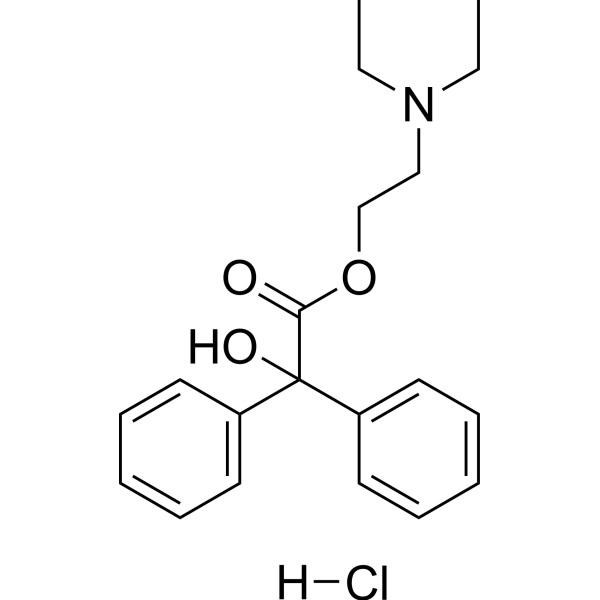
Benactyzine hydrochloride is a competitive BChE inhibitor with a Ki of 0.01 mM. Benactyzine hydrochloride is an anticholinergic drug. Benactyzine hydrochloride has the potential for organophosphate poisoning research .
|
-
- HY-132907
-
-
- HY-N19871
-
|
|
Cholinesterase (ChE)
|
Neurological Disease
|
|
Monogynol A is an AChE/BChE inhibitor found in the aerial parts of Salvia trichoclada Bentham. Monogynol A can be used for the research of alzheimer’s disease .
|
-
- HY-135006
-
|
|
Cholinesterase (ChE)
|
Neurological Disease
|
|
Octahydroaminoacridine succinate, a Tacrine analogue, is an acetylcholinesterse (AChE) and butyrylcholinesterase (BChE) inhibitor. Octahydroaminoacridine succinate can be used for Alzheimer's disease (AD) research .
|
-
- HY-122140
-
|
|
Cholinesterase (ChE)
|
Neurological Disease
|
|
ACG548B (compound 24) is a potent inhibitor of acetyl- and butyrylcholinesterase (AChE and BChE) with IC50s of 1.78 and 0.496 μM, respectively. ACG548B has higher AChE affinity and selectivity over BChE and ChoK (choline kinase). ACG548B can be uesd for the study of myasthenia gravis and neuromuscular blockade .
|
-
- HY-149300
-
|
|
Cholinesterase (ChE)
|
Neurological Disease
|
|
SB-1436 is an Cholinesterase (ChE) inhibitor, inhibits acetylcholinesterase (AChE), butyrylcholinesterase (BChE) and recombinant human acetylcholinesterase (rHuAChE) with IC50s of 0.176, 0.37 and 0.08 μM, respectively. SB-1436 inhibits AChE and BChE in a non-competitive manner with Kis of 0.046 and 0.115 μM, respectively. SB-1436 significantly stops the self-aggregation of Aβ, and can be used for neurological disease research .
|
-
- HY-118729
-
-
- HY-185347
-
-
- HY-175655
-
|
|
p38 MAPK
Cholinesterase (ChE)
Interleukin Related
|
Neurological Disease
Inflammation/Immunology
|
|
BChE/p38-α MAPK-IN-1 is a selective dual inhibitor of hBChE (IC50 = 772 nM) and p38α MAPK (IC50 = 191 nM). BChE/p38-α MAPK-IN-1 reduces the production of pro-inflammatory cytokines (IL-1β, IL-6, IL-8, TNF-α) in cells. BChE/p38-α MAPK-IN-1 improves Scopolamine (HY-N0296)-induced cognitive impairment, as well as alleviates LPS (HY-D1056)-induced spatial learning impairment and exerts anti-neuroinflammatory effects in mice. BChE/p38-α MAPK-IN-1 can be used for the study of Alzheimer’s disease (AD) by targeting both cholinergic deficit and neuroinflammation .
|
-
- HY-181851
-
|
|
Cholinesterase (ChE)
|
Neurological Disease
|
|
AChE-IN-109 is a potent mixed-type cholinesterase inhibitor with significantly stronger inhibitory activity against AChE than BChE. AChE-IN-109 has IC50 values of 0.55 μM and 12.45 μM against AChE and BChE, respectively. AChE-IN-109 inhibits cholinesterases through a mixed-type mechanism, binds to both the catalytic active site (CAS) and peripheral anionic site (PAS) of AChE. AChE-IN-109 can be used for the study of Alzheimer’s disease (AD) .
|
-
- HY-157437
-
|
|
Cholinesterase (ChE)
Reactive Oxygen Species (ROS)
|
Neurological Disease
Inflammation/Immunology
|
|
AChE/BChE-IN-16 (compound C7) is a potent cholinesterase (ChE) inhibitor with IC50s of 30 nM and 48 nM for human acetylcholinesterase (hAChE) and human butyrylcholinesterase (hBChE), respectively. AChE/BChE-IN-16 exhibits a remarkable capacity to safeguard PC12 cells against H2O2-induced apoptosis and effectively suppresses the production of reactive oxygen species (ROS) .
|
-
- HY-N0285S
-
-
- HY-N2960
-
|
|
Cholinesterase (ChE)
|
Cardiovascular Disease
Cancer
|
|
Broussonin A is a potent BChE inhibitor, with an IC50 of 4.16 µM. Broussonin A is a diarylpropane natural product that can be isolated from the bark of Broussonetia papyrifera after solid fermentation .
|
-
- HY-N17425
-
|
|
Cholinesterase (ChE)
|
Neurological Disease
|
|
Lakoochin C is an inhibitor of acetylcholinesterase (AChE) (IC50 = 61.86 μM) and butyrylcholinesterase (BChE) (IC50 = 47.21 μM). Lakoochin C may be used in research related to Alzheimer's disease .
|
-
- HY-N17394
-
|
|
Cholinesterase (ChE)
|
Neurological Disease
|
|
Melineurine is a reversible mixed-type acetylcholinesterase inhibitor, with an IC50 of 95.3 μM against AChE and an IC50 of 28.0 μM against BChE. Melineurine is applicable to the research of Alzheimer's disease .
|
-
- HY-W130025
-
|
|
Cholinesterase (ChE)
|
Neurological Disease
|
|
p-Xylene bis(pyridinium bromide) (compound 21), a cationic charged quencher, is a week bisquaternary AChE and BChE inhibitor with IC50s of 1540 μM and 529 μM, respectively .
|
-
- HY-N10487
-
|
|
Cholinesterase (ChE)
|
Neurological Disease
|
|
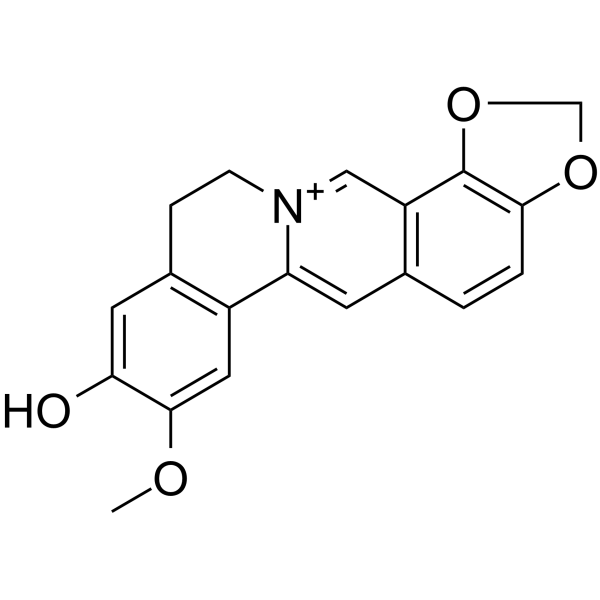
Bleformin A is a potent BChE inhibitor with an IC50 value of 5.2 μM. Bleformin A is a nature product that could be isolated from Bletilla striata. Bleformin A can be used for research of Alzheimer's disease (AD) .
|
-
- HY-B2244R
-
|
|
Reference Standards
Cholinesterase (ChE)
|
Neurological Disease
|
|
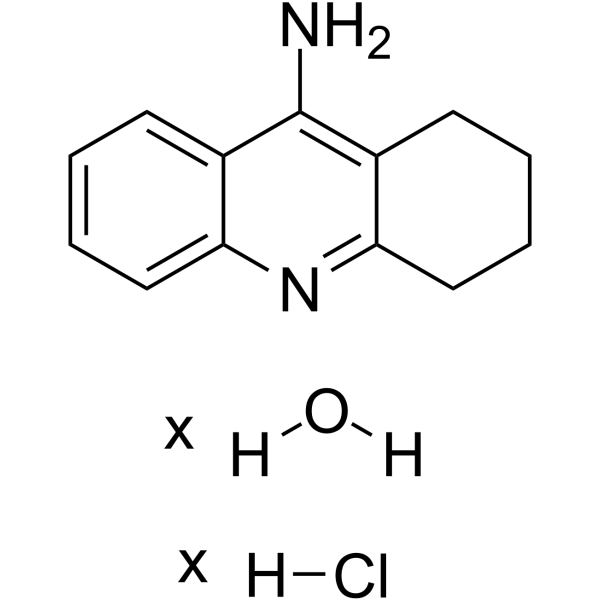
Tacrine (hydrochloride) (hydrate) (Standard) is the analytical standard of Tacrine (hydrochloride) (hydrate). This product is intended for research and analytical applications. Tacrine hydrochloride (hydrate) is an inhibitor of both acetyl (AChE) and butyryl-cholinestrase (BChE) with IC50s of 31 nM and 25.6 nM, respectively.
|
-
- HY-N12075
-
|
|
Cholinesterase (ChE)
|
Neurological Disease
|
|
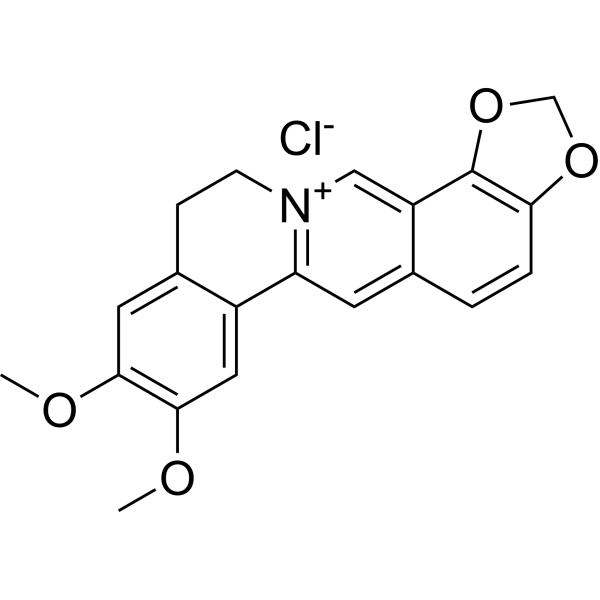
Dehydrodiscretamine chloride is a dual inhibitor of AChE and BChE with IC50s of 17.8 and 118.8 μM, respectively. Dehydrodiscretamine chloride has antioxidant activity. Dehydrodiscretamine chloride can be used in study Alzheimer’s disease .
|
-
- HY-127087
-
|
Cambogin
|
Cholinesterase (ChE)
Parasite
|
Infection
|
|
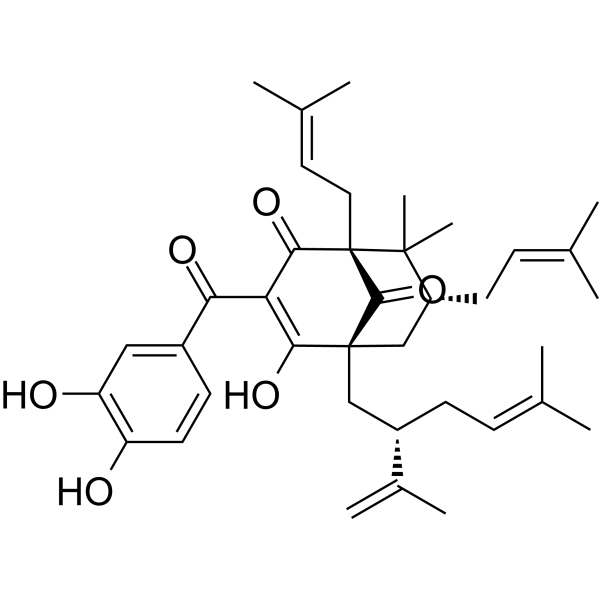
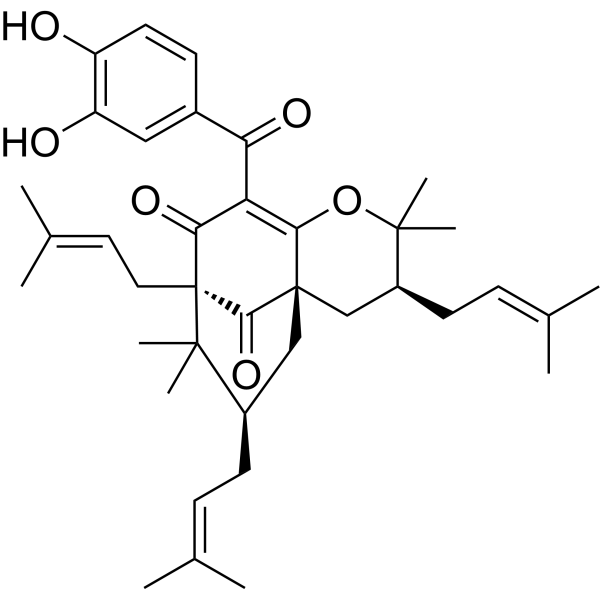
Isogarcinol (Cambogin) is a potent AChE and BChE inhibitor, with IC50 values of 1.13 and 8.30 μM, respectively. Isogarcinol also shows leishmanicidal activity, with an IC50 of 0.33 μM against L. donovani .
|
-
- HY-108048
-
|
Deoxypeganine; Deoxyvasicine
|
Cholinesterase (ChE)
Monoamine Oxidase
|
Neurological Disease
|
|
Desoxypeganine (Deoxypeganine), an alkaloid, is a potent and orally active cholinesterase (BChE and AChE) and selective MAO-A inhibitor, with IC50 values of 2, 17, and 2 μM, respectively. Desoxypeganine can be used for alcohol abuse research .
|
-
- HY-108048A
-
|
Deoxypeganine hydrochloride; Deoxyvasicine hydrochloride
|
Cholinesterase (ChE)
Monoamine Oxidase
|
Neurological Disease
|
|
Desoxypeganine (Deoxypeganine) hydrochloride, an alkaloid, is a potent and orally active cholinesterase (BChE and AChE) and selective MAO-A inhibitor, with IC50 values of 2, 17, and 2 μM, respectively. Desoxypeganine hydrochloride can be used for alcohol abuse research .
|
-
- HY-B1488
-
|
|
Cholinesterase (ChE)
iGluR
|
Neurological Disease
|
|
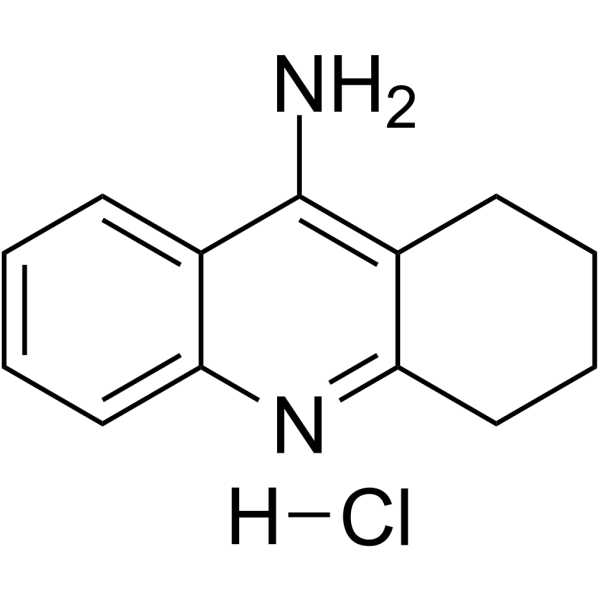
Tacrine hydrochloride is a potent brain-penetrant inhibitor of both AChE and BChE, with IC50s of 31 nM and 25.6 nM, respectively. Tacrine hydrochloride is also a NMDAR inhibitor, with an IC50 of 26 μM. Tacrine hydrochloride can be used for the research of Alzheimer’s disease .
|
-
- HY-N0285
-
-
- HY-149993
-
-
- HY-B0802AR
-
|
|
Drug Metabolite
Reference Standards
Adrenergic Receptor
Antibiotic
|
Endocrinology
|
|
Benactyzine hydrochloride (Standard) is the analytical standard of Benactyzine hydrochloride. This product is intended for research and analytical applications. Benactyzine hydrochloride is a competitive BChE inhibitor with a Ki of 0.01 mM. Benactyzine hydrochloride is an anticholinergic drug. Benactyzine hydrochloride has the potential for organophosphate poisoning research .
|
-
- HY-B1542AR
-
|
|
Reference Standards
Cholinesterase (ChE)
|
Neurological Disease
|
|
Benactyzine hydrochloride (Standard) is the analytical standard of Benactyzine hydrochloride. This product is intended for research and analytical applications. Benactyzine hydrochloride is a competitive BChE inhibitor with a Ki of 0.01 mM. Benactyzine hydrochloride is an anticholinergic drug. Benactyzine hydrochloride has the potential for organophosphate poisoning research .
|
-
- HY-179121
-
|
|
Cholinesterase (ChE)
|
Neurological Disease
|
|
AChE-IN-97 (compound 7e) is a cholinesterase inhibitor. AChE-IN-97 exhibits AChE and BChE inhibitory activity through molecular docking. AChE-IN-97 can be used for research on neurological conditions .
|
-
- HY-B1863
-
|
|
Environmental Pollutants
Cholinesterase (ChE)
Fungal
|
Infection
|
|
Iprobenfos is an organophosphorus fungicide and is widely used to control the rice blast fungus. Iprobenfos can phosphorylate the -OH group on the serine residue in the active (esteratic) site of ChEs and so inhibit both AChE and BChE activity .
|
-
- HY-N10490
-
|
|
Cholinesterase (ChE)
|
Neurological Disease
|
|
Blestrin D is a potent butyrylcholinesterase (BChE) mixed-type inhibitor with an IC50 value of 8.1 μM. Blestrin D can be isolated from Bletilla striata. Blestrin D can be used for the research of Alzheimer's disease (AD) .
|
-
- HY-121191
-
|
N1,N8-Bisnorcymserine; (-)-Bisnorcymserine
|
Cholinesterase (ChE)
|
Neurological Disease
|
|
Bisnorcymserine ((-)-Bisnorcymserine) is an inhibitor for butyrylcholinesterase (BChE) with an IC50 of 0.228 nM. Bisnorcymserine reduces the levels of amyloid-β peptide (Aβ), exhibits ameliorates the Alzheimer’s Disease in elderly rat models. Bisnorcymserine is blood-brain barrier penetrate .
|
-
- HY-162340
-
|
|
Cholinesterase (ChE)
|
Neurological Disease
|
|
Z32439948 is a butyrylcholinesterase (BChE) inhibitor (IC50: 1.4 μM, hBChE) and is a derivative of m-sulfamoylbenzamide. Z32439948 also exhibited neuroprotective effects against glutamate in SH-SY5Y cells .
|
-
- HY-161507
-
|
|
Carbonic Anhydrase
Cholinesterase (ChE)
|
Metabolic Disease
|
|
hCAI/II-IN-8 (Compound 8) is a hydrazide derivative based on 4-hydroxybenzaldehyde. hCAI/II-IN-8 primarily targets human carbonic anhydrase isomerase I (hCA I) and II (hCA II) for inhibition (IC50 = 21.35 ± 0.39 nM (hCA I); 7.12 ± 0.12 nM (hCA II)). hCAI/II-IN-8 inhibits AChE and BChE as well(IC50 = 46.27 ±0.75 nM (AChE); 43.38 ± 0.83 nM (BChE)). . .
|
-
- HY-155713
-
|
|
Cholinesterase (ChE)
|
Neurological Disease
|
|
AChE-IN-34 (compound 5l) is a potent and selective AChE inhibitor with an IC50 value of 3.98 µM with no significant inhibition against BChE. AChE-IN-34 inhibits AChE with a Ki of 0.044 μM in a mixed mode (Acetylthiocholine substrate; 0.1-1 mM) .
|
-
- HY-133776
-
|
3-Nitrophenyl ethyl(methyl)carbamate
|
Cholinesterase (ChE)
|
Neurological Disease
|
|
Rivastigmine carbamate impurity (3-Nitrophenyl ethyl(methyl)carbamate) is an impurity of Rivastigmine. Rivastigmine is an orally active and potent cholinesterase (ChE) inhibitor and inhibits butyrylcholinesterase (BChE) and acetylcholinesteras (AChE) with IC50s of 0.037 μM, 4.15 μM, respectively .
|
-
- HY-169162
-
|
|
Carbonic Anhydrase
Cholinesterase (ChE)
|
Neurological Disease
|
|
hBChE-IN-3 (compound 30) is a combination of carbonic anhydrase (CA) activator and cholinesterase (ChE) inhibitor with IC50 values of 7.4 and 1.9 nM for AchE and BchE, respectively. hBChE-IN-3 can be used in the study of neurodegeneration and psychiatric disorders .
|
-
- HY-P1123R
-
|
|
Reference Standards
ATP Citrate Lyase
Free Fatty Acid Receptor
|
Metabolic Disease
|
|
Tacrine (hydrochloride) (Standard) is the analytical standard of Tacrine (hydrochloride). This product is intended for research and analytical applications. Tacrine hydrochloride is a potent inhibitor of both AChE and BChE, with IC50s of 31 nM and 25.6 nM, respectively. Tacrine hydrochloride is also a NMDAR inhibitor, with an IC50 of 26 μM. Tacrine hydrochloride can be used for the research of Alzheimer’s disease .
|
-
- HY-B1488R
-
|
|
Reference Standards
Cholinesterase (ChE)
iGluR
|
Neurological Disease
|
|
Tacrine (hydrochloride) (Standard) is the analytical standard of Tacrine (hydrochloride). This product is intended for research and analytical applications. Tacrine hydrochloride is a potent inhibitor of both AChE and BChE, with IC50s of 31 nM and 25.6 nM, respectively. Tacrine hydrochloride is also a NMDAR inhibitor, with an IC50 of 26 μM. Tacrine hydrochloride can be used for the research of Alzheimer’s disease .
|
-
- HY-N12581
-
|
|
Cholinesterase (ChE)
|
Neurological Disease
|
|
Kuwanon U is a potent cholinesterase inhibitor with IC50s of 19.69, 10.11 µM and Kis of 6.48, 9.59 µM for acetylcholinesterase (AChE) and butyrylcholinesterase (BChE), respectively. Kuwanon U has the potential for the research of Alzheimer’s disease (AD) .
|
-
- HY-103373
-
|
|
Cholinesterase (ChE)
|
Neurological Disease
|
|
PE154 (Compound 13) is a potent fluorescent inhibitor of human acetylcholinesterase (AChE) and butyrylcholinesterase (BChE) (IC50s=280 pM and 16 nM, respectively) . PE154 can label β-amyloid plaques in histochemical analysis .
|
-
- HY-107922
-
|
Isothazine
|
Cholinesterase (ChE)
iGluR
mAChR
|
Neurological Disease
|
|
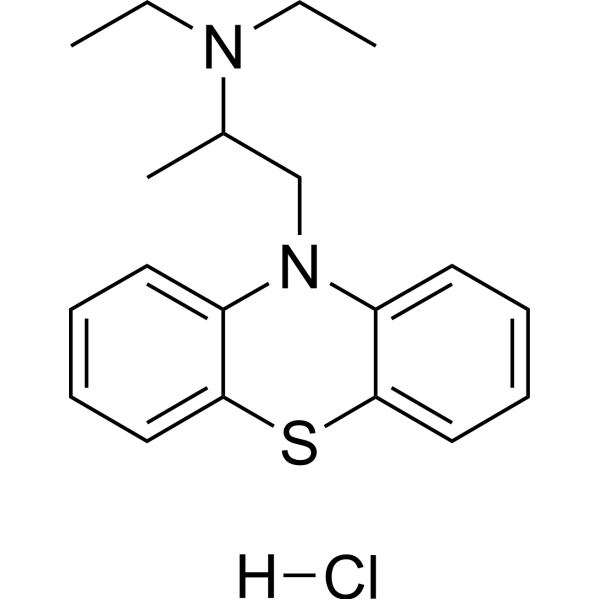
Ethopropazine (Isothazine) hydrochloride is a potent and selective BChE inhibitor, a poor AChE inhibitor and a non-selective mAChR and NMDA antagonist. Ethopropazine hydrochloride has anticholinergic, antihistamine, antiadrenergic actions and properties. Ethopropazine hydrochloride alleviates thermal hyperalgesia in a dose dependent manner. Ethopropazine hydrochloride can be used for the research of Parkinson’s disease .
|
-
- HY-169962
-
|
|
Carbonic Anhydrase
Cholinesterase (ChE)
|
Neurological Disease
Cancer
|
|
hCA I-IN-4 (Compound 14) is the inhibitor for carbonic anhydrase and cholinesterase, that inhibits hCA I, hCA II, AChE, and BChE with Ki of 29.94 nM, 17.72 nM, 21.21 nM, and 7.65 nMrespectively. hCA I-IN-4 exhibits cytotoxicity in BT-549 with IC50 of 16.59 μM .
|
-
- HY-N0285R
-
|
Ammidin (Standard)
|
Reference Standards
Cholinesterase (ChE)
TRP Channel
|
Neurological Disease
|
|
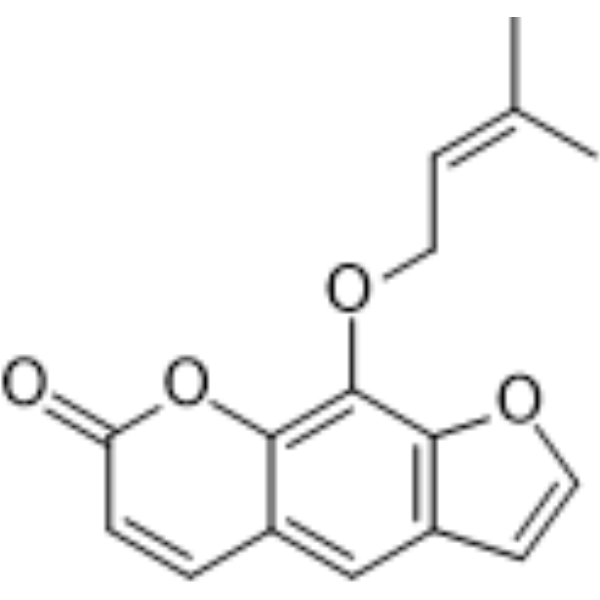
Imperatorin (Standard) is the analytical standard of Imperatorin. This product is intended for research and analytical applications. Imperatorin is an effective of NO synthesis inhibitor (IC50=9.2 μmol), which also is a BChE inhibitor (IC50=31.4 μmol). Imperatorin is a weak agonist of TRPV1 with EC50 of 12.6±3.2 μM.
|
-
- HY-N10781
-
|
|
Cholinesterase (ChE)
|
Cardiovascular Disease
Neurological Disease
Cancer
|
|
Isograndifoliol is a selective inhibitor of butyrylcholinesterase (BChE) with an IC50 value of 0.9 μM. And Isograndifoliol moderately inhibits acetylcholinesterase (AChE) with an IC50 value of 342.9 μM. Isograndifoliol also has vasorelaxant effect and anti-tumor effect. Isograndifoliol can be used for research against dementia caused by neurodegenerative diseases .
|
-
- HY-178943
-
|
|
Cholinesterase (ChE)
Cannabinoid Receptor
Aldehyde Dehydrogenase (ALDH)
Caspase
Apoptosis
|
Neurological Disease
|
|
Neuroprotective agent 15 (Compound 3e) is a neuroprotective agent. Neuroprotective agent 15 is a selective butyrylcholinesterase (BChE) inhibitor, with IC50 values of 2.6 and 114.3 μM for BChE and AChE respectively. Neuroprotective agent 15 has cannabinoid CB2 receptor (CB2 receptor) agonistic activity. Neuroprotective agent 15 can reduce cell death, LDH release and Caspase-3/7 activity, and inhibit apoptosis. Neuroprotective agent 15 can reduce the formation of superoxide free radicals, maintain cell morphology, and significantly lower oxidative stress levels. Neuroprotective agent 15 can be used in the research of neurodegenerative diseases, such as Alzheimer's disease and Parkinson's disease .
|
-
- HY-N15710
-
|
|
Cholinesterase (ChE)
|
Neurological Disease
Inflammation/Immunology
|
|
Magnotriol B is a cholinesterase inhibitor with IC50 values of 12.63 nM and 14.5 nM against AChE and BChE, respectively. Magnotriol B also exhibits significant NO inhibitory activity with an IC50 of 2.02 μM. Magnotriol B can be used in the research of neurodegenerative and inflammatory diseases .
|
-
- HY-151405
-
|
|
Cholinesterase (ChE)
|
Neurological Disease
|
|
Z164597606 is a selective BChE inhibitor (IC50: 1.3 and 1.7 μM for eqBChE and hBChE). Z164597606 forms a π-π stacking interaction with the amino acid Trp82 of hBChE. Z164597606 can be used for the research of Alzheimer’s disease (AD) .
|
-
- HY-N6009
-
|
|
Parasite
NF-κB
|
Infection
|
|
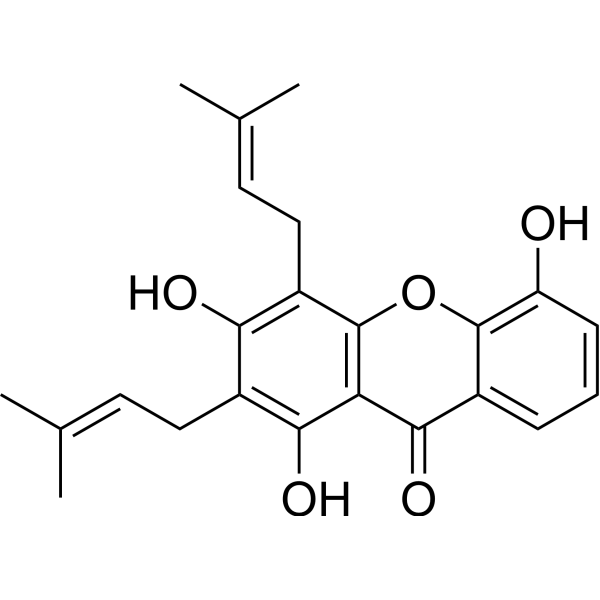
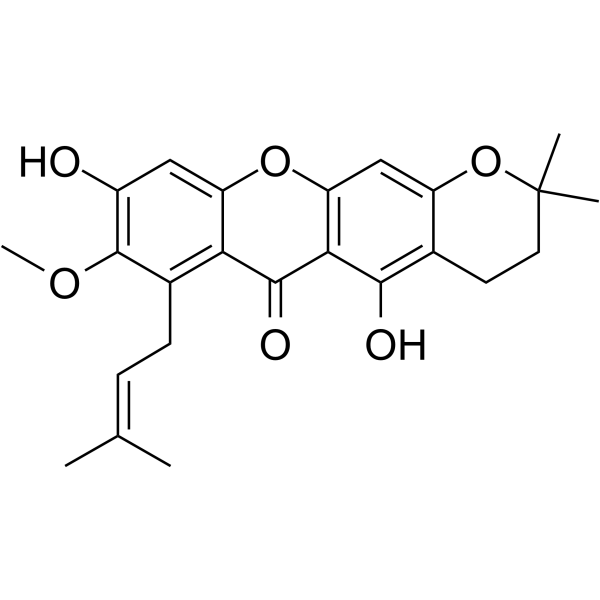
8-Deoxygartanin, a prenylated xanthones from G. mangostana, is a selective inhibitor of butyrylcholinesterase (BChE) . 8-Deoxygartanin exhibits antiplasmodial activity with an IC50 of 11.8 μM for the W2 strain of Plasmodium falciparum . 8-Deoxygartanin inhibits NF-κB (p65) activation with an IC50 of 11.3 μM .
|
-
- HY-180552
-
|
|
Cholinesterase (ChE)
Monoamine Oxidase
|
Neurological Disease
|
|
AChE-IN-104 (compound 3e) is a potent acetylcholinesterase (AChE) inhibitor with an IC50 of 8.01 µM. AChE-IN-104 also inhibits BChE and MAO-A with IC50s of 65.41 µM and 1.51 µM, respectively. AChE-IN-104 can be used for Alzheimer’s disease (AD) research .
|
-
- HY-114422
-
|
|
Cholinesterase (ChE)
p38 MAPK
|
Neurological Disease
|
|
ARRY-371797 is a potent and orally active p38α MAPK and BChE inhibitor with IC50 values of 12.0, 0.13, >100 µM for p38α MAP, hBChE, hAChE, respectively. ARRY-371797 has the potential for the research of Alzheimer’s disease .
|
-
- HY-158092
-
|
|
Cholinesterase (ChE)
Monoamine Oxidase
|
Neurological Disease
|
|
ChEs/MAOs-IN-2 (compound a11) is a cholinesterases and monoamine oxidases inhibitor with IC50 values of 0.10, 0.20, 0.30, 0.40 µM for MAO-A, MAO-B, AChE, and BChE, respectively. ChEs/MAOs-IN-2 has the potential for the research of Alzheimer's disease .
|
-
- HY-105327
-
|
|
Cholinesterase (ChE)
|
Neurological Disease
|
|
P11149 is a competitive, BBB-penetarated weakly, orally active and selective inhibitor of AChE. P11149 exhibits an IC50 of 1.3 μM for rat BChE/AChE. P11149, a Galanthamine derivative, demonstrates central cholinergic activity, behavioral efficacy and safety. P11149 is used in the study for Alzheimer's disease .
|
-
- HY-157087
-
|
|
Cholinesterase (ChE)
Monoamine Oxidase
|
Neurological Disease
|
|
AChE/MAO-B-IN-4 (compound 4a) is a selective dual AChE and MAO-B inhibitor. AChE/MAO-B-IN-4 shows no significant inhibition activity against BChE and h-MAO-A. AChE/MAO-B-IN-4 can be used for the Alzheimer’s disease (AD) research .
|
-
- HY-149528
-
|
|
Monoamine Oxidase
Cholinesterase (ChE)
|
Cancer
|
|
MAO-B-IN-24 (compound 11h) is a selective, reversible, competitive inhibitor of MAO-B (IC50: 1.60 μM). MAO-B-IN-24 also inhibited MAO-A (22.42 μM); at 10 μM concentration, it also reduced AChE and BChE activities to 54.58% and 88.43% .
|
-
- HY-N2129
-
|
|
Cytochrome P450
Cholinesterase (ChE)
|
Cardiovascular Disease
Metabolic Disease
|
|
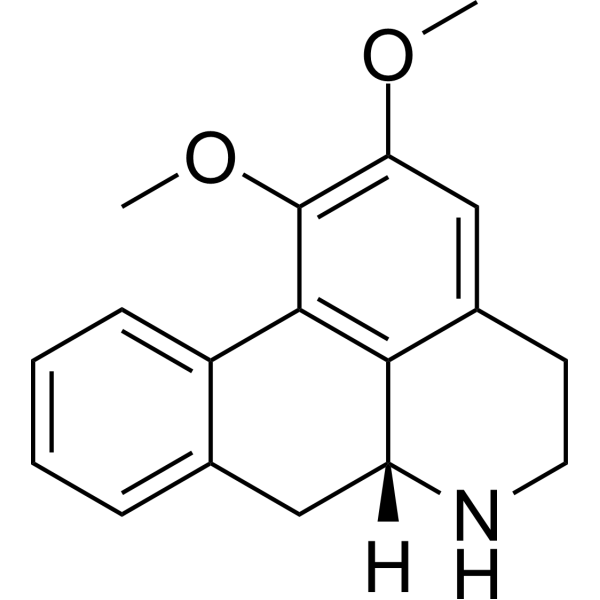
N-Nornuciferine is an orally active, blood-brain barrier-permeable CYP2D6 inhibitor, with an IC50 of 3.76 μM and a Ki of 2.34 μM against human CYP2D6. N-Nornuciferine also acts as a BChE inhibitor, showing an IC50 of 5.6 μM in mice . N-Nornuciferine can be used in the research of neurological-related diseases .
|
-
- HY-N2129A
-
|
|
Cytochrome P450
Cholinesterase (ChE)
|
Neurological Disease
|
|
N-Nornuciferine hydrochloride is an orally active, blood-brain barrier-permeable CYP2D6 inhibitor, with an IC50 of 3.76 μM and a Ki of 2.34 μM against human CYP2D6. N-Nornuciferine hydrochloride also acts as a BChE inhibitor, showing an IC50 of 5.6 μM in mice . N-Nornuciferine hydrochloride can be used in the research of neurological-related diseases .
|
-
- HY-B1863R
-
|
|
Reference Standards
Fungal
Cholinesterase (ChE)
|
Infection
|
|
Iprobenfos (Standard) is the analytical standard of Iprobenfos (HY-B1863). This product is intended for research and analytical applications. Iprobenfos is an organophosphorus fungicide and is widely used to control the rice blast fungus. Iprobenfos can phosphorylate the -OH group on the serine residue in the active (esteratic) site of ChEs and so inhibit both AChE and BChE activity .
|
-
- HY-17368
-
|
ENA 713 free base; SDZ-ENA 713 free base
|
Cholinesterase (ChE)
|
Neurological Disease
|
|
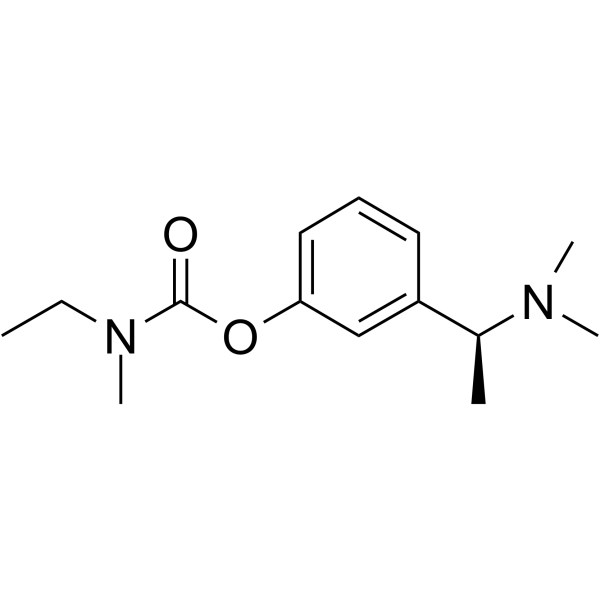
Rivastigmine (ENA 713 free base) is an orally active and potent cholinesterase (ChE) inhibitor and inhibits butyrylcholinesterase (BChE) and acetylcholinesteras (AChE) with IC50s of 0.037 μM , 4.15 μM, respectively. Rivastigmine can pass the blood brain barrier (BBB). Rivastigmine is a parasympathomimetic or cholinergic agent used for the research of mild to moderate dementia of the Alzheimer's type and dementia due to Parkinson's disease .
|
-
- HY-179621
-
|
|
Cholinesterase (ChE)
Amyloid-β
|
Neurological Disease
|
|
EQ-04 is a highly selective positive allosteric modulator (PAM) of α7 nAChR. EQ-04 has no direct inhibitory activity on AChE and BChE. EQ-04 inhibits Aβ aggregation. EQ-04 has safe cytotoxicity and potent neuroprotective activity. EQ-04 can be used for the study of Alzheimer's disease.
|
-
- HY-157382
-
|
|
Cholinesterase (ChE)
Amyloid-β
MMP
|
Neurological Disease
|
|
AChE-IN-51 (compound 8C) is an orally active, non-competitive inhibitor of AChE and BChE (IC50: 84 nM, 97 nM). It also inhibits MMP-2 and amyloid Aβ1-42 aggregates (IC50: 724 nM, 302 nM). AChE-IN-51 has low cytotoxicity and in silico predicted blood-brain barrier permeability. Can be used for research on diseases such as Alzheimer's disease (AD) .
|
-
- HY-107922R
-
|
Isothazine (Standard)
|
Reference Standards
Cholinesterase (ChE)
iGluR
mAChR
|
Neurological Disease
|
|
Ethopropazine (hydrochloride) (Standard) is the analytical standard of Ethopropazine (hydrochloride) (HY-107922). This product is intended for research and analytical applications. Ethopropazine (Isothazine) hydrochloride is a potent and selective BChE inhibitor, a poor AChE inhibitor and a non-selective mAChR and NMDA antagonist. Ethopropazine hydrochloride has anticholinergic, antihistamine, antiadrenergic actions and properties. Ethopropazine hydrochloride alleviates thermal hyperalgesia in a dose dependent manner. Ethopropazine hydrochloride can be used for the research of Parkinson’s disease .
|
-
- HY-162402
-
|
|
Reactive Oxygen Species (ROS)
Cholinesterase (ChE)
|
Cancer
|
|
NLRP3-IN-33 (Compound 12o) is a blood-brain barrier permeable inhibitor of AChE and BChE, with IC50 values of 1.02 μM and 7.03 μM against hAChE and hBChE respectively. NLRP3-IN-33 possesses antioxidant, anti-inflammatory, and metal chelating activities, making it a potential candidate for research in Alzheimer's disease (AD) .
|
-
- HY-11017
-
|
ENA 713; SDZ-ENA 713
|
Cholinesterase (ChE)
|
Neurological Disease
|
|
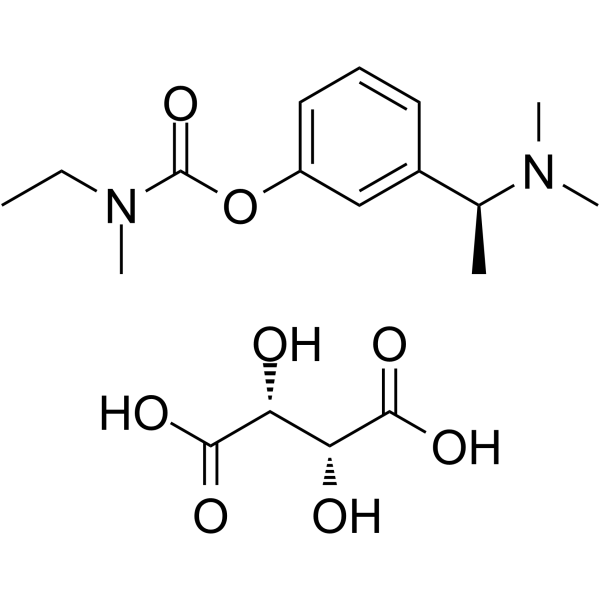
Rivastigmine tartrate (ENA 713; SDZ-ENA 713) is an orally active and potent cholinesterase (ChE) inhibitor and inhibits butyrylcholinesterase (BChE) and acetylcholinesteras (AChE) with IC50s of 0.037 μM, 4.15 μM, respectively. Rivastigmine tartrate can pass the blood brain barrier (BBB). Rivastigmine tartrate is a parasympathomimetic or cholinergic agent used for the research of mild to moderate dementia of the Alzheimer's type and dementia due to Parkinson's disease .
|
-
- HY-147870
-
-
- HY-172461
-
|
|
Monoamine Oxidase
Cholinesterase (ChE)
|
Neurological Disease
|
|
MAO-IN-6 (Compound 3f) is a BBB permeable and reversible MAO-B inhibitor with an IC50 of 0.09 μM. MAO-IN-6 also exhibits certain inhibitory activities against AChE and BChE, with IC50 values of 4.48 μM and 17.03 μM, respectively. MAO-IN-6 has low cytotoxicity and can be used in the research of Alzheimer's disease .
|
-
- HY-N2284
-
|
|
Cholinesterase (ChE)
Beta-secretase
Phosphodiesterase (PDE)
|
Cancer
|
|
Sophoflavescenol is a prenylated flavonol, which shows great inhibitory activity with IC50 of 0.013 μM against Phosphodiesterase 5 (PDE5), and also inhibits RLAR, HRAR, AGE, BACE1, AChE and BChE with IC50s of 0.30 μM, 0.17 μM, 17.89 μg/mL, 10.98 μM, 8.37 μM and 8.21 μM, respectively.
|
-
- HY-17368S1
-
|
(Rac)-ENA 713-d6 free base; (Rac)-SDZ-ENA 713-d6 free base
|
Isotope-Labeled Compounds
Cholinesterase (ChE)
|
Neurological Disease
|
|
(Rac)-Rivastigmine-d6 is a labelled racemic Rivastigmine. Rivastigmine (ENA 713 free base) is an orally active and potent cholinesterase (ChE) inhibitor and inhibits butyrylcholinesterase (BChE) and acetylcholinesteras (AChE) with IC50s of 0.037 μM , 4.15 μM, respectively. Rivastigmine can pass the blood brain barrier (BBB). Rivastigmine is a parasympathomimetic or cholinergic agent used for the research of mild to moderate dementia of the Alzheimer's type and dementia due to Parkinson's disease .
|
-
- HY-W654336
-
|
|
Isotope-Labeled Compounds
Cholinesterase (ChE)
|
Neurological Disease
|
|
(S)-Rivastigmine-d4 is deuterium labeled Rivastigmine. Rivastigmine (ENA 713 free base) is an orally active and potent cholinesterase (ChE) inhibitor and inhibits butyrylcholinesterase (BChE) and acetylcholinesteras (AChE) with IC50s of 0.037 μM , 4.15 μM, respectively. Rivastigmine can pass the blood brain barrier (BBB). Rivastigmine is a parasympathomimetic or cholinergic agent used for the research of mild to moderate dementia of the Alzheimer's type and dementia due to Parkinson's disease .
|
-
- HY-168052
-
|
|
Amyloid-β
Cholinesterase (ChE)
|
Neurological Disease
|
|
hAChE-IN-9 (compound 7i) is a selective inhibitor of human acetylcholinesterase (hAChE) with IC50 of 0.05 μM and 2.85 μM for AChE and BChE, respectively. hAChE-IN-9 modulates toxic Aβ oligomer forms into non-toxic ones and has antioxidant and neuroprotective effects against Aβ-induced toxicity. hAChE-IN-9 can be used for the study of Alzheimer's disease .
|
-
- HY-162061
-
|
|
Monoamine Oxidase
|
Neurological Disease
|
|
ChEs/MAOs-IN-1 (Compound 4i) is a dual inhibitor of cholinesterases (ChEs) and monoamine oxidases (MAOs).ChEs/MAOs-IN-1 has IC50 values of 0.048 μM, 0.89 μM, 3.58 μM, and 0.095 μM for AChE, BChE, MAO-B and MAO-B respectively. ChEs/MAOs-IN-1 can be used in the study of neurodegenerative diseases .
|
-
- HY-17368S2
-
|
ENA 713-d3 hydrochloride; SDZ-ENA 713-d3 hydrochloride
|
Cholinesterase (ChE)
Isotope-Labeled Compounds
|
Neurological Disease
|
|
Rivastigmine-d3 hydrochloride is deuterated labeled Rivastigmine (HY-17368). Rivastigmine (ENA 713 free base) is an orally active and potent cholinesterase (ChE) inhibitor and inhibits butyrylcholinesterase (BChE) and acetylcholinesteras (AChE) with IC50s of 0.037 μM , 4.15 μM, respectively. Rivastigmine can pass the blood brain barrier (BBB). Rivastigmine is a parasympathomimetic or cholinergic agent used for the research of mild to moderate dementia of the Alzheimer's type and dementia due to Parkinson's disease .
|
-
- HY-17368R
-
|
ENA 713 free base(Standard); SDZ-ENA 713 free base(Standard)
|
Reference Standards
Cholinesterase (ChE)
|
Neurological Disease
|
|
Rivastigmine (Standard) is the analytical standard of Rivastigmine. This product is intended for research and analytical applications. Rivastigmine (ENA 713 free base) is an orally active and potent cholinesterase (ChE) inhibitor and inhibits butyrylcholinesterase (BChE) and acetylcholinesteras (AChE) with IC50s of 0.037 μM , 4.15 μM, respectively. Rivastigmine can pass the blood brain barrier (BBB). Rivastigmine is a parasympathomimetic or cholinergic agent used for the research of mild to moderate dementia of the Alzheimer's type and dementia due to Parkinson's disease .
|
-
- HY-162036
-
|
|
Glycosidase
Amylases
Cholinesterase (ChE)
|
Neurological Disease
Metabolic Disease
|
|
α-Amylase/α-Glucosidase-IN-7 (Compound 3f) is a competitive α-glucosidase and α-amylase enzyme inhibitor with IC50 values of 18.52 and 20.25 µM, respectively. α-Amylase/α-Glucosidase-IN-7 can also effectively inhibit AChE and BChE, with IC50 values of 9.25 and 10.06 µM respectively. α-Amylase/α-Glucosidase-IN-7 can be used in diabetes and Alzheimer’s research .
|
-
- HY-105327R
-
|
|
Reference Standards
Cholinesterase (ChE)
|
Neurological Disease
|
|
P11149 (Standard) is the analytical standard of P11149 (HY-105327). This product is intended for research and analytical applications. P11149 is a competitive, BBB-penetarated weakly, orally active and selective inhibitor of AChE. P11149 exhibits an IC50 of 1.3 μM for rat BChE/AChE. P11149, a Galanthamine derivative, demonstrates central cholinergic activity, behavioral efficacy and safety. P11149 is used in the study for Alzheimer's disease .
|
-
- HY-N9731
-
|
|
NF-κB
|
Others
|
|
6-O-p-Hydroxybenzoylglutinoside acts as a selective NF-κB inhibitor that suppresses the transcriptional activity of TNF-α-activated NF-κB (IC50=52.78 μM). 6-O-p-Hydroxybenzoylglutinoside shows no significant inhibitory activity against sEH, AChE, or BChE. 6-O-p-Hydroxybenzoylglutinoside is a caged chlorinated iridoid glycoside identified from the seeds of Catalpa bungei (Manchurian catalpa) .
|
-
- HY-11017R
-
|
ENA 713 (Standard); SDZ-ENA 713 (Standard)
|
Reference Standards
Cholinesterase (ChE)
|
Neurological Disease
|
|
Rivastigmine (tartrate) (Standard) is the analytical standard of Rivastigmine (tartrate). This product is intended for research and analytical applications. Rivastigmine tartrate (ENA 713; SDZ-ENA 713) is an orally active and potent cholinesterase (ChE) inhibitor and inhibits butyrylcholinesterase (BChE) and acetylcholinesteras (AChE) with IC50s of 0.037 μM, 4.15 μM, respectively. Rivastigmine tartrate can pass the blood brain barrier (BBB). Rivastigmine tartrate is a parasympathomimetic or cholinergic agent used for the research of mild to moderate dementia of the Alzheimer's type and dementia due to Parkinson's disease .
|
-
- HY-W654335
-
|
|
Isotope-Labeled Compounds
Cholinesterase (ChE)
|
Neurological Disease
|
|
Rivastigmine-d4 (tartrate) is deuterium labeled Rivastigmine (tartrate). Rivastigmine tartrate (ENA 713; SDZ-ENA 713) is an orally active and potent cholinesterase (ChE) inhibitor and inhibits butyrylcholinesterase (BChE) and acetylcholinesteras (AChE) with IC50s of 0.037 μM, 4.15 μM, respectively. Rivastigmine tartrate can pass the blood brain barrier (BBB). Rivastigmine tartrate is a parasympathomimetic or cholinergic agent used for the research of mild to moderate dementia of the Alzheimer's type and dementia due to Parkinson's disease .
|
-
- HY-121382
-
|
|
Cholinesterase (ChE)
Apoptosis
Necroptosis
|
Neurological Disease
Cancer
|
|
Gypsogenin is a selective mixed-type BChE inhibitor (Ki=19.99 μM) that also exhibits significant cytotoxicity against various human cancer cell lines. Gypsogenin inhibits tumor growth by inducing cell cycle arrest and triggering apoptosis. Gypsogenin displays antibacterial activity against bacteria such as Bacillus subtilis and Bacillus thuringiensis, and often serves as a key parent nucleus for the synthesis of anticancer compounds. Gypsogenin is widely used in research on Alzheimer's disease and various cancers including colon cancer, melanoma, and leukemia .
|
-
- HY-144316
-
|
|
Cholinesterase (ChE)
GSK-3
|
Neurological Disease
|
|
ZLWH-23 is a selective AChE inhibitor (IC50=0.27 μM) with GSK-3β inhibitory property (IC50=6.78 μM). ZLWH-23 possesses selectivity for AChE over BChE (IC50=20.82 μM) and for GSK-3β over multi-kinases. ZLWH-23 has the potential for the research of Alzheimer's disease .
|
-
- HY-107569
-
|
|
Cholinesterase (ChE)
Histone Acetyltransferase
Apoptosis
Endogenous Metabolite
|
Inflammation/Immunology
Cancer
|
|
Garcinol, a polyisoprenylated benzophenone harvested from Garcinia indica, exerts anti-cholinesterase properties towards acetyl cholinesterase (AChE) and butyrylcholinesterase (BChE) with IC50s of 0.66 μM and 7.39 μM, respectively . Garcinol also inhibits histone acetyltransferases (HATs, IC50= 7 μM) and p300/CPB-associated factor (PCAF, IC50 = 5 μM). Garcinol has anti-inflammatory and anti-cancer activity .
|
-
- HY-162639
-
|
|
Glycosidase
Cholinesterase (ChE)
|
Neurological Disease
Metabolic Disease
|
|
α-Glucosidase-IN-68 (Compound 2) is an inhibitor for α-Glucosidase, AChE, and BChE, with IC50 of 0.251, 0.774 and 0.793 μM, respectively. α-Glucosidase-IN-68 exhibits antioxidant efficacy, with IC50 of 0.69 μM and 0.02 μM, in DPPH and ABTS experiments. α-Glucosidase-IN-68 exhibits antidiabetic effect in Streptozotocin (HY-13753)-induced diabetic rat models .
|
-
- HY-163909
-
|
|
Cholinesterase (ChE)
|
Neurological Disease
|
|
AChE-IN-72 (Compound 13a) is an inhibitor for acetylcholinesterase (AChE) with an IC50 of 0.59 μM. AChE-IN-72 inhibits BChE with an IC50 of 5.02 μM. AChE-IN-72 exhibits radical scavenging with IC50 of 5.88 μM. AChE-IN-72 exhibits iron-chelating property, inhibits Aβ1−42 aggregation, and inhibits NLRP3 inflammasome activation. AChE-IN-72 ameliorates memory impairment in Betaine (HY-B0710)-induced AD mouse model. AChE-IN-72 is blood-brain barrier (BBB) penetrable .
|
-
- HY-N6865
-
-
- HY-169163
-
|
|
Carbonic Anhydrase
Cholinesterase (ChE)
|
Neurological Disease
|
|
hBChE-IN-4 (compound 40) is a potent hCA activator and BChE inhibitor with KA values of 266, 76.9, 918, 893, 98.0 nM for hCA I, hCA II, hCA IV, hCA VB, hCA VII, IC50 values of 72.1, 4.2 nM for eeAChE, eqBChE, respectively. hBChE-IN-4 shows no cytotoxicity. hBChE-IN-4 shows potent procognitive effects. hBChE-IN-4 has the potential for the research of neurodegenerative diseases and other neuropsychiatric disorders .
|
-
- HY-30139
-
|
|
Biochemical Assay Reagents
|
Others
|
|
4-Amino-2-chloropyrimidine is a pyrimidine derivative. 4-Amino-2-chloropyrimidine is a competitive inhibitor for AChE (Ki = 0.18 μM) and BChE (Ki = 1.324 μM). 4-Amino-2-chloropyrimidine fits in the binding pocket of 4BDS. 4-Amino-2-chloropyrimidine has high inhibitory activity on GST enzyme activity (IC50 = 0.037 μM, Ki = 0.047 μM) in vitro .
|
-
- HY-N16715
-
|
|
Cholinesterase (ChE)
|
Neurological Disease
|
|
Monardic acid A is a selective inhibitor of AChE, with an IC50 of 53.1 μM against AChE from electric eel. Monardic acid A shows weak inhibitory activity against human erythrocyte AChE (IC50 >100 μM) and has no significant inhibitory effect on BChE. Monardic acid A reduces acetylcholine breakdown by inhibiting AChE activity, and also exhibits inhibitory activity against histamine release and hyaluronidase, thus exerting anti-inflammatory and neurotransmitter regulatory effects. Monardic acid A can be isolated from lungwort (Pulmonaria officinalis) and thyme (Thymus gobicus), and is mainly used in the development of anti-inflammatory drugs and drugs related to neurodegenerative diseases .
|
-
- HY-161643
-
|
|
Cholinesterase (ChE)
Keap1-Nrf2
|
Neurological Disease
Inflammation/Immunology
|
|
S21-1011 is a selective inhibitor for butyrylcholinesterase (BChE), with IC50 of 0.059 and 0.162 μM, for eqBChE and hBChE, respectively. S21-1011 exhibits good blood-brain barrier (BBB) permeability and good pharmacokinetic characters. S21-1011 exhibits anti-inflammatory activity through activation of keap1-Nrf2-ARE pathway (EC50 is 23.48 μM for antioxidant element ARE activation), ameliorates cognitive impairment in murine Alzheimer’s disease model .
|
-
- HY-168301
-
|
|
Cholinesterase (ChE)
Amyloid-β
|
Neurological Disease
|
|
CL-13 is a butyrylcholinesterase (BChE) inhibitor, with an IC50 of 1.15 μM, and a selectivity index (SI) of 9.2 for acetylcholinesterase. CL-13 shows antioxidant activity in SH-SY5Y cells (DPPH EC50 = 47.01 μM) and has the ability to chelate metals involved in Aβ aggregation and/or oxidative stress, showing no neurotoxicity at 50 μM. CL-13 can reverse cognitive impairment caused by scopolamine (HY-N0296) without affecting the mice's motor skills .
|
-
- HY-181161
-
|
|
Cholinesterase (ChE)
|
Neurological Disease
|
|
AChE-IN-107 is a selective acetylcholinesterase (AChE) inhibitor with an IC50 of 0.22 μM and a Ki of 0.207 μM. AChE-IN-107 shows no inhibitory effect on equine serum BChE at 10 μM. AChE-IN-107 exhibits mixed-type inhibition of electric eel acetylcholinesterase, binding to both free enzyme and enzyme-substrate complex. AChE-IN-107 acts as a cytotoxin, reduces cell viability in hepatocellular carcinoma HepG2 cells.AChE-IN-107 can be used for the research of alzheimer's disease .
|
-
- HY-N0226
-
|
|
Cholinesterase (ChE)
Beta-secretase
|
Neurological Disease
Metabolic Disease
|
|
Epiberberine is an alkaloid isolated from Coptis chinensis, acts as a potent AChE and BChE inhibitor, and a non-competitive BACE1 inhibitor, with IC50s of 1.07, 6.03 and 8.55 μM, respectively. Epiberberine has antioxidant activity, with peroxynitrite ONOO - scavenging effect (IC50, 16.83 μM), and can be used for the research of Alzheimer disease . Epiberberine inhibits the early stage of differentiation of 3T3-L1 preadipocytes, downregulates the Raf/MEK1/2/ERK1/2 and AMPKα/Akt pathways . Epiberberinecan be used for the research of diabetic disease .
|
-
- HY-158978
-
|
|
Cholinesterase (ChE)
Monoamine Oxidase
|
Neurological Disease
|
|
Multitarget AD inhibitor-2 (Compound VN-19) is a multitargeting inhibitor acetylcholinesterase (AChE, IC50=0.14 μM), butyrylcholinesterase (BChE, IC50=11.6 μM), monoamine oxidase B (MAO B, IC50=0.45 μM). Multitarget AD inhibitor-2 inhibits self-induced aggregation of amyloid beta protein Aβ1-42 (inhibition rate is 47.3% at 20 μM), and downregulates the level of ROS in SH-SY5Y (80 inhibition rate at 25 μM). Multitarget AD inhibitor-2 ameliorates the cognitive decline in Scopolamine (HY-N0296)-induced Alzheimer’s Disease zebrafish models .
|
-
- HY-121382R
-
|
|
Reference Standards
Apoptosis
Cholinesterase (ChE)
Necroptosis
|
Cardiovascular Disease
|
|
Cinosulfuron (Standard) is the analytical standard of Cinosulfuron. This product is intended for research and analytical applications. Gypsogenin is a selective mixed-type BChE inhibitor (Ki=19.99 μM) that also exhibits significant cytotoxicity against various human cancer cell lines. Gypsogenin inhibits tumor growth by inducing cell cycle arrest and triggering apoptosis. Gypsogenin displays antibacterial activity against bacteria such as Bacillus subtilis and Bacillus thuringiensis, and often serves as a key parent nucleus for the synthesis of anticancer compounds. Gypsogenin is widely used in research on Alzheimer's disease and various cancers including colon cancer, melanoma, and leukemia .
|
-
- HY-N2157
-
|
(+)-Pteryxin
|
Cholinesterase (ChE)
NF-κB
NOD-like Receptor (NLR)
Keap1-Nrf2
Reactive Oxygen Species (ROS)
Nuclear Factor of activated T Cells (NFAT)
p38 MAPK
|
Neurological Disease
Metabolic Disease
Inflammation/Immunology
|
|
Pteryxin ((+)-Pteryxin) is an orally active multi-target inhibitor that targets NF-κB, MAPK, NLRP3 inflammasome, and Nrf2/ARE pathways. Pteryxin is also a BChE inhibitor (IC50=12.96 μg/mL) with a low inhibitory efficiency on AChE. Pteryxin inhibits the Ca 2+-calcineurin-NFATc1 pathway by blocking NF-κB/MAPK signaling, inhibiting NLRP3 inflammasome activation, and reducing ROS generation, and activates Nrf2-mediated antioxidant enzyme expression. Pteryxin has anti-inflammatory, antioxidant, and osteoclastogenesis inhibitory activities. Pteryxin can be used in the study of inflammatory diseases, osteoporosis, diabetes, and Alzheimer's disease .
|
-
- HY-N0226A
-
|
|
Cholinesterase (ChE)
Beta-secretase
Reactive Oxygen Species (ROS)
|
Neurological Disease
Metabolic Disease
|
|
Epiberberine chloride is an alkaloid isolated from Coptis chinensis, acts as a potent AChE and BChE inhibitor, and a non-competitive BACE1 inhibitor, with IC50s of 1.07, 6.03 and 8.55 μM, respectively. Epiberberine chloride has antioxidant activity, with peroxynitrite ONOO - scavenging effect (IC50, 16.83 μM), and may protect against Alzheimer disease . Epiberberine chloride inhibits the early stage of differentiation of 3T3-L1 preadipocytes, downregulates the Raf/MEK1/2/ERK1/2 and AMPKα/Akt pathways . Epiberberine has the potential effect in the research of diabetic disease .
|
-
- HY-107569R
-
|
|
Cholinesterase (ChE)
Histone Acetyltransferase
Apoptosis
Endogenous Metabolite
Reference Standards
|
Inflammation/Immunology
Cancer
|
|
Garcinol (Standard) is the analytical standard of Garcinol. This product is intended for research and analytical applications. Garcinol, a polyisoprenylated benzophenone harvested from Garcinia indica, exerts anti-cholinesterase properties towards acetyl cholinesterase (AChE) and butyrylcholinesterase (BChE) with IC50s of 0.66 μM and 7.39 μM, respectively . Garcinol also inhibits histone acetyltransferases (HATs, IC50= 7 μM) and p300/CPB-associated factor (PCAF, IC50 = 5 μM). Garcinol has anti-inflammatory and anti-cancer activity .
|
-
- HY-151436
-
|
|
CDK
Cholinesterase (ChE)
Apoptosis
|
Cancer
|
|
ZLMT-12 (compound 35), tacrine derivatives, is a potent, orally active CDK2/9 inhibitor with IC50 values of 0.002 and 0.011 μM for CDK9 and CDK2, respectively. ZLMT-12 has a weak inhibitory effect on AChE (IC50=19.023 μM) and BChE (IC50=2.768 μM). ZLMT-12 has low toxicity and antiproliferative activity. ZLMT-12 induces apoptosis and arrests the cell cycle in the S phase and G2/M phase .
|
-
- HY-179496
-
|
|
GSK-3
Cholinesterase (ChE)
Amyloid-β
|
Neurological Disease
|
|
ChE/GSK-3β-IN-1 (compound 18o) is a potent dual ChE/GSK-3β inhibitor. ChE/GSK-3β-IN-1 exhibits dual inhibition of AChE (IC50 = 1.7 μM), butyrylcholinesterase (BChE) (IC50 = 5.3 μM), and GSK-3β (IC50 = 5.7 μM). ChE/GSK-3β-IN-1 inhibits Aβ1-42 self-aggregation. ChE/GSK-3β-IN-1 can be used for Alzheimer’s disease (AD) research .
|
-
- HY-N1151
-
|
|
Bacterial
Cholinesterase (ChE)
MMP
TNF Receptor
|
Infection
Neurological Disease
Inflammation/Immunology
|
|
Thunberginol C is an orally active, selective, and non-competitive inhibitor of AChE and BChE, with IC50 values of 41.96 and 42.36 μM, respectively. Thunberginol C exerts cytoprotective, pro-collagen type I restorative, MMP-1 inhibitory, hyaluronic acid restorative, anti-photoaging effects in skin cells. Thunberginol C exerts neuroprotective, anxiolytic, TNF-α inhibitory, neuroinflammation inhibitory, and oxidative stress inhibitory effects. Thunberginol C can be used for the research of Alzheimer’s disease, UVB-induced skin photoaging, allergic reactions, oral bacterial infections, and stress-induced anxiety .
|
-
- HY-107272
-
|
22-Epidelavinone
|
Cholinesterase (ChE)
Apoptosis
Bcl-2 Family
Caspase
Interleukin Related
TNF Receptor
Toll-like Receptor (TLR)
MyD88
NF-κB
p38 MAPK
|
Inflammation/Immunology
Cancer
|
|
Chuanbeinone (22-Epidelavinone) is an orally active alkaloid found in Fritillaria pallidiflora. Chuanbeinone shows cytotoxicity against mutiple cancer cells and can induces apoptosis and S phase arrest. Chuanbeinone downregulates Bcl-2, upregulates Bax, and activates caspase-3. Chuanbeinone exerts anti-inflammatory and antitussive effects by reducing pro-inflammatory cytokine (IL-1β, IL-6 and TNF-α) production and mRNA expression, and inhibiting TRIF-, MyD88-, NF-κB-, and MAPK-dependent signaling pathways. Chuanbeinone inhibits AChE and BChE with IC50 values of 7.7 and 0.7 μM. Chuanbeinone can be used for the researches of lung carcinoma, cough, inflammatory diseases .
|
-
- HY-175816
-
|
|
5-HT Receptor
FAAH
Apoptosis
Reactive Oxygen Species (ROS)
|
Neurological Disease
|
|
5-HT6R/FAAH modulator 1 is a selective serotonin 5-HT6 receptor ligand and the fatty acid amide hydrolase (FAAH) enzyme inhibitor. 5-HT6R/FAAH modulator 1 shows a pKi of 6.33 (5-HT6) and a pIC50 valuesof 6.29 (FAAH). 5-HT6R/FAAH modulator 1 also slightly inhibits acetylcholinesterase (AChE) or butyrylcholinesterase (BChE) enzymes (pIC50 = 5.12). 5-HT6R/FAAH modulator 1 can inhibit apoptosis and reduce ROS levels. 5-HT6R/FAAH modulator 1 can be used for the research of neurological disease, such as Alzheimer’s disease (AD) .
|
-
- HY-B1239
-
|
Hexahydroadiphenine hydrochloride
|
Cholinesterase (ChE)
Potassium Channel
Amyloid-β
TRP Channel
Tau Protein
NOD-like Receptor (NLR)
JNK
NF-κB
IKK
|
Neurological Disease
Metabolic Disease
Inflammation/Immunology
|
|
Drofenine (Cycloadiphene; Hexahydroadiphenine) hydrochloride is an brain-penetrant antispasmodic agent. Drofenine hydrochloride is a Kv2.1 channel inhibitor with human IC50 of 9.53 μM. Drofenine hydrochloride is a butyrylcholinesterase (BChE) inhibitor with Ki of 0.003 mM, and is a TRPV3 activator. Drofenine hydrochloride blocks Kv2.1-dependent potassium efflux, inhibits Kv2.1/JNK/NF-κB and IkBa/NF-kB signaling, suppresses Kv2.1 mRNA/protein expression. Drofenine suppresses oligomeric Aβ-induced microglial NLRP3 inflammasome activation and neuronal Tau hyperphosphorylation, improves cognitive impairment, promotes neurite outgrowth. Drofenine hydrochloride induces calcium influx in keratinocytes and exert cytotoxicity against keratinocytes. Drofenine hydrochloride ameliorates diabetic peripheral neuropathy -like pathology. Drofenine hydrochloride can be used for the researches of Alzheimer's disease, diabetic peripheral neuropathy and smooth muscle spasm .
|
-
- HY-B1239A
-
|
Cycloadiphene; Hexahydroadiphenine
|
Potassium Channel
Cholinesterase (ChE)
TRP Channel
NOD-like Receptor (NLR)
Amyloid-β
Tau Protein
JNK
NF-κB
IKK
|
Neurological Disease
Metabolic Disease
Inflammation/Immunology
|
|
Drofenine (Cycloadiphene; Hexahydroadiphenine) is an brain-penetrant antispasmodic agent. Drofenine is a Kv2.1 channel inhibitor with human IC50 of 9.53 μM. Drofenine is a butyrylcholinesterase (BChE) inhibitor with Ki of 0.003 mM, and is a TRPV3 activator. Drofenine blocks Kv2.1-dependent potassium efflux, inhibits Kv2.1/JNK/NF-κB and IkBa/NF-kB signaling, suppresses Kv2.1 mRNA/protein expression. Drofenine suppresses oligomeric Aβ-induced microglial NLRP3 inflammasome activation and neuronal Tau hyperphosphorylation, improves cognitive impairment, promotes neurite outgrowth. Drofenine induces calcium influx in keratinocytes and exert cytotoxicity against keratinocytes. Drofenine ameliorates diabetic peripheral neuropathy -like pathology. Drofenine can be used for the researches of Alzheimer's disease, diabetic peripheral neuropathy and smooth muscle spasm .
|
-
- HY-N19401
-
|
|
Cholinesterase (ChE)
Carbonic Anhydrase
Glycosidase
JNK
p38 MAPK
|
Metabolic Disease
Inflammation/Immunology
|
|
Vescalagin is a hexahydroxyphenol. Vescalagin is isolable from Camu-camu (Myrciaria dubia) and immature wax apple fruits. Vescalagin exhibits inhibitory activity against a variety of enzymes, with a Ki value of 5.87 nM against AChE, 3.89 nM against BChE, 11.75 nM against hCA I, 16.23 nM against hCA II, and 16.08 nM against α-glucosidase. Vescalagin inhibits hCA I, hCA II and α-glucosidase in a non-competitive manner. Vescalagin downregulates JNK/p38 MAPK to protect pancreatic β-cells and improve insulin secretion in methylglyoxal-treated rats. Vescalagin reduces hyperglycemia and hypertriglyceridemia in rats fed a high-fructose diet. Vescalagin possesses anti-inflammatory and antioxidant properties .
|
-
- HY-P992076
-
|
|
TGF-β Receptor
TGF-beta/Smad
Cholinesterase (ChE)
Fungal
|
Infection
Cancer
|
Anti-Candida auris β-1,3-glucans Antibody (2G8) is an antibody targeting Candida auris β-1,3-glucans, and also acts as an inhibitor of AChE and TGF-β receptor 2. Anti-Candida auris β-1,3-glucans Antibody (2G8) also targets fungal cell wall components, effectively inhibits fungal growth and interferes with capsule formation, thereby significantly reducing the fungal load in mouse tissues. Anti-Candida auris β-1,3-glucans Antibody (2G8) not only blocks TGF-β receptor binding to inhibit the Smad signaling pathway, reduces fibroblast activation and collagen deposition, but also induces epithelial differentiation of tumor cells and reduces pancreatic tumor metastasis. Anti-Candida auris β-1,3-glucans Antibody (2G8) specifically binds to the conserved N-linked glycoepitope on AChE to inhibit its activity without interfering with BChE, and can be used in studies of cryptococcosis and related tumor mechanisms .The isotype control is Human IgG1 kappa, Isotype Control (HY-P99001).
|
-
- HY-N3266
-
|
|
Tyrosinase
Phosphatase
Cholinesterase (ChE)
SARS-CoV
PERK
JNK
p38 MAPK
TGF-beta/Smad
Apoptosis
Reactive Oxygen Species (ROS)
AMPK
MMP
|
Cardiovascular Disease
Infection
Neurological Disease
Inflammation/Immunology
Cancer
|
|
Methyl rosmarinate is an orally active hydroxycinnamic acid. Methyl rosmarinate exhibits an IC50 of 24.70 μM and a Ki of 15.29 μM against PTP1B, an IC50 of 41.46 μg/mL against BChE, a Ki of 0.61 mM against mushroom tyrosinase, and an IC50 of 2.50 μM against SARS-CoV-2 3CLpro. Methyl rosmarinate downregulates the phosphorylation levels of ERK, JNK, p38, Smad2 and Smad3. Methyl rosmarinate activates erythrocyte BPGM and promotes the production of 2,3-BPG. Methyl rosmarinate induces apoptosis of fibroblasts. Methyl rosmarinate prolongs the survival time of hypoxic mice. Methyl rosmarinate improves insulin sensitivity. Methyl rosmarinate binds to SARS-CoV-2 3CLpro and inhibits viral replication. Methyl rosmarinate induces glioblastoma cell death. Methyl rosmarinate activates the TGR5/AMPK axis and reduces the levels of ROS and MDA. Methyl rosmarinate shows inhibitory activity against MMP-1. Methyl rosmarinate can be used in research related to pulmonary fibrosis, hypoxia-induced injury, type 2 diabetes, Alzheimer's disease, hyperpigmentation disorders, COVID-19, glioblastoma and myocardial ischemia-reperfusion injury .
|
-
| Cat. No. |
Product Name |
Type |
-
- HY-W324391
-
|
Coumarin 478
|
Fluorescent Dyes
|
|
Coumarin 106 (Coumarin 478) is a dipolar laser dye. Coumarin 106 is an inhibitor of AChE and BChE. Coumarin 106 displays mixed-type AChE inhibition with a pIC50=4.97 and Ki=2.36 μM. Coumarin 106 inhibits BChE with slightly lower potency (pIC50=4.56) .
|
-
- HY-103373
-
|
|
Fluorescent Dyes
|
|
PE154 (Compound 13) is a potent fluorescent inhibitor of human acetylcholinesterase (AChE) and butyrylcholinesterase (BChE) (IC50s=280 pM and 16 nM, respectively) . PE154 can label β-amyloid plaques in histochemical analysis .
|
| Cat. No. |
Product Name |
Type |
-
- HY-30139
-
|
|
Biochemical Assay Reagents
|
|
4-Amino-2-chloropyrimidine is a pyrimidine derivative. 4-Amino-2-chloropyrimidine is a competitive inhibitor for AChE (Ki = 0.18 μM) and BChE (Ki = 1.324 μM). 4-Amino-2-chloropyrimidine fits in the binding pocket of 4BDS. 4-Amino-2-chloropyrimidine has high inhibitory activity on GST enzyme activity (IC50 = 0.037 μM, Ki = 0.047 μM) in vitro .
|
| Cat. No. |
Product Name |
Target |
Research Area |
Image |
-
- HY-P992076
-
|
|
TGF-β Receptor
TGF-beta/Smad
Cholinesterase (ChE)
Fungal
|
Infection
Cancer
|
Anti-Candida auris β-1,3-glucans Antibody (2G8) is an antibody targeting Candida auris β-1,3-glucans, and also acts as an inhibitor of AChE and TGF-β receptor 2. Anti-Candida auris β-1,3-glucans Antibody (2G8) also targets fungal cell wall components, effectively inhibits fungal growth and interferes with capsule formation, thereby significantly reducing the fungal load in mouse tissues. Anti-Candida auris β-1,3-glucans Antibody (2G8) not only blocks TGF-β receptor binding to inhibit the Smad signaling pathway, reduces fibroblast activation and collagen deposition, but also induces epithelial differentiation of tumor cells and reduces pancreatic tumor metastasis. Anti-Candida auris β-1,3-glucans Antibody (2G8) specifically binds to the conserved N-linked glycoepitope on AChE to inhibit its activity without interfering with BChE, and can be used in studies of cryptococcosis and related tumor mechanisms .The isotype control is Human IgG1 kappa, Isotype Control (HY-P99001).
|
-
(5)
| Cat. No. |
Product Name |
Category |
Target |
Chemical Structure |
-
- HY-N0285
-
-
-
- HY-107569
-
-
-
- HY-N0226A
-
-
-
- HY-N0226
-
-
-
- HY-N2157
-
|
(+)-Pteryxin
|
Coumarins
Phenylpropanoids
Umbelliferae
Plants
Achillea atrata L.
Source Classification
|
Cholinesterase (ChE)
NF-κB
NOD-like Receptor (NLR)
Keap1-Nrf2
Reactive Oxygen Species (ROS)
Nuclear Factor of activated T Cells (NFAT)
p38 MAPK
|
|
Pteryxin ((+)-Pteryxin) is an orally active multi-target inhibitor that targets NF-κB, MAPK, NLRP3 inflammasome, and Nrf2/ARE pathways. Pteryxin is also a BChE inhibitor (IC50=12.96 μg/mL) with a low inhibitory efficiency on AChE. Pteryxin inhibits the Ca 2+-calcineurin-NFATc1 pathway by blocking NF-κB/MAPK signaling, inhibiting NLRP3 inflammasome activation, and reducing ROS generation, and activates Nrf2-mediated antioxidant enzyme expression. Pteryxin has anti-inflammatory, antioxidant, and osteoclastogenesis inhibitory activities. Pteryxin can be used in the study of inflammatory diseases, osteoporosis, diabetes, and Alzheimer's disease .
|
-
-
- HY-N3266
-
|
|
Structural Classification
Classification of Application Fields
Simple Phenylpropanols
Adenocarpus cincinnatus (Ball) Maire
Labiatae
Phenols
Polyphenols
Phenylpropanoids
Plants
Disease Research Fields
Source Classification
Cancer
|
Tyrosinase
Phosphatase
Cholinesterase (ChE)
SARS-CoV
PERK
JNK
p38 MAPK
TGF-beta/Smad
Apoptosis
Reactive Oxygen Species (ROS)
AMPK
MMP
|
|
Methyl rosmarinate is an orally active hydroxycinnamic acid. Methyl rosmarinate exhibits an IC50 of 24.70 μM and a Ki of 15.29 μM against PTP1B, an IC50 of 41.46 μg/mL against BChE, a Ki of 0.61 mM against mushroom tyrosinase, and an IC50 of 2.50 μM against SARS-CoV-2 3CLpro. Methyl rosmarinate downregulates the phosphorylation levels of ERK, JNK, p38, Smad2 and Smad3. Methyl rosmarinate activates erythrocyte BPGM and promotes the production of 2,3-BPG. Methyl rosmarinate induces apoptosis of fibroblasts. Methyl rosmarinate prolongs the survival time of hypoxic mice. Methyl rosmarinate improves insulin sensitivity. Methyl rosmarinate binds to SARS-CoV-2 3CLpro and inhibits viral replication. Methyl rosmarinate induces glioblastoma cell death. Methyl rosmarinate activates the TGR5/AMPK axis and reduces the levels of ROS and MDA. Methyl rosmarinate shows inhibitory activity against MMP-1. Methyl rosmarinate can be used in research related to pulmonary fibrosis, hypoxia-induced injury, type 2 diabetes, Alzheimer's disease, hyperpigmentation disorders, COVID-19, glioblastoma and myocardial ischemia-reperfusion injury .
|
-
-
- HY-N2960
-
-
-
- HY-N2129
-
-
-
- HY-121382
-
-
-
- HY-N6009
-
-
-
- HY-N2284
-
|
|
Flavonols
Flavonoids
Classification of Application Fields
Leguminosae
Phenols
Polyphenols
Sophora flavescens Aiton
Plants
Disease Research Fields
Source Classification
Cancer
|
Cholinesterase (ChE)
Beta-secretase
Phosphodiesterase (PDE)
|
|
Sophoflavescenol is a prenylated flavonol, which shows great inhibitory activity with IC50 of 0.013 μM against Phosphodiesterase 5 (PDE5), and also inhibits RLAR, HRAR, AGE, BACE1, AChE and BChE with IC50s of 0.30 μM, 0.17 μM, 17.89 μg/mL, 10.98 μM, 8.37 μM and 8.21 μM, respectively.
|
-
-
- HY-N0285R
-
-
-
- HY-N10488
-
-
-
- HY-108048
-
-
-
- HY-N6865
-
-
-
- HY-N1151
-
|
|
Structural Classification
Hydrangeaceae
Coumarins
Phenylpropanoids
Plants
Source Classification
|
Bacterial
Cholinesterase (ChE)
MMP
TNF Receptor
|
|
Thunberginol C is an orally active, selective, and non-competitive inhibitor of AChE and BChE, with IC50 values of 41.96 and 42.36 μM, respectively. Thunberginol C exerts cytoprotective, pro-collagen type I restorative, MMP-1 inhibitory, hyaluronic acid restorative, anti-photoaging effects in skin cells. Thunberginol C exerts neuroprotective, anxiolytic, TNF-α inhibitory, neuroinflammation inhibitory, and oxidative stress inhibitory effects. Thunberginol C can be used for the research of Alzheimer’s disease, UVB-induced skin photoaging, allergic reactions, oral bacterial infections, and stress-induced anxiety .
|
-
-
- HY-127087
-
-
-
- HY-N12581
-
-
-
- HY-N15710
-
-
-
- HY-107569R
-
-
-
- HY-N10701
-
-
-
- HY-N10489
-
-
-
- HY-N10486
-
-
-
- HY-N8764
-
-
-
- HY-N10487
-
-
-
- HY-N12075
-
-
-
- HY-N10490
-
-
-
- HY-121382R
-
|
|
Triterpenes
Structural Classification
Terpenoids
Plants
Caryophyllaceae
Source Classification
Gypsophila perfoliata Linn.
|
Reference Standards
Apoptosis
Cholinesterase (ChE)
Necroptosis
|
|
Cinosulfuron (Standard) is the analytical standard of Cinosulfuron. This product is intended for research and analytical applications. Gypsogenin is a selective mixed-type BChE inhibitor (Ki=19.99 μM) that also exhibits significant cytotoxicity against various human cancer cell lines. Gypsogenin inhibits tumor growth by inducing cell cycle arrest and triggering apoptosis. Gypsogenin displays antibacterial activity against bacteria such as Bacillus subtilis and Bacillus thuringiensis, and often serves as a key parent nucleus for the synthesis of anticancer compounds. Gypsogenin is widely used in research on Alzheimer's disease and various cancers including colon cancer, melanoma, and leukemia .
|
-
-
- HY-N19871
-
-
-
- HY-N17425
-
-
-
- HY-N17394
-
-
-
- HY-N2129A
-
-
-
- HY-N9731
-
-
-
- HY-N16715
-
|
|
Structural Classification
Lignans
Phenylpropanoids
Plants
Pulmonaria officinalis L.
Boraginaceae
Source Classification
|
Cholinesterase (ChE)
|
|
Monardic acid A is a selective inhibitor of AChE, with an IC50 of 53.1 μM against AChE from electric eel. Monardic acid A shows weak inhibitory activity against human erythrocyte AChE (IC50 >100 μM) and has no significant inhibitory effect on BChE. Monardic acid A reduces acetylcholine breakdown by inhibiting AChE activity, and also exhibits inhibitory activity against histamine release and hyaluronidase, thus exerting anti-inflammatory and neurotransmitter regulatory effects. Monardic acid A can be isolated from lungwort (Pulmonaria officinalis) and thyme (Thymus gobicus), and is mainly used in the development of anti-inflammatory drugs and drugs related to neurodegenerative diseases .
|
-
-
- HY-107272
-
-
-
- HY-N19401
-
|
|
Structural Classification
Phenols
Polyphenols
Myrciaria dubia (Kunth) McVaugh
Myrtaceae
Plants
Source Classification
|
Cholinesterase (ChE)
Carbonic Anhydrase
Glycosidase
JNK
p38 MAPK
|
|
Vescalagin is a hexahydroxyphenol. Vescalagin is isolable from Camu-camu (Myrciaria dubia) and immature wax apple fruits. Vescalagin exhibits inhibitory activity against a variety of enzymes, with a Ki value of 5.87 nM against AChE, 3.89 nM against BChE, 11.75 nM against hCA I, 16.23 nM against hCA II, and 16.08 nM against α-glucosidase. Vescalagin inhibits hCA I, hCA II and α-glucosidase in a non-competitive manner. Vescalagin downregulates JNK/p38 MAPK to protect pancreatic β-cells and improve insulin secretion in methylglyoxal-treated rats. Vescalagin reduces hyperglycemia and hypertriglyceridemia in rats fed a high-fructose diet. Vescalagin possesses anti-inflammatory and antioxidant properties .
|
-
| Cat. No. |
Product Name |
Chemical Structure |
-
- HY-N0285S
-
|
|
|
Imperatorin-d6 (Ammidin-d6) is the deuterium labeled Imperatorin. Imperatorin is a BChE inhibitor and HIV-1 replication inhibitor. Imperatorin shows mild activity against Gram-negative bacteria .
|
-
-
- HY-17368S1
-
|
|
|
(Rac)-Rivastigmine-d6 is a labelled racemic Rivastigmine. Rivastigmine (ENA 713 free base) is an orally active and potent cholinesterase (ChE) inhibitor and inhibits butyrylcholinesterase (BChE) and acetylcholinesteras (AChE) with IC50s of 0.037 μM , 4.15 μM, respectively. Rivastigmine can pass the blood brain barrier (BBB). Rivastigmine is a parasympathomimetic or cholinergic agent used for the research of mild to moderate dementia of the Alzheimer's type and dementia due to Parkinson's disease .
|
-
-
- HY-17368S2
-
|
|
|
Rivastigmine-d3 hydrochloride is deuterated labeled Rivastigmine (HY-17368). Rivastigmine (ENA 713 free base) is an orally active and potent cholinesterase (ChE) inhibitor and inhibits butyrylcholinesterase (BChE) and acetylcholinesteras (AChE) with IC50s of 0.037 μM , 4.15 μM, respectively. Rivastigmine can pass the blood brain barrier (BBB). Rivastigmine is a parasympathomimetic or cholinergic agent used for the research of mild to moderate dementia of the Alzheimer's type and dementia due to Parkinson's disease .
|
-
-
- HY-W654335
-
|
|
|
Rivastigmine-d4 (tartrate) is deuterium labeled Rivastigmine (tartrate). Rivastigmine tartrate (ENA 713; SDZ-ENA 713) is an orally active and potent cholinesterase (ChE) inhibitor and inhibits butyrylcholinesterase (BChE) and acetylcholinesteras (AChE) with IC50s of 0.037 μM, 4.15 μM, respectively. Rivastigmine tartrate can pass the blood brain barrier (BBB). Rivastigmine tartrate is a parasympathomimetic or cholinergic agent used for the research of mild to moderate dementia of the Alzheimer's type and dementia due to Parkinson's disease .
|
-
-
- HY-W654336
-
|
|
|
(S)-Rivastigmine-d4 is deuterium labeled Rivastigmine. Rivastigmine (ENA 713 free base) is an orally active and potent cholinesterase (ChE) inhibitor and inhibits butyrylcholinesterase (BChE) and acetylcholinesteras (AChE) with IC50s of 0.037 μM , 4.15 μM, respectively. Rivastigmine can pass the blood brain barrier (BBB). Rivastigmine is a parasympathomimetic or cholinergic agent used for the research of mild to moderate dementia of the Alzheimer's type and dementia due to Parkinson's disease .
|
-
| Cat. No. |
Product Name |
|
Classification |
-
- HY-175524
-
|
|
|
Alkynes
|
|
BChE/MAO-B-IN-2 is a dual inhibitor of BChE (IC50 = 0.05 μM, Ki = 0.01 μM) and MAO-B (IC50 = 0.45 μM, Ki = 0.08 μM) with good blood-brain barrier permeability. BChE/MAO-B-IN-2 exhibits antioxidant activity, including DPPH radical scavenging, CUPRAC copper ion reduction, and superoxide anion scavenging. BChE/MAO-B-IN-2 can be used for the study of Alzheimer's disease (AD) .
|
Your information is safe with us. * Required Fields.
Inquiry Information
- Product Name:
- Cat. No.:
- Quantity:
- MCE Japan Authorized Agent:

