Search Result
Results for "
COX-1/COX-2 Inhibitor
" in MedChemExpress (MCE) Product Catalog:
1
Biochemical Assay Reagents
60
Isotope-Labeled Compounds
| Cat. No. |
Product Name |
Target |
Research Areas |
Chemical Structure |
-
- HY-14397
-
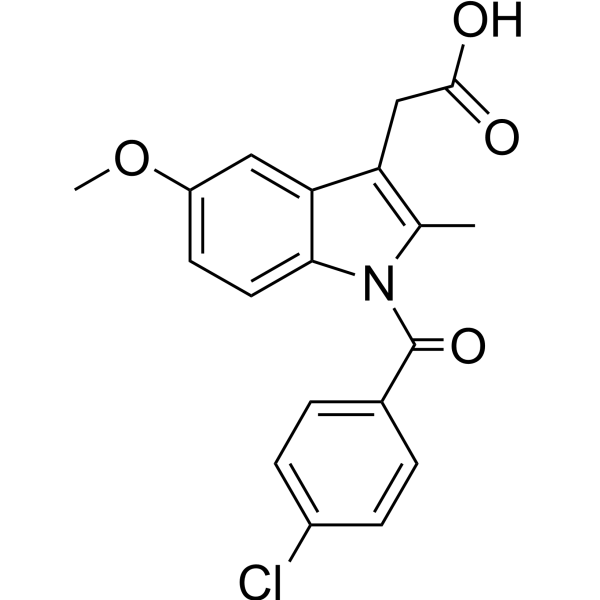
Indomethacin
Maximum Cited Publications
76 Publications Verification
Indometacin
|
COX
Antibiotic
Influenza Virus
Bacterial
|
Inflammation/Immunology
Cancer
|
|
Indomethacin (Indometacin) is a potent, orally active COX1/2 inhibitor with IC50 values of 18 nM and 26 nM for COX-1 and COX-2, respectively. Indomethacin has anticancer activity and anti-infective activity. Indomethacin can be used for cancer, inflammation and viral infection research .
|
-
-
- HY-15036
-
|
|
COX
Apoptosis
|
Inflammation/Immunology
Cancer
|
|
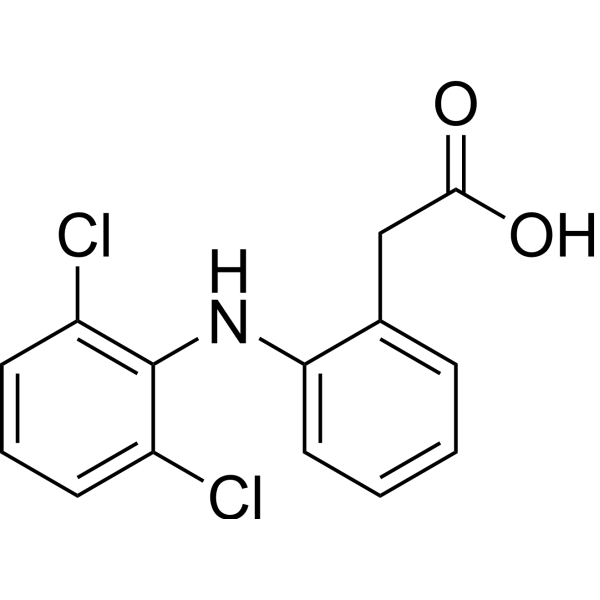
Diclofenac is a potent and nonselective anti-inflammatory agent, acts as a COX inhibitor, with IC50s of 4 and 1.3 nM for human COX-1 and COX-2 in CHO cells , and 5.1 and 0.84 μM for ovine COX-1 and COX-2, respectively . Diclofenac induces apoptosis of neural stem cells (NSCs) via the activation of the caspase cascade .
|
-
-
- HY-B0261
-
-
-
- HY-15030
-
-
-
- HY-B0253
-
|
CP-16171
|
COX
|
Inflammation/Immunology
Cancer
|
|
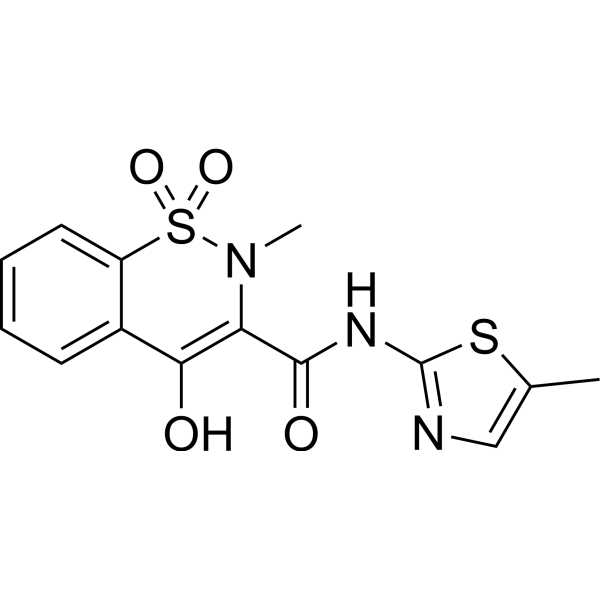
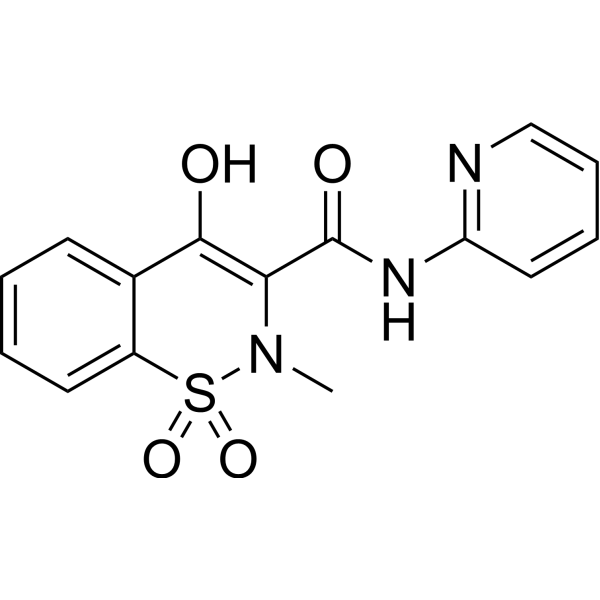
Piroxicam (CP-16171) is a non-steroidal anti-inflammatory drugs, acts as a COX inhibitor, with IC50s of 47, 25 μM for human monocyte COX-1 and COX-2, respectively.
|
-
-
- HY-B1227
-
-
-
- HY-15030A
-
-
-
- HY-15038
-
|
|
COX
Apoptosis
|
Inflammation/Immunology
Cancer
|
|
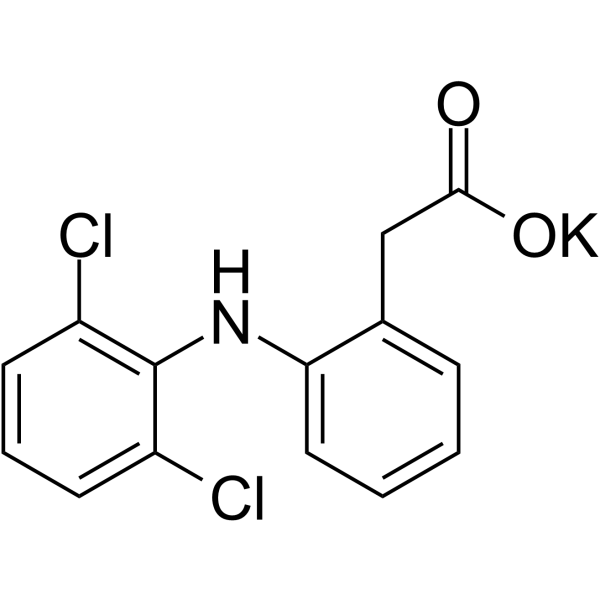
Diclofenac potassium is a potent and nonselective anti-inflammatory agent, acts as a COX inhibitor, with IC50s of 4 and 1.3 nM for human COX-1 and COX-2 in CHO cells , and 5.1 and 0.84 μM for ovine COX-1 and COX-2, respectively . Diclofenac potassium induces apoptosis of neural stem cells (NSCs) via the activation of the caspase cascade .
|
-
-
- HY-17372
-
|
MK 966
|
COX
|
Inflammation/Immunology
Cancer
|
|
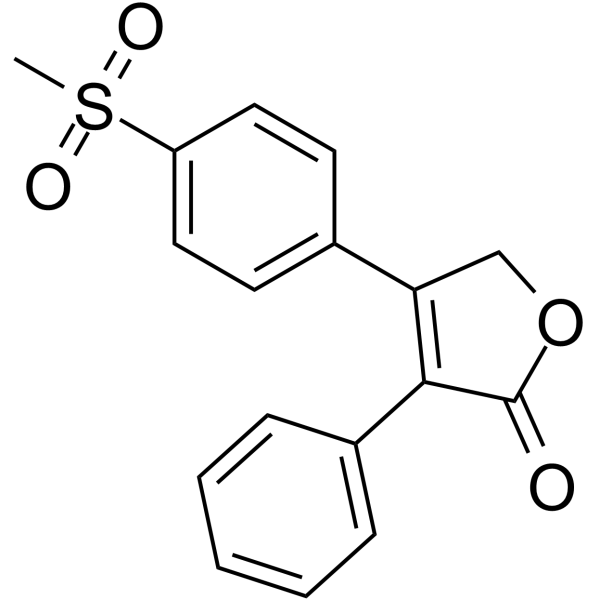
Rofecoxib is a potent, specific and orally active COX-2 inhibitor, with IC50s of 26 and 18 nM for human COX-2 in human osteosarcoma cells and Chinese hamster ovary cells, with a 1000-fold selectivity for COX-2 over human COX-1 (IC50 > 50 μM in U937 cells and > 15 μM in Chinese hamster ovary cells).
|
-
-
- HY-15762
-
-
-
- HY-N0356
-
|
(-)-Catechin 3-gallate; (-)-Catechin 3-O-gallate
|
COX
|
Cancer
|
|
(-)-Catechin gallate is a minor constituent in green tea catechins. (-)-Catechin gallate inhibits the activity of COX-1 and COX-2 enzymes.
|
-
-
- HY-17009
-
-
-
- HY-B1888B
-
|
Bromfenac monosodium salt sesquihydrate
|
COX
|
Infection
Inflammation/Immunology
|
|
Bromfenac sodium hydrate (Bromfenac monosodium salt sesquihydrate) is a potent and orally active inhibitor of COX, with IC50s of 5.56 and 7.45 nM for COX-1 and COX-2, respectively. Bromfenac sodium hydrate can be used in ocular inflammation research .
|
-
-
- HY-B2137
-
|
(S)-Ketoprofen; Dexketoprofen
|
COX
|
Inflammation/Immunology
|
|
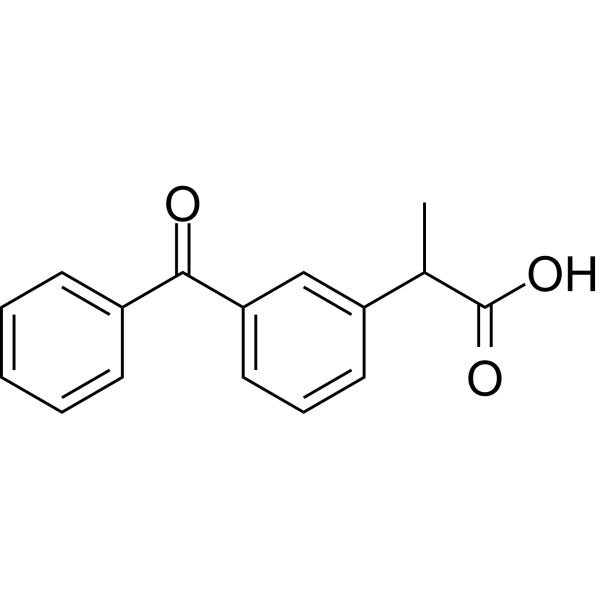
S-(+)-Ketoprofen is a potent inhibitor of both COX-1 and COX-2 with IC50s of 1.9 and 27 nM, respectively.
|
-
-
- HY-15037
-
|
GP 45840
|
COX
Apoptosis
|
Inflammation/Immunology
Cancer
|
|
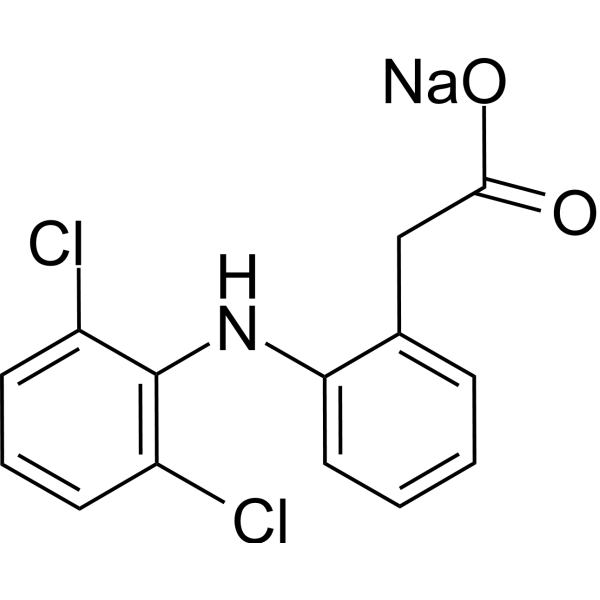
Diclofenac Sodium (GP 45840) is a potent and nonselective anti-inflammatory agent, acts as a COX inhibitor, with IC50s of 4 and 1.3 nM for human COX-1 and COX-2 in CHO cells , and 5.1 and 0.84 μM for ovine COX-1 and COX-2, respectively . Diclofenac Sodium induces apoptosis of neural stem cells (NSCs) via the activation of the caspase cascade .
|
-
-
- HY-78131S
-
-
-
- HY-B0138
-
|
Ketorolac Tromethamine; Ketorolac tris salt; RS37619 tromethamine salt
|
COX
|
Inflammation/Immunology
Cancer
|
|
Ketorolac tromethamine salt (RS37619 tromethamine salt) is a non-steroidal anti-inflammatory agent, acting as a nonselective COX inhibitor, with IC50s of 20 nM for COX-1 and 120 nM for COX-2.
|
-
-
- HY-B1888A
-
|
|
COX
|
Infection
Inflammation/Immunology
|
|
Bromfenac sodium is a potent and orally active inhibitor of COX, with IC50s of 5.56 and 7.45 nM for COX-1 and COX-2, respectively. Bromfenac sodium can be used in ocular inflammation research .
|
-
-
- HY-15321
-
|
MK-0663; L-791456
|
COX
|
Inflammation/Immunology
Cancer
|
|
Etoricoxib (MK-0663) is a non steroidal anti-inflammatory agent, acting as a selective and orally active COX-2 inhibitor. Etoricoxib can cross the blood-brain barrier, with IC50s of 1.1 μM and 116 μM for COX-2 and COX-1 in human whole blood .
|
-
-
- HY-15036A
-
|
|
COX
Apoptosis
|
Inflammation/Immunology
Cancer
|
|
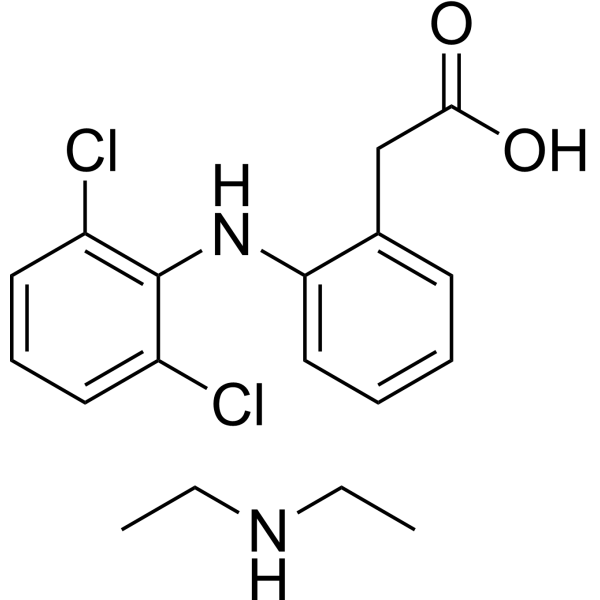
Diclofenac diethylamine is a potent and nonselective anti-inflammatory agent, acts as a COX inhibitor, with IC50s of 4 and 1.3 nM for human COX-1 and COX-2 in CHO cells , and 5.1 and 0.84 μM for ovine COX-1 and COX-2, respectively . Diclofenac diethylamine induces apoptosis of neural stem cells (NSCs) via the activation of the caspase cascade .
|
-
-
- HY-15036S
-
|
|
Isotope-Labeled Compounds
COX
Apoptosis
|
Inflammation/Immunology
|
|
Diclofenac-d4 is the deuterium labeled Diclofenac. Diclofenac is a potent and nonselective anti-inflammatory agent, acts as a COX inhibitor, with IC50s of 4 and 1.3 nM for human COX-1 and COX-2 in CHO cells , and 5.1 and 0.84 μM for ovine COX-1 and COX-2, respectively . Diclofenac induces apoptosis of neural stem cells (NSCs) via the activation of the caspase cascade .
|
-
-
- HY-B0335
-
|
GEA 6414
|
COX
|
Infection
Neurological Disease
Inflammation/Immunology
Cancer
|
|
Tolfenamic Acid (GEA 6414) is a CNS-penetrant non-steroidal anti-inflammatory and anti-cancer agent, selectively inhibits COX-2, with an IC50 of 13.49 μM (3.53 μg/mL) in LPS-treated (COX-2) canine DH82 monocyte/macrophage cells, but shows no effect on COX-1.
|
-
-
- HY-B0336
-
|
|
COX
Apoptosis
PGE synthase
|
Inflammation/Immunology
Cancer
|
|
Pranoprofen is a non-steroidal anti-inflammatory agent (NSAID) for the research of keratitis or other ophthalmology diseases. Pranoprofen inhibit COX-1 and COX-2 enzymes, thus blocking arachidonic acid converted to eicosanoids and reducing prostaglandins synthesis .
|
-
-
- HY-15037R
-
|
GP 45840 (Standard)
|
Reference Standards
COX
Apoptosis
|
Inflammation/Immunology
Cancer
|
|
Diclofenac (Sodium) (Standard) is the analytical standard of Diclofenac (Sodium). This product is intended for research and analytical applications. Diclofenac Sodium (GP 45840) is a potent and nonselective anti-inflammatory agent, acts as a COX inhibitor, with IC50s of 4 and 1.3 nM for human COX-1 and COX-2 in CHO cells , and 5.1 and 0.84 μM for ovine COX-1 and COX-2, respectively . Diclofenac Sodium induces apoptosis of neural stem cells (NSCs) via the activation of the caspase cascade .
|
-
-
- HY-14670
-
|
ML 1785713
|
COX
|
Inflammation/Immunology
|
|
Firocoxib (ML 1785713) is a potent, selective and orally active COX-2 inhibitor with an IC50 of 0.13 μM. Firocoxib shows 58-fold more selective for COX-2 than COX-1 (IC50 of 7.5 μM). Firocoxib has anti-inflammatory effects .
|
-
-
- HY-N0929
-
|
|
COX
Reactive Oxygen Species (ROS)
|
Cancer
|
|
Hexahydrocurcumin is one of the major metabolites of curcumin and a selective, orally active COX-2 inhibitor. Hexahydrocurcumin is inactive against COX-1. Hexahydrocurcumin has antioxidant, anticancer and anti-inflammatory activities .
|
-
-
- HY-B0386
-
|
|
COX
|
Inflammation/Immunology
|
|
Flunixin meglumine is a cyclooxygenase (COX) inhibitor with IC50 values of 0.55 and 3.24 μM for COX-1 and COX-2, respectively. Flunixin meglumine shows anti-inflammatory effects .
|
-
-
- HY-B0619
-
|
CN100
|
COX
|
Inflammation/Immunology
|
|
Zaltoprofen (CN100), a non-steroidal anti-inflammatory drug (NSAID), is a preferential and orally active COX-2 inhibitor, with IC50s of 1.3 and 0.34 μM for COX-1 and COX-2, respectively. Zaltoprofen exhibits powerful anti-inflammatory effects as well as an analgesic action on inflammatory pain .
|
-
-
- HY-14397A
-
|
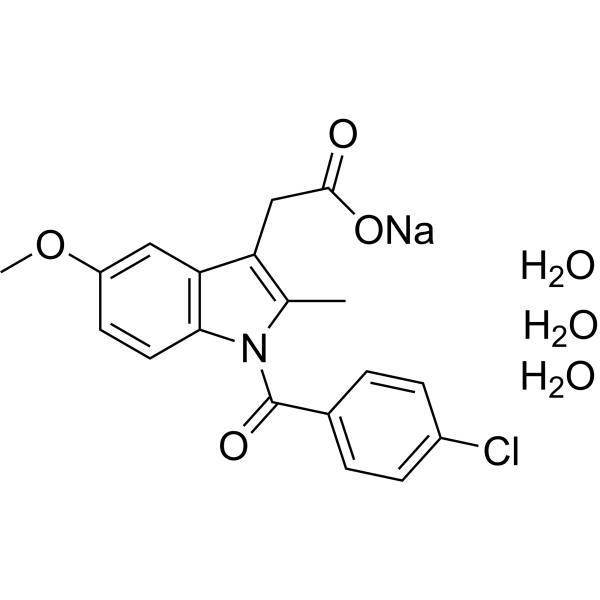
Indometacin sodium hydrate
|
COX
Bacterial
Influenza Virus
Antibiotic
|
Infection
Neurological Disease
Inflammation/Immunology
Cancer
|
|
Indomethacin (Indometacin) sodium hydrateis a orally active and BBB-permeable COX1/2 inhibitor with IC50 values of 18 nM and 26 nM for COX-1 and COX-2, respectively. Indomethacin sodium hydrateis has anticancer activity and anti-infective activity. Indomethacin sodium hydrateis can be used for cancer, inflammation and viral infection research .
|
-
-
- HY-15029
-
|
(Rac)-Naproxen; 2-(6-Methoxynaphthalen-2-yl)propanoic acid
|
COX
|
Inflammation/Immunology
Cancer
|
|
(±)-Naproxen ((Rac)-Naproxen) is a racemate of Naproxen (HY-15030). Naproxen is a COX-1 and COX-2 inhibitor with IC50s of 8.72 and 5.15 μM, respectively.
|
-
-
- HY-15036R
-
|
|
Reference Standards
COX
Apoptosis
|
Inflammation/Immunology
Cancer
|
|
Diclofenac (Standard) is the analytical standard of Diclofenac. This product is intended for research and analytical applications. Diclofenac is a potent and nonselective anti-inflammatory agent, acts as a COX inhibitor, with IC50s of 4 and 1.3 nM for human COX-1 and COX-2 in CHO cells , and 5.1 and 0.84 μM for ovine COX-1 and COX-2, respectively . Diclofenac induces apoptosis of neural stem cells (NSCs) via the activation of the caspase cascade .
|
-
-
- HY-15030R
-
|
(S)-Naproxen (Standard)
|
Reference Standards
COX
Autophagy
|
Inflammation/Immunology
Cancer
|
|
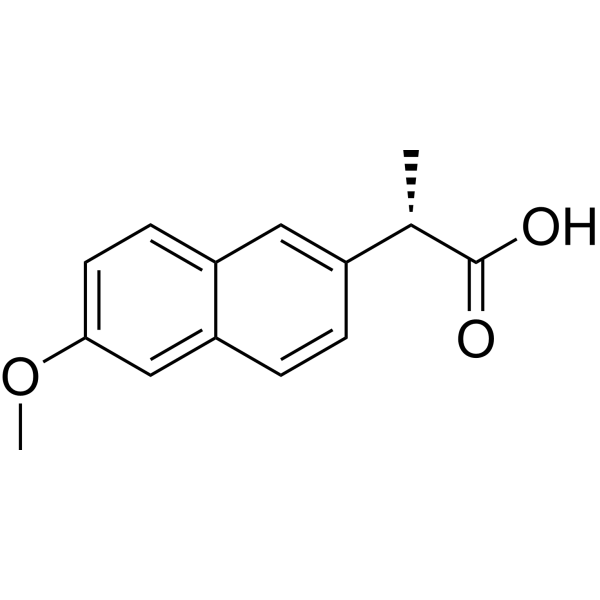
Naproxen (Standard) is the analytical standard of Naproxen. This product is intended for research and analytical applications. Naproxen is a COX-1 and COX-2 inhibitor with IC50s of 8.72 and 5.15 μM, respectively in cell assay.
|
-
-
- HY-15036S1
-
|
|
Isotope-Labeled Compounds
COX
Apoptosis
|
Inflammation/Immunology
|
|
Diclofenac- 13C6 is the 13C6 labeled Diclofenac. Diclofenac is a potent and nonselective anti-inflammatory agent, acts as a COX inhibitor, with IC50s of 4 and 1.3 nM for human COX-1 and COX-2 in CHO cells, and 5.1 and 0.84 μM for ovine COX-1 and COX-2, respectively. Diclofenac induces apoptosis of neural stem cells (NSCs) via the activation of the caspase cascade.
|
-
-
- HY-15321S
-
|
MK-0663-d4; L-791456-d4
|
COX
|
Others
|
|
Etoricoxib-d4 (MK-0663-d4) is a deuterium labeled Etoricoxib. Etoricoxib is a non steroidal anti-inflammatory agent, acting as a selective and orally active COX-2 inhibitor, with IC50s of 1.1 μM and 116 μM for COX-2 and COX-1 in human whole blood.
|
-
-
- HY-15037S2
-
|
GP 45840-13C6
|
Isotope-Labeled Compounds
COX
Apoptosis
|
Inflammation/Immunology
|
|
Diclofenac- 13C6 (Sodium) is the 13C6 labeled Diclofenac (Sodium). Diclofenac Sodium (GP 45840) is a potent and nonselective anti-inflammatory agent, acts as a COX inhibitor, with IC50s of 4 and 1.3 nM for human COX-1 and COX-2 in CHO cells, and 5.1 and 0.84 μM for ovine COX-1 and COX-2, respectively. Diclofenac Sodium induces apoptosis of neural stem cells (NSCs) via the activation of the caspase cascade.
|
-
-
- HY-15037S1
-
|
|
COX
Apoptosis
|
Inflammation/Immunology
|
|
Diclofenac-d4 (sodium) is the deuterium labeled Diclofenac sodium. Diclofenac Sodium (GP 45840) is a potent and nonselective anti-inflammatory agent, acts as a COX inhibitor, with IC50s of 4 and 1.3 nM for human COX-1 and COX-2 in CHO cells , and 5.1 and 0.84 μM for ovine COX-1 and COX-2, respectively . Diclofenac Sodium induces apoptosis of neural stem cells (NSCs) via the activation of the caspase cascade .
|
-
-
- HY-B1888
-
|
|
COX
|
Infection
Inflammation/Immunology
|
|
Bromfenac is a potent and orally active inhibitor of COX, with IC50s of 5.56 and 7.45 nM for COX-1 and COX-2, respectively. Bromfenac can be used in ocular inflammation research .
|
-
-
- HY-19212
-
|
|
COX
Lipoxygenase
|
Inflammation/Immunology
|
|
S-2474 is an inhibitor of COX-2 and 5-lipoxygenase (5-LO), with IC50s of 11 nM and 27 μM for COX-2 and COX-1 in human intact cells, and used as a nonsteroidal anti-inflammatory agent.
|
-
-
- HY-14397S
-
|
Indometacin-d4
|
Isotope-Labeled Compounds
COX
Autophagy
|
Inflammation/Immunology
Cancer
|
|
Indomethacin-d4 (Indometacin-d4) is a deuterium labeled Indomethacin. Indomethacin is a potent, blood-brain permeable and nonselective inhibitor of COX1 and COX2, with IC50s of 18 nM and 26 nM for human COX-1 and COX-2, respectively, in CHO cells . Indomethacin disrupts autophagic flux by disturbing the normal functioning of lysosomes .
|
-
-
- HY-131259
-
|
|
COX
|
Inflammation/Immunology
|
|
Ibuprofen Impurity F is an Ibuprofen impurity. Ibuprofen is an anti-inflammatory inhibitor targeting COX-1 and COX-2 with IC50s of 13 μM and 370 μM, respectively .
|
-
-
- HY-126121
-
|
(±)-2-Hydroxy Ibuprofen
|
COX
|
Inflammation/Immunology
Cancer
|
|
2-Hydroxy Ibuprofen is a metabolite of Ibuprofen. Ibuprofen is an anti-inflammatory inhibitor targeting COX-1 and COX-2 with IC50s of 13 μM and 370 μM, respectively.
|
-
-
- HY-115966
-
|
|
COX
|
Inflammation/Immunology
|
|
COX-1/2-IN-2 is a potent COX1/2 inhibitor. COX-1/2-IN-2 exhibits significant inhibitory effect against COX-1 and COX-2 inhibitor with IC50 values of 13.9 ± 3.21 µM and 6.4±0.74 µM, respectively .
|
-
-
- HY-162167
-
|
|
COX
|
Cardiovascular Disease
Neurological Disease
|
|
COX-1-IN-1 (compound 15a) is a selective inhibitor for cyclooxygenase (COX), with IC50s of 0.23 μM (COX-1) and >50 μM (COX-2), selective index (COX-2 IC50/COX-1 IC50) is 217. COX-1-IN-1 inhibits platelet aggregation .
|
-
-
- HY-111274
-
|
Indometacin farnesil
|
COX
Autophagy
|
Inflammation/Immunology
|
|
Indomethacin farnesil is an orally active proagent of Indomethacin. Indomethacin (Indometacin) is a potent, blood-brain permeable and nonselective inhibitor of COX1 and COX2, with IC50s of 18 nM and 26 nM for human COX-1 and COX-2, respectively, in CHO cells. Indomethacin disrupts autophagic flux by disturbing the normal functioning of lysosomes .
|
-
-
- HY-14397S1
-
|
|
COX
Autophagy
|
Inflammation/Immunology
Cancer
|
|
Indomethacin-d4 Methyl Ester is the deuterium labeled Indomethacin. Indomethacin (Indometacin) is a potent, blood-brain permeable and nonselective inhibitor of COX1 and COX2, with IC50s of 18 nM and 26 nM for human COX-1 and COX-2, respectively, in CHO cells . Indomethacin disrupts autophagic flux by disturbing the normal functioning of lysosomes .
|
-
-
- HY-15038R
-
|
|
Reference Standards
COX
Apoptosis
|
Inflammation/Immunology
Cancer
|
|
Diclofenac (potassium) (Standard) is the analytical standard of Diclofenac (potassium). This product is intended for research and analytical applications. Diclofenac potassium is a potent and nonselective anti-inflammatory agent, acts as a COX inhibitor, with IC50s of 4 and 1.3 nM for human COX-1 and COX-2 in CHO cells , and 5.1 and 0.84 μM for ovine COX-1 and COX-2, respectively . Diclofenac potassium induces apoptosis of neural stem cells (NSCs) via the activation of the caspase cascade .
|
-
-
- HY-131260
-
|
|
COX
|
Inflammation/Immunology
|
|
Ibuprofen Impurity K is an Ibuprofen impurity. Ibuprofen is an anti-inflammatory inhibitor targeting COX-1 and COX-2 with IC50s of 13 μM and 370 μM, respectively .
|
-
-
- HY-15036AR
-
|
|
Reference Standards
COX
Apoptosis
|
Inflammation/Immunology
Cancer
|
|
Diclofenac (diethylamine) (Standard) is the analytical standard of Diclofenac (diethylamine). This product is intended for research and analytical applications. Diclofenac diethylamine is a potent and nonselective anti-inflammatory agent, acts as a COX inhibitor, with IC50s of 4 and 1.3 nM for human COX-1 and COX-2 in CHO cells , and 5.1 and 0.84 μM for ovine COX-1 and COX-2, respectively . Diclofenac diethylamine induces apoptosis of neural stem cells (NSCs) via the activation of the caspase cascade .
|
-
-
- HY-150550
-
|
|
COX
|
Inflammation/Immunology
|
|
COX-2-IN-26 is a potent, selective and orally active COX-2 inhibitor with IC50 values of 10.61, 0.067, 1.96 µM for COX-1, COX-2, 15-LOX, respectively. COX-2-IN-26 shows anti-inflammatory activity. COX-2-IN-26 shows gastrointestinal safety profile .
|
-
-
- HY-15034
-
|
INDOMETHACIN SODIUM
|
COX
Antibiotic
Influenza Virus
Bacterial
|
Inflammation/Immunology
Cancer
|
|
Indomethacin (Indometacin) sodium is a potent, orally active COX1/2 inhibitor with IC50 values of 18 nM and 26 nM for COX-1 and COX-2, respectively. Indomethacin sodium has anticancer activity and anti-infective activity. Indomethacin sodium can be used for cancer, inflammation and viral infection research. .
|
-
- HY-15321S2
-
|
MK-0663-d3; L-791456-d3
|
COX
|
Inflammation/Immunology
|
|
Etoricoxib-d3 is the deuterium labeled Etoricoxib . Etoricoxib (MK-0663) is a non steroidal anti-inflammatory agent, acting as a selective and orally active COX-2 inhibitor, with IC50s of 1.1 μM and 116 μM for COX-2 and COX-1 in human whole blood .
|
-
- HY-15321R
-
|
MK-0663 (Standard); L-791456 (Standard)
|
Reference Standards
COX
|
Inflammation/Immunology
Cancer
|
|
Etoricoxib (Standard) is the analytical standard of Etoricoxib. This product is intended for research and analytical applications. Etoricoxib (MK-0663) is a non steroidal anti-inflammatory agent, acting as a selective and orally active COX-2 inhibitor, with IC50s of 1.1 μM and 116 μM for COX-2 and COX-1 in human whole blood.
|
-
- HY-B0580S
-
|
|
COX
|
Inflammation/Immunology
|
|
Ketorolac-d5 is a deuterium labeled Ketorolac. Ketorolac is a non-steroidal anti-inflammatory agent, acting as a nonselective COX inhibitor, with IC50s of 20 nM for COX-1 and 120 nM for COX-2 .
|
-
- HY-N0356R
-
|
(-)-Catechin 3-gallate (Standard); (-)-Catechin 3-O-gallate (Standard)
|
Reference Standards
COX
|
Cancer
|
|
(-)-Catechin gallate (Standard) is the analytical standard of (-)-Catechin gallate. This product is intended for research and analytical applications. (-)-Catechin gallate is a minor constituent in green tea catechins. (-)-Catechin gallate inhibits the activity of COX-1 and COX-2 enzymes.
|
-
- HY-17372S
-
|
|
Isotope-Labeled Compounds
COX
|
Inflammation/Immunology
Cancer
|
|
Rofecoxib-d5 is the deuterium labeled Rofecoxib. Rofecoxib is a potent, specific and orally active COX-2 inhibitor, with IC50s of 26 and 18 nM for human COX-2 in human osteosarcoma cells and Chinese hamster ovary cells, with a 1000-fold selectivity for COX-2 over human COX-1 (IC50 > 50 μM in U937 cells and > 15 μM in Chinese hamster ovary cells) .
|
-
- HY-B0335S1
-
|
GEA 6414-13C6
|
Isotope-Labeled Compounds
COX
|
Inflammation/Immunology
Cancer
|
|
Tolfenamic acid- 13C6 is the 13C6 labeled Tolfenamic acid. Tolfenamic Acid (GEA 6414) is a non-steroidal anti-inflammatory and anti-cancer agent, selectively inhibits COX-2, with an IC50 of 13.49 μM (3.53 μg/mL) in LPS-treated (COX-2) canine DH82 monocyte/macrophage cells, but shows no effect on COX-1.
|
-
- HY-B0367R
-
|
Chlortenoxicam (Standard); Ro 13-9297 (Standard)
|
Reference Standards
COX
Endogenous Metabolite
|
Inflammation/Immunology
|
|
Lornoxicam (Standard) is the analytical standard of Lornoxicam. This product is intended for research and analytical applications. Lornoxicam (Chlortenoxicam) is a highly active COX-1 and COX-2 inhibitor with IC50 of 5 nM and 8 nM respectively. It is a new non-steroidal anti-inflammatory compound.
|
-
- HY-116610
-
|
|
COX
|
Inflammation/Immunology
|
|
L 748780 (compound 2) is a selectivity COX-2 inhibitor with the IC50 values of 0.5 μM and > 100 μM for COX-2 and COX-1, respectively .
|
-
- HY-B0808S1
-
|
Oxaprozinum-d5; Wy21743-d5
|
Isotope-Labeled Compounds
COX
NF-κB
|
Inflammation/Immunology
Cancer
|
|
Oxaprozin-d5 is deuterium labeled Oxaprozin. Oxaprozin is an inhibitor of both COX-1 and COX-2 with IC50s of 2.2 μM and 36 μM for human platelet COX-1 and IL-1-stimulated human synovial cell COX-2, respectively. Oxaprozin also inhibits the activation of NF-κB.
|
-
- HY-177319
-
|
|
COX
|
Inflammation/Immunology
|
|
COX-2-IN-56 (example 6) is a selective COX-2 inhibitor without significantly inhibiting COX-1. COX-2-IN-56 can be used for the study of COX-2 dependent disorders, such as inflammation .
|
-
- HY-147693
-
|
|
COX
|
Inflammation/Immunology
|
|
COX-1/2-IN-3 (Compound 7a) is a COX-1 and COX-2 inhibitor. COX-2-IN-15 shows anti-inflammatory activity with low toxicity .
|
-
- HY-162173
-
|
|
COX
|
Inflammation/Immunology
|
|
WYZ90 ((compound 6a) is a potent and selective COX-2 inhibitor with IC50 values of 75, 5734, 19940 nM for COX-2, COX-1 and DPPH, respectively. WYZ90 shows antioxidant and analgesic activity .
|
-
- HY-163509
-
|
|
COX
Apoptosis
|
Cancer
|
|
COX-2-IN-43 (Compound MYM4) is a COX-2 inhibitor (IC50: 0.983 and 0.247 μM for COX-1 and COX-2 respectively). COX-2-IN-43 inhibits cancer cell proliferation and colonization, induces apoptosis .
|
-
- HY-161862
-
|
|
COX
|
Inflammation/Immunology
|
|
COX-2-IN-44 is a potent and orally active COX-2 inhibitor with IC50 values of 0.18,1.14 µM for COX-2, COX-1, respectively. COX-2-IN-44 shows anti-inflammatory activity .
|
-
- HY-147961
-
|
|
COX
|
Inflammation/Immunology
|
|
COX-2-IN-23 (compound 9a) is a selective COX-2 inhibitor with IC50 values of 0.28 and 20.14 μM for COX-2 and COX-1. COX-2-IN-23 has anti-inflammatory activity and low ulcerogenic activity.
|
-
- HY-161294
-
|
|
COX
|
Cancer
|
|
COX-2-IN-41 (compound 5e) is a selective inhibitor of COX-2 (IC50=1.74 μM). Compared with COX-1, the selectivity IC50 (COX-1)/IC50(COX-2) =16.32 .
|
-
- HY-150551
-
|
|
COX
|
Inflammation/Immunology
|
|
COX-2-IN-27 is a potent and selective COX-2 inhibitor with IC50 values of 13.22, 0.045, 1.67 µM for COX-1, COX-2, 15-LOX, respectively. COX-2-IN-27 shows anti-inflammatory activity .
|
-
- HY-B0367S
-
-
- HY-152120
-
|
Aiphanol
|
COX
VEGFR
|
Inflammation/Immunology
Cancer
|
|
(±)-Aiphanol is a newly discovered stilbenolignan analog. (±)-Aiphanol exhibits significant anti-inflammatory activity, acting through inhibition of COX-1 and COX-2. The inhibitory effect on COX-1 (IC50 = 1.9 μM) is particularly strong, while the effect on COX-2 (IC50= 9.9 μM) is relatively weak .(±)-Aiphanol effectively inhibits VEGFR2 (IC50=0.92 μM). (±)-Aiphanol blocks angiogenesis and promotes apoptosis through inhibition of VEGFR2 and COX2 activity. (±)-Aiphanol is orally active .
|
-
- HY-15762S
-
-
- HY-135081
-
|
N-4AIA
|
COX
|
Others
|
|
N-(4-acetamidophenyl)-indomethacin amide (N-4-AIA) is one of several aromatic amides of indomethacin reported to be potent and selective reversible inhibitors of COX-2.1 N-4-AIA inhibits human recombinant and ovine COX-2 with IC50 values of 0.12 and 0.625 μM, respectively. It is about 400 times less potent as an inhibitor of human recombinant COX-1 and 80 times less potent as an inhibitor of ovine COX-1 than ovine COX-2.
|
-
- HY-15762R
-
|
SC 65872 (Standard)
|
Reference Standards
COX
Endogenous Metabolite
|
Inflammation/Immunology
Cancer
|
|
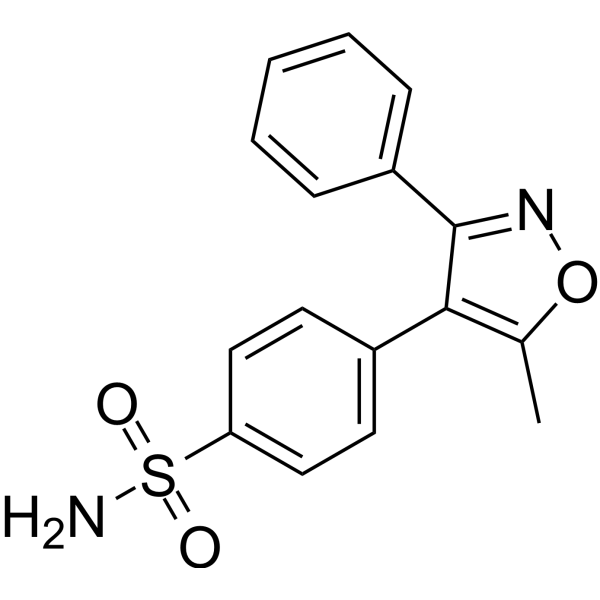
Valdecoxib (Standard) is the analytical standard of Valdecoxib. This product is intended for research and analytical applications. Valdecoxib is a highly potent and selective inhibitor of COX-2, with IC50s of 5 nM and 140 μM for COX-2 and COX-1, respeceively. Valdecoxib can be used in the research of arthritis and pain.
|
-
- HY-15037S
-
|
|
Isotope-Labeled Compounds
COX
Apoptosis
|
Inflammation/Immunology
|
|
Diclofenac- 13C6 (sodium heminonahydrate) is the 13C-labeled Diclofenac Sodium. Diclofenac Sodium (GP 45840) is a potent and nonselective anti-inflammatory agent, acts as a COX inhibitor, with IC50s of 4 and 1.3 nM for human COX-1 and COX-2 in CHO cells , and 5.1 and 0.84 μM for ovine COX-1 and COX-2, respectively . Diclofenac Sodium induces apoptosis of neural stem cells (NSCs) via the activation of the caspase cascade .
|
-
- HY-N2599
-
|
|
COX
Apoptosis
|
Cancer
|
|
Taraxerol acetate is a COX-1 and COX-2 inhibitor with IC50 values of 116.3 μM and 94.7 μM, respectively. Taraxerol acetate the has the anticancer potential and induces cell apoptosis .
|
-
- HY-131258
-
|
|
COX
|
Inflammation/Immunology
|
|
Ibuprofen impurity 1 is an Ibuprofen impurity. Ibuprofen is an anti-inflammatory inhibitor targeting COX-1 and COX-2 with IC50s of 13 μM and 370 μM, respectively .
|
-
- HY-121046
-
|
Sch 14714
|
COX
|
Inflammation/Immunology
|
|
Flunixin is a cyclooxygenase (COX) inhibitor with IC50 values of 0.55 and 3.24 μM for COX-1 and COX-2, respectively. Flunixin shows anti-inflammatory effects .
|
-
- HY-115967
-
|
|
COX
|
Inflammation/Immunology
|
|
COX-1/2-IN-2 is a potent COX1/2 inhibitor. COX-1/2-IN-2 exhibits significant inhibitory effect against COX-1 and COX-2 inhibitor with IC50 values of 9.7 ± 0.09 µM and 4.6 ± 1.45 µM, respectively .
|
-
- HY-105028A
-
|
CP-66248 sodium
|
COX
|
Inflammation/Immunology
|
|
Tenidap is a non-steroidal anti-inflammatory active molecule and a selective inhibitor of COX-1, with IC50 values of 0.03 μM for COX-1 and 1.2 μM for COX-2. Tenidap exhibits anti-inflammatory and anti-rheumatic effects. Tenidap is a specific inhibitor of SLC26A3 .
|
-
- HY-N11624
-
|
|
COX
|
Inflammation/Immunology
|
|
Axinelline A is a potent COX inhibitor with IC50s of 2.22 μM and 8.89 μM against COX-2 and COX-1, respectively. Axinelline A shows anti-inflammatory activity .
|
-
- HY-106093
-
|
|
COX
|
Inflammation/Immunology
|
|
Eltenac, a non-steroidal anti-inflammatory drug (NSAID), is a COX inhibitor. Eltenac shows IC50 of 0.03 μM for both COX-1 and COX-2 in isolated human whole blood .
|
-
- HY-111950
-
|
(R)-Ibuprofenamide
|
COX
|
Inflammation/Immunology
|
|
(-)-Ibuprofenamide is an amide proagent of Ibuprofen with anti-inflammatory activity . Ibuprofen is an anti-inflammatory inhibitor targeting COX-1 and COX-2 with IC50s of 13 μM and 370 μM, respectively .
|
-
- HY-Z4707
-
|
|
Drug Metabolite
|
Others
|
|
Etoricoxib N1'-oxide is an Etoricoxib (HY-15321) metabolite. Etoricoxib N1'-oxide does not inhibit COX-1, nor does it significantly inhibit COX-2 .
|
-
- HY-B0253A
-
|
CP-16171 olamine
|
COX
|
Inflammation/Immunology
Cancer
|
|
Piroxicam olamine (CP-16171) is a non-steroidal anti-inflammatory drugs, acts as a COX inhibitor, with IC50s of 47, 25 μM for human monocyte COX-1 and COX-2, respectively .
|
-
- HY-15030AR
-
|
|
Reference Standards
Autophagy
COX
|
Inflammation/Immunology
Cancer
|
|
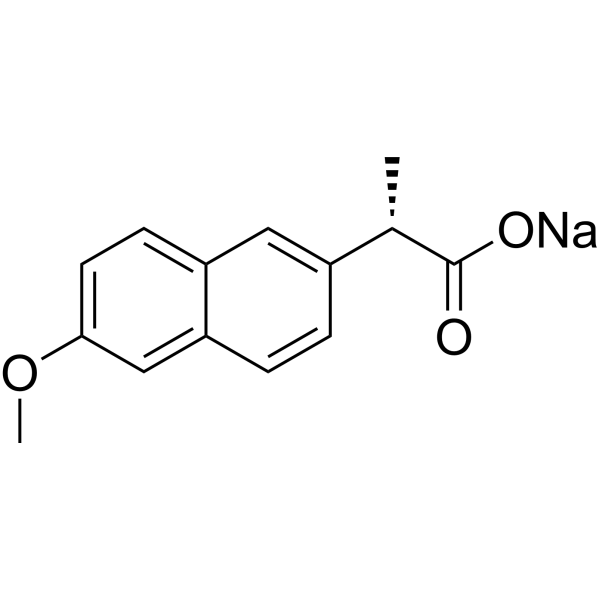
Naproxen (sodium) (Standard) is the analytical standard of Naproxen (sodium). This product is intended for research and analytical applications. Naproxen sodium is a COX-1 and COX-2 inhibitor with IC50s of 8.72 and 5.15 μM, respectively in cell assay.
|
-
- HY-162044
-
|
|
COX
|
Inflammation/Immunology
|
|
COX-1/2-IN-6 (compound 4 h) is a potent dual inhibitor of COX-1 and COX-2 with IC50s of 68 and 91 nM, respectively. COX-1/2-IN-6 can used in study inflammation diseases .
|
-
- HY-105028S
-
|
CP-66248-d3
|
COX
|
Inflammation/Immunology
|
|
Tenidap-d3 is the deuterium labeled Tenidap. Tenidap, a non-steroidal anti-inflammatory drug, is a selective COX-1 inhibitor, with IC50 values of 0.03 μM and 1.2 μM for COX-1 and COX-2, respectively. Tenidap has anti-inflammatory and antirheumatic properties . Tenidap is also a specific SLC26A3 inhibitor .
|
-
- HY-B2137R
-
|
(S)-Ketoprofen (Standard); Dexketoprofen (Standard)
|
Reference Standards
COX
|
Inflammation/Immunology
|
|
S-(+)-Ketoprofen (Standard) is the analytical standard of S-(+)-Ketoprofen. This product is intended for research and analytical applications. S-(+)-Ketoprofen is a potent inhibitor of both COX-1 and COX-2 with IC50s of 1.9 and 27 nM, respectively.
|
-
- HY-17372R
-
|
MK 966 (Standard)
|
Reference Standards
COX
|
Inflammation/Immunology
Cancer
|
|
Rofecoxib (Standard) is the analytical standard of Rofecoxib. This product is intended for research and analytical applications. Rofecoxib is a potent, specific and orally active COX-2 inhibitor, with IC50s of 26 and 18 nM for human COX-2 in human osteosarcoma cells and Chinese hamster ovary cells, with a 1000-fold selectivity for COX-2 over human COX-1 (IC50 > 50 μM in U937 cells and > 15 μM in Chinese hamster ovary cells).
|
-
- HY-15321S1
-
|
MK-0663-13C,d3; L-791456-13C,d3
|
Isotope-Labeled Compounds
COX
|
Inflammation/Immunology
Cancer
|
|
Etoricoxib- 13C,d3 is the 13C- and deuterium labeled Etoricoxib. Etoricoxib (MK-0663) is a non steroidal anti-inflammatory agent, acting as a selective and orally active COX-2 inhibitor, with IC50s of 1.1 μM and 116 μM for COX-2 and COX-1 in human whole blood.
|
-
- HY-134138
-
|
|
COX
|
Inflammation/Immunology
|
|
Indomethacin N-octyl amide (Compound 2) is a potent and selective COX-2 inhibitor with an IC50 of 40 nM. Indomethacin N-octyl amide shows >1000-fold selectivity against COX-1 (IC50 of 66 µM) .
|
-
- HY-B0335S
-
|
|
COX
|
Inflammation/Immunology
Cancer
|
|
Tolfenamic acid-d4 is the deuterium labeled Tolfenamic Acid. Tolfenamic Acid (GEA 6414) is a non-steroidal anti-inflammatory and anti-cancer agent, selectively inhibits COX-2, with an IC50 of 13.49 μM (3.53 μg/mL) in LPS-treated (COX-2) canine DH82 monocyte/macrophage cells, but shows no effect on COX-1 .
|
-
- HY-N18001
-
|
|
COX
|
Inflammation/Immunology
|
|
Plantanone A is a COX inhibitor with an IC50 of 33.37 μM against ovine COX-1 and an IC50 of 46.16 μM against ovine COX-2. Plantanone A exhibits weak DPPH radical scavenging activity (IC50: 467.7 μM). Plantanone A can be used in the research of inflammation-related diseases .
|
-
- HY-183673
-
|
|
COX
|
Neurological Disease
Inflammation/Immunology
|
|
COX-1/2-IN-12 is an orally active dual inhibitor of COX-1 and COX-2, with an IC50 of 41.6 nM against human COX-1 and an IC50 of 31.1 nM against human COX-2. COX-1/2-IN-12 induces antinociceptive activity and inhibits edema in in vivo experiments. COX-1/2-IN-12 can be used in research related to inflammation and pain .
|
-
- HY-182291
-
|
|
COX
|
Inflammation/Immunology
|
|
COX-1/2-IN-11 is a dual inhibitor of COX-1 and COX-2, with an IC50 of 345 nM against COX-1. COX-1/2-IN-11 can be used in the development of non-steroidal anti-inflammatory agents .
|
-
- HY-W039699
-
|
2-(4-Methylphenyl)propionic acid
|
COX
Bacterial
Drug Intermediate
|
Infection
|
|
2-(p-Tolyl) propanoic acid (2-(4-methylphenyl) propionic acid) acts as an Antimicrobial agent intermediate. 2-(p-Tolyl) propanoic acid inhibits COX-1 and COX-2 enzymes, with IC50 values of 38.23 μM and 64.30 μM, respectively. 2-(p-Tolyl) propanoic acid is applicable to research on E. coli, Enterococcus faecalis, Listeria monocytogenes, and Staphylococcus aureus .
|
-
- HY-160184
-
|
|
COX
|
Neurological Disease
Inflammation/Immunology
|
|
COX-1-IN-5 (example 13, compound PS13) is a potent and selective COX-1 inhibitor (COX-1 IC50 = 1 nM, COX-2 IC50 > 0.1 μM) exhibiting >1000-fold selectivity over COX-2. COX-1-IN-5 possesses strong anti-inflammatory, antipyretic, analgesic, antithrombotic, anti-cancer activities. COX-1-IN-5 can be used for COX-mediated diseases research, such as inflammatory conditions and pain. COX-1-IN-5 radiolabeled with 11C can be used as a selective PET tracer for whole‑body imaging of COX‑1 distribution and target engagement in vivo .
|
-
- HY-180203
-
|
|
COX
|
Cancer
|
|
COX-1/2-IN-10 (compound 3) is a dual COX-1 and COX-2 inhibitor. COX-1/2-IN-10 shows low cytotoxicity in RAW 264.7 cells .
|
-
- HY-183187
-
|
|
Estrogen Receptor/ERR
COX
|
Cancer
|
|
4H-Chromen-4-one-o-carborane is an estrogen receptor (ER) agonist, with an EC50 of 0.9 μM for ERα and an EC50 of 11.1 μM for ERβ. 4H-Chromen-4-one-o-carborane also acts as an inhibitor of COX-1 and COX-2, with an IC50 of 6.6 μM for COX-1 and an IC50 of 17.7 μM for COX-2 .
|
-
- HY-W032938
-
|
|
COX
NO Synthase
|
Neurological Disease
Inflammation/Immunology
|
|
COX-1-IN-4 (Compound P10) is a selective COX-1 inhibitor (IC50s: COX-1 = 0.09 μM; COX-2 = 2.49 μM). COX-1-IN-4 reduces the production of NO as well as the expression of the iNOS protein. COX-1-IN-4 can be used in the research of neuroinflammation .
|
-
- HY-138101
-
|
|
COX
|
Inflammation/Immunology
|
|
Desmethyl etoricoxib (example 21) is a selective COX-2 inhibitor with an IC50 of 1 μM in whole blood. Desmethyl etoricoxib inhibits COX-1 with an IC50 of 16 μM in U937 cells. Desmethyl etoricoxib has anti-inflammatory effects .
|
-
- HY-B0335R
-
|
GEA 6414 (Standard)
|
Reference Standards
COX
|
Inflammation/Immunology
Cancer
|
|
Tolfenamic Acid (Standard) is the analytical standard of Tolfenamic Acid. This product is intended for research and analytical applications. Tolfenamic Acid (GEA 6414) is a non-steroidal anti-inflammatory and anti-cancer agent, selectively inhibits COX-2, with an IC50 of 13.49 μM (3.53 μg/mL) in LPS-treated (COX-2) canine DH82 monocyte/macrophage cells, but shows no effect on COX-1.
|
-
- HY-14670R
-
|
ML 1785713 (Standard)
|
Reference Standards
COX
|
Inflammation/Immunology
|
|
Firocoxib (Standard) is the analytical standard of Firocoxib. This product is intended for research and analytical applications. Firocoxib (ML 1785713) is a potent, selective and orally active COX-2 inhibitor with an IC50 of 0.13 μM. Firocoxib shows 58-fold more selective for COX-2 than COX-1 (IC50 of 7.5 μM). Firocoxib has anti-inflammatory effects .
|
-
- HY-B1799A
-
|
|
COX
|
Inflammation/Immunology
Cancer
|
|
Tolmetin sodium is an orally active and potent COX inhibitor with IC50s of 0.35 μM and 0.82 μM human COX-1 and COX-2, respectively. Tolmetin sodium is a non-steroidal anti-inflammatory drug (NSAID) .
|
-
- HY-B0261S1
-
|
|
COX
Autophagy
Apoptosis
|
Inflammation/Immunology
Cancer
|
|
Meloxicam-d3-1 is the deuterium labeled Meloxicam. Meloxicam is a non-steroidal antiinflammatory agent, inhibits COX activity, with IC50s of 0.49 µM and 36.6 µM for COX-2 and COX-1, respectively.
|
-
- HY-B0261S
-
-
- HY-B0261A
-
-
- HY-B1799
-
|
|
COX
|
Inflammation/Immunology
Cancer
|
|
Tolmetin is an orally active and potent COX inhibitor with IC50s of 0.35 μM and 0.82 μM human COX-1 and COX-2, respectively. Tolmetin is a non-steroidal anti-inflammatory drug (NSAID) .
|
-
- HY-B2137S
-
|
(S)-Ketoprofen-d3; Dexketoprofen-d3
|
Isotope-Labeled Compounds
COX
|
Inflammation/Immunology
|
|
S-(+)-Ketoprofen-d3 ((S)-Ketoprofen-d3) is deuterium labeled S-(+)-Ketoprofen. S-(+)-Ketoprofen is a potent inhibitor of both COX-1 and COX-2 with IC50s of 1.9 and 27 nM, respectively.
|
-
- HY-105028R
-
|
CP-66248 (Standard)
|
Reference Standards
COX
|
Inflammation/Immunology
|
|
Tenidap (Standard) is the analytical standard of Tenidap. This product is intended for research and analytical applications. Tenidap, a non-steroidal anti-inflammatory drug, is a selective COX-1 inhibitor, with IC50 values of 0.03 μM and 1.2 μM for COX-1 and COX-2, respectively. Tenidap has anti-inflammatory and antirheumatic properties . Tenidap is also a specific SLC26A3 inhibitor .
|
-
- HY-150548
-
|
|
COX
Lipoxygenase
|
Inflammation/Immunology
|
|
COX-2/15-LOX-IN-1 (Compound 14) is a COX-2 and 15-lipoxygenase enzyme (15-LOX) inhibitor with IC50 values of 10.65, 0.075 and 2.98 μM against COX-1, COX-2 and 15-LOX, respectively. COX-2/15-LOX-IN-1 shows anti-inflammatory activity .
|
-
- HY-151173
-
|
|
Xanthine Oxidase
Lipoxygenase
COX
|
Metabolic Disease
Inflammation/Immunology
|
|
XO/COX/LOX-IN-1 is a XO/COX/LOX inhibitor with an IC50 of 3.2 μM against rat XO, 10.83 μM against 5-LOX, 12.67 μM against COX-1, and 8.31 μM against COX-2. XO/COX/LOX-IN-1 binds to the active sites of XO, 5-LOX, COX-1 and COX-2, thereby blocking enzyme activities associated with uric acid, leukotriene, prostaglandin synthesis and inflammatory pathways. XO/COX/LOX-IN-1 can be used in the research of hyperuricemia and inflammation .
|
-
- HY-12383
-
-
- HY-B0363
-
|
R805
|
COX
|
Inflammation/Immunology
Cancer
|
|
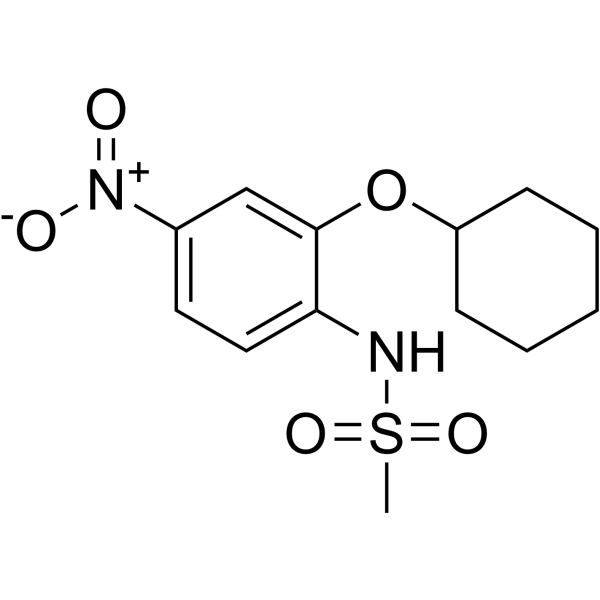
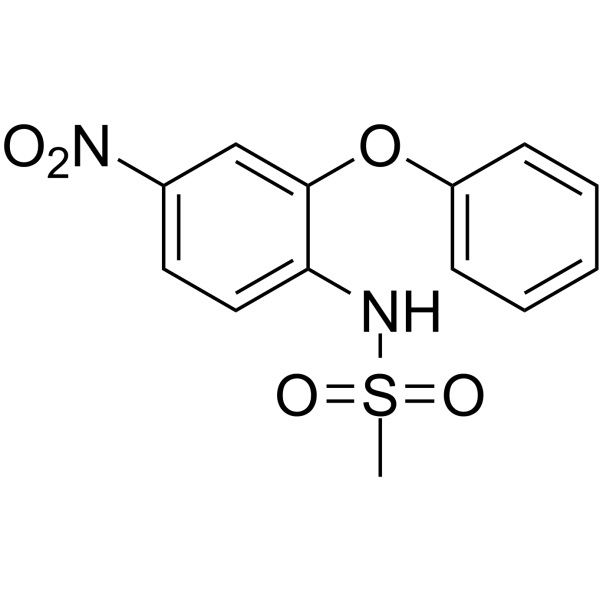
Nimesulide is a selective COX-2 inhibitor, with IC50s of 70 nM-70 μM in a time-dependent manner, but it shows no effect on COX-1 (IC50 >100 μM). Nimesulide has potent anti-inflammatory, analgesic and antipyretic properties.
|
-
- HY-19675
-
|
LT-NS 001; MX 1094
|
COX
|
Inflammation/Immunology
|
|
Naproxen etemesil is a lipophilic, non-acidic, inactive proagent of naproxen that is hydrolysed to pharmacologically active Naproxen once absorbed. Naproxen is a COX-1 and COX-2 inhibitor with IC50s of 8.72 and 5.15 μM, respectively in cell assay.
|
-
- HY-W777079
-
|
SC 65872-13C2,15N
|
Isotope-Labeled Compounds
COX
Endogenous Metabolite
|
Cancer
|
|
Valdecoxib- 13C2, 15N (SC 65872- 13C2, 15N) is the 13C- and 15N-labeled Valdecoxib (HY-15762). Valdecoxib is a highly potent and selective inhibitor of COX-2, with IC50s of 5 nM and 140 μM for COX-2 and COX-1, respeceively. Valdecoxib can be used in the research of arthritis and pain.
|
-
- HY-14670S
-
|
|
Isotope-Labeled Compounds
COX
|
Inflammation/Immunology
|
|
Firocoxib-d4 (ML 1785713-d4) is the deuterium labeled Firocoxib. Firocoxib (ML 1785713) is a potent, selective and orally active COX-2 inhibitor with an IC50 of 0.13 μM. Firocoxib shows 58-fold more selective for COX-2 than COX-1 (IC50 of 7.5 μM). Firocoxib has anti-inflammatory effects .
|
-
- HY-153980
-
|
|
RAR/RXR
COX
|
Inflammation/Immunology
|
|
K-80001 is an RXRα-binder and COX-1/2 inhibitor, with IC50s of with an IC50 of 82.9μM, 3.4μM, 1.2μM for RXRα, COX-1 and COX-2, respectively .
|
-
- HY-B0261R
-
-
- HY-B0580S1
-
|
|
Isotope-Labeled Compounds
COX
|
Inflammation/Immunology
|
|
Ketorolac-d4 (RS37619 D4) is the deuterium labeled Ketorolac. Ketorolac is a non-steroidal anti-inflammatory agent, acting as a nonselective COX inhibitor, with IC50s of 20 nM for COX-1 and 120 nM for COX-2 .
|
-
- HY-15029R
-
|
(Rac)-Naproxen (Standard); 2-(6-Methoxynaphthalen-2-yl)propanoic acid (Standard)
|
Reference Standards
COX
|
Inflammation/Immunology
Cancer
|
|
(±)-Naproxen (Standard) is the analytical standard of (±)-Naproxen. This product is intended for research and analytical applications. (±)-Naproxen ((Rac)-Naproxen) is a racemate of Naproxen (HY-15030). Naproxen is a COX-1 and COX-2 inhibitor with IC50s of 8.72 and 5.15 μM, respectively.
|
-
- HY-B0261S2
-
-
- HY-15030S1
-
-
- HY-B1489
-
|
|
COX
|
Inflammation/Immunology
Cancer
|
|
Tolmetin sodium dihydrate is an orally active and potent COX inhibitor with IC50s of 0.35 μM and 0.82 μM human COX-1 and COX-2, respectively. Tolmetin sodium dihydrate is a non-steroidal anti-inflammatory drug (NSAID) .
|
-
- HY-B0253S1
-
|
CP-16171-d4
|
Isotope-Labeled Compounds
COX
|
Inflammation/Immunology
Cancer
|
|
Piroxicam-d4 is the deuterium labeled Piroxicam. Piroxicam (CP-16171) is a non-steroidal anti-inflammatory drugs, acts as a COX inhibitor, with IC50s of 47, 25 μM for human monocyte COX-1 and COX-2, respectively.
|
-
- HY-14397R
-
|
Indometacin (Standard)
|
Reference Standards
COX
Antibiotic
Influenza Virus
Bacterial
|
Inflammation/Immunology
Cancer
|
|
Indomethacin (Standard) is the analytical standard of Indomethacin. This product is intended for research and analytical applications. Indomethacin (Indometacin) is a potent, orally active COX1/2 inhibitor with IC50 values of 18 nM and 26 nM for COX-1 and COX-2, respectively. Indomethacin has anticancer activity and anti-infective activity. Indomethacin can be used for cancer, inflammation and viral infection research .
|
-
- HY-14397S2
-
-
- HY-179700
-
|
|
COX
|
Inflammation/Immunology
|
|
COX-2-IN-61 is an orally active COX-2 inhibitor with an IC50 of 22 µM, also inhibits COX-1 with an IC50 of 43 µM. COX-2-IN-61 exhibits anti-inflammation effects in a Carrageenan (HY-125474) induced rat paw edema model, with promising safety profiles. COX-2-IN-61 can be used for the research of inflammation .
|
-
- HY-W012817
-
|
|
Environmental Pollutants
COX
|
Inflammation/Immunology
|
|
Methylhydroquinone is an orally active COX inhibitor with IC50s of 480.7 μM and 52.2 μM for ovine COX-1 and human recombinant COX-2, respectively. Methylhydroquinone has potential DNA damaging effects: 1) inhibiting COX-1 to reduce prostaglandin synthesis and exert anti-inflammatory activity; 2) inducing DNA single-strand breaks. Methylhydroquinone exerts its effects by competitively binding to the active sites of COX-1 (such as Tyr385, Met522) and non-covalent interactions .
|
-
- HY-B0227
-
|
RP-19583
|
COX
|
Metabolic Disease
Inflammation/Immunology
Cancer
|
|
Ketoprofen (RP-19583) is a non-steroidal anti-inflammatory agent. Ketoprofen can inhibits the activity of cyclooxygenase with IC50 values of 2 nM (COX-1) and 26 nM (COX-2). which is potential in the research of inflammation, immunology, and metabolic disease such as obesity .
|
-
- HY-134753
-
|
4-Amino-N-(4-trifluoromethylphenyl)benzamide
|
COX
|
Inflammation/Immunology
|
|
Teriflunomide impurity 3 (4-Amino-N-(4-trifluoromethylphenyl)benzamide) is a selective COX-1 inhibitor with an IC50 of 30 µM. Teriflunomide impurity 3 is less active against COX-2 (IC50>100 µM) .
|
-
- HY-121899
-
|
Ibuprofen EP impurity J
|
Drug Metabolite
|
Others
|
|
1-Oxo Ibuprofen (Ibuprofen EP impurity J) is a degradation product and a potential impurity in preparations of Ibuprofen. Ibuprofen is an anti-inflammatory inhibitor targeting COX-1 and COX-2 with IC50s of 13 μM and 370 μM, respectively .
|
-
- HY-78131A
-
|
Dexibuprofen
|
COX
|
Inflammation/Immunology
Cancer
|
|
(S)-(+)-Ibuprofen ((S)-Ibuprofen), a S(+)-enantiomer of Ibuprofen, is a potent COX-1 and COX-2 inhibitor with IC50s of 2.1 μM and 1.6 μM, respectively. (S)-(+)-Ibuprofen has analgesic, anti-inflammatory, anticancer and antipyretic effects .
|
-
- HY-B0227S1
-
|
RP-19583-d4
|
COX
Apoptosis
|
Inflammation/Immunology
|
|
Ketoprofen-d4 is the deuterium labeled Ketoprofen. Ketoprofen (RP-19583) is a non-steroidal antiinflammatory agent, acting as a potent inhibitor of COX, with IC50s of 2 nM and 26 nM for COX-1 and COX-2 in human blood monocytes, respectively .
|
-
- HY-B0227S
-
|
RP-19583-d3
|
COX
Apoptosis
|
Inflammation/Immunology
|
|
Ketoprofen-d3 is the deuterium labeled Ketoprofen. Ketoprofen (RP-19583) is a non-steroidal antiinflammatory agent, acting as a potent inhibitor of COX, with IC50s of 2 nM and 26 nM for COX-1 and COX-2 in human blood monocytes, respectively .
|
-
- HY-167630
-
|
19583 RP-Na
|
COX
|
Metabolic Disease
Inflammation/Immunology
Cancer
|
|
Ketoprofen (RP-19583) sodium is a non-steroidal anti-inflammatory agent. Ketoprofen sodium can inhibit the activity of Cyclooxygenase with IC50 values of 2 nM (COX-1) and 26 nM (COX-2). Ketoprofen is potential in the research of inflammation, immunology, and metabolic disease such as obesity .
|
-
- HY-14397S3
-
|
Indometacin-13C6
|
Isotope-Labeled Compounds
COX
Antibiotic
Influenza Virus
Bacterial
|
Inflammation/Immunology
Cancer
|
|
Indomethacin- 13C6 (Indometacin- 13C6) is 13C labeled Indomethacin. Indomethacin (Indometacin) is a potent, orally active COX1/2 inhibitor with IC50 values of 18 nM and 26 nM for COX-1 and COX-2, respectively. Indomethacin has anticancer activity and anti-infective activity. Indomethacin can be used for cancer, inflammation and viral infection research .
|
-
- HY-103387
-
DuP-697
1 Publications Verification
|
COX
Apoptosis
|
Inflammation/Immunology
Cancer
|
|
DuP-697 is a member of the vicinal diaryl heterocycles and a potent, irreversible, selective and orally active COX-2 inhibitor (IC50 of 10 nM and 800 nM for human COX-2 and COX-1, respectively). DuP-697 exerts antiproliferative (IC50 of 42.8 nM), antiangiogenic and apoptotic effects on HT29 colorectal cancer cells. DuP-697 inhibits prostaglandin synthesis and has anti-inflammatory, anticancer and antipyretic effects .
|
-
- HY-134996
-
|
|
COX
|
Inflammation/Immunology
|
|
N-Acetyl-2-carboxybenzenesulfonamide is an orally active COX-1 and COX-2 inhibitor with IC50s of 0.06 μM and 0.25 μM, respectively. N-Acetyl-2-carboxybenzenesulfonamide shows anti-inflammatory activity .
|
-
- HY-13913
-
|
|
COX
|
Inflammation/Immunology
Cancer
|
|
NS-398 is a non-steroidal an-inflammatory agent with analgesic and antipyretic effects, and selectively inhibits prostaglandin G/H synthase 2/cyclooxygenase 2 (COX-2) activity, with an IC50 of 3.8 μM, and has no effect on COX-1 at 100 μM.
|
-
- HY-119671
-
|
|
COX
Lipoxygenase
|
Endocrinology
|
|
BW 755C is a 5-lipoxygenase (5-LO) inhibitor with an IC50 of 5 μM. BW 755C also inhibits cyclooxygenase (COX) with IC50s of 0.65 and 1.2 μg/mL against COX-1 and COX-2, respectively .
|
-
- HY-159158
-
|
|
COX
|
Inflammation/Immunology
|
|
COX-1/2-IN-8 (compound 11f) is an orally active and potent inhibitor of COX-1 and COX-2, with IC50 values of 2.14 and 0.58 µM, respectively. COX-1/2-IN-8 displays a higher significant anti-inflammatory activity than Celecoxib (HY-14398) .
|
-
- HY-U00046
-
|
|
COX
|
Inflammation/Immunology
|
|
Apyramide is an anti-inflammatory agent (NSAID) and behaves as a proagent of indomethacin (HY-14397). Indomethacin is a potent, blood-brain permeable and nonselective inhibitor of COX1 and COX2.
|
-
- HY-N0929R
-
|
|
Reference Standards
COX
Reactive Oxygen Species (ROS)
|
Cancer
|
|
Hexahydrocurcumin (Standard) is the analytical standard of Hexahydrocurcumin. This product is intended for research and analytical applications. Hexahydrocurcumin is one of the major metabolites of curcumin and a selective, orally active COX-2 inhibitor. Hexahydrocurcumin is inactive against COX-1. Hexahydrocurcumin has antioxidant, anticancer and anti-inflammatory activities .
|
-
- HY-120824
-
|
|
COX
|
Inflammation/Immunology
|
|
Mofezolac, a non-steroidal anti-inflammatory drug (NSAID), is a selective, reversible and orally active COX-1 inhibitor with an IC50 of 1.44 nM. Mofezolac shows weak inhibitory activity on COX-2 (IC50 of 447 nM). Mofezolac can relieve pain and has anti-inflammatory activities .
|
-
- HY-B0253R
-
|
CP-16171 (Standard)
|
Reference Standards
COX
|
Inflammation/Immunology
Cancer
|
|
Piroxicam (Standard) is the analytical standard of Piroxicam. This product is intended for research and analytical applications. Piroxicam (CP-16171) is a non-steroidal anti-inflammatory drugs, acts as a COX inhibitor, with IC50s of 47, 25 μM for human monocyte COX-1 and COX-2, respectively.
|
-
- HY-A0259
-
|
|
COX
|
Inflammation/Immunology
|
|
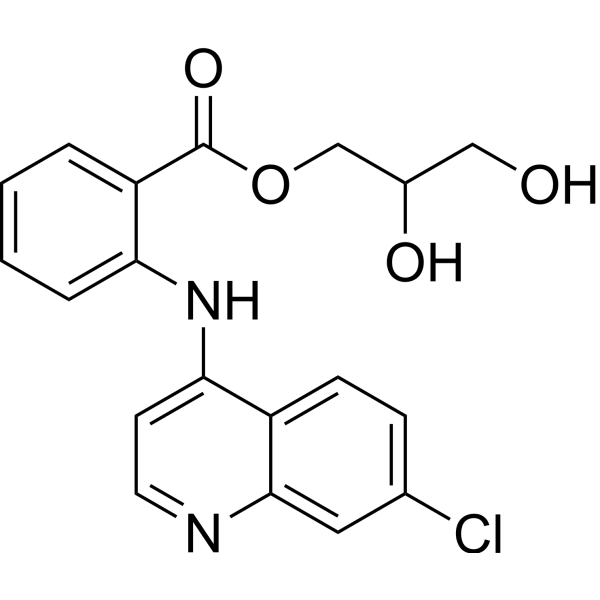
Floctafenine, a nonsteroidal anti-inflammatory agent (NSAID), acts as an effective analgesic agent . Floctafenine is an inhibitor of COX-1 and COX-2 activities in vitro,showing a slightly higher potency towards COX-I. Floctafenine is used for the research of short term pain research .
|
-
- HY-W778002
-
-
- HY-15029S2
-
|
|
COX
|
Cancer
|
|
(±)-Naproxen- 13C,d3 is the deuterium and 13C labeled (±)-Naproxen . (±)-Naproxen ((Rac)-Naproxen) is a racemate of Naproxen (HY-15030). Naproxen is a COX-1 and COX-2 inhibitor with IC50s of 8.72 and 5.15 μM, respectively.
|
-
- HY-B0227A
-
|
RP-19583 (lysinate)
|
COX
|
Metabolic Disease
Inflammation/Immunology
Cancer
|
|
Ketoprofen (RP-19583) lysinate is a non-steroidal anti-inflammatory agent. Ketoprofen lysinate can inhibit the activity of cyclooxygenase with IC50 values of 2 nM (COX-1) and 26 nM (COX-2). which is potential in the research of inflammation, immunology, and metabolic disease such as obesity .
|
-
- HY-N0389
-
|
|
COX
Parasite
|
Inflammation/Immunology
|
|
Columbin is an orally active diterpenoid furanolactone from Calumbae radix, has anti-inflammatory and anti-trypanosomal effects. Columbin selectively inhibits COX-2 (EC50=53.1 μM) over COX-1 (EC50=327 μM) .
|
-
- HY-B0138R
-
|
Ketorolac Tromethamine (Standard); Ketorolac tris salt (Standard); RS37619 tromethamine salt (Standard)
|
Reference Standards
COX
|
Inflammation/Immunology
Cancer
|
|
Ketorolac (tromethamine salt) (Standard) is the analytical standard of Ketorolac (tromethamine salt). This product is intended for research and analytical applications. Ketorolac tromethamine salt (RS37619 tromethamine salt) is a non-steroidal anti-inflammatory agent, acting as a nonselective COX inhibitor, with IC50s of 20 nM for COX-1 and 120 nM for COX-2.
|
-
- HY-B1888AR
-
|
|
COX
Reference Standards
|
Infection
Inflammation/Immunology
|
|
Bromfenac (sodium) (Standard) is the analytical standard of Bromfenac (sodium). This product is intended for research and analytical applications. Bromfenac sodium is a potent and orally active inhibitor of COX, with IC50s of 5.56 and 7.45 nM for COX-1 and COX-2, respectively. Bromfenac sodium can be used in ocular inflammation research .
|
-
- HY-B0619S1
-
|
|
Isotope-Labeled Compounds
COX
|
Inflammation/Immunology
|
|
Zaltoprofen- 13C,d3 is the 13C- and deuterium labeled Zaltoprofen. Zaltoprofen (CN100), a non-steroidal anti-inflammatory drug (NSAID), is a preferential and orally active COX-2 inhibitor, with IC50s of 1.3 and 0.34 μM for COX-1 and COX-2, respectively. Zaltoprofen exhibits powerful anti-inflammatory effects as well as an analgesic action on inflammatory pain .
|
-
- HY-N0346A
-
-
- HY-W745860
-
|
|
Reactive Oxygen Species (ROS)
|
Cancer
|
|
Hexahydrocurcumin-d6 is the deuterium labeled Hexahydrocurcumin (HY-N0929). Hexahydrocurcumin is one of the major metabolites of curcumin and a selective, orally active COX-2 inhibitor. Hexahydrocurcumin is inactive against COX-1. Hexahydrocurcumin has antioxidant, anticancer and anti-inflammatory activities .
|
-
- HY-B0578S
-
|
|
Isotope-Labeled Compounds
COX
|
Inflammation/Immunology
|
|
Loxoprofen-d4 is deuterium labeled Loxoprofen. Loxoprofen is a non-steroidal anti-inflammatory agent with analgesic and anti-pyretic properties. Loxoprofen sodium is a nonselective COX inhibitor with IC50s of 6.5 and 13.5 μM for COX-1 and COX-2, respectively .
|
-
- HY-B1227S
-
-
- HY-17009R
-
|
T614 (Standard)
|
Macrophage migration inhibitory factor (MIF)
Reference Standards
COX
|
Inflammation/Immunology
|
|
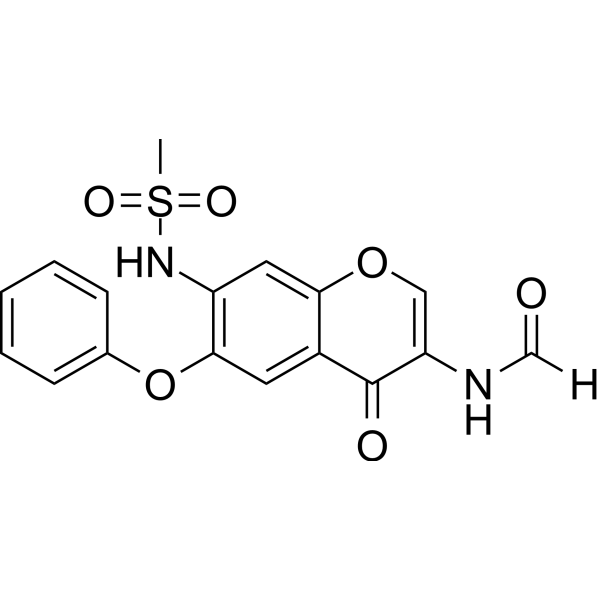
Iguratimod (Standard) is the analytical standard of Iguratimod. This product is intended for research and analytical applications. Iguratimod is an antirheumatic agent, acts as an inhibitor of COX-2, with an IC50 of 20 μM (7.7 μg/mL), but shows no effect on COX-1. Iguratimod also inhibits macrophage migration inhibitory factor (MIF) with an IC50 of 6.81 μM.
|
-
- HY-179125
-
|
|
COX
Bcl-2 Family
Caspase
Apoptosis
|
Cancer
|
|
COX-2-IN-59 is a potent and selective COX-2 inhibitor with an IC50 of 0.052 μM. COX-2-IN-59 exhibits 200-fold selectivity over COX-1 (IC50 = 11.16 μM). COX-2-IN-59 reduces COX-2 levels, induces cell cycle arrest, and triggers apoptosis by increasing Bax expression, decreasing Bcl-2 levels, and activating caspase-3. COX-2-IN-59 can be used for the research of colon cancer .
|
-
- HY-10439
-
|
|
PGE synthase
|
Inflammation/Immunology
|
|
HPGDS inhibitor 1 is a potent, selective and orally active Hematopoietic Prostaglandin D Synthase (HPGDS) inhibitor with an IC50s of 0.6 nM and 32 nM in enzyme and cellular assays, respectively. HPGDS inhibitor 1 does not inhibit human L-PGDS, mPGES, COX-1, COX-2, or 5-LOX .
|
-
- HY-114200
-
|
BAP-909
|
COX
|
Inflammation/Immunology
|
|
Imrecoxib (BAP-909) is a novel and selective cyclooxygenase 2 (COX-2) inhibitor with an IC50 value of 18 nM, it also inhibits COX1- activity with an IC50 value of 115 nM. Imrecoxib (BAP-909) has anti-inflammatory effect .
|
-
- HY-131259R
-
|
|
Reference Standards
COX
|
Inflammation/Immunology
|
|
Ibuprofen Impurity F (Standard) is the analytical standard of Ibuprofen Impurity F. This product is intended for research and analytical applications. Ibuprofen Impurity F is an Ibuprofen impurity. Ibuprofen is an anti-inflammatory inhibitor targeting COX-1 and COX-2 with IC50s of 13 μM and 370 μM, respectively .
|
-
- HY-78131AS
-
|
(S)-Ibuprofen d3
|
COX
|
Inflammation/Immunology
|
|
(S)-(+)-Ibuprofen-d3 is a deuterium labeled (S)-(+)-Ibuprofen. (S)-(+)-Ibuprofen is the S(+)-enantiomer of Ibuprofen that inhibits COX-1 and COX-2 activity with IC50s of 2.1 μM and 1.6 μM. (S)-(+)-Ibuprofen has analgesic, antiinflammatory and antipyretic effects .
|
-
- HY-131260R
-
|
|
Reference Standards
COX
|
Inflammation/Immunology
|
|
Ibuprofen Impurity K (Standard) is the analytical standard of Ibuprofen Impurity K. This product is intended for research and analytical applications. Ibuprofen Impurity K is an Ibuprofen impurity. Ibuprofen is an anti-inflammatory inhibitor targeting COX-1 and COX-2 with IC50s of 13 μM and 370 μM, respectively .
|
-
- HY-B1799S
-
|
|
Isotope-Labeled Compounds
COX
|
Inflammation/Immunology
Cancer
|
|
Tolmetin-d3 is the deuterium labeled Tolmetin. Tolmetin is an orally active and potent COX inhibitor with IC50s of 0.35 μM and 0.82 μM human COX-1 and COX-2, respectively. Tolmetin is a non-steroidal anti-inflammatory drug (NSAID) .
|
-
- HY-B0253S
-
|
CP-16171 d3
|
COX
|
Inflammation/Immunology
Cancer
|
|
Piroxicam-d3 (CP-16171-d3) is deuterium labeled Piroxicam. Piroxicam is a non-steroidal anti-inflammatory drugs, acts as a COX inhibitor, with IC50s of 47, 25 μM for human monocyte COX-1 and COX-2, respectively .
|
-
- HY-B0386R
-
|
|
Reference Standards
COX
|
Inflammation/Immunology
|
|
Flunixin (meglumine) (Standard) is the analytical standard of Flunixin (meglumine). This product is intended for research and analytical applications. Flunixin meglumine is a cyclooxygenase (COX) inhibitor with IC50 values of 0.55 and 3.24 μM for COX-1 and COX-2, respectively. Flunixin meglumine shows anti-inflammatory effects .
|
-
- HY-W012817R
-
|
|
COX
Reference Standards
|
Others
|
|
Methylhydroquinone (Standard) is the analytical standard of Methylhydroquinone. This product is intended for research and analytical applications. Methylhydroquinone is an orally active COX inhibitor with IC50s of 480.7 μM and 52.2 μM for ovine COX-1 and human recombinant COX-2, respectively. Methylhydroquinone has potential DNA damaging effects: 1) inhibiting COX-1 to reduce prostaglandin synthesis and exert anti-inflammatory activity; 2) inducing DNA single-strand breaks. Methylhydroquinone exerts its effects by competitively binding to the active sites of COX-1 (such as Tyr385, Met522) and non-covalent interactions[1][2].
|
-
- HY-B1227R
-
-
- HY-126121S
-
|
(±)-2-Hydroxy Ibuprofen-d6
|
Isotope-Labeled Compounds
COX
|
Inflammation/Immunology
Cancer
|
|
2-Hydroxy Ibuprofen-d6 is the deuterium labeled 2-Hydroxy Ibuprofen. 2-Hydroxy Ibuprofen is a metabolite of Ibuprofen. Ibuprofen is an anti-inflammatory inhibitor targeting COX-1 and COX-2 with IC50s of 13 μM and 370 μM, respectively .
|
-
- HY-106897
-
|
Biofor 389
|
COX
Lipoxygenase
|
Inflammation/Immunology
|
|
BF389 (Biofor 389) is an orally active anti-inflammatory and analesis agent. BF389 is also an inhibitor of cyclooxygenase and 5-lipoxygenase, with IC50s of 4 and 8 ug/mL for COX-1 and COX-2 respectively. BF389 can be used for arthritis research .
|
-
- HY-B1888BR
-
|
Bromfenac monosodium salt sesquihydrate (Standard)
|
COX
Reference Standards
|
Infection
Inflammation/Immunology
|
|
Bromfenac (sodium hydrate) (Standard) is the analytical standard of Bromfenac (sodium hydrate). This product is intended for research and analytical applications. Bromfenac sodium hydrate (Bromfenac monosodium salt sesquihydrate) is a potent and orally active inhibitor of COX, with IC50s of 5.56 and 7.45 nM for COX-1 and COX-2, respectively. Bromfenac sodium hydrate can be used in ocular inflammation research .
|
-
- HY-126121R
-
|
(±)-2-Hydroxy Ibuprofen (Standard)
|
Reference Standards
COX
|
Inflammation/Immunology
Cancer
|
|
2-Hydroxy Ibuprofen (Standard) is the analytical standard of 2-Hydroxy Ibuprofen. This product is intended for research and analytical applications. 2-Hydroxy Ibuprofen is a metabolite of Ibuprofen. Ibuprofen is an anti-inflammatory inhibitor targeting COX-1 and COX-2 with IC50s of 13 μM and 370 μM, respectively.
|
-
- HY-113807
-
|
|
COX
Lipoxygenase
|
Inflammation/Immunology
|
|
ZLJ-6 is a dual COX and 5-LOX inhibitor with oral activity. The IC50 values for COX-1, COX-2 and 5-LOX were 0.73, 0.31 and 0.99 μM, respectively. ZLJ-6 has anti-inflammatory and analgesic activity .
|
-
- HY-B0227S2
-
|
RP-19583-13C,d3
|
Isotope-Labeled Compounds
COX
Apoptosis
|
Inflammation/Immunology
|
|
Ketoprofen- 13C,d3 is the 13C- and deuterium labeled Ketoprofen. Ketoprofen (RP-19583) is a non-steroidal antiinflammatory agent, acting as a potent inhibitor of COX, with IC50s of 2 nM and 26 nM for COX-1 and COX-2 in human blood monocytes, respectively .
|
-
- HY-B0336R
-
|
|
Reference Standards
COX
Apoptosis
PGE synthase
|
Inflammation/Immunology
Cancer
|
|
Pranoprofen (Standard) is the analytical standard of Pranoprofen. This product is intended for research and analytical applications. Pranoprofen is a non-steroidal anti-inflammatory agent (NSAID) for the research of keratitis or other ophthalmology diseases. Pranoprofen inhibit COX-1 and COX-2 enzymes, thus blocking arachidonic acid converted to eicosanoids and reducing prostaglandins synthesis .
|
-
- HY-14397G
-
|
Indometacin
|
Antibiotic
Influenza Virus
Bacterial
COX
|
Inflammation/Immunology
Cancer
|
|
Indomethacin (GMP) is Indomethacin (HY-14397) produced by using GMP guidelines. GMP small molecules work appropriately as an auxiliary reagent for cell therapy manufacture. Indomethacin (Indometacin) is a potent, orally active COX1/2 inhibitor with IC50 values of 18 nM and 26 nM for COX-1 and COX-2, respectively. Indomethacin has anticancer activity and anti-infective activity. Indomethacin can be used for cancer, inflammation and viral infection research .
|
-
- HY-147951
-
|
|
COX
Lipoxygenase
|
Inflammation/Immunology
|
|
COX-2/5-LOX-IN-3 (compound 5b) is a potent and dual COX-2/5-LOX inhibitor with IC50 values of 45.73, 5.45 and 4.33 μM for COX-1, COX-2, and 5-LOX, respectively. COX-2/5-LOX-IN-3 has the potential for the research of inflammation diseases .
|
-
- HY-175637
-
|
|
COX
MyD88
|
Neurological Disease
Inflammation/Immunology
|
|
COX-2-IN-57 is an orally active COX-2 inhibitor with an IC50 value of 0.02 μM. COX-2-IN-57 reduces MyD88 expression and decreases serum levels of COX-2, PGE2, and COX-1 in Cisplatin (HY-17394)/radiation-induced neuropathy rat model. COX-2-IN-57 demonstrates superior antinociceptive efficacy in hot plate, cold allodynia, and Randall-Selitto tests, along with hepato-/renal protection. COX-2-IN-57 can be used for the study of inflammation .
|
-
- HY-108259
-
|
|
PGE synthase
|
Inflammation/Immunology
|
|
HQL-79, a potent, selective and orally active human hematopoietic prostaglandin D synthase (H-PGDS) inhibitor, highly selectively inhibits the synthesis of PGD2, and acts as an anti-allergic agent, with a Kd of 0.8 μM and an IC50 of 6 μM. Shows no obvious effect on COX-1, COX-2, m-PGES, or L-PGDS .
|
-
- HY-N1067
-
Xanthohumol
Maximum Cited Publications
16 Publications Verification
|
COX
Acyltransferase
Apoptosis
HSV
CMV
Influenza Virus
|
Infection
Cancer
|
|
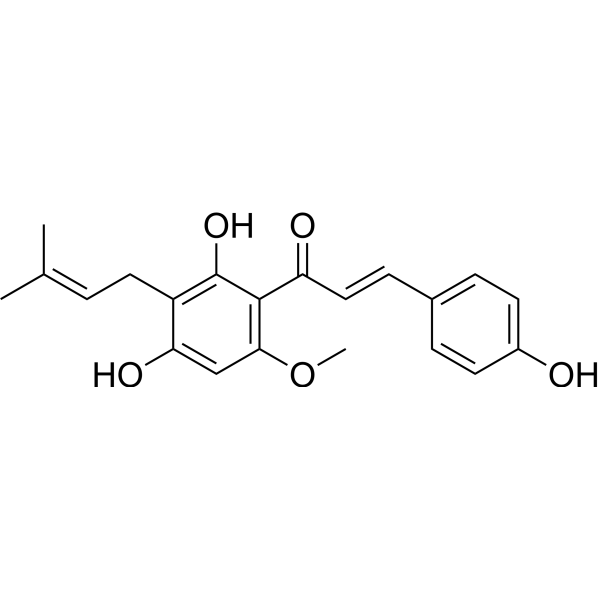
Xanthohumol is one of the principal flavonoids isolated from hops, the inhibitor of diacylglycerol acetyltransferase (DGAT), COX-1 and COX-2, and shows anti-cancer and anti-angiogenic activities. Xanthohumol also has antiviral activity against bovine viral diarrhea virus (BVDV), rhinovirus, HSV-1, HSV-2 and cytomegalovirus (CMV).
|
-
- HY-B1799R
-
|
|
Reference Standards
COX
|
Inflammation/Immunology
Cancer
|
|
Tolmetin (Standard) is the analytical standard of Tolmetin. This product is intended for research and analytical applications. Tolmetin is an orally active and potent COX inhibitor with IC50s of 0.35 μM and 0.82 μM human COX-1 and COX-2, respectively. Tolmetin is a non-steroidal anti-inflammatory drug (NSAID) .
|
-
- HY-W012126
-
|
2,6-Dichloro-N-phenylaniline
|
Bacterial
|
Infection
Cancer
|
|
2,6-Dichlorodiphenylamine is an analogue of Diclofenac Sodium (HY-15037) and has anti-Candida albicans activity. Diclofenac Sodium is a potent and nonselective anti-inflammatory agent, acts as a COX inhibitor, with IC50s of 4 and 1.3 nM for human COX-1 and COX-2 in CHO cells.
|
-
- HY-B0578
-
|
|
COX
|
Cardiovascular Disease
Inflammation/Immunology
Cancer
|
|
Loxoprofen is a non-steroidal, orally active anti-inflammatory agent with analgesic and anti-pyretic properties. Loxoprofen is a nonselective COX inhibitor with IC50s of 6.5 and 13.5 μM for COX-1 and COX-2, respectively. Loxoprofen can reduce atherosclerosis and shows antitumor activity .
|
-
- HY-B0363R
-
|
R805 (Standard)
|
Reference Standards
COX
|
Inflammation/Immunology
Cancer
|
|
Nimesulide (Standard) is the analytical standard of Nimesulide. This product is intended for research and analytical applications. Nimesulide is a selective COX-2 inhibitor, with IC50s of 70 nM-70 μM in a time-dependent manner, but it shows no effect on COX-1 (IC50 >100 μM). Nimesulide has potent anti-inflammatory, analgesic and antipyretic properties.
|
-
- HY-B0578A
-
|
|
COX
|
Cardiovascular Disease
Inflammation/Immunology
Cancer
|
|
Loxoprofen sodium is a non-steroidal, orally active anti-inflammatory agent with analgesic and anti-pyretic properties. Loxoprofen sodium is a nonselective COX inhibitor with IC50s of 6.5 and 13.5 μM for COX-1 and COX-2, respectively. Loxoprofen sodium can reduce atherosclerosis and shows antitumor activity .
|
-
- HY-12383R
-
|
|
COX
NF-κB
NO Synthase
IKK
MAP3K
Reference Standards
|
Neurological Disease
Inflammation/Immunology
|
|
Pelubiprofen (Standard) is the analytical standard of Pelubiprofen. This product is intended for research and analytical applications. Pelubiprofen is an orally active anti-inflammatory agent that inhibits COX enzyme activity (with IC50 values of 10.66 and 2.88 μM for COX-1 and COX-2, respectively). Pelubiprofen has significant anti-inflammatory and analgesic effects .
|
-
- HY-B0363S
-
|
|
Isotope-Labeled Compounds
COX
|
Inflammation/Immunology
|
|
Nimesulide-d5 is a deuterium labeled Nimesulide. Nimesulide is a selective COX-2 inhibitor, with IC50s of 70 nM-70 μM in a time-dependent manner, but it shows no effect on COX-1 (IC50 >100 μM). Nimesulide has potent anti-inflammatory, analgesic and antipyretic properties .
|
-
- HY-14654
-
-
- HY-19384R
-
|
E 6087 (Standard)
|
COX
Reference Standards
|
Inflammation/Immunology
|
|
Enflicoxib (Standard) is the analytical standard of Enflicoxib. This product is intended for research and analytical applications. Enflicoxib (E 6087) is a nonsteroidal anti-inflammatory compound that selectively inhibits cyclooxygenase-2 (COX-2). Enflicoxib does not inhibit cyclooxygenase-1 (COX-1). E-6087 shows anti-inflammatory, analgesic and antipyretic activities in animal models .
|
-
- HY-B0227R
-
|
RP-19583 (Standard)
|
Reference Standards
COX
|
Metabolic Disease
Inflammation/Immunology
Cancer
|
|
Ketoprofen (Standard) is the analytical standard of Ketoprofen. This product is intended for research and analytical applications. Ketoprofen (RP-19583) is a non-steroidal anti-inflammatory agent. Ketoprofen can inhibits the activity of cyclooxygenase with IC50 values of 2 nM (COX-1) and 26 nM (COX-2). which is potential in the research of inflammation, immunology, and metabolic disease such as obesity .
|
-
- HY-172790
-
|
|
COX
Lipoxygenase
|
Inflammation/Immunology
|
|
Cbz-(S,S)-Pro-Pro-allyl (compound 1a) is a dual inhibitor of cyclooxygenase-2 and 5-lipoxygenase with IC50 values of 0.146 nM, 0.003 nM, 0.64 nM for COX-1, COX-2, 5-LOX, respectively. Cbz-(S,S)-Pro-Pro-allyl has anti-inflammatory activity .
|
-
- HY-B0578B
-
|
|
COX
|
Cardiovascular Disease
Inflammation/Immunology
Cancer
|
|
Loxoprofen sodium dihydrate is a non-steroidal, orally active anti-inflammatory agent with analgesic and anti-pyretic properties. Loxoprofen sodium dihydrate is a nonselective COX inhibitor with IC50s of 6.5 and 13.5 μM for COX-1 and COX-2, respectively. Loxoprofen sodium dihydrate can reduce atherosclerosis and shows antitumor activity .
|
-
- HY-162425
-
|
|
PGE synthase
COX
|
Inflammation/Immunology
Cancer
|
|
Anti-inflammatory agent 78 (compound L-37) is a potent anti-inflammatory agent. Anti-inflammatory agent 78 has significant potency on PGE2, PGE1, COX-2 and COX-1 inhibition. Anti-inflammatory agent 78 can inhibits NO release in LPS-stimulated RAW 264.7 cell line .
|
-
- HY-14654C
-
-
- HY-149269
-
|
|
COX
Carbonic Anhydrase
LOX-1
|
Inflammation/Immunology
|
|
COX-2-IN-30 is a benzenesulfonamide derivative, as well as an orally active and dual inhibitor of COX (IC50=49 nM for COX-2, 10.4 μM for COX-1) and 5-LOX (IC50=2.4 μM). COX-2-IN-30 also inhibits transmembrane hCA IX and hCA XII isoform with nanomolar calss Ki values. COX-2-IN-30 exhibits analgesic, anti-inflammatory, and ulcerogenic activities, and does not show acute gastric effect .
|
-
- HY-179246
-
|
|
COX
Prostaglandin Receptor
|
Cardiovascular Disease
Neurological Disease
Inflammation/Immunology
|
|
CXT29 is an orally active COX-2 inhibitor and a thromboxane A2 receptor (TP) antagonist. CXT29 exhibits COX inhibitory activity and selectivity, with IC50 values of 13 and 722 nM for COX-2 and COX-1 respectively. CXT29 inhibits platelet aggregation induced by U-46619 (HY-108566) (a TP agonist), with an IC50 of 96 nM. CXT29 effectively inhibits the production of TXB₂ and PGE₂, significantly reducing platelet aggregation and inflammatory pain in mice. CXT29 can be used for research on inflammatory pain and cardiovascular diseases .
|
-
- HY-N12708
-
|
|
Others
|
Others
|
|
23-O-β-D-Glucopyranosyl-20-isoveratramine is a potential anti-allergic agent extracted from nettles. A variety of COX-1, COX-2, 5-lipoxygenase and trypsin-like inhibitors and H1 antagonists are found in nettle extract, which can inhibit seasonal allergies, allergic rhinitis and other inflammatory diseases. and preventive effects .
|
-
- HY-B0367
-
|
Chlortenoxicam; Ro 13-9297
|
Apoptosis
COX
NO Synthase
Interleukin Related
Prostaglandin Receptor
TNF Receptor
|
Inflammation/Immunology
Cancer
|
|
Lornoxicam (Chlortenoxicam) is an orally active oxycontin nonsteroidal anti-inflammatory drug (NSAID) with analgesic, anti-inflammatory, antipyretic and anticancer activities. Lornoxicam exhibits good inhibitory effects on both COX-1 and COX-2 (COX-1: IC50=0.005 μM; COX-2:IC50=0.008 μM) and inhibits the production of NO by iNOS (IC50=65 μM) and the proinflammatory cytokine IL-6 (IC50=54 μM). Lornoxicam also inhibits tumor cell proliferation and migration and induces tumor cell apoptosis. Lornoxicam can be used in the study of inflammatory pain, colorectal cancer and breast cancer .
|
-
- HY-B1489R
-
|
|
Reference Standards
COX
|
Inflammation/Immunology
Cancer
|
|
Tolmetin (sodium dihydrate) (Standard) is the analytical standard of Tolmetin (sodium dihydrate). This product is intended for research and analytical applications. Tolmetin sodium dihydrate is an orally active and potent COX inhibitor with IC50s of 0.35 μM and 0.82 μM human COX-1 and COX-2, respectively. Tolmetin sodium dihydrate is a non-steroidal anti-inflammatory drug (NSAID) .
|
-
- HY-B1227S1
-
|
|
FAAH
COX
Autophagy
Endogenous Metabolite
|
Inflammation/Immunology
|
|
Carprofen- 13C,d3 is the deuterium and 13C labeled Carprofen . Carprofen is a nonsteroid anti-inflammatory agent, acts as a multi-target FAAH/COX inhibitor, with IC50s of 3.9 μM, 22.3 μM and 78.6 μM for COX-2, COX-1 and FAAH, respectively .
|
-
- HY-N0389R
-
|
|
Reference Standards
COX
Parasite
|
Inflammation/Immunology
|
|
Columbin (Standard) is the analytical standard of Columbin. This product is intended for research and analytical applications. Columbin is an orally active diterpenoid furanolactone from Calumbae radix, has anti-inflammatory and anti-trypanosomal effects. Columbin selectively inhibits COX-2 (EC50=53.1 μM) over COX-1 (EC50=327 μM) .
|
-
- HY-B0261S4
-
-
- HY-78131AR
-
|
Dexibuprofen (Standard)
|
Reference Standards
COX
|
Inflammation/Immunology
|
|
(S)-(+)-Ibuprofen (Standard) is the analytical standard of (S)-(+)-Ibuprofen. This product is intended for research and analytical applications. (S)-(+)-Ibuprofen ((S)-Ibuprofen), a S(+)-enantiomer of Ibuprofen, is a potent COX-1 and COX-2 inhibitor with IC50s of 2.1 μM and 1.6 μM, respectively. (S)-(+)-Ibuprofen has analgesic, anti-inflammatory, anticancer and antipyretic effects .
|
-
- HY-B0363S1
-
|
R805-13C6
|
Isotope-Labeled Compounds
COX
|
Inflammation/Immunology
Cancer
|
|
Nimesulide- 13C6 (R805- 13C6) is 13C labeled Nimesulide. Nimesulide is a selective COX-2 inhibitor, with IC50s of 70 nM-70 μM in a time-dependent manner, but it shows no effect on COX-1 (IC50 >100 μM). Nimesulide has potent anti-inflammatory, analgesic and antipyretic properties.
|
-
- HY-163116
-
|
|
COX
Carbonic Anhydrase
|
Neurological Disease
Inflammation/Immunology
|
|
Anti-inflammatory agent 67 (compound 7a) is a dual inhibitor of carbonic anhydrase and COX-2, a sulfonamide derivative of Polmacoxib (HY-16726), and has anti-inflammatory properties and analgesic activity. Anti-inflammatory agent 67 has IC50s of 10.4 μM and 50 nM for COX-1 and COX-2, respectively. The Ki of anti-inflammatory agent 67 binding to different isoforms of carbonic anhydrase are 48.3 nM (CA I), 42.2 nM (CA II), 52.3 nM (CA IX), and 13.3 nM (CA XII) .
|
-
- HY-163117
-
|
|
COX
Carbonic Anhydrase
|
Neurological Disease
Inflammation/Immunology
|
|
Anti-inflammatory agent 68 (compound 7b) is a dual inhibitor of carbonic anhydrase and COX-2, a sulfonamide derivative of Polmacoxib (HY-16726), with anti-inflammatory properties and analgesic activity. Anti-inflammatory agent 68 has IC50s of 12.6 μM and 60 nM for COX-1 and COX-2, respectively. The Ki of anti-inflammatory agent 68 binding to different isoforms of carbonic anhydrase are 52.6 nM (CA I), 79.1 nM (CA II), 58.1 nM (CA IX), and 17.2 nM (CA XII) .
|
-
- HY-14654A
-
-
- HY-17509
-
|
SC 046; SC 46; SC 59046
|
COX
Apoptosis
|
Neurological Disease
Inflammation/Immunology
Cancer
|
|
Deracoxib (SC 046; SC 59046), an orally active COX-2 inhibitor, is a veterinary nonsteroidal anti-inflammatory agent used exclusively in dogs. Deracoxib inhibits the COX-2 enzyme to reduce the production of prostaglandins, effectively controlling pain and inflammation after canine soft tissue surgery. Deracoxib reduces the inhibition of COX-1 and lowers the risk of gastrointestinal side effects. Deracoxib induces tumor cell cycle arrest and apoptosis, and shows anti-tumor activity in canine osteosarcoma, breast tumors and bladder transitional cell carcinomas .
|
-
- HY-121537
-
|
|
COX
Akt
Apoptosis
|
Neurological Disease
Inflammation/Immunology
Cancer
|
|
CAY10404 is a potent and selective cyclooxygenase-2 (COX-2) inhibitor with an IC50 of 1 nM and a selectivity index (SI; COX-1 IC50/COX-2 IC50) of >500000. CAY10404 is a potent PKB/Akt and MAPK signaling pathways inhibitor and induces apoptosis in non-small cell lung cancer (NSCLC) cells. CAY10404, a diarylisoxazole, has good analgesic, anti-inflammatory, and anti-cancer activities .
|
-
- HY-B0227AR
-
|
RP-19583 (lysinate) (Standard)
|
Reference Standards
COX
|
Metabolic Disease
Inflammation/Immunology
Cancer
|
|
Ketoprofen (lysinate) (Standard) is the analytical standard of Ketoprofen (lysinate). This product is intended for research and analytical applications. Ketoprofen (RP-19583) lysinate is a non-steroidal anti-inflammatory agent. Ketoprofen lysinate can inhibit the activity of cyclooxygenase with IC50 values of 2 nM (COX-1) and 26 nM (COX-2). which is potential in the research of inflammation, immunology, and metabolic disease such as obesity .
|
-
- HY-B0227S3
-
|
RP-19583-13C6
|
Isotope-Labeled Compounds
COX
|
Metabolic Disease
Inflammation/Immunology
Cancer
|
|
Ketoprofen- 13C6 (RP-19583- 13C6) is 13C labeled Ketoprofen. Ketoprofen (RP-19583) is a non-steroidal anti-inflammatory agent. Ketoprofen can inhibits the activity of cyclooxygenase with IC50 values of 2 nM (COX-1) and 26 nM (COX-2). which is potential in the research of inflammation, immunology, and metabolic disease such as obesity .
|
-
- HY-181123
-
|
|
COX
|
Neurological Disease
Inflammation/Immunology
|
|
AS1-6 is a selective COX-2 inhibitor with an IC50 of 2.7 μM. AS1-6 has an IC50 of 12.6 μM for COX-1. AS1-6 exerts significant anti-inflammatory and analgesic activities. AS1-6 can be used in research on non-steroidal anti-inflammatory agents .
|
-
- HY-N6773R
-
|
|
Reference Standards
HIV Protease
Fungal
|
Infection
|
|
Ketoprofen (lysinate) (Standard) is the analytical standard of Ketoprofen (lysinate). This product is intended for research and analytical applications. Ketoprofen (RP-19583) lysinate is a non-steroidal anti-inflammatory agent. Ketoprofen lysinate can inhibit the activity of cyclooxygenase with IC50 values of 2 nM (COX-1) and 26 nM (COX-2). which is potential in the research of inflammation, immunology, and metabolic disease such as obesity .
|
-
- HY-114200R
-
|
BAP-909 (Standard)
|
Reference Standards
COX
|
Inflammation/Immunology
|
|
Imrecoxib (Standard) is the analytical standard of Imrecoxib. This product is intended for research and analytical applications. Imrecoxib (BAP-909) is a novel and selective cyclooxygenase 2 (COX-2) inhibitor with an IC50 value of 18 nM, it also inhibits COX1- activity with an IC50 value of 115 nM. Imrecoxib (BAP-909) has anti-inflammatory effect .
|
-
- HY-113463
-
|
CE(20:5(5Z,8Z,11Z,14Z,17Z)
|
Endogenous Metabolite
COX
|
Metabolic Disease
Inflammation/Immunology
|
|
Cholesteryl eicosapentaenoate (CE(20:5(5Z,8Z,11Z,14Z,17Z)), a cholesteryl ester, is a COX-1 and COX-2 inhibitor with IC50 values of 14.6 μg/mL and 17.3 μg/mL, respectively. Cholesteryl eicosapentaenoate shows strong anti-inflammatory and antioxidant activities .
|
-
- HY-121899R
-
|
Ibuprofen EP impurity J (Standard)
|
Drug Metabolite
Reference Standards
|
Others
|
|
1-Oxo Ibuprofen (Standard) is the analytical standard of 1-Oxo Ibuprofen. This product is intended for research and analytical applications. 1-Oxo Ibuprofen (Ibuprofen EP impurity J) is a degradation product and a potential impurity in preparations of Ibuprofen. Ibuprofen is an anti-inflammatory inhibitor targeting COX-1 and COX-2 with IC50s of 13 μM and 370 μM, respectively .
|
-
- HY-13913R
-
|
|
COX
|
Inflammation/Immunology
Cancer
|
|
NS-398 (Standard) is the analytical standard of NS-398. This product is intended for research and analytical applications. NS-398 is a non-steroidal an-inflammatory agent with analgesic and antipyretic effects, and selectively inhibits prostaglandin G/H synthase 2/cyclooxygenase 2 (COX-2) activity, with an IC50 of 3.8 μM, and has no effect on COX-1 at 100 μM.
|
-
- HY-W654009
-
|
|
Isotope-Labeled Compounds
COX
|
Inflammation/Immunology
|
|
Loxoprofen-d3 is deuterium labeled Loxoprofen. Loxoprofen is a non-steroidal, orally active anti-inflammatory agent with analgesic and anti-pyretic properties. Loxoprofen is a nonselective COX inhibitor with IC50s of 6.5 and 13.5 μM for COX-1 and COX-2, respectively. Loxoprofen can reduce atherosclerosis and shows antitumor activity .
|
-
- HY-10439R
-
|
|
Reference Standards
PGE synthase
|
Inflammation/Immunology
|
|
HPGDS inhibitor 1 (Standard) is the analytical standard of HPGDS inhibitor 1 (HY-10439). This product is intended for research and analytical applications. HPGDS inhibitor 1 is a potent, selective and orally active Hematopoietic Prostaglandin D Synthase (HPGDS) inhibitor with an IC50s of 0.6 nM and 32 nM in enzyme and cellular assays, respectively. HPGDS inhibitor 1 does not inhibit human L-PGDS, mPGES, COX-1, COX-2, or 5-LOX .
|
-
- HY-W676872
-
|
|
COX
Parasite
|
Infection
Inflammation/Immunology
|
|
Dihydroflavokawin B is a selective COX-1 inhibitor with an IC50 of 1.22 μM. Dihydroflavokawin B weakly inhibits COX-2 and 5-LOX. Dihydroflavokawin B inhibits promastigote forms of Leishmania panamensis and Leishmania braziliensis. Dihydroflavokawin B inhibits rabbit platelet aggregation induced by Arachidonic acid, platelet activating factor, and adenosine diphosphate. Dihydroflavokawin B exhibits in vitro anti-inflammatory activity. Dihydroflavokawin B can be used for the research of leishmaniasis .
|
-
- HY-B0580
-
|
RS37619
|
COX
Apoptosis
|
Inflammation/Immunology
Cancer
|
|
Ketorolac (RS37619) is a non-steroidal anti-inflammatory drug (NSAID), acting as a nonselective COX inhibitor, with IC50s of 20 nM for COX-1 and 120 nM for COX-2. Ketorolac tromethamine is used as 0.5% ophthalmic solution for the research of allergic conjunctivitis, cystoid macular edema, intraoperative miosis, and postoperative ocular inflammation and pain. Ketorolac tromethamine is also a DDX3 inhibitor that can be used for cancer research .
|
-
- HY-B0580D
-
|
RS37619 hydrochloride
|
COX
Apoptosis
|
Inflammation/Immunology
Cancer
|
|
Ketorolac (RS37619) hydrochloride is a non-steroidal anti-inflammatory drug (NSAID), acting as a nonselective COX inhibitor, with IC50s of 20 nM for COX-1 and 120 nM for COX-2. Ketorolac hydrochloride tromethamine is used as 0.5% ophthalmic solution for the research of allergic conjunctivitis, cystoid macular edema, intraoperative miosis, and postoperative ocular inflammation and pain. Ketorolac hydrochloride tromethamine is also a DDX3 inhibitor that can be used for cancer research .
|
-
- HY-B0578AR
-
|
|
Reference Standards
COX
|
Cardiovascular Disease
Inflammation/Immunology
Cancer
|
|
Loxoprofen (sodium) (Standard) is the analytical standard of Loxoprofen (sodium). This product is intended for research and analytical applications. Loxoprofen sodium is a non-steroidal, orally active anti-inflammatory agent with analgesic and anti-pyretic properties. Loxoprofen sodium is a nonselective COX inhibitor with IC50s of 6.5 and 13.5 μM for COX-1 and COX-2, respectively. Loxoprofen sodium can reduce atherosclerosis and shows antitumor activity .
|
-
- HY-B0578R
-
|
|
Reference Standards
COX
|
Cardiovascular Disease
Inflammation/Immunology
Cancer
|
|
Loxoprofen (Standard) is the analytical standard of Loxoprofen. This product is intended for research and analytical applications. Loxoprofen is a non-steroidal, orally active anti-inflammatory agent with analgesic and anti-pyretic properties. Loxoprofen is a nonselective COX inhibitor with IC50s of 6.5 and 13.5 μM for COX-1 and COX-2, respectively. Loxoprofen can reduce atherosclerosis and shows antitumor activity .
|
-
- HY-B1888AS
-
|
|
Isotope-Labeled Compounds
COX
|
Inflammation/Immunology
|
|
Bromfenac-d4 (sodium) is deuterium labeled Bromfenac (sodium). Bromfenac sodium is a potent and orally active inhibitor of COX, with IC50s of 5.56 and 7.45 nM for COX-1 and COX-2, respectively. Bromfenac sodium is a brominated non-steroidal anti-inflammatory/analgesic agent (NSAID), and it is commonly used for the research of postoperative inflammation and pain following cataract surgery, and pseudophakic cystoid macular edema (CME) .
|
-
- HY-N1067R
-
|
|
Reference Standards
COX
Acyltransferase
Apoptosis
HSV
CMV
Influenza Virus
|
Infection
Cancer
|
|
Xanthohumol (Standard) is the analytical standard of Xanthohumol. This product is intended for research and analytical applications. Xanthohumol is one of the principal flavonoids isolated from hops, the inhibitor of diacylglycerol acetyltransferase (DGAT), COX-1 and COX-2, and shows anti-cancer and anti-angiogenic activities. Xanthohumol also has antiviral activity against bovine viral diarrhea virus (BVDV), rhinovirus, HSV-1, HSV-2 and cytomegalovirus (CMV).
|
-
- HY-119413R
-
|
|
Reference Standards
Endogenous Metabolite
|
Neurological Disease
|
|
Loxoprofen (sodium) (Standard) is the analytical standard of Loxoprofen (sodium). This product is intended for research and analytical applications. Loxoprofen sodium is a non-steroidal, orally active anti-inflammatory agent with analgesic and anti-pyretic properties. Loxoprofen sodium is a nonselective COX inhibitor with IC50s of 6.5 and 13.5 μM for COX-1 and COX-2, respectively. Loxoprofen sodium can reduce atherosclerosis and shows antitumor activity .
|
-
- HY-17509R
-
|
SC 046 (Standard); SC 46 (Standard); SC 59046 (Standard)
|
Reference Standards
COX
Apoptosis
|
Neurological Disease
Inflammation/Immunology
Cancer
|
|
Deracoxib (SC 046; SC 59046) (Standard) is the analytical standard of Deracoxib (HY-17509). This product is intended for research and analytical applications. Deracoxib, an orally active COX-2 inhibitor, is a veterinary nonsteroidal anti-inflammatory agent used exclusively in dogs. Deracoxib inhibits the COX-2 enzyme to reduce the production of prostaglandins, effectively controlling pain and inflammation after canine soft tissue surgery. Deracoxib reduces the inhibition of COX-1 and lowers the risk of gastrointestinal side effects. Deracoxib induces tumor cell cycle arrest and apoptosis, and shows anti-tumor activity in canine osteosarcoma, breast tumors and bladder transitional cell carcinomas
|
-
- HY-W707656
-
-
- HY-14654S
-
-
- HY-14654R
-
-
- HY-14654S1
-
-
- HY-B0580C
-
|
RS37619 hemicalcium
|
COX
Apoptosis
|
Inflammation/Immunology
Cancer
|
|
Ketorolac (RS37619) hemicalcium is a non-steroidal anti-inflammatory drug (NSAID), acting as a nonselective COX inhibitor, with IC50s of 20 nM for COX-1 and 120 nM for COX-2. Ketorolac tromethamine is used as 0.5% ophthalmic solution for the research of allergic conjunctivitis, cystoid macular edema, intraoperative miosis, and postoperative ocular inflammation and pain. Ketorola chemicalcium is also a DDX3 inhibitor that can be used for cancer research .
|
-
- HY-N0346AR
-
-
- HY-N0920
-
|
7,8-Dihydrokawain; 7,8-Dihydrokavain; Marindinin
|
COX
Cytochrome P450
|
Neurological Disease
Inflammation/Immunology
|
|
Dihydrokavain (7,8-Dihydrokawain) is a natural kavalactone compound. Dihydrokavain inhibits COX-1, COX-2, CYP2C9 (IC50 = 130.95 μM), CYP2C19 (IC50 = 10.05 μM) and CYP3A4 (IC50 = 78.59 μM). Dihydrokavain reduces TNFα secretion. Dihydrokavain shows analgesic and anxiolytic effects .
|
-
- HY-17509S
-
|
SC 046-d3; SC 46-d3; SC 59046-d3
|
Isotope-Labeled Compounds
COX
Apoptosis
|
Neurological Disease
Inflammation/Immunology
Cancer
|
|
Deracoxib-d3 (SC 046-d3; SC 59046-d3) is the deuterium labeled Deracoxib (HY-17509). Deracoxib, an orally active COX-2 inhibitor, is a veterinary nonsteroidal anti-inflammatory agent used exclusively in dogs. Deracoxib inhibits the COX-2 enzyme to reduce the production of prostaglandins, effectively controlling pain and inflammation after canine soft tissue surgery. Deracoxib reduces the inhibition of COX-1 and lowers the risk of gastrointestinal side effects. Deracoxib induces tumor cell cycle arrest and apoptosis, and shows anti-tumor activity in canine osteosarcoma, breast tumors and bladder transitional cell carcinomas.
|
-
- HY-W703540
-
|
SC 046-d4; SC 46-d4; SC 59046-d4
|
Isotope-Labeled Compounds
Apoptosis
COX
|
Neurological Disease
Inflammation/Immunology
Cancer
|
|
Deracoxib-d4 (SC 046-d4; SC 59046--d4) is deuterium labeled Deracoxib (HY-17509). Deracoxib, an orally active COX-2 inhibitor, is a veterinary nonsteroidal anti-inflammatory agent used exclusively in dogs. Deracoxib inhibits the COX-2 enzyme to reduce the production of prostaglandins, effectively controlling pain and inflammation after canine soft tissue surgery. Deracoxib reduces the inhibition of COX-1 and lowers the risk of gastrointestinal side effects. Deracoxib induces tumor cell cycle arrest and apoptosis, and shows anti-tumor activity in canine osteosarcoma, breast tumors and bladder transitional cell carcinomas.
|
-
- HY-N0396
-
|
|
COX
NO Synthase
|
Inflammation/Immunology
Cancer
|
|
Harpagoside can be obtained by Harpagophytum procumbens, which has anti-inflammatory, anti-cancer, protective activity, and efficacy. Harpagoside has an inhibitory effect on COX-1 and COX-2 active, and suppresses NO production. Harpagoside inhibits HepG2 cell lipid polysaccharide, which is a protein that is expressed horizontally and selectively, and has anti-inflammatory and latent pain effects. Harpagoside has the ability to protect the body, and has a degenerative effect on the β-oxidation (Aβ).
|
-
- HY-183188
-
-
- HY-N6962
-
|
|
TRP Channel
COX
Bacterial
|
Infection
Neurological Disease
Metabolic Disease
|
|
α-Spinasterol is an orally taken antagonist of transient receptor potential vanilloid 1 ( TRPV1), and it's also an inhibitor of COX-1 and COX-2, with IC50 values of 16.17 μM and 7.76 μM, respectively. α-Spinasterol exhibits antibacterial, anti-inflammatory, antidepressant, and antioxidant effects, has the ability to cross the blood-brain barrier, and can improve diabetes in mice .
|
-
- HY-W012126R
-
|
2,6-Dichloro-N-phenylaniline (Standard)
|
Reference Standards
Bacterial
|
Infection
Cancer
|
|
2,6-Dichlorodiphenylamine (Standard) is the analytical standard of 2,6-Dichlorodiphenylamine. This product is intended for research and analytical applications. 2,6-Dichlorodiphenylamine is an analogue of Diclofenac Sodium (HY-15037) and has anti-Candida albicans activity. Diclofenac Sodium is a potent and nonselective anti-inflammatory agent, acts as a COX inhibitor, with IC50s of 4 and 1.3 nM for human COX-1 and COX-2 in CHO cells.
|
-
- HY-150553
-
|
|
COX
|
Inflammation/Immunology
|
|
COX-2-IN-28 is a potent and selective COX-2 inhibitor with IC50 values of 0.054, 2.14, 13.21 µM for COX-2, 15-LOX, COX-1,respectively .
|
-
- HY-121537R
-
|
|
COX
Akt
Apoptosis
|
Neurological Disease
Inflammation/Immunology
Cancer
|
|
CAY10404 (Standard) is the analytical standard of CAY10404. This product is intended for research and analytical applications. CAY10404 is a potent and selective cyclooxygenase-2 (COX-2) inhibitor with an IC50 of 1 nM and a selectivity index (SI; COX-1 IC50/COX-2 IC50) of >500000. CAY10404 is a potent PKB/Akt and MAPK signaling pathways inhibitor and induces apoptosis in non-small cell lung cancer (NSCLC) cells. CAY10404, a diarylisoxazole, has good analgesic, anti-inflammatory, and anti-cancer activities .
|
-
- HY-B0808A
-
|
Oxaprozinum potassium; Wy21743 potassium
|
COX
NF-κB
Akt
IKK
Apoptosis
|
Inflammation/Immunology
Cancer
|
|
Oxaprozin potassium is an orally active and potent COX inhibitor, with IC50 values of 2.2 μM for human platelet COX-1 and and 36 μM for IL-1-stimulated human synovial cell COX-2, respectively. Oxaprozin potassium also inhibits the activation of NF-κB. Oxaprozin potassium induces cell apoptosis. Oxaprozin potassium shows anti-inflammatory activity. Oxaprozin potassium-mediated inhibition of the Akt/IKK/NF-κB pathway contributes to its anti-inflammatory properties .
|
-
- HY-108259R
-
|
|
Reference Standards
PGE synthase
|
Inflammation/Immunology
|
|
HQL-79 (Standard) is the analytical standard of HQL-79 (HY-108259). This product is intended for research and analytical applications. HQL-79, a potent, selective and orally active human hematopoietic prostaglandin D synthase (H-PGDS) inhibitor, highly selectively inhibits the synthesis of PGD2, and acts as an anti-allergic agent, with a Kd of 0.8 μM and an IC50 of 6 μM. Shows no obvious effect on COX-1, COX-2, m-PGES, or L-PGDS .
|
-
- HY-B0808
-
|
Oxaprozinum; Wy21743
|
COX
NF-κB
Akt
IKK
Apoptosis
|
Inflammation/Immunology
Cancer
|
|
Oxaprozin is an orally active and potent COX inhibitor, with IC50 values of 2.2 μM for human platelet COX-1 and and 36 μM for IL-1-stimulated human synovial cell COX-2, respectively. Oxaprozin also inhibits the activation of NF-κB. Oxaprozin induces cell apoptosis. Oxaprozin shows anti-inflammatory activity. Oxaprozin-mediated inhibition of the Akt/IKK/NF-κB pathway contributes to its anti-inflammatory properties .
|
-
- HY-B0641
-
|
4-Biphenylacetic acid
|
COX
|
Inflammation/Immunology
|
|
Felbinac is a metabolite of fenbufen, an orally active nonsteroidal anti-inflammatory agent and a cyclooxygenase (COX) inhibitor with an IC50 of 865.68 nM for COX1 and 976 nM for COX2. Felbinac reduces the production of prostaglandins by inhibiting COX to relieve pain, reduce inflammation and reduce fever. Felbinac can inhibit CHIKV viral activity .
|
-
- HY-W414731
-
|
3-MFA
|
Aldose Reductase
|
Cancer
|
|
N-(3-Methylphenyl)anthranilic acid is an aldo-keto reductase 1C3 (AKR1C3)and AKR1C2 inhibitor with IC50 values of 0.24 μM and 0.38 μM, respectively. N-(3-Methylphenyl)anthranilic acid shows no inhibition of COX-1 or COX-2. N-(3-Methylphenyl)anthranilic acid can be used for the research of castration resistant prostate cancer .
|
-
- HY-146295
-
|
|
COX
|
Inflammation/Immunology
|
|
COX-2/5-LOX-IN-2 (5b) is a potent and dual inhibitor of COX-2/5-LOX. COX-2/5-LOX-IN-2 is a benzothiophen-2-yl pyrazole carboxylic acid derivative. COX-2/5-LOX-IN-2 shows the most potent analgesic and anti-inflammatory activities surpassing that of Celecoxib and Indomethacin. COX-2/5-LOX-IN-2 shows potent COX-1, COX-2 and 5-LOX inhibitory activity with IC50s of 5.40, 0.01 and 1.78 μM, respectively .
|
-
- HY-146294
-
|
|
COX
|
Inflammation/Immunology
|
|
COX-2/5-LOX-IN-1 (compound 3a) is a potent and dual inhibitor of COX-2/5-LOX. COX-2/5-LOX-IN-1 is a benzothiophen-2-yl pyrazole carboxylic acid derivative. COX-2/5-LOX-IN-1 shows the most potent analgesic and anti-inflammatory activities surpassing that of Celecoxib and Indomethacin. COX-2/5-LOX-IN-1 shows potent COX-1, COX-2 and 5-LOX inhibitory activity with IC50s of 12.13, 0.4 and 4.96 μM, respectively .
|
-
- HY-B0580R
-
|
RS37619 (Standard)
|
Reference Standards
COX
Apoptosis
|
Inflammation/Immunology
Cancer
|
|
Ketorolac (Standard) is the analytical standard of Ketorolac. This product is intended for research and analytical applications. Ketorolac (RS37619) is a non-steroidal anti-inflammatory drug (NSAID), acting as a nonselective COX inhibitor, with IC50s of 20 nM for COX-1 and 120 nM for COX-2. Ketorolac tromethamine is used as 0.5% ophthalmic solution for the research of allergic conjunctivitis, cystoid macular edema, intraoperative miosis, and postoperative ocular inflammation and pain. Ketorolac tromethamine is also a DDX3 inhibitor that can be used for cancer research .
|
-
- HY-14837
-
|
Enisamium iodide
|
Influenza Virus
SARS-CoV
|
Infection
|
|
Amizon is an orally effective antiviral and anti-inflammatory agent. Amizon inhibits influenza virus replication and restricts viral RNA synthesis. Amizon reduces the mRNA expression of COX-1, COX-2, NF-κB, TGF1β, IL-1 and IL-6, and stimulates the secretion and mRNA expression of IL-10. Amizon inhibits the oxidative activity of macrophages and possesses antioxidant and free radical-scavenging activities. Amizon is applicable to research related to influenza and acute respiratory viral infections .
|
-
- HY-179142
-
|
|
COX
TNF Receptor
Interleukin Related
|
Neurological Disease
Inflammation/Immunology
|
|
COX-2-IN-60 is a potent, orally active, and selective COX-2 inhibitor with an IC50 of 0.06 μM. COX-2-IN-60 exhibits ~100-fold selectivity over COX-1 (IC50 = 5.93 ). COX-2-IN-60 reduces oxidative stress and neuroinflammatory cytokines, and effectively counteracts epileptogenesis. COX-2-IN-60 exhibits significant anticonvulsant effects and protects against hippocampal injury by suppressing oxidative stress (reducing MDA and NO), pro-inflammatory signaling (reducing TNF-α and IL-6), and glial activationin in the Pilocarpine (HY-B0726A)-induced seizure mouse model. COX-2-IN-60 can be used for the research on neuroinflammatory and epilepsy .
|
-
- HY-N0920R
-
|
7,8-Dihydrokawain (Standard); 7,8-Dihydrokavain (Standard); Marindinin (Standard)
|
Reference Standards
COX
Cytochrome P450
|
Neurological Disease
Inflammation/Immunology
|
|
Dihydrokavain (Standard) (7,8-Dihydrokawain (Standard)) is the analytical standard of Dihydrokavain (HY-N0920). This product is intended for research and analytical applications. Dihydrokavain is a natural kavalactone compound. Dihydrokavain inhibits COX-1, COX-2, CYP2C9 (IC50 = 130.95 μM), CYP2C19 (IC50 = 10.05 μM) and CYP3A4 (IC50 = 78.59 μM). Dihydrokavain reduces TNFα secretion. Dihydrokavain shows analgesic and anxiolytic effects.
|
-
- HY-B1138
-
|
CL-82204
|
COX
Caspase
|
Infection
Neurological Disease
Inflammation/Immunology
Cancer
|
|
Fenbufen (CL-82204) is an orally active non-steroidal anti-inflammatory drug (NSAID), with analgetic and antipyretic effects. Fenbufen has potent activity in a variety of animal model, including carageenin edema, UV erythema and adjuvant arthritis. Fenbufen has inhibitory activities against COX-1 and COX-2 with IC50s of 3.9 μM and 8.1 μM, respectively. Fenbufen is a caspases (caspase-1, 3, 4, 5, 9) inhibitor .
|
-
- HY-111310
-
ML351
2 Publications Verification
|
Lipoxygenase
|
Neurological Disease
Metabolic Disease
|
|
ML351 is a potent and highly specific 15-LOX-1 inhibitor with an IC50 of 200 nM. ML351 shows excellent selectivity (>250-fold) versus the related isozymes, 5-LOX, platelet 12-LOX, 15-LOX-2, ovine COX-1, and human COX-2 . ML351 prevents dysglycemia and reduces β-cell oxidative stress in nonobese diabetic mouse model of T1D .
|
-
- HY-N1965
-
-
- HY-B0580S2
-
|
RS37619-13C6
|
Isotope-Labeled Compounds
Apoptosis
COX
|
Inflammation/Immunology
Cancer
|
|
Ketorolac- 13C6 (RS37619- 13C6) is 13C labeled Ketorolac. Ketorolac (RS37619) is a non-steroidal anti-inflammatory drug (NSAID), acting as a nonselective COX inhibitor, with IC50s of 20 nM for COX-1 and 120 nM for COX-2. Ketorolac tromethamine is used as 0.5% ophthalmic solution for the research of allergic conjunctivitis, cystoid macular edema, intraoperative miosis, and postoperative ocular inflammation and pain. Ketorolac tromethamine is also a DDX3 inhibitor that can be used for cancer research .
|
-
- HY-B0808R
-
|
Oxaprozinum (Standard); Wy21743 (Standard)
|
Reference Standards
COX
NF-κB
Akt
IKK
Apoptosis
|
Inflammation/Immunology
Cancer
|
|
Oxaprozin (Standard) is the analytical standard of Oxaprozin. This product is intended for research and analytical applications. Oxaprozin is an orally active and potent COX inhibitor, with IC50 values of 2.2 μM for human platelet COX-1 and and 36 μM for IL-1-stimulated human synovial cell COX-2, respectively. Oxaprozin also inhibits the activation of NF-κB. Oxaprozin induces cell apoptosis. Oxaprozin shows anti-inflammatory activity. Oxaprozin-mediated inhibition of the Akt/IKK/NF-κB pathway contributes to its anti-inflammatory properties .
|
-
- HY-179021
-
|
|
COX
Lipoxygenase
|
Cancer
|
|
COX-2/15-LOX-IN-7 is a potent, selective and orally active dual inhibitor of COX-2 and 15-LOX with IC50 values of 0.022 and 1.19 μM. COX-2/15-LOX-IN-7 also inhibits COX-1 with an IC50 value of 28.081μM. COX-2/15-LOX-IN-7 has low cytotoxicity against human colorectal cancer HT-29 and HCT116 cell lines (IC50 >100 μM for both). COX-2/15-LOX-IN-7 exhibits non-ulcerogenic performance. COX-2/15-LOX-IN-7 can be used for the research of cancer .
|
-
- HY-W753345
-
|
2,6-Dichloro-N-phenylaniline-13C6
|
Isotope-Labeled Compounds
Bacterial
|
Cancer
|
|
2,6-Dichlorodiphenylamine- 13C6 (2,6-Dichloro-N-phenylaniline- 13C6) is the 13C-labeled 2,6-Dichlorodiphenylamine (HY-W012126). 2,6-Dichlorodiphenylamine is an analogue of Diclofenac Sodium (HY-15037) and has anti-Candida albicans activity. Diclofenac Sodium is a potent and nonselective anti-inflammatory agent, acts as a?COX?inhibitor, with?IC50s of 4 and 1.3 nM for human COX-1 and COX-2 in CHO cells.
|
-
- HY-N0396R
-
|
|
Reference Standards
COX
NO Synthase
|
Inflammation/Immunology
|
|
Harpagoside (Standard) is the analytical standard of Harpagoside. This product is intended for research and analytical applications. Harpagoside can be obtained by Harpagophytum procumbens, which has anti-inflammatory, anti-cancer, protective activity, and efficacy. Harpagoside has an inhibitory effect on COX-1 and COX-2 active, and suppresses NO production. Harpagoside inhibits HepG2 cell lipid polysaccharide, which is a protein that is expressed horizontally and selectively, and has anti-inflammatory and latent pain effects. Harpagoside has the ability to protect the body, and has a degenerative effect on the β-oxidation (Aβ) .
|
-
- HY-N9086A
-
|
5,7,4'-Trihydroxy-6-methylflavanone
|
NO Synthase
COX
Interleukin Related
|
Inflammation/Immunology
|
|
(rac)-Poriol (5,7,4'-Trihydroxy-6-methylflavanone) exhibits antioxidant activity, and scavenges free radical DPPH with an IC50 of 0.18 µg/mL. (rac)-Poriol inhibits the LPS (HY-D1056)-induced NO generation in RAW264.7 (98.35% inhibition rate at 10 μM), and exhibits anti-inflammatory activity. (rac)-Poriol exhibits good binding affinity with iNOS, COX-1, COX-2, TNF-α, and IL-1β .
|
-
- HY-N10009
-
|
|
NF-κB
TNF Receptor
COX
ERK
p38 MAPK
Sirtuin
|
Inflammation/Immunology
|
|
Cudraflavone B is a prenylated flavonoid with anti-inflammatory and anti-tumor properties. Cudraflavone B is also a dual inhibitor of COX-1 and COX-2. Cudraflavone B blocks the translocation of nuclear factor κB (NF-κB) from the cytoplasm to the nucleus in macrophages. Thus, Cudraflavone B inhibits tumor necrosis factor α (TNFα) gene expression and secretion. Cudraflavone B also triggers the mitochondrial apoptotic pathway, activates NF-κB, the MAPK p38, and ERK, and induced the expression of SIRT1. Thus Cudraflavone B inhibits the growth of human oral squamous cell carcinoma cells .
|
-
- HY-170938
-
|
|
Cholinesterase (ChE)
Monoamine Oxidase
Beta-secretase
COX
LOX-1
|
Neurological Disease
|
|
AChE-IN-82 (compound 49) is an acetylcholinesterase (AChE) inhibitor. AChE-IN-82 inhibits eeAChE, eqBChE, hMAO-A, hMAO-B, and BACE-1 with IC50s of 0.072, 9.81, 14.52, 0.024, 2.42 μM, respectively. AChE-IN-82 inhibits COX-1, COX-2 and 5-LOX with IC50s of 60.41, 0.187, 0.18 μM, respectively. AChE-IN-82 shows an excellent neuroprotective effect by significantly reducing oxidative stress induced by H2 O2 .
|
-
- HY-N1965R
-
-
- HY-B1138R
-
|
CL-82204 (Standard)
|
Reference Standards
COX
Caspase
|
Inflammation/Immunology
|
|
Fenbufen (Standard) is the analytical standard of Fenbufen. This product is intended for research and analytical applications. Fenbufen (CL-82204) is an orally active non-steroidal anti-inflammatory drug (NSAID), with analgetic and antipyretic effects. Fenbufen has potent activity in a variety of animal model, including carageenin edema, UV erythema and adjuvant arthritis. Fenbufen has inhibitory activities against COX-1 and COX-2 with IC50s of 3.9 μM and 8.1 μM, respectively. Fenbufen is a caspases (caspase-1, 3, 4, 5, 9) inhibitor .
|
-
- HY-173485
-
|
|
SARS-CoV
COX
|
Infection
Inflammation/Immunology
|
|
SARS-CoV-2 Mpro-IN-41 (Compound 7e) is an orally active inhibitor of COX-2 and SARS-CoV-2 M pro (IC50 values are 9.66 μM and 13.24 μM, respectively). SARS-CoV-2 Mpro-IN-41 also has a certain inhibitory activity against COX-1 (IC50: 46.11 μM). SARS-CoV-2 Mpro-IN-41 can significantly inhibit the expression of inflammatory-related cytokines (such as TNF-α, IL-6, IL-1β) and exert anti-inflammatory effects. SARS-CoV-2 Mpro-IN-41 exerts anti-inflammatory and antiviral effects by selectively inhibiting COX-2 and SARS-CoV-2 M pro. SARS-CoV-2 Mpro-IN-41 can be used for anti-inflammatory and anti-coronavirus research .
|
-
- HY-103388
-
|
|
COX
TGF-β Receptor
Glutathione Peroxidase
|
Inflammation/Immunology
|
|
NCX 466 is an orally active COX-1 and COX-2 inhibitor that exhibits anti-inflammatory and analgesic effects. Additionally, NCX 466 acts as a NO donor, exerting anti-inflammatory and antioxidant effects by improving microcirculation. NCX 466 significantly reduces the levels of transforming growth factor-β (TGF-β) and oxidative stress markers (such as thiobarbituric acid reactive substances (TBARS) and 8-hydroxy-2'-deoxyguanosine (8-OHdG)), and it decreases leukocyte recruitment during inflammation by reducing myeloperoxidase (MPO) activity, thereby preventing bleomycin (HY-108345)-induced pulmonary fibrosis in mice .
|
-
- HY-124481
-
|
|
COX
Reactive Oxygen Species (ROS)
NO Synthase
Keap1-Nrf2
Heme Oxygenase (HO)
Amyloid-β
Parasite
|
Infection
Neurological Disease
Inflammation/Immunology
Cancer
|
|
Oleocanthal is an orally active phenolic seciridoid compound. Oleocanthal can be extracted from olive oil. Oleocanthal inhibits COX-1 and COX-2, reduces ROS and NO, and upregulates Nrf-2 and HO-1. Oleocanthal reduces Aβ deposition. Oleocanthal exhibits anti-Leishmania activity against promastigotes and amastigotes of L. major, with IC50 values of 18.7 and 87 μg/mL, respectively. Oleocanthal exhibits anticancer activity against colon, breast, liver, and melanoma cancers. Oleocanthal also exhibits anti-inflammatory and neuroprotective properties. Oleocanthal can be used in Alzheimer's disease research .
|
-
- HY-B1138S
-
|
|
Isotope-Labeled Compounds
COX
Caspase
|
Inflammation/Immunology
|
|
Fenbufen-d9 (CL-82204-d9) is the deuterium labeled Fenbufen. Fenbufen (CL-82204) is an orally active non-steroidal anti-inflammatory drug (NSAID), with antipyretic effects. Fenbufen has potent activity in a variety of animal model, including carageenin edema, UV erythema and adjuvant arthritis. Fenbufen has inhibitory activities against COX-1 and COX-2 with IC50s of 3.9 μM and 8.1 μM, respectively. Fenbufen is a caspases (caspase-1, 3, 4, 5, 9) inhibitor .
|
-
- HY-19384
-
|
E 6087
|
COX
|
Inflammation/Immunology
|
|
Enflicoxib (E 6087) is a nonsteroidal anti-inflammatory compound that selectively inhibits cyclooxygenase-2 (COX-2).?Enflicoxib does not inhibit cyclooxygenase-1 (COX-1). E-6087 shows anti-inflammatory, analgesic and antipyretic activities in animal models .
|
-
- HY-B2121
-
|
6-MNA; Naproxen impurity O
|
Drug Metabolite
COX
|
Neurological Disease
Inflammation/Immunology
|
|
6-Methoxy-2-naphthoic acid (6-MNA) is the active metabolite of Nabumetone (HY-B0559). 6-Methoxy-2-naphthoic acid is also an inhibitor of COX-1 and COX-2. 6-Methoxy-2-naphthoic acid can inhibit the synthesis of gastric mucosal prostaglandin E2. 6-Methoxy-2-naphthoic acid can be used in the research of inflammation and pain-related diseases. In addition, 6-Methoxy-2-naphthoic acid is an impurity in Naproxen (HY-15030) and can also be used in the synthesis of other active compounds .
|
-
- HY-W709448
-
|
Oxaprozinum-d10; Wy21743-d10
|
Isotope-Labeled Compounds
Apoptosis
COX
Akt
IKK
NF-κB
|
Inflammation/Immunology
|
|
Oxaprozin-d10 (Oxaprozinum-d10; Wy21743-d10) is the deuterium labeled Oxaprozin (HY-B0808). Oxaprozin is an orally active and potent COX inhibitor, with IC50 values of 2.2 μM for human platelet COX-1 and and 36 μM for IL-1-stimulated human synovial cell COX-2, respectively. Oxaprozin also inhibits the activation of NF-κB. Oxaprozin induces cell apoptosis. Oxaprozin shows anti-inflammatory activity. Oxaprozin-mediated inhibition of the Akt/IKK/NF-κB pathway contributes to its anti-inflammatory properties .
|
-
- HY-121828
-
|
|
Src
CaMK
PKA
EGFR
PKC
COX
|
Cancer
|
|
TX-1123 is a potent protein tyrosine kinase (PTK) inhibitor for Src, eEF2-K, and PKA, and EGFR-K/PKC. TX-1123 is a cyclo-oxygenase (COX) inhibitor with IC50 values of 1.16 μM and 15.7 μM for COX2 and COX1, respectively. TX-1123 has low mitochondrial toxicity. TX-1123 can be used in research of cancer .
|
-
- HY-170932
-
|
|
EGFR
COX
Apoptosis
|
Cancer
|
|
EGFR/COX-2-IN-1 is an EGFR/COX-2 inhibitor. EGFR/COX-2-IN-1 inhibits EGFR WT, EGFR T790M, COX-1 and COX-2 with IC50s of 0.12, 0.076, 20.1 and 1.52 μM respectively. EGFR/COX-2-IN-1 inhibits and with IC50s of , respectively. EGFR/COX-2-IN-1 inhibits MCF-7, HT-29 and A-549 with IC50s of 1.20, 5.14 and 14.81 μM, respectively. EGFR/COX-2-IN-1 displays Apoptosis induction by up-regulating Bax and down-regulating Bcl-2 protein levels. EGFR/COX-2-IN-1 results in a significant increase in the percentage of cells at the G2/M in MFC-7 cells. EGFR/COX-2-IN-1 exhibits broad-spectrum antitumor effects .
|
-
- HY-17357
-
|
AHR 9434; AL 6515
|
COX
Prostaglandin Receptor
|
Neurological Disease
Inflammation/Immunology
Endocrinology
Cancer
|
|
Nepafenac (AHR 9434; AL 6515), a nonsteroidal anti-inflammatory agent, is a topically administered COX-2 inhibitor with an IC50 of 0.12 μM. Nepafenac exhibits only weak COX-1 inhibitory activity (IC50 = 64.3 μM). Nepafenac possesses unique prodrug properties, which enable it to rapidly convert into the active metabolite Amfenac (HY-17479) in the ocular tissues, thereby achieving high concentrations in the retina and choroid. Nepafenac reduces inflammation and pain by inhibiting the activity of cyclooxygenase (COX) enzymes and thereby decreasing the production of prostaglandin PGE₂. Nepafenac can delay the metastasis of uveal melanoma (UM) in rabbit eyes. Nepafenac is mainly used for pain management and inflammation control after ophthalmic surgeries .
|
-
- HY-179488
-
|
|
PPAR
NF-κB
COX
Drug Metabolite
|
Metabolic Disease
|
|
(±)8(9)-EET is one of the main metabolites produced by the metabolism of arachidonic acid (HY-109590) through the cytochrome P450 epoxide pathway. (±)8(9)-EET is an effective substrate for COX-1 and COX-2. (±)8(9)-EET activates PPARα in HEK293 cells and inhibits the activity of NF-κB induced by IL-1β in a PPARα-dependent and -independent manner. The (8S,9R)-isomer of (±)8(9)-EET ([(8S,9R)-EET]) causes vasoconstriction, thereby reducing renal plasma flow and glomerular filtration rate .
|
-
- HY-160431
-
|
|
PPAR
NF-κB
COX
Drug Metabolite
|
Metabolic Disease
|
|
8(9)-EET is one of the main metabolites produced by the metabolism of arachidonic acid (HY-109590) through the cytochrome P450 epoxide pathway. 8(9)-EET is an effective substrate for COX-1 and COX-2. 8(9)-EET activates PPARα in HEK293 cells and inhibits the activity of NF-κB induced by IL-1β in a PPARα-dependent and -independent manner. The (8S,9R)-isomer of 8(9)-EET ([(8S,9R)-EET]) causes vasoconstriction, thereby reducing renal plasma flow and glomerular filtration rate .
|
-
- HY-179439
-
|
|
COX
VEGFR
HIF/HIF Prolyl-Hydroxylase
Caspase
Bcl-2 Family
Apoptosis
MMP
|
Cancer
|
|
Multi-kinase-IN-8 is a muti-kinase inhibitor. Multi-kinase-IN-8 inhibits COX-1 (IC50 of 12.6 μM), COX-2 (IC50 of 0.05 μM) and VEGFR-2 (IC50 of 0.12 nM). Multi-kinase-IN-8 inhibits tumor-associated carbonic anhydrases (CA IX and CA XII with Ki of 31.5 nM and 386.9 nM, respectively). Multi-kinase-IN-8 triggers cell cycle arrest and apoptosis through upregulation of Caspase 9 and Bax along with downregulation of Bcl 2. Multi-kinase-IN-8 suppresses PGE2, p-VEGFR-2, MMP-9 and HIF-1α and exhibits growth-inhibitory activity against breast cancer, lung cancer, and colorectal adenocarcinoma .
|
-
- HY-17357R
-
|
AHR 9434 (Standard); AL 6515 (Standard)
|
Reference Standards
COX
Prostaglandin Receptor
|
Neurological Disease
Inflammation/Immunology
Endocrinology
Cancer
|
|
Nepafenac (AHR 9434; AL 6515) (Standard) is the analytical standard of Nepafenac (HY-17357). This product is intended for research and analytical applications. Nepafenac, a nonsteroidal anti-inflammatory agent, is a topically administered COX-2 inhibitor with an IC50 of 0.12 μM. Nepafenac exhibits only weak COX-1 inhibitory activity (IC50 = 64.3 μM). Nepafenac possesses unique prodrug properties, which enable it to rapidly convert into the active metabolite Amfenac (HY-17479) in the ocular tissues, thereby achieving high concentrations in the retina and choroid. Nepafenac reduces inflammation and pain by inhibiting the activity of cyclooxygenase (COX) enzymes and thereby decreasing the production of prostaglandin PGE₂. Nepafenac can delay the metastasis of uveal melanoma (UM) in rabbit eyes. Nepafenac is mainly used for pain management and inflammation control after ophthalmic surgeries.
|
-
- HY-124432
-
|
|
Aldose Reductase
|
Cancer
|
|
CRT0093964 is an isoform-selective non-carboxylate inhibitor of AKR1C3 (IC50=0.11 μM) with no activity against AKR1C1, AKR1C2, AKR1C4, COX-1, and COX-2.CRT0093964 can be used for the research of leukemia, hormone-related cancers, colon cancer .
|
-
- HY-N0481
-
|
|
COX
TNF Receptor
NO Synthase
Interleukin Related
NF-κB
Apoptosis
p38 MAPK
JNK
ERK
Keap1-Nrf2
RANKL/RANK
|
Neurological Disease
Inflammation/Immunology
Cancer
|
|
Roburic acid acts as an anti-inflammatory, anti-tumor and osteoclastogenesis inhibitor, with a Ki of 7.066 μM against human TNF, an IC50 of 9 μM against human COX-2, and an IC50 of 5 μM against ovine COX-1. Roburic acid reduces the production of inflammatory mediators such as NO and IL-6 in macrophages by inhibiting the NF-κB and MAPK (p38/JNK) pathways. By competitively inhibiting the TNF-TNF-R1 interaction, Roburic acid blocks the downstream NF-κB signaling pathway, thereby inducing cell cycle arrest and apoptosis in cancer cells. Roburic acid specifically inhibits osteoclastogenesis and bone resorption by suppressing the RANKL/TRAF6/NF-κB/NFATc1 axis. Roburic acid can be used in research related to osteolytic diseases such as osteoporosis, colorectal cancer and inflammatory diseases .
|
-
- HY-N0346
-
|
Ethyl p-methoxycinnamate
|
COX
NF-κB
TNF Receptor
Interleukin Related
Apoptosis
VEGFR
Bacterial
Dengue Virus
Caspase
|
Cardiovascular Disease
Infection
Neurological Disease
Metabolic Disease
Inflammation/Immunology
Cancer
|
|
4-Methoxycinnamic acid ethyl ester (Ethyl p-methoxycinnamate) is an orally active natural compound found. 4-Methoxycinnamic acid ethyl ester exerts anti-inflammatory effects by inhibiting cyclooxygenase (COX-1 (IC50 = 1.12 μM) and COX-2 (IC50 = 0.83 μM)), NF-κB (IC50 = 88.7 μM) and cytokine production (TNF-α (IC50 = 96.84 μg/mL) and IL-1β (IC50 = 166.4 μg/mL)). 4-Methoxycinnamic acid ethyl ester inhibits tumor cell proliferation, migration and cancer metabolism and induces apoptosis.4-Methoxycinnamic acid ethyl ester inhibits VEGF expression, thereby inhibiting angiogenesis. 4-Methoxycinnamic acid ethyl ester has a significant inhibitory effect on dengue virus and Mycobacterium tuberculosis. 4-Methoxycinnamic acid ethyl ester has analgesic effects in rats .
|
-
- HY-B2121R
-
|
6-MNA (Standard); Naproxen impurity O (Standard)
|
Reference Standards
Drug Metabolite
COX
|
Neurological Disease
Inflammation/Immunology
|
|
6-Methoxy-2-naphthoic acid (Standard) (6-MNA (Standard)) is the analytical standard of 6-Methoxy-2-naphthoic acid (HY-B2121). This product is intended for research and analytical applications. 6-Methoxy-2-naphthoic acid (6-MNA) is the active metabolite of Nabumetone (HY-B0559). 6-Methoxy-2-naphthoic acid is also an inhibitor of COX-1 and COX-2. 6-Methoxy-2-naphthoic acid can inhibit the synthesis of gastric mucosal prostaglandin E2. 6-Methoxy-2-naphthoic acid can be used in the research of inflammation and pain-related diseases. In addition, 6-Methoxy-2-naphthoic acid is an impurity in Naproxen (HY-15030) and can also be used in the synthesis of other active compounds.
|
-
- HY-17357S
-
|
AHR-9434-d5; AL-6515-d5
|
Isotope-Labeled Compounds
COX
Prostaglandin Receptor
|
Neurological Disease
Inflammation/Immunology
Endocrinology
Cancer
|
|
Nepafenac-d5 (AHR-9434-d5; AL-6515-d5) is the deuterium labeled Nepafenac (HY-17357). Nepafenac, a nonsteroidal anti-inflammatory agent, is a topically administered COX-2 inhibitor with an IC50 of 0.12 μM. Nepafenac exhibits only weak COX-1 inhibitory activity (IC50 = 64.3 μM). Nepafenac possesses unique prodrug properties, which enable it to rapidly convert into the active metabolite Amfenac (HY-17479) in the ocular tissues, thereby achieving high concentrations in the retina and choroid. Nepafenac reduces inflammation and pain by inhibiting the activity of cyclooxygenase (COX) enzymes and thereby decreasing the production of prostaglandin PGE₂. Nepafenac can delay the metastasis of uveal melanoma (UM) in rabbit eyes. Nepafenac is mainly used for pain management and inflammation control after ophthalmic surgeries.
|
-
- HY-N0481R
-
|
|
Reference Standards
COX
TNF Receptor
NO Synthase
Interleukin Related
NF-κB
Apoptosis
p38 MAPK
JNK
ERK
Keap1-Nrf2
RANKL/RANK
|
Inflammation/Immunology
|
|
Roburic acid (Standard) is the analytical standard of Roburic acid. This product is intended for research and analytical applications. Roburic acid acts as an anti-inflammatory, anti-tumor and osteoclastogenesis inhibitor, with a Ki of 7.066 μM against human TNF, an IC50 of 9 μM against human COX-2, and an IC50 of 5 μM against ovine COX-1. Roburic acid reduces the production of inflammatory mediators such as NO and IL-6 in macrophages by inhibiting the NF-κB and MAPK (p38/JNK) pathways. By competitively inhibiting the TNF-TNF-R1 interaction, Roburic acid blocks the downstream NF-κB signaling pathway, thereby inducing cell cycle arrest and apoptosis in cancer cells. Roburic acid specifically inhibits osteoclastogenesis and bone resorption by suppressing the RANKL/TRAF6/NF-κB/NFATc1 axis. Roburic acid can be used in research related to osteolytic diseases such as osteoporosis, colorectal cancer and inflammatory diseases.
|
-
- HY-132184
-
|
5,6-EET; (±)5,6-EpETrE
|
Adrenergic Receptor
Calcium Channel
|
Endocrinology
|
|
5,6-Epoxyeicosatrienoic acid (5,6-EET; (±)5,6-EpETrE) is a fully racemic version of the enantiomeric forms biosynthesized from arachidonic acid by cytochrome P450 enzymes. In solution, 5,6-Epoxyeicosatrienoic acid degrades into 5,6-DiHET and 5,6-δ-lactone, which can be converted to 5,6-DiHET and quantified by GC-MS. In neuroendocrine cells, such as the anterior pituitary and pancreatic islets, 5,6-Epoxyeicosatrienoic acid has been implicated in the mobilization of calcium and hormone secretion. 5,6-Epoxyeicosatrienoic acid is an inhibitor of T-type voltage-gated calcium channels (Cav3) that inhibits isoforms Cav3.1, Cav3.2 (IC50=0.54 μM), and Cav3. and decreases nifedipine-resistant phenylephrine-induced vasoconstriction in isolated mouse mesenteric arteries via Cav3.2 blockade when used at a concentration of 3 μM. In addition, it is a substrate of COX-1 and COX-2.
|
-
- HY-181061
-
|
|
COX
EGFR
Lipoxygenase
FAK
Raf
Apoptosis
Caspase
Bcl-2 Family
|
Cancer
|
|
COX/5-LO-IN-2 is a COX2, EGFR, COX1, 5-LOX, BRAF and FAK inhibitor with IC50 of 1.22 μM, 2.5 μM, 2.95 μM, 4.65 μM, 7.4 μM, 12.2 μM, respectively. COX/5-LO-IN-2 induces cell growth arrest at G2/M phase. COX/5-LO-IN-2 triggers apoptotic activity by up-regulating proapoptotic proteins p53, Bax, and caspase-7 and down-regulating anti-apoptotic protein Bcl-2. COX/5-LO-IN-2 can be used for the research of breast cancer .
|
-
- HY-B1130
-
|
|
COX
|
Inflammation/Immunology
|
|
Isoxicam is an orally active nonsteroidal anti-inflammatory compound and a COX-1/COX-2 inhibitor. Isoxicam exhibits potent anti-inflammatory activity in rat models of inflammation and significantly lower ulcerogenic risk. Isoxicam can be used for the study of inflammatory diseases and rheumatic disorders .
|
-
- HY-B1130R
-
|
|
Reference Standards
COX
|
Inflammation/Immunology
|
|
Isoxicam (Standard) is the analytical standard of Isoxicam (HY-B1130). This product is intended for research and analytical applications. Isoxicam is an orally active nonsteroidal anti-inflammatory compound and a COX-1/COX-2 inhibitor. Isoxicam exhibits potent anti-inflammatory activity in rat models of inflammation and significantly lower ulcerogenic risk. Isoxicam can be used for the study of inflammatory diseases and rheumatic disorders .
|
-
- HY-B1153A
-
|
Glafenin hydrochloride
|
COX
CFTR
Apoptosis
Endoplasmic Reticulum Oxidoreductase 1 (ERO1)
|
Metabolic Disease
Inflammation/Immunology
|
|
Glafenine (Glafenin) hydrochloride is a non-selective, non-steroidal anti-inflammatory drug-based COX-1/COX-2 inhibitor. Glafenine hydrochloride exerts anti-inflammatory, anti-proliferative and anti-cell migration effects by inhibiting the arachidonic acid metabolic pathway and reducing prostaglandin synthesis. Glafenine hydrochloride can induce cell cycle arrest in vascular smooth muscle cells and endothelial cells and reduce the synthesis of the extracellular matrix protein Tenascin. Glafenine hydrochloride can be used in the research of inflammatory-related diseases, vascular restenosis and cystic fibrosis (CF) .
|
-
- HY-B1153
-
|
Glafenin
|
COX
CFTR
Apoptosis
Endoplasmic Reticulum Oxidoreductase 1 (ERO1)
|
Metabolic Disease
Inflammation/Immunology
|
|
Glafenine (Glafenin) is a non-selective, non-steroidal anti-inflammatory drug-based COX-1/COX-2 inhibitor. Glafenine exerts anti-inflammatory, anti-proliferative and anti-cell migration effects by inhibiting the arachidonic acid metabolic pathway and reducing prostaglandin synthesis. Glafenine can induce cell cycle arrest in vascular smooth muscle cells and endothelial cells and reduce the synthesis of the extracellular matrix protein Tenascin. Glafenine can be used in the research of inflammatory-related diseases, vascular restenosis and cystic fibrosis (CF) .
|
-
- HY-B1153R
-
|
Glafenin (Standard)
|
COX
CFTR
Apoptosis
Endoplasmic Reticulum Oxidoreductase 1 (ERO1)
Reference Standards
|
Metabolic Disease
Inflammation/Immunology
|
|
Glafenine (Standard) is the analytical standard of Glafenine. This product is intended for research and analytical applications. Glafenine (Glafenin) is a non-selective, non-steroidal anti-inflammatory drug-based COX-1/COX-2 inhibitor. Glafenine exerts anti-inflammatory, anti-proliferative and anti-cell migration effects by inhibiting the arachidonic acid metabolic pathway and reducing prostaglandin synthesis. Glafenine can induce cell cycle arrest in vascular smooth muscle cells and endothelial cells and reduce the synthesis of the extracellular matrix protein Tenascin. Glafenine can be used in the research of inflammatory-related diseases, vascular restenosis and cystic fibrosis (CF) .
|
-
- HY-B1153AR
-
|
Glafenin hydrochloride (Standard)
|
COX
CFTR
Apoptosis
Endoplasmic Reticulum Oxidoreductase 1 (ERO1)
Reference Standards
|
Metabolic Disease
Inflammation/Immunology
|
|
Glafenine (hydrochloride) (Standard) is the analytical standard of Glafenine (hydrochloride). This product is intended for research and analytical applications. Glafenine (Glafenin) hydrochloride is a non-selective, non-steroidal anti-inflammatory drug-based COX-1/COX-2 inhibitor. Glafenine hydrochloride exerts anti-inflammatory, anti-proliferative and anti-cell migration effects by inhibiting the arachidonic acid metabolic pathway and reducing prostaglandin synthesis. Glafenine hydrochloride can induce cell cycle arrest in vascular smooth muscle cells and endothelial cells and reduce the synthesis of the extracellular matrix protein Tenascin. Glafenine hydrochloride can be used in the research of inflammatory-related diseases, vascular restenosis and cystic fibrosis (CF) .
|
-
- HY-136592
-
|
|
COX
|
Inflammation/Immunology
Cancer
|
|
1-Hydroxy Ibuprofen is a metabolite of Ibuprofen in P. australis . Ibuprofen is an anti-inflammatory inhibitor targeting COX-1 and COX-2 with IC50s of 13 μM and 370 μM, respectively .
|
-
- HY-118506
-
|
|
FLAP
|
Inflammation/Immunology
|
BRP-7 is a 5-lipoxygenase activating protein (FLAP) inhibitor with an IC50 of 0.31 μM. BRP-7 inhibits the co-localization of 5-lipoxygenase (5-LOX) and FLAP by targeting FLAP, thereby blocking the transfer of arachidonic acid (AA) to 5-LOX and suppressing the production of leukotrienes (LTs) (IC₅₀ = 0.15 μM). BRP-7 does not inhibit cyclooxygenase (COX-1/COX-2) or microsomal prostaglandin E₂ synthase-1 (mPGES-1), and does not affect cell viability or AA release. BRP-7 exhibits significant anti-inflammatory effects in rat pleurisy and mouse peritonitis models. BRP-7 can be used for the study of inflammatory diseases .
|
-
- HY-165587
-
|
|
Prostaglandin Receptor
|
Cardiovascular Disease
|
|
BM-573 is an orally active dual thromboxane A₂ (TXA₂) modulator with an IC50 of 1.3 nM. BM-573 possesses both thromboxane synthase (TxAS) inhibition and thromboxane receptor (TP) antagonistic effects. BM-573 can completely inhibit platelet aggregation induced by Arachidonic acid (HY-109590) or U-46619 (TXA₂ analogues). BM-573 completely blocks the generation of TXB₂ (the stable metabolite of TXA₂) in human platelets and does not inhibit cyclooxygenase (COX-1/COX-2), thus avoiding interference with other prostaglandin synthesis. BM-573 has an inhibitory effect on U-46619-induced contractions in rat gastric fundus smooth muscle (ED₅₀ = 4.2 μM), but has no effect on contractions caused by PGE₂, PGF₂α, or PGI₂. BM-573 can be used in the study of atherosclerosis, myocardial infarction, pulmonary hypertension and shock .
|
-
-
-
HY-L130
-
|
|
627 compounds
|
|
Non-steroidal anti-inflammatory drugs (NSAIDs) are members of a therapeutic drug class with potent anti-inflammatory, analgesic and antipyretic activity, and are among the most widely used drugs worldwide. The most prominent NSAIDs are aspirin, ibuprofen, and naproxen.
The main mechanism of action of NSAIDs is the inhibition of the enzyme cyclooxygenase (COX), based on which NSAIDs can be classified into two types: non-selective and COX-2 selective. Most NSAIDs are non-selective and inhibit both COX-1 and COX-2 activity.
MCE offers a unique collection of 627 non-steroidal compounds with identified anti-inflammatory activity. MCE non-steroidal anti-inflammatory library is a useful tool for the study of anti-inflammatory drugs and pharmacology.
|
| Cat. No. |
Product Name |
Type |
-
- HY-14397G
-
|
Indometacin
|
Fluorescent Dyes
|
|
Indomethacin (GMP) is Indomethacin (HY-14397) produced by using GMP guidelines. GMP small molecules work appropriately as an auxiliary reagent for cell therapy manufacture. Indomethacin (Indometacin) is a potent, orally active COX1/2 inhibitor with IC50 values of 18 nM and 26 nM for COX-1 and COX-2, respectively. Indomethacin has anticancer activity and anti-infective activity. Indomethacin can be used for cancer, inflammation and viral infection research .
|
| Cat. No. |
Product Name |
Type |
-
- HY-14397G
-
|
Indometacin
|
Biochemical Assay Reagents
|
|
Indomethacin (GMP) is Indomethacin (HY-14397) produced by using GMP guidelines. GMP small molecules work appropriately as an auxiliary reagent for cell therapy manufacture. Indomethacin (Indometacin) is a potent, orally active COX1/2 inhibitor with IC50 values of 18 nM and 26 nM for COX-1 and COX-2, respectively. Indomethacin has anticancer activity and anti-infective activity. Indomethacin can be used for cancer, inflammation and viral infection research .
|
| Cat. No. |
Product Name |
Category |
Target |
Chemical Structure |
-
- HY-N1067
-
-
-
- HY-B1227
-
-
-
- HY-15762
-
-
-
- HY-N0356
-
-
-
- HY-B0367
-
-
-
- HY-N0481
-
-
-
- HY-N0346A
-
-
-
- HY-113463
-
|
CE(20:5(5Z,8Z,11Z,14Z,17Z)
|
Structural Classification
Classification of Application Fields
Metabolic Disease
Endogenous metabolite
Disease Research Fields
Steroids
Source Classification
|
Endogenous Metabolite
COX
|
|
Cholesteryl eicosapentaenoate (CE(20:5(5Z,8Z,11Z,14Z,17Z)), a cholesteryl ester, is a COX-1 and COX-2 inhibitor with IC50 values of 14.6 μg/mL and 17.3 μg/mL, respectively. Cholesteryl eicosapentaenoate shows strong anti-inflammatory and antioxidant activities .
|
-
-
- HY-N0920
-
-
-
- HY-N0396
-
-
-
- HY-N6962
-
-
-
- HY-124481
-
-
-
- HY-N0929
-
-
-
- HY-W012817
-
-
-
- HY-N0389
-
-
-
- HY-B1227R
-
-
-
- HY-N1965
-
-
-
- HY-126121
-
-
-
- HY-N0929R
-
-
-
- HY-N0346
-
|
Ethyl p-methoxycinnamate
|
Structural Classification
Kaempferia galanga L.
Iridoids
Terpenoids
Plants
Source Classification
Zingiberaceae
|
COX
NF-κB
TNF Receptor
Interleukin Related
Apoptosis
VEGFR
Bacterial
Dengue Virus
Caspase
|
|
4-Methoxycinnamic acid ethyl ester (Ethyl p-methoxycinnamate) is an orally active natural compound found. 4-Methoxycinnamic acid ethyl ester exerts anti-inflammatory effects by inhibiting cyclooxygenase (COX-1 (IC50 = 1.12 μM) and COX-2 (IC50 = 0.83 μM)), NF-κB (IC50 = 88.7 μM) and cytokine production (TNF-α (IC50 = 96.84 μg/mL) and IL-1β (IC50 = 166.4 μg/mL)). 4-Methoxycinnamic acid ethyl ester inhibits tumor cell proliferation, migration and cancer metabolism and induces apoptosis.4-Methoxycinnamic acid ethyl ester inhibits VEGF expression, thereby inhibiting angiogenesis. 4-Methoxycinnamic acid ethyl ester has a significant inhibitory effect on dengue virus and Mycobacterium tuberculosis. 4-Methoxycinnamic acid ethyl ester has analgesic effects in rats .
|
-
-
- HY-N0356R
-
-
-
- HY-B0367R
-
-
-
- HY-N0389R
-
-
-
- HY-N1067R
-
-
-
- HY-N0346AR
-
-
-
- HY-N10009
-
|
|
Brosimopsis oblongifolia
Phenols
Polyphenols
Plants
Moraceae
Source Classification
|
NF-κB
TNF Receptor
COX
ERK
p38 MAPK
Sirtuin
|
|
Cudraflavone B is a prenylated flavonoid with anti-inflammatory and anti-tumor properties. Cudraflavone B is also a dual inhibitor of COX-1 and COX-2. Cudraflavone B blocks the translocation of nuclear factor κB (NF-κB) from the cytoplasm to the nucleus in macrophages. Thus, Cudraflavone B inhibits tumor necrosis factor α (TNFα) gene expression and secretion. Cudraflavone B also triggers the mitochondrial apoptotic pathway, activates NF-κB, the MAPK p38, and ERK, and induced the expression of SIRT1. Thus Cudraflavone B inhibits the growth of human oral squamous cell carcinoma cells .
|
-
-
- HY-152120
-
|
Aiphanol
|
Phenols
Polyphenols
Arecaceae
Plants
Aiphanes aculeata Willd
Source Classification
|
COX
VEGFR
|
|
(±)-Aiphanol is a newly discovered stilbenolignan analog. (±)-Aiphanol exhibits significant anti-inflammatory activity, acting through inhibition of COX-1 and COX-2. The inhibitory effect on COX-1 (IC50 = 1.9 μM) is particularly strong, while the effect on COX-2 (IC50= 9.9 μM) is relatively weak .(±)-Aiphanol effectively inhibits VEGFR2 (IC50=0.92 μM). (±)-Aiphanol blocks angiogenesis and promotes apoptosis through inhibition of VEGFR2 and COX2 activity. (±)-Aiphanol is orally active .
|
-
-
- HY-15762R
-
-
-
- HY-N2599
-
-
-
- HY-N11624
-
-
-
- HY-W012817R
-
|
|
Natural Products
Microorganisms
Source Classification
|
COX
Reference Standards
|
|
Methylhydroquinone (Standard) is the analytical standard of Methylhydroquinone. This product is intended for research and analytical applications. Methylhydroquinone is an orally active COX inhibitor with IC50s of 480.7 μM and 52.2 μM for ovine COX-1 and human recombinant COX-2, respectively. Methylhydroquinone has potential DNA damaging effects: 1) inhibiting COX-1 to reduce prostaglandin synthesis and exert anti-inflammatory activity; 2) inducing DNA single-strand breaks. Methylhydroquinone exerts its effects by competitively binding to the active sites of COX-1 (such as Tyr385, Met522) and non-covalent interactions[1][2].
|
-
-
- HY-126121R
-
-
-
- HY-N12708
-
-
-
- HY-N6773R
-
-
-
- HY-119413R
-
|
|
Natural Products
Microorganisms
Source Classification
|
Reference Standards
Endogenous Metabolite
|
|
Loxoprofen (sodium) (Standard) is the analytical standard of Loxoprofen (sodium). This product is intended for research and analytical applications. Loxoprofen sodium is a non-steroidal, orally active anti-inflammatory agent with analgesic and anti-pyretic properties. Loxoprofen sodium is a nonselective COX inhibitor with IC50s of 6.5 and 13.5 μM for COX-1 and COX-2, respectively. Loxoprofen sodium can reduce atherosclerosis and shows antitumor activity .
|
-
-
- HY-N0920R
-
|
7,8-Dihydrokawain (Standard); 7,8-Dihydrokavain (Standard); Marindinin (Standard)
|
Structural Classification
Natural Products
other families
Plants
Source Classification
|
Reference Standards
COX
Cytochrome P450
|
|
Dihydrokavain (Standard) (7,8-Dihydrokawain (Standard)) is the analytical standard of Dihydrokavain (HY-N0920). This product is intended for research and analytical applications. Dihydrokavain is a natural kavalactone compound. Dihydrokavain inhibits COX-1, COX-2, CYP2C9 (IC50 = 130.95 μM), CYP2C19 (IC50 = 10.05 μM) and CYP3A4 (IC50 = 78.59 μM). Dihydrokavain reduces TNFα secretion. Dihydrokavain shows analgesic and anxiolytic effects.
|
-
-
- HY-N0396R
-
|
|
Structural Classification
Iridoids
Terpenoids
Pedaliaceae
Plants
Harpagophytum procumbens
|
Reference Standards
COX
NO Synthase
|
|
Harpagoside (Standard) is the analytical standard of Harpagoside. This product is intended for research and analytical applications. Harpagoside can be obtained by Harpagophytum procumbens, which has anti-inflammatory, anti-cancer, protective activity, and efficacy. Harpagoside has an inhibitory effect on COX-1 and COX-2 active, and suppresses NO production. Harpagoside inhibits HepG2 cell lipid polysaccharide, which is a protein that is expressed horizontally and selectively, and has anti-inflammatory and latent pain effects. Harpagoside has the ability to protect the body, and has a degenerative effect on the β-oxidation (Aβ) .
|
-
-
- HY-N9086A
-
|
5,7,4'-Trihydroxy-6-methylflavanone
|
Flavonoids
Flavonones
Plants
Cephalotaxaceae
Cephalotaxus oliveri Mast.
Source Classification
|
NO Synthase
COX
Interleukin Related
|
|
(rac)-Poriol (5,7,4'-Trihydroxy-6-methylflavanone) exhibits antioxidant activity, and scavenges free radical DPPH with an IC50 of 0.18 µg/mL. (rac)-Poriol inhibits the LPS (HY-D1056)-induced NO generation in RAW264.7 (98.35% inhibition rate at 10 μM), and exhibits anti-inflammatory activity. (rac)-Poriol exhibits good binding affinity with iNOS, COX-1, COX-2, TNF-α, and IL-1β .
|
-
-
- HY-N1965R
-
-
-
- HY-N0481R
-
|
|
Triterpenes
Structural Classification
Gentiana macrophylla Pall.
Terpenoids
Gentianaceae
Plants
Source Classification
|
Reference Standards
COX
TNF Receptor
NO Synthase
Interleukin Related
NF-κB
Apoptosis
p38 MAPK
JNK
ERK
Keap1-Nrf2
RANKL/RANK
|
|
Roburic acid (Standard) is the analytical standard of Roburic acid. This product is intended for research and analytical applications. Roburic acid acts as an anti-inflammatory, anti-tumor and osteoclastogenesis inhibitor, with a Ki of 7.066 μM against human TNF, an IC50 of 9 μM against human COX-2, and an IC50 of 5 μM against ovine COX-1. Roburic acid reduces the production of inflammatory mediators such as NO and IL-6 in macrophages by inhibiting the NF-κB and MAPK (p38/JNK) pathways. By competitively inhibiting the TNF-TNF-R1 interaction, Roburic acid blocks the downstream NF-κB signaling pathway, thereby inducing cell cycle arrest and apoptosis in cancer cells. Roburic acid specifically inhibits osteoclastogenesis and bone resorption by suppressing the RANKL/TRAF6/NF-κB/NFATc1 axis. Roburic acid can be used in research related to osteolytic diseases such as osteoporosis, colorectal cancer and inflammatory diseases.
|
-
-
- HY-N18001
-
-
| Cat. No. |
Product Name |
Chemical Structure |
-
- HY-78131S
-
1 Publications Verification
|
|
Ibuprofen-d3 is a deuterium labeled Ibuprofen. Ibuprofen is a COX-1 and COX-2 inhibitor with IC50s of 13 μM and 370 μM .
|
-
-
- HY-15036S
-
|
|
|
Diclofenac-d4 is the deuterium labeled Diclofenac. Diclofenac is a potent and nonselective anti-inflammatory agent, acts as a COX inhibitor, with IC50s of 4 and 1.3 nM for human COX-1 and COX-2 in CHO cells , and 5.1 and 0.84 μM for ovine COX-1 and COX-2, respectively . Diclofenac induces apoptosis of neural stem cells (NSCs) via the activation of the caspase cascade .
|
-
-
- HY-14654S1
-
|
|
|
Aspirin-d4 is the deuterium labeled Aspirin (HY-14654). Aspirin (Acetylsalicylic acid) is an orally active, potent and irreversible inhibitor of cyclooxygenase COX-1 and COX-2, with IC50 values of 5 and 210 μg/mL, respectively. Aspirin induces apoptosis. Aspirin inhibits the activation of NF-κB. Aspirin also inhibits platelet prostaglandin synthetase, and can prevent coronary artery and cerebrovascular thrombosis .
|
-
-
- HY-14654S
-
|
|
|
Aspirin-d3 is the deuterium labeled Aspirin (HY-14654). Aspirin (Acetylsalicylic acid) is an orally active, potent and irreversible inhibitor of cyclooxygenase COX-1 and COX-2, with IC50 values of 5 and 210 μg/mL, respectively. Aspirin induces apoptosis. Aspirin inhibits the activation of NF-κB. Aspirin also inhibits platelet prostaglandin synthetase, and can prevent coronary artery and cerebrovascular thrombosis .
|
-
-
- HY-15036S1
-
|
|
|
Diclofenac- 13C6 is the 13C6 labeled Diclofenac. Diclofenac is a potent and nonselective anti-inflammatory agent, acts as a COX inhibitor, with IC50s of 4 and 1.3 nM for human COX-1 and COX-2 in CHO cells, and 5.1 and 0.84 μM for ovine COX-1 and COX-2, respectively. Diclofenac induces apoptosis of neural stem cells (NSCs) via the activation of the caspase cascade.
|
-
-
- HY-15321S
-
1 Publications Verification
|
|
Etoricoxib-d4 (MK-0663-d4) is a deuterium labeled Etoricoxib. Etoricoxib is a non steroidal anti-inflammatory agent, acting as a selective and orally active COX-2 inhibitor, with IC50s of 1.1 μM and 116 μM for COX-2 and COX-1 in human whole blood.
|
-
-
- HY-B0261S
-
|
|
|
Meloxicam-d3 is deuterium labeled Meloxicam. Meloxicam is a non-steroidal antiinflammatory agent, inhibits COX activity, with IC50s of 0.49 μM and 36.6 μM for COX-2 and COX-1, respectively .
|
-
-
- HY-17357S
-
|
|
|
Nepafenac-d5 (AHR-9434-d5; AL-6515-d5) is the deuterium labeled Nepafenac (HY-17357). Nepafenac, a nonsteroidal anti-inflammatory agent, is a topically administered COX-2 inhibitor with an IC50 of 0.12 μM. Nepafenac exhibits only weak COX-1 inhibitory activity (IC50 = 64.3 μM). Nepafenac possesses unique prodrug properties, which enable it to rapidly convert into the active metabolite Amfenac (HY-17479) in the ocular tissues, thereby achieving high concentrations in the retina and choroid. Nepafenac reduces inflammation and pain by inhibiting the activity of cyclooxygenase (COX) enzymes and thereby decreasing the production of prostaglandin PGE₂. Nepafenac can delay the metastasis of uveal melanoma (UM) in rabbit eyes. Nepafenac is mainly used for pain management and inflammation control after ophthalmic surgeries.
|
-
-
- HY-15037S2
-
|
|
|
Diclofenac- 13C6 (Sodium) is the 13C6 labeled Diclofenac (Sodium). Diclofenac Sodium (GP 45840) is a potent and nonselective anti-inflammatory agent, acts as a COX inhibitor, with IC50s of 4 and 1.3 nM for human COX-1 and COX-2 in CHO cells, and 5.1 and 0.84 μM for ovine COX-1 and COX-2, respectively. Diclofenac Sodium induces apoptosis of neural stem cells (NSCs) via the activation of the caspase cascade.
|
-
-
- HY-15037S1
-
|
|
|
Diclofenac-d4 (sodium) is the deuterium labeled Diclofenac sodium. Diclofenac Sodium (GP 45840) is a potent and nonselective anti-inflammatory agent, acts as a COX inhibitor, with IC50s of 4 and 1.3 nM for human COX-1 and COX-2 in CHO cells , and 5.1 and 0.84 μM for ovine COX-1 and COX-2, respectively . Diclofenac Sodium induces apoptosis of neural stem cells (NSCs) via the activation of the caspase cascade .
|
-
-
- HY-B0227S
-
|
|
|
Ketoprofen-d3 is the deuterium labeled Ketoprofen. Ketoprofen (RP-19583) is a non-steroidal antiinflammatory agent, acting as a potent inhibitor of COX, with IC50s of 2 nM and 26 nM for COX-1 and COX-2 in human blood monocytes, respectively .
|
-
-
- HY-14397S
-
|
|
|
Indomethacin-d4 (Indometacin-d4) is a deuterium labeled Indomethacin. Indomethacin is a potent, blood-brain permeable and nonselective inhibitor of COX1 and COX2, with IC50s of 18 nM and 26 nM for human COX-1 and COX-2, respectively, in CHO cells . Indomethacin disrupts autophagic flux by disturbing the normal functioning of lysosomes .
|
-
-
- HY-B0261S1
-
|
|
|
Meloxicam-d3-1 is the deuterium labeled Meloxicam. Meloxicam is a non-steroidal antiinflammatory agent, inhibits COX activity, with IC50s of 0.49 µM and 36.6 µM for COX-2 and COX-1, respectively.
|
-
-
- HY-B1227S
-
|
|
|
Carprofen-d3 is the deuterium labeled Carprofen. Carprofen is a nonsteroid anti-inflammatory agent, acts as a multi-target FAAH/COX inhibitor, with IC50s of 3.9 μM, 22.3 μM and 78.6 μM for COX-2, COX-1 and FAAH, respectively.
|
-
-
- HY-78131AS
-
|
|
|
(S)-(+)-Ibuprofen-d3 is a deuterium labeled (S)-(+)-Ibuprofen. (S)-(+)-Ibuprofen is the S(+)-enantiomer of Ibuprofen that inhibits COX-1 and COX-2 activity with IC50s of 2.1 μM and 1.6 μM. (S)-(+)-Ibuprofen has analgesic, antiinflammatory and antipyretic effects .
|
-
-
- HY-B0261S4
-
|
|
|
Meloxicam-13C6 is 13C6-labeled Meloxicam (HY-B0261). Meloxicam is a non-steroidal antiinflammatory agent, inhibits COX activity, with IC50s of 0.49 μM and 36.6 μM for COX-2 and COX-1, respectively .
|
-
-
- HY-17509S
-
|
|
|
Deracoxib-d3 (SC 046-d3; SC 59046-d3) is the deuterium labeled Deracoxib (HY-17509). Deracoxib, an orally active COX-2 inhibitor, is a veterinary nonsteroidal anti-inflammatory agent used exclusively in dogs. Deracoxib inhibits the COX-2 enzyme to reduce the production of prostaglandins, effectively controlling pain and inflammation after canine soft tissue surgery. Deracoxib reduces the inhibition of COX-1 and lowers the risk of gastrointestinal side effects. Deracoxib induces tumor cell cycle arrest and apoptosis, and shows anti-tumor activity in canine osteosarcoma, breast tumors and bladder transitional cell carcinomas.
|
-
-
- HY-14397S1
-
|
|
|
Indomethacin-d4 Methyl Ester is the deuterium labeled Indomethacin. Indomethacin (Indometacin) is a potent, blood-brain permeable and nonselective inhibitor of COX1 and COX2, with IC50s of 18 nM and 26 nM for human COX-1 and COX-2, respectively, in CHO cells . Indomethacin disrupts autophagic flux by disturbing the normal functioning of lysosomes .
|
-
-
- HY-15321S2
-
|
|
|
Etoricoxib-d3 is the deuterium labeled Etoricoxib . Etoricoxib (MK-0663) is a non steroidal anti-inflammatory agent, acting as a selective and orally active COX-2 inhibitor, with IC50s of 1.1 μM and 116 μM for COX-2 and COX-1 in human whole blood .
|
-
-
- HY-B0580S
-
|
|
|
Ketorolac-d5 is a deuterium labeled Ketorolac. Ketorolac is a non-steroidal anti-inflammatory agent, acting as a nonselective COX inhibitor, with IC50s of 20 nM for COX-1 and 120 nM for COX-2 .
|
-
-
- HY-17372S
-
|
|
|
Rofecoxib-d5 is the deuterium labeled Rofecoxib. Rofecoxib is a potent, specific and orally active COX-2 inhibitor, with IC50s of 26 and 18 nM for human COX-2 in human osteosarcoma cells and Chinese hamster ovary cells, with a 1000-fold selectivity for COX-2 over human COX-1 (IC50 > 50 μM in U937 cells and > 15 μM in Chinese hamster ovary cells) .
|
-
-
- HY-B0335S1
-
|
|
|
Tolfenamic acid- 13C6 is the 13C6 labeled Tolfenamic acid. Tolfenamic Acid (GEA 6414) is a non-steroidal anti-inflammatory and anti-cancer agent, selectively inhibits COX-2, with an IC50 of 13.49 μM (3.53 μg/mL) in LPS-treated (COX-2) canine DH82 monocyte/macrophage cells, but shows no effect on COX-1.
|
-
-
- HY-14670S
-
|
|
|
Firocoxib-d4 (ML 1785713-d4) is the deuterium labeled Firocoxib. Firocoxib (ML 1785713) is a potent, selective and orally active COX-2 inhibitor with an IC50 of 0.13 μM. Firocoxib shows 58-fold more selective for COX-2 than COX-1 (IC50 of 7.5 μM). Firocoxib has anti-inflammatory effects .
|
-
-
- HY-B0261S2
-
|
|
|
Meloxicam- 13C,d3 is deuterium labeled Meloxicam. Meloxicam is a non-steroidal antiinflammatory agent, inhibits COX activity, with IC50s of 0.49 µM and 36.6 µM for COX-2 and COX-1, respectively.
|
-
-
- HY-15030S1
-
|
|
|
Naproxen-d3 ((S)-Naproxen-d3) is the deuterium labeled Naproxen (HY-15030). Naproxen is a COX-1 and COX-2 inhibitor with IC50s of 8.72 and 5.15 μM, respectively in cell assay.
|
-
-
- HY-B0253S
-
|
|
|
Piroxicam-d3 (CP-16171-d3) is deuterium labeled Piroxicam. Piroxicam is a non-steroidal anti-inflammatory drugs, acts as a COX inhibitor, with IC50s of 47, 25 μM for human monocyte COX-1 and COX-2, respectively .
|
-
-
- HY-B0808S1
-
|
|
|
Oxaprozin-d5 is deuterium labeled Oxaprozin. Oxaprozin is an inhibitor of both COX-1 and COX-2 with IC50s of 2.2 μM and 36 μM for human platelet COX-1 and IL-1-stimulated human synovial cell COX-2, respectively. Oxaprozin also inhibits the activation of NF-κB.
|
-
-
- HY-B0367S
-
|
|
|
Lornoxicam-d4 is the deuterium labeled Lornoxicam. Lornoxicam (Chlortenoxicam), a COX-1 and COX-2 inhibitor, is a new nonsteroidal anti-inflammatory agent (NSAID).
|
-
-
- HY-15762S
-
|
|
|
Valdecoxib-d3 is the deuterium labeled Valdecoxib. Valdecoxib is a highly potent and selective inhibitor of COX-2, with IC50s of 5 nM and 140 μM for COX-2 and COX-1, respeceively. Valdecoxib can be used in the research of arthritis and pain .
|
-
-
- HY-15037S
-
|
|
|
Diclofenac- 13C6 (sodium heminonahydrate) is the 13C-labeled Diclofenac Sodium. Diclofenac Sodium (GP 45840) is a potent and nonselective anti-inflammatory agent, acts as a COX inhibitor, with IC50s of 4 and 1.3 nM for human COX-1 and COX-2 in CHO cells , and 5.1 and 0.84 μM for ovine COX-1 and COX-2, respectively . Diclofenac Sodium induces apoptosis of neural stem cells (NSCs) via the activation of the caspase cascade .
|
-
-
- HY-105028S
-
|
|
|
Tenidap-d3 is the deuterium labeled Tenidap. Tenidap, a non-steroidal anti-inflammatory drug, is a selective COX-1 inhibitor, with IC50 values of 0.03 μM and 1.2 μM for COX-1 and COX-2, respectively. Tenidap has anti-inflammatory and antirheumatic properties . Tenidap is also a specific SLC26A3 inhibitor .
|
-
-
- HY-15321S1
-
|
|
|
Etoricoxib- 13C,d3 is the 13C- and deuterium labeled Etoricoxib. Etoricoxib (MK-0663) is a non steroidal anti-inflammatory agent, acting as a selective and orally active COX-2 inhibitor, with IC50s of 1.1 μM and 116 μM for COX-2 and COX-1 in human whole blood.
|
-
-
- HY-B0335S
-
|
|
|
Tolfenamic acid-d4 is the deuterium labeled Tolfenamic Acid. Tolfenamic Acid (GEA 6414) is a non-steroidal anti-inflammatory and anti-cancer agent, selectively inhibits COX-2, with an IC50 of 13.49 μM (3.53 μg/mL) in LPS-treated (COX-2) canine DH82 monocyte/macrophage cells, but shows no effect on COX-1 .
|
-
-
- HY-B2137S
-
|
|
|
S-(+)-Ketoprofen-d3 ((S)-Ketoprofen-d3) is deuterium labeled S-(+)-Ketoprofen. S-(+)-Ketoprofen is a potent inhibitor of both COX-1 and COX-2 with IC50s of 1.9 and 27 nM, respectively.
|
-
-
- HY-W777079
-
|
|
|
Valdecoxib- 13C2, 15N (SC 65872- 13C2, 15N) is the 13C- and 15N-labeled Valdecoxib (HY-15762). Valdecoxib is a highly potent and selective inhibitor of COX-2, with IC50s of 5 nM and 140 μM for COX-2 and COX-1, respeceively. Valdecoxib can be used in the research of arthritis and pain.
|
-
-
- HY-B0253S1
-
|
|
|
Piroxicam-d4 is the deuterium labeled Piroxicam. Piroxicam (CP-16171) is a non-steroidal anti-inflammatory drugs, acts as a COX inhibitor, with IC50s of 47, 25 μM for human monocyte COX-1 and COX-2, respectively.
|
-
-
- HY-14397S2
-
|
|
|
Indometacin-d7 is deuterated labeled Indomethacin (HY-14397). Indomethacin (Indometacin) is a potent, orally active COX1/2 inhibitor with IC50 values of 18 nM and 26 nM for COX-1 and COX-2, respectively. Indomethacin has anticancer activity and anti-infective activity. Indomethacin can be used for cancer, inflammation and viral infection research .
|
-
-
- HY-B0227S1
-
|
|
|
Ketoprofen-d4 is the deuterium labeled Ketoprofen. Ketoprofen (RP-19583) is a non-steroidal antiinflammatory agent, acting as a potent inhibitor of COX, with IC50s of 2 nM and 26 nM for COX-1 and COX-2 in human blood monocytes, respectively .
|
-
-
- HY-14397S3
-
|
|
|
Indomethacin- 13C6 (Indometacin- 13C6) is 13C labeled Indomethacin. Indomethacin (Indometacin) is a potent, orally active COX1/2 inhibitor with IC50 values of 18 nM and 26 nM for COX-1 and COX-2, respectively. Indomethacin has anticancer activity and anti-infective activity. Indomethacin can be used for cancer, inflammation and viral infection research .
|
-
-
- HY-W778002
-
|
|
|
(S)-(+)-Ketoprofen- 13C,d3 is the deuterium and 13C-labeled S-(+)-Ketoprofen (HY-B2137). S-(+)-Ketoprofen is a potent inhibitor of both COX-1 and COX-2 with IC50s of 1.9 and 27 nM, respectively.
|
-
-
- HY-15029S2
-
|
|
|
(±)-Naproxen- 13C,d3 is the deuterium and 13C labeled (±)-Naproxen . (±)-Naproxen ((Rac)-Naproxen) is a racemate of Naproxen (HY-15030). Naproxen is a COX-1 and COX-2 inhibitor with IC50s of 8.72 and 5.15 μM, respectively.
|
-
-
- HY-B0619S1
-
|
|
|
Zaltoprofen- 13C,d3 is the 13C- and deuterium labeled Zaltoprofen. Zaltoprofen (CN100), a non-steroidal anti-inflammatory drug (NSAID), is a preferential and orally active COX-2 inhibitor, with IC50s of 1.3 and 0.34 μM for COX-1 and COX-2, respectively. Zaltoprofen exhibits powerful anti-inflammatory effects as well as an analgesic action on inflammatory pain .
|
-
-
- HY-W745860
-
|
|
|
Hexahydrocurcumin-d6 is the deuterium labeled Hexahydrocurcumin (HY-N0929). Hexahydrocurcumin is one of the major metabolites of curcumin and a selective, orally active COX-2 inhibitor. Hexahydrocurcumin is inactive against COX-1. Hexahydrocurcumin has antioxidant, anticancer and anti-inflammatory activities .
|
-
-
- HY-B0578S
-
|
|
|
Loxoprofen-d4 is deuterium labeled Loxoprofen. Loxoprofen is a non-steroidal anti-inflammatory agent with analgesic and anti-pyretic properties. Loxoprofen sodium is a nonselective COX inhibitor with IC50s of 6.5 and 13.5 μM for COX-1 and COX-2, respectively .
|
-
-
- HY-B1799S
-
|
|
|
Tolmetin-d3 is the deuterium labeled Tolmetin. Tolmetin is an orally active and potent COX inhibitor with IC50s of 0.35 μM and 0.82 μM human COX-1 and COX-2, respectively. Tolmetin is a non-steroidal anti-inflammatory drug (NSAID) .
|
-
-
- HY-B0227S2
-
|
|
|
Ketoprofen- 13C,d3 is the 13C- and deuterium labeled Ketoprofen. Ketoprofen (RP-19583) is a non-steroidal antiinflammatory agent, acting as a potent inhibitor of COX, with IC50s of 2 nM and 26 nM for COX-1 and COX-2 in human blood monocytes, respectively .
|
-
-
- HY-126121S
-
|
|
|
2-Hydroxy Ibuprofen-d6 is the deuterium labeled 2-Hydroxy Ibuprofen. 2-Hydroxy Ibuprofen is a metabolite of Ibuprofen. Ibuprofen is an anti-inflammatory inhibitor targeting COX-1 and COX-2 with IC50s of 13 μM and 370 μM, respectively .
|
-
-
- HY-B0363S
-
|
|
|
Nimesulide-d5 is a deuterium labeled Nimesulide. Nimesulide is a selective COX-2 inhibitor, with IC50s of 70 nM-70 μM in a time-dependent manner, but it shows no effect on COX-1 (IC50 >100 μM). Nimesulide has potent anti-inflammatory, analgesic and antipyretic properties .
|
-
-
- HY-B1227S1
-
|
|
|
Carprofen- 13C,d3 is the deuterium and 13C labeled Carprofen . Carprofen is a nonsteroid anti-inflammatory agent, acts as a multi-target FAAH/COX inhibitor, with IC50s of 3.9 μM, 22.3 μM and 78.6 μM for COX-2, COX-1 and FAAH, respectively .
|
-
-
- HY-B0363S1
-
|
|
|
Nimesulide- 13C6 (R805- 13C6) is 13C labeled Nimesulide. Nimesulide is a selective COX-2 inhibitor, with IC50s of 70 nM-70 μM in a time-dependent manner, but it shows no effect on COX-1 (IC50 >100 μM). Nimesulide has potent anti-inflammatory, analgesic and antipyretic properties.
|
-
- HY-B0227S3
-
|
|
|
Ketoprofen- 13C6 (RP-19583- 13C6) is 13C labeled Ketoprofen. Ketoprofen (RP-19583) is a non-steroidal anti-inflammatory agent. Ketoprofen can inhibits the activity of cyclooxygenase with IC50 values of 2 nM (COX-1) and 26 nM (COX-2). which is potential in the research of inflammation, immunology, and metabolic disease such as obesity .
|
-
- HY-W654009
-
|
|
|
Loxoprofen-d3 is deuterium labeled Loxoprofen. Loxoprofen is a non-steroidal, orally active anti-inflammatory agent with analgesic and anti-pyretic properties. Loxoprofen is a nonselective COX inhibitor with IC50s of 6.5 and 13.5 μM for COX-1 and COX-2, respectively. Loxoprofen can reduce atherosclerosis and shows antitumor activity .
|
-
- HY-B1888AS
-
|
|
|
Bromfenac-d4 (sodium) is deuterium labeled Bromfenac (sodium). Bromfenac sodium is a potent and orally active inhibitor of COX, with IC50s of 5.56 and 7.45 nM for COX-1 and COX-2, respectively. Bromfenac sodium is a brominated non-steroidal anti-inflammatory/analgesic agent (NSAID), and it is commonly used for the research of postoperative inflammation and pain following cataract surgery, and pseudophakic cystoid macular edema (CME) .
|
-
- HY-W707656
-
|
|
|
Aspirin-d7 is the deuterium labeled Aspirin (HY-14654). Aspirin (Acetylsalicylic acid) is an orally active, potent and irreversible inhibitor of cyclooxygenase COX-1 and COX-2, with IC50 values of 5 and 210 μg/mL, respectively. Aspirin induces apoptosis. Aspirin inhibits the activation of NF-κB. Aspirin also inhibits platelet prostaglandin synthetase, and can prevent coronary artery and cerebrovascular thrombosis .
|
-
- HY-W703540
-
|
|
|
Deracoxib-d4 (SC 046-d4; SC 59046--d4) is deuterium labeled Deracoxib (HY-17509). Deracoxib, an orally active COX-2 inhibitor, is a veterinary nonsteroidal anti-inflammatory agent used exclusively in dogs. Deracoxib inhibits the COX-2 enzyme to reduce the production of prostaglandins, effectively controlling pain and inflammation after canine soft tissue surgery. Deracoxib reduces the inhibition of COX-1 and lowers the risk of gastrointestinal side effects. Deracoxib induces tumor cell cycle arrest and apoptosis, and shows anti-tumor activity in canine osteosarcoma, breast tumors and bladder transitional cell carcinomas.
|
-
- HY-B0580S2
-
|
|
|
Ketorolac- 13C6 (RS37619- 13C6) is 13C labeled Ketorolac. Ketorolac (RS37619) is a non-steroidal anti-inflammatory drug (NSAID), acting as a nonselective COX inhibitor, with IC50s of 20 nM for COX-1 and 120 nM for COX-2. Ketorolac tromethamine is used as 0.5% ophthalmic solution for the research of allergic conjunctivitis, cystoid macular edema, intraoperative miosis, and postoperative ocular inflammation and pain. Ketorolac tromethamine is also a DDX3 inhibitor that can be used for cancer research .
|
-
- HY-W753345
-
|
|
|
2,6-Dichlorodiphenylamine- 13C6 (2,6-Dichloro-N-phenylaniline- 13C6) is the 13C-labeled 2,6-Dichlorodiphenylamine (HY-W012126). 2,6-Dichlorodiphenylamine is an analogue of Diclofenac Sodium (HY-15037) and has anti-Candida albicans activity. Diclofenac Sodium is a potent and nonselective anti-inflammatory agent, acts as a?COX?inhibitor, with?IC50s of 4 and 1.3 nM for human COX-1 and COX-2 in CHO cells.
|
-
- HY-B1138S
-
|
|
|
Fenbufen-d9 (CL-82204-d9) is the deuterium labeled Fenbufen. Fenbufen (CL-82204) is an orally active non-steroidal anti-inflammatory drug (NSAID), with antipyretic effects. Fenbufen has potent activity in a variety of animal model, including carageenin edema, UV erythema and adjuvant arthritis. Fenbufen has inhibitory activities against COX-1 and COX-2 with IC50s of 3.9 μM and 8.1 μM, respectively. Fenbufen is a caspases (caspase-1, 3, 4, 5, 9) inhibitor .
|
-
- HY-W709448
-
|
|
|
Oxaprozin-d10 (Oxaprozinum-d10; Wy21743-d10) is the deuterium labeled Oxaprozin (HY-B0808). Oxaprozin is an orally active and potent COX inhibitor, with IC50 values of 2.2 μM for human platelet COX-1 and and 36 μM for IL-1-stimulated human synovial cell COX-2, respectively. Oxaprozin also inhibits the activation of NF-κB. Oxaprozin induces cell apoptosis. Oxaprozin shows anti-inflammatory activity. Oxaprozin-mediated inhibition of the Akt/IKK/NF-κB pathway contributes to its anti-inflammatory properties .
|
-
- HY-B0580S1
-
|
|
|
Ketorolac-d4 (RS37619 D4) is the deuterium labeled Ketorolac. Ketorolac is a non-steroidal anti-inflammatory agent, acting as a nonselective COX inhibitor, with IC50s of 20 nM for COX-1 and 120 nM for COX-2 .
|
-
| Cat. No. |
Product Name |
|
Classification |
-
- HY-113463
-
|
CE(20:5(5Z,8Z,11Z,14Z,17Z)
|
|
Cholesterol
|
|
Cholesteryl eicosapentaenoate (CE(20:5(5Z,8Z,11Z,14Z,17Z)), a cholesteryl ester, is a COX-1 and COX-2 inhibitor with IC50 values of 14.6 μg/mL and 17.3 μg/mL, respectively. Cholesteryl eicosapentaenoate shows strong anti-inflammatory and antioxidant activities .
|
| Cat. No. |
Product Name |
Target |
Research Areas |
Chemical Structure |
-
- HY-14397G
-
|
Indometacin
|
Antibiotic
Influenza Virus
Bacterial
COX
|
Inflammation/Immunology
Cancer
|
|
Indomethacin (GMP) is Indomethacin (HY-14397) produced by using GMP guidelines. GMP small molecules work appropriately as an auxiliary reagent for cell therapy manufacture. Indomethacin (Indometacin) is a potent, orally active COX1/2 inhibitor with IC50 values of 18 nM and 26 nM for COX-1 and COX-2, respectively. Indomethacin has anticancer activity and anti-infective activity. Indomethacin can be used for cancer, inflammation and viral infection research .
|
-
Your information is safe with us. * Required Fields.
Inquiry Information
- Product Name:
- Cat. No.:
- Quantity:
- MCE Japan Authorized Agent:

