



Flunixin meglumine

Based on 1 Customer Validation
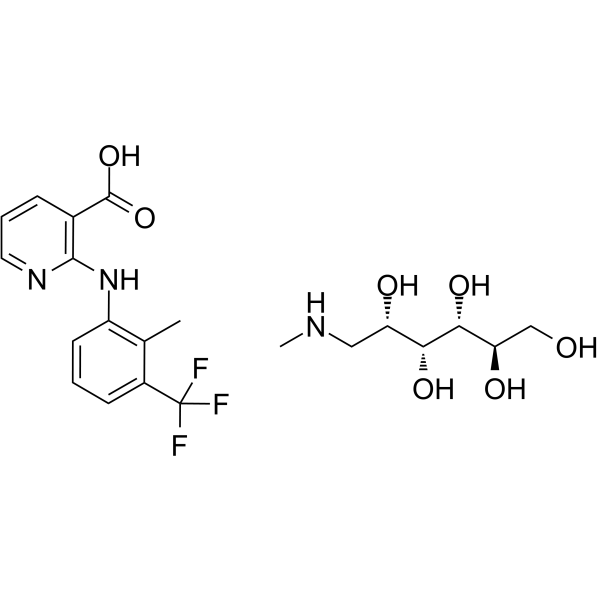
Flunixin meglumine is a cyclooxygenase (COX) inhibitor with IC50 values of 0.55 and 3.24 μM for COX-1 and COX-2, respectively. Flunixin meglumine shows anti-inflammatory effects.
For research use only. We do not sell to patients.
- Purity : 99.65%
- CAS No.: 42461-84-7
- Formula: C21H28F3N3O7
- Molecular Weight:491.46
-
Storage:
4°C, sealed storage, away from moisture
* In solvent : -80°C, 6 months; -20°C, 1 month (sealed storage, away from moisture)

To place orders, for customer services and technical support, please contact: MedChemExpress USA
Tel: 609-228-6898 E-mail: [email protected] [email protected]


-
 Biological Activity
-
Chemical Information
-
Solvent & Solubility
- Purity & Documentation
- References
-
 Help & FAQs


-
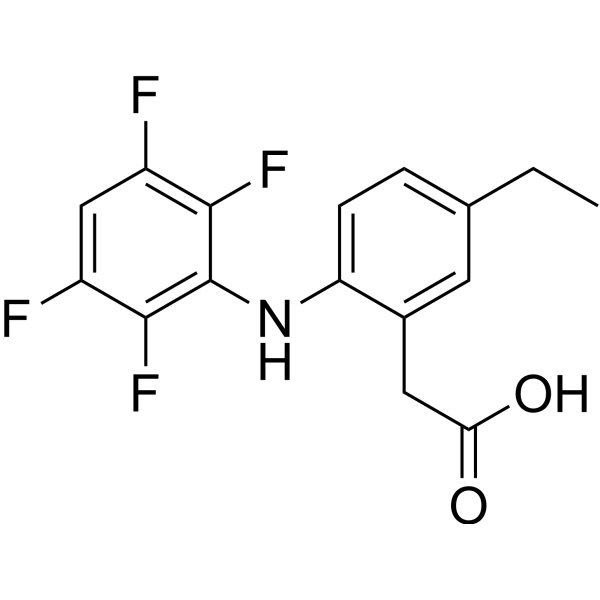
HY-118078
Robenacoxib -

HY-B0386R
Flunixin meglumine (Standard) -
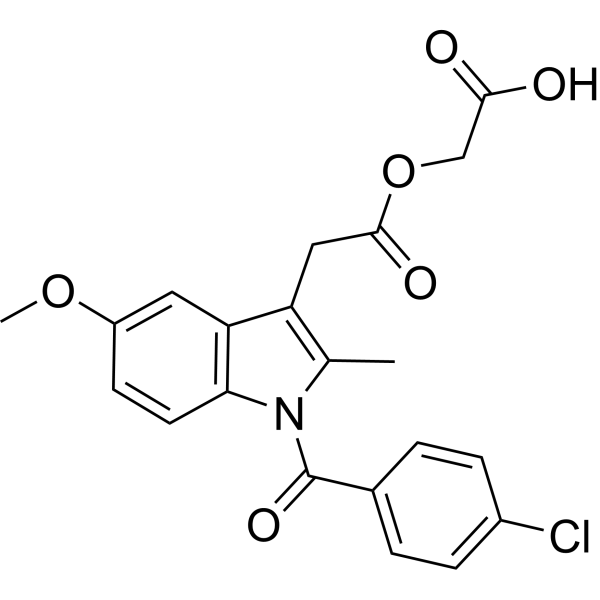
HY-B0482
Acemetacin -
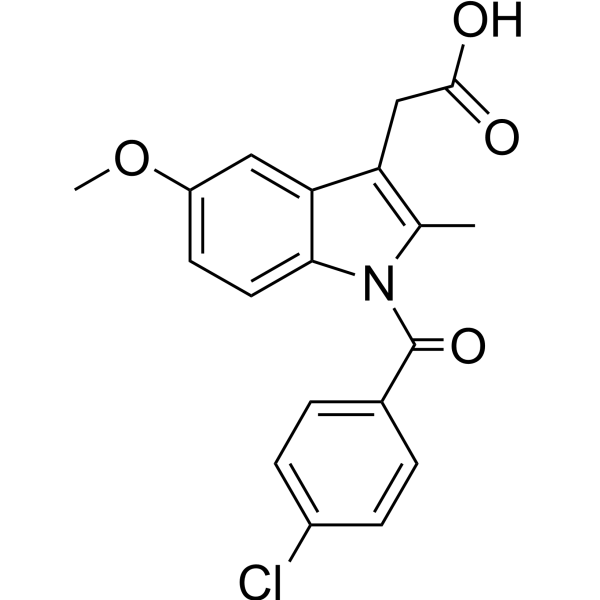
HY-14397
Indomethacin -
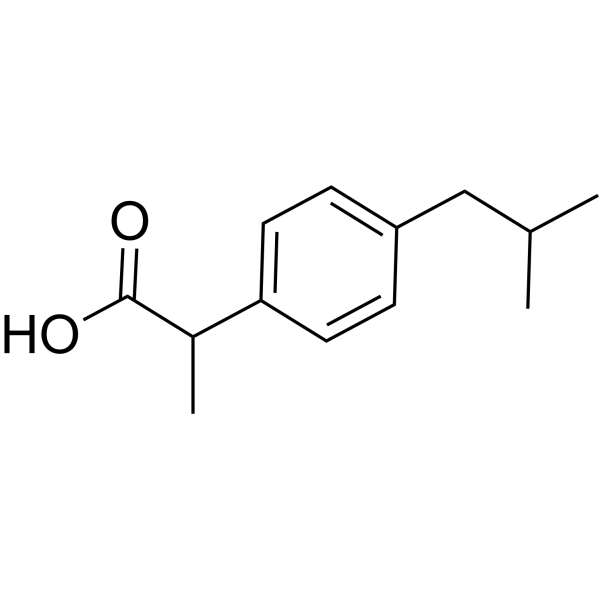
HY-78131
Ibuprofen -
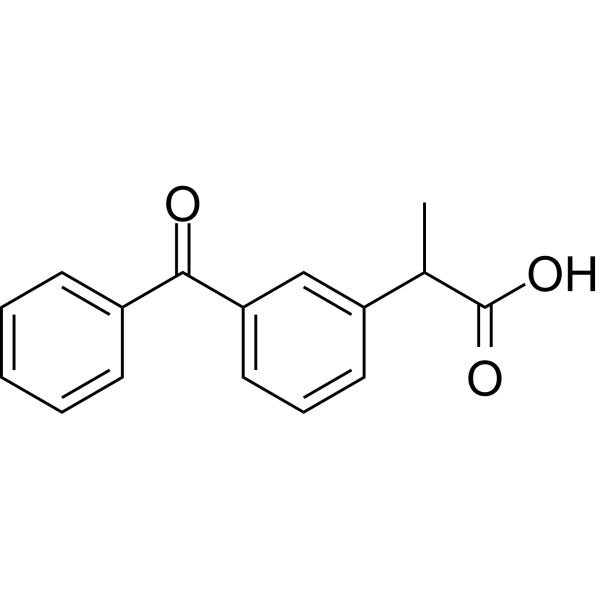
HY-B0227
Ketoprofen -
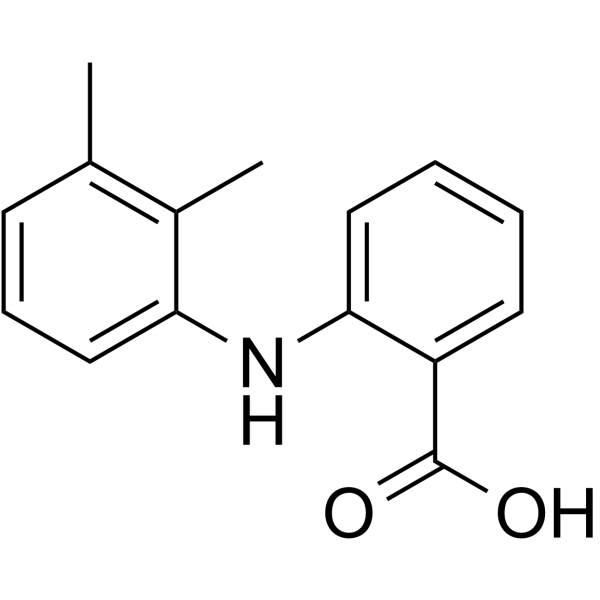
HY-B0574
Mefenamic acid -

HY-78131R
Ibuprofen (Standard) -

HY-14397R
Indomethacin (Standard) -
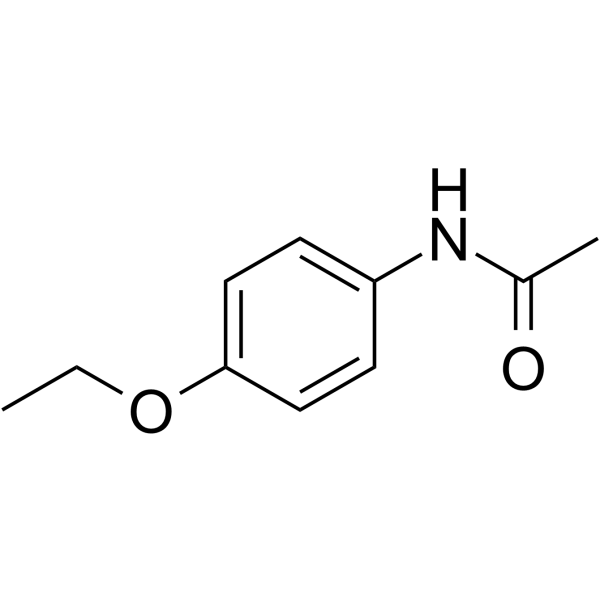
HY-B0476
Phenacetin -
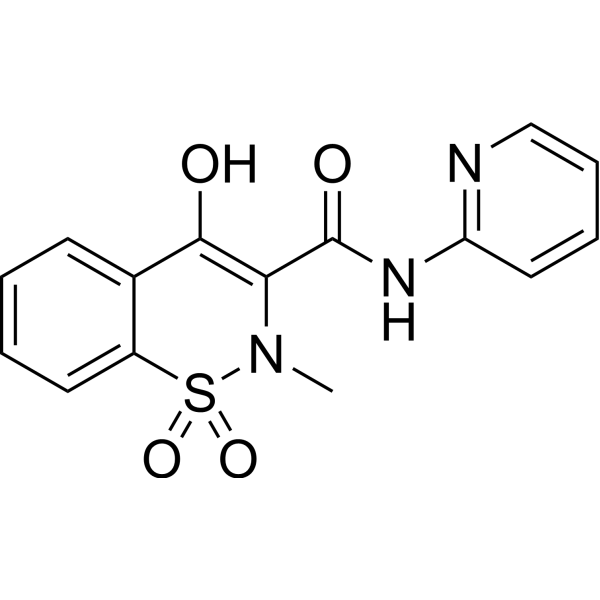
HY-B0253
Piroxicam -

HY-B0482R
Acemetacin (Standard)


Biological Activity
Description
IC50 & Target
[2]|
COX-1 0.55 μM (IC50) |
COX-2 3.24 μM (IC50) |
In Vitro
flunixin meglumine (10-1000 μM, 2 h) inhibits lipopolysaccharide (LPS)-induced activity of inducible nitric oxide synthase (iNOS) in RAW 264.7 murine macrophages[2].
flunixin meglumine (10-1000 μM, 2 h) inhibits lipopolysaccharide-induced activation of nuclear factor kappa B (NfκB) in RAW 264.7 murine macrophages[2].
MedChemExpress (MCE) has not independently confirmed the accuracy of these methods. They are for reference only.
-
Cell Line:RAW 264.7 murine macrophages
-
Concentration:10, 100, 300, and 1000 μM
-
Incubation Time:2 hours
-
Result:Inhibited LPS-induced nitric oxide release at concentrations between 100 and 1,000 µM (P=0.01).
In Vivo
MedChemExpress (MCE) has not independently confirmed the accuracy of these methods. They are for reference only.
-
Animal Model:Male sheep injected with Carrageenan[1]
-
Dosage:1.1 mg/kg
-
Administration:Intravenous injection; 1.1 mg/kg; once
-
Result:Inhibited Carrageenan-induced exudate PGE2 formation (Emax, 100%, IC50, <0.4 nM) and serum TXB2 generation (Emax, 100%, IC50, 17 nM) for up to 32 h.


Chemical Information
-
CAS No. 42461-84-7
-
Appearance Solid
-
Molecular Weight 491.46
-
Formula C21H28F3N3O7
-
Color White to off-white
-
SMILES
CC1=C(C=CC=C1C(F)(F)F)NC(N=CC=C2)=C2C(O)=O.O[C@H]([C@@H](O)CNC)[C@H](O)[C@H](O)CO
-
Shipping
Room temperature in continental US; may vary elsewhere.
-
Storage
4°C, sealed storage, away from moisture
* In solvent : -80°C, 6 months; -20°C, 1 month (sealed storage, away from moisture)


Solvent & Solubility
In Vitro:
DMSO : ≥ 100 mg/mL (203.48 mM; Hygroscopic DMSO has a significant impact on the solubility of product, please use newly opened DMSO)
H2O : 50 mg/mL (101.74 mM; Need ultrasonic)
* "≥" means soluble, but saturation unknown.
Please refer to the solubility information to select the appropriate solvent. Once prepared, please aliquot and store the solution to prevent product inactivation from repeated freeze-thaw cycles.
Storage method and period of stock solution: -80°C, 6 months; -20°C, 1 month (sealed storage, away from moisture). When stored at -80°C, please use it within 6 months. When stored at -20°C, please use it within 1 month.
* Note: If you choose water as the stock solution, please dilute it to the working solution, then filter and sterilize it with a 0.22 μm filter before use.
Please refer to the solubility information to select the appropriate solvent. Once prepared, please aliquot and store the solution to prevent product inactivation from repeated freeze-thaw cycles.
Storage method and period of stock solution: -80°C, 6 months; -20°C, 1 month (sealed storage, away from moisture). When stored at -80°C, please use it within 6 months. When stored at -20°C, please use it within 1 month.
* Note: If you choose water as the stock solution, please dilute it to the working solution, then filter and sterilize it with a 0.22 μm filter before use.
Concentration (start) × Volume (start) = Concentration (final) × Volume (final)
In Vivo:
Select the appropriate dissolution method based on your experimental animal and administration route.
- For the following dissolution methods, please ensure to first prepare a clear stock solution using an In Vitro approach and then sequentially add co-solvents:
- To ensure reliable experimental results, the clarified stock solution can be appropriately stored based on storage conditions. As for the working solution for In Vivo experiments, it is recommended to prepare freshly and use it on the same day.
- The percentages shown for the solvents indicate their volumetric ratio in the final prepared solution. If precipitation or phase separation occurs during preparation, heat and/or sonication can be used to aid dissolution.
Add each solvent one by one: 10% DMSO 40% PEG300 5% Tween-80 45% Saline
Solubility: ≥ 2.5 mg/mL (5.09 mM); Clear solution
This protocol yields a clear solution of ≥ 2.5 mg/mL (saturation unknown).
Taking 1 mL working solution as an example, add 100 μL DMSO stock solution (25.0 mg/mL) to 400 μL PEG300, and mix evenly; then add 50 μL Tween-80 and mix evenly; then add 450 μL Saline to adjust the volume to 1 mL.
Preparation of Saline: Dissolve 0.9 g sodium chloride in ddH₂O and dilute to 100 mL to obtain a clear Saline solution.
Add each solvent one by one: 10% DMSO 90% (20% SBE-β-CD in Saline)
Solubility: ≥ 2.5 mg/mL (5.09 mM); Clear solution
This protocol yields a clear solution of ≥ 2.5 mg/mL (saturation unknown).
Taking 1 mL working solution as an example, add 100 μL DMSO stock solution (25.0 mg/mL) to 900 μL 20% SBE-β-CD in Saline, and mix evenly.
Preparation of 20% SBE-β-CD in Saline (4°C, storage for one week): 2 g SBE-β-CD powder is dissolved in 10 mL Saline, completely dissolve until clear.
For the following dissolution methods, please prepare the working solution directly:
It is recommended to prepare fresh solutions and use them promptly within a short period of time.
The percentages shown for the solvents indicate their volumetric ratio in the final prepared solution. If precipitation or phase separation occurs during preparation, heat and/or sonication can be used to aid dissolution.
Add each solvent one by one: PBS
Solubility: 50 mg/mL (101.74 mM); Clear solution; Need ultrasonic
In Vivo Dissolution Calculator
Please enter the basic information of animal experiments:
-
-
-
-
Recommended: Prepare an additional quantity of animals to account for potential losses during experiments.
Working solution concentration: 0.22 mg/mL
This product has good water solubility, please refer to the measured solubility data in water/PBS/Saline for details.


Purity & Documentation
-
Data Sheet (274 KB)
-
SDS (393 KB)
- English - EN (393 KB)
- Français - FR (393 KB)
- Deutsch - DE (393 KB)
- Norwegian - NO (393 KB)
- Español - ES (393 KB)
- Swedish - SV (393 KB)
- Italian - IT (393 KB)
- Korean - KR (393 KB)
- Portuguese - PT (393 KB)
-
Handling Instructions (2659 KB)
References
[1]. Z Cheng, et al. Measurement of cyclooxygenase inhibition in vivo: a study of two non-steroidal anti-inflammatory drugs in sheep. Inflammation. 1998 Aug;22(4):353-66. [Content Brief]
[2]. Clare E Bryant, et al. Evaluation of the ability of carprofen and flunixin meglumine to inhibit activation of nuclear factor kappa B. Am J Vet Res. 2003 Feb;64(2):211-5. [Content Brief]


Complete Stock Solution Preparation Table
Please refer to the solubility information to select the appropriate solvent. Once prepared, please aliquot and store the solution to prevent product inactivation from repeated freeze-thaw cycles.
Storage method and period of stock solution: -80°C, 6 months; -20°C, 1 month (sealed storage, away from moisture). When stored at -80°C, please use it within 6 months. When stored at -20°C, please use it within 1 month.
| Optional Solvent | Concentration Solvent Mass | 1 mg | 5 mg | 10 mg | 25 mg |
|---|---|---|---|---|---|
| H2O / DMSO | 1 mM | 2.0348 mL | 10.1738 mL | 20.3475 mL | 50.8688 mL |
| 5 mM | 0.4070 mL | 2.0348 mL | 4.0695 mL | 10.1738 mL | |
| 10 mM | 0.2035 mL | 1.0174 mL | 2.0348 mL | 5.0869 mL | |
| 15 mM | 0.1357 mL | 0.6783 mL | 1.3565 mL | 3.3913 mL | |
| 20 mM | 0.1017 mL | 0.5087 mL | 1.0174 mL | 2.5434 mL | |
| 25 mM | 0.0814 mL | 0.4070 mL | 0.8139 mL | 2.0348 mL | |
| 30 mM | 0.0678 mL | 0.3391 mL | 0.6783 mL | 1.6956 mL | |
| 40 mM | 0.0509 mL | 0.2543 mL | 0.5087 mL | 1.2717 mL | |
| 50 mM | 0.0407 mL | 0.2035 mL | 0.4070 mL | 1.0174 mL | |
| 60 mM | 0.0339 mL | 0.1696 mL | 0.3391 mL | 0.8478 mL | |
| 80 mM | 0.0254 mL | 0.1272 mL | 0.2543 mL | 0.6359 mL | |
| 100 mM | 0.0203 mL | 0.1017 mL | 0.2035 mL | 0.5087 mL |
* Note: If you choose water as the stock solution, please dilute it to the working solution, then filter and sterilize it with a 0.22 μm filter before use.


Flunixin meglumine Related Classifications
HY-B0386 Related Classifications
 Powered by Bioz