



Ibuprofen (Standard)

Based on 1 Customer Validation
Ibuprofen (Standard) is the analytical standard of Ibuprofen. This product is intended for research and analytical applications. Ibuprofen ((±)-Ibuprofen) is a potent, orally active, selective COX-1 inhibitor with an IC50 value of 13 μM. Ibuprofen inhibits cell proliferation, angiogenesis, and induces cell apoptosis. Ibuprofen is a nonsteroidal anti-inflammatory agent and a nitric oxide (NO) donor. Ibuprofen ((±)-Ibuprofen) can be used in the research of pain, swelling, inflammation, infection, immunology, cancers.
For research use only. We do not sell to patients.
- Purity : 99.95%
- CAS No.: 15687-27-1
- Formula: C13H18O2
- Molecular Weight:206.28
-
Storage:
Please store the product under the recommended conditions in the Certificate of Analysis.


To place orders, for customer services and technical support, please contact: MedChemExpress USA
Tel: 609-228-6898 E-mail: [email protected] [email protected]


-
 Product Information
-
Chemical Information
- Purity & Documentation
-
 Help & FAQs


-

HY-15036R
Diclofenac (Standard)COX Inhibitor -
HY-15030R
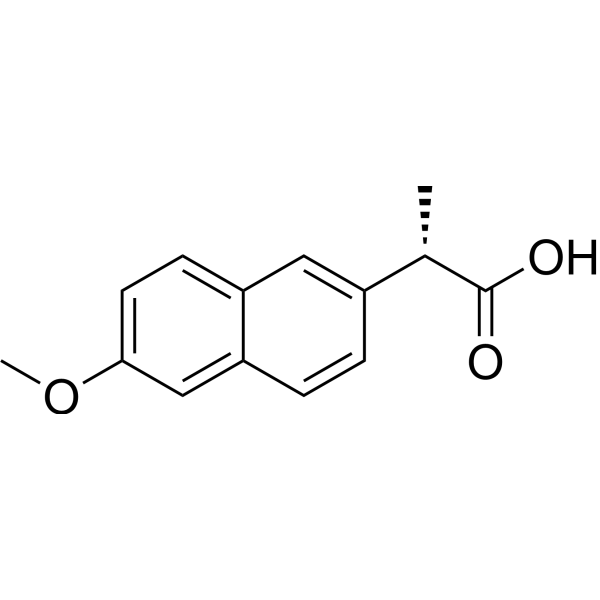
Naproxen (Standard)COX Inhibitor -

HY-14397R
Indomethacin (Standard)COX1/2 Inhibitor -
HY-B0227
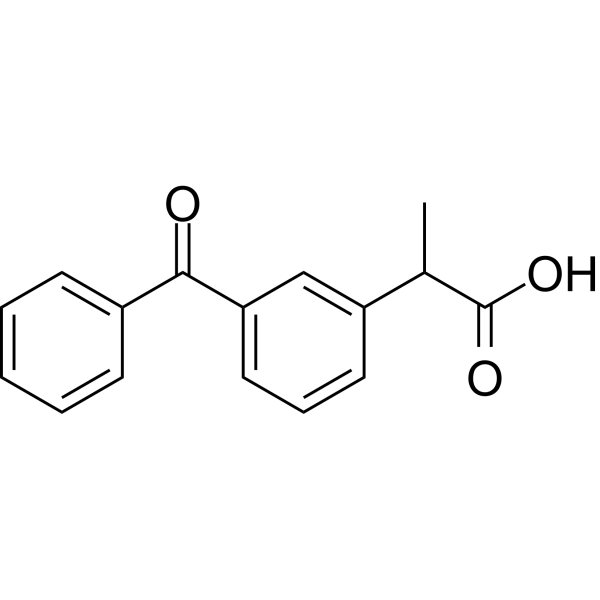
KetoprofenAnti-inflammatory agent -
HY-78131
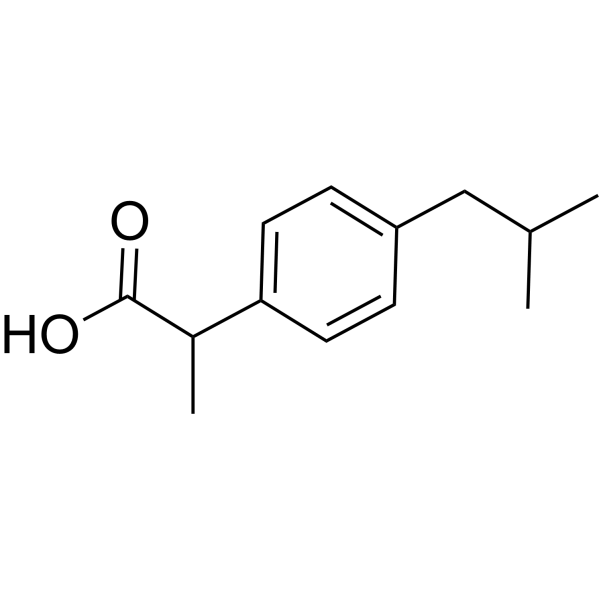
IbuprofenCOX-1 Inhibitor -
HY-66005R
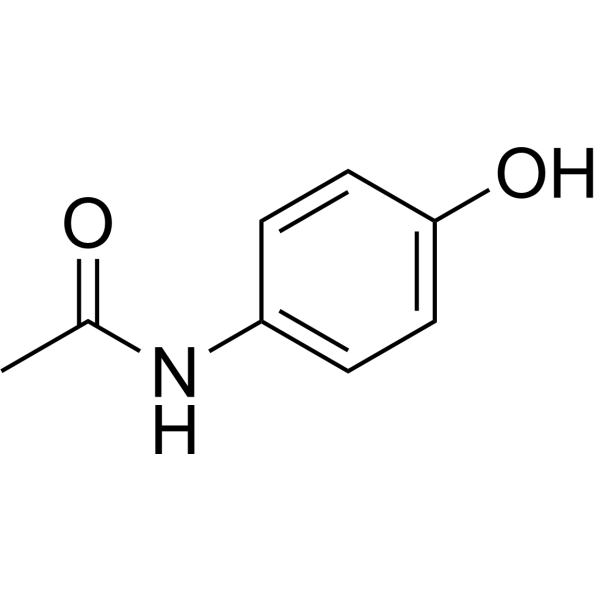
Acetaminophen (Standard) -
HY-78131S
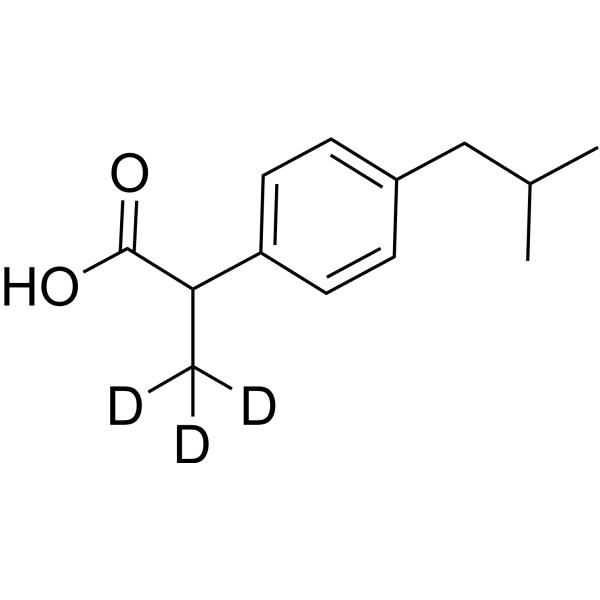
Ibuprofen-d3Stable Isotope -
HY-14397
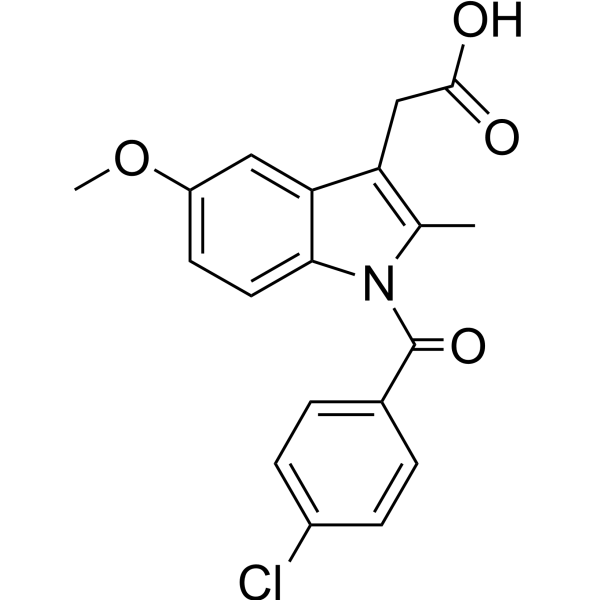
IndomethacinCOX1/2 Inhibitor -
HY-14398
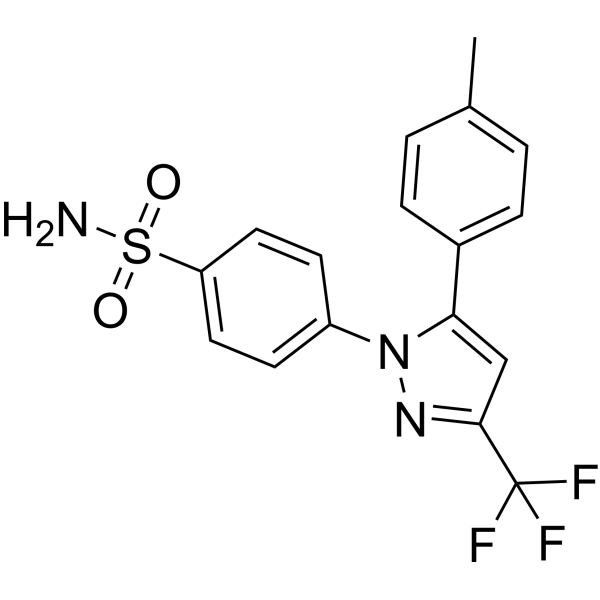
CelecoxibCOX-2inhibitor -
HY-15030
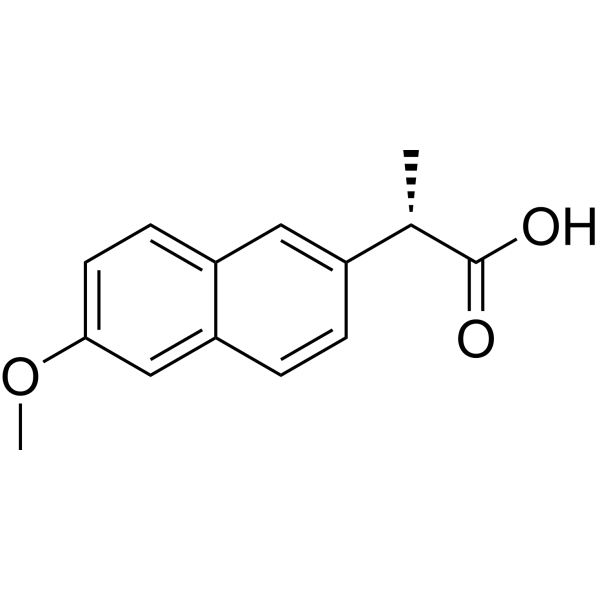
NaproxenCOX Inhibitor -
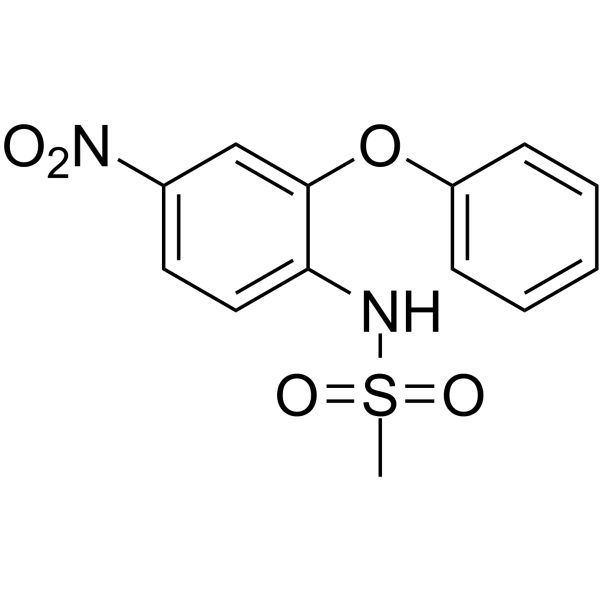
HY-B0363
NimesulideCOX Inhibitor -
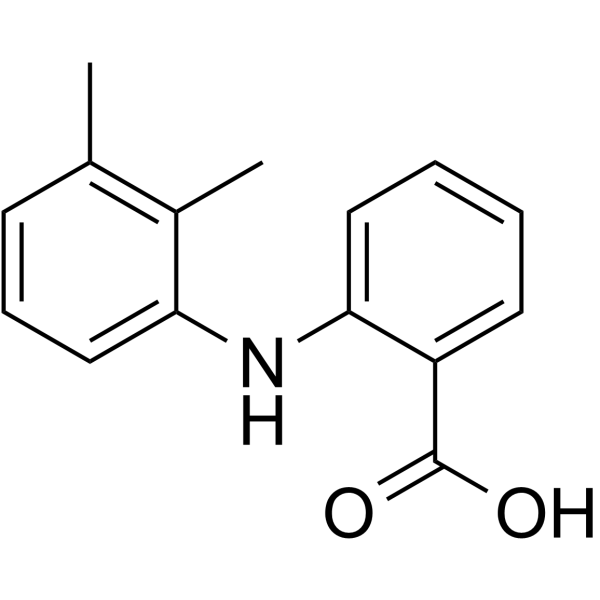
HY-B0574
Mefenamic acidCOX Inhibitor


Product Information
Information
Application
The compound is the grade of analytical standard, which is the reference standard supplied assay. It is commonly used in qualitative, quantitative and methodological research experiments in HPLC, GC and MS.


Chemical Information
-
CAS No. 15687-27-1
-
Appearance Solid
-
Molecular Weight 206.28
-
Formula C13H18O2
-
Color White to off-white
-
SMILES
OC(C(C1=CC=C(CC(C)C)C=C1)C)=O
-
Synonyms
(±)-Ibuprofen (Standard)
-
Shipping
Room temperature in continental US; may vary elsewhere.
-
Storage
Please store the product under the recommended conditions in the Certificate of Analysis.


Purity & Documentation
-
SDS (393 KB)
- English - EN (393 KB)
- Français - FR (393 KB)
- Deutsch - DE (393 KB)
- Norwegian - NO (393 KB)
- Español - ES (393 KB)
- Swedish - SV (393 KB)
- Italian - IT (393 KB)
- Korean - KR (393 KB)
- Portuguese - PT (393 KB)
-
Handling Instructions (2659 KB)
References
[1]. Noreen Y, et al. Development of a radiochemical cyclooxygenase-1 and -2 in vitro assay for identification of natural products as inhibitors of prostaglandin biosynthesis. J Nat Prod. 1998 Jan;61(1):2-7. [Content Brief]
[2]. Hassan Akrami, et al. Inhibitory effect of ibuprofen on tumor survival and angiogenesis in gastric cancer cell. Tumour Biol. 2015 May;36(5):3237-43. [Content Brief]
[3]. Sharon M Rymut, et al. Ibuprofen regulation of microtubule dynamics in cystic fibrosis epithelial cells. Am J Physiol Lung Cell Mol Physiol. 2016 Aug 1;311(2):L317-27. [Content Brief]
[4]. Emmanuelle Bignon, et al. Ibuprofen and ketoprofen potentiate UVA-induced cell death by a photosensitization process. Sci Rep. 2017 Aug 21;7(1):8885. [Content Brief]
[5]. Nathan D Pennock, et al. Ibuprofen supports macrophage differentiation, T cell recruitment, and tumor suppression in a model of postpartum breast cancer. J Immunother Cancer. 2018 Oct 1;6(1):98. [Content Brief]
[6]. Thomas Krøigård, et al. Protective effect of ibuprofen in a rat model of chronic oxaliplatin-induced peripheral neuropathy. Exp Brain Res. 2019 Oct;237(10):2645-2651. [Content Brief]
[7]. Sarah Ilkhanipour Rooney, et al. Ibuprofen Differentially Affects Supraspinatus Muscle and Tendon Adaptations to Exercise in a Rat Model. Am J Sports Med. 2016 Sep;44(9):2237-45. [Content Brief]
[8]. M W Konstan, et al. Ibuprofen attenuates the inflammatory response to Pseudomonas aeruginosa in a rat model of chronic pulmonary infection. Implications for antiinflammatory therapy in cystic fibrosis. Am Rev Respir Dis. 1990 Jan;141(1):186-92. [Content Brief]

Calculators
Concentration (start) × Volume (start) = Concentration (final) × Volume (final)


Ibuprofen (Standard) Related Classifications
HY-78131R Related Classifications
 Powered by Bioz