



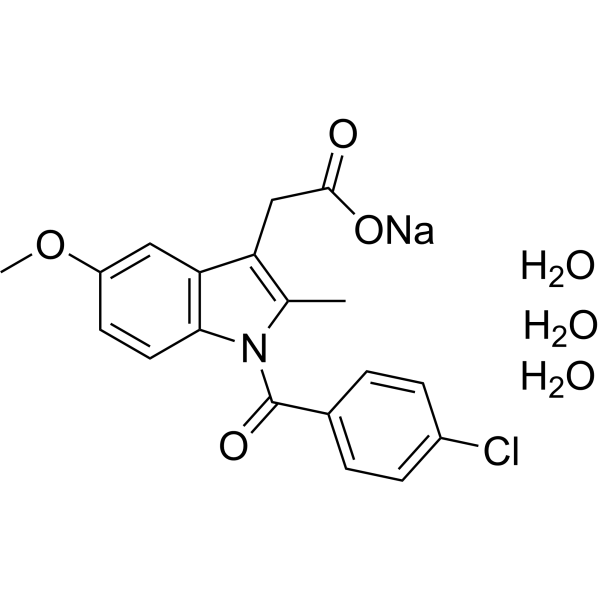
Indomethacin sodium hydrate
Based on 85 publication(s) in Google Scholar
Indomethacin (Indometacin) sodium hydrateis a orally active and BBB-permeable COX1/2 inhibitor with IC50 values of 18 nM and 26 nM for COX-1 and COX-2, respectively. Indomethacin sodium hydrateis has anticancer activity and anti-infective activity. Indomethacin sodium hydrateis can be used for cancer, inflammation and viral infection research.
Para uso exclusivo en investigación. No vendemos a pacientes.
- Pureza : 99.85%
- No. CAS: 74252-25-8
- Fòrmula: C19H21ClNNaO7
- Peso molecular:433.82
-
Almacenamiento:
4°C, protect from light, stored under nitrogen
* In solvent : -80°C, 6 months; -20°C, 1 month (protect from light, stored under nitrogen)

To place orders, for customer services and technical support, please contact: MedChemExpress USA
Tel: 609-228-6898 E-mail: [email protected] [email protected]


-
 Actividad biológica
-
Chemical Information
-
Solvente y solubilidad
- Protocolo
- Pureza y Documentación
- Referencias
-
 Help & FAQs


Publications Citing Use of MedChemExpress (MCE) Indomethacin sodium hydrate
More- Immunity. 2025 Apr 8:S1074-7613(25)00128-1. [Abstract]
- J Extracell Vesicles. 2024 Dec;13(12):e70025. [Abstract]
- J Extracell Vesicles. 2024 Apr;13(4):e12426. [Abstract]
- Nat Commun. 2025 Oct 2;16(1):8779. [Abstract]
- Hepatology. 2023 Feb 1;77(2):456-465. [Abstract]
- J Adv Res. 2025 Dec 11:S2090-1232(25)00994-4. [Abstract]
- Genes Dis. 2026 Jun 15.
- Adv Sci (Weinh). 2025 Dec 19:e08956. [Abstract]
- Adv Sci (Weinh). 2025 Jan;12(4):e2410360. [Abstract]
- Biomaterials. 2022 Oct:289:121800. [Abstract]
- Chem Eng J. 2026 Mar 12.
- Phytomedicine. 2025 Nov 25:148:157400. [Abstract]
- Phytomedicine. 2022 Apr:98:153928. [Abstract]
- Phytomedicine. 2021 Nov:92:153751. [Abstract]
- Adv Healthc Mater. 2026 Apr 30:e71198. [Abstract]
- Int J Nanomedicine. 2020 May 1:15:3087-3098. [Abstract]
- Antioxidants (Basel). 2021 Aug 24;10(9):1333. [Abstract]
- Phytother Res. 2026 Jun 18. [Abstract]
- Phytother Res. 2026 Apr 27. [Abstract]
- Phytother Res. 2025 Oct;39(10):4704-4717. [Abstract]
- Clin Transl Med. 2021 Oct;11(10):e548. [Abstract]
- ACS Appl Mater Interfaces. 2026 Jul 29;18(29):39908-39926.
- World J Gastroenterol. 2023 Oct 21;29(39):5452-5470. [Abstract]
- Chin J Nat Med. 2021 Oct;19(10):741-749. [Abstract]
- Chin Med. 2023 Sep 7;18(1):113. [Abstract]
- J Med Chem. 2021 Mar 11;64(5):2725-2738. [Abstract]
- Chem Mater. 2017, 29(19):8221-8238.
- Appl Mater Today. 2023 Apr.
- Pharmaceutics. 2024 May 29;16(6):731. [Abstract]
- J Ethnopharmacol. 2024 Dec 5:335:118660. [Abstract]
- Eur J Med Chem. 2023 Oct 5:258:115602. [Abstract]
- Eur J Med Chem. 2021 Dec 5:225:113743. [Abstract]
- Ecotoxicol Environ Saf. 2025 Nov 15:307:119433. [Abstract]
- Ecotoxicol Environ Saf. 2025 Jan 15:290:117765. [Abstract]
- Life Sci. 2026 Mar 15:389:124236. [Abstract]
- Int Endod J. 2024 Sep;57(9):1228-1246. [Abstract]
- Organogenesis. 2025 Dec;21(1):2460261. [Abstract]
- Inflammopharmacology. 2025 Dec 2. [Abstract]
- RSC Adv. 2026 May 15;16(28):25944-25963. [Abstract]
- Drug Des Devel Ther. 2025 Mar 19:19:2035-2050. [Abstract]
- Cells. 2026 Feb 11;15(4):329. [Abstract]
- Int J Pharm. 2017 Jan 30;517(1-2):19-24. [Abstract]
- Cell Rep Methods. 2023 Oct 23;3(10):100599. [Abstract]
- Int Immunopharmacol. 2026 Aug 15:183:116873. [Abstract]
- ACS Appl Bio Mater. 2023 Jul 17;6(7):2816-2825. [Abstract]
- Chem Biol Interact. 2026 Sep 1:437:112267.
- Eur J Pharm Sci. 2023 Oct 1:189:106550. [Abstract]
- Bioorg Chem. 2022 Dec:129:106206. [Abstract]
- Food Sci Nutr. 2026 Jan 7;14(1):e71429. [Abstract]
- Mol Med Rep. 2023 Sep;28(3):164. [Abstract]
- J Lipid Res. 2026 Feb;67(2):100981. [Abstract]
- Mol Pharm. 2025 Aug 4;22(8):4969-4982. [Abstract]
- Metabolites. 2025 May 14;15(5):324. [Abstract]
- Langmuir. 2020 Sep 29;36(38):11374-11382. [Abstract]
- Front Physiol. 2021 Oct 28;12:770430. [Abstract]
- Am J Physiol Endocrinol Metab. 2024 May 1;326(5):E696-E708. [Abstract]
- BMC Cancer. 2019 Dec 2;19(1):1166. [Abstract]
- Biotechnol Bioeng. 2021 Dec;118(12):4687-4698. [Abstract]
- Biochim Biophys Acta Mol Cell Biol Lipids. 2025 Jul 7;1870(6):159659. [Abstract]
- Cell Transplant. 2025 Jan-Dec:34:9636897251376125. [Abstract]
- Int J Med Sci. 2025 Mar 10;22(8):1773-1790. [Abstract]
- Drug Metab Dispos. 2025 Nov 10;53(12):100200. [Abstract]
- Front Med (Lausanne). 2021 Apr 13:8:634882. [Abstract]
- Toxicol Appl Pharmacol. 2017 May 15:323:44-52. [Abstract]
- Immun Inflamm Dis. 2023 Feb;11(2):e787. [Abstract]
- Andrology. 2025 Feb;13(2):371-381. [Abstract]
- J Therm Biol. 2024 Jul:123:103906. [Abstract]
- J Appl Toxicol. 2024 Oct;44(10):1528-1539. [Abstract]
- BMC Nephrol. 2024 Jul 15;25(1):226. [Abstract]
- Biomed Res Int. 2021 May 14:2021:5565748. [Abstract]
- FEBS Open Bio. 2025 Jan;15(1):122-139. [Abstract]
- Clin Exp Pharmacol Physiol. 2025 Nov;52(11):e70081. [Abstract]
- Biochem Biophys Res Commun. 2025 Sep 25:781:152551. [Abstract]
- Biochem Biophys Res Commun. 2025 Jul 1:768:151920. [Abstract]
- J Mol Liq. 2026 May 23;457:129686.
- Thai Journal of Pharmaceutical Sciences. 2025 Dec.
- Res Sq. 2025 Oct 27.
- Res Sq. 2025 Nov 12.
- bioRxiv. 2025 Jul 12:2025.07.08.663754. [Abstract]
- bioRxiv. 2025 Jun 3:2025.06.01.657218. [Abstract]
- SSRN. 2025 Mar 31.
- bioRxiv. 2024 Nov 08.
- Eur Rev Med Pharmacol Sci. 2020 Nov;24(21):11199-11211. [Abstract]
- Research Square Preprint. 2020 Oct.
- Patent. US20180263995A1.
 Customer Validation & Images

-
ELISA
-
WB
-
WB
-
IF
-
Cell Proliferation/Viability Assay
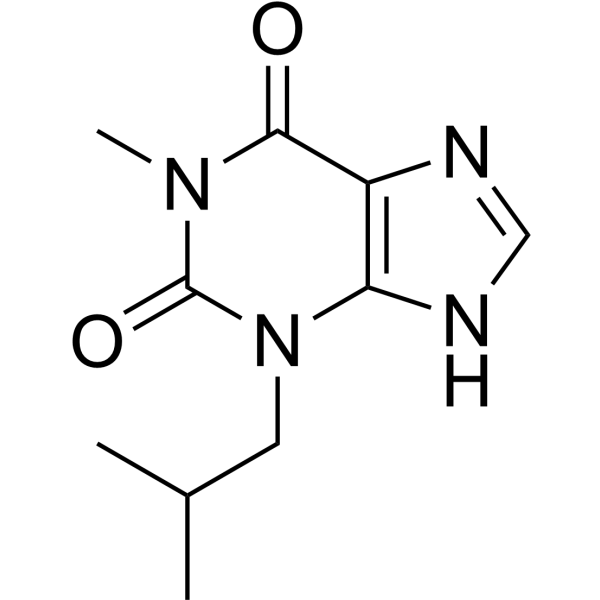
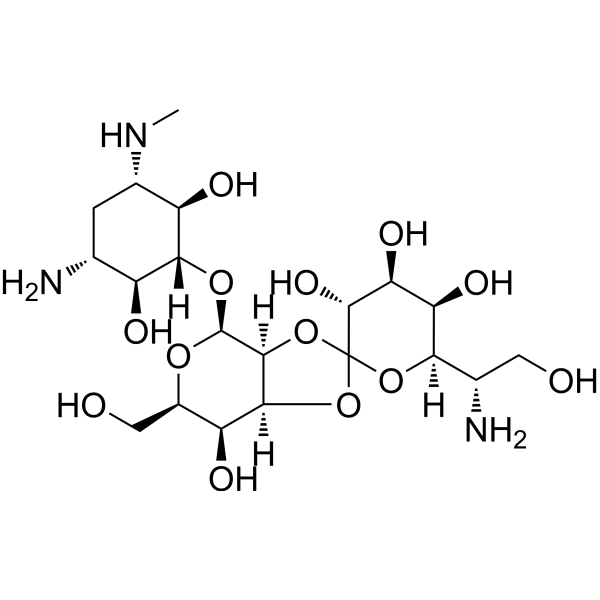
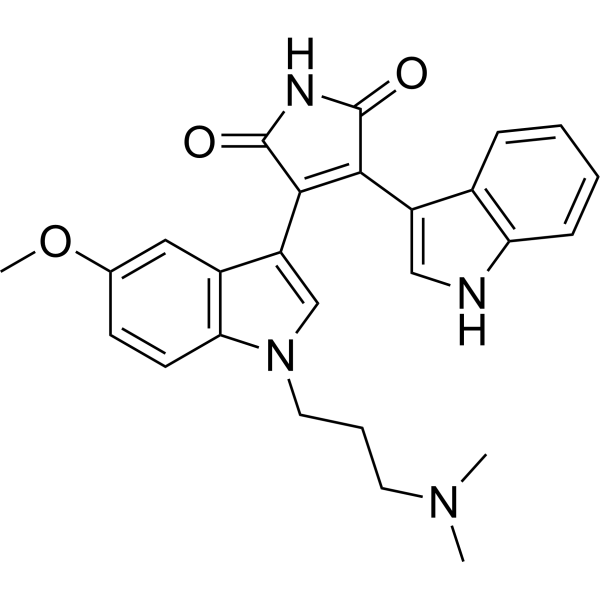
Ver todos los productos específicos de isoformas Antibiotic
More

Actividad biológica
Descripciòn
In Vitro
Indomethacin (Indometacin) sodium hydrateis (0-150 μM; 24 hours; 3LL-D122 cells) has anticancer activity in vitro[2].
Indomethacin (Indometacin) sodium hydrateis (0-1000 μM) protects the host cells from damage caused by the virus through activates PKR, resulting in elF2α phosphorylation, and in turn shutting of translation of viral protein and inhibiting replication of the virus (IC50=2 μM)[3].
MedChemExpress (MCE) has not independently confirmed the accuracy of these methods. They are for reference only. Further protocols information, click here.
-
Cell Line:3LL-D122 cells (highly metastatic variant of mouse LLcarcinoma cells)
-
Concentration:0, 20, 50, 100 and 150μM
-
Incubation Time:24 hours
-
Result:Inhibited cell viability at 20 mM, with 50% inhibition at 60 mM.
-
Cell Line:3LL-D122 cells (highly metastatic variant of mouse LLcarcinoma cells)
-
Concentration:0, 30 and 80μM
-
Incubation Time:24 hours
-
Result:Decreased in the percentage of cells at the G2/M phase and increased in the percentage of cells at G1 phase.
In Vivo
-
Animal Model:Male Sprague-Dawley rats[1]
-
Dosage:0.01-10 mg/kg
-
Administration:Oral administration; for 3 hours
-
Result:Inhibited the carrageenan-induced rat paw oedema (ED50=2.0 mg/kg) and hyperalgesia (ED50=1.5 mg/kg) in a dose-dependent manner.
-
Animal Model:Male C57BL/6J mice[2]
-
Dosage:10 mg/mL
-
Administration:Oral administration; daily, for 29 days
-
Result:Delayed the onset of tumor growth and the initial growth rate of the footpad tumors.
Induced Disease Models
Please do not refer to only one article to determine the experimental conditions. It is recommended to determine the optimal experimental conditions (animal strain, age, dosage, frequency and cycle, detection time and indicators, etc.) through preliminary experiments before the formal experiment.
Indomethacin sodium hydrate can be used to create gastric ulcer models. After oral administration, the drug is absorbed rapidly and completely, although there are interindividual and intraindividual variations. The plasma peak concentration of 2-3 μg/mL is typically reached within 1-2 hours. However, coadministration with food reduces and delays the peak concentration without affecting the total absorption. At therapeutic concentrations, 90% of Indomethacin is bound to albumin in the plasma[4].
Administration: 100 mg/kg • p.o. • single dose
(2) Indomethacin were dissolved in saline with 5% NaOH.
Histopathological changes: Showed severe erosion of the mucosa, reaching down to the lamina muscularis; observed hemorrhagic infiltration, edema in the submucosa, and severe hyperemia of the vessels.
Molecular changes: Showed intense Tnf-α expression.
Biochemical changes: Increased MDA, TOS levels, reduced TAS levels, CAT and GPx activities and GSH levels.
MedChemExpress (MCE) has not independently confirmed the accuracy of these methods. They are for reference only.
Ensayo clínico
| NCT Number | Sponsor | Condition | Start Date |
Phase

|
|---|---|---|---|---|
| NCT01329991 | Plexxikon| | 2011-05 | PHASE1 |


Chemical Information
-
No. CAS 74252-25-8
-
Appearance Solid
-
Peso molecular 433.82
-
Fòrmula C19H21ClNNaO7
-
Color Light yellow to yellow
-
SMILES
O=C(O[Na])CC1=C(C)N(C(C2=CC=C(Cl)C=C2)=O)C3=C1C=C(OC)C=C3.O.O.O
-
Synonyms
Indometacin sodium hydrate
-
Envío
Room temperature in continental US; may vary elsewhere.
-
Almacenamiento
4°C, protect from light, stored under nitrogen
* In solvent : -80°C, 6 months; -20°C, 1 month (protect from light, stored under nitrogen)


Publications (85)
-
Journal Impact Factor
-
Most Recent
-
Immunity
Alcaligenes faecalis induces intestinal T helper-17 cells by enhancing Rorc transcription through E3 ligase Trim21-mediated Fbxw7 degradation. [Abstract]2025 Apr 8:S1074-7613(25)00128-1. PMID: 40215968 -
J Extracell Vesicles
CD7-targeting pro-apoptotic extracellular vesicles: A novel approach for T-cell haematological malignancy therapy. [Abstract]2024 Dec;13(12):e70025. PMID: 39676736 -
J Extracell Vesicles
Proton pump inhibitors enhance macropinocytosis-mediated extracellular vesicle endocytosis by inducing membrane v-ATPase assembly. [Abstract]2024 Apr;13(4):e12426. PMID: 38532609 -
Nat Commun
2025 Oct 2;16(1):8779. PMID: 41038808 -
Hepatology
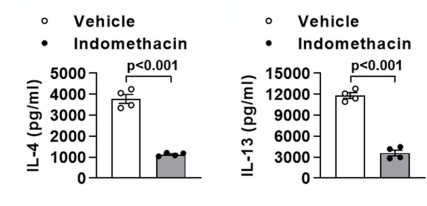
Eosinophils protect against acetaminophen-induced liver injury through cyclooxygenase-mediated IL-4/IL-13 production. [Abstract]2023 Feb 1;77(2):456-465. PMID: 35714036
Indomethacin sodium hydrate purchased from MedChemExpress. Usage Cited in: Hepatology. 2023 Feb 1;77(2):456-465. [Abstract]
WT BmEos was treated with IL-33 (20 ng/ml) in the presence or absence of indomethacin (50 μM) for 24 h. Protein levels of IL-4 and IL-13 in the supernatants were measured by ELISA.
-
J Adv Res
High-throughput screening identifies FDA approved drug mitiglinide as a novel pyroptosis inhibitor and therapeutic agent for osteoarthritis. [Abstract]2025 Dec 11:S2090-1232(25)00994-4. PMID: 41386507 -
-
Adv Sci (Weinh)
Exclusive Breastfeeding Drives AMPK-Dependent Thermogenic Memory in BAT and Promotes Long-Term Metabolic Benefits in Offspring. [Abstract]2025 Dec 19:e08956. PMID: 41417620 -
Adv Sci (Weinh)
Targeted SPP1 Inhibition of Tumor-Associated Myeloid Cells Effectively Decreases Tumor Sizes. [Abstract]2025 Jan;12(4):e2410360. PMID: 39639496 -
Biomaterials
2022 Oct:289:121800. PMID: 36166893 -
-
Phytomedicine
Perillyl alcohol ameliorates high-fat diet-induced obesity in mice by modulating gut microbiota and activating IRF4-mediated brown fat thermogenesis. [Abstract]2025 Nov 25:148:157400. PMID: 41138577 -
Phytomedicine
Tangeretin suppresses osteoarthritis progression via the Nrf2/NF-κB and MAPK/NF-κB signaling pathways. [Abstract]2022 Apr:98:153928. PMID: 35104760 -
Phytomedicine
3'-Oxo-tabernaelegantine A (OTNA) selectively relaxes pulmonary arteries by inhibiting AhR. [Abstract]2021 Nov:92:153751. PMID: 34563984 -
Adv Healthc Mater
Dual-Targeted Nanotherapy Restores Redox Homeostasis and Suppresses Uterine Hypercontractility for Effective Preterm Birth Intervention. [Abstract]2026 Apr 30:e71198. PMID: 42059192 -
Int J Nanomedicine
A Mansonone Derivative Coupled with Monoclonal Antibody 4D5-Modified Chitosan Inhibit AKR1C3 to Treat Castration-Resistant Prostate Cancer. [Abstract]2020 May 1:15:3087-3098. PMID: 32431503 -
Antioxidants (Basel)
Discovery of Novel Pterostilbene Derivatives That Might Treat Sepsis by Attenuating Oxidative Stress and Inflammation through Modulation of MAPKs/NF-κB Signaling Pathways. [Abstract]2021 Aug 24;10(9):1333. PMID: 34572964 -
Phytother Res
Poria cocos Polysaccharides Protect Against Contrast-Induced Renal Injury Through Activating CaMKK2/AMPK/PGC-1α Signaling Pathway. [Abstract]2026 Jun 18. PMID: 42312878 -
Phytother Res
Gypenoside XVII Ameliorates Osteoarthritis and Suppresses Chondrocyte Apoptosis and Extracellular Matrix Degradation via STING-Dependent Inhibition of ER Stress. [Abstract]2026 Apr 27. PMID: 42043276 -
Phytother Res
Daidzin Inhibits Endoplasmic Reticulum Stress by Regulating FoxO1 Expression to Alleviate Osteoarthritis Progression. [Abstract]2025 Oct;39(10):4704-4717. PMID: 40889796 -
Clin Transl Med
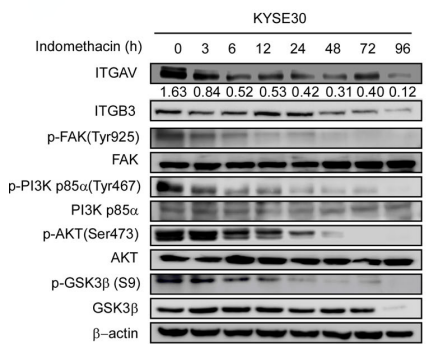
Targeting integrin αvβ3 with indomethacin inhibits patient-derived xenograft tumour growth and recurrence in oesophageal squamous cell carcinoma. [Abstract]2021 Oct;11(10):e548. PMID: 34709754
Indomethacin sodium hydrate purchased from MedChemExpress. Usage Cited in: Clin Transl Med. 2021 Oct;11(10):e548. [Abstract]
ITGAV, ITGB3, p-FAK, FAK, p-PI3K, PI3K, p-AKT, AKT, p-GSK3β, and GSK3β protein levels were assessed in KYSE30 cells by Western blotting after treatment with DMSO or 200 µM Indomethacin (0–96 h).
Indomethacin sodium hydrate purchased from MedChemExpress. Usage Cited in: Clin Transl Med. 2021 Oct;11(10):e548. [Abstract]
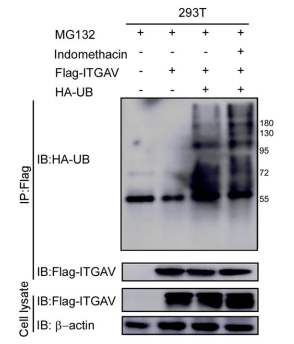
HEK-293T cells were co-transfected with FLAG-ITGAV and HA-ubiquitin plasmids, pre-treated with MG132 for 12 h, and then incubated with indomethacin (200 µM) for 2 days.
Indomethacin sodium hydrate purchased from MedChemExpress. Usage Cited in: Clin Transl Med. 2021 Oct;11(10):e548. [Abstract]
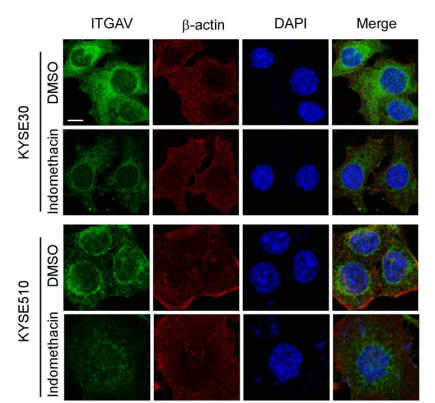
KYSE30 and KYSE510 cells were treated with DMSO or Indomethacin for 24 h, followed by the detection of ITGAV protein levels using immunofluorescence.
Indomethacin sodium hydrate purchased from MedChemExpress. Usage Cited in: Clin Transl Med. 2021 Oct;11(10):e548. [Abstract]
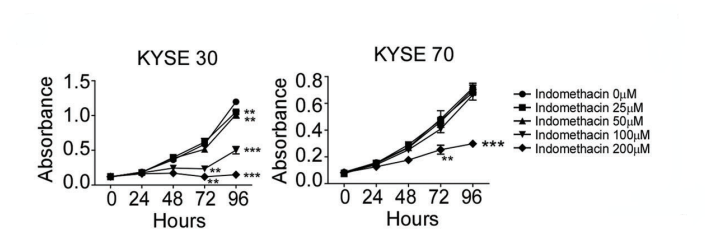
ESCC cells were treated with DMSO or different concentrations of Indomethacin for various times (24, 48, or 96 h). Cell growth inhibition was detected by MTT assay.
Indomethacin sodium hydrate purchased from MedChemExpress. Usage Cited in: Clin Transl Med. 2021 Oct;11(10):e548. [Abstract]
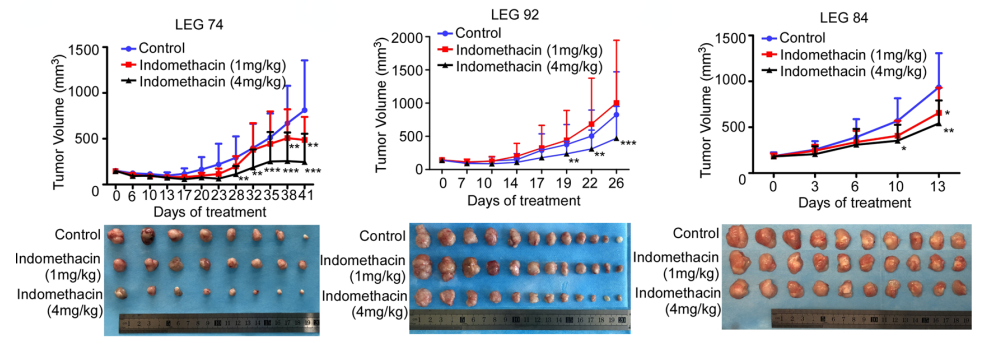
PDX tumour size was plotted over 41 days (LEG74, n = 8/group), 26 days (LEG92, n = 12/group), or 13 days (LEG84, n = 10/group) to assess the effect of Indomethacin. Vehicle or indomethacin (1 or 4 mg/kg) was administered intra-gastrically. Tumour volumes were measured twice per week.
-
-
World J Gastroenterol
Prostaglandin F2α synthase promotes oxaliplatin resistance in colorectal cancer through prostaglandin F2α-dependent and F2α-independent mechanism. [Abstract]2023 Oct 21;29(39):5452-5470. PMID: 37900995 -
Chin J Nat Med
Therapeutic effect of neohesperidin on TNF-α-stimulated human rheumatoid arthritis fibroblast-like synoviocytes. [Abstract]2021 Oct;19(10):741-749. PMID: 34688464 -
Chin Med
Ajugol's upregulation of TFEB-mediated autophagy alleviates endoplasmic reticulum stress in chondrocytes and retards osteoarthritis progression in a mouse model. [Abstract]2023 Sep 7;18(1):113. PMID: 37679844 -
J Med Chem
Development of an In Silico Prediction Model for P-glycoprotein Efflux Potential in Brain Capillary Endothelial Cells toward the Prediction of Brain Penetration. [Abstract]2021 Mar 11;64(5):2725-2738. PMID: 33619967 -
-
-
Pharmaceutics
Study on the Effect of Pharmaceutical Excipient PEG400 on the Pharmacokinetics of Baicalin in Cells Based on MRP2, MRP3, and BCRP Efflux Transporters. [Abstract]2024 May 29;16(6):731. PMID: 38931853 -
J Ethnopharmacol
Lycopodium japonicum Thunb. inhibits chondrocyte apoptosis, senescence and inflammation in osteoarthritis through STING/NF-κB signaling pathway. [Abstract]2024 Dec 5:335:118660. PMID: 39121926 -
Eur J Med Chem
Novel pterostilbene derivatives ameliorate heart failure by reducing oxidative stress and inflammation through regulating Nrf2/NF-κB signaling pathway. [Abstract]2023 Oct 5:258:115602. PMID: 37406380 -
Eur J Med Chem
Design, synthesis, and SAR study of novel 4,5-dihydropyrazole-Thiazole derivatives with anti-inflammatory activities for the treatment of sepsis. [Abstract]2021 Dec 5:225:113743. PMID: 34403978 -
Ecotoxicol Environ Saf
PPARγ-responsive luciferase reporter system for high-throughput screening of chemical toxins with potential pulmonary fibrosis effects. [Abstract]2025 Nov 15:307:119433. PMID: 41273832 -
Ecotoxicol Environ Saf
Effects of benzotriazoles UV-328, UV-329, and UV-P on the self-renewal and adipo-osteogenic differentiation of human mesenchymal stem cells. [Abstract]2025 Jan 15:290:117765. PMID: 39847882 -
Life Sci
A protective role of ECSIT in chemotherapy-induced intestinal mucositis by maintaining Lgr5+ intestinal stem cells and gut homeostasis. [Abstract]2026 Mar 15:389:124236. PMID: 41611204 -
Int Endod J
Integration of single-cell RNA sequencing of endothelial cells and proteomics to unravel the role of ICAM1-PTGS2 communication in apical periodontitis: A laboratory investigation. [Abstract]2024 Sep;57(9):1228-1246. PMID: 38713190 -
Organogenesis
Tetramethylpyrazine Confers Protection Against Oxidative Stress and NLRP3-Dependent Pyroptosis in Rats with Endometriosis. [Abstract]2025 Dec;21(1):2460261. PMID: 39967390 -
Inflammopharmacology
The sesquiterpene lactone components of Cichorium glandulosum suppress both in vitro and in vivo inflammatory responses by reducing IL-1β levels. [Abstract]2025 Dec 2. PMID: 41329398 -
RSC Adv
Targeted delivery of gemcitabine to lung cancer cells via a hyaluronic acid-based nanoplatform. [Abstract]2026 May 15;16(28):25944-25963. PMID: 42148272 -
Drug Des Devel Ther
Network Pharmacology and Experimental Validation Reveal Sishen Pill's Efficacy in Treating NSAID-Induced Small Intestinal Ulcers. [Abstract]2025 Mar 19:19:2035-2050. PMID: 40124554 -
Cells
The Asp-Encoding Gene FBN1 Mediates Cold Adaptation in Sunite Sheep by Reprogramming Adipocyte Differentiation Towards Thermogenesis. [Abstract]2026 Feb 11;15(4):329. PMID: 41744772 -
Int J Pharm
Predicting optimal wet granulation parameters for extrusion-spheronisation of pharmaceutical pellets using a mixer torque rheometer. [Abstract]2017 Jan 30;517(1-2):19-24. PMID: 27915006 -
Cell Rep Methods
RECOVER identifies synergistic drug combinations in vitro through sequential model optimization. [Abstract]2023 Oct 23;3(10):100599. PMID: 37797618 -
Int Immunopharmacol
Oxyphenbutazone suppresses non-canonical inflammasome activation and protects against LPS-induced sepsis. [Abstract]2026 Aug 15:183:116873. PMID: 42150290 -
ACS Appl Bio Mater
Feedback-Elevated Antitumor Amplifier of Self-Delivery Nanomedicine by Suppressing Photodynamic Therapy-Caused Inflammation. [Abstract]2023 Jul 17;6(7):2816-2825. PMID: 37326439 -
-
Eur J Pharm Sci
Biophysical and docking study on the interaction of anticancer drugs encorafenib and binimetinib with human serum albumin. [Abstract]2023 Oct 1:189:106550. PMID: 37527692 -
Bioorg Chem
Discovery of novel dihydropyrazole-stilbene derivatives for ameliorating heart failure through modulation of p38/NF-κB signaling pathway. [Abstract]2022 Dec:129:106206. PMID: 36288667 -
Food Sci Nutr
Anti-Diabetic Effects of Ayanin, a Flavonoid Compound, in STZ/HFD-Induced Diabetic Mice by Upregulating GLUT4 and Suppressing Macrophage-Driven Inflammation in Adipose Tissues. [Abstract]2026 Jan 7;14(1):e71429. PMID: 41509193 -
Mol Med Rep
Ghrelin promotes cardiomyocyte differentiation of adipose tissue‑derived mesenchymal stem cells by DDX17‑mediated regulation of the SFRP4/Wnt/β‑catenin axis. [Abstract]2023 Sep;28(3):164. PMID: 37449526 -
J Lipid Res
2026 Feb;67(2):100981. PMID: 41565113 -
Mol Pharm
Molecular Interactions of Cobimetinib and Vemurafenib with Human Serum Albumin: a Comparative Biophysical and Computational Analysis. [Abstract]2025 Aug 4;22(8):4969-4982. PMID: 40662409 -
Metabolites
Intestinal Epithelial-Derived Exosomes Under Cold Stimulation Promote Adipose Thermogenesis. [Abstract]2025 May 14;15(5):324. PMID: 40422900 -
Langmuir
2020 Sep 29;36(38):11374-11382. PMID: 32902993 -
Front Physiol
Roles of Endothelial Motilin Receptor and Its Signal Transduction Pathway in Motilin-Induced Left Gastric Artery Relaxation in Dogs. [Abstract]2021 Oct 28;12:770430. PMID: 34777026 -
Am J Physiol Endocrinol Metab
Glycogen synthesis is required for adaptive thermogenesis in beige adipose tissue and affects diet-induced obesity. [Abstract]2024 May 1;326(5):E696-E708. PMID: 38568151 -
BMC Cancer
PPARα ligand, AVE8134, and cyclooxygenase inhibitor therapy synergistically suppress lung cancer growth and metastasis. [Abstract]2019 Dec 2;19(1):1166. PMID: 31791289 -
Biotechnol Bioeng
An integrated biomimetic array chip for establishment of collagen-based 3D primary human hepatocyte model for prediction of clinical drug-induced liver injury. [Abstract]2021 Dec;118(12):4687-4698. PMID: 34478150 -
Biochim Biophys Acta Mol Cell Biol Lipids
Partial inhibition of adipose CIDEC improves insulin sensitivity and increases energy expenditure in high-fat diet-fed mice via activating ATGL-PPARα pathway. [Abstract]2025 Jul 7;1870(6):159659. PMID: 40633832 -
Cell Transplant
Adipose-derived stem cells inhibit dendritic cell migration by secreting tumor necrosis factor-α-stimulated gene 6 to improve the allogeneic skin transplantation survival rate in mice. [Abstract]2025 Jan-Dec:34:9636897251376125. PMID: 41108126 -
Int J Med Sci
Integrated Phenotypic and Transcriptomic Analyses of Osteoporosis in Type 2 Diabetic Mice. [Abstract]2025 Mar 10;22(8):1773-1790. PMID: 40225857 -
Drug Metab Dispos
Application of acoustic ejection mass spectrometry for plasma protein binding assay using flux dialysis. [Abstract]2025 Nov 10;53(12):100200. PMID: 41386030 -
Front Med (Lausanne)
Erythropoietin Attenuates Experimental Contrast-Induced Nephrology: A Role for the Janus Kinase 2/Signal Transducer and Activator of Transcription 3 Signaling Pathway. [Abstract]2021 Apr 13:8:634882. PMID: 33928100 -
Toxicol Appl Pharmacol
2017 May 15:323:44-52. PMID: 28341536 -
Immun Inflamm Dis
Limonin ameliorates indomethacin-induced intestinal damage and ulcers through Nrf2/ARE pathway. [Abstract]2023 Feb;11(2):e787. PMID: 36840501 -
Andrology
Cellular mechanism underlying leptin-induced anion secretion of rat epididymal epithelial cells. [Abstract]2025 Feb;13(2):371-381. PMID: 38778669 -
J Therm Biol
Differential expression of ADRB1 causes different responses to norepinephrine in adipocytes of Duroc-Landrace-Yorkshire pigs and min pigs. [Abstract]2024 Jul:123:103906. PMID: 38970835 -
J Appl Toxicol
Differential impacts of nonsteroidal anti-inflammatory drugs on lifespan and healthspan in aged Caenorhabditis elegans. [Abstract]2024 Oct;44(10):1528-1539. PMID: 38840409 -
BMC Nephrol
Sodium selenite attenuates inflammatory response and oxidative stress injury by regulating the Nrf2/ARE pathway in contrast-induced acute kidney injury in rats. [Abstract]2024 Jul 15;25(1):226. PMID: 39009991 -
Biomed Res Int
Gentiopicroside Produces Endothelium-Independent Vasodilation by Deactivating the PI3K/Akt/Rho-Kinase Pathway in Isolated Rat Thoracic Aorta. [Abstract]2021 May 14:2021:5565748. PMID: 34095301 -
FEBS Open Bio
Anti-inflammatory properties of ophioglonin derived from the fern Ophioglossum vulgatum L. via inactivating NF-κB and MAPK signaling pathways. [Abstract]2025 Jan;15(1):122-139. PMID: 39455284 -
Clin Exp Pharmacol Physiol
Indole-3-Propionic Acid Improves Vascular Function in High-Fat Diet-Induced Obese Mice via eNOS. [Abstract]2025 Nov;52(11):e70081. PMID: 41057979 -
Biochem Biophys Res Commun
The synergistic administration of sanguinarine and curcumin ameliorates indomethacin-induced small intestinal injury in rats through the modulation of Nrf2 and NF-κB signaling pathways. [Abstract]2025 Sep 25:781:152551. PMID: 40885044 -
Biochem Biophys Res Commun
Exosomes derived from human umbilical cord mesenchymal stem cells can reverse ventricular remodeling and improve long-term cardiac function after acute myocardial infarction. [Abstract]2025 Jul 1:768:151920. PMID: 40327908 -
-
-
-
-
bioRxiv
2025 Jul 12:2025.07.08.663754. PMID: 40672312 -
bioRxiv
A genetically encoded fluorescent sensor for monitoring spatiotemporal prostaglandin E2 dynamics in vivo. [Abstract]2025 Jun 3:2025.06.01.657218. PMID: 40501671 -
-
-
Eur Rev Med Pharmacol Sci
MSCs reduce airway remodeling in the lungs of asthmatic rats through the Wnt/β-catenin signaling pathway. [Abstract]2020 Nov;24(21):11199-11211. PMID: 33215438 -
-


Solvente y solubilidad
In Vitro:
H2O : 25 mg/mL (57.63 mM; Need ultrasonic)
DMSO : 12.5 mg/mL (28.81 mM; ultrasonic and warming and heat to 60°C; Hygroscopic DMSO has a significant impact on the solubility of product, please use newly opened DMSO)
Please refer to the solubility information to select the appropriate solvent. Once prepared, please aliquot and store the solution to prevent product inactivation from repeated freeze-thaw cycles.
Storage method and period of stock solution: -80°C, 6 months; -20°C, 1 month (protect from light, stored under nitrogen). When stored at -80°C, please use it within 6 months. When stored at -20°C, please use it within 1 month.
* Note: If you choose water as the stock solution, please dilute it to the working solution, then filter and sterilize it with a 0.22 μm filter before use.
Please refer to the solubility information to select the appropriate solvent. Once prepared, please aliquot and store the solution to prevent product inactivation from repeated freeze-thaw cycles.
Storage method and period of stock solution: -80°C, 6 months; -20°C, 1 month (protect from light, stored under nitrogen). When stored at -80°C, please use it within 6 months. When stored at -20°C, please use it within 1 month.
* Note: If you choose water as the stock solution, please dilute it to the working solution, then filter and sterilize it with a 0.22 μm filter before use.
Concentration (start) × Volume (start) = Concentration (final) × Volume (final)
In Vivo:
Select the appropriate dissolution method based on your experimental animal and administration route.
- For the following dissolution methods, please ensure to first prepare a clear stock solution using an In Vitro approach and then sequentially add co-solvents:
- To ensure reliable experimental results, the clarified stock solution can be appropriately stored based on storage conditions. As for the working solution for In Vivo experiments, it is recommended to prepare freshly and use it on the same day.
- The percentages shown for the solvents indicate their volumetric ratio in the final prepared solution. If precipitation or phase separation occurs during preparation, heat and/or sonication can be used to aid dissolution.
Add each solvent one by one: 10% DMSO 40% PEG300 5% Tween-80 45% Saline
Solubility: ≥ 2.08 mg/mL (4.79 mM); Clear solution
This protocol yields a clear solution of ≥ 2.08 mg/mL (saturation unknown).
Taking 1 mL working solution as an example, add 100 μL DMSO stock solution (20.8 mg/mL) to 400 μL PEG300, and mix evenly; then add 50 μL Tween-80 and mix evenly; then add 450 μL Saline to adjust the volume to 1 mL.
Preparation of Saline: Dissolve 0.9 g sodium chloride in ddH₂O and dilute to 100 mL to obtain a clear Saline solution.
Add each solvent one by one: 10% DMSO 90% (20% SBE-β-CD in Saline)
Solubility: ≥ 2.08 mg/mL (4.79 mM); Clear solution
This protocol yields a clear solution of ≥ 2.08 mg/mL (saturation unknown).
Taking 1 mL working solution as an example, add 100 μL DMSO stock solution (20.8 mg/mL) to 900 μL 20% SBE-β-CD in Saline, and mix evenly.
Preparation of 20% SBE-β-CD in Saline (4°C, storage for one week): 2 g SBE-β-CD powder is dissolved in 10 mL Saline, completely dissolve until clear.
For the following dissolution methods, please prepare the working solution directly:
It is recommended to prepare fresh solutions and use them promptly within a short period of time.
The percentages shown for the solvents indicate their volumetric ratio in the final prepared solution. If precipitation or phase separation occurs during preparation, heat and/or sonication can be used to aid dissolution.
Add each solvent one by one: PBS
Solubility: 5 mg/mL (11.53 mM); Clear solution; Need ultrasonic and warming and heat to 60°C
In Vivo Dissolution Calculator
Please enter the basic information of animal experiments:
-
-
-
-
Recommended: Prepare an additional quantity of animals to account for potential losses during experiments.
Working solution concentration: 0.22 mg/mL
This product has good water solubility, please refer to the measured solubility data in water/PBS/Saline for details.

Protocolo
-
Research Protocol for Infectious Diseases
Infectious-disease experiments test how pathogens interact with host barriers, innate immune receptors, inflammatory signaling, pathogen replication, and tissue injury; pattern-recognition receptors such as TLRs, RIG-I-like receptors, NOD-like receptors, and inflammasomes detect microbial molecules and activate NF-κB, interferon, and cytokine responses. The central hypothesis is that infection severity reflects the balance between pathogen burden and host response: protective inflammation restricts pathogen growth, whereas excessive or mislocalized inflammation contributes to tissue damage and disease phenotype. Unresolved questions include which host pathways are protective versus pathogenic, why some infection models fail to translate to human disease, and which combined readouts best predict clinically relevant infection outcomes.
-
Cell Cytotoxicity Assay
Cytotoxicity assays are usually based on the assessment of cell membrane damage, which can also be indirectly detected by measuring cell viability. Detection methods include MTT assay, CKK-8 assay, LDH assay and ATP assay, etc.
-
Research Protocol for Inflammation-related Diseases
The NLRP3 inflammasome is a cytosolic innate immune signaling platform that integrates priming signals and danger-signal activation to promote caspase-1 activation, maturation of IL-1β and IL-18, and gasdermin D-mediated pyroptotic cell death. The core experimental logic is to determine whether inflammatory disease phenotypes are driven by increased NLRP3 expression, ASC-containing inflammasome assembly, caspase-1 cleavage, GSDMD cleavage, and extracellular release of IL-1β/IL-18 rather than by nonspecific cell injury alone. The pathway is strongly linked to inflammation-related disease phenotypes because monosodium urate crystals activate NALP3/NLRP3 inflammasome signaling in gout-like crystal inflammation, cholesterol crystals activate NLRP3 inflammasomes in atherogenesis models, and DSS-induced intestinal inflammation has been reported to involve NLRP3 inflammasome activity. However, experimental colitis studies also show context-dependent protective effects of NLRP3 inflammasome co


Pureza y Documentación
-
Ficha de datos (289 KB)
-
SDS (644 KB)
- English - EN (644 KB)
- Français - FR (644 KB)
- Deutsch - DE (644 KB)
- Norwegian - NO (644 KB)
- Español - ES (644 KB)
- Swedish - SV (644 KB)
- Italian - IT (644 KB)
- Korean - KR (644 KB)
- Portuguese - PT (644 KB)
-
Instrucciones de manejo (2659 KB)
Referencias
[1]. Riendeau D, et, al. Biochemical and pharmacological profile of a tetrasubstituted furanone as a highly selective COX-2 inhibitor. Br J Pharmacol. 1997 May;121(1):105-17. [Content Brief]
[2]. Eli Y, et, al. Comparative effects of indomethacin on cell proliferation and cell cycle progression in tumor cells grown in vitro and in vivo. Biochem Pharmacol. 2001 Mar 1;61(5):565-71. [Content Brief]
[3]. Amici C, et, al. Inhibition of viral protein translation by indomethacin in vesicular stomatitis virus infection: role of eIF2α kinase PKR. Cell Microbiol. 2015 Sep;17(9):1391-404. [Content Brief]
[4]. Helleberg L, et, al. Clinical Pharmacokinetics of indomethacin. Clin Pharmacokinet. 1981 Jul-Aug;6(4):245-58. [Content Brief]
[5]. Sabiu S, et, al. Indomethacin-induced gastric ulceration in rats: Protective roles of Spondias mombin a nd Ficus exasperate. Toxicol Rep. 2015 Jan 8:2:261-267. [Content Brief]
[6]. Danisman B, et, al, Carnosic Acid Ameliorates Indomethacin-Induced Gastric Ulceration in Rats by Alleviating Oxidative Stress and Inflammation. Biomedicines. 2023 Mar 9;11(3):829. [Content Brief]


Complete Stock Solution Preparation Table
Please refer to the solubility information to select the appropriate solvent. Once prepared, please aliquot and store the solution to prevent product inactivation from repeated freeze-thaw cycles.
Storage method and period of stock solution: -80°C, 6 months; -20°C, 1 month (protect from light, stored under nitrogen). When stored at -80°C, please use it within 6 months. When stored at -20°C, please use it within 1 month.
| Optional Solvent | Concentration Solvent Mass | 1 mg | 5 mg | 10 mg | 25 mg |
|---|---|---|---|---|---|
| DMSO / H2O | 1 mM | 2.3051 mL | 11.5255 mL | 23.0510 mL | 57.6276 mL |
| 5 mM | 0.4610 mL | 2.3051 mL | 4.6102 mL | 11.5255 mL | |
| 10 mM | 0.2305 mL | 1.1526 mL | 2.3051 mL | 5.7628 mL | |
| 15 mM | 0.1537 mL | 0.7684 mL | 1.5367 mL | 3.8418 mL | |
| 20 mM | 0.1153 mL | 0.5763 mL | 1.1526 mL | 2.8814 mL | |
| 25 mM | 0.0922 mL | 0.4610 mL | 0.9220 mL | 2.3051 mL | |
| H2O | 30 mM | 0.0768 mL | 0.3842 mL | 0.7684 mL | 1.9209 mL |
| 40 mM | 0.0576 mL | 0.2881 mL | 0.5763 mL | 1.4407 mL | |
| 50 mM | 0.0461 mL | 0.2305 mL | 0.4610 mL | 1.1526 mL |
* Note: If you choose water as the stock solution, please dilute it to the working solution, then filter and sterilize it with a 0.22 μm filter before use.


Indomethacin sodium hydrate Related Classifications
HY-14397A Related Classifications
 Powered by Bioz