



Ketorolac
Based on 3 publication(s) in Google Scholar
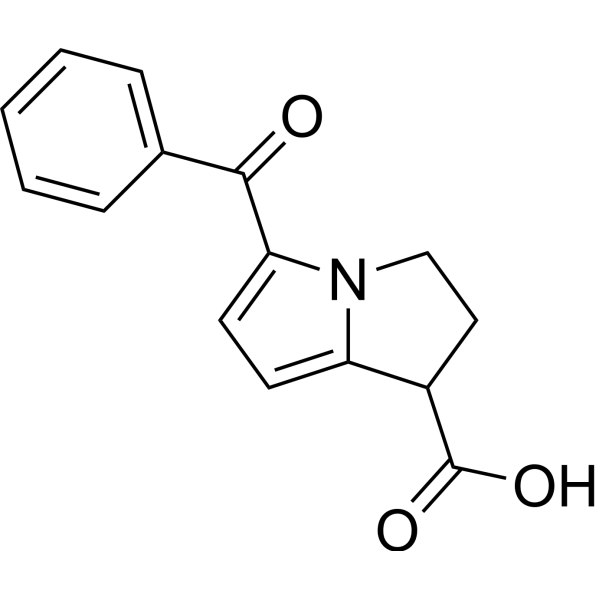
Ketorolac (RS37619) is a non-steroidal anti-inflammatory drug (NSAID), acting as a nonselective COX inhibitor, with IC50s of 20 nM for COX-1 and 120 nM for COX-2. Ketorolac tromethamine is used as 0.5% ophthalmic solution for the research of allergic conjunctivitis, cystoid macular edema, intraoperative miosis, and postoperative ocular inflammation and pain. Ketorolac tromethamine is also a DDX3 inhibitor that can be used for cancer research.
Nur für Forschungszwecke. Wir verkaufen nicht an Patienten.
- Reinheit : 99.87%
- CAS. Nr.: 74103-06-3
- Formel: C15H13NO3
- Molecular Weight:255.27
-
Speicherung:
4°C, sealed storage, away from moisture
* In solvent : -80°C, 6 months; -20°C, 1 month (sealed storage, away from moisture)

To place orders, for customer services and technical support, please contact: MedChemExpress USA
Tel: 609-228-6898 E-mail: [email protected] [email protected]


-
 Biologische Aktivität
-
Chemical Information
-
Lösungsmittel & Löslichkeit
- Protokoll
- Reinheit & Dokumentation
- Verweise
-
 Help & FAQs


-
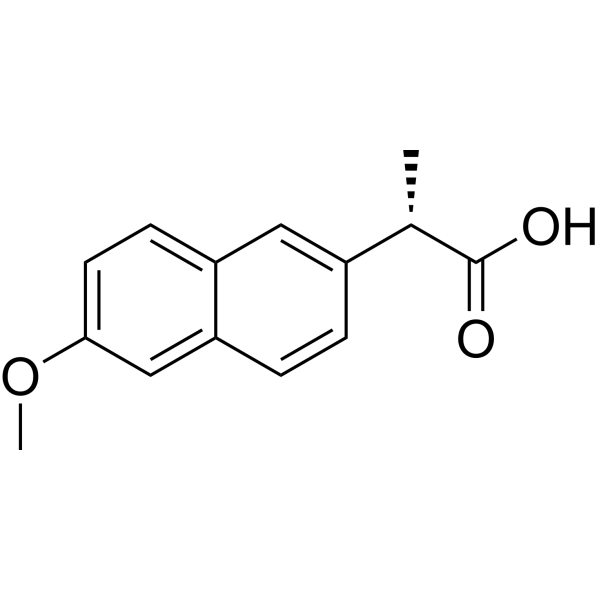
HY-15030
NaproxenCOX Inhibitor -
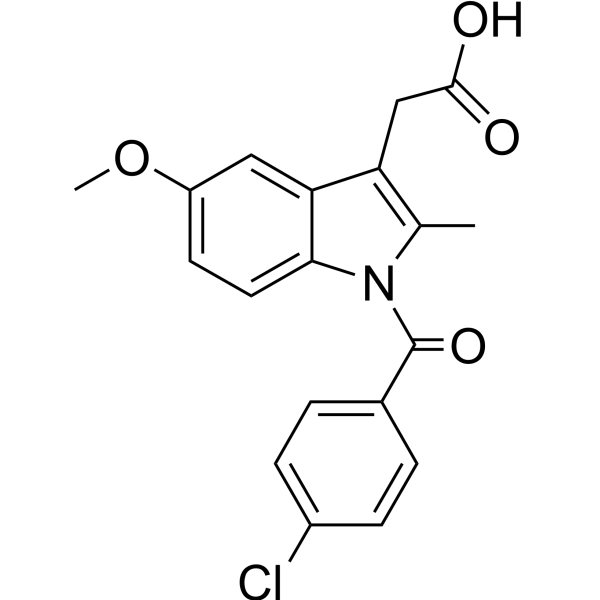
HY-14397
IndomethacinCOX1/2 Inhibitor -
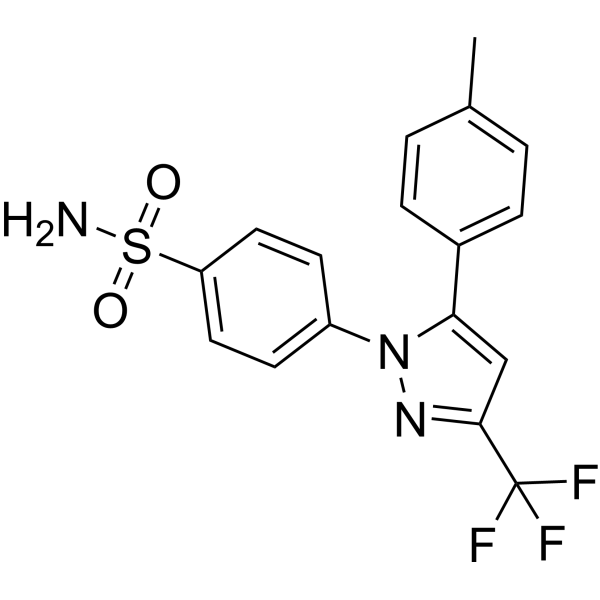
HY-14398
CelecoxibCOX-2inhibitor -
HY-10255A
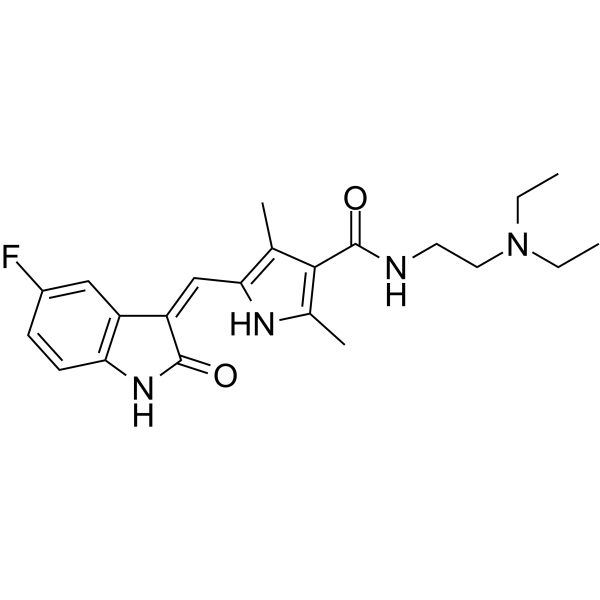
SunitinibMulti-targeted RTK Inhibitor -
HY-14648
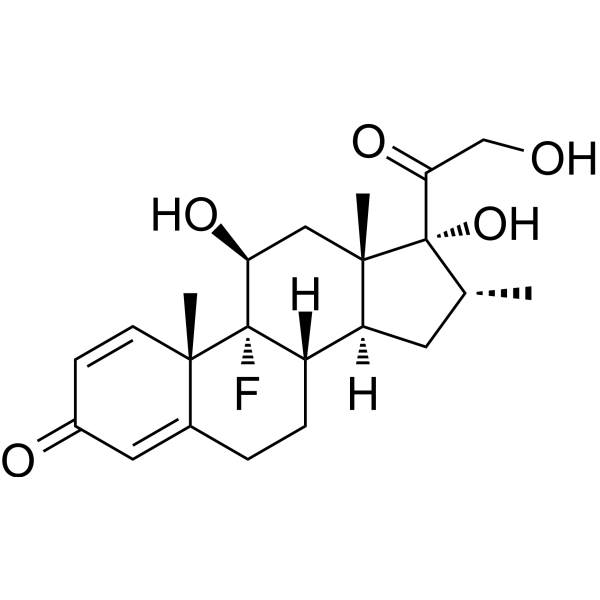
DexamethasoneGR Agonist -
HY-78131
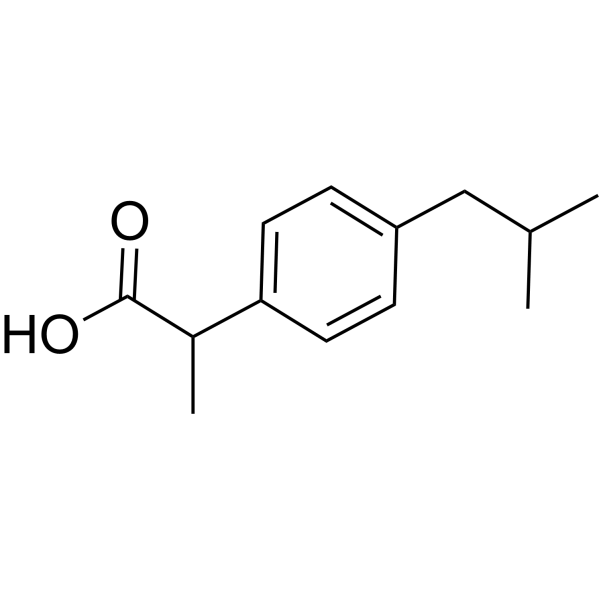
IbuprofenCOX-1 Inhibitor -

HY-B0580R
Ketorolac (Standard)COX Inhibitor -
HY-15037
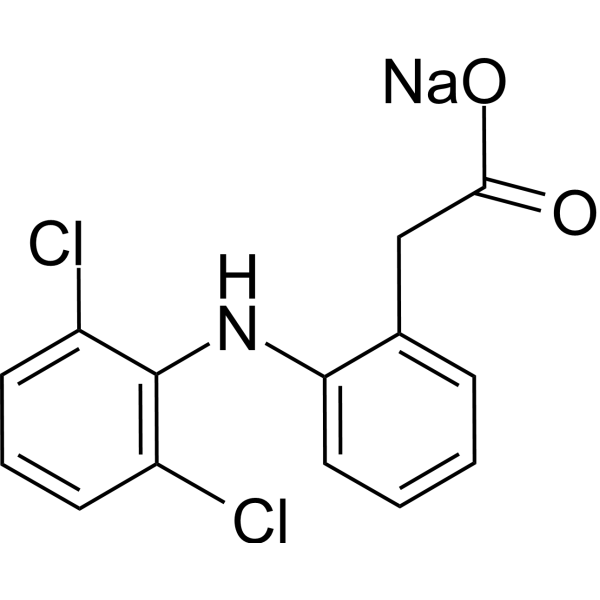
Diclofenac SodiumCOX Inhibitor -
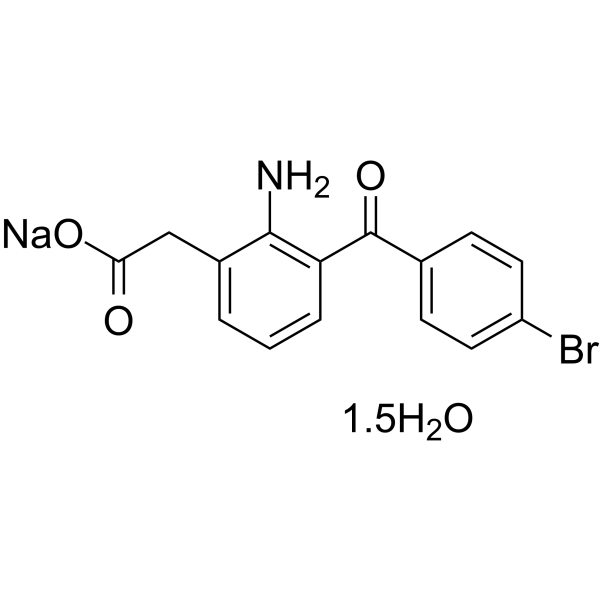
HY-B1888B
Bromfenac sodium hydrateCOX Inhibitor -
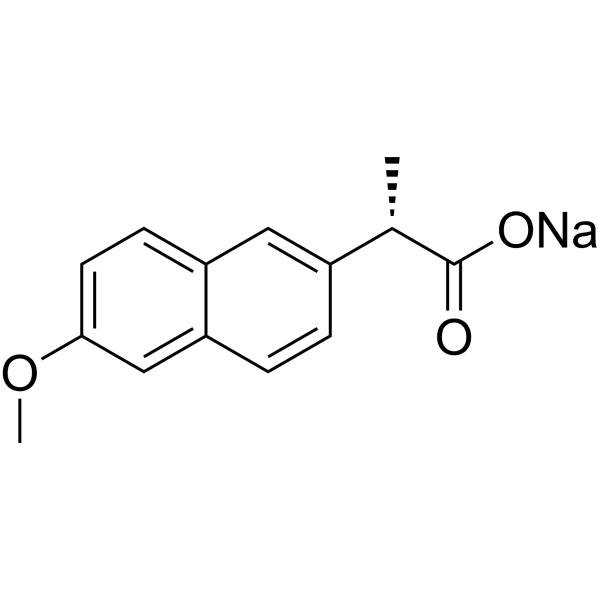
HY-15030A
Naproxen sodiumCOX Inhibitor -

HY-14397R
Indomethacin (Standard)COX1/2 Inhibitor -
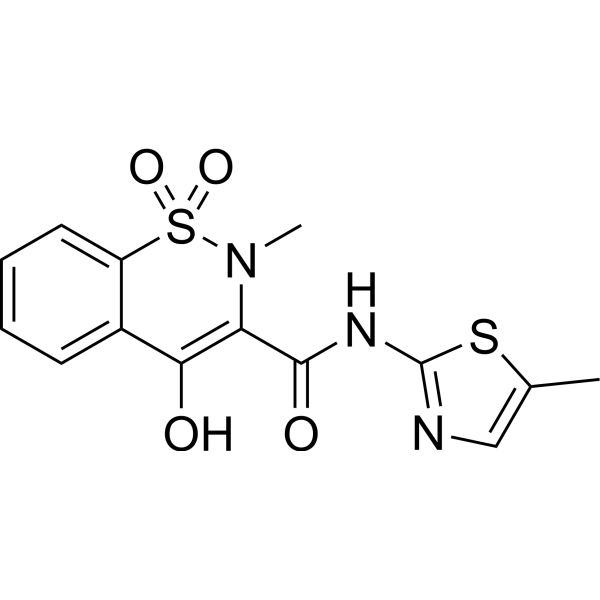
HY-B0261
MeloxicamCOX Inhibitor
Publications Citing Use of MedChemExpress (MCE) Ketorolac
More

Biologische Aktivität
Beschreibung
IC50 & Target
[1]|
COX-1 20 nM (IC50) |
COX-2 120 nM (IC50) |
DDX3 |
Cellular Effect
|
Cell Line

|
Type | Value | Description | References |
|---|---|---|---|---|
| A549 | IC50 |
13 μM
Compound: Toradol
|
Inhibition of PAK1/COX2 in human A549 cells harboring Ki-RAS mutant assessed as cell growth inhibition measured after 72 hrs by MTT assay
Inhibition of PAK1/COX2 in human A549 cells harboring Ki-RAS mutant assessed as cell growth inhibition measured after 72 hrs by MTT assay
|
[PMID: 27889630] |
| A549 | IC50 |
36 μM
Compound: Toradol
|
Inhibition of PAK1 in human A549 cells using myelin basic protein as substrate preincubated for 24 hrs followed by PAK1 immunoprecipation and substrate addition measured after 60 mins by ATP-Glo kinase assay
Inhibition of PAK1 in human A549 cells using myelin basic protein as substrate preincubated for 24 hrs followed by PAK1 immunoprecipation and substrate addition measured after 60 mins by ATP-Glo kinase assay
|
[PMID: 27889630] |
| B16-F10 | IC50 |
30 μM
Compound: Toradol
|
Cytotoxicity against PAK1-independent mouse B16F10 cells assessed as cell growth inhibition measured after 72 hrs by MTT assay
Cytotoxicity against PAK1-independent mouse B16F10 cells assessed as cell growth inhibition measured after 72 hrs by MTT assay
|
[PMID: 27889630] |
In Vitro
Ketorolac (RS37619) salt (0-30 μM; 48 h) effectively kills the oral cancer cells[4].
Ketorolac salt (0-5 μM; 48 h) inhibits the expression of DDX3 protein, and induces apoptosis in H357 cells[4].
Ketorolac salt (0-2.5 μM; 0-16 h) inhibits the proliferation of oral cancer cells[4].
Ketorolac salt (0-50 μM) directly interacts with DDX3 and inhibits the ATPase activity[4].
MedChemExpress (MCE) has not independently confirmed the accuracy of these methods. They are for reference only.
-
Cell Line:HOK, SCC4, SCC9 and H357 cells
-
Concentration:0-30 μM
-
Incubation Time:48 h
-
Result:Showed inhibition with IC50s of 2.6, 7.1 and 8.1 μM against H357, SCC4 and SCC9 cells, respectively. And the normal HOK cell line did not show any cell death effect.
-
Cell Line:H357
-
Concentration:0.5, 1.0, 1.5, 2.0 and 2.5 μM
-
Incubation Time:0, 8 and 16 h
-
Result:Inhibited the proliferation.
-
Cell Line:H357
-
Concentration:1, 2.5 and 5 μM
-
Incubation Time:48 h
-
Result:Significantly reduced DDX3 protein expression levels, but not completely ablated as compared to DMSO treated cells. Up regulated the expression of E-cadherin.
-
Cell Line:H357
-
Concentration:2.5 and 5 μM
-
Incubation Time:48 h
-
Result:Induced apoptosis.
In Vivo
Ketorolac (4 mg/kg/day, p.o.; 2 weeks) has no detrimental effect in the volume fraction of bone trabeculae formed inside the alveolar socket in rats[2].
Ketorolac (60 μg; intrathecal injection; once) attenuates the damage caused by spinal cord ischemia in rats[3].
Ketorolac salt (20 and 30 mg/kg; i.p.; two times in a week for 3 weeks) reduces oral carcinogenesis in mice[4].
MedChemExpress (MCE) has not independently confirmed the accuracy of these methods. They are for reference only.
-
Animal Model:New Zealand White rabbits (2.0–2.7 kg), LPS endotoxin-induced ocular inflammation[1]
-
Dosage:50 μL ketorolac tromethamine ophthalmic solution 0.4%
-
Administration:In eyes, twice, 2 hours and 1 hour before LPS challenge
-
Result:Resulted in a nearly complete inhibition (98.7%) of LPS endotoxin-induced increases in FITC (fluorescein isothiocyanate)-dextran in the anterior chamber, and resulted in a nearly complete inhibition (97.5%) of LPS endotoxin-induced increases in aqueous PGE2 concentrations in the aqueous humor.
-
Animal Model:Male Wistar rats (400–450 g), spinal cord ischemia model[3]
-
Dosage:30 and 60 μg
-
Administration:Intrathecal injection, 1 h before the ischemia induction for once
-
Result:Significantly reduced the motor disturbances and improved the survival rate at 60 μg.
-
Animal Model:Significantly reduced the motor disturbances and improved the survival rate at 60 μg.
-
Dosage:20 mg/kg and 30 mg/kg
-
Administration:IP injection, two times in a week for 3 weeks
-
Result:Decreased tumor burden, reduced expression of DDX3 and anti-apoptotic proteins (Bcl-2 and Mcl-1).
Clinical Trial
| NCT Number | Sponsor | Condition | Start Date |
Phase
|
|---|---|---|---|---|
| NCT01329991 | 2011-05 | PHASE1 |


Chemical Information
-
CAS. Nr. 74103-06-3
-
Appearance Powder
-
Molecular Weight 255.27
-
Formel C15H13NO3
-
Color Light yellow to yellow
-
SMILES
O=C(C1C2=CC=C(C(C3=CC=CC=C3)=O)N2CC1)O
-
Synonyms
RS37619
-
Versand
Room temperature in continental US; may vary elsewhere.
-
Speicherung
4°C, sealed storage, away from moisture
* In solvent : -80°C, 6 months; -20°C, 1 month (sealed storage, away from moisture)


Publications (3)
-
Journal Impact Factor
-
Most Recent
-
Eur J Med Chem
2024 Dec 5:279:116842. PMID: 39260319 -
BMC Anesthesiol
Inflammation and macrophage infiltration exacerbate adult incision response by early life injury. [Abstract]2025 Apr 10;25(1):165. PMID: 40211125 -
Immunobiology
2025 Mar;230(2):152867. PMID: 39847998


Lösungsmittel & Löslichkeit
In Vitro:
DMSO : 200 mg/mL (783.48 mM; Need ultrasonic; Hygroscopic DMSO has a significant impact on the solubility of product, please use newly opened DMSO)
Please refer to the solubility information to select the appropriate solvent. Once prepared, please aliquot and store the solution to prevent product inactivation from repeated freeze-thaw cycles.
Storage method and period of stock solution: -80°C, 6 months; -20°C, 1 month (sealed storage, away from moisture). When stored at -80°C, please use it within 6 months. When stored at -20°C, please use it within 1 month.
Please refer to the solubility information to select the appropriate solvent. Once prepared, please aliquot and store the solution to prevent product inactivation from repeated freeze-thaw cycles.
Storage method and period of stock solution: -80°C, 6 months; -20°C, 1 month (sealed storage, away from moisture). When stored at -80°C, please use it within 6 months. When stored at -20°C, please use it within 1 month.
Konzentration (Stammlösung) × Volumen (Stammlösung) = Konzentration (Ziellösung) × Volumen (Ziellösung)
In Vivo:
Select the appropriate dissolution method based on your experimental animal and administration route.
- For the following dissolution methods, please ensure to first prepare a clear stock solution using an In Vitro approach and then sequentially add co-solvents:
- To ensure reliable experimental results, the clarified stock solution can be appropriately stored based on storage conditions. As for the working solution for In Vivo experiments, it is recommended to prepare freshly and use it on the same day.
- The percentages shown for the solvents indicate their volumetric ratio in the final prepared solution. If precipitation or phase separation occurs during preparation, heat and/or sonication can be used to aid dissolution.
Add each solvent one by one: 10% DMSO 40% PEG300 5% Tween-80 45% Saline
Solubility: ≥ 5 mg/mL (19.59 mM); Clear solution
This protocol yields a clear solution of ≥ 5 mg/mL (saturation unknown).
Taking 1 mL working solution as an example, add 100 μL DMSO stock solution (50.0 mg/mL) to 400 μL PEG300, and mix evenly; then add 50 μL Tween-80 and mix evenly; then add 450 μL Saline to adjust the volume to 1 mL.
Preparation of Saline: Dissolve 0.9 g sodium chloride in ddH₂O and dilute to 100 mL to obtain a clear Saline solution.
Add each solvent one by one: 10% DMSO 90% (20% SBE-β-CD in Saline)
Solubility: ≥ 5 mg/mL (19.59 mM); Clear solution
This protocol yields a clear solution of ≥ 5 mg/mL (saturation unknown).
Taking 1 mL working solution as an example, add 100 μL DMSO stock solution (50.0 mg/mL) to 900 μL 20% SBE-β-CD in Saline, and mix evenly.
Preparation of 20% SBE-β-CD in Saline (4°C, storage for one week): 2 g SBE-β-CD powder is dissolved in 10 mL Saline, completely dissolve until clear.
In Vivo Dissolution Calculator
Please enter the basic information of animal experiments:
-
-
-
-
Recommended: Prepare an additional quantity of animals to account for potential losses during experiments.
Please enter your animal formula composition:
-
%DMSO +
Recommended: Keep the proportion of DMSO in working solution below 2% if your animal is weak.
-
%+
-
+%Tween-80 + +
-
%Saline +
The co-solvents required include: DMSO, . All of co-solvents are available by MedChemExpress (MCE). , Tween 80. All of co-solvents are available by MedChemExpress (MCE).
Working solution concentration: 0.22 mg/mL
Method for preparing stock solution: mg drug dissolved in μL DMSO. Stock solution concentration: mg/mL. * In solvent : -80°C, 6 months; -20°C, 1 month (sealed storage, away from moisture)
1. Take μL DMSO stock solution;
2. Add μL .
μL , mix evenly;
3. Then add μL Tween 80, mix evenly;
4. Then add μL
Please ensure that the stock solution in the first step is dissolved to a clear state, and add co-solvents in sequence. You can use ultrasonic heating (ultrasonic cleaner, recommended frequency 20-40 kHz), vortexing, etc. to assist dissolution.


Reinheit & Dokumentation
-
Data Sheet (285 KB)
-
SDS (394 KB)
- English - EN (394 KB)
- Français - FR (394 KB)
- Deutsch - DE (394 KB)
- Norwegian - NO (394 KB)
- Español - ES (394 KB)
- Swedish - SV (394 KB)
- Italian - IT (394 KB)
- Korean - KR (394 KB)
- Portuguese - PT (394 KB)
-
Handling Instructions (2659 KB)
Verweise
[1]. Waterbury LD, et al. Comparison of cyclooxygenase inhibitory activity and ocular anti-inflammatory effects of ketorolac tromethamine and bromfenac sodium. Curr Med Res Opin. 2006 Jun;22(6):1133-40. [Content Brief]
[2]. Fracon RN, et al. Treatment with paracetamol, ketorolac or etoricoxib did not hinder alveolar bone healing: a histometric study in rats. J Appl Oral Sci. 2010 Dec;18(6):630-4. [Content Brief]
[3]. Hsieh YC, et al. Intrathecal ketorolac pretreatment reduced spinal cord ischemic injury in rats. Anesth Analg. 2005 Apr;100(4):1134-9. [Content Brief]
[4]. Samal SK, et al. Ketorolac salt is a newly discovered DDX3 inhibitor to treat oral cancer. Sci Rep. 2015 Apr 28;5:9982. [Content Brief]


Complete Stock Solution Preparation Table
Please refer to the solubility information to select the appropriate solvent. Once prepared, please aliquot and store the solution to prevent product inactivation from repeated freeze-thaw cycles.
Storage method and period of stock solution: -80°C, 6 months; -20°C, 1 month (sealed storage, away from moisture). When stored at -80°C, please use it within 6 months. When stored at -20°C, please use it within 1 month.
| Optional Solvent | Concentration Solvent Mass | 1 mg | 5 mg | 10 mg | 25 mg |
|---|---|---|---|---|---|
| DMSO | 1 mM | 3.9174 mL | 19.5871 mL | 39.1742 mL | 97.9355 mL |
| 5 mM | 0.7835 mL | 3.9174 mL | 7.8348 mL | 19.5871 mL | |
| 10 mM | 0.3917 mL | 1.9587 mL | 3.9174 mL | 9.7936 mL | |
| 15 mM | 0.2612 mL | 1.3058 mL | 2.6116 mL | 6.5290 mL | |
| 20 mM | 0.1959 mL | 0.9794 mL | 1.9587 mL | 4.8968 mL | |
| 25 mM | 0.1567 mL | 0.7835 mL | 1.5670 mL | 3.9174 mL | |
| 30 mM | 0.1306 mL | 0.6529 mL | 1.3058 mL | 3.2645 mL | |
| 40 mM | 0.0979 mL | 0.4897 mL | 0.9794 mL | 2.4484 mL | |
| 50 mM | 0.0783 mL | 0.3917 mL | 0.7835 mL | 1.9587 mL | |
| 60 mM | 0.0653 mL | 0.3265 mL | 0.6529 mL | 1.6323 mL | |
| 80 mM | 0.0490 mL | 0.2448 mL | 0.4897 mL | 1.2242 mL | |
| 100 mM | 0.0392 mL | 0.1959 mL | 0.3917 mL | 0.9794 mL |


Ketorolac Related Classifications
HY-B0580 Related Classifications
 Powered by Bioz