



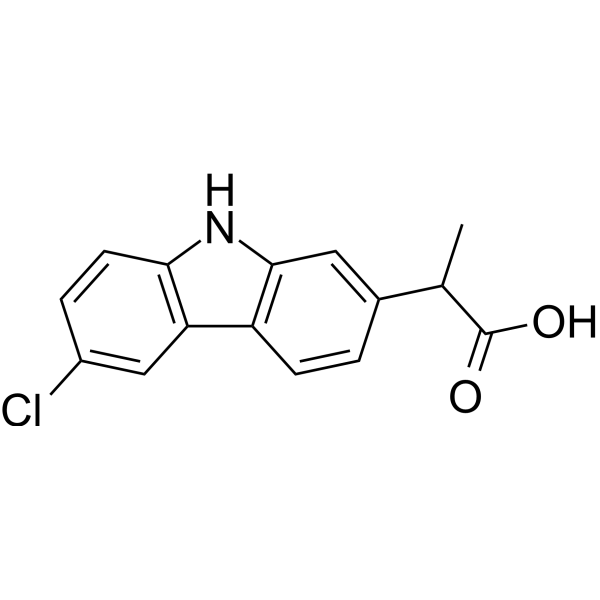
Carprofen
Based on 10 publication(s) in Google Scholar
Carprofen is a nonsteroid anti-inflammatory agent, acts as a multi-target FAAH/COX inhibitor, with IC50s of 3.9 μM, 22.3 μM and 78.6 μM for COX-2, COX-1 and FAAH, respectively.
For research use only. We do not sell to patients.
- Purity : 99.94%
- CAS No.: 53716-49-7
- Formula: C15H12ClNO2
- Molecular Weight:273.71
-
Storage:Powder -20°C, 3 years , 4°C, 2 years ; In solvent -80°C, 1 year , -20°C, 6 months

To place orders, for customer services and technical support, please contact: MedChemExpress USA
Tel: 609-228-6898 E-mail: [email protected] [email protected]


-
 Biological Activity
-
Chemical Information
-
Solvent & Solubility
- Protocols
- Purity & Documentation
- References
-
 Help & FAQs


-
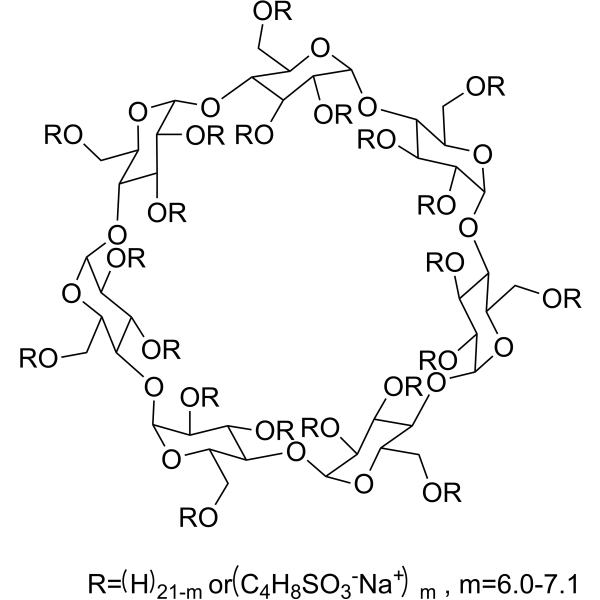
HY-17031
SBE-β-CDExcipient -
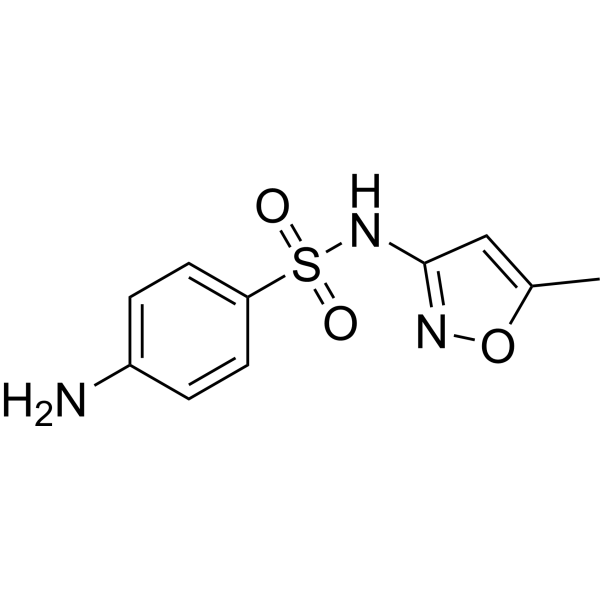
HY-B0322
SulfamethoxazoleSulfonamide Antibiotic -
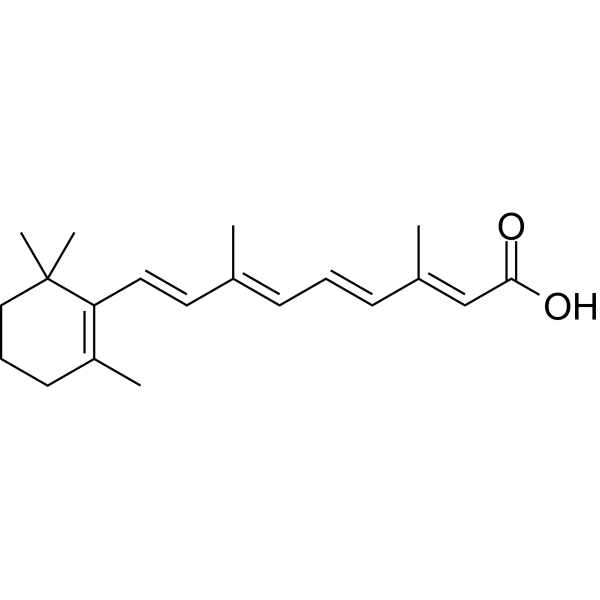
HY-14649
Retinoic acidRAR Agonist -
HY-126360
OxazoloneColitis Inducer -
HY-17514
ItraconazoleAntifungal Agent -
HY-B0261
MeloxicamCOX Inhibitor -
HY-B0510
TrimethoprimBacteriostatic Antibiotic -
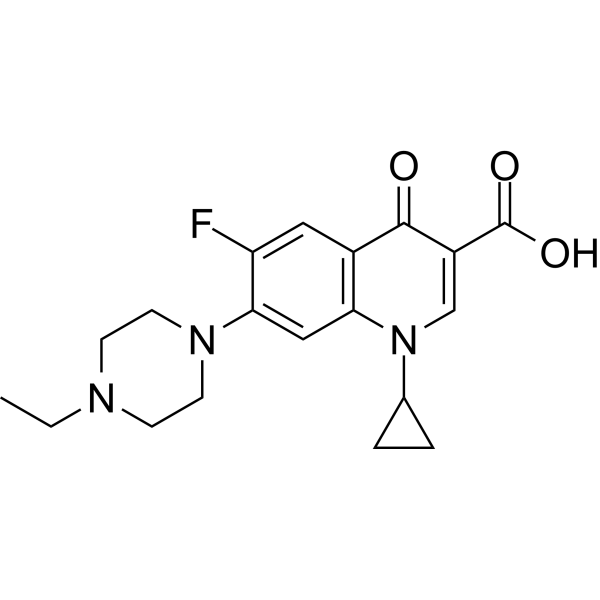
HY-B0502
EnrofloxacinBacterial Inhibitor -

HY-B1227R
Carprofen (Standard)COX Inhibitor -
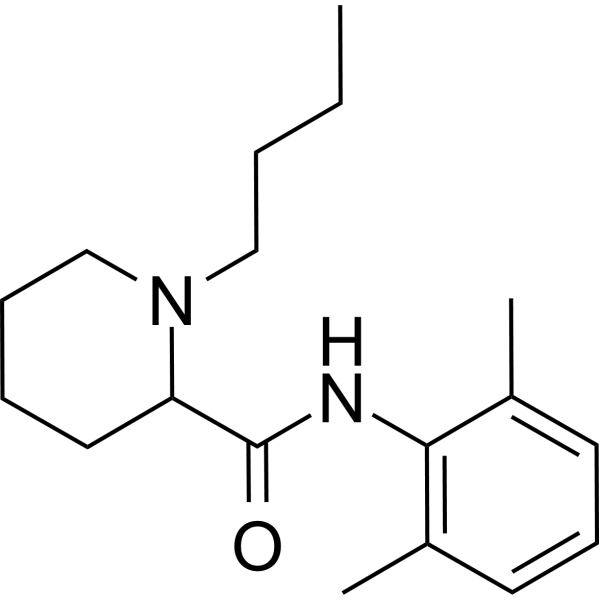
HY-B0405
BupivacaineNMDA Receptor Inhibitor -

HY-14648C
Dexamethasone (Water Soluble)Muscular Atrophy/Hypertension/Depression Modeling Reagent -
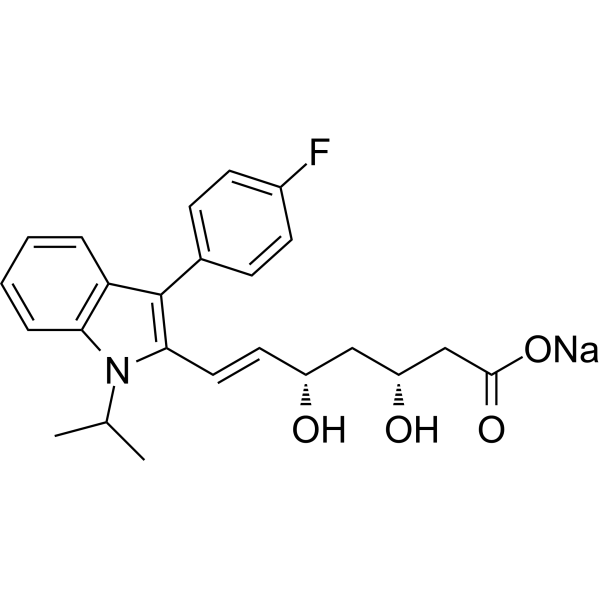
HY-14664A
Fluvastatin sodiumHMG-CoA Reductase Inhibitor
Publications Citing Use of MedChemExpress (MCE) Carprofen
More- Nat Neurosci. 2026 Jun;29(6):1369-1385. [Abstract]
- Sci Adv. 2025 Dec 5;11(49):eadw7972. [Abstract]
- Cell Death Differ. 2023 Jan;30(1):168-183. [Abstract]
- Int J Biol Macromol. 2026 Mar:352:151224. [Abstract]
- J Headache Pain. 2025 May 15;26(1):116. [Abstract]
- Anal Chem. 2025 Jun 3;97(21):11099-11109. [Abstract]
- Brain Res Bull. 2025 Sep:229:111434. [Abstract]
- Mol Cell Biol. 2021 Jun 23;41(7):e0001621. [Abstract]
- STAR Protoc. 2026 Jun 20;7(3):104645. [Abstract]
- J Vis Exp. 2026 Mar 20:(229). [Abstract]


Biological Activity
Description
IC50 & Target
[1]|
COX-2 3.9 μM (IC50) |
COX-1 22.3 μM (IC50) |
FAAH 78.6 μM (IC50) |
Cellular Effect
|
Cell Line

|
Type | Value | Description | References |
|---|---|---|---|---|
| CHO | IC50 |
305 μM
Compound: 3
|
Modulation of gamma-secretase-mediated cleavage of human APP expressed in CHO cells with human presenilin-1 assessed as inhibition of amyloid beta42 production after 24 hrs by ELISA
Modulation of gamma-secretase-mediated cleavage of human APP expressed in CHO cells with human presenilin-1 assessed as inhibition of amyloid beta42 production after 24 hrs by ELISA
|
[PMID: 20503989] |
| CHO | IC50 |
305 μM
Compound: 3
|
Modulation of gamma-secretase expressed in CHO cells co-expressing human APP and wild type human presenilin-1 assessed as inhibition of amyloid beta42 production by ELISA
Modulation of gamma-secretase expressed in CHO cells co-expressing human APP and wild type human presenilin-1 assessed as inhibition of amyloid beta42 production by ELISA
|
[PMID: 21873070] |
| H4 | IC50 |
133 μM
Compound: 6, Carprofen
|
Inhibition of beta amyloid protein 40 in human H4 cells overexpressing APP695
Inhibition of beta amyloid protein 40 in human H4 cells overexpressing APP695
|
[PMID: 17181139] |
| H4 | IC50 |
76 μM
Compound: 6, Carprofen
|
Inhibition of beta amyloid protein 42 in human H4 cells overexpressing APP695
Inhibition of beta amyloid protein 42 in human H4 cells overexpressing APP695
|
[PMID: 17181139] |
| H4 | IC50 |
78 μM
Compound: 6, Carprofen
|
Inhibition of beta amyloid protein 38 in human H4 cells overexpressing APP695
Inhibition of beta amyloid protein 38 in human H4 cells overexpressing APP695
|
[PMID: 17181139] |
In Vitro
Carprofen (Compound 1) is a nonsteroid anti-inflammatory agent, acts as a multi-target FAAH/COX inhibitor, with IC50s of 3.9 μM, 22.3 μM and 78.6 μM for COX-2, COX-1 and FAAH, respectively[1]. Carprofen (10 μg/mL) shows cytoprotective effects in CCL and CaCL cells and decreases apoptosis of both cells. Carprofen (10 μg/mL) exhibits nonsignificant increase in PGE2 concentration, compared with that of the respective CCL or CaCL controls[2].
MedChemExpress (MCE) has not independently confirmed the accuracy of these methods. They are for reference only. Further protocols information, click here.
In Vivo
MedChemExpress (MCE) has not independently confirmed the accuracy of these methods. They are for reference only.


Chemical Information
-
CAS No. 53716-49-7
-
Appearance Solid
-
Molecular Weight 273.71
-
Formula C15H12ClNO2
-
Color White to off-white
-
SMILES
O=C(O)C(C)C1=CC(NC2=C3C=C(Cl)C=C2)=C3C=C1
-
Shipping
Room temperature in continental US; may vary elsewhere.
-
Storage
Powder -20°C 3 years 4°C 2 years In solvent -80°C 1 year -20°C 6 months


Publications (10)
-
Journal Impact Factor
-
Most Recent
-
Nat Neurosci
Amyloid-β-driven glymphatic dysfunction in Alzheimer's disease model mice is driven by Ca2+-mediated increases in astrocytic cholesterol. [Abstract]2026 Jun;29(6):1369-1385. PMID: 41986732 -
Sci Adv
EphB1-NR2B receptor signaling in glutamatergic neurons of the ventroposteromedial thalamic nucleus regulates emergence from anesthesia. [Abstract]2025 Dec 5;11(49):eadw7972. PMID: 41348875 -
Cell Death Differ
FAAH served a key membrane-anchoring and stabilizing role for NLRP3 protein independently of the endocannabinoid system. [Abstract]2023 Jan;30(1):168-183. PMID: 36104448 -
Int J Biol Macromol
Reticuline isomerase AKR1B1 with aldo-keto reductase activity and detoxification function from the insect Blaps rhynchopetera. [Abstract]2026 Mar:352:151224. PMID: 41791543 -
J Headache Pain
Astrocytic spermidine insufficiency contributes to enhanced pain sensitivity associated with ApoE4. [Abstract]2025 May 15;26(1):116. PMID: 40375206 -
Anal Chem
Exposome-Scale Investigation of Cl-/Br-Containing Chemicals Using High-Resolution Mass Spectrometry, Multistage Machine Learning, and Cloud Computing. [Abstract]2025 Jun 3;97(21):11099-11109. PMID: 40401576 -
Brain Res Bull
METTL3-YTHDF1 axis drives BCL-3 m6A methylation to promote the ferroptosis of brain microvascular endothelial cells during intracerebral hemorrhage. [Abstract]2025 Sep:229:111434. PMID: 40523531 -
Mol Cell Biol
MicroRNA 181a-2-3p Alleviates the Apoptosis of Renal Tubular Epithelial Cells via Targeting GJB2 in Sepsis-Induced Acute Kidney Injury. [Abstract]2021 Jun 23;41(7):e0001621. PMID: 33875577 -
STAR Protoc
2026 Jun 20;7(3):104645. PMID: 42322612 -
J Vis Exp
In Vivo Calcium Imaging with a Miniaturized Microscope in the Hypothalamus for Understanding Social Behaviors in Mice. [Abstract]2026 Mar 20:(229). PMID: 41941394


Solvent & Solubility
In Vitro:
DMSO : 87.5 mg/mL (319.68 mM; Need ultrasonic; Hygroscopic DMSO has a significant impact on the solubility of product, please use newly opened DMSO)
Please refer to the solubility information to select the appropriate solvent. Once prepared, please aliquot and store the solution to prevent product inactivation from repeated freeze-thaw cycles.
Storage method and period of stock solution: -80°C, 1 year; -20°C, 6 months. When stored at -80°C, please use it within 1 year. When stored at -20°C, please use it within 6 months.
Please refer to the solubility information to select the appropriate solvent. Once prepared, please aliquot and store the solution to prevent product inactivation from repeated freeze-thaw cycles.
Storage method and period of stock solution: -80°C, 1 year; -20°C, 6 months. When stored at -80°C, please use it within 1 year. When stored at -20°C, please use it within 6 months.
Concentration (start) × Volume (start) = Concentration (final) × Volume (final)
In Vivo:
Select the appropriate dissolution method based on your experimental animal and administration route.
- For the following dissolution methods, please ensure to first prepare a clear stock solution using an In Vitro approach and then sequentially add co-solvents:
- To ensure reliable experimental results, the clarified stock solution can be appropriately stored based on storage conditions. As for the working solution for In Vivo experiments, it is recommended to prepare freshly and use it on the same day.
- The percentages shown for the solvents indicate their volumetric ratio in the final prepared solution. If precipitation or phase separation occurs during preparation, heat and/or sonication can be used to aid dissolution.
Add each solvent one by one: 10% DMSO 40% PEG300 5% Tween-80 45% Saline
Solubility: ≥ 2.08 mg/mL (7.60 mM); Clear solution
This protocol yields a clear solution of ≥ 2.08 mg/mL (saturation unknown).
Taking 1 mL working solution as an example, add 100 μL DMSO stock solution (20.8 mg/mL) to 400 μL PEG300, and mix evenly; then add 50 μL Tween-80 and mix evenly; then add 450 μL Saline to adjust the volume to 1 mL.
Preparation of Saline: Dissolve 0.9 g sodium chloride in ddH₂O and dilute to 100 mL to obtain a clear Saline solution.
Add each solvent one by one: 10% DMSO 90% (20% SBE-β-CD in Saline)
Solubility: ≥ 2.08 mg/mL (7.60 mM); Clear solution
This protocol yields a clear solution of ≥ 2.08 mg/mL (saturation unknown).
Taking 1 mL working solution as an example, add 100 μL DMSO stock solution (20.8 mg/mL) to 900 μL 20% SBE-β-CD in Saline, and mix evenly.
Preparation of 20% SBE-β-CD in Saline (4°C, storage for one week): 2 g SBE-β-CD powder is dissolved in 10 mL Saline, completely dissolve until clear.
In Vivo Dissolution Calculator
Please enter the basic information of animal experiments:
-
-
-
-
Recommended: Prepare an additional quantity of animals to account for potential losses during experiments.
Please enter your animal formula composition:
-
%DMSO +
Recommended: Keep the proportion of DMSO in working solution below 2% if your animal is weak.
-
%+
-
+%Tween-80 + +
-
%Saline +
The co-solvents required include: DMSO, . All of co-solvents are available by MedChemExpress (MCE). , Tween 80. All of co-solvents are available by MedChemExpress (MCE).
Working solution concentration: 0.22 mg/mL
Method for preparing stock solution: mg drug dissolved in μL DMSO. Stock solution concentration: mg/mL.
1. Take μL DMSO stock solution;
2. Add μL .
μL , mix evenly;
3. Then add μL Tween 80, mix evenly;
4. Then add μL
Please ensure that the stock solution in the first step is dissolved to a clear state, and add co-solvents in sequence. You can use ultrasonic heating (ultrasonic cleaner, recommended frequency 20-40 kHz), vortexing, etc. to assist dissolution.

Protocols
-
Research Protocol for Inflammation-related Diseases
The NLRP3 inflammasome is a cytosolic innate immune signaling platform that integrates priming signals and danger-signal activation to promote caspase-1 activation, maturation of IL-1β and IL-18, and gasdermin D-mediated pyroptotic cell death. The core experimental logic is to determine whether inflammatory disease phenotypes are driven by increased NLRP3 expression, ASC-containing inflammasome assembly, caspase-1 cleavage, GSDMD cleavage, and extracellular release of IL-1β/IL-18 rather than by nonspecific cell injury alone. The pathway is strongly linked to inflammation-related disease phenotypes because monosodium urate crystals activate NALP3/NLRP3 inflammasome signaling in gout-like crystal inflammation, cholesterol crystals activate NLRP3 inflammasomes in atherogenesis models, and DSS-induced intestinal inflammation has been reported to involve NLRP3 inflammasome activity. However, experimental colitis studies also show context-dependent protective effects of NLRP3 inflammasome co


Purity & Documentation
-
Data Sheet (290 KB)
-
SDS (480 KB)
- English - EN (480 KB)
- Français - FR (480 KB)
- Deutsch - DE (480 KB)
- Norwegian - NO (480 KB)
- Español - ES (480 KB)
- Swedish - SV (480 KB)
- Italian - IT (480 KB)
- Korean - KR (480 KB)
- Portuguese - PT (480 KB)
-
Handling Instructions (2659 KB)
References
[1]. Favia AD, et al. Identification and characterization of carprofen as a multitarget fatty acid amide hydrolase/cyclooxygenase inhibitor. J Med Chem. 2012 Oct 25;55(20):8807-26. [Content Brief]
[2]. Waldherr K, et al. In vitro cytoprotective effects of acetylsalicylic acid, carprofen, meloxicam, or robenacoxib against apoptosis induced by sodium nitroprusside in canine cruciate ligament cells. Am J Vet Res. 2012 Nov;73(11):1752-8. [Content Brief]
[3]. Sessions JK, et al. In vivo effects of carprofen, deracoxib, and etodolac on prostanoid production in blood, gastric mucosa, and synovial fluid in dogs with chronic osteoarthritis. Am J Vet Res. 2005 May;66(5):812-7. [Content Brief]


Complete Stock Solution Preparation Table
Please refer to the solubility information to select the appropriate solvent. Once prepared, please aliquot and store the solution to prevent product inactivation from repeated freeze-thaw cycles.
Storage method and period of stock solution: -80°C, 1 year; -20°C, 6 months. When stored at -80°C, please use it within 1 year. When stored at -20°C, please use it within 6 months.
| Optional Solvent | Concentration Solvent Mass | 1 mg | 5 mg | 10 mg | 25 mg |
|---|---|---|---|---|---|
| DMSO | 1 mM | 3.6535 mL | 18.2675 mL | 36.5350 mL | 91.3375 mL |
| 5 mM | 0.7307 mL | 3.6535 mL | 7.3070 mL | 18.2675 mL | |
| 10 mM | 0.3654 mL | 1.8268 mL | 3.6535 mL | 9.1338 mL | |
| 15 mM | 0.2436 mL | 1.2178 mL | 2.4357 mL | 6.0892 mL | |
| 20 mM | 0.1827 mL | 0.9134 mL | 1.8268 mL | 4.5669 mL | |
| 25 mM | 0.1461 mL | 0.7307 mL | 1.4614 mL | 3.6535 mL | |
| 30 mM | 0.1218 mL | 0.6089 mL | 1.2178 mL | 3.0446 mL | |
| 40 mM | 0.0913 mL | 0.4567 mL | 0.9134 mL | 2.2834 mL | |
| 50 mM | 0.0731 mL | 0.3654 mL | 0.7307 mL | 1.8268 mL | |
| 60 mM | 0.0609 mL | 0.3045 mL | 0.6089 mL | 1.5223 mL | |
| 80 mM | 0.0457 mL | 0.2283 mL | 0.4567 mL | 1.1417 mL | |
| 100 mM | 0.0365 mL | 0.1827 mL | 0.3654 mL | 0.9134 mL |


Carprofen Related Classifications
HY-B1227 Related Classifications
 Powered by Bioz