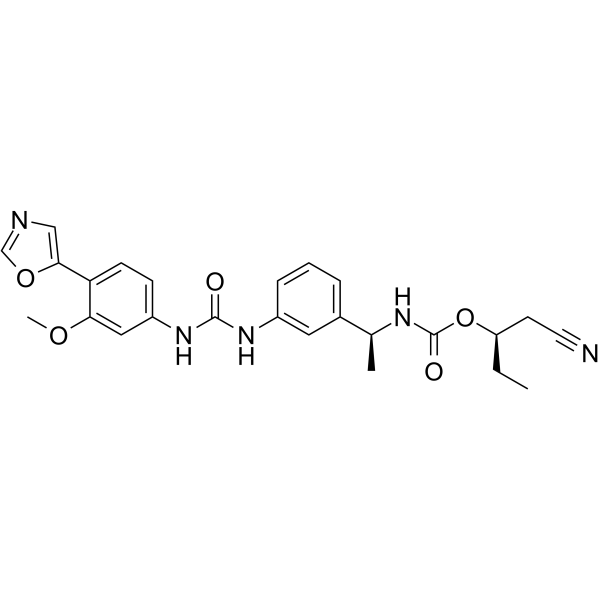
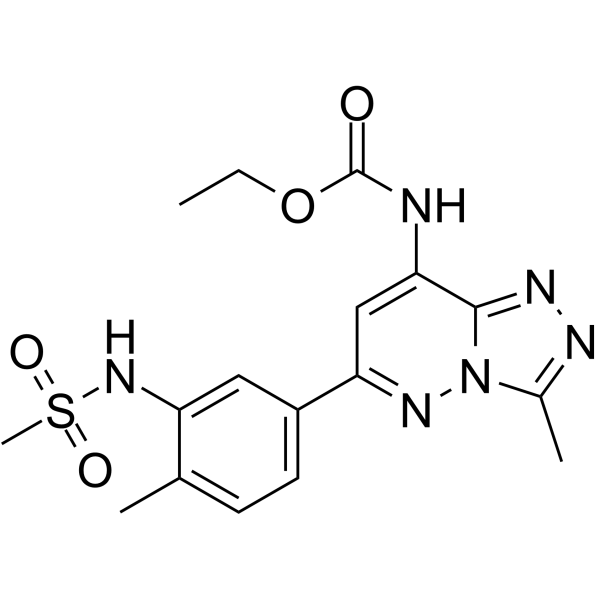
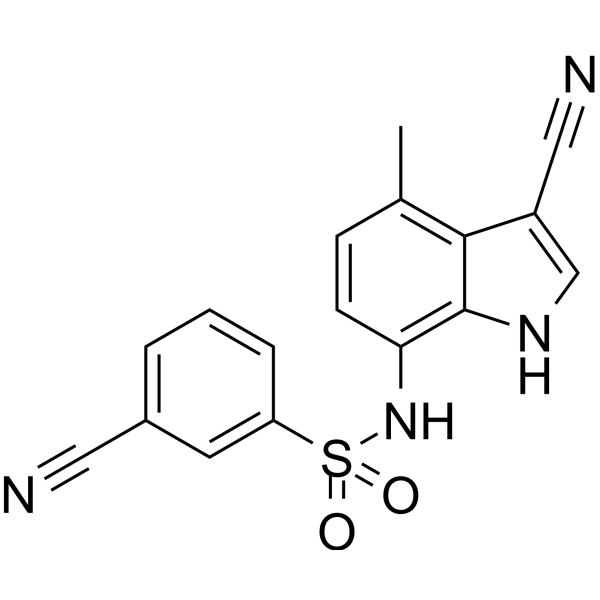
From 11:00 pm to 12:00 pm EST ( 8:00 pm to 9:00 pm PST ) on January 6th, the website will be under maintenance. We are sorry for the inconvenience. Please arrange your schedule properly.
Revumenib (SNDX-5613) is a potent and specific Menin-MLL inhibitor with a binding Ki of 0.149 nM and a cell based IC50 of 10-20 nM. Revumenib can be used for the research of MLL-rearranged (MLL-r) acuteleukemias, including acute lymphoblastic leukemia (ALL) and acutemyeloidleukemia (AML) .
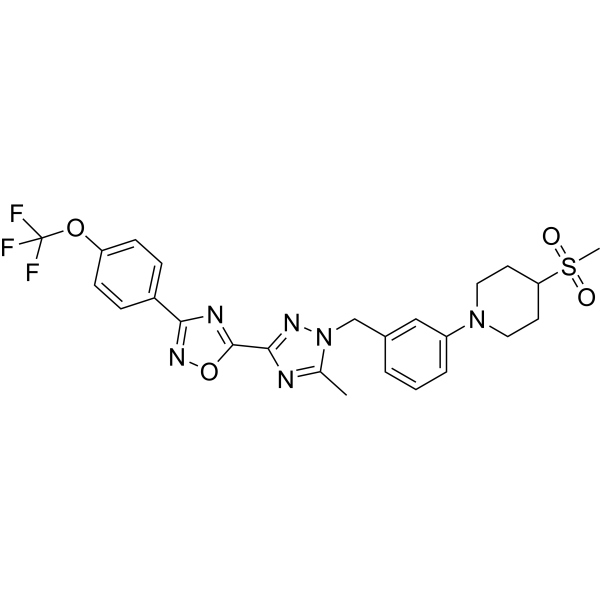
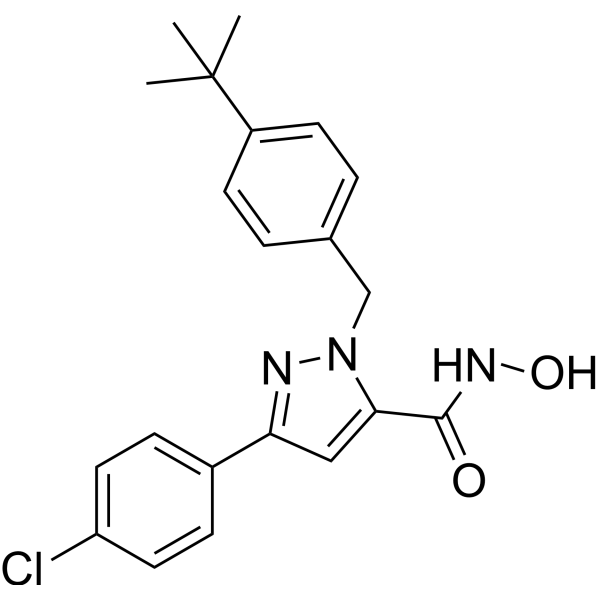
IACS-010759 is an orally active, potent mitochondrial complex I of oxidative phosphorylation (OXPHOS) inhibitor. IACS-010759 inhibits proliferation and induces apoptosis in models of brain cancer and acutemyeloidleukemia (AML) reliant on OXPHOS. IACS-010759 has the potential for relapsed/refractory AML and solid tumors research .
FB23-2 is a potent and selective inhibitor of mRNA N 6-methyladenosine (m 6A) demethylase FTO, with an IC50 of 2.6 μM. FB23-2 has anti-proliferation activity. FB23-2 can be used for the research of acutemyeloidleukemia (AML) .
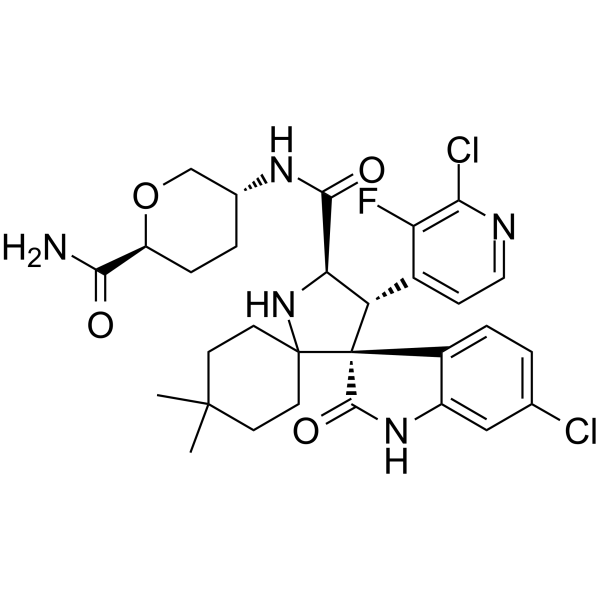
Milademetan (DS-3032) is a specific and orally active MDM2 inhibitor for the research of acutemyeloidleukemia (AML) or solid tumors. Milademetan (DS-3032) induces G1 cell cycle arrest, senescence and apoptosis .
Cusatuzumab (ARGX-110) is a selective competitive blocker targeting CD70 (with an equilibrium dissociation constant of 17 pM for binding to human CD70). Cusatuzumab also possesses enhanced antibody-dependent cell-mediated cytotoxicity (ADCC) activity. It is a humanized IgG1 monoclonal antibody, artificially synthesized through humanization and genetic engineering modifications (CH2 region mutation to enhance effector function). Cusatuzumab has a dual mechanism of action: firstly, it competitively blocks the interaction between CD70 and CD27, inhibiting the CD27-NF-κB signaling pathway, reducing regulatory T cell (Treg) activation and tumor cell proliferation; secondly, by enhancing binding to FcγRIIIa, it mediates ADCC and antibody-dependent cellular phagocytosis (ADCP), directly lysing CD70-positive tumor cells. Cusatuzumab can efficiently eliminate leukemia stem cells (LSCs), induce tumor cell differentiation and apoptosis, restore immune surveillance, and target CD70-positive tumors. Cusatuzumab is used in the study of acutemyeloidleukemia (AML) .
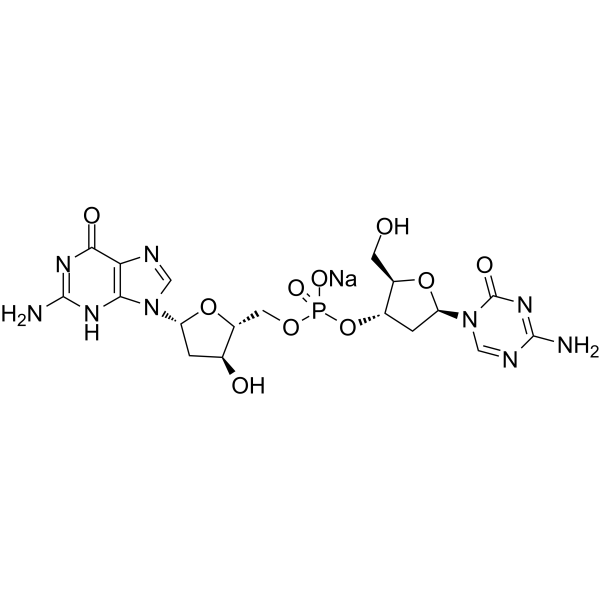
Guadecitabine sodium (SGI-110 sodium) is a second-generation DNA methyltransferases (DNMT) inhibitor for research of acutemyeloidleukemia (AML) and myelodysplastic syndromes (MDS) .
Gemtuzumab is a monoclonal IgG4-κ antibody targeting CD33 antigen. Gemtuzumab affects cell necrosis by specifically targeting CD33 expressed on the surface of leukaemic cell blasts in acutemyeloidleukemia (AML). Gemtuzumab can be used for synthesis of antibody-drug conjugate (ADC), Gemtuzumab ozogamicin (HY-109539). Gemtuzumab ozogamicin consists of a cytotoxic derivative of Calicheamicin (a cytotoxic antibiotic), and a monoclonal antibody. Gemtuzumab ozogamicin can be used for the research of acutemyeloidleukemia. Recommend Isotype Controls: Human IgG4 (S228P) kappa, Isotype Control (HY-P99003) .
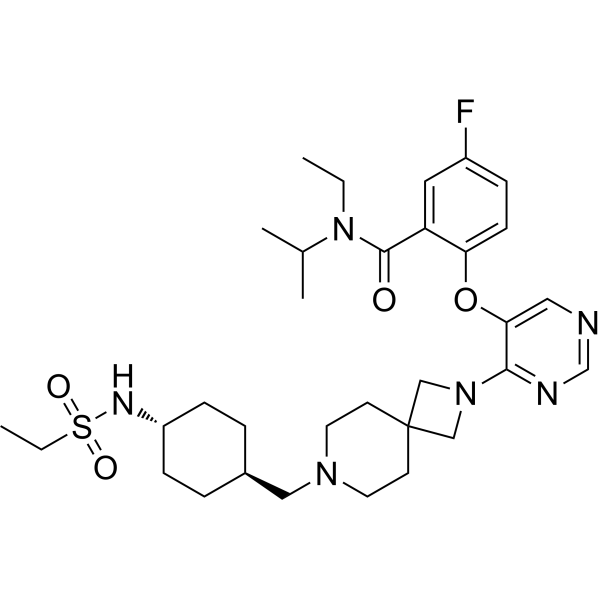
BMS-986397 is a potent, selective, and orally active cereblon-based molecular glue degrader of casein kinase 1α (CK1α). BMS-986397 induces apoptosis and cell cycle arrest in acutemyeloidleukemia (AML) cells. BMS-986397 is a promising agent for the investigation of AML and high-risk myelodysplastic syndromes (HR-MDS) .
ASX-173 is an orally active inhibitor of asparagine synthetase (ASNS) (IC50 = 0.113 μM, Ki = 0.4 nM). ASX-173 enhances the anticancer activity of L-asparaginase (ASNase) (HY-P1923). ASX-173 disrupts nucleotide synthesis and induces leukemia cell cycle arrest, apoptosis and autophagy in leukemia cells in combination with ASNase. ASX-173 slows the growth of OCI-AML2 xenografts in combination with ASNase. ASX-173 is indicated for the study of acute lymphoblastic leukemia, acutemyeloidleukemia, colorectal cancer, and other cancers .
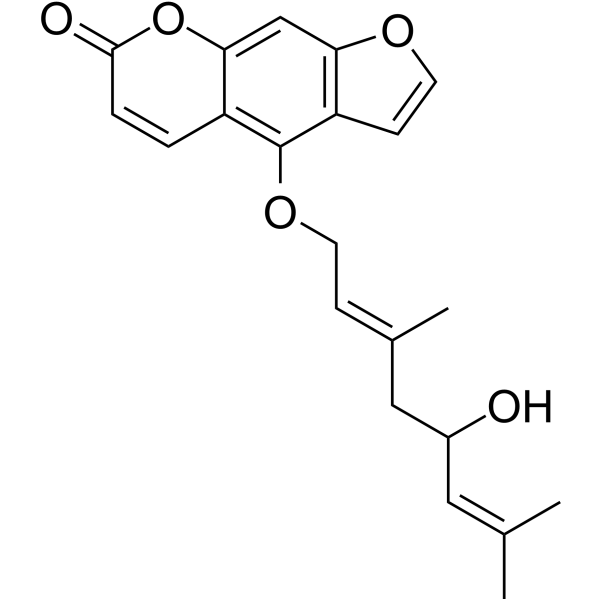
Notopterol is a coumarin extracted from N. incisum. Notopterol induces apoptosis and has antipyretic, analgesic and anti-inflammatory effects. Notopterol is used for acutemyeloidleukemia (AML) .
Crotonoside is isolated from Chinese medicinal herb, Croton. Crotonoside inhibits FLT3 and HDAC3/6, exhibits selective inhibition in acutemyeloidleukemia (AML) cells. Crotonoside could be a promising new lead compound for the research of AML .
Meisoindigo (Dian III), a derivative of Indirubin (HY-N0117), halts the cell cycle at the G0/G1 phase and induces apoptosis in primary acutemyeloidleukemia (AML) cells. Meisoindigo exhibits high antitumor activity .
Unesbulin (PTC596) is an orally active and selective B-cell-specific Moloney murine leukemia virus integration site 1 (BMI-1) inhibitor. Unesbulin downregulates MCL-1 and induces p53-independent mitochondrial apoptosis in acutemyeloidleukemia (AML) cells. Unesbulin has anti-leukemic activity .
Farudodstat (ASLAN003) is an orally active and potent Dihydroorotate Dehydrogenase (DHODH) inhibitor with an IC50 of 35 nM for human DHODH enzyme. Farudodstat inhibits protein synthesis via activation of AP-1 transcription factors. Farudodstat induces apoptosis and substantially prolongs survival in acutemyeloidleukemia (AML) xenograft mice .
BRD0705 is a potent, paralog selective and orally active GSK3α inhibitor with an IC50 of 66 nM and a Kd of 4.8 μM. BRD0705 displays increased selectivity for GSK3α (8-fold) versus GSK3β (IC50 of 515 nM). BRD0705 can be used for acutemyeloidleukemia (AML) research .
Nrf2-IN-1 is an inhibitor of nuclear factor-erythroid 2-related factor 2 (Nrf2). Nrf2-IN-1 is developed for the research of acutemyeloidleukemia (AML) .
Clifutinib is an orally active and selective internal tandem duplication mutation of FMS-like tyrosine kinase 3 (FLT3-ITD) inhibitor with an IC50 value of 15.1 nM. Clifutinib exerts strong antiproliferative effects on FLT3-ITD acutemyeloidleukemia (AML) cell lines (MV-4-11: IC50 = 1.5 nM; MOLM-13: IC50 = 1.4 nM). Clifutinib inhibits the activity of FLT3-ITD kinase and blocks the downstream RAS/MAPK, PI3K/AKT, and JAK/STAT5 signaling pathways of FLT3. Clifutinib induces apoptosis of acutemyeloidleukemia (AML) cells with FLT3-ITD mutations. Clifutinib demonstrates significant antitumor efficacy in mice bearing MV-4-11 or MOLM-13 xenografts. Clifutinib is promising for research of relapsed/refractory FLT3-ITD-positive acutemyeloidleukemia .
ML390 is a potent dihydroorotate dehydrogenase (DHODH) inhibitor. ML390 is an inducer of myeloid differentiation and causes myeloid differentiation in murine (ER-HoxA9) and human (U937 and THP1) acutemyeloidleukemia (AML) models .
Dac590 is an orally active and selective obesity-associated protein (FTO) inhibitor with an IC50 of 6.06 nM. Dac590 shows highly selective over ALKBH5 and ALKBH3. Dac590 suppresses oncogenic FTO signaling, induces myeloid differentiation, G1-phase cell cycle arrest, and apoptosis in acutemyeloidleukemia (AML) cells. Dac590 inhibits xenograft tumor growth and prolongs survival in acutemyeloidleukemia mouse models with no observed toxicity. Dac590 can be used for the research of AML .
Furazolidone is a monoamine oxidase (MAO) inhibitor with antiproliferative, apoptosis-inducing and differentiation-promoting activities. Furazolidone may inhibit leukemia fusion protein-mediated bone marrow transformation by upregulating the stability of the tumor suppressor protein p53. Furazolidone exhibits anti-leukemic activity in acutemyeloidleukemia (AML) cell lines and can be used for anti-AML research [2].
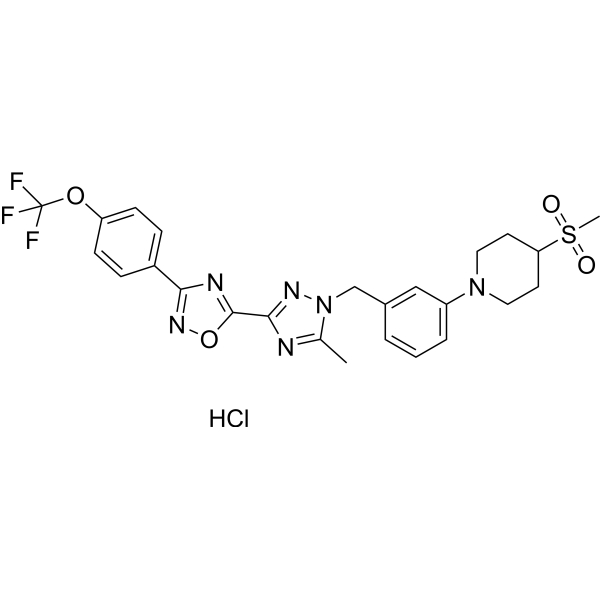
IACS-010759 hydrochlorideis an orally active, potent mitochondrial complex I of oxidative phosphorylation (OXPHOS) inhibitor. IACS-010759 hydrochlorideinhibits proliferation and induces apoptosis in models of brain cancer and acutemyeloidleukemia (AML) reliant on OXPHOS. IACS-010759 hydrochloride has the potential for relapsed/refractory AML and solid tumors research .
BAY-204 (BRD3727) is a potent, ATP-competitive, and selective CSNK1α inhibitor (IC50 = 2 nM at 10 μM ATP; 12 nM at 1 mM ATP). BAY-204 can be used for the study of acutemyeloidleukemia (AML) .
Rohinitib is a potent and specific eIF4A inhibitor. Rohinitib induces cell apoptosis of acutemyeloidleukemia (AML) cell lines and reduces the leukemia burden of AML xenograft model. Rohinitib can be used for the research of AML .
CTX1 is a p53 activator that overcomes HdmX-mediated p53 repression. CTX1 exhibits potent anti-cancer activity in a mouse acutemyeloidleukemia (AML) model system .
Vixtimotamab (AMV-564; TandAb T564) is a bispecific tetravalent tandem diabody (TandAb) that targets human CD33 and human CD3 antigens. Vixtimotamab can be used for the research of acutemyeloidleukemia (AML) .
IOX5 is a selective prolyl hydroxylase (PHD) inhibitor with an IC50 of 0.19 μM for PHD2. IOX5 stabilizes HIF-1α in acutemyeloidleukemia (AML) cells, inhibits cell proliferation and induces apoptosis. IOX5 has anti-leukemia activity .
TFMB-(R)-2-HG is a cell membrane-permeable (R)-2-HG and acutemyeloidleukemia (AML) oncogenic factor. TFMB-(R)-2-HG competitively inhibits α-ketoglutarate-dependent dioxygenases such as KDM2B and FTO. TFMB-(R)-2-HG impairs cell differentiation in response to Estrogen withdrawal. TFMB-(R)-2-HG is used in acutemyeloidleukemia and glioma research .
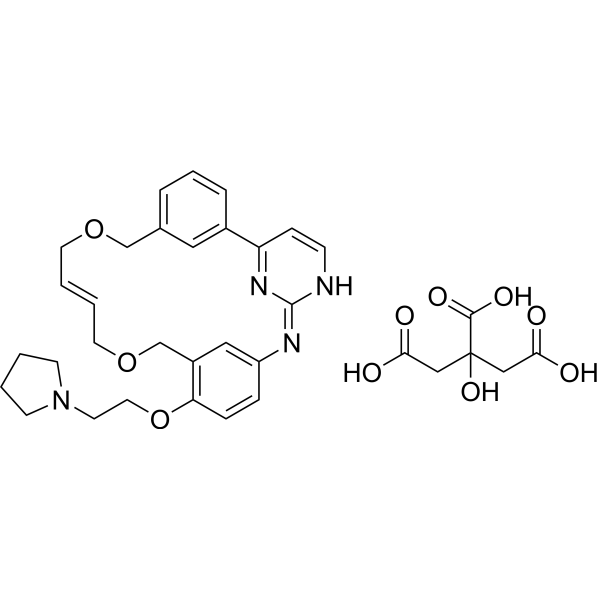
Ilorasertib (ABT-348) hydrochloride is a potent, orally active and ATP-competitive aurora inhibitor with IC50s of116, 5, 1 nM for aurora A, aurora B, aurora C, respectively. Ilorasertib hydrochloride also is a potent VEGF, PDGF inhibitor. Ilorasertib hydrochloride has the potential for the research of acutemyeloidleukemia (AML) and myelodysplastic syndrome (MDS) .
Ilorasertib (ABT-348) is a potent, orally active and ATP-competitive aurora inhibitor with IC50s of116, 5, 1 nM for aurora A, aurora B, aurora C, respectively. Ilorasertib also is a potent VEGF, PDGF inhibitor. Ilorasertib has the potential for the research of acutemyeloidleukemia (AML) and myelodysplastic syndrome (MDS) .
BAY1238097 is a potent and selective inhibitor of BET binding to histones and has strong anti-proliferative activity in different AML (acutemyeloidleukemia) and MM (multiple myeloma) models through down-regulation of c-Myc levels and its downstream transcriptome (IC50 <100 nM).
MM-206, a STAT3 activity inhibitor, potently inhibits the STAT3 SH2 domain-phosphopeptide interaction with IC50 of 1.2 μM. MM-206 demonstrates dose-dependent induction of apoptosis in acutemyeloidleukemia (AML) cell lines .
UC-514321, a structural analog of NSC370284 with higher activity, directly targets STAT3/5 and represses TET1 expression, but not TET2 or TET3. UC-514321 has the potential to treat acutemyeloidleukemia (AML) both in vitro and in vivo, with low toxicity .
Guadecitabine (SGI-110) is a second-generation DNA methyltransferases (DNMT) inhibitor for research of acutemyeloidleukemia (AML) and myelodysplastic syndromes (MDS) .
HDAC-IN-27 dihydrochloride (Compound 11h) is a potent, orally active class I HDAC-selective inhibitor with IC50 values ranging from 0.43 to 3.01 nM against HDAC1-3. HDAC-IN-27 dihydrochloride exhibits both in vivo and in vitro antitumor activity. HDAC-IN-27 dihydrochloride demonstrates significant anti-proliferative activity against acutemyeloidleukemia (AML) cell lines by inducing apoptosis and histone acetylation (AcHH3 and AcHH4). HDAC-IN-27 dihydrochloride can be used for research in acutemyeloidleukemia (AML) .
HDAC-IN-27 (Compound 11h) is a potent, orally active class I HDAC-selective inhibitor with IC50 values ranging from 0.43 to 3.01 nM against HDAC1-3. HDAC-IN-27 exhibits both in vivo and in vitro antitumor activity. HDAC-IN-27 demonstrates significant anti-proliferative activity against acutemyeloidleukemia (AML) cell lines by inducing apoptosis and histone acetylation (AcHH3 and AcHH4). HDAC-IN-27 can be used for research in acutemyeloidleukemia (AML) .
UR778Br targets the GTPase-activating protein-related domain (GRD domain) of IQGAP1 proteins. UR778Br inhibits the proliferation of human acutemyeloidleukemia (AML), arrests the cell cycle at the G2/M phase, and induces apoptosis. UR778Br inhibits colony formation of primary and AML cells, without significant impacts on normal bone marrow cells .
CDK/HDAC-IN-3 is an orally active HDACs/CDKs dual inhibitor. CDK/HDAC-IN-3 has potent and selective inhibition of CDK9, CDK12, CDK13, HDAC1, HDAC2 and HDAC3 with IC50 values of 98.32 nM, 98.85 nM, 100 nM, 62.12 nM, 93.28nM and 82.87 nM. CDK/HDAC-IN-3 can be used for the acutemyeloidleukemia (AML) .
Atiprimod (Azaspirane) is a STAT3 inhibitor with antitumor, anti-inflammatory, and anti-angiogenic activities. Atiprimod blocks the signaling pathways of IL-6 and VEGF by inhibiting the phosphorylation of signal transducer and activator of STAT3. Atiprimod blocks the JAK-STAT signaling pathway by inhibiting the phosphorylation of JAK2 and JAK3. Atiprimod also inhibits cell proliferation, induces cell cycle arrest, and induces autophagy and apoptosis. Atiprimod triggers persistent ER stress-mediated apoptosis in breast cancer cells by activating the PERK/eIF2α/ATF4/CHOP axis and inhibiting the nuclear translocation of STAT3/NF-κB. Atiprimod shows great anti-tumor activities in tumor xenograft mouse models. Atiprimod can be used for the study of pituitary adenoma, breast cancer, multiple myeloma and acutemyeloidleukemia (AML) .
SVC112 is a translation elongation inhibitor that prevents the cyclic dissociation of EF2 from the ribosome, thereby inhibiting the elongation step of translation. SVC112 shows activity in growth inhibition among cancer cell lines of various origins (acutemyeloidleukemia (AML), multiple myeloma (Myeloma), colorectal cancer (CRC), and head and neck squamous cell carcinoma (HNSCC)). SVC112 preferentially impedes ribosomal processing of mRNAs, and decreaseds CSC-related proteins including Myc and Sox2. SVC112 induces apoptosis in hematologic cancer cell lines, while phosphorylation of c-Myc correlates with sensitivity to SVC112 in colorectal cancer cell lines. SVC112 inactivates HNSCC stem cells in vitro and prevents the regrowth of HNSCC tumor xenografts in mice. SVC112 can be used for the study of HNSCC .
DGN462, a potent DNA-alkylating agent, shows anti-tumor activity, such as acutemyeloidleukemia (AML). DGN462 can be used as a cytotoxic component of antibody-drug conjugates (ADCs) .
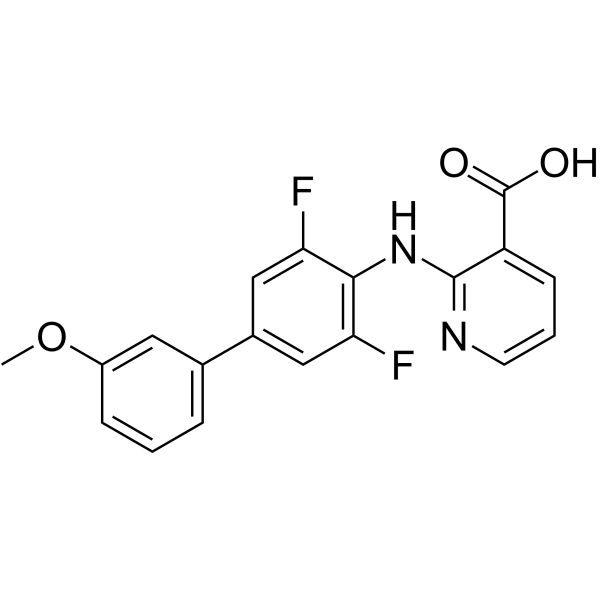
DHODH-IN-17, a 2-anilino nicotinic acid, is a human DHODH inhibitor (IC50=0.40 μM). DHODH-IN-17 can be used for theresearch of acutemyeloidleukemia (AML) .
P0064 is a selective inhibitor targeting the PR domain of PRDM16. P0064 selectively reduces proliferation and survival of FLT3-ITD+ leukemia cells and induces cell apoptosis. P0064 is promising for research of acutemyeloidleukemia (AML) .
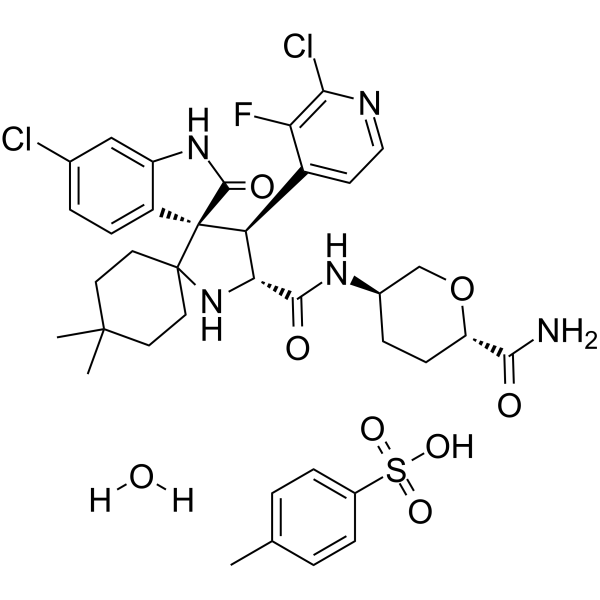
Milademetan (DS-3032) tosylate hydrate is a specific and orally active MDM2 inhibitor for the research of acutemyeloidleukemia (AML) or solid tumors. Milademetan (DS-3032) tosylate hydrate induces G1 cell cycle arrest, senescence and apoptosis .
MEN1112 (OBT357NF) is a selective humanized monoclonal antibody targeting the Bst1/CD157 antigen (EC50=1 nM). MEN1112 exerts potent antitumor activity against acutemyeloidleukemia (AML) cells. MEN1112 is promising for research of hematological malignancies such as AML .
Pentixather is a radiolabeled peptide that can target CXCR4. Pentixather can disrupt the interaction between leukemic cells and the bone marrow microenvironment by targeting the CXCR4/CXCL12 signaling axis, reduce the retention of leukemic cells in the protective bone marrow niche, and thereby enhance the sensitivity of leukemic cells to treatment. Pentixather can be used for the study of acute lymphoblastic leukemia (ALL) and acutemyeloidleukemia (AML) .
WP-1034 is a JAK-STAT inhibitor with proapoptotic and antileukemic activity in acutemyeloidleukemia (AML). WP-1034 blocks activation of Stat 3 and 5. WP-1034 induces cell cycle arrest and triggers apoptosis. WP-1034 can be used for AML research .
FCN-338 (LOXO-338) is an orally active and selective Bcl-2 inhibitor with an IC50 of 4.5 nM for Bcl-2/BAK interaction. FCN-338 potently inhibits tumor growth in follicular lymphoma (FL), acutemyeloidleukemia (AML), and acute lymphoblastic leukemia (ALL) xenograft mice model without significant weight loss. FCN-338 has a broad-spectrum anti-cancer activity, such as FL, CLL/SLL, AML, and ALL .
ZS3-046 is a TAF1 PROTAC degrader. ZS3-046 promotes the ubiquitination and degradation of TAF1. ZS3-046 activates p53 and induces apoptosis in acutemyeloidleukemia (AML) cells. ZS3-046 has antitumor activity in an AML tumor xenograft mouse model. (Target protein ligand (HY-176467); CRBN ligase (HY-41547); Linker (HY-176469); CRBN ligase + Linker (HY-176470)) .
FTO-IN-16 (Compound 8a-1), a FTO-IN-15 (HY-179266) prodrug, is a potent FTO inhibitor. FTO-IN-16 suppresses acutemyeloidleukemia (AML) cell viability, increases m 6A levels, downregulates c-Myc and CEBPA, and upregulates ASB2 and RARA. FTO-IN-16 induces apoptosis. FTO-IN-16 demonstrates strong in vivo efficacy in AML mouse xenografts. FTO-IN-16 can be used for the research of AML .
TD-522 is a potent and selective molecular glue GSPT1 degrader, with a DC50 of 0.269 nM. TD-522 exhibits strong anti-proliferative effects and induces apoptosis in acutemyeloidleukemia (AML) and diffuse large B-cell lymphoma (DLBCL) cells. TD-522 suppresses tumor growth in a TMD-8 xenograft model. TD-522 can be used for AML and DLBCL research .
K783-0308 is a potent and selective dual inhibitor of FLT3 and MNK2 with IC50 values of 680 and 406 nM, respectively. K783-0308 inhibits the growth of MOLM-13 (IC50=10.5 µM) and MV-4-11 (IC50=10.4 µM) cells. K783-0308 promotes acutemyeloidleukemia (AML) cell apoptosis and cell cycle arrests in the G0/G1 phase .
TPC-144 is a LSD1/KDM1A inhibitor. TPC-144 inhibits LSD1, and leads to a decrease in the protein level of DNMT1, causing low methylation of the LINE-1 element. TPC-144 can also produce a synergistic effect with Decitabine (HY-A0004) (a DNMT inhibitor), jointly promoting DNA demethylation and thereby inducing differentiation and apoptosis of leukemia cells. TPC-144 has also demonstrated anti-tumor efficacy in acutemyeloidleukemia (AML) models. TPC-144 can be used for the study of AML .
Atiprimod (Azaspirane) (dimaleate) is a STAT3 inhibitor with antitumor, anti-inflammatory, and anti-angiogenic activities. Atiprimod blocks the signaling pathways of IL-6 and VEGF by inhibiting the phosphorylation of signal transducer and activator of STAT3. Atiprimod blocks the JAK-STAT signaling pathway by inhibiting the phosphorylation of JAK2 and JAK3. Atiprimod also inhibits cell proliferation, induces cell cycle arrest, and induces autophagy and apoptosis. Atiprimod triggers persistent ER stress-mediated apoptosis in breast cancer cells by activating the PERK/eIF2α/ATF4/CHOP axis and inhibiting the nuclear translocation of STAT3/NF-κB. Atiprimod shows great anti-tumor activities in tumor xenograft mouse models. Atiprimod can be used for the study of pituitary adenoma, breast cancer, multiple myeloma and acutemyeloidleukemia (AML) .
Atiprimod (Azaspirane) hydrochloride is a STAT3 inhibitor with antitumor, anti-inflammatory, and anti-angiogenic activities. Atiprimod blocks the signaling pathways of IL-6 and VEGF by inhibiting the phosphorylation of signal transducer and activator of STAT3. Atiprimod blocks the JAK-STAT signaling pathway by inhibiting the phosphorylation of JAK2 and JAK3. Atiprimod also inhibits cell proliferation, induces cell cycle arrest, and induces autophagy and apoptosis. Atiprimod triggers persistent ER stress-mediated apoptosis in breast cancer cells by activating the PERK/eIF2α/ATF4/CHOP axis and inhibiting the nuclear translocation of STAT3/NF-κB. Atiprimod shows great anti-tumor activities in tumor xenograft mouse models. Atiprimod can be used for the study of pituitary adenoma, breast cancer, multiple myeloma and acutemyeloidleukemia (AML) .
DHODH-IN-25 (Compound 25) is an orally active dihydroorotate dehydrogenase (DHODH) inhibitor with an IC50 value of 5.4 nM for human DHODH. DHODH-IN-25 can be used for the study of acutemyeloidleukemia (AML) .
PROTAC FLT3/JAK2/BRD4 Degrader-1 is a PROTAC degrader that target FLT3, JAK2, and BRD4 with DC50 values of 5.23, 0.678, and 1.17 nM, respectively. PROTAC FLT3/JAK2/BRD4 Degrader-1 exhibits potent antiproliferative activity against MV4;11 cells (IC50 = 0.79 nM) and FLT3 mutant-transformed Ba/F3 cells. PROTAC FLT3/JAK2/BRD4 Degrader-1 induces apoptosis in MV4;11 cells. PROTAC FLT3/JAK2/BRD4 Degrader-1 demonstrates significant anti-tumor efficacy in the MV4;11 xenograft model established in NOD SCID mice. PROTAC FLT3/JAK2/BRD4 Degrader-1 can be used for the study of acutemyeloidleukemia (AML). (Pink: FLT3/JAK2/BRD4 ligand (HY-175611), Blue: CRBN Ligand (HY-W087383), Black: Linker, E3 ligase ligand-linker conjugate (HY-W897939)) .
BCR-ABL kinase-IN-3 (dihydrocholide) (example 1) is a potent inhibitor of BCR-ABL that plays an important role in acutemyeloidleukemia (AML) research .
Y08262 is a potent and selective CBP bromodomain inhibitor. Y08262 selectively inhibits the CBP bromodomain with an IC50 value of 73.1 nM. Y08262 can be used for the research of acutemyeloidleukemia (AML) .
Wee1/HDAC-IN-1 is a dual Wee1/HDAC inhibitor with an IC50 of 1.2 nM for Wee1 and IC50 values of 196 nM for HDAC1, 156 nM for HDAC3, and 55 nM for HDAC6. Wee1/HDAC-IN-1 exhibits strong antiproliferative activity against MV4-11 cells with an IC50 of 0.076 μM. Wee1/HDAC-IN-1 selectively binds to Wee1 and HDACs. Wee1/HDAC-IN-1 interferes with DNA damage repair pathways and induces apoptosis in MV4-11 cells. Wee1/HDAC-IN-1 Wee1/HDAC-IN-1 can be used for the research of acutemyeloidleukemia (AML) .
sulfo-DGN462 sodium is degraded to DGN462 in culture medium and plasma. DGN462, a potent DNA-alkylating agent, shows anti-tumor activity, such as acutemyeloidleukemia (AML) .
TTT 3002 is a potent and orally active FLT3 inhibitor. TTT 3002 potently inhibits FLT3 phosphorylation by activating mutations at residue D835, with an IC50 of 0.2 nM. TTT 3002 can be used for AML (acutemyeloidleukemia) research .
FLT3-IN-10 (compound 7c) is a potent inhibitor of FMS-like tyrosine kinase 3 (FLT3). FLT3-IN-10 has the potential for the research of FLT3-mutated acutemyeloidleukemia (AML) .
DD1, a proteasome inhibitor, targets Bax activation and P70S6K degradation during acutemyeloidleukemia (AML) apoptosis. DD1 induces apoptosis in the caspase-dependent manner. DD1 induces mitochondrial membrane depolarization and Bad dephosphorylation .
p97-IN-1 is an orally active p97 inhibitor (IC50 = 26 nM). p97-IN-1 can significantly inhibit the proliferation of tumor cells. p97-IN-1 can be used for research on acutemyeloidleukemia (AML) .
MJ-26 is an inhibitor targeting Menin. MJ-26 has high binding affinity (Ki: 0.56 μM) and significant antiproliferative activity. MJ-26 works by inhibiting Menin-MLL interaction and inducing Menin protein degradation. MJ-26 has significant antitumor effects on acutemyeloidleukemia (AML). MJ-26 can be used in AML research .
MolPort-002-705-878 is a highly selective FMS-like tyrosine kinase 3 (FLT3) inhibitor with a binding affinity of −11.33 kcal/mol. MolPort-002-705-878 inhibits the proliferation of FLT3-mutated acutemyeloidleukemia (AML) cells. MolPort-002-705-878 is promising for research of FLT3-mutated AML .
(R)-SR-C-107 is an orally available inhibitor of ENL (YEAST domain-containing protein) designed to target acutemyeloidleukemia (AML). (R)-SR-C-107 targets ENL with IC50 and KD of 40 nM and 144 nM, respectively. (R)-SR-C-107 demonstrates in vivo efficacy in a xenograft mouse model of AML, with a tumor regression rate of 45% at a dose of 200 mg/kg (PO; QD) .
Sulfo-SPDB-DGN462 is a agent-linker conjugate for ADC. Sulfo-SPDB-DGN462 consists a toxin DGN462 (HY-101150) conjugated to the cleavable Sulfo-SPDB linker. DGN462, a potent DNA-alkylating agent, shows anti-tumor activity, such as acutemyeloidleukemia (AML).
Bexatamig (SAR-443579) is a trifunctional natural killer cell engager targeting IL-3R α/CD123, NKp46/NCR1/CD335 and Fc gamma RIIIA/CD16a. Bexatamig forms a cytolytic synapse between natural killer cells and CD123-positive tumor cells. By activating natural killer cells to induce tumor cell death, Bexatamig effectively reduces the burden of CD123-positive acutemyeloidleukemia (AML) blasts. Bexatamig has been granted FDA Fast Track designation, and is primarily investigated for relapsed or refractory acutemyeloidleukemia, B-cell acute lymphoblastic leukemia, and high-risk myelodysplastic syndromes .
(R)-BAY1238097 is the R-isomer with lower activity of BAY1238097. BAY1238097 is a potent and selective inhibitor of BET binding to histones and has strong anti-proliferative activity in different AML (acutemyeloidleukemia) and MM (multiple myeloma) models through down-regulation of c-Myc levels and its downstream transcriptome .
FLT3-IN-34 is a FLT3 inhibitor, with an IC50 value of 1.4 nM. FLT3-IN-34 blocks the phosphorylation of FLT3 and its downstream signaling molecules AKT and ERK1/2. FLT3-IN-34 induces concentration-dependent G0/G1 phase arrest and mild apoptosis in FLT3-ITD-positive MV4-11 cells. FLT3-IN-34 shows potent anti-proliferative activity against FLT3-ITD-positive MV4-11 cells (IC50 = 14.95 nM) and MOLM-13 (IC50 = 18.5 nM). FLT3-IN-34 can be used for the study of FLT3-positive acutemyeloidleukemia (AML) .
CD117/c-Kit aptamer sodium is a single-strand DNA aptamer specific for the biomarker CD117, which is highly expressed on acutemyeloidleukemia (AML) cells.
Y16526 is a potent inhibitor of CBP/p300 bromodomain , with the IC50 of 0.03 μM. Y16524 has the potential for the research of acutemyeloidleukemia (AML) .
hDHODH-IN-11 is a potent human dihydroorotate dehydrogenase (hDHODH) inhibitor with an IC50 value of 7.2 nM. hDHODH-IN-11 has low cytotoxicity. hDHODH-IN-11 can be used in research of acutemyeloidleukemia (AML) .
AT-1413 is a human monoclonal antibody (mAb) targeting CD43. AT-1413 induces antibody-dependent cell-mediated cytotoxicity (ADCC) in melanoma cell lines and acutemyeloidleukemia (AML) cells. AT-1413 has antitumor activity in AML mouse models. AT-1413 can be used in Acutemyeloid leukaemia, Breast cancer, Malignant melanoma and Myelodysplastic syndromes research. Recommended isotype control: Human IgG1 kappa, Isotype Control (HY-P99001) .
Notopterol (Standard) is the analytical standard of Notopterol. This product is intended for research and analytical applications. Notopterol is a coumarin extracted from N. incisum. Notopterol induces apoptosis and has antipyretic, analgesic and anti-inflammatory effects. Notopterol is used for acutemyeloidleukemia (AML) .
D-65476 is an inhibitor of type Ⅲ receptor tyrosine kinase (Flt3). In the absence of IL-3, D-65476 inhibits the proliferation of TEL-Flt3 transfected BA/F3 cells (IC50= 0.2 μM), which can be used in the study of Flt3-driven leukemia .
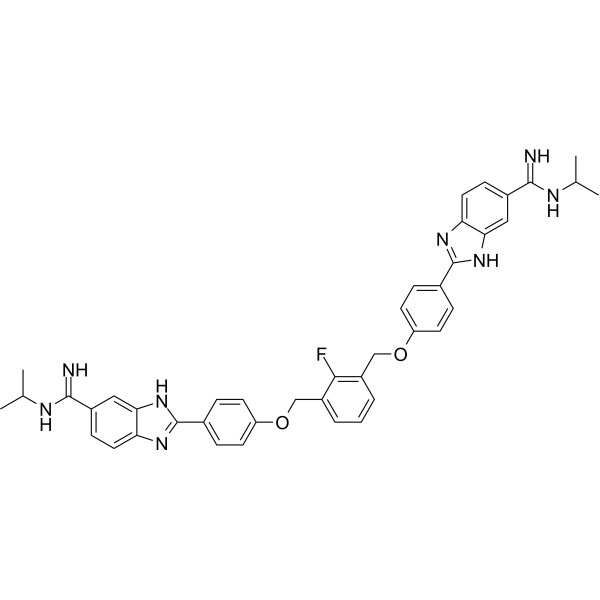
DB2313 tetrahydrochloride is a potent transcription factor PU.1 inhibitor with an apoptosis of 14 nM. DB2313 tetrahydrochloride disrupts the interaction of PU.1 with target gene promoters. DB2313 tetrahydrochloride induces apoptosis of acutemyeloidleukemia (AML) cells, and has anticancer effects .
PIM3-IN-1 hydrochloride (Compound 19a) is an inhibitor of (PIM2/3), with the highest inhibition level being against PIM3, having an IC50 value in the nanomolar range. PIM3-IN-1 hydrochloride can be used in cancer research .
CDK2-IN-41 (Compound 7a) is a CDK2 inhibitor that exerts anticancer activity by binding to CDK2, thereby inhibiting the cell cycle, inducing cytotoxicity, promoting ROS production, and triggering Apoptosis. CDK2-IN-41 exhibits an IC50 of 10 µM against acutemyeloidleukemia (AML) HL-60 cells. It holds potential for research in AML-related cancer therapy .
MGTA-117 is a humanized monoclonal antibody targeting CD117. MGTA-117 can be used for synthesis of antibody-drug conjugate (ADC), utilizing an amanitin payload. MGTA-117 has potent anti-tumor activity and increases survival in three acutemyeloidleukemia (AML) xenograft hNSG mice models (Kasumi-1, AML PDX 1 and AML PDX 2). MGTA-117 enables hematopoietic stem cell transplantation (HSCT) preprocessing in AML, myelodysplasia with excess blasts (MDS-EB) and gene therapy .
LSD1-IN-13 hydrochloride (compound 7e) is an orally active and potent LSD1 inhibitor, with an IC50 of 24.43 nM. LSD1-IN-13 hydrochloride can activate CD86 expression, with an EC50 of 470 nM. LSD1-IN-13 hydrochloride induces differentiation of AML (acutemyeloidleukemia) cell lines .
FTO ligand-1 is a FTO ligand for FTO PROTAC degrader FP54 (HY-175885). FTO ligand-1 can inhibit cell proliferation and block the FP54-induced FTO degradation. FTO ligand-1 can be used for research of cancer, such as acutemyeloidleukemia (AML) .
LSD1-IN-13 (compound 7e) is an orally active and potent LSD1 inhibitor, with an IC50 of 24.43 nM. LSD1-IN-13 can activate CD86 expression, with an EC50 of 470 nM. LSD1-IN-13 induces differentiation of AML (acutemyeloidleukemia) cell lines .
DB1055 is a HOXA9 inhibitor that competes with HOXA9 binding to DNA (blocking its DNA interaction activity). DB1055 induces in vitro cell growth reduction, cell apoptosis, and differentiation in human acutemyeloidleukemia (AML) cells. DB1055 leads to monocyte-to-macrophage differentiation and exhibits antileukemic activities in a human THP-1 AML in vivo model. DB1055 does not impact human CD34+ bone marrow cells. DB1055 can be used for the research of acutemyeloidleukemia[1].
Y16524 is a potent inhibitor of CBP/p300 bromodomain , with the IC50 of 0.01 μM. Y16524 has the potential for the research of acutemyeloidleukemia (AML) .
cis-Revumenib (cis-SNDX-5613) is an isomer of Revumenib (HY-136175). Revumenib (SNDX-5613) is a potent and specific Menin-MLL inhibitor with a binding Ki of 0.149 nM and a cell based IC50 of 10-20 nM. Revumenib can be used for the research of MLL-rearranged (MLL-r) acuteleukemias, including acute lymphoblastic leukemia (ALL) and acutemyeloidleukemia (AML) .
CQ80 is a PEPD/XPNPEP1 inhibitor and selective CARD8 inflammasome activator. CQ80 has IC50 values of 0.91 μM for PEPD, 43 μM for XPNPEP1. CQ80 promotes the accumulation of Xaa-Pro peptides by inhibiting PEPD and XPNPEP1, releases the fragment of CARD8 for inflammasome formation, and induces pyroptosis via GSDMD cleavage. CQ80 can be used for research on inflammasome, CARD8-expressing cancer cells, HIV-1-infected cell clearance, acutemyeloidleukemia (AML) .
Menin-MLL-IN-37 is an orally active Menin-MLL protein complex inhibitor with an IC50 of 820.50 nM. Menin-MLL-IN-37 disrupts the interaction between menin and MLL proteins. Menin-MLL-IN-37 induces differentiation of acutemyeloidleukemia cells and selectively inhibits the proliferation of MLL-rearranged and DNMT3A/NPM1-mutant leukemia cells. Menin-MLL-IN-37 can be used for the research of acutemyeloidleukemia (AML) .
LG190155 is a nonsteroidal vitamin D receptor (VDR) agonist. LG190155 activates VDR in mesenchymal stem cells, thereby upregulating the BMP6-IL6 autocrine axis. Pretreatment of mesenchymal stem cells with LG190155 significantly enhances their ability to induce differentiation of acutemyeloidleukemia cells, without inducing hypercalcemia. LG190155 is applicable to research related to acutemyeloidleukemia (AML) .
PROTAC MLLT1 Degrader-1 is a PROTAC degrader targeting MLLT1. PROTAC MLLT1 Degrader-1 inhibits AML cell proliferation and viability, suppresses tumor growth in human AML xenograft models, and can block the oncogene transcriptional program. PROTAC MLLT1 Degrader-1 can be used for the research of MLL-rearranged acutemyeloidleukemia (AML) .
ML390 (Standard) is the analytical standard of ML390 (HY-100688). This product is intended for research and analytical applications. ML390 is a potent dihydroorotate dehydrogenase (DHODH) inhibitor. ML390 is an inducer of myeloid differentiation and causes myeloid differentiation in murine (ER-HoxA9) and human (U937 and THP1) acutemyeloidleukemia (AML) models .
CML-07-119 is a selective inhibitor of GGPP synthase (GGPPS) with an IC50 of ~27 nM. CML-07-119 induces apoptosis and exhibits anticancer activity against acutemyeloidleukemia (AML) cells, including those harbouring TP53 mutations. CML-07-119 inhibits tumor growth in an AML mouse xenograft model. CML-07-119 can be used for AML research .
14-Acetoxy parthenolide (compound 6a) is a parthenolide (PTL) derivative. 14-Acetoxy parthenolide exhibits potent anti-acutemyeloidleukemia (AML) activity against HL-60 and KG1a cells, with IC50 values of 2.8 µM and 6.3 µM, respectively. 14-Acetoxy parthenolide can be used for AML research .
HDAC11-IN-5 is a selective, potent and orally active HDAC11 inhibitor with an IC50 of 0.021 μM. HDAC11-IN-5 increases fatty acylation levels of substrate SHMT2 in AML cells. HDAC11-IN-5 induces apoptosis, G1 phase cell cycle arrest, ferroptosis, ROS production and terminal myeloid differentiation in AML cells. HDAC11-IN-5 demonstrates anti-tumor potency in an MLL-AF9-induced mouse AML model. HDAC11-IN-5 can be used for the research of cancer, such as acutemyeloidleukemia .
CSL-360 is a chimeric unconjugated IgG1 monoclonal antibody targeting CD123. CSL-360 efficiently prevents the binding of IL-3 to CD123, abolishing IL-3 induced cell proliferation. CSL-360 can be used for acutemyeloidleukemia (AML) research .
Bet-in-23 (Compound 23) is a BD2-selective BET inhibitor with an IC50 of 2.9 nM. BET-IN-23 has anticancer activity and can significantly inhibit the proliferation of acutemyeloidleukemia (AML) cell lines by inducing G0/G1 arrest and apoptosis in vitro .
BKT300 is a potent and selective protein regulator of cytokinesis 1 (PRC1) inhibitor. BKT300 inhibits PRC1 dephosphorylation at T481, disrupts actin and microtubule formation, induces G2/M cell cycle arrest, triggers mitotic catastrophe, and promotes apoptosis, thereby inhibiting proliferation and migration of acutemyeloidleukemia (AML) cells while sparing normal cells. BKT300 inhibits tumor growth in mouse xenograft AML models. BKT300 can be used for the research of AML .
AES-350 is a potent and orally active HDAC6 inhibitor with an IC50 and a Ki of 0.0244 μM and 0.035 μM, respectively. AES-350 is also against HDAC3, HDAC8 in an enzymatic activity assay with IC50 values of 0.187 μM and 0.245 μM, respectively. AES-350 triggers apoptosis in AML cells through HDAC inhibition and can be used for acutemyeloidleukemia (AML) research .
POLRMT-IN-2 is a potent POLRMT inhibitor. POLRMT-IN-2 exhibits strong antiproliferative activity in MOLM-13 cells, with an IC50 of 1.01 μM. POLRMT-IN-2 disrupts mitochondrial function and induces apoptosis in MOLM-13cells. POLRMT-IN-2 can be used for the study of acutemyeloidleukemia(AML) .
Milademetan (Standard) is the analytical standard of Milademetan (HY-101266). This product is intended for research and analytical applications. Milademetan (DS-3032) is a specific and orally active MDM2 inhibitor for the research of acutemyeloidleukemia (AML) or solid tumors. Milademetan (DS-3032) induces G1 cell cycle arrest, senescence and apoptosis .
Denfivontinib (G-749) is a potent, oral active and ATP competitive FLT3 inhibitor, with IC50s of 0.4 nM and 0.6 nM for FLT3 wild type and FLT3-D835Y, respectively. Denfivontinib can be used for the research of agent resistance for acutemyeloidleukemia (AML) .
Meisoindigo (Standard) is the analytical standard of Meisoindigo. This product is intended for research and analytical applications. Meisoindigo (Dian III), a derivative of Indirubin (HY-N0117), halts the cell cycle at the G0/G1 phase and induces apoptosis in primary acutemyeloidleukemia (AML) cells. Meisoindigo exhibits high antitumor activity .
DDR1-IN-11 (Compound 4) is an inhibitor of Discoidin domain receptor 1 (DDR1) with an IC50 of 46.16 nM. DDR1-IN-11 can achieve an inhibition rate of 99.86% against Z-138 cells at a concentration of 10 μM, and it can be used in the research of acutemyeloidleukemia (AML) .
BAY-155 is a potent and selective menin-MLL tool inhibitor, with an IC50 of 8 nM. BAY-155 leads to a strong expression down-regulation of the MEIS1 gene and up-regulation of CD11b and MNDA genes. BAY-155 shows anti-proliferative effects in AML/ALL (acutemyeloid/lymphoblastic leukemia) models .
CDK8/19-IN-2 (compound 12) is an orally active and potent cyclin-dependent kinase 8/19 (CDK8 and CDK19) inhibitor, with IC50 values of 2.08 and 2.49 nM, respectively. CDK8/19-IN-2 can be used for acutemyeloidleukemia (AML), breast cancer, and lymphoma research .
Monobenzone is a potent skin depigmenting agent. Monobenzone induces depigmentation and exhibits good potential for vitiligo research. Monobenzone is a potent inhibitor of RNR (Ribonucleotide reductase) enzyme activity by targeting RRM2 (a regulatory small subunit M2 of RNR) protein, and thus has significant anti-leukemia efficacy in vitro and in vivo. Monobenzone inhibits acutemyeloidleukemia (AML) cells proliferation and DNA synthesis, induces cell cycle arrest, and Apoptosis .
FD223 is a potent and selective phosphoinositide 3-kinase delta (PI3Kδ) inhibitor. FD223 displays high potency (IC50=1 nM) and good selectivity over other isoforms (IC50s of 51 nM, 29 nM and 37 nM, respectively for α, β and γ). FD223 exhibits efficient inhibition of the proliferation of acutemyeloidleukemia (AML) cell lines by suppressing p-AKT Ser473 thus causing G1 phase arrest during the cell cycle. FD223 has potential for the research of leukemia such as AML .
PROTAC BET Degrader-17 is a potent BET protein PROTAC degrader. By recruiting the VHLE3 ligase, PROTAC BET Degrader-17 specifically degrades BRD2, BRD3 (DC50=0.09 nM) and BRD4 (IC50=4.3 nM). PROTAC BET Degrader-17 exhibits strong anti-tumor activity in acutemyeloidleukemia(AML) studies; it not only inhibits cancer cell proliferation, induces cell cycle arrest and apoptosis, but also effectively suppresses tumor growth in xenograft mouse models. PROTAC BET Degrader-17 can be used to explore targeted therapies for acutemyeloidleukemia .
FLC-8 is an orally active FLT3 inhibitor with IC50 values of 10.2 nM, 11.6 nM and 24.10 nM against human FLT3-WT, FLT3-G697R and FLT3-N676D, respectively. FLC-8 inhibits FLT3 autophosphorylation and downstream STAT5, AKT and ERK signaling pathways, and induces apoptosis in acutemyeloidleukemia (AML) cells. FLC-8 exhibits potent antitumor activity in the MV4-11 xenograft model. FLC-8 can be used for the research of acutemyeloidleukemia .
Ulocuplumab (Anti-Human CXCR4 Recombinant Antibody/BMS-936564/MDX1338) is a fully human IgG4 anti-CXCR4 antibody. Ulocuplumab induces apoptosis and inhibits CXCL12 mediated CXCR4 activation-migration of chronic lymphocytic leukemia (CLL). Ulocuplumab exhibits antitumor activity in established tumors including acutemyeloidleukemia (AML), non-Hodgkin lymphoma (NHL), and multiple myeloma xenograft models .
FLT3-IN-33 (Compound 7r) is a FLT3 inhibitor with an IC50 of 7.82 nM. FLT3-IN-33 has superior anticancer activities against acutemyeloidleukemia (AML) cells, such as MV4-11 and MOLM-13 cells. FLT3-IN-33 significantly induces cell apoptosis and inhibits phosphorylation of FLT3 pathways. FLT3-IN-33 can be used for AML and other cancers research .
Milademetan (tosylate hydrate) (Standard) is the analytical standard of Milademetan (tosylate hydrate) (HY-101266B). This product is intended for research and analytical applications. Milademetan (DS-3032) tosylate hydrate is a specific and orally active MDM2 inhibitor for the research of acutemyeloidleukemia (AML) or solid tumors. Milademetan (DS-3032) tosylate hydrate induces G1 cell cycle arrest, senescence and apoptosis .
DEG-35 is a CRBN-dependent, dual IKZF2 and CK1α molecule glue degrader, with DC50 values of 1.4 nM and 4.4 nM for CK1α and IKZF2, respectively. DEG-35 activates the p53 apoptosis pathway. DEG-35 can be used in the research for AcuteMyeloidLeukemia (AML) .
SHP2-IN-42 is a src homology 2 domain-containing phosphatase 2 (SHP2) inhibitor with an IC50 of 15 nM. SHP2-IN-42 inhibits cell proliferation and induces apoptosis and G1 phase cell cycle arrest. SHP2-IN-42 can be used for the research of cancer, such as acutemyeloidleukemia (AML) .
AZD1897 is a PIM1, PIM2, and PIM3 inhibitor with IC50 values of less than 3 nM for these three PIM kinases. AZD1897 exhibits anticancer activity and synergistically inhibits the activity of acutemyeloidleukemia (AML) cells in combination with Capivasertib (HY-15431). This synergistic inhibitory effect is achieved through the inhibition of the mTOR and MCL1 pathways .
Apoptosis inducer 40 is an apoptosis inducer. Apoptosis inducer 40 exhibits potent cytotoxic effects against jurkat and NB4 cells with IC50 values of 4.5 μM and 3.6μM. Apoptosis inducer 40 induces apoptosis and arrests cell cycle. Apoptosis inducer 40 can be used for the research of cancer, such as acutemyeloidleukemia (AML) .
ONC213 is an orally active αKGDH inhibitor. ONC213 can suppress mitochondrial respiration and elevate α-ketoglutarate levels by inhibiting αKGDH activity. ONC213 can induce cells apoptosis by inducing mitochondrial stress response and inhibiting translation of MCL-1. ONC213 can be used for the research of cancer, such as acutemyeloidleukemia research (AML) .
DB2313 is a potent inhibitor of transcription factor PU.1. DB2313 inhibits PU.1-dependent reporter gene transactivation with an IC50 of 5 μM. DB2313 disrupts the interaction of PU.1 with target gene promoters. DB2313 induces apoptosis in acutemyeloidleukemia (AML) cells and has anticancer effects .
(R)-3-Hydroxy Midostaurin ((R)-CGP52421) is a potent kinases inhibitor. (R)-3-Hydroxy Midostaurin is a major metabolite of midostaurin (PKC412; HY-10230) undergoing by the hepatic CYP3A4 enzyme. (R)-3-Hydroxy Midostaurin has the potential for acutemyeloidleukemia (AML) .
CDK9-IN-37 (Compound 24) is a CDK9 inhibitor (EC50: 5.5 nM) with weak inhibition on other CDK isoforms, showing high selectivity. CDK9-IN-37 has significant antiproliferative activity against acutemyeloidleukemia MOLM-13 cells (IC50: 0.034 μM). CDK9-IN-37 inhibits the CDK9 signaling pathway, reduces the phosphorylation level of RNAP II CTD (Ser2), downregulates the anti-apoptotic protein McI-1, induces cell apoptosis, and arrests the cell cycle at the G2/M phase. CDK9-IN-37 can be used in the study of acutemyeloidleukemia (AML) .
AP23848 is an ATP-dependent kinase inhibitor that effectively and selectively targets the Kit activation loop mutation both in vitro and in vivo, showing anti-tumor activity. AP23848 can inhibit the phosphorylation of the activated Kit mutation and tumor growth in mice, making it suitable for targeting diseases with the D816V mutation, such as systemic mastocytosis (SM) and acutemyeloidleukemia (AML) research .
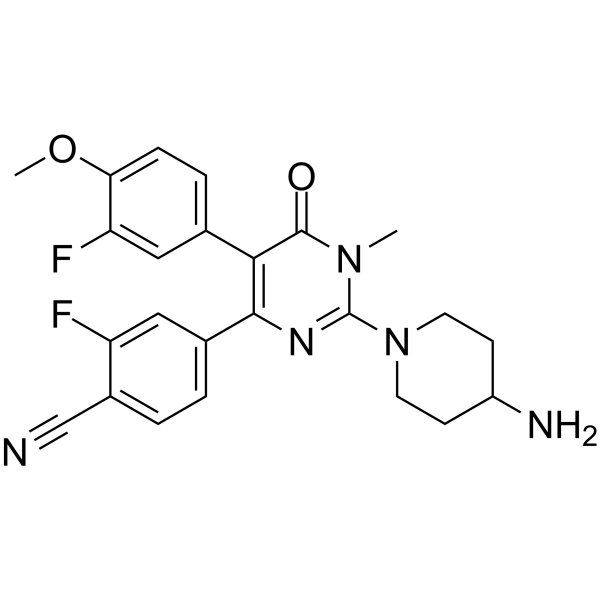
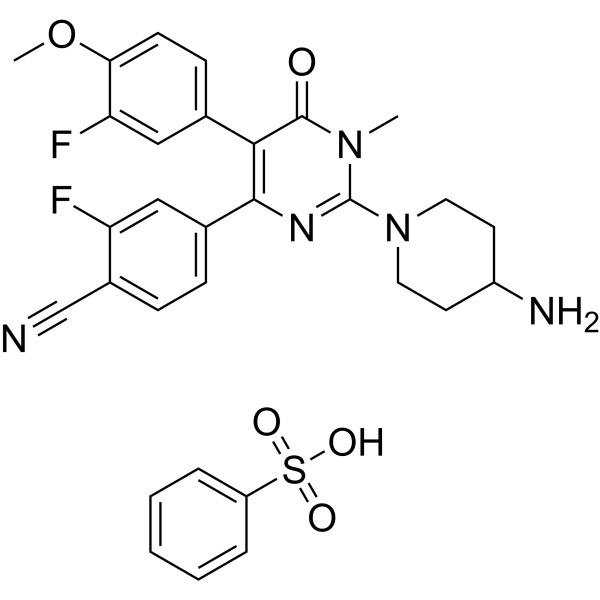
Pulrodemstat (CC-90011) benzenesulfonate is a potent, selective, reversible and orally active inhibitor of lysine specific demethylase-1 (LSD1) with an IC50 of 0.25 nM. Pulrodemstat benzenesulfonate is less enzymatic inhibition against LSD2, MAO-A, and MAO-B. Pulrodemstat benzenesulfonate induces acutemyeloidleukemia (AML) and small cell lung cancer (SCLC) cells differentiation and has potent anticancer activity .
Pulrodemstat (CC-90011) is a potent, selective, reversible and orally active inhibitor of lysine specific demethylase-1 (LSD1) with an IC50 of 0.25 nM. Pulrodemstat is less enzymatic inhibition against LSD2, MAO-A, and MAO-B. Pulrodemstat induces acutemyeloidleukemia (AML) and small cell lung cancer (SCLC) cells differentiation and has potent anticancer activity .
BMS-986497 (ORM-6151) is a CD33-targeting antibody-conjugated GSPT1 degrader. BMS-986497 delivers the GSPT1 degrader SMol006 to CD33-expressing cells and induces GSPT1 protein degradation. BMS-986497 shows potential for research on acutemyeloidleukemia (AML) .
Amredobresib (BI894999) is an orally active BET inhibitor. Amredobresib inhibits the binding of BRD4-BD1 and BRD4-BD2 bromodomains to acetylated histones with IC50 values of 5 nM and 41 nM, respectively. Amredobresib exhibits anticancer activity against acutemyeloidleukemia (AML) and NUT cancer .
Pulrodemstat (CC-90011) hydrochloride is a potent, selective, reversible and orally active inhibitor of lysine specific demethylase-1 (LSD1) with an IC50 value of 0.25 nM. Pulrodemstat hydrochloride is less enzymatic inhibition against LSD2, MAO-A, and MAO-B. Pulrodemstat hydrochloride induces acutemyeloidleukemia (AML) and small cell lung cancer (SCLC) cells differentiation and has potent anticancer activity .
IO-202 is a high-affinity LILRB4/ILT3 binder and myeloid checkpoint inhibitor. IO-202 blocks APOE binding and LILRB4 activation to reverse T-cell suppression and enhance T-cell cytotoxicity, while eliminating LILRB4-high-expressing leukemic blasts via ADCC and ADCP mechanisms. IO-202 promotes dendritic cell maturation and antigen presentation, reshapes the phenotype of tumor-associated macrophages, and reduces myeloid-derived suppressor cells. IO-202 is widely applicable to research on relapsed/refractory acutemyeloidleukemia (AML), chronic myelomonocytic leukemia (CMML), and solid tumors .
BET-IN-30 (Compound 11d) is a BTE family protein inhibitor, which can act as a BRD2/BRD3/BRD4 target protein ligand and be used for the synthesis of PROTACs, such as PROTAC BET Degrader-15 (HY-181729). BET-IN-30 exhibits potent anti-proliferative activity against acutemyeloidleukemia (AML) cells such as MV4-11. BET-IN-30 can be used for the study of AML .
MM927 is a potent NVL inhibitor, with an IC50of 0.053 μM. MM927 blocks 60S ribosomal subunit biogenesis in the nucleolus. MM927 induces half-mer polysomes, cell cycle arrest at G1/S and G2/M and apoptosis in cells. MM927 demonstrates antitumor efficacy in MOLM-13 AML and HCT116 CRC xenograft models. MM927 can be used for the study of cancers such as acutemyeloidleukemia (AML) and colorectal cancer (CRC) .
(4aS,8aR)-NPD-001 is a potent and allosteric inhibitor of DNMT3A. (4aS,8aR)-NPD-001 inhibits DNMT3A activity by disrupting protein-protein interactions. (4aS,8aR)-NPD-001 induces apoptosis of acutemyeloidleukemia (AML) cell lines. (4aS,8aR)-NPD-001 induces differentiation of distinct AML cell lines including cells with mutated DNMT3A R882 .
Pulrodemstat (CC-90011) Methylbenzenesulfonate is a potent, selective, reversible and orally active inhibitor of lysine specific demethylase-1 (LSD1) with an IC50 of 0.25 nM. Pulrodemstat Methylbenzenesulfonate is less enzymatic inhibition against LSD2, MAO-A, and MAO-B. Pulrodemstat Methylbenzenesulfonate induces acutemyeloidleukemia (AML) and small cell lung cancer (SCLC) cells differentiation and has potent anticancer activity .
Olutasidenib (FT-2102) is a highly potent, orally active, brain penetrant and selective inhibitor of mutant Isocitrate dehydrogenase 1 (IDH1), with IC50 values of 21.2 nM and 114 nM for IDH1- R132H and IDH1- R132C, respectively . Olutasidenib (FT-2102) is under the study in the treatment of acutemyeloidleukemia (AML) or myelodysplastic syndrome (MDS) .
BPR1J-340 is a potent FLT3 inhibitor with an IC50 of ~25 nM. BPR1J-340 inhibits the phosphorylation of FLT3 and STAT5 and triggered apoptosis in FLT3-ITD +acutemyeloidleukemia (AML) cells. BPR1J-340 exhibits significant anti-tumor activities .
(Rac)-BRD0705 is a less active racemate of BRD0705. BRD0705 is a potent, paralog selective and orally active GSK3α inhibitor with an IC50 of 66 nM and a Kd of 4.8 μM. BRD0705 displays increased selectivity for GSK3α (8-fold) versus GSK3β (IC50 of 515 nM). BRD0705 can be used for acutemyeloidleukemia (AML) .
ANT308 is a vasoactive intestinal polypeptide (VIP receptor) antagonist. ANT308 significantly enhances the activation and proliferation of T cells. ANT308 inhibits the migration and metastasis, induces apoptosis of melanoma tumor cells by inhibiting VIP-VPAC2 signaling and reducing the expression of MCAM and N-cadherin. ANT308 can be used for the studies of acutemyeloidleukemia (AML) and uveal melanoma (UVM) .
FTO-IN-15 (Compound 8a) is a potent and selective dual-competitive FTO inhibitor with an IC50 of 43.7 nM, showing high selectivity over ALKBH3 and ALKBH5. FTO-IN-15 substantially inhibits FTO demethylation by simultaneously occupying the substrate and 2-oxoglutarate (2-OG) pockets. FTO-IN-15 can be used for the research of acutemyeloidleukemia (AML) .
HPA-12 is a blood-brain barrier-permeable small-molecule inhibitor of ceramide transfer protein (CERT) with four stereoisomers (the (1R,3R)-stereoisomer exhibits the highest activity). HPA-12 blocks the transport of ceramide from the endoplasmic reticulum to the Golgi apparatus by binding to the START domain of CERT, leading to intracellular ceramide accumulation and inhibition of sphingomyelin (SM) synthesis. HPA-12 induces endoplasmic reticulum stress via the GRP78/ATF6/CHOP axis and activates mitochondrial autophagy, thereby inhibiting cell growth and inducing apoptosis. In in vivo experiments, HPA-12 significantly reduces the leukemia burden and splenomegaly in mouse models of acutemyeloidleukemia(AML) and prolongs survival. HPA-12 is applicable for the research of lipid metabolism in acutemyeloidleukemia and Alzheimer's disease .
SCAL-255 is a potent mitochondrial complex I (CI) inhibitor with an IC50 of 1.14 μM. SCAL-255 blocks mitochondrial function, inhibits oxygen consumption rate (OCR), induces reactive oxygen species (ROS) production, and reduces MMP. SCAL-255 can be used in the research of oxidative phosphorylation (OXPHOS)-dependent cancers, such as colorectal cancer (CRC) and acutemyeloidleukemia (AML), etc .
MC4491 is a selective LSD1/PRMT5 inhibitor, with an IC50 of 0.152 μM against the LSD1/CoREST complex and an IC50 of 0.043 μM against the PRMT5/MEP50 complex. MC4491 induces transcriptomic changes and splicing alterations in AML cells. MC4491 is applicable for the research of acutemyeloidleukemia .
BET-IN-20 (compound 10) is an inhibitor of BRD4 BD1 (IC50=1.9 nM) with anticancer activity. BET-IN-20 can promote acutemyeloidleukemia (AML) cell apoptosis and arrest the cell cycle in the G0/G1 phase. BET-IN-20 also inhibits c-Myc and CDK6 and enhances PARP cleavage .
CB039 is a selective a molecular glue degrader that targets RBM39 (RNA-binding protein 39). CB039 promotes the formation of a ternary complex between RBM39 and the E3 ubiquitin ligase CUL4-DCAF15, leading to proteasomal degradation of RBM39. CB039 is promising for research of cancers with RBM39 dependency, such as acutemyeloidleukemia (AML) and ovarian cancer .
BRD5648 ((R)-BRD0705) is a negative control of BRD0705. BRD0705 is a potent, paralog selective and orally active GSK3α inhibitor with an IC50 of 66 nM and a Kd of 4.8 μM. BRD0705 displays increased selectivity for GSK3α (8-fold) versus GSK3β (IC50 of 515 nM). BRD0705 can be used for acutemyeloidleukemia (AML) .
H3B-8800 is a potent and orally active SF3B splicing modulator. H3B-8800 direct interaction with the SF3b complex and shows anti-cancer activity. H3B-8800 has the potential for the research of acutemyeloidleukemia (AML) with SF3B1 mutant .
FLT3-IN-25 (compound 17) is a potent inhibitor of FLT3, with IC50s of 1.2 nM, 1.4 nM and 1.1 nM for FLT3-WT, FLT3-D835Y and FLT3-ITD, respectively. FLT3-IN-25 plays an important role in acutemyeloidleukemia (AML) .
FLT3-IN-18 is a potent and selective FLT3 inhibitor with an IC50 value of 0.003 μM. FLT3-IN-18 induces apoptosis and cell cycle arrest at G1 phase. FLT3-IN-18 inhibits FLT3 and STAT5 phosphorylation. FLT3-IN-18 has the potential for the research of acutemyeloidleukemia (AML) .
SACLAC, a Ceramide analog, is a potent and covalent acid ceramidase (ASAH1; AC) inhibitor with a Ki of 97.1 nM. SACLAC effectively blocks AC activity and induces a decrease in sphingosine 1-phosphate (S1P) and total ceramide levels. SACLAC reduces the levels of splicing factor SF3B1 and alternative Mcl-1 mRNA splicing, increases pro-apoptotic Mcl-1S levels to induce apoptosis in acutemyeloidleukemia (AML) cells. SACLAC reduces the leukemic burden in human AML xenograft mouse models .
FLT3 (FMS-like tyrosine kinase 3, CD135) is a type 3 receptor tyrosine kinase that plays important roles in cell survival, proliferation, and differentiation during normal hematopoiesis. FLT3 is one of the most frequently mutated genes in acutemyeloidleukemia (AML). FLT3 ITD is a internal tandem duplication (ITD) mutation of FLT3 that may be present in AML cells. FLT3 ITD Recombinant Human Active Protein Kinase is a recombinant FLT3 ITD protein that can be used to study FLT3 ITD-related functions .
Tambiciclib (GFH009, JSH-009) is an orally active, highly potent and selective CDK9 inhibitor (IC50 = 1 nM), demonstrating >200-fold selectivity over other CDKs, >100-fold selectivity over DYRK1A/B, and excellent selectivity over 468 kinases/mutants. Tambiciclib demonstrates potent in vitro and in vivo antileukemic efficacy in acutemyeloidleukemia (AML) mouse models by inhibiting RNA Pol II phosphorylation, downregulating MCL1 and MYC, and inducing apoptosis. Tambiciclib can be used for AML research .
FLT3-IN-36 is a potent FLT3 inhibitor. FLT3-IN-36 exhibits antitumor activity against FLT3-mutated acutemyeloidleukemia (AML) cells. FLT3-IN-36 induces cell cycle arrest, reduces mitochondrial membrane potential, and induces apoptosis, downregulating FLT3 and downstream protein expression (including AKT, ERK, PI3K, and STAT5). FLT3-IN-36 can be used for AML research .
Emirodatamab (AMG-427) is a bispecific T-cell engager (BiTE). Emirodatamab simultaneously binds FLT3 on the surface of acutemyeloidleukemia(AML) cells and CD3 on the surface of T cells, thereby precisely recruiting immune effector cells to tumor sites. Emirodatamab potently induces T cell activation, secretion of proinflammatory cytokines (such as IFNγ, TNFα), and specific cytotoxicity, effectively lysing FLT3-positive tumor cells and inhibiting their growth. Emirodatamab not only significantly prolongs survival in mouse xenograft models and eliminates diseased cells in primates, but also exhibits a synergistic enhancement effect when combined with PD-1 blockade therapy. Emirodatamab is used in studies of acutemyeloidleukemia, especially relapsed or refractory cases .
PROTAC ATR degrader-2 is a selective ATR PROTAC degrader. PROTAC ATR degrader-2 degrades ATR in acutemyeloidleukemia (AML) cells MV-4-11 and MOLM-13, with DC50 values of 22.9 nM and 34.5 nM, respectively. PROTAC ATR degrader-2 has an IC50 of 29.6 nM against ATR, and its IC50 values against ATM and PI3K are both greater than 2000 nM. PROTAC ATR degrader-2 induces apoptosis, DNA damage, and upregulates p53 expression. PROTAC ATR degrader-2 inhibits cancer cell proliferation through the kinase-independent function of ATR protein. PROTAC ATR degrader-2 is applicable to research related to acutemyeloidleukemia .
VCP/p97 IN-2 (Compound V13) is a VCP/p97 inhibitor with IC50 of 32 nM for p97. VCP/p97 IN-2 has excellent antitumor activities and significantly inhibits tumor growth in Molm-13 xenograft mice model. VCP/p97 IN-2 can be used for acutemyeloidleukemia (AML) research .
SH1573 is an orally active mIDH2 inhibitor. SH1573 has a strong and selective inhibitory effect on mIDH2 R140Q protein (IC50=4.78 nmol/L), and can effectively reduce the production of the carcinogenic metabolite 2-hydroxyglutarate (2-HG) in animal models, cell lines, serum and tumors. SH1573 can be used for the study of acutemyeloidleukemia (AML) .
JH-IX-179 is an FLT3 inhibitor (IC50 = 4 nM (FLT3-ITD), 10 nM (FLT3-D835Y)). JH-IX-179 inhibits G1 phase arrest and induces apoptosis in FLT3-ITD-expressing cells. JH-IX-179 can be used in acutemyeloidleukemia (AML) research .
PLX-4104 is an orally active BRD4 molecular glue degrader with a DC50 of 2 nM. PLX-4104 selectively promotes BRD4 degradation via DCAF11 recruitment, triggering ubiquitination and proteasomal breakdown. PLX-4104 inhibits cancer cell proliferation. PLX-4104 induces complete regression of AML xenograft tumors. PLX-4104 can be used for the research of acutemyeloidleukemia .
FLT3-ITD-IN-3 (13v), an orally active FLT3-ITD (FLT3 internal tandem duplication) inhibitor, disrupts FLT3 signal transduction and induced G0/G1 cell cycle arrest and apoptosis. FLT3-ITD-IN-3 (13v) is used in the research of acutemyeloidleukemia (AML) .
Ardisianone is a component with an alkyl benzoquinone structure that can be isolated from Ardisia virens Kurz and Ardisia compressa tea extract. Ardisianone exhibits potent antileukemic activity, particularly against HL-60 cells, with IC50 values of 1.87 μM (24 h) and 1.67 μM (48 h). Ardisianone induces caspase-dependent apoptosis and triggers pyroptosis. Ardisianone can be used for the study of acutemyeloidleukemia (AML) .
Pacritinib hydrochloride is a potent inhibitor of both wild-type JAK2 (IC50=23 nM) and JAK2 V617F mutant (IC50=19 nM). Pacritinib hydrochloride also inhibits FLT3 (IC50=22 nM) and its mutant FLT3 D835Y (IC50=6 nM). Pacritinib hydrochloride can be used for the research of acutemyeloidleukemia (AML) and myelofibrosis (MF) .
YL-5092 is a selective YT521-B homology (YTH) domain-containing protein 1 (YTHDC1) inhibitor with an IC50 of 7.4 nM and a KD of 29.6 nM. YL-5092 can suppress cancer cell proliferation and induce cell G0/G1 phase arrest and apoptosis. YL-5092 can be used for the research of cancer, such as acutemyeloidleukemia (AML) .
Gemtuzumab ozogamicin is an antibody-drug conjugate (ADC) consisting of a humanized immunoglobulin (IgG4) antibody directed against CD33 that is conjugated to the cytotoxic agent Calicheamicin (HY-19609). The antibody portion is Gemtuzumab (HY-P99971), and the drug-linker conjugate for ADC is N-Ac-γ-Calicheamicin-AcBut-NHS ester (HY-103688). Gemtuzumab ozogamicin can be used for the research of acutemyeloidleukemia (AML) .
ANT308 TFA is a vasoactive intestinal polypeptide (VIP receptor) antagonist. ANT308 TFA significantly enhances the activation and proliferation of T cells. ANT308 TFA inhibits the migration and metastasis, induces apoptosis of melanoma tumor cells by inhibiting VIP-VPAC2 signaling and reducing the expression of MCAM and N-cadherin. ANT308 TFA can be used for the study of acutemyeloidleukemia (AML) and uveal melanoma (UVM) .
Tambiciclib (GFH009, JSH-009) dimaleate is an orally active, highly potent and selective CDK9 inhibitor (IC50 = 1 nM), demonstrating >200-fold selectivity over other CDKs, >100-fold selectivity over DYRK1A/B, and excellent selectivity over 468 kinases/mutants. Tambiciclib dimaleate demonstrates potent in vitro and in vivo antileukemic efficacy in acutemyeloidleukemia (AML) mouse models by inhibiting RNA Pol II phosphorylation, downregulating MCL1 and MYC, and inducing apoptosis. Tambiciclib dimaleate can be used for AML research .
GS87 is a highly specific and potent GSK3 inhibitor with IC50s of 415nM and 521nM for GSK3α and GSK3β, respectively. GS87 induces differentiation of acutemyeloidleukemia (AML) cell lines by effectively activating GSK3-dependent signaling components including MAPK signaling. GS87 modulates key GSK3 target proteins involved in cell proliferation and differentiation more effectively than Lithium and SB415285 (SB). GS87 has the potential for acting as a differentiation agent for non-promyelocytic AML research .
Lixarkitug (AZD9829 antibody; INT-020) is a humanized IgG1κ antibody targeting IL-3Ra/CD123. Lixarkitug can be conjugated with Samrotecan to form the intact ADC molecule lixarkitug samrotecan (AZD9829), which is used in studies of acutemyeloidleukemia (AML) . The isotype control corresponding to Lixarkitug is Human IgG1 kappa, Isotype Control (HY-P99001).
ABT-737, a BH3 mimetic, is a potent Bcl-2, Bcl-xL and Bcl-w inhibitor with EC50s of 30.3 nM, 78.7 nM, and 197.8 nM, respectively. ABT-737 induces the disruption of the BCL-2/BAX complex and BAK-dependent but BIM-independent activation of the intrinsic apoptotic pathway. ABT-737 induces autophagy and has the potential for acutemyeloidleukemia (AML) research .
FLT3-ITD-IN-2 (Compound A1) is an inhibitor for FLT3-ITD kinase with an IC50 of 2.12 nM. FLT3-ITD-IN-2 inhibits the proliferation of FLT3-dependent human AML cell line MOLM-13 with an IC50 of 25.65 nM. FLT3-ITD-IN-2 exhibits antitumor efficacy against acutemyeloidleukemia .
HDAC-IN-63 (Compound 63) is a dual FLT3/HDAC inhibitor (IC50: 0.844 and 30.0 nM for FLT3 and HDAC1 respectively). HDAC-IN-63 inhibits MV4-11 cell proliferation (IC50: 92 nM. HDAC-IN-63 induces apoptosis and arrests cell cycle in MV4-11 cells. HDAC-IN-63 can be used for research of acutemyeloidleukemia (AML) .
DEG-77 is a molecular glue targeting IKZF2 and CK1α, with DC50 values of 15.3 nM and 10 nM, respectively. DEG-77 exhibits significant anti-tumor activity, inducing increased transcriptional levels of the pro-apoptotic protein Bax and the cell cycle arrest protein p21. DEG-77 is applicable to the research of acutemyeloidleukemia (AmL), diffuse large B-cell lymphoma and ovarian cancer.
Flotetuzumab (MGD006; S80880) is an investigational CD123/CD3 bispecific dual-affinity retargeting antibody (DART) molecule. Flotetuzumab reactivates T cells by simultaneously binding to CD123 in target cells and CD3 in effector T cells, leading to T-cell-mediated cytotoxicity in target cells. Flotetuzumab shows inhibitory effect on a mouse model of patient-derived xenograft (PDX) in acutemyeloidleukemia (AML) .
(S)-3-Hydroxy Midostaurin ((S)-CGP52421) is a potent kinases inhibitor with IC50 values of <400 nM for 13 kinases (VEGFR-2, TRK-A, FLT3, et). (S)-3-Hydroxy Midostaurin is a minor metabolite of midostaurin (PKC412; HY-10230) undergoing by the hepatic CYP3A4 enzyme. (S)-3-Hydroxy Midostaurin has the potential for acutemyeloidleukemia (AML) .
HDAC11-IN-3 (Compound A9) is a selective HDAC11 inhibitor (IC50: 4.1 nM). HDAC11-IN-3 has inhibitory effects on U937 and OCI-AML2 acutemyeloidleukemia (AML) cell lines (IC50: 10 μM). HDAC11-IN-3 has significant anti-AML activity, inducing apoptosis, cell cycle arrest, and differentiation. HDAC11-IN-3 upregulates the iron transporters transferrin (TF) and transferrin receptor (TFRC), and activates the p62-Keap1-Nrf2-HMOX1 pathway, which together lead to increased intracellular iron levels and induce ferroptosis in AML cells. HDAC11-IN-3 can be used alone or in combination with Cytarabine (HY-13605) for AML research .
PSP-0119 is a highly efficient and effective PROTAC degrader targeting IRAK4 (IC50 = 2.83 nM). PSP-0119 can inhibit IRAK4 kinase activity, NF-κβ activity, and IL-1β-induced IRAK4 phosphorylation. PSP-0119 degrades IRAK4 in FLT3-mutant AML cell lines, sparing FLT3-wild-type AML cells, FLT3-wild-type samples, and normal bone marrow. PSP-0119 downregulates alpha-enolase (eNOS) of MOLM-13 cells. PSP-0119 can be used for the study of AcuteMyeloidLeukemia (AML) .
(2S,3R,4S)-ASX-173 is the (2S,3R,4S)-enantiomer of ASX-173 (HY-175282). ASX-173 is an orally active inhibitor of asparagine synthetase (ASNS) (IC50 = 0.113 μM, Ki = 0.4 nM). ASX-173 enhances the anticancer activity of L-asparaginase (ASNase) (HY-P1923). ASX-173 disrupts nucleotide synthesis and induces leukemia cell cycle arrest, apoptosis and autophagy in leukemia cells in combination with ASNase. ASX-173 slows the growth of OCI-AML2 xenografts in combination with ASNase. ASX-173 is indicated for the study of acute lymphoblastic leukemia, acutemyeloidleukemia, colorectal cancer, and other cancers .
HI042 is a FMS-like Tyrosine Kinase 3 (FLT3) inhibitor. HI042 shows IC50 values of 0.62 μM for MOLM-13, 0.33 μM for MV4-11, and 0.89 μM for OCI-AML3 cells. HI042 selectively reduces the viability of FLT3-internal tandem duplication
(FLT3-|TD) mutations-positive cell lines, induces apoptosis, disrupts cell cycle progression, and diminishes the clonogenic potential. HI042 can be used for the research of acutemyeloidleukemia (AML) .
WCY-8-67 is an orally active and selective USP5 inhibitor, with an IC50 value of 1.33 μM. WCY-8-67 induces apoptosis and suppresses JAK/STAT3 and PI3K/AKT signaling pathways in vitro. WCY-8-67 inhibits proliferation of AE-positive AML cells, induces G1 phase arrest and differentiation of AML cells. WCY-8-67 demonstrates potent anti-leukemic efficacy in mice. WCY-8-67 can be used for the study of acutemyeloidleukemia .
AKN-028, a novel tyrosine kinase (TK) inhibitor, is a potent, orally active FMS-like receptor tyrosine kinase 3 (FLT3) inhibitor with an IC50 value of 6 nM. AKN-028 inhibits FLT3 autophosphorylation. AKN-028 induces dose-dependent cytotoxic response (mean IC50=1 μM). AKN-028 induces apoptosisby activation of caspase 3. AKN-028 can be used in research of acutemyeloidleukemia (AML) .
DNMT3A-IN-1 (compound 1) is an effective and selective DNMT3A inhibitor. DNMT3A-IN-1 exhibits inhibitory activity against DNMT3A, with KI values ranging from 9.16 to 18.85 μM (AdoMet) and 11.37 to 23.34 μM (poly dI-dC). DNMT3A-IN-1 can induce apoptosis in acutemyeloidleukemia (AML) cell lines (Apoptosis) .
AVN-944 (VX-944) is an orally active, potent, selective, noncompetitive and specific inhibitor of IMPDH (inosine monophosphate dehydrogenase). AVN-944 is an essential rate-limiting enzyme in de novo guanine nucleotide synthesis. AVN-944 is also an inhibitor of arenavirus RNA synthesis, and blocks arenavirus infection. AVN-944 has broad anti-cancer activities, and can be used for multiple myeloma (MM) and acutemyeloidleukemia (AML) research .
SIK2/3-IN-1 (Compound 7S) is a selectively inhibitory agent of SIK2/3 with oral activity. SIK2/3-IN-1 can significantly inhibit tumor growth (without any body weight loss) in the MV4-11 AML mice CDX model. SIK2/3-IN-1 can be used in the research of MEF2C-dependent acutemyeloidleukemia .
Pacritinib (SB1518) citrate is a potent inhibitor of both wild-type JAK2 (IC50=23 nM) and JAK2 V617F mutant (IC50=19 nM). Pacritinib citrate also inhibits FLT3 (IC50=22 nM) and its mutant FLT3 D835Y (IC50=6 nM). Pacritinib citrate can be used for the research of acutemyeloidleukemia (AML) and myelofibrosis (MF) .
XYD129 is an effective CBP/p300 PROTAC degrader. XYD129 has antiproliferative activity on MV4-11 cell line (IC 50=0.044 μM). XYD129 can be used for the study of acutemyeloidleukemia (AML). (Structure Note: Pink, CBP/p300 ligand 5 (HY-161711); Blue, E3 ligase ligand (HY-41547); Black, Linker (HY-40178)) .
FLT3/D835Y-IN-1 (compound 13a) is a orally active, potent and selective FLT3 and FLT3/D835Y inhibitor, with IC50 values of 0.26 nM and 0.18 nM, respectively. FLT3/D835Y-IN-1 also blocks tumor growth, has anticancer efficacy, and can be used to research for AML (acutemyeloidleukemia) .
TFMB-(S)-2-HG is a potent TET2 inhibitor. TFMB-(S)-2-HG also inhibits the EglN prolyl hydroxylases. TFMB-(S)-2-HG downregulates Wnt3a, β-catenin (intranuclear) protein expression. TFMB-(S)-2-HG inhibits osteogenic differentiation of cells. TFMB-(S)-2-HG has the potential for the research of acutemyeloidleukemia (AML) .
AKN-028 acetate, a novel tyrosine kinase (TK) inhibitor, is a potent, orally active FMS-like receptor tyrosine kinase 3 (FLT3) inhibitor with an IC50 value of 6 nM. AKN-028 acetate inhibits FLT3 autophosphorylation. AKN-028 acetate induces dose-dependent cytotoxic response (mean IC50=1 μM). AKN-028 acetate induces apoptosisby activation of caspase 3. AKN-028 acetate can be used in research of acutemyeloidleukemia (AML).
AI-10-49 is an inhibitor of leukemic oncoprotein CBFβ-SMHHC. AI-10-49 inhibits the binding of CBFβ-SMMHCto the RUNX1 Runt domain with IC50 value of 0.26 μM. AI-10-49 can be used for the research of leukemia .
WCY-8-67 TFA is an orally active and selective USP5 inhibitor, with an IC50 value of 1.33 μM. WCY-8-67 TFA induces apoptosis and suppresses JAK/STAT3 and PI3K/AKT signaling pathways. WCY-8-67 TFA inhibits proliferation of AE-positive AML cells, induces G1 phase arrest and differentiation of AML cells. WCY-8-67 TFA demonstrates potent anti-leukemic efficacy in mice. WCY-8-67 TFA can be used for the study of acutemyeloidleukemia .
LY-2624587 is a humanized IgG4 monoclonal antibody antagonist targeting CXCR4. LY-2624587 blocks SDF-1/CXCR4 interaction and SDF-1-induced GTP binding. LY-2624587 significantly inhibits cell migration and induces apoptosis in human lymphoma and leukemia cells. LY-2624587 also inhibits CXCR4 and SDF-1 mediated cell signaling including activation of MAPK and AKT. LY-2624587 can be used for human hematological malignancies like acutemyeloidleukemia (AML) research .
GSK321 is a potent, selective mutant IDH1 inhibitor with IC50 values of 2.9, 3.8, 4.6 and 46 nM for R132G, R132C, R132H and WT IDH1, respectively, and >100-fold selectivity over IDH2. GSK321 induces decrease in intracellular α-Hydroxyglutaric acid (2-HG) (HY-113038B), abrogation of the myeloid differentiation block and induction of granulocytic differentiation at the level of leukemic blasts and more immature stem-like cells. GSK321can be used for research of acutemyeloidleukemia (AML) and other cancers .
MC4455 is a LSD1/PRMT5 dual inhibitor. MC4455 inhibits the LSD1/CoREST and PRMT5/MEP50 complex with IC50 values of 0.104 μM and 0.014 μM. MC4455 covalently binds to LSD1’s FAD cofactor, stabilizes the LSD1/CoREST complex. MC4455 induces myeloid differentiation, alters transcriptomic profiles, drives alternative splicing changes, and impairs leukemic cell viability in AML cells. MC4455 can be used for the research of acutemyeloidleukemia .
FLT3-IN-35 (Compound 4K) is an orally active, covalent, irreversible FLT3 inhibitor. FLT3-IN-35 inhibits the phosphorylation of FLT3 and its downstream signaling factors, as well as induces cell cycle arrest and apoptosis. FLT3-IN-35 inhibits the phosphorylation of FLT3 and its downstream signaling factors, as well as induced cell cycle arrest and apoptosis. FLT3-IN-35 can be used for the study of acutemyeloidleukemia (AML) .
PLK1-IN-13 is a selective and orally active PLK1 inhibitor (IC50: 0.27 nM). PLK1-IN-13 also inhibits PLK2 (IC50: 12.72 nM) and PLK3 (IC50: 4.12 nM). PLK1-IN-13 arrests cell at G2 phase, induces apoptosis and down-regulates the transcription of the proliferation-related oncogene c-MYC. PLK1-IN-13 inhibits tumor growth, and can be used for research of acutemyeloidleukemia (AML) .
FLT3-ITD/D835Y-IN-1 (Compound 1) is a FLT3-ITD and BCR-ABL inhibitor. FLT3-ITD/D835Y-IN-1 mediates proapoptosis by inhibiting the FLT3 and BCR-ABL pathways, as well as other possible targets. FLT3-ITD/D835Y-IN-1 can be used in the study of acutemyeloidleukemia (AML) .
Anti-Mouse RGMb Antibody (307.9D1) is a rat-derived IgG2a κ type antibody inhibitor, targeting to mouse RGMb. Anti-Mouse RGMb Antibody (307.9D1) blocks RGMb binding to PD-L2. Anti-Mouse RGMb Antibody (307.9D1) can be used for the researches of cancer inflammation and immunology, such as acutemyeloidleukemia (AML) and graft versus-host disease (GVHD) .
FLT3-IN-32 TFA is a potent FLT3 inhibitor with an IC50s of 2.40 nM and 3.83 nM against FLT3-ITD and FLT3-D835Y. FLT3-IN-32 TFA inhibits proliferation/survival of human MV4-11 cells with an IC50 of 0.07 nM. FLT3-IN-32 TFA can be used for the study of acutemyeloidleukemia (AML) .
IGN523 is an anti-CD98 antibody (hCD98, KD = 0.55 nM). IGN523 induces antibody-dependent cell-mediated cytotoxicity (ADCC) activity, lysosomal membrane permeabilization, and inhibition of essential amino acid transport, ultimately leading to caspase-3 and caspase-7-mediated apoptosis of tumor cells. IGN523 inhibits tumor growth in multiple tumor xenograft models. IGN523 is useful in the research of non-small cell lung cancer (NSCLC), acutemyeloidleukemia (AML), and other cancers. .
XY153 (compound 8l) is a BD2-selective BET inhibitor and selectively binds to BRD4 BD2. XY153 binds to BRD4 BD2, BRD3 BD2 and BRD2 BD2 with IC50s of 0.79, 5.31 and 5.09 nM, respectively. XY153 shows potent antiproliferative activity against multiple tumor cell lines. XY153 can be used for the research of acutemyeloidleukemia (AML) and cancer .
Antitumor agent-208, a Bufalin (HY-N0877) analogue, is a potent and orally active antitumor agent. Antitumor agent-208 exhibits antiproliferative activity against tumor cell line (IC50 =0.30-1.09 nM). Antitumor agent-208 inhibits tumor growth in a MV-4-11 xenograft mouse model. Antitumor agent-208 can be used for cancer research, such as acutemyeloidleukemia (AML) and non-small cell lung cancer (NSCLC) .
Seldegamadlin (KT-253) is a selective p53 stabilizer and a MDM2 PROTAC degrader (DC50 = 0.4 nM). Seldegamadlin inhibits the proliferation of cancer cell RS4;11 with an IC50 of 0.3 nM, arrests the cell cycle at G2/M phase, and induces apoptosis. Seldegamadlin upregulates p53 activity and overcomes the p53-MDM2 feedback loop. Seldegamadlin can be used for the study of hematologic and solid tumors, such as acutemyeloidleukemia (AML) and acute lymphoblastic leukemia (ALL). (Pink: ligand for target protein MDM2 ligand 4 (HY-170452); Black: linker (HY-W001478); Blue: ligand for E3 ligase cereblon (HY-163927)) .
(S,R)-GSK321 is the (S,R)-enantiomer of GSK321 (HY-18948). GSK321 is a potent, selective mutant IDH1 inhibitor with IC50 values of 2.9, 3.8, 4.6 and 46 nM for R132G, R132C, R132H and WT IDH1, respectively, and >100-fold selectivity over IDH2. GSK321 induces decrease in intracellular 2-HG, abrogation of the myeloid differentiation block and induction of granulocytic differentiation at the level of leukemic blasts and more immature stem-like cells. GSK321can be used for research of acutemyeloidleukemia (AML) and other cancers .
(-)BI97D6 is a broad-spectrum inhibitor of the Bcl-2 protein family, inhibiting Mcl-1, Bcl-2, Bcl-xL and Bcl-1 with IC50 values of 0.025, 0.031, 0.076 and 0.122 μM, respectively. (-)BI97D6 stimulates cell death through the Bak and Bax mediated mitochondrial apoptosis pathway. In addition, (-)BI97D6 inhibits Mcl-1 and can effectively induce apoptosis in acutemyeloidleukemia (AML) cells .
HDAC3-IN-8 is a selective inhibitor targeting HDAC1, HDAC2 and HDAC3, with IC50 values of 3.52 nM for HDAC1, 15.14 nM for HDAC2 and 0.38 nM for HDAC3. HDAC3-IN-8 shows high selectivity for HDAC3 and exerts its effect by inhibiting histone deacetylase activity. HDAC3-IN-8 can be used to construct HDAC3-targeted PROTAC degrader (HY-181767) and is suitable for the research of acutemyeloidleukemia (AML) .
FD1024 is PIM inhibitor (IC50s: 1.96, 38.9, 4.17 nM for PIM1, 2, 3). FD1024 can be used for research of acutemyeloidleukemia. FD1024 has strong antiproliferative activity against the tested AML cell lines, with 0.16 μM, 0.12 μM, 1.05 μM, 1.39μM for EOL-1, MV-4-11, KG-1, MOLM-16 cells. FD1024 also has antitumor efficacy in mice .
AKN-028 TFA, a novel tyrosine kinase (TK) inhibitor, is a potent, orally active FMS-like receptor tyrosine kinase 3 (FLT3) inhibitor with an IC50 value of 6 nM. AKN-028 TFA inhibits FLT3 autophosphorylation. AKN-028 TFA induces dose-dependent cytotoxic response (mean IC50=1 μM). AKN-028 TFA induces apoptosisby activation of caspase 3. AKN-028 TFA can be used in research of acutemyeloidleukemia (AML) .
FLT3-IN-12 is a potent, selective and orally active FLT3 kinase inhibitor with IC50s of 1.48 nM and 2.87 nM for FLT3-WT and FLT3-D835Y, respectively. FLT3-IN-12 possesses high selectivity over c-KIT (>1000-fold). FLT3-IN-12 has an excellent anti-AML (acutemyeloidleukemia) activity (MV4-11, IC50 of 0.75 nM) .
Mipletamig (APVO-436) is a bispecific CD123 x CD3 monoclonal antibody. Mipletamig simultaneously binds to both CD3-expressing T cells and CD123-expressing cancer cells, thereby crosslinking CD123-expressing tumor cells and cytotoxic T lymphocytes (CTLs). This results in the activation and proliferation of T-cells and causes CTL-mediated cell lysis of CD123-expressing tumor cells. Mipletamig can be used for the study of acutemyeloidleukemia (AML) .
AC-4-130 is a potent STAT5 SH2 domain inhibitor. AC-4-130 directly binds to STAT5 and disrupts STAT5 activation, dimerization, nuclear translocation, and STAT5-dependent gene transcription. AC-4-130 induces cell cycle arrest and apoptosis in FLT3-ITD-driven leukemic cells. AC-4-130 has anti-cancer activity and can efficiently block pathological levels of STAT5 activity in acutemyeloidleukemia (AML) .
ABT 737-d8 is the deuterium labeled ABT-737. ABT-737, a BH3 mimetic, is a potent Bcl-2, Bcl-xL and Bcl-w inhibitor with EC50s of 30.3 nM, 78.7 nM, and 197.8 nM, respectively. ABT-737 induces the disruption of the BCL-2/BAX complex and BAK-dependent but BIM-independent activation of the intrinsic apoptotic pathway. ABT-737 induces autophagy and has the potential for acutemyeloidleukemia (AML) research .
MA191 is a FLT3 PROTAC degrader. MA191 abrogates FLT3 inhibitor resistance from rebound activation of mitogen-activated kinases. MA191 mediates rapid FLT3-ITD degradation through a mechanism requiring VHL, neddylation, and BIM. MA191 reduces FLT3-ITD levels before inducing apoptosis. MA191 halts AML cell proliferation in Danio rerio. MA191 can be used for the study of acutemyeloidleukemia (AML) (Pink: FLT3 ligand: (HY-175311), Blue: E3 ligase CRBN Ligand (HY-112078), Black: Linker, E3 ligase ligand-linker conjugate (HY-175312)) .
HEMTAC WEE1 degrader-1 is a HSP90-mediated targeting chimera (HEMTAC) degrader of WEE1 (HSP90 enzyme inhibitory activity is IC50: 16.76 nM). HEMTAC WEE1 degrader-1 promotes the ubiquitination and degradation of WEE1. HEMTAC WEE1 degrader-1 blocks the G2/M cell cycle. HEMTAC WEE1 degrader-1 has anticancer activity in acutemyeloidleukemia (AML) patient-derived xenograft (PDX) models. HEMTAC WEE1 degrader-1 can be used in AML research. (Pink: HSP90 binder; Blue: WEE1 ligand; Black: linker) .
FLT3-IN-11 (compound 30) is a potent, selective and orally active FLT3 kinase inhibitor with IC50s of 7.22 nM and 4.95 nM for wild-type FLT3 and FLT3-D835Y, respectively. FLT3-IN-11 high selectivity for FLT3 over c-KIT (>1000-fold). FLT3-IN-11has excellent anti-acutemyeloidleukemia (AML) activity (MV4-11 cells, IC50 of 3.2 nM) .
Bromosporine, a chemical probe, is a potent BET inhibitor with an IC50 value of 2.1 μM for PCAF. Bromosporine can arrest cell cycle and induce apoptosis in cancer cells. Bromosporine exhibits excellent antitumor activity in xenograft mice model when combined with 5-Fluorouracil (HY-90006). Bromosporine can increase CDK9 T-loop phosphorylation in HIV-1 latency models, resulting the protection of reactivate HIV-1 replication from latency. Bromosporine can be used to research colorectal cancer, acutemyeloidleukemia (AML) and AIDS .
FLT3/CHK1-IN-2 (Compound 30) is a dual inhibitor of FLT3 and CHK1, with IC50s of 25.63, 16.39, 22.80 nM for CHK1, FLT3-WT, and FLT-D835Y respectively. FLT3/CHK1-IN-2 has favorable oral PK properties and kinase selectivity. FLT3/CHK1-IN-2 can be used for research of acutemyeloidleukemia (AML) .
Pomalidomide-C5-Dovitinib (compound 2) is a PROTAC containing Pomalidomide, Dovitinib and connected with CRBN. Pomalidomide-C5-Dovitinib shows enhanced antiproliferative effects against FLT3-ITD+ AML cells. Pomalidomide-C5-Dovitinib induces the degradation of the FLT3-ITD and KIT proteins in a ubiquitin-proteasome-dependent manner and completely blocks their downstream signaling pathway. Pomalidomide-C5-Dovitinib has the potential for the research of FLT3-ITD +acutemyeloidleukemia .
AF151 is a METTL3 PROTAC degrader with the DC50 of 0.43 μM in MOLM-13 cells. AF151 inhibits cell growth by significantly degrading METTL3 protein and reducing m6A levels. AF151 can induce cell apoptosis and reduce the level of Bcl-2 protein. AF151 can be used for research on cancer such as acutemyeloidleukemia (AML). (Pink: METTL3 Ligand (HY-174874); Blue: VHL Ligand (HY-125845); Black: Linker; VHL Ligand+Linker (HY-174875)) .
FLT3-IN-37 (Compound 6z) is a potent inhibitor of FLT3-ITD, with IC50 values of 1.5 and 3.4 nM for FLT3-ITD and TEL-VEGFR2, respectively. FLT3-IN-37 exhibits high selectivity for wild-type FLT3 (WT) and c-Kit. FLT3-IN-37 inhibits FLT3 phosphorylation and downregulates the expression of p-Akt, p-STAT5, and p-ERK. FLT3-IN-37 exerts anti-leukemia effects by blocking the cell cycle and inducing apoptosis (apoptosis). FLT3-IN-37 can be used for research on acutemyeloidleukemia (AML) .
(R)-OR-S1 is an isomer of OR-S1. The dual ZH1/2 inhibitors OR-S1 and OR-S2 exhibit strong inhibitory activity against both EZH1 and EZH2. OR-S1 and OR-S2 are highly selective methyltransferase inhibitors against EZH1 and EZH2, and they have very similar molecular features. Therefore, we investigated the effect of OR-S1 on acutemyeloidleukemia (AML). We found that OR-S1 was able to induce cell differentiation and apoptosis in AML cells. These findings encouraged us to investigate whether functional LT-HSCs could survive PRC2-targeted therapy with OR-S1 or OR-S1 combined with cytarabine. The results showed that OR-S1 did not cause significant myelosuppression, and BM cells treated with the combination therapy were able to undergo normal hematopoiesis even 4 months after treatment. Therefore, temporary inhibition of EZH1 and EZH2 is clinically tolerable, making this combination therapy suitable for AML patients. AML is generally believed to originate from myeloid progenitor cells that inherit a large number of biological properties.
VS-II-173 is a pan-Pim kinase inhibitor with IC50 values of 0.07 μM and 0.02 μM for Pim1 and Pim3, respectively, and a residual activity of 46% for Pim2 at 1 μM. VS-II-173 also inhibits kinases such as HIPK2, PRK2, RSK1, DYRK1a and AMPKα1, selectively inhibiting acutemyeloidleukemia (AML) cells with significantly lower toxicity to non-malignant cells (EC50 > 30 μM). VS-II-173 weakens the phosphorylation of substrates such as Stat5 (Y694), MDM2 (S166), Bad (S112), and 4E-BP1 (T37/46) by inhibiting Pim kinase-mediated signaling pathways, blocking pro-survival signals in AML cells and inducing apoptosis. VS-II-173 synergistically enhances anti-AML activity when combined with Daunorubicin (HY-13062A). VS-II-173 can be used in AML research, especially for AML with FLT3-ITD mutations and NPM1 mutations .
FLT3 (FMS-like tyrosine kinase 3, CD135) is a type 3 receptor tyrosine kinase that plays important roles in cell survival, proliferation, and differentiation during normal hematopoiesis. FLT3 is one of the most frequently mutated genes in acutemyeloidleukemia (AML). FLT3 D835Y is the most frequent kinase domain mutation, converting aspartic acid to tyrosine. FLT3 D835Y Recombinant Human Active Protein Kinase is a recombinant FLT3 D835Y protein that can be used to study FLT3 D835Y-related functions .
Anti-Mouse CD117/c-Kit Antibody (2B8) is an IgG2b antibody, targeting to mouse CD117/c-Kit. Anti-Mouse CD117/c-Kit Antibody (2B8) reacts with mouse c-Kit (also known as CD117), which is expressed on hematopoietic progenitor cells, mast cells, and acutemyeloidleukemia (AML) cells. Anti-Mouse CD117/c-Kit Antibody (2B8) can be used for the detection of flow cytometry, immunofluorescence and immunohistochemistry in cancer and inflammation .
CP-17 is a potent and selective IDH2/R140Q inhibitor with an IC50 of 40.75 nM. CP-17 exhibits excellent selectivity of >55-fold against the wild-type IDH2. CP-17 exhibits robust D-2-HG suppression activity in TF-1 (IDH2/R140Q) cells and reverses the cellular differentiation block induced by the R140Q mutation. CP-17 can be used for acutemyeloidleukemia (AML) research .
PROTAC XPO1 degrader-1 (Compound 2c) is an XPO1 degrader. PROTAC XPO1 degrader-1 exhibits anti-proliferative effects, can induce cell apoptosis, inhibit NF-κB activity, and cause cell cycle arrest in the G1 phase. PROTAC XPO1 degrader-1 can be used in research on hematological malignancies (Pink: Target Protein Ligand (HY-170672); Black: Linker (HY-W010525); Blue: E3 Ligase Ligand (HY-170671); E3 Ligase Ligand-Linker Conjugate (HY-170673)) .
IDH2 R140Q-IN-2 (compound 36) is an an orally active IDH2 R140Q inhibitor (IC50: 29 nM). IDH2 R140Q-IN-2 reduces D2HG production in TF-1 cell lines expressing mutant IDH2 R140Q (IC50: 10 nM). IDH2 R140Q-IN-2 suppresses D2HG levels in tumor tissue. IDH2 R140Q-IN-2 can be used for research of acutemyeloidleukemia (AML) .
FLT3/TrKA-IN-1 is a potent FLT3/TrKA dual kinase inhibitor with the IC50s of 43.8 nM, 97.2 nM, 92.5 nM and 23.6 nM for FLT3, FLT3-ITD, FLT3-TKD and TrKA, respectively. FLT3/TrKA-IN-1 induces cell cycle arrest at the G0/G1 phase as well as apoptosis and shows antiproliferative activity in vitro. FLT3/TrKA-IN-1 has the potential for the research of Acutemyeloidleukemia (AML) .
NEO212 is an orally active, blood-brain barrier permeable conjugate of Temozolomide (TMZ) (HY-17364) and Perillyl Alcohol (POH) (HY-N7000), with potent anticancer activity. NEO212 overcomes classical TMZ resistance and DNA alkylation by depleting MGMT. By inhibiting the FAK/Src signaling pathway, NEO212 reduces the production of MMP2 and MMP9, induces mesenchymal-epithelial transition, and inhibits the migration, invasion and tumor progression of glioma stem cells. NEO212 disrupts autophagy flux to enhance mitochondrial apoptosis; it induces differentiation of acutemyeloidleukemia (AML) cells into macrophages and proliferation arrest .
10-Methoxy-canthin-6-one (Mtx-C) is analkaloid derivative. 10-Methoxy-canthin-6-one can induce DNA damage by intercalating into DNA. 10-Methoxy-canthin-6-one can inhibit cancer cells proliferation, cause G2/M phase arrest and induce myeloid differentiation. T10-Methoxy-canthin-6-one can upregulate the expression of myeloperoxidase, CD15, CD11b, and CD14, as well as activation of p38 MAPK. 10-Methoxy-canthin-6-one also exhibits anti-bacterial activity. 10-Methoxy-canthin-6-one can be used for the researches of cancer and infection, such as acutemyeloidleukemias (AML) .
MGD-22, a molecular glue, is an orally active IKZF1/2/3 degrader with DC50 values of 8.33 nM, 9.91 nM, and 5.74 nM, respectively. MGD-22 exhibits extremely potent anti-proliferative activity against diverse hematological cancer cells. MGD-22 induces apoptosis in cancer cells. MGD-22 demonstrates potent anti-tumor efficacy in mice bearing NCI-H929 xenografts or WSU-DLCL-2 xenografts. MGD-22 can be used for the study of hematological cancers, including multiple myeloma (MM), acutemyeloidleukemia (AML), and diffuse large B-cell lymphoma (DLBCL) .
MTHFD1/2-IN-1 is an orally active dual MTHFD1/MTHFD2 inhibitor, with IC50 values of 0.26 μM and 0.031 μM against human MTHFD1 and MTHFD2, respectively. MTHFD1/2-IN-1 blocks one-carbon metabolism by inhibiting the dehydrogenase activity of MTHFD1 as well as the dehydrogenase and cyclohydrolase activities of MTHFD2, thereby disrupting nucleotide biosynthesis and redox homeostasis in cancer cells. MTHFD1/2-IN-1 exhibits favorable Caco-2 permeability and hepatic microsomal metabolic stability. MTHFD1/2-IN-1 shows significant anti-leukemic activity, which not only reduces the viability of various leukemia cells but also inhibits tumor growth of acutemyeloidleukemia(AML) in mouse models .
MZH29 is a potent and orally active FLT3 inhibitor. MZH29 shows inhibitory effects on wild-type and mutant FLT3, including the FLT3-ITD, FLT3-D835H/Y/V and FLT3-K663Q mutants. MZH29 retains its potent inhibitory effect against the FLT3-ITD/F691L mutation, a drug resistance mutation against the well-known FLT3 inhibitor, AC220 (HY-13001). MZH29 can be used for the research of cancer, such as acutemyeloidleukemia (AML) .
P1D-34 is a Pin1PROTAC degrader with a DC50 value of 177 nM. P1D-34 also down-regulates Pin1 client proteins such as Cyclin D1, Rb, Mcl-1, Akt, and c-Myc. P1D-34 shows anti-proliferative activities in a panel of acutemyeloidleukemia (AML) cell lines. P1D-34 induces cell DNA damage and apoptosis by releasing ROS generation. Pink: PIN1 ligand (HY-171442A), Blue: CRBN ligand (HY-14658), Black: Linker (HY-W014883) .
Briquilimab (JSP-191 or AMG-191) is a humanized IgG1 monoclonal antibody that binds human CD117 (c-Kit). Briquilimab blocks the interaction between CD117 receptor and stem cell factor on various CD117 expressing tissues. Briquilimab can lead to inhibition of SCF/c-Kit signaling and MC apoptosis. Briquilimab is a non-toxic approach to target and deplete HSC, enabling blood and immune reconstitution with minimal toxicity with the other agents being used for transient immune suppression to prevent immunologic rejection. Briquilimab can be used in various disease research such as severe combined immunodeficiency (SCID), myelodyplastic syndromes (MDS), acutemyeloidleukemia (AML), chronic spontaneous urticarial (CSU), chronic inducible urticarial (CIndU) and asthema .
MRT199665 is a potent and ATP-competitive, selective MARK/SIK/AMPK inhibitor with IC50s of 2/2/3/2 nM, 10/10 nM, and 110/12/43 nM for MARK1/MARK2/MARK3/MARK14, AMPKα1/AMPKα2, and SIK1/SIK2/SIK3, respectively . MRT199665 causes apoptosis in MEF2C-activated human acutemyeloidleukemias (AML) cells . MRT199665 inhibits the phosphorylation of SIK substrate CRTC3 at S370 .
PROTAC SMARCA2/4 degrader-38 is a degrader SMARCA2/4 PROTAC (DC50: 3.0 nM and 4.0 nM respectively). PROTAC SMARCA2/4 degrader-38 promotes the ubiquitination and degradation of SMARCA2/4. PROTAC SMARCA2/4 degrader-38 blocks the G0/G1 cell cycle and induces apoptosis. PROTAC SMARCA2/4 degrader-38 can be used in acutemyeloidleukemia (AML) research. (Pink: SMARCA2/4 ligand; Blue: VHL ligand (HY-112078); Black: linker; Target Protein Ligand-Linker Conjugates (HY-173343)) .
FD274 is a highly potent PI3K/mTOR dual inhibitor with IC50s of 0.65 nM, 1.57 nM, 0.65 nM, 0.42 nM, and 2.03 nM against PI3Kα/β/γ/δ and mTOR, respectively. FD274 exhibits significant anti-proliferation of AML cell lines (HL-60 and MOLM-16). FD274 arrests HL-60 cell cycle at G1 phase and increases apoptosis. FD274 demonstrates dose-dependent inhibition of tumor growth in the HL-60 xenograft model. FD274 has the potential for acutemyeloidleukemia research .
PROTAC CDK6 Degrader 1 (compound 48a) is a potent and selective PROTAC CDK6 degrader with a DC50 of 0.037 μM. PROTAC CDK6 Degrader 1 exhibits selectivity over CDK4 (DC50 > 10 μM). PROTAC CDK6 Degrader 1 induces G0/G1 cell-cycle arrest and apoptosis through inhibition of CDK6 downstream signaling. PROTAC CDK6 Degrader 1 reduces tumor burden and CDK6 levels in a MOLM-14 xenograft mouse model. PROTAC CDK6 Degrader 1 can be used for CDK6-driven cancers research, such as acutemyeloidleukemia (AML) .
FLT3/IRAK4-IN-1 is a selective FLT3/IRAK4 inhibitor with the remarkable activity towards FLT3-WT (IC50 = 1.95 nM), FLT3-D835Y (IC50 = 3.22 nM) and IRAK4 (IC50 = 53.72 nM). LT3/IRAK4-IN-1 has relatively low toxicity to normal bone marrow cells, can effectively promote cell apoptosis, and has the potential to overcome drug resistance. FLT3/IRAK4-IN-1 can be used for research on acutemyeloidleukemia(AML) .
DNA-PK/HDAC6-IN-1 is a selcetive and orally active dual DNA-PK and HDAC6 inhibitor with IC50 values of 84.2 and 64.8 nM. DNA-PK/HDAC6-IN-1 suppresses cancer cells proliferation, induces cancer cell cycle G2/M arrest, apoptosis, and decreases the mitochondrial membrane potential. DNA-PK/HDAC6-IN-1 induces DNA damage and elevates γ-H2AX levels. DNA-PK/HDAC6-IN-1 exhibits antitumor efficacy in AML animal mouse model. DNA-PK/HDAC6-IN-1 can be used for the research of acutemyeloidleukemia .
HDAC10-IN-2 (compound 10c) is a potent and highly selective HDAC10 inhibitor, with an IC50 of 20 nM. HDAC10-IN-2 modulates autophagy in aggressive FLT3-ITD positive acute myeloid leukemia cells .
HDAC10-IN-2 hydrochloride (compound 10c) is a potent and highly selective HDAC10 inhibitor, with an IC50 of 20 nM. HDAC10-IN-2 hydrochloride modulates autophagy in aggressive FLT3-ITD positive acute myeloid leukemia cells .
HDAC10-IN-1 (compound 13b) is a potent and highly selective HDAC10 inhibitor, with an IC50 of 58 nM. HDAC10-IN-1 modulates autophagy in aggressive FLT3-ITD positive acute myeloid leukemia cells .
PROTAC IKKβ/NR4A1 degrader-1 is a highly efficient and effective dual-PROTAC degrader targeting IKKβ and NR4A1. PROTAC IKKβ/NR4A1 degrader-1 can increase the levels of caspase 3 and cleaved caspase 3 proteins, while the necroptosis marker RIP kinase remained unchanged, indicating that it can induce apoptosis. PROTAC IKKβ/NR4A1 degrader-1 can be used for the study of Acutemyeloidleukemia (AML). Red: IKKβ/NR4A1 ligand (HY-13067); Blue: E3 ligase CRBN ligand (HY-14658); Black: Linker (HY-79577) .
PROTAC FTO degrader 1 is a Fat Mass and Obesity-associated Protein (FTO) PROTAC degrader. PROTAC FTO degrader 1 selectively degrades FTO depending on VHL E3 ligase and ubiquitin-proteasome system. PROTAC FTO degrader 1 can increase m6A modifications on mRNAs associated with ribosome biogenesis and promote their YTHDF2-mediated decay. PROTAC FTO degrader 1 can inhibit cancer cells proliferation and induce apoptosis. PROTAC FTO degrader 1 can be used for the research of cancer, such as acutemyeloidleukemia (AML) . (Structure Note: Pink: FTO ligand (HY-175886); Blue: VHL ligand (HY-112078); Black: linker (HY-W002042); VHL ligand-Linker: (HY-139218))
FLT3-IN-32 hydrochloride is a potent and orally active FLT3 inhibitor with an IC50s of 0.29 nM, 0.77 nM and 2.07 nM against FLT3-ITD, FLT3-D835Y and FLT-N676K. FLT3-IN-32 hydrochloride reduces the phosphorylation of FLT3 and its downstream signaling molecules (STAT5, MAPK, AKT) to induce FLT3-mutated Ba/F3 cells apoptosis. FLT3-IN-32 hydrochloride shows significant anti-tumor efficacy in n the MV4-11 xenograft model. FLT3-IN-32 hydrochloride can be used for the study of acutemyeloidleukemia (AML) .
(R)-MRT199665 is an isomer of MRT199665 (HY-120877). MRT199665 is a potent and ATP-competitive, selective MARK/SIK/AMPK inhibitor with IC50s of 2/2/3/2 nM, 10/10 nM, and 110/12/43 nM for MARK1/MARK2/MARK3/MARK14, AMPKα1/AMPKα2, and SIK1/SIK2/SIK3, respectively. MRT199665 causes apoptosis in MEF2C-activated human acutemyeloidleukemias (AML) cells. MRT199665 inhibits the phosphorylation of SIK substrate CRTC3 at S370 .
Cephalotaxine-ester-(R)-1-ethoxy-3-mercaptopropan-2-ol-Ph (3,4OMe) is an anti-leukemic agent with potent ribosome-targeting protein synthesis inhibition. Cephalotaxine-ester-(R)-1-ethoxy-3-mercaptopropan-2-ol-Ph (3,4OMe) downregulates short-lived oncoproteins, including c-Myc and Mcl-1, by inhibiting protein synthesis. Cephalotaxine-ester-(R)-1-ethoxy-3-mercaptopropan-2-ol-Ph (3,4OMe) induces cell cycle arrest at the G0/G1 phase and triggers mitochondrial pathway-mediated apoptosis in acutemyeloidleukemia (AML) cells. Cephalotaxine-ester-(R)-1-ethoxy-3-mercaptopropan-2-ol-Ph (3,4OMe) is applicable for research on leukemia .
Talacotuzumab (JNJ 56022473; CSL 362) is an IgG1-type fully humanized, CD123-neutralizing monoclonal antibody containing a modified Fc structure. Talacotuzumab has KDs of 0.43 nM, 188 nM, 46 nM, 16.8 nM for CD123, CD32b/c, CD16-158F, CD16-158V, respectively. Talacotuzumab inhibits IL-3 binding to CD123, antagonizing IL-3 signaling in target cells. Talacotuzumab has mutated the Fc region to increase affinity for CD16 (FcγRIIIa), thereby enhancing antibody-dependent cell-mediated cytotoxicity (ADCC). Talacotuzumab is highly effective in vivo reducing leukemic cell growth in acutemyeloidleukemia (AML) xenograft mouse models .
E7820 (ER68203-00), an orally active aromatic sulfonamide derivative, is a molecular glue that induces the targeted degradation of splicing factor RBM39 by recruiting the E3 ubiquitin ligase CUL4-RBX1-DDB1-DCAF15 (CRL4 DCAF15). E7820 is an angiogenesis inhibitor suppressing an expression of integrin alpha2 subunit on endothelium. E7820 inhibits rat aorta angiogenesis with an IC50 of 0.11 μg/ml. E7820 modulates α-1, α-2, α-3, and α-5 integrin mRNA expression. E7820 can be used for the study of acutemyeloidleukemia (AML) .
BAY-888 is a selective CK1α/CSNK1A1 (casein kinase 1α) ATP-competitive inhibitor (IC50: 4 nM@10 μM ATP; 63 nM@1 mM ATP). BAY-888 blocks the negative regulation of p53 and other signaling pathways by CK1α, induces apoptosis and inhibits proliferation of tumor cells. BAY-888 has shown inhibitory efficacy against cancers such as acutemyeloidleukemia (AML) in PRISM barcoded cell line screening and can mimic the effects of shRNA-mediated CK1α knockdown. BAY-888 is primarily used for the development of anticancer drugs for p53 wild-type tumors and for the study of the mechanisms of CK1α-related signaling pathways .
QA-68 (QA-68-ZU81) is an effective PROTAC-class BRD9 degrader. QA-68 can inhibit cell cycle progression and cell colony formation. QA-68 has antiproliferative activity against acutemyeloidleukemia (AML) cell lines . QA-68 can be formed by a target protein ligand (red part) EA-89 (HY-170314), an E3 ubiquitin ligase ligand (blue part) Lenalidomide-I (HY-131318), and a PROTAC linker (black part) Ethyne-C2-Pip-CO-Pip-Boc (HY-170315). E3 ubiquitin ligase and linker can form Lenalidomide-ethyne-C2-Pip-CO-Pip (HY-170319).
PROTAC FLT3/CDKs degrader-1 (Compound C3) is a degrader for cyclin-dependent kinases (DC50 is 18.73 nM for CDK2) and the FMS-like tyrosine kinase 3 (FLT3). PROTAC FLT3/CDKs degrader-1 induces differentation of HL-60 (72.77% differentation at 6.25 nM), inhibits proliferation of AML cells, with IC50s of 2.9-37 nM. PROTAC FLT3/CDKs degrader-1 is potential for ameliorating acutemyeloidleukemia. (Pink: ligand for target protein FLT3/CDKs ligand-1 (HY-161709); Black: linker (HY-W012935); Black: ligand for E3 ligase Thalidomide 5-fluoride (HY-W087383))
NN3201 is a c-Kit-targeting antibody-drug conjugate (ADC) with high affinity (KD = 0.19 pM). NN3201 is composed of 4-(3-Tosyl-2-(tosylmethyl)propanoyl)benzoic acid-glu(PEG24-Me)-val-cit-NH-benzyloxyformic acid-MMAE (HY-178219) and an anti-c-Kit human monoclonal antibody NN2101 (HY-P991293). NN3201 rapidly internalizes and inhibits stem cell factor (SCF)-driven signaling, thereby delivering its payload to induce cell cycle arrest and apoptosis. NN3201 exhibits no Fc-mediated effector functions antibody-dependent cell-mediated cytotoxicity (ADCC)/complement-dependent cytotoxicity (CDC) due to reduced FcγR binding. NN3201 exhibits significant c-Kit-dependent anti-tumor efficacies in various tumor models. NN3201 can be used in small cell lung cancer (SCLC) and gastrointestinal stromal tumor (GIST) and acutemyeloidleukemia (AML) research [1][2].
GBD-9 is a degrader based on the E3 ubiquitin ligase CRBN that targets BTK and the G1 to S phase transition protein GSPT1. GBD-9 has both PROTAC and molecular glue properties by inducing ubiquitination and proteasomal degradation of target proteins. GBD-9 can efficiently degrade wild-type and mutant BTK (such as C481S mutation) and GSPT1. GBD-9 significantly inhibits tumor cell proliferation by inducing G1 phase arrest in cancer cells, downregulating anti-apoptotic proteins (BCL-2, MCL-1) and activating Caspase-3 to induce apoptosis. GBD-9 is mainly used in the research of hematological tumors such as diffuse large B-cell lymphoma (DLBCL) and acutemyeloidleukemia (AML) .
GBD-9 is composed of E3 ubiquitin ligase ligand (pink part) 5-Aminothalidomide (HY-W023573), target protein ligand (blue part) Btk Inhibitor: IBT6A (HY-13036A), and PROTAC linker (black part) Nonanoic acid (HY-N7057).
KI-328 is a novel inhibitor targeting KIT kinase that has selective activity against some KIT mutant kinases commonly found in acutemyeloidleukemia (AML). KI-328 showed specificity for KIT kinase in in vitro kinase assays and inhibited the growth of wild-type (Wt) and mutant KIT-expressing cells, but had lower activity against D816V-KIT. Comparative analysis of the inhibitory effects of several potent KIT inhibitors on the growth of multiple mutant KIT-expressing cells showed that the multi-kinase inhibitors had comparable activity against D816V-KIT as against other mutant KITs; however, heat shock protein 90 (HSP90) inhibitors showed significant activity against D816V-KIT, inhibiting the growth of D816V-KIT-expressing cells at concentrations that did not affect the growth of other mutant KIT-expressing cells. These results suggest that potent KIT inhibitors have different activities against different types of KIT mutant kinases. Therefore, in clinical development, KIT inhibitors need to validate their activity against multiple types of KIT mutant kinases.
FLT3-IN-28 (Compound 12y) is an orally active FLT3 inhibitor with antitumor activity. FLT3-IN-28 selectively inhibits cancer cells harboring the FLT3 internal tandem duplication (ITD) mutation, with IC50 values of 85, 290, 130, 65, and 220 nM for BaF3-FLT3-ITD, BaF3-TEL-VEGFR2, MV4-11, MOLM-13, and MOLM-14 cell lines respectively (MV4-11 and MOLM-13/14 are acutemyeloidleukemia (AML) cell lines carrying the FLT3-ITD mutation). Additionally, FLT3-IN-28 can downregulate the phosphorylation levels of FLT3 and STAT5 in MOLM-13 cells and induce cell cycle arrest and Apoptosis. FLT3-IN-28 has an oral bioavailability of 19.2% in SD rats and can prolong survival in a dose-dependent manner in NSG mice xenografted with MOLM-13 cells. FLT3-IN-28 holds promise for research in cancer fields related to FLT3-ITD .
PROTAC FLT3/CHK1 Degrader-1 is a PROTAC FLT3/CHK1 degrader, with DC50 values of 5.88 nM (FLT3) and 4.17 nM (CHK1), respectively. PROTAC FLT3/CHK1 Degrader-1 can inhibit the phosphorylation of FLT3 downstream signaling effectors STAT5 (Tyr694), AKT (Ser473), and ERK (Tyr204), downregulate the protein level of c-Myc and maintain the expression of p53 protein. PROTAC FLT3/CHK1 Degrader-1 induces apoptosis in MV-4-11 cells. PROTAC FLT3/CHK1 Degrader-1 shows significant anti-tumor efficacy in mice bearing MV-4-11 subcutaneous xenografts. PROTAC FLT3/CHK1 Degrader-1 can be used for the study of acutemyeloidleukemia (AML). (Pink: FLT3/CHK1 ligand (HY-178869 ), Blue: CRBN Ligand (HY-W093272), Black: Linker, E3 ligase ligand-linker conjugate (HY-W998238)) .
ANT308 is a vasoactive intestinal polypeptide (VIP receptor) antagonist. ANT308 significantly enhances the activation and proliferation of T cells. ANT308 inhibits the migration and metastasis, induces apoptosis of melanoma tumor cells by inhibiting VIP-VPAC2 signaling and reducing the expression of MCAM and N-cadherin. ANT308 can be used for the studies of acutemyeloidleukemia (AML) and uveal melanoma (UVM) .
ANT308 TFA is a vasoactive intestinal polypeptide (VIP receptor) antagonist. ANT308 TFA significantly enhances the activation and proliferation of T cells. ANT308 TFA inhibits the migration and metastasis, induces apoptosis of melanoma tumor cells by inhibiting VIP-VPAC2 signaling and reducing the expression of MCAM and N-cadherin. ANT308 TFA can be used for the study of acutemyeloidleukemia (AML) and uveal melanoma (UVM) .
Pentixather is a radiolabeled peptide that can target CXCR4. Pentixather can disrupt the interaction between leukemic cells and the bone marrow microenvironment by targeting the CXCR4/CXCL12 signaling axis, reduce the retention of leukemic cells in the protective bone marrow niche, and thereby enhance the sensitivity of leukemic cells to treatment. Pentixather can be used for the study of acute lymphoblastic leukemia (ALL) and acutemyeloidleukemia (AML) .
Cusatuzumab (ARGX-110) is a selective competitive blocker targeting CD70 (with an equilibrium dissociation constant of 17 pM for binding to human CD70). Cusatuzumab also possesses enhanced antibody-dependent cell-mediated cytotoxicity (ADCC) activity. It is a humanized IgG1 monoclonal antibody, artificially synthesized through humanization and genetic engineering modifications (CH2 region mutation to enhance effector function). Cusatuzumab has a dual mechanism of action: firstly, it competitively blocks the interaction between CD70 and CD27, inhibiting the CD27-NF-κB signaling pathway, reducing regulatory T cell (Treg) activation and tumor cell proliferation; secondly, by enhancing binding to FcγRIIIa, it mediates ADCC and antibody-dependent cellular phagocytosis (ADCP), directly lysing CD70-positive tumor cells. Cusatuzumab can efficiently eliminate leukemia stem cells (LSCs), induce tumor cell differentiation and apoptosis, restore immune surveillance, and target CD70-positive tumors. Cusatuzumab is used in the study of acutemyeloidleukemia (AML) .
Gemtuzumab is a monoclonal IgG4-κ antibody targeting CD33 antigen. Gemtuzumab affects cell necrosis by specifically targeting CD33 expressed on the surface of leukaemic cell blasts in acutemyeloidleukemia (AML). Gemtuzumab can be used for synthesis of antibody-drug conjugate (ADC), Gemtuzumab ozogamicin (HY-109539). Gemtuzumab ozogamicin consists of a cytotoxic derivative of Calicheamicin (a cytotoxic antibiotic), and a monoclonal antibody. Gemtuzumab ozogamicin can be used for the research of acutemyeloidleukemia. Recommend Isotype Controls: Human IgG4 (S228P) kappa, Isotype Control (HY-P99003) .
Briquilimab (JSP-191 or AMG-191) is a humanized IgG1 monoclonal antibody that binds human CD117 (c-Kit). Briquilimab blocks the interaction between CD117 receptor and stem cell factor on various CD117 expressing tissues. Briquilimab can lead to inhibition of SCF/c-Kit signaling and MC apoptosis. Briquilimab is a non-toxic approach to target and deplete HSC, enabling blood and immune reconstitution with minimal toxicity with the other agents being used for transient immune suppression to prevent immunologic rejection. Briquilimab can be used in various disease research such as severe combined immunodeficiency (SCID), myelodyplastic syndromes (MDS), acutemyeloidleukemia (AML), chronic spontaneous urticarial (CSU), chronic inducible urticarial (CIndU) and asthema .
Flotetuzumab (MGD006; S80880) is an investigational CD123/CD3 bispecific dual-affinity retargeting antibody (DART) molecule. Flotetuzumab reactivates T cells by simultaneously binding to CD123 in target cells and CD3 in effector T cells, leading to T-cell-mediated cytotoxicity in target cells. Flotetuzumab shows inhibitory effect on a mouse model of patient-derived xenograft (PDX) in acutemyeloidleukemia (AML) .
Ulocuplumab (Anti-Human CXCR4 Recombinant Antibody/BMS-936564/MDX1338) is a fully human IgG4 anti-CXCR4 antibody. Ulocuplumab induces apoptosis and inhibits CXCL12 mediated CXCR4 activation-migration of chronic lymphocytic leukemia (CLL). Ulocuplumab exhibits antitumor activity in established tumors including acutemyeloidleukemia (AML), non-Hodgkin lymphoma (NHL), and multiple myeloma xenograft models .
IGN523 is an anti-CD98 antibody (hCD98, KD = 0.55 nM). IGN523 induces antibody-dependent cell-mediated cytotoxicity (ADCC) activity, lysosomal membrane permeabilization, and inhibition of essential amino acid transport, ultimately leading to caspase-3 and caspase-7-mediated apoptosis of tumor cells. IGN523 inhibits tumor growth in multiple tumor xenograft models. IGN523 is useful in the research of non-small cell lung cancer (NSCLC), acutemyeloidleukemia (AML), and other cancers. .
Vixtimotamab (AMV-564; TandAb T564) is a bispecific tetravalent tandem diabody (TandAb) that targets human CD33 and human CD3 antigens. Vixtimotamab can be used for the research of acutemyeloidleukemia (AML) .
Emirodatamab (AMG-427) is a bispecific T-cell engager (BiTE). Emirodatamab simultaneously binds FLT3 on the surface of acutemyeloidleukemia(AML) cells and CD3 on the surface of T cells, thereby precisely recruiting immune effector cells to tumor sites. Emirodatamab potently induces T cell activation, secretion of proinflammatory cytokines (such as IFNγ, TNFα), and specific cytotoxicity, effectively lysing FLT3-positive tumor cells and inhibiting their growth. Emirodatamab not only significantly prolongs survival in mouse xenograft models and eliminates diseased cells in primates, but also exhibits a synergistic enhancement effect when combined with PD-1 blockade therapy. Emirodatamab is used in studies of acutemyeloidleukemia, especially relapsed or refractory cases .
Lixarkitug (AZD9829 antibody; INT-020) is a humanized IgG1κ antibody targeting IL-3Ra/CD123. Lixarkitug can be conjugated with Samrotecan to form the intact ADC molecule lixarkitug samrotecan (AZD9829), which is used in studies of acutemyeloidleukemia (AML) . The isotype control corresponding to Lixarkitug is Human IgG1 kappa, Isotype Control (HY-P99001).
Talacotuzumab (JNJ 56022473; CSL 362) is an IgG1-type fully humanized, CD123-neutralizing monoclonal antibody containing a modified Fc structure. Talacotuzumab has KDs of 0.43 nM, 188 nM, 46 nM, 16.8 nM for CD123, CD32b/c, CD16-158F, CD16-158V, respectively. Talacotuzumab inhibits IL-3 binding to CD123, antagonizing IL-3 signaling in target cells. Talacotuzumab has mutated the Fc region to increase affinity for CD16 (FcγRIIIa), thereby enhancing antibody-dependent cell-mediated cytotoxicity (ADCC). Talacotuzumab is highly effective in vivo reducing leukemic cell growth in acutemyeloidleukemia (AML) xenograft mouse models .
Anti-Mouse CD117/c-Kit Antibody (2B8) is an IgG2b antibody, targeting to mouse CD117/c-Kit. Anti-Mouse CD117/c-Kit Antibody (2B8) reacts with mouse c-Kit (also known as CD117), which is expressed on hematopoietic progenitor cells, mast cells, and acutemyeloidleukemia (AML) cells. Anti-Mouse CD117/c-Kit Antibody (2B8) can be used for the detection of flow cytometry, immunofluorescence and immunohistochemistry in cancer and inflammation .
MEN1112 (OBT357NF) is a selective humanized monoclonal antibody targeting the Bst1/CD157 antigen (EC50=1 nM). MEN1112 exerts potent antitumor activity against acutemyeloidleukemia (AML) cells. MEN1112 is promising for research of hematological malignancies such as AML .
Bexatamig (SAR-443579) is a trifunctional natural killer cell engager targeting IL-3R α/CD123, NKp46/NCR1/CD335 and Fc gamma RIIIA/CD16a. Bexatamig forms a cytolytic synapse between natural killer cells and CD123-positive tumor cells. By activating natural killer cells to induce tumor cell death, Bexatamig effectively reduces the burden of CD123-positive acutemyeloidleukemia (AML) blasts. Bexatamig has been granted FDA Fast Track designation, and is primarily investigated for relapsed or refractory acutemyeloidleukemia, B-cell acute lymphoblastic leukemia, and high-risk myelodysplastic syndromes .
LY-2624587 is a humanized IgG4 monoclonal antibody antagonist targeting CXCR4. LY-2624587 blocks SDF-1/CXCR4 interaction and SDF-1-induced GTP binding. LY-2624587 significantly inhibits cell migration and induces apoptosis in human lymphoma and leukemia cells. LY-2624587 also inhibits CXCR4 and SDF-1 mediated cell signaling including activation of MAPK and AKT. LY-2624587 can be used for human hematological malignancies like acutemyeloidleukemia (AML) research .
Anti-Mouse RGMb Antibody (307.9D1) is a rat-derived IgG2a κ type antibody inhibitor, targeting to mouse RGMb. Anti-Mouse RGMb Antibody (307.9D1) blocks RGMb binding to PD-L2. Anti-Mouse RGMb Antibody (307.9D1) can be used for the researches of cancer inflammation and immunology, such as acutemyeloidleukemia (AML) and graft versus-host disease (GVHD) .
Mipletamig (APVO-436) is a bispecific CD123 x CD3 monoclonal antibody. Mipletamig simultaneously binds to both CD3-expressing T cells and CD123-expressing cancer cells, thereby crosslinking CD123-expressing tumor cells and cytotoxic T lymphocytes (CTLs). This results in the activation and proliferation of T-cells and causes CTL-mediated cell lysis of CD123-expressing tumor cells. Mipletamig can be used for the study of acutemyeloidleukemia (AML) .
AT-1413 is a human monoclonal antibody (mAb) targeting CD43. AT-1413 induces antibody-dependent cell-mediated cytotoxicity (ADCC) in melanoma cell lines and acutemyeloidleukemia (AML) cells. AT-1413 has antitumor activity in AML mouse models. AT-1413 can be used in Acutemyeloid leukaemia, Breast cancer, Malignant melanoma and Myelodysplastic syndromes research. Recommended isotype control: Human IgG1 kappa, Isotype Control (HY-P99001) .
MGTA-117 is a humanized monoclonal antibody targeting CD117. MGTA-117 can be used for synthesis of antibody-drug conjugate (ADC), utilizing an amanitin payload. MGTA-117 has potent anti-tumor activity and increases survival in three acutemyeloidleukemia (AML) xenograft hNSG mice models (Kasumi-1, AML PDX 1 and AML PDX 2). MGTA-117 enables hematopoietic stem cell transplantation (HSCT) preprocessing in AML, myelodysplasia with excess blasts (MDS-EB) and gene therapy .
CSL-360 is a chimeric unconjugated IgG1 monoclonal antibody targeting CD123. CSL-360 efficiently prevents the binding of IL-3 to CD123, abolishing IL-3 induced cell proliferation. CSL-360 can be used for acutemyeloidleukemia (AML) research .
IO-202 is a high-affinity LILRB4/ILT3 binder and myeloid checkpoint inhibitor. IO-202 blocks APOE binding and LILRB4 activation to reverse T-cell suppression and enhance T-cell cytotoxicity, while eliminating LILRB4-high-expressing leukemic blasts via ADCC and ADCP mechanisms. IO-202 promotes dendritic cell maturation and antigen presentation, reshapes the phenotype of tumor-associated macrophages, and reduces myeloid-derived suppressor cells. IO-202 is widely applicable to research on relapsed/refractory acutemyeloidleukemia (AML), chronic myelomonocytic leukemia (CMML), and solid tumors .
Notopterol is a coumarin extracted from N. incisum. Notopterol induces apoptosis and has antipyretic, analgesic and anti-inflammatory effects. Notopterol is used for acutemyeloidleukemia (AML) .
Crotonoside is isolated from Chinese medicinal herb, Croton. Crotonoside inhibits FLT3 and HDAC3/6, exhibits selective inhibition in acutemyeloidleukemia (AML) cells. Crotonoside could be a promising new lead compound for the research of AML .
Meisoindigo (Dian III), a derivative of Indirubin (HY-N0117), halts the cell cycle at the G0/G1 phase and induces apoptosis in primary acutemyeloidleukemia (AML) cells. Meisoindigo exhibits high antitumor activity .
Notopterol (Standard) is the analytical standard of Notopterol. This product is intended for research and analytical applications. Notopterol is a coumarin extracted from N. incisum. Notopterol induces apoptosis and has antipyretic, analgesic and anti-inflammatory effects. Notopterol is used for acutemyeloidleukemia (AML) .
Meisoindigo (Standard) is the analytical standard of Meisoindigo. This product is intended for research and analytical applications. Meisoindigo (Dian III), a derivative of Indirubin (HY-N0117), halts the cell cycle at the G0/G1 phase and induces apoptosis in primary acutemyeloidleukemia (AML) cells. Meisoindigo exhibits high antitumor activity .
Ardisianone is a component with an alkyl benzoquinone structure that can be isolated from Ardisia virens Kurz and Ardisia compressa tea extract. Ardisianone exhibits potent antileukemic activity, particularly against HL-60 cells, with IC50 values of 1.87 μM (24 h) and 1.67 μM (48 h). Ardisianone induces caspase-dependent apoptosis and triggers pyroptosis. Ardisianone can be used for the study of acutemyeloidleukemia (AML) .
ABT 737-d8 is the deuterium labeled ABT-737. ABT-737, a BH3 mimetic, is a potent Bcl-2, Bcl-xL and Bcl-w inhibitor with EC50s of 30.3 nM, 78.7 nM, and 197.8 nM, respectively. ABT-737 induces the disruption of the BCL-2/BAX complex and BAK-dependent but BIM-independent activation of the intrinsic apoptotic pathway. ABT-737 induces autophagy and has the potential for acutemyeloidleukemia (AML) research .
CD117/c-Kit aptamer sodium is a single-strand DNA aptamer specific for the biomarker CD117, which is highly expressed on acutemyeloidleukemia (AML) cells.
Inquiry Online
Your information is safe with us. * Required Fields.
Western blot analysis of extracts from THP-1(lane 2(20μg), Jurkat (lane 3(20μg) and NIH3T3(lane 4(20μg) using FOXO1A (HY-P80132) Rabbit mAb. Proteins were transferred
to a PVDF membrane and blocked with 5% non-fat milk in TBST for 2 hour at room temperature. The primary antibody (1/1000) and Loading control antibody (Beta Actin, HY-P80438, 1/10000) was
used in 5% non-fat milk in TBST at 4°C overnight. Goat Anti-Mouse/Rabbit IgG-HRP Secondary Antibody (1/10000) was used for 1 hour at room temperature.
Western blot analysis of extracts from THP-1(lane 2(20μg), Jurkat (lane 3(20μg) and NIH3T3(lane 4(20μg) using FOXO1A (HY-P80132) Rabbit mAb. Proteins were transferred
to a PVDF membrane and blocked with 5% non-fat milk in TBST for 2 hour at room temperature. The primary antibody (1/1000) and Loading control antibody (Beta Actin, HY-P80438, 1/10000) was
used in 5% non-fat milk in TBST at 4°C overnight. Goat Anti-Mouse/Rabbit IgG-HRP Secondary Antibody (1/10000) was used for 1 hour at room temperature.
Western blot analysis of extracts from THP-1(lane 2(20μg), Jurkat (lane 3(20μg) and NIH3T3(lane 4(20μg) using FOXO1A (HY-P80132) Rabbit mAb. Proteins were transferred
to a PVDF membrane and blocked with 5% non-fat milk in TBST for 2 hour at room temperature. The primary antibody (1/1000) and Loading control antibody (Beta Actin, HY-P80438, 1/10000) was
used in 5% non-fat milk in TBST at 4°C overnight. Goat Anti-Mouse/Rabbit IgG-HRP Secondary Antibody (1/10000) was used for 1 hour at room temperature.
Western blot analysis of extracts from THP-1(lane 2(20μg), Jurkat (lane 3(20μg) and NIH3T3(lane 4(20μg) using FOXO1A (HY-P80132) Rabbit mAb. Proteins were transferred
to a PVDF membrane and blocked with 5% non-fat milk in TBST for 2 hour at room temperature. The primary antibody (1/1000) and Loading control antibody (Beta Actin, HY-P80438, 1/10000) was
MedchemExpress Validation 03
Western blot analysis of extracts from THP-1(lane 2(20μg), Jurkat (lane 3(20μg) and NIH3T3(lane 4(20μg) using FOXO1A (HY-P80132) Rabbit mAb. Proteins were transferred
MedchemExpress Validation 04
Western blot analysis of extracts from THP-1(lane 2(20μg), Jurkat (lane 3(20μg) and NIH3T3(lane 4(20μg) using FOXO1A (HY-P80132) Rabbit mAb. Proteins were transferred
to a PVDF membrane and blocked with 5% non-fat milk in TBST for 2 hour at room temperature. The primary antibody (1/1000) and Loading control antibody (Beta Actin, HY-P80438, 1/10000) was
used in 5% non-fat milk in TBST at 4°C overnight. Goat Anti-Mouse/Rabbit IgG-HRP Secondary Antibody (1/10000) was used for 1 hour at room temperature.
MedchemExpress Validation
Western blot analysis of extracts from THP-1(lane 2(20μg), Jurkat (lane 3(20μg) and NIH3T3(lane 4(20μg) using FOXO1A (HY-P80132) Rabbit mAb. Proteins were transferred
to a PVDF membrane and blocked with 5% non-fat milk in TBST for 2 hour at room temperature. The primary antibody (1/1000) and Loading control antibody (Beta Actin, HY-P80438, 1/10000) was
used in 5% non-fat milk in TBST at 4°C overnight. Goat Anti-Mouse/Rabbit IgG-HRP Secondary Antibody (1/10000) was used for 1 hour at room temperature.
Western blot analysis of extracts from THP-1(lane 2(20μg), Jurkat (lane 3(20μg) and NIH3T3(lane 4(20μg) using FOXO1A (HY-P80132) Rabbit mAb. Proteins were transferred
to a PVDF membrane and blocked with 5% non-fat milk in TBST for 2 hour at room temperature. The primary antibody (1/1000) and Loading control antibody (Beta Actin, HY-P80438, 1/10000) was
used in 5% non-fat milk in TBST at 4°C overnight. Goat Anti-Mouse/Rabbit IgG-HRP Secondary Antibody (1/10000) was used for 1 hour at room temperature.
MedchemExpress Validation
Western blot analysis of extracts from THP-1(lane 2(20μg), Jurkat (lane 3(20μg) and NIH3T3(lane 4(20μg) using FOXO1A (HY-P80132) Rabbit mAb. Proteins were transferred
to a PVDF membrane and blocked with 5% non-fat milk in TBST for 2 hour at room temperature. The primary antibody (1/1000) and Loading control antibody (Beta Actin, HY-P80438, 1/10000) was
used in 5% non-fat milk in TBST at 4°C overnight. Goat Anti-Mouse/Rabbit IgG-HRP Secondary Antibody (1/10000) was used for 1 hour at room temperature.
MedchemExpress Validation
Western blot analysis of extracts from THP-1(lane 2(20μg), Jurkat (lane 3(20μg) and NIH3T3(lane 4(20μg) using FOXO1A (HY-P80132) Rabbit mAb. Proteins were transferred
to a PVDF membrane and blocked with 5% non-fat milk in TBST for 2 hour at room temperature. The primary antibody (1/1000) and Loading control antibody (Beta Actin, HY-P80438, 1/10000) was
used in 5% non-fat milk in TBST at 4°C overnight. Goat Anti-Mouse/Rabbit IgG-HRP Secondary Antibody (1/10000) was used for 1 hour at room temperature.
MedchemExpress Validation
Western blot analysis of extracts from THP-1(lane 2(20μg), Jurkat (lane 3(20μg) and NIH3T3(lane 4(20μg) using FOXO1A (HY-P80132) Rabbit mAb. Proteins were transferred
to a PVDF membrane and blocked with 5% non-fat milk in TBST for 2 hour at room temperature. The primary antibody (1/1000) and Loading control antibody (Beta Actin, HY-P80438, 1/10000) was
used in 5% non-fat milk in TBST at 4°C overnight. Goat Anti-Mouse/Rabbit IgG-HRP Secondary Antibody (1/10000) was used for 1 hour at room temperature.
MedchemExpress Validation
Western blot analysis of extracts from THP-1(lane 2(20μg), Jurkat (lane 3(20μg) and NIH3T3(lane 4(20μg) using FOXO1A (HY-P80132) Rabbit mAb. Proteins were transferred
to a PVDF membrane and blocked with 5% non-fat milk in TBST for 2 hour at room temperature. The primary antibody (1/1000) and Loading control antibody (Beta Actin, HY-P80438, 1/10000) was
used in 5% non-fat milk in TBST at 4°C overnight. Goat Anti-Mouse/Rabbit IgG-HRP Secondary Antibody (1/10000) was used for 1 hour at room temperature.
MedchemExpress Validation
Western blot analysis of extracts from THP-1(lane 2(20μg), Jurkat (lane 3(20μg) and NIH3T3(lane 4(20μg) using FOXO1A (HY-P80132) Rabbit mAb. Proteins were transferred
to a PVDF membrane and blocked with 5% non-fat milk in TBST for 2 hour at room temperature. The primary antibody (1/1000) and Loading control antibody (Beta Actin, HY-P80438, 1/10000) was
used in 5% non-fat milk in TBST at 4°C overnight. Goat Anti-Mouse/Rabbit IgG-HRP Secondary Antibody (1/10000) was used for 1 hour at room temperature.
MedchemExpress Validation
Western blot analysis of extracts from THP-1(lane 2(20μg), Jurkat (lane 3(20μg) and NIH3T3(lane 4(20μg) using FOXO1A (HY-P80132) Rabbit mAb. Proteins were transferred
to a PVDF membrane and blocked with 5% non-fat milk in TBST for 2 hour at room temperature. The primary antibody (1/1000) and Loading control antibody (Beta Actin, HY-P80438, 1/10000) was
used in 5% non-fat milk in TBST at 4°C overnight. Goat Anti-Mouse/Rabbit IgG-HRP Secondary Antibody (1/10000) was used for 1 hour at room temperature.
MedChemExpress values your privacy and your trust is important to us. We use cookies to enhance your website experience. Some cookies are necessary to run the website.
Privacy and Cookie Policy

