



Denfivontinib
Based on 2 publication(s) in Google Scholar
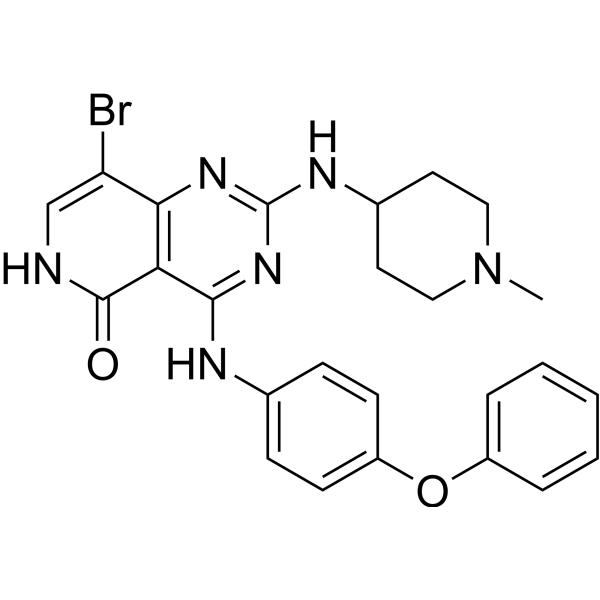
Denfivontinib (G-749) is a potent, oral active and ATP competitive FLT3 inhibitor, with IC50s of 0.4 nM and 0.6 nM for FLT3 wild type and FLT3-D835Y, respectively. Denfivontinib can be used for the research of agent resistance for acute myeloid leukemia (AML).
For research use only. We do not sell to patients.
- Purity : 98.0%
- CAS No.: 1457983-28-6
- Formula: C25H25BrN6O2
- Molecular Weight:521.41
-
Storage:Powder -20°C, 3 years , 4°C, 2 years ; In solvent -80°C, 2 years , -20°C, 1 year

To place orders, for customer services and technical support, please contact: MedChemExpress USA
Tel: 609-228-6898 E-mail: [email protected] [email protected]


-
 Biological Activity
-
Chemical Information
-
Solvent & Solubility
- Purity & Documentation
- References
-
 Help & FAQs


-
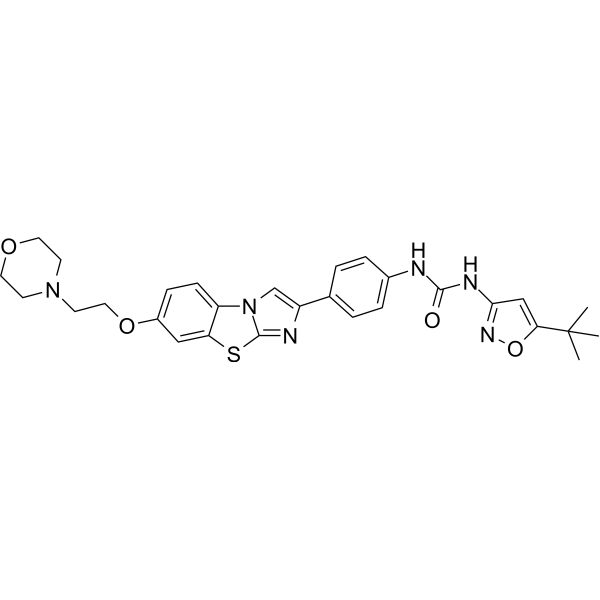
HY-13001
QuizartinibFLT3 Inhibitor -
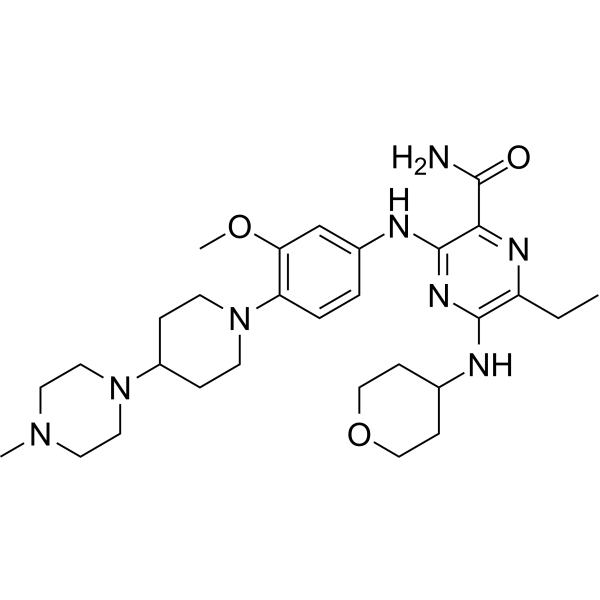
HY-12432
GilteritinibFLT3/AXL Inhibitor -
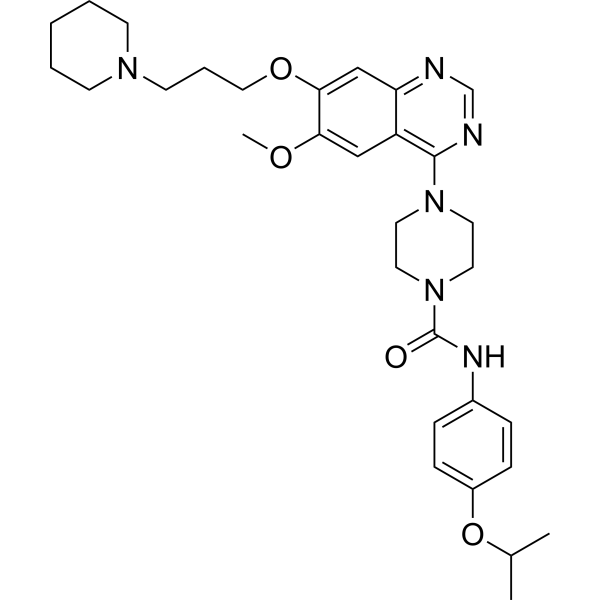
HY-10202
TandutinibFLT3 Inhibitor -
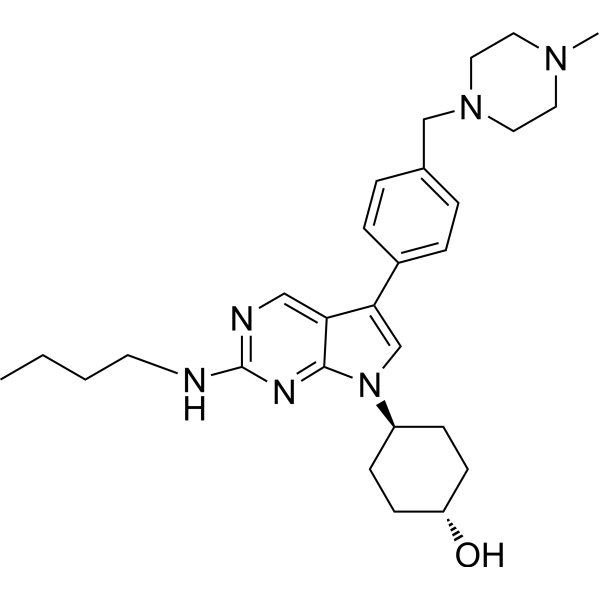
HY-12344
UNC2025MER/FLT3 Inhibitor -
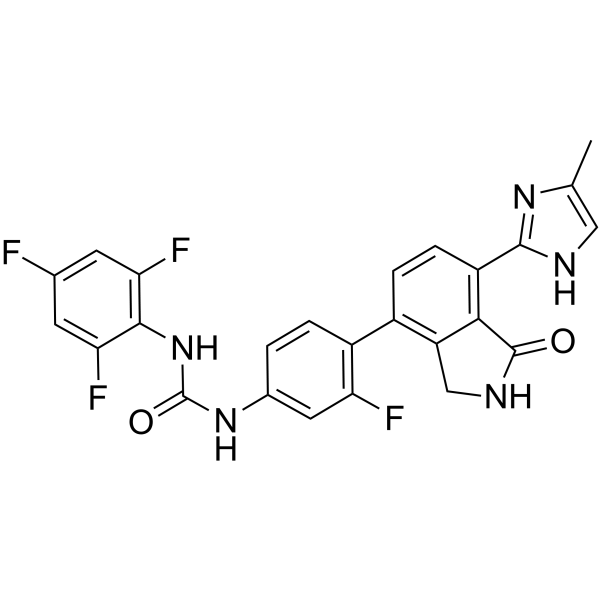
HY-139535
LuxeptinibPan-FLT3/Pan-BTK Inhibitor -
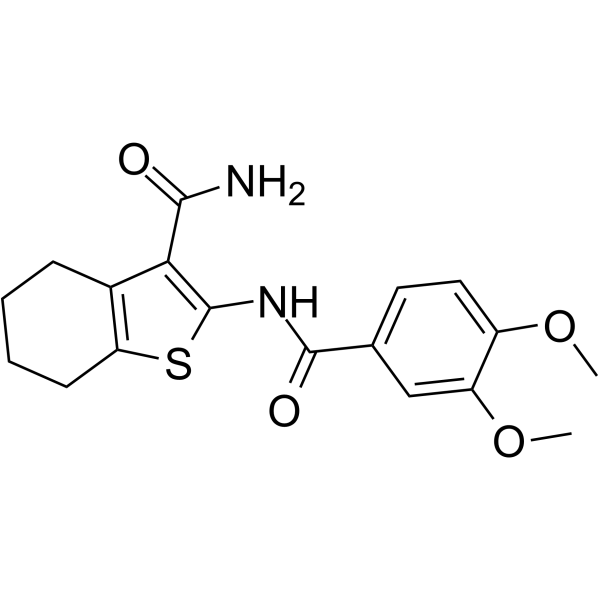
HY-13907
TCS 359FLT3 Inhibitor -
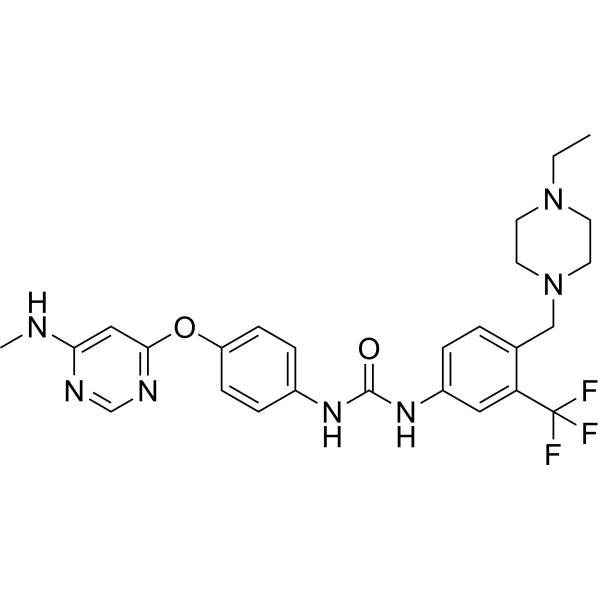
HY-15002
AST 487c-Kit Inhibitor -

HY-12432R
Gilteritinib (Standard)FLT3/AXL Inhibitor -
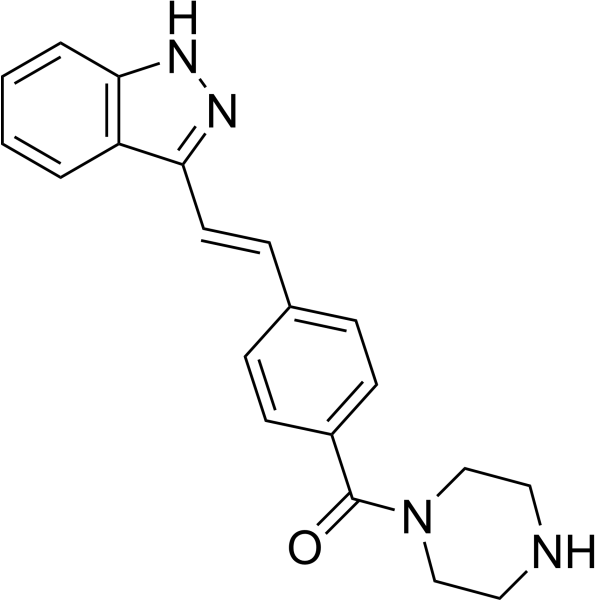
HY-10339
KW-2449Multi-Kinase Inhibitor -

HY-10202R
Tandutinib (Standard)FLT3 Inhibitor -
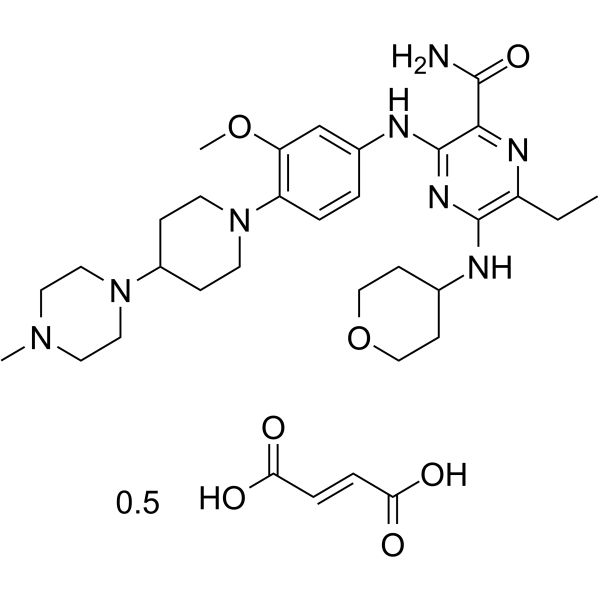
HY-12432A
Gilteritinib hemifumarateFLT3/AXL Inhibitor -
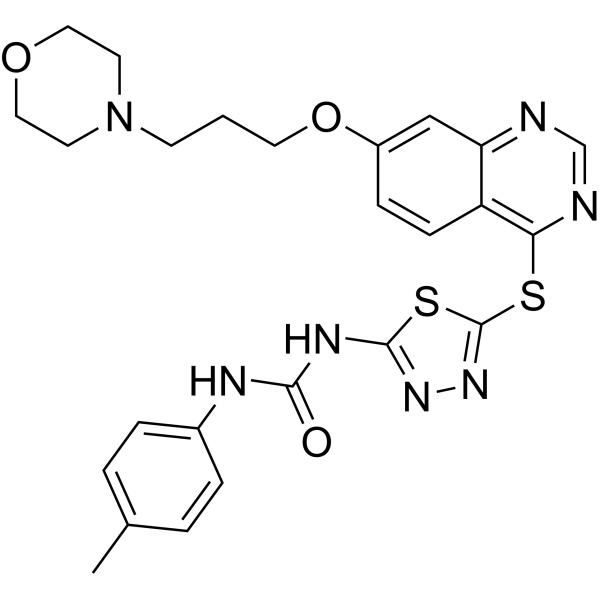
HY-12960
SKLB4771Flt3 Inhibitor
Publications Citing Use of MedChemExpress (MCE) Denfivontinib
More

Biological Activity
Description
IC50 & Target
IC50: 0.4 nM (FLT3-WT), 0.6 nM (FLT3-D835Y)[1]
Cellular Effect
|
Cell Line

|
Type | Value | Description | References |
|---|---|---|---|---|
| BaF3 | IC50 |
21.4 nM
Compound: G-749
|
Antiproliferative activity against mouse BaF3 FLT3-ITD N676D cells assessed as reduction in cell viability measured after 72 hrs by MTS assay
Antiproliferative activity against mouse BaF3 FLT3-ITD N676D cells assessed as reduction in cell viability measured after 72 hrs by MTS assay
|
[PMID: 32659083] |
| BaF3 | IC50 |
38.1 nM
Compound: G-749
|
Antiproliferative activity against mouse BaF3 FLT3-ITD F691L cells assessed as reduction in cell viability measured after 72 hrs by MTS assay
Antiproliferative activity against mouse BaF3 FLT3-ITD F691L cells assessed as reduction in cell viability measured after 72 hrs by MTS assay
|
[PMID: 32659083] |
| MOLM-14 | IC50 |
7.5 nM
Compound: G-749
|
Antiproliferative activity against human MOLM-14 cells expressing FLT3-ITD mutant assessed as inhibition of cell proliferation measured after 72 hrs by celltiter-glo luminescent cell viability assay
Antiproliferative activity against human MOLM-14 cells expressing FLT3-ITD mutant assessed as inhibition of cell proliferation measured after 72 hrs by celltiter-glo luminescent cell viability assay
|
[PMID: 32659083] |
| MV4-11 | IC50 |
3.5 nM
Compound: G-749
|
Antiproliferative activity against human MV4-11 cells assessed as reduction in cell viability after 48 hrs by Alamar Blue assay
Antiproliferative activity against human MV4-11 cells assessed as reduction in cell viability after 48 hrs by Alamar Blue assay
|
[PMID: 32659083] |
In Vitro
Denfivontinib shows potent and sustained inhibition of the FLT3 wild type and mutants including FLT3-ITD, FLT3-D835Y, FLT3-ITD/N676D, and FLT3-ITD/F691L in cellular assays[1].
Denfivontinib inhibits autophosphorylation of FLT3 with an IC50 value of ≤8 nM in FLT3-WT bearing RS4-11 and in FLT3-ITD harboring MV4-11 and Molm-14 cells[1].
Denfivontinib (0.0001-10 nM; 72 hours) shows strong antiproliferation of leukemia cells addicted to FLT3-ITD (MV4-11 and Molm-14) in a dose-dependent manner[1].
Denfivontinib (25-100 nM; 36 hours) causes antiproliferative activity through apoptosis[1].
Denfivontinib (1.6-1000 nM; 2 hours) shows more potent inhibition of p-FLT3, p-ERK1/2, and p-AKT than AC220 and PKC412[1].
MedChemExpress (MCE) has not independently confirmed the accuracy of these methods. They are for reference only. .
-
Cell Line:MV4-11 cells, Molm-14 cells, K562 cells, HEL cells, RS4-11 cells
-
Concentration:0.0001-10 nM
-
Incubation Time:72 hours
-
Result:Had antiproliferative activity for leukemia cells addicted to FLT3-ITD.
-
Cell Line:MV4-11 cells
-
Concentration:25 nM, 50 nM, 100 nM
-
Incubation Time:36 hours
-
Result:Increased apoptosis of MV4-11 cells in a dose-dependent manner.
-
Cell Line:Molm-14 cells
-
Concentration:1.6 nM, 80 nM, 40 nM, 200 nM, 1000 nM
-
Incubation Time:2 hours
-
Result:Inhibited the phosphorylation of downstream effectors in the FLT3 signaling pathway, such as p-STAT5, p-AKT, p-ERK1/2, and p-FoxO3a.
In Vivo
MedChemExpress (MCE) has not independently confirmed the accuracy of these methods. They are for reference only.
-
Animal Model:Athymic nu/nu mice, subcutaneous MV4-11 xenograft mice[1]
-
Dosage:3 mg/kg, 10 mg/kg, 30 mg/kg
-
Administration:Oral administration, daily, for 28 days
-
Result:Suppressed tumor growth.


Chemical Information
-
CAS No. 1457983-28-6
-
Appearance Solid
-
Molecular Weight 521.41
-
Formula C25H25BrN6O2
-
Color White to off-white
-
SMILES
O=C1NC=C(C2=C1C(NC3=CC=C(C=C3)OC4=CC=CC=C4)=NC(NC5CCN(CC5)C)=N2)Br
-
Synonyms
G-749
-
Shipping
Room temperature in continental US; may vary elsewhere.
-
Storage
Powder -20°C 3 years 4°C 2 years In solvent -80°C 2 years -20°C 1 year


Publications (2)
-
Journal Impact Factor
-
Most Recent
-
Adv Sci (Weinh)
NAT10 Increases Lysosomal Acidification to Promote Esophageal Cancer Metastasis via ac4C Acetylation of ATP6V0E1 mRNA. [Abstract]2025 Aug;12(31):e02931. PMID: 40729677 -
Anal Chem
Exposome-Scale Investigation of Cl-/Br-Containing Chemicals Using High-Resolution Mass Spectrometry, Multistage Machine Learning, and Cloud Computing. [Abstract]2025 Jun 3;97(21):11099-11109. PMID: 40401576


Solvent & Solubility
In Vitro:
DMSO : 25 mg/mL (47.95 mM; Need ultrasonic; Hygroscopic DMSO has a significant impact on the solubility of product, please use newly opened DMSO)
Please refer to the solubility information to select the appropriate solvent. Once prepared, please aliquot and store the solution to prevent product inactivation from repeated freeze-thaw cycles.
Storage method and period of stock solution: -80°C, 2 years; -20°C, 1 year. When stored at -80°C, please use it within 2 years. When stored at -20°C, please use it within 1 year.
Please refer to the solubility information to select the appropriate solvent. Once prepared, please aliquot and store the solution to prevent product inactivation from repeated freeze-thaw cycles.
Storage method and period of stock solution: -80°C, 2 years; -20°C, 1 year. When stored at -80°C, please use it within 2 years. When stored at -20°C, please use it within 1 year.
Concentration (start) × Volume (start) = Concentration (final) × Volume (final)
In Vivo:
Select the appropriate dissolution method based on your experimental animal and administration route.
- For the following dissolution methods, please ensure to first prepare a clear stock solution using an In Vitro approach and then sequentially add co-solvents:
- To ensure reliable experimental results, the clarified stock solution can be appropriately stored based on storage conditions. As for the working solution for In Vivo experiments, it is recommended to prepare freshly and use it on the same day.
- The percentages shown for the solvents indicate their volumetric ratio in the final prepared solution. If precipitation or phase separation occurs during preparation, heat and/or sonication can be used to aid dissolution.
Add each solvent one by one: 10% DMSO 40% PEG300 5% Tween-80 45% Saline
Solubility: ≥ 2.5 mg/mL (4.79 mM); Clear solution
This protocol yields a clear solution of ≥ 2.5 mg/mL (saturation unknown).
Taking 1 mL working solution as an example, add 100 μL DMSO stock solution (25.0 mg/mL) to 400 μL PEG300, and mix evenly; then add 50 μL Tween-80 and mix evenly; then add 450 μL Saline to adjust the volume to 1 mL.
Preparation of Saline: Dissolve 0.9 g sodium chloride in ddH₂O and dilute to 100 mL to obtain a clear Saline solution.
Add each solvent one by one: 10% DMSO 90% (20% SBE-β-CD in Saline)
Solubility: 2.5 mg/mL (4.79 mM); Suspended solution; Need ultrasonic
This protocol yields a suspended solution of 2.5 mg/mL. Suspended solution can be used for oral and intraperitoneal injection.
Taking 1 mL working solution as an example, add 100 μL DMSO stock solution (25.0 mg/mL) to 900 μL 20% SBE-β-CD in Saline, and mix evenly.
Preparation of 20% SBE-β-CD in Saline (4°C, storage for one week): 2 g SBE-β-CD powder is dissolved in 10 mL Saline, completely dissolve until clear.
In Vivo Dissolution Calculator
Please enter the basic information of animal experiments:
-
-
-
-
Recommended: Prepare an additional quantity of animals to account for potential losses during experiments.
Please enter your animal formula composition:
-
%DMSO +
Recommended: Keep the proportion of DMSO in working solution below 2% if your animal is weak.
-
%+
-
+%Tween-80 + +
-
%Saline +
The co-solvents required include: DMSO, . All of co-solvents are available by MedChemExpress (MCE). , Tween 80. All of co-solvents are available by MedChemExpress (MCE).
Working solution concentration: 0.22 mg/mL
Method for preparing stock solution: mg drug dissolved in μL DMSO. Stock solution concentration: mg/mL.
1. Take μL DMSO stock solution;
2. Add μL .
μL , mix evenly;
3. Then add μL Tween 80, mix evenly;
4. Then add μL
Please ensure that the stock solution in the first step is dissolved to a clear state, and add co-solvents in sequence. You can use ultrasonic heating (ultrasonic cleaner, recommended frequency 20-40 kHz), vortexing, etc. to assist dissolution.


Purity & Documentation
-
Data Sheet (281 KB)
-
SDS (393 KB)
- English - EN (393 KB)
- Français - FR (393 KB)
- Deutsch - DE (393 KB)
- Norwegian - NO (393 KB)
- Español - ES (393 KB)
- Swedish - SV (393 KB)
- Italian - IT (393 KB)
- Korean - KR (393 KB)
- Portuguese - PT (393 KB)
-
Handling Instructions (2659 KB)
References


Complete Stock Solution Preparation Table
Please refer to the solubility information to select the appropriate solvent. Once prepared, please aliquot and store the solution to prevent product inactivation from repeated freeze-thaw cycles.
Storage method and period of stock solution: -80°C, 2 years; -20°C, 1 year. When stored at -80°C, please use it within 2 years. When stored at -20°C, please use it within 1 year.
| Optional Solvent | Concentration Solvent Mass | 1 mg | 5 mg | 10 mg | 25 mg |
|---|---|---|---|---|---|
| DMSO | 1 mM | 1.9179 mL | 9.5894 mL | 19.1788 mL | 47.9469 mL |
| 5 mM | 0.3836 mL | 1.9179 mL | 3.8358 mL | 9.5894 mL | |
| 10 mM | 0.1918 mL | 0.9589 mL | 1.9179 mL | 4.7947 mL | |
| 15 mM | 0.1279 mL | 0.6393 mL | 1.2786 mL | 3.1965 mL | |
| 20 mM | 0.0959 mL | 0.4795 mL | 0.9589 mL | 2.3973 mL | |
| 25 mM | 0.0767 mL | 0.3836 mL | 0.7672 mL | 1.9179 mL | |
| 30 mM | 0.0639 mL | 0.3196 mL | 0.6393 mL | 1.5982 mL | |
| 40 mM | 0.0479 mL | 0.2397 mL | 0.4795 mL | 1.1987 mL |


Denfivontinib Related Classifications
HY-12333 Related Classifications
 Powered by Bioz