



AVN-944
Based on 6 publication(s) in Google Scholar
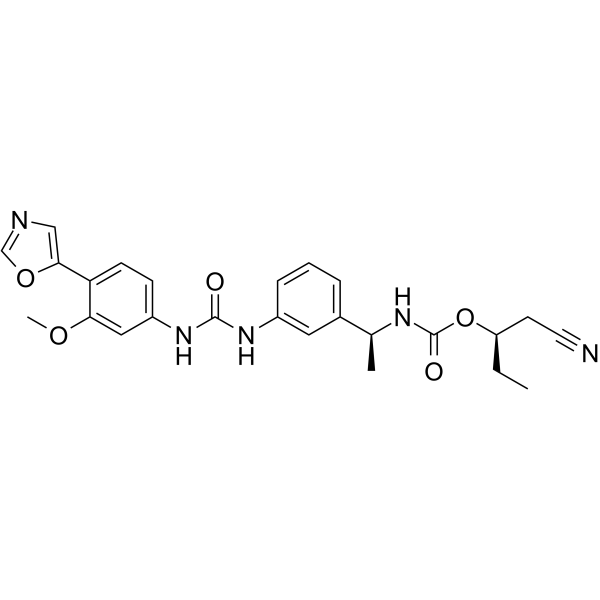
AVN-944 (VX-944) is an orally active, potent, selective, noncompetitive and specific inhibitor of IMPDH (inosine monophosphate dehydrogenase). AVN-944 is an essential rate-limiting enzyme in de novo guanine nucleotide synthesis. AVN-944 is also an inhibitor of arenavirus RNA synthesis, and blocks arenavirus infection. AVN-944 has broad anti-cancer activities, and can be used for multiple myeloma (MM) and acute myeloid leukemia (AML) research.
Nur für Forschungszwecke. Wir verkaufen nicht an Patienten.
- Reinheit : 99.92%
- CAS. Nr.: 297730-17-7
- Formel: C25H27N5O5
- Molecular Weight:477.51
-
Speicherung:Powder -20°C, 3 years , 4°C, 2 years ; In solvent -80°C, 2 years , -20°C, 1 year

To place orders, for customer services and technical support, please contact: MedChemExpress USA
Tel: 609-228-6898 E-mail: [email protected] [email protected]


-
 Biologische Aktivität
-
Chemical Information
-
Lösungsmittel & Löslichkeit
- Protokoll
- Reinheit & Dokumentation
- Verweise
-
 Help & FAQs


-
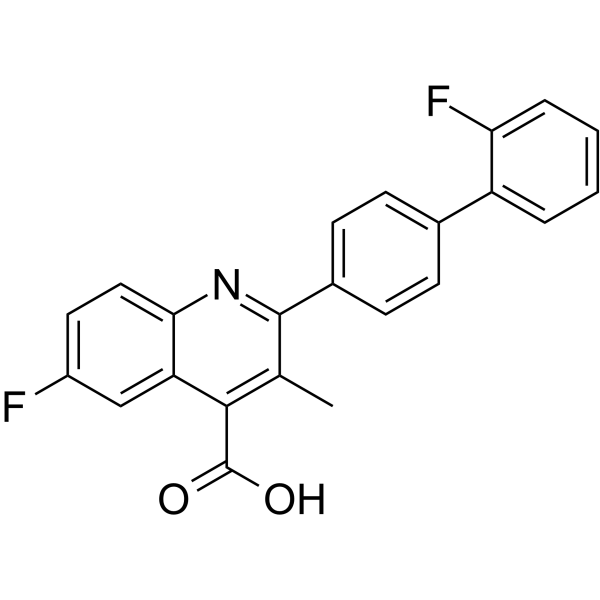
HY-108325
BrequinarDHODH Inhibitor -
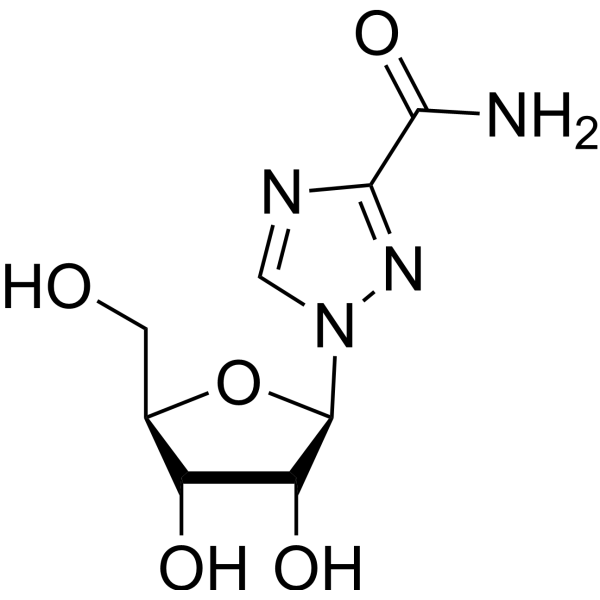
HY-B0434
RibavirinAntiviral Agent -
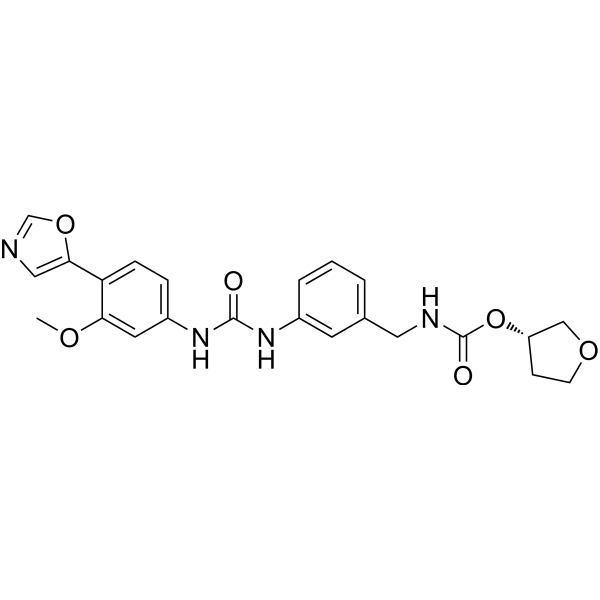
HY-13986
MerimepodibIMPDH Inhibitor -
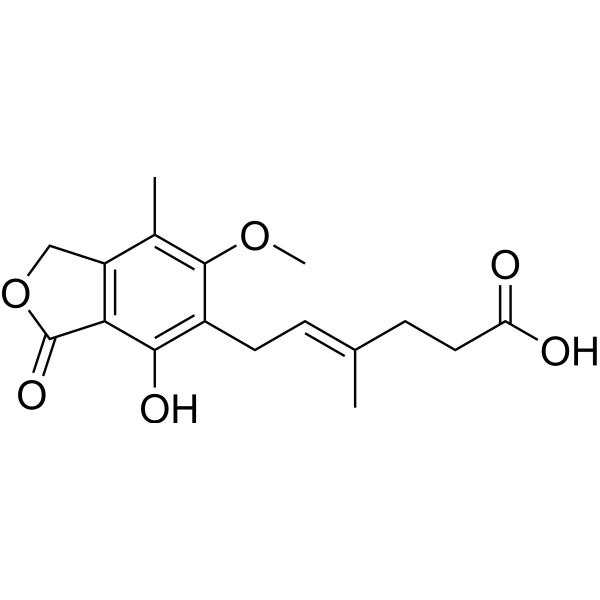
HY-B0421
Mycophenolic acidIMPDH Inhibitor -
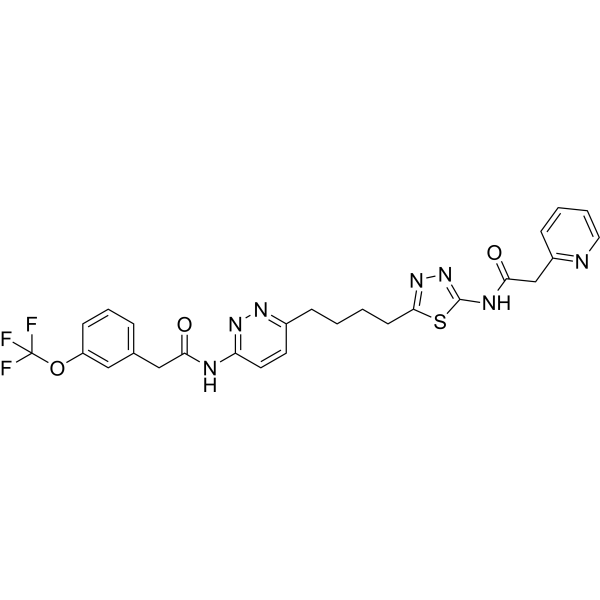
HY-12248
TelaglenastatGLS1 Inhibitor -
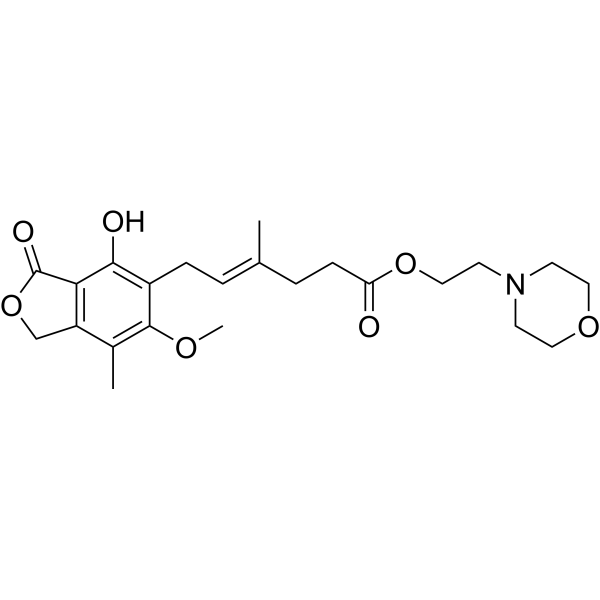
HY-B0199
Mycophenolate MofetilIMPDH Inhibitor -
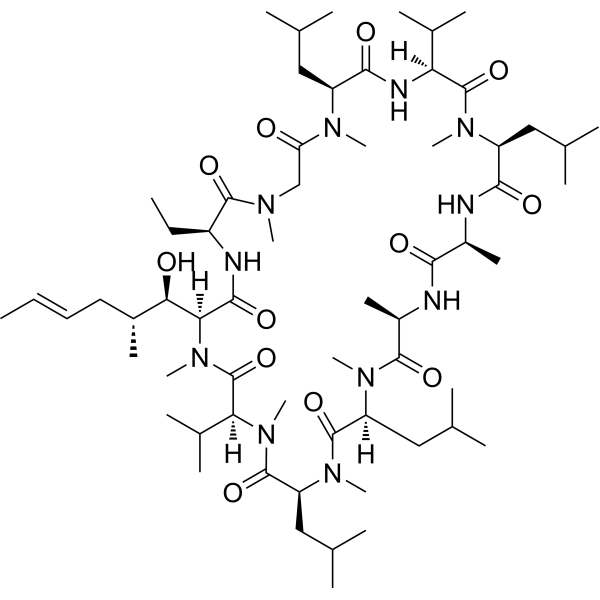
HY-B0579
Cyclosporin ACalcineurin Inhibitor -
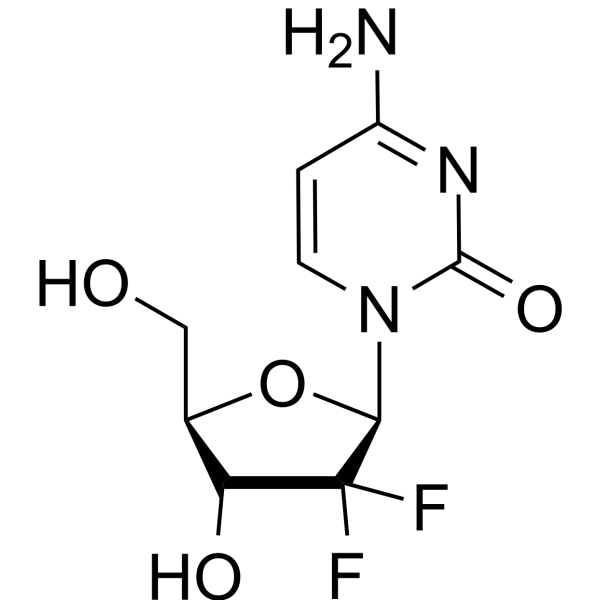
HY-17026
GemcitabineDNA Synthesis Inhibitor -
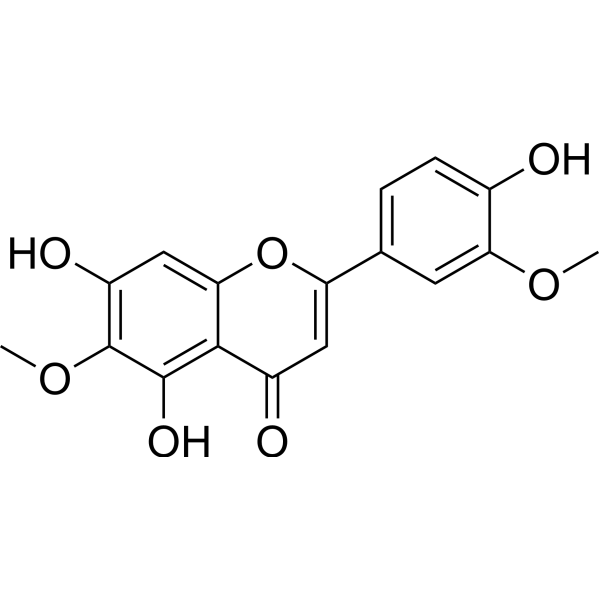
HY-N0831
JaceosidinBax Activator -
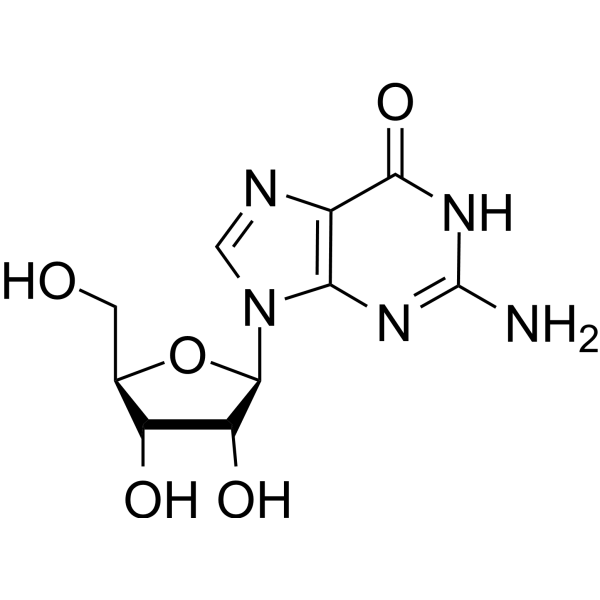
HY-N0097
GuanosineHSV Inhibitor -
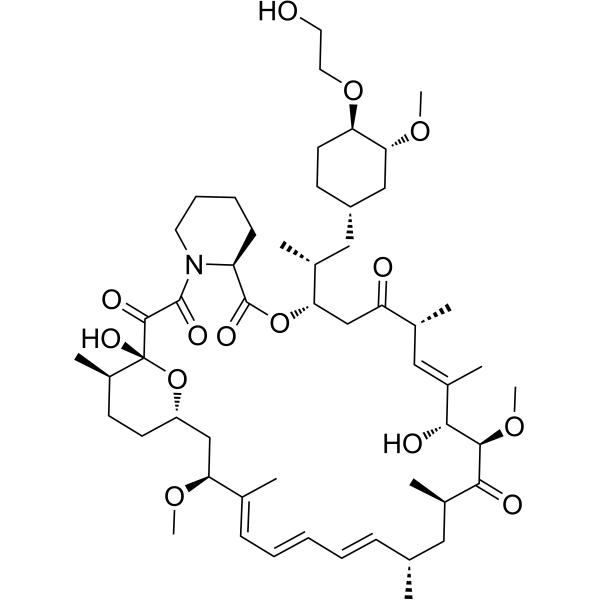
HY-10218
EverolimusmTORC Inhibitor -
HY-14908
VidofludimusDHODH Inhibitor
Publications Citing Use of MedChemExpress (MCE) AVN-944
More- Int Immunopharmacol. 2023 Oct 29;125(Pt A):111125. [Abstract]
- Virol Sin. 2026 Jul 23:S1995-820X(26)00122-7.
- J Virol. 2025 Nov 25;99(11):e0098525. [Abstract]
- Microbiol Spectr. 2023 Aug 17;11(4):e0056623. [Abstract]
- Viruses. 2021 Jun 28;13(7):1255. [Abstract]
- Biomed Pharmacother. 2019 Oct:118:109305. [Abstract]
Alle DNA/RNA Synthesis Isoform-spezifische Produkte anzeigen
MoreAlle Caspase Isoform-spezifische Produkte anzeigen
More

Biologische Aktivität
Beschreibung
IC50 & Target
|
Bax |
Bak |
Caspase 3 |
Caspase 8 |
Caspase 9 |
In Vitro
AVN-944 (0-1 μM, 48 h) inhibits growth of human multiple myeloma (MM) cell lines in a dose-dependent manner[1].
AVN-944 (800 nM, 0-72 h) induces apoptosis in MM cell lines via a caspase-independent, Bax/AIF/Endo G pathway[1].
AVN-944 (0-200 nM) enhances the cytotoxicity of Doxorubicin (HY-15142A) and Melphalan (HY-17575)[1].
AVN-944 inhibits the proliferation of the human MV-4-11 and murine Ba/F3-Flt3-ITD-dependent cell lines with IC50 values of 26 and 30 nM, respectively[2].
AVN-944 (0-32 μM, 48 h) shows good activity against arenavirus infection at low doses (7.5?μM) with less cytotoxicity[3].
AVN-944 (0-6.4 μM, 48 h) does not reduce the viability of peripheral blood mononuclear cells (PBMNCs)[1].
MedChemExpress (MCE) has not independently confirmed the accuracy of these methods. They are for reference only.
-
Cell Line:RPMI8226, MM.1S, and U266 cells
-
Concentration:0, 100, 200, 300, 400, 600, 1000 nM
-
Incubation Time:48 h
-
Result:Significantly inhibited the growth of RPMI8226, MM.1S, and U266 cells in a dose-dependent fashion, with 50% inhibition (IC50) values at 48 h of 450, 450, and 600 nM, respectively. Inhibited growth of drug-resistant cell lines, including Doxorubicin (Dox)-resistant RPMI8226-Dox40, Melphalan (Mel) resistant RPMI8226-LR5, and Dex (Dexamethasone) resistant MM.1R cells, with IC50 values similar to the parental drug-sensitive cell lines.
-
Cell Line:MM.1S and RPMI8226 cells
-
Concentration:800 nM
-
Incubation Time:48 and 72 h
-
Result:Induced apoptosis in MM cell lines.
-
Cell Line:MM.1S and RPMI8226 cells
-
Concentration:800 nM
-
Incubation Time:12, 24, 48 h
-
Result:Induced modest cleavage of caspase 3, 8 and 9 in MM.1S cells and RPMI8226 cells. Markedly upregulated Bax and Bak, without significant changes in Bcl-2, Mcl-1, XIAP, and Bad. Observed translocation of mitochondrial proapoptotic proteins, apoptosis-inducing factor (AIF) and endonuclease G (Endo G) to cytosolic fractions.
-
Cell Line:MM.1S cells, MM.1S cells cultured with BMSCs
-
Concentration:0, 50, 200 nM
-
Incubation Time:24 h
-
Result:Enhanced the cytotoxicity of of Doxorubicin and Melphalan in MM.1S cells. Additive effects were also observed in MM.1S cells cultured with BMSCs derived from MM patient.
In Vivo
MedChemExpress (MCE) has not independently confirmed the accuracy of these methods. They are for reference only.
-
Animal Model:Balb/c mice (leukemia model, using Ba/F3 cells transduced with an activating human Flt-3 mutation injected into mice)[2]
-
Dosage:75 or 150 mg/kg
-
Administration:Orally, twice daily
-
Result:Provided a significant increase in median survival time. Three of the 12 mice treated with 150 mg/kg AVN-944 were still alive on Day 35 when the study was terminated.
Clinical Trial
| NCT Number | Sponsor | Condition | Start Date |
Phase

|
|---|---|---|---|---|
| NCT01329991 | Plexxikon| | 2011-05 | PHASE1 |


Chemical Information
-
CAS. Nr. 297730-17-7
-
Appearance Solid
-
Molecular Weight 477.51
-
Formel C25H27N5O5
-
Color White to light yellow
-
SMILES
O=C(O[C@@H](CC#N)CC)N[C@H](C1=CC=CC(NC(NC2=CC=C(C3=CN=CO3)C(OC)=C2)=O)=C1)C
-
Synonyms
VX-944
-
Versand
Room temperature in continental US; may vary elsewhere.
-
Speicherung
Powder -20°C 3 years 4°C 2 years In solvent -80°C 2 years -20°C 1 year


Publications (6)
-
Journal Impact Factor
-
Most Recent
-
Int Immunopharmacol
Single-cell RNA sequencing in double-hit lymphoma: IMPDH2 induces the progression of lymphoma by activating the PI3K/AKT/mTOR signaling pathway. [Abstract]2023 Oct 29;125(Pt A):111125. PMID: 37907047 -
-
J Virol
African swine fever virus hijacks host pyrimidine metabolism to promote viral replication. [Abstract]2025 Nov 25;99(11):e0098525. PMID: 41171159 -
Microbiol Spectr
2023 Aug 17;11(4):e0056623. PMID: 37409948 -
Viruses
Screening and Identification of Lujo Virus Inhibitors Using a Recombinant Reporter Virus Platform. [Abstract]2021 Jun 28;13(7):1255. PMID: 34203149 -
Biomed Pharmacother
Antiviral effects of selected IMPDH and DHODH inhibitors against foot and mouth disease virus. [Abstract]2019 Oct:118:109305. PMID: 31545264


Lösungsmittel & Löslichkeit
In Vitro:
DMSO : 100 mg/mL (209.42 mM; Need ultrasonic; Hygroscopic DMSO has a significant impact on the solubility of product, please use newly opened DMSO)
Please refer to the solubility information to select the appropriate solvent. Once prepared, please aliquot and store the solution to prevent product inactivation from repeated freeze-thaw cycles.
Storage method and period of stock solution: -80°C, 2 years; -20°C, 1 year. When stored at -80°C, please use it within 2 years. When stored at -20°C, please use it within 1 year.
Please refer to the solubility information to select the appropriate solvent. Once prepared, please aliquot and store the solution to prevent product inactivation from repeated freeze-thaw cycles.
Storage method and period of stock solution: -80°C, 2 years; -20°C, 1 year. When stored at -80°C, please use it within 2 years. When stored at -20°C, please use it within 1 year.
Konzentration (Stammlösung) × Volumen (Stammlösung) = Konzentration (Ziellösung) × Volumen (Ziellösung)
In Vivo:
Select the appropriate dissolution method based on your experimental animal and administration route.
- For the following dissolution methods, please ensure to first prepare a clear stock solution using an In Vitro approach and then sequentially add co-solvents:
- To ensure reliable experimental results, the clarified stock solution can be appropriately stored based on storage conditions. As for the working solution for In Vivo experiments, it is recommended to prepare freshly and use it on the same day.
- The percentages shown for the solvents indicate their volumetric ratio in the final prepared solution. If precipitation or phase separation occurs during preparation, heat and/or sonication can be used to aid dissolution.
Add each solvent one by one: 10% DMSO 40% PEG300 5% Tween-80 45% Saline
Solubility: ≥ 2.5 mg/mL (5.24 mM); Clear solution
This protocol yields a clear solution of ≥ 2.5 mg/mL (saturation unknown).
Taking 1 mL working solution as an example, add 100 μL DMSO stock solution (25.0 mg/mL) to 400 μL PEG300, and mix evenly; then add 50 μL Tween-80 and mix evenly; then add 450 μL Saline to adjust the volume to 1 mL.
Preparation of Saline: Dissolve 0.9 g sodium chloride in ddH₂O and dilute to 100 mL to obtain a clear Saline solution.
In Vivo Dissolution Calculator
Please enter the basic information of animal experiments:
-
-
-
-
Recommended: Prepare an additional quantity of animals to account for potential losses during experiments.
Please enter your animal formula composition:
-
%DMSO +
Recommended: Keep the proportion of DMSO in working solution below 2% if your animal is weak.
-
%+
-
+%Tween-80 + +
-
%Saline +
The co-solvents required include: DMSO, . All of co-solvents are available by MedChemExpress (MCE). , Tween 80. All of co-solvents are available by MedChemExpress (MCE).
Working solution concentration: 0.22 mg/mL
Method for preparing stock solution: mg drug dissolved in μL DMSO. Stock solution concentration: mg/mL.
1. Take μL DMSO stock solution;
2. Add μL .
μL , mix evenly;
3. Then add μL Tween 80, mix evenly;
4. Then add μL
Please ensure that the stock solution in the first step is dissolved to a clear state, and add co-solvents in sequence. You can use ultrasonic heating (ultrasonic cleaner, recommended frequency 20-40 kHz), vortexing, etc. to assist dissolution.


Reinheit & Dokumentation
-
Data Sheet (278 KB)
-
SDS (396 KB)
- English - EN (396 KB)
- Français - FR (396 KB)
- Deutsch - DE (396 KB)
- Norwegian - NO (396 KB)
- Español - ES (396 KB)
- Swedish - SV (396 KB)
- Italian - IT (396 KB)
- Korean - KR (396 KB)
- Portuguese - PT (396 KB)
-
Handling Instructions (2659 KB)
Verweise
[1]. Zimmermann AG, et al. Inosine-5'-monophosphate dehydrogenase: regulation of expression and role in cellular proliferation and T lymphocyte activation. Prog Nucleic Acid Res Mol Biol. 1998;61:181-209. [Content Brief]
[2]. Huang M, et al. Guanine nucleotide depletion inhibits pre-ribosomal RNA synthesis and causes nucleolar disruption. Leuk Res. 2008 Jan;32(1):131-41. [Content Brief]
[3]. Floryk D, et al. Antiproliferative effects of AVN944, a novel inosine 5-monophosphate dehydrogenase inhibitor, in prostate cancer cells. Int J Cancer. 2008 Nov 15;123(10):2294-302. [Content Brief]


Complete Stock Solution Preparation Table
Please refer to the solubility information to select the appropriate solvent. Once prepared, please aliquot and store the solution to prevent product inactivation from repeated freeze-thaw cycles.
Storage method and period of stock solution: -80°C, 2 years; -20°C, 1 year. When stored at -80°C, please use it within 2 years. When stored at -20°C, please use it within 1 year.
| Optional Solvent | Concentration Solvent Mass | 1 mg | 5 mg | 10 mg | 25 mg |
|---|---|---|---|---|---|
| DMSO | 1 mM | 2.0942 mL | 10.4710 mL | 20.9420 mL | 52.3549 mL |
| 5 mM | 0.4188 mL | 2.0942 mL | 4.1884 mL | 10.4710 mL | |
| 10 mM | 0.2094 mL | 1.0471 mL | 2.0942 mL | 5.2355 mL | |
| 15 mM | 0.1396 mL | 0.6981 mL | 1.3961 mL | 3.4903 mL | |
| 20 mM | 0.1047 mL | 0.5235 mL | 1.0471 mL | 2.6177 mL | |
| 25 mM | 0.0838 mL | 0.4188 mL | 0.8377 mL | 2.0942 mL | |
| 30 mM | 0.0698 mL | 0.3490 mL | 0.6981 mL | 1.7452 mL | |
| 40 mM | 0.0524 mL | 0.2618 mL | 0.5235 mL | 1.3089 mL | |
| 50 mM | 0.0419 mL | 0.2094 mL | 0.4188 mL | 1.0471 mL | |
| 60 mM | 0.0349 mL | 0.1745 mL | 0.3490 mL | 0.8726 mL | |
| 80 mM | 0.0262 mL | 0.1309 mL | 0.2618 mL | 0.6544 mL | |
| 100 mM | 0.0209 mL | 0.1047 mL | 0.2094 mL | 0.5235 mL |


AVN-944 Related Classifications
HY-13560 Related Classifications
 Powered by Bioz