



DEG-77
Based on 1 publication(s) in Google Scholar
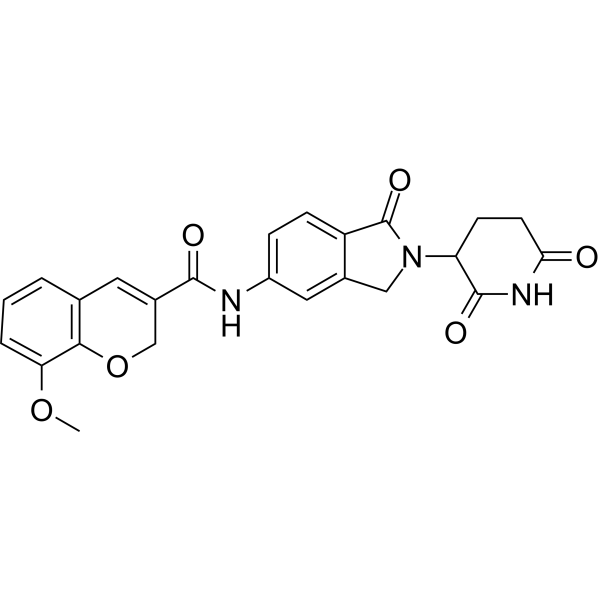
DEG-77 is a molecular glue targeting IKZF2 and CK1α, with DC50 values of 15.3 nM and 10 nM, respectively. DEG-77 exhibits significant anti-tumor activity, inducing increased transcriptional levels of the pro-apoptotic protein Bax and the cell cycle arrest protein p21. DEG-77 is applicable to the research of acute myeloid leukemia (AmL), diffuse large B-cell lymphoma and ovarian cancer.
Nur für Forschungszwecke. Wir verkaufen nicht an Patienten.
- Reinheit : 99.03%
- CAS. Nr.: 3032265-06-5
- Formel: C24H21N3O6
- Molecular Weight:447.44
-
Speicherung:Powder -20°C, 3 years , 4°C, 2 years ; In solvent -80°C, 6 months , -20°C, 1 month

To place orders, for customer services and technical support, please contact: MedChemExpress USA
Tel: 609-228-6898 E-mail: [email protected] [email protected]


-
 Biologische Aktivität
-
Chemical Information
-
Lösungsmittel & Löslichkeit
- Protokoll
- Reinheit & Dokumentation
- Verweise
-
 Help & FAQs


-
HY-160444
SJ3149CK1α Molecular Glue Degrader -
HY-132199
SJ6986GSPT1/2 Molecular Glue Degrader -
HY-A0003
LenalidomideImmunomodulator -

HY-159646
BMS-986397CK1α Molecular Glue -
HY-101291
IberdomideCELMoD -
HY-144998
NVP-DKY709IKZF2 degrader -
HY-10583
Y-27632 dihydrochlorideROCK Inhibitor -
HY-153356
MRT-2359GSPT1 Molecular Glue Degrader -
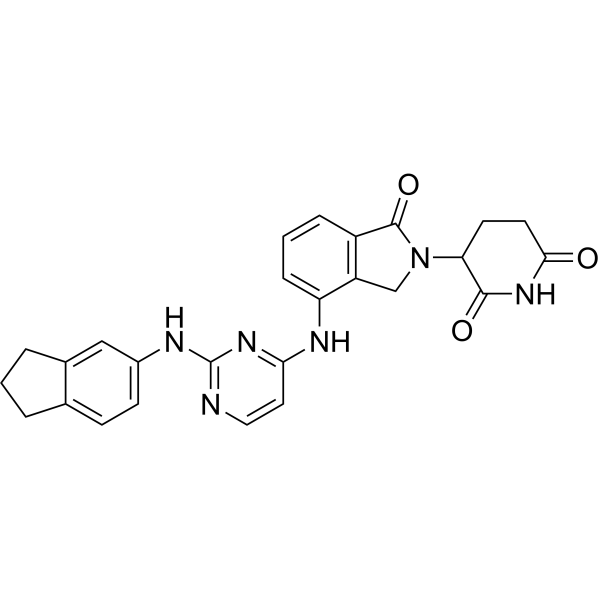
HY-147158
ZXH-1-161CRBN Modulator -
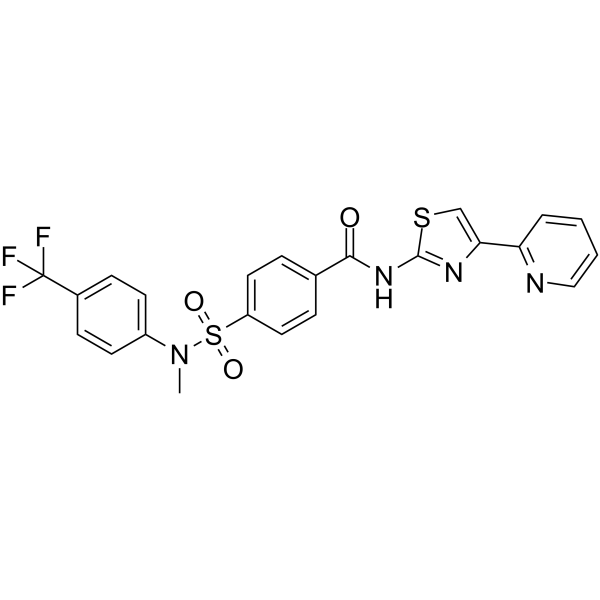
HY-120675
SSTC3CK1α Activator -
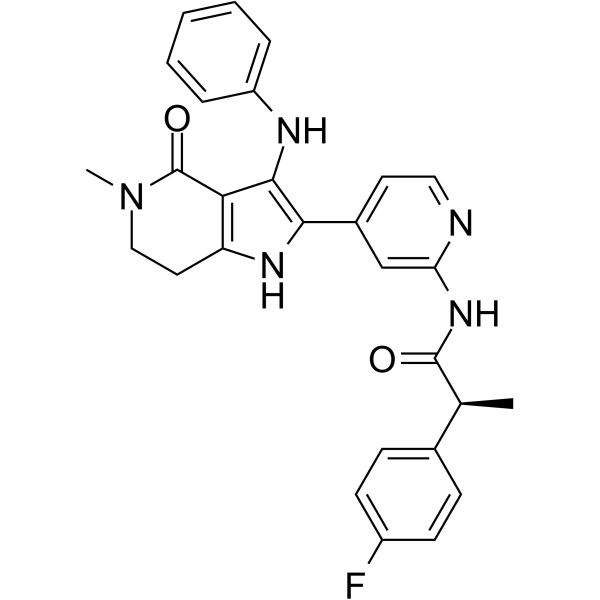
HY-145939
BAY-888CSNK1A1/CSNK1D Inhibitor -
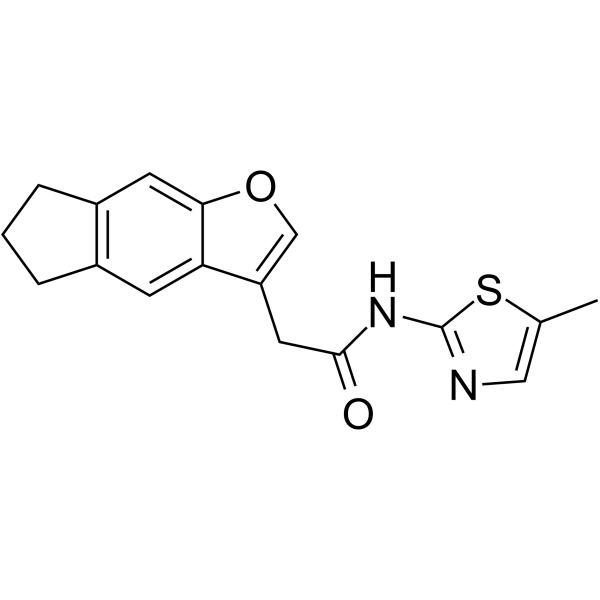
HY-W181530
NCT02CDK12/CCNK Molecular Glue
Publications Citing Use of MedChemExpress (MCE) DEG-77
More

Biologische Aktivität
Beschreibung
|
CK1α 10 nM (DC50) |
IZKF2 15.3 nM (DC50) |
Bax |
Cellular Effect
|
Cell Line

|
Type | Value | Description | References |
|---|---|---|---|---|
| A2780 | EC50 |
27 nM
Compound: 77; DEG-77
|
Cytotoxicity against human A2780 cells incubated for 5 days by MTT assay
Cytotoxicity against human A2780 cells incubated for 5 days by MTT assay
|
[PMID: 38085607] |
| OCI-Ly3 | EC50 |
14 nM
Compound: 77; DEG-77
|
Cytotoxicity against human OCILY3 cells incubated for 5 days by MTT assay
Cytotoxicity against human OCILY3 cells incubated for 5 days by MTT assay
|
[PMID: 38085607] |
In Vitro
DEG-77 (1-1000 nM; 0.5-24 h) induces dose- and time-dependent co-degradation of CK1α, SACK1B, hyperphosphorylated SACK1D, SACK1F and SACK1G in wild-type DLD1, U2OS, A549 and TOV-21G cells, whereas SACK1H remains unaffected. Significant protein depletion is observed following treatment with 100 nM DEG-77 for 24 h[1].
DEG-77 (100 nM; 6 h)-mediated co-degradation of CK1α, SACK1B, SACK1F and SACK1G is completely abrogated in CRBN-/- and CSNK1A1-/- DLD1 human colorectal cancer cells, indicating that this process is dependent on the expression of CRBN and CK1α[1].
The co-degradation of CK1α, SACK1B, SACK1F and SACK1G mediated by DEG-77 (100 nM; 6 h) in wild-type DLD1 human colorectal cancer cells depends on proteasomal activity but not on autophagy[1].
DEG-77 (100 nM; 24 h) potently and selectively degrades IKZF2 and CK1α in stably engineered HEK293T cells, with minimal degradative effects on IKZF1 and GSPT1[2].
DEG-77 (50 nM; 2 h) selectively induces the degradation of CK1α in MOLM-13 acute myeloid leukemia cells and activates p53[2].
DEG-77 (100 pM-10 μM; 5 d) inhibits the viability of A2780 ovarian cancer cells and OCI-LY3 diffuse large B-cell lymphoma cells within 5 days, with EC50 values of 27 nM and 14 nM, respectively[2].
DEG-77 (1 nM-10 μM; 24 h) degrades CK1α and IKZF2 in A2780 ovarian cancer cells, and degrades CK1α but exerts no degrading effect on GSPT1 in OCI-LY3 diffuse large B-cell lymphoma cells[2].
DEG-77 (1 μM; 24 h) upregulates the transcription levels of Bax and p21 in A2780 ovarian cancer cells and OCI-LY3 diffuse large B-cell lymphoma cells, which indicates that p53 is activated[2].
MedChemExpress (MCE) has not independently confirmed the accuracy of these methods. They are for reference only.
-
Cell Line:wild-type human DLD1 colorectal cancer cells
-
Concentration:1, 10, 100, 500 and 1000 nM
-
Incubation Time:0.5-24 h
-
Result:Robustly depleted CK1α, SACK1F, and SACK1G protein levels, caused a substantial reduction in the 100 kDa hyperphosphorylated (CK1α-bound) form of SACK1D without affecting unphosphorylated SACK1D, and caused a modest reduction in SACK1B levels at 100 nM for 24 h.
Induced a dose-dependent co-depletion of CK1α, SACK1B, hyperphosphorylated SACK1D, SACK1F, and SACK1G, with robust reduction observed at 100 nM and above across 1-1000 nM for 24 h.
Induced a time-dependent reduction in CK1α, SACK1B, hyperphosphorylated SACK1D, SACK1F, and SACK1G levels at 100 nM over 0.5-24 h, with CK1α reduction observed as early as 30 min, robust depletion after 1 h, peak degradation at 3 h, and depletion sustained for 24 h.
Left SACK1H levels unchanged across all conditions.
-
Cell Line:wild-type human U2OS osteosarcoma cells, wild-type human A549 lung adenocarcinoma cells, wild-type human TOV-21G ovarian cancer cells
-
Concentration:1, 10, 100, 500 and 1000 nM
-
Incubation Time:0.5-24 h
-
Result:Induced a dose-dependent co-depletion of CK1α, hyperphosphorylated SACK1D, and SACK1G in all three cell lines, with robust reduction observed at 100 nM and above across 1-1000 nM for 24 h.
Reduced SACK1B levels in a dose-dependent manner in U2OS and A549 cells across 1-1000 nM for 24 h.
Induced a time-dependent reduction in CK1α, hyperphosphorylated SACK1D, and SACK1G levels in all three cell lines at 100 nM over 0.5-24 h, with depletion kinetics mirroring that seen in DLD1 cells.
Reduced SACK1B levels in a time-dependent manner in U2OS and A549 cells at 100 nM over 0.5-24 h.
Left SACK1H levels unchanged across all cell lines and conditions.
-
Cell Line:wild-type human DLD1 colorectal cancer cells, CRBN-/- human DLD1 colorectal cancer cells, CSNK1A1-/- (CK1α knockout) human DLD1 colorectal cancer cells
-
Concentration:100 nM
-
Incubation Time:6 h
-
Result:Depleted CK1α, SACK1B, SACK1F, and SACK1G levels in wild-type DLD1 cells.
Did not deplete CK1α, SACK1B, SACK1F, or SACK1G levels in CRBN-/- DLD1 cells.
Did not deplete SACK1B, SACK1F, or SACK1G levels (CK1α was not detectable) in CSNK1A1-/- DLD1 cells.
-
Cell Line:wild-type human DLD1 colorectal cancer cells
-
Concentration:100 nM
-
Incubation Time:4 h (following 2 h pre-incubation with inhibitor)
-
Result:Had its mediated depletion of CK1α, SACK1B, SACK1F, and SACK1G levels completely rescued by pre-treatment with 20 μM MG132.
Had its mediated depletion of CK1α, SACK1B, SACK1F, and SACK1G levels not rescued by pre-treatment with 50 nM bafilomycin A1.
-
Cell Line:human control skin fibroblasts (FIB03), palmoplantar keratoderma patient-derived skin fibroblasts (FIB04, homozygous SACK1G^R265P mutation with disrupted CK1α binding)
-
Concentration:100 nM
-
Incubation Time:24 h
-
Result:Robustly depleted CK1α and SACK1G levels, and reduced hyperphosphorylated SACK1D levels in control FIB03 fibroblasts.
Robustly depleted CK1α levels and reduced hyperphosphorylated SACK1D levels, but did not deplete SACK1G^R265P levels in patient-derived FIB04 fibroblasts.
-
Cell Line:SACK1G-/- human DLD1 colorectal cancer cells stably transduced with SACK1G-GFP, SACK1G-/- human DLD1 colorectal cancer cells stably transduced with SACK1G^R265P-GFP
-
Concentration:100 nM
-
Incubation Time:6 h
-
Result:Robustly depleted CK1α and SACK1F levels in all transduced cells.
Robustly depleted SACK1G-GFP levels in cells expressing SACK1G-GFP.
Did not deplete SACK1G^R265P-GFP levels in cells expressing SACK1G^R265P-GFP.
-
Cell Line:A2780 ovarian cancer cells and OCI-LY3 diffuse large B cell lymphoma cells
-
Concentration:1, 10, 100 nM, 1, 10 μM
-
Incubation Time:24 h
-
Result:Induced degradation of CK1α, with relative ratio reduced to 0.17 at all concentrations ≥ 1 nM.
Induced degradation of IKZF2, with relative ratio reduced to 0.06 at 10 μM.
Did not induce degradation of GSPT1 at any tested concentration.
-
Cell Line:A2780 ovarian cancer cells and OCI-LY3 diffuse large B cell lymphoma cells
-
Concentration:1 μM
-
Incubation Time:24 h
-
Result:Increased transcript levels of pro-apoptotic protein Bax.
Increased transcript levels of cell cycle arrest protein p21.
Left CK1α transcript levels unchanged.


Chemical Information
-
CAS. Nr. 3032265-06-5
-
Appearance Solid
-
Molecular Weight 447.44
-
Formel C24H21N3O6
-
Color Light yellow to green yellow
-
SMILES
O=C1C2=CC=C(C=C2CN1C3CCC(NC3=O)=O)NC(C4=CC5=C(OC4)C(OC)=CC=C5)=O
-
Versand
Room temperature in continental US; may vary elsewhere.
-
Speicherung
Powder -20°C 3 years 4°C 2 years In solvent -80°C 6 months -20°C 1 month


Publications (1)
-
Journal Impact Factor
-
Most Recent


Lösungsmittel & Löslichkeit
In Vitro:
DMSO : 50 mg/mL (111.75 mM; ultrasonic and warming and heat to 80°C; Hygroscopic DMSO has a significant impact on the solubility of product, please use newly opened DMSO)
Please refer to the solubility information to select the appropriate solvent. Once prepared, please aliquot and store the solution to prevent product inactivation from repeated freeze-thaw cycles.
Storage method and period of stock solution: -80°C, 6 months; -20°C, 1 month. When stored at -80°C, please use it within 6 months. When stored at -20°C, please use it within 1 month.
Please refer to the solubility information to select the appropriate solvent. Once prepared, please aliquot and store the solution to prevent product inactivation from repeated freeze-thaw cycles.
Storage method and period of stock solution: -80°C, 6 months; -20°C, 1 month. When stored at -80°C, please use it within 6 months. When stored at -20°C, please use it within 1 month.
Konzentration (Stammlösung) × Volumen (Stammlösung) = Konzentration (Ziellösung) × Volumen (Ziellösung)
In Vivo:
Select the appropriate dissolution method based on your experimental animal and administration route.
- For the following dissolution methods, please ensure to first prepare a clear stock solution using an In Vitro approach and then sequentially add co-solvents:
- To ensure reliable experimental results, the clarified stock solution can be appropriately stored based on storage conditions. As for the working solution for In Vivo experiments, it is recommended to prepare freshly and use it on the same day.
- The percentages shown for the solvents indicate their volumetric ratio in the final prepared solution. If precipitation or phase separation occurs during preparation, heat and/or sonication can be used to aid dissolution.
In Vivo Dissolution Calculator
Please enter the basic information of animal experiments:
-
-
-
-
Recommended: Prepare an additional quantity of animals to account for potential losses during experiments.
Please enter your animal formula composition:
-
%DMSO +
Recommended: Keep the proportion of DMSO in working solution below 2% if your animal is weak.
-
%+
-
+%Tween-80 + +
-
%Saline +
The co-solvents required include: DMSO, . All of co-solvents are available by MedChemExpress (MCE). , Tween 80. All of co-solvents are available by MedChemExpress (MCE).
Working solution concentration: 0.22 mg/mL
Method for preparing stock solution: mg drug dissolved in μL DMSO. Stock solution concentration: mg/mL.
1. Take μL DMSO stock solution;
2. Add μL .
μL , mix evenly;
3. Then add μL Tween 80, mix evenly;
4. Then add μL
Please ensure that the stock solution in the first step is dissolved to a clear state, and add co-solvents in sequence. You can use ultrasonic heating (ultrasonic cleaner, recommended frequency 20-40 kHz), vortexing, etc. to assist dissolution.


Reinheit & Dokumentation
-
Data Sheet (284 KB)
-
SDS (251 KB)
- English - EN (251 KB)
- Français - FR (251 KB)
- Deutsch - DE (251 KB)
- Norwegian - NO (251 KB)
- Español - ES (251 KB)
- Swedish - SV (251 KB)
- Italian - IT (251 KB)
- Korean - KR (251 KB)
- Portuguese - PT (251 KB)
-
Handling Instructions (2659 KB)
Verweise


Complete Stock Solution Preparation Table
Please refer to the solubility information to select the appropriate solvent. Once prepared, please aliquot and store the solution to prevent product inactivation from repeated freeze-thaw cycles.
Storage method and period of stock solution: -80°C, 6 months; -20°C, 1 month. When stored at -80°C, please use it within 6 months. When stored at -20°C, please use it within 1 month.
| Optional Solvent | Concentration Solvent Mass | 1 mg | 5 mg | 10 mg | 25 mg |
|---|---|---|---|---|---|
| DMSO | 1 mM | 2.2349 mL | 11.1747 mL | 22.3494 mL | 55.8734 mL |
| 5 mM | 0.4470 mL | 2.2349 mL | 4.4699 mL | 11.1747 mL | |
| 10 mM | 0.2235 mL | 1.1175 mL | 2.2349 mL | 5.5873 mL | |
| 15 mM | 0.1490 mL | 0.7450 mL | 1.4900 mL | 3.7249 mL | |
| 20 mM | 0.1117 mL | 0.5587 mL | 1.1175 mL | 2.7937 mL | |
| 25 mM | 0.0894 mL | 0.4470 mL | 0.8940 mL | 2.2349 mL | |
| 30 mM | 0.0745 mL | 0.3725 mL | 0.7450 mL | 1.8624 mL | |
| 40 mM | 0.0559 mL | 0.2794 mL | 0.5587 mL | 1.3968 mL | |
| 50 mM | 0.0447 mL | 0.2235 mL | 0.4470 mL | 1.1175 mL | |
| 60 mM | 0.0372 mL | 0.1862 mL | 0.3725 mL | 0.9312 mL | |
| 80 mM | 0.0279 mL | 0.1397 mL | 0.2794 mL | 0.6984 mL | |
| 100 mM | 0.0223 mL | 0.1117 mL | 0.2235 mL | 0.5587 mL |


DEG-77 Related Classifications
HY-157334 Related Classifications
 Powered by Bioz
Keywords
- DEG-77
- 3032265-06-5
- DEG77
- DEG 77
- Molecular Glues
- Casein Kinase
- IKZF Family
- Bcl-2 Family
- CDK
- Apoptosis
- Ser/Thr kinase
- acute myeloid leukaemia
- DLD1 human colorectal cancer cells
- ovarian cancer
- MOLM-13 acute myeloid leukemia cells
- diffuse large B cell lymphoma
- SACK1(A-H) proteins
- CUL4ACRBN E3 ligase complex
- CK1α
- IKZF2
- Inhibitor
- inhibitor
- inhibit