



MRT-2359

Based on 1 Customer Validation
MRT-2359 is an orally active and selective GSPT1 molecular glue degrader, with a DC50 of 5 nM. MRT-2359 induces CRBN/GSPT1 ternary complex formation to drive CRBN- and degron-dependent proteasomal GSPT1 degradation, with selectivity for wild-type GSPT1 over the GSPT1G575N mutant. MRT-2359 disrupts protein translation, induces ribosome stalling, downregulates MYC family proteins and their transcriptional output, reduces proliferation, and induces apoptosis in cancer cells. MRT-2359 can be used for the research of non-small cell lung cancer (NSCLC), small cell lung cancer (SCLC), neuroendocrine lung cancer, high grade neuroendocrine cancers, diffuse large B-cell lymphoma, prostate cancer, and MYC-driven solid tumors.
For research use only. We do not sell to patients.
- Purity : 99.77%
- CAS No.: 2803881-11-8
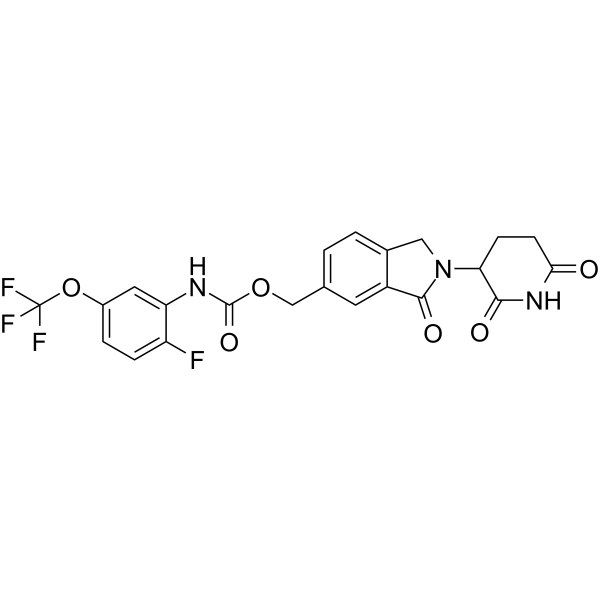
- Formula: C22H17F4N3O6
- Molecular Weight:495.38
-
Storage:Powder -20°C, 3 years , 4°C, 2 years ; In solvent -80°C, 6 months , -20°C, 1 month

To place orders, for customer services and technical support, please contact: MedChemExpress USA
Tel: 609-228-6898 E-mail: [email protected] [email protected]


-
 Biological Activity
-
Chemical Information
-
Solvent & Solubility
- Protocols
- Purity & Documentation
- References
-
 Help & FAQs


-
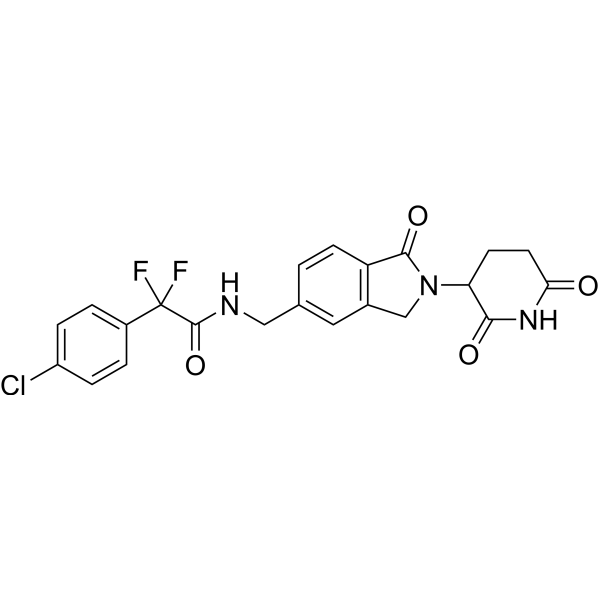
HY-130800
EragidomideGSPT1 Molecular Glue Degrader -
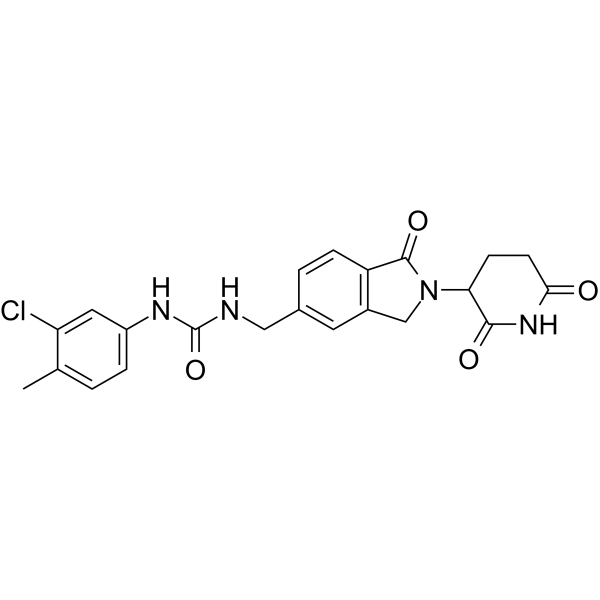
HY-101488
CC-885CRBN Modulator/GSPT1 Molecular Glue Degrader -
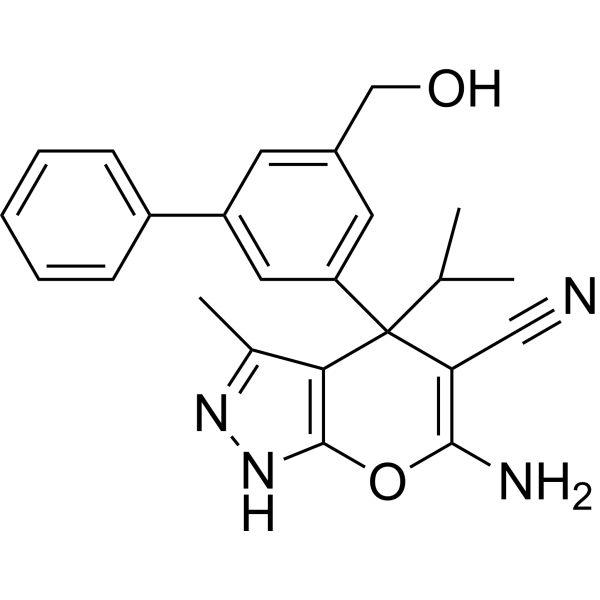
HY-112066
SHIN1SHMT1/2 Inhibitor -
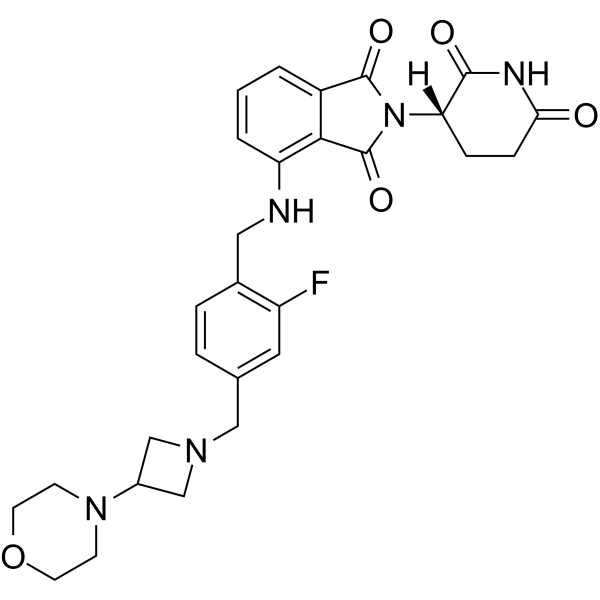
HY-146237
GolcadomideCereblon Modulator -
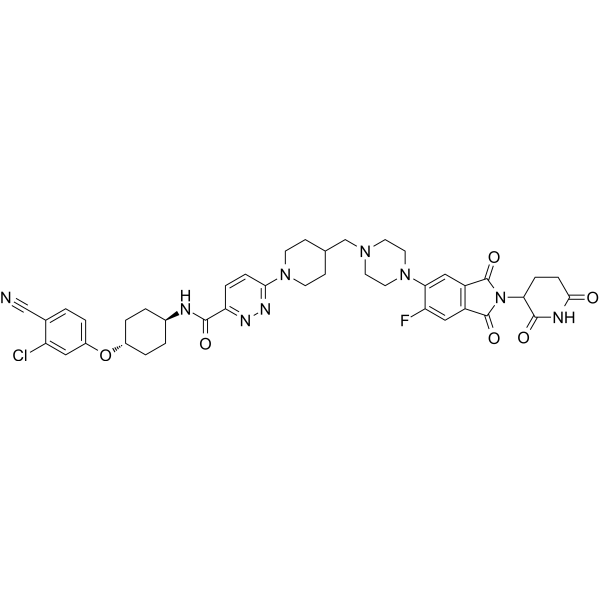
HY-138641
BavdegalutamideAR PROTAC Degrader -
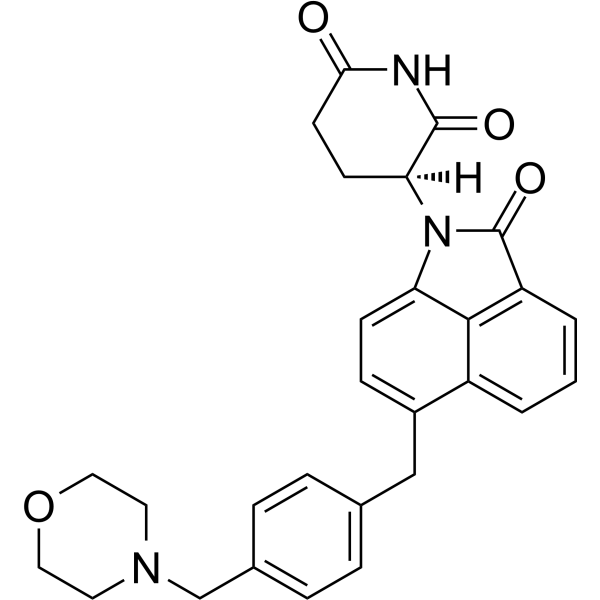
HY-144841
CemsidomidePROTAC IKZF1/3 Degrader -
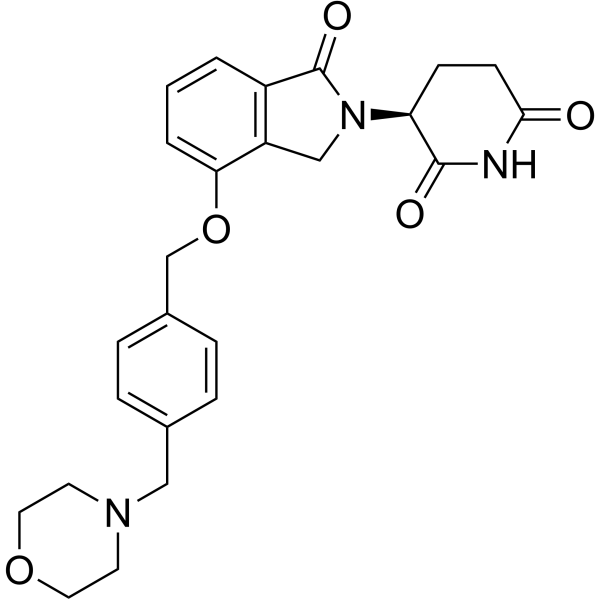
HY-101291
IberdomideCELMoD -
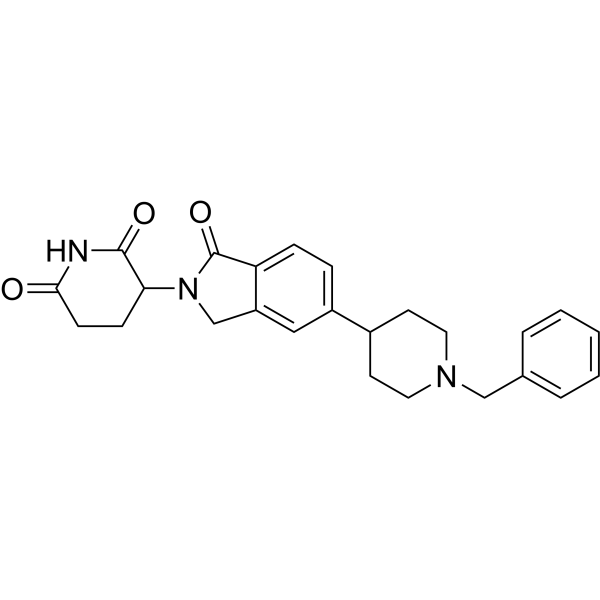
HY-144998
NVP-DKY709IKZF2 degrader -
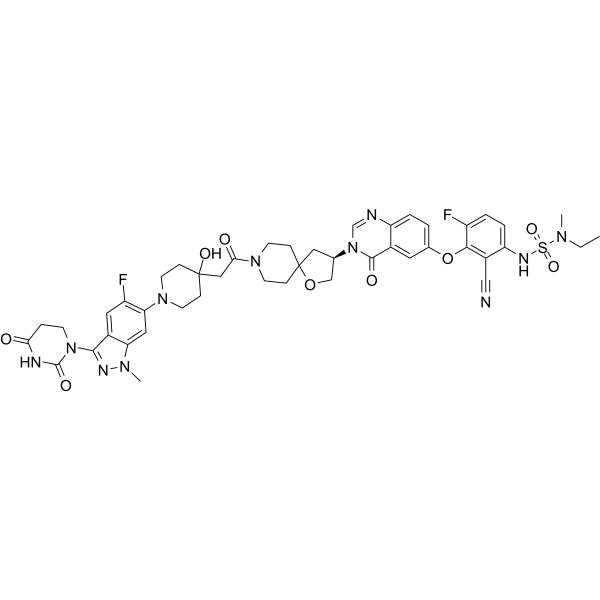
HY-153341
TagarafdegPROTAC BRAF Degrader -
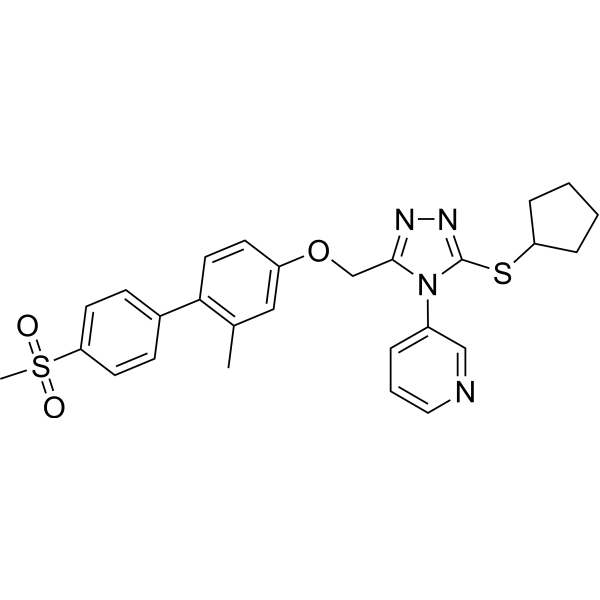
HY-15713
NMS-873VCP/p97 Inhibitor -
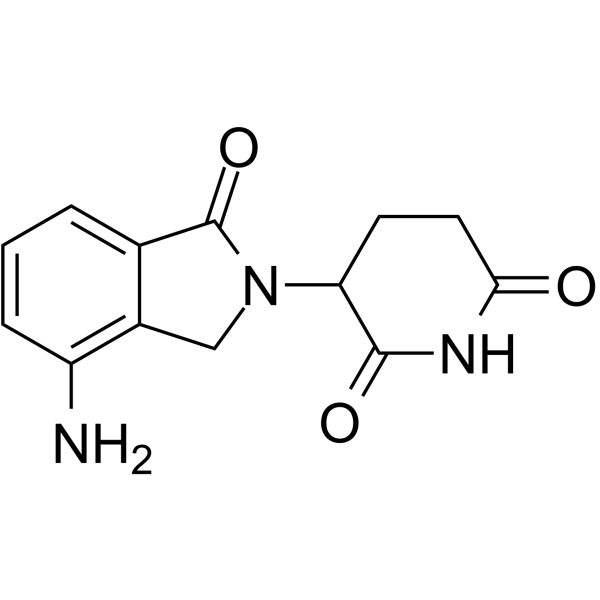
HY-A0003
LenalidomideImmunomodulator -
HY-15667
P005091USP7 Inhibitor
All Eukaryotic Release Factor (eRF) Isoforms
More

Biological Activity
Description
IC50 & Target
[1]|
eRF3a/GSPT1 5 nM (DC50) |
In Vitro
MRT-2359 binds to CRBN in a cell-free HTRF assay with an IC50 of 113 nM[1].
MRT-2359 induces CRBN/GSPT1 ternary complex formation in a cell-free HTRF assay with an IC50 of 7 nM, and this activity is ablated against the GSPT1G575N mutant[1].
MRT-2359 degrades GSPT1 in CAL51 cells with a DC50 of 5 nM and 100% maximum degradation, and this activity is ablated in CAL51 cells expressing the GSPT1G575N mutant[1].
MRT-2359 (72 h) reduces CAL51 cell viability with an EC50 of 150 nM, and this activity is ablated in CRISPR-mediated CRBN knockout CAL51 cells[1].
MRT-2359 (>30000 nM) shows no inhibition of 7 CYP isoforms or hERG activity at concentrations >30000 nM[1].
MRT-2359 (100 nM; 1 h) induces proximity between CRBN and GSPT1, leading to enrichment of GSPT1 and GSPT2 in CAL51 CRBN-Turbo ID cells[1].
MRT-2359 (0.3-30 μM; 6 h) degrades GSPT1 but not common CRBN neosubstrates in MM1S and Kelly cells[1].
MRT-2359 (72 h) reduces viability with preferential potency (median EC50 ~50 nM) in NSCLC and SCLC cell lines with high N-MYC or L-MYC mRNA expression, compared to lower potency in cell lines with low MYC expression[1].
MRT-2359 (24 h) degrades GSPT1 with >95% maximum degradation in NCI-H1155 (DC50 = 2.1 nM), ABC-1 (DC50 = 9.8 nM), NCI-H2023 (DC50 = 28.8 nM), and NCI-H441 (DC50 = 9.4 nM) NSCLC cell lines[1].
MRT-2359 (0.03-0.3 μM; 6-48 h) degrades GSPT1 in both NCI-H1155 (N-MYC high) and NCI-H2023 (N-MYC low) NSCLC cell lines, and reduces N-MYC levels in a dose- and time-dependent manner in NCI-H1155 cells while N-MYC is undetectable in NCI-H2023 cells[1].
MRT-2359 (0.1-1 μM; 6-24 h) represses MYC target gene expression in a dose- and time-dependent manner in NCI-H1155 (N-MYC high) NSCLC cells, while having no effect on MYC target gene expression in NCI-H2023 (N-MYC low) NSCLC cells[1].
MRT-2359 shows profound, preferential antiproliferative activity in N-MYC and L-MYC high NSCLC and SCLC cell lines, with activity dependent on CRBN and the GSPT1 G-loop degron, and sole expression of N-MYC or L-MYC sensitizes initially resistant NSCLC cells to MRT-2359[2].
MRT-2359 induces translational repression in N-MYC and L-MYC high NSCLC and SCLC cell lines, as evidenced by ribosome stalling at stop codons, increased monosomes, decreased polysomes, and changes in puromycilation assays[2].
MRT-2359 reduces total N-MYC and L-MYC levels and downmodulates MYC target genes in N-MYC and L-MYC high NSCLC and SCLC cell lines, while driving robust GSPT1 degradation[2].
MRT-2359 potently and selectively induces CRBN- and degron-dependent GSPT1 degradation, with preferential antiproliferative activity in Myc-driven NSCLC and SCLC lines (but not low N-Myc NSCLC lines) via translational repression, reduced Myc family protein levels, and downregulated Myc target gene expression[3].
MRT-2359 exhibits preferential antiproliferative activity in NSCLC and SCLC cell lines with high N-MYC or L-MYC mRNA, and in sensitive prostate cancer cell line subgroups (androgen receptor-positive with high c-MYC, neuroendocrine with or without high N-MYC), while insensitive prostate cancer cell lines (androgen receptor/neuroendocrine-negative with low c-MYC) show minimal c-MYC reduction and no sensitivity[4].
MRT-2359 induces 100% degradation of GSPT1 with a DC50 of 5 nM in CAL-51 cells, with no activity against IKZF1, IKZF3, or CK1α[5].
MRT-2359 exerts profound preferential antiproliferative activity in high N-Myc NSCLC cells and high L-Myc SCLC cells, linked to differential GSPT1 degradation, with minimal activity in low N-Myc/L-Myc cell lines[5].
MedChemExpress (MCE) has not independently confirmed the accuracy of these methods. They are for reference only. Further protocols information, click here.
-
Cell Line:MM1S multiple myeloma cells, Kelly neuroblastoma cells
-
Concentration:0.3-30 μM
-
Incubation Time:6 h
-
Result:Degraded GSPT1 in both MM1S and Kelly cells at concentrations ≥0.3 μM.
Did not degrade the CRBN neosubstrates IKZF1, IKZF3, SALL4, ZFP91, or CK1a at any tested concentration.
-
Cell Line:NCI-H1155 (N-MYC high) NSCLC cell lines, NCI-H2023 (N-MYC low) NSCLC cell lines
-
Concentration:0.03-0.3 μM
-
Incubation Time:6-48 h
-
Result:In NCI-H1155 cells: degraded GSPT1 at both concentrations by 6 h, with sustained degradation through 48 h; reduced N-MYC levels in a dose- and time-dependent manner, with noticeable reduction by 24 h and sustained reduction through 48 h.
In NCI-H2023 cells: degraded GSPT1 at both concentrations by 6 h, with sustained degradation through 48 h; N-MYC was not detected at any time point or concentration.
In Vivo
MRT-2359 (10 mg/kg; p.o.; QD) demonstrates preferential anti-tumor activity in NSCLC PDX models with high L-MYC and/or N-MYC expression, with no significant activity in low-expression models[1].
MRT-2359 (10 mg/kg; p.o.; QD) induces complete tumor growth inhibition in SCLC and neuroendocrine lung cancer PDX models[1].
MRT-2359 (p.o.) induces complete intratumoral GSPT1 degradation, reduces N-Myc protein levels, and causes tumor regression in high N-Myc NSCLC xenografts and PDXs[3].
MRT-2359 (p.o.) has limited or no activity in low N-Myc NSCLC xenograft models[3].
MRT-2359 (10 mg/kg; once daily; 4 weeks) induces complete tumor regression of 22RV1 prostate cancer xenografts in immunocompromised mice with no subsequent tumor regrowth[4].
MRT-2359 (10 mg/kg; once daily; 4 weeks) induces complete tumor regression of NCI-H660 neuroendocrine prostate cancer xenografts in immunocompromised mice with no subsequent tumor regrowth[4].
MRT-2359 does not elicit a significant in vivo response against PC-3 prostate cancer xenografts in immunocompromised mice[4].
MedChemExpress (MCE) has not independently confirmed the accuracy of these methods. They are for reference only.
-
Animal Model:Immunocompromised mice[1]
-
Dosage:3 mg/kg; 10 mg/kg
-
Administration:p.o.; QD; QDx5
-
Result:Reduced tumor volume relative to vehicle control.
Induced sustained reduction in GSPT1 and N-MYC levels in tumors to ~0% relative to vehicle over 24 hours post-dose.
-
Animal Model:Immunocompromised mice[1]
-
Dosage:10 mg/kg
-
Administration:p.o.; QD
-
Result:Achieved significantly higher tumor progression-free probability relative to vehicle control (p<0.0001) and marked tumor volume inhibition in 14 PDX models with high L-MYC and/or N-MYC expression.
Showed no statistically significant difference in tumor progression-free probability between MRT-2359 and vehicle control (p=0.14) in 19 PDX models with low L-MYC and N-MYC expression.
Clinical Trial
| NCT Number | Sponsor | Condition | Start Date |
Phase

|
|---|---|---|---|---|
| NCT01329991 | Plexxikon| | 2011-05 | PHASE1 |


Chemical Information
-
CAS No. 2803881-11-8
-
Appearance Solid
-
Molecular Weight 495.38
-
Formula C22H17F4N3O6
-
Color White to off-white
-
SMILES
O=C(NC1=CC(OC(F)(F)F)=CC=C1F)OCC2=CC=C3C(C(N(C4C(NC(CC4)=O)=O)C3)=O)=C2
-
Shipping
Room temperature in continental US; may vary elsewhere.
-
Storage
Powder -20°C 3 years 4°C 2 years In solvent -80°C 6 months -20°C 1 month


Solvent & Solubility
In Vitro:
DMSO : 100 mg/mL (201.87 mM; Need ultrasonic; Hygroscopic DMSO has a significant impact on the solubility of product, please use newly opened DMSO)
Please refer to the solubility information to select the appropriate solvent. Once prepared, please aliquot and store the solution to prevent product inactivation from repeated freeze-thaw cycles.
Storage method and period of stock solution: -80°C, 6 months; -20°C, 1 month. When stored at -80°C, please use it within 6 months. When stored at -20°C, please use it within 1 month.
Please refer to the solubility information to select the appropriate solvent. Once prepared, please aliquot and store the solution to prevent product inactivation from repeated freeze-thaw cycles.
Storage method and period of stock solution: -80°C, 6 months; -20°C, 1 month. When stored at -80°C, please use it within 6 months. When stored at -20°C, please use it within 1 month.
Concentration (start) × Volume (start) = Concentration (final) × Volume (final)
In Vivo:
Select the appropriate dissolution method based on your experimental animal and administration route.
- For the following dissolution methods, please ensure to first prepare a clear stock solution using an In Vitro approach and then sequentially add co-solvents:
- To ensure reliable experimental results, the clarified stock solution can be appropriately stored based on storage conditions. As for the working solution for In Vivo experiments, it is recommended to prepare freshly and use it on the same day.
- The percentages shown for the solvents indicate their volumetric ratio in the final prepared solution. If precipitation or phase separation occurs during preparation, heat and/or sonication can be used to aid dissolution.
Add each solvent one by one: 10% DMSO 90% (20% SBE-β-CD in Saline)
Solubility: 2.5 mg/mL (5.05 mM); Suspended solution; Need ultrasonic
This protocol yields a suspended solution of 2.5 mg/mL. Suspended solution can be used for oral and intraperitoneal injection.
Taking 1 mL working solution as an example, add 100 μL DMSO stock solution (25.0 mg/mL) to 900 μL 20% SBE-β-CD in Saline, and mix evenly.
Preparation of 20% SBE-β-CD in Saline (4°C, storage for one week): 2 g SBE-β-CD powder is dissolved in 10 mL Saline, completely dissolve until clear.
In Vivo Dissolution Calculator
Please enter the basic information of animal experiments:
-
-
-
-
Recommended: Prepare an additional quantity of animals to account for potential losses during experiments.
Please enter your animal formula composition:
-
%DMSO +
Recommended: Keep the proportion of DMSO in working solution below 2% if your animal is weak.
-
%+
-
+%Tween-80 + +
-
%Saline +
The co-solvents required include: DMSO, . All of co-solvents are available by MedChemExpress (MCE). , Tween 80. All of co-solvents are available by MedChemExpress (MCE).
Working solution concentration: 0.22 mg/mL
Method for preparing stock solution: mg drug dissolved in μL DMSO. Stock solution concentration: mg/mL.
1. Take μL DMSO stock solution;
2. Add μL .
μL , mix evenly;
3. Then add μL Tween 80, mix evenly;
4. Then add μL
Please ensure that the stock solution in the first step is dissolved to a clear state, and add co-solvents in sequence. You can use ultrasonic heating (ultrasonic cleaner, recommended frequency 20-40 kHz), vortexing, etc. to assist dissolution.

Protocols
-
Apoptosis
Apoptosis, also called programmed cell death, is generally characterized by distinct morphological characteristics.
-
TUNEL staining for apoptotic DNA fragmentation
TUNEL staining detects DNA strand breaks by using terminal deoxynucleotidyl transferase to add labeled nucleotides to exposed 3′-OH DNA termini, generating either microscopic staining in fixed cells or tissue sections, or fluorescence/cytometric signal in cell suspensions. TUNEL positivity reflects DNA fragmentation but should not be interpreted alone as definitive apoptosis, because TUNEL can also label necrotic, autolytic, mechanically damaged, or DNA-repair-associated DNA breaks.
-
Annexin V plus membrane-impermeant dye apoptosis staining
Annexin V-based apoptosis assays rely on the detection of phosphatidylserine (PS) externalization from the inner leaflet of the plasma membrane to the outer leaflet, an early biochemical hallmark of apoptosis. Fluorescently labeled Annexin V binds PS in a calcium-dependent manner, enabling identification of early apoptotic cells by flow cytometry or fluorescence microscopy. When combined with a membrane-impermeant DNA-binding dye (e. g. , propidium iodide), this approach allows discrimination between viable (Annexin V−/dye−), early apoptotic (Annexin V+/dye−), and late apoptotic or necrotic (Annexin V+/dye+) cell populations by assessing membrane integrity and PS exposure.
-
Apoptosis Solutions
Apoptosis is a regulated, generally non-lytic cell-death pathway that removes unwanted, damaged, infected, or abnormal cells through coordinated morphological changes, caspase activation, DNA fragmentation, and membrane remodeling. The intrinsic apoptosis pathway is controlled mainly by mitochondrial outer membrane permeabilization, BCL-2 family proteins, cytochrome c release, apoptosome formation, caspase-9 activation, and downstream executioner caspase-3/7 activation. The extrinsic apoptosis pathway is initiated by death receptors such as Fas, TNFR, and TRAIL receptors, which recruit adaptor proteins and activate caspase-8 before engaging executioner caspases or mitochondrial amplification through BID cleavage. Apoptosis is linked to many phenotypes, including cancer cell killing, tissue homeostasis, immune regulation, neurodegeneration, infection response, and treatment-induced cytotoxicity; unresolved questions include how apoptosis interacts with necroptosis, pyroptosis, ferroptos
-
Cell Viability Determination by MTT Colorimetric Assay
The following protocol uses the MTT colorimetric assay as a classic literature-established method for assessing cell viability/metabolic activity in cultured mammalian cells. MTT[3-(4,5-dimethylthiazol-2-yl)-2,5-diphenyltetrazolium bromide] is reduced by metabolically active cells to a colored formazan product; the amount of formazan is quantified spectrophotometrically and provides an indirect measure of metabolically active viable cells. Importantly, MTT reduction reflects cellular oxidoreductase/metabolic activity rather than an absolute direct count of living cells, so changes in cellular metabolism can alter the signal independently of cell number.


Purity & Documentation
-
Data Sheet (289 KB)
-
SDS (419 KB)
- English - EN (419 KB)
- Français - FR (419 KB)
- Deutsch - DE (419 KB)
- Norwegian - NO (419 KB)
- Español - ES (419 KB)
- Swedish - SV (419 KB)
- Italian - IT (419 KB)
- Korean - KR (419 KB)
- Portuguese - PT (419 KB)
-
Handling Instructions (2659 KB)
References


Complete Stock Solution Preparation Table
Please refer to the solubility information to select the appropriate solvent. Once prepared, please aliquot and store the solution to prevent product inactivation from repeated freeze-thaw cycles.
Storage method and period of stock solution: -80°C, 6 months; -20°C, 1 month. When stored at -80°C, please use it within 6 months. When stored at -20°C, please use it within 1 month.
| Optional Solvent | Concentration Solvent Mass | 1 mg | 5 mg | 10 mg | 25 mg |
|---|---|---|---|---|---|
| DMSO | 1 mM | 2.0187 mL | 10.0933 mL | 20.1865 mL | 50.4663 mL |
| 5 mM | 0.4037 mL | 2.0187 mL | 4.0373 mL | 10.0933 mL | |
| 10 mM | 0.2019 mL | 1.0093 mL | 2.0187 mL | 5.0466 mL | |
| 15 mM | 0.1346 mL | 0.6729 mL | 1.3458 mL | 3.3644 mL | |
| 20 mM | 0.1009 mL | 0.5047 mL | 1.0093 mL | 2.5233 mL | |
| 25 mM | 0.0807 mL | 0.4037 mL | 0.8075 mL | 2.0187 mL | |
| 30 mM | 0.0673 mL | 0.3364 mL | 0.6729 mL | 1.6822 mL | |
| 40 mM | 0.0505 mL | 0.2523 mL | 0.5047 mL | 1.2617 mL | |
| 50 mM | 0.0404 mL | 0.2019 mL | 0.4037 mL | 1.0093 mL | |
| 60 mM | 0.0336 mL | 0.1682 mL | 0.3364 mL | 0.8411 mL | |
| 80 mM | 0.0252 mL | 0.1262 mL | 0.2523 mL | 0.6308 mL | |
| 100 mM | 0.0202 mL | 0.1009 mL | 0.2019 mL | 0.5047 mL |


MRT-2359 Related Classifications
HY-153356 Related Classifications
 Powered by Bioz